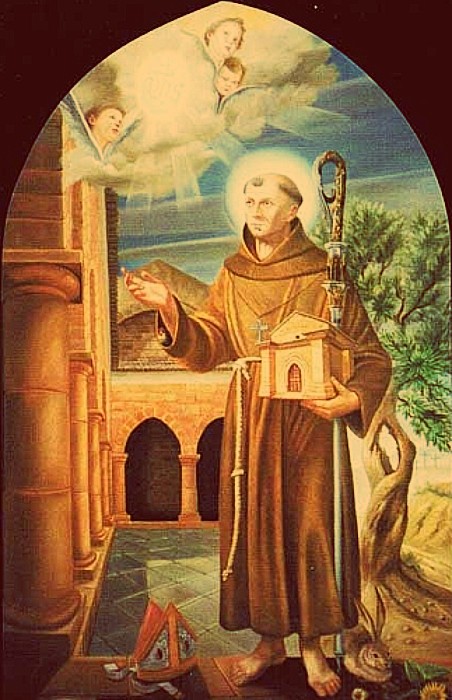
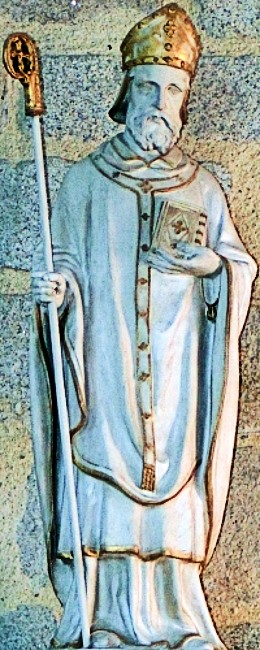
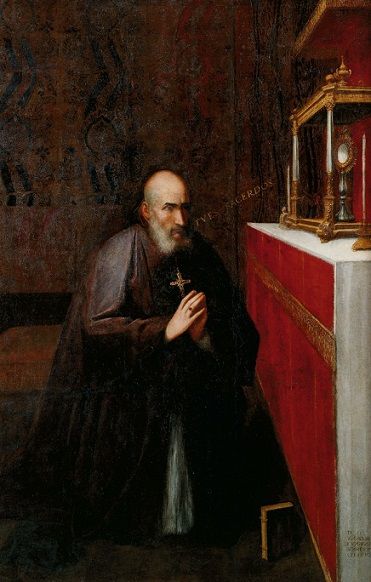
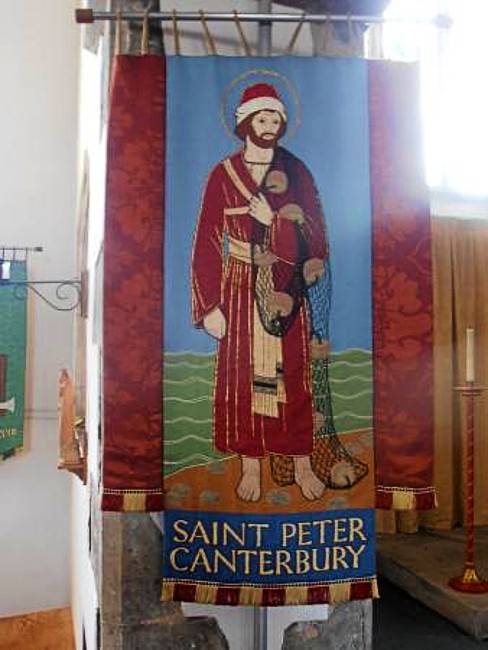
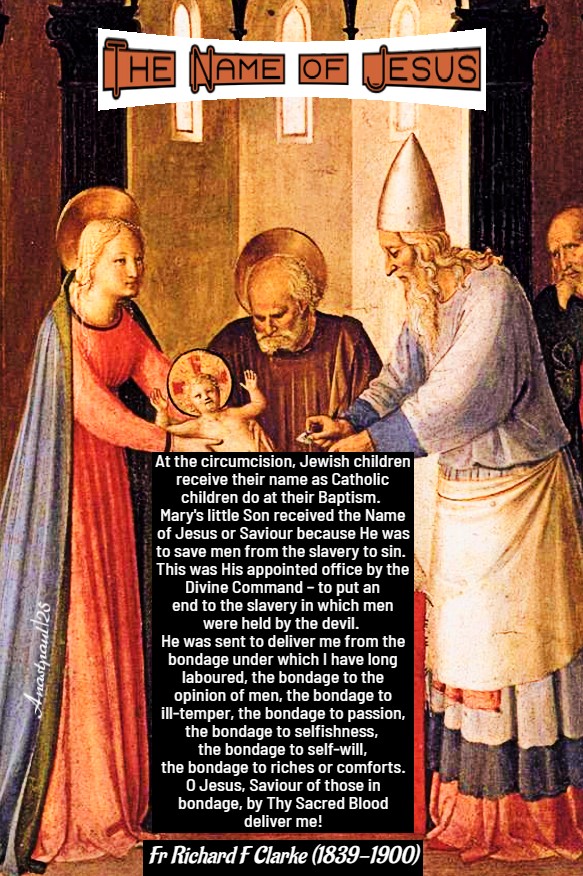
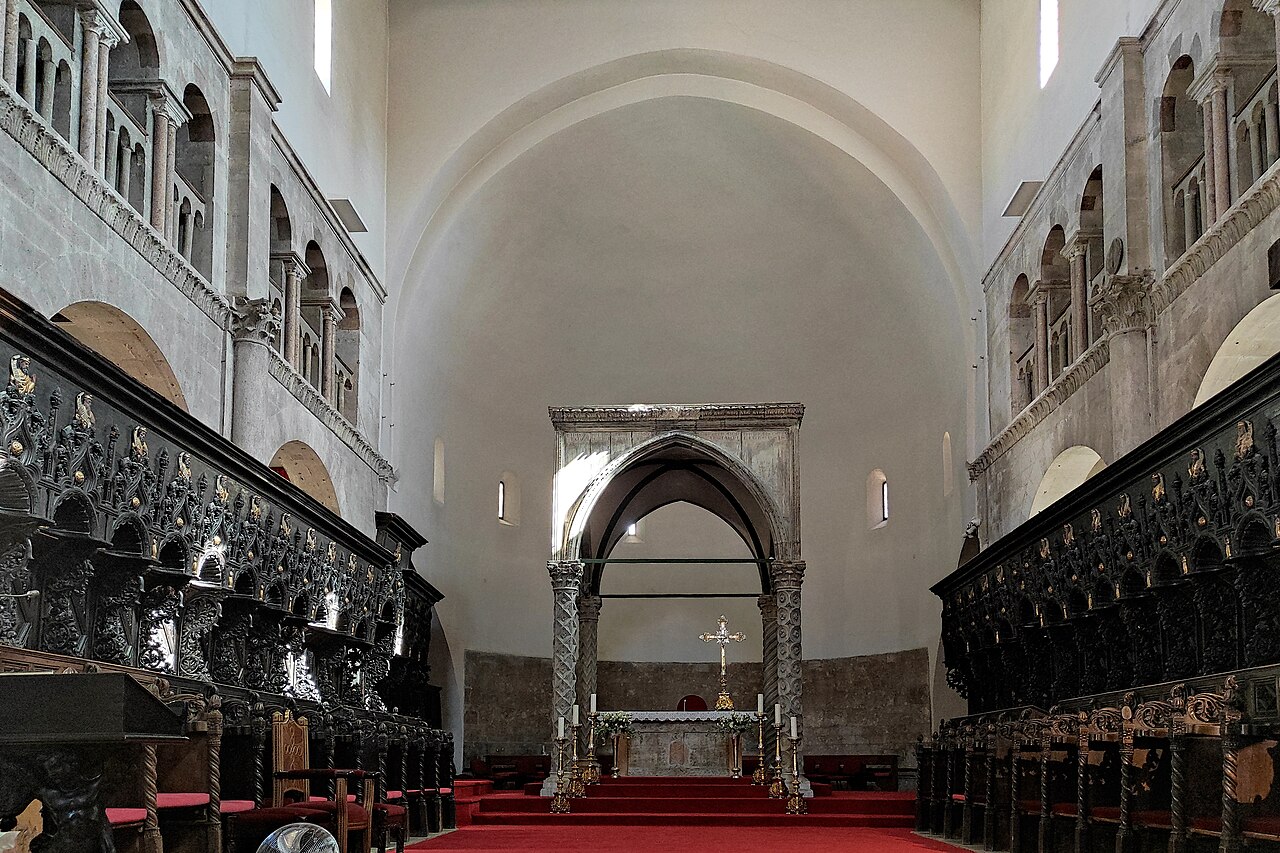
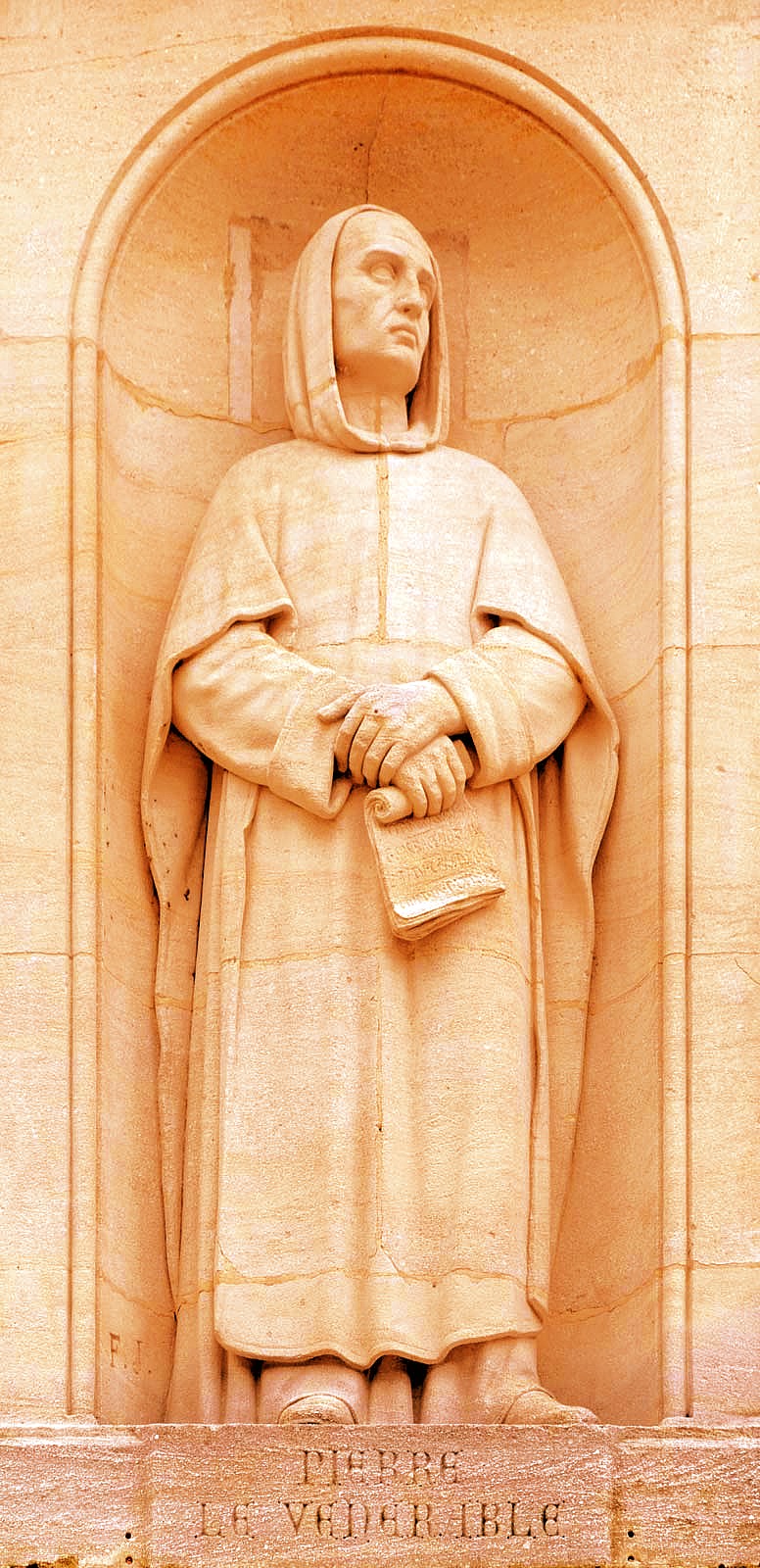
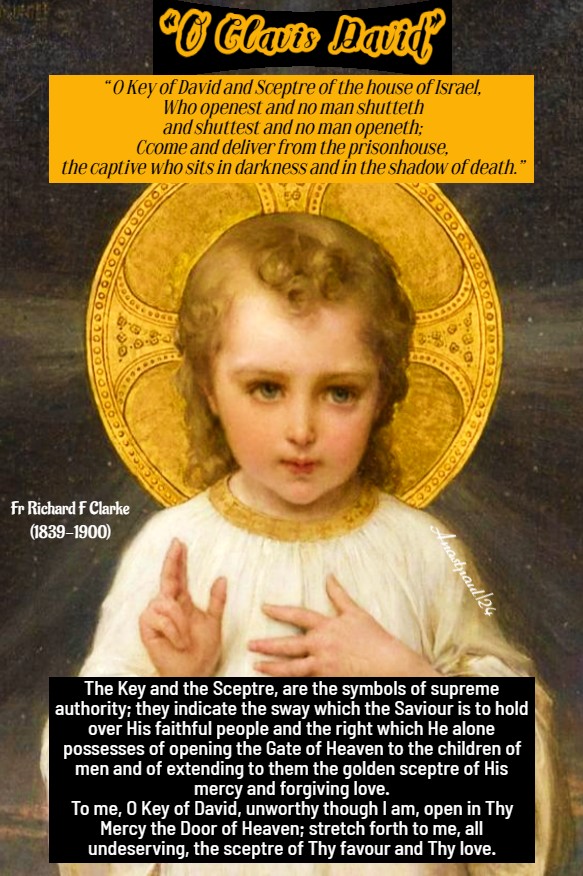
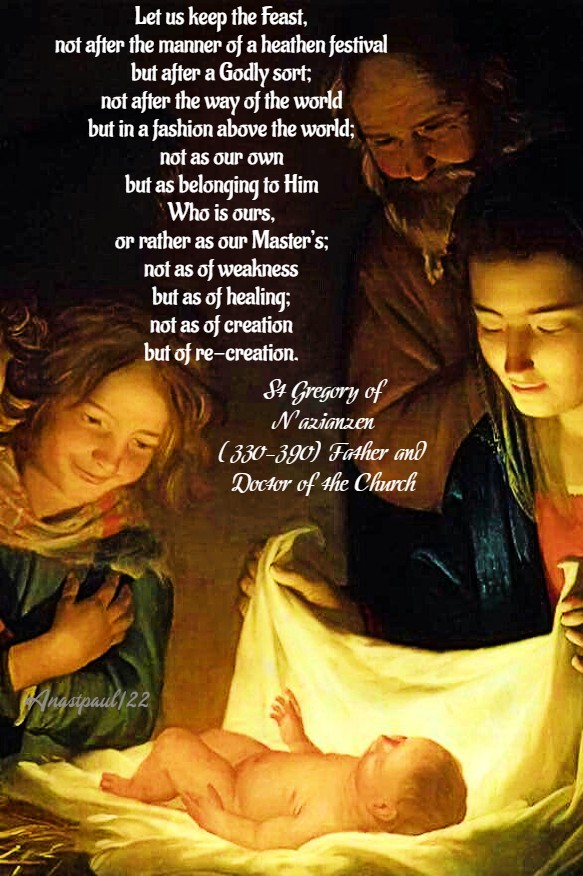
Bl Juan de Luca Bl Juan de Montesinos Bl Leonard da Recanati Bl Mariano Brandi
St Phocas the Gardener (Died c303) Layman Martyr, Apostle of the poor and needy. Died by beheading c 303 in Sinope, Pontus (in modern Turkey). Patronages – against insect bites, against poisoning, against snake bites, agricultural workers, farm workers, farmers, field hands, boatmen, mariners, sailors, watermen, gardeners, husbandmen, market-gardeners. https://anastpaul.com/2022/07/23/saint-of-the-day-23-july-st-phocas-the-gardener-died-c-303-martyr/
St Primitiva of Rome St Rasyphus of Macé St Rasyphus of Rome St Ravennus of Macé *St Redempta of Rome + *St Romula of Rome + (Died c580) Virgin Recluse St Severus of Bizye St Theophilus of Rome St Trophimus of Rome St Valerian of Cimiez
Thought for the Day – 22 July – Meditations with Fr Richard Frederick Clarke SJ (1839-1900)
CHARITY Meditations for a Month
Charity, a Supreme Love
Charity does not exist within the soul of anyone who does not love God above all things. If some created being has the first place in our heart and God only the second, then, we are the enemies, not the friends of God. He must have all our heart or none! “Thou shalt love the Lord thy God, with thy whole heart and thy whole soul.” If, any person or thing, hinders this supreme love for God, we must avoid it at any cost. If this is impossible, we must pray earnestly that we may never fall into the terrible misfortune of loving the creature more than the Creator, Who is God, blessed forever.
This, however, does not mean that we must have a stronger feeling of love for God than for some loved object upon earth. We cannot always control our feelings. We are creatures of sense and our senses and imagination have great power over us. Nor does it mean that the love of God is to swallow up the love of created things. This is impossible. Nor, again, does it mean, there must be no possible circumstances which we can imagine, wherein we could not promise to choose God, however violent the temptation might be. It simply means that, as I am now and under the present circumstances, I would give up anything rather than mortally offend God.
This supreme love of God includes a conviction that God is our best friend and, therefore, He will never ask of us what is beyond our power. He will provide an escape from every temptation, however violent. Hence, I will have no fear about the future. God will never ask of me what He does not give me strength to perform!
Quote/s of the Day – 22 July – St Mary Magdalen (1st Century) Penitent – Song 3:2-5; 8:6-7, Luke 7:36-50.
“She began to bathe His feet with her tears and wiped them with the hair of her head and kissed His feet and anointed them with ointment.”
Luke 7:38
“Remember not our former iniquities, let Thy mercies speedily prevent us, for we are become exceeding poor. Help us, O God, our Saviour and for the glory of Thy Name, O Lord, deliver us and forgive us our sins, for Thy Name’s sake.”
Psalm 78:8-9
“Let us then, my brethren, endure in hope. Let us devote ourselves, side-by-side with our hoping, so that the God of all the universe, as He beholds our intention, may cleanse us from all sins, fill us with high hopes from what we have in hand and grant us the change of heart which saves. God has called you and you have your calling!”
St Cyril of Jerusalem (315-387) Father and Doctor of the Church
“Prayer, appeases the anger of God; He pardons the sinner when he prays with humility.”
St Lawrence Justinian (1381-1455)
“We must be very sorry for faults with a repentance which is strong, constant, tranquil but not troubled, unquiet or fainthearted.”
(Treatise on the Love of God, Book 9, Chapter 7).
St Francis de Sales (1567-1622) Doctor Caritatis
In conclusion, let us say this prayer of St Alphonsus de Liguori (1696-1787): “My soul, look at this Crucified Man … see how the arms extend to embrace you, how the head bows forward to give you the kiss of peace. See how His side is open to receive you. What have you to say? Such a good and loving God deserves to be loved. O my Jesus! Adorable Jesus! O Love of my soul! How can I ever forget Thee? How can I ever love anything apart from Thee! O suffering Jesus, may the memory of Thee ever remain in my heart!”
One Minute Reflection – 22 July – “The Month of the Most Precious Blood” – – St Mary Magdalene (1st Century) Penitent – Song 3:2-5; 8:6-7; Luke 7:36-50 – – Scripture search here: https://www.drbo.org/
“And turning to the woman, He said unto Simon: Dost thou see this woman? I entered into thy house, thou gavest me no water for my feet. But she, with tears, hath washed My Feet and with her hair, hath wiped them.” – Luke 7:43
REFLECTION – “Let us welcome our God and Lord, the true Doctor Who, by coming to us, is alone able to heal our souls, He Who strove so mightily on our behalf. He is constantly knocking on the door of our hearts for us to open to Him and let Him in, so that He may recline in our souls, making His home with us and we can wash His Feet and pour perfume over them. Indeed, Jesus rebukes the one who failed to wash His Feet and elsewhere, He says: “Behold I stand at the door … if anyone opens the door, I will enter his house” (Apoc 3:20). In fact, this is the reason why He bore such great suffering, delivering up His Body to death and redeeming us from slavery – it was so that He might enter our souls and make His home there.
This was why our Lord says to those who are to stand on His left side at the judgement and be cast into the eternal fire: “I was a stranger and you gave me no welcome; I was hungry and you gave me no food; thirsty and you gave me no drink” (Mt 25:42) – because, His food and drink, His clothing, shelter and rest are all within our heart. This is why He is always knocking, trying to come into our house. So let us welcome Him and bring Him inside, within us, since He is our food, drink and eternal life, too.
And those souls who do not now receive Him within, for Him to find His rest in them, or rather that they might find rest in Him, will not inherit the Kingdom of Heaven with the Saints or be able to enter the heavenly City. But you, O Lord Jesus Christ, grant us to enter there, we who glorify Thy Name, with the Father and the Holy Ghost for ages unending. Amen.” – St Macarius of Egypt (c300-390) Monk, Father of the Church (Sermon attributed to St Macarius).
PRAYER – May the prayers of blessed Mary Magdalen help us, O Lord, Who was moved by her prayers, her love and peniteance, that we too may learn true repentance and sorrow for our sins..Through the same Jesus Christ, Thy Son our Lord, Who lives and reigns with Thee, in the unity of the Holy Ghost, God, world without end. Amen (Collect).
Our Morning Offering – 22 July – “The Month of the Most Precious Blood” – St Mary Magdalen (1st Century) Penitent
Act of Contrition and Repentance By St Alcuin of York (c735-804) Father of the Church
Almighty and merciful God, Fountain of all Goodness, Thou knows the thoughts of our hearts. We confess that we have sinned against Thee and done evil in Thy Sight. Wash us from the stains of our past sins and give us grace and power to put away all hurtful things. Deliver us from the bondage of sin that we may bring forth worthy fruits of repentance. Amen
Saint of the Day – 22 July – Saint Cyril of Antioch (Died c306) Bishop Martyr. Unknown birth date and location but we believe that he was a local of Antioch. He died most probably of ill-treatment and starvation, in the mines in Pannopia which is in tbe modern eastern European regions of Hungary, Sovalie etc. (He is not to be confused with St Cyril of Alexandria (376-444) the Doctor of the Church).
The Roman Martyrology reads: “At Antioch, the holy Bishop Cyril. who was distinguished for learning and holiness.”
Ancient Greek Icon of Jesus
In the Episcopal lists of Antioch, our Saint appears after Timaeus, that is, he would have been elected around 279-80.
Nothing is known about Cyril’s Episcopate, except that he may have admitted to Ecclesiastical communion, the Priest Lucian, previously condemned for his relations with Paul of Samosata, who had been the Bishop of Antioch until 268 when he was deposted and excommunicated for the heresy of monarchianism (rejection of the Holy Trinity), of which he was the originator.
Lucian of Antioch – 985 in the Vatican Library, Rome
Most likely, upon the publication of the second edict of Diocletian in spring 303 which prescribed the arrest of all Church leaders, Cyril was arrested and sent to the minas in Pannonia. A passage from the Acts of the Four Crowned Saints can be interpreted in this sense.
His death occurred in exile around 306. Together with Cyril, a Martyr named Andrew is commemorated in the Martyrology of Hieronymia. This is an authentic Martyr who is remembered, always together with Cyril, in the list of Martyrs of Antioch, found in the sermon attributed to St Eusebius of Caesarea.
St Baudry of Montfaucon St Claudius Marius Victorinus of Saussaye St Cyril of Antioch (Died c306) Bishop, Martyr St Dabius St John Lloyd
St Joseph of Palestine (Died c 356) Layman, Convert from Judaism, a contemporary of Emperor Constantine, a Rabbinical scholar, member of the Sanhedrin and a disciple of Hillel II. Following his conversion, Emperor Constantine gave him the rank of Count, appointed him as supervisor of the Churches in Palestine and gave him permission to build Churches in the Galilee. Patronages – converts, guardians. A Very Interesting Saint: https://anastpaul.com/2022/07/22/saint-of-the-day-22-july-st-joseph-of-palestine-died-c-356/
St Lewine St Maria Wang Lishi St Meneleus of Ménat St Movean of Inis-Coosery St Pancharius of Besancon Bl Paolo de Lara
Martyrs of Marula/Massylis: – 3 Saints: Three Christians Martyred together. We know nothing else about them but the names – Ajabosus, Andrew and Elian. They were martyred in Massylis (Marula), Numidia (in modern Algeria).
Martyrs of Massilitani: A group of Christians Martyred together in northern Africa. Saint Augustine of Hippo wrote about them.
Thought for the Day – 21 July – Meditations with Fr Richard Frederick Clarke SJ (1839-1900)
CHARITY Meditations for a Month
Charity, a Love of Choice
Although God chooses out of the world, those on whom He sets His love and for whom, He destines the rich gifts of grace and glory, yet He never forces their will. He draws them to Himself with the cords of love,but, it is in their power to resist. All men choose deliberately, at some period of their lives, between the love of God and the love of self. Our homage to God must be a voluntary homage and our love, must be a voluntary love. We must choose God in spite of the difficulties and objections which are raised by our lower nature. Have I made this choice? Moreover, do I make it in all the details of my life?
It seems logical that every sane man should choose Him, Who contains all perfections, in an Infinite degree. rather than any of the miserable trifles which do not satisfy and will soon pass away. Yet, how few there are who make a full and complete choice of God! The Prophet complains (Jeremiah 2:13), “They have forsaken Me, the Fountain of living water and have digged themselves cisterns, broken cisterns which can hold no water.” Do I not, alas, everyday, choose some passing indulgence, although I know I should please God more and earn His love, if I denied it to myself?
Our Lord tells His Apostles, “You have not chosen Me but I have chosen you.” Therefore, God has chosen us, rather than us Him. He chose to give us grace and carried it through to the end, before we made the choice to prevent it. It was more His than ours. This is true of all vocations, great or small, when we have, through God’s mercy chosen Him, rather than yielded to natural inclination. O my God, choose me ever and grant that I may ever choose Thee!
Quote/s of the Day – 21 July – “The Month of the Most Precious Blood”
“And He entered the temple and began to cast out those who were selling and buying in it, saying to them, it is written, ‘My house is a house of prayer’ but you have made it a den of thieves.”
Luke 19:45-46
“Sacred Scripture is the Lord’s money!”
St Ambrose (340-397) Father and Doctor of the Church
“Ignorance of the Scriptures is ignorance of Christ!”
“The faithful, who spend at least a quarter of an hour, in reading Sacred Scripture with great reverence, due to the Word of God, after the manner of spiritual reading, may gain, an Indulgence of 300 days.”
St Jerome (347-419) Father and Doctor of the Church
“Scripture is perfect wisdom, starting point and point of arrival, to which our whole existence should be adapted.”
St Hesychius of Jerusalem (Died c450) Priest, Exegete, Father
“Always (read and) listen to it (the Scriptures) with attention and reverence; make good use of it; do not let it fall to earth but take it into your heart like a precious balm. Do all this after the example of the most holy Virgin, for she carefully kept in her heart all the words spoken in praise of her Child. Remember that our Lord gathers up the words we speak to Him in prayer, in measure with the way we gather up those He speaks to us by His preaching.”
St Francis de Sales (1567-1622) Doctor of the Church
(Introduction to the Devout Life Part 2 Chapter 17)
One Minute Reflection – July– “The Month of the Most Precious Blood” – St Praxedes, Virgin (Died 164) – 1 Corinthians 10:6-13; Luke 19:41-47 – Scripture search here: https://www.drbo.org/
“And He entered the temple and began to cast out those who were selling and buying in it, saying to them, it is written, ‘My house is a house of prayer’ but you have made it a den of thieves.” – Luke 19:45-46
REFLECTION – “God does not want His temple to be a trader’s lodge but the home of sanctity. He does not preserve the practice of the Priestly service by the dishonest duty of religion but by voluntary obedience. Consider what the Lord’s actions impose on you, as an example of living. He taught in general that worldly transactions must be absent from the temple but He drove out the moneychangers in particular. Who are the moneychangers, if not those, who seek profit from the Lord’s money and cannot distinguish between good and evil? Sacred Scripture is the Lord’s money!” – St Ambrose (340-397) Father and Doctor of the Church (Exposition on the Gospel of Luke, 9).
PRAYER – Graciously hear us, O God our Saviour, that, as we rejoice in the festival of blessed Praxedes, thy Virgin, so may we be nourished by the food of her heavenly teaching, as to be enlightened by the fervour of her dedicated holiness. Through the same Jesus Christ, Thy Son our Lord, Who lives and reigns with Thee, in the unity of the Holy Ghost, God, world without end. Amen (Collect).
Our Morning Offering – 21 July – “The Month of the Most Precious Blood” – Pentecost IX
Prayer Before Holy Communion By St Anselm (1033-1109) Doctor of the Church
O Lord Jesus Christ, Son of the living God, Who according to the Will of the Father and with the co-operation of the Holy Ghost, has, by Thy Death. given Life to the world, I adore and revere this, Thy Holy Body and this, Thy Holy Blood which was given up and poured forth, for the many, unto remission of sins. O merciful Lord, I beg of Thee mercy, that through the power of this Sacrament, Thou will make me one of that many. Through faith and love, make me feel the power of these Sacraments, so I may experience their saving power. Absolve and free from all sin and punishment of sin, Thy servants, Thy handmaidens, myself, all who confessed their sins to me, those whom I have promised, or am obliged, to pray for and so too, those who themselves hope or beg, to be helped, by my prayers to Thee. Make our Church rejoice in Thy constant protection and consolation. Amen
Saint of the Day – 21 July – Saint Eternus of Evreux (Died c653) Bishop Martyr. Eternus was the 9th Bishop of Evreux in Normandy, France. Also known as – Éterne, Aeternus, Ethernus, Detherus, Æternus. Additional Memorial – 15 July (on some calendars).
We have almost no records except in the chronology of the Diocese of Evreux. I do find this strange seeing as there are so many versions of his name – why then is there almost zero available information about his life and Martyrdom. The beautiful Statue is situate in the Church of Our Lady in Lyons.
In the notes of the Notary Thézard de Luzarches, dating from 1880, it is specified that in 653, Saint Eternus, the Bishop of Evreux, had gone to implore the assistance of King Clovis II and on his (perhaps return) journey had been Martyred.
A Chapel had been built on the site of the his Martyrdom and dedicated to his memory. Below is Evreux Cathedral.
St Praxedes (Died c165) Virgin Laywoman. Patronage – single laywoman. The Roman Martyrology reads: “At Rome, the holy virgin, Praxedes, who was brought up in all chastity and in the knowledge of the Divine law. Assiduously attending to watching, prayer and fasting, she rest in Christ and was buried near her sister St Pudentiana and family, on the Salarian Road.” A Devout and Holy Life: https://anastpaul.com/2023/07/21/saint-of-the-day-21-july-st-praxedes-died-c165-virgin/
St Barhadbescialas St Benignus of Moyenmoutier Bl Claudius of Avignon St Claudius of Troyes St Corona of Marceille Bl Daniel Molini St Eleutherius of Marseille St Eternus of Evreux (Died c653) Bishop Martyr Bl Gabriel Pergaud St Iosephus Wang Yumei St John of Edessa St John of Moyenmoutier Bl Juan de Las Varillas Bl Juan de Zambrana St Jucundinus of Troyes St Julia of Troyes St Justus of Troyes Bl Parthenius of Thessaly
Martyrs of Africa – 6 Saints: Six Christians who were Martyred together. We know no other details about them but the names – Emilian, Hugal, Motanus, Saphus, Stercorius and Victor. They were martyred in an unknown location in Africa, date unknown.
Thought for the Day – 20 July – Meditations with Fr Richard Frederick Clarke SJ (1839-1900)
HUMILITY Meditations for a Month
Consciousness of Humility
How are we to know whether we are humble? If we think we are humble, we may be quite sure that we are not really humble at all! There is no more certain sign of pride, than to be unaware of its existence in ourselves. Which Saint ever lived, who did not acknowledge and lament his pride and self-love? A Saint who should believe himself to be thoroughly humble, would be no Saint at all. How far do I recognise in myself an ever-running sore of pride, making me foul and unsightly before God, who hates the proud and gives grace only to the humble?!
If I find that I take disparaging remarks, attacks and contradictions from others, with patience and good humoor, it is a good sign but, not a certain sign that I am humble. Pride, which apes humility, often renders man proof, against that which others think. He wraps himself in his cloak of pride and looks down on their opinion of him. Indifference to the praise and honour of those around us, is not a certain sign, for this too may come from pride and a spirit of contempt!
But if anyone:
+++ recognises himself as full of pride; +++ dislikes the idea of being honoured and praised; +++ desires humiliations and prays for them; or +++ thinks himself to deserve the worst of everything and the lowest place,
he may hope that he has begun to walk the road which, in the end, may through God’s grace, produce in him the virtue of humility. Examine yourself on these points, thank God for any signs of progress and lament over still -remaining defects.
Quote/s of the Day – 20 July – St Jerome Emiliani (1486–1537) Confessor
“For God, … does not work in those who refuse to place all their confidence and hope in Him alone. But He does impart the fullness of His love upon those who possess a deep faith and hope; for them He does great things!”
“God wishes to test you, like gold in the furnace. The dross is consumed by the fire but the pure gold remains and its value increases. It is in this manner, that God acts with His good servant, who puts his hope in Him and remains unshaken in times of distress. God raises him up and, in return for the things, he has left out of love for God, He repays him a hundredfold in this life and with eternal life hereafter. If then, you remain constant in faith, in the face of trial, the Lord will give you peace and rest for a time in this world and forever in the next.”
One Minute Reflection – 20 July – “The Month of the Most Precious Blood” – St Jerome Emiliani (1486–1537) Confessor – Isaias 58:7-11, Matthew 19:13-21 – Scripture search here: https://www.drbo.org/
“Suffer the little children and forbid them not to come to Me, for the Kingdom of Heaven is for such. ” – Matthew 19:14
REFLECTION – “What a great and wonderful gift God has given us, my brethren! On this, the day of Easter, day of Salvation, the Lord rises again and gives resurrection to the world. … We are His Body (1 Cor 12:27) … and His Members rise with Him; He makes us rise from death to life. In Hebrew the word “passover” means a passing over … and what a passing! From sin to righteousness, from vice to virtue, from age to infancy. Yesterday, sins’ decay set us on a decline but Christ’s Resurrection gives us rebirth in newborn innocence!
Christian simplicity makes childhood its own. Children are without rancour, ignorant of deceit, not daring to strike. So, this child whom the Christian has become, does not fall into a rage if someone insults him, does not resist, if something is taken from him, does not return blows, if someone strikes him. Our Lord even demands us to pray for our enemies, give up our tunic and cloak to anyone who would steal it, turn the other cheek to those who would slap it (Mt 5:39). The childhood of Christ surpasses human childhood. …
To the Apostles, who were already mature, adult men, the Lord said: “Unless you turn and become like little children, you will not enter the Kingdom of Heaven” (Mt 18:3). He returns them to the origin of their lives, encourages them to rediscover their childhood, so that these men, whose vigour is declining, may be born again to innocence of heart.” – St Maximus of Turin (Died c420) Bishop, Father of the Church (Homily 58 for Easter).
PRAYER – O God, the Father of mercies, by the merits and intercession of St Jerome, whom Thou willed to be the helper and father of orphans, grant that we may faithfully guard the spirit of adoption which makes us Thy sons both in name and reality.Through Jesus Christ, Thy Son our Lord, Who lives and reigns with Thee, in the unity of the Holy Ghost, God, world without end. Amen (Collect).
Our Morning Offering – 20 July – St Jerome Emiliani (1486–1537) Confessor and Our Lady’s Day
O Mary, Twice Mother of Mercy By St Jerome Emiliani (1486–1537)
O Mary, thou art twice Mother of Mercy because thou hast been made Mother of our most merciful Saviour, and, furthermore because, thou hast given to us so many signs of thy maternal care and love. Turn upon us, we beseech thee, thy glance of compassion and grant, that we may always live free from sin, which is the only impediment to receiving the fruits of the Divine Mercies. Amen.
Saint of the Day – 20 July – St Elias the Prophet (Elias from the Greek) lived during the reign of King Ahab (9th Century BC), according to the Books of Kings. The spelling ‘Elijah’ is from the Hebrew. Patronages – for rain, against drought, coachmen, Air Forces, civil aeronautics, Romanian Air Force, the Carmelite Order, Mount Carmel, Bosnia and Herzegovina. Melkite Greek Catholic Archeparchy of Akka, Haifa, Israel, in Italy: Buonabitacolo, Malito, Peschici.
Ludovico Carracci (1555–1619) The TGransfiguration with Moses and Elias
The Roman Martyrology states: “On Mount Carmel, the holy Prophet Elias.”
Born in Thisbe in the 9th Century BC, at the time of King Ahab, he dedicated his life to turning the people away from the worship of idols and bringing them back to the one true God, consistent with the name given to him – Elias in fact means: “The Lord is my God”.
Precursor of Saint John the Baptist: A virtuous and austere man, he wore a camel-hide cloak over a simple apron tied around his hips, thus prefiguring St John the Baptist eight centuries in advance. Elias was gifted with the heart of a warrior and a refined intellect, he combined in his soul, the burning fire of faith and zeal for the Lord, so much so, that St John Chrysostom defined him as “an angel of the earth and a man of Heaven.” Centuries later, the Church presented him as a model of Christian life and passion for God.
The Clash with the Followers of Baal: A striking example of Elias’ prophetic power can be read in the first Book of Kings, chapter 18 which tells how, at the time of King Ahab, Israel succombing to the seduction of idolatry: in fact, they worshipped Baal because they believed he brought rain and, therefore, fertility to the fields, livestock and mankind. Precisely to unmask this lying belief, Elias gathered the people on Mount Carmel and put before a choice – follow the Lord or follow Baal. The Prophet invited over 400 idolaters to a confrontation – each one would prepare a sacrifice and each woulf pray to their own god, so that he would reveal himself. The one who responded unequivocally, was the Lord, “God of Abraham, Isaac and Israel,” Who burned the offering for the sacrifice prepared by Elias on an altar made of twelve stones, “according to the number of the tribes of the sons of Jacob, to which the Lord had given the name of Israel.” Thus the hearts of the people were converted, faced with the evidence of the Truth. Baal, however, remains silent and powerless because – and this is Elijah’s teaching – “the true adoration of God is to give oneself to God and to men, the true adoration is love.”
Elias’ offering is consumed by fire from Heaven
The Encounter with the Lord on Mount Horeb: A new test, however, awaits the Prophet he, who has fought for the faith, must escape the wrath of Queen Jezebel, Ahab’s idolatrous wife, who wishes him to be removed permanently. Exhausted and frightened, Elias asks God that he might be taken out of this life and abandons himself to an uninterrupted sleep. But an Angel wakes him and orders him to climb Mount Horeb to meet the Lord. Elias obeys – he walks for 40 days and 40 nights to reach the destination, in a journey which is the metaphor of the pilgrimage and purification of the heart, ascending towards the experience of God.
The Sonorous Silence: As prefigured, the encounter with the Lord occurs but not in a human sensational way – God reveals himself, in fact, in the form of a light breeze. It is a “thread of a sonorous silence” – which exhorts Elias not to be discouraged and to retrace his steps to complete his mission. And the prophet, covering his face as a sign of adoration and humility, obeys God’s call because he understands its value – that of testing, obedience and perseverance. Once again, therefore, Elias challenges Ahab and Jezebel, who had usurped a farmer’s land, prophesying terrible misfortunes to them, until he induces them to repent. The Prophet also alleviates the suffering and misery of a widow, feeding her and healing her son who is on the brink of death. Once his mission was accomplished, Elias disappeared, ascending to Heaven on a Chariot of Fire and entering the infinity of that God, Whom he had served with such passion. His cloak remained on earth, destined for the disciple Elisha as a sign of investiture.
St Elias and the widow
Prophetic Zeal: Today the religious Order of the Hermits of Mount Carmel (The Carmelites) recalls this great Prophet in its Shield-shaped Coat of Arms – it depicts an arm holding a flaming sword and a ribbon with the words “Zelo zelatus sum pro Domino Deo exercitum”, or “full of zeal for the God of hosts”.
Carmelite Coat of Arms
Elias, along with Elisha and Samuel, is one of the greatest Prophets of Ion (distinct from the writing Prophets, such as Isaiah, Jeremiah, Ezekiel and Daniel, who have left anonymous writings of the Sacred Books) and his mission was to incite the people to be faithful to the One True God, without being seduced by the influence of the idolatrous and licentious cult of Canaan.
The work of spiritual rebuilding, so laboriously begun, was carried forward with complete success by his disciple, Elisha, to whom he communicated the Divine call while he was in the fields behind the plough, throwing his cloak over his shoulders. Elisha was also the only witness to the mysterious end of Elias’s earthly sojourn which occurred around 850 BC.
Bl Anne Cartier St Ansegisus St Aurelius of Carthage
St Bernward of Hildesheim (c960-1022) Bishop – Bernward was the thirteenth Bishop of Hildesheim from 993 until his death in 1022. He was an exceptionally gifted and talented Creative Artist and Craftsman, in particular, in the creation of Sacred Vessels and adornments of Holy items, in precious metals. Patronages – Architects, Builders, Goldsmiths, Sculptors, Craftsmen, Painters, This Holy and Creative Shepherd: https://anastpaul.com/2023/07/20/saint-of-the-day-20-july-st-bernward-of-hildesheim-c960-1022-bishop/
St Cassian of Saint Saba St Elias the Prophet (Elias from the Greek) lived during the reign of King Ahab (9th Century BC), according to the Books of Kings. The spelling ‘Elijah’ is from the Hebrew.
St Elswith St Frumentius of Ethiopia
Blessed Gregory Lopez (1542-1596) “The Mystery Man” – Hermit, Spiritual Advisor, Writer. Around 1585, word of a “Mystery Man” began to leak into Mexico City, a strange hermit who lived out in the lonely valley of Guesteca, who walked miles to go to Mass, lived totally subject to “Lady Poverty” and had travelled from the Shrine of Our Lady of Guadalupe in Spain (which dates from 712), to her Shrine in Mexico (which dates from 1531). Biography: https://anastpaul.com/2018/07/20/saint-of-the-day-20-july-blessed-gregory-lopez-1542-1596/
St Joseph Barsabbas the Just (1st Century) Disciple of Jesus, Bishop, Martyr. The Roman Martyrology states today: “The birthday of the blessed Joseph, surnamed the Just, whom the Apostles selected with the blessed Matthias, for the Apostleshop in the place of the traitor, Judas. The lot having fallen upon Matthias, Joseph, notwithstanding, continued to preach and advance in virtue and after having sustained from the Jews, many persecutions for the Faith of Christ, happoily ended his life in Judea.” His Life and Death: https://anastpaul.com/2021/07/20/saint-of-the-day-20-july-saint-joseph-barsabbas-the-just-1st-century-disciple-of-jesus/
St Mère St Paul of Saint Zoilus St Rorice of Limoges St Severa of Oehren St Severa of Saint Gemma St Wulmar
Martyrs of Corinth – 22 Saints: 22 Christians who were Martyred together. We know nothing else about them but the names – • Appia • Calorus • Cassius • Celsus • Cyriacus • Donatus • Emilis • Felix • Fructus • Magnus • Maximus • Nestita • Partinus • Pasterus • Paul • Romanus • Spretus • Tertius • Theodolus • Ueratia • Valerian • Victor. They were martyred in Corinth, Greece.
Martyrs of Damascus – 16 Saints: 16 Christians who were Martyred together. We know the names of six of then, but no details about any of them – Cassia, Julian, Macrobius, Maximus, Paul and Sabinus. They were martyred in Damascus, Syria, date unknown.
Thought for the Day – 19 July – Meditations with Fr Richard Frederick Clarke SJ (1839-1900)
HUMILITY Meditations for a Month
Humility under Failures
It may seem comparatively easy to be humble when we fail and are disappointed but, in fact, it is a very difficult task. Failures wound our pride and wounded pride, is wont to resent the smart. Either anger, rage, or a desire for revenge on those who have caused our failure supervenes, or else, we are utterly cast down and dispirited and ready to give up all further effort. Ask yourself how failures affect you.
Yet, even when they are not borne altogether as they should be, failures are very useful to the soul. Under their influence, we can scarcely keep from having a lower opinion of ourselves and learning the necessary lesson of endurance of that which we dislike. It yields, almost without any co-operation on our part, the peaceable fruit of justice, to those who are exercised thereby (Hebrews 12:11). Although failure may bring out evil tendencies which are more powerful to us and of which we cannot help being conscious, yet the unconscious pride which success engenders, is far more dangerous to the soul. Thank God, then, for your failures!
What would be our spirit under failure or apparent failure? +++ We must not be cast down or dispirited but begin again cheerily. +++ We must beware of blaming others who have caused or contributed to it. +++ We must attribute it to our own defects or to the just judgement of God, punishing our sins in the past. +++ We must thank God for it, offer it up to Him and beg that it may make us more humble. +++ We must remember that, for those who love God, there is no failure! All is success under the guise of failure, for, to those who love God, all things work together for good. Amen!
Quote/s of the Day – 19 July – St Vincent de Paul CM (1581-1660) Confessor, “Holy Hero of Divine Charity”
Prayer for Vocations By St Vincent de Paul (1581-1660)
O Lord, send good workers to Thy Church, but may they be good! Send good missionaries to work in Thy vineyard, labourers, O my God, such as they ought to be – utterly detached from themselves, their own comfort and worldly goods. Let them even be few in number, provided that they are good! O Lord, grant this grace to Thy Church. Amen
“If humble souls are contradicted, they remain calm; if they are calumniated, they suffer with patience; if they are little esteemed, neglected, or forgotten, they consider this their due; if they are weighed down with occupations, they perform them cheerfully.”
“We should honour God in His Saints and beseech Him to make us partakers of the graces He poured, so abundantly, upon them.”
“Humility is nothing but truth and pride is nothing but lies.”
“It is only for your love alone that the poor will forgive you the bread you give to them.”
One Minute Reflection – 19 July – “The Month of the Most Precious Blood” – St Vincent de Paul CM (1581-1660) Confessor, “Holy Hero of Divine Charity” – 1 Corinthians 4:9-14; Luke 10:1-9 – Scripture search here: https://www.drbo.org/
“The harvest indeed is great but the labourers are few.” – Luke 10:2
REFLECTION – “All the farmer’s work ,naturally leads towards the harvest. So how could Christ call a ‘harvest’ a work which was still in its initial stages? Idolatry reigned over all the earth .… Everywhere there was fornication, adultery, debauchery, greed, theft, wars . … The earth was filled with so many evils! No seed had yet been sown there. The thorns, thistles and weeds which covered the ground, had not yet been pulled up. The ground had not yet been ploughed, no furrow had yet been drawn.
So how could Jesus say, that the harvest was abundant? … The Apostles were probably distressed and frustrated: “How are we going to be able to say anything, to stand upright before so many people? How can we, the Eleven, correct all the inhabitants of the earth? Shall we, who are so ignorant, be able to approach scholars; shall we, who are so stripped of everything, be able to meet armed men; shall we, who are subordinates, be able to approach people in authority? We know only one language – shall we be able to argue with the barbarians, who speak foreign languages? Who will bear with us, if they do not even understand our language?”
Jesus did not want such reasoning to discourage them. So He called the Gospel a ‘harvest.‘ It is as if, He told them: “Everything is prepared, all the preparations have been made. I am sending you out to harvest the ripe grain. You shall be able to sow and reap, on the same day!” When the farmer leaves his home to go out and gather the harvest, he is brimming over with joy and shining with happiness. He thinks neither of the suffering, nor the difficulties he might encounter . … Christ says, lend Me your tongue and you shall see the ripe grain going into the King’s granaries. And so, He then sends them out, telling them: “I am with you always, until the end of the world.” (Mt 28:20).” – St John Chrysostom (347-407) Father and Doctor of the Church (Homily on the abundant harvest, 10, 2-3)
PRAYER – O God, Who endowed St Vincent with apostolic strength, to preach the Gospel to the poor and to enhance the dignity of clerical life; grant, we beseech Thee, that we. who honour his holy merits, may also conform to the example of his virtues. Through Jesus Christ, Thy Son our Lord, Who lives and reigns with Thee, in the unity of the Holy Ghost, God, world without end. Amen (Collect).
Our Morning Offering – 19 July – “The Month of the Most Precious Blood” – St Vincent de Paul CM (1581-1660) Confessor, “Holy Hero of Divine Charity”
Lord, Teach me How to Pray By St Vincent de Paul (1581-1660)
Oh Lord, Thou selected the poor and simple to be Thy Apostles. Look upon Thy poor servant kneeling before Thee now. I recognise that I am simple and poor too. Dear Lord, please teach me how to pray as Thou taught Thy disciples upon their humble request. If it pleases Thee in Thiner Goodness to grant me that grace, I shall be able to pray well and much better than I could ever hope for if left to my own efforts. Lord, I trust that Thou wilt bless me with the fulfilment of this request. Amen
Saint of the Day – 19 July – Saint Stilla of Abenberg (Died c1140) Consecrated Virgin, Apostle of the poor and the sick. Born in the early 12th Century in Abenberg, in the Diocese of Eichstätt, Bavaria (in modern Germany) and died in c1140 in the same place of natural causes. Patronage of Abenberg. Name means: ‘Silence ‘(Old High German). Additional Memorial – 21 July on some calendars.
The details of Stilla’s life are uncertain; her Vita was written at the end of the 16th Century by the Proost of Spalt, Wolfgang Agricola.
Stilla was one of 5 children of the Count of the House of Abenberg. In 1132, she founded the Church of St Peter opposite the Abenberg Castle which Church was Consecrated in 1136 by St Otto the Bishop of Bamberg. In his presence, she and three companions took a vow of virginity and the four led a life of prayer and service to the sick in Abenberg.
St Stilla with donor and her Church
The Marienburg Monastery next to the Church of St Peter which was actually only founded in 1142 by Wolfram von Abenberg, was inhabited by Augustinian Nuns from 1482 and dissolved in 1806 during secularisation, is also sometimes attributed to Stilla. In 1920, this Monastery was resettled by the Sisters of our Sorrowful Mother, a regular Third Order of the Franciscans. .
Stilla’s Sarcophagus and her Gravestone – probably made around 1250 – are in the Church she had founded and dedicated to St Peter which was renovated between 1677 and 1685. The Grave has been a destination for pilgrims since 1480 and continues to be so today and many miracles are reported there. Below is an Ex Voto in gratitude to our Saint for the preservation of the Church during the Second World War.
In 1897, Stilla’s cult was approved by the local Bishop and on 12 January 1927 by Pope Pius XI.
St Stilla Shrine and Relics in the Monastery Church at Abenberg
St Ambrose Autpertus Bl Antonio of Valladolid St Aurea of Cordoba
St Arsenius the Great (c354-c 449) Deacon, Hermit, Desert Father, Theologian, writer. Arsenius one of the most highly regarded of the Desert Fathers, whose teachings were greatly influential on the development of asceticism and the contemplative life. His contemporaries so admired him as to surname him “the Great”. His Lifestory: https://anastpaul.com/2021/07/19/saint-of-the-day-19-july-saint-arsenius-the-great-c-354-c-449/
St Macrina the Younger (c 327-379) Virgin, Ascetic. With charm and grace, St Macrina ruled the roost in a family of saints. St Basil the Elder and St Emmelia, her parents, had ten children including the younger St Basil the Great (329-379) Father and Doctor of the Church, St Gregory of Nyssa (c 335–C 395) Father of the Church and St Peter of Sebaste Bishop (c 340–391). As the eldest child, Macrina exercised a formative influence on her more famous brothers and even on her mother. Her Life: https://anastpaul.com/2019/07/19/saint-of-the-day-19-july-saint-macrina-the-younger-c-327-379/
St Martin of Trier St Michael the Sabaitè Bl Pascasio of Lyon
St Romain of Ryazan St Pope Symachus (Died 514) Bishop of Rome from 22 November 498 until his death.
St Stilla of Abenberg (Died c1140) Virgin St Vicente Cecilia Gallardo
Martyrs of Meros – 3 Saints: Three Christians tortured and Martyred together in the persecutions of emperor Julian the Apostate and governor Almachio. We know nothing else about them but the names – Macedoniuis, Tatian and Theodule. They were burned to death on an iron grill in Meros, Phrygia (in modern Turkey).
Martyrs of China: 3 Beati: Beatified on 17 April 1955 by Pope Pius XII. Elisabeth Qin Bianshi Elisabeth Ioannes Baptista Zhu Wurui Simon Qin Chunfu
Thought for the Day – 18 July – Meditations with Fr Richard Frederick Clarke SJ (1839-1900)
HUMILITY Meditations for a Month
Humility in Success
When Saint Peter and his companions had, at this word of Jesus, cast their nets and enclosed the miraculous draught of fishes, Saint Peter’s first impulse was to throw himself at Jesus’ feet and humbly cry, “Depart from me, for I am a sinful man, O Lord!” Success, instead of puffing him up, made him recognise his own sinfulness and unworthiness of the favours which God had done him. This should be the effect of success on us — to humble ourselves and declare ourselves unworthy of such benefits as God has bestowed upon us.
Yet success is meant to encourage us. We cannot help being conscious of having done well and given satisfaction and it would be foolish and ungrateful to ignore the fact. But, our spirit must be that of Saint Bernard, who did not deny the marvels God had wrought through him. Instead, he expressed his astonishment that God could make use of such an instrument! So, we should regard it as fresh proof of God’s power and love, that He should work the marvels of His grace through us.
Thus, to humble ourselves amid the approval and applause of others, is no easy task. It is very possible to cry out, “Not unto us, O Lord but to Thy Name be the praise” and, all the time, to be puffed up with pride. The real test is whether we pray at such moments,
“Humble me, O Lord. Teach me my own nothingness, make me continually depend on Thee and in my heart attribute to Thee all the glory and to myself nothing.” Such a prayer, if it comes from our heart, is a certain safeguard for our humility.
Quote/s of the Day – 18 July – St Camillus de Lellis MI (1550-1614) “The Giant of Charity,” Confessor, Priest and Founder the Order of the Ministers of the Sick, or simply as the “Camillians”
“Because, without doubt, within a few days, I will go to another life, given that I am most grave because of my long infirmities … it appears to me that I would fail in my duty, if, before this life ends, I did not tell you, with all simplicity and rectitude, what I have heard and hear in myself, about our holy Order, so that everyone may walk with the rectitude and faithfulness which God wants of us. He asks us, that we do not bury the very valuable talent which God has placed in our hands, so that we may achieve holiness in life and then, in eternal glory. There is also another reason – speaking in conscience and in truth, one can almost say that this Foundation was done in a miraculous way, with a view to the glory of His Divine Majesty and of such a great good for the souls and bodies of our neighbours …” ~Letter from his deathbed~
One Minute Reflection – 18 July – “The Month of the Most Precious Blood” – St Camillus de Lellis MI (1550-1614) Confessor, Priest and Founder, “The Giant of Charity.” – 1 John 3:13-18, John 15:12-16 – Scripture search here: https://www.drbo.org/
“This is My commandment that you love one another, as I have loved you. Greater love than this no man hath that a man lay down his life for his friends.” – John 15:12-13
REFLECTION – “The more we are united to our neighbour, the more we are united to God. So that you may understand the meaning of this saying, I am going to give you an picture, taken from the Fathers – imagine a circle drawn on the ground that is to say, a line drawn into a round shape, with a compass, having a centre. We refer to the middle of the circle as being the exact centre. Now, give your attention to what I am saying. Imagine that this circle is the world, its centre is God and each radius represents different ways or kinds of lifestyle. When the saints, desiring to draw near to God, move towards the middle of the circle, then to the degree to which they penetrate further into its interior, they draw closer to each other, even as they draw closer to God. The closer they draw to God, the closer they draw to each other and the closer they draw to each other, the closer they draw to God.
From this you will understand that the same thing applies conversely, when we turn away from God to withdraw outside the circle – then it becomes obvious that, the more we withdraw from God, the more we withdraw from each other and, the more we withdraw from each other, the more we also withdraw from God.
Such is the nature of charity. To the extent that we stand outside and do not love God, to the same extent, each one of us stands apart, with regard to their neighbour. But, if we love God, then, insofar as we come closer to God, through our love for Him, we also participate in love of neighbour to the same extent. And insofar as we are united to our neighbour, we are equally so to God.” – St Dorotheus of Gaza (c505-c565) Abbot, Father of the Church (Instructions VI, 76-78).
PRAYER – O God, Who endowed St Camillus with a special gift of charity for the help of souls struggling in their final agony, pour upon us, we beseech Thee, by his merits, the spirit of Thy love, so that at the hour of our death, we may be found worthy to overcome the enemy and attain the heavenly crown. Through Jesus Christ, Thy Son our Lord, Who lives and reigns with Thee, in the unity of the Holy Ghost, God, world without end. Amen (Collect).
Our Morning Offering – 18 July – “The Month of the Most Precious Blood”
Prayer in Praise of God By St Francis of Assisi (c1181-1226)
Thou art Holy, Lord, the only God and Thine Deeds art wonderful. Thou art Strong. Thou art Great. Thou art the Most High. Thou art Almighty. Thou, Holy Father art King of Heaven and earth. Thou art Three and One, Lord God, all Good. Thou art Good, all Good, Supreme Good, Lord God, Living and True. Thou art Love. Thou art Wisdom. Thou art Humility. Thou art Endurance. Thou art Rest. Thou art Peace. Thou art Joy and Gladness. Thou art Justice and Moderation. Thou art all our Riches and Thou art Suffice for us. Thou art Beauty. Thou art Gentleness. Thou art our Protector. Thou art our Guardian and Defender. Thou art our Courage. Thou art our Haven and our Hope. Thou art our Faith, our great Consolation. Thou art our Eternal Life, Great and Wonderful Lord, God Almighty, Merciful Saviour. Amen
Saint of the Day – 18 July – Saint Arnold of Arnoldsweiler (Died 793) Layman, Musician at the Court of Blessed Charlemagne, Apostle of the poor and needy, Tutor and substitute ruler of King Louis the Pious, Blessed Charlemagne’s son. Born in in Greece (?) or in Graz in Austria (?) and died on 18 July 793 in Arnoldsweiler, today a district of Düren in North Rhine-Westphalia, Germany. The name ‘Arnold’ means: ‘the one who rules like an eagle‘ (Old High German). Patronages – for a holy and gentle death, for the cure of livestock diseases, of musicians, of musical instrument manufacturers, of the Town of Arnoldsweiler, Germany.
Statue, around 1800, in the Arnold Chapel in Arnoldsweiler
Arnold lived at the Court of Charlemagne, as a singer and harp player. In 779, Arnold saw the plight of the poor and took the opportunity, when the King was hunting in the village of Ginnizweiler – today’s Arnoldsweiler – to ask the King to give him as much of the forest as he could ride around during dinner.
The King granted the request and Arnold rode around the Bürgewald(wald meaning forest) northeast of Düren with 20 villages and these poor communities were now allowed – by official decision – to collect firewood from this forest.
Not long thereafter, Charlemagne appointed Arnold as the Count of Agde and Montpellier. In 781, Charlemagne appointed his son Louis – later called the Pious – as the Regent of Aquitaine and appointed Armold as his tutor and official substitute King until the minor came of age.
The Coat of Arms of the Municipality of Arnoldsweiler , 1966
During this time, Arnold maintained good relations with St Benedict of Aniane, the Abbot and monastic Reformer (known as “The Second Benedict”). When Louis came of age and our Saint’s substitution came to an end, Arnold, who was described as an exemplary ruler and deeply religious man with great commitment to the poor, donated all of the wealth he had acquired in Aquitaine to Benedict’s Abbey of Aniane.
In 792 he wanted to make a pilgrimage to the Tomb of James the Elder in Santiago de Compostela but because of a great famine, however, he only got as far as the Bordeaux region, turned back and spent the last years of his life in Ginnizweiler now the Town named after him.
18th Century Statue in Arnoldsweiler
Armold’s donations to the Monastery in Aniane are confirmed in two documents by Emperor Louis the Pious, the second of which dates from 822. A document by the same King names the former Ginnizweiler, as a hamlet named after Arnold and, it is attested tpp, in 1168 as .Wilre Sancti Arnoldi.’ The 20 communities around Arnoldsweiler which Arnold gifted with the right to harvest wood in the forest are recorded in a document by Archbishop Gero of Cologne from 973/976. In return for the right to harvest wood, the communities offered prayers at an annual candlelit procession to Arnold’s grave which, according to tradition, had already been ordered by Arnold at the time of the donation, as a wax offering for the Altar of the Church in Ginnizweiler every Pentecos .
The Church of St Arnold in Arnoldsweiler
Arnold’s bones rest in a raised grave in the old Parish Church in Arnoldsweiler, now known as the Arnold Chapel. Parts of his head are now in the Arnold Church of the Steyler Missionaries in Neuenkirchen-St Arnold; its Founder, Father Arnold Janssen SVD (1837-1909), traced his name to Arnold of Arnoldsweiler. In the 15th Century, a brotherhood named after Arnold was founded in Arnoldsweiler, which still exists today. Arnoldus Week is celebrated in Arnoldsweiler around his memorial day, which concludes on Sunday with a Solemn High Nass and procession.
Arnold was probably Canonised by the Archbishop of Cologne as early as 820. However, the veneration was not officially confirmed until 18 February 1886 by Pope Leo XIII.
Peter Hecker: Duchess Magdalena of Jülich makes a pilgrimage to the grave of Armold in 1618, fresco, 1913, in the Arnold Chapel in Arnoldsweiler
You must be logged in to post a comment.