
Posted in SAINT of the DAY

Saint of the Day – 17 October – Saint John the Short

Saint John the Short, also known as John Colobus, John Kolobos, John the Little, John the Dwarf, Yoannis Pi Kolobos, was a Coptic Desert Father born in 339 at Thebes, Egypt. Born to a poor but pious family, from age 18, John lived in an underground cave he dug in the desert of Skete. He was the spiritual student of Saint Poemen and Saint Ammoes.
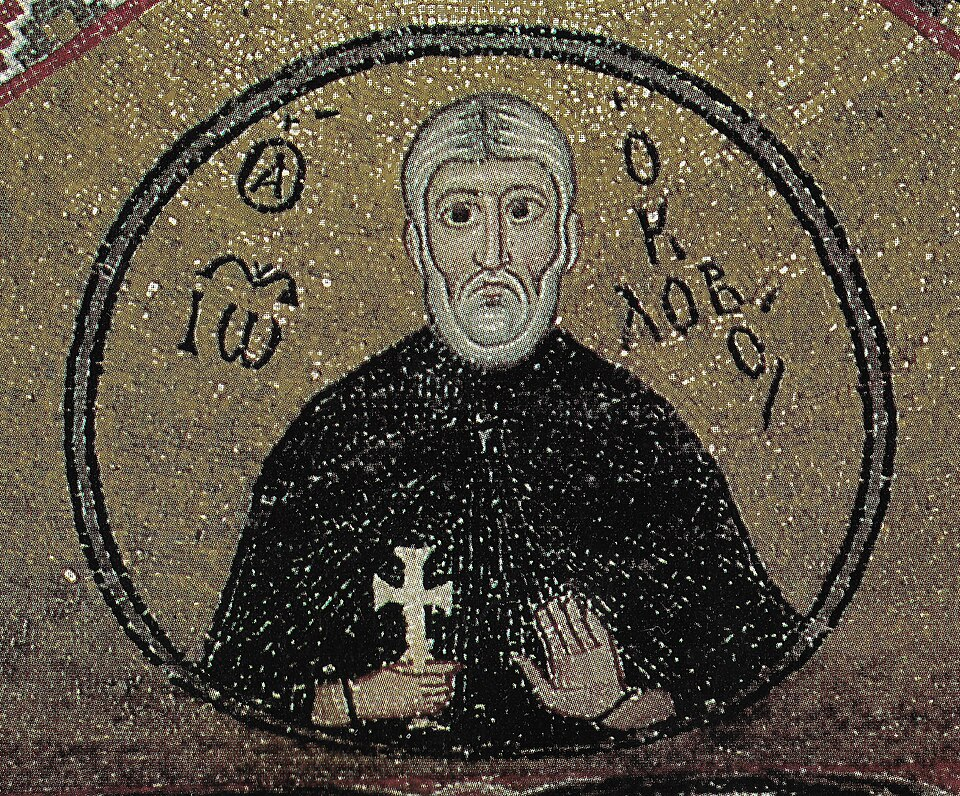
Noted for being short of stature, short of temper, and conceited by nature; he did not grow in height, but as his faith increased, so did his gentleness and humility. John lived on only flatbread and vegetables his entire life and ate only one meal a day. In later life he was known for absent-mindedness, his thoughts being on the spiritual life. As a test of his new humble obedience, his director Pambo ordered him to water a walking staff stuck in the sand; John obeyed and went on watering it twice a day even though the water was about 12 miles from where they lived. After three years, the piece of wood sprouted and grew into a fruitful tree. Pambo took some of this tree’s fruits and went around to all the elder monks, saying “take, eat from the fruit of obedience”. John was ordained a priest by Pope Theophilus and became abbot of the monastery he founded around the Tree of Obedience.

To escape Berber invaders around 395, he fled Skete and lived for years as a hermit on Mount Qolzum, near the current city of Suez. He was the spiritual teacher of Saint Arsenius, and died in 405 at Mount Qolzum, Egypt, of natural causes. When Saint John died, his servant, who had been in a nearby village, had a vision of him being carried to heaven by a group of angels and saints.
Posted in SAINT of the DAY

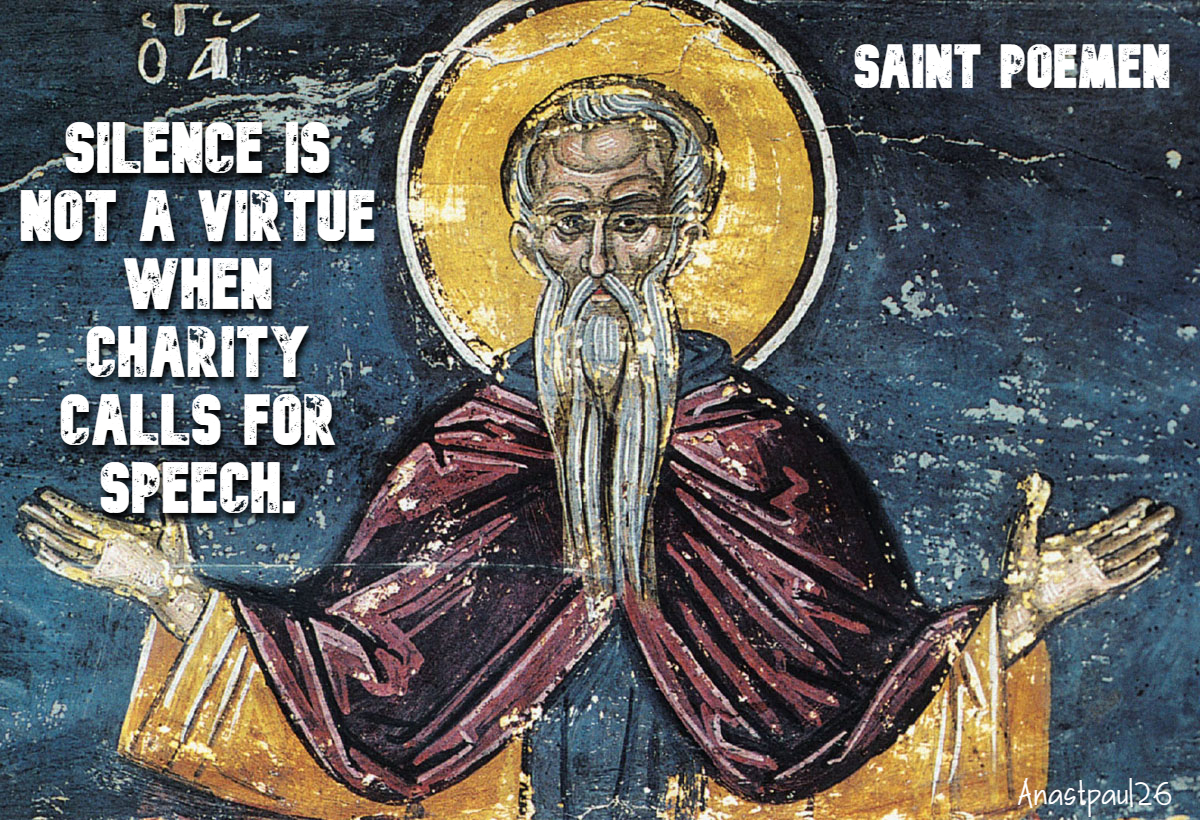
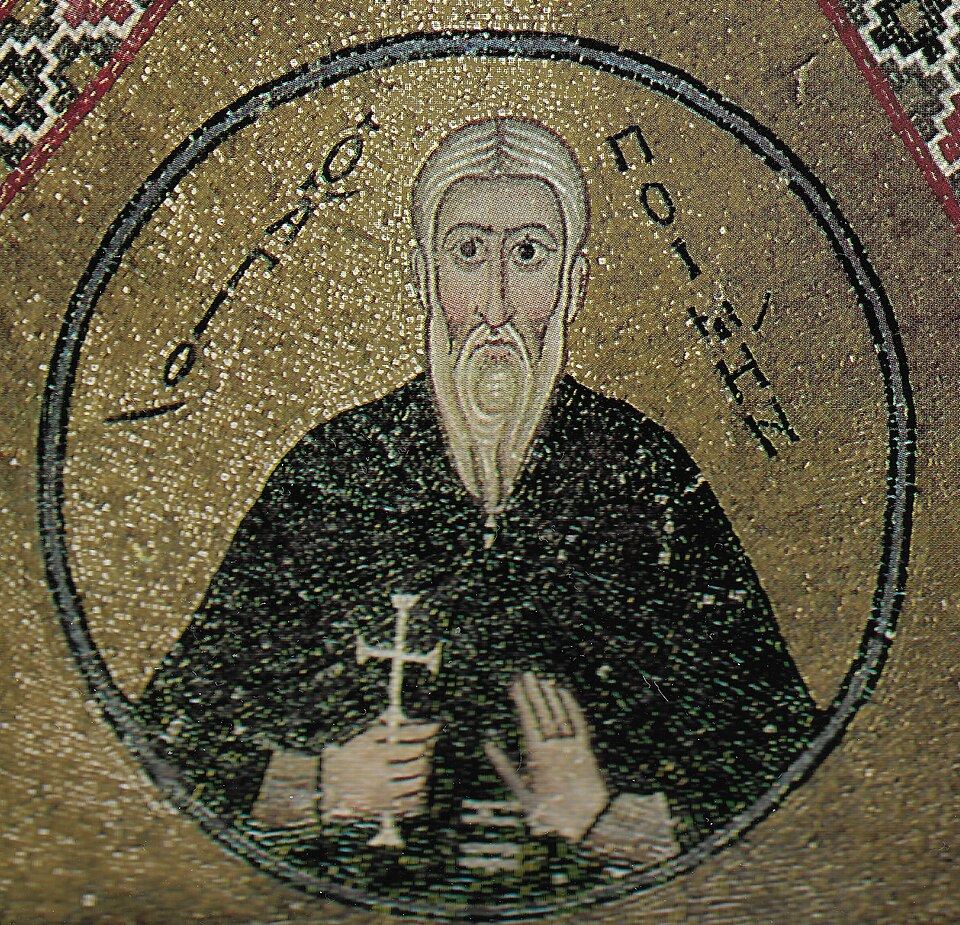
Saint of the Day – 27 August – Saint Poemen

Saint Poemen (meaning ‘Shepherd’), born in 340, is the most quoted Father in the Sayings of the Desert Fathers. 

Poemen lived at a monastery in Scetis in Egypt, one of the earliest centres of Christian monasticism. In 407 AD the monastery was overrun by barbarian raiders, scattering the monks. Poemen and Anoub, along with a handful of monks, fled to Terenuthis, on the river Nile. After leaving Scetis, his group first lived in an abandoned pagan temple. The diaspora of monks resulting from these raids lead to Poemen and his group keeping alive the collective wisdom of the monks of Scetis by creating the bulk of the Sayings of the Desert Fathers.

Although noted for his strong discipline, (permitting himself and his brothers four hours of sleep a day and spending the rest of the time in chores, prayers or study) he was also tolerant of the weakness of others. One story recounts that some of the older monks approached Poemen for his advice on how to treat monks who fell asleep during their prayers. They were inclined to wake the sleeping monk, while Poemen took a more compassionate approach, advising, “For my part, when I have seen a brother who is dozing, I put his head on my knees and let him rest.” Poemen was typically opposed to giving excessively harsh penances —when a monk came to him who had committed a “great sin”, Poemen reduced his penance from three years to three days.

He once recalled a straying monk back to virtue by sending him a bottle of wine on the birth of a bastard child, in ‘celebration’, which struck the monk’s conscience so hard that he dismissed his mistress. Poemen was described as a charismatic speaker who taught more by example than by lecturing others. When a visiting monk asked him if he should assume a role of authority over the brothers he was living with, Poemen responded by saying, “No, be their example, not their legislator.” Judgment of others was also abhorrent to him. He once stated that, “A man may seem to be silent, but if his heart is condemning others, he is babbling incessantly.” He also urged frequent Communion for all.

He died in 450, of natural causes.

Selected sayings of Poemen

  • The beginning of evil is the lack of vigilance.
  • Silence is not a virtue when charity calls for speech. 
  • A living faith consists of thinking little of self, and showing consideration for others.
  • Do not lay open your conscience to anyone whom you do not trust in your heart.
  • To instruct your neighbour is the same thing as reproving him. 
  • If you take little account of yourself, you will have peace, wherever you live. 
  • To throw yourself before God, not to measure your progress, to leave behind all self-will; these are the instruments for the work of the soul. 
  • Give not your heart to that which does not satisfy your heart.
  • If you are silent, you will possess peace wherever you live.
  • The nature of water is soft, and the nature of stone is hard; but if a bottle is hung above the stone, allowing the water to fall down drop by drop, it wears away the stone. So it is with the Word of God: it is soft and our heart is hard, but the man who hears the Word of God often opens his heart to the fear of God.