
St Clair of Epte, also known as Clair of Beauvais or Clare. The name Sinclair comes indirectly from St. Clare or St. Clere, or St. Clair, or in Latin, Sanctus Clarus. He lived near the town that is now called St. Clair sur l’Epte, northwest of Paris in France, on the edge of Normandy.
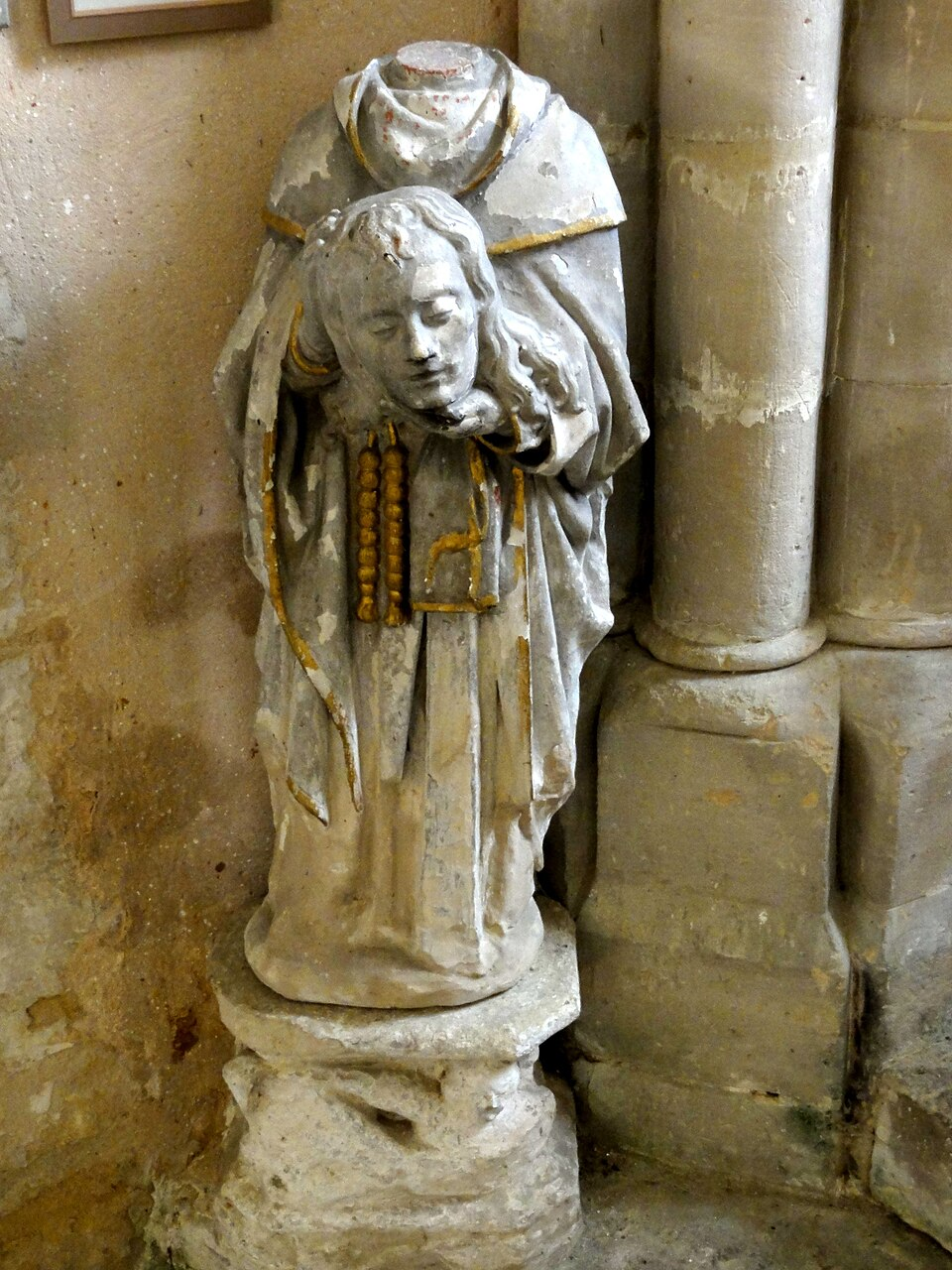
Born to the nobility, Clair felt a call to religious life, and lived at home much like a monk. His father arranged a marriage for him to a nearby wealthy heiress, and when the young man said he preferred to devote himself to God, the woman tried to seduce him in order to joined the two families together. When he refused her, she became enraged, and swore vengeance. Clair fled to the region of Normandy, France, where he lived as a hermit. Word spread of his wisdom and ability to heal by prayer, and Clair had to keep moving from place to place in order to have solitude. Ordained a priest in 870. Hermit in the woods around Nacqueville, France, and then at a hermitage on the banks of the river Epte where he lived with brother hermit and spiritual son named Cyrin. He was finally located by agents sent by his spurned would-be wife, and murdered on her orders.
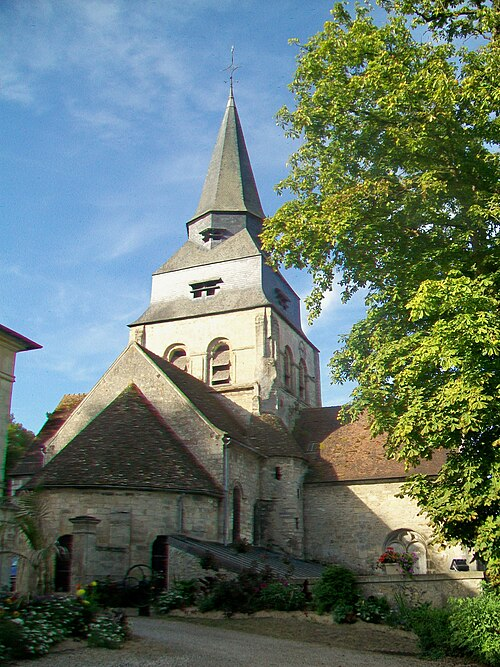
The church of Our Lady, in Saint-Clair-sur-Epte
One of the agents beheaded Clair whilst he knelt in prayer, which is why he is frequently depicted, like St Denis, holding his head in his hands. The blood flowed copiously from his neck but a spring instantly flowed out of the ground and washed away all signs of it.
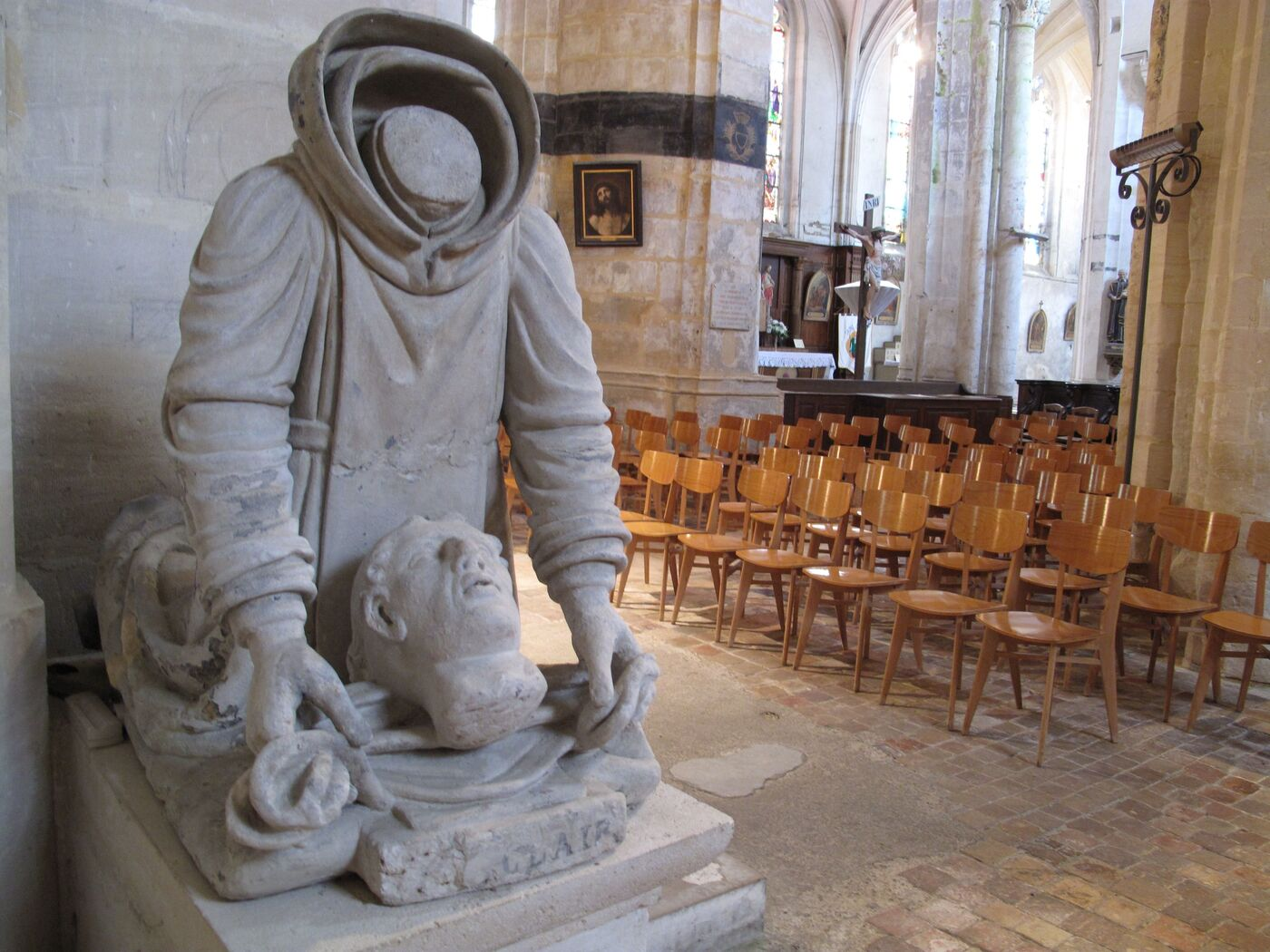
Clair’s death and the miracle of the spring increased his renown. His hut was transformed into a chapel and eventually a church was built on the spot. Ten years after the murder enough houses were built at the spot to establish a village which was named, St Clair, after the martyr.
The treaty of Saint-Clair-sur-Epte in 911 established Rollo, a Norse warlord and Viking leader, as the first Duke of Normandy.


One thought on “Saint of the Day – 18 July – Saint Clair of Epte”