Sunday Reflection – 10 June -Tenth Sunday of the Year B
“The Holy Sacrifice of the Mass gives boundless honour to the Most Blessed Trinity because it represents the passion of Jesus Christ and because, through the Mass, we offer God the merits of Our Lord’s obedience, of His sufferings and of His Precious Blood. The whole of the heavenly court also receives an accidental joy from the Mass.
Several doctors of the Church—together with St Thomas Aquinas—tell us that, for the same reason, all the blessed in Heaven rejoice in the communion of the faithful because the Blessed Sacrament, is a memorial of the passion and death of Jesus Chris and that by means of it, men share in its fruits and work out their salvation”
St Louis de Montfort (1673-1716)
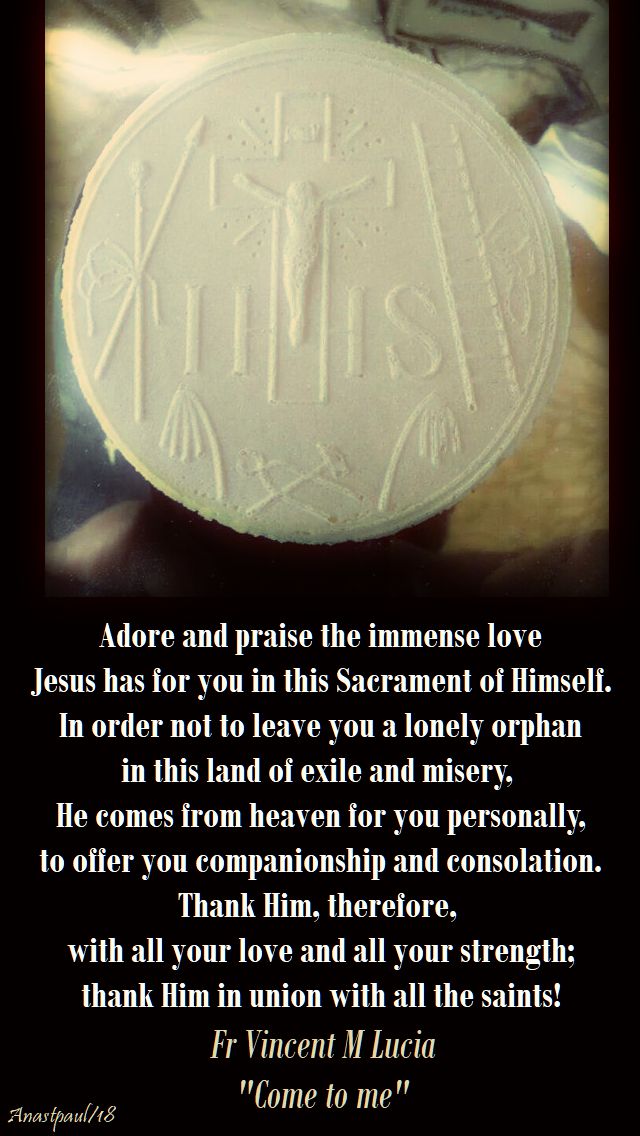
“Adore and praise the immense love Jesus has for you in this Sacrament of Himself.
In order not to leave you a lonely orphan in this land of exile and misery, He comes from heaven for you personally, to offer you companionship and consolation.
Thank Him, therefore, with all your love and all your strength;
thank Him in union with all the saints!”…Fr Vincent M Lucia “Come to me”
Quote of the Day – 10 June -Tenth Sunday of the Year B
“If we approach with faith, we too will see Jesus… for the Eucharistic table takes the place of the crib. Here, the Body of the Lord is present, wrapped not in swaddling clothes, but in the rays of the Holy Spirit.”
One Minute Reflection – 10 June – Tenth Sunday of the Year B – Today’s Gospel Mark 3:20-35
“But whoever blasphemes against the holy Spirit will never have forgiveness but is guilty of an everlasting sin.”…Mark 3:29
REFLECTION – “Why is blasphemy against the Holy Spirit unforgivable? How should this blasphemy be understood? St Thomas Aquinas replies that it is a question of a sin that is “unforgivable by its very nature, insofar as it excludes the elements through which the forgiveness of sin takes place.” According to such an exegesis, “blasphemy” does not properly consist in offending against the Holy Spirit in words; it consists rather in the refusal to accept the salvation which God offers us through the Holy Spirit, working through the power of the Cross. If man rejects the “convincing concerning sin” which comes from the Holy Spirit (Jn 16:8) and which has the power to save, he also rejects the “coming” of the Counsellor (Jn 16:7) – that “coming” which was accomplished in the Paschal Mystery, in union with the redemptive power of Christ’s Blood: the Blood which “purifies the conscience from dead works” (Heb 9:15).
We know that the result of such a purification is the forgiveness of sins. Therefore, whoever rejects the Spirit and the Blood (cf. 1Jn 5:8) remains in “dead works,” in sin. And the blasphemy against the Holy Spirit consists precisely in the radical refusal to accept this forgiveness, of which he is the intimate giver and which presupposes the genuine conversion which he brings about in the conscience. If Jesus says that blasphemy against the Holy Spirit cannot be forgiven either in this life or in the next, it is because this “non-forgiveness” is linked, as to its cause, to “non-repentance,” in other words to the radical refusal to be converted…
Blasphemy against the Holy Spirit, then, is the sin committed by the person, who claims to have a “right” to persist in evil – in any sin at all – and who thus, rejects Redemption. One closes oneself up in sin, thus making impossible one’s conversion and consequently the remission of sins, which one considers not essential or not important for one’s life. This is a state of spiritual ruin, because blasphemy against the Holy Spirit does not allow one to escape from one’s self-imposed imprisonment.”… St John Paul II (1920-2005) Encyclical “Dominum et vivificantem”
PRAYER – Lord God strength of those who hope in You, support us in our prayer because we are weak and can do nothing without You. Grant always the help of Your grace so that, in fulfilling Your commandments, we may please You in the depths of our hearts and souls and be free of sin against You. Fill us with the Holy Spirit, who is our refuge, our strength, our truth. Through Christ, our Lord, with You and the Holy Spirit, one God forever, amen. “Whoever does the will of God is my brother, and sister, and mother.” Mark 3:35
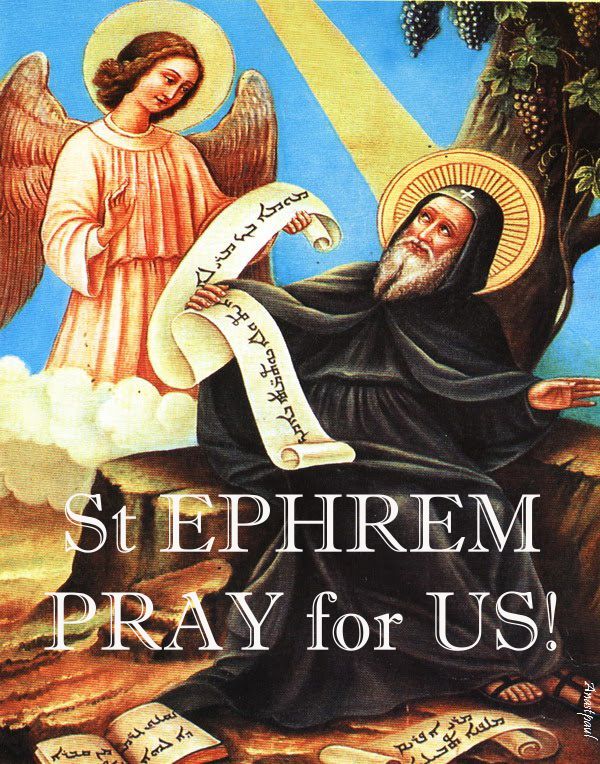
One Minute Reflection – 9 June – The Memorial of St Ephrem (306-373) Father & Doctor of the Church
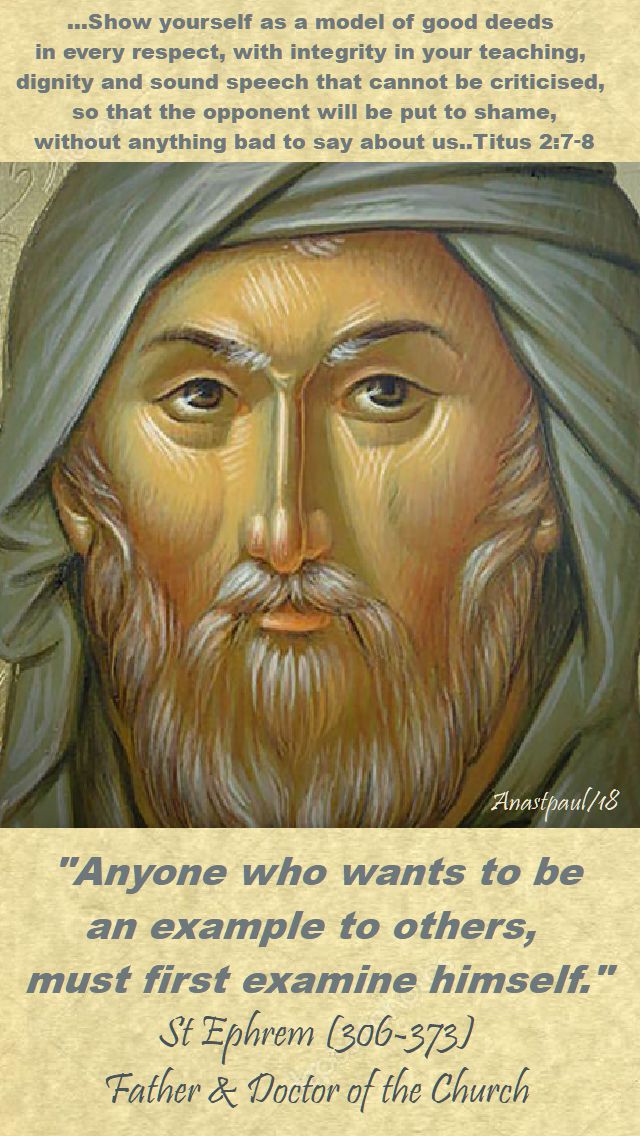
…Show(ing) yourself as a model of good deeds in every respect, with integrity in your teaching, dignity and sound speech that cannot be criticised, so that the opponent will be put to shame, without anything bad to say about us…Titus 2:7-8
REFLECTION – “Anyone who wants to be an example to others, must first examine himself.”…St Ephrem
PRAYER – O Lord and Master of my life, take from me the spirit of sloth, meddling, lust of power and idle talk. But give rather the spirit of chastity, humility, patience and love to Thy servant. Yea, O Lord and King, grant me to see my own sins and not to judge my brother; for Thou art blessed unto ages of ages. Amen….Prayer of St Ephrem of whom we ask, please pray for us!
Thought for the Day — 8 June – The Solemnity of The Most Sacred Heart of Jesus and The World Day for the Sanctification of Priests
The World Day for the Sanctification of Priests 2002 takes its inspiration from the theme of John Paul II’s Letters to Priests for Holy Thursday 2000, 2001, and 2002. Below is an excerpt from the Congregation of the Clergy to all our Priests all over the world.
From St John Chrysostom (347-407) Father & Doctor
“These are really the ones who are in charge of spiritual travail and responsible for the birth which comes through baptism. Through them we put on Christ and are buried in union with the Son of God and become members, obedient to our blessed Head (cf. Rom 6,1; Gal 3,27). For that reason they should not only be more justly feared than rulers and kings but also, be more honoured, than our parents. For our parents generated us of blood and the will of the flesh (cf. Jn 1,13) but the priests are the authors of our birth from God, even that blessed regeneration which is true freedom and adopted sonship according to grace” (cf. St John Chrysostom, De sacerdotio, III, 6, PG 48, 643-644).
From St Anthony of Padua (1195-1231) Evangelical Doctor
“Our altar of gold is the Heart of Christ. We must enter into the Holy of Holies, which is this same Heart of Jesus and gather up the riches of His love” (St Anthony of Padua).
From St John of Avila (1500-1569) Doctor of the Church
“If the Jewish High priest carried the names of the twelve tribes of Israel written on his shoulders and on his breast, how much more Christ, our High Priest, carries our names written on His Heart” (St John of Avila).
From the holy Curé of Ars (1786-1859) Patron of Priests
“The Priesthood is the love of the heart of Jesus” (CCC, n. 1589—St John Vianney, quoted in B. Nodet, Jean-Marie Vianney, Curé d’Ars, 100).
“The priest is not a priest for himself. He does not give absolution to himself. He does not administer the sacraments to himself. He does not exist for himself, he exists for you” (Curé of Ars: Monnin II 453).
From St Pope John XXIII (1881-1963)
“Today everything which concerns the Sacred Heart of Jesus has become familiar and doubly dear to me. My life seems destined to be spent in the light shining from the tabernacle and it is to the Heart of Jesus that I must look for a solution to all my troubles. I feel I would be ready to shed my blood for the cause of the Sacred Heart. My fondest wish is to be able to do something for that precious object of my love.
“At times the thought of my arrogance, of my unbelievable self-love and of my great unworthiness alarms and dismays me and robs me of my courage but I soon find reason for comfort, in the words spoken by Jesus to Blessed Margaret Mary Alacoque: ‘I have chosen you to reveal the marvels of my heart, because you are such an abyss of ignorance and insufficiency’.
“Ah! I wish to serve the Sacred Heart of Jesus, today and always. I want my devotion to His Heart to be the measure of all my spiritual progress. I desire to do everything in intimate union with the Sacred Heart of Jesus in the Blessed Sacrament.
“My greatest joy will be to seek and find comfort only in that Heart which is the source of all consolation. I am determined to give myself no peace until I can truly say, I am absorbed into the Heart of Jesus” (Bl. John XXIII, Journal of a Soul, [“During the retreat in preparation for the ordination to the diaconate, 9-18 December 1903”], pp. 208-209, New English Library: London, 1966).
Prayer for Priests
O Jesus, eternal High Priest, who, in an incomparable love for men, allowed Catholic priesthood to issue from Your Sacred Heart, deign to continue to pour out on Your priest, the life-giving streams of Infinite Love. Live in them, transform them into Yourself; Render them by Your grace instruments of Your Mercy; Act in them and through them and grant that they may perform in Your Name and by the strength of Your Spirit, the works which You Yourself accomplished for the salvation of this world. Divine Redeemer of souls, see how great is the multitude of those, who still sleep in the darkness of error; count the number of those unfaithful sheep, who are walking on the edge of an abyss; consider the crowds of the poor, the hungry, the ignorant and the weak, who are groaning in their state of abandonment. Return to us again, dear Sacred Heart of Jesus, live again in very truth in them; act through them and pass again through this world teaching, pardoning, consoling, offering sacrifice, renewing the Bonds of Love between the Heart of God and the hearts of men. We pray through the intercession of Mary, Mother of all hearts. Amen
One Minute Reflection – 8 June – The Solemnity of The Most Sacred Heart of Jesus
...But one soldier thrust his lance into his side and immediately blood and water flowed out...John 19:34
REFLECTION – “When the Church, in the days immediately succeeding her institution, was oppressed beneath the yoke of the Caesars, a young Emperor saw in the heavens across, which became at once the happy omen and cause of the glorious victory that soon followed. And now, to-day, behold another blessed and heavenly token is offered to our sight-the most Sacred Heart of Jesus, with a cross rising from it and shining forth with dazzling splendour amidst flames of love. …. there is in the Sacred Heart a symbol and a sensible image of the infinite love of Jesus Christ which moves us to love one another…”…Pope Leo XII – Annum Sacrum (Holy Year) 1899
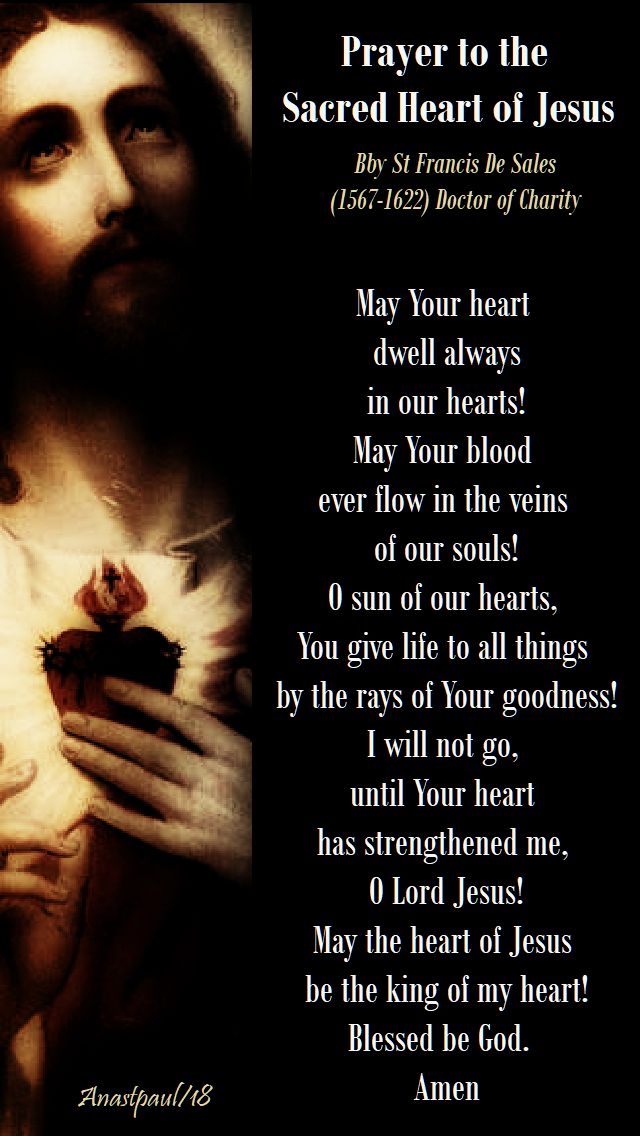
PRAYER – “May Your heart dwell always in our hearts! May Your blood ever flow in the veins of our souls! O sun of our hearts, You give life to all things by the rays of Your goodness! I will not go, until Your heart has strengthened me, O Lord Jesus! May the heart of Jesus be the king of my heart! Blessed be God. Amen.”…St Francis De Sales (1567-1622) Doctor of Charity
One Minute Reflection – 7 June – Thursday of the Ninth Week of Ordinary Time, Year B – Today’s Gospel Mark 12:28-34.
Jesus replied, “The first is this: ‘Hear, O Israel! The Lord our God is Lord alone! You shall love the Lord your God with all your heart, with all your soul, with all your mind and with all your strength.’ The second is this: ‘You shall love your neighbour as yourself.’ There is no other commandment greater than these.” …Mark 12:29-31
REFLECTION – “We cannot truly love God without loving our neighbour, nor can we truly love our neighbour, without loving God. This is why… the Holy Spirit was given a second time to the disciples. First it was given by the Lord, while He was still dwelling on earth and later, while He was watching over us in heaven (Jn 20:22; Acts 2). He was given to us on earth, that we may love our neighbours, from heaven that we may love God. Why first on earth and later from heaven, except for the reason, given us openly by John: “How can anyone who does not love his brother whom he sees, love God whom he does not see?” So let us love our neighbours, my friends, let us love the one who is near us, so that we may be able to attain the love of the one, who is above us.”…St Gregory the Great (c 540-604), Pope, Doctor of the Church (Homilies on the Gospel, no 30)
PRAYER – Lord Almighty God, You sanctify Your Church, by the gifts of the Holy Spirit. Fulfil in us the words of Your Son that our love for You and Your children may be come to perfection. Grant that by the prayers of St Anthony Mary Gianelli, who served You through his neighbour, with love and zeal, we too may attain our heavenly home. Through Christ our Lord, in union with You and the Holy Spirit, one God, amen.
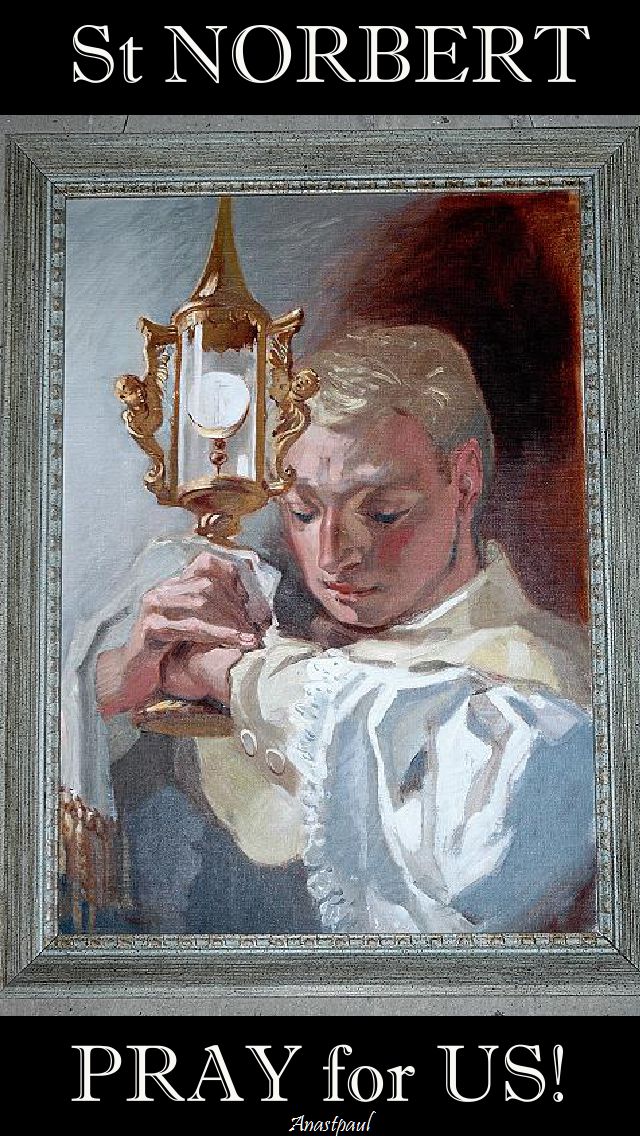
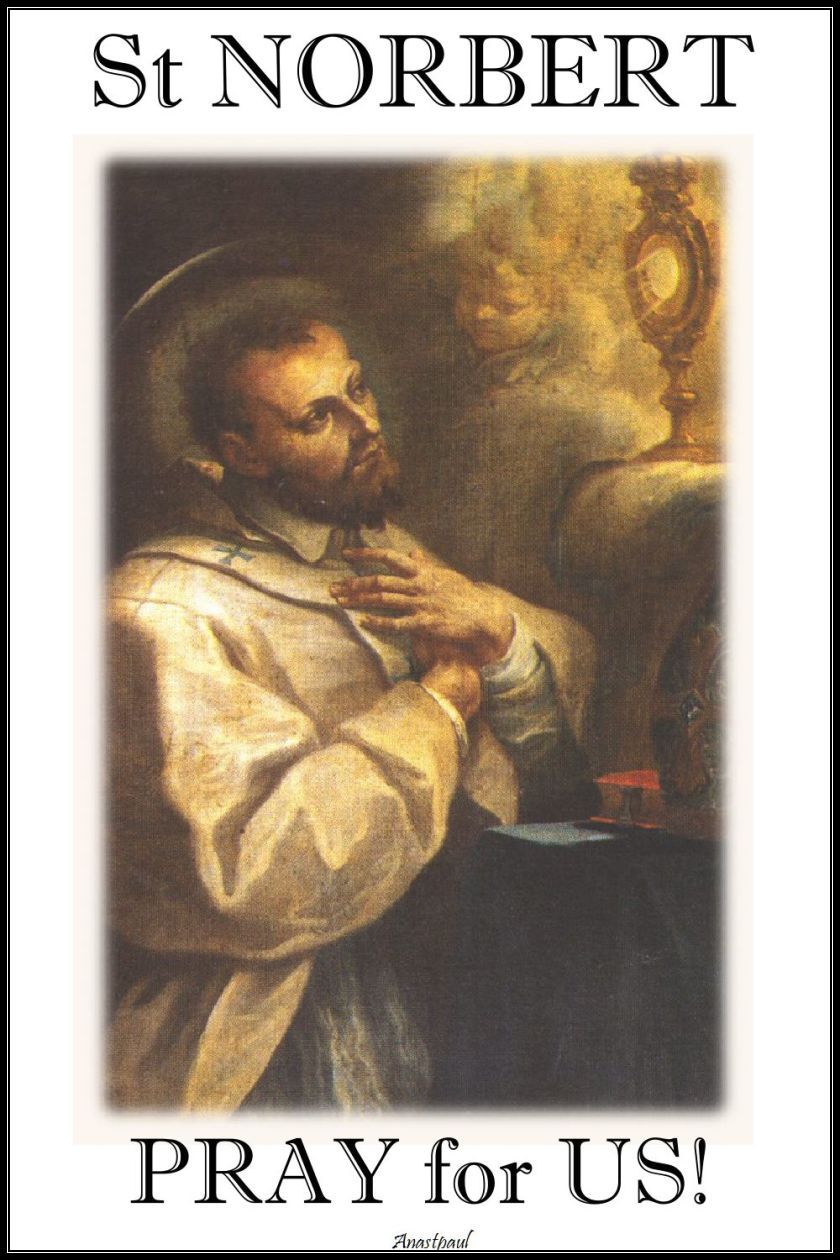
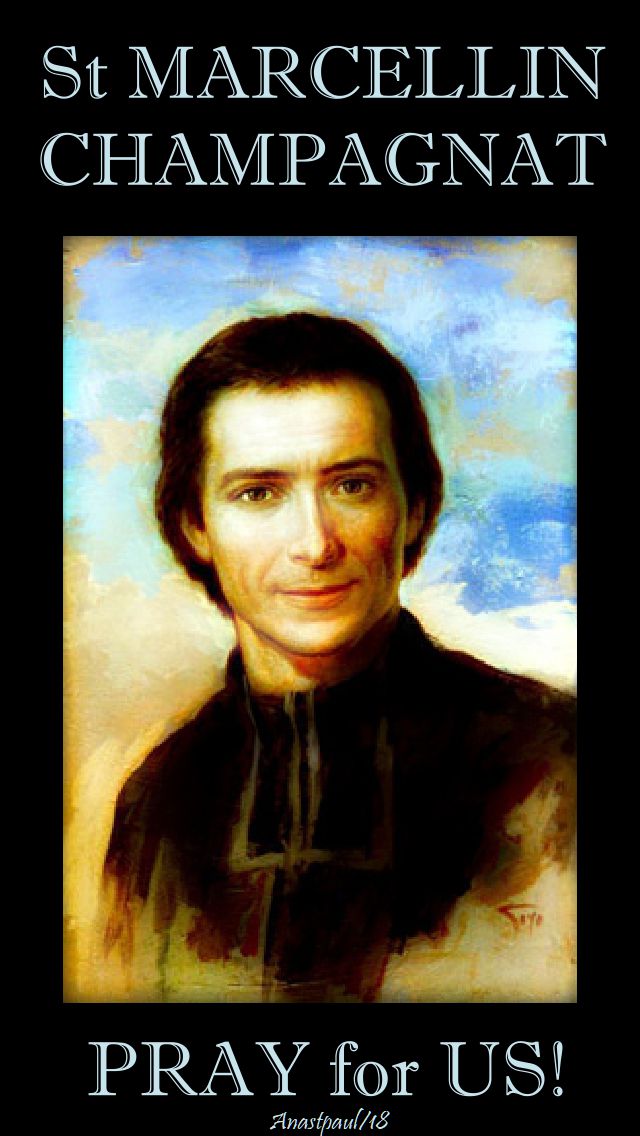
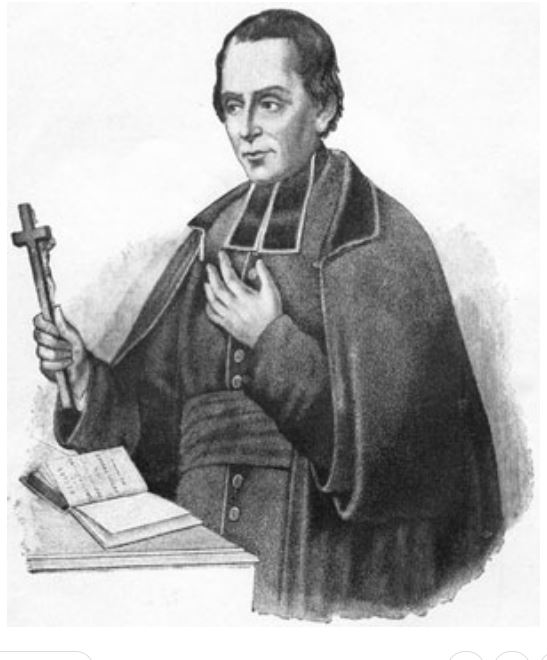
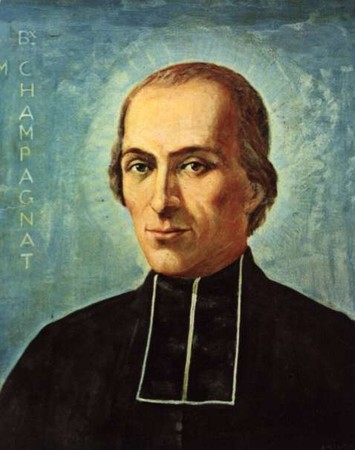
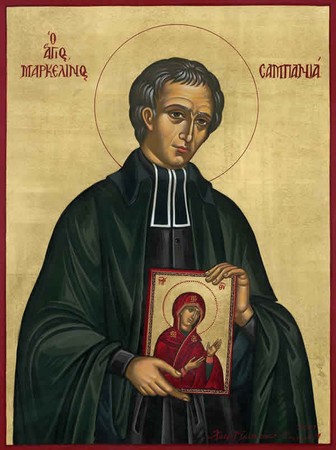
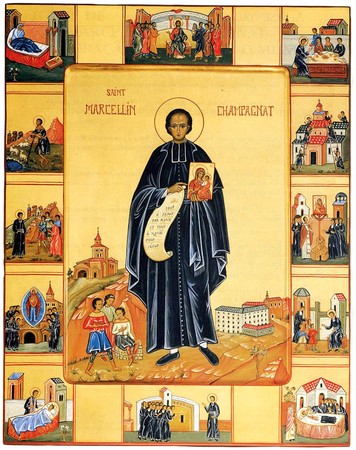
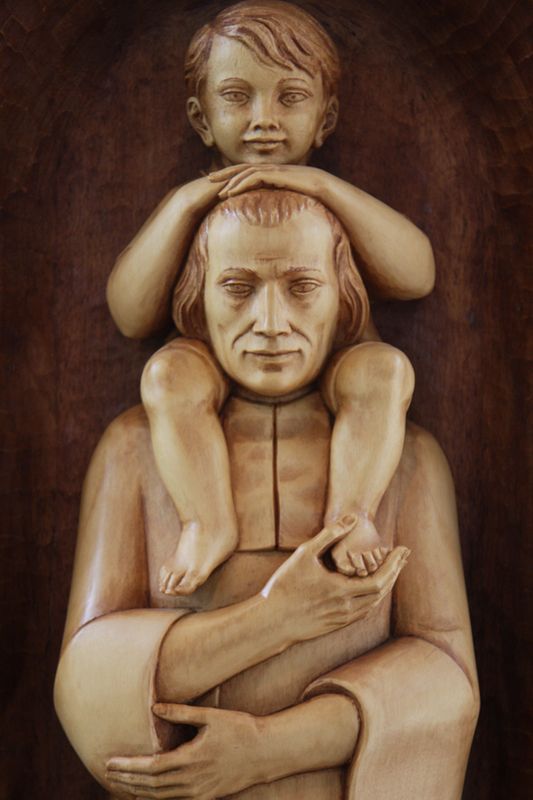
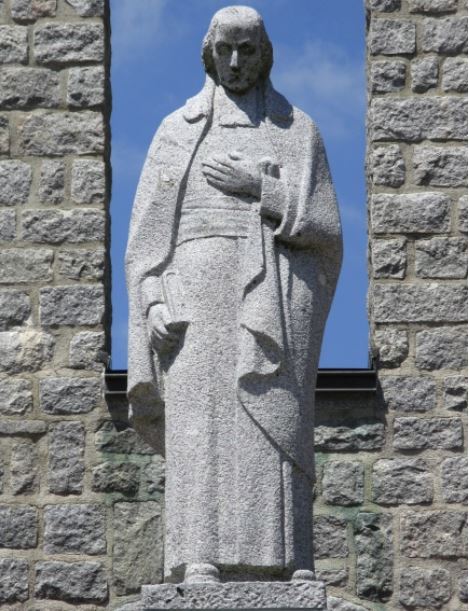
Thought for the Day – 6 June – The Memorial of St Marcellin Champagnat (1789-1840) Founder of the Marist Brothers and St Norbert (c 1080-1134)
Today’s 2 Saints certainly confirm, once again, that there are two sure ways to sanctity – through the Holy Eucharist and the Mother of God. These are the absolute totality of our Faith, these are the Source and the Heart, these are the only ways we will achieve our goal!
The relationship of Marcellin to Mary was deeply marked by an affective and total trust in her, as the “Good Mother” because it was her work that he undertook.
He wrote once: “Without Mary we are nothing and with Mary we have everything because Mary always has her adorable Son within her arms or in her heart.”
This belief remained constant all through his life. Jesus and Mary were the treasure on which Marcellin had learned to place his own heart. This intimate relationship helped shape the Marian dimension of the Marist spirituality. In the Marist tradition, the phrase “Ordinary Resource” has come to encapsulate our constant reliance on Mary. The motto attributed to Champagnat by his biographer, All to Jesus through Mary, all to Mary for Jesus, captures this close relationship between the Son and the Mother and our Founder’s attitude of confidence in Mary, which we are invited to live.
Mary, Mother, Intercede for us!
St Marcellin, Pray for us!
Excerpt from the Thought for the Day last year:
St Norbert was 33 years old before he took God seriously and during the next 20 years he made up for lost time. He did not stop to bewail lost years but gave everything he had to God. It is never too late to begin and God is always waiting for our service. We do not need a bolt of lightening to get started.
Unswerving loyalty to the Church and fervent devotion to the Eucharist, as practiced by Norbert, will continue immeasurably toward maintaining the people of God in accord with the heart of Christ.
Quote/s of the Day – 6 June – The Memorial of St Norbert (c 1080-1134)
On the day of his ordination, St Norbert said:
“O Priest! You are not of yourself because you are of God. You are not of yourself because you are the servant and minister of Christ. You are not your own because you are the spouse of the Church. You are not yourself because you are the mediator between God and man. You are not from yourself because you are nothing. What then are you? Nothing and everything. O Priest! Take care, lest what was said to Christ on the cross be said to you: ‘He saved others, himself he cannot save!”
St Norbert (c 1080-1134)
“All to Jesus through Mary, all to Mary for Jesus.”
One Minute Reflection – 6 June – Wednesday of the Ninth Week of Ordinary Time, Year B – Today’s Gospel Mark 12:18-27 and The Memorial of St Norbert (c 1080-1134) and St Marcellin Champagnat (1789-1840)
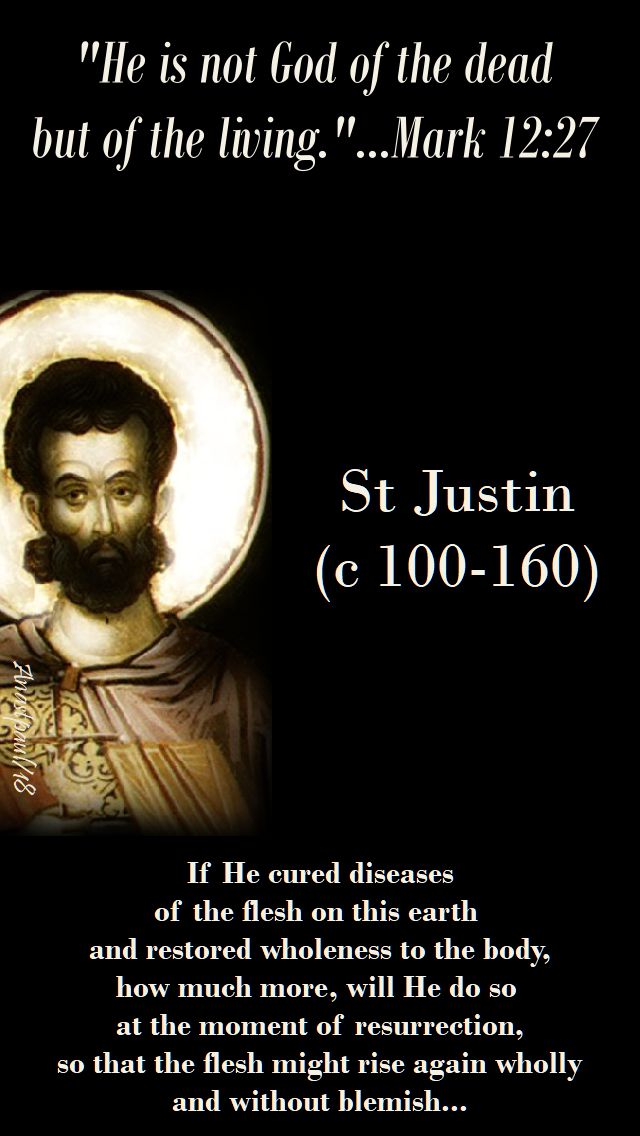
“As for the dead being raised, have you not read in the Book of Moses, in the passage about the bush, how God told him, ‘I am the God of Abraham, (the) God of Isaac and (the) God of Jacob’? He is not God of the dead but of the living. You are greatly misled.” …Mark 12:26-27
REFLECTION – “How blind are the eyes of the intellect on its own! For they have not noticed that “the blind see, the lame walk” (Mt 11:5) on earth at the Saviour’s word… so that we might believe that the flesh in its entirety will rise again at the resurrection. If He cured diseases of the flesh on this earth and restored wholeness to the body, how much more, will He do so at the moment of resurrection, so that the flesh might rise again wholly and without blemish… It seems to me that such people fail to look, at the divine action in its totality, at the beginning of creation, in the forming of man. They don’t attend to the reason why earthly things were made.
The Word said: “Let us make man in our image and likeness” (Gn 1:26)… Obviously man, formed in the image of God, was flesh. Therefore how absurd it is to claim that flesh formed by God in his own image is despicable and worthless! Clearly flesh must be precious in God’s eyes since it is His creation. And since the culmination of His plan for all the rest of creation is to be found in it, this is what has the greatest worth in the eyes of the Creator.”…St Justin (c 100-160), Martyr, Apologist, Philosopher, Father of the Church (Treatise on the resurrection, 2.4.7-9)
PRAYER – Holy Father, You made us, we belong to You. Grant that by the prayers of all your holy saints, we may attain eternal life with You to praise and worship You for all eternity. May the prayers of St Norbert and St Marcellin, assist us our earthly pilgrimage. We make our prayer through our Lord, Jesus, with You and in the unity of the Holy Spirit, one God forever, amen.
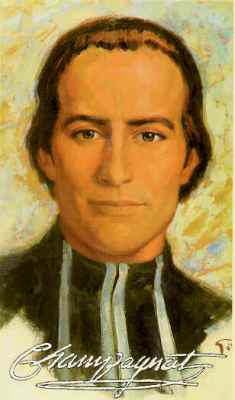
Saint of the Day – 6 June – Saint Marcellin Champagnat (1789-1840) – Priest of the Society of Mary and Founder of the the Institute of the Little Brothers of Mary (Marist Brothers) ‘FMS’, a religious congregation of brothers devoted to Mary and dedicated to education. St Marcellin was born as Marcellin-Joseph-Benoît Champagnat on 20 May 1789 at Hameau du Rosey, Lyon, France and died on 6 June 1840 in in Saint-Chamond, Loire, France of natural causes.
MARCELLIN CHAMPAGNAT was born on 20th May 1789, in Marlhes, a village in the mountains of east-central France. The Revolution was about to burst upon the scene. He was the ninth child of a very Christian family, from whom he received his basic education. His mother and his aunt, a religious driven from her convent, awoke in him a solid faith and deep devotion to Mary. His father, who was a farmer and merchant, possessed an above-average education and played a significant role in the politics of the village and the region. He imparted to Marcellin his aptitude for manual work, a penchant for direct action, a sense of responsibility and openness to new ideas.
When Marcellin was 14, a priest passing through the village helped him to see that God was calling him to the priesthood. Marcellin, whose formal schooling was practically non-existent, began to study because “God wills it!”, even while those around him, aware of his limitations, tried to dissuade him. The difficult years he spent in the minor seminary in Verrieres (1805-1813) were for him a time of real human and spiritual growth.
Among his companions in the major seminary in Lyons were Jean-Marie Vianney, the future Cure of Ars and Jean-Claude Colin who was to become the founder of the Marist Fathers. He joined a group of seminarians whose goal was to found a congregation bearing Mary’s name and including priests, sisters and a lay third order the “Society of Mary” for the re-Christianisation of society. Deeply aware of the cultural and spiritual poverty of the children of the countryside, Marcellin felt a strong urge to include a branch of brothers for the Christian education of young people. “I cannot see a child without wanting to tell him how much Jesus loves him.” The day after their ordination on 22nd July 1816, these young priests went to consecrate themselves to Mary and to place their project under her protection at the shrine of Our Lady of Fourviere.
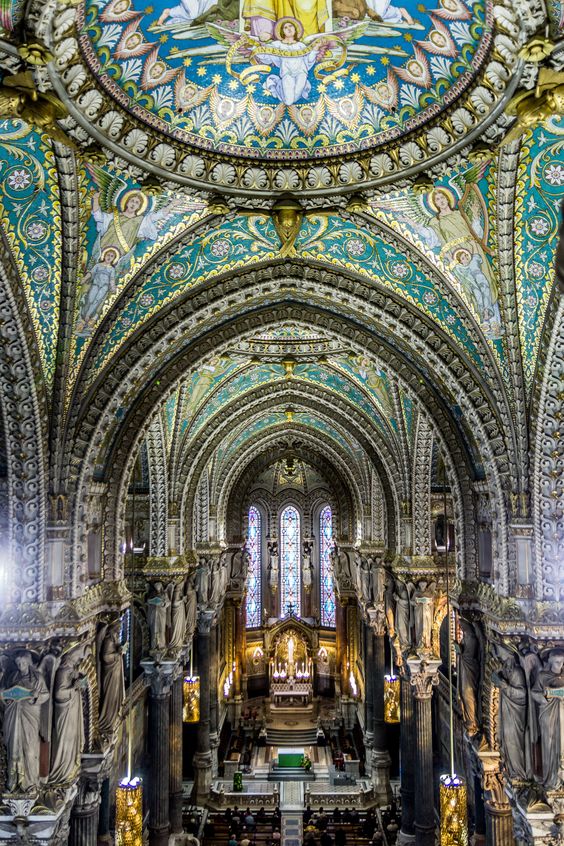
Basilica of Our Lady of Fourviere
Marcellin was sent as curate to the parish of La Valla. His ministry there included visiting the sick, catechising the children, helping the poor and helping families to live the Christian life. His simple, direct style of preaching, his deep devotion to Mary and his apostolic zeal, made a profound impression on his parishioners. His encounter with a dying 17-year-old boy, who had absolutely no religious instruction, shook him to his depths and moved him not to delay any longer in putting his plans into action.
On 2nd January 1817, only six months after his arrival in La Valla, Marcellin, a 27-year-old curate, brought together his first two disciples; the congregation of the Little Brothers of Mary, or Marist Brothers, was born in poverty, humility and total trust in God under Mary’s protection. While still carrying on his parish ministry, he went to live with his brothers, whom he trained and prepared for their mission as Christian teachers, catechists and educators of young people. Passionately devoted to the Kingdom of God, conscious of the tremendous needs of young people and an instinctive educator, Marcellin turned these uncultured young country lads into generous apostles. He lost no time in opening schools. Vocations arrived and the first little house, even though enlarged by Marcellin himself, was soon too small. There were many difficulties. The clergy in general did not understand what this inexperienced young priest with no material resources was trying to accomplish. However, the nearby villages continually requested brothers to see to the Christian education of their children.
Marcellin and his brothers shared in the construction of their new house, which could hold more than 100 persons and which would bear the name of “Our Lady of the Hermitage”. Freed from his parish duties in 1825, he thenceforth devoted himself totally to his congregation: the spiritual, pedagogical and apostolic formation and accompaniment of his brothers, visits to the schools and the opening of new ones.
Marcellin, a man of deep faith, never ceased to seek the will of God through prayer and dialogue with the religious authorities and with his brothers . Very conscious of his own limitations, he counted only on God and on the protection of Mary, his “Good Mother”, “Ordinary Resource” and “First Superior”. His deep humility and his acute awareness of the presence of God, helped him to live through many severe trials with great inner peace. He often prayed psalm 126: “If the Lord does not build the house”, convinced that this congregation of brothers was the work of God and Mary. His motto was, “All to Jesus through Mary and all to Mary for Jesus”.
“To make Jesus Christ known and loved” is the brothers’ mission. The school is the privileged setting for this mission of evangelisation. Marcellin taught his disciples to love and respect children and to give special attention to the poor, the most ungrateful and the most neglected, especially orphans. Spending a great deal of time with young people, with simplicity, family spirit and love of work and all of this carried out as Mary would have, were the essential points of his vision of education.
In 1836, the Church recognised the Society of Mary and entrusted to it the missions of Oceania. Marcellin took his vows as a member of the Society of Mary and sent three brothers with the first missionary Marist Fathers to the islands of the Pacific. “Every diocese of the world figures in our plans”, he had written.
Steps for obtaining legal recognition of his congregation made great demands on his time, energy and spirit of faith. He never stopped repeating, “When God is on your side and you rely only on Him, nothing is impossible!”
A lengthy illness gradually wore down his robust constitution. Worn out by his labours, he died at the age of 51 on 6th June 1840, leaving this message with his brothers: “May you be of one heart and one mind. May it be said of the Little Brothers of Mary as of the first Christians: see how they love one another!”…Vatican.va
St Marcellin Champagnat was declared Venerable in 1920 by Pope Benedict XV, Beatified by Pope Pius XII on 29 May 1955 and Canonised by St Pope John Paul II on 18 April 1999.
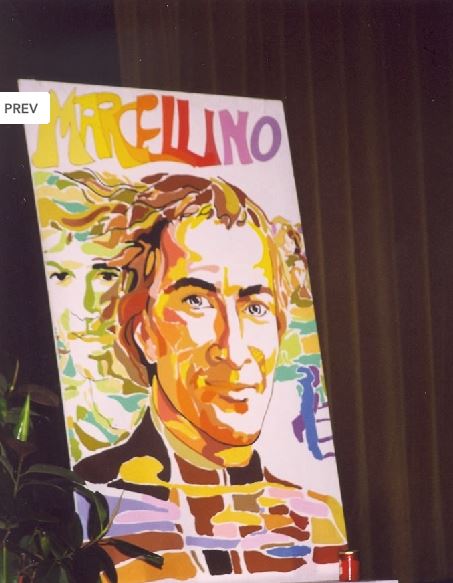
Canonisation Mass at the General HouseCaonisation celebration poster
Today there are about 5,000 Marist Brothers in 72 countries; their sloganA Heart Without Borders.
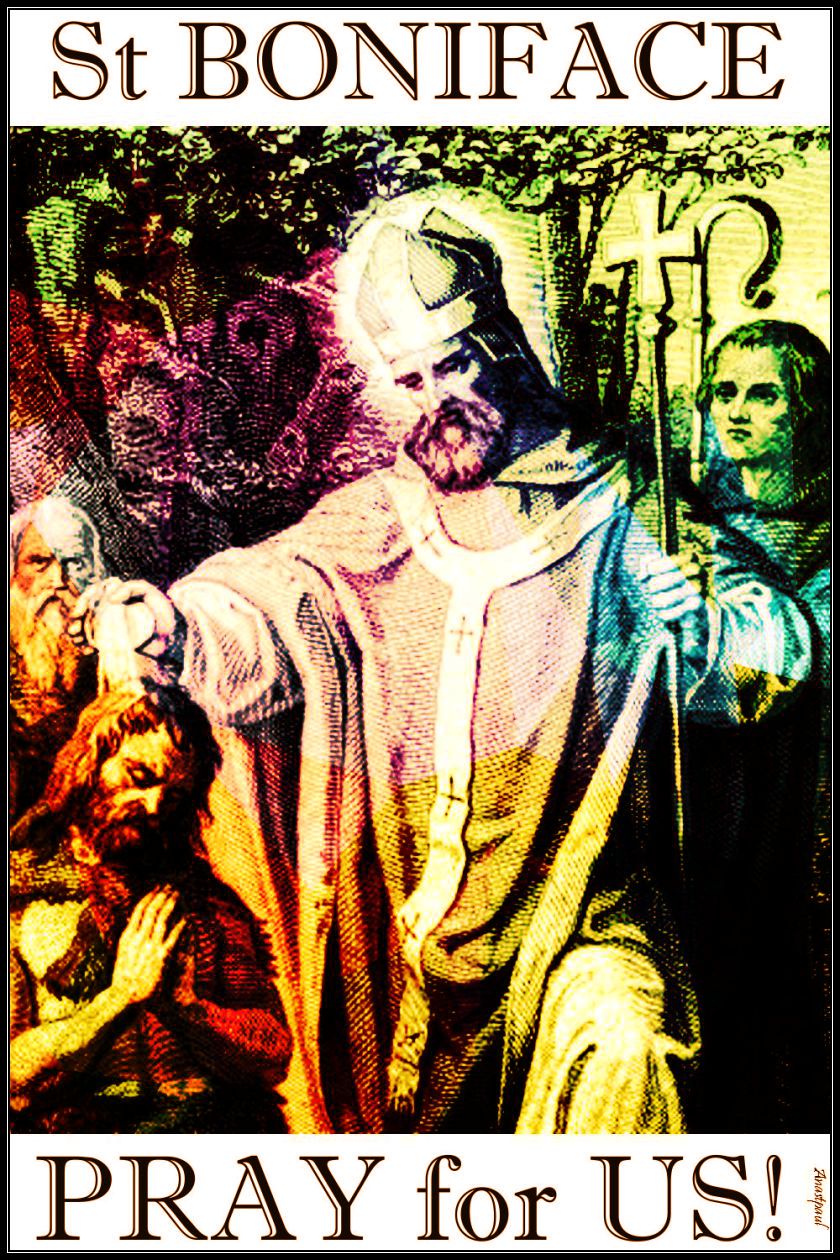
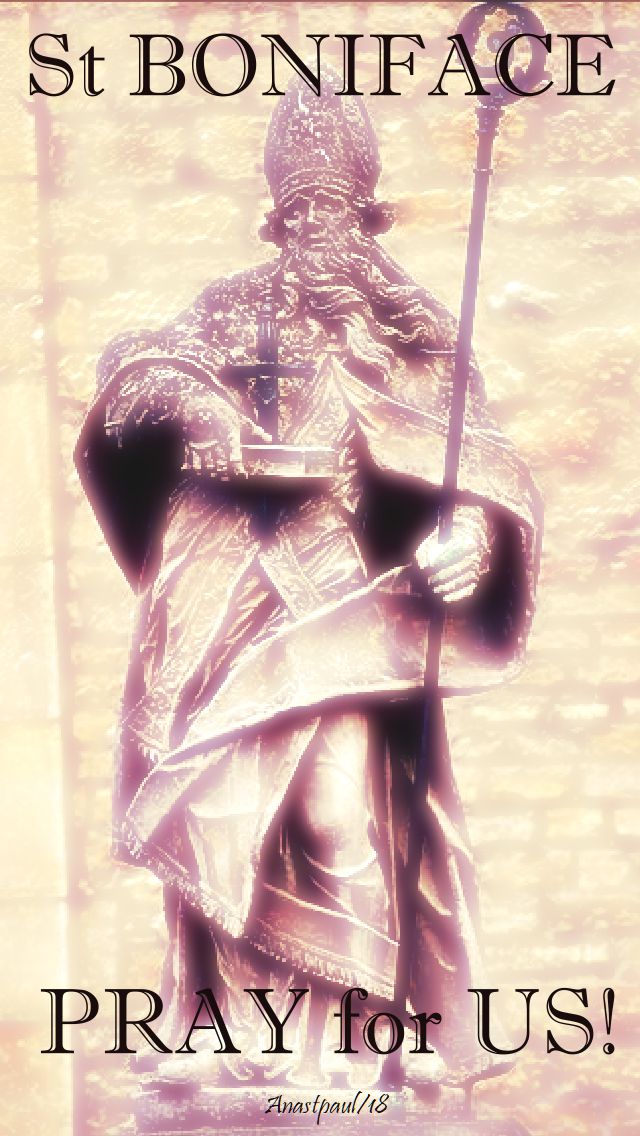
Thought for the Day – 5 June – The Memorial of St Boniface (672-754) “The Apostle of Germany” – Martyr
An excerpt from a letter by St Boniface (672-754) “The Apostle of Germany”, Bishop and Martyr:
“Let us stand fast in what is right and prepare our souls for trial. Let us wait upon God’s strengthening aid and say to Him: “O Lord, you have been our refuge in all generations.” Let us trust in Him, who has placed this burden upon us. What we ourselves cannot bear, let us bear with the help of Christ. For He is all-powerful and He tells us: “My yoke is easy and my burden light.” Let us continue the fight, on the day of the Lord. The days of anguish and of tribulation have overtaken us. If God so wills, “let us die for the holy laws of our fathers,” so that we may deserve, to obtain an eternal inheritance with them. Let us be neither dogs that do not bark, nor silent onlookers, nor paid servants, who run away before the wolf. Instead, let us be careful shepherds, watching over Christ’s flock. Let us preach the whole of God’s plan, to the powerful and to the humble, to rich and to poor, to men of every rank and age, as far as God gives us the strength, in season and out of season.”
One Minute Reflection – 5 June – Tuesday of the Ninth Week of Ordinary Time, Year B and the Memorial of St Boniface (672-754) “The Apostle of Germany” – Martyr
“Everything is possible to one who has faith.” Then the boy’s father cried out, “I do believe, help my unbelief!”…Mark 9:23-24
REFLECTION – “Faith is a grace: When St Peter confessed that Jesus is the Christ, the Son of the living God, Jesus declared to him that this revelation did not come “from flesh and blood” but from “my Father who is in heaven.” (Mt 16:17) Faith is a gift of God, a supernatural virtue infused by him. “Before this faith can be exercised, man must have the grace of God to move and assist him; he must have the interior helps of the Holy Spirit, who moves the heart and converts it to God, who opens the eyes of the mind and ‘makes it easy for all to accept and believe the truth.’” (Vatican II, DV 5)
Faith is a human act: Believing is possible only by grace and the interior helps of the Holy Spirit. But it is no less true, that believing is an authentically human act. Trusting in God and cleaving to the truths He has revealed are contrary neither to human freedom nor to human reason. Even in human relations it is not contrary to our dignity to believe what other persons tell us about themselves and their intentions or to trust their promises (for example when a man and a woman marry) to share a communion of life with one another. If this is so, still less is it contrary to our dignity, to “yield by faith the full submission of … intellect and will to God who reveals,” (Vatican I) and to share in an interior communion with Him.
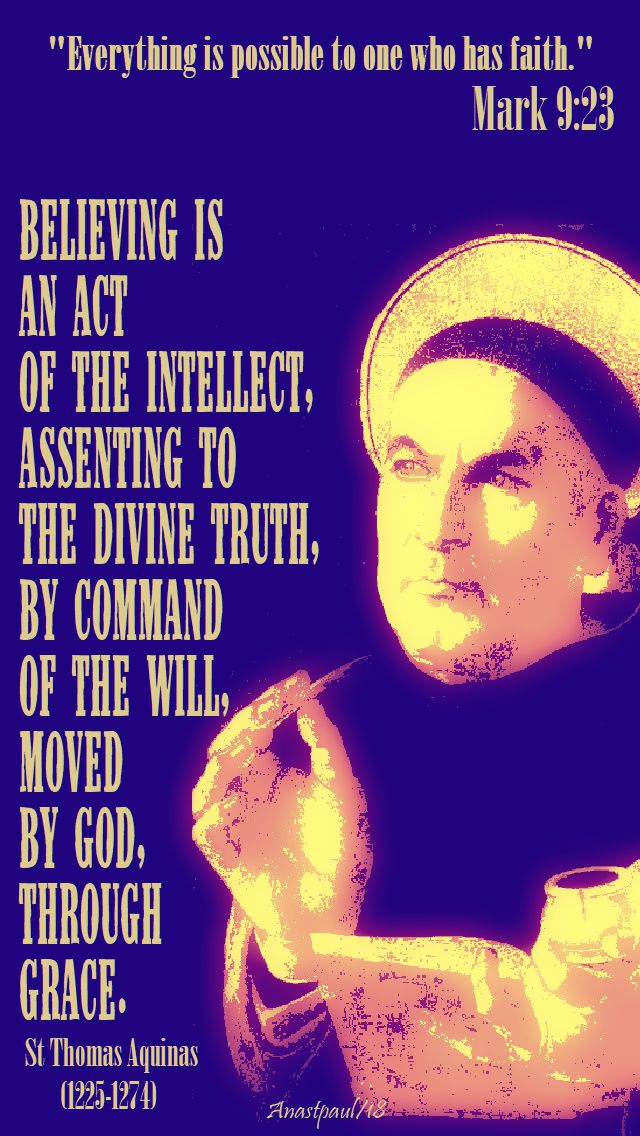
In faith, the human intellect and will, cooperate with divine grace: “Believing is an act of the intellect, assenting to the divine truth, by command of the will, moved by God, through grace.”…St Thomas Aquinas
PRAYER – Lord, Your martyr Boniface, spread the faith by his teaching and witnessed to it with his blood. By the help of his prayers keep us loyal to our faith and give us courage to profess it in our lives. Grant this through our Lord Jesus Christ, Your Son, who lives and reigns with You and the Holy Spirit, one God, for ever and ever, amen.
One Minute Reflection – 4 June – Ninth Week in Ordinary Time, Year B – Today’s Readings: 2 Peter 1:2-7, Psalms 91(90):1-2.14-15ab.15c-16, Mark 12:1-12
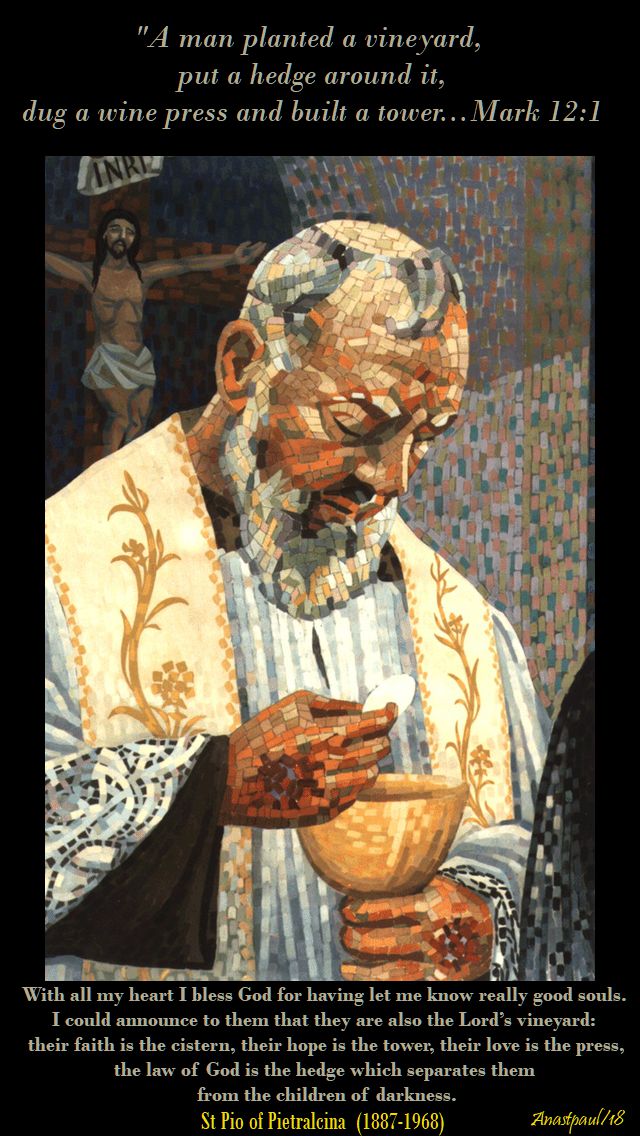
Jesus began to speak to the chief priests, the scribes and the elders in parables. “A man planted a vineyard, put a hedge around it, dug a wine press and built a tower. Then he leased it to tenant farmers and left on a journey...Mark 12:1-2
REFLECTION – “With all my heart I bless God for having let me know really good souls. I could announce to them that they are also the Lord’s vineyard: their faith is the cistern, their hope is the tower, their love is the press, the law of God is the hedge which separates them from the children of darkness.”…St Pio of Pietrelcina “Padre Pio” OFM CAP. (1887-1968)
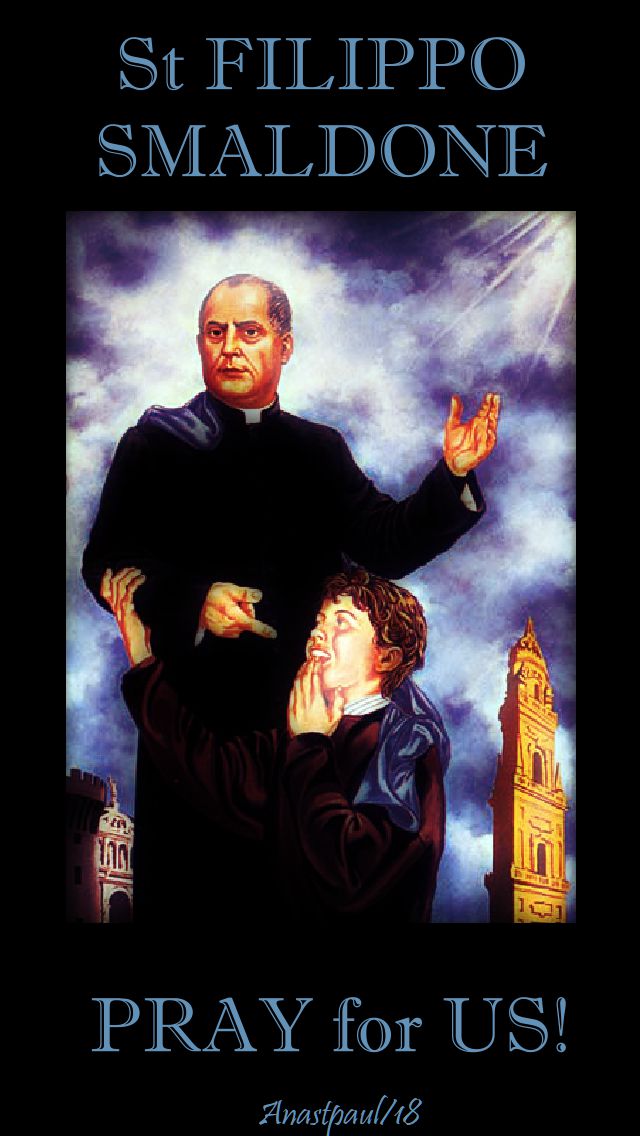
PRAYER – Lord, be the beginning and the end of all that we do and say. Prompt our actions with Your grace and complete them with Your all powerful help. St Filippo Smaldone, you shone the light of Christ on all around you, strengthened by love of Christ in the most Blessed Sacrament and by His Holy Mother. Pray for us, that we may be little lanterns in the darkness and ‘good vines’ pruned to perfection. Through Jesus Christ, our Lord and Saviour, with You and the Holy Spirit, one God forever, amen.
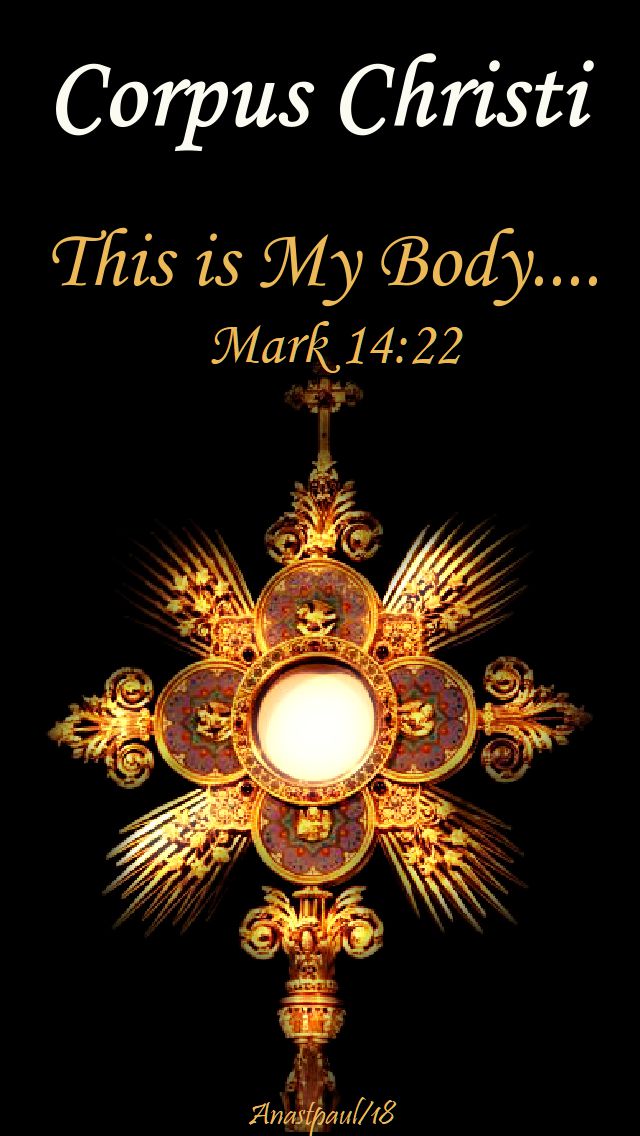
Sunday Reflection – 3 June 2018 – The Solemnity of Corpus Christi
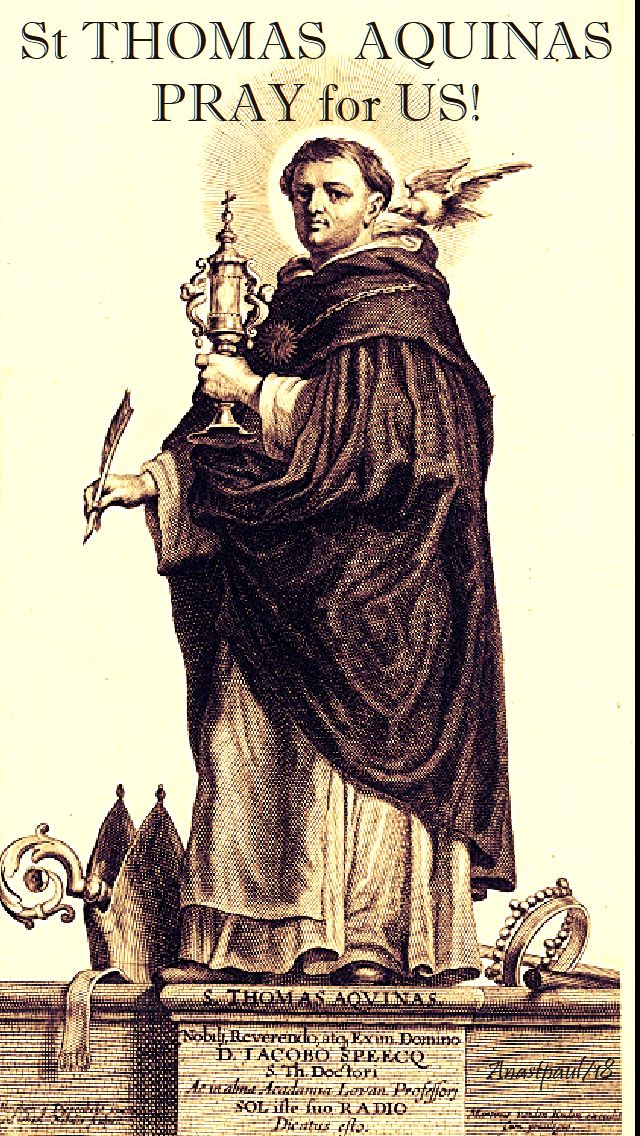
There is a claim that the Adoro Te Devote, our morning offering today, was the prayer that St Thomas Aquinas addressed to Christ as he was dying. The claim remains doubtful, (in the sense that it is a highly intricate prayer and it would be difficult to write whilst very ill) but the account that his biographer, William of Tocco, gives of the holy Doctor’s last moments of life is, in itself, an extraordinary testimony of Eucharistic devotion and reveals the source of the doctrine that, directly or indirectly, inspired the most beautiful Eucharistic texts of the Latin Church, including the Adoro Te Devote.
“Feeling his strength failing and sensing the nearness of his departure from this world, the holy Doctor, with great devotion, requested the viaticum of the Christian pilgrimage, the Most Holy Body and Blood of Christ.
After the abbot and the monks had brought the Eucharist to him, he prostrated himself on the ground, weak in body but strong in spirit and went, with tears, to meet his Lord.
Then, in the presence of the Sacrament of the Body of Christ, as is the custom with every Christian at the moment of death, he was asked if he believed that in that consecrated host was the true Son of God, born of the womb of the Virgin, suspended from the scaffold of the Cross, who died and rose for us on the third day. With a free voice and great devotion, mingled with tears, he replied: “I truly believe and hold as certain that He is true God and true man, Son of God and of the Virgin Mother and I believe with my heart and profess with my lips, that which the priest has asked me of this most Holy Sacrament.”
And after some words of devotion (at this point it is believed St Thomas quoted the Adoro), receiving the Sacrament, he exclaimed: “I receive You, price of the Redemption of my soul, for love of which I have studied, watched and worked, I have preached and taught You, I have said nothing against You nor am I obstinate in my opinion, if in some part I have spoken poorly of this Sacrament, I submit all to the correction of the Holy Roman Church, in who obedience, I pass from this life.”
May we also, at the end of life, be able to say the same as St Thomas Aquinas!
Let us be transported to the same climate of expectation and joyful hope as we feel in the Adoro Te Devote with these last words of the Lauda Sion, the Eucharistic hymn/sequence also written by St Thomas Aquinas. (Fr Raneiro Cantalamessa O.F.M. “This is My Body”)
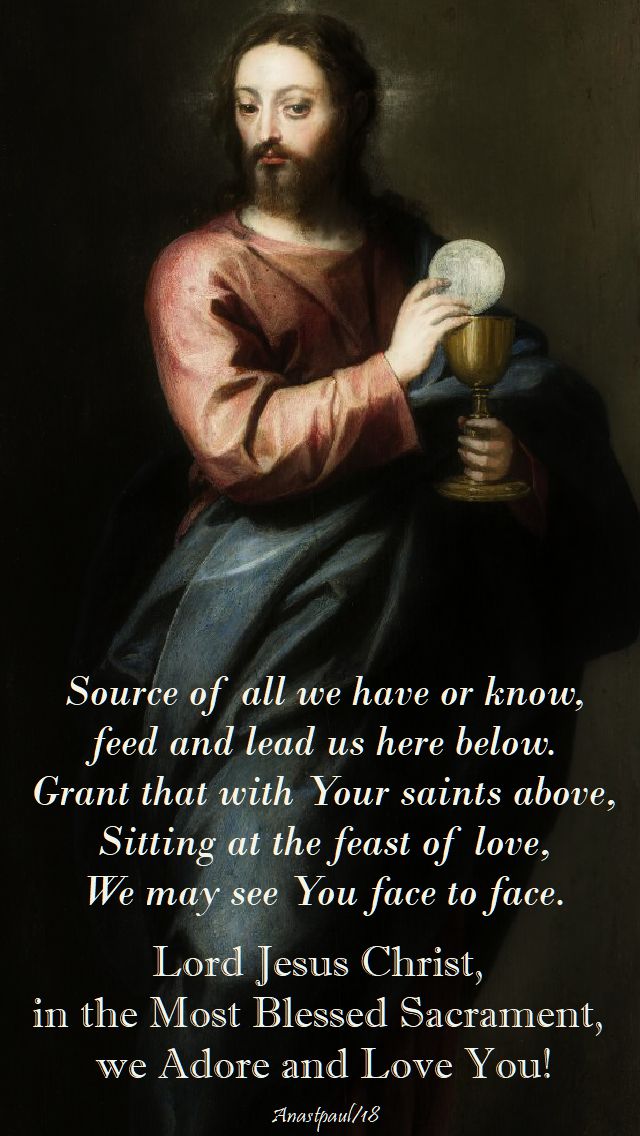
Source of all we have or know, feed and lead us here below. Grant that with Your saints above, Sitting at the feast of love, We may see You face to face.
Amen Alleluia!
Lord Jesus Christ, in the Most Blessed Sacrament, we Adore and Love You!
Thought for the Day – 3 June 2018 – The Solemnity of Corpus Christi
Excerpts from a homily given by Saint Josemaria Escrivá (1902-1975) on 28 May 1964, the feast of Corpus Christi and published in “Christ is Passing By.”
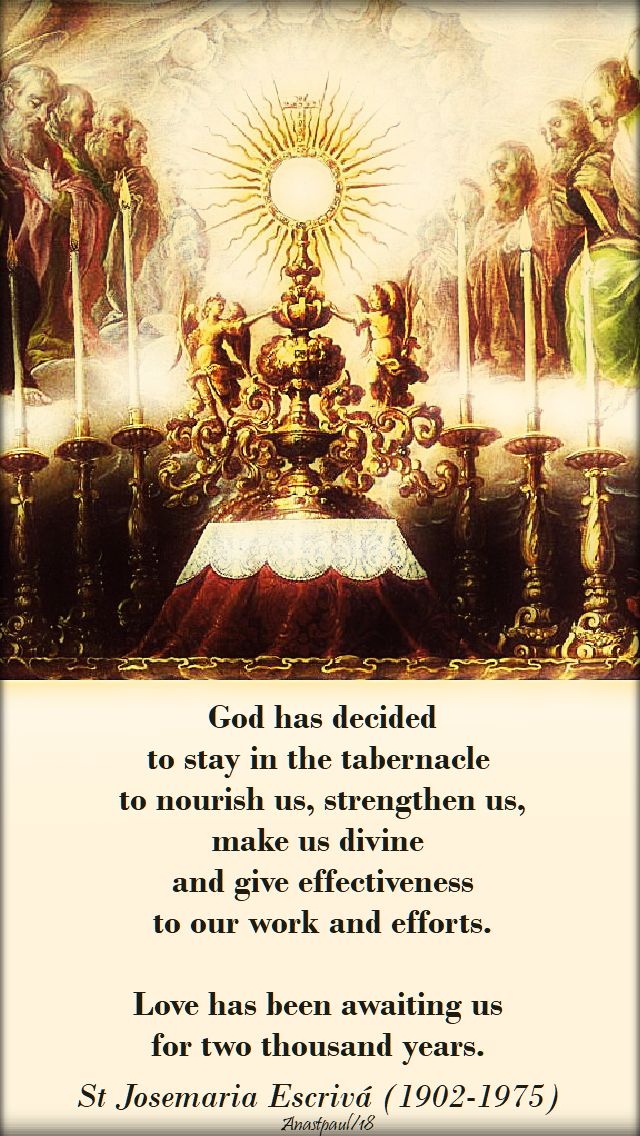
“Let’s turn our eyes to the holy Eucharist, toward Jesus. He is here with us. He has made us a part of Himself: “Now you are the body of Christ and individually members of it.” God has decided to stay in the tabernacle to nourish us, strengthen us, make us divine and give effectiveness to our work and efforts. Jesus is at one and the same time the sower, the seed and the final result of the sowing: the bread of eternal life.
The miracle of the holy Eucharist is being continually renewed and it has all Jesus’ personal traits. Perfect God and perfect man, Lord of heaven and earth, He offers Himself to us as nourishment in the most natural and ordinary way. Love has been awaiting us for two thousand years. That’s a long time and yet it’s not, for when you are in love time flies.
When we meet together around the altar to celebrate the holy Sacrifice of the Mass, when we contemplate the sacred host in the monstrance or adore it hidden in the tabernacle, our faith should be strengthened; we should reflect on this new life which we are receiving and be moved by God’s affection and tenderness.
In the Eucharist, Jesus gives us a sure pledge of His presence in our souls; of His power, which supports the whole world; of His promises of salvation, which will help the human family to dwell forever in the house in heaven, when time comes to an end. There we shall find God the Father, God the Son, God the Holy Spirit – the Blessed Trinity, the one and only God. Our whole faith is brought into play when we believe in Jesus, really present under the appearances of bread and wine.
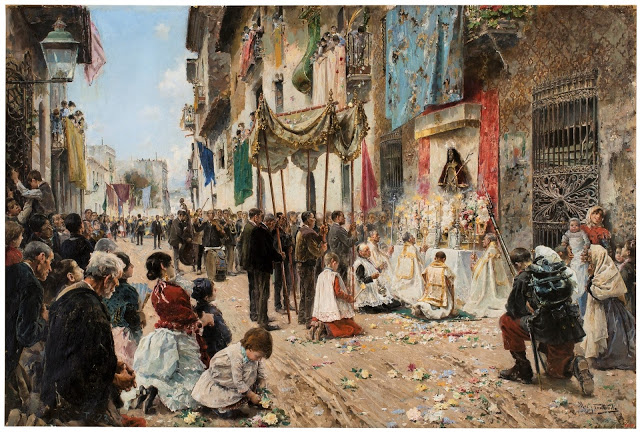
On this feast of Corpus Christi in cities and towns throughout the world, Christians accompany our Lord in procession. Hidden in the host He moves through the streets and squares—just as during His earthly life—going to meet those who want to see Him, making Himself available to those who are not looking for Him. And so, once more, He comes among His own people. How are we to respond to this call of His?
The external signs of love should come from the heart and find expression in the testimony of a Christian life. If we have been renewed by receiving our Lord’s body, we should show it. Let us pray that our thoughts be sincere, full of peace, self-giving and service. Let us pray that we be true and clear in what we say—the right thing at the right time—so as to console and help and especially bring God’s light to others. Let us pray that our actions be consistent and effective and right, so that they give off “the good fragrance of Christ,” evoking is way of doing things.
The Corpus Christi procession makes Christ present in towns and cities throughout the world. But His presence cannot be limited to just one day, a noise you hear and then forget. It should remind us that we have to discover our Lord in our ordinary everyday activity. Side by side with this solemn procession, there is the simple, silent procession of the ordinary life of each Christian. He is a man among men, who by good fortune has received the faith and the divine commission to act so that he renews the message of our Lord on earth. We are not without defects; we make mistakes and commit sins. But God is with us and we must make ourselves ready to be used by Him, so that He can continue to walk among men.
Let us ask our Lord then to make us souls devoted to the Blessed Eucharist, so that our relationship with Him brings forth joy and serenity and a desire for justice. In this way we will make it easier for others to recognise Christ; we will put Christ at the centre of all human activities. And Jesus’ promise will be fulfilled: “I, when I am lifted up from the earth, will draw all men to myself.”
Comforted by Christ’s presence and nourished by His Body, we will be faithful during our life on earth and then we will be victors with Jesus and His Mother in heaven. “O death, where is your victory? O death, where is your sting?… Thanks be to God, who gives us the victory through our Lord Jesus Christ.”
One Minute Reflection – 3 June 2018 – The Solemnity of Corpus Christi Year B
And as they were eating, he took bread and blessed and broke it and gave it to them and said, “Take; this is my body.” And he took a cup and when he had given thanks, he gave it to them and they all drank of it. And he said to them, “This is my blood of thec covenant, which is poured out for many...Mark 14:22-24
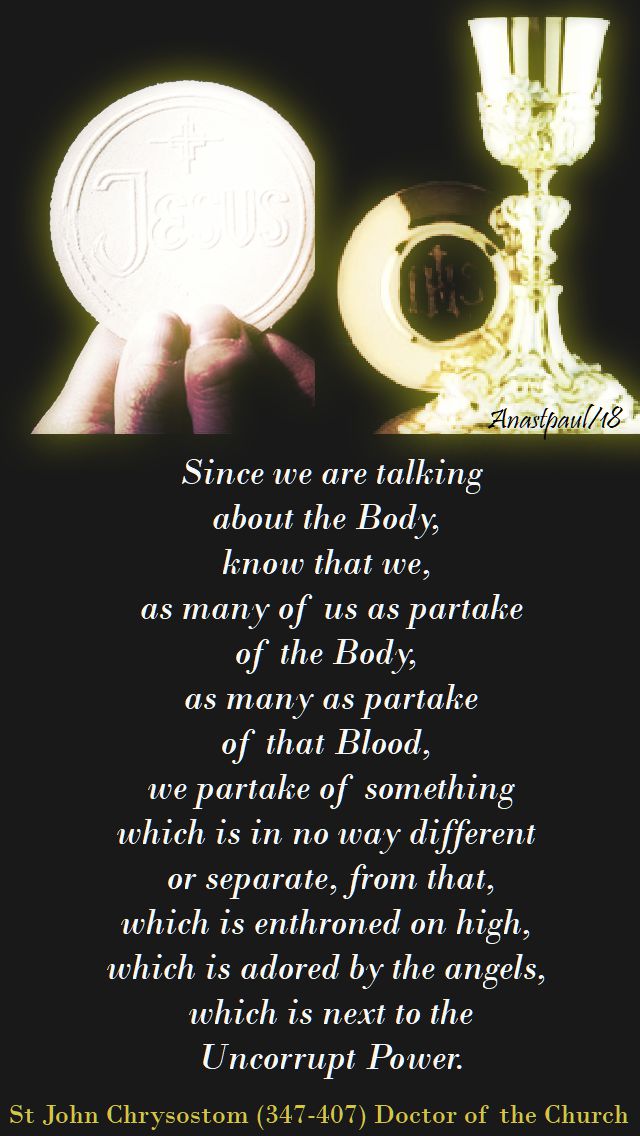
REFLECTION – “Since we are talking about the Body, know that we, as many of us as partake of the Body, as many as partake of that Blood, we partake of something which is in no way different or separate from that which is enthroned on high, which is adored by the angels, which is next to Uncorrupt Power.”…St John Chrysostom (347-407) Doctor of the Church
PRAYER – Lord Jesus Christ, You gave Your Church, an admirable Sacrament as the abiding memorial of Your Passion. Teach us to worship the sacred mystery of Your Body and Blood, that it’s redeeming power may sanctify us always. Who live and reign with the Father and the Holy Spirit, God, forever, amen.
Arcadio Mas y Fondevila, Corpus Christi Spanish, 1887 Madrid, Museo Nacional del Prado This picture depicts priest and people in adoration at one of the street altars that are a part of the traditional Corpus Christi procession through a town.
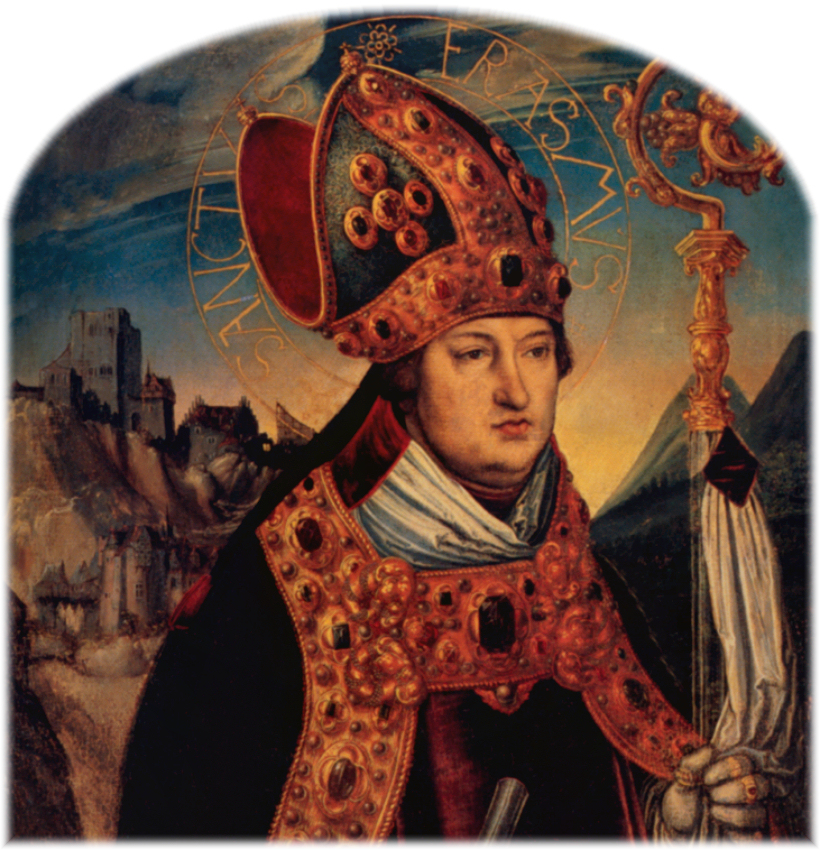
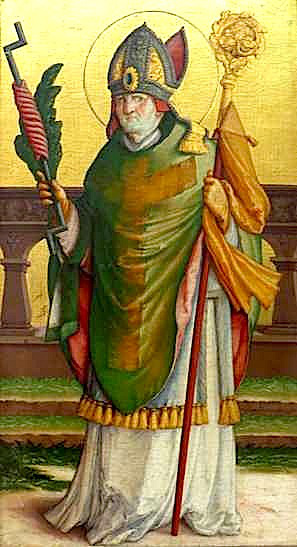
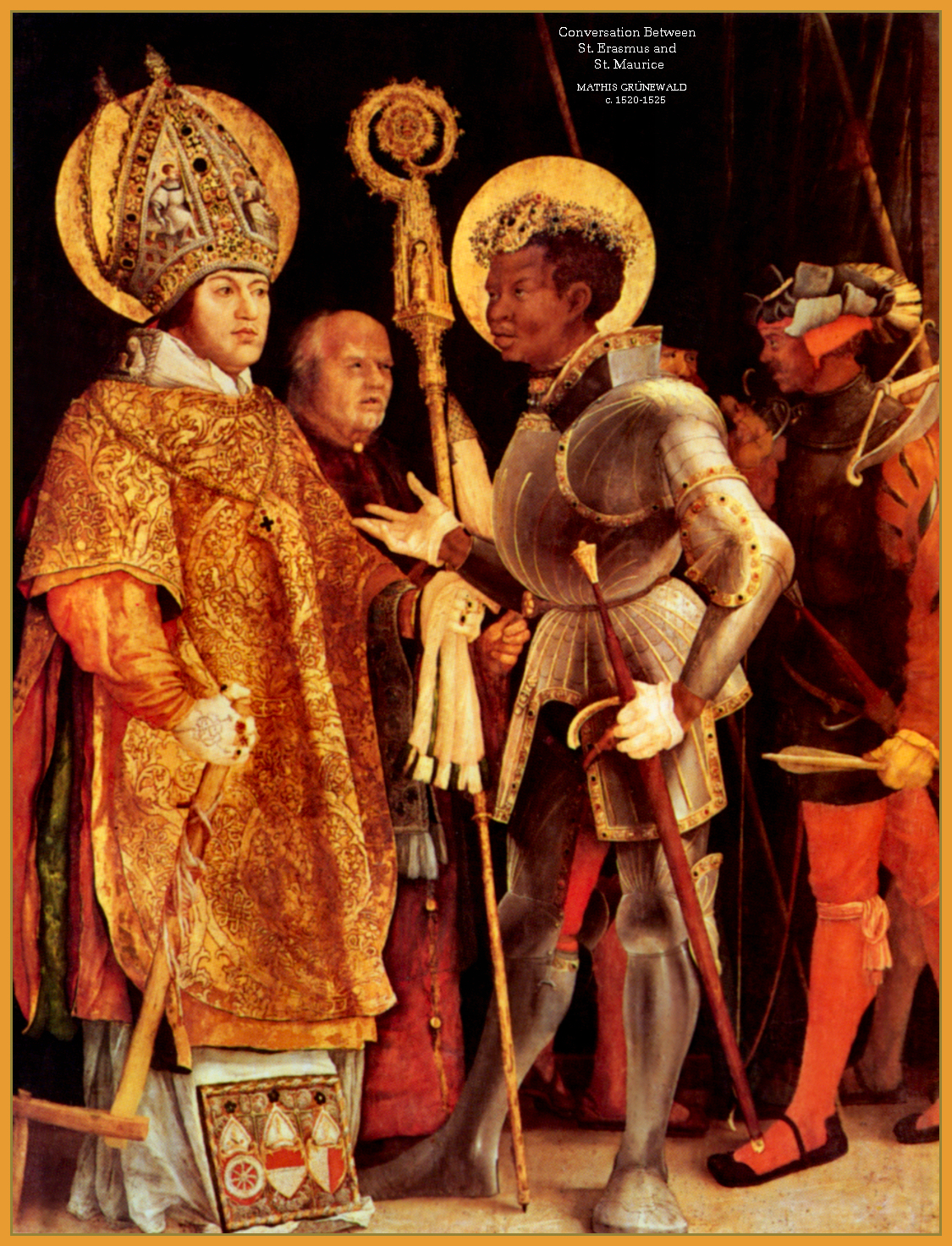
Saint of the Day – 2 June – St Erasmus (Died c303) Bishop Martyr – also known as Saint Elmo (Telmo, Eramo, Erarmo, Ermo, Herasmus, Rasimus, Rasmus), Bishop of Formiae, Campagna, Italy. St Erasmus or Elmo is also one of the Fourteen Holy Helpers, saintly figures of Christian tradition who were venerated especially as intercessors. Patronages – against appendicitis, against severed birth pains, against abdominal or stomach pains and diseases, against colic, against danger at sea, of mariners, sailors, childbirth and women in labour, ship navigators, Gaeta, Italy, Formia, cattle pest, Fort St Elmo, Malta.
As with many Martyrs of the early Church, we know little about their lives and upbringings but much about their pious and courageous deaths, accounts of which were recorded and believed to be more instructive to the faithful than complete biographies.
The childhood and birthplace of Saint Erasmus is lost to history. In the late third century, we do know that he was appointed as the Bishop of Antioch in Asia Minor, where he led the faithful. When Emperor Diocletian ascended to the throne, widespread persecution of Christians began and Antioch was not overlooked. Saint Erasmus fled into the mountains of Lebanon, where he undertook an austere life of prayer and fasting, going without food for days at a time. Holy legend tells us that a raven brought him food when he deprived himself for too long. Eventually, however, he was discovered by the soldiers of the Emperor and dragged to judgement.
St Erasmus was urged to recant his faith and some respect was offered him. However, when he adamantly stated his belief in Christ and could not be persuaded to make offerings to the gods. He stated,
“Almighty God, Who created all things, hath wrought heaven and hell and all that is therein, Him will I not forsake, for nothing can or may be done to me, for His Goodly Grace hath given to me such Grace and to other of His chosen friends, that He was made man and hath tasted and suffered the bitter death for me and for all sinners.”
Saint Erasmus was viciously tortured. He was at first scourged, had heated hooks jabbed into his intestines and stomach and was finally thrown into a caldron filled with boiling oil. However, despite these horrific tortures, the Lord protected Saint Erasmus from death and many were converted to the faith—including the jailor and his family.
Unable to torture him physically into recanting his faith, the judge ordered him imprisoned in chains, thrown into a pit filled with vipers and worms and forbid the jailor to feed him, insisting that he die of starvation for his crime. However, Erasmus was again delivered, by an Angel appearing to him and leading him to freedom. During his escape, the Angel proclaimed, ”Erasmus, Follow me! Thou shalt convert a great many.”
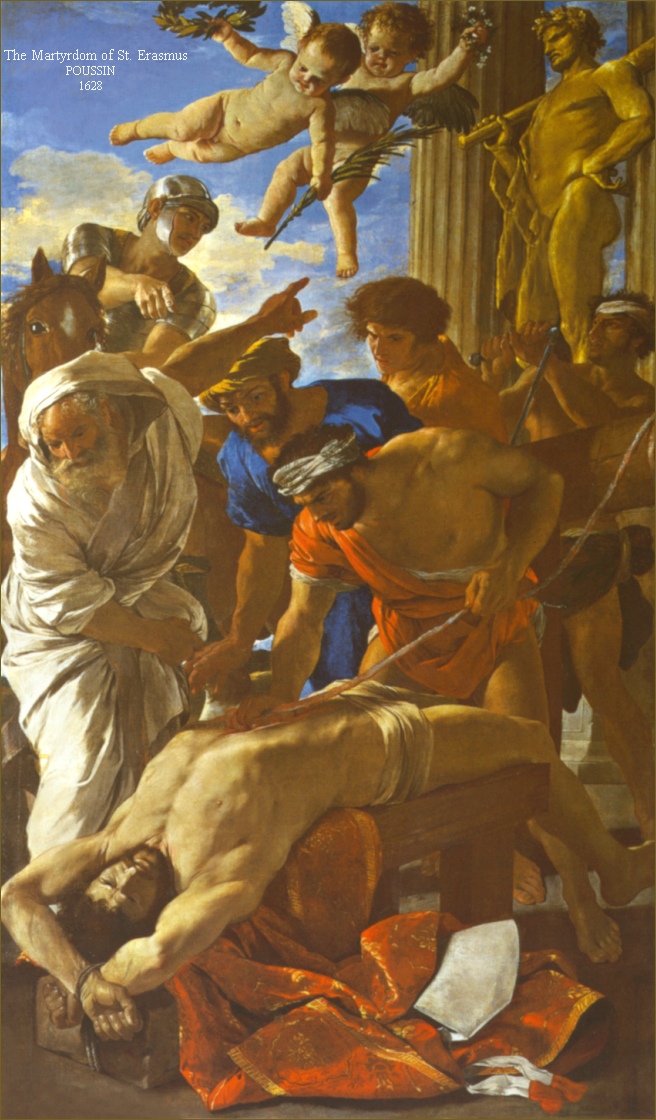
Erasmus fled to Europe, preaching the power of the Lord, performing miracles and converting the multitudes proclaimed by the Angel. Upon his arrival in Italy, however, he was again arrested—this time by Emperor Maximin, who also persecuted Christians. History tells us that the Emperor, enraged by Erasmus’ success in conversions, ordered three hundred of the newly Baptised Christians killed as incentive for Erasmus to recant his faith. When he did not, he was cruelly tortured and again imprisoned. During this torture, his intestines were slowly wound around a sailor’s capstan, which is why he is the Patron Saint of sailors today. Eventually, Saint Erasmus died a Martyr’s death due to disembowelling and subsequent beheading, having been summoned by the voice of the Lord.
From the Golden Legend:“And when the hour was come that this holy Bishop and Martyr of God should depart out of this world, then was heard a loud voice perfectly, coming from Heaven saying: “Erasmus, My true servant, thou hast done Me true service, wherefore come with Me and go and enter into the bliss and joy of thy Lord and I promise thee and all people that think upon thy great pain and call upon thy holy name and worship every Sunday, what that they ask of Me in thy name for the wealth of their souls, I shall grant it. Now come, my true and chosen friend, be glad and comforted with Mine ascension . I will that thou arise with Me and come sit upon the right hand of My Father.”
Then was this holy man right glad and joyful and he cast his eyes upward to Heaven, with lifting up his hands and there he saw, a clear shining crown come from heaven upon his blessed head. Then gave he loving and thanking to Almighty God with bowing his head and kneeling and both his hands upward to Heaven and meekly said: “O Lord in thy hands yield my spirit and this Sunday receive my soul into thy peace and rest.” And with saying these words he yielded up his ghost, which was seen by many men’s eyes, shining clearer than the sun and how that he was received of the holy Angels and was led through the height of heaven into the uppermost plan of heaven – there he standeth with God, with all the holy company and is there a true helper to all them that call truly to Saint Erasmus for ghostly health, which joy and ghostly health let us pray, that he for us, all of our Lord God may obtain.”
Saint Erasmus is one of the 14 Holy Helpers, a group of saints invoked with special confidence because they have proven themselves efficacious helpers in adversity and difficulties. Other Saints identified as Holy Helpers are: Saints Blaise, Catherine of Alexandria, George, Christopher and others. Saint Erasmus, due to the manner in which he was tortured, is the Patron Saint of those with stomach or intestinal disorders.
Saint Erasmus, under the name Saint Elmo, is also the Patron Saint of sailors and the shining lights observed upon his death, continue to be reported by sailors as “Saint Elmo’s fire.” This electrostatic phenomenon has been reported throughout history, from Julius Caesar, to the journals of sailors on Magellan’s voyage around the globe, to the writings of Shakespeare, Melville and Charles Darwin.
A chronicler of Magellan’s voyage to circle the globe, observed: “During those storms the holy body, that is, to say St. Elmo, appeared to us many times in light…on an exceedingly dark night on the maintop where he stayed for about two hours or more for our consolation.” Darwin wrote that one night when the Beagle was anchored in the estuary of the Rio Plata: “Everything was in flames, the sky with lightning, the water with luminous particles, and even the very masts were pointed with a blue flame.” The appearance of St Elmo’s Fire is regarded as a good omen for sailors, as it tends to occur near the end of severe thunderstorms or weather systems, the answer to sailors’ prayers for heavenly intervention. In these moments, the guiding hand of Saint Elmo is present.
The endurance of Saint Erasmus in the face of cruel and horrific torture reminds us that the Lord is always with those who love Him. It is difficult to imagine being in a position of profound physical torture, like that many of the early Church’s Martyrs endured. In our day to day lives, we often find it difficult to withstand the smallest inconveniences and hurts we experience, generally feeling lost and overwhelmed. But the lives of the early Martyrs are not that different from our own. Terminal illnesses, significant financial and vocational struggles, victimisation and trauma fill our lives and the lives of those we love. Our suffering is sometimes great, albeit different from the early Martyrs. Our call is to join that suffering to Christ, to look to the Lord for support and succour, to rely on Our Blessed Mother for grace and intercession. When we are able to do that—when we are able to look beyond our struggles and suffering to see the face of God present within us, we grow closer to the glorious Saints and Martyrs who reflected their faith for all to see, even in the midst of great pain!
Thought for the Day – 1 June – The Memorial of Blessed John Baptist Scalabrini (1839-1905)
“God’s temple is holy, and that temple you are” (1 Cor 3:17). The universal call to holiness was constantly felt and personally lived by John Baptist Scalabrini. He loved to say over and over: “Would that I could sanctify myself and all the souls entrusted to me!”. Striving for holiness and proposing it to everyone he met, was always his first concern.
Deeply in love with God and extraordinarily devoted to the Eucharist, he knew how to translate the contemplation of God and his mystery into intense apostolic and missionary activity, making himself all things to all men in order to proclaim the Gospel. This ardent passion of his for the kingdom of God made him zealous in catechesis, pastoral activities and charitable work, especially for those most in need. Pope Pius IX called him the “Apostle of the Catechism” because of his efforts to promote the systematic teaching of the Church’s doctrine to children and adults in every parish.
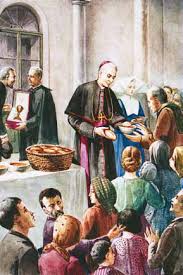
Out of his love for the poor, particularly for emigrants, he became the apostle of his many compatriots compelled to leave their country, often under difficult conditions and in concrete danger of losing their faith: for them he was a father and sure guide. We can say that Bl John Baptist Scalabrini intensely lived the paschal mystery, not through martyrdom but by serving the poor and crucified Christ, in the many needy and suffering people, whom he loved, with the heart of a true Shepherd in solidarity with his flock….St Pope John Paul (1920-2005) on the Beatification of Bl Scalabrini – Sunday, 9 November 1997.
Oh if we could gain just a grain of such zeal, we would all become saints.
Quote/s of the Day- 1 June – The Memorial of St Justin Martyr (c 100-165)
Father of the Church
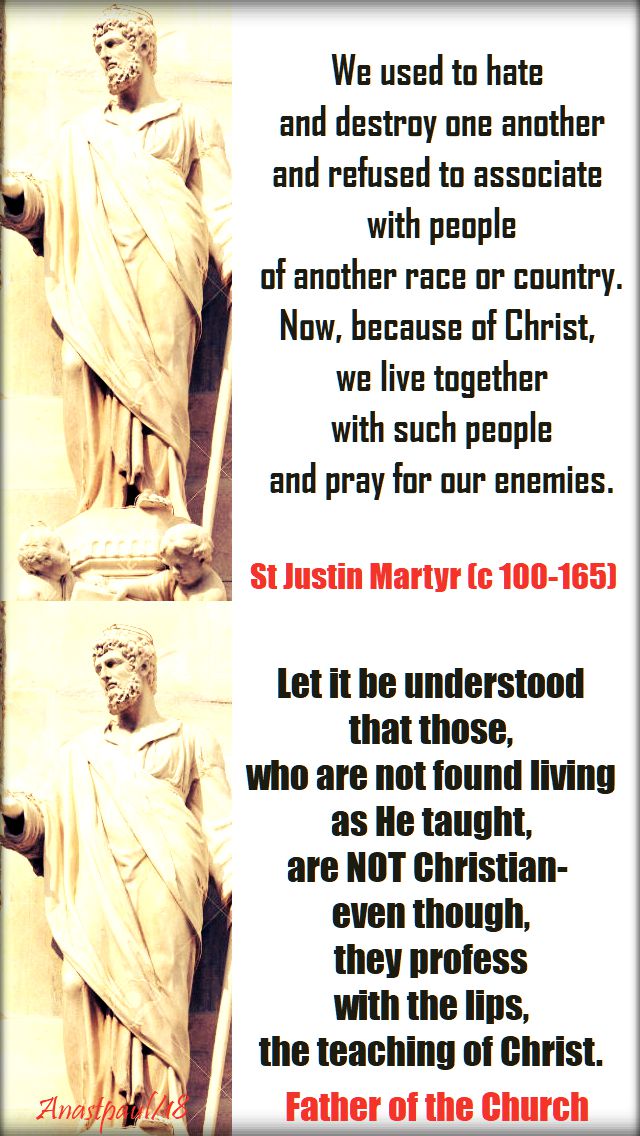
“We used to hate and destroy one another and refused, to associate with people of another race or country. Now, because of Christ, we live together with such people and pray for our enemies ”
“Let it be understood, that those who are not found living as He taught, are NOT Christian- even though they profess with the lips, the teaching of Christ.”
“Not as common bread or as common drink, do we receive these….. We have been taught, that the food, that has been Eucharistised, by the word of prayer, that food, which by assimilation, nourishes our flesh and blood, is the flesh and blood of the incarnate Jesus.”
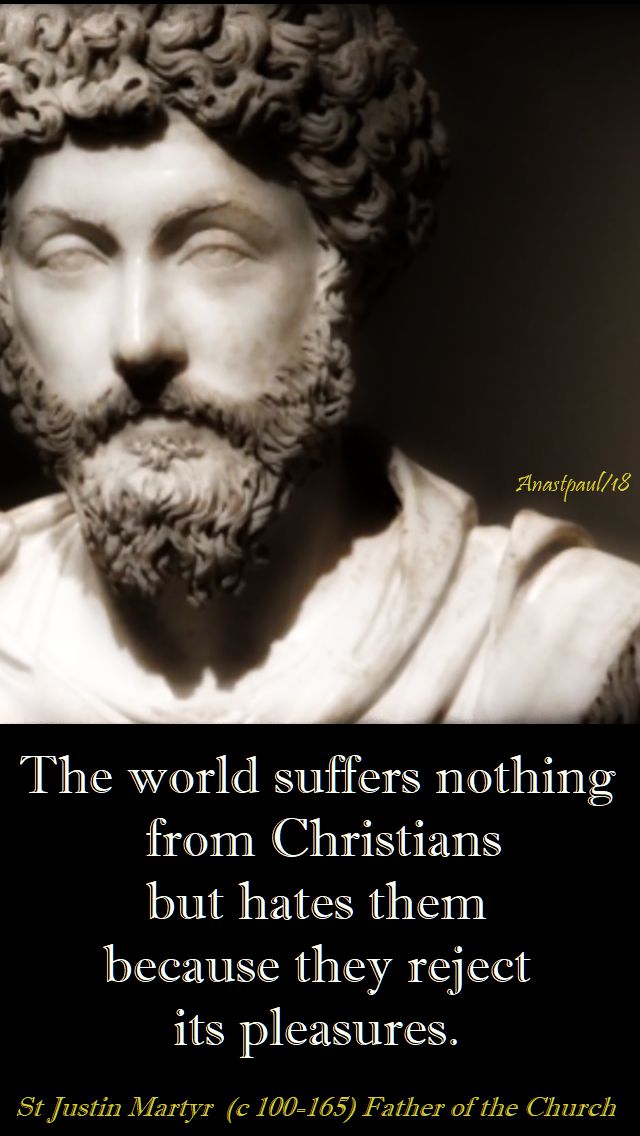
“The world suffers nothing from Christians but hates them, because they reject its pleasures.”
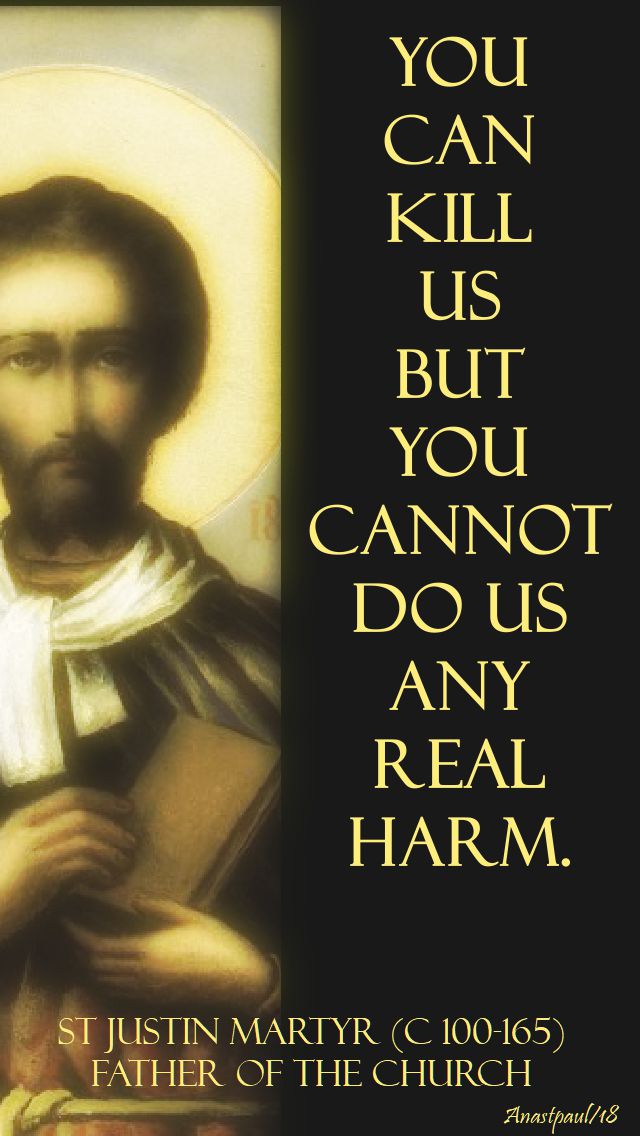
“You can kill us but you cannot do us any real harm.”
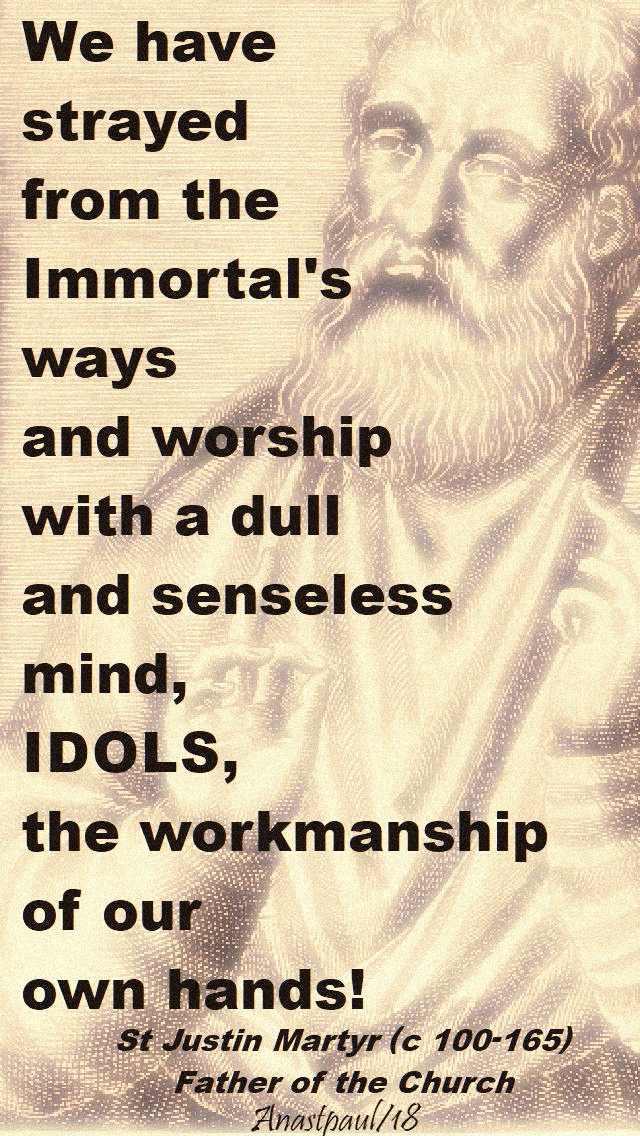
“We have strayed from the Immortal’s ways and worship with a dull and senseless mind, Idols, the workmanship of our own hands!”
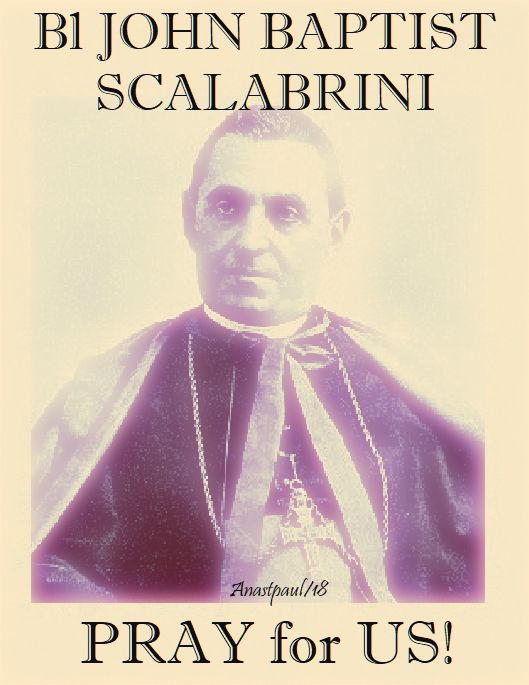
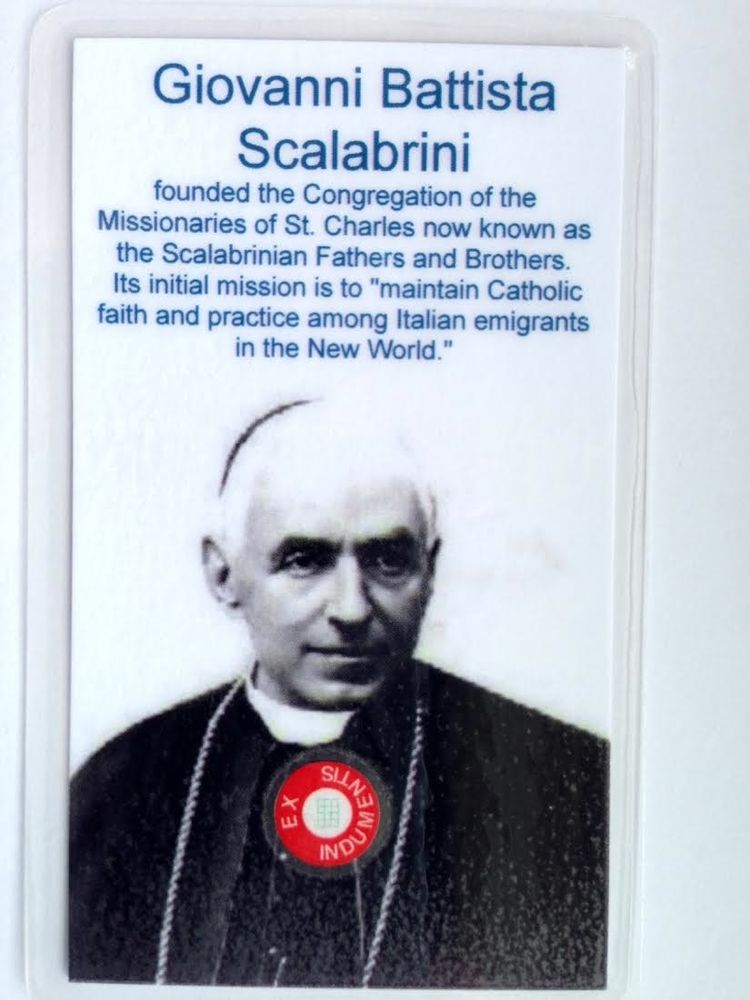
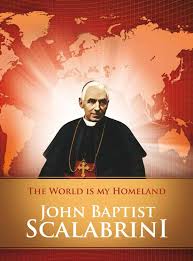
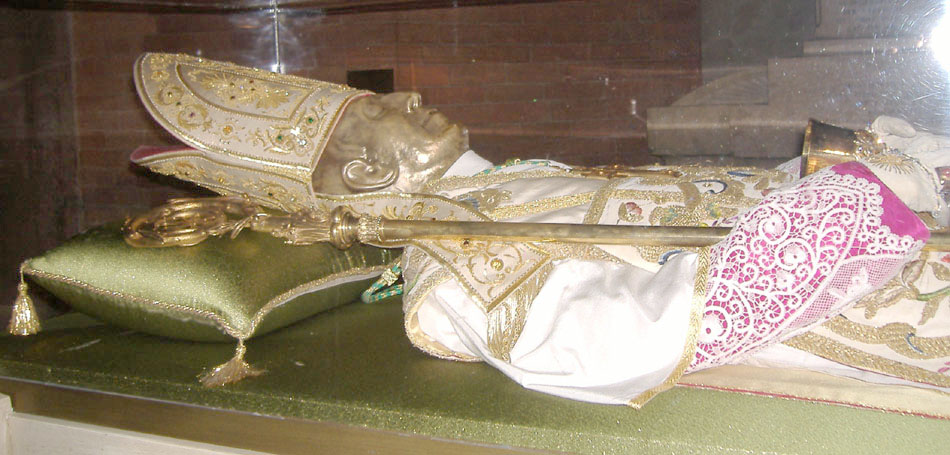
Saint of the Day – 1 June – Blessed John Baptist Scalabrini (1839-1905) “The Apostle of the Catechism” – Bishop, Prelate, Founder, Advisor, Apostle of Charity and the Suffering, Writer, Teacher, known as “The Apostle of the Catechism” and “The Father of Migrants”, Founder of both the Missionaries of St Charles and the Mission Sisters of Saint Charles. Born Giovanni Battista Scalabrini on 8 July 1839 at Fino Mornasco, Como, Italy and died at dawn on 1 June 1905, the feast of the Ascension of the Lord. He was Beatified on 9 November 1997 by Pope John Paul II.
He is an unknown figure to almost everyone. Yet John Baptist Scalabrini, a seemingly obscure Roman Catholic Bishop of a rural northern Italian diocese, Piacenza, from 1876 to his death in 1905, is perhaps more than anyone else the single-most important architect of a global outreach on the part of the Catholic Church in the ever-increasing fields of migration and refugee flows. His innovative thinking, analysis of the migrants’ and refugees’ plights and efforts on their behalf continue to inform and even inspire the Church’s efforts in this field down to this day.
Giovanni Battista Scalabrini was born in Fino Mornasco (in the province of Como in northern Italy) on July 8, 1839. The third of eight children, he attended the local State High School, where, from his first year, his remarkable intelligence and consistent efforts made him a top student. He was ordained a priest in 1863 at the age of 24, after which he expressed the desire to become a missionary. Instead, he was assigned by his Bishop to teach at the minor seminary and also to act as Vice Rector and later Rector.
In his adolescence he wrote a poem in praise of the life of Saint Aloysius Gonzaga and in his childhood often recited the Angelus while each October reciting it in the Como Cathedral. He had a devotion to Saint Joseph and Saint Francis de Sales as well as Saint Charles Borromeo which extended for the remainder of his life.
He distinguished himself during a cholera epidemic in 1867 through his tireless efforts to alleviate the suffering of the victims. As the pastor of the parish he opened a kindergarten in the area and wrote the “Little Catechism for Kindergartens” to go with it. In 1872 he delivered a series of eleven addresses on the First Vatican Council – something that Saint John Bosco (1815-1888) appreciated – and these addresses were printed in 1873 and even reached Rome which was a considerable factor in his later episcopal appointment. These were reprinted in a reduced form at the behest of Bosco himself.
Giovanni Battista Scalabrini was born in Fino Mornasco (in the province of Como in northern Italy) on July 8, 1839. The third of eight children, he attended the local State High School, where, from his first year, his remarkable intelligence and consistent efforts made him a top student. He was ordained a priest in 1863 at the age of 24, after which he expressed the desire to become a missionary. Instead, he was assigned by his Bishop to teach at the minor seminary and also to act as Vice Rector and later Rector.
His pioneering firsts, winning ideas:
– Five pastoral visitations accomplished in person of a vast diocese with many places difficult to reach
– Three Synods
– The first Catechetical Congress in the world and the first Journal on Catechetics in Italy (and second in the world)
– The proposal for the first unified Catechism for Italians, including emigrants
– The Institution of the first Chair of Catechetics
– The first Missionary Religious Congregation for Italian emigrants
– The first proposal for a specific pastoral plan for them
– The first to found a Lay Order for the assistance of migrants.
Scalabrini’s practicality, readiness for action and gifts as a fine religious administrator served him brilliantly as an untiring pastor. He needed such gifts, as noted by one of the official examiners of his heroic virtues – the first step in the road to official canonisation of an individual in the Church – noted, he had “such an imposing quantity of work that it leaves any ordinary person not only edified, but thoroughly daunted”.
Another feature of of his pastoral work was his surprising ability to infuse all his people with an insight into their vocation as disciples of Christ so that their faith led them from the cradle to the grave.
For him, everything was sanctified and helped to sanctify, assisting the ever-deepening personal friendship with God that the Second Vatican Council was to declare more than 50 years after his death to be the universal call to holiness, the basis for every human life.
Interestingly, unlike other contemporary saints, Scalabrini’s life was not surrounded by miraculous events. What was miraculous, in a sense, was his immense confidence in Providence. Scalabrini is not a saint and a bishop but a saint because he was a bishop who lived his vocation to the best of his ability.
Today, Bishop Scalabrini stands out as ideal pastor for the modern era. His motto as pastor was St Paul’s “make yourself everything to everyone”, and what is clearly special about his life is the intensity and breadth of his commitment in whatever field he entered.
Those who knew him regarded him as sociable and accessible, direct and open, sensitive and vulnerable. Yet he was also lucid, vigorous and had a deep trust in ascetic practice. He may have been sensitive but was also resolute as a leader and decisive in control of spontaneous impulses, refusing to succumb to emotional pressure or transitory whims of the moment.
Finally, Scalabrini was also a pioneering bishop, an explorer able to step outside the accepted boundaries and thinking of his day to go further, to confront obstacle and use them as opportunities to advance. “Without doubt”, he once said, “we are in the hands of God, but we must not sit there idly.”
John Baptist Scalabrini, lived the drama of the exodus of migrants who,during the last decades of the nineteenth century, travelled in great numbers from Europe to the countries in the New World. He clearly saw the need for a specific pastoral care of migrants, through a suitable network of spiritual assistance. He strongly supported the need for legislative and institutional instruments for the human and juridical protection of the migrants, against all forms of exploitation. Today, in different situations, the spiritual sons and daughters of Blessed Scalabrini, who were later joined by the “Secular Institute of the Scalabrinian Missionary Women”, continue to give witness to Christ’s love for migrants and to offer them the Gospel. In 1998, John Paul II declared him Blessed and defined him as the “Father of Migrants”.
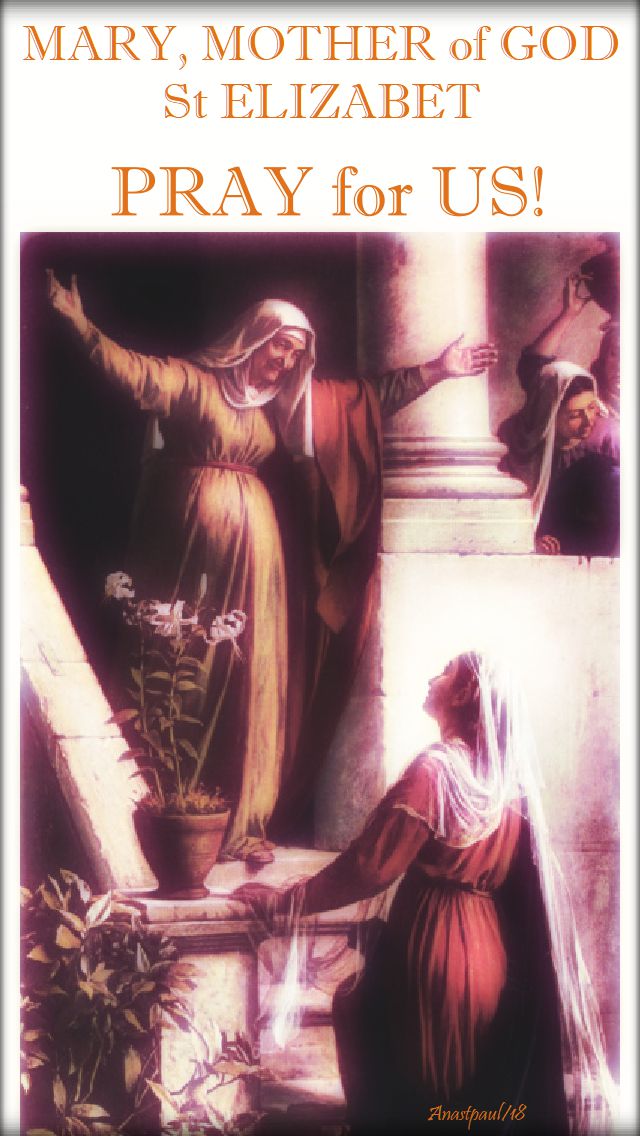
Thought for the Day – 31 May – The Last Day of Mary’s Month and the Feast of the Visitation of the Blessed Virgin Mary from St Bede the Venerable
Writing in the early 8th century, St Bede explains why the Magnificat, Mary’s prayer on the occasion of her Visitation of Elizabeth, is used daily in the liturgy of the hours (a.k.a the divine office) for Vespers or evening prayer. With Mary’s soul, our souls magnify the Lord and rejoice in God our Saviour.
My soul glorifies the Lord and my spirit rejoices in God my saviour.
With these words Mary first acknowledges the special gifts she has been given. Then she recalls God’s universal favours, bestowed unceasingly on the human race.
REJOICE IN GOD’S GREATNESS
When a man devotes all his thoughts to the praise and service of the Lord, he proclaims God’s greatness. His observance of God’s commands, moreover, shows that he has God’s power and greatness always at heart. His spirit rejoices in God his saviour and delights in the mere recollection of his creator who gives him hope for eternal salvation.
These words are offered for all God’s creations but especially for the Mother of God. She alone was chosen and she burned with spiritual love for the son she so joyously conceived. Above all other saints, she alone could truly rejoice in Jesus, her saviour, for she knew that He, who was the source of eternal salvation, would be born in time in her body, in one person both her own son and her Lord.
HOLY IS HIS NAME For the Almighty has done great things for me, and holy is his name.
Mary attributes nothing to her own merits. She refers all her greatness to the gift of the one whose essence is power and whose nature is greatness, for He fills with greatness and strength the small and the weak who believe in Him.
She did well to add: and holy is his name, to warn those who heard and indeed all who would receive His words, that they must believe and call upon His name. For they too could share in everlasting holiness and true salvation, according to the words of the prophet – and it will come to pass, that everyone who calls on the name of the Lord will be saved. This is the name she spoke of earlier – and my spirit rejoices in God my saviour.
VESPERS & THE MAGNIFICAT: AN EVENING CANTICLE
Therefore it is an excellent and fruitful custom of holy Church that we should sing Mary’s hymn at the time of evening prayer. By meditating upon the incarnation, our devotion is kindled and by remembering the example of God’s Mother, we are encouraged to lead a life of virtue. Such virtues are best achieved in the evening. We are weary after the day’s work and worn out by our distractions. The time for rest is near and our minds are ready for contemplation.
The great canticle by the Blessed Virgin Mary, the Magnificat, proclaimed by Mary during her Visitation to St Elizabeth, is celebrated and explained in this excerpt from a homily by Saint Bede the Venerable (Lib 1,4:CCL 122, 25-26, 30) which is used in the Roman Catholic Liturgy’s Divine Office of Readings for the Feast of the Visitation, 31 May, with the accompanying biblical reading being from Song of Songs 2:8-14 and 8:6-7. With Mary’s soul, we proclaim the greatness of the Lord and rejoice in God, her Saviour and ours, each evening in Vespers prayer.
St Bede the Venerable (673-735) Father & Doctor of the Church
One Minute Marian Reflection – 31 May – The Last Day of Mary’s Month and the Feast of the Feast of the Visitation of the Blessed Virgin Mary
And Mary said, “My soul glorifies the Lord, my spirit rejoices in God, my Saviour”…Luke 1:46
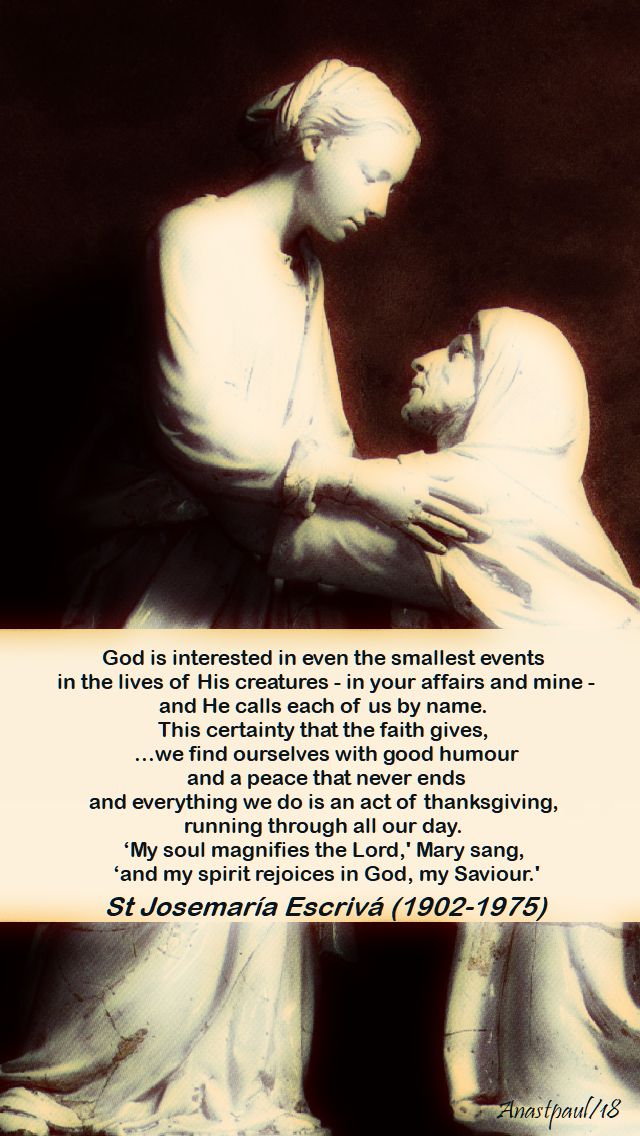
REFLECTION – “THE VISITATION: MARY SINGS OF THE LOVE OF GOD – “God is interested in even the smallest events in the lives of His creatures – in your affairs and mine — and He calls each of us by name. This certainty that the faith gives, enables us to look at everything in a new light. And everything, while remaining exactly the same, becomes different, because it is an expression of God’s love. Our life is turned into a continuous prayer, we find ourselves with good humour and a peace that never ends and everything we do is an act of thanksgiving, running through all our day. ‘My soul magnifies the Lord,’ Mary sang, ‘and my spirit rejoices in God, my Saviour.'” …St Josemaría Escrivá (1902-1975) – “To Jesus through Mary,” Christ is Passing By, 144 Let us offer to our Mother today: The Holy Rosary said with concentration and affection.
PRAYER – Almighty, ever-living God, You inspired the Blessed Virgin Mary, when she carrying Your Son, to visit Elizabeth. Grant that, always docile to the voice of the Holy Spirit, we may, together with our Lady, glorify Your Name and offer You our constant praise and thanksgiving. Through Christ, our Lord, with You and the Holy Spirit, one God forever, amen.
Our Morning Offering – 31 May – The Last Day of Mary’s Month and the Feast of the Visitation of the Blessed Virgin Mary
The Magnificat, is Mary’s great gift to scripture, one of its most beautiful prayers. It is prayed every evening in the Liturgy of the Hours by millions around the world. With that, Mary’s great acclamation becomes the Church’s.
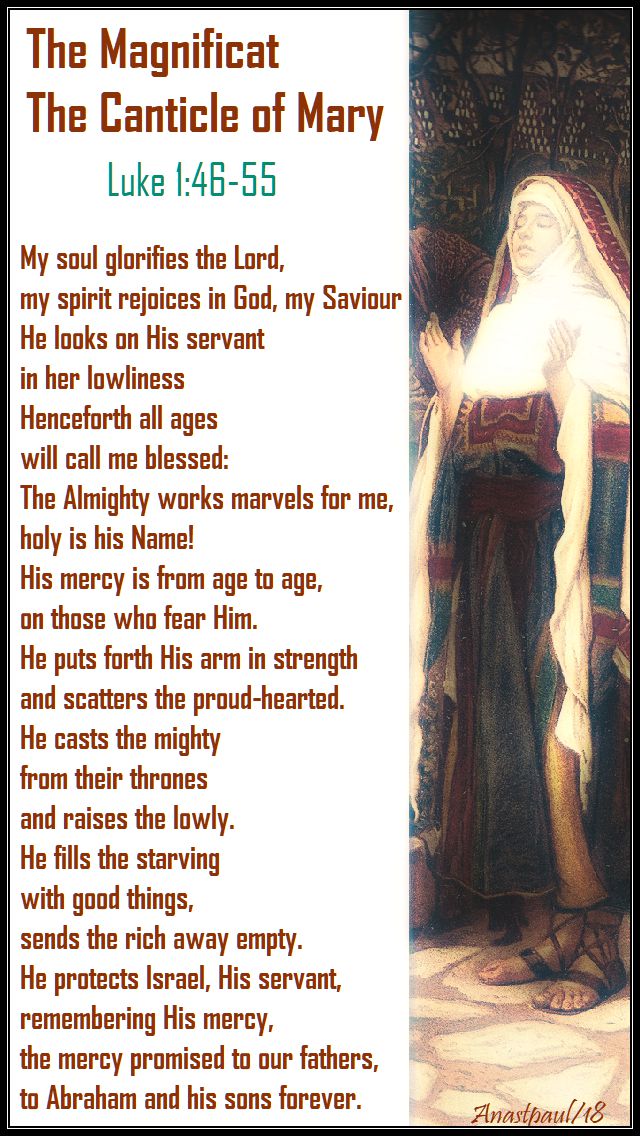
The Magnificat The Canticle of Mary Luke 1:46-55
My soul glorifies the Lord,
my spirit rejoices in God, my Saviour
He looks on His servant in her lowliness
Henceforth all ages will call me blessed:
The Almighty works marvels for me,
holy is his Name!
His mercy is from age to age,
on those who fear Him.
He puts forth His arm in strength
and scatters the proud-hearted.
He casts the mighty from their thrones
and raises the lowly.
He fills the starving with good things,
sends the rich away empty.
He protects Israel, His servant,
remembering His mercy,
the mercy promised to our fathers,
to Abraham and his sons forever.
Excerpt (18) from the Apostolic Exhortation “Marialis Cultus”
Blessed Pope Paul VI – 2 February 1974
“18. Mary is also the Virgin in prayer. She appears as such in the visit to the mother of the precursor, when she pours out her soul in expressions glorifying God and expressions of humility, faith and hope. This prayer is the Magnificat (cf. Lk. 1:46-55), Mary’s prayer par excellence, the song of the messianic times in which there mingles the joy of the ancient and the new Israel. As St Irenaeus seems to suggest, it is in Mary’s canticle, that there was heard once more, the rejoicing of Abraham who foresaw the Messiah (cf. Jn. 8:56)(48) and there rang out in prophetic anticipation the voice of the Church: “In her exultation Mary prophetically declared in the name of the Church: ‘My soul proclaims the glory of the Lord….'”
And in fact Mary’s hymn has spread far and wide and has become the prayer of the whole Church in all ages.”
Thought for the Day – 30 May – The Memorial of St Joan of Arc (1412-1431)
Like Jesus’ life, Joan of Arc’s life seemed to end in failure. But like Jesus, to love God means to always obey His will. She said with total confidence and abandonment: “I entrust myself to my Creator God, I love Him with my whole heart”.One of the best known texts of the first trial has to do with this: “Asked if she knew that she was in God’s grace, she replied: ‘If I am not, may it please God to put me in it; if I am, may it please God to keep me there’”It is this fidelity we should seek – this mission which Joan seemed to know would destroy her, still for her it was to carry out God’s work, regardless of the effects on her life. May we too seek this total fidelity and self-giving to God for this life of ours, it is not ours but has been given to us by grace of His love.
Few Christians hear heaven-sent voices. I know I don’t. Joan was one of those rare exceptions who did. She obeyed what she perceived to be God’s directions and against all odds she achieved the purpose she was given. Though I’ve never heard a heaven-sent voice, now and then I sense something God wants of me. Perhaps Joan’s example will reach down through the centuries to encourage us to listen closely for and then to obey, God’s message to us.
Quote/s of the Day – 30 May – The Memorial of St Joan of Arc (1412-1431)
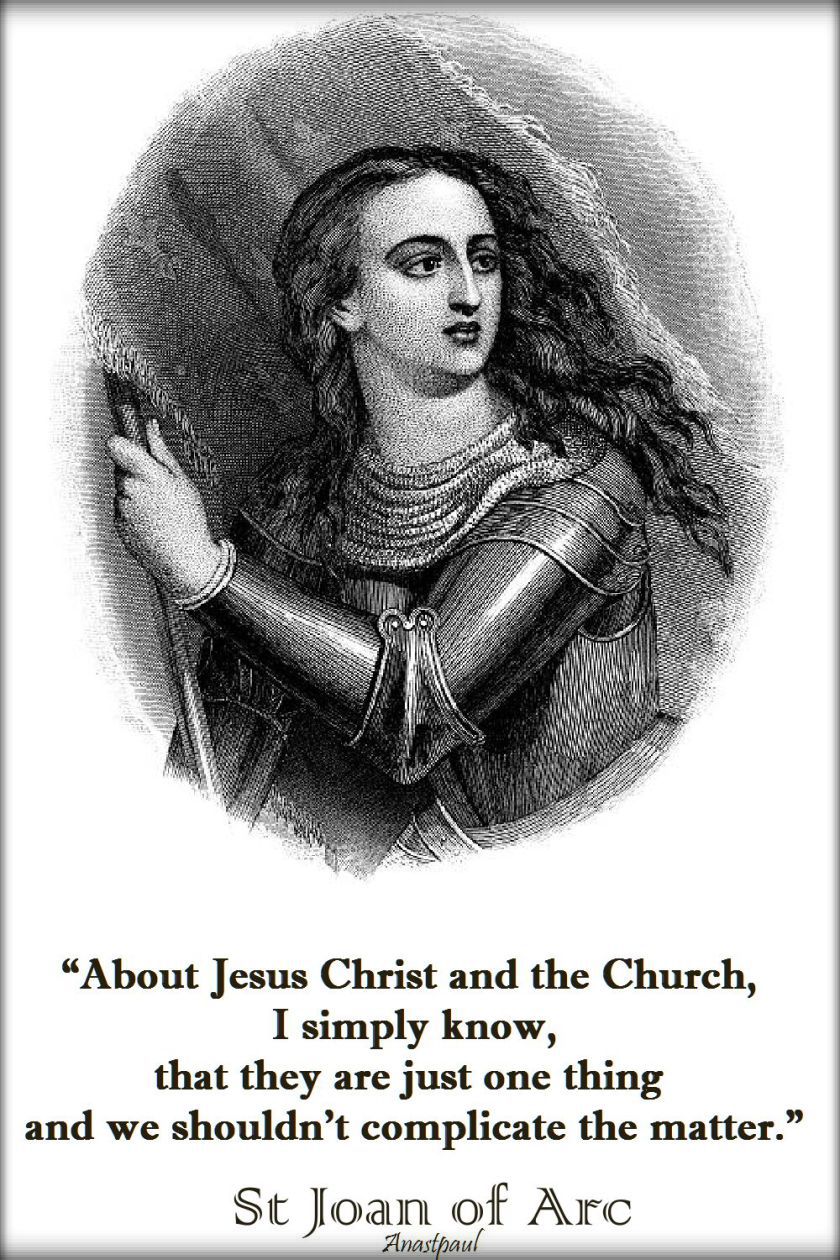
“About Jesus Christ and the Church, I simply know, that they are just one thing and we shouldn’t complicate the matter.”
“Help yourself and God will help you.”
“I am the drum on which God is beating out His message.”
“If I be not in a state of grace, I pray God place me in it, if I be in it, I pray God keep me so.”
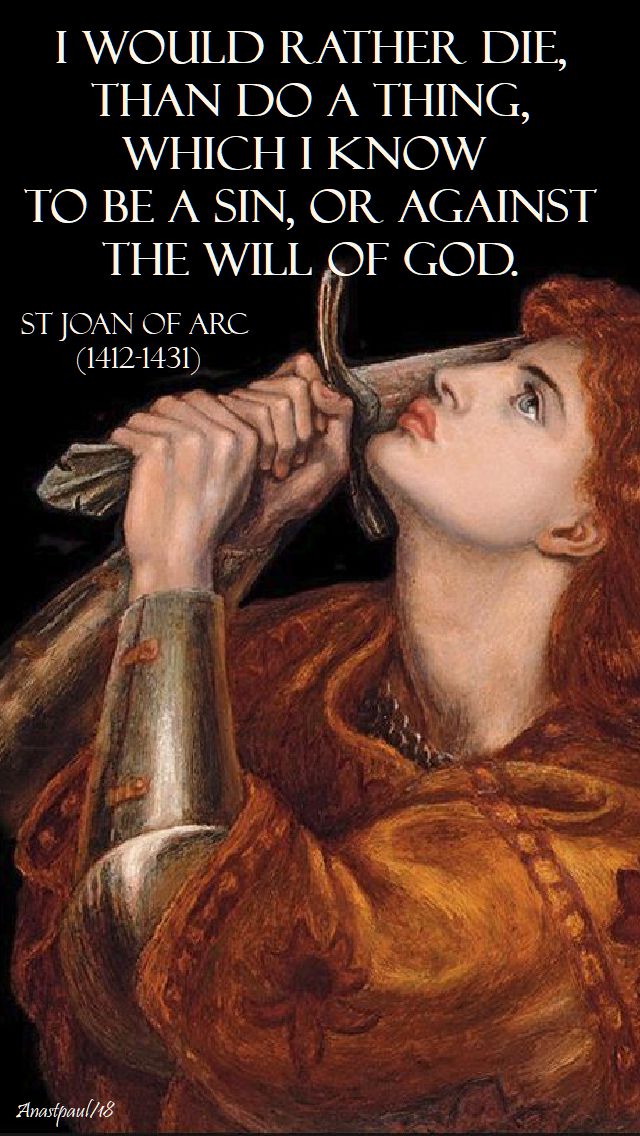
“I would rather die, than do a thing, which I know to be a sin, or against the will of God.”
“Every man gives his life, for what he believes. Every woman gives her life, for what she believes. Sometimes people believe, in little or nothing and so they give their lives, to little or nothing. One life is all we have and we live it, as we believe in living it… and then it’s gone. But to surrender, who you are and to live without belief, is more terrible than dying – even more terrible than dying young.”
One Minute Marian Reflection – 30 May “Mary’s Month”
And coming to her, he said, “Hail, favoured one! The Lord is with you.”…Luke 1:28
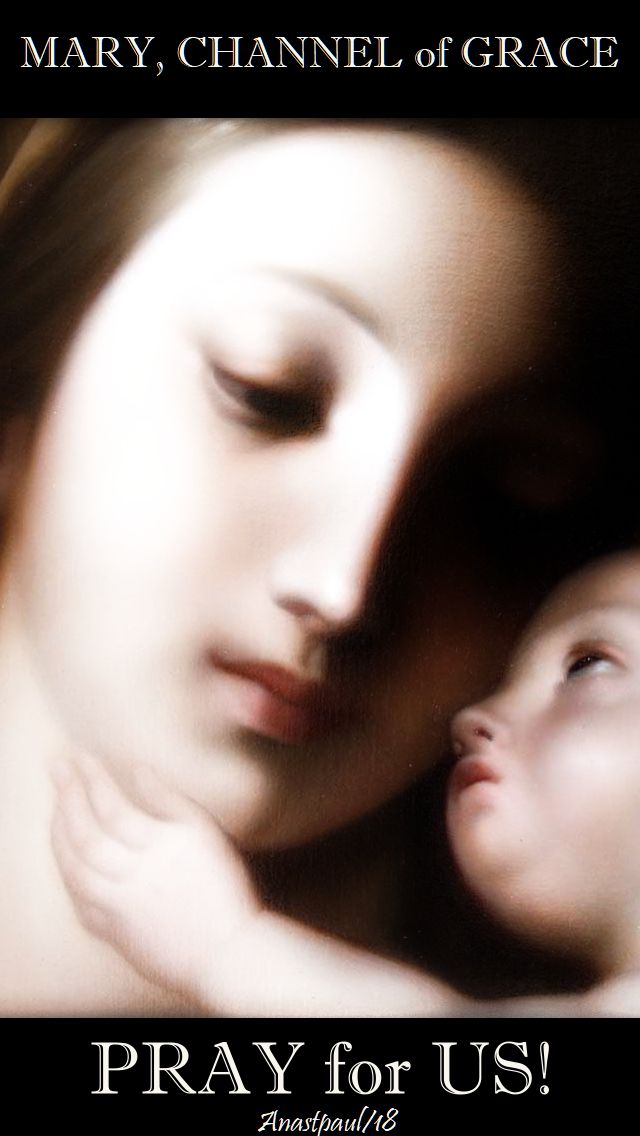
REFLECTION – “MARY: THE CHANNEL OF GRACE – “Her power before God is such that she can obtain anything that we ask for and, like any mother, she wants to answer our prayers. Like any mother, also, she knows and understands our weaknesses. She encourages us and makes excuses for us. She makes the way easy for us and, even when we think there is no possible solution for our worry, she always has one ready to offer us.”…St Josemaría Escrivá (1902-1975) “Mother of God and Our Mother,” Friends of God, 292. Let us offer to our Mother today: A visit or a conversation with a friend or relative whom we want to encourage to go to Confession.
PRAYER – Almighty God, Your incarnate Word fills us with the new light He brought to men. Let the light of faith in our hearts shine through all that we do and say. Grant that through Mary, mother of Christ and our mother and protector, by her prayers and solace, we may learn humility and true faith. We make our prayer through Jesus, our Lord, who is with You and the Holy Spirit, one God forever, amen.
































You must be logged in to post a comment.