Posted in MARIAN TITLES, SAINT of the DAY

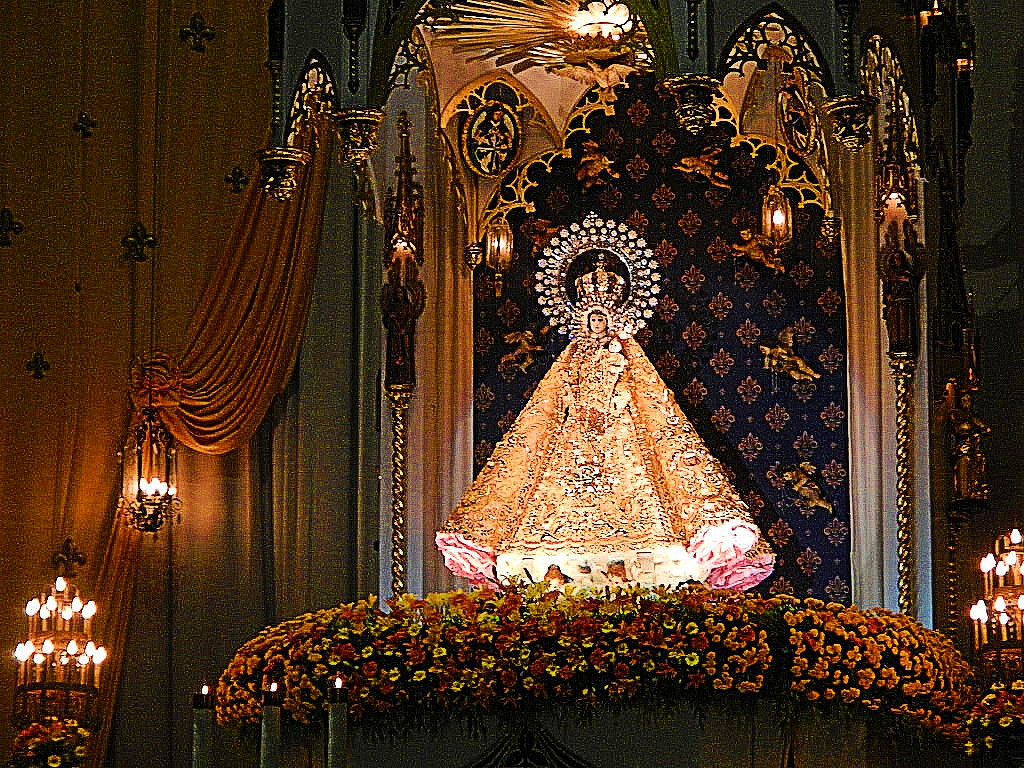
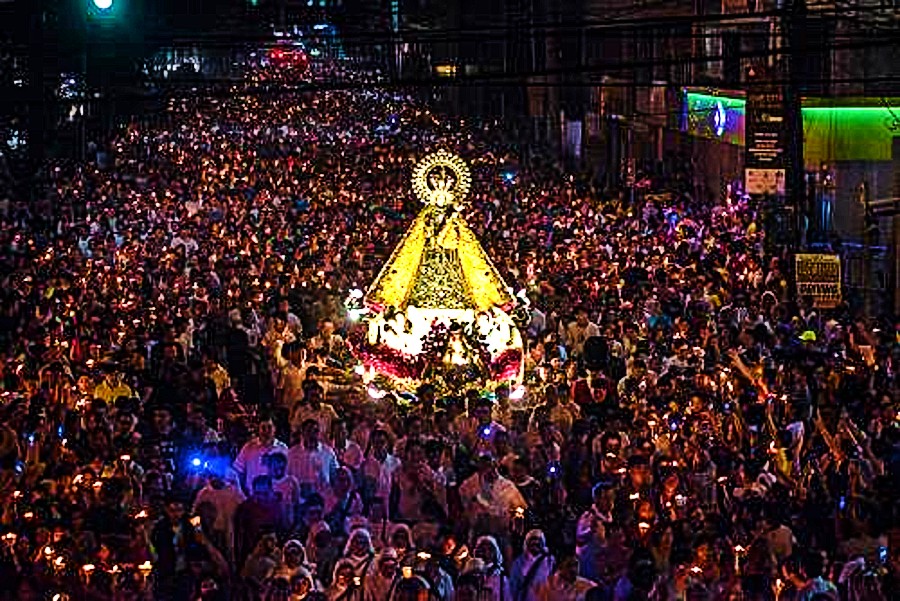
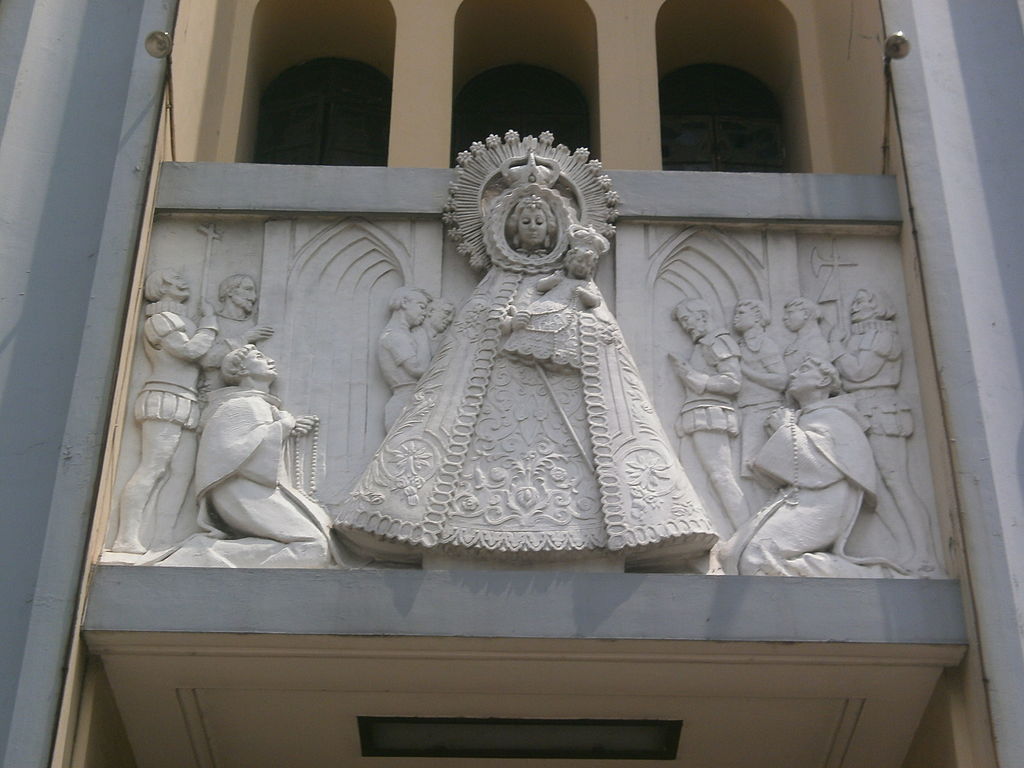
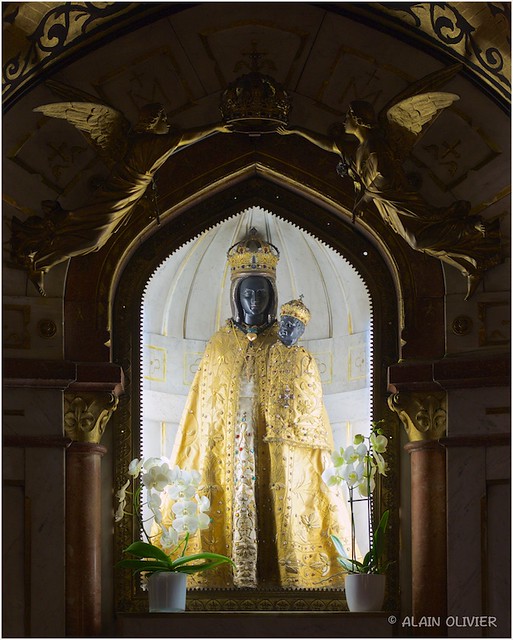
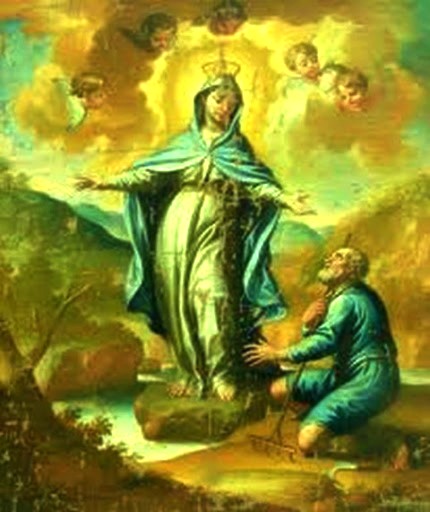
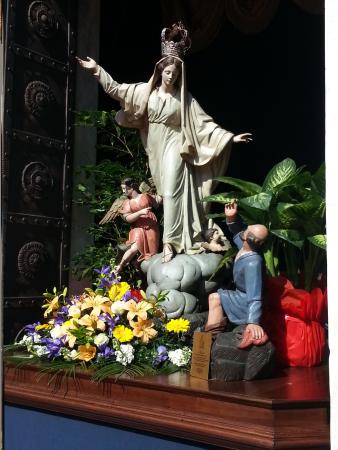
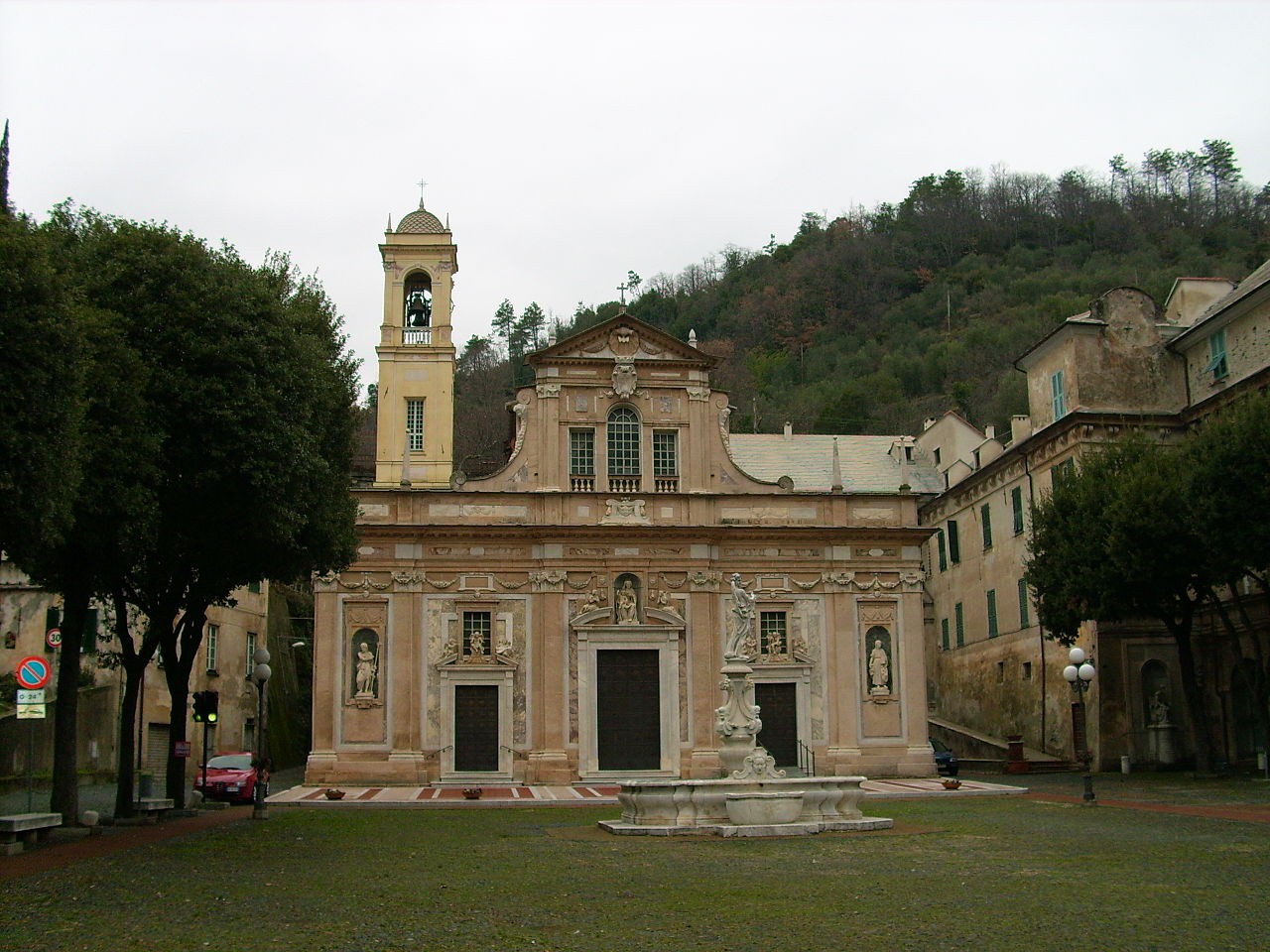
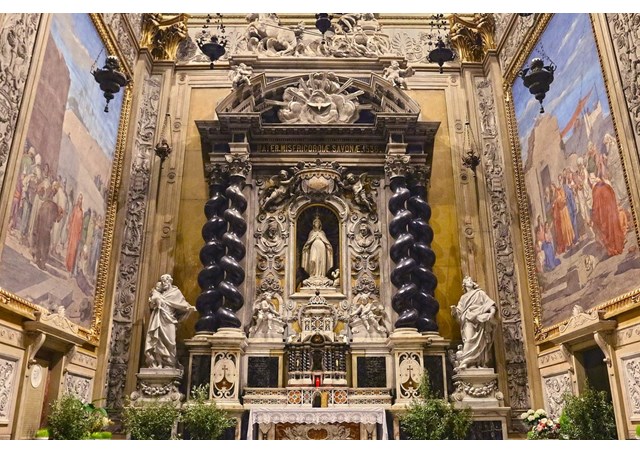
Notre-Dame de Soissons / Our Lady of Soissons, France (1128) and Memorials of the Saints – 26 March

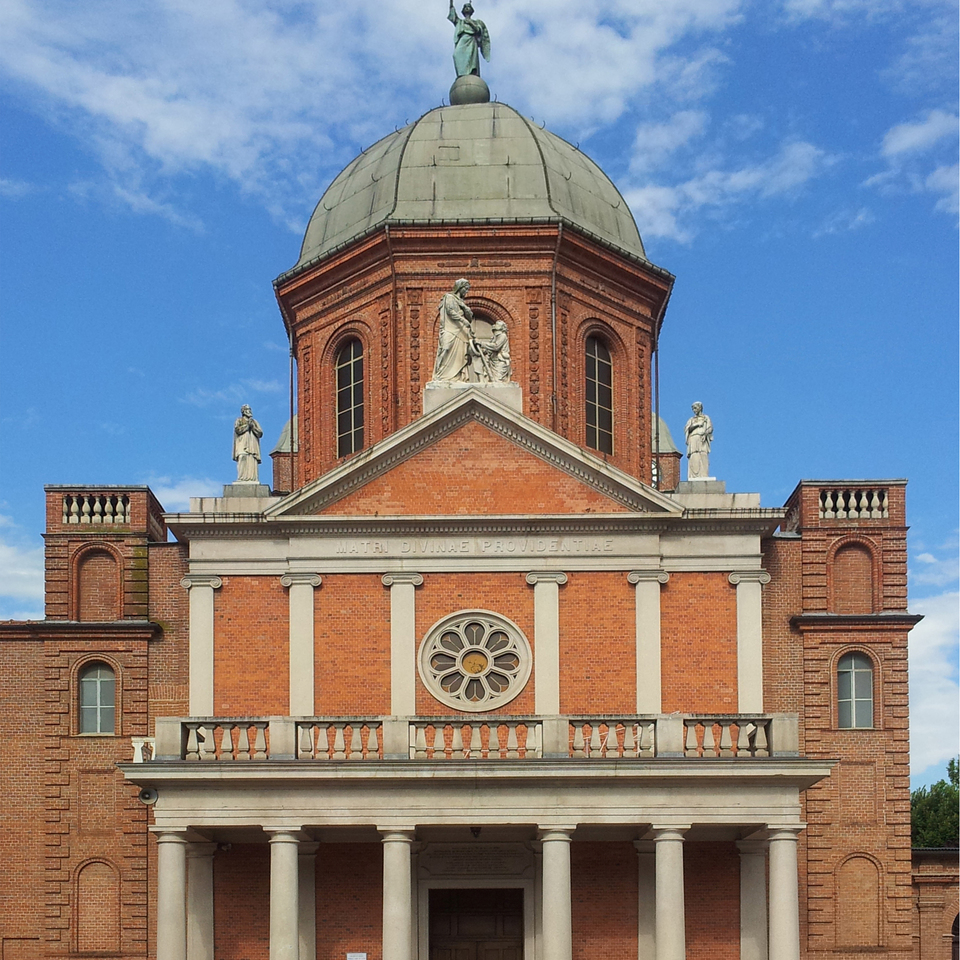
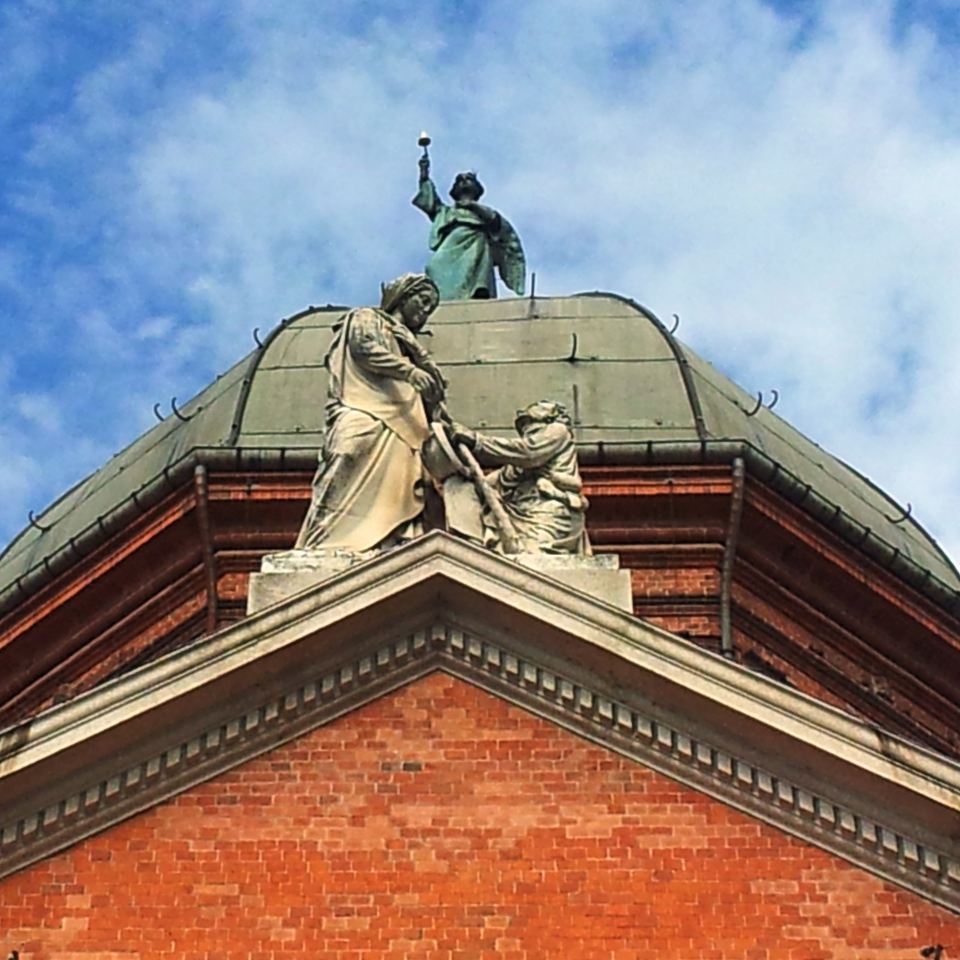
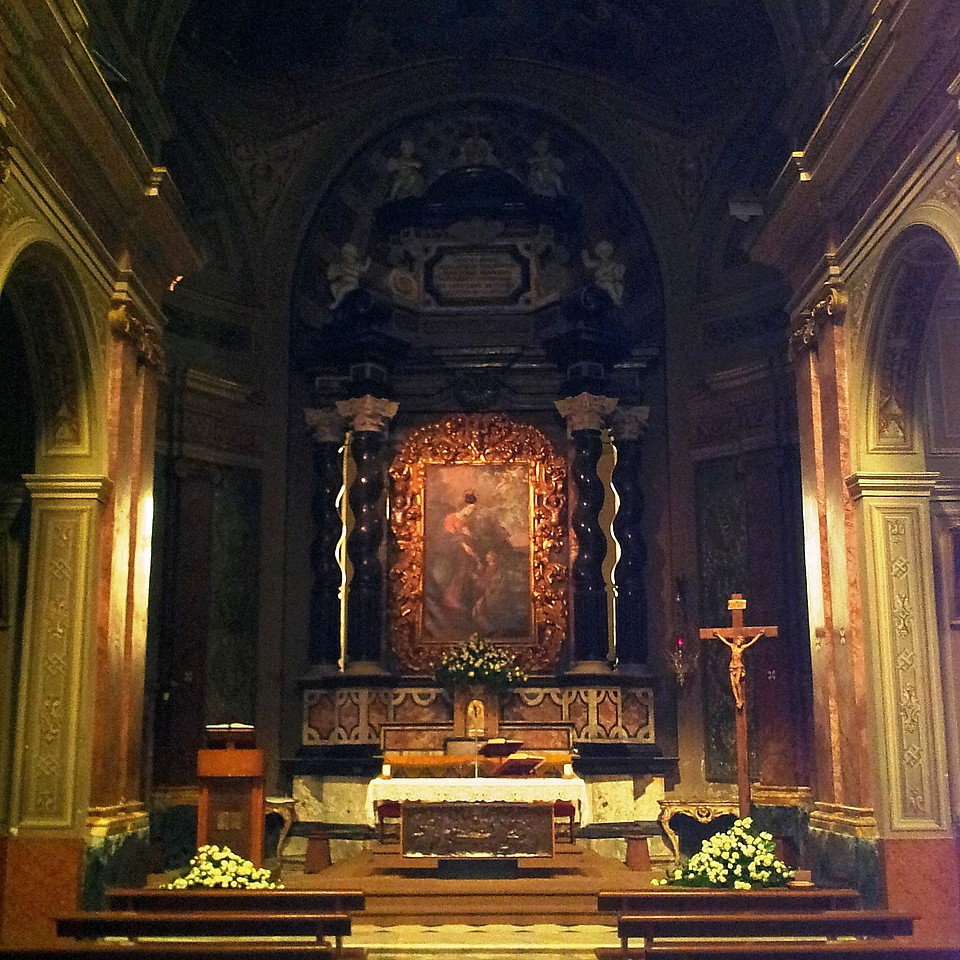
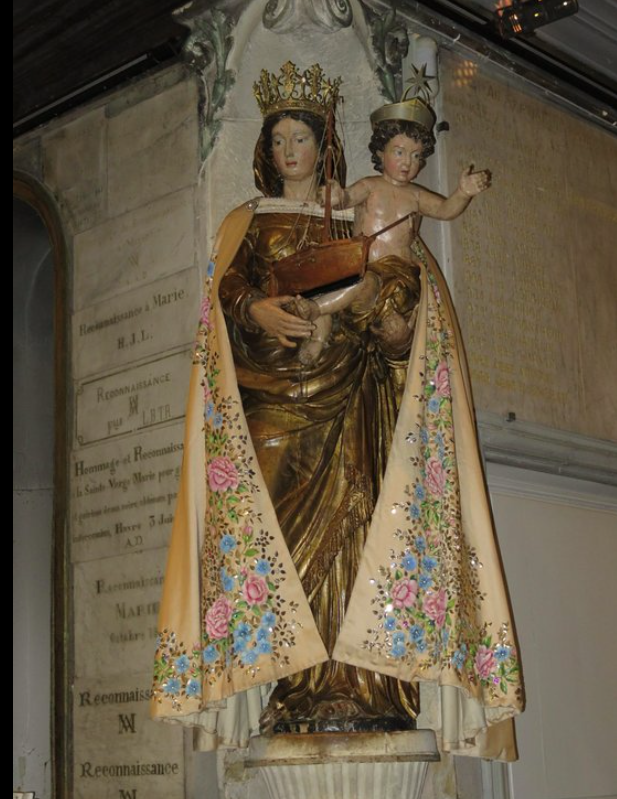
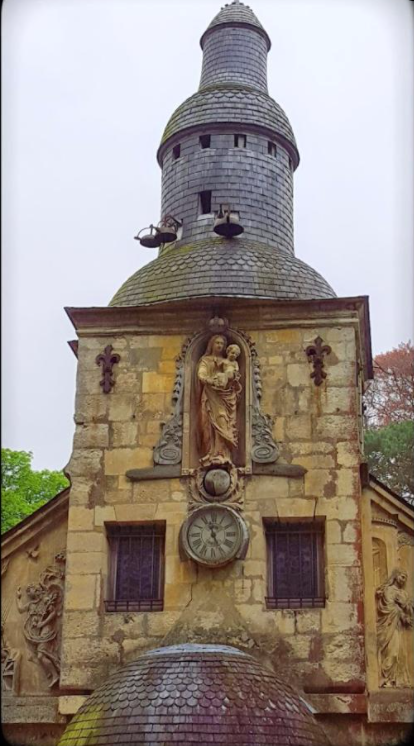
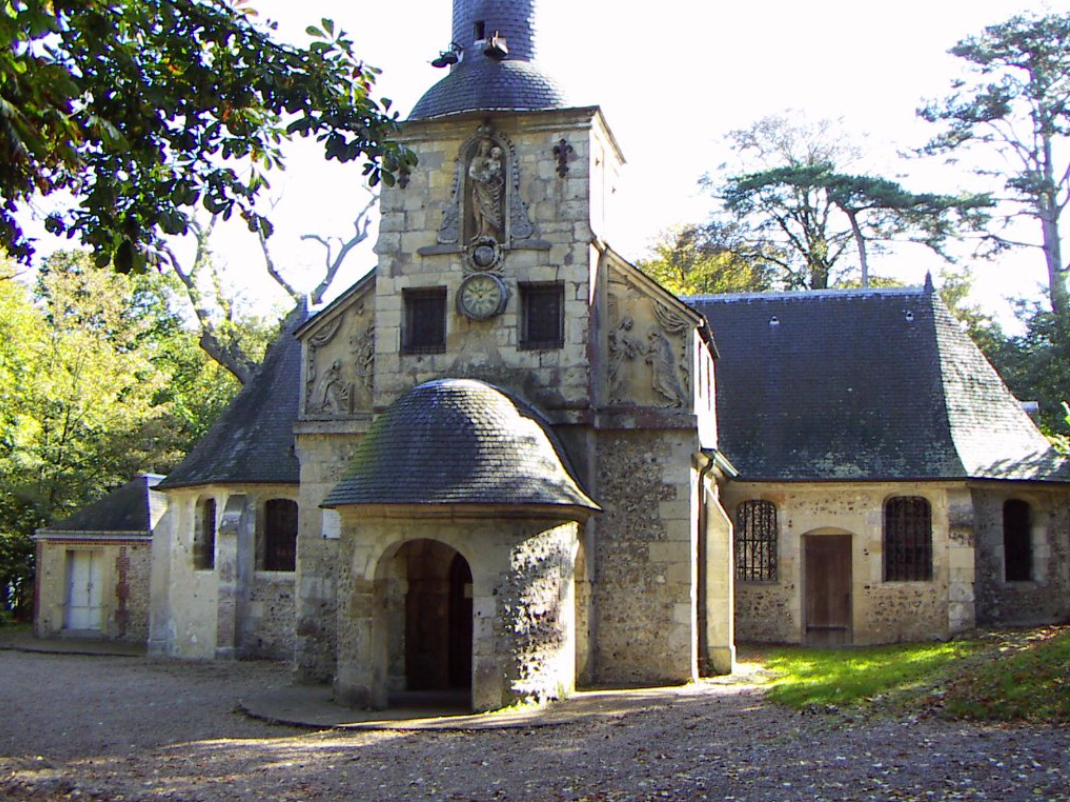
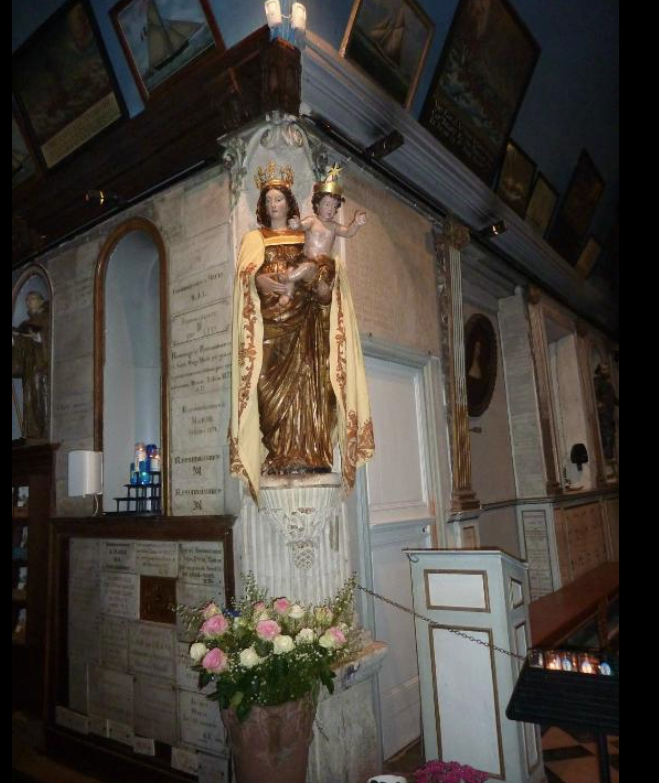
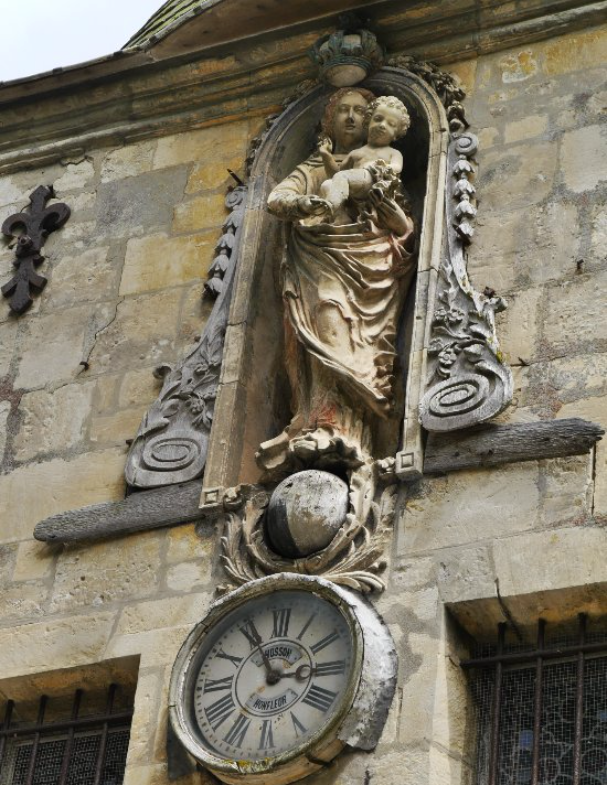
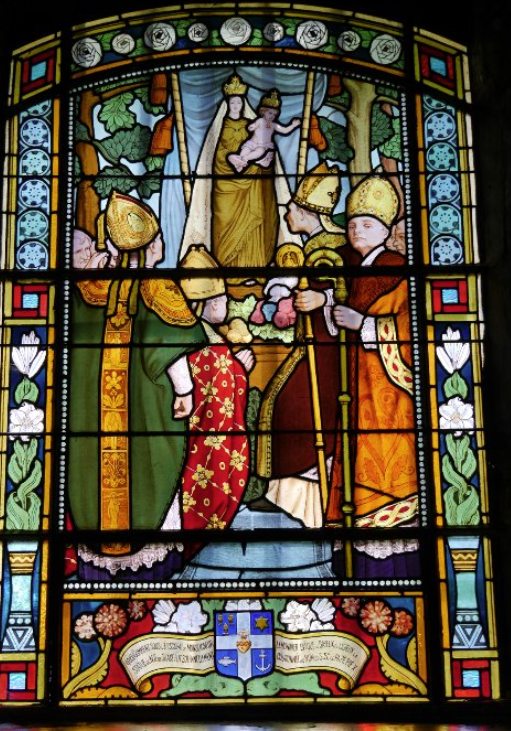
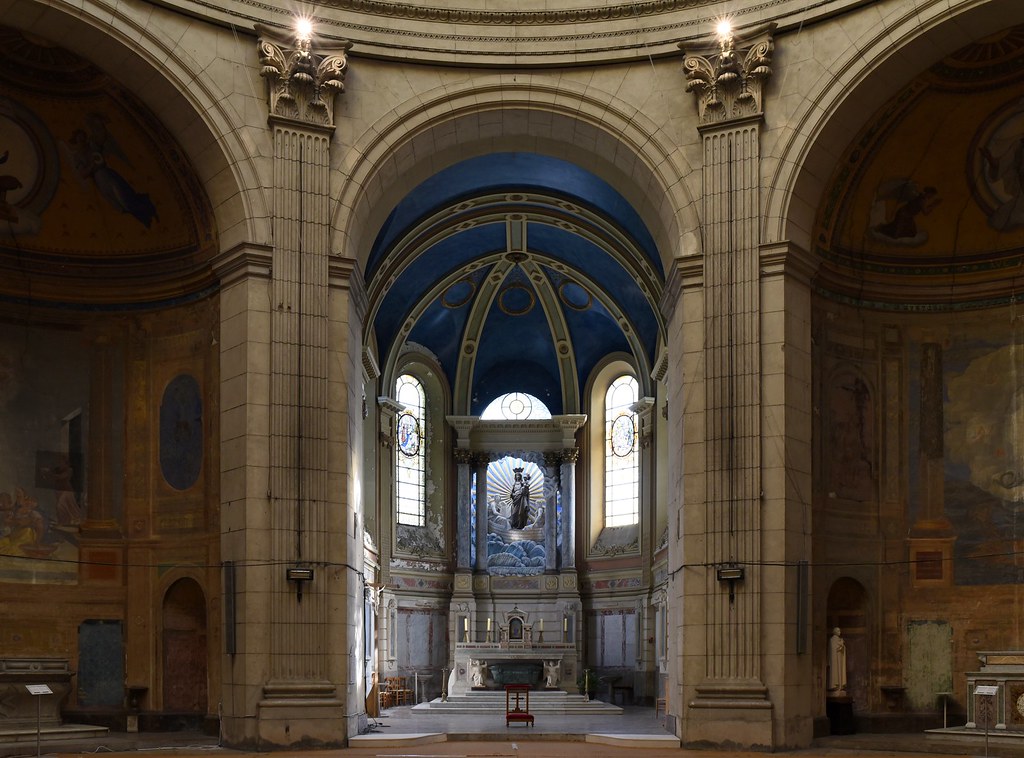
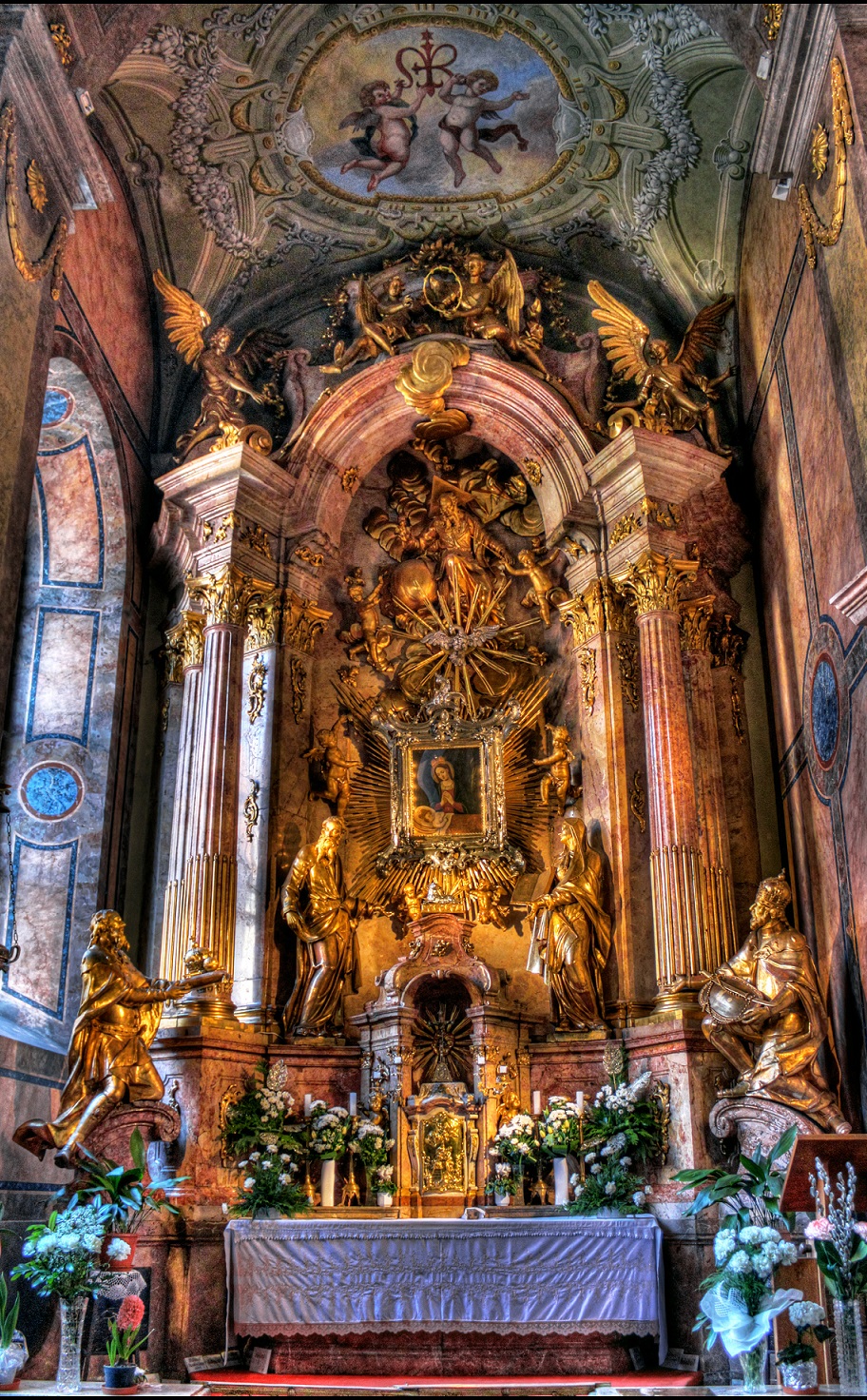
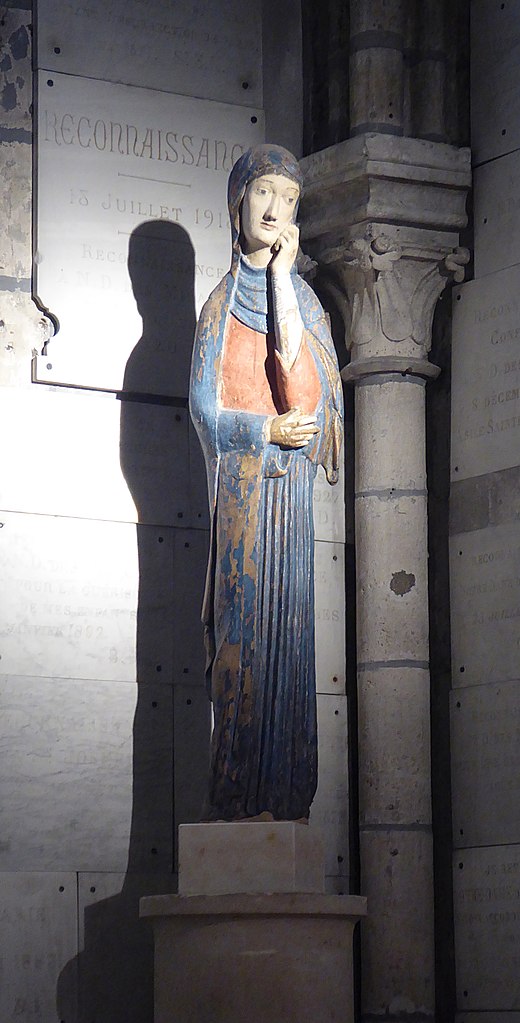
Notre-Dame de Soissons / Our Lady of Soissons, France (1128) In the Abbey, one of Our Lady’s slippers is kept – 26 March:

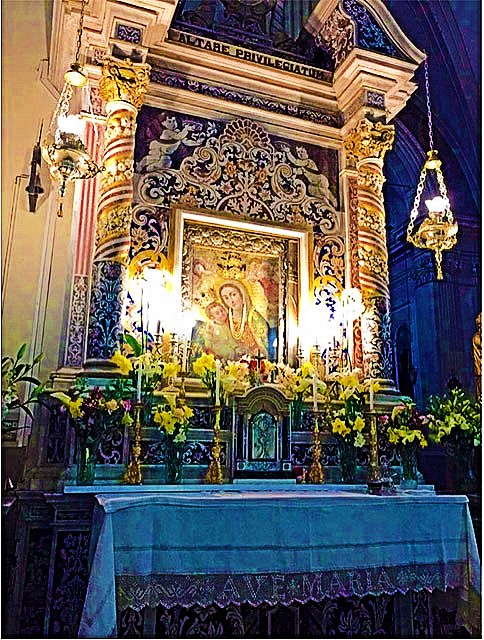
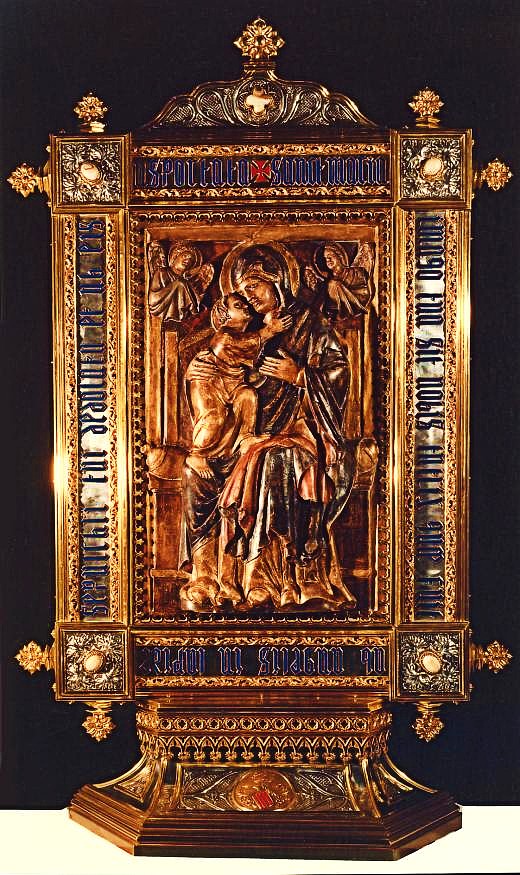
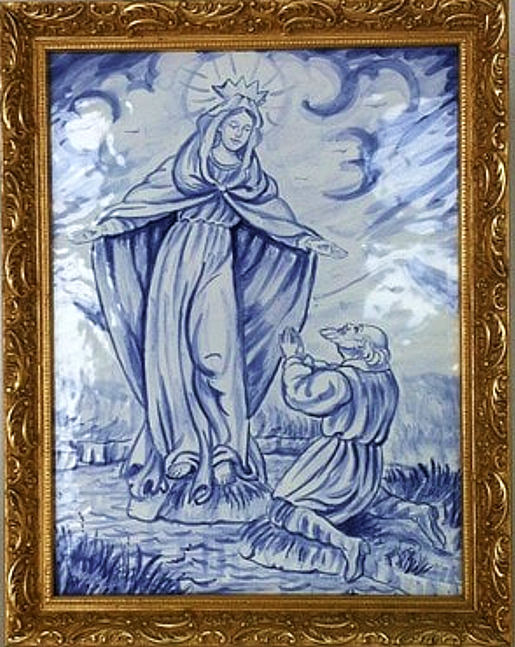
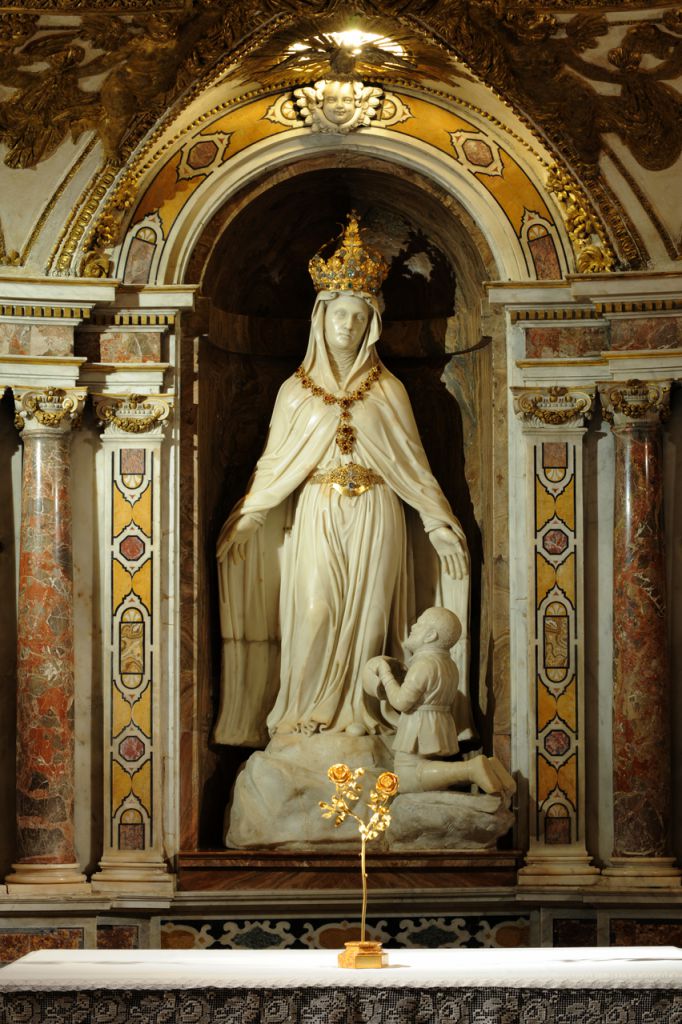
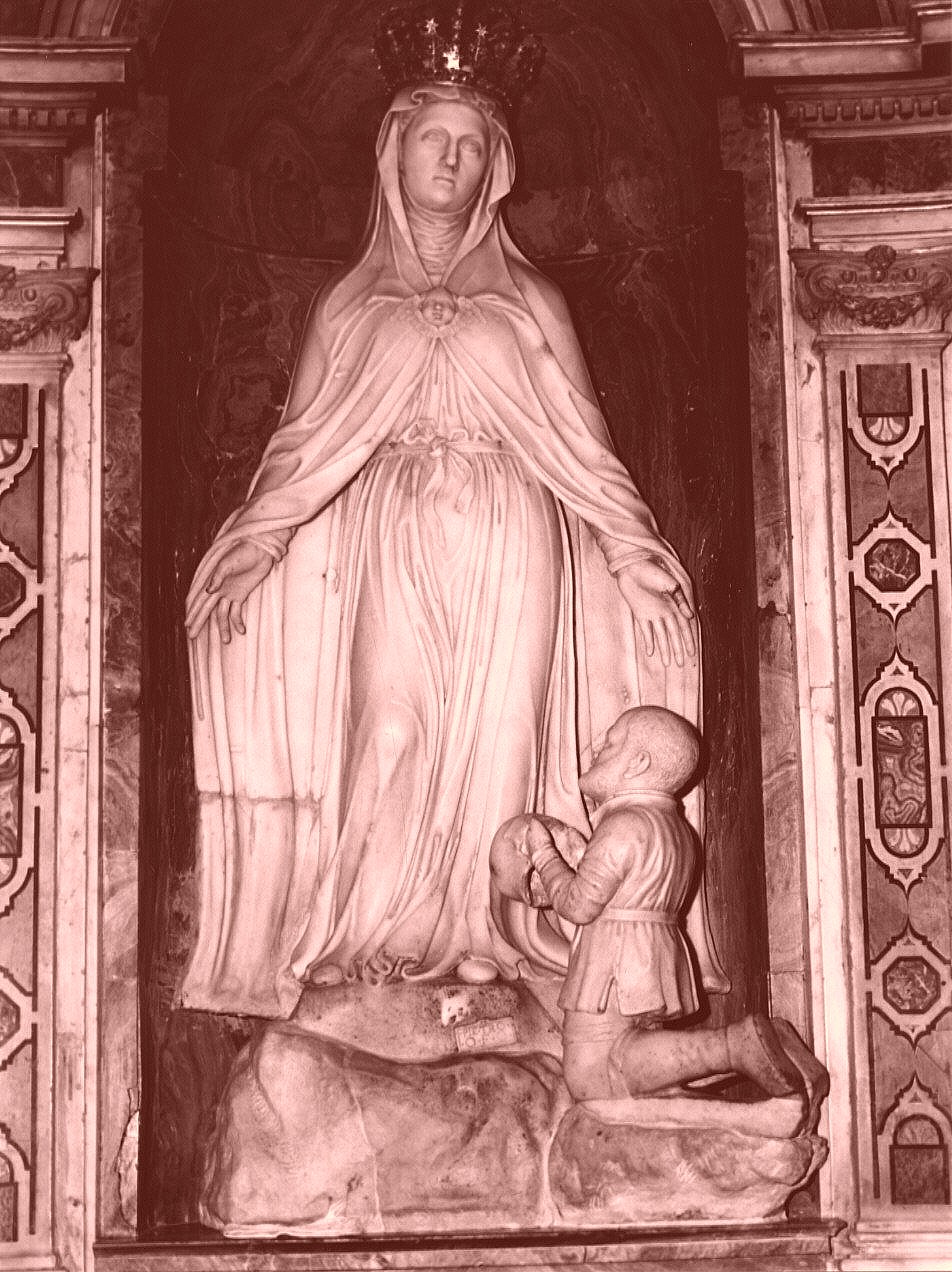
In the year 1128, a Plague afflicted the City of Soissons. For six consecutive days the victims went to the Shrine of Our Lady and called out to her for help. The Blessed Virgin Mary appeared to them, accompanied by heavenly hosts of Angels. Immediately the people, who witnessed the miracle and believed, were cured. The Bishop asked all who were cured to celebrate a Novena of thanksgiving and to kiss the slipper of the Holy Virgin kept in the Church.

A rustic , a servant of one of the Knights of Soissons, a man named Boso, came to the Church for the festival which was to follow the Novena. While his companions gave gifts and talked of the slipper of Our Lady, he gave nothing and scoffed at the idea, muttering, โ€œYou are very foolish to believe this to be the Virginโ€™s slipper. It would have rotted long ago.โ€ At these words Bosoโ€™s blasphemous mouth was drawn toward his ear with such sharp pain that his eyes seemed to slip out of his head. A tumour appeared and covered his face, making it unfit for human use. Roaring and writhing, he threw himself before the Altar of Mary, begging for help, as he had offended the Mother of God and he knew there was no-one else who could heal him.
The Abbess, a woman named Mathilda, took the slipper and made the Sign of the Cross over the victim. Immediately he began to heal. The punished scoffer repented and gave himself up to the service of the Church of Soissons. Many โ€“ the lame, the blind, the deaf, the dumb, the paralytics, were healed at the Shrine.
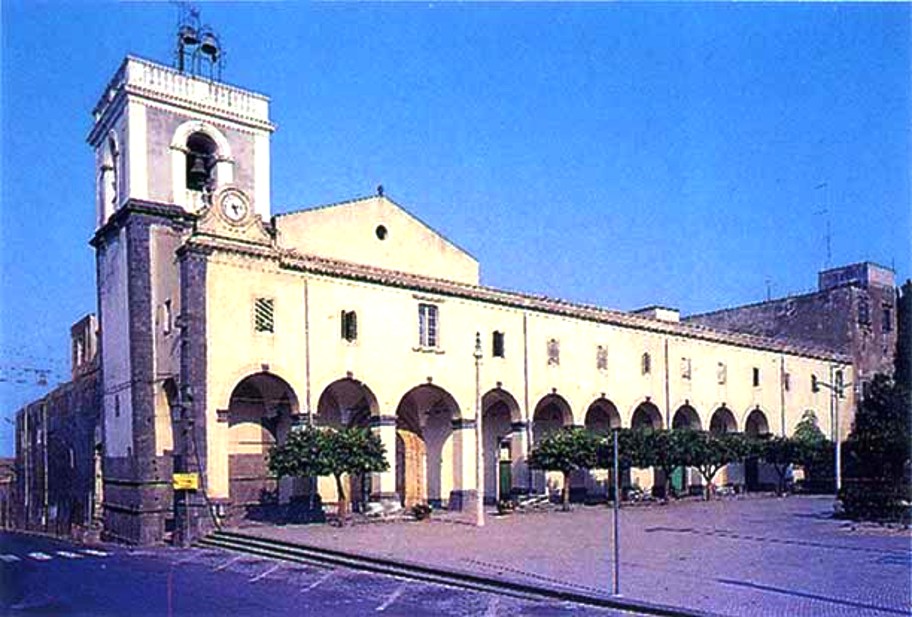
The Abbey was once the largest in France, famous for its rich collection of relics, including the โ€œLady Slipperโ€ but all that remains today of the Abbey is a ruined wall with two arches, as the rest was methodically razed by the eager hands of the devotees of the French Revolution.

__
St Basil the Younger
St Bathus
St Bercharius
St Braulio (590-651)
Biography:

https://anastpaul.wordpress.com/2018/03/26/saint-of-the-day-26-march-braulio-590-651/

St Castulus of Rome (Died c 288) Martyr
St Eutychius of Alexandria
St Felicitas of Padua
St Felix of Trier
St Garbhan
St Govan
St Ludger (c 742-809)
About St Ludger:

https://anastpaul.com/2019/03/26/saint-of-the-day-26-march-st-ludger-c-742-809/
Blessed Maddalena Caterina Morano FMA (1847-1908)
About:

https://anastpaul.com/2020/03/26/saint-of-the-day-26-march-blessed-maddalena-caterina-morano-fma-1847-1908/
St Maxima the Martyr
St Mochelloc of Kilmallock
St Montanus the Martyr
St Sabino of Anatolia
St Sincheall of Killeigh
St Wereka
โ€”

Martyrs of Rome โ€“ 5 saints: A group of Christians martyred together. The only details to survive are the names โ€“ Cassian, Jovinus, Marcian, Peter and Thecla. Rome, Italy, date unknown.

Posted in FEASTS and SOLEMNITIES, MARIAN REFLECTIONS, MARIAN TITLES, SAINT of the DAY, The ANNUNCIATION

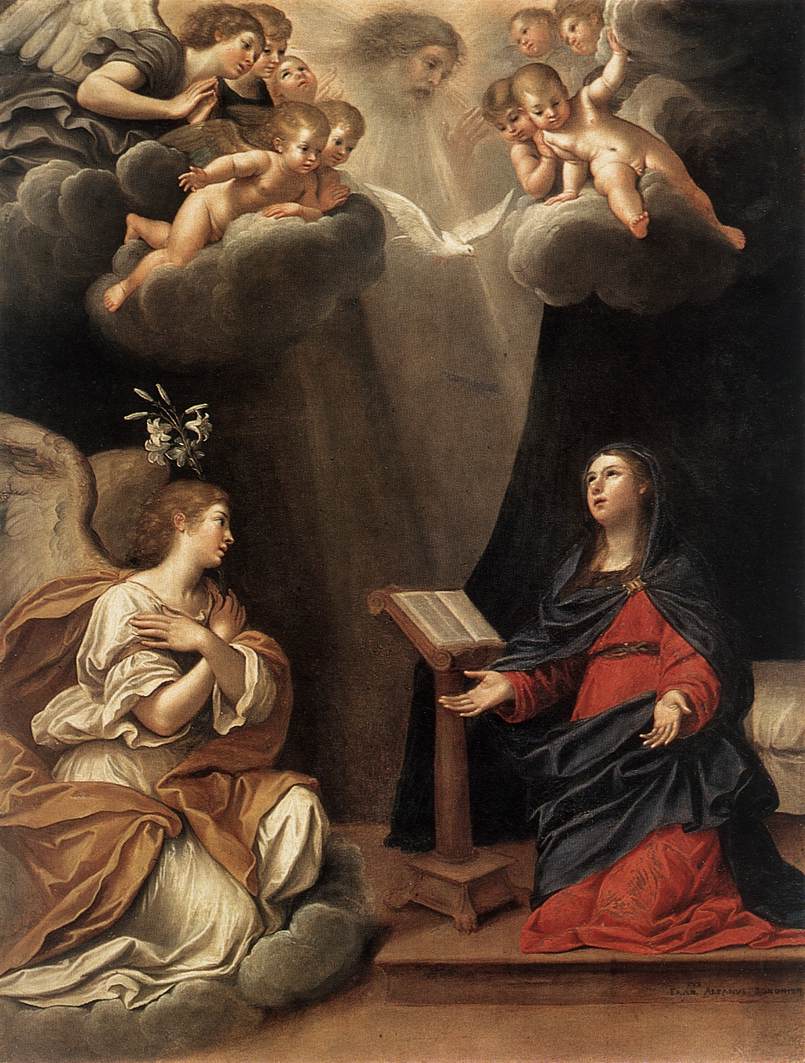
The Annunciation of the Most Blessed Virgin Mary, Mother of God, Our Lady of Betania and Memorials of the Saints – 25 March

The Annunciation of the Most Blessed Virgin Mary, Mother of God:
HERE:
https://anastpaul.com/2019/03/25/the-solemnity-of-the-annunciation-of-the-lord-25-march/

Abbot Prosper Guรฉranger OSB (1805-1875) narrates:

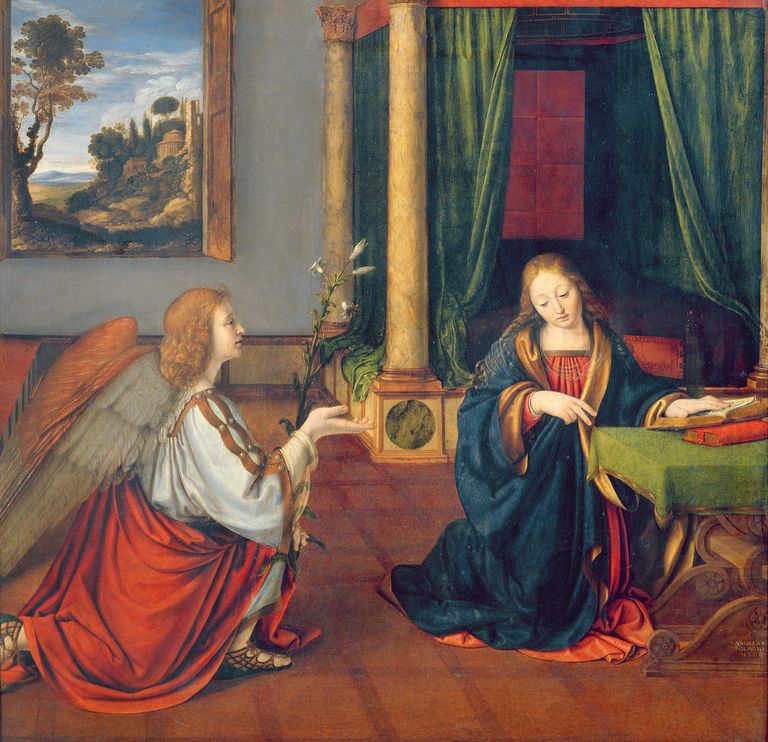
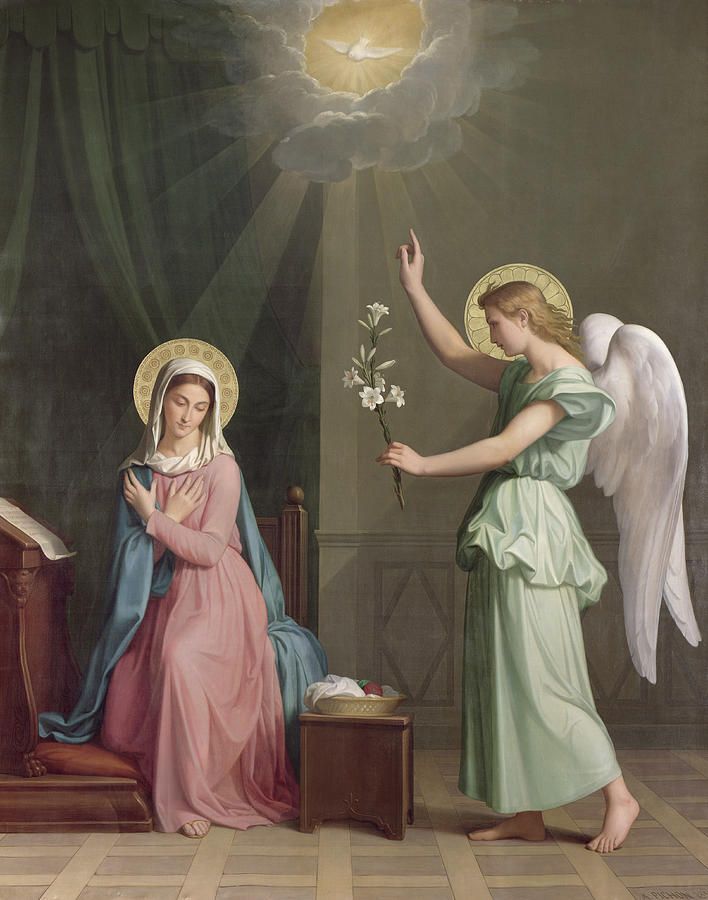
A tradition, which has come down from the apostolic ages, tells us that the great mystery of the Incarnation, was achieved on the twenty-fifth day of March. It was at the hour of midnight, when the most holy Virgin was alone and absorbed in prayer, that the Archangel Gabriel appeared before her and asked her, in the name of the Blessed Trinity, to consent to become the Mother of God. Let us assist, in spirit, at this wonderful interview between the angel and the Virgin: and, at the same time, let us think of that other interview which took place between Eve and the serpent. A holy Bishop and Martyr of the second century, Saint Irenaeus, who had received the tradition from the very disciples of the Apostles, shows us that Nazareth, is the counterpart of Eden.

In the garden of delights there is a virgin and an angel and a conversation takes place-between them. At Nazareth a virgin is also addressed by an angel and she answers him but the angel of the earthly paradise, is a spirit of darkness and he of Nazareth, is a spirit of light. In both instances, it is the angel that has the first word. ‘Why,’ said the serpent to Eve, ‘hath God commanded you, that you should not eat of every tree of paradise?’ His question implies impatience and a solicitation to evil, he has contempt for the frail creature to whom he addresses it but he hates the image of God, which is upon her.

See, on the other hand, the angel of light; see with what composure and peacefulness he approaches the Virgin of Nazareth, the new Eve and how respectfully he bows himself down before her: ‘Hail, full of grace! The Lord is with thee! Blessed art thou among women!’ Such language is evidently of heaven, none but an angel could speak thus to Mary.

Scarcely has the wicked spirit finished speaking than Eve casts a longing look at the forbidden fruit, she is impatient to enjoy the independence it is to bring her. She rashly stretches forth her hand, she plucks the fruit, she eats it and death takes possession of her: death of the soul, for sin extinguishes the light of life; and death of the body, which being separated from the source of immortality, becomes an object of shame and horror and finally, crumbles into dust.

But let us turn away our eyes from this sad spectacle and fix them on Nazareth. Mary has heard the angel’s explanation of the mystery, the will of heaven is made known to her and how grand an honour it is to bring upon her! She, the humble maid of Nazareth, is to have the ineffable happiness of becoming the Mother of God and yet, the treasure of her virginity is to be left to her! Mary bows down before this sovereign will and says to the heavenly messenger: ‘Behold the handmaid of the Lord, be it done unto me, according to thy word.’

Thus, as the great St Irenaeus and so many of the holy fathers remark, the obedience of the second Eve, repaired the disobedience of the first, for no sooner does the Virgin of Nazareth speak her fiat, ‘be it done,’ than the eternal Son of God (who, according to the divine decree, awaited this word) is present, by the operation of the Holy Ghost, in the chaste womb of Mary and there, He begins His human life. A Virgin is a Mother and Mother of God and it is this Virgin’s consenting to the divine will, that has made her conceive by the power of the Holy Ghost. This sublime mystery puts between the eternal Word and a mere woman, the relations of Son and Mother, it gives to the almighty God, a means whereby He may, in a manner worthy of His majesty, triumph over satan, who hitherto seemed to have prevailed against the divine plan.

Never was there a more entire or humiliating defeat than that which this day befell satan. The frail creature, over whom he had so easily triumphed at the beginning of the world, now rises and crushes his proud head. Eve conquers in Mary. God would not choose man for the instrument of His vengeance, the humiliation of satan would not have been great enough and, therefore, she who was the first prey of hell, the first victim of the tempter, is selected to give battle to the enemy. The result of so glorious a triumph is, that Mary is to be superior not only to the rebel angels but to the whole human race, yea, to all the angels of heaven. Seated on her exalted throne, she, the Mother of God, is to be the Queen of all creation. Satan, in the depths of the abyss, will eternally bewail his having dared to direct his first attack against the woman, for God has now so gloriously avenged her and, in heaven, the very Cherubim and Seraphim reverently look up to Mary and deem themselves honoured, when she smiles upon them, or employs them in the execution of any of her wishes, for she is the Mother of their God.

Therefore is it that we, the children of Adam, who have been snatched by Mary’s obedience from the power of hell, solemnise this day of the Annunciation. Well may we say of Mary, those words of Debbora, when she sang her song of victory over the enemies of God’s people: โ€˜The valiant men ceased and rested in Israel, until Debbora arose, a mother arose in Israel. The Lord chose new wars and He Himself, overthrew the gates of the enemies.โ€™ Let us also refer to the holy Mother of Jesus, these words of Judith, who by her victory over the enemy was another type of Mary: ‘Praise ye the Lord our God, who hath not forsaken them that hope in Him. And by me, His handmaid, He hath fulfilled His mercy, which He promised to the house of Israel and He hath killed the enemy of His people, by my hand this night. . . . The almighty Lord hath struck him and hath delivered him into the hands of a woman and hath slain him.’

Our Lady of Betania:
The name Betania means Bethany in Spanish. It was originally given this name by Maria Esperanza and was the site of their farm, in Venezuela. Apparitions of the Blessed Virgin Mary were reported and eventually a small Chapel was built there and the faithful began to gather, especially on Feast Days but throughout the year.

St Alfwold of Sherborne
St Barontius of Pistoia
St Desiderius of Pistoia
St Dismas (Crucified with Jesus) “The Good Thief”

St Dula the Slave
Blessed Emilian Kovch (1884-1944) Priest, Martyr
About Bl Emilian:

https://anastpaul.wordpress.com/2018/03/25/saint-of-the-day-25-march-blessed-emilian-kovch-1884-1944-martyr/

Bl Everard of Nellenburg
Bl Herman of Zahringen
St Hermenland
St Humbert of Pelagius
Bl James Bird
Bl Josaphata Mykhailyna Hordashevska
St Kennocha of Fife
St Lucia Filippini
St Marie-Alphonsine/Mariam Sultaneh Danil Ghattas (1843-1927)
About St Marie-Alphonusine:

https://anastpaul.com/2020/03/25/saint-of-the-day-25-march-st-marie-alphonsine-danil-ghattas-1843-1927/
St Matrona of Barcelona
St Matrona of Thessaloniki
St Mona of Milan
St Ndre Zadeja
Bl Pawel Januszewski
St Pelagius of Laodicea
Bl Placido Riccardi
St Procopius
St Quirinus of Rome
Bl Tommaso of Costacciaro
โ€”
262 Martyrs of Rome: A group 262 Christians martyred together in Rome. We know nothing else about them, not even their names.

Posted in MARIAN TITLES, SAINT of the DAY

Notre-Dame de L’รฉpine Fleurie / Our Lady of the Flowering Thorn, France and Memorials of the Saints – 24 March

Notre-Dame de L’รฉpine Fleurie / Our Lady of the Flowering Thorn, France – 24 March:

From the infancy of the Church, images of our Blessed Lady have been in use among the faithful to enkindle and keep alive in their hearts a tender devotion to the Mother of God. When the barbarians overran the Roman Empire, the Christians, fearful of profanation, hid these paintings and Statues of the Blessed Virgin, in the most secret recesses of caves and forests. The Huns and vandals spared neither age nor sex and when the tumult of war had subsided, oftentimes, few or none remained to withdraw those images from their hiding places and they rested, until the providence of God, allowed them to be discovered and often, in a miraculous manner. “Our Lady of the Flowering Thorn” was one of these and the marvellous circumstances of the discovery, are thus related by a chronicler of the olden time:

“On the western side of the Jura, France, there once stood an old baronial residence. Its noble owner had heard the voice of St Bernard calling through the length and breadth of the land, to the rescue of Jerusalem and of the Holy Sepulchre. He had listened to the thrilling words, “Hail to thee, holy City, City of the Son of God, chosen and sanctified to be the source of salvation to man. Sovereign of nations, capital of empires, metropolis of patriarchs, mother of prophets and apostles, hail to thee.” The infidel had taken possession of her, and Christendom rose to the rescue.
Who has not heard of what the world calls the fatal ending of St Bernard’s crusade! Yet surely not fatal to those devoted souls, whom the love of God inspired to fight for the land where Jesus suffered and died for them and who fell on the battlefield, to rise and grasp the crown of glory. Among those heroes of the Cross fell the Lord of our castle on the Jura, leaving a widow to mourn her loss while she rejoiced in his gain. “Sorrowful, yet always rejoicing.” Their names have been lost in the lapse of ages, he is only remembered as the crusader, she as the saint.
It was on one of those days when winter, about to leave the earth, seems to cast himself into the bosom of spring, that our saint was walking along the avenue of her castle, her mind full of pious meditation. She had reached the termination of the avenue, when her eye was attracted toward a thorny bush, and there she saw an arbutus laden with the richest blossoms of spring. She hastened towards it, doubtful whether the flakes of snow had not deceived her but no, she found it crowned with a multitude of little white stars shaded with crimson rays and she carefully broke off a branch to hang up in her oratory, over an image of the Blessed Virgin which she had venerated from childhood. She joyfully returned towards the castle, carrying her innocent offering. Whether this little tribute was really agreeable to the Mother of Jesus, or whether it was only that pleasure, which the heart feels at the slightest effusion of tenderness, towards a beloved object, the soul of the lady was that evening filled with the most ineffable sweetness. She promised herself a great deal of pleasure in going every day to gather a fresh garland to adorn the statue of her Mother Mary, and she was faithful to her resolution.
Now it happened that one day, being very busy in relieving the wants of the poor who came to her for alms and kind words, she could not go to gather her garland before the shades of evening had covered the earth and as she approached the thicket, an uneasy feeling came over her, occasioned by the increasing darkness. S he was thinking that it would be difficult to gather the flowers, when a calm clear light seemed to overspread the bushes. Startled at the sight, and fearing that robbers might be lurking there, she paused for a moment, but remembering she had never once omitted to bring her offering, she boldly ventured forward, though it was with a trembling hand she plucked the branch, that seemed as if it bent towards her.
During that night and all the next day, the lady reflected on what she had seen, without being able to account for it and her heart, being penetrated with the mystery, she went the following evening to the thicket, accompanied by a faithful servant and her old Chaplain. The soft light was seen as they approached, becoming every instant brighter and more vivid. They stopped and fell upon their knees, for it seemed to them, that this light came from heaven . Then the good old Priest arose and moved with reverential steps toward the thicket, chanting a hymn of the Church; he put aside the branches which appeared to open of their own accord, and there, a little image of the Blessed Virgin, rudely carved by unskilled though pious hands, was descried in the midst of the bushes and it was from this Statue that the light emanated.
“Hail Mary, full of grace,” said the Priest, kneeling before the image, “and at that moment a melodious murmur was heard through the surrounding woods, as if the chant had been taken up by the choirs of angels.” He then recited those admirable litanies in which faith speaks the language of the most sublime ecstasy and after repeated acts of veneration, he took the Statue in his hands to carry it to the castle, where it would rest in a sanctuary more worthy of it.
The lady and her servant followed with hands joined and bowed heads, repeating the responses of the solemn litany. It is needless to tell of the elegance and rich decorations of the niche where the holy image was placed, surrounded with blazing lights and rich perfumes, while the lady and her household knelt in prayer until morning advancedโ€”but lo! when the beams of the orb of day arose upon the earth, the image was nowhere to be seen. Why had the heavenly Virgin deserted the widowed saint? What new dwelling had she chosen?
The blessed Mother of the lowly Jesus had preferred the modest shelter of her flowery thorns, to the splendour of a worldly dwelling; she had returned to the freshness of the woods, to taste the peace of solitude and the sweet exultations of the flowers. All the inhabitants of the castle proceeded at evening to the wood and found it more resplendent than ever. They knelt in respectful silence. โ€œQueen of angels, Queen of all saints,” said the Chaplain, “it is here thou art pleased to dwell, be it as thou wilt.”
And soon a Chapel was raised on the spot, embellished with all the architectural beauties those ages of faith and poetic sentiment could inspire. The rich adorned it with gifts, and kings lavished it with jewels and gold. The renown of the miracles wrought there, drew large crowds of pilgrims and ere long, a convent reared its head, of which the saint became the superior. She died full of years and good works and our Lady of the Flowering Thorn received her pure soul and carried her in her maternal arms to the blissful bowers of paradise, where thornless flowers bloom forever, around the Throne of God.
Still, each spring, till Time is no more, the thorn trees bloom and white petals testify to those who will listen, to the tale that no scientist would believe, the story of Our Lady of the Flowering Thorn. If you wish to check on the details, you might go yourself to the forgotten valley, near the highest peak of the Jura and walk among the ruins there. As you kneel on the grassy stone that once formed the arch above the Chapel window, say a prayer to Our Lady for the one from whom I heard the tale, for me and for all lovers and devotees of Mary. Amen.”

The 29th “Day of Missionary Martyrs” + 2021 โ€œIn Love and Aliveโ€
A day of prayer and fasting in memory of the missionary Martyrs of the Faith.

St Agapitus of Synnada
St Aldemar the Wise
St Bernulf of Mondovi
Bl Bertha deโ€™Alberti of Cavriglia
Bl Bertrada of Laon
Bl Brian Oโ€™Carolan
St Caimin of Lough Derg
St Cairlon of Cashel
St Catherine of Sweden (1331-1381)
Biography:

https://anastpaul.com/2019/03/24/saint-of-the-day-24-march-st-catherine-of-sweden-1331-1381/
Blessed Diego Josรฉ of Cรกdiz/Blessed Didacus Joseph of Cadiz OFM Cap (1743โ€“1801)
Biography:

https://anastpaul.com/2020/03/24/saints-of-the-day-24-march-blessed-didacus-joseph-of-cadiz-ofm-cap-1743-1801/

St Domangard of Maghera
St Epicharis of Rome
St Epigmenius of Rome
St Hildelith of Barking
Blessed John dal Bastone OSB Silv. (c 1200-1290) Priest
St Latinus of Brescia
St Macartan of Clogher
Bl Maria Serafina of the Sacred Heart
St Mark of Rome
Bl ร“scar Arnulfo Romero y Galdรกmez (1917โ€“1980)
Before he was a Saint (Canonised on 14 Oct 2018): https://anastpaul.wordpress.com/2018/03/24/saint-of-the-day-24-march-blessed-oscar-arnulfo-romero-y-galdamez-1917-1980-martyr/

St Pigmenius of Rome
St Romulus of North Africa
St Secundus of North Africa
St Seleucus of Syria
St Severo of Catania
St Timothy of Rome
โ€”
Martyrs of Africa โ€“ 9 saints: A group of Christians murdered for their faith in Africa, date unknown. The only details about their that survive are the names โ€“ Aprilis, Autus, Catula, Coliondola, Joseph, Rogatus, Salitor, Saturninus and Victorinus. .

Martyrs of Caesarea โ€“ 6 saints: A group of Christians martyred together in the persecutions of Diocletian. We know little else but six of their names โ€“ Agapius, Alexander, Dionysius, Pausis, Romulus and Timolaus. They were martyred by beheading in 303 at Caesarea, Palestine.

Posted in MARIAN TITLES, SAINT of the DAY

Madonna della Vittoria di Lepanto / Our Lady of Victory of Lepanto and Hungary, (1716) and Memorials of the Saints – 23 March

Madonna della Vittoria di Lepanto / Our Lady of Victory of Lepanto and Hungary, (1716) – 23 March:

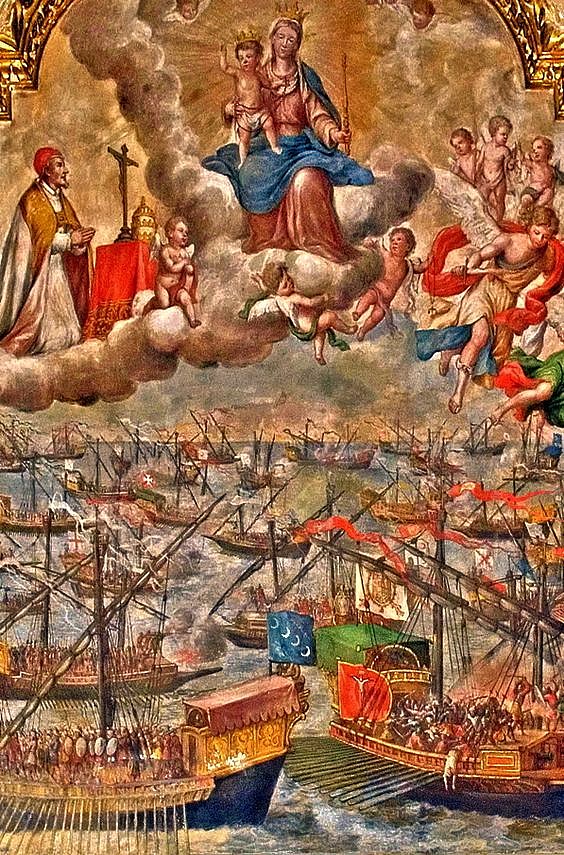
The Battle of Lepanto was a naval engagement that took place between the ships of the Catholic Holy League under Don Juan of Austria and the navy of the Ottoman Empire under Ali Pasha, supported by a large fleet of corsairs. The Ottoman Empire was far too powerful for any one Christian kingdom to stand against it and, although all of Western Europe was threatened, only Spain, the Papal States, the Duchy of Savoy, the Republic of Venice, the Republic of Genoa and the Knights of Saint John, took a stand against them. Altogether they still had only 212 ships against no less than 278 ships.
For hundreds of years the Ottoman Empire had been making advances into Europe, while also making lightning raids along the coastlines to pillage and take slaves. They intended to eventually overwhelm all of Europe and at that time, Catholics stood almost alone against them, as no Protestant force would do anything to oppose the invasion.
The advantage in this contest went strongly to the Turks and so, Pope Pius V implored all of Christendom, to pray the Rosary to the Blessed Virgin Mary, to obtain her intercession before the throne of God, for their victory. Admiral Andrea Doria sailed to meet the Turks with an image of the Blessed Virgin prominently displayed in his flagshipโ€™s state room.
The Venetian forces on Cyprus, had been under siege by the Turks, during the time that the Catholic forces were preparing to meet them. On 1 August they surrendered, after being assured, that they could leave the island unopposed. The Ottoman commander broke his solemn oath, however, taking the Venetians captive and flaying their captain while he was yet alive. Once he had completed this unspeakable torture, the captain’s dead body was hung from a spar on Mustafaโ€™s flagship alongside the heads of all the Venetian commanders. This was the type of barbarism the Catholic forces sailed to oppose.
The engagement took place on the 7th of October 1571, only 6 years after the Knights of Saint John defeated a powerful Ottoman army at Malta. Don Juan of Austria encouraged his men by telling them that โ€œThere is no paradise for cowards.โ€ If they should lose the engagement, the Mediterranean Sea would be opened up to assist future Ottoman invasions. Victory would mean at least a brief reprieve.
The Ottoman Turks had not lost any significant naval engagements in the memory of any living man, yet they were defeated. It was widely recognised, that the battle was won through the power of Mary, Our Lady of Victory. The Turks had come up like fire from the East, plundering, raping, enslaving, threatening to master the whole of Christendom but had been defeated at Lepanto through the power of the Rosary.
The Turks had lost nearly 9 of every 10 ships and 30,000 men went to a watery grave. The Holy League lost only 17 galleys and 7,500 men. Many historians rank Lepanto as the most decisive naval engagement since the Battle of Actium in 31 BC, proving to the Christians, that the Turks could be beaten. Although the Turks soon rebuilt their fleet, many of their best soldiers and sailors were already dead at Malta and Lepanto and they could not be easily replaced.

This feast also celebrates another Christian victory, as in 1716, Mary, Queen of Victory, was chosen to protect her children again, at Petenwardein. This battle was fought on 5 August 1716, between the Austrian army of Prince Eugene and the Turks at Peterwardein in Hungary and, it was also won through the power of Mary Most Holy.
To help equip the Christian army against the Turks, Pope Clement XI emptied the Papal treasury.
The two armies met on the morning of the feast of Our Lady of the Snows; the Christian army was outnumbered ten to three; the enemy had the advantage of position but the Christian strength lay in the right of their cause and in Mary, who watched over them. The battle was long but, behind the lines in the Churches of Europe, Catholics prayed – their prayers were heard. That evening the sun set on a free Hungary. Maryโ€™s men had won the day; Maryโ€™s banner floated victoriously over a Christian land.
The news filled the Christian world with joy but nowhere more than at Rome. In thanksgiving to the Mother of God for her help, glorious, solemn, pontifical ceremonies of gratitude were held in the Basilica of Saint Mary Major. After Lepanto, Pius V instituted the feast of the Holy Rosary in Rome and Clement XI extended it to the whole world.
Today, other more sinister errors eat at the heart of Christian culture. Against the errors of our time, we must appeal to Mary; she is our Advocate, our Queen of Victories and of Peace. For her and for her blessed Son, we struggle and in her powerful intercession with the Prince of Peace, we place our trust.
We struggle today to preserve our birthright as sons of God.

__
St Turibius of Mogrovejo (1538-1606) (Optional Memorial)
Biography:

https://anastpaul.wordpress.com/2018/03/23/saint-of-the-day-23-march-st-turibius-of-mogrovejo-1538-1606/

Bl รlvaro del Portillo Dรญez de Sollano
Bl Annunciata Asteria Cocchetti
St Benedict of Campagna
St Crescentius of Carthage
Bl Edmund Sykes
St Ethelwald of Farne
St Felix the Martyr
St Felix of Monte Cassino
St Fergus of Duleek
St Fidelis the Martyr
St Frumentius of Hadrumetum
St Gwinear
St Joseph Oriol (1650-1702)
His life:

https://anastpaul.com/2019/03/23/saint-of-the-day-23-march-st-joseph-oriol-1650-1702/
St Julian the Confessor
St Liberatus of Carthage
St Maidoc of Fiddown
Bl Metod Dominik Trcka
St Nicon of Sicily
St Ottone Frangipane
Bl Peter Higgins
Bl Pietro of Gubbio
St Rafqa Pietra Choboq Ar-Rayรจs OLM (1832 โ€“ 1914)
Her Story:

https://anastpaul.com/2020/03/23/saint-of-the-day-23-march-st-rafqa-pietra-choboq-ar-rayes-olm-1832-1914/

St Theodolus of Antioch
St Victorian of Hadrumetum
St Walter of Pontoise OSB (c 1030-c 1099) A very reluctant Abbot
โ€”
Daughters of Feradhach: They are mentioned in early calendars and martyrologies, but no information about them has survived.

Martyrs of Caesarea โ€“ 5 saints: A group of five Christians who protested public games which were dedicated to pagan gods. Martyred in the persecutions Julian the Apostate. The only details we know about them are their names โ€“ Aquila, Domitius, Eparchius, Pelagia and Theodosia. They were martyred in 361 in Caesarea, Palestine.

Posted in MARIAN TITLES, SAINT of the DAY

Notre-Dame-de-Citeaux / Our Lady of Citeaux, France built by St Robert (1098), Our Lady of the Seven Veils (11th Century and Memorials of the Saints – 22 March

Notre-Dame-de-Citeaux / Our Lady of Citeaux, France built by St Robert (1098) – 22 March:

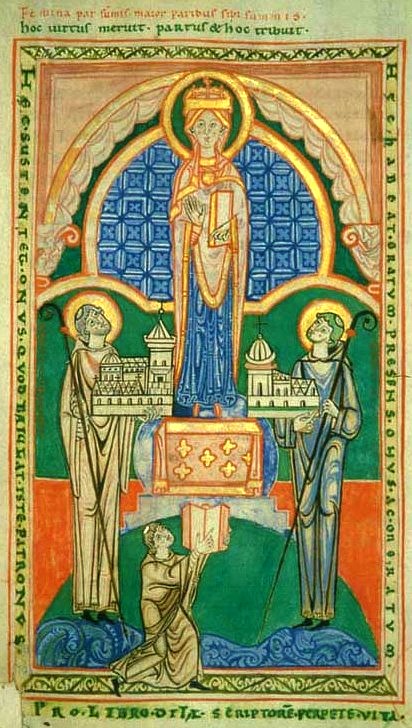
The Abbot Orsini wrote: โ€œOn Palm Sunday, in the year 1098, Saint Robert, Abbot of Moleme, retired with twenty-one of his Monks to the Diocese of Chalops-sur-Saone, where he built, in honour of Our Lady, the celebrated Monastery of Citeaux, the head house of the order.โ€

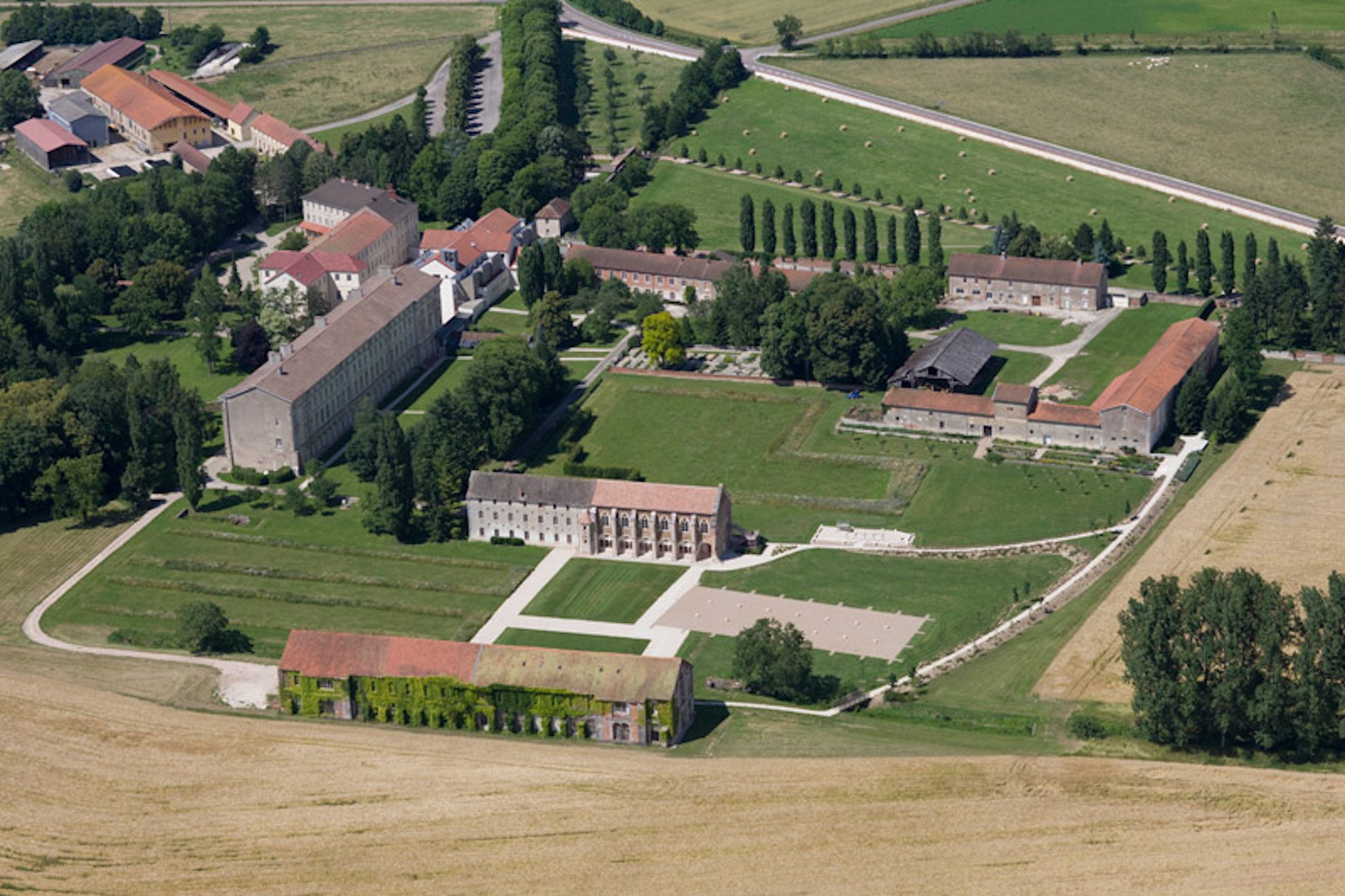
The Notre-Dame de Citeaux Abbey is the first Abbey of the Order of Citeaux, or the Cistercian Order. The original Abbey dates back to 1098, where in the Duchy of Burgundy, Robert of Molesme, Abbot of the Abbey of Our Lady of Molesme, founded the Church. Constructed in the Gothic style, which was current in the 11th century, it was dedicated to Mary, Mother of God and placed under the protection of the Dukes of Burgundy.
Having left the Abbey of Our Lady of Molesme, a small group of twenty-one Monks, led by Robert of Molesme, went to Citeaux to apply the Gregorian reform and live in the spirit of prayer and poverty of the rule of St. Benedict. The low country was a land sparsely populated, well forested but also an unwelcoming and hostile place. The beginning was very difficult, for what was required to develop the land was beyond what they possessed. The disciples of Robert suffered from extreme poverty but Pope Pascal II, in the year 1100, gave his protection to the new Monastery and the Duke of Burgundy provided the Monks with what they needed for construction and supplied funding for food and the overall maintenance of the religious.

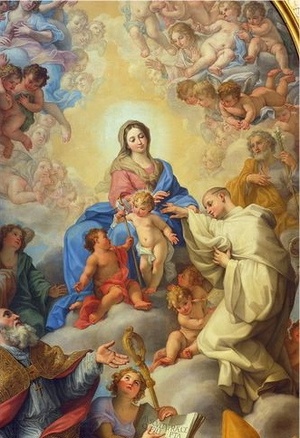
Our Lady and St Robert

Difficulties with the water supply at the original site required Aubry, successor of Robert after 1099, to settle the new community two kilometers further south. New buildings were constructed, including a Chapel, which was built of stone and dedicated to Our Lady.
After the death of Abbot Aubry in 1109, Stephen was elected as the third Abbot. He faced great problems, for their voluntary poverty appeared so strict, that they had a reputation for too much austerity and there were few vocations. The community was shrinking and some appeared at the gates of despair because they feared to have no successors.
Depending directly on the Papal States by pontifical right, the Cistercian Order was officially approved in 1119 by Pope Calixte II, with the purpose that it spread and enforce the Gregorian reform throughout the Christian West. The Abbey of Citeaux, thus became the founding mother of more than two thousand Monasteries from the Kingdom of France and throughout the Christian West to Transylvania in the East, during the 12th century.
The Abbey of Citeaux, whose founding was so difficult, became a major spiritual center which profoundly influenced the spiritual, economic and social life of men in the Middle Ages. It was from this place, that new Cistercian Abbeys sprung up all over Europe for the benefit of all mankind. The Christian West returned to a more rigorous respect for the rule of St Benedict and none of this, is to even begin to mention, the influence of the great Saint and Monk, Bernard of Clairvaux (1090-1153). The famous Saint Bernard actually left Citeaux to found his Monastery at Clairvaux in the year 1115.
The Monastery at Citeaux suffered pillaging several times throughout the Hundred Yearโ€™s War and the Monks were often forced to take refuge elsewhere during those perilous times. It was not until the 16th century, that the community once again numbered over 200 Monks but then, with the Wars of Religion, the number of Monks began to decrease again. Finally, in 1791, the Abbey was struck by the French Revolution. The property was illegally seized and sold as national property by the government.
In 1898, twenty Cistercians returned to occupy the Abbey, although the Church had been completely destroyed. Still, it is one of the few sites that has regained at least something of its spiritual tradition. The Church has been rebuilt and there are currently about 30 brothers living there.
The Abbey of Citeaux was classified as an historical monument in 1978.

Nostra Signora dei Sette Veli / Our Lady of the Seven Veils, Foggia, Italy (11th Century) โ€“ 22 March:
About:

https://anastpaul.wordpress.com/2018/03/22/memorial-of-our-lady-of-the-seven-veils-and-memorials-of-the-saints-22-march/

St Avitus of Pรฉrigord
St Basil of Ancyra
St Basilissa of Galatia
St Benevenuto Scotivoli of Osimo (c 1188-1282) Bishop

Blessed Bronislaw Komorowski (1889-1940) Priest and Martyr of the Nazi occupation of Poland.
His Life and Death:

https://anastpaul.com/2020/03/22/saint-of-the-day-22-march-blessed-bronislaw-komorowski-1889-1940-priest-and-martyr/


Blessed Clemens August von Galen (1878-1946)
The Lion of Munster!

https://anastpaul.com/2019/03/22/saint-of-the-day-22-march-blessed-clemens-august-count-von-galen-1878-1946/

St Darerca of Ireland
St Deghitche
St Epaphroditus of Terracina
St Failbhe of Iona
Bl Franรงois-Louis Chartier
St Harlindis of Arland
Bl Hugolinus Zefferini
St Lea of Rome
Bl Marian Gรณrecki
St Nicholas Owen SJ (1562-1606)
Dear St Nicholas Owen โ€“ The Priest-Hole Builder:

https://anastpaul.wordpress.com/2018/03/22/saint-of-the-day-22-march-st-nicholas-owen-s-j-1562-1606-the-priest-hole-builder-martyr/

St Octavian of Carthage
St Paul of Narbonne
St Saturninus the Martyr
St Trien of Killelga

Posted in MARIAN TITLES, SAINT of the DAY

Passion Sunday or the Fifth Sunday of Lent +2021, OOnze-Lieve-Vrouw van Bruges / Our Lady of Bruges, Flanders (1150 and Memorials of the Saints – 21 March

Passion Sunday or the Fifth Suday of Lent +2021
__
Onze-Lieve-Vrouw van Bruges / Our Lady of Bruges, Flanders (1150), where a lock of Our Ladyโ€™s hair is preserved – 21 March:

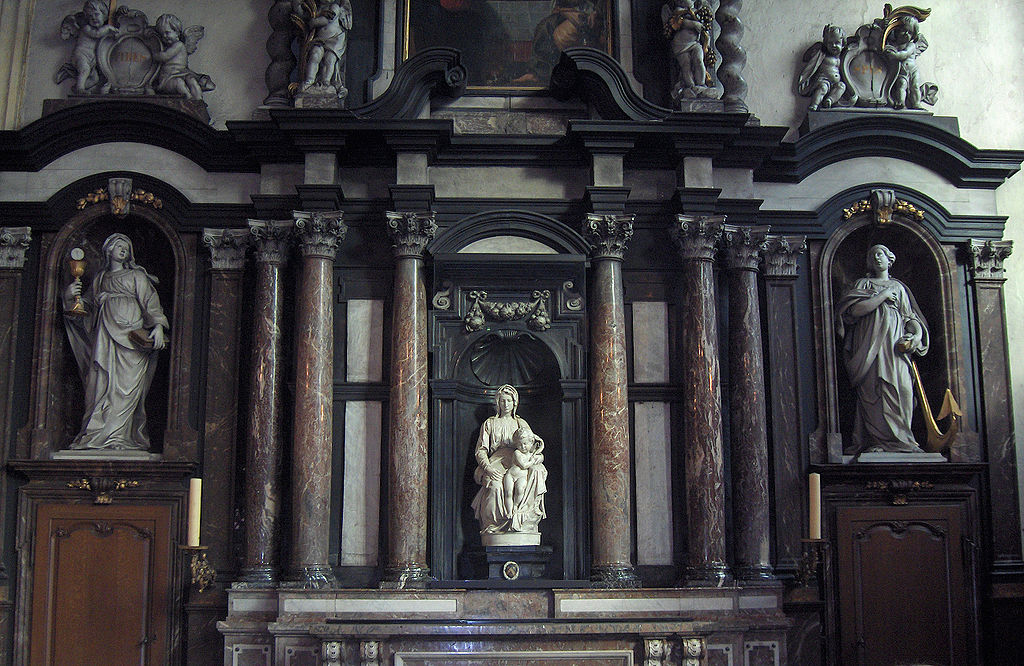
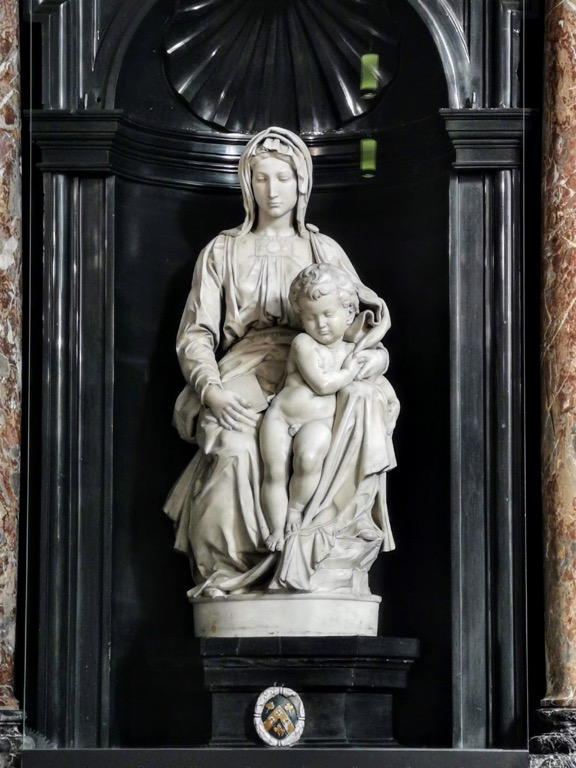
Michelangelo Buonarroti; Bruges Madonna; https://www.royalacademy.org.uk/art-artists/work-of-art/O1822 Credit line: (c) (c) Royal Academy of Arts /

At a Shrine in Flanders, dedicated to Mary, it is reported that a lock of Our Ladyโ€™s hair is preserved, given by a Syrian Bishop, named Mocca.
This Shrine is likewise said to have its famous relic of the Holy Blood, which is the centre of much pilgrimage. The precious relic was brought from Palestine by Thierry of Alsace on his return from the second crusade. From 1150 this relic has been venerated with much devotion. The annual pilgrimage attended by the nobility in their quaint robes takes place on the Monday following the first Sunday in May. Not only the Flemish nobility take part, but also thousands of pilgrims from all over Christendom.
Every Friday the relic is less solemnly exposed for the veneration of the Faithful. As mentioned above, the Shrine is dedicated to Mary, for it was she who gave her own blood to her Divine Son, the God-Man.
As at all the Marian Shrines, miracles take place through the intercession of the Mother of God.
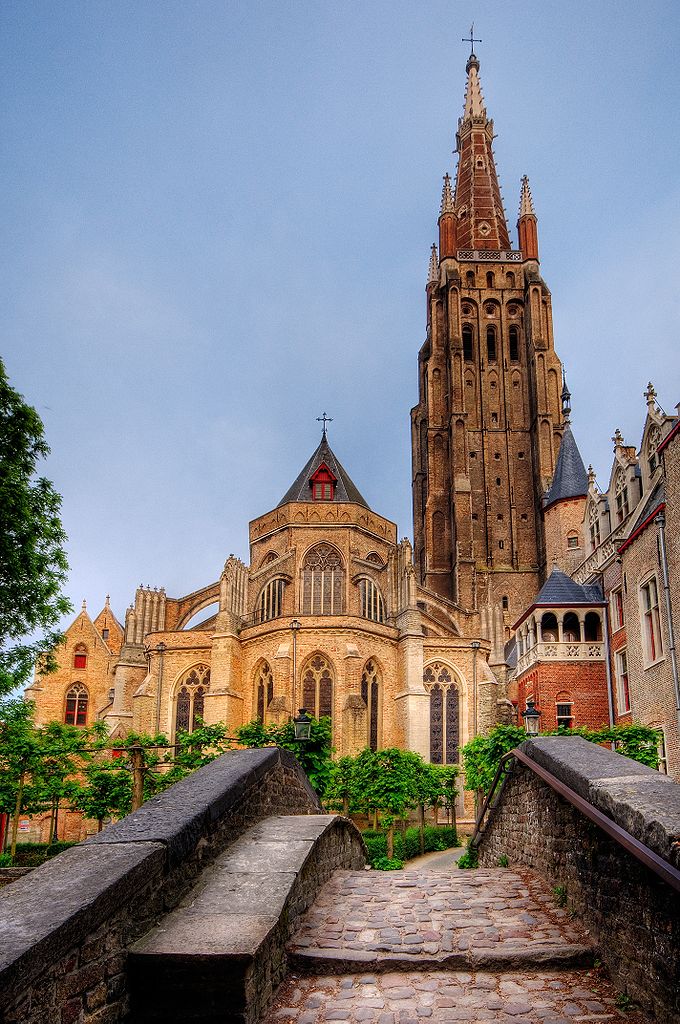
The present Gothic Cathedral of Notre-Dame in Bruges was built in 1225 and is famous for its 400 foot tall brick tower. Inside, however, is where the real treasures are kept. Among those relics already mentioned, there is also a Madonna of Bruges, a marble sculpture of the Blessed Virgin and the Divine Child sculpted by Michelangelo.

The features of the Blessed Virgin depicted in the Madonna of Bruges are very similar in appearance to the famous Pieta, which Michelangelo was said to have completed just prior to this sculpture. It is the only one of his works that left Italy during Michelangeloโ€™s lifetime and was purchased and brought to Bruges by a wealthy merchant.
In 1794 the inhabitants of Bruges were forced by the French Revolutionaries to ship the Madonna of Bruges to Paris. It was fortunate that the Statue was not destroyed, as so many Catholic works of art were during the French Revolution. TheSstatue did not remain long in Paris, as it was returned to Bruges after the defeat of Emperor Napoleon. It was taken again in 1944 when the Germanโ€™s retreated from Belgium, but it was discovered two years later in Germany and returned once again to Bruges.
As a precaution, after a bomb was set before the Statue of the Pieta in Saint Peterโ€™s Basilica in 1972, the Madonna of Bruges was placed behind bulletproof glass, so that the public can now only admire the sculpture from several feet away.

__
Alfonso de Rojas
St Augustine Tchao
St Benedetta Cambiagio Frassinello (1791 โ€“ 1858)
Biography:

https://anastpaul.com/2019/03/21/saint-of-the-day-21-march-st-benedetta-cambiagio-frassinello-1791-1858/
St Birillus of Catania
St Christian of Cologne
St Domninus of Rome
St Enda of Aran (c 450 โ€“ c 530)
About St Enda:

https://anastpaul.com/2020/03/21/saint-of-the-day-21-march-st-enda-of-aran-c-450-c-530-patriarch-of-irish-monasticism/
St Isenger of Verdun
St James the Confessor
Bl John of Valence
Bl Lucia of Verona
St Lupicinus of Condat
Bl Mark Gjani
Bl Matthew Flathers
St Nicholas of Flue (1417-1487)
About St Nicholas:

https://anastpaul.wordpress.com/2018/03/21/saint-of-the-day-21-march-st-nicholas-of-flue-1417-1487/
St Serapion the Scolastic (Died c 354-370) Bishop
St Philemon of Rome
Bl Santuccia Terrebotti

Bl Thomas Pilcher
Bl William Pike
โ€”
Martyrs of Alexandria: A large but unknown number of Catholics massacred in several churches during Good Friday services in Alexandria, Egypt by Arian heretics during the persecutions of Constantius and Philagrio. They were martyred on Good Friday in 342 in Alexandria, Egypt.

Posted in MARIAN TITLES, SAINT of the DAY

Our Lady of Calevourt, near Brussels, Belgium (1454) and Memorials of the Saints – 20 March

Our Lady of Calevourt, near Brussels, Belgium (1454) – 20 March:

The Abbot Mathieu Orsini wrote: โ€œOur Lady of Calevoirt, at Uckelen, near Brussels. This image began to work miracles in the year 1454, which led to the determination to build a magnificent Chapel in honour of Our Blessed Lady, in the year 1623, which the Infanta of Spain, Isabella Clara Eugenia, devoutly visited in the same year.โ€

The image of Our Lady is known under various titles, due to the fact, that Mary gives aid, even miraculous aid, when called upon for help. Our Lady of Calevourt is perhaps better known as Our Lady of Good Success, or Our Lady of Aberdeen.
We are told that during the Protestant โ€œReformation,โ€ the figure was taken to Flanders and hidden away by a Catholic family to protect it from profanation. In due course, it fell into the hands of Protestants but this family, received numerous graces and blessing,s which they attributed to the presence of the holy image in their house. They were reconciled to the Church as a result.
In 1623 a Spanish captain was given the Statue, with instructions to place it into the hands of Archduchess Isabella. The arrival of the Statue in Brussels is related under several incidents. The same day the ship arrived, the Infanta Isabella won a battle against the Hollanders. The Princess sent the Statue back to Brussles, providing the necessary funds for a Sanctuary she intended to be called Our Lady of Aberdeen. The townspeople greeted the Statue enthusiastically with a procession and placed it in the Chapel but when the victory became known, the name of the Sanctuary was changed and dedicated instead to Our Lady of Good Success.
From that time on, Mary travelled from place to place but always her image was saved. During the Terrors of the French Revolution, the Statue was given to an English Catholic who kept it safe until 1805, when it was restored to Belgium. A few years later, the Protestants forced the image to be transferred to a Parish Church in Finistere, where the image now reigns peacefully over her beloved people.
The Statue of the Blessed Mother stands with her Divine Child reclining on her right arm, His feet supported by the lift hand of His Mother.

__
Bl Ambrose Sansedoni of Siena
Anastasius XVI
Archippus of Colossi
St Benignus of Flay
St Cathcan of Rath-derthaighe
St Clement of Ireland
St Cuthbert of Lindisfarne
Bl Francis Palau y Quer
St Guillermo de Peรฑacorada
St Herbert of Derwenwater
Bl Hippolytus Galantini
Bl Jeanne Veron
Bl John Baptist Spagnuolo
St John Nepomucene
St John Sergius
St Jรณsef Bilczewski (1860-1923)
Biography:

https://anastpaul.com/2019/03/20/saint-of-the-day-20-march-st-josef-bilczewski-1860-1923/

St Maria Josefa of the Heart of Jesus/Sancho de Guerra (1842-1912)
Her Life:

https://anastpaul.com/2020/03/20/saint-of-the-day-20-march-saint-maria-josefa-of-the-heart-of-jesus-1842-1912/
St Martin of Braga (c 520โ€“580)
Biography:

https://anastpaul.wordpress.com/2018/03/20/saint-of-the-day-20-march-st-martin-of-braga-c-520-580/

St Nicetas of Apollonias
St Remigius of Strasbourg
St Tertricus of Langres
St Urbitius of Metz
St Wulfram of Sens (c 640-c 703) Bishop
โ€”
Martyrs of Amisus โ€“ 8 saints: A group of Christian women martyred together in the persecutions of Diocletian. The only details we have are eight of their names โ€“ Alexandra, Caldia, Derphuta, Euphemia, Euphrasia, Juliana, Matrona and Theodosia. They were burned to death c 300 in Amisus, Paphlagonia (modern Samsun, Turkey).

Martyrs of Rome โ€“ 9+ saints: A group of Christians martyred together in the persecutions of Nero. We know nothing else about them but the names Anatolius, Cyriaca, Joseph, Parasceve, Photis, Photius, Sebastian and Victor.

Martyrs of San Saba โ€“ 20 saints: Twenty monks who were martyred together in their monastery by invading Saracens.
They were martyred in 797 when they were burned inside the San Sabas monastery in Palestine.

Martyrs of Syria โ€“ 3+ saints: A group of Christians who were martyred together in Syria. We know nothing else about them but the names Cyril, Eugene and Paul.

Posted in MARIAN TITLES, SAINT of the DAY

Nostra Signora della Misericordia/Our Lady of Mercy, Patron of Savona, Italy (1536) and Memorials of the Saints – 19 March

Nostra Signora della Misericordia/Our Lady of Mercy, Patron of Savona, Italy (1536) – 18 March:

About seven kilometers from the centre of Savona stands the Sanctuary of Our Lady of Mercy, built following the apparition of the Virgin Mary to the farmer Antonio Botta, on 18 March 1536.

During the apparition, the Madonna dressed in white and wrapped in a dazzling light, told Antonio to go to his confessor and ask him to announce to the people, a fast for three Saturdays and a procession to the site where she appeared, to honour God and His Mother. She then asked him to return on the fourth Saturday.

On the fourth Saturday after the event, corresponding to 8 April 1536 and on the eve of Palm Sunday, Antonio Botta returned to the place of the apparition. There the Virgin appeared to him again, asking for three more fast Saturdays and a new procession of the people, especially the disciplinary Confraternities, praising their work and recommending that they announce to everyone, repentance of their vices and sins, to live the Creed and then she disappeared after saying: “Mercy, my son, not justice.”

This teaching of the Madonna was accepted with faith and dedication by the City of Savona, which was going through a difficult period, after the defeat suffered in 1528 by the Republic of Genoa.

Since then, on 18 March of each year, to commemorate the event of the apparition, a procession led by the Bishop is made, with the Confraternities of the Diocese and the faithful, departing from the Cathedral square of Savona and arriving at the Sanctuary of Our Lady of Mercy which was built to honour the apparitions to Antonio Botta.

The construction of the architectural complex of the Sanctuary was started in the same year in which the Marian apparition took place, i.e. in 1536. The whole today includes the Basilica with the square, the Pallavicino and Tursi palaces, the large late-sixteenth-century palace of the New Hospice and other buildings. The Basilica collects masterpieces by prestigious artists, such as Gian Lorenzo Bernini, Orazio Borgianni, Bernardo Castello, Domenichino and is also a very honoured place of worship.

Since the Confraternities are remembered and praised in the message to Blessed Botta, this place of worship was proclaimed National Shrine of the Confraternities of Italy, on March 18, 2009, by the Bishop of the Diocese of Savona-Noli.

Pope Pius VII was exiled to Savona by Napoleon from 1809-1812. During those years, he vowed that if he were released, he would crown the Statue of Our Lady of Mercy. The Pope was released and kept his promise, placing a royal diadem on the Statue on 10 May 1815.

__
St Cyril of Jerusalem (c 313-386) (Optional Memorial)
Father and Doctor of the Church
Biography:

https://anastpaul.com/2017/03/18/saint-of-the-day-18-march-st-cyril-of-jerusalem/
โ€”
Bl Aimรฉe-Adรจle le Bouteiller
St Alexander of Jerusalem (Died 251) Bishop and Martyr
St Anselm of Lucca the Younger (1036-1086)
About this St Anselm:

https://anastpaul.com/2020/03/18/saint-of-the-day-18-march-saint-anselm-of-lucca-the-younger-1036-1086/
St Braulio of Saragossa
Bl Celestine of the Mother of God
Bl Christian Oโ€™Conarchy
St Edward the Martyr
St Egbert of Ripon
St Eucarpius of Nicomedia
St Felix of Gerona
St Finan of Aberdeen
St Frigidian of Lucca
Bl John Thules
St Leobard of Tours
St Narcissus of Gerona
Bl Roger Wrenno
St Salvator of Horta
St Trophimus of Nicomedia
โ€”
Martyrs of Nicomedia โ€“ Commemorates the Christians who were martyred anonymously, either singly and in small groups, by local pagans in the area of Nicomedia prior to the year 300 and who may have been over-looked in the waves of Diocletian persecutions that resulted in the deaths of thousands.

Posted in MARIAN TITLES, SAINT of the DAY

Our Lady, Queen of Ireland, or the Madonna of Ireland (1697) and Memorials of the Saints – 17 March

Our Lady, Queen of Ireland, or the Madonna of Ireland (1697) – 17 March:

During the difficult times of Oliver Cromwell, one of the bishops who was forced to leave Ireland, was Bishop Lynch, Bishop of Clonfert. He travelled about Europe and finally came to Hungary in 1654. He was kindly received by Bishop John Pusky, Bishop of Gyer and eventually became auxiliary Bishop of the Diocese of Gyer.
Ten years later Bishop Lynch planned to return to his native land. Almighty God prevented this; during his dying hours he gave to the Bishop of Gyer, his only material treasure โ€“ the picture of the Madonna of Ireland. Soon after, as a memory of the Irish Bishop, the painting of Our Lady was hung on the wall of the Cathedral at Gyer.
Years passed. On the Feast of Saint Patrick, while large numbers of the faithful were present in the Cathedral, an awe-inspiring event took place. A bloody sweat was observed to come over the figure of the Blessed Lady in the picture. Drops of blood fell onto the Infant Jesus; as the bleeding continued for three hours. Linen towels, which are still retained under glass at her Shrine, were used to wipe the blood from the blood-perspiring face.
In the archives of the Cathedral of Gyer, there is a document written in 1697 on parchment, relating this event. It is signed, not only by the clergy and the laity who were present at the Mass but by the mayor and the councilmen, by the governor, Lutheran and Calvanist preachers, a Rabbi โ€“ over one hundred signatures represent eye-witnesses to the miracle. In 1874, Pope Pius IX granted a plenary indulgence on the feasts of Saint Patrick and the Assumption, before which Feasts public novenas are held. Below is the Shrine in Gyer Cathedral.

In 1913 Archbishop Schrembs of Toledo, visited Gyer in Hungary. He saw the beautiful painting and was deeply moved when told of the wonderful event. He requested a copy for the many Irish Catholics in his Diocese who would be happy to learn the history and to possess the picture of Our Lady of Ireland. The copy was placed face to face with the original and then given to Bishop Schrembs. On 23 August 1914, Archbishop Schrembs dedicated the new St Stephenโ€™s Church in Toledo, Ohio. The Hungarian people had paid about 2/3 of the expenses of the building. The Bishop presented the Madonna to this church, saying:

โ€œI am convinced that the picture will be treasured in a Hungarian Church just as much as it would be in an Irish one.โ€

Both Hungarians and Irish were thrilled.
The image depicts Mary crowned as Queen, Our Lady of Ireland, and before her, lying on several circular pillows, is the Infant, also crowned as the Little King and covered with royal robes.
__
St Patrick (c 386-461) (Optional Memorial)
About dearly loved St Patrick:

https://anastpaul.wordpress.com/2017/03/17/saint-of-the-day-17-march-st-patrick/

St Agricola of Chรขlon-sur-Saรดne
St Alexander
St Ambrose of Alexandria
Blessed Conrad of Bavaria O. Cist (c 1105-1126 or 1154) Monk, Hermit
St Diemut of Saint Gall
St Gabriel Lalemant
St Gertrude of Nivelles OSB (626-659)
About St Gertrude:

https://anastpaul.wordpress.com/2018/03/17/saint-of-the-day-17-march-st-gertrude-of-nivelles-o-s-b-626-659/
Bl Gertrude of Trzebnica
St Jan Sarkander (1576-1620) Priest and Martyr
This amazing Saint’s Life and Death:

https://anastpaul.com/2020/03/17/saint-of-the-day-17-march-saint-jan-sarkander-1576-1620-priest-and-martyr-of-the-seal-of-confession/
Bl Josep Mestre Escoda
St Joseph of Arimathea
Blessed Juan Nepomuceno Zegrรญ y Moreno (1831-1905)
His life:

https://anastpaul.com/2019/03/17/saint-of-the-day-17-march-blessed-juan-nepomuceno-zegri-y-moreno-1831-1905/
St Llinio of Llandinam
Bl Maria Bรกrbara Maix
St Paul of Cyprus
St Stephen of Palestrina
St Theodore of Rome
St Thomasello
St Withburga of Dereham

Martyrs of Alexandria โ€“ Also known as Martyrs of Serapis: An unknown number of Christians who were martyred together by a mob of worshippers of the Graeco-Egyptian sun god Serapis. They were Martyred in c 392 in Alexandria, Egypt.

Posted in MARIAN TITLES, SAINT of the DAY

Our Lady of the Fountain, Constantinople (460) and Memorials of the Saints – 16 March

Our Lady of the Fountain, Constantinople (460) – 16 March:

The Abbot Orsini wrote: โ€œOur Lady of the Fountain, at Constantinople, built, by the Emperor Leo, in the year 460, in thanksgiving for the Blessed Virginโ€™s having appeared to him on the margin of a spring, to which he was charitably leading a blind man, when he was no more than a common soldier and foretold to him, that he would become the emperor.โ€

Emperor Leo I, also known as Leo I the Thracian, Leo the Great, and even to some, Leo the Butcher, was the Emperor of the Byzantine Empir,e from the year 457 until 474. Leo had begun with a career in the military, eventually rising to the rank of tribune in 457. When the Emperor then reigning died, Leo was acclaimed the new Emperor. It is interesting to note, that he is a Saint in the Orthodox Church.
In a certain manner, the Shrine of Our Lady of the Fountain still exists. Instead of the title the Abbot had given it, the Shrine is now known as, the Mother of God of the Life-Giving Spring. the story surrounding it is as follows.
the man who would later become Emperor Leo I of the Byzantine Empire, was a good and pious man long before he became Emperor. One day in his travels, he had come upon a blind man, who, being tormented with thirst, begged Leo to find water to quench his thirst. Feeling compassion for this man, Leo went in search of a source of water but found none. As he was about to cease his search, he heard a voice telling him: โ€œLeo, you do not need to tire yourself for there is water nearby.โ€ Leo looked again but still found no water. Then he heard the voice again, this time telling him:
โ€œEmperor Leo, enter into the deepest part of the woods and you will find a lake; draw some cloudy water from it with your hands and give it to the blind man to quench his thirst, then anoint his darkened eyes with the clay and you will immediately know who I am, for I have dwelt in this place for a long time. Build a Church here that all who come here, will find answers to their petitions.โ€
Leo found the lake and did as he was instructed. As soon as the blind manโ€™s eyes were anointed, he received his sight. Leo became Emperor a short time later and built a large and beautiful Church in honour of the Blessed Virgin at that place, just outside the Golden Gate near the Seven Towers district. Many miracles began to occur there, including resurrections from the dead, through the intercession of the Mother of God. When this Church was damaged by earthquakes, it was rebuilt by subsequent Emperors who also experienced miraculous cures and the answer to their petitions.

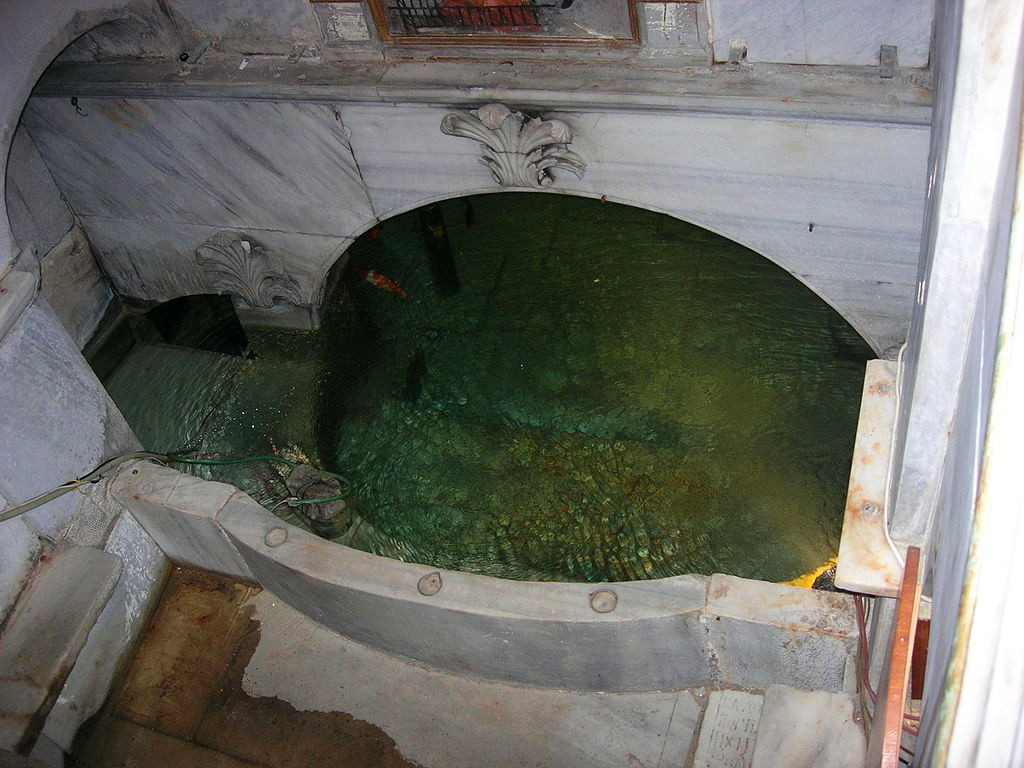
In the year 1453, the Church was razed to the ground when Constantinople fell to the Turks. The material that remained was taken to be used to construct the mosque of the Sultan Beyazid. Even then, people continued to come to the place seeking relief, for the spring remained intact beneath the ruins. The Shrine had twenty-five steps going down to it, and a window in the roof above from which it received a little light.
In 1821 the Shrine was destroyed during the Greek War of Independence. In 1833 the Sultan Mahmud allowed the Orthodox Christians to rebuild the Shrine. Later, on the night of 6 September 1955, the Turks killed the Abbot, who was hung and the Shrine was desecrated and burned to the ground. The Shrine has since been restored yet again but appears nothing like it once had in the distant past. Still, it is said, that the water from the spring continues to have miraculous properties.

Procession of Our Lady of the Fountain, 1959

__
St Abban of Kill-Abban
St Abraham Kidunaia
St Agapitus of Ravenna
St Aninus of Syria
St Benedicta of Assisi
St Dionysius of Aquileia
St Dentlin of Hainault
Bl Eriberto of Namur
St Eusebia of Hamage
St Felix of Aquileia
St Finian Lobhar, surnamed “the Luminous Leper” (Died c 560) Bishop, Abbot

Bl Ferdinand Valdes
Blessed Giovanni de Surdis Cacciafronte OSB (1125 โ€“ 1184) Bishop and Martyr
His Life and Death:

https://anastpaul.com/2020/03/16/saint-of-the-day-16-march-blessed-giovanni-de-surdis-cacciafronte-osb-1125-1184/
St Gregory Makar
St Heribert of Cologne (c 970โ€“1021)
Biography:

https://anastpaul.com/2019/03/16/saint-of-the-day-16-march-st-heribert-c-970-1021/
St Hilary of Aquileia
Bl Joan Torrents Figueras
Bl John Amias
St Julian of Anazarbus
St Largus of Aquileia
St Malcoldia of Asti
St Megingaud of Wurzburg

Posted in MARIAN TITLES, SAINT of the DAY

Notre Dame deย Sous-Terre/ Our Lady of the Underground, Chartres, France (911) and Memorials of the Saints – 15 March

Notre Dame deย Sous-Terre / Our Lady of the Underground, Chartres, France (911) – 15 March:

The Abbot Orsini wrote: โ€œIn the year 911, the City of Chartres was miraculously delivered from the siege laid to it by Rollo or Raoul, Duke of the Normans; for as he was on the point of taking the City, Gaucelin, the forty-seventh Bishop of Chartres, mounted on the top of the ramparts, holding a relic of Our Lady as an ensign, which struck such terror in the camp, that all retreated in disorder; in memory of this fact, the meadows of the gate of Drouaise, are called, to this day, the meadows of the fugitives (des Recules).โ€

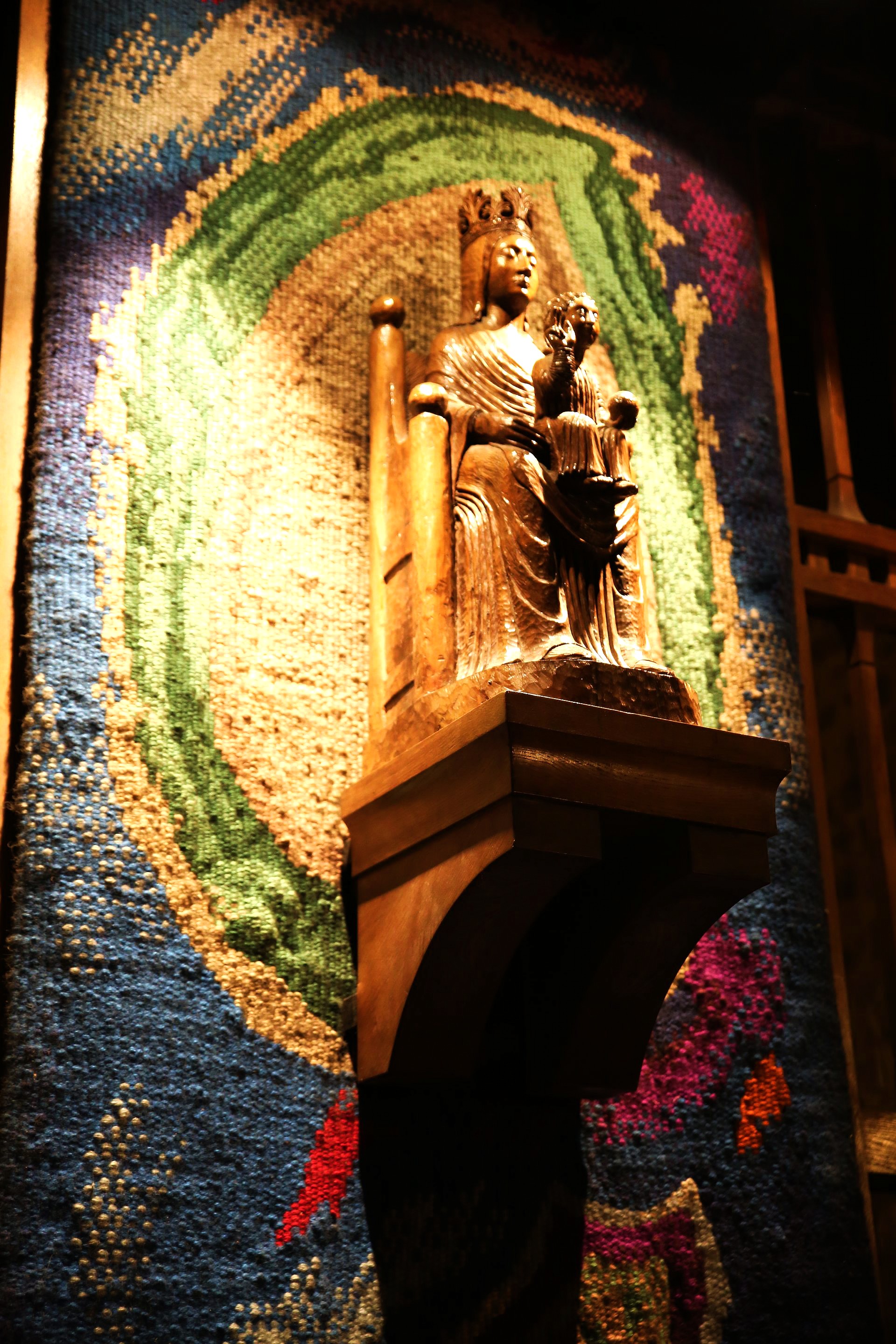
The Statue is kept in the Crypt of Chartres Cathedral, hence the name.

Due to the circumstances of its geographic location, the City of Chartres was subject to Viking raids during the 9th and 10th centuries. In the year 858, the City was sacked and burned. Early in the 10th century, a Viking chieftain (later known as Normans, having founded Normandy) named Rollo came to power and he led an army of a few thousand Vikings, against Chartres in the spring of the year 911. Chartres was surrounded by a strong wall, which held the Vikings in check, so the Vikings were forced to lay siege to the City, his men spoiling the surrounding countryside as the days progressed.
Eventually Duke Robert and Duke Richard, assembled an army south of Chartres to oppose the fierce Vikings. The relieving force was made up, mainly of Burgundians and Franks and they hoped they were strong enough to attack and drive off the Vikings, as the inhabitants of Chartres continued to resist. They finally attacked the Vikings on 20 July 20 911, before the walls of Chartres.
When the Franks and Burgundians advanced, Rollo had his army drawn up in a concave pattern which pressed hard against the centre of the opposing army. Huge, berserk Vikings smote the French line and Duke Richard, under great pressure, began to slowly give ground, which would mean the collapse of his army. Rollo was fighting valiantly, certain he was about to vanquish his enemy, when suddenly Bishop Gaucelin, who led the defence of Chartres, sallied forth from the gates of Chartres surrounded by the steel clad defenders of the City. Unmistakable in his Episcopal mitre, holding aloft the Tunic of the Blessed Virgin Mary, a Relic then kept at Chartres, the defenders of the city fell upon the Vikings with sword and spear. The Vikings, caught between the enemy forces, retreated in defeat.

Dudo, the Norman historian of Saint Quentin, wrote:

โ€œRollo, mighty and powerful and vigorous and most fierce in arms,
do not feel ashamed if you now are considered a runaway.
No Frankish or Burgundian assembly,
of manifold nations and host,s puts you to flight, fells you,
but the nourishing Tunic of the Virgin Mother of God and
likewise amulets and relics and the reverend Cross
Which the Reverend Prelate carries in his worthy hands.โ€

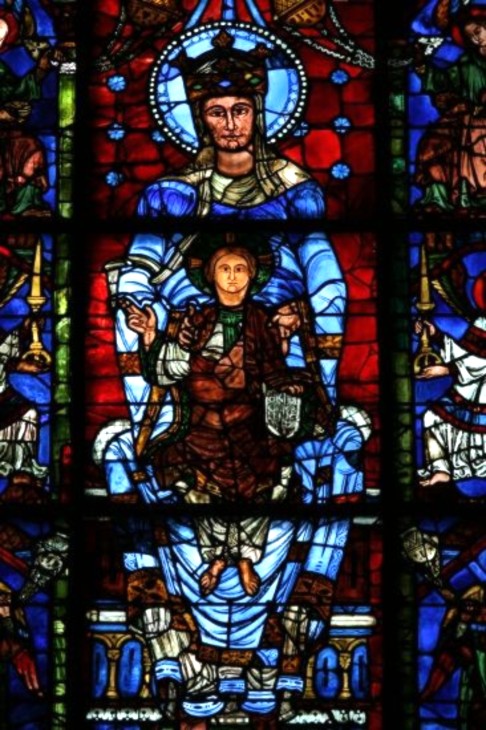
In Chartres amongst the famous windows is the one below, honouring Our Lady of the Underground who saved the City in 911.

__
Bl Anthony of Milan
St Aristobulos of Britannia
Bl Arnold of Siena
Blessed Artemide Zatti SDB (1880-1951)
His life::

https://anastpaul.com/2020/03/15/saint-of-the-day-15-march-blessed-artemide-zatti-sdb-1880-1951/

St Bodian of Hanvec
St Clement Mary Hofbauer C.Ss.R (1751-1820)
Biography:

https://anastpaul.wordpress.com/2018/03/15/saint-of-the-day-15-march-st-clement-mary-
hofbauer-c-ss-r-1751-1820/

St Eoghan of Concullen
St Eusebius II
Bl Francis of Fermo
Blessed Jan Adalbert Balicki (1869-1948)
About Blessed Jan:

https://anastpaul.com/2019/03/15/saint-of-the-day-blessed-jan-adalbert-balicki-1869-1948/
St Leocritia of Cรณrdoba
St Longinus the Centurian
Bl Ludovico de la Pena
St Mancius of Evora
St Matrona of Capua
St Matrona of Thessaloniki
St Menignus of Parium
Bl Monaldus of Ancona
St Nicander of Alexandria
St Peter Pasquale
St Pรญo Conde y Conde
St Sisebuto
St Speciosus
St Vicenta of Coria
Bl Walter of Quesnoy
Bl William Hart
St Pope Zachary (Died 752) – Papal Ascension 5 December 741- 752

Posted in MARIAN TITLES, SAINT of the DAY

Fourth Sunday of Lent (Laetare Sunday) +2021, Notre Dame de la Breche, Chartres, France (1568) and Memorials of the Saints – 14 March

Fourth Sunday of Lent (Laetare Sunday) +2021
__
Notre Dame de la Breche, Our Lady of the Breach, Chartres, France (1568) – 14 March:

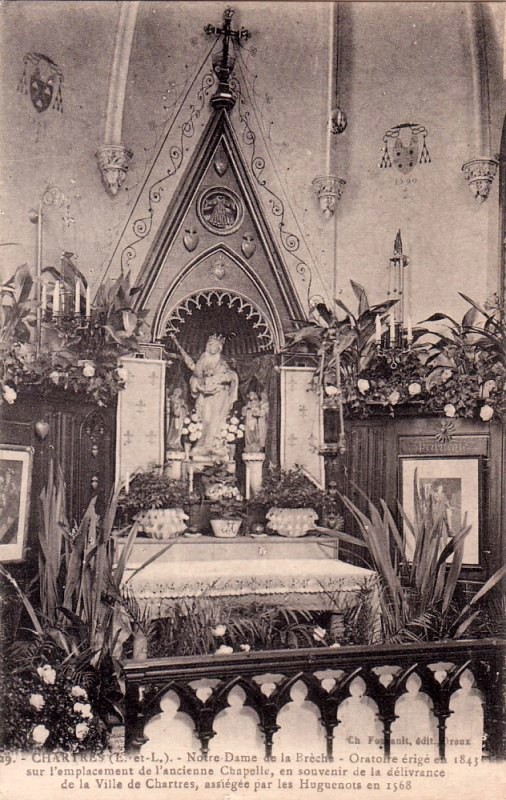
The Abbot Orsini wrote: โ€œOur Lady de la Breche, at Chartres, where a procession takes place every year, in thanksgiving for Our Ladyโ€™s having delivered the City, when besieged by heretics, in the year 1568. It was during this siege that the image of Our Lady, placed upon the Drouaise gate, could not be injured by the cannon and musket balls, which the besiegers fired at it and the marks of which, are still seen at two or three inches from the image.โ€

โ€œI shall place enmity between thee and the Woman. She shall crush thy headโ€ฆโ€ is indeed verified at the Shrine of la Breche.
The procession mentioned by the good Abbot was a custom that took place annually in commemoration of the miracle, until the time of the French Revolution. The Mayor, or on occasion some other important personage, who happened to be the guest of the town, at the time, traditionally lit the first candle before the Shrine of the Blessed Virgin Mary, Our Lady de la Breche. Thereafter, the procession began, winding its way from the Cathedral down the steep curves of the Rue Muret towards the Porte Drouaise. Those who took part, could read the inscription engraved on the ramparts, which recorded the events of the siege in Latin, for the instruction and example of posterity.
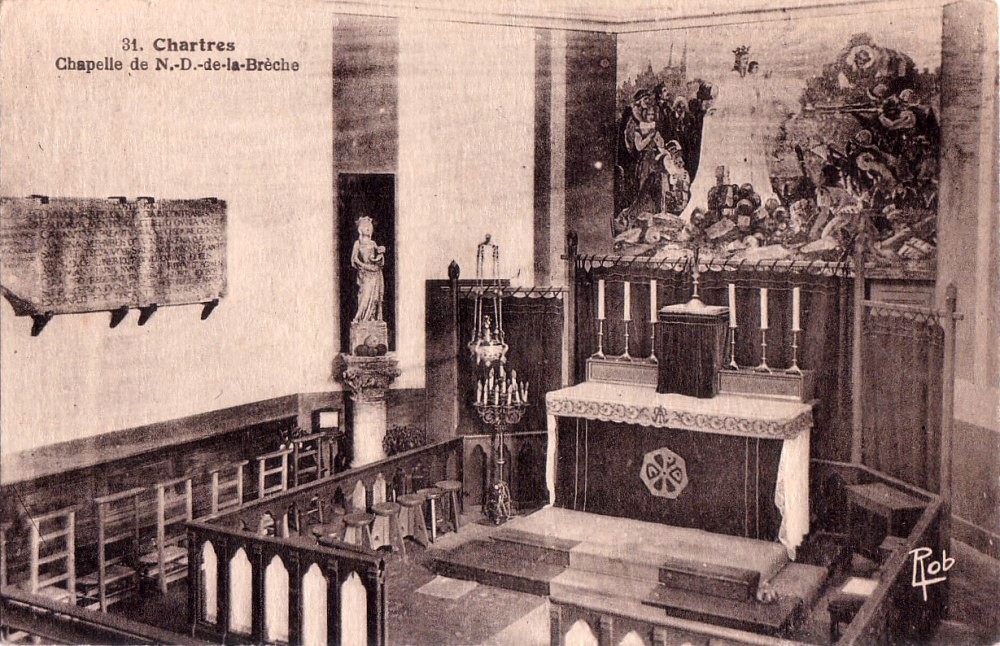
Pursuing their way up the Rue de la Breche, the procession would next arrive at the Chapel of Notre-Dame-de-la-Breche. Inside, there was a Statue of the Blessed Virgin which stood on the keystone of the old Chapel that was erected in 1599, in memory of this even, and near the site of the famous breach.
About the Altar, are there were numerous cannon-balls of stone, which were relics of the siege. Entering the large annex on the right, the visitor would see a still more curious relic of the siege โ€“ the fourteenth or fifteenth-century Statue of Notre-Dame-de-la-Breche, whose name was graven on the keystone, mentioned above. And, if he should inquire, how that name was earned, he would be told, that this was the very Statue which had been set over the Porte Drouaise and, by a miraculous intervention, had saved the Town.

The contemporary chronicler, Duparc, informs us that for all that the men of the Huguenot army were esteemed the greatest soldiers in Europe, yet they miraculously blinded by a manifest miracle. And the miracle was in this way. The defenders of Chartres, placed the Statue above the gate of Drouaise against which, the enemy fired many cannon shots but without being able to ever hit it. And to demonstrate how many shots were fired at the gate, on which was the said image, the bridge of that gate was broken and cut in two by the cannon-balls and all round the image, up to a few inches of it, the marks of many bullets may still be seen. Through it all, the Statue remained whole and intact; in spite of the efforts of the enemy to destroy it, but it was never struck by a single shot.

The siege of Chartres

I know well, Duparc adds, that the heretics and some others, will scoff at this but Herod also mocked at Christ, when he beheld Him.
There is another, even more wonderful story told by historians. As the Huguenots approached a breach in the walls they had made, on 9 March, a “grand lady” stood before them, carrying a child in her arms. Rather than trying to avoid the woman and child, they turned their guns directly on her. Having decided to attack her with murderous intent, they became enraged to see that although they fired dozens of rounds, they seemed to be missing their target, for the woman and child remained before them, standing silently in the breach. Screaming foul threats, the Huguenots fired, reloaded, and fired again but the woman seemed to be catching their bullets and collecting them in her apron.
The Catholics recognised that it was the Mother of God herself, holding Our Lord in her arms and that they had personally taken up the defence of the City. The enemy raged and fired at them to no effect. Encouraged to see what they could never have even dared to hope for, the ecclesiastics and women began to pray anew, as the men picked up their weapons and returned to the fight, vigorously repelling the invaders.
The Huguenots were forced to retreat full of spite and confusion, for they had counted on looting the City and the Church, whose treasury was one of the richest in Christendom. The Prince of Conde had sold, in advance, much of the treasure he expected to plunder from the Cathedral, to which the Canon Souchet said he would never deliver, for the glorious Virgin defended the City, which she recognised as her own, against the hate of those heretical fanatics who showed such malice for her Son.
Mothers in particular come to invoke the Virgin of the Breach and also the Virgin of the door Drouaise, for the protection of their sons, exposed to the perils of war.
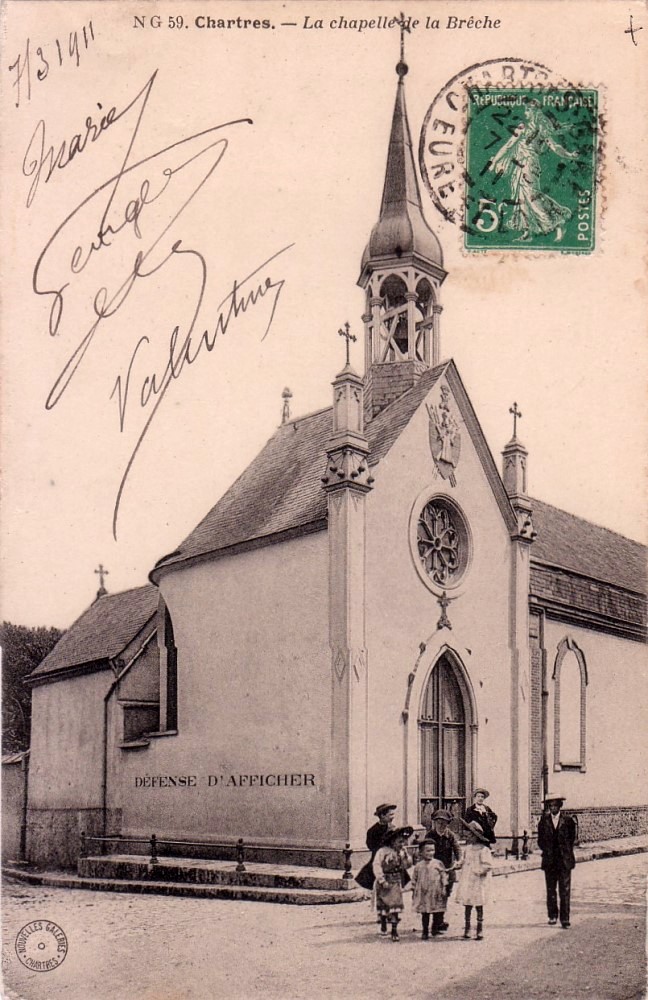
The Chapel mentioned above, was destroyed during the French Revolution. The first stone of the new Chapel was laid by M Lecomte, General Vicar, on 7 April 1843.

__
St Agno of Zaragoza
St Alexander of Pydna
St Aphrodisius of Africa
Bl Arnold of Padua
St Boniface Curitan
St Diaconus
St Eutychius of Mesopotamia
Blessed Eva of Liรจge (c 1205-1265) Recluse
Blessed Giacomo Cusmano (1834-1888)
His life:

https://anastpaul.com/2019/03/14/saint-of-the-day-14-march-blessed-giacomo-cusmano-1834- 1888/
St Lazarus of Milan
St Leo of the Agro Verano
St Leobinus of Chartres (Died c 558)
His Life:

https://anastpaul.com/2020/03/14/saint-of-the-day-14-march-saint-leobinus-of-chartres-died-c-558/
St Matilda of Saxony (c 894-968)
Biography:

https://anastpaul.wordpress.com/2017/03/14/saint-of-the-day-14-march-st-matilda-of-saxony/

St Maximilian
Bl Pauline of Thuringia
St Peter of Africa
St Philip of Turin
St Talmach
Bl Thomas Vives
โ€”
47 Martyrs of Rome โ€“ Forty-seven people who were baptised into the faith in Rome, Italy by Saint
Peter the Apostle, and were later martyred together during the persecutions of Nero. Martyred c.67
in Rome, Italy

Martyrs of Valeria โ€“ Two monks martyred by Lombards in Valeria, Italy who were never identified.
After the monks were dead, their killers could still hear them singing psalms. They were hanged on a
tree in Valeria, Italy.

Posted in ART DEI, FATHERS of the Church, MARIAN TITLES, SAINT of the DAY

โ€œThe Salus Populi Romaniโ€ / Our Lady of the Empress, Rome (593) and Memorials of the Saints – 13 March

โ€œThe Salus Populi Romaniโ€ / Our Lady of the Empress, Rome (593) – 13 March:

The Abbot Orsini wrote: โ€œA tradition records that this image spoke to Saint Gregory the Great, in the year 593.โ€

Salus Populi Romani means literally health or salvation, or Protectress, of the Roman People. The title of Salus Populi Romani reverts to Emperor Constantine the Great and the Edict of Milan when, after Christians were no longer persecuted, the phrase became another of many Marian titles for the Blessed Virgin Mary, Mother of God.
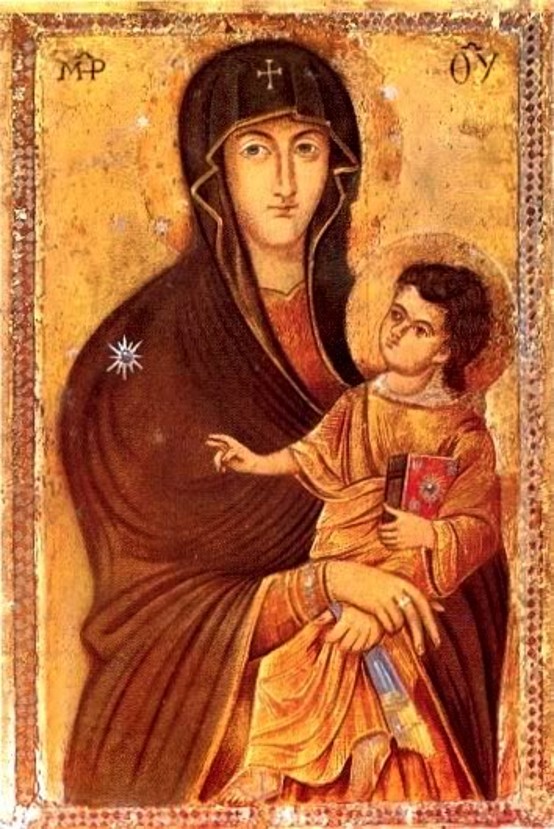
The icon Salus Populi Romani, or Our Lady of the Empress, is one of many images believed to have been painted by Saint Luke. When the Blessed Virgin lived with St John, after her Son had ascended into heave, she had few personal belongings but among them was a table built by Christ Himself when He was working in the carpenter shop with his foster father, the good Saint Joseph.
Saint Luke, yielding to the repeated requests of pious virgins, painted a portrait of Mary using the tabletop as his canvas. As the portrait was being painted, Saint Luke listened carefully as the Queen of Heaven spoke of her Sonโ€™s life, facts that Saint Luke recorded in what became his Gospel.
The image is surprisingly large, being five feet high by three and 3/4 but if one considers that a tabletop was used, then this size seems appropriate. Modern examiners admit the painting was made on a thick cedar board. The Virgin Mary holds a map in her right hand, which is an imperial symbol meant to depict the bearer as โ€œQueen,โ€ or in Roman times, โ€œEmpress.โ€
The icon came to Rome from Crete in 590 when Pope Gregory the Great was the Holy Father and according to tradition, he went out upon the Tiber in his own vessel to greet the icon.
Three years later, Pope Gregory I had the icon carried throughout Rome in solemn procession, as all prayed to the Mother of God for an end to the Black Plague that had been devastating the people of Rome. Pope Gregory’s predecessor, Pope Pelagius, had himself died of the same plague.
When the icon of Salus Populi Romani, with the prayerful entourage following alongside the Tiber River, neared Hadrianโ€™s Mausoleum, a choir of angels could suddenly be heard singing the joyous Resurrection hymn as Pope Saint Gregory looked up to see the heavens open. Then, just above Hadrianโ€™s Mausoleum, an angel believed to be Saint Michael appeared. He was holding a sword of vengeance over the City and above him, the Pope saw the Blessed Virgin, seated upon a throne above the angels.

โ€œRegina coeli, laetare, alleluia;
Quia quem meruisti portare, alleluia;
Resurrexit sicut dixit, alleluia.โ€

โ€œQueen of Heaven, rejoice, alleluia;
for he whom thou didst merit to bear, alleluia;
has risen as He said, alleluia;
pray for us to God, alleluia.โ€

The scent of a heavenly perfume filled the air and without hesitation, the holy Pontiff concluded the Regina Coeli:

“Ora pro nobis Deum, alleluia!
Gaude et laetare, Virgo Maria, alleluia!
Quia surrexit Dominus vere, alleluia.
“Ora pro nobis Deum, alleluia.”

Pray for us to God, alleluia!
Rejoice and be glad, O Virgin Mary, alleluia!
For the Lord has truly risen, alleluia!

At that, the Pope, St Gregory, watched as Saint Michael sheathed his sword. To the great relief of the people of Rome, the Black Plague was ended, at that moment.
Since the year 1613, the icon Salus Populi Romani has been kept in the Altar Sanctuary of the Cappella Paolina that was created for it, known in English as the Lady Chapel. The Basilica of Saint Mary Major, where it can be seen. St Mary Major is one of the four ancient Churches of Rome and the Marian Shrine is under the special patronage of the Popes.

__
Bl Agnellus of Pisa
St Ansovinus of Camerino
Bl Berengar de Alenys
St Christina of Persia
St Euphrasia
Blessed Franรงoise Trรฉhet (1756-1794) Martyr
Biography:

https://anastpaul.com/2019/03/13/saint-of-the-day-13-march-bl-francoise-trehet-1756-1794-
martyr/
St Gerald of Mayo
St Grace of Saragossa
St Heldrad of Novalese (Died c 875)
St Heldrad’s Life and Death:

https://anastpaul.com/2020/03/13/saint-of-the-day-13-march-st-heldrad-of-novalese-died-c-875/
Bl Judith of Ringelheim
St Kevoca of Kyle
St Leander of Seville (c 534-c 600)
Biography:

https://anastpaul.wordpress.com/2017/03/13/saint-of-the-day-13-march-st-leander-of-seville/

St Mochoemoc
St Nicephorus of Constantinople
Bl Peter II of La Cava
St Pientius of Poitiers
St Ramirus of Leon
St Roderick of Cรณrdoba.(Died 857) Priest and Martyr
St Sabinus of Egypt
St Sancha of Portugal
โ€”
Martyrs of Cordoba: Roderick, Salomon,

Martyrs of Nicaea:
Arabia
Horres
Marcus
Nymphora
Theodora
Theusitas
Martyrs of Nicomedia
Eufrasia
Macedonius
Modesta
Patricia
Urpasian

Posted in MARIAN TITLES, SAINT of the DAY

Notre-Dames-des-Miracles / Our Lady of Miracles, St Maur des Fosses, France (1328) and Memorials of the Saints – 12 March

Notre-Dames-des-Miracles / Our Lady of Miracles, St Maur des Fosses, France (1328) – 12 March;

The Abbot Orsini wrote: โ€œOur Lady of Miracles, in the cloister of Saint Maur des Fosses, near Paris. It is said that this image was found made, when the sculptor, named Rumold, was going to work at it in 1328.โ€

Saint-Maur-des-Fosses is a city that may be considered to be a suburb of Paris, France. There is a miraculous Statue of the Blessed Virgin, Our Lady of Miracles, located in the Church of Saint Nicholas in the city. The Town owes its name to an Abbey that was founded by Queen Nanthild in the year 638 at Les Fosses, which means โ€˜the moatsโ€™ in French. The Abbey was called Sanctus Petrus Fossatensis and was dedicated to the Blessed Virgin Mary, as well as saints Peter and Paul. When the Monks of the Abbey of Saint-Maur de Glanfeuil in western France fled from the Vikings in the year 868, Holy Roman Emperor, King Charles the Bald, asked them to settle at Sanctus Petrus Fossatensis. They did so, bringing with them their relic of Saint Maurus and introducing the rule of Saint Benedict to France in the 6th century.
The Abbey, located in a loop of the Marne just before it joined the Seine, became an important pilgrimage site when the relics of Saint Maurus were found to be effective in curing those who suffered from gout and epilepsy. Due to this sudden popularity and, in recognition of it, the name of the Abbey was changed to, Saint-Maur-des-Fosses, or St Maurus of the Moats. In the drought year of 1137, all of Western Europe was without rain. The Monks of the Abbey led a procession of the relics of St. Maurus and, at the conclusion of Mass, there was a violent thunderstorm which brought rain to the region.
As should not be surprising, the Abbey was seized during the French Revolution by the enthusiastic proponents of liberty, equality, and brotherhood. Anything of value was looted and the property then sold to speculators. After they were stripped of everything of value, the buildings that remained were demolished and the material used in other building projects, so that today nothing remains but a few vestiges that were collected for display in a museum.
Fortunately, the Statue of Our Lady of Miracles miraculously survived. The Statue had been venerated since 1328 because of the miraculous circumstances of its creation and was saved by a locksmith named Hazar. It is now kept at the Church of Saint Nicholas (see below) in Saint Maur-des-Fosses.

The Church of St Nicholas

__
St Almut of Wetter
St Alphege the Bald
Bl Angela Salawa
St BasilissS of Asia
Bl Beatrix of Engelport
St Bernard of Carinola
Bl Claudius the Minor
St Egdunus
St Fechno
St Girolamo da Recanati
Blessed Giustina Francucci Bezzoli (c 1257-1319)
Biography:

https://anastpaul.com/2020/03/12/saint-of-the-day-12-march-blessed-giustina-francucci-bezzoli-c-1257-1319/
St Heiu of Hartlepool
St Indrecht of Iona
St Pope Innocent I
St Joseph Zhang Dapeng
St Luigi Orione FDP (1872-1940)
About St Luigi:

https://anastpaul.com/2019/03/12/saint-of-the-day-12-march-st-luigi-orione-fdp-1872-1940/

St Maximilian of Thebeste
St Mura McFeredach
St Paul Aurelian
St Peter the Deacon
St Seraphina (1238-1253) Virgin
St Theophanes the Chronographer
โ€”
Martyrs of Nicomedia โ€“ 8 saints: Eleven Christians who were martyred in succession in a single incident during the persecutions of Diocletian. First there were the eight imprisoned Christians, Domna, Esmaragdus, Eugene, Hilary, Mardonius, Maximus, Mรญgdonus and Peter, about whom we know little more than their names. Each day for eight days one of them would be strangled to death in view of the others so that they would spend the night in dread, not knowing if they were next.
Peter was the chamberlain or butler in the palace of Diocletian. When he was overheard complaining about this cruelty, he was exposed as a Christian, arrested, tortured and executed by having the flesh torn from his bones, salt and vinegar poured on the wounds and then being roasted to death over a slow fire.
Gorgonio was an army officer and member of the staff in the house of emperor Diocletian, Doroteo was a staff clerk. They were each exposed as Christians when they were overhead objecting to the torture and murder of Peter. This led to their own arrest, torture and executions.
Died in 303 in Nicomedia, Bithynia (in modern Turkey)
Additional Memorial โ€“ 28 December as part of the 20,000 Martyrs of Nicomedia.

Posted in MARIAN TITLES, SAINT of the DAY

Nossa Senhora das Florestas / Our Lady of the Forests, Porto, Portugal (12th Century) and Memorials of the Saints – 11 March

Nossa Senhora das Florestas,/ Our Lady of the Forests, Porto, Portugal (12th Century) – 11 March:

The Abbot Orsini wrote: โ€œThis image was found again in a forest, where it had been hidden by Queen Matilda, wife of Alphonsus I.โ€

In searching for information about this title of the Blessed Virgin Mary, I could find no specific reference to Our Lady of the Forests. There are a great number of Catholic Churches and Cathedrals in Porto, Portugal but none of them, seem to speak of an image once known as Our Lady of the Forests.
Porto, Portugal, is a City second only to Lisbon in size. Checking with the Diocese, there does not appear to be a Church by the name of Our Lady of the Forests and I could find no mention of such an image.
Alphonsus I was the first King of Portugal. His wife, Queen Matilda, better known as Mafalda of Savoy (1125-1158), married him in the year 1146. She was the daughter of Amadeus III of Savoy, Count of the Holy Roman German Empire and her sister was Blessed Umberto. Matilda died young, long before Alphonsus was King – yet her life still had great significance.
Alphonsus I was almost constantly at war with the Moors of Andalusia and Portugal did not become formally recognised as an independent Kingdom, until 1179, when Alphonsus I was recognised as King by the Pope. Perhaps there was a crisis during these years of upheaval, when Queen Matilda was forced to hide, in a forest, with a cherished image of the Blessed Virgin Mary, and although this seems not unlikely, I can find no story relating to such an event.
Although little is known of Queen Matilda, it is believed that she built a small Abbey Chapel in honour of the Blessed Virgin on the outskirts of Fatima, in a place called the Rock of Fatima. There was also an attached Monastery at this site, that was built by the Cistercians, although nothing remains of that Monastery now and its foundations have become the floor for the Parish Church at Fatima. Built in the 18th century, it was originally called Our Lady of the Rosary.
One of Queen Matildaโ€™s descendants was Blessed Margaret of Savoy, who founded a Convent for women. On 16 October 1454, Blessed Margaret was present, when her dying cousin, Sister Filipina, spoke aloud the names of the Saints who came to assist her on her way to heaven. Sister Filipina revealed during that last ecstasy, that in the future, there would be terrible wars and that there would be a monster who would rise in the East as a scourge of all mankind. He would eventually be slain by Our Lady of the Holy Rosary of Fatima. She said: โ€œThe Most Holy Virgin will speak about very grave future events, for Satan will wage a terrible war. But he will lose because the Most Holy Virgin Mother of God and of the Most Holy Rosary of Fatima, more terrible than an army in battle array, will defeat him forever.โ€ After saying this, Sister Filipina died in the arms of the holy Foundress, Blessed Margaret.
The documents attesting to these events surfaced in the year 2000 but keep in mind. that this revelation was nearly 500 years before the Marian apparitions of Our Lady of Fatima at the Cova da Ira!

__
St Aengus the Culdee
St Alberta of Agen
St Alexius U Se-Yong
St Amunia
St Aurea of San Millรกn
St Benedict Crispus of Milan (Died 725)
His Life:

https://anastpaul.com/2020/03/11/saint-of-the-day-11-march-saint-benedict-crispus-of-milan-died-725/
St Candidus the Martyr
St Constantine II
St Constantine of Carthage
St รaminh Cam
St Eulogius of Cรณrdoba (Died 857) Priest and Martyr
Biography:

https://anastpaul.com/2019/03/11/saint-of-the-day-11-march-st-eulogius-died-857-priest-and-martyr/

St Firmian the Abbot
St Firmus the Martyr
St Gorgonius the Martyr
St Heraclius of Carthage
Bl John Kearney
Bl John Righi of Fabriano
St Marcus Chong Ui-Bae
St Peter the Spaniard
St Pionius
St Piperion the Martyr
St Rosina of Wenglingen
St Sophronius of Jerusalem
St Thalus the Martyr
Bl Thomas Atkinson
St Trophimus the Martyr
St Vigilius of Auxerre
St Vincent of Leon
St Vindician of Cambrai (c 632-c 712) Bishop
St Zosimus of Carthage
โ€”
Martyrs of Antioch: A group of Christians martyred together by Emperor Maximian Galerius. Martyred in c 300 in Antioch, Syria.

Posted in MARIAN TITLES, SAINT of the DAY

Santa Maria della Querce /ย Our Lady of the Oak, Tuscany, Italy (1467) and Memorials of the Saints – 10 March

Santa Maria della Querce /ย Our Lady of the Oak, Tuscany, Italy (1467) – 10 March:

The Abbot Orsini wrote: โ€œOur Lady of the Vine, Tuscany, Italy. A fine Church, located near Viterbo, occupied at present by Dominicans.โ€
The city of Viterbo is located at the foot of Mount Cimino in the province of Rome. Viterbo itself currently has 34 separate Parishes, with 8 religious houses for men and 18 houses for sisters. I can find no reference to Our Lady of the Vine, or Madonna della Vito, anywhere in the entire region of Tuscany.
I found two references to Dominican convents. The first was Our Lady of the Oak, or Madonna della Quercia, which also has a Dominican convent attached. The second was Santa Maria dei Gradi, of which only the Church still remains. It was one of the earliest Dominican convents, although it is now used mainly as a retreat house.
The Heavenly Mother, like all mothers, does not discriminate between children, for her help is for everyone. We now continue with Our Lady of the Oak, which is almost surely the place referred to be the good Abbot as Our Lady of the Vine.
At one time in Viterbo there was a certain man named Mastro Baptist Magnano Iuzzante, who was a very God-fearing devotee of the glorious Virgin Mary. He hired a painter named Monetto in the year 1417 to paint an image on a tile of the most glorious Virgin Mary, holding her Son in her arms. Mastro Baptist then lovingly laid the tile on an oak tree that stood at the edge of his vineyard, near the road leading to Bagnaia and along which robbers often awaited to attack unwary travellers.
The image remained there for about 50 years under cover of the oakโ€™s branches and after a while, only a few women who passed by ever stopped to say a prayer and to admire the beauty of a natural tabernacle that a wild vine, which had embraced the oak, had created.

During this period a hermit of Siena, Pier Domenico Alberti, whose hermitage was at the foot of Palanzana, went around the countryside and the nearby towns of Viterbo, saying, “Among Bagnaia and Viterbo there is a treasure.”
Many people, driven by greed, started digging there but found nothing and asked for an explanation from the hermit. Domenico then brought them under the oak tree chosen by the Virgin and pointed to the real treasure, the Madonna. He told them of the day he had decided to take away the sacred image to his hermitage and of how it had returned to the oak.
Dominico was not alone in this experience. A devout woman named Bartolomea often walked past the oak tree and stopped each time to pray to the Blessed Virgin. One day she also decided to take the tile to her home. After saying her evening prayers, Bartolomea went to bed but woke up in the morning to find the image missing. She at first thought that her family had taken it to place it somewhere else but upon learning that this was not so, she ran to the oak tree and saw what she had already guessed – the tile had miraculously returned to its place amid the tendrils of the vine.
Bartolomea tried again but always the sacred image returned to the tree. At first she did not say anything to anyone, to avoid being regarded as lying or insane.
Then, in 1467, during the month of August, the whole region was struck by the greatest scourge of those times: the plague. Everywhere there were the bodies of the dead lying in the deserted streets and there was everywhere, great weeping and mourning. Some then remembered the image painted on the humble tile, and, as if driven by an inexplicable force, went to kneel beneath the oak. Nicholas of Tuccia, an historian, said that on one day 30,000 people were there to beg for mercy.
A few days later the plague ceased and then 40,000 of the faithful came back to thank the Virgin Mary. The people of Viterbo were headed by their Bishop Pietro Gennari and there were many, from other regions.
In early September of the same year another extraordinary event happened.
A good knight of Viterbo had many enemies, as will often happen to a follower of Christ. One day he was surprised by his enemies outside the walls of Viterbo. Alone and unarmed and having no way to deal with the mortal danger, he fled into the nearby woods. Fatigued and desperate to reach his destination, the knight heard the cries of the enemy draw nearer and nearer. Eventually he arrived at the oak with the sacred image of Mary, where he fell at her feet with great faith and embraced the trunk of the tree, putting his life into the hands of his Heavenly Mother.
The knightโ€™s enemies reached the oak but were surprised that they could no longer see the knight. They began to look behind every tree and bush but not one could see him since he had disappeared before their very eyes. Failing to find him after a long time spent in searching, they gave up in disgust.
Then the knight, after thanking the Virgin Mary, returned to Viterbo and told everyone what had happened. Bartolomea heard his tale and encouraged by his words, she described the miracles to which she had been a witness. They told everyone what had happened to them with so much enthusiasm and devotion. The stories spread like wildfire and many people, coming from the most diverse regions of Italy, flocked to the feet of the oak to implore help from the Blessed Virgin.

It was decided to build an Altar and then a Chapel of planks before Pope Paul II gave the necessary permission to build a small Church in 1467. Many Popes and Saints have been devotees of the image, including St Charles Borromeo, St Paul of the Cross, St Ignatius Loyola, Saint Crispin of Viterbo and St Maximilian Kolbe, among many others.
On 20 January 1944, during the bombing of Viterbo, a squadron of 12 bombers headed for the oak but upon arriving at their destination, inexplicably veered to the right and the bombs dropped, did not destroying anything outside of the Church, which was empty. The remains of the bombs, 3 large chunks, are kept behind the Altar of the Madonna.
In 1986, Pope John Paul II proclaimed Our Lady of the Oak, Patroness of the new Diocese of Viterbo, formed from the union of those of Viterbo, Tuscania, Montefiascone, Acquapendente and Bagnoregio.
Even today the Virgin protects her devotees and the devotion to the Blessed Virgin of the Oak is very strong.
Every year on the second Sunday of September, the faithful commemorate the “Benefits from the Sacred Image of Our Lady of the Oak.” Many cities and towns, with their brotherhoods, participate in the procession of thanksgiving, called the “Covenant of Love “ The Mayor of Viterbo, on behalf of all participants, renews the Consecration made of old by the whole region, back in 1467.

The Dominicans’ story of Our Lady of the Oak here:
https://www.dominicanajournal.org/wp-content/files/old-journal-archive/vol29/no3/dominicanav29n3ourladytheoak.pdf

__
St Alexander of Apema
St Anastasia the Patrician
St Andrew of Strumi
St Attalas of Bobbio
St Blanchard of Nesle-la-Rรฉposte
St Caius of Apema
St Cordratus of Nicomediรซ
St Droctoveus of Paris
Bl Elias del Socorro Nieves
St Emilian of Lagny
St Failbhe the Little
St Gustav the Hermit
St Himelin
Bl Jean-Marie Joseph Lataste
St John Ogilvie SJ (1579-1615 died aged 36) MARTYR
Biography:

https://anastpaul.wordpress.com/2017/03/10/saint-of-the-day-10-march-st-john-ogilvie/
St John Ogilvie, his Rosary and the Baron: https://anastpaul.wordpress.com/2017/03/10/st-john-
ogilvie-sj-10-march/

Bl John of Vallombrosa
St Kessog
St Macarius of Jerusalem
St Marie Eugรฉnie de Jรฉsus (1817-1898)
About St Marie:

https://anastpaul.com/2019/03/10/saint-of-the-day-10-march-st-marie-eugenie-de-jesus-1817- 1898/
St Peter of Veroli
St Rufinus of Nicomediรซ
St Sannudius of Bagensena
St Saturninus of Nicomediรซ
St Sedna of Ossory
St Silvester of Ireland
St Pope Simplicius (?- 483)
His Life:

https://anastpaul.com/2020/03/10/saint-of-the-day-10-march-saint-pope-simplicius-483/
St Victor of North Africa
Bl Wirnto of Formbach
โ€”
Anonymous Martyrs of Persia โ€“ A group of 42 Christians martyred in Persia in the 4th century.

Forty Martyrs of Sebaste, Armenia (Died 320) โ€“ Forty Christian soldiers of the Thunderstruck Legion of the Imperial Roman army who were tortured and murdered for their faith during the persecutions of Emperor Licinius. They were exposed naked on a frozen pond to freeze to death at Sebaste, Armenia in 320 and their bodies afterward were burned.

Posted in MARIAN TITLES, SAINT of the DAY

Notre-Dame de Savigny / Our Lady of Savigny, France (1112) and Memorials of the Saints – 9 March

Notre-Dame de Savigny / Our Lady of Savigny, France (1112) – 9 March:

The Abbot Orsini wrote: โ€œFoundation of Savigny, in the Diocese of Avranches, in Normandy, in honour of the Blessed Virgin, about the year 1112, by the blessed Vitalis, hermit, who was its first Abbot.โ€
About the year 1112, in the Diocese of Avranches, the Blessed Vitalis (Vital de Mortain) established the foundation of the Abbey of Savigny (Abbaye de Savigny) in honour of the Blessed Mother. This day commemorates the event.
The Abbey was founded near the village of Savigny-le-Vieux in the north of France and Blessed Vitalis became the first Abbot. It was initially Benedictine but soon was given over to Cistercian Monks. Within only thirty years it had over thirty daughter houses.
Initially, Vitalis had gone into the forest of Savigny to become a hermit. His fame for sanctity, however, drew disciples to him. These disciples needed shelter from the elements and soon Vitalis found those crude structures had become a kind of Monastery requiring a rule of life. When the Lord of Fougeres granted the land to Vital, the Monastery was founded, and the hermit became the reluctant Abbot. In 1119 Pope Celestine II took the Abbey under his protection.
Serlo, also known as Serlon, was the third Abbot of Savigny. During his period of office, one of the monks was known to have a deep and tender devotion to the Blessed Mother and while he was saying Mass in honour of Our Lady, he beheld the Virginโ€™s hand making the Sign of the Cross over the Chalice at the consecration of the wine. At the same time, a deliciously sweet odour surrounded the Monk. Thereafter, as often as he recalled this, he was refreshed by the sweetness of the scent which had encompassed him at the time.
Maryโ€™s presence was frequently experienced at this Shrine, particularly during the Holy Sacrifice of the Mass and numerous miracles were wrought, prayers answered and graces bestowed for the asking.
During the 16th century the Abbey was pillaged and burned by Calvinists but it was not until the French Revolution that the Abbey was reduced to a pile of ruins.

Unlike the Abbey, the Church Our Lady of Savigny, still stands. According to an inscription on one of the capitals in the choir, the Church was dedicated to our Lady in 1128 and it is believed, that there is no Church in the district, that is older. It was restored in the year 1869 and serves the surrounding areas to this day..

__
St Frances of Rome Obl.S.B. (1384-1440) (Optional Memorial)
Biography:
https://anastpaul.wordpress.com/2017/03/09/saint-of-the-day-9-march-st-frances-of-rome/

St Antony of Froidemont
St Bosa of York OSB (Died c 705) Bishop

St Candidus
St Catherine of Bologna OSC (1413-1463)
St Catherineโ€™s Life:

https://anastpaul.com/2019/03/09/saint-of-the-day-9-march-st-catherine-of-bologna-osc-1413-1463/

St Constantine of Cornwall
St Cyrion
St Mary of Seyne
St Pacian of Barcelona (c 310โ€“391)
St Pacian’s Life:

https://anastpaul.com/2020/03/09/saint-of-the-day-9-march-saint-pacian-of-barcelona-c-310-391-bishop-and-father-of-the-church/
โ€”
Martyrs of Korea: โ€“ Ioannes Baptista Chon Chang-un, Petrus Chโ€™oe Hyong

Posted in MARIAN TITLES, SAINT of the DAY

Nossa Senhora das Virtudes / Our Lady of Virtues, Lisbon, Portugal (15th Century) and Memorials of the Saints – 8 March

Nossa Senhora das Virtudes / Our Lady of Virtues, Lisbon, Portugal (15th Century) – 8 March:

The Church of the Monastery of Our Lady of Virtues, or Nossa Senhora das Virtudes, until recently was nothing more than a ruin, located north of Lisbon. A small Church was constructed in 2009 and further work is planned. The site is now protected because of its historical importance but for no other reason, as pilgrimages and devotion to the Blessed Virgin declined from the 19th century until the 21st century, when there remained almost no memory of the glory that once was here.
According to tradition, the origin of the Church of Our Lady of Virtues, relates to the appearance of Our Lady to a keeper of cows back in the early fifteenth century. The apparition gave rise to a pilgrimage to the site, as well as the later construction of a primitive Chapel, presumably made of wood and other perishable materials.
A short time later, due to the growing importance of the site and the devotion of the faithful, King Duarte commanded that a Franciscan Monastery be built, that would be attached to the Chapel. Following upon the construction of the Monastery, a hospital was also soon built and subsequently inns and other businesses supporting the thriving community that grew up around the Chapel. Pilgrimages to the Shrine became widespread throughout the remainder of the fifteenth century.
Of unquestionable importance throughout the Middle Ages, the more recent centuries have seen the abandonment of pilgrimages to the Shrine, as well as the decay of the buildings and the eventual abandonment of the site by the Franciscans.
At the beginning of the 1990โ€™s, when excavations were made at the Monastery, all that remained was ruins. Despite the fact that the Monastery was almost completely destroyed, there are still some structural remains located on the north side of the Church and most of these structures are assumed to still be buried beneath the earth.
This is believed because the Church of Our Lady of Virtues itself, was partially buried before the archaeological work revealed it.

The new Chapel built in 2009

__
St John of God OH (1495-1550) (Optional Memorial)
About St John of God:
https://anastpaul.wordpress.com/2017/03/08/saint-of-the-day-8-march-st-john-of-god/
AND:
https://anastpaul.com/2019/03/08/saint-of-the-day-8-march-st-john-of-god-oh-1495-1550/

St Apollonius of Antinoรซ
St Arianus of Alexandria
St Beoadh of Ardcarne
St Duthus of Ross
St Felix of Burgundy
St Humphrey of Prรผm
St Jon Helgi Ogmundarson
St Litifredus of Pavia
St Philemon of Antinoรซ
St Pontius of Carthage
St Provinus of Como
St Quintilis of Nicomedia
St Rhian
St Senan of Scattery
St Stephen of Obazine
St Theophylact of Nicomedia
St Theoticus of Alexandria
St Veremundus of Irache
Blessed Vincent Kadlubek O.Cist (c 1160-1223) Bishop
โ€”
Martyrs of North Africa โ€“ 9 saints โ€“ A bishop and some of his flock who were martyred together in North Africa. The only details that have survived are nine of the names โ€“ Beata, Cyril, Felicitas, Felix, Herenia, Mamillus, Rogatus, Silvanus, Urban.

Posted in MARIAN PRAYERS, MARIAN TITLES, SAINT of the DAY

The Third Sunday of Lent +2021, Nossa Senhora da Estrela / Our Lady of the Star, Villa Vicosa, Portugal (1050) and Memorials of the Saints – 7 March

The Third Sunday of Lent +2021

Nossa Senhora da Estrela / Our Lady of the Star, Villa Vicosa, Portugal (1050) – 7 March:

In the year 1050 there were two Benedictine Monks who lived in the convent of Monte Cassino. They decided to go on pilgrimage, teaching and catechising all those they met along the way.
One night they found themselves wandering on the coast of Normandy, France, near a place called Grand Champ. Tired and sleepy, they decided to spend the night on the beach under the stars. Father Rogerio slept on the cool sand and the other Monk found himself a place to rest in a small boat nearby.
As the night went on, the tide came up and the little boat was gently drawn out onto the sea. Without realising it, the Monk was going on an adventure in which he would not awaken until he was just off the coast of England.
In Salisbury, England, everyone was amazed to see the Monk in the little boat, convinced that it was a miracle that he had crossed the French Sea in a small boast and lived to see the shores of England. Soon, the Monk was made Bishop and his period in office was marvellous to the people because he was a humble man of prayer, who sacrificed everything for God.
The Monk who had stayed on the beach, Father Rogerio, knew nothing of what had happened to his friend. All he knew was that he and the boat had disappeared and, giving his concerns into the hands of God, he determined to continue on his journey alone.
One night not long afterward, Father Rogerio went to sleep and had a dream that would change his life forever. In his dream he saw a great star fall from the sky, burning all the bushes and trees and heard a voice that said: “Our Lady wants a Church built in this place.”
When he awoke, Father Rogerio looked about himself. He was not injured but this indeed was the place he had seen in his dream, for everything around him was burned. Father understood that Our Lady really did desire that he should build a Church there in her honour. He also felt in his heart, the desire to give Mary the title of “Our Lady of the Star” because of the star he had seen in his dream.
Due to the poverty of those who inhabited that region, Father Rogerio was only able to build a small Altar and a tiny Chapel which would be the seed of the great Abbey of Our Lady of the Star of Monteburgo. One day an immense Chapel would be built, sheltering not only the Church but a very large convent as well.
King William, who was the Duke of Normandy and he who had conquered England, learning of the Shrine of Our Lady of the Star, sent his private doctor to visit the little Chapel to find out for himself how it had all come about. Upon arriving there, the doctor discovered that he was the brother of the Monk Rogerio! He listened to his brother’s account of how he had been separated from his friend and then told about his dream. The doctor believed everything at once and to Father Rogerio’s surprise, the doctor knew the Monk who had crossed the channel in a small boat and informed his brother, that his lost friend had become the Bishop of Salisbury! The two brothers excitedly thanked Our Lady for providing this reunion.
The Bishop of Salisbury, our former friend of the Monk Rogerio, asked King William to help his brother in the faith, for they were both blessed by Our Lady on their pilgrimage.
William the Conqueror, with a glad heart, donated to Father Rogerio the entire region of Monteburg, along with the resources to build a great Church and an Abbey there that became a great seminary. The work was finished by the son of King William, King Henry. He, taking the throne, continued the work until its completion. The Abbey of Our Lady of the Star was, for many centuries, a centre of the Church for the whole region.
Dark centuries ensued and the Church and Abbey suffered a decline until in 1842, the Vicar General of Coutances took possession of what was by that time little more than an enclosure of ruins. He turned it over to the Brothers of Mercy, a new order meant to promote Catholic education. The Abbey Church was rebuilt but as time went on, the Brothers of Mercy also left and all is now used as part of an agricultural school. As for Our Lady of the Star, it is a story almost completely forgotten, even to Catholics.

Prayer to Our Lady of the Star

“O, Our Lady of the Star, to you our gaze turns and our childlike hearts.
You are the Morning Star, that announces the arrival of the day.
You are the Evening Star, that shines in our night.
You are the Star of the Sea, who sends us her son Jesus,
the eternal Light of the world.
Through the darkness and storms of life,
in the hour of doubt or of temptation,
in the revolt, be our clarity and our peace.
Be our hope and our purity,
be our sweetness and our strength,
O Lady of the Star.
May our gaze and our hearts forever rest on you.
O Lady of the Star, Pray for us.
Amen”

St Felicity of Carthage (Optional Memorial) Martyr (died c 203)
St Perpetua of Carthage (Optional Memorial) Martyr (died c 203)
About these 2 Mother Martyrs: https://anastpaul.wordpress.com/2017/03/07/saints-of-the-day-7-march-saints-perpetua-and-felicity/

St Ardo of Aniane
St Deifer of Bodfari
St Drausinus of Soissons
St Enodoch
St Esterwine of Wearmouth
St Eubulus of Caesarea
St Gaudiosus of Brescia
Bl Henry of Austria
Blessed Leonid Feodorov (1879-1935) Martyr
His Life and Death
:
https://anastpaul.com/2019/03/07/saint-of-the-day-7-march-blessed-leonid-feodorov-1879-1935-martyr/
St Paul of Prusa
St Paul the Simple
St Reinhard of Reinhausen
Bl William of Assisi
โ€”
Martyrs of Carthage โ€“ 4 saints: A catechist and three students martyred together for teaching and learning the faith. We know little more than their names โ€“ Revocatus, Saturninus, Saturus and Secundulus. Mauled by wild beasts and beheaded 7 March 203 at Carthage, North Africa

Martyrs of Korea
St Simรฉon-Franรงois Berneux MEP (1814-1866) Bishop, Martyr
St Bernard-Louis Beaulieu
St Ioannes Baptista Nam Chong-Sam
St Pierre-Henri Dorie
St Simon-Marie-Just Ranfer de Breteniรจres

Martyrs of Laos
Bl Luc Sy
Bl Maisam Pho Inpรจng
Martyrs of Tyburn
Bl German Gardiner
Bl John Ireland
Bl John Larke

Posted in MARIAN TITLES, SAINT of the DAY

Nossa Senhora da Nazarรฉ/Our Lady of Nazareth, Pierre Noire, Portugal, (1150) and Memorials of the Saints – 6 March

Nossa Senhora da Nazarรฉ/Our Lady of Nazareth, Pierre Noire, Portugal, (1150) – 6 March:

The Abbot Orsini wrote: โ€œThis image was honoured at Nazareth in the time of the Apostles, if we may believe a writing which was found, by a hunter, attached to this image, in the year 1150.โ€

The Shrine of Our Lady of Nazareth, known in Portugal as Nossa Senhora da Nazare, is found in the village of Nazare on the Atlantic coast in Portugal. Indeed, the village is named after this miraculous statue of the Blessed Mother and the Christ Child, that was brought to the area many centuries ago. According to tradition, this miraculous image was carved by the hands of Saint Joseph, the foster-father of Christ, while in the very presence of the Infant Jesus and the Mother of God. Later, the faces and hands of the images were painted by Saint Luke the Evangelist. This remarkable image is still preserved in a Church where it can be viewed by anyone and the story surrounding it is a fascinating one.
It is known that the statue of Our Lady of Nazareth came from the Holy Land where it was one of the oldest images ever venerated by Christians. It was saved from destruction at the hands of the iconoclasts sometime early in the 5th century by a Monk named Ciriaco, who gave the statue to Saint Jerome. Saint Jerome later gave it to Saint Augustine in Africa, to protect the statue by removing it from the Holy Land. Saint Augustine then gave it into the safekeeping of the Monastery of Cauliniana, near Merida, a Monastery on the Iberian Peninsula.
When the Arabs invaded the Iberian Peninsula in the year 711, King Roderic met them with his Visigothic army at the battle of Guadalete, where he was soundly defeated.
It is a fact of history, that the body of Roderic was never found upon the field of battle, although his horse was found and it is often assumed by historians, that Roderic died that day when he lost his kingdom. According to this legend, however, Roderic was not killed but survived the battle and disguised himself as a beggar as he travelled north. Alone and unknown, he made his way to the Monastery of Cauliniana where he sought shelter for the night. Going to Confession, he, of necessity, revealed his true identity to the friar, Frei Romano. As it turned out, the Monks were preparing to leave the Monastery in advance of the Arabs and so Frei Romano asked the King if he could accompany him in his travels. Roderic agreed and the friar took with him the statue of Our Lady of Nazareth and the relics of Saint Bras and Saint Bartholomew.
They travelled together until they arrived at a place later named Monte de Saint Bartolomeu in November of the year 714. They made for themselves a hermitage with the friar living in a small cave at the edge of a cliff that overlooked the sea. He placed the image in a niche among the stones upon a pedestal of simple rocks. Roderic went a little ways off by himself to a hill where he also began to live the life of a hermit. After a year, though, King Roderic left the hermitage and nothing else is said of him in this legend. One wonders if he ever learned of his kinsman Pelayo, who had retreated into the mountains and continued to heroically defy the invaders.
Before his death, Frei Romano hid the image in his small cave, where it remained undisturbed for some centuries until it was discovered by shepherds, who came there to venerate the statue. Inside that little, ancient sanctuary they had found the renowned and sacred image of Our Lady of Nazareth. Carved of wood, it was unlike any other statue of the Madonna they had ever seen, for it depicts the Blessed Virgin breastfeeding her Divine Child while seated upon a simple bench. When miracles began to frequently occur, it became a major pilgrimage site.
Then, in the early morning of 14 September in the year 1182, the Mayor of Porto de Mos, Dom Fuas Roupinho, was hunting on his land when he observed a deer. Chasing it up a steep slope on horseback that misty morning, the fog became heavier all of a sudden. The deer, later suspected to be the devil in the guise of a deer, jumped off the edge of the hilltop into the empty void. Despite his efforts to stop his horse, the spirited mount was determined to follow after the deer. Helpless to save himself, the rider suddenly recognised that he was near the sacred grotto where he would often come to pray. Fuas Roupinho cried out to the Blessed Virgin, praying aloud: โ€œOur Lady, Help Me!โ€

The horse stopped immediately, as if he were digging his hooves into the rocky cliff above the void. Suspended in an unnatural manner at the edge of the cliff, Fuas Rouphinho knew the drop to be over 100 meters and surely would mean his death if he had fallen. He was then able to back slowly away from the edge, looking down to see the evidence of the impossible and unimaginable – for there in the hard stone was the imprint of one of his horseโ€™s hooves. One of those marks can still be seen in the native rock.
Faus Rouphinho dismounted and went to the grotto to pray and give thanks, subsequently causing a chapel โ€˜Capela da Memoria,โ€™ or โ€˜The Chapel of Remembrance,โ€™ to be built very near the spot where his life had been miraculously saved. When the masons he had hired took apart the primitive altar in the cave, they found an ivory box of sorts that contained the relics of Saint Bras and Saint Bartholomew. There was also an ancient scroll that they carefully removed.
Opening the scroll, they found that it explained the history of the statue of the Blessed Virgin Mary and her Divine Child, now known as Our Lady of Nazareth, as outlined above.
The church Santuario de Nossa Senhora da Nazare was later built on the hilltop overlooking Nazare by King Ferdinand I of Portugal in the year 1377. Its construction was necessary due to the large number of pilgrims who continued to come to venerate the image.

Over the years it was often rebuilt, or had additions made, especially in the 17th, 18th and 19th centuries. The profusely decorated and gilded apse displays the statue of Nossa Senhora da Nazare in a lighted niche above the main altar, flanked by twisted columns.
The first King of Portugal, Don Afonso Henriques, as well as the chief nobles of his court, were among the early pilgrims to the shrine. Many notable figures came to visit Our Lady of Nazareth throughout history, including Vasco de Gama, who came as a pilgrim before setting out for India and Pedro Alvares Cabral, who later discovered Brazil. St Francis Xavier, the Apostle of the East, went on pilgrimage to Our Lady of Nazareth before later leaving for Goa.

A close-up of the little Statue in it’s niche above the Altar – at Christmas, see the little trees.

According to a plaque placed in the Chapel in 1623, the image was carved by Saint Joseph in Galilee when Jesus was a baby. Some decades later St Luke the Evangelist painted the faces and hands of the images. It remained in Nazareth until brought by the Greek Monk Ciriaco to the Iberian Peninsula. It is believed to be one of the oldest images venerated by Christians.

Nossa Senhora de Nazarรฉ in its Sanctuary of the Portuguese village of Nazarรฉ.

__
St Aetius
St Bairfhion
St Baldred of Strathclyde
St Baldred the Hermit
St Balther of Lindisfarne
St Basil of Bologna
St Cadroรซ
St Chrodegang of Metz
St Colette PCC (1381-1447)
Biograph
y:
https://anastpaul.com/2017/03/06/saint-of-the-day-6-march-st-colette/
AND:
https://anastpaul.com/2019/03/06/saint-of-the-day-6-march-st-colette-2/

St Cyriacus of Trier
St Cyril of Constantinople
St Evagrius of Constantinople
St Fridolin Vandreren of Sรคckingen
Bl Guillermo Giraldi
St Heliodorus the Martyr
Bl Jordan of Pisa
St Julian of Toledo
St Kyneburga of Castor
St Kyneswide of Castor
St Marcian of Tortona
Bl Ollegarius of Tarragona
St Patrick of Malaga
St Sananus
Blessed Sylvester of Assisi OFM (Died 1240) Priest

St Tibba of Castor
St Venustus of Milan
โ€”
Martyrs of Amorium โ€“ 42 saints โ€“ Also known as Martyrs of Syria and Martyrs of Samarra
A group of 42 Christian senior officials in the Byzantine empire who were captured by forces of the Abbasid Caliphate when the Muslim forces overran the city of Amorium, Phrygia in 838 and massacred or enslaved its population. The men were imprisoned in Samarra, the seat of the Caliphate, for seven years. Initially thought to be held for ransom due to their high position in the empire, all attempts to buy their freedom were declined. The Caliph repeatedly ordered them to convert to Islam and sent Islamic scholars to the prison to convince them; they refused until the Muslims finally gave up and killed them. Martyrs. We know the names and a little about seven of them:
โ€ข Aetios
โ€ข Bassoes
โ€ข Constantine
โ€ข Constantine Baboutzikos
โ€ข Kallistos
โ€ข Theodore Krateros
โ€ข Theophilos
but details about the rest have disappeared over time. However, a lack of information did not stop several legendary and increasingly over-blown โ€œActsโ€ to be written for years afterward. One of the first biographers, a monk name Euodios, presented the entire affair as a judgement by God on the empire for its official policy of Iconoclasm.
Deaths:
โ€ข beheaded on 6 March 845 in Samarra (in modern Iraq) on the banks of the Euphrates river by Ethiopian slaves
โ€ข the bodies were thrown into the river, but later recovered by local Christians and given proper burial.

Posted in MARIAN TITLES, SAINT of the DAY

Notre-Dame-de-Bon-Secours/Our Lady of Good Help, Montreal, Canada (1657) and Memorials of the Saints – 5 March

Notre-Dame-de-Bon-Secours/Our Lady of Good Help, Montreal, Canada (1657) – 5 March:

This is the original Statue brought to the Chapel by St Marguerite Bourgeoys and which survived the fire intact, which though destroyed the entire Chapel, It is tiny, only 17cm tall.

Dedicated to Our Lady of Good Help, Notre-Dame-de-Bon-Secours, has been for 350 years the Sanctuary for seamen leaving Montreal for the seven seas. A wooden Chapel was built in 1657, replaced in 1675 by a building whose foundations serve the present Church which was erected in 1771.

Over the entrance is an inscribed message: โ€œIf the love of Mary is graven in your heart, forget not a prayer in passing.โ€

Our Lady of Good Help is a beautiful little Church, with fine paintings. On the walls are mosaics of St Marguerite Bourgeoys, who inspired the first Chapel and of Maisonneuve, Founder of Montreal, said to have felled the first oak for the Chapel.
A narrow stairway, lined with pilgrimsโ€™ acknowledgments, leads to an aerial Chapel set in the roof. Here is a facsimile of the Santa Casa, the house of the Virgin carried by angels from Nazareth to Loreto.
Saint Marguerite Bourgeoys was the Founder of the Congregation of Notre Dame. When she returned from France in 1673 she brought back with her a wooden statue of Our Lady of Good Help. It can still be seen in the reliquary on the gospel side of the altar, for when the Church burned in 1754, the statue was saved from the fire. This is not to say that someone took the statue from the Church, for after the fire had ravaged the original Chapel, the statue was found uninjured among the smouldering embers that remained.
The mortal remains of Saint Marguerite Bourgeoys were interred in the Sanctuary of the Church in the year 2005, the 350th anniversary of Notre-Dame-de-Bon-Secours. She rests now at the feet of the statue she herself had brought from France.
In 1849 the Bishop of Montreal placed a statue of the Blessed Virgin, Star of the Sea, atop the tower facing the harbour. For this reason, the Chapel is also known as the Sailorโ€™s Church. There are votive offerings, carved ships, models of sailing ships suspended from the vault of the Chapel in thanksgiving to the Blessed Virgin for her assistance in their safe return from the sea.

St Adrian of Caesarea
St Caron
St Carthach the Elder
Bl Christopher Macassoli of Vigevano
St Clement of Santa Lucia
St Colman of Armagh
St Conon of Pamphylia
Bl Conrad Scheuber
St Eusebius of Cremona
St Eusebius the Martyr
St Gerasimus
Bl Giovanna Irrizaldi
Bl Ion Costist
St John Joseph of the Cross OFM (1654-1734) โ€“ Priest
Biography:

https://anastpaul.com/2019/03/05/saint-of-the-day-5-march-st-john-joseph-of-the-cross-ofm-1654-1734/
St Kieran
Bl Lazรซr Shantoja
St Lucius I, Pope
St Mark the Ascetic
St Oliva of Brescia
St Phocas of Antioch
St Piran (Died 480) Abbot

Bl Roger
Bl Romeo of Limoges
St Theophilus of Caesarea
St Virgilius of Arles

Posted in MARIAN TITLES, SAINT of the DAY

Notre-Dame-de-la-Garde / Our Lady of the Guard, Marseille, France (1221) and Memorials of the Saints – 4 March

Notre-Dame-de-la-Garde / Our Lady of the Guard , Marseille, France (1221) – 4 March:

The Statue inside the Basilica

Late one afternoon during the thirteenth century, a solitary French fisherman was fishing off the harbour of Marseille. Before he became aware of it, a terrific storm descended upon him. His boat tossed around like a shell and filled with water faster than he could bail it out. His rudder was lost. his mast snapped. Cutting himself free from the rigging with a knife, he had saved himself temporarily from certain drowning. Still, everything looked hopeless and he felt he could never get back to the harbour. The fisherman thought of the family he would never see again and cast a despairing look at the City, the huge rock standing like a sentinel or guard on the mountain which overlooked the City and harbour.
Dimly through the gloom, he suddenly saw a solitary figure of a lady, dressed in white, standing firmly on the very top of the rock. She seemed to be extending her hand as if she would help him to the shelter and safety of the harbour. At once it came to him that the Lady so calmly defying the wind and rain could only be the Blessed Mother, so he prayed to her to help him.
Almost immediately his boat ceased its wild tossing, righted itself and pushed by a friendly gust of wind, raced into the calm water of the harbour until it drove onto the shore at the very foot of the mountain. Stepping onto the shore, the fisherman fell to his knees and poured out his thanks to the Blessed Virgin and then hurried home to his worried family.
The story of his rescue through the assistance of Our Lady, quickly spread throughout the port. It was remembered that other sailors, on numerous occasions during severe storms, had also seen the figure of the Lady on top of the rock. Always when she had appeared, the angry seas had calmed and their crafts had ridden safely into the shelter.

Soon everyone came to believe that the rock was the spot on which the Blessed Virgin, Our Lady of Guard, would appear whenever her help was desperately required. In thanksgiving to her the sailors of Marseille, in 1213-1218, erected a Chapel on top of the rock . In it they enshrined a lovely Statue of Our Lady.
Around 1544, the Chapel was replaced by a large Church and the Statue transferred to it. Sometime during the French Revolution the Statue of Our Lady of Guard was destroyed but during the 1830โ€™s a new Statue was dedicated. That Mary did not confine her help only to sailors was proved in the year 1832, when a severe epidemic of cholera struck Marseille, the people decided to appeal to Mary. Forming a procession, they climbed the mountain, removed the Statue from the Chapel, brought it down and solemnly carried it through the streets of the City. Almost immediately the epidemic waned and in a few days vanished. So they called Mary, Our Lady of Help โ€“ the sailors called her Our Lady of Mariners.
Some years later, as the fame of the shrine on top of the mountain spread, more and more people made pilgrimages to venerate the Blessed Virgin. The shrine acquired still another name, a name more reflective of who Our Lady truly is for all who call upon her โ€“ Notre Dame de la Guarde โ€“ Our Lady of Guard, or Guardian.

In Marseilles today, the hill of Notre Dame de la Garde is topped by a beautiful Basilica, built in 1864, at an altitude of 550 feet. This commanding site, however, has been occupied by a Chapel since the year 1214. The interior has a multitude of sailorsโ€™ votive offerings and model ships are hung in all parts of it, as signs of thanksgiving for all the mariners who have been assisted by their heavenly mothe, the beautiful Stella Maris.. A golden statue of the Virgin and Child suitably dominates the City from its place on top of the western tower spire.

Votive replicas of ships saved at sea hang everywhere from the vaults of the Basilica

St Casimir (1458-1484) Prince (Optional Memorial)
Biography:
https://anastpaul.com/2017/03/04/saint-of-the-day-4-march-st-casimir/


โ€”
St Adrian of May
St Adrian of Nicomedia
Bl Alexander Blake
St Appian of Comacchio
St Arcadius of Cyprus
St Basinus of Trier
Bl Christopher Bales
St Felix of Rhuys
St Gaius of Nicomedia
Bl Humbert III of Savoy
St Leonard of Avranches
St Nestor the Martyr
St Owen
Bl Paolo of Brescia
St Peter of Pappacarbone
Blessed Placida Viel SSC (1815โ€”1877) Virgin, Religious Sister
Bl Rupert of Ottobeuren
โ€”
Martyrs on the Appian Way โ€“ 900 saints โ€“ Group of 900 martyrs buried in the catacombs of Saint Callistus on the Appian Way, Rome, Italy.c260

Martyrs of Nicomedia โ€“ 20 saints โ€“ A group of 20 Christians murdered together for their faith. The only details about them to survive are three of their names โ€“ Archelaus, Cyrillos and Photius. Nicomedia, Bithynia (in modern Turkey)

Martyrs of the Crimea โ€“ 7 saints โ€“ A group of 4th century missionary bishops who evangelized in the Crimea and southern Russia, and we martyred for their work. We know little else beyond the names โ€“ Aetherius, Agathodorus, Basil, Elpidius, Ephrem, Eugene and Gapito.

Martyred by Communists: Bl Giovanni Fausti, Bl Gjelosh Lulashi, Bl Kolรซ Shllaku, Bl Zoltรกn Lajos Meszlรฉnyi

Martyred by Elizabeth I: Bl Alexander Blake, Bl Christopher Bales, Bl Nicholas Horner

Martyred by Nazis: Bl Mieczyslaw Bohatkiewicz, Bl Stanislaw Pyrtek, Bl Wladyslaw Mackowiak

Martyred in the Spanish Civil War: Bl Pedro Ruiz Ortega, Bl Pere Roca Toscas

Posted in DOMINICAN OP, MARIAN TITLES, SAINT of the DAY

Notre-Dame des Anges de Toulouse / Our Lady of Angels of Toulouse, France (1212) and Memorials of the Saints

Notre-Dame des Anges de Toulouse / Our Lady of Angels of Toulouse, France (1212) – 3 March:

In the year 1212, three merchants from Angers were passing through the forest of Bondy in France, when they were set upon by robbers. After being robbed, they were bound to trees and left to their fate.
Since it was a wild and lonely place, known to be the haunt of robbers, their chances of rescue were few. They prayed earnestly to God and Our Lady and, after a day and a night, angels came in visible form and released them.
The men discovered a spring near the place where they had been bound, which they considered to be miraculous. They determined to set up a Shrine of Our Lady on the spot in thanksgiving for their deliverance.
The first statue they put into the Shrine was only intended to be temporary, to be used until something better could be made or purchased. However, almost immediately there began a stream of miraculous cures among those who prayed before the rough little statue. In the years that followed, fervent pilgrims came in droves to the Shrine, as evidenced by the numerous drinking vessels found during archaeological excavations carried out on the site.
In 1260 the little Chapel was enlarged to enclose also the spring. In 1663 the Chapel was rebuilt and redecorated and so remained until the French Revolution, when it was completely destroyed. However, after the Terror had passed, the Chapel was rebuilt in 1808.
One of the many thank-offerings in the Chapel is a ship suspended above the altar, as an ex-voto from a group of sailors who were saved from shipwreck at the intercession of Our Lady.
On Sunday, 9 September 2012, the Diocese of Saint-Denis celebrated the 800th anniversary of the pilgrimage to Notre-Dame-des-Anges in Clichy-sour-Bois, under the leadership of Bishop Pascal Delannoy. The pilgrimage to the small Shrine always takes place on the second Sunday of September, and is thought by some to be the second oldest pilgrimage site in France.

__
St Katharine Drexel SBS (1858-1955) (Optional Memorial)
Biography:
https://anastpaul.com/2017/03/03/saint-of-the-day-3-march-st-katharine-drexel/
โ€”
St Anselm of Nonantola
St Arthelais of Benevento
Bl Benedetto Sinigardi da Arezzo
St Calupan
St Camilla
St Cele-Christ
St Cunegundes
St Foila
Bl Frederick of Hallum
St Gervinus
Bl Innocent of Berzo
Bl Jacobinus deโ€™ Canepaci
St Lamalisse
St Non
Blessed Pietro de Geremia OP (1381-1452) Priest
Bl Pierre-Renรฉ Rogue
St Sacer
St Teresa Eustochio Verzeri
St Titian of Brescia
St Winwallus of Landรฉvennec
โ€”
40 Martyrs in North Africa โ€“ A group of Christians martyred together in North Africa, date unknown. No details have survived, but we know these names โ€“ Antonius, Artilaus, Asclipius, Astexius, Basil, Bosimus, Carissimus, Castus, Celedonius, Claudianus, Cyricus, Donata, Emeritus, Emeterius, Euticus, Felix, Fortunatus, Frunumius, Gajola, Georgius, Gorgonius, Hemeterus, Isicus, Janula, Julius, Luciola, Luciolus, Marcia, Marinus, Meterus, Nicephorus, Papias, Photius, Risinnius, Sabianus, Savinianus and Solus

Martyrs of Pontus โ€“ 3+ saints โ€“ A large group of Christians martyred together in the persecutions of Emperor Maximian Galerius and governor Ascleopiodato. We have some details on three of them โ€“ Basiliscus, Cleonicus and Eutropius. 308 in Pontus (in modern Turkey)
Martyrs of Caesarea;
Asterius
Marinus
Martyrs of Calahorra
Cheledonius
Emeterius

Martyrs of Gondar, Ethiopia:
Bl Antonio Francesco Marzorati
Bl Johannes Laurentius Weiss
Bl Michele Pรญo Fasol

Posted in MARIAN TITLES, SAINT of the DAY

Madonna Della Croce, โ€œHoly Mary of the Cross,โ€ Crema, Italy (1490)

Madonna Della Croce, โ€œHoly Mary of the Cross,โ€ Crema, Italy (1490) – 1 March:

There is a Sanctuary of the Madonna on the Bergamo Road, about a mile away from the city of Crema, Italy. The structure is a circular form, with four additions in the shape of a cross, which gave rise to the name: โ€œHoly Mary of the Cross,โ€ or Our Lady Della Croce. The Sanctuary is located in a place where, in years gone by, there stood a dense little wood called โ€œIl Novelletto.โ€

In the late 15th century, a young woman named Caterina Uberti lived with her brother in the city of Crema. When she arrived at marriageable age, her brother induced her to wed one Bartolomeo Petrobelli; it was an unfortunate arrangement โ€“ Caterina was good and pious; Bartolomeo was quite the opposite, tending toward the wicked and corrupt. The marriage was unhappy for Caterina and uncomfortable for Bartolomeo โ€“ his rather crude and brutal ways shamed her, while her refined and holy life was a silent reproach to his somewhat scandalous mode of living.
So, after a year of turmoil, Bartolomeo decided to kill Caterina. Having made up his mind, he lost no time in carrying out his evil design.
He suggested that they journey to Bergamo and visit his parents; she agreed and in the late afternoon of 3 April 1490, they mounted their horses and set forth from the city. When they arrived at the wood about a mile from Crema, Bartolomeo left the highway and rode into the forest; Caterina was puzzled but not knowing what else to do, followed him. When they reached the middle of the wood, Bartolomeo dismounted and made Caterina get down from her horse.
Then, without warning, he drew his sword, raised it and fiercely brought it down, intending to split her head with one clean cut. Instinctively she drew up her arm to ward off the savage blow, saved her head but lost her right hand โ€“ the poor severed hand hung from the stump of her arm by a strip of skin and Bartolomeo brutally tore it off and flung it to one side. He then slashed at her like a maniac until she fell to the ground in a pool of blood; thinking her dead, he leaped on his horse and fled.
Caterina was not dead, nor was she afraid to die, though she felt her time was short. With all her dying heart she wished for the Last Sacraments; so she prayed to the Mother of God, who heard her prayer. A glow of light pushed back the gathering darkness and a beautiful lady approached her. Reaching down, the Lady, Our Lady Della Croce, took her by the arm and helped her rise โ€“ the blood stopped flowing and new life coursed through her mutilated body.
The Lady bade Caterina follow her but Caterina asked if she might look for her lost hand. The Lady promised it would be returned to her in due time. Taking Caterina to a hut, she told her these people would help her and then vanished. The kind peasants did all they could for Caterina, and the next morning they placed her on a rude stretcher and tenderly carried her back to Crema.
As they passed through the wood, one of the men found the severed hand and returned it to Caterina. They took her to the Church of St Benedetto, where the Priest, after hearing the story, anointed Caterina who died there. The story spread rapidly; some believed, others doubted that the Blessed Virgin worked such wonders.
An eleven year old boy, living in Crema plagued with an unhealable abscess on a foot, begged to be taken to the wood to put his foot on the spot where the Lady appeared. His mother and a group of relatives carried him there and he was instantly cured, all abscess traces gone.
Many other sick and infirm came also and were cured . The people erected a small Chapel on the spot and placed in it a plaster image of Our Lady. More favours followed; many offerings were made by the faithful and by 1500, in a few years a fitting Sanctuary to the Madonna was completed. Later a fine new statue of Mary was enshrined in the Sanctuary and in 1873, Our Lady Della Croce was crowned with a golden crown by order of the Vatican.


St Abdalong of Marseilles
St Adrian of Numidia
St Agapios of Vatopedi
St Agnes Cao Guiying
St Albinus of Angers (469-549) Bishop
St Albinus of Vercelli
St Amandus of Boixe
St Antonina of Bithynia
Bl Aurelia of Wirberg
Bl Bonavita of Lugo
St Bono of Cagliari
Bl Christopher of Milan
Bl Claudius Gabriel Faber
St David of Wales (c 542-c 601)
Biography:

https://anastpaul.com/2017/03/01/saint-of-the-day-1-march-st-david-of-wales/
St Domnina of Syria
St Domnina of Syria
St Donatus of Carthage
St Eudocia of Heliopolis
St Felix III, Pope
Bl George Biandrate
Bl Giovanna Maria Bonomo
Bl Gonzalo de Ubeda
St Hermes of Numidia
St Jared the Patriarch
St Leo of Rouen
St Leolucas of Corleone
St Lupercus
St Marnock
St Monan
Bl Pietro Ernandez
Bl Roger Lefort
St Rudesind
St Seth the Patriarch
St Simplicius of Bourges
St Siviard
St Swithbert
St Venerius of Eichstรคtt

Martyrs of Africa โ€“ A group of 13 Christians executed together for their faith in Africa. The only details about them to survive are ten names โ€“ Abundantius, Adrastus, Agapius, Charisius, Donatilla, Donatus, Fortunus, Leo, Nicephorus and Polocronius. c290

Martyrs of Antwerp โ€“ A group of Christians martyred together, buried together and whose relics were transferred and enshrined together. We know nothing else but their names โ€“ Benignus, Donatus, Felician, Fidelis, Filemon, Herculanus, Julius, Justus, Maximus, Pelagius, Pius, Primus, Procopius and Silvius. Died in the 2nd Century in Rome. They are buried in the St Callistus Catacombs and their relics were enshirned in the Jesuit Church in Antwerp on 28 February 1600.

Martyrs of the Salarian Way โ€“ A group of 260 Christians who, for their faith, were condemned to road work on the Salarian Way in Rome, Italy during the persecutions of Claudius II. When they were no longer needed for work, they were publicly murdered in the amphitheatre. Martyrs. c269 in Rome.

Martyrs Under Alexander โ€“ A large but unspecified number of Christians martyred in the persecutions of Emperor Alexander Severus and the praefect Ulpian who saw any non-state religion to be a dangerous treason. c 219.

Posted in CHRIST the LIGHT, DOCTORS of the Church, FATHERS of the Church, GOD ALONE!, MARIAN PRAYERS, MARIAN QUOTES, MARIAN TITLES, QUOTES for CHRIST, QUOTES of the SAINTS, QUOTES on DEATH, QUOTES on DIVINE PROVIDENCE, QUOTES on ETERNAL LIFE, QUOTES on WILL (Reasonable or Superior), SAINT of the DAY

Quote/s of the Day – 27 February – St Gregory of Narek, d St Gabriel Francis Possenti

Quote/s of the Day – 27 February – The Memorial of St Gregory of Narek (950-1003) Father & Doctor of the Church and St Gabriel Francis Possenti of Our Lady of Sorrows CP (1838-1862)

โ€œIn the face of my darkness,
You are light.
In the face of my mortality,
You are life.โ€

โ€œThe soul’s every movement
is a reminder of God,
the taking of a step,
the extension of the right hand,
the raising of the arm,
with thanks for good works,
with shame for bad,
for familiar conversation
and public addresses,
in rational discourse,
in works of success,
in the fervour of virtue,
day and night,
we are guided by You
in the useful movements for our spirit,
asleep or awake โ€ฆ โ€

Assist me by the wings of your prayers,
O you who are called the Mother of the living,
so that on my exit from this valley of tears
I may be able to advance without torment,
to the dwelling of life
that has been prepared for us
to lighten the end of a life burdened by my iniquity.

Healer of the sorrows of Eve,
change my day of anguish into a feast of gladness.
Be my Advocate,
ask and supplicate.
For as I believe in your inexpressible purity,
so do I also believe in
the good reception that is given to your word.

O you who are blessed among women,
help me with your tears
for I am in danger.
Bend the knee to obtain my reconciliation,
O Mother of God.

Be solicitous for me for I am miserable,
O Tabernacle of the Most High.
Hold out your hand to me as I fall,
O heavenly Temple.

Glorify your Son in you,
may He be pleased to operate Divinely in me
the miracle of forgiveness and mercy.
Handmaid and Mother of God,
may your honour be exalted by me
and may my salvation be manifested, through you.
Amen.

St Gregory of Narek (950-1003)
Father & Doctor of the Church

โ€œI will attempt,
day by day,
to break my will into pieces.
I want to do Godโ€™s Holy Will,
not my ownโ€

โ€œDo not bestow your love on the world!โ€

โ€œLove Mary!โ€ฆ She is loveable, faithful, constant.
She will never let herself be outdone in love
but will ever remain supreme.
If you are in danger, she will hasten to free you.
If you are troubled, she will console you.
If you are sick, she will bring you relief.
If you are in need, she will help you.
She does not look to see what kind of person you have been.
She simply comes to a heart that wants to love her.
She comes quickly and opens her merciful heart to you,
embraces you and consoles and serves you.
She will even be at hand,
to accompany you on the trip to eternity.โ€

(From a letter to his brother).

St Gabriel Francis Possenti of Our Lady of Sorrows (1838-1862)

Posted in MARIAN Saturdays, MARIAN TITLES, MATER DOLOROSA - Mother of SORROWS, Our MORNING Offering, PRAYERS of the SAINTS, SAINT of the DAY, SEPTEMBER-The SEVEN SORROWS of MARY and The HOLY CROSS

Our Morning Offering โ€“ 27 February – O Mother of Sorrows By St Gabriel Francis Possenti of Our Lady of Sorrow

Our Morning Offering โ€“ 27 February – Saturday of the First week of Lent, the Memorial of St Gabriel Francis Possenti of Our Lady of Sorrows (1838-1862) and a Marian Saturday

O Mother of Sorrows,
Stand by Me in My Last Agony
By St Gabriel Francis Possenti
of Our Lady of Sorrows (1838-1862)

O Mother of Sorrows,
by the anguish and love
with which thou didst stand
at the Cross of Jesus,
stand by me in my last agony.
To thy maternal heart
I commend the last three hours of my life.
Offer these hours to the Eternal Father
in union with the agony of our dearest Lord,
in atonement for my sins.
Offer to the Eternal Father
the Most Precious Blood of Jesus,
mingled with your tears on Calvary,
that I may obtain the grace
of receiving Holy Communion
with the most perfect love and contrition,
before my death
and that I may breathe forth my soul
in the adorable Presence of Jesus.
Dearest Mother, when the moment
of my death has at last come,
present me as your child to Jesus.
Ask Him to forgive me for having offended Him,
for I knew not what I did!
Beg Him to receive me into His Kingdom of Glory
to be united with Him forever.
Amen

Posted in DOCTORS of the Church, FATHERS of the Church, MARIAN TITLES, SAINT of the DAY

Nostra Signora della Luce / Our Lady of Light, Palermo, Italy, (18th Century) and Memorials of the Saints – 27 February

Nostra Signora della Luce / Our Lady of Light, Palermo, Italy, (18th Century) – 27 February:

Early in the 18th century, a Jesuit, Father John Genovesi, lived in Palermo, Italy. At the beginning of his missionary career, he placed the souls over which he would have charge, under the protection of the Blessed Mother, deciding to take with him, to each of his missions, an image of Mary.
Not knowing which image of Our Lady to use, he consulted a pious visionary telling her to ask Our Lady what she desired. One day as this lady knelt in prayer, she beheld approaching her, the Queen of Heaven, surrounded by pomp, majesty and glory, surpassing anything else she had ever beheld in any of her visions. A torrent of light was shed from the body of the Virgin which was so clear, that in comparison with it, the sun seemed obscure. Yet, these rays were not painful to the sigh; but seemed rather, directed to the heart, which they instantly penetrated and filled with sweetness.
A group of Seraphs hovering in the air were suspended over their Empress and held a triple crown. The virginal body was clothed in a flowing robe, whiter than the snow and more brilliant than the sun. A belt inlaid with precious stones encircled Maryโ€™s beautiful form and from her graceful shoulders, hung a mantle of azure hue. Countless angels surrounded their Queen but, what most enchanted the contemplative soul, was the untold sweetness and grace and benignity shown in the motherly face of Mary. She radiated clemency and love. Our Lady told the pious woman, that she wished to be represented as she was now under the title of Most Holy Mother of Light, repeating the words three times.
The Jesuit hired labourers to begin the work on the picture of Our Lady of Light, however, neither the pious lady, nor the priest, were able to direct it and the result was that after completion, it did not answer Our Ladyโ€™s orders. Our Lady directed the woman to look at the image and seeing the mistake, she again betook herself to prayer and asked Mary to help her. Mary appeared again, commanding the woman to supervise the work, giving directions, while Mary would aid in an invisible manner. Pleased by the finished work, Mary appeared over it and blessed it with the Sign of the Cross.
This wonderful treasure is now in the City of Mexico in the Cathedral of Leon, formerly known as the Jesuit Church. The back of the picture bears the authenticity and four signatures, including that of Father Genovesi, SJ. The painting was transferred from Palermo, Sicily in 1702 and placed on the Altar in Leon in 1732. The people of Leon have an innate devotion and great tenderness toward the Mother of God. In 1849 they solemnly promised before the picture to make Our Lady of Light the patroness of Leon. This promise was confirmed by Pope Pius IX; Leo XIII authenticated the crowning of the image of Our Lady of Light in 1902.


St Gregory of Narek (950-1003) โ€“ Father & Doctor of the Church (Optional Memorial)
His Life:

https://anastpaul.com/2018/02/27/saint-of-day-27-february-st-gregory-of-narek-950-1003-doctor-of-the-church/

St Abundius of Rome
St Alexander of Rome
St Alnoth
St Anne Line
St Antigonus of Rome
St Baldomerus of Saint Just
St Basilios of Constantinople
St Comgan
St Emmanuel of Cremona
St Fortunatus of Rome
St Gabriel of Our Lady of Sorrows/Gabriel Possenti CP (1838-1862) Passionist Religious

St Herefrith of Lindsey
St Honorina
St John of Gorze
Bl Josep Tous Soler
St Luke of Messina
Bl Maria Caridad Brader
Bl Mark Barkworth
St Procopius of Decapolis
Bl Roger Filcock
St Thalilaeus
Bl William Richardson
โ€”
Martyrs of Alexandria: โ€“
Besas of Alexandria
Cronion Eunus
Julian of Alexandria

Posted in MARIAN TITLES, SAINT of the DAY

Notre-Dame des Champs / Our Lady of the Fields, Paris, France, consecrated by St Denis (250) and Memorials of the Saints – 26 February

Notre-Dame des Champs / Our Lady of the Fields, Paris, France, consecrated by St Denis (250) – 26 February:

The title of Our Lady of the Fields, or Notre-Dame des Champ and the devotion to Mary as such, takes us back to the earliest days of Catholic life in France.
Our Lady des Champs, at Paris, was dedicated in ancient times to Ceres. Saint Denis, to whom we owe a great deal of our traditional devotion to Mary, was the first Bishop of Paris. According to tradition he drove the demons from the Temple of Ceres, the pagan goddess of agriculture and placed therein, an image of the Madonna modelled after Saint Lukeโ€™s famous painting. The Temple was henceforth dedicated to the Blessed Virgin, whom Parisians have honoured for centuries under the title of Our Lady of the Fields. It is said that a picture of the Blessed Virgin is still to be seen there, on a small stone, a foot square, which was made after that which Saint Denis brought to France.

This house, which is a Benedictine priory, was afterwards occupied by the Carmelites, who were received there in the year 604 and founded by Catherine, Princess of Longueville. It was the first occupied by those nuns in France; the mother Ann of Jesus, the companion of Saint Teresa, was its first superior.
If the Blessed Virgin were a goddess she would be a very human goddess โ€“ simple and approachable, forgetful of her privileges and of her beauty. Her constant humility adds to her charm. Saint Denis knew this well. He found her so gloriously beautiful that he gave to her the place in the temple โ€“ and in the hearts of the people โ€“ formerly held by the pagan goddess.
โ€œI am the Flower of the Fields,โ€ the Holy Ghost has the Blessed Virgin say. A flower of the fields has a simple beauty that charms us even more because it blossoms by itself without care or cultivation. Our Saviour Himself marvelled at such a flower and of it He spoke these words of praise that have been repeated through the centuries: โ€œSee how the lilies of the field grow; they neither toil nor spin, yet I say to you that not even Solomon in all his glory was arrayed like one of these.โ€
But lilies soon fade and roses are hardly open, before they begin to shed their petals before the wind. The beauty of Mary is less perishable; it remains ever fresh and unchanged in the valley of our exile.

Bl Adalbert of Tegernsee
St Agricola of Nevers
St Alexander of Alexandria
St Andrew of Florence
St Dionysius of Augsburg
St Faustinian of Bologna
St Felix
St Fortunatus
St Irene
St Isabelle of France
Bl Ottokar of Tegernsee
St Paula Montal Fornรฉs of Saint Joseph of Calasanz (1799-1889)
Biography:

https://anastpaul.com/2018/02/26/saint-of-the-day-26-february-st-paula-montal-fornes-de-san-jose-de-calasanz-1799-1889/
Bl Piedad de la Cruz Ortiz
St Porphyrius of Gaza
Bl Robert Drury
St Victor the Hermit (Died 6th Century) Priest

Posted in franciscan OFM, INCORRUPTIBLES, MARIAN TITLES, SAINT of the DAY

Notre-Dame-de-Grande-Puissance / Our Lady of Great Power, Quebec, Canada, (1673) and Memorials of the Saints – 25 February

Notre-Dame-de-Grande-Puissance / Our Lady of Great Power, Quebec, Canada, (1673) – 25 February:

Our Lady of Great Power is little known in America, unless among the pupils of the Ursulines in Quebec. Generations of these, however, have dwelt within the walls of the Old Monastery during two centuries and more, since the arrival of the statue in the last years of the 17th century.
In the annals of the Ursulines of the Sacred Heart at Perigueux, France, where the statue was solemnly crowned, we find the origin of the devotion. The devotion to Our Lady of Great Power began in the monastery of Issoudun. There a holy Ursuline nun, Mother Saint Peter, was inspired during her prayer to invoke Our Lady under this title. She spoke of her inspiration to her Sisters and her Superiors. The devotion was adopted with enthusiasm and very soon it was decided, that a statue be sculptured and a Chapel built, dedicated to Our Lady of Great Power; she would henceforth be chosen, as first and principal Superior of the Monastery.
The feast of the dedication took place 25 February 1673 and was celebrated with great pomp, as the chronicle testifies:

โ€œAfter High Mass two ecclesiastics carried the statue to the entry of the monastery where the nuns, in solemn procession, received it. It was placed on a richly decorated litter and, to the chanting of hymns, psalms and canticles, it was brought to the prepared Chapel.
When the same statue was raised on its pedestal, the Superior laid the keys of the monastery, the seals and constitutions at Our Ladyโ€™s feet, begging her, in the name of the community, to accept the gift of all hearts and of the entire monastery and to allow them, to look on her as their Superior forever. Each rendered homage while hymns and canticles of thanksgiving were sung in Maryโ€™s honour.โ€

Ever after, when a Superior was elected, the ceremony was renewed and is still renewed in each Ursuline community every year on a principal feast of the Blessed Virgin; though homage is rendered only every three years, after the election or nomination of Superiors.
The statue of Our Lady of Great Power was carried off and profaned during the dark days of the French Revolution. It was found and returned to the monastery at Perigueux and the devotion continued fervently until 1892, when the Bishop of Perigueux, in the name of the Soverign Pontiff, placed a richly jewelled crown on the head of the Mother and the Child and ratified the numberless and signal favours obtained through Our Lady of Great Power.
Through the Ursulines in Quebec, the devotion soon spread through the New World. Before the Altar in Quebec hangs the famous votive light promised to be kept burning as a token of thanks for favours granted to Mother Saint Agatha (Madeleine de Repentigny). Relatives and descendants of this holy nun have kept the lamp burning. One relative, Miss Anthon, had a new lamp made, an artistic gem, the work of the celebrated ecclesiastical goldsmith Calliat of Lyon, France.

St Adelelmo of Engelberg
St Aldetrudis
St Ananias of Phoenicia
Bl Avertano of Lucca
St Caesarius of Nanzianzen
St Callistus Caravario
Bl Ciriaco Maria Sancha Hervas
Bl Didacus Yuki Ryosetsu
St Domenico Lentini
St Donatus the Martyr
Saint Felix III, Pope
St Gerland the Bishop
St Gothard the Hermit
St Herena the Martyr
St Justus the Martyr
St Laurentius Bai Xiaoman
St Luigi Versiglia
Blessed Maria Adeodata Pisani (1806-1855)
Biography:

https://anastpaul.com/2018/02/25/saint-of-the-day-25-february-blessed-maria-adeodata-pisani-osb-1806-1855/
St Nestor of Side
St Riginos
Bl Robert of Arbrissel
Blessed Sebastian of Aparicio OFM (1502-1600) Franciscan Lay Brother
St Tharasius
St Toribio Romo Gonzรกlez
St Victor of Saint Gall
St Walburga
โ€”
Martyrs of Egypt โ€“ A group of Christian men who were exiled to Egypt for their faith and were eventually martyred for their faith in the persecutions of Numerian. We know little more than their names:
Claudianus
Dioscurus
Nicephorus
Papias
Serapion
Victor
Victorinus

Posted in CHRIST the WORD and WISDOM, FATHERS of the Church, MARIAN TITLES, ONE Minute REFLECTION, QUOTES on REPENTANCE, The WORD

One Minute Reflection โ€“ 24 February โ€“ โ€œThe sign of Jonah – Luke 11:29-32

One Minute Reflection โ€“ 24 February โ€“ Wednesday of the First week of Lent, Readings: Jonah 3:1-10,Psalms 51:3-4,ย 12-13,ย 18-19,ย Luke 11:29-32

โ€œThe sign of Jonahโ€ – Luke 11:29

REFLECTION – โ€œGod showed patience in the face of man’s weakness because He saw beforehand, the victory He would eventually give him, through His Word. For, when โ€œpower was made perfect in weaknessโ€ (2 Cor 12:9), the Word caused God’s goodness and tremendous power, to be made manifest.
Indeed, it was the same with man, as it was with the prophet Jonah. God permitted Jonah to be swallowed by a sea-monster, not to make him altogether vanish away and die but, so that when he had been vomited out by the monster, he would become more subject to God and would give all the more glory to Him who had given him this unexpected deliverance.
It was, too, to lead the Ninevites to firm repentance and to convert them to Him, Who would deliver them from death, amazed as they were by the sign accomplished in Jonah โ€ฆ
In the same way, God permitted man to be swallowed by that great monster, the author of disobedience, not so that he should altogether vanish away and die but because God, had prepared beforehand, the salvation fulfilled by His Word by means of the โ€œsign of Jonah.โ€
This salvation has been prepared, for those who have the same feelings for God as Jonah did and, who confess Him in the same words: โ€œI am the servant of the Lord and I worship the Lord, the God of heaven, who made the sea and the dry landโ€ (Jon 1:9).
God desired that man, by receiving an unanticipated salvation from Him, would rise from the dead and worship God, saying with Jonah: โ€œOut of my distress I called to the Lord; from the midst of the nether world he heard my voiceโ€ (Jon 2:2). God desired, too, that man would always remain faithful in giving Him worship and unceasing thanks for the salvation he has received from Him.โ€ – St Irenaeus (130-208) Bishop of Lyons, Martyr, Theologian – Against the heresies III, 20, 1

PRAYER โ€“ โ€œDear Lord! It is just when I am in the world
that I have most need of You
because You know it is full of snares
that the devil has set for me.
You must hold my hand, dear Lord,
if You will not abandon me.
A little of the world is not bad for me;
it is even good, for it teaches me how small it is
and I feel the greater happiness
when I come back to You.
But that I may surely do so,
You must only loose Your hold a little,
that it may not try me too far,
You must not entirely leave hold.
Do You see dear Lord?
I wish to clasp Your hand โ€“ do not refuse me!โ€ (I Wish to Clasp Your Hand โ€“ Do Not Refuse Me! โ€“ Prayer of Eugene de Ferronays)
Mary, Health of the Sick, pray for us!