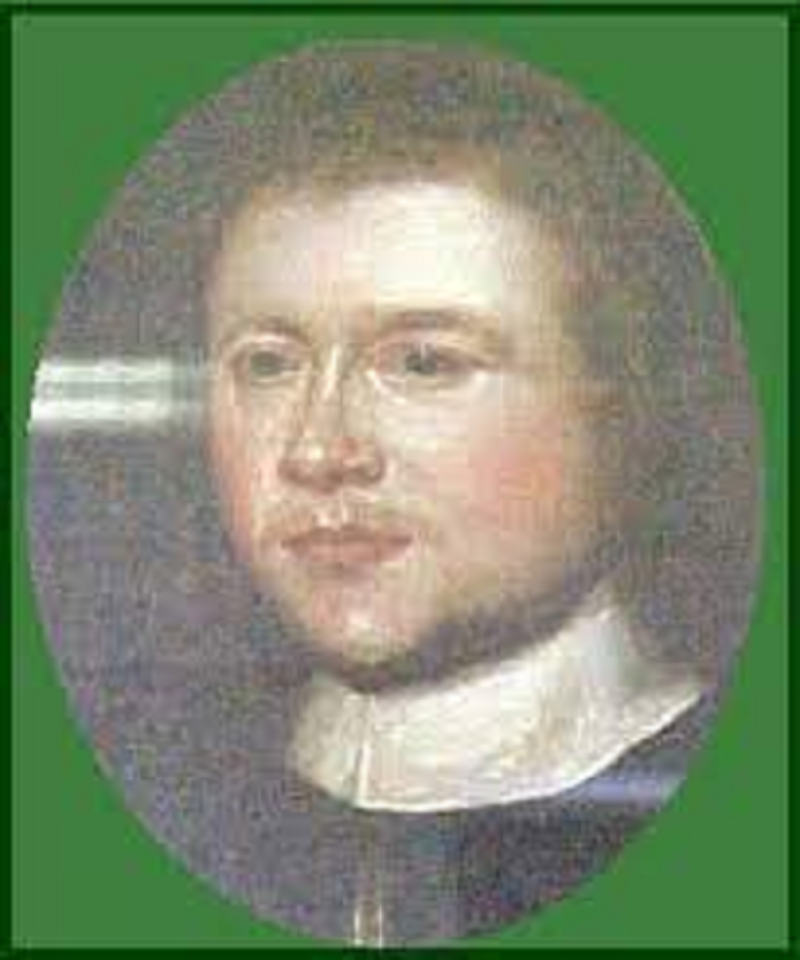
Blessed John Duckett, was a priest and martyr, one of the Martyrs of Douai. Born in 1613 in Sedbergh, Yorkshire, the son of James and Francis Duckett and a relative and possibly the grandson of Blessed James Duckett, who had been executed at Tyburn on 19 April 1601 for printing Catholic books.
He was baptized on 24 February 1614 and educated at Sedbergh School. At the age of seventeen, he entered the English College, Douai; where he was ordained a priest by the Archbishop of Cambrai in 1639.
John possessed an extraordinary gift for prayer, and would spend whole nights in contemplation. On his way to the English mission, he spent two months in spiritual exercises, under the direction of his uncle, the Carthusian prior at Nieuport. He laboured for about a year in Durham and was arrested near Whisingham on his way to baptize two children, 2 July, 1644. The place which tradition declares to be that of his arrest is now marked by a tall stone cross. Carried to Sunderland, he was examined by a Parliamentary Committee of sequestrators, and placed in irons. He confessed his priesthood and was thereupon sent up to London with Father Ralph Corbie, S.J., who had been arrested about the same time near Newcastle-on-Tyne.
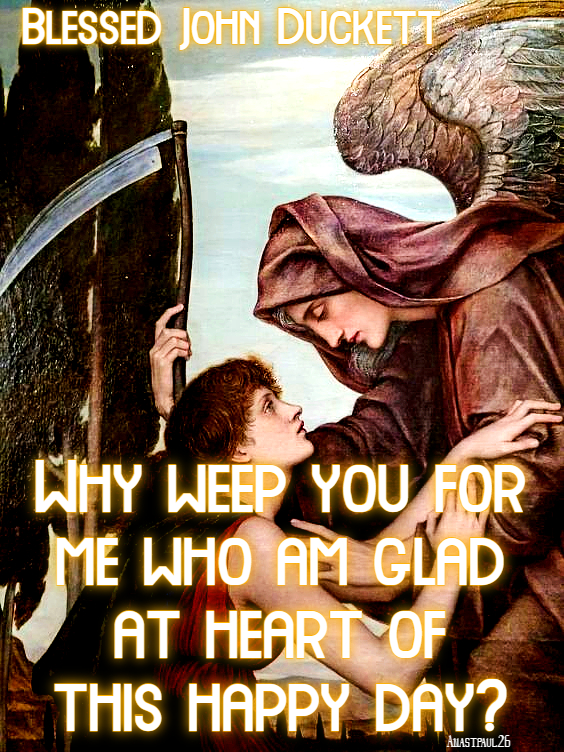
They were committed to Newgate, and edified the crowds of Catholics who flocked to see them by their joyousness, their sanctity, and their longing to suffer for Christ. A reprieve for one of them having been obtained, each refused to take it for himself. On his way to execution, Duckett astonished all by his supernatural joy; comforting those who wept for him, he said smiling: “Why weep you for me who am glad at heart of this happy day?” His jailers even were so struck by his gladness that they exclaimed “assuredly this man dies for a good cause”.
He suffered with Father Corbie, at Tyburn. In a farewell letter to the Bishop of Chalcedon, he wrote on the eve of his martyrdom: “I fear not death, nor I contemn not life. If life were my lot, I would endure it patiently; but if death, I shall receive it joyfully, for that Christ is my life, and death is my gain. Never since my receiving of Holy Orders did I so much fear death as I did life, and now, when it approacheth can I faint?”
Our Morning Offering – 7 September – “Month of the Seven Sorrows of the Blessed Virgin Mary”
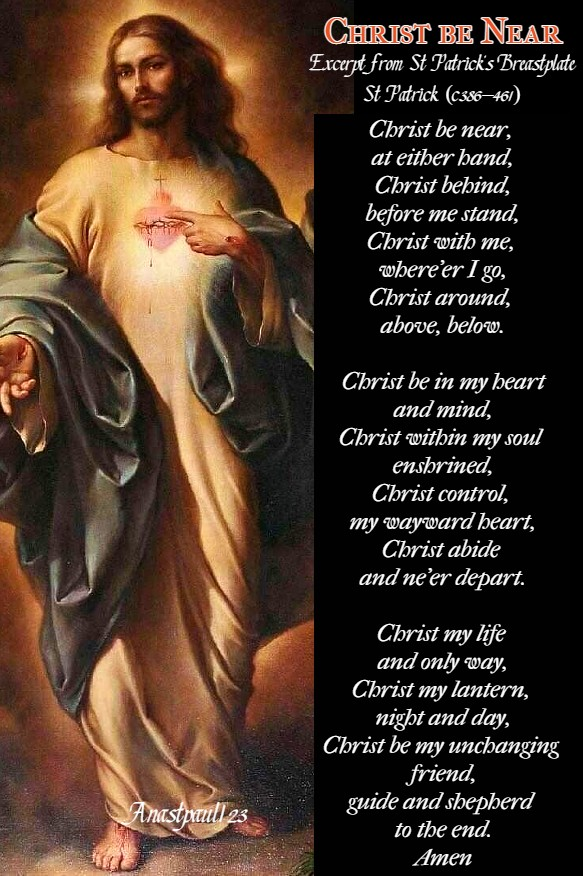
Christ be Near Excerpt from St Patrick’s Breastplat St Patrick (c 386 – 461)
Christ be near, at either hand, Christ behind, before me stand, Christ with me, where’er I go, Christ around, above, below.
Christ be in my heart and mind, Christ within my soul enshrined, Christ control, my wayward heart, Christ abide and ne’er depart.
Christ my Life and only Way, Christ my Lantern, night and day, Christ be my unchanging Friend, Guide and Shepherd to the end.
We have this prayer and his own story in one of the certainly authentic writings of this beloved Saint Patrick – his Confessio, which is, above all, an act of homage to God, for having called Patrick, unworthy sinner, to the apostolate.
One Minute Reflection – 7 September – “Month of the Seven Sorrows of the Blessed Virgin Mary” – Readings: Ps 85:1-3, Ps 85:4, Gal 5:25-26; 6:1-10, Luke 7:11-16
And He said, Young man, I say to you, arise. And he who was dead, sat up, and began to speak. And He gave him to his mother. But fear seized upon all, and they began to glorify God, saying, A great prophet has risen among us, and God has visited His people.
Luke 7:11-16
REFLECTION – “Awake, you sleeper, rise from the dead and Christ will give you light!” We often say of those who are manifestly dead that they are sleeping; and indeed they are all sleeping for the One who is able to awaken them. For you a dead person is truly dead: you may well slap and shake him, he will not wake up. But for Christ, the man he commanded to “Rise up!” was merely sleeping and he rose up immediately. It is easy enough to waken a sleeper from his bed but Christ awakens a dead man from his tomb with even greater ease.
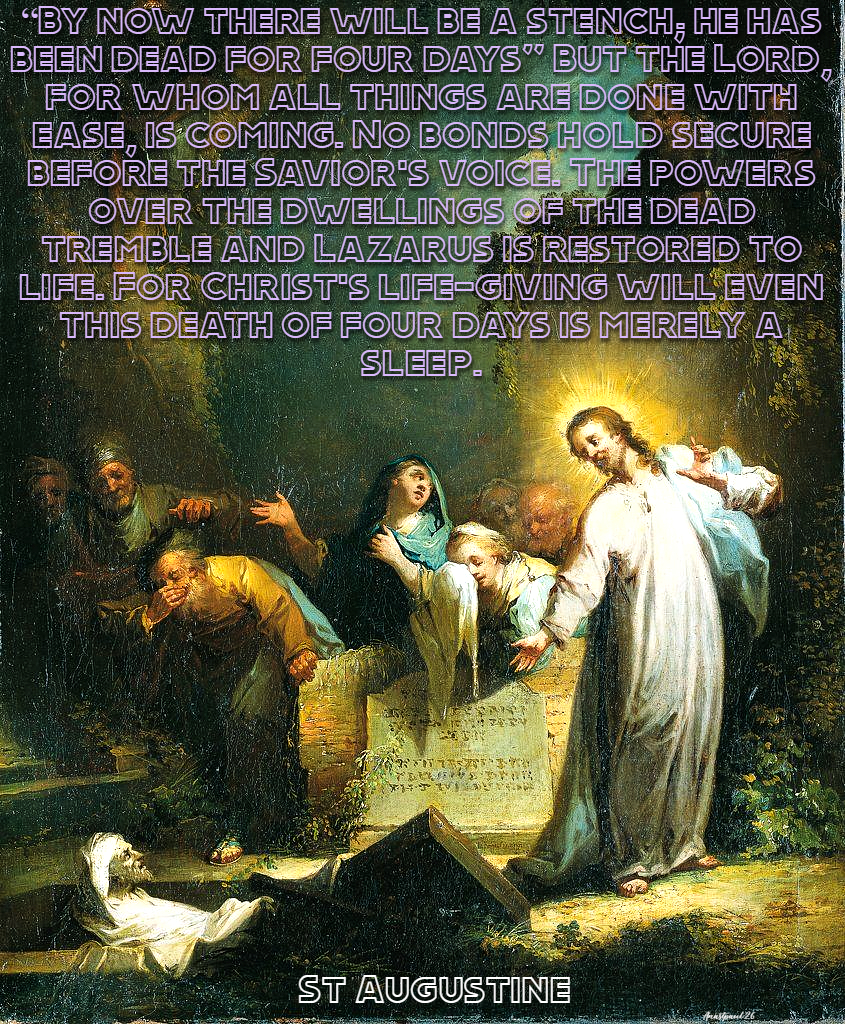
“By now there will be a stench; he has been dead for four days” But the Lord, for whom all things are done with ease, is coming. No bonds hold secure before the Savior's voice. The powers over the dwellings of the dead tremble and Lazarus is restored to life. For Christ's life-giving will even this death of four days is merely a sleep.

But reflect over the nature of this resurrection. Lazarus, coming alive out of the tomb, was as yet unable to walk. So the Lord commanded his disciples: “Untie him and let him go”. Christ raised him up; they set him free from his bonds. The true majesty of the God who brings the dead back to life emerges in this narrative. The Word of life exhorts those who are bound by their evil habits. Having been strongly admonished these sinners return to themselves, begin to reconsider their lives and feel the weight of the chains of their evil habits. Ashamed, they make up their minds to change their lives. From then on they are raised from death and brought back to life since they condemn their former way of living. However, even though they are alive once more, they cannot walk as yet; their bonds have to be untied. This is the ministry our Lord entrusted to his disciples when he said: “Whatever you loose on earth shall be loosed in heaven”
.
St Augustine
PRAYER – Our Father who art in heaven, almighty and eternal God, teach us to pause often during our active lives and recollect ourselves. Let us put away the problems of life and commune with You in prayer and meditation. Mary, Holy and Sorrowful Mother of our Lord Jesus Christ, teach us the how to pray and how to imitate your courage and strength in silence. Pray for us that we may be inspired to turn to our God for strength, in this vale of tears. Through Jesus Christ our Lord and Advocate, with the Holy Spirit, one God now and for all eternity, amen.
Brethren: If we live by the Spirit, by the Spirit let us also walk. Let us not become desirous of vainglory, provoking one another, envying one another.
Gal 5:25-26; 6:1-10
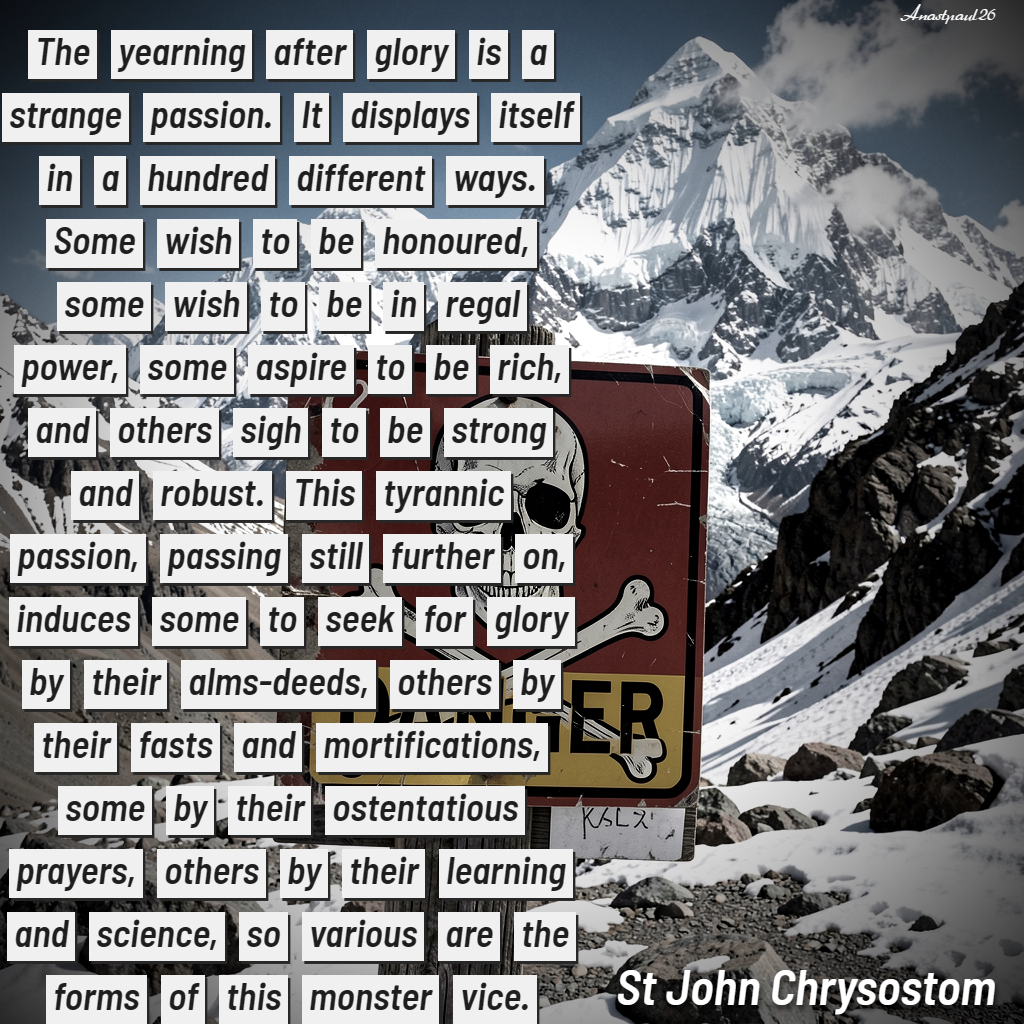
The yearning after glory is a strange passion. It displays itself in a hundred different ways. Some wish to be honoured, some wish to be in regal power, some aspire to be rich, and others sigh to be strong and robust. This tyrannic passion, passing still further on, induces some to seek for glory by their alms-deeds, others by their fasts and mortifications, some by their ostentatious prayers, others by their learning and science, so various are the forms of this monster vice.
St John Chrysostom
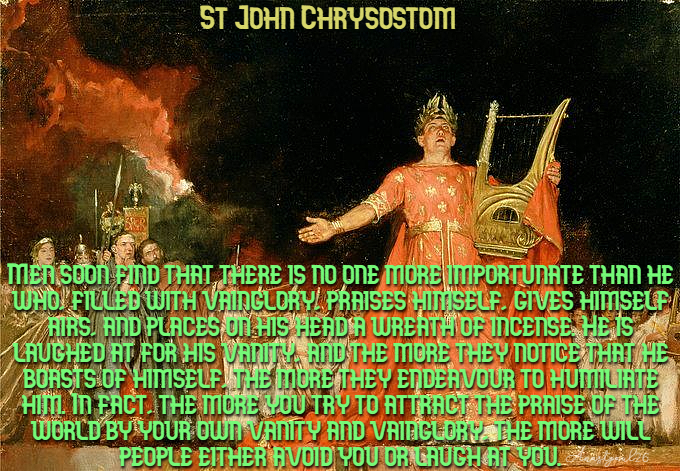
Men soon find that there is no one more importunate than he who, filled with vainglory, praises himself, gives himself airs, and places on his head a wreath of incense. He is laughed at for his vanity, and the more they notice that he boasts of himself, the more they endeavour to humiliate him. In fact, the more you try to attract the praise of the world by your own vanity and vainglory, the more will people either avoid you or laugh at you.
St John Chrysostom
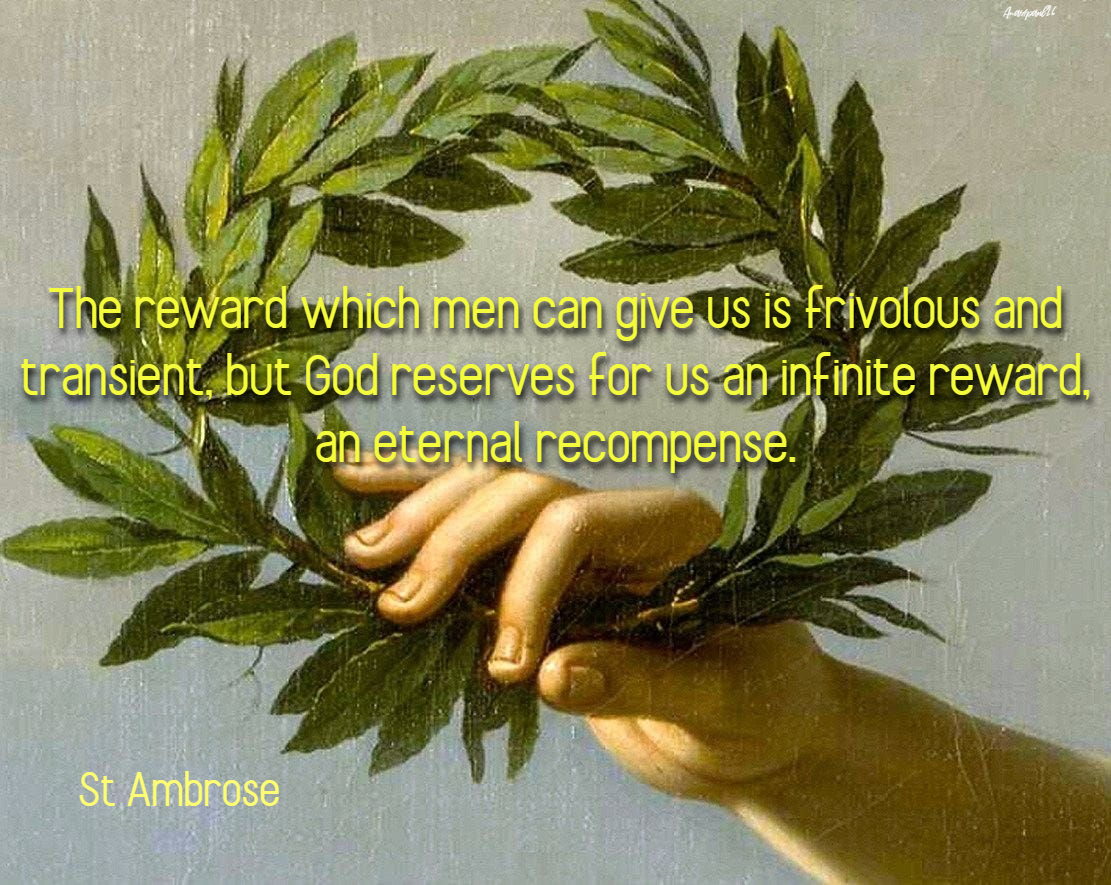
Public approbation has but little effect on a man who has acted from good and conscientious motives, such a man merits as much again as he seems to have disregarded before. Those who seek with too much eagerness for the esteem and applause of the world, receive during this life the reward of their good works, but merit nothing for eternity. The reward which men can give us is frivolous and transient, but God reserves for us an infinite reward, an eternal recompense.
St Ambrose
All the saints admonish us to be on our guard against vainglory, because, say they, it is a cunning thief, which often steals from us our best actions, and which insinuates itself so secretly that it has struck its blow even before we have perceived it.
Alphonse Rodriguez SJ
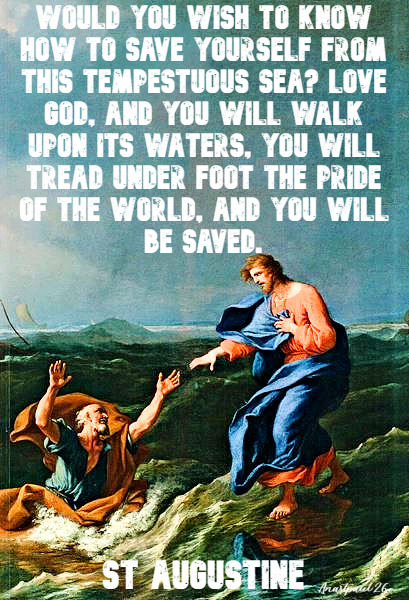
Would you wish to know how to save yourself from this tempestuous sea? Love God, and you will walk upon its waters, you will tread under foot the pride of the world, and you will be saved.
St Augustine
He sees a crowd of frivolous desires, hopes ill-founded, unjust hatreds, irregulated loves, he sees the wanton extravagance of our pleasures, the inutility of our occupations, the instability of our fortunes, the emptiness of our wishes, the littleness of our interests. Ah! how mean and contemptible did the world appear to him! No wonder he despised it, and retired from it for evermore.
Letter to the Friends of the Cross by St Louis de Montfort
2. Nothing is so useful and so agreeable
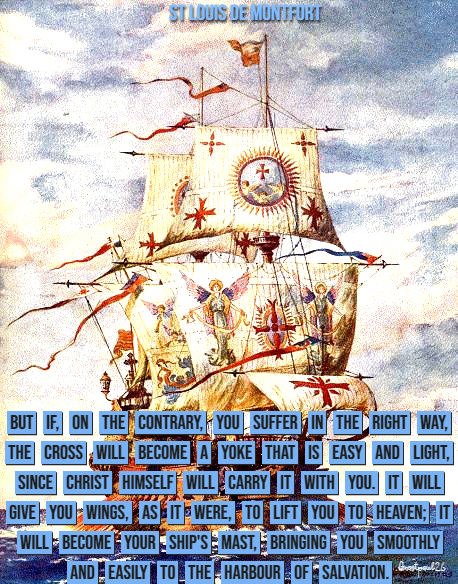
But if, on the contrary, you suffer in the right way, the cross will become a yoke that is easy and light, since Christ himself will carry it with you. It will give you wings, as it were, to lift you to heaven; it will become your ship’s mast, bringing you smoothly and easily to the harbour of salvation.
Carry your cross patiently, and it will be a light in your spiritual darkness, for the one who has never suffered trials is ignorant. Carry your cross cheerfully, and you will be filled with divine love; for only in suffering can we dwell in the pure love of Christ.
Roses are only found among thorns. It is the cross alone which nourishes our love of God, as wood is the fuel which feeds the fire. Remember the beautiful saying in the “Imitation of Christ”, “In proportion as you do violence to yourself, by suffering patiently, so will you make progress” in divine love. Do not expect anything from those sensitive and slothful people who reject the cross when it approaches them, and who are careful not to seek out crosses. What are they but an untilled soil which will produce nothing but thorns because it has not been dug up, harrowed and turned over by an experienced farmer? They are like stagnant water, which is unfit for either washing or drinking.
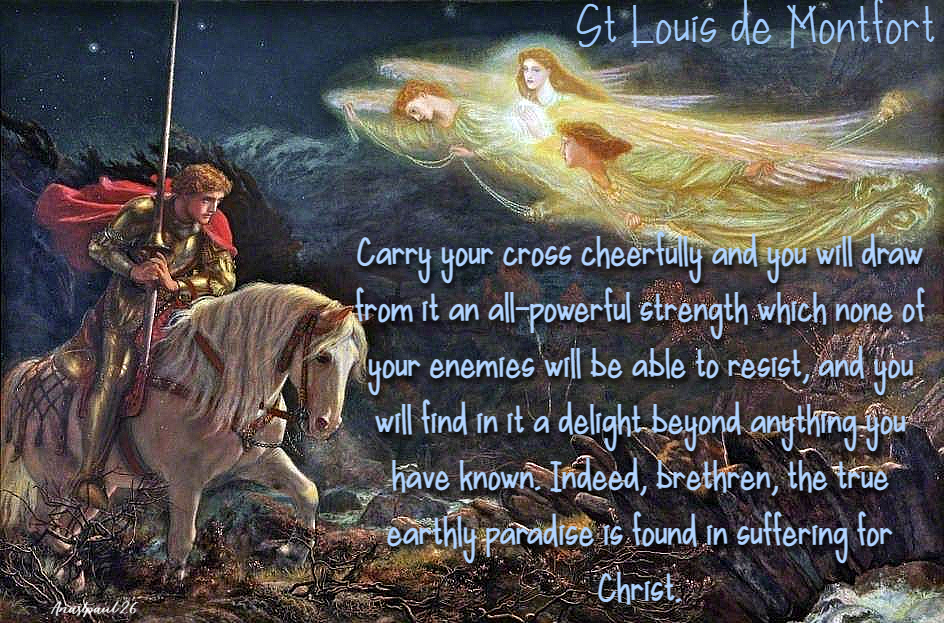
Carry your cross cheerfully and you will draw from it an all-powerful strength which none of your enemies will be able to resist, and you will find in it a delight beyond anything you have known. Indeed, brethren, the true earthly paradise is found in suffering for Christ.
Ask any of the saints, and they will tell you they have never tasted a banquet more delicious for the spirit than when undergoing the severest torments. “Let all the torments of the devil come upon me,” said St. Ignatius the Martyr. “Let me suffer or die,” said St. Teresa of Avila. “Not death but suffering,” said St. Mary Magdalene of Pazzi. “May I suffer and be despised for your sake,” said Blessed John of the Cross. And many others have spoken in the same terms, as we read in their lives.
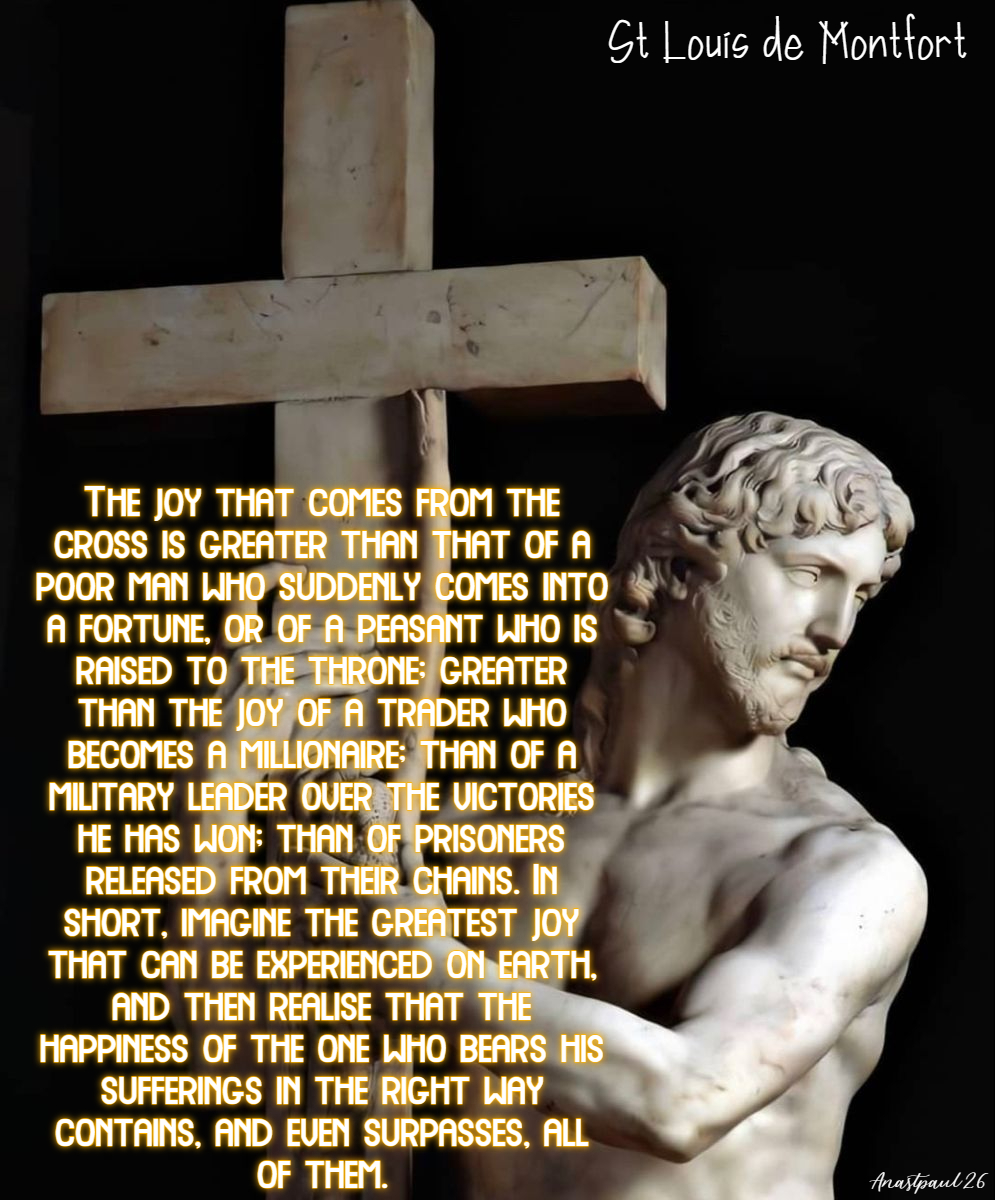
My dear brothers and sisters, have faith in the word of God, for the Holy Spirit tells us that when we suffer cheerfully for God, the cross is the source of every kind of joy for all kinds of people. The joy that comes from the cross is greater than that of a poor man who suddenly comes into a fortune, or of a peasant who is raised to the throne; greater than the joy of a trader who becomes a millionaire; than of a military leader over the victories he has won; than of prisoners released from their chains. In short, imagine the greatest joy that can be experienced on earth, and then realise that the happiness of the one who bears his sufferings in the right way contains, and even surpasses, all of them.
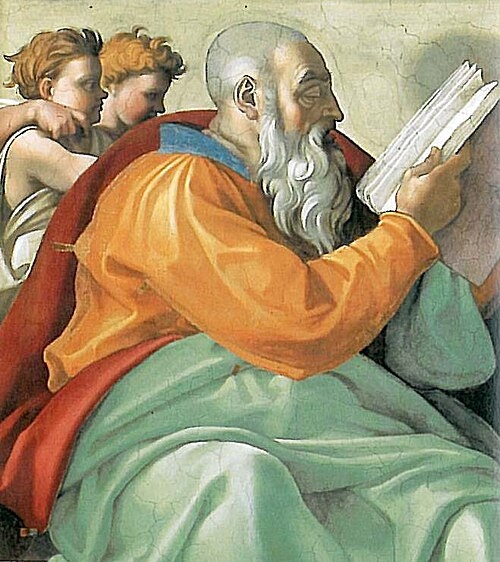
Saint Zacharius the Prophet, also known as Zaccaria, Zechariah (“Yahweh remembers”), was the son of Barachias, son of Addo, and a prophet who rose in Israel in the eighth month of the seventh year of the reign of King Darius, 520 B.C. He began to prophesy just two months after Haggai. The urgings of the two Prophets brought about the building of the second temple. He is the the author of the Book of Zechariah, the eleventh of the Twelve Minor Prophets.
Zechariah on the ceiling of the Sistine Chapel
The Book of Zechariah introduces him as the son of Berechiah, the son of Iddo. The Book of Nehemiah identifies him as a Levitical priest. His work has both an allegorical history of his people, and prophecies of the Messiah to come.
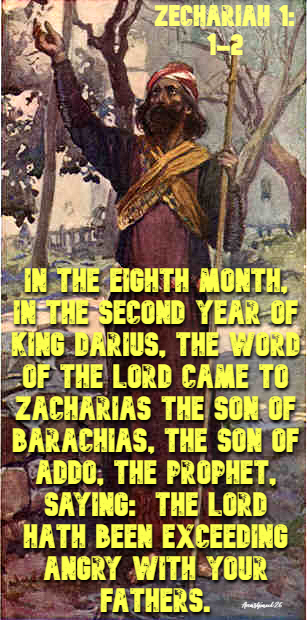
In the eighth month, in the second year of king Darius, the word of the Lord came to Zacharias the son of Barachias, the son of Addo, the prophet, saying: The Lord hath been exceeding angry with your fathers.
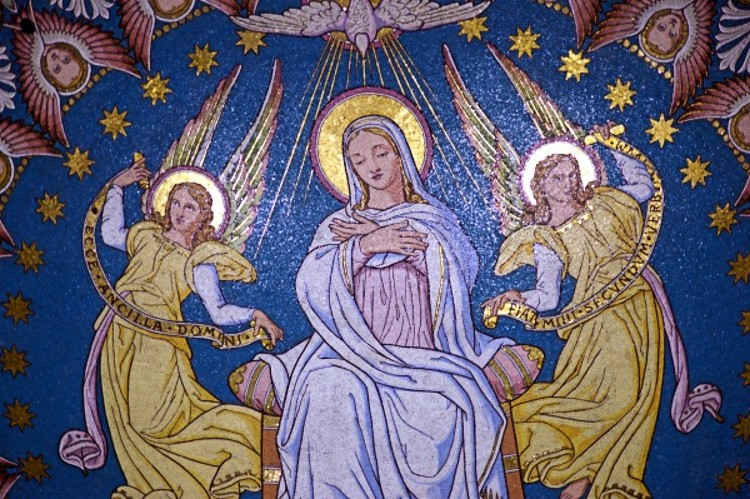
Notre-Dame de la Fontaine / Our Lady of the Fountain, Valenciennes, France (1008) – 6 September:
Valenciennes is a City in northern France on the Scheldt River and Our Lady of the Fountain was located half a league from the City in the year 1008. According to tradition, there was a terrible famine that preceded the Plague in that fateful year of 1008. It is recorded that the City of Valenciennes was so ravaged by the plague that nearly 8,000 people died in only a few days, so that the chronicles of the time tell us that it seemed “the dead outnumber the living.” The people grieved profoundly at the spectacle of death which constantly surrounded them,and having no other recourse, went in great crowds to their Churches to take refuge at the feet of Our Mother of Mercy and beg for her intercession.
A holy hermit named Bertholin, who lived nearby Our Lady of the Fountain, was touched by the misfortune of his brothers and redoubled his austerities and prayers. He prayed for the people of Valenciennes, saying, “O Mary! Rescue these afflicted who have cried out to you! Will you let this people die who have called upon you for rescue and who confide their cares to you? Will you be invoked in vain?”
The Blessed Virgin appeared to the hermit Bertholin while he was fervently praying on the night of the 5th of September. The pious hermit was suddenly dazzled by the brilliance of a light purer than the sun, while at the same time the Mother of Mercy appeared to him with an air of kindness. She commanded Bertholin to tell the inhabitants to fast on the following day and then pass the night in prayer to bring an end to the Plague. “Go to my people of Valenciennes. On the eve of my nativity they will see the guarantee of protection that I want to give them.”
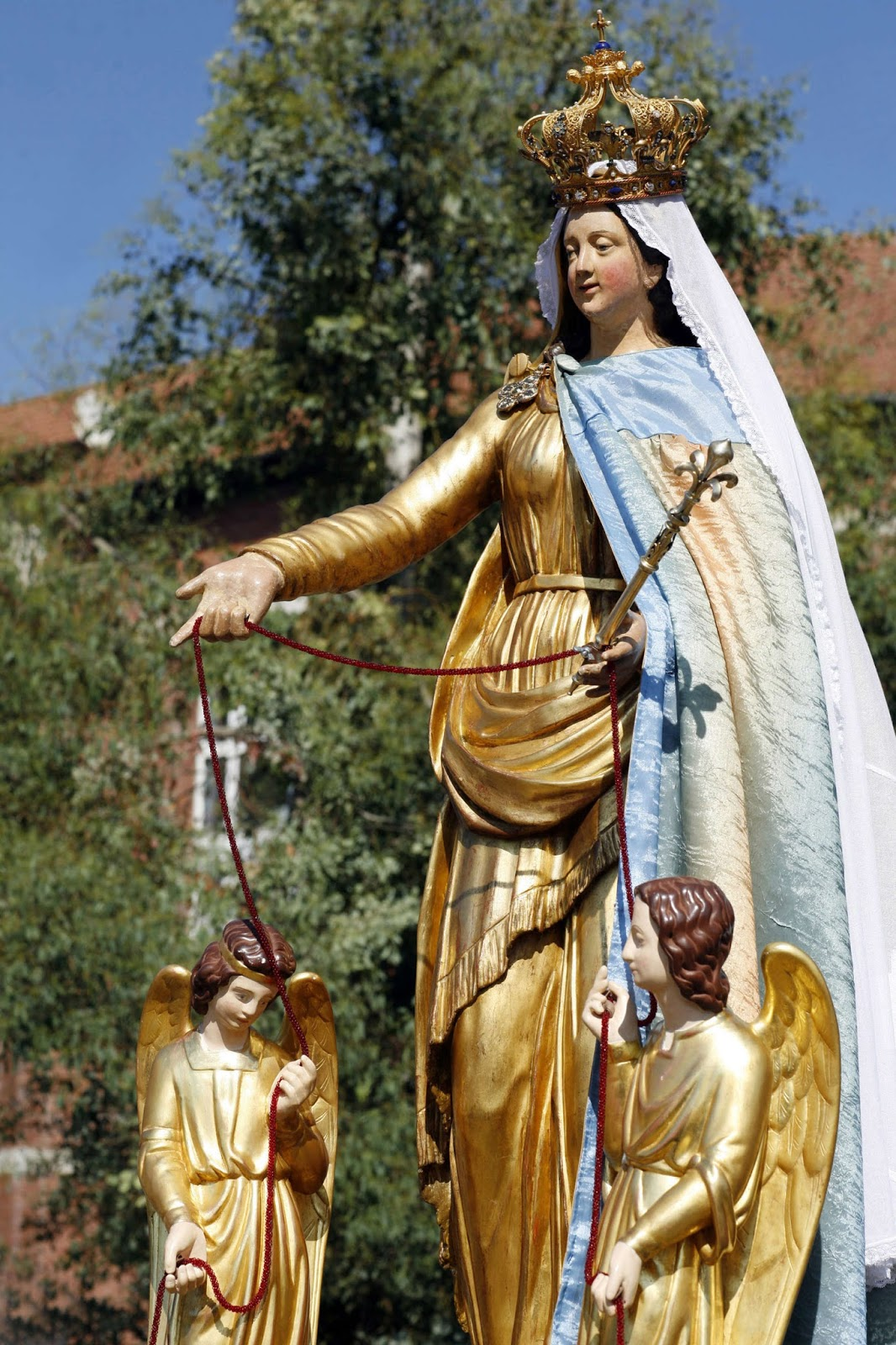
The response was overwhelming. The people of Valenciennes did as they were told,and on the eve of the Nativity, the 7th of September, the people of Valenciennes stood upon the ramparts and towers of the City excitedly awaiting the fulfilment of the heavenly promise. Their confidence was not in vain, for suddenly the night seemed to turn into day and they witnessed the Queen of Heaven descending to earth in majesty, sparkling like a light of heaven, brighter than the sun. Accompanied by a host of Angels, Our Lady seemed to gird the town all round with a cord.
Nothing can convey the feelings of joy and devotion with which the people of Valenciennes were seized at this sight. At one point they all bowed and asked the Blessed Virgin’s blessing. Their Heavenly Mother did indeed bless them and those who were sick recovered their health and the inhabitants of Valenciennes have been forever freed from the plague.
The Blessed Virgin instructed the hermit to tell the people that they were to make a solemn procession, and then to do so every year. The people were eager to fulfill this desire of their Heavenly Mother and left the City singing praises to the Blessed Virgin Mary.
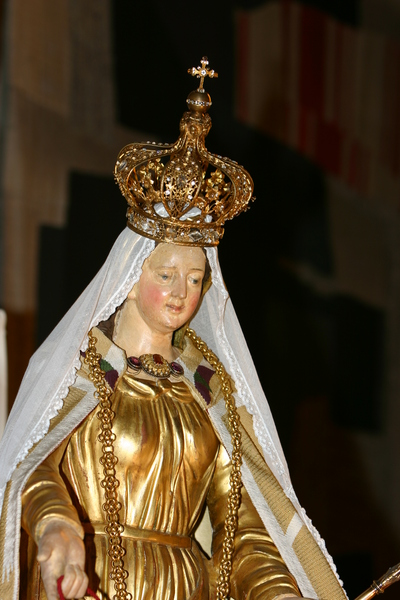
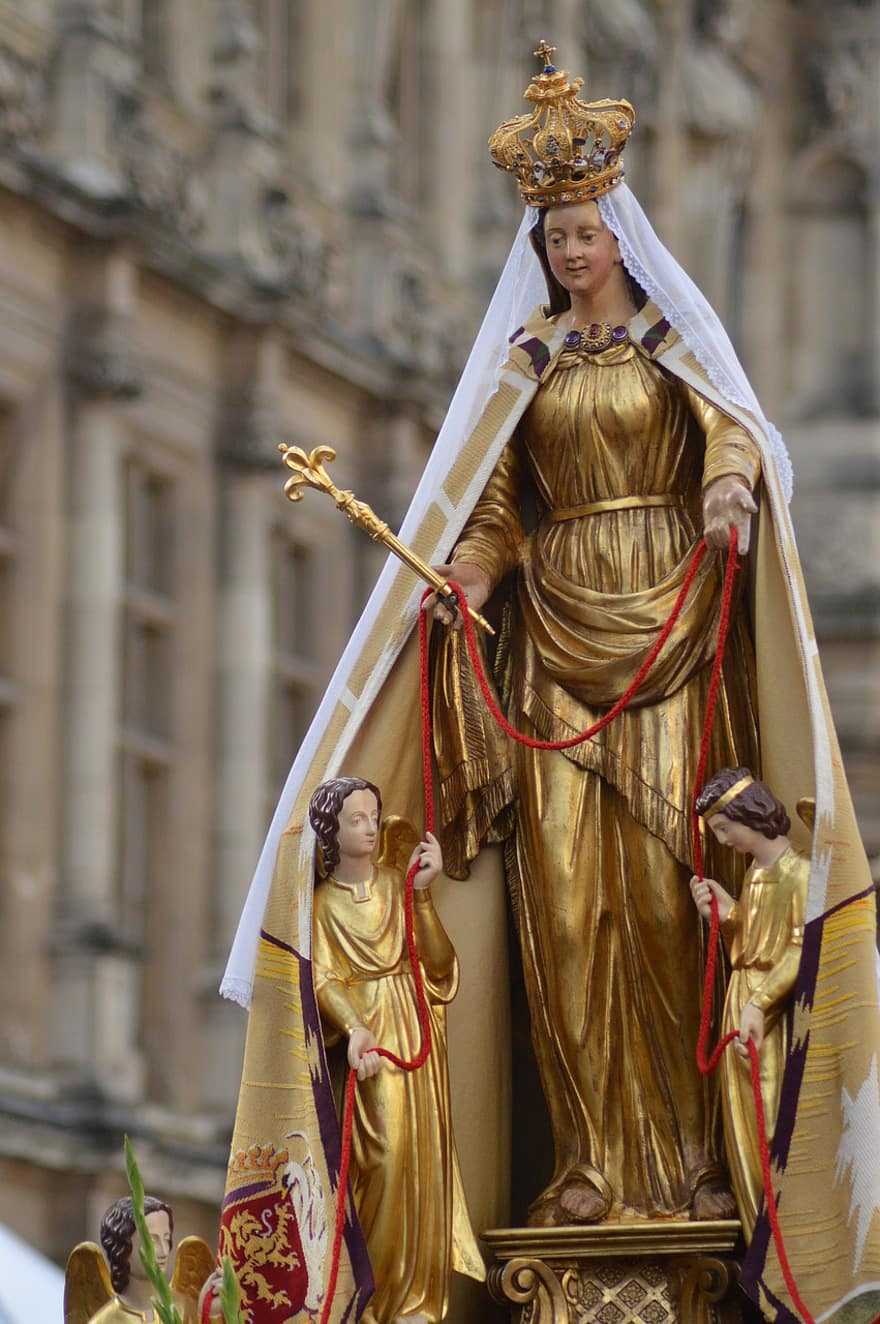
Since that time the procession of Our Lady of Saint-Cordon, or the Tour of the Holy Cordon, takes place every year, always along the same route where the holy cord had been placed. The cord of the Blessed Virgin was locked up in a Shrine at a beautiful Gothic Church, Notre-Dame-la-Grande.
This cord, the Abbot Orsini related, was still preserved at Valenciennes while he was alive. That is no longer the case, as it disappeared during the Terror that was the French Revolution. The Church was sold at auction and then razed to the ground, and the reliquary sent to the mint. Of the Holy Cord nothing is now known, although no one witnessed its destruction when it disappeared in the year 1793.
St Arator of Verdun St Augebert of Champagne St Augustine of Sens St Beata of Sens St Bega
St Cagnoald St Consolata of Reggio Emilia St Cottidus of Cappadocia
St Eleutherius the Abbot (Died c 585) Monk and Abbot. A wonderful simplicity and spirit of compunction were the distinguishing virtues of this holy sixth century Abbot.
St Eugene of Cappadocia St Eve of Dreux St Faustus of Alexandria St Faustus of Syracuse St Felix of Champagne St Frontiniano of Alba (Died 311) Deacon Martyr St Gondulphus of Metz St Imperia St Liberato of Loro Piceno St Macarius of Alexandria St Maccallin of Lusk
St Magnus of Füssen (Died c 666) Religious Priest, Monk, Abbot, Missionary, Spiritual student of Saint Columban and Saint Gall.
St Mansuetus of Toul St Onesiphorus St Petronius of Verona St Sanctian of Sens St Zacharius the Prophet — Martyrs of Africa – 6 saints: There were thousands of Christians exiled, tortured and martyred in the late 5th century by the Arian King Hunneric. Six of them, all bishops, are remembered today; however, we really know nothing about them except their names and their deaths for the faith – Donatian, Fusculus, Germanus, Laetus, Mansuetus and Praesidius.
Martyred in the Spanish Civil War: • Blessed Diego Llorca Llopis • Blessed Felipe Llamas Barrero • Blessed Pascual Torres Lloret • Blessed Vidal Ruiz Vallejo
Our Morning Offering – 6 September – “Month of the Seven Sorrows of the Blessed Virgin Mary”
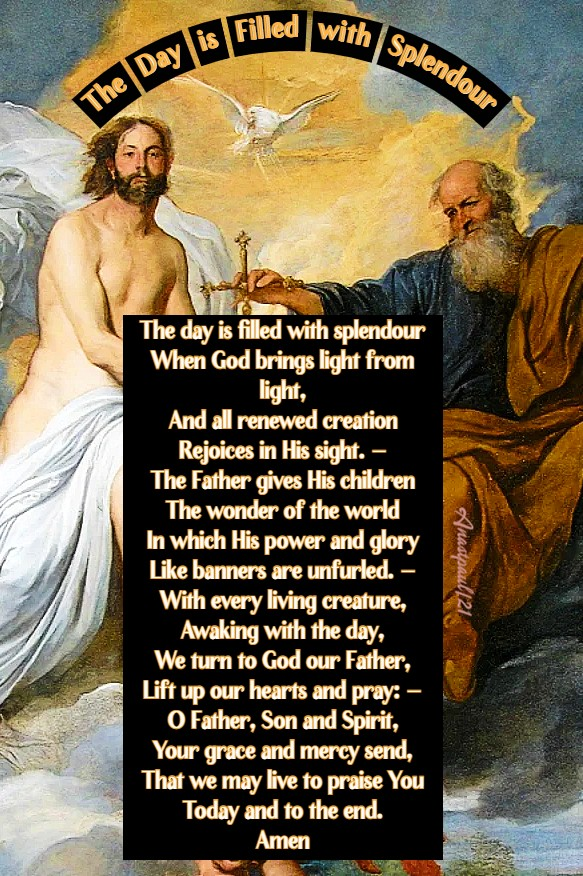
The Day is Filled with Splendour Benedictine Nuns of Stanbrook Abbey
The day is filled with splendour When God brings light from light, And all renewed creation Rejoices in His sight. — The Father gives His children The wonder of the world In which His power and glory Like banners are unfurled. — With every living creature, Awaking with the day, We turn to God our Father, Lift up our hearts and pray: — O Father, Son and Spirit, Your grace and mercy send, That we may live to praise You Today and to the end. Amen
The Day is Filled with Splendour, is a hymn written by the Benedictine Nuns of Stanbrook Abbey. It is sung during Morning Prayer in the Divine Office. It is set to the hymn tune: Paderborn, first published in the Katholische Kirchengesänge of 1616. Psalter Week 3
One Minute Reflection – 6 September – “Month of the Seven Sorrows of the Blessed Virgin Mary” – Readings: Ps 85:1-3, Ps 85:4, Gal 5:25-26; 6:1-10, Luke 7:11-16
And the Lord, seeing her, had compassion on her, and said to her, Do not weep. And He went up and touched the stretcher; and the bearers stood still. And He said, Young man, I say to you, arise. And he who was dead, sat up, and began to speak.
Luke 7:11-16
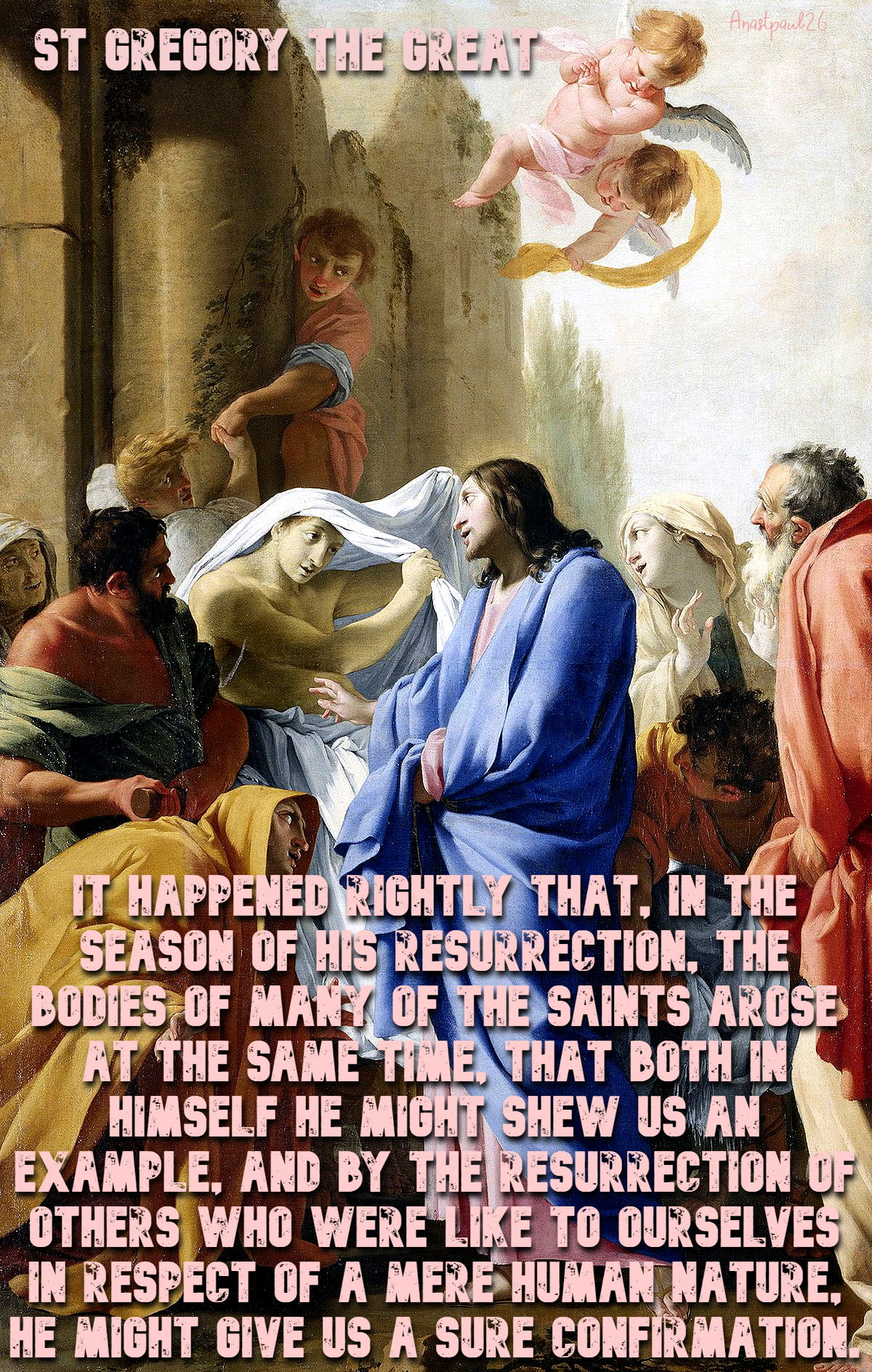
REFLECTION – He rose again on the third day, what then is to come after in His body, i.e. in the Church, He makes appear; for He shewed in example, what He promised in reward, that as believers knew and owned that He had Himself risen again, so they might hope for the rewards of the resurrection in themselves at the end of the world. Lo, we, through the death of the flesh, remain in the dust until the end of the world, but He on the third day budded into life from the dryness of death, that by the very renewal of His flesh by itself He might shew the power of His Divine Nature…. Already indeed the body of the Lord lives after death, but our bodies are kept back from the glory of the resurrection until the end of the world. Whence he carefully introduced this same delay, by saying, And that I shall rise at the last [novissimo] day from the earth.
Therefore we have a hope of our own resurrection, by considering the glory of our Head. But lest anyone say perhaps merely in the secret thought of his heart, that it was in this way that He rose again from the dead, viz. that being God and Man in one and the same Person, the death, which He underwent in His Human Nature, He overcame by His Divine Nature, while we, who are mere men, are not able to rise from the curse of death; it happened rightly that, in the season of His resurrection, the bodies of many of the Saints arose at the same time, that both in Himself He might shew us an example, and by the resurrection of others who were like to ourselves in respect of a mere human nature, He might give us a sure confirmation.
St Gregory the Great
PRAYER – God of mercy and love, You offer all peoples the dignity of sharing in your life. Rule over our hearts and bodies this day. Sanctify us and guide our every thought, word and deed, my our hands be held out to our neighbour in imitation of Your love and mercy. By the intercession of Mary the Sorrowful Mother of Our Lord Jesus Christ and our Mother, strengthen us to love each other as brothers and sisters. We ask this through our Lord Jesus Christ, your Son, who lives and reigns with you and the Holy Spirit, one God, forever and ever amen.
There is nothing so bold, nothing more secure, than the fear of God. He who fears God, fears naught else, and he who has a dread of displeasing Him, or a fear of forfeiting His love, does not shrink from suffering – cares not if he lose all, provided he be in a state of grace.
Pere Nouet, SJ(17th century)
The continued prosperity of sinners, is the greatest of all misfortunes for them. The less our Lord disturbs their torpor, the more He punishes them after. It is at that time that vicious habits increase in power day by day, it is then that they indulge themselves the more, that they delude themselves, that they are blinded more and more, to the important interests of their salvation. But the mad multitude do not reason thus.
St Augustine
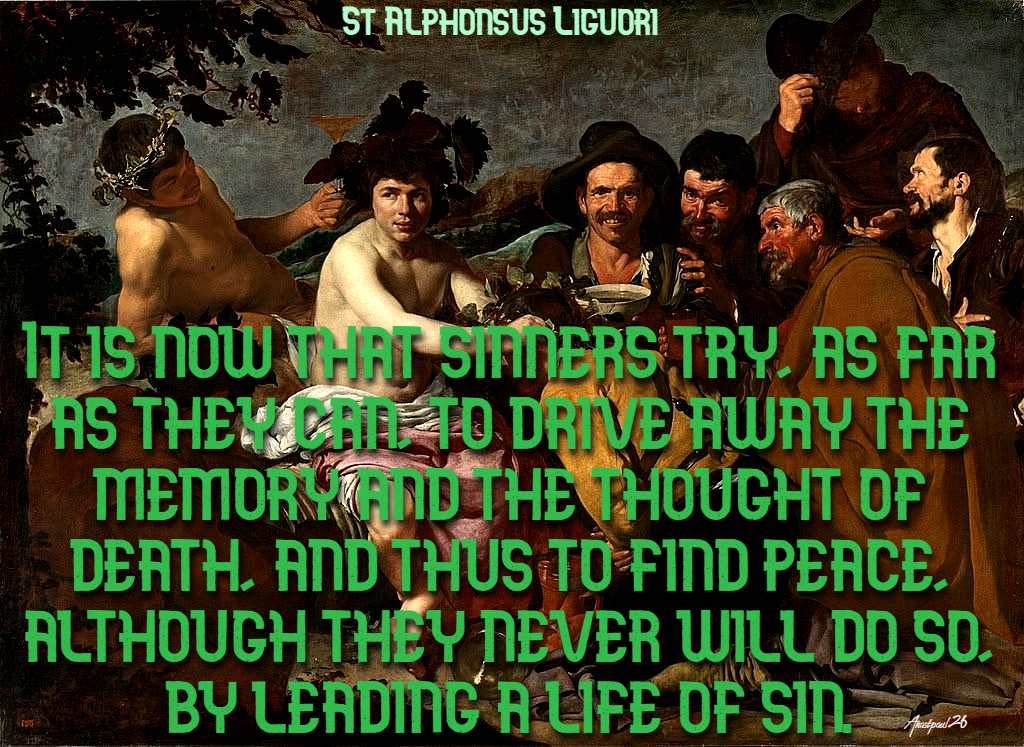
It is now that sinners try, as far as they can, to drive away the memory and the thought of death, and thus to find peace, although they never will do so, by leading a life of sin; but when in the agonies of death, they must enter into eternity when “destruction cometh and they shall seek peace, and there shall be none” then they will try to fly from the stings of their troubled consciences; they will seek peace, but what peace can a soul find which is laden with sin, which bites it like so many vipers ? What peace, knowing that in so short a time it will have to appear before Jesus Christ the Judge, whose law and friendship, until that moment, it has esteemed of so little worth?
St Alphonsus Liguori
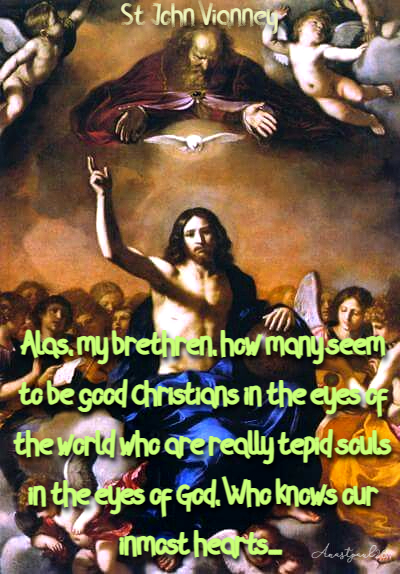
Alas, my brethren, how many seem to be good Christians in the eyes of the world who are really tepid souls in the eyes of God, Who knows our inmost hearts….
St John Vianney
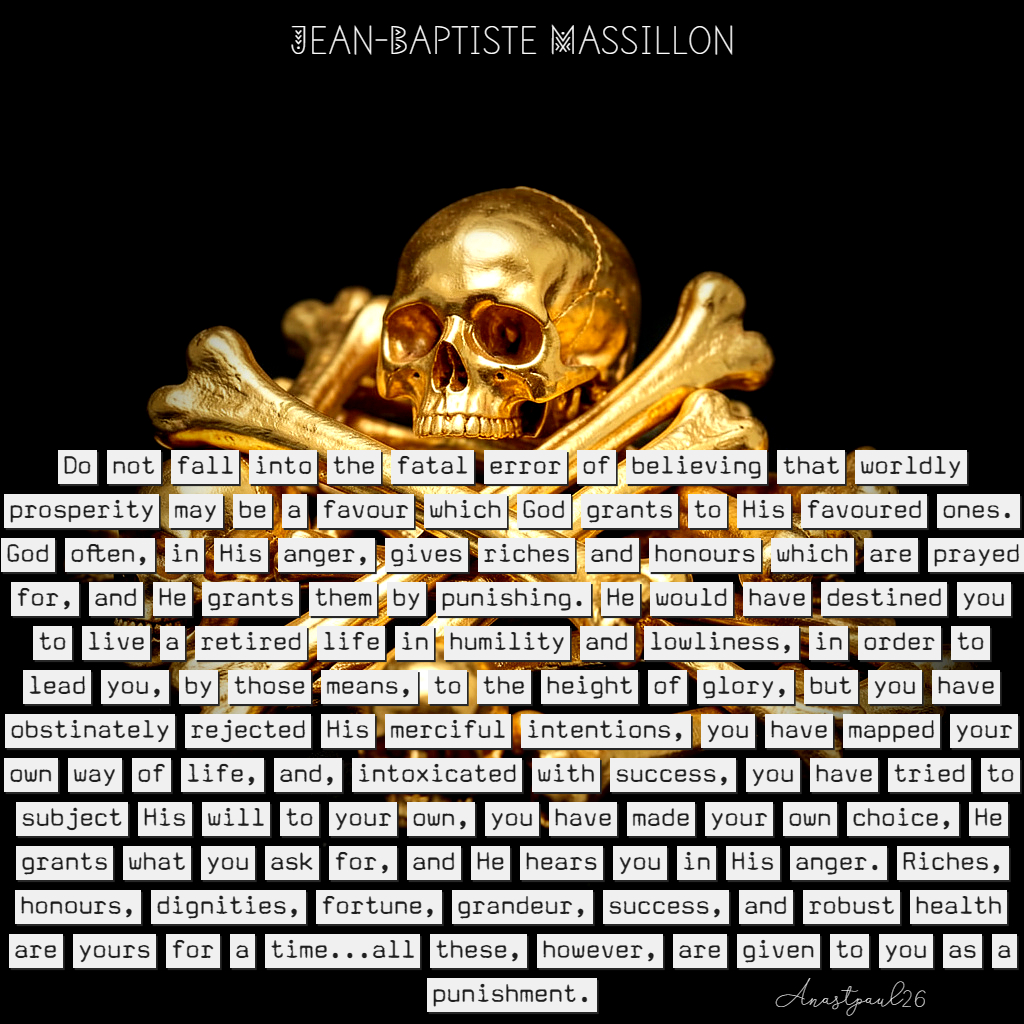
Do not fall into the fatal error of believing that worldly prosperity may be a favour which God grants to His favoured ones. God often, in His anger, gives riches and honours which are prayed for, and He grants them by punishing. He would have destined you to live a retired life in humility and lowliness, in order to lead you, by those means, to the height of glory, but you have obstinately rejected His merciful intentions, you have mapped your own way of life, and, intoxicated with success, you have tried to subject His will to your own, you have made your own choice, He grants what you ask for, and He hears you in His anger. Riches, honours, dignities, fortune, grandeur, success, and robust health are yours for a time…all these, however, are given to you as a punishment.
Letter to the Friends of the Cross by St Louis de Montfort
[1. Nothing is so necessary]
Dear Friends of the Cross, we are all sinners; there is not one of us who has not deserved hell, and I more than anyone. Our offences have to be punished either in this world or in the next. If we suffer for them now, we shall not suffer for them after death. If we willingly accept punishment for them, this punishment will be an act of God’s love; for it is mercy which holds sway and chastises in this world, and not strict justice. This punishment will be light and temporary, accompanied by consolation and merit, and followed by rewards both here and in eternity.
But if the punishment due for our sins is put off till the next world, then it will be God’s avenging justice, which puts everything to fire and sword, which will inflict the punishment, a dreadful, indescribable punishment: “Who understands the power of your anger?” Judgement without mercy, without relief, without merit, without limit and without end. Yes, without end. That serious sin you committed in a few brief moments, that deliberate evil thought which now escapes your memory, that word carried away by the wind, that brief action against the law of God – they shall all be punished for eternity, in the company of the devils in hell, so long as God is God. And this avenging God will have no pity on your torments, on your cries and tears, violent enough to cleave the rocks. To suffer forever, without merit, without mercy, and without end.
Do we think of this, my dear brothers and sisters, when we have to suffer some trial in this world? How fortunate we are to be able to exchange a never-ending and unprofitable punishment for a temporary and rewarding one just by bearing our cross with patience! How many of our debts are still unpaid! How many sins have we committed which, despite a sincere confession and heartfelt contrition, will have to be atoned for in purgatory for many years, simply because in this world we contented ourselves with a few slight penances!
Ah, let us settle our debts with good grace in this life by cheerfully carrying our cross. In the next, a strict account is demanded down to the last penny, to the last idle word. If we were able to snatch from the devil the book of death in which he has entered all our sins and the punishment due to them, what a heavy debt we should find, and how delighted we should be to suffer for long years on earth rather than a single day in the world to come!
Friends of the Cross, do you not flatter yourselves that you are, or desire to become, the friends of God? Well then, resolve to drink the cup that you must drink in order to become his friends: “They drank the cup of the Lord and became the friends of God.” Benjamin, the beloved son of Jacob, was given the cup, while his other brothers received nothing but wheat. The beloved disciple of Christ, so dear to his Master’s heart, went up to Calvary and drank of his cup. “Can you drink the cup that I am going to drink?” To desire God’s glory is excellent, but to desire and pray for it without resolving to suffer all things is both foolish and extravagant: “You do not know what you are asking…” “We must experience many hardships before we enter the kingdom of heaven.” To enter this kingdom you must suffer many crosses and tribulations.
Rightly you glory in being God’s children. You should glory, then, in the correction your heavenly Father has given you and will give you in the future, for he chastises all his children. If you are not included among his beloved children, you are, alas, included among those who are lost, as St. Augustine points out. He also tells us, “The one who does not mourn in this world like a stranger and a pilgrim will not rejoice in the world to come as a citizen of heaven.” If your heavenly Father does not send you some worthwhile crosses from time to time, it is because he no longer cares about you and is angry with you; he is treating you as an outsider, no longer belonging to his family and deserving his protection, or as an illegitimate child, who, having no claim to a share of the inheritance, deserves neither care nor correction.
Friends of the Cross, disciples of a crucified God, the mystery of the Cross is a mystery unknown to the Gentiles, rejected by the Jews, and despised by heretics and bad Catholics. But it is the great mystery you must learn to practice in the school of Christ, and which can only be learnt from him. You will look in vain in all the schools of ancient times for a philosopher who taught it; in vain you will appeal to the senses or to reason to throw some light on it. It is only Jesus, through his all-powerful grace, who can teach you this mystery and give you the ability to appreciate it. Strive then to become proficient in this all-important science under your great Master, and you will understand all other sciences, for it contains them all in an eminent degree. It is our natural and supernatural philosophy, our divine and mystic theology, our philosopher’s stone, which by patience transforms the basest metals into precious ones, the bitterest pains into delight, poverty into riches, the most profound humiliations into glory. The one among you who knows best how to carry his cross, even though in other things he does not know A from B, is the most learned of all.
You are the members of Christ, a wonderful honour indeed, but one which entails suffering. If the Head is crowned with thorns, can the members expect to be crowned with roses? If the Head is jeered at and covered with dust on the road to Calvary, can the members expect to be sprinkled with perfumes on a throne? If the Head has no pillow on which to rest, can the members expect to recline on feathers and down? That would be unthinkable! No, no, my dear Companions of the Cross, do not deceive yourselves. Those Christians you see everywhere, fashionably dressed, fastidious in manner, full of importance and dignity, are not real disciples, real members of Christ crucified. To think they are would be an insult to our thorn-crowned Head and to the truth of the Gospel. How many so-called Christians imagine they are members of our Saviour when in reality they are his treacherous persecutors, for while they make the sign of the cross with their hand, in their hearts they are its enemies!
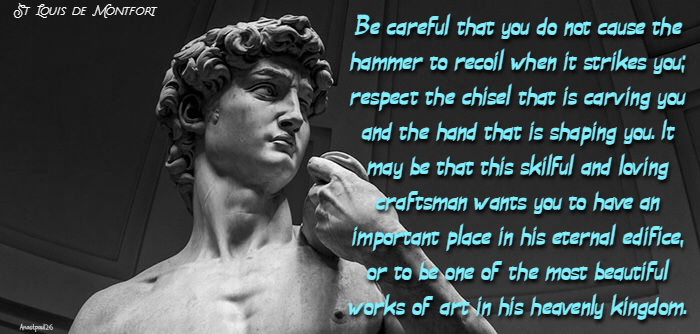
You know that you are living temples of the Holy Spirit and that, like living stones, you are to be set by the God of love into the building of the heavenly Jerusalem. And so you must expect to be shaped, cut and chiselled under the hammer of the cross; otherwise, you would remain rough stones, good for nothing but to be cast aside. Be careful that you do not cause the hammer to recoil when it strikes you; respect the chisel that is carving you and the hand that is shaping you.It may be that this skilful and loving craftsman wants you to have an important place in his eternal edifice, or to be one of the most beautiful works of art in his heavenly kingdom. So let him do what he pleases; he loves you, he knows what he is doing, he has had experience. His strokes are skilful and directed by love; not one will miscarry unless your impatience makes it do so.
Who, then, would dare claim to be exempt from the cross? Which of us would not hasten to the place where he knows the cross awaits him? Who would refuse to say with St. Ignatius of Antioch, “Come, fire and gibbet, wild beast and all the torments of hell, that I may delight in the possession of Christ.”
No, this accursed earth on which we live is not destined to make us happy; in this land of darkness we cannot expect to see clearly; there is no perfect calm on this stormy sea; we can never avoid conflicts on this field of trial and battle; we cannot escape being scratched on this thorn-covered earth. Willingly or unwillingly, all must carry their cross, both those who serve God and those who do not. Keep in mind the words of the hymn:
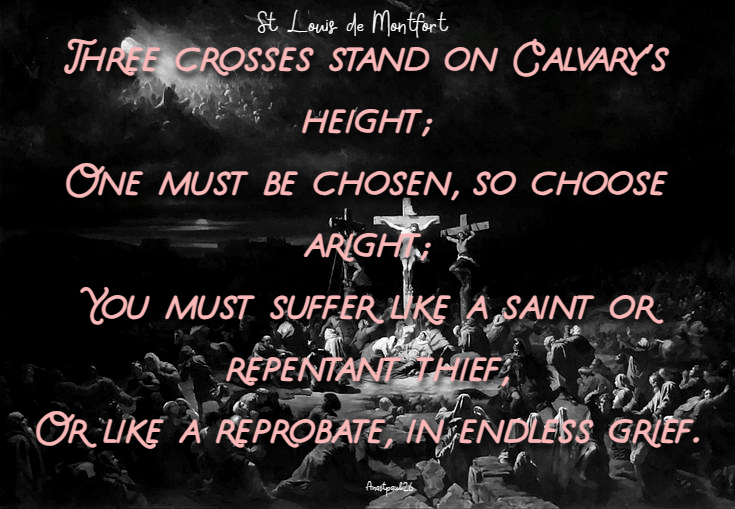
Three crosses stand on Calvary’s height; One must be chosen, so choose aright; You must suffer like a saint or repentant thief, Or like a reprobate, in endless grief.
That is to say, if you are not willing to suffer gladly like Jesus, or patiently like the penitent thief, then you will have to suffer like the unrepentant thief. You will have to drink the cup of bitterness to the dregs without the consoling help of grace, and you will have to bear the whole weight of your cross, deprived of the powerful support of Christ. You will even have to carry the deadly weight which the devil will add to it by means of the impatience it will cause you. And after sharing the unhappiness of the impenitent thief on earth, you will share his misery in eternity.
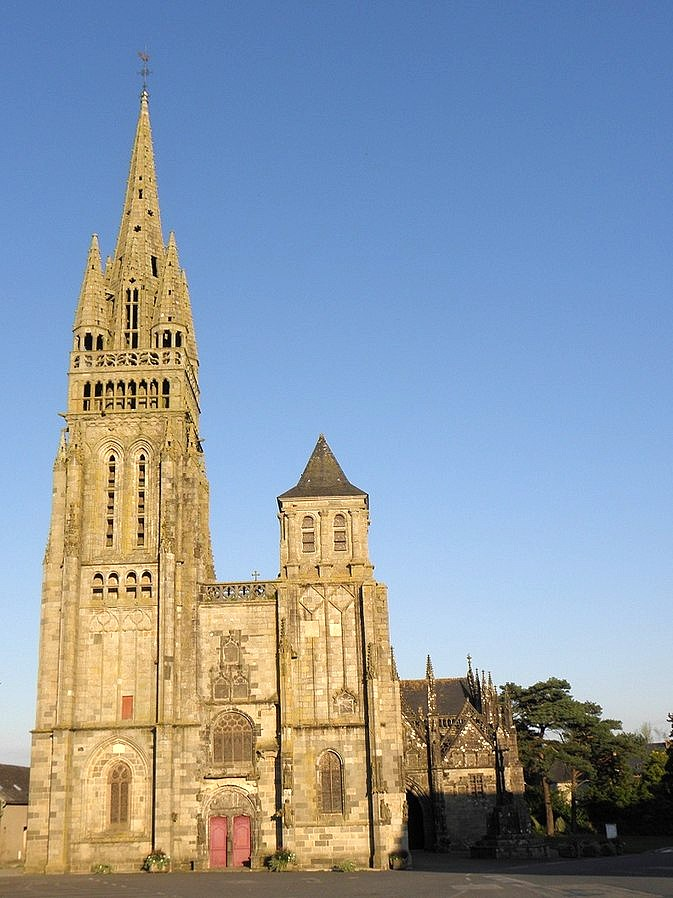
Notre-Dame, Folgoët / Our Lady of Folgoët Finistère, Brittany, France (1650) – First Sunday or the First Week of September:
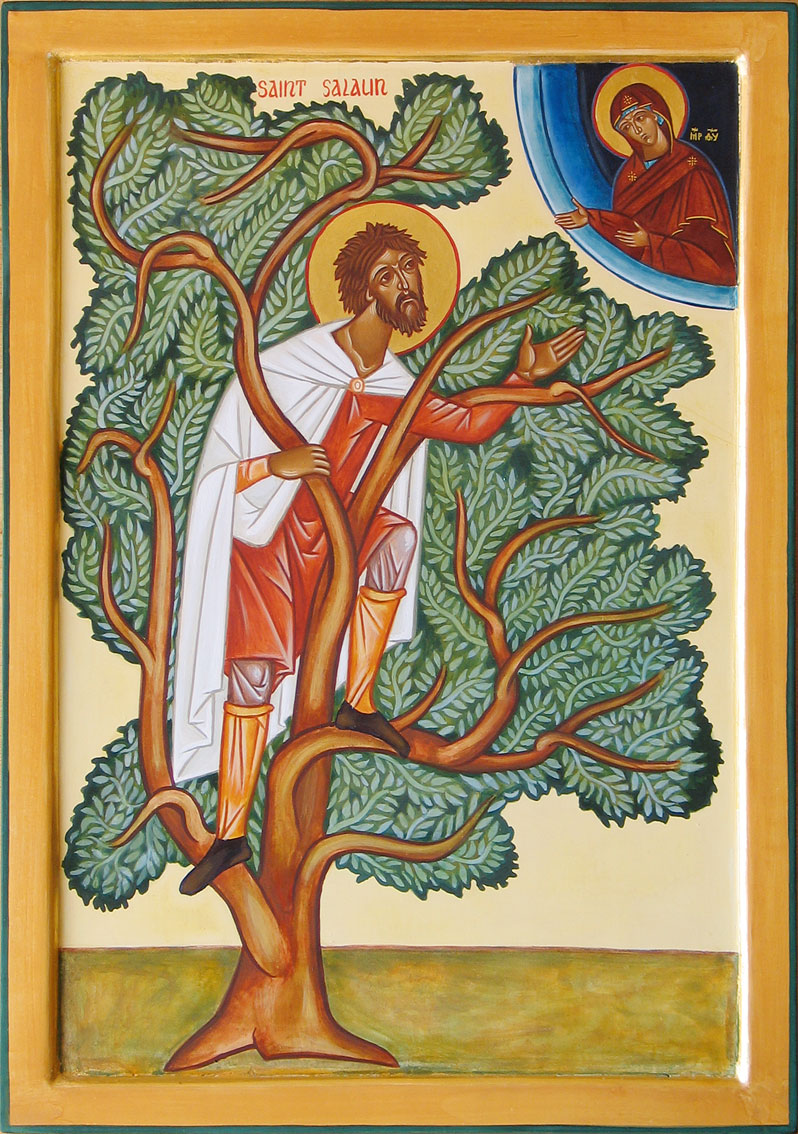
Known as the “the fool of the woods,” St Salaün (Died1358 – Memorial on1 November) lived in a forest clearing near a spring, over which he enjoyed hanging from an oak branch, immersed to his shoulders, singing “O Maria.” He lived by begging: “Ave Maria! Salaün could eat some bread!” After he died in 1358, aged 48, in the woods near the spring, people found a white lily with “Ave Maria” in gold lettering on its petals — growing from the mouth of the dead fool buried beneath.
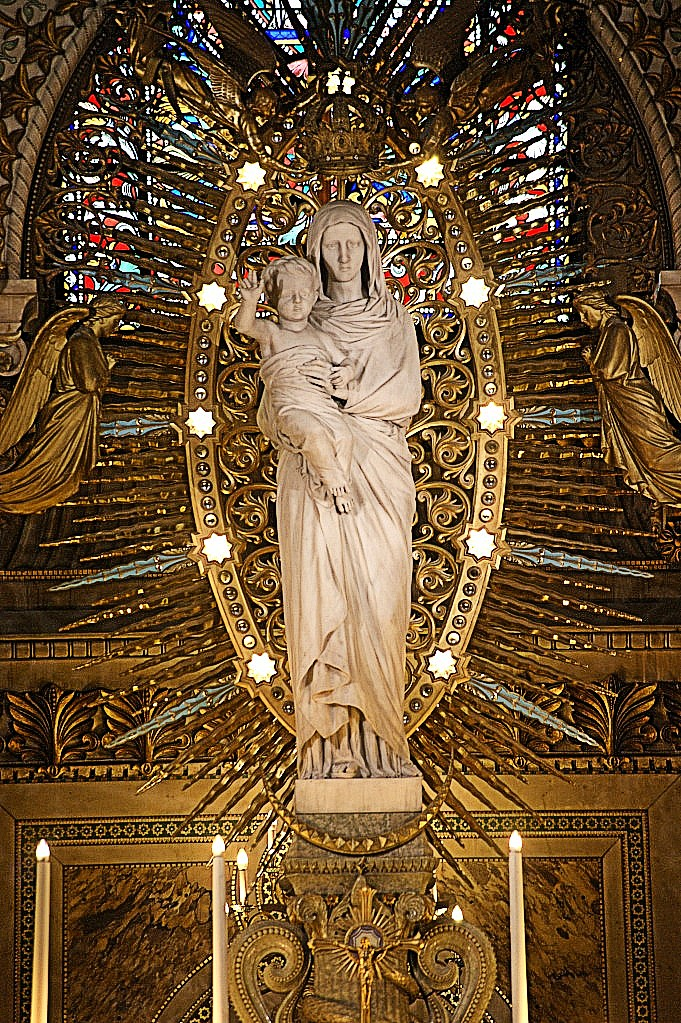
The Basilica of Notre-Dame du Folgoët was begun on the spot in 1365, completed in 1419 and consecrated in 1423. Its main Altar is over the spring, channeled into a basin behind the Church. In 1888, a dark stone Virgin was crowned Our Lady of Folgoët, replacing a polychrome wooden Statue which was moved to a side Altar. The Black Virgin is standing, holding the Child with her left arm; both wear large crowns. Her back is flat; the statue may have been on the exterior of the Church before the Revolution, when some Statues were damaged and removed for safekeeping from the marauding mobs of the French Revolution.
In the late 1500s, the big pilgrimage date was 15 August Feast of the Assumption. Three hundred years later, the celebration moved to 8 September, Nativity of the Virgin. Since 1970 the Grand Pardon has been held the first weekend in September, with a succession of processions and Masses in the Breton language.
St Albert of Butrio
St Alvito de León (Died 1063) Bishop. Alvito was the Confessor to King Fernando I of León, a Monk and the Benedictine Abbot of the Sahagún Monastery.
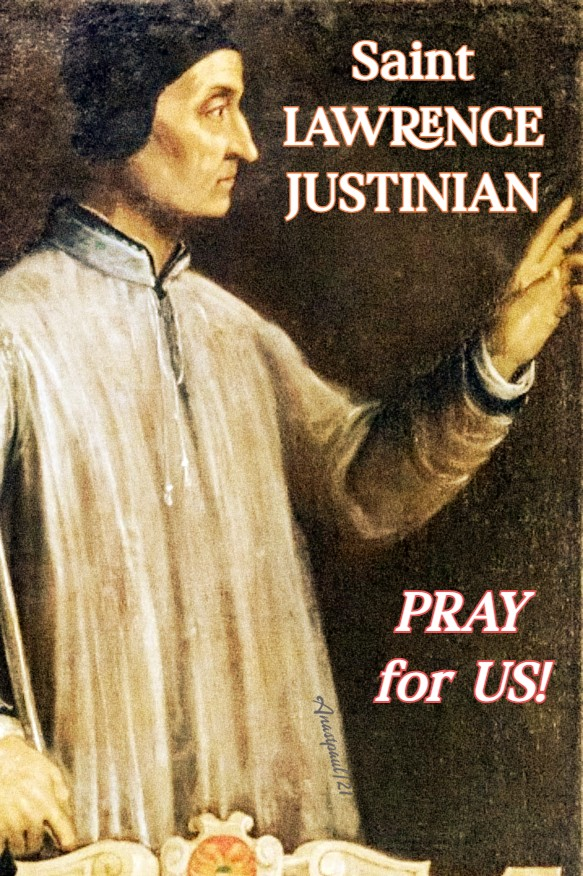
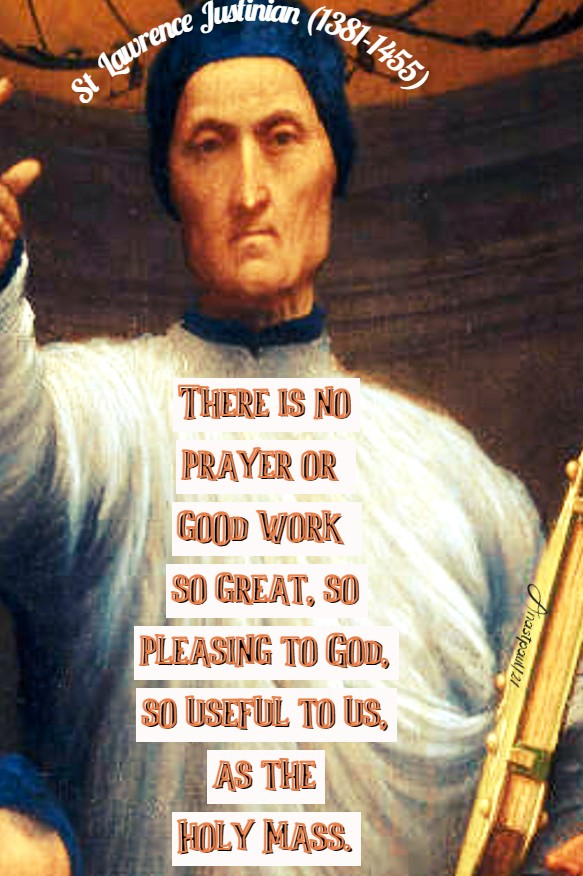
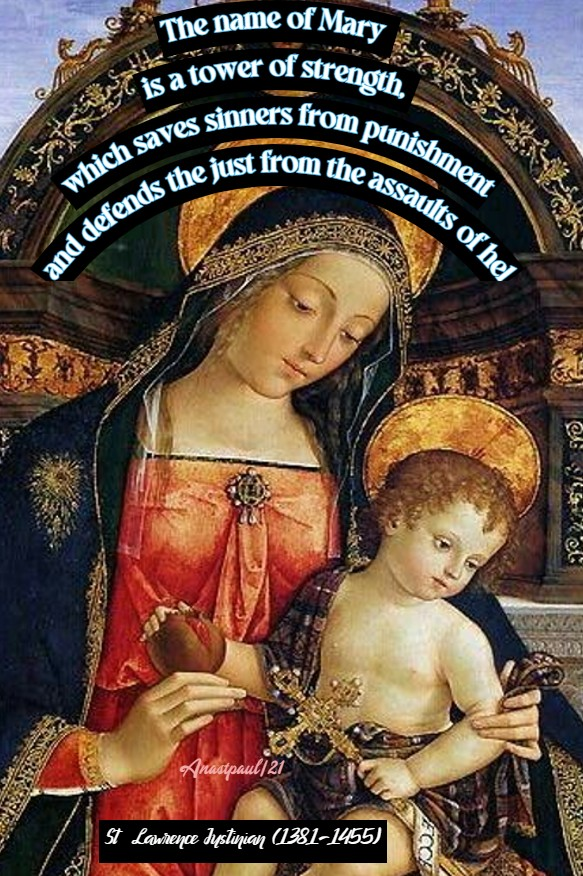
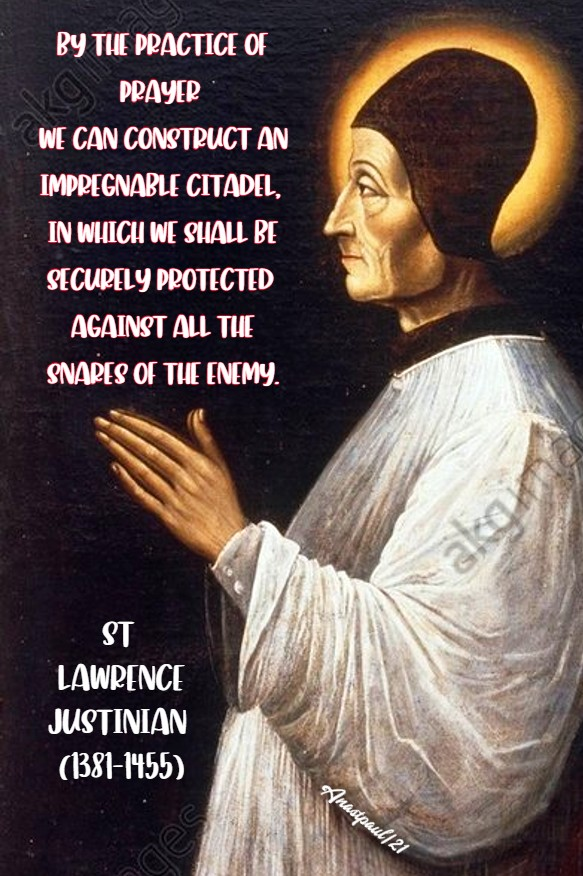
Bl Florent Dumontet de Cardaillac St Genebald of Laon Bl Gendtilis Bl Gerbrand of Dokkum St Guise Hoang Luong Canh Blessed John the Good OSA (c 1168-1249) Bishop Bl Jordan of Pulsano St Lawrence Justinian (1381-1455) Bishop St Obdulia St Phêrô Nguyen Van Tu St Romulus of Rome
St Victorinus of Amiterme St Victorinus of Como Bl William Browne — Martyrs of Armenia – 1,000 saints: A group of up to 1,000 Christian soldiers in the 2nd century imperial Roman army of Trajan, stationed in Gaul. Ordered to sacrifice to pagan gods, they refused and were transferred to Armenia. Ordered again to sacrifice to pagan gods, they refused again. Martyrs. We know the names of three of them, but nothing else – Eudoxius, Macarius and Zeno.
Martyrs of Capua – 3 saints: Three Christians who were martyred together. Long venerated in Capua, Italy. We know their names, but little else – Arcontius, Donatus and Quintius. They were martyred in Capua, Italy.
Martyrs of Nicomedia – 80 saints: A group of 80 Christians, lay and clergy, martyred together in the persecutions of Valens. We know little more than the names of three of them – Menedemo, Teodoro and Urbano. They were locked on a boat which was then set on fire on the shore of Nicomedia, Bithynia (in modern Turkey) c 370.
Martyrs of Porto Romano – 4+ saints: A group of Christians martyred together in the persecutions of Marcus Aurelius. We know little more than their names – Aconto, Herculanus, Nonno and Taurino. c180 at Porto Romano, Italy.
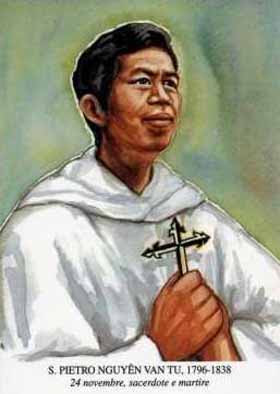
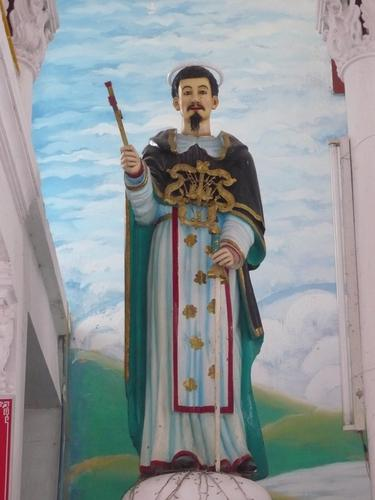
Blessed Peter Nguyễn Văn Tự, also known as Phêrô Nguyễn Văn Tự or Peter Tu Van Nguyen, was a Dominican priest and martyr born in 1796, Nam Dinh, Vietnam. Growing up during a time of persecutions of Christians, he entered the seminary, was ordained a priest in 1826, and joined the Dominican Order on January 4, 1827.
For 12 years Peter served in parishes across the Diocese of Bùi Chu. When the 1832 edict under Emperor Minh Mạng came, he went into hiding for six years, yet continued ministering secretly, often at great risk. In June 1838, soldiers raided Kẻ Mốt village, confiscating religious items and torturing locals. His hiding spot was betrayed and he was arrest on June 29, 1838, alongside catechist Bùi Văn Úy.
While imprisoned, Peter boldly preached during interrogations and refused to trample on a crucifix. Sentenced to death, he prepared with prayer, confessing to a fellow priest and receiving Holy Communion. On September 5, 1838, at age 42, he was beheaded at Cổ Mễ execution grounds alongside Joseph Hoàng Lương Cảnh. His body was buried at Nghĩa Vũ parish, with relics now at Trung Lại church in Bắc Giang province.
He was beatified on May 27, 1900, by Pope Leo XIII.
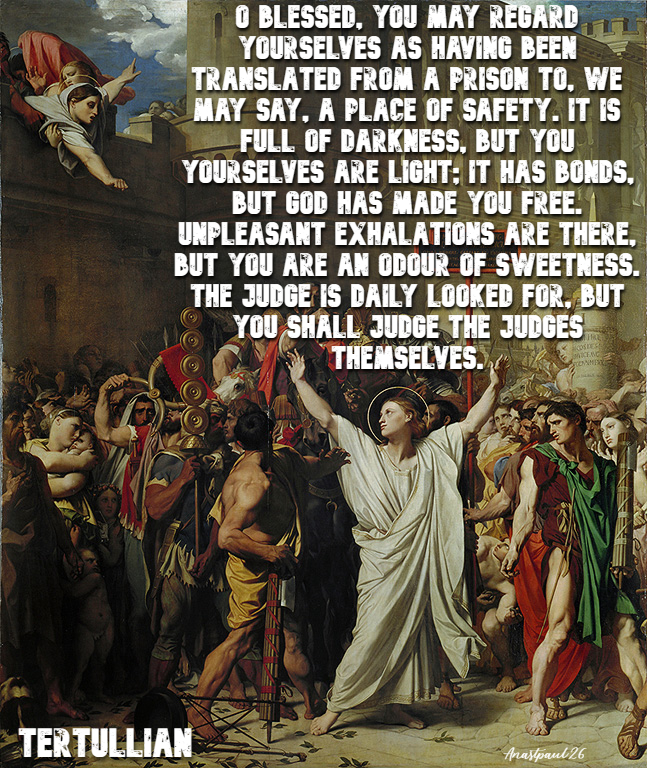
O blessed, you may regard yourselves as having been translated from a prison to, we may say, a place of safety. It is full of darkness, but you yourselves are light; it has bonds, but God has made you free. Unpleasant exhalations are there, but you are an odour of sweetness. The judge is daily looked for, but you shall judge the judges themselves.
Our Morning Offering – 5 September – “Month of the Seven Sorrows of the Blessed Virgin Mary” – The Fifteenth Sunday after Pentecost
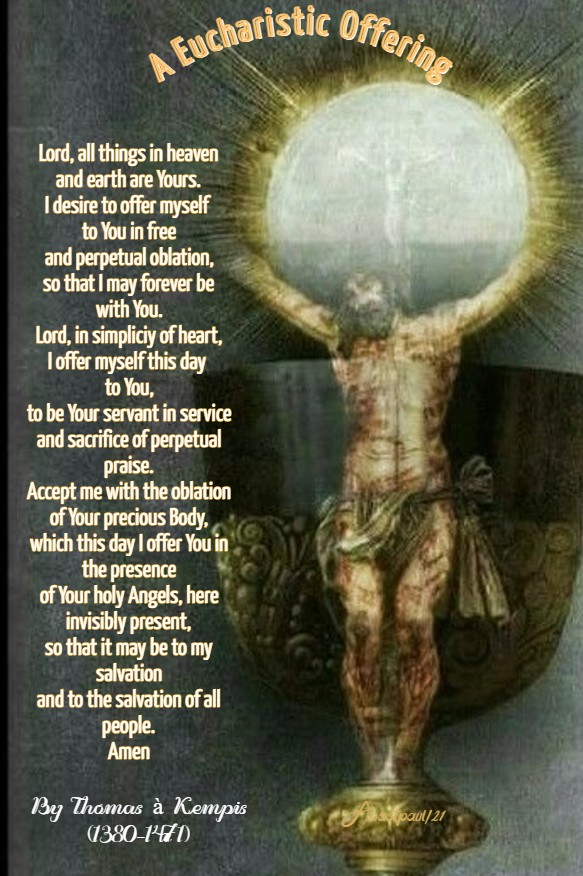
A Eucharistic Offering By Thomas à Kempis (1380-1471)
Lord, all things in heaven and earth are Yours. I desire to offer myself to You in free and perpetual oblation, so that I may forever be with You. Lord, in simpliciy of heart, I offer myself this day to You, to be Your servant in service and sacrifice of perpetual praise. Accept me with the oblation of Your precious Body, which this day I offer You in the presence of Your holy Angels, here invisibly present, so that it may be to my salvation and to the salvation of all people. Amen
One Minute Reflection – 5 September – “Month of the Seven Sorrows of the Blessed Virgin Mary” – Readings: Sir 45:30, Ps. 131:1, Sir 44:16-27; 45:3-20, Matt 25:14-23
Then after a long time the master of those servants came and settled accounts with them.
Matt 25:14-23
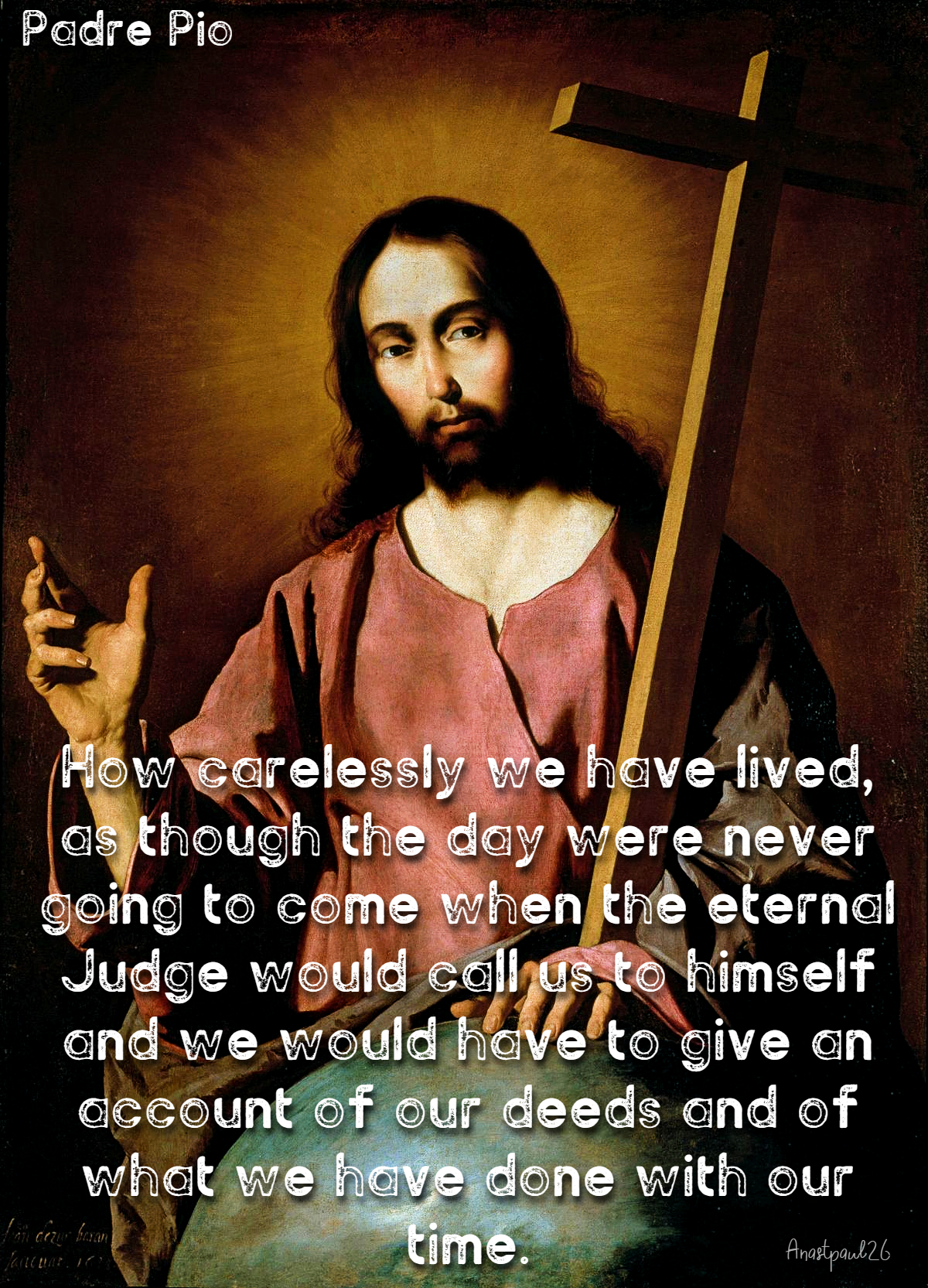
REFLECTION – “Brothers, up till now we have done nothing at all: so let us begin today.” It was to himself that Saint Francis addressed this counsel; let us humbly make it our own. How true it is that we have done nothing – or very little – as yet! One year follows another without our asking ourselves what we could have made of them. Hasn’t there been anything to change, to add or take away from our way of behaving? How carelessly we have lived, as though the day were never going to come when the eternal Judge would call us to himself and we would have to give an account of our deeds and of what we have done with our time.
Don’t let us waste our time. We ought not to put off for tomorrow what we could do today. The grave overflows with good intentions and, in any case, who can say whether tomorrow we shall still be alive? Let us listen to the voice of our conscience; it is the voice of the prophet: “Oh that today you would hear his voice: Harden not your heart,”.
All we have is the present moment: so let us keep a watch over it and live it as though it were a treasure entrusted to us. Time doesn’t belong to us; don’t let us waste it.
Padre Pio
PRAYER – Almighty and merciful God, open the ears and eyes of our hearts and fill us with Your grace. May we follow You in holiness all the days of our lives. Grant we pray, that as You brought Your Saints and Martyrs to overcome fearlessly, the persecutions of Your people, that we too may remain invincible under Your protection and by their prayers, be strengthened against the snares of the enemy. St Lawrence Justinian, pray for us in these times of evil! Through our Lord Jesus Christ, your Son, who lives and reigns with you in the unity of the Holy Spirit, one God, forever and ever. Amen.
Letter to the Friends of the Cross by St Louis de Montfort
[C. Let him take up his cross]
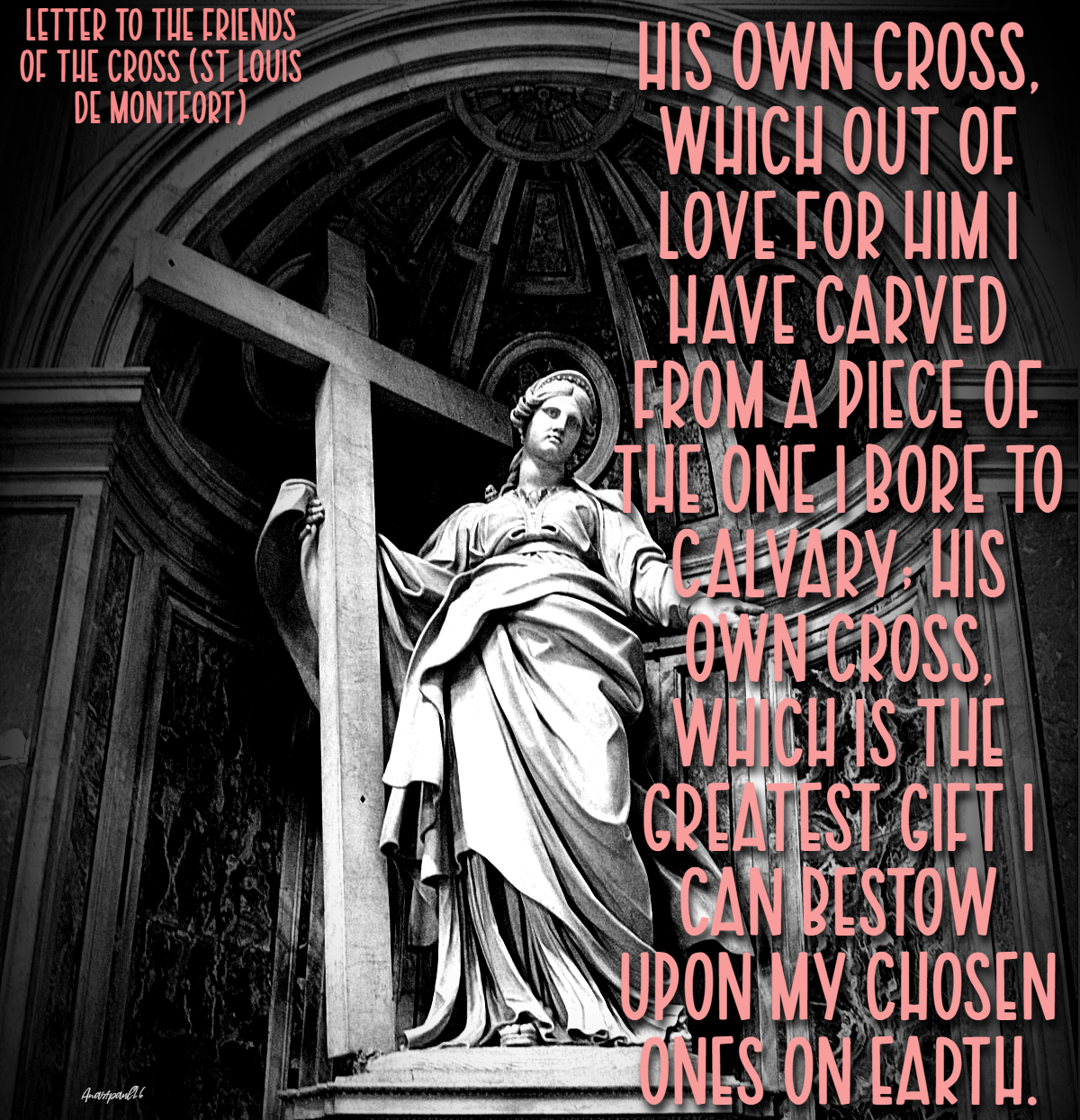
“Let him take up his cross,” the one that is his. Let that man (or woman) so rare “far beyond the price of pearls,” take up his cross joyfully, embrace it lovingly, and carry it courageously on his shoulders, his own cross, and not that of another – his own cross which I, in my wisdom, designed for him in every detail of number, measure and weight; his own cross which I have fashioned with my own hands and with great exactness as regards its four dimensions of length, breadth, thickness and depth; his own cross, which out of love for him I have carved from a piece of the one I bore to Calvary;his own cross, which is the greatest gift I can bestow upon my chosen ones on earth; his own cross, whose thickness is made up of the loss of one’s possessions, humiliations, contempt, sufferings, illnesses and spiritual trials, which come to him daily till his death in accordance with my providence; his own cross, whose length consists of a certain period of days or months enduring slander, or lying on a sick-bed, or being forced to beg, or suffering from temptations, dryness, desolation, and other interior trials; his own cross, whose breadth is made up of the most harsh and bitter circumstances brought about by relatives, friends, servants; his own cross, whose depth is made up of the hidden trials I shall inflict on him without his being able to find any comfort from other people, for they also, under my guidance, will turn away from him and join with me in making him suffer.
“Let him take up,” that is, let him carry his cross and not drag it, or shake it off, or lighten it, or hide it. Instead, let him lift it on high and carry it without impatience or annoyance, without intentional complaint or grumbling, without hesitation or concealment, without shame or human respect.
“Let him take it up” and set it on his brow, saying with St. Paul, “The only thing I can boast about is the Cross of our Lord Jesus Christ.” Let him carry it on his shoulders like our Lord, that it may become the source of his victories and the sceptre of his power: “Dominion is laid upon his shoulders.” Let him set it in his heart, where it may, like the burning bush of Moses, burn day and night with the pure love of God without being consumed!
“The cross”: let him carry it, for nothing is so necessary, so beneficial, so agreeable, or so glorious as to suffer something for Jesus Christ.
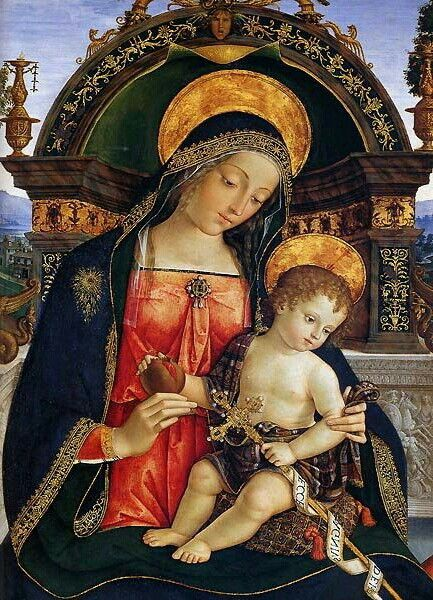
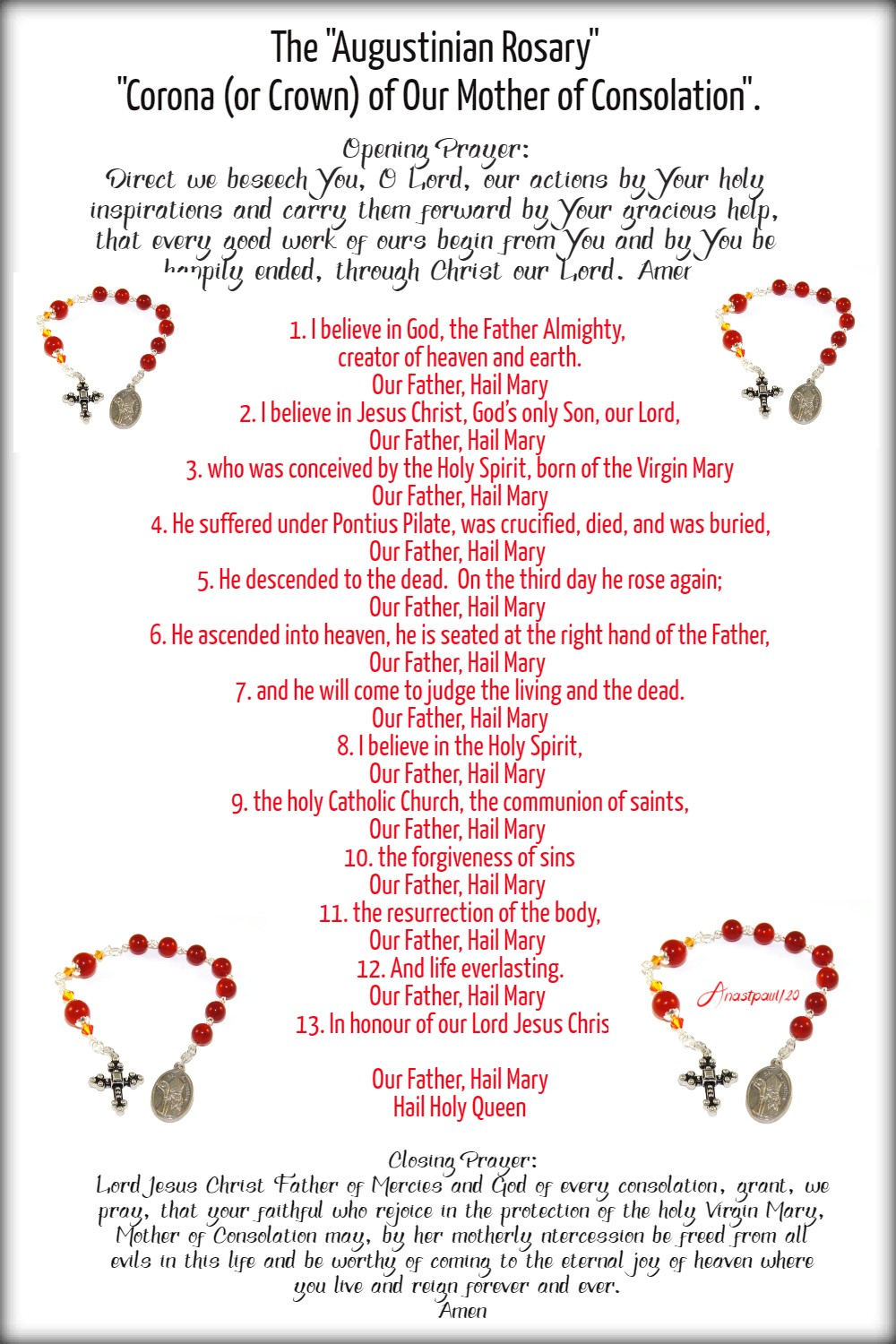
Madonna della Consolazione / Our Lady of Consolation, or Mary, Consoler of the Afflicted, (from the Latin Consolatrix Afflictorum):(1436) – 4 September
It is found in the Litany of Loreto. The feast of Our Lady of Consolation is one of the solemnities not inscribed in the General Roman Calendar but which are observed in particular places, regions, churches or religious institutes. Augustinians and many regions, observe today 4 September, the Benedictines 5 July.
St Irmgard of Süchteln St Julian the Martyr St Magnus of Ancyra St Marcellus of Chalon-sur-Saône St Marcellus of Treves St Maximus of Ancyra St Monessa St Moses the Prophet Bl Nicolò Rusca St Oceanus the Martyr Bl Peter of Saint James St Rebecca of Alexandria St Rhuddlad St Rosalia (c 1130-c 1160) Virgin, Recluse, known as “La Santuzza” – “The Little Saint.“
St Rose of Viterbo TOSF (c 1233 – 1251) Virgin, Preacher – Member of the Franciscan Third Order, Recluse, Miracle-Worker.
St Rufinus of Ancyra St Salvinus of Verdun Bl Scipion-Jérôme Brigeat Lambert St Silvanus of Ancyra St Sulpicius of Bayeux St Thamel St Theodore the Martyr St Ultan of Ardbraccan St Victalicus — Blessed Martyrs of Nowogródek: The Eleven Nuns of Nowogródek or Blessed Mary Stella and her Ten Companions were a group of members of the Sisters of the Holy Family of Nazareth, a Polish Roman Catholic religious congregation, executed by the Gestapo in August 1943 in occupied Poland (present-day Navahrudak, Belarus).
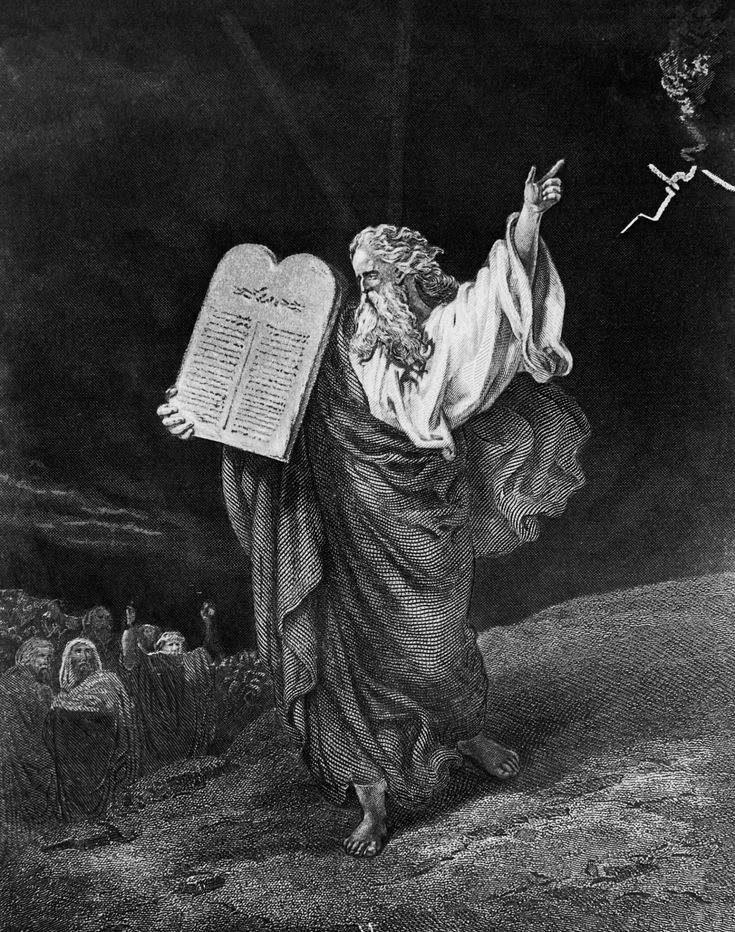
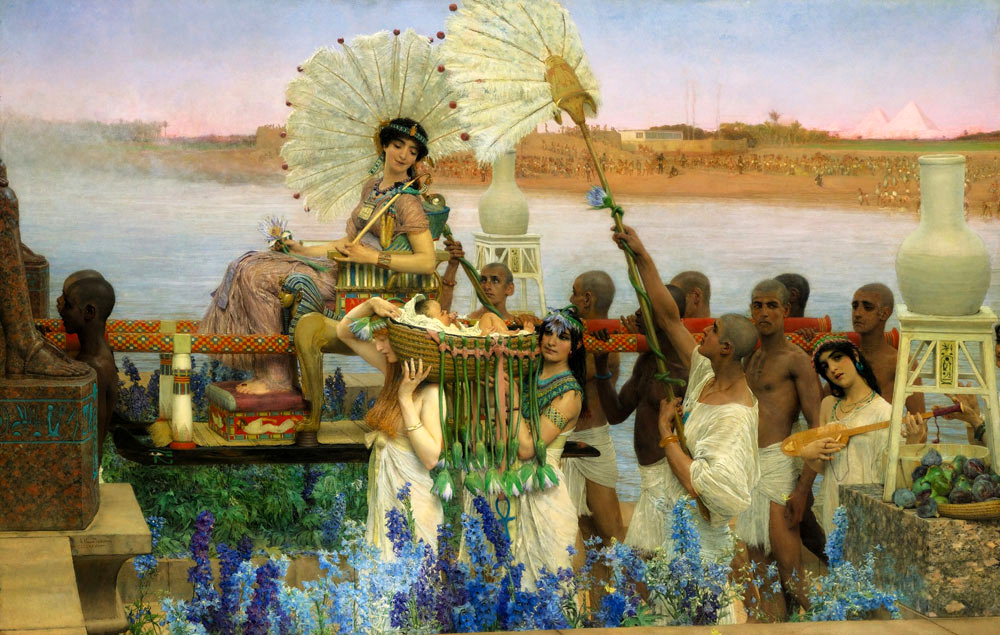
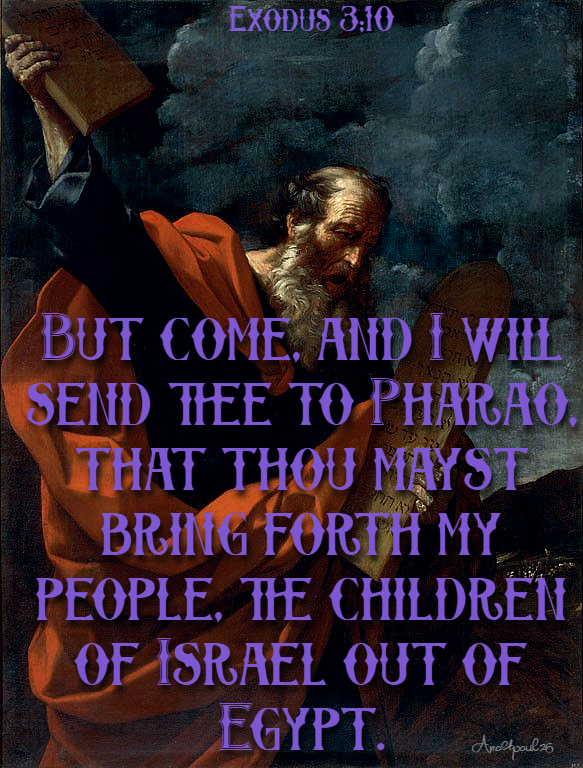
Moses (“saved from the waters”) was a Hebrew liberator, law giver, and prophet. He belonged to the tribe of Levi and was born in Egypt (10th century B.C.), at a time when Pharaoh had ordered the killing of all male Hebrew children. Exposed in the waters of the Nile, he was rescued by Pharaoh’s daughter and educated at court.
Having killed an Egyptian to save one of his brethren from ill-treatment, he fled to Madian where he married Jethro’s daughter. God appeared to him in the burning bush and commanded him to go and deliver his people, with the help of his brother Aaron, but Pharaoh refused to let the Israelites go, and the terrible chastisements known as the Ten Plagues of Egypt only hardened his heart. However the last one, the death of every first born, forced him to yield, and the Hebrews departed, after celebrating the first Pasch.
The Finding of Moses
Then began, under the leadership of Moses, a long journey in the direction of the Promised Land. Moses himself is excluded from it because of his lack of confidence at the “Waters of Contradiction”. The Israelites finally reached the banks of the Jordan, after defeating the Amorrhites and Moabites, and Moses died on Mount Nebo after pronouncing the three discourses preserved in Deuteronomy, his position being inherited by Joshua. He was buried in the valley of Moab, but “no man knows his sepulchre”.
Our Morning Offering – 4 September – “Month of the Seven Sorrows of Mary” and Mary’s Saturday
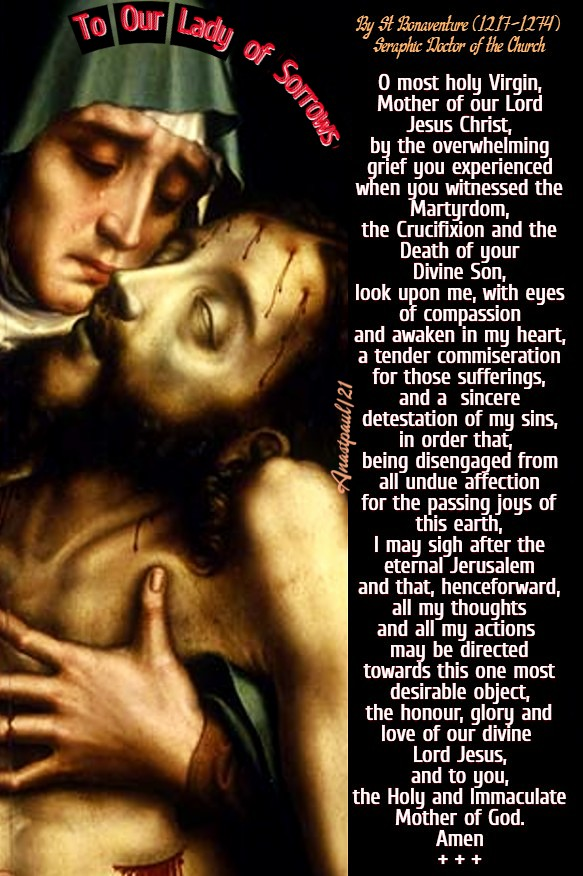
To Our Lady of Sorrows By St Bonaventure (1217-1274) Seraphic Doctor of the Church
O most holy Virgin, Mother of our Lord Jesus Christ, by the overwhelming grief you experienced when you witnessed the Martyrdom, the Crucifixion and the Death, of your Divine Son, look upon me, with eyes of compassion and awaken in my heart, a tender commiseration for those sufferings and a sincere detestation of my sins, in order that, being disengaged from all undue affection for the passing joys of this earth, I may sigh after the eternal Jerusalem and that, henceforward, all my thoughts and all my actions may be directed towards this one most desirable object, the honour, glory and love of our divine Lord Jesus, and to you, the Holy and Immaculate Mother of God. Amen
One Minute Reflection – 4 September – “Month of the Seven Sorrows of the Blessed Virgin Mary” – Readings: Ps 83:10-11, Ps 83:2-3, Gal 5:16-24, Matt 6:24-33
But seek first the Kingdom of God and His justice, and all these things shall be given you besides.
Matt 6:24-33
REFLECTION – See what benefits Jesus Christ promises and how beneficial his commands are to us since they set us free from such great evils. The misery caused you by riches, he says to us, is not just that of arming thieves against you and filling your mind with impenetrable gloom. The great wound they inflict is to snatch you away from the blessed service of Jesus Christ to make you slaves of a piece of senseless, soulless metal.
“You cannot serve both God and money.” My brethren, let us shudder at the thought that we are forcing Jesus Christ to speak to us about money as though it were an alternative divinity to God ! But surely, you will say, didn't the patriarchs of old find it possible to serve God and money at the same time? Certainly not. But how, then, was it that Abraham and Job set such store by their wealth? I reply that there's no question here of invoking those who possessed riches but those who were possessed by them. Job was a rich man; he made use of money without being its slave; he was its master, not its worshipper. He considered his wealth as though it had been another's and saw himself as its administrator, not its proprietor. That was why he was not the least bothered when he lost it.
St John Chrysostom
PRAYER – Holy God, Almighty Father, You taught us to honour Your holy day and the day of rest. In Your divine Son, Whom You gave to us as our brother and glorified by His Resurrection, You showed us the way to our eternal life. As His glorified body shines anew, we rejoice in our future life with Him and embrace His day as our own, each Sunday renewing His Resurrection and each day of our lives. We run forward to sing Your glory together with our Holy Mother, the Blessed Virgin and most Sorrowful Mary, to eternity, through our Lord Jesus Christ, with the Holy Spirit, God forever, amen.
But of the fruit of the Spirit is: charity, joy, peace, patience, kindness, goodness, long-suffering, mildness, faith, modesty, continency, chastity. Against such things there is no law. And they who belong to Christ have crucified their flesh with its passions and desires.
Gal 5:16-24
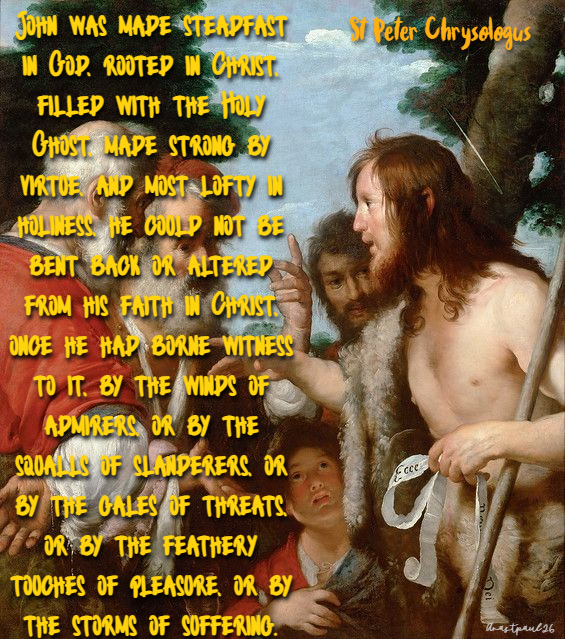
John was made steadfast in God, rooted in Christ, filled with the Holy Ghost, made strong by virtue, and most lofty in holiness, he could not be bent back or altered from his faith in Christ, once he had borne witness to it, by the winds of admirers, or by the squalls of slanderers, or by the gales of threats, or by the feathery touches of pleasure, or by the storms of suffering.
St Peter Chrysologus
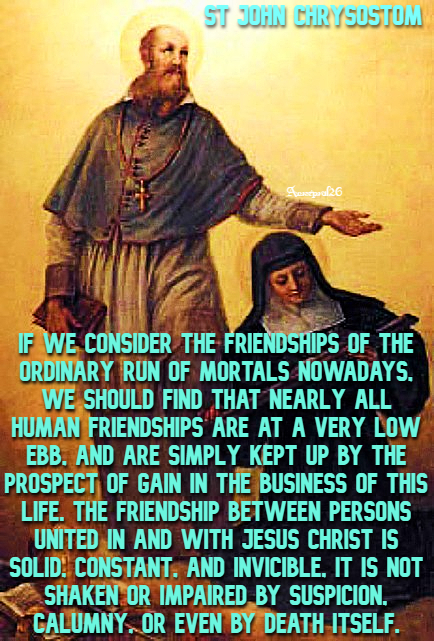
If we consider the friendships of the ordinary run of mortals nowadays, we should find that nearly all human friendships are at a very low ebb, and are simply kept up by the prospect of gain in the business of this life. The friendship between persons united in and with Jesus Christ is solid, constant, and invicible, it is not shaken or impaired by suspicion, calumny, or even by death itself.
St John Chrysostom
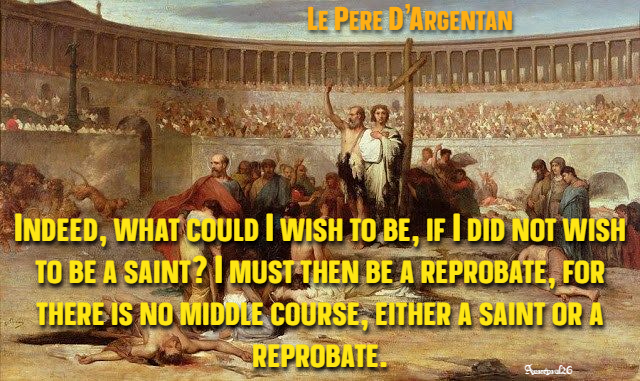
Indeed, what could I wish to be, if I did not wish to be a saint? I must then be a reprobate, for there is no middle course, either a saint or a reprobate.
LePere D’Argentan
And how many saints, who were men like ourselves, and subject to the same infirmities, have been happier, more contented in their poverty, than the rich worldlings with all their treasures? How many of them have felt a sweeter consolation in the midst of scorn and contempt, than the most ambitious have felt, even when loaded with honours? And how many have felt a holier joy, even when carrying a heavy cross, than the sensualists in the midst of their pleasures.
LePere D’Argentan
How can a truly virtuous man fail in anything? In what situation, will he not be powerful, in what state of poverty, will he not be rich, in what obscurity, will he not be brilliant, in what inaction, will he not be industrious, in what infirmity, will he not be vigorous, in what weakness, will he not be strong, in what solitude, will he not be accompanied? for he will have for company the hope of a happy eternity, for clothing, he will have the grace of the Most High, for ornament, the promises of a halo of glory! Let us recollect that the Saints were not of a more excellent nature than ours, but were more orderly and regular, that they were not exempt from sins, but that they took pains to correct their faults.
St Ambrose
Love Him, then; keep Him as a friend. He will not leave you as others do, or let you suffer lasting death. Sometime, whether you will or not, you will have to part with everything. Cling, therefore, to Jesus in life and death; trust yourself to the glory of Him who alone can help you when all others fail. You will quickly be deceived if you look only to the outward appearance of men, and you will often be disappointed if you seek comfort and gain in them. If, however, you seek Jesus in all things, you will surely find Him. Likewise, if you seek yourself, you will find yourself — to your own ruin. For the man who does not seek Jesus does himself much greater harm than the whole world and all his enemies could ever do.
Letter to the Friends of the Cross by St Louis de Montfort
[B. Let him renounce himself]
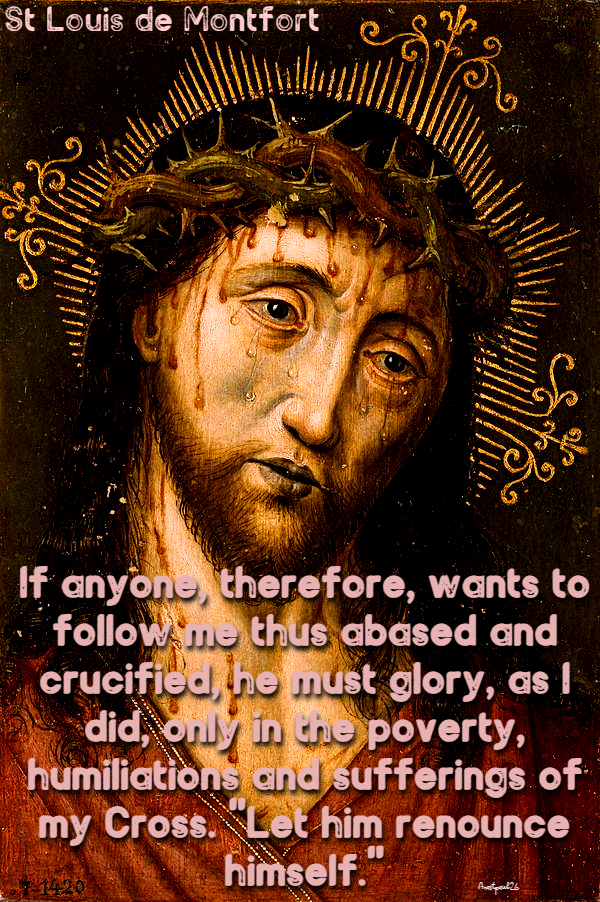
If anyone, therefore, wants to follow me thus abased and crucified, he must glory, as I did, only in the poverty, humiliations and sufferings of my Cross. “Let him renounce himself.”
Excluded, then, from the company of the Friends of the Cross are those who take pride in their sufferings; the worldly-wise, the intellectuals and the sceptics who are attached to their own ideas and puffed up with their own talents.
Away from you those endless talkers who make a great show but produce nothing but vanity. Away from you those so-called devout Catholics who in their pride display the self-sufficiency of proud Lucifer wherever they go, saying, “I am not like the rest of men;” who cannot endure being blamed without making some excuse, being attacked without answering back, being humbled without exalting themselves.
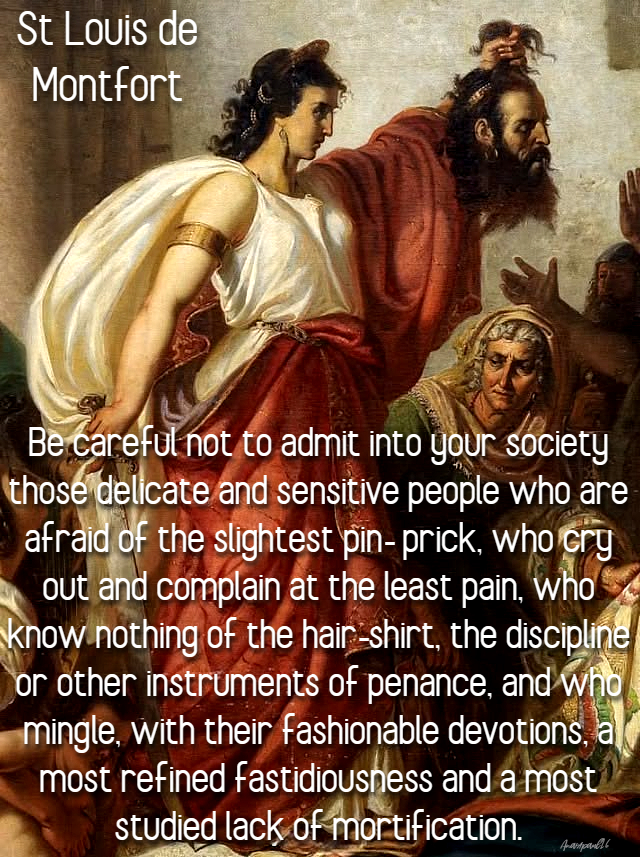
Be careful not to admit into your society those delicate and sensitive people who are afraid of the slightest pin- prick, who cry out and complain at the least pain, who know nothing of the hair-shirt, the discipline or other instruments of penance, and who mingle, with their fashionable devotions, a most refined fastidiousness and a most studied lack of mortification.
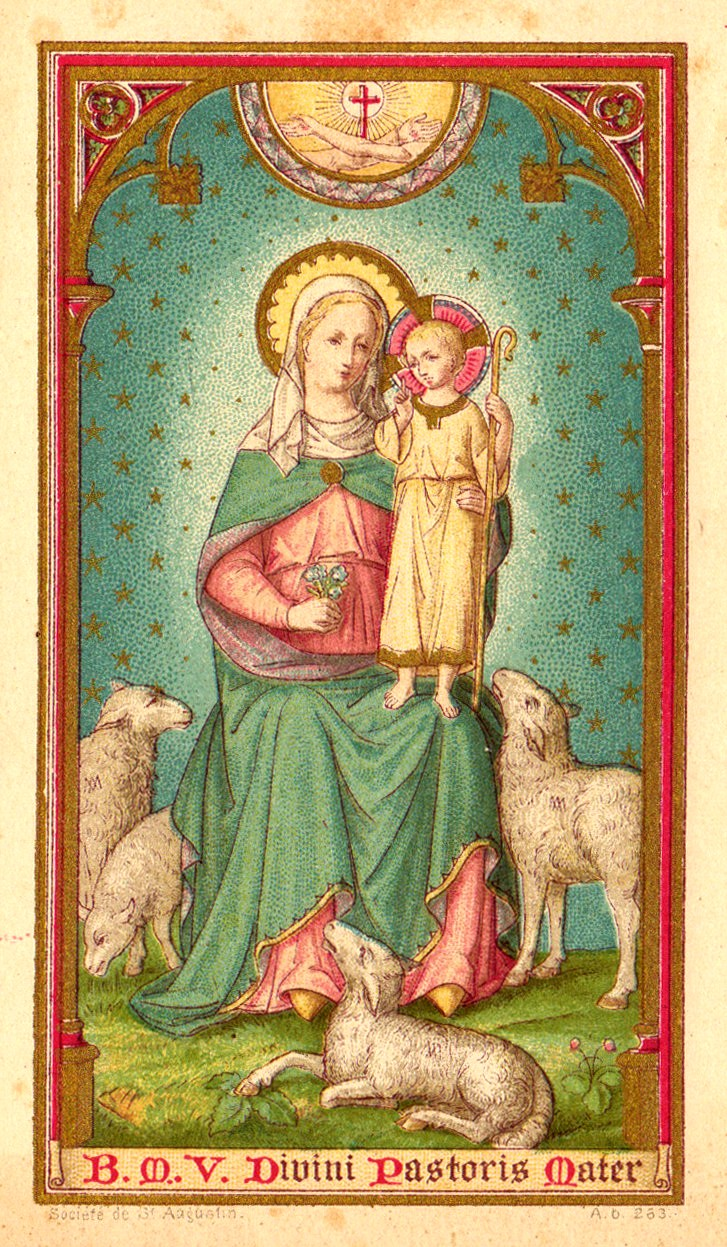
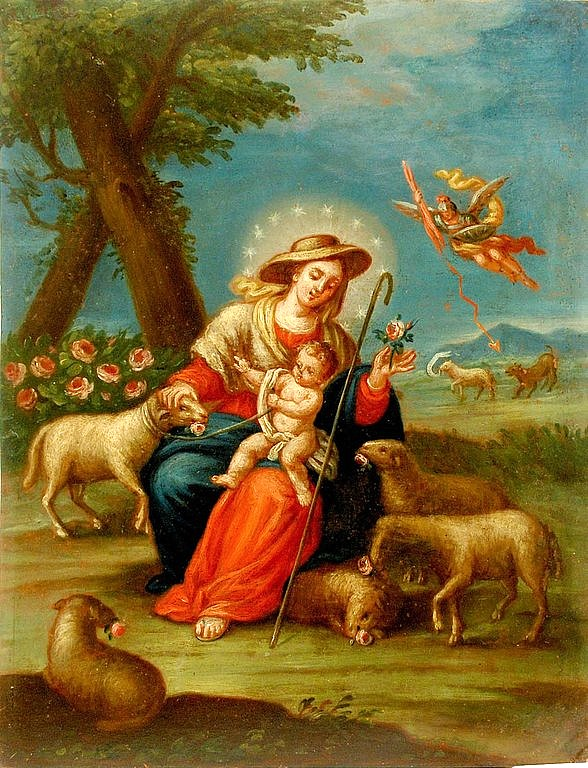
Notre Dame de Brebières / Mother of the Divine Shepherd, France (also known as Le Divine Bergère – The Divine Shepherdess) – 3 September:
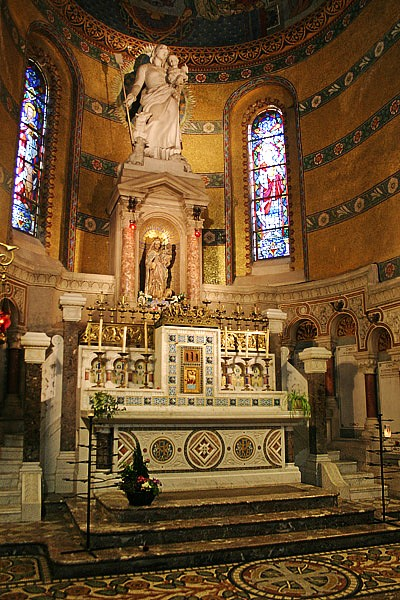
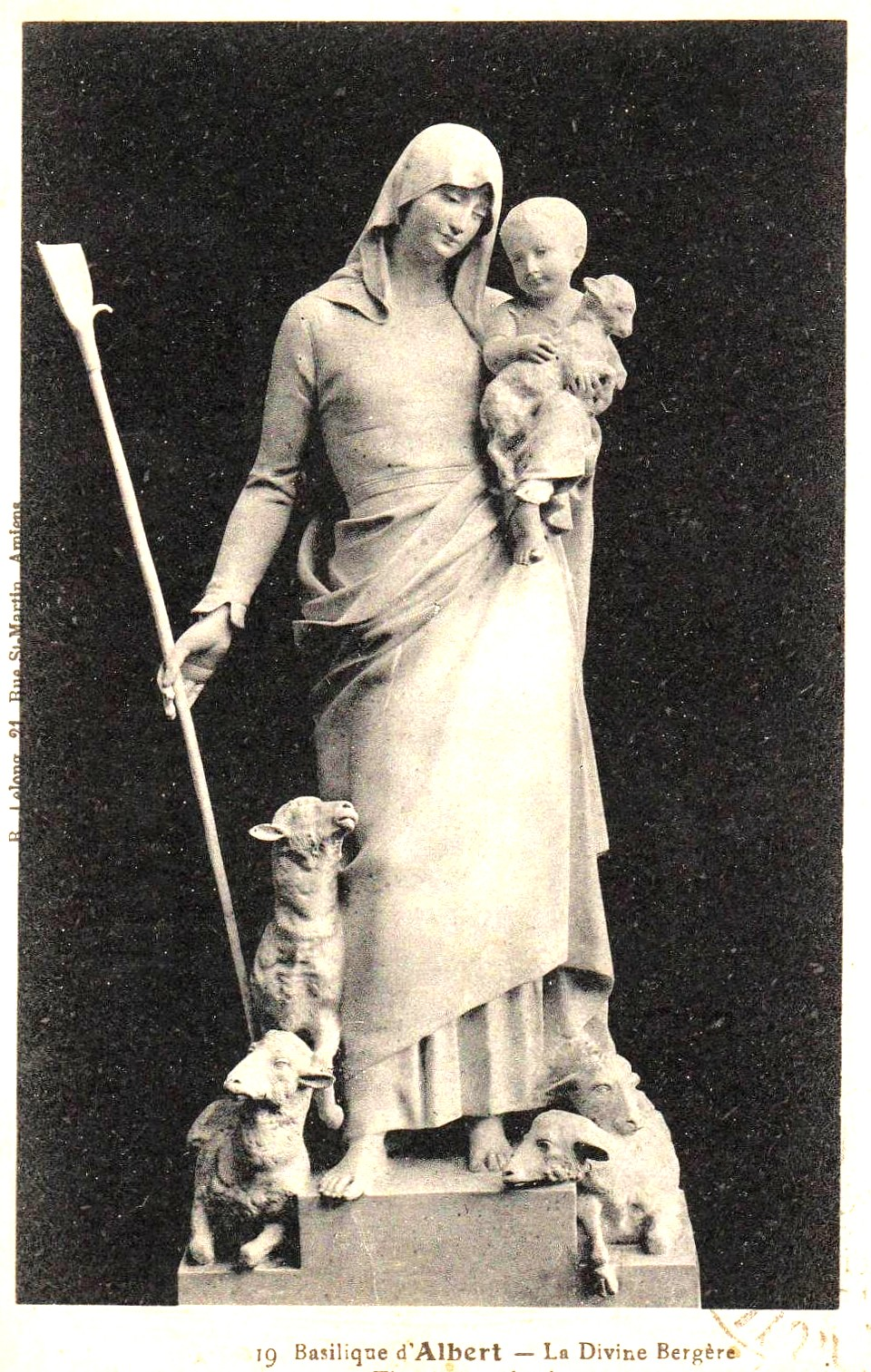
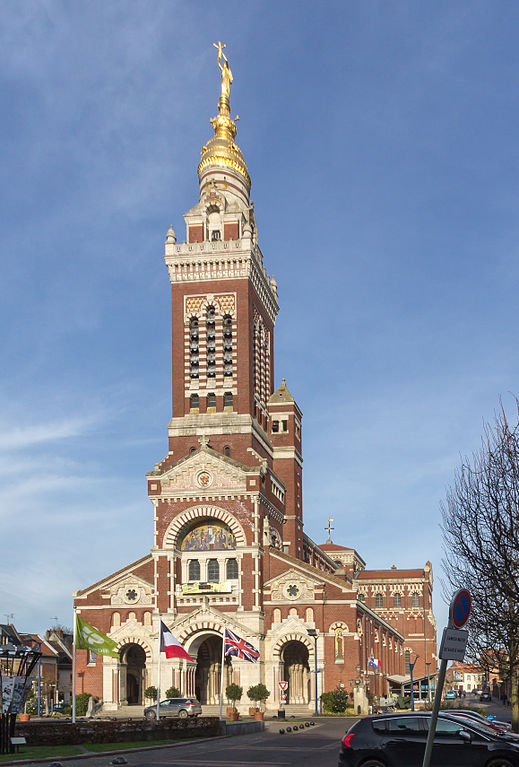
Our Lady, Mother of the Divine Shepherd, or Notre Dame de Brebières, is located in the small town of Albert in the Diocese of Amiens, France. At one time, probably sometime in the 12th century and according to local tradition, a shepherd was grazing his sheep at Brebières when he observed that many of the animals were staying in the same area to eat, ripping the grass out by the roots. It must have seemed very odd to the shepherd, who decided that the sheep were trying to uncover something, so he started to dig in the very spot himself. In a short time he uncovered a Statue of the Blessed Virgin sculpted from a single piece of solid stone.
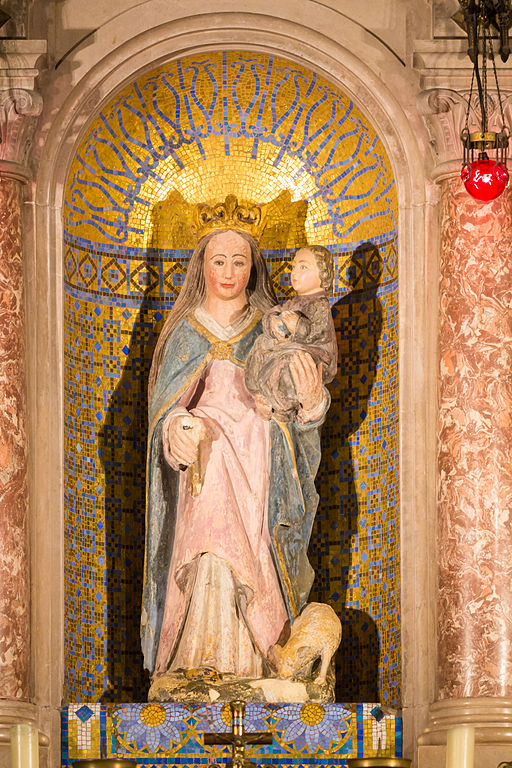
The Statue was fairly large, nearly 1,22 metres tall and represented the Blessed Mother holding the Divine Child in her arm. There was a sheep depicted quietly reclining at Mary’s feet. As has happened so often throughout history, the finding of the Statue increased the enthusiasm and affection of the local populace toward the Mother of God. A small Chapel was built at the site to honour the Statue and receive the pilgrims who had already begun coming to Albert to visit the Holy Mother.
Saint Colette can be credited for helping to spread the fame of Our Lady, Mother of the Divine Shepherd. At age fourteen, she was somewhat short and had a delicate constitution. Seeking a remedy through the favour of the Blessed Virgin, Saint Colette prayed to Our Lady of Brebières She not only obtained vigour and good health, she also found that several inches were miraculously added to her height!
In 1637 the Sanctuary was partially burned and IN 1727 the miraculous image was moved to the Parish Church of Albert. During the French Revolution the Church was made into a pagan temple to the goddess of Reason, while the image of the Mother of God was hidden until 1802 when the horrors of the Terror during this supposed time of reason subsided.
This feast is celebrated in a number of places and by certain religious communities and congregations: Capuchins, Marists and others, on widely different dates. It is a special festival of the Shrine of Our Lady of Brebières a very old Sanctuary near Albert in France, formerly much resorted to by the shepherds.
The pilgrimage here was revived after 1870 and a beautiful Basilica was completed in 1887. The Statue was crowned in 1901 and miraculously survived the devastation of both world wars. The Basilica has again been rebuilt.
The collect of the Mass prays that by following the Good Shepherd on earth, we may reach the pastures of eternal life with Mary in heaven.
St Chariton St Chrodegang of Séez St Frugentius the Martyr Bl Guala of Brescia St Hereswitha Bl Herman of Heidelberg St Macanisius St Mansuetus of Toul St Marinus (Died c 366) St Martiniano of Como St Natalis of Casale
St Phoebe (1st Century) Disciple of St Paul – Deaconess at Cenchrese, Matron and possibly a widow. She is mentioned by the Apostle St Paul in his Epistle to the Romans, verses 16:1-2.
St Regulus of Rheims St Remaclus St Sandila of Cordoba St Vitalian of Capua (Died 699) Bishop — Martyrs of Aquileia – 4 saints: Four young women, variously sisters and cousins, who were born to the nobility, the daughters of the pagans Valentinianus of Aquileia and Valentius of Aquileia. Each woman converted and made private vows, dedicating themselves to God. They were arrested, tortured and martyred by order of Valentius for becoming a Christian. We know little else but their names – Dorothy, Erasma, Euphemia and Thecla. They were martyred by beheaded in the 1st century in Aquileia, Italy and their bodies were thrown into a nearby river.
Martyrs of Nagasaki – 6 beati: A group of priests and clerics, native and foreign, murdered together in the anti-Christian persecutions in Japan. They were scalded in boiling water and then burned alive on 3 September 1632 in Nishizaka, Nagasaki, Japan and Beatified on 7 May 1867 by Pope Pius IX.
• Anthony Ishida • Bartolomé Gutiérrez Rodríguez • Francisco Terrero de Ortega Pérez • Gabriel Tarazona Rodríguez • Jerome of the Cross de Torres • Vicente Simões de Carvalho
Martyrs of Seoul – 6 saints: A group of Christian lay people martyred together in the persecutions in Korea. • Agnes Kim Hyo-Ch’u • Barbara Kwon Hui • Barbara Yi Chong-hui • Ioannes Pak Hu-jae • Maria Pak K’Un-agi • Maria Yi Yon-hui
Martyred in the Spanish Civil War: • Blessed Andrea Calle González • Blessed Concepción Pérez Giral • Blessed Dolores Úrsula Caro Martín • Blessed Joaquim Balcells Bosch • Blessed Pius Salvans Corominas
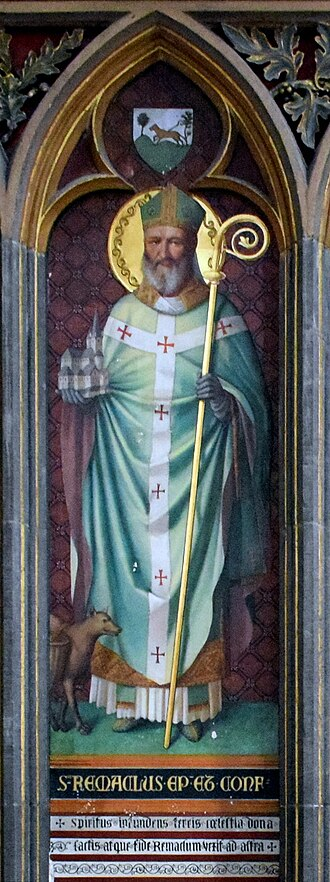
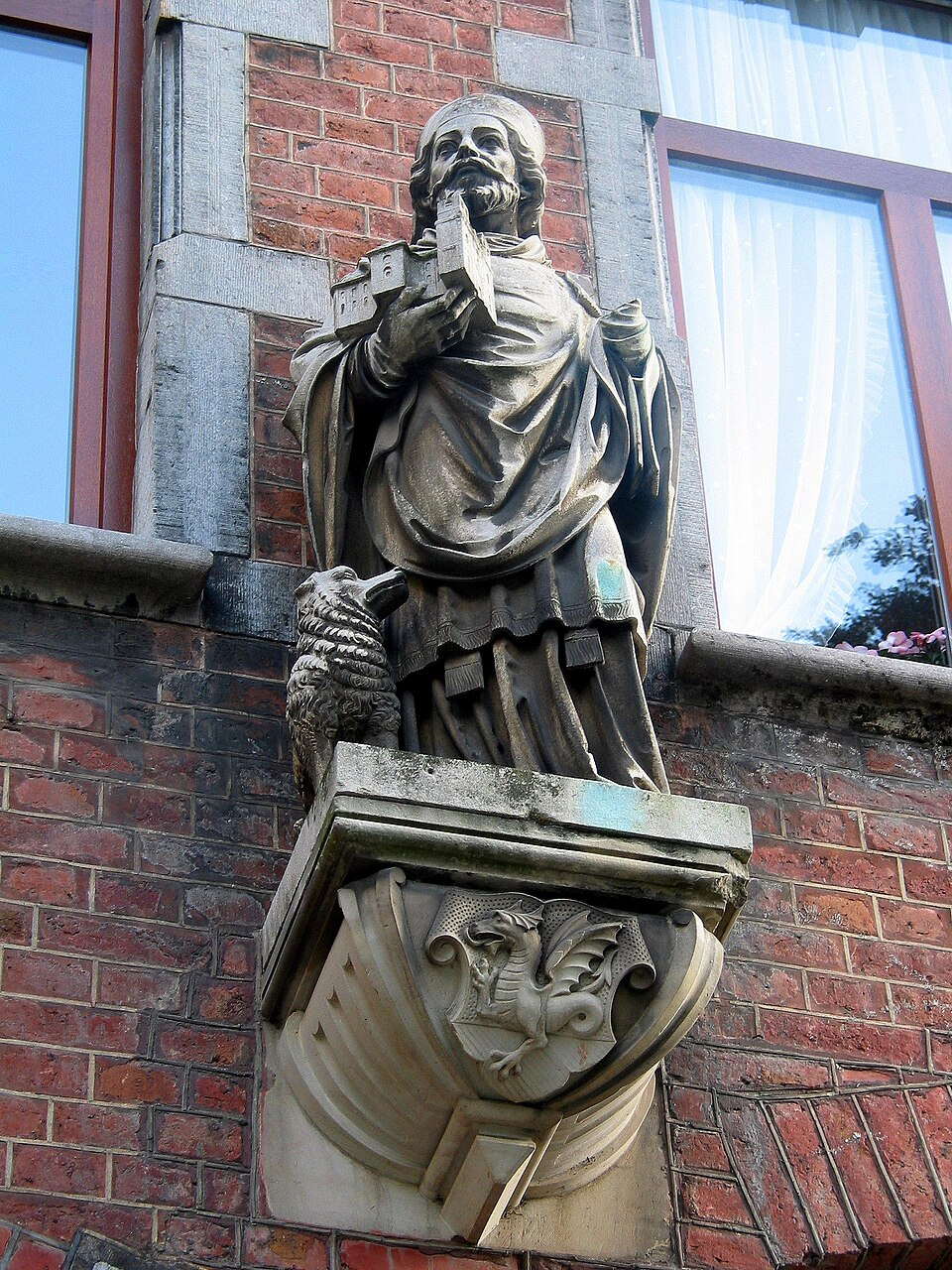
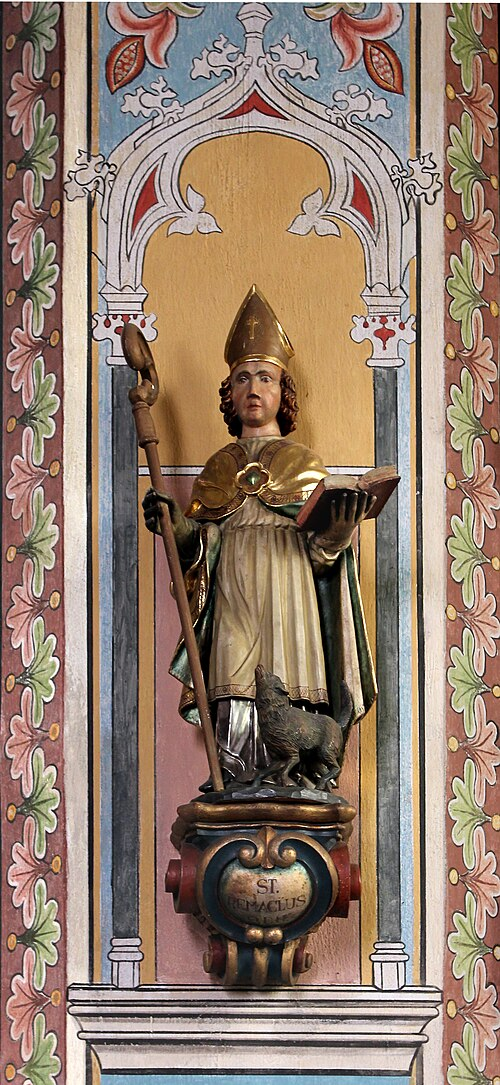
Saint Remaclus, also known asRemaclus von Stablo, Remacle, Remaculus, Rimagilus, was a Benedictine monk, priest, and the first abbot at Solignac Abbey in France, a position to which he was appointed by Saint Eligius. Th leader of a busy life, he was born in the early 7th century, in Aquitaine, France, he came from nobility. Remaclus grew up in and around the royal court of Aquitaine, and studied under Saint Sulpicius of Bourges.
He became an advisor to King Sigebert II of Austrasia and convinced the king to found the double abbey of Stavelot, Belgium, and Malmedy, Ardennes, France, in 648. Saint Remaclus served as its first abbot. He then became missionary bishop of Maastricht, Netherlands from 652 to 663, a diocese frequently out of touch with the Church. Also a diocese which had murdered some of its previous bishops. He worked to spread monasticism in the region.
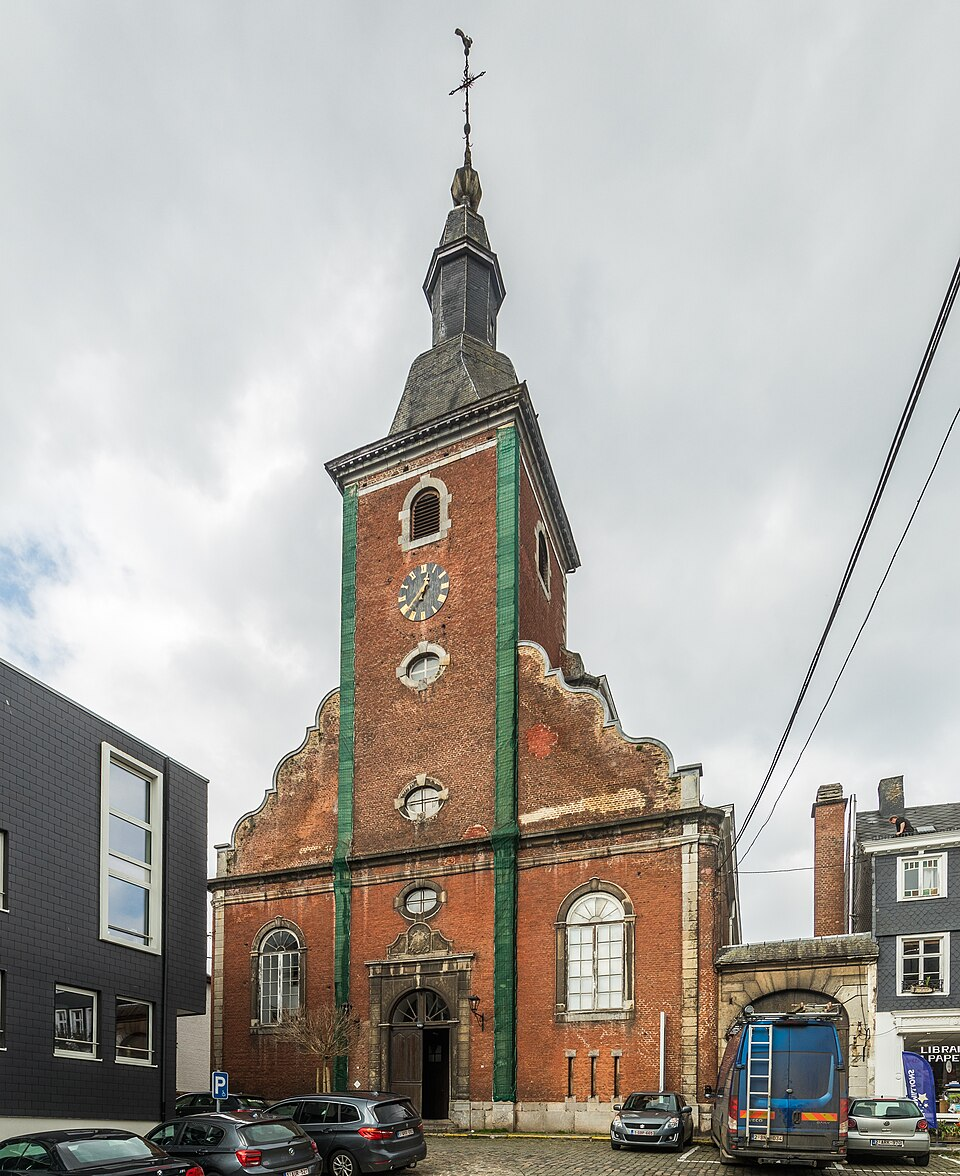
He was friends with Saint Hadelin and the spiritual father of Saint Trond, Saint Babolen, Saint Theodard of Maastricht, and Saint Lambert of Maestricht. In his later years he retired to the abbey at Stavelot to spend his final days as a prayerful monk, dying 663 of natural causes. His relics lie in St. Sebastian Church in Stavelot.
Church of St. Sebastian in Stavelot
He is often depicted with a wolf because a wolf able to drive away the devil accompanied him. With his staff, the saint discovered springs which possessed healing waters.
Our Morning Offering – 3 September – “Month of the Seven Sorrows of Mary” – The Memorial of St Pope Pius X (1835-1914) (Pontiff 1903-1914)
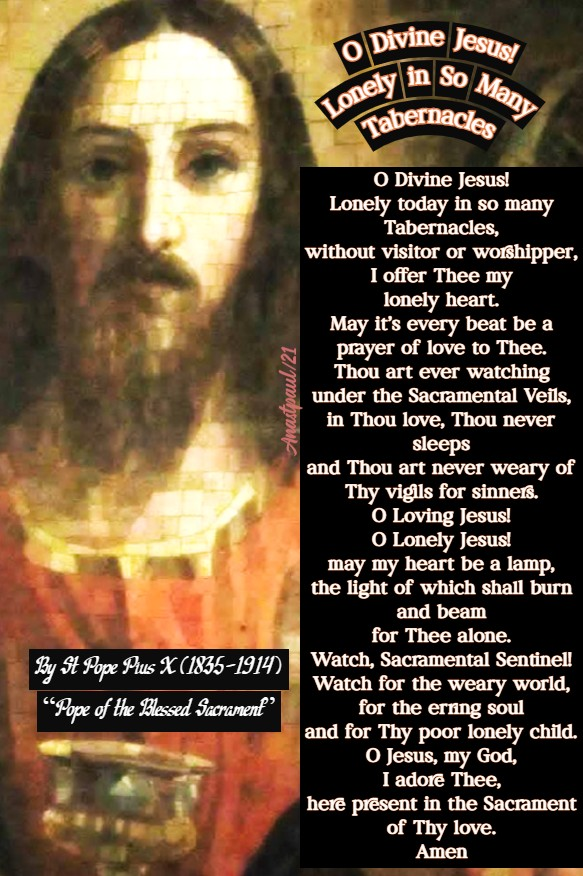
O Divine Jesus! Lonely in So Many Tabernacles By St Pope Pius X (1835-1914) “Pope of the Blessed Sacrament”
O Divine Jesus! Lonely today in so many Tabernacles, without visitor or worshipper, I offer Thee my lonely heart. May it’s every beat be a prayer of love to Thee. Thou art ever watching under the Sacramental Veils, in Thou love, Thou never sleeps and Thou art never weary of Thy vigils for sinners. O Loving Jesus! O Lonely Jesus! may my heart be a lamp, the light of which shall burn and beam for Thee alone. Watch, Sacramental Sentinel! Watch for the weary world, for the erring soul and for Thy poor lonely child. O Jesus, my God, I adore Thee, here present in the Sacrament of Thy love. Amen
Indulgences: 100 days each time before the Tabernacle 300 days each time before the Blessed Sacrament Exposed (St Pope Pius X – 3 July 1908) Prayers to the Sacred Heart 15th Ed 1936
One Minute Reflection – 3 September – “Month of the Seven Sorrows of Mary” – Readings: Ps 88:20-22, Ps 88:2, 1 Thess. 2:2-8, John 21:15-17
At that time, Jesus said to Simon Peter, Simon, son of John, do you love Me more than these do? He said to Him, Yes, Lord, You know that I love You. He said to him, Feed My lambs.
John 21:15-17
REFLECTION – The Lord asks Peter what he already knew, and that not just once but a second and a third time, whether Peter loved him. And each time he has the same answer, that he is loved, while just as often he gives Peter the same charge to feed His sheep. To the threefold denial there is now appended a threefold confession of love. His tongue is not to yield a feebler service to love than it did to fear, and the testimony of his word must be just as open in the presence of life as it was before the threat of death. If it was the sign of fear to deny the Shepherd then let it be the office of love to feed the Lord’s flock.
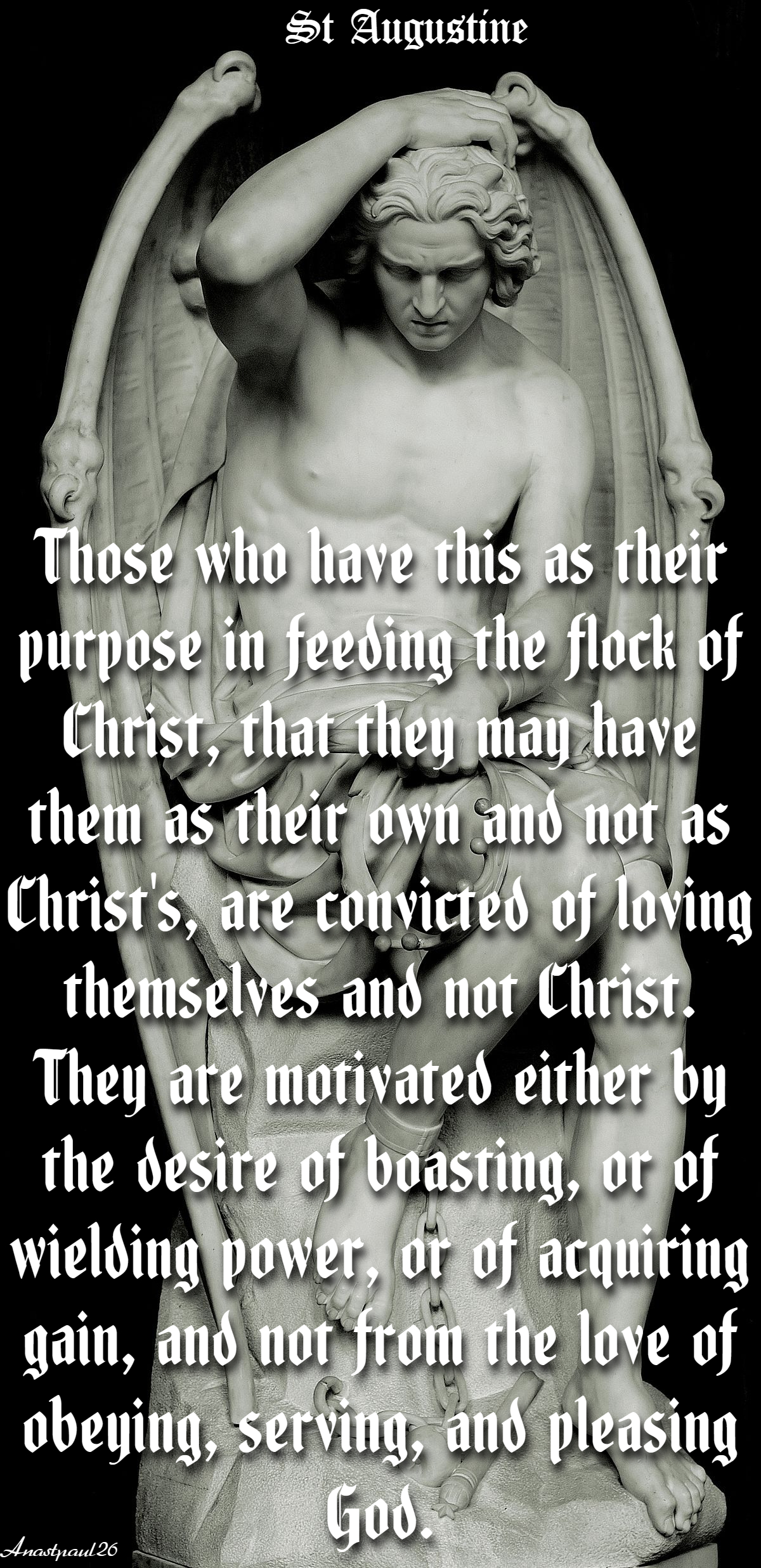
Those who have this as their purpose in feeding the flock of Christ, that they may have them as their own and not as Christ's, are convicted of loving themselves and not Christ. They are motivated either by the desire of boasting, or of wielding power, or of acquiring gain, and not from the love of obeying, serving, and pleasing God. The thrice repeated saying of Christ condemns those, therefore, of whom the apostle complains that they seek their own interests, not the things that are Jesus Christ's. For what do the words mean: "Do you love me? Feed my sheep"? It is as though he said, “If you love me, do not think of feeding yourself but feed my sheep as mine, and not as your own; seek my glory in them, and not your own; my dominion, and not yours; my gain, and not yours… So let us not love ourselves, but him; and in feeding his sheep, let us be seeking the things which are his, not the things which are our own.
St Augustine
PRAYER – God our Father, Your rule is a rule of love, Your providence is full of mercy for Your people. Through the intercession of Your |Angels and Saints and the Most Sorrowful Mother of Your Son, that we may be granted the spirit of wisdom and understanding in Your Word. Grant that by the light of the Your Word made flesh, we may know our eternal home and strive to attain eternal joy there with You. Through Jesus Christ our Lord, with the Holy Spirit, one God forever, amen.
Quote/s of the Day – 3 September – “Month of the Seven Sorrows of Mary”
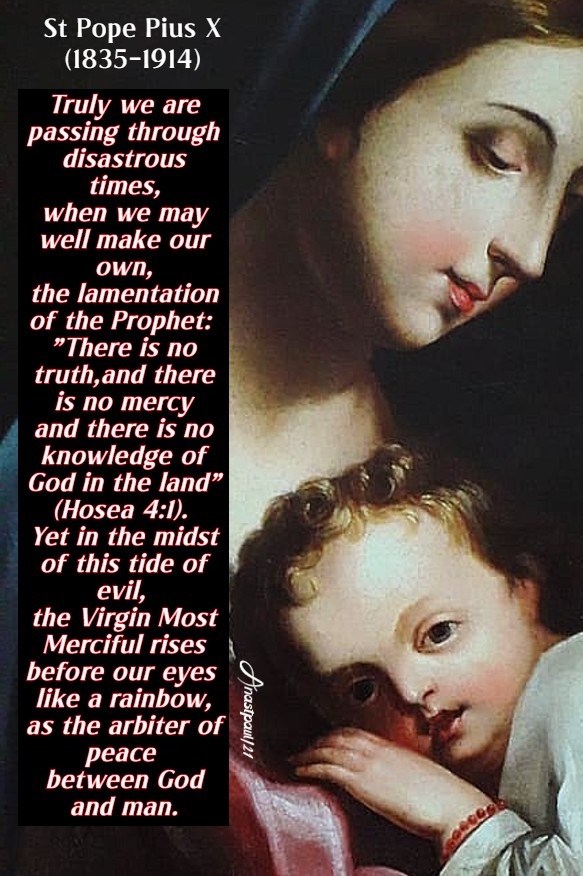
“Truly we are passing through disastrous times, when we may well make our own, the lamentation of the Prophet: “There is no truth,and there is no mercy and there is no knowledge of God in the land”. Yet in the midst of this tide of evil, the Virgin Most Merciful rises before our eyes like a rainbow, as the arbiter of peace between God and man.”
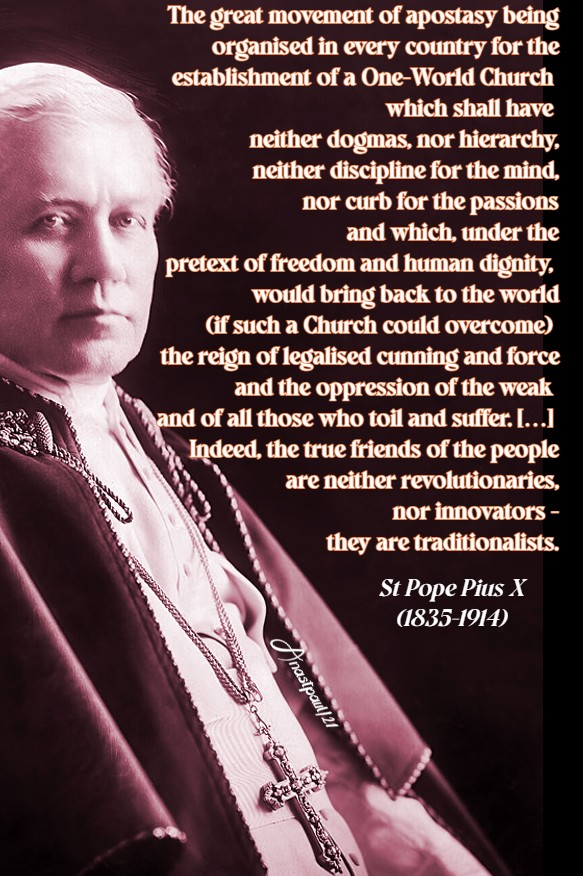
“…The great movement of apostasy being organised in every country for the establishment of a One-World Church which shall have neither dogmas, nor hierarchy, neither discipline for the mind, nor curb for the passions and which, under the pretext of freedom and human dignity, would bring back to the world (if such a Church could overcome) the reign of legalised cunning and force and the oppression of the weak and of all those who toil and suffer. […] Indeed, the true friends of the people are neither revolutionaries, nor innovators – they are traditionalists.”
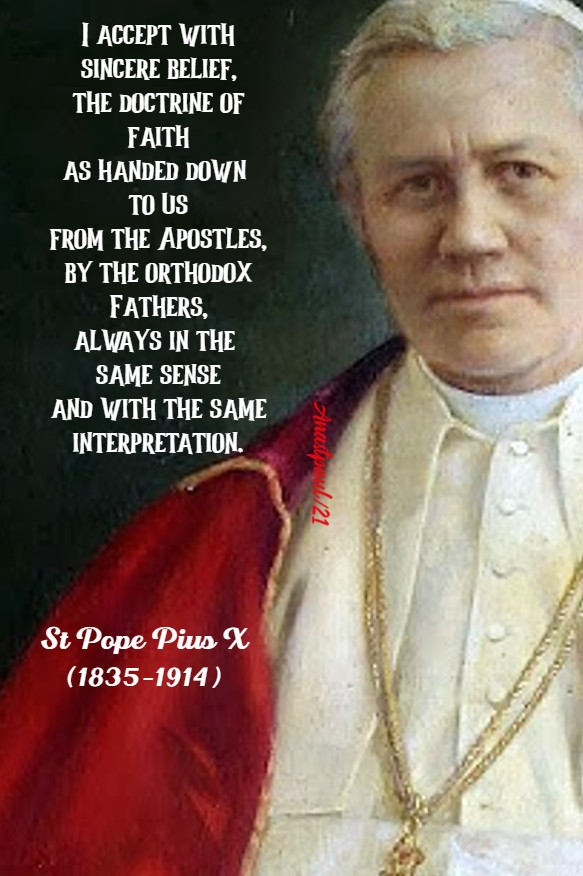
“I accept with sincere belief, the doctrine of faith as handed down to us from the Apostles, by the orthodox Fathers, always in the same sense and with the same interpretation.”
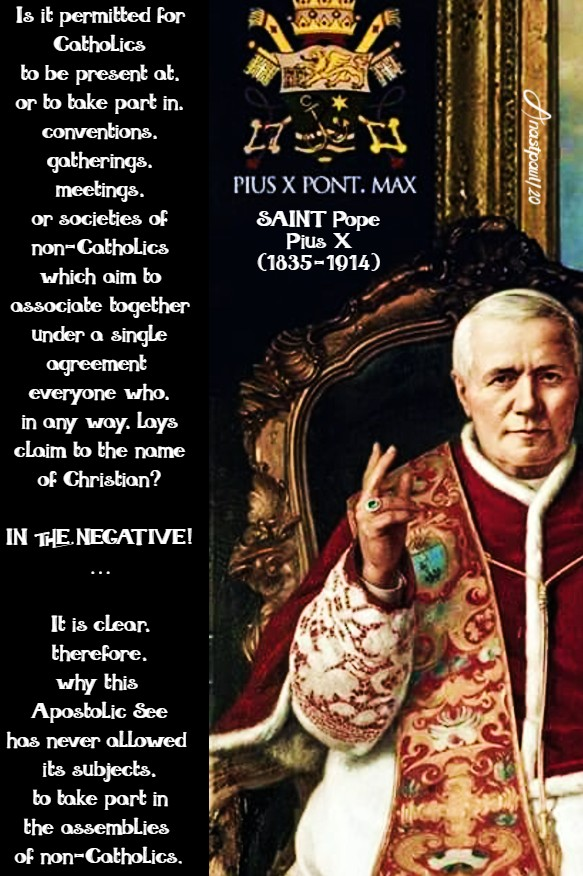
“Is it permitted for Catholics to be present at, or to take part in, conventions, gatherings, meetings, or societies of non-Catholics which aim to associate together under a single agreement everyone who, in any way, lays claim to the name of Christian? IN THE NEGATIVE! … It is clear, therefore, why this Apostolic See has never allowed its subjects, to take part in the assemblies of non-Catholics.”
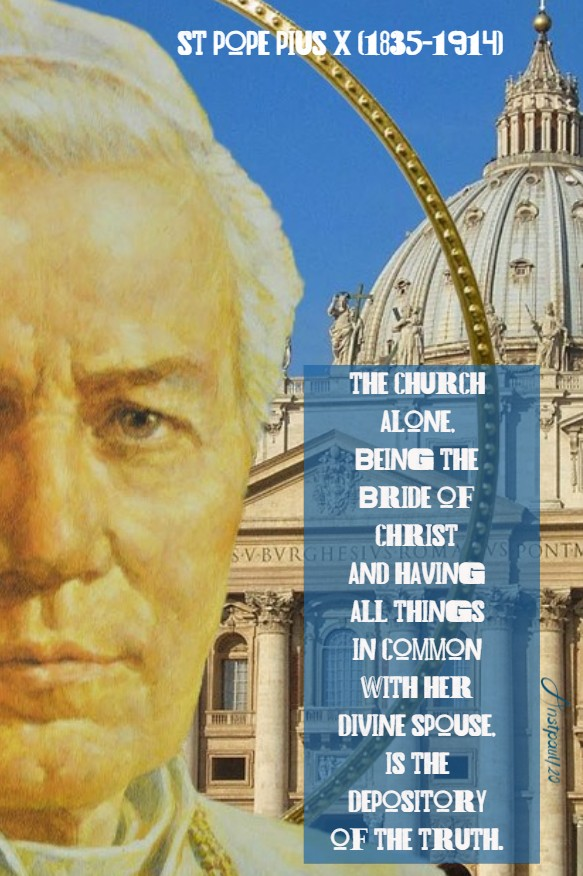
“The Church alone, being the Bride of Christ and having all things in common with her Divine Spouse, is the depository of the truth.”
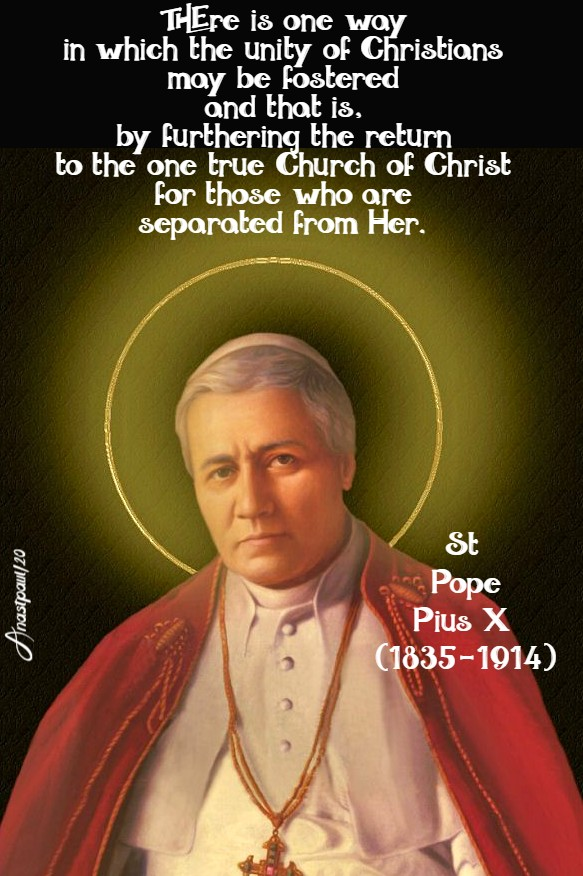
“There is one way in which the unity of Christians may be fostered and that is, by furthering the return to the one true Church of Christ for those who are separated from Her.”
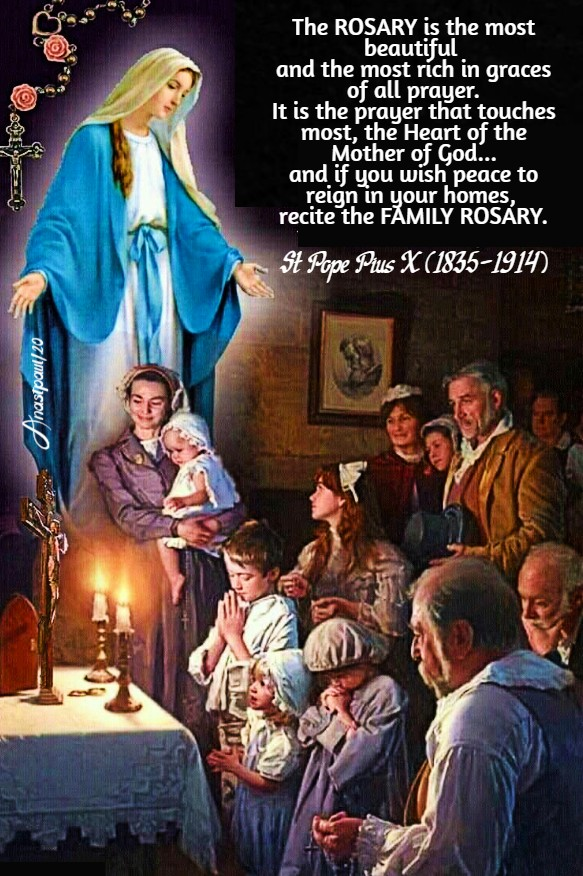
“The ROSARY is the most beautiful and the most rich in graces of all prayer. It is the prayer that touches most, the Heart of the Mother of God… and if you wish peace to reign in your homes, recite the FAMILY ROSARY.”
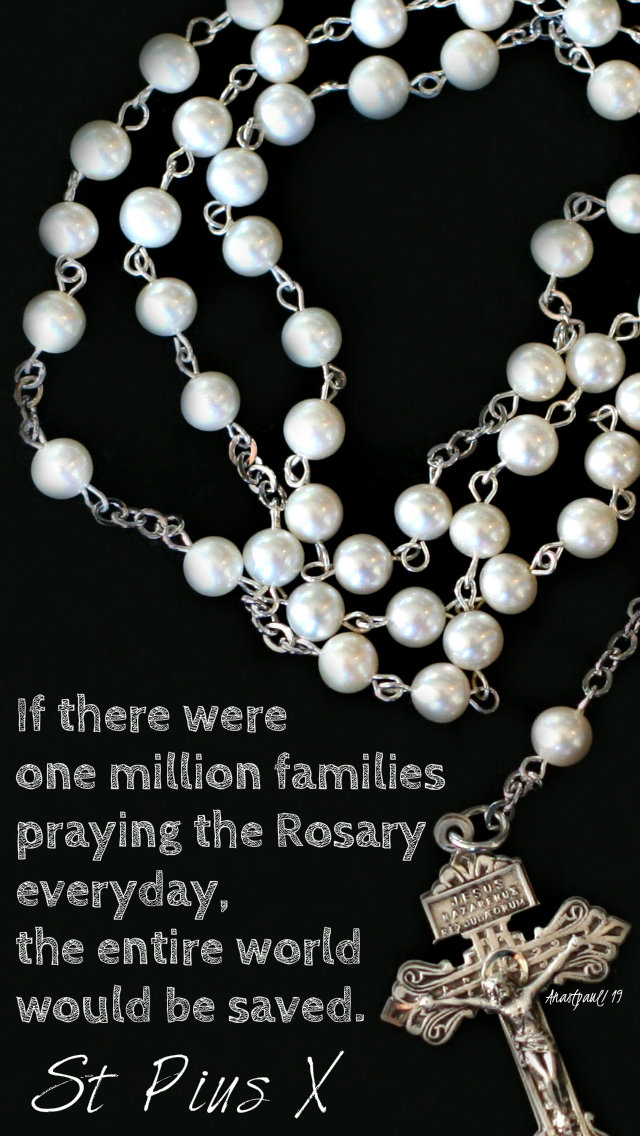
“If there were one million families praying the Rosary every day, the entire world would be saved.”
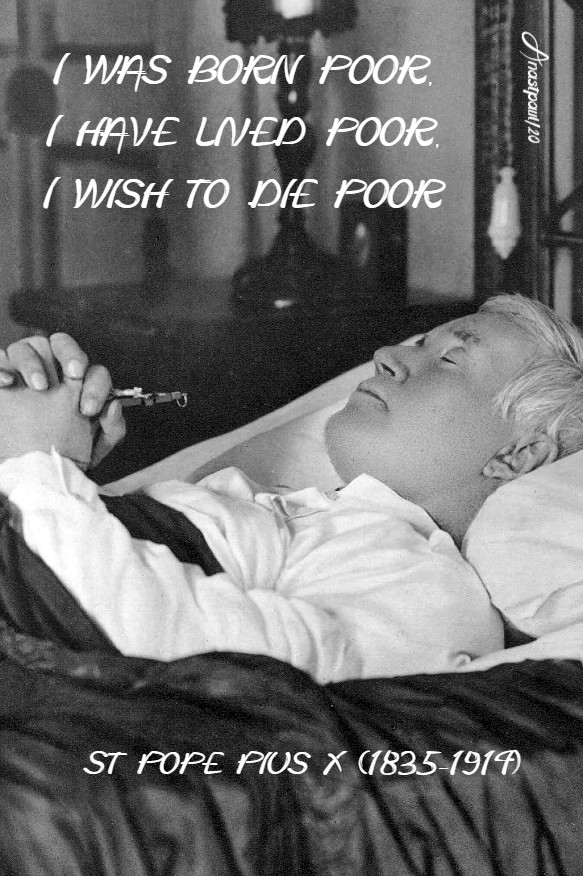
“I was born poor, I have lived poor, I wish to die poor.”
Letter to the Friends of the Cross by St Louis de Montfort
II. THE PRACTICES OF CHRISTIAN PERFECTION
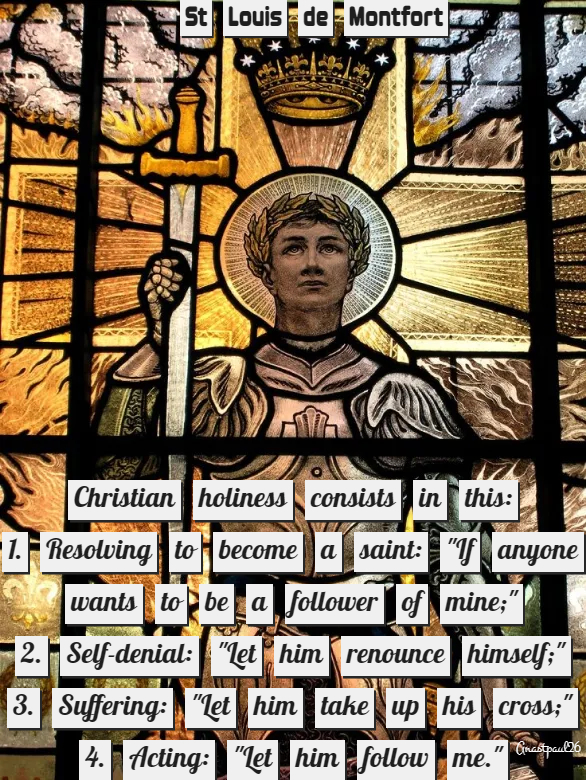
Christian holiness consists in this:
Resolving to become a saint: “If anyone wants to be a follower of mine;”
Self-denial: “Let him renounce himself;”
Suffering: “Let him take up his cross;”
Acting: “Let him follow
[A. If anyone wants to follow me]
“If anyone,” says our Lord, to point out the small number of chosen ones willing to conform themselves to Christ crucified by carrying their cross. Their number is so small that we would be dumbfounded if we knew it. It is so small that there is scarcely one in ten thousand, as has been revealed to several saints, including St. Simon Stylites, St. Basil, St. Ephrem and others. It is so small that, should it please God to gather them together, he would have to call them one by one as he did of old through his prophet, “You will be gathered one by one;” one from this country, one from that province.
“If anyone wants,” if anyone has a genuine desire, a determination, not prompted by nature, habit, self-love, self-interest, or human respect, but by the all-conquering grace of the Holy Spirit, which is not given to everyone. “It is not given to all men to know this mystery.”
In fact, only a few people have the knowledge of how to live out the mystery of the Cross in daily life. For a man to climb Mount Calvary and allow himself to be nailed to the cross with Christ in the midst of his own people, he must be courageous, heroic, resolute; one who is close to God, and treats with indifference the world and the devil, his own body and his own desires; one who is determined to leave all things, to undertake all things, and to suffer all things for Christ.
You must realise, my dear Friends of the Cross, that should there be anyone among you without this determination, he is only walking on one foot, flying with one wing. He is not worthy to be one of your company, since he is not worthy to be called a Friend of the Cross, which we must, like Jesus, love “with a generous mind and a willing heart.”
It only needs one half-hearted member to spoil the whole group, like a mangy sheep. If such a one has entered your fold through the evil door of the world, then in the name of Christ crucified drive him out as you would a wolf from the flock.
“If anyone wants to be a follower of mine.” If anyone wants to follow me who so humbled and emptied myself that I became a worm rather than a man; who came into the world only to embrace the Cross, to set it in my heart, to love it from my youth, to long for it all the days of my life, to carry it joyfully, preferring it to all the joys and delights that heaven and earth could offer, and not being content till I had died in its divine embrace.
Saint Margaret of Louvain, also known as known as Margaretula, Margaret la Fière, Margaret van Leuven, Margaret van Löwen, Margarita Lovania, Fiere Margriet.
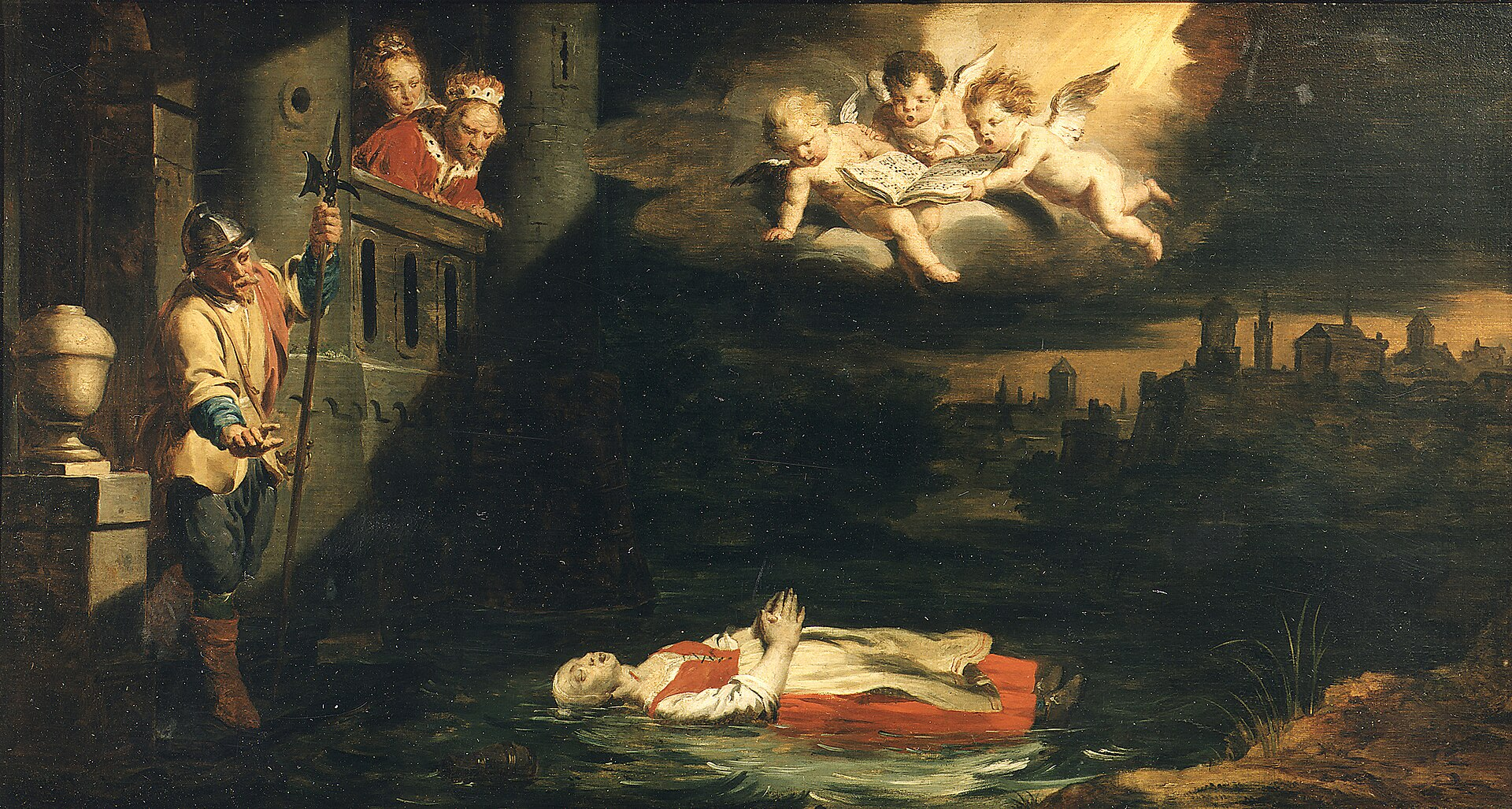
Death of Margaretha of Louvain by Pieter-Jozef Verhaghen
She was a maid born in 1207 to a poor family at Louvain, Brabant, Belgium. When a teenager, Margaret worked as a maid at the Sint Joris, an inn in Louvain owned by her uncle Aubert. Aubert and his wife sold the inn, planning to each enter the religious life. Margaret herself wanted to become a Cistercian nun.
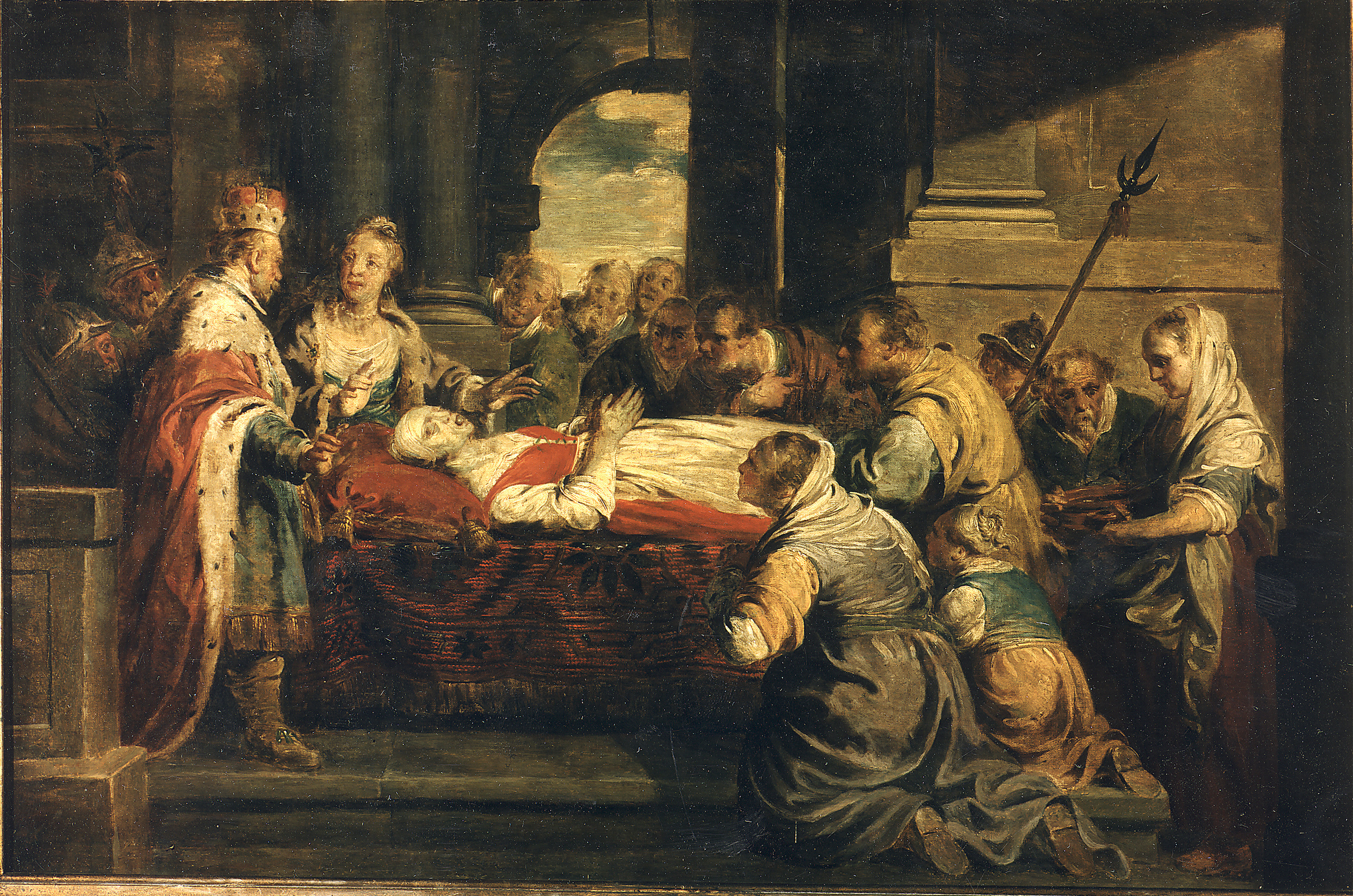
The body of the blessed Margaretha of Louvain laid out.
On their last night in the inn, thieves broke in and murdered the owners while Margaret was out. She came home as the killers were leaving, seeing what they had done. She ran and the thieves gave chase. They caught up with her along the banks of the Dyle River, where they murdered her by slitting her throat. They threw her corpse into the Dyle, but when a large fish pushed the body upstream and an angel hovered over the river, shining a light on the body, it was recovered and buried on the riverbank where she was killed. Miracles were reported at her gravesite, and her remains were then translated and reinterred in a chapel in the yard of Saint Peter’s Church in the centre of town, where many miracles occured.
In 1905, Pope Pius X confirmed her cultus. Her shrine was made of gilded copper and adorned with semi-precious stones and co-financed by gifts from parishioners and young maids who honor Marguerite la Fière as their patron saint.
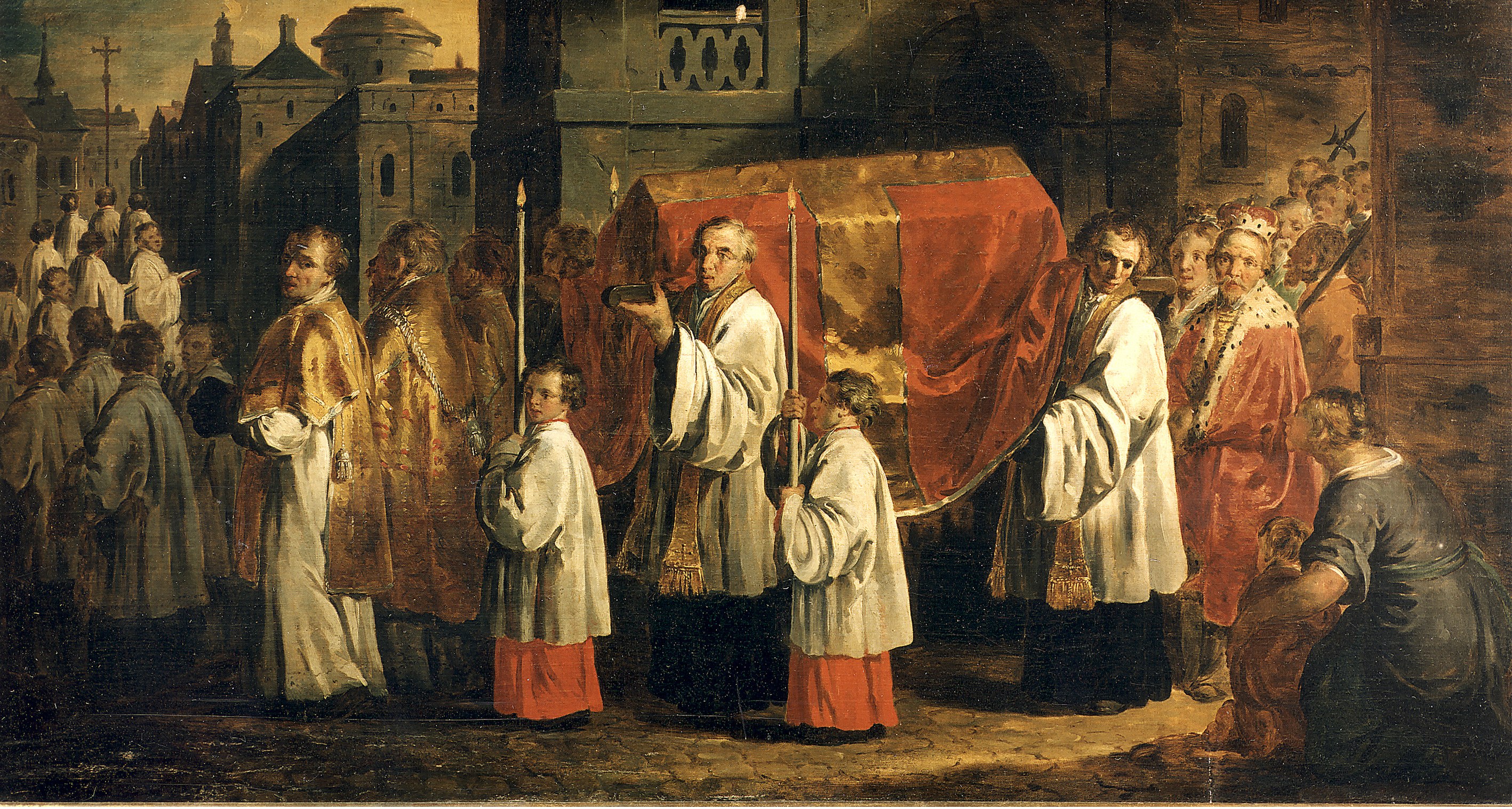
The funeral procession of Blessed Margaretha of Louvain




You must be logged in to post a comment.