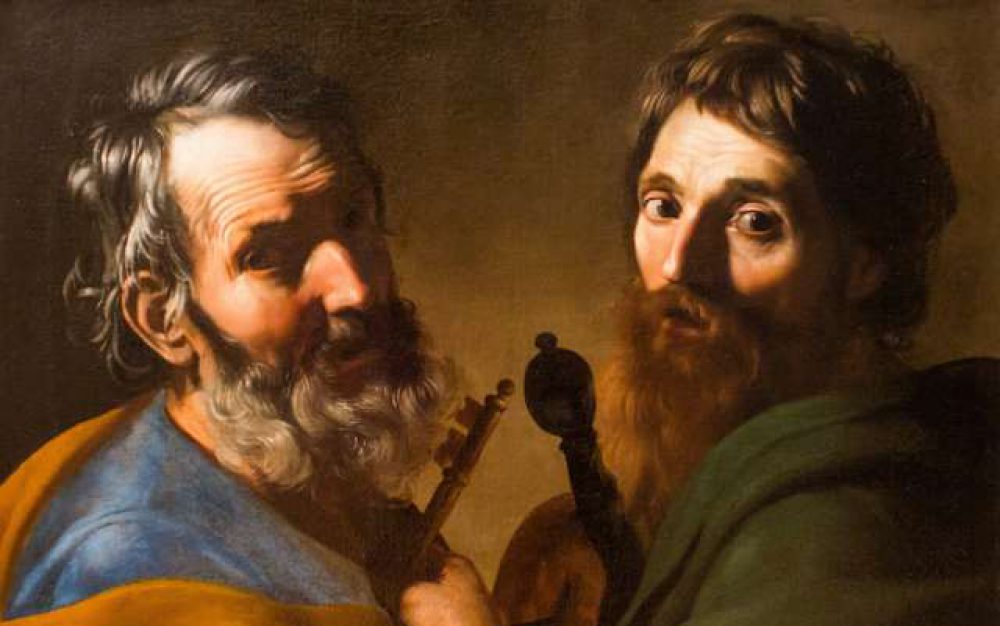
Saint Nicon of Sparta, also known as Nicon Metanoiete ( = repent), was a monk, wandering preacher and evangelist, especially in Greece, where he called everyone to repent (metanoia). Born in 930 in Pontus or Argos, Nicon’s mission was to re-Christianize sections of the Byzantine Empire that had been lost during the early Muslim conquests.

When he was young, Nikon went to a monastery known as Khrysopetro (“Golden Stone”) located on the borders of Pontus and Paphlagonia. He spent twelve years there, living an ascetic life of prayer and penance so extreme that his brothers tried to persuade him to lessen his regimen. Nikon traveled into Asia Minor and preached repentance there for three years. Following the expulsion of the Arabs from the island of Crete in 961 following the Siege of Chandax, Nikon began his mission on the island, seeking to persuade converts to Islam to revert to Christianity. The area had been a Muslim emirate since the 820s, and in that time Christianity there had declined. Many of the island’s Christians were forcibly converted to Islam, and even after the Arab expulsions they feared execution at the hands of extremists or returning Arab soldiers—the punishment prescribed by the hudud for the crime of apostasy against Islam. Even those who remained faithful to Christianity had lost contact with the living tradition, as churches and monasteries had fallen into decay.
He viewed the forced converts not as Muslims but rather as Christians who had been corrupted “by time and long fellowship with the Saracens.”
After five years on Crete—no earlier than 966—Nikon visited Epidauros, Athens, and Euboea. He then travelled to Thebes and Corinth, and finally down into the Peloponnese. Tradition credits him with saving the region of Laconia from a plague. While in Sparta, Nikon had three churches and a monastery built as he pursued his mission; his work was accompanied by miracles. In his Life, the Peloponnese is represented as a land full of demons which Nikon is constantly struggling against.
After thirty years of preaching in the Peloponnese, he died in a monastery on the peninsula on November 26, 998.


You must be logged in to post a comment.