In Your will are all things, O Lord, and there is none that can resist Your will; for You have made all things, heaven and earth, and all things that are under the cope of heaven. You are Lord of all.
Esth 13:9-11
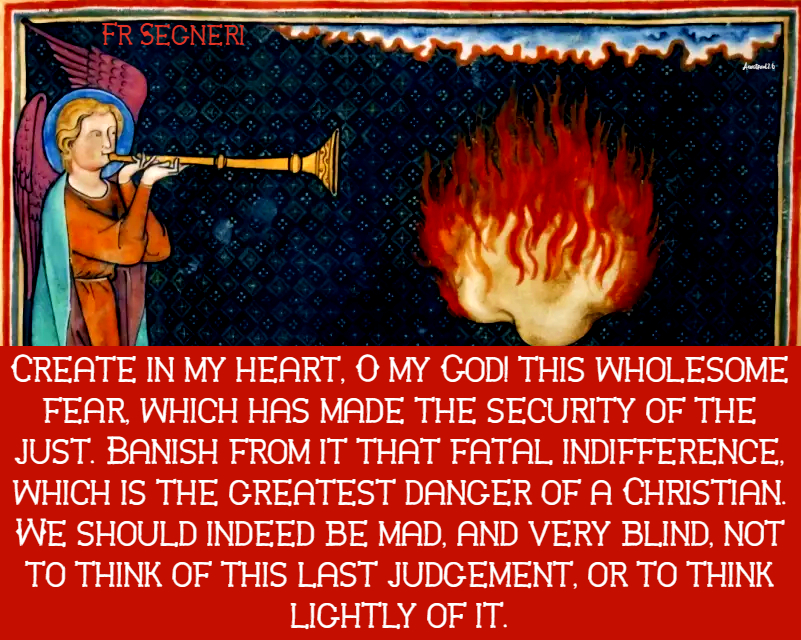
Create in my heart, O my God! this wholesome fear, which has made the security of the just. Banish from it that fatal indifference, which is the greatest danger of a Christian. We should indeed be mad, and very blind, not to think of this last judgement, or to think lightly of it.
Fr Segneri
Day of wrath and doom impending! David’s word with Sibyl’s blending, Heaven and earth in ashes ending!
Dies Irae
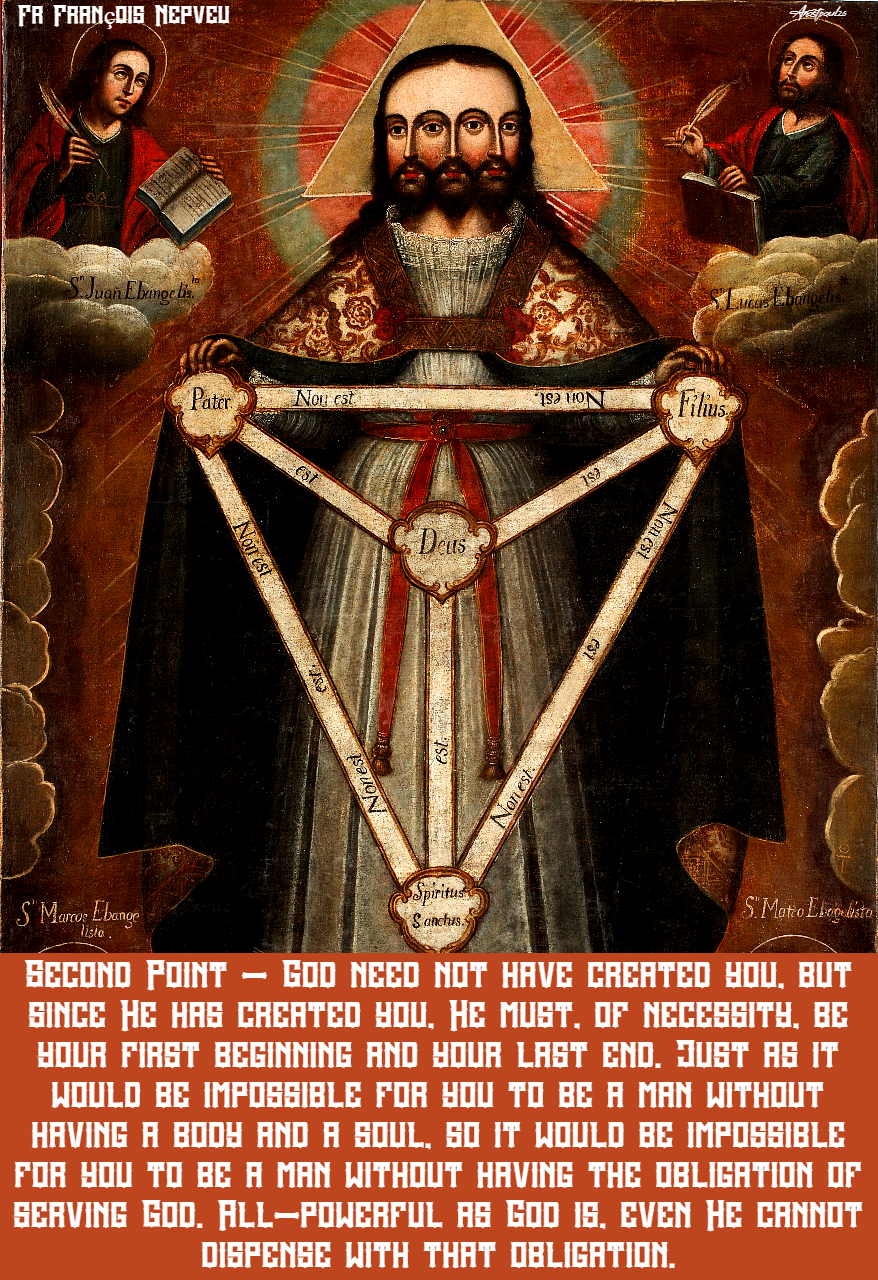
Second Point – God need not have created you, but since He has created you, He must, of necessity, be your first beginning and your last end. Just as it would be impossible for you to be a man without having a body and a soul, so it would be impossible for you to be a man without having the obligation of serving God. All-powerful as God is, even He cannot dispense with that obligation.
Fr François Nepveu
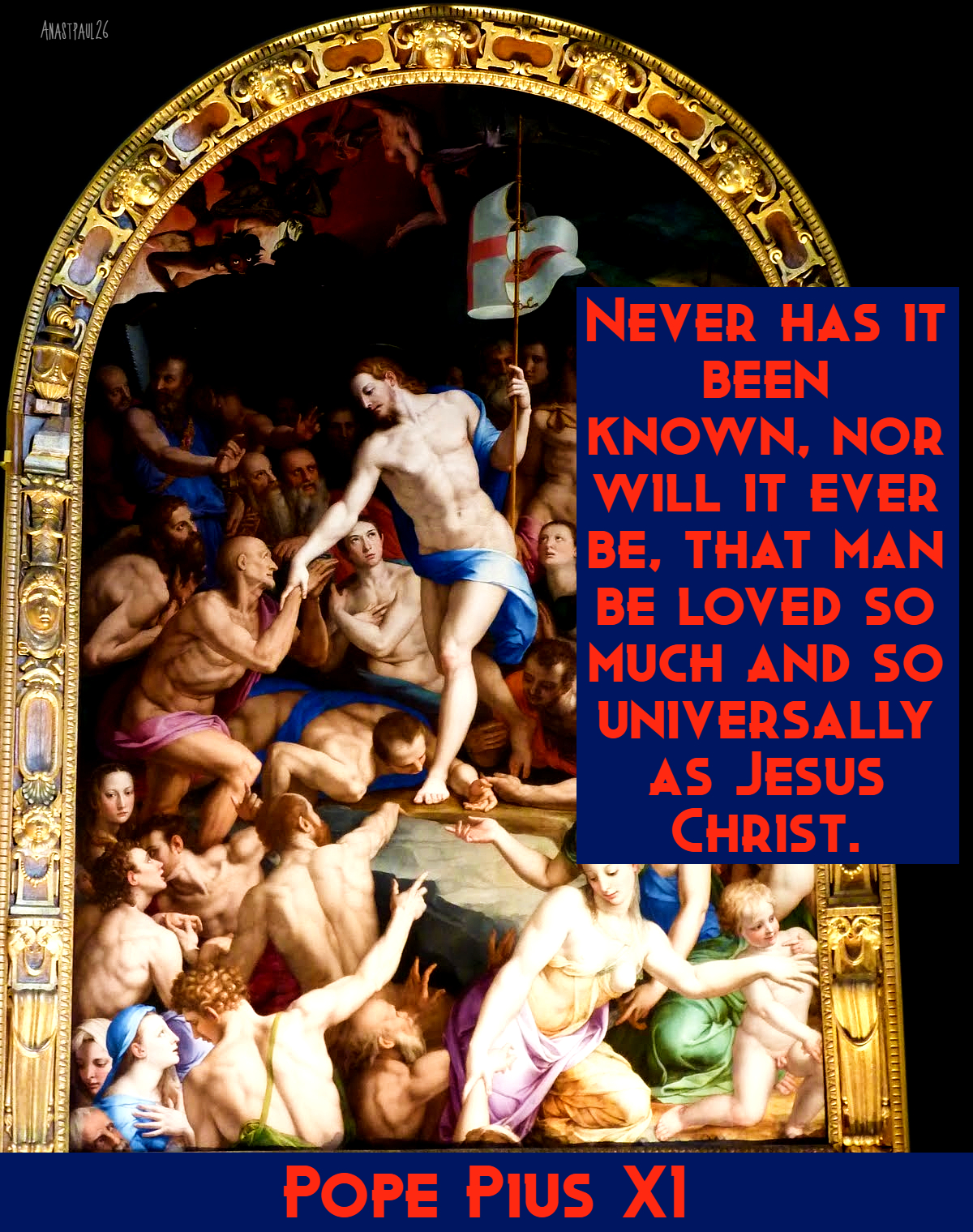
Never has it been known, nor will it ever be, that man be loved so much and so universally as Jesus Christ.
Pope Pius XI
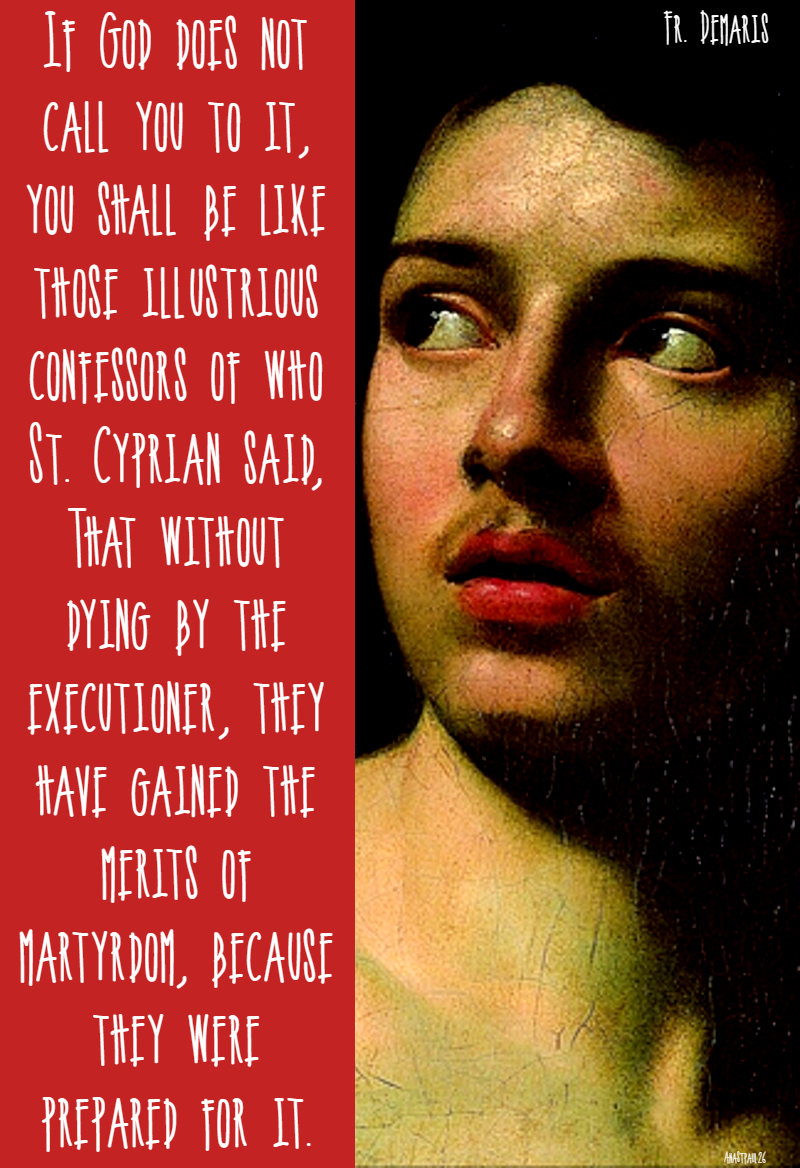
If God does not call you to it, you shall be like those illustrious confessors of who St. Cyprian said, That without dying by the executioner, they have gained the merits of martyrdom, because they were prepared for it.
Letter from Fr. Demaris to Catholics Who Have Been Deprived of a Priest
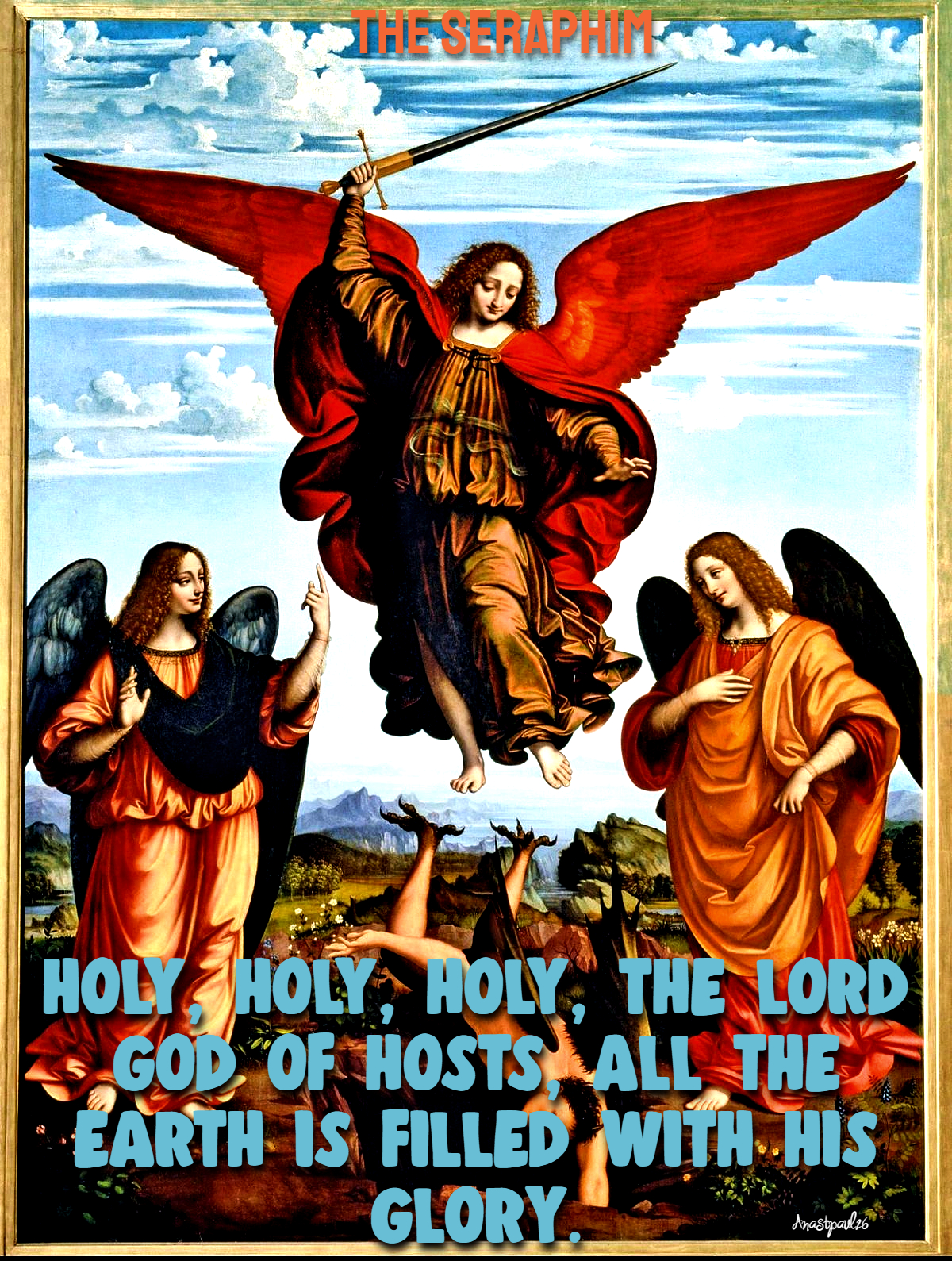
Holy, holy, holy, the Lord God of hosts, all the earth is filled with his glory.
To have a great Devotion to the Seven Spirits who are before the Throne.
The Holy Scriptures assure us, that there are seven of the holy Angels specially appointed to assist before the Throne, and stand continually in the presence of the Most High. In the 1st chapter of the Apocalypse, grace and peace are given in the name of these sublime Spirits. We only know the names of three of them—St. Michael, St. Gabriel, St. Raphael. Some say that the fourth is called Uriel, of whom there is mention made in the Book of Esdras. E.
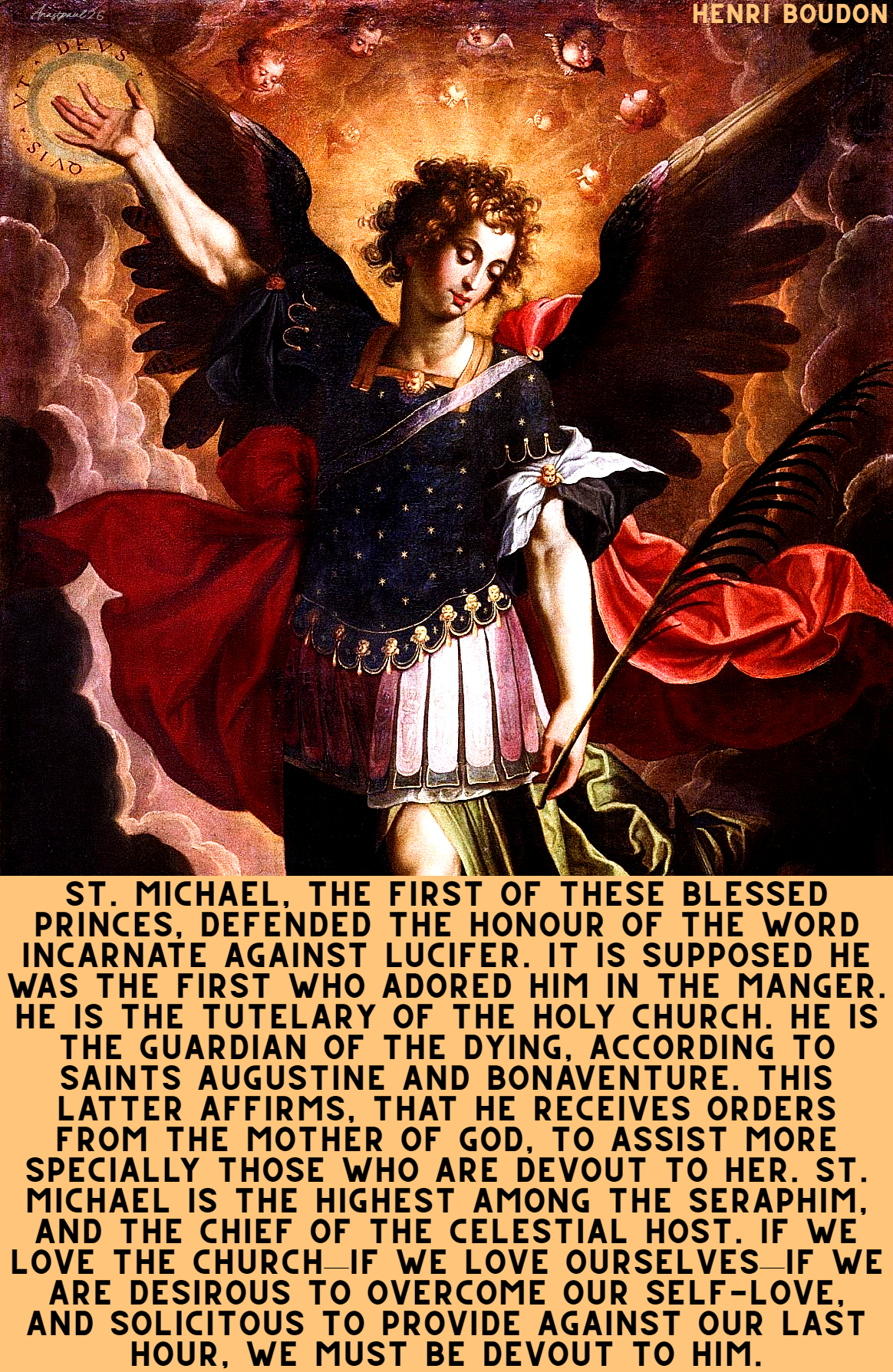
But to say something of each in particular: St. Michael, the first of these blessed princes, defended the honour of the Word incarnate against Lucifer. It is supposed he was the first who adored him in the manger. He is the tutelary of the holy Church. He is the guardian of the dying, according to Saints Augustine and Bonaventure. This latter affirms, that he receives orders from the Mother of God, to assist more specially those who are devout to her. St. Michael is the highest among the Seraphim, and the chief of the celestial host. If we love the Church—if we love ourselves—if we are desirous to overcome our self-love, and solicitous to provide against our last hour, we must be devout to him.
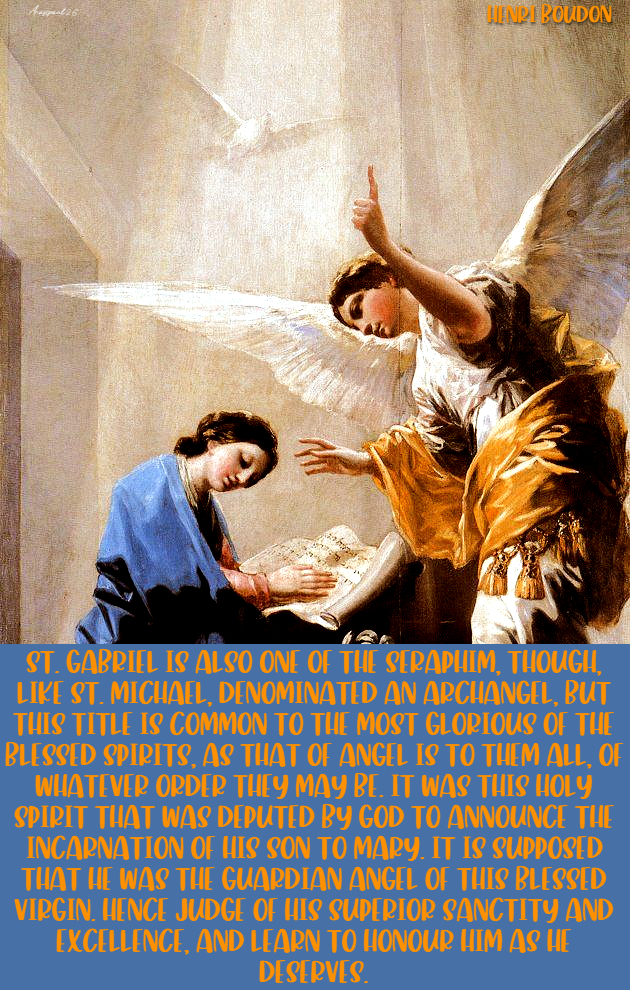
St. Gabriel is also one of the Seraphim, though, like St. Michael, denominated an archangel, but this title is common to the most glorious of the blessed Spirits, as that of Angel is to them all, of whatever order they may be. It was this holy spirit that was deputed by God to announce the incarnation of his Son to Mary. It is supposed that he was the Guardian Angel of this blessed Virgin. Hence judge of his superior sanctity and excellence, and learn to honour him as he deserves.
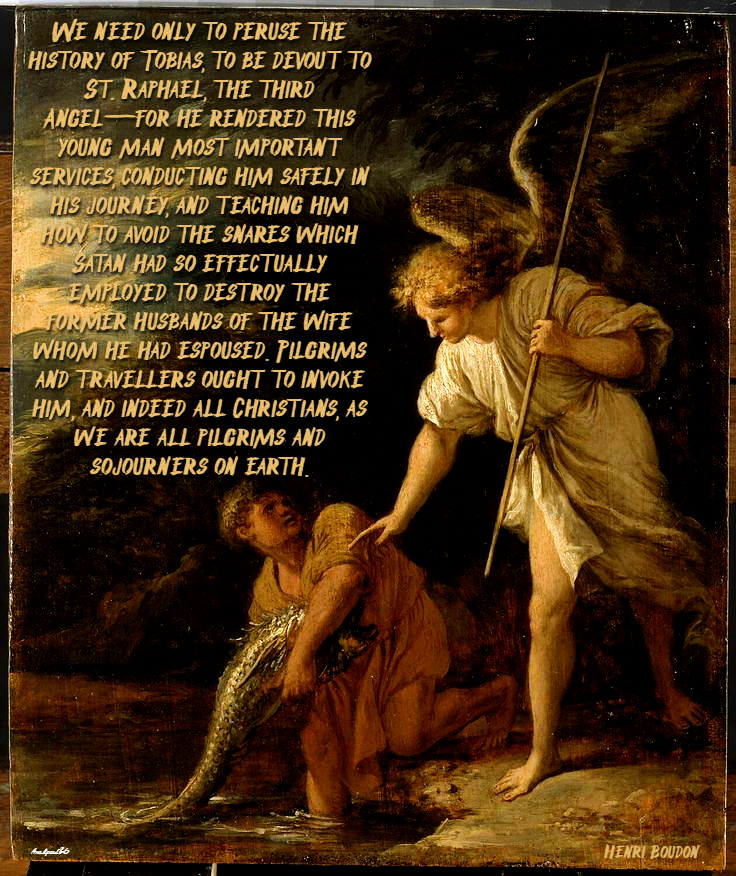
We need only to peruse the history of Tobias, to be devout to St. Raphael, the third Angel—for he rendered this young man most important services, conducting him safely in his journey, and teaching him how to avoid the snares which Satan had so effectually employed to destroy the former husbands of the wife whom he had espoused. Pilgrims and travellers ought to invoke him, and indeed all Christians, as we are all pilgrims and sojourners on earth.
Let us honour all these blessed Seven—let us be but truly devout to them let us beg their prayers, in order that we may avoid the seven capital sins, and obtain the seven gifts of the Holy Ghost.
To entertain a profound respect and extraordinary love for the Thrones, the Cherubim and Seraphim.
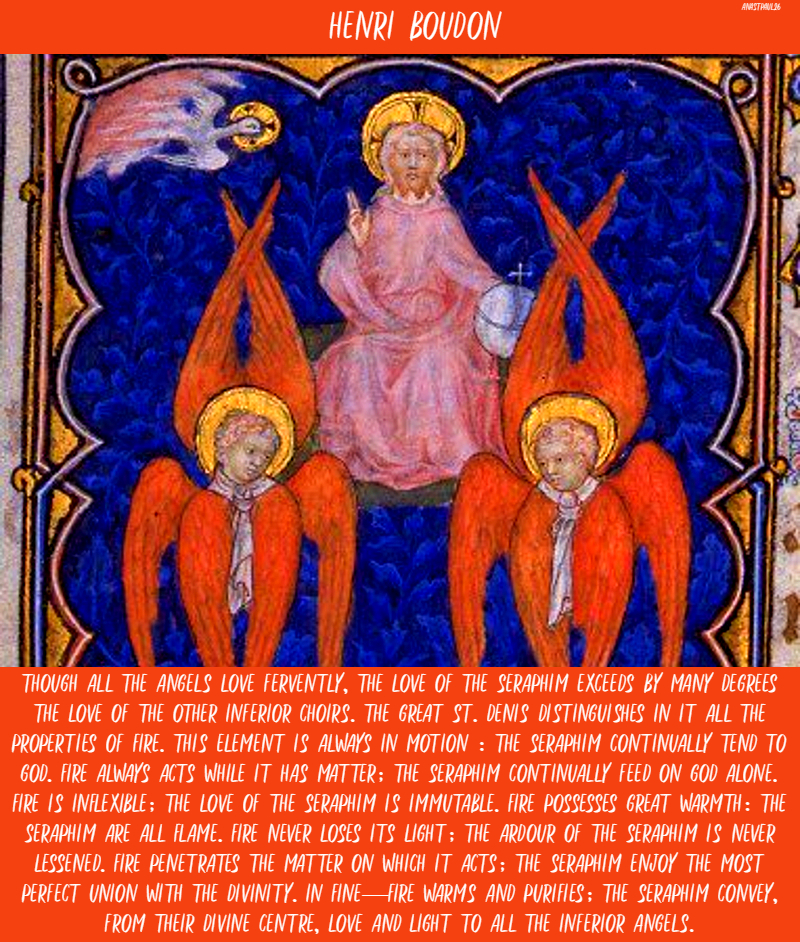
The first Hierarchy of the Angels is composed of the Thrones, the Cherubim and Seraphim. The latter excel in love—hence their name, Seraphim, which signifies ardour. Though all the Angels love fervently, the love of the Seraphim exceeds by many degrees the love of the other inferior choirs. The great St. Denis distinguishes in it all the properties of fire. This element is always in motion : the Seraphim continually tend to God. Fire always acts while it has matter; the Seraphim continually feed on God alone. Fire is inflexible; the love of the Seraphim is immutable. Fire possesses great warmth: the Seraphim are all flame. Fire never loses its light; the ardour of the Seraphim is never lessened. Fire penetrates the matter on which it acts; the Seraphim enjoy the most perfect union with the Divinity. In fine—fire warms and purifies; the Seraphim convey, from their divine centre, love and light to all the inferior Angels.
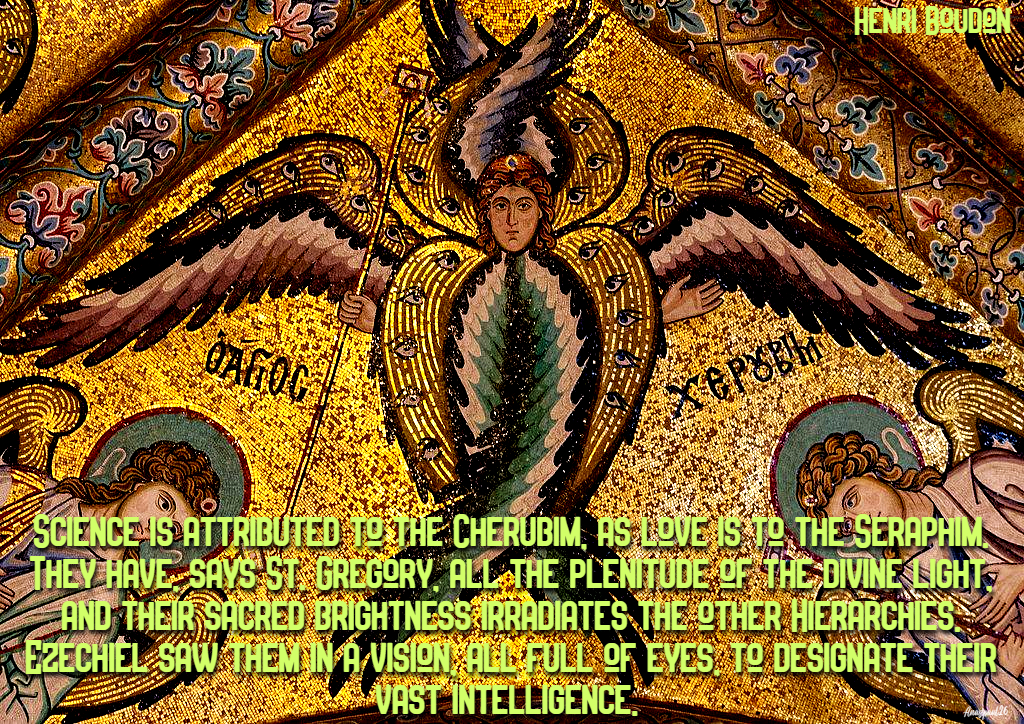
Science is attributed to the Cherubim, as love is to the Seraphim. They have, says St. Gregory, all the plenitude of the divine light, and their sacred brightness irradiates the other Hierarchies. Ezechiel saw them in a vision, all full of eyes, to designate their vast intelligence.
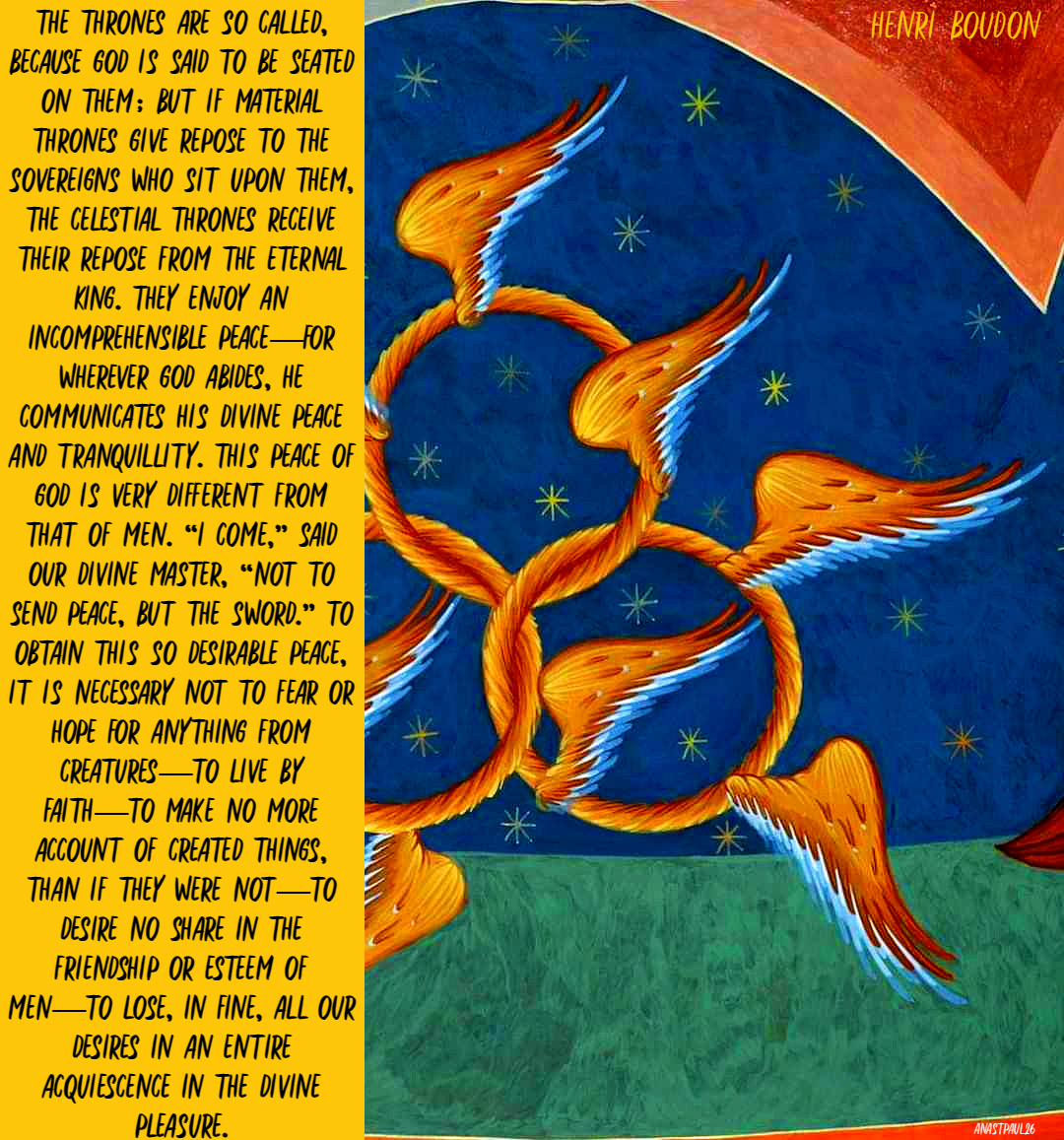
The Thrones are so called, because God is said to be seated on them; but if material thrones give repose to the Sovereigns who sit upon them, the celestial Thrones receive their repose from the Eternal King. They enjoy an incomprehensible peace—for wherever God abides, he communicates his divine peace and tranquillity. This peace of God is very different from that of men. “I come,” said our divine Master, “not to send peace, but the sword.” To obtain this so desirable peace, it is necessary not to fear or hope for anything from creatures—to live by faith—to make no more account of created things, than if they were not—to desire no share in the friendship or esteem of men—to lose, in fine, all our desires in an entire acquiescence in the divine pleasure. Be devout to the Thrones, and they will exert themselves in obtaining for you this greatest of all blessings. In like manner with the Cherubim.
It is said, that in the way of virtue we know more than we do but it is certain that perfect knowledge is rare. We speak of that of the saints. Few persons are practically convinced of the excellence of poverty and humiliation—of the advantages of the hidden and suffering life. It is in the school of a God, and at the feet of the crucifix, that this divine lesson is to be learned. Let us frequent it under the auspices of the Cherubim, the spirits of light, and we shall soon be illumined, and walk in the brightness of the children of God.
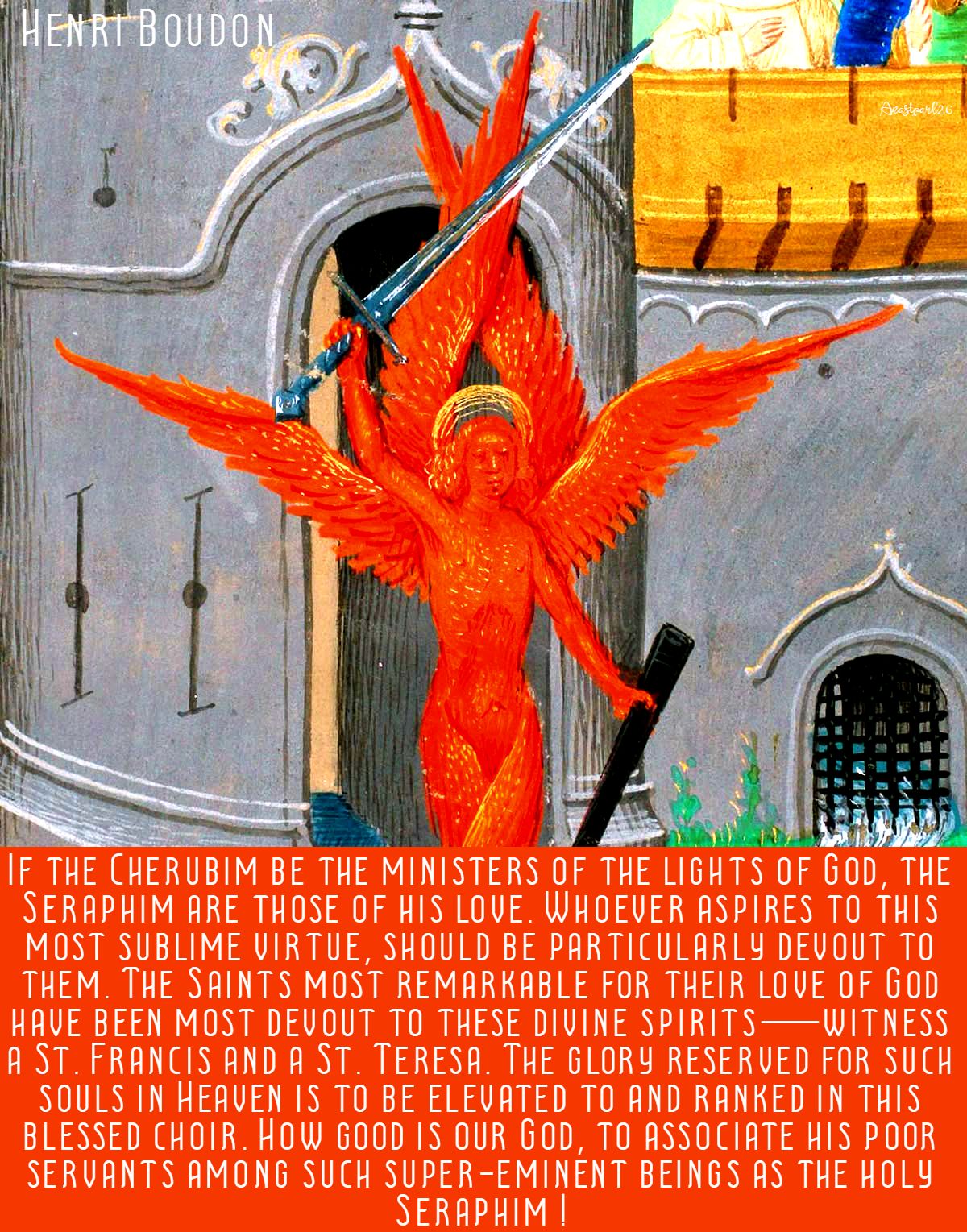
If the Cherubim be the ministers of the lights of God, the Seraphim are those of his love. Whoever aspires to this most sublime virtue, should be particularly devout to them. The Saints most remarkable for their love of God have been most devout to these divine spirits—witness a St. Francis and a St. Teresa. The glory reserved for such souls in Heaven is to be elevated to and ranked in this blessed choir. How good is our God, to associate his poor servants among such super-eminent beings as the holy Seraphim !




You must be logged in to post a comment.