Our Morning Offering – 9 July – “Month of the Most Precious Blood”
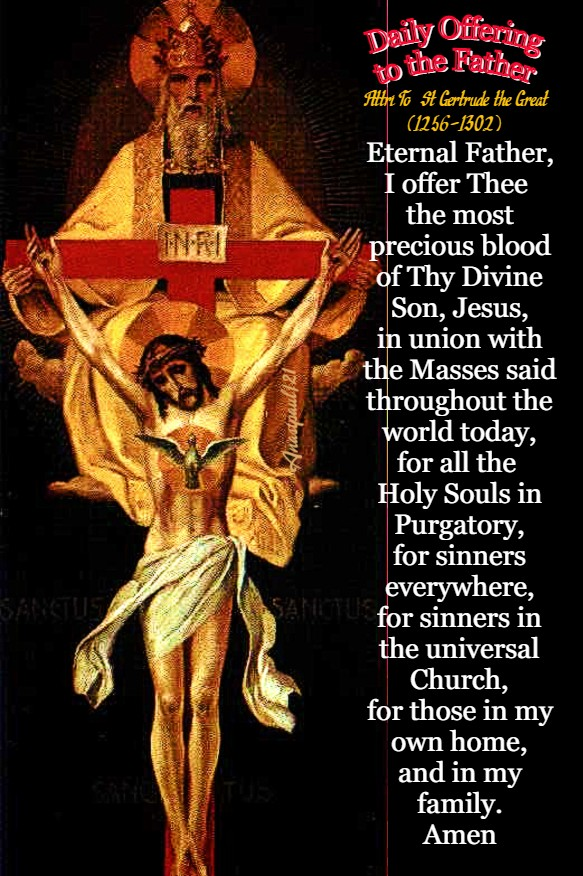
Daily Offering to the Father Attri To St Gertrude the Great (1256-1302)
Eternal Father, I offer Thee the most precious blood of Thy Divine Son, Jesus, in union with the Masses said throughout the world today, for all the Holy Souls in Purgatory, for sinners everywhere, for sinners in the universal Church, for those in my own home, and in my family. Amen
7th Day – Types of the Precious Blood: (4) The Offerings for Sins of Ignorance
In the Book of Leviticus an elaborate ritual is prescribed in expiation of sins committed through ignorance. A calf is to be offered, and the ancients of the people are to lay their hands upon its head, and the priest is to carry some of its blood into the tabernacle of the testimony, and to sprinkle it seven times before the veil and to pour forth the blood at at the foot of the altar. All this is in expiation for sins committed by those who at the time knew not that they were sins. What a proof of God’s hatred of sin, even though he who did the act was was not at the time aware that it was a sin!
Yet such ignorance is rarely altogether without some fault. Sometimes there was at least some faint suspicion that the deed done was displeasing to God, sometimes the ignorance was itself the result of sin blinding the soul and dulling the perceptions, sometimes it was the consequence of obstinacy and self-will. I may have committed many sins through ignorance: were they altogether without fault?
Those sins had to be atoned for with blood, and that blood was a type of the blood of Jesus. He, therefore, shed His Precious Blood for my sins of ignorance as well as sins of malice, and whatever fault was in them added to His sacred sufferings. I must then compassionate with Him in all that He suffered for the countless sins that men have committed against God through ignorance, and especially for my own.
Our Morning Offering – 6 July – “Month of the Precious Blood”
An Old Morning Prayer – Excerpt From The Blossoms of the Cross — 1894 The Sisters of St Joseph
I rise In God’s strength, In God’s power, In the Agony of Christ, In the Cross of Christ, In Christ’s Precious Blood, These will sustain me against my enemies, visible and invisible. I rise in the blessing of Christ which my dearest Jesus left to the whole world. Protect me, All-Holy Trinity, God the Father, Who created me, God, the Son, Who redeemed me in His Precious Blood, God, the Holy Ghost, Who sanctified me in Holy Baptism. God, the Father, I give myself to Thee! God, the Son, I commend myself to Thee! God, the Holy Ghost, teach me! Mary, Mother of God, assist me! All you Saints of God, pray for me! All you Holy Angels, protect me! The Cross of Christ preserve me! Amen
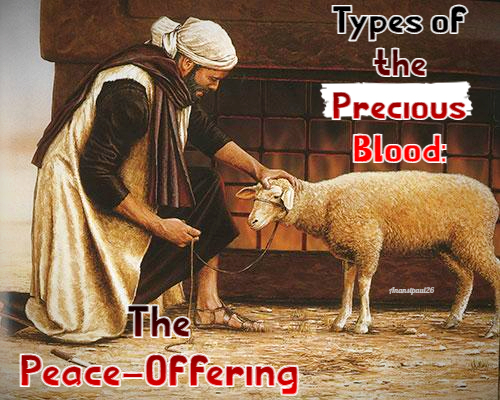
6th Day – Types of the Precious Blood: (3) The Peace-Offering
The peace-offering was one of the chief sacrifices of the Old Law. It was an offering of gratitude for blessings received, or of petition for blessings desired. So Jesus offered Himself upon the cross, not only to obtain for us the blessings of eternal life, but also to render thanks to God for His mercy to man and make to Him the only possible return worthy of His majesty.
The blood of the heifer sacrificed was shed as a necessary part of the sacrifice. “The priests, the sons of Aaron shall offer the blood thereof, pouring it round about the altar.” (Lev. i. 5). There is no mark of our gratitude to God like willingness to suffer for Him. The blood is, as it were, the life, and the shedding of it corresponds in the body to the sacrifice of our will in the soul , which is the noblest sacrifice that man can make to God. Do I sacrifice my will to God’s, or is self-will still strong within me?
The blood was shed, moreover, as a means of obtaining fresh favours. Those who are anxious to gain great things from God must make some sacrifice for His sake, andthose who are most powerful with Him, are those who give up their will to His. Christ in His sacred humanity is all-powerful with God, because in the head of the book it is written of Him that He should fulfil the will of God and was content to do it. Do I deserve such influence with Him?
Our Morning Offering – 5 July – “Month of the Most Precious Blood”
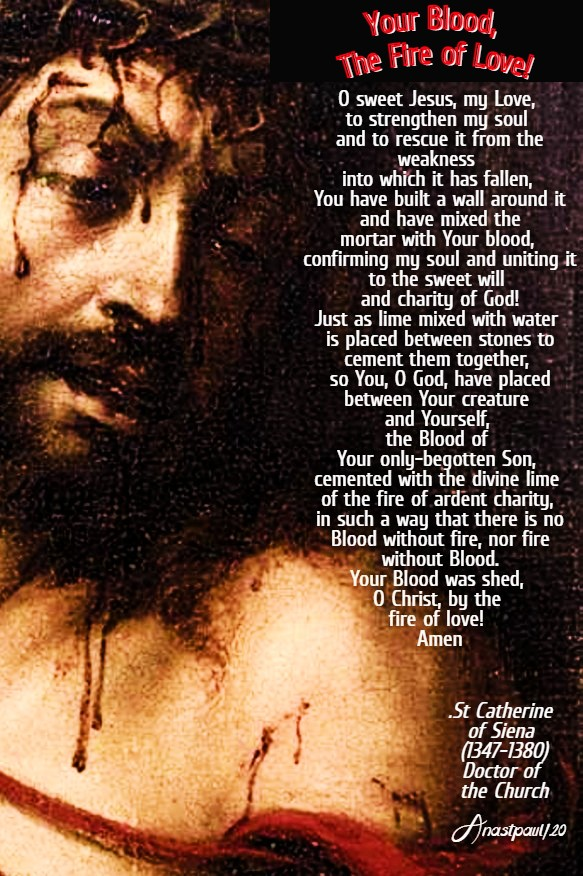
Your Blood, The Fire of Love! By St Catherine of Siena (1347-1380) Doctor of the Church
O sweet Jesus, my Love, to strengthen my soul and to rescue it from the weakness into which it has fallen, You have built a wall around it and have mixed the mortar with Your Blood, confirming my soul and uniting it to the sweet will and charity of God! Just as lime mixed with water is placed between stones to cement them together, so You, O God, have placed between Your creature and Yourself, the Blood of Your only-begotten Son, cemented with the divine lime of the fire of ardent charity, in such a way that there is no Blood without fire, nor fire without Blood. Your Blood was shed, O Christ, by the fire of love! Amen.
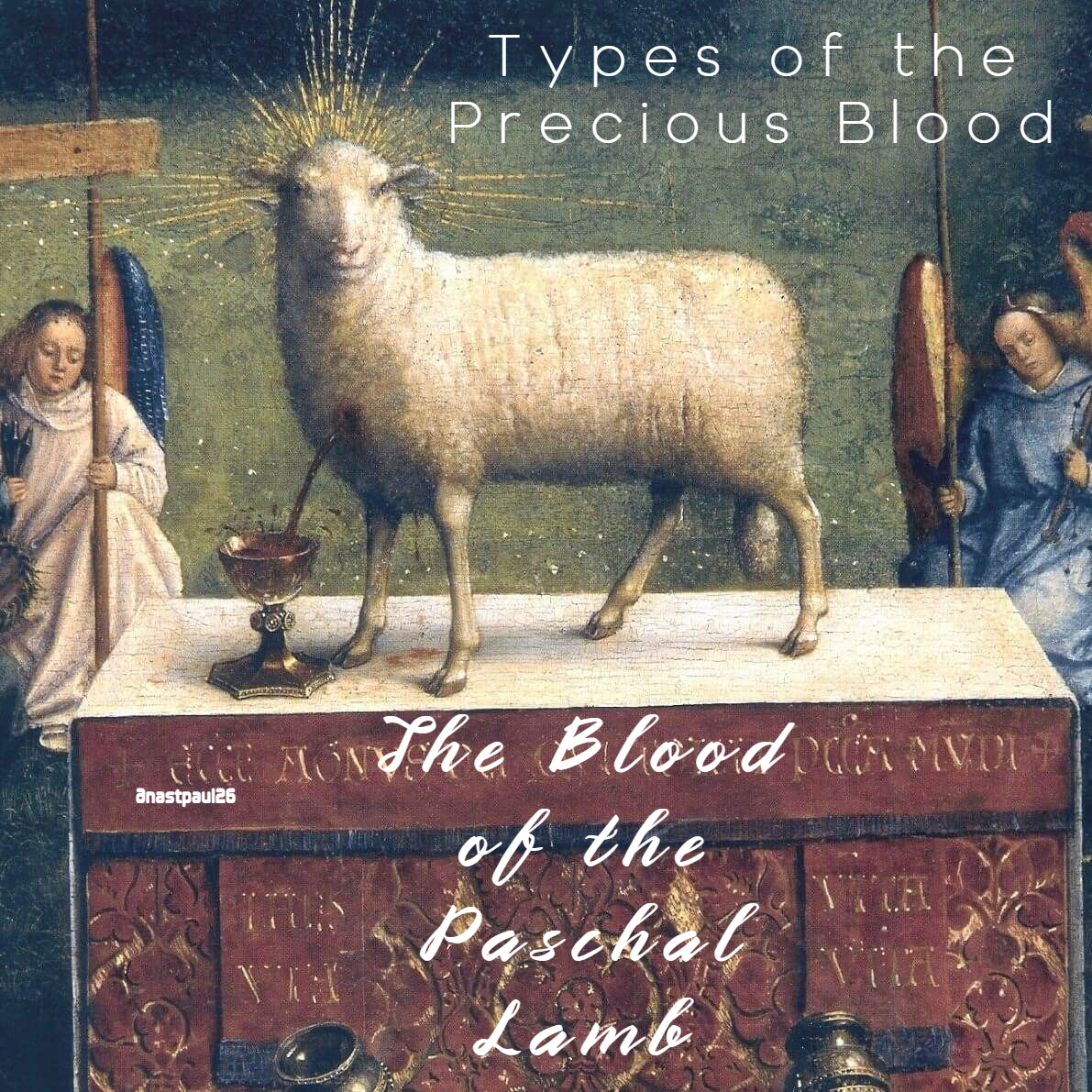
5th Day – Types of the Precious Blood: (2) The Blood of the Paschal Lamb
On the night when God delivered His people from Egypt a lamb was slain that was a type of the Lamb of God. It was to be a lamb without blemish, no bone of it was to be broken, it was to be wholly consumed by those in whose dwelling it was slain, and its blood was to be shed to the last drop. Apply these conditions of the paschal lamb to the Lamb of God, and see how perfectly they were fulfilled in the sacrifice of the cross.
The blood of the paschal lamb was to be sprinkled on the door-posts of the Israelites, and thereby they were to be rendered safe from the judgement that fell upon the Egyptians. So the Precious Blood sprinkled upon our hearts saves us from the punishment we have justly deserved. It appeases the anger of God and marks us as belonging to Him, and travellers to the heavenly Jerusalem longing to be freed from the bondage of earthly things.
How is the Precious Blood sprinkled on our souls? In all the sacraments of the Church, in every act of contrition, in every deed of supernatural charity, in every prayer offered humbly and with confidence, it falls upon us, and renders us safe from the avenging angel, and secures us from the anger of God that our sins have justly merited. Asperges me, Domine, hyssopo et mundabor – ‘Sprinkle me, O Lord, and I shall be rendered clean in Thy sight.’
One Minute Reflection – 4 July – “Month of the Precious Blood” – Ezekiel 2: 2-5, Psalms 123: 1-2, 2, 3-4, Second Corinthians 12: 7-10, Mark 6: 1-6
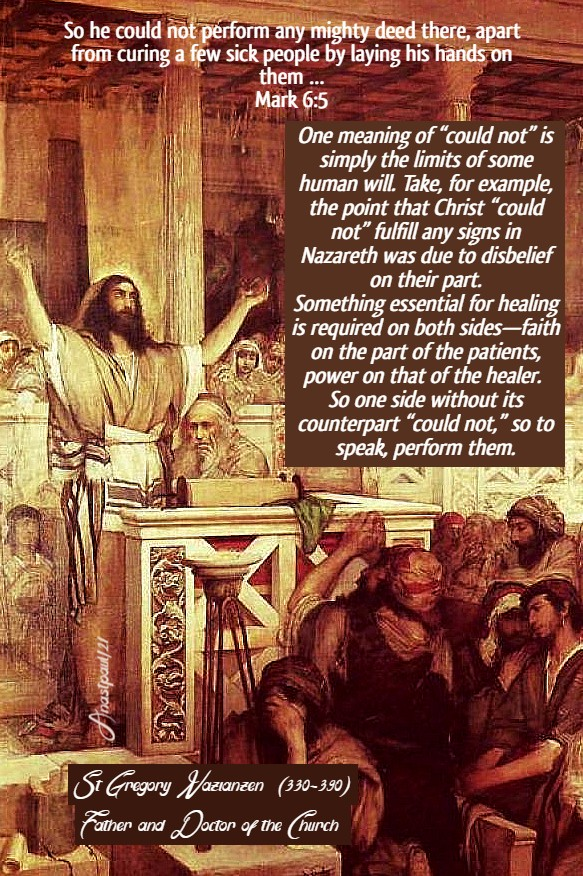
“So he could notperform any mighty deed there, apart from curing a few sick people by laying his hands on them …” – Mark 6:5
REFLECTION – “One meaning of “could not” is simply the limits of some human will. Take, for example, the point ,that Christ “could not” fulfill any signs in Nazareth was due to disbelief on their part. Something essential for healing is required on both sides—faith on the part of the patients, power on that of the healer. So one side without its counterpart “could not,” so to speak, perform them.
As this can be seen in medical care, it can also be seen in moral transformation. Similarly involving the limits of the will are the texts: “The world cannot not hate you” and “How can you speak good, being evil?” The metaphor of “impossibility” here must mean free refusal by the will. The same idea applies to those passages which say that what is, impossible for humanity is possible for God.
Note also those passages that say that a person “cannot” (in one sense) be born a second time and a needle’s eye “cannot” let a camel through. What would stop these events happening if God willed them directly? Besides all these, there is, as in the case we are presently considering, a “cannot” in the sense of that which is totally inconceivable. We cannot conceive that God can be evil or fail to exist. It is inconceivable that reality cannot exist or two times two is fourteen. So here, it cannot be the case, that the Son would do anything which the Father would not do!” – St Gregory Nazianzen (330-390) Archbishop of Constantinople, Father and Doctor of the Church – Oration 30 (On the Son),10-11.
PRAYER – Lord our God, make us love You above all things and all our fellow-men, with a love that is worthy of You. May we look to Your Divine Son in total trust, faith, love and imitation. Grant too, that by the prayers of the Blessed Virgin Mary, we too may be granted the grace to follow Your only Son, no matter our sufferings, to one day reach You, in our heavenly home. We make our prayer, through Christ our Lord, in the unity of the Holy Spirit, one God, forever amen.
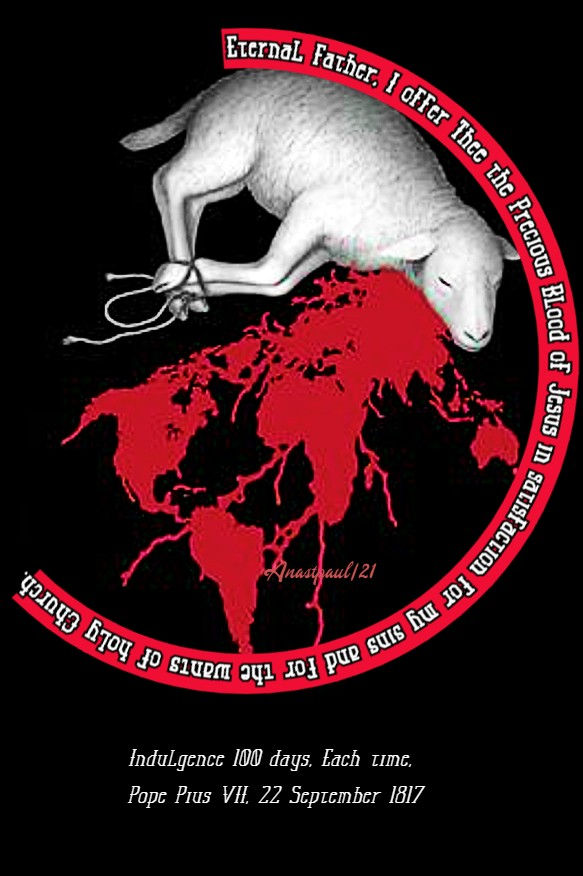
Eternal Father, I offer Thee the Precious Blood of Jesus in satisfaction for my sins and for the wants of holy Church. – Indulgence 100 days, Each time, Pope Pius VII, 22 September 1817.
Quote/s of the Day – 4 July – “Month of the Precious Blood”
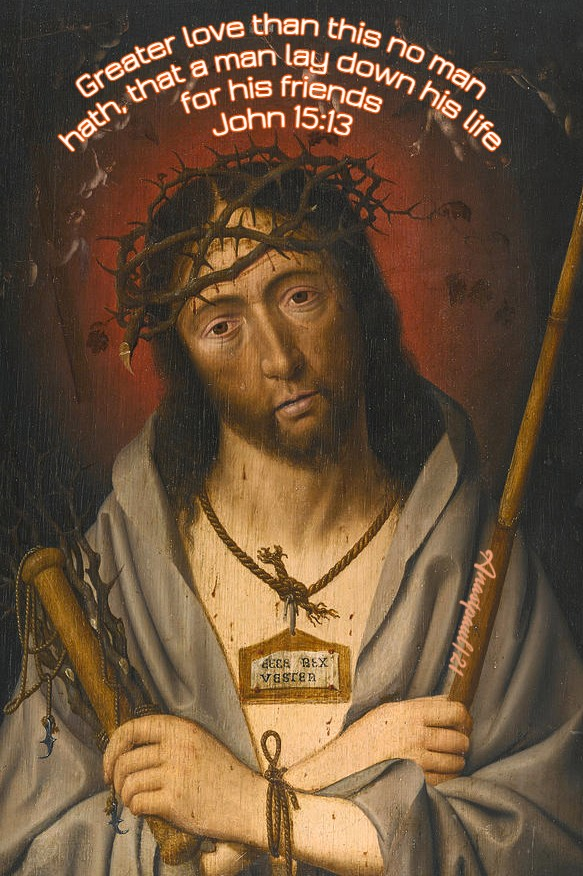
“Greater love than this no man hath, that a man lay down his life for his friends.”
John 15:13
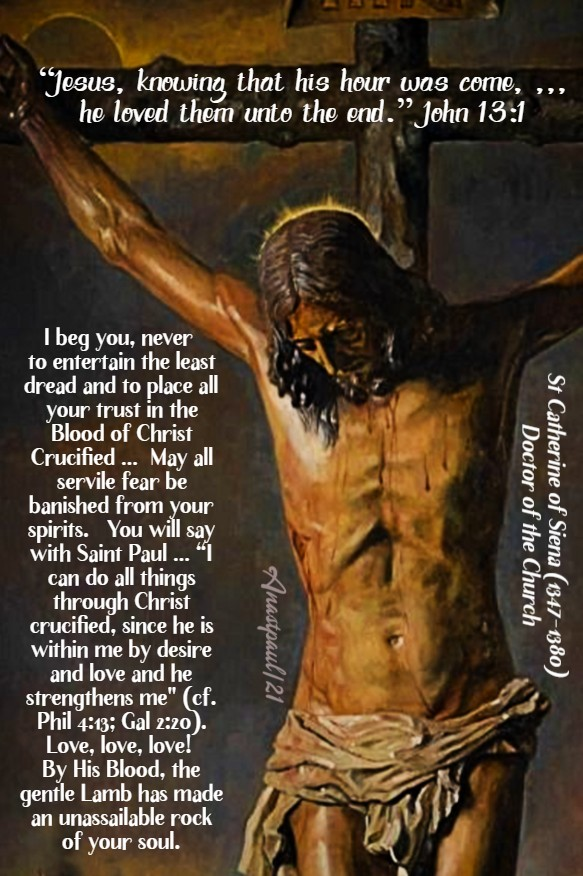
“Jesus, knowing that his hour was come, … he loved them unto the end.”
John 13:1
“I beg you never to entertain the least dread and to place all your trust in the Blood of Christ Crucified … May all servile fear be banished from your spirits. You will say with Saint Paul … “I can do all things through Christ crucified, since he is within me by desire and love and he strengthens me” (cf. Phil 4:13; Gal 2:20). Love, love, love! By His Blood, the gentle Lamb has made an unassailable rock of your soul.”
St Catherine of Siena (1347-1380) Doctor of the Church
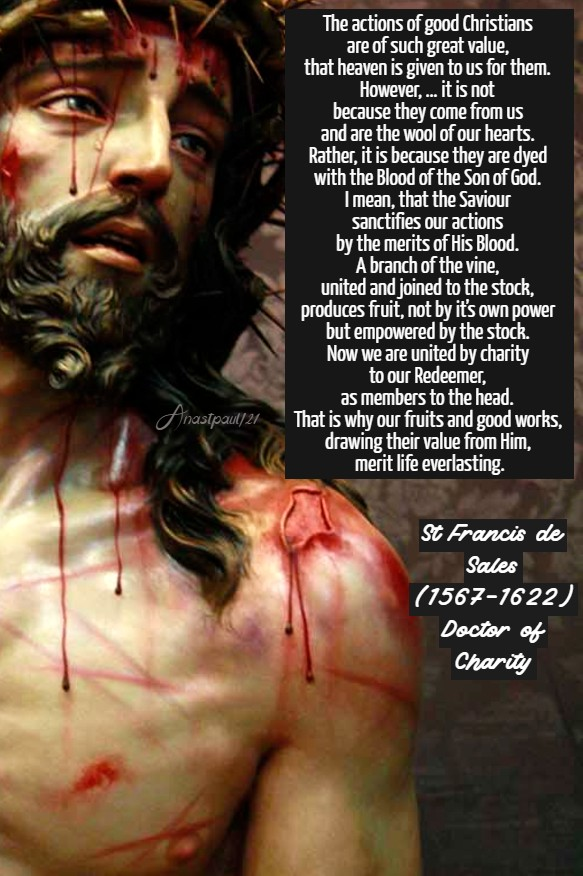
“The actions of good Christians are of such great value, that heaven is given to us for them. However, … it is not because they come from us and are the wool of our hearts. Rather, it is because they are dyed with the Blood of the Son of God. I mean, that the Saviour sanctifies our actions by the merits of His Blood. A branch of the vine, united and joined to the stock, produces fruit, not by it’s own power but empowered by the stock. Now we are united by charity to our Redeemer, as members to the head (Eph 4:15-16). That is why our fruits and good works, drawing their value from Him, merit life everlasting.”
St Francis de Sales (1567-1622) Doctor of Charity
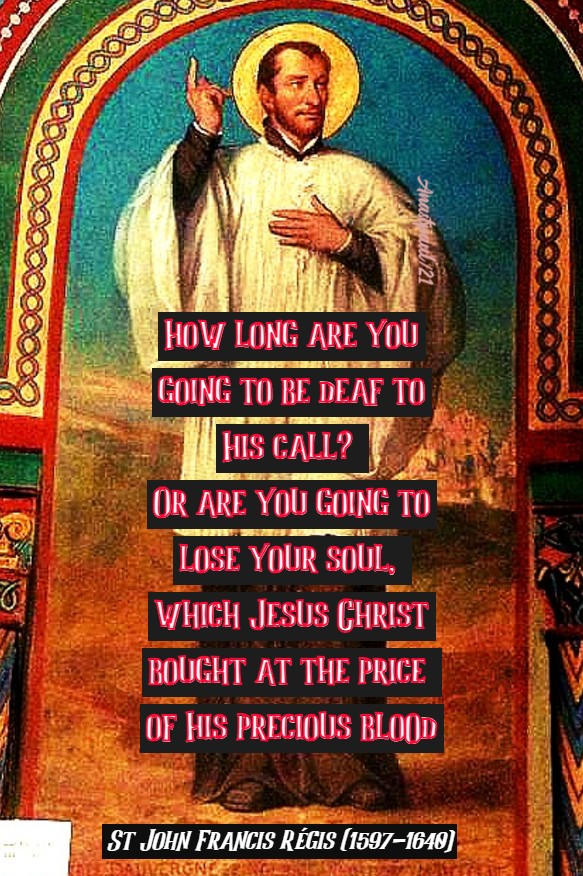
“How long are you going to be deaf to His call? Or are you going to lose your soul, which Jesus Christ bought at the price of His Precious Blood?”
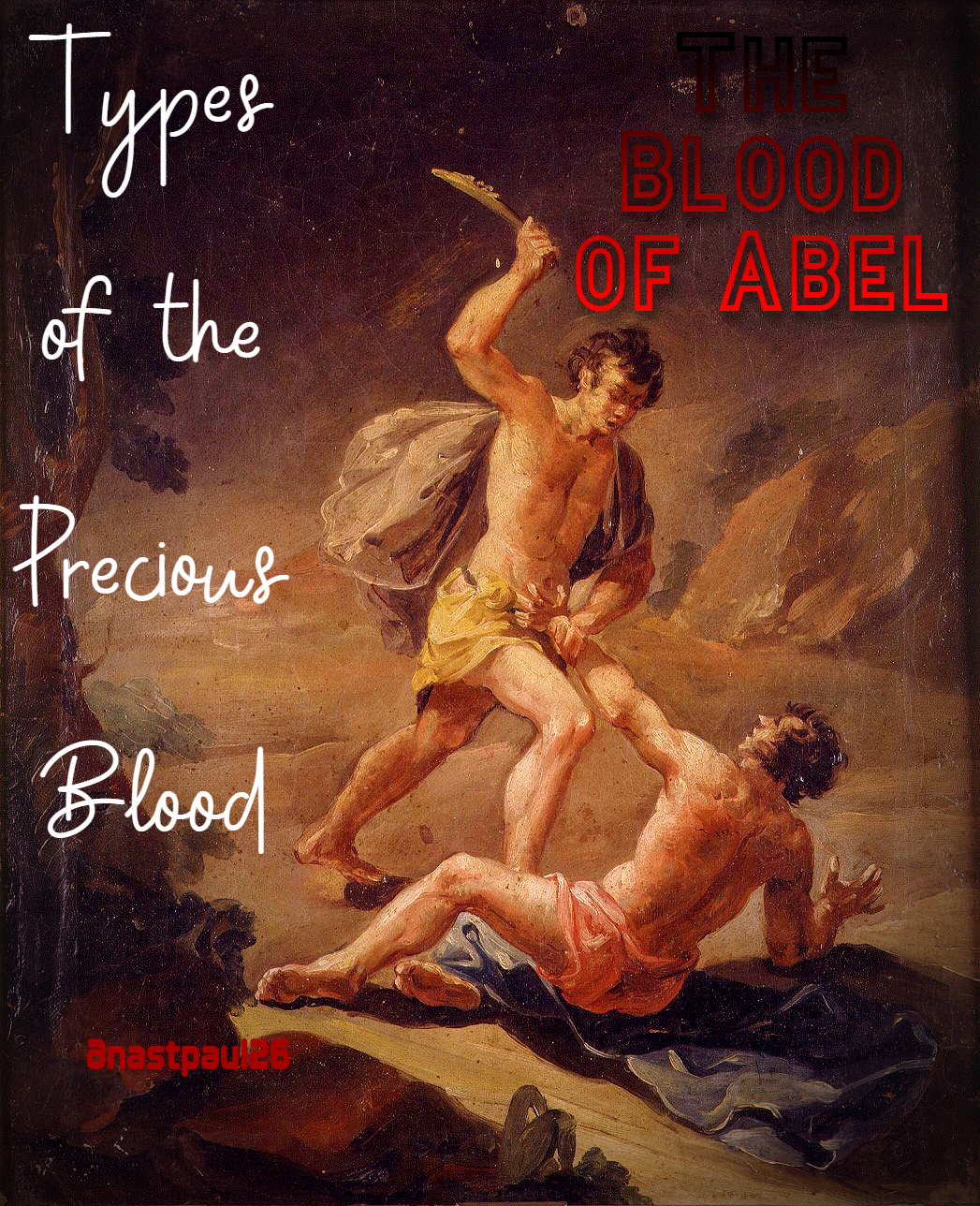
4th Day – Types of the Precious Blood (1) The Blood of Abel
Abel was slain by his cruel brother, Cain, because he offered to God a sacrifice exceeding that of Cain, and his brother, filled with rage at the acceptance of Abel’s sacrifice, deliberately shed his innocent blood. So the Jews, filled with rage at the exceeding holiness of Jesus’ life, and at the sweet attractiveness of His words, and the divine beauty of His works of mercy, shed His Precious Blood. So the wicked are ever enraged against the good and grudge them their favour with God.
The blood of Abel cried out to God for vengeance on his murderer. The blood of Jesus, which speaketh better things than that of Abel, cries out to God for mercy on those who have outraged Him and put Him to death. Even while Jesus hung on the cross, He prayed His father to forgive them, and ever since, as long as the world shall last, His blood still cries, “Father, forgive them, for they know not what they do!” O Jesus, may Thy blood thus cry out for me!
Yet at the same time, it cries for vengeance on those who deliberately and willfully reject Him. Long, indeed, He bears with them, long and patiently. Yet, if in the end they spurn His Precious Blood, His very mercy will bring upon them a vengeance in proportion to His offer of love. O Jesus! may I never reject Thee or refuse Thy love and mercy!
When the promise of the Redeemer to come was made to our first parents in the Garden of Eden after their fall, the shadow of the Precious Blood fell upon the world and reconciled it with God. The curse that had been incurred lost its fatal power to destroy. The anger of God had been appeased and He looked upon the earth through the medium of the Blood of His only-begotten Son, that was to be shed for sin, and for its sake offered forgiveness and mercy to the sinners who repented of their sin. So may He extend to me the forgiveness and mercy that I need far more than did Adam and Eve, for I have sinned far more deeply and often than they.
As the ages rolled on, the same shadow, sheltering men from God’s fierce anger, still rested on the earth. In its sweet shade rested Abraham and all the patriarchs, Samuel and all the prophets, through its influence sinners found mercy and saints obtained graces innumerable. If it did so much for the heathen world, what must it not do for Catholics! Grant, O Lord, that now and ever I may sit under His shadow Whom I have desired!
All through the four thousand years before Christ came, the tradition of the necessity of the shedding of blood for the forgiveness of sins was almost universal. The Jewish sacrifices were expressly ordained to keep up the memory of it. In heathen countries the blood of victims was almost everywhere offered. God never leaves Himself without a witness even among those who have departed far from Him. Admire His goodness in so doing.
St Peter tells us (1 St Pet. i. 20) that the Precious Blood of Christ was ‘foreknown before the foundation of the world.’ From all eternity God had decreed that the Precious Blood of the Word made Man should be shed for us. Even before man had sinned, God had provided a remedy, and had determined that if man should rebel against the sovereignty of God, He would not cast the rebel off, but would redeem him from sin, even at such a price as this! How can we sufficiently admire the love and mercy of God, thus counteracting the effect of sin even before it was committed?
God’s foreknowledge of what was to happen did not effect the perfect freedom of the human will, any more than the presence of a spectator affects the freedom of those whose actions he watches. God determined that the Precious Blood should be spilt because He foreknew that man would sin, and He foreknew that man would sin because in His omniscience He foresaw that man acting freely would use his free will to disobey. Make an act of faith in man’s freedom and God’s foreknowledge.
When God looks forward to my life, what does He forsee? That depends on myself and my voluntary choice of good or of evil. What return does He look forward to from me for the inestimable gift of the Precious Blood? Am I going to grieve and wound Him Who from all eternity decreed that His Precious Blood should be shed to win for me the kingdom of heaven?
Friday of the 4th Week of Lent –20 March – Our Lenten Journey With St Thomas Aquinas (1225-1274) Doctor of the Church
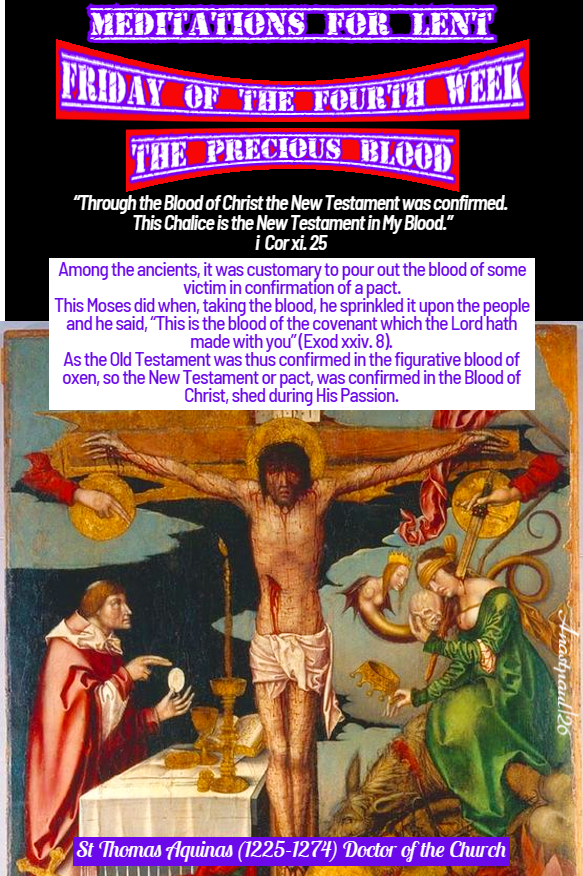
Friday of the Fourth Week The Precious Blood
“Through the Blood of Christ the New Testament was confirmed. This Chalice is the New Testament in My Blood.” i Cor xi. 25
Testament has a double meaning. (1) It may mean any kind of agreement or pact. Now God has twice made an agreement with mankind. In one pact, God promised man temporal prosperity and deliverance from temporal losses and, this pact is called the Old Testament. In another pact, God promised man spiritual blessings and deliverance from spiritual losses and this is called the New Testament, “I will make a new covenant, saith the Lord, with the house of Israel and with the house of ]uda, not according to the covenant which I made with their fathers, in the day I took them by the hand to bring them out of the land of Egypt but this shall be the covenant: I will give My Law in their bosoms and I shall write it in their hearts and I shal be their God and they shall be My people” (]er xxxi. 31-33). Among the ancients, it was customary to pour out the blood of some victim in confirmation of a pact. This Moses did when, taking the blood, he sprinkled it upon the people and he said, “This is the blood of the covenant which the Lord hath made with you” (Exod xxiv. 8). As the Old Testament was thus confirmed in the figurative blood of oxen, so the New Testament or pact, was confirmed in the Blood of Christ, shed during His Passion.
(2) Testament has another more restricted meaning when it signifies the arrangement of an inheritance among the different heirs, i.e. a will. Testaments, in this sense, are only confirmed by the death of the testator. As St Paul says, “For a testament is of force, after men are dead, otherwise, it is as yet of no strength, whilst the testator liveth” (Heb ix. 17). God, in the beginning, made an arrangement of the eternal inheritance we were to receive but, under the figure of temporal goods. This is the Old Testament. But afterwards He made the New Testament, explicitly promising the eternal inheritance which indeed, was confirmed by the Blood of the Death of Christ. And, therefore, Our Lord, speaking of this, says, “This Chalice is the new testament in My Blood” (i Cor xi. 25) as though to say, “By that which is contained in this Chalice, the new testament, confirmed in the Blood of Christ, is commemorated.” (In 1 Cor xii.)
There are other features which make the Blood of Christ Precious. It is: (i) A cleansing of our sins and uncleanness. “Jesus Christ hath loved us and washed us from our sins in His Own Blood” (Apoc. i. 5). (ii) Our Redemption, “Thou hast Redeemed us in Thy Blood” (ibid. v. 9). (iii) The Peacemaker between us and God and His Angels, “making peace through the Blood of His Cross, both as to the things which are on earth and the things which are in the heavens” (Coloss. i. 20). (iv) A draught of life to all who receive it. “Drink ye all of this”(Matt xxvi. 27). ”That they might drink the purest blood of the grape ”(Deut xxxii. 14). (v) The opening of the Gate of Heaven. “Having, therefore brethren, a confidence in the entering into the holies by the Blood of Christ” (Heb x. 19) that is to say, a continuous prayer for us to God. “For His Blood daily cries for us to the Father, as again we are told, You are come to the sprinkling of Blood which speaketh better than that of Abel” (ibid xii. 22-24). The blood of Abel called for punishment. The Blood of Christ calls for pardon. (vi) Deliverance of the saints from hell. “ Thou also, by the blood of thy testament, hast sent forth thy prisoners out of the pit, wherein is no wate” (Zach ix. 11).
ST THOMAS AQUINAS (1225-1274) Priest, Theologian, Dominican Doctor Angelicus (Angelic Doctor) Doctor Communis (Common Doctor) Added by Pope Saint Pius V in 1568




 AnaStpaul
You must be logged in to post a comment.