
St Abda
St Acacius Agathangelos of Melitene
St Agigulf
St Aldo of Hasnon
St Balbina of Rome
St Benjamin the Deacon
Bl Bonaventure Tornielli of Forli
Bl Christopher Robinson
St Daniel of Venice
St Guy of Pomposa (Died 1046)
Bl Guy of Vicogne
Bl Jane of Toulouse
St Machabeo of Armagh
Bl Mary Mamala
St Mella of Doire-Melle
Bl Natalia Tulasiewicz
St Renovatus of Merida
—
Martyrs of Africa – 4 saints: A group of Christians martyred together for their faith. No details have survived except for of their names – Anesius, Cornelia, Felix and Theodulus. They were martyred in Roman pro-consular Africa.
Lenten Thoughts – 30 March – The Ladder of Divine Ascent – The Steps
Lenten Thoughts – 30 March – Saturday of the Third week of Lent, Year C and the Memorial of St John Climacus (c 525-606)
The Ladder of Divine Ascent is an ascetical treatise on avoiding vice and practising virtue so that at the end, salvation can be obtained. Written by Saint John Climacus initially for monastics, it has become one of the most highly influential and important works used by the Church as far as guiding the faithful to a God-centred life, second only to Holy Scripture.
Structure and Purpose:
The aim of the treatise is to be a guide for practising a life completely and wholly devoted to God. The ladder metaphor—not dissimilar to the vision that the Patriarch Jacob received—is used to describe how one may ascend into heaven by first renouncing the world and finally ending up in heaven with God. There are thirty chapter,; each covers a particular vice or virtue. They were originally called logoi, but in the present day, they are referred to as “steps.” The sayings are not so much rules and regulations, as with the Law that St Moses received at Sinai, but rather observations about what is being practised. Metaphorical language is employed frequently, to better illustrate the nature of virtue and vice. Overall, the treatise does follow a progression that transitions from start (renunciation of the world) to finish (a life lived in love).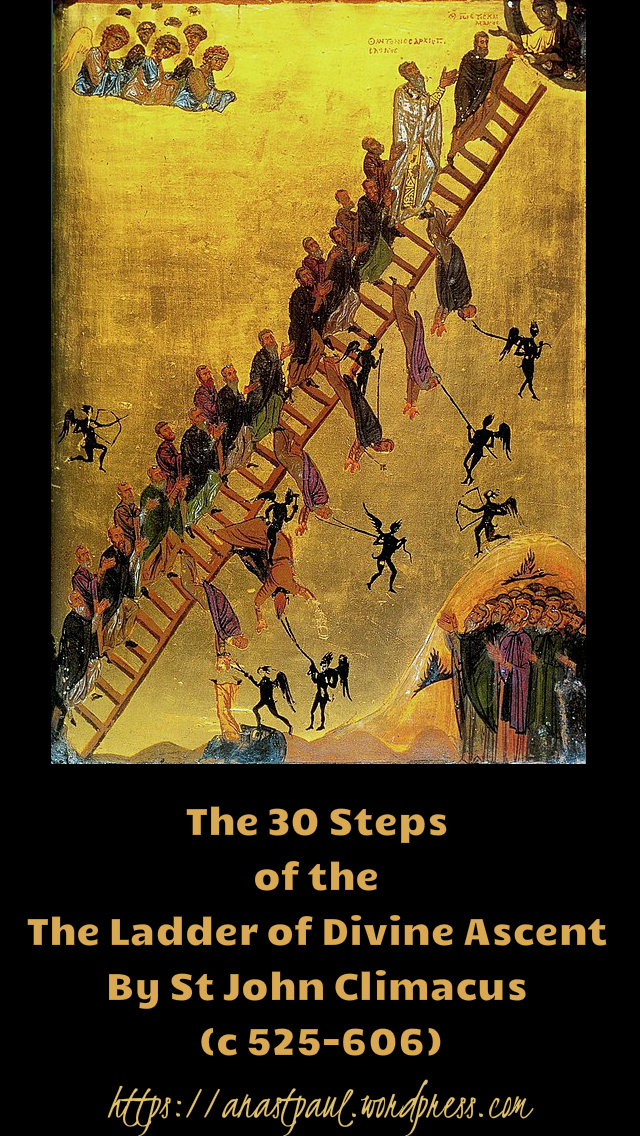
The steps are:
On renunciation of the world
On detachment
On exile or pilgrimage – concerning dreams that beginners have
On blessed and ever-memorable obedience (in addition to episodes involving many individuals)
On painstaking and true repentance which constitutes the life of the holy convicts; and about the Prison
On remembrance of death
On joy-making mourning
On freedom from anger and on meekness
On remembrance of wrongs
On slander or calumny
On talkativeness and silence
On lying
On despondency
On that clamorous mistress, the stomach
On incorruptible purity and chastity, to which the corruptible attain by toil and sweat
On love of money, or avarice
On non-possessiveness (that hastens one Heavenwards)
On insensibility, that is, deadening of the soul and the death of the mind before the death of the body
On sleep, prayer and psalmody with the brotherhood
On bodily vigil and how to use it to attain spiritual vigil, and how to practise it
On unmanly and puerile cowardice
On the many forms of vainglory
On mad pride and (in the same Step) on unclean blasphemous thoughts; concerning unmentionable blasphemous thoughts
On meekness, simplicity, and guilelessness which come not from nature but from conscious effort, and about guile
On the destroyer of the passions, most sublime humility, which is rooted in spiritual perception
On discernment of thoughts, passions and virtues; on expert discernment; brief summary of all aforementioned
On holy stillness of body and soul; different aspects of stillness and how to distinguish them
On holy and blessed prayer, the mother of virtues, and on the attitude of mind and body in prayer
Concerning Heaven on earth, or Godlike dispassion and perfection, and the resurrection of the soul before the general resurrection
Concerning the linking together of the supreme trinity among the virtues; a brief exhortation summarising all that has said at length in this book.
Read the book, here
“Repentance is the renewal of baptism.
Repentance is a contract with God for a second life.
A penitent is a buyer of humility.
Repentance is constant distrust of bodily comfort.
Repentance is self-condemning reflection of carefree self-care.
Repentance is the daughter of hope and the renunciation of despair.
A penitent is an undisgraced convict.
Repentance is reconciliation with the Lord
by the practice of good deeds contrary to the sins.
Repentance is purification of conscience.
Repentance is the voluntary endurance of all afflictions.
A penitent is the inflicter of his own punishments.
Repentance is a mighty persecution of the stomach
and a striking of the soul into vigorous awareness.”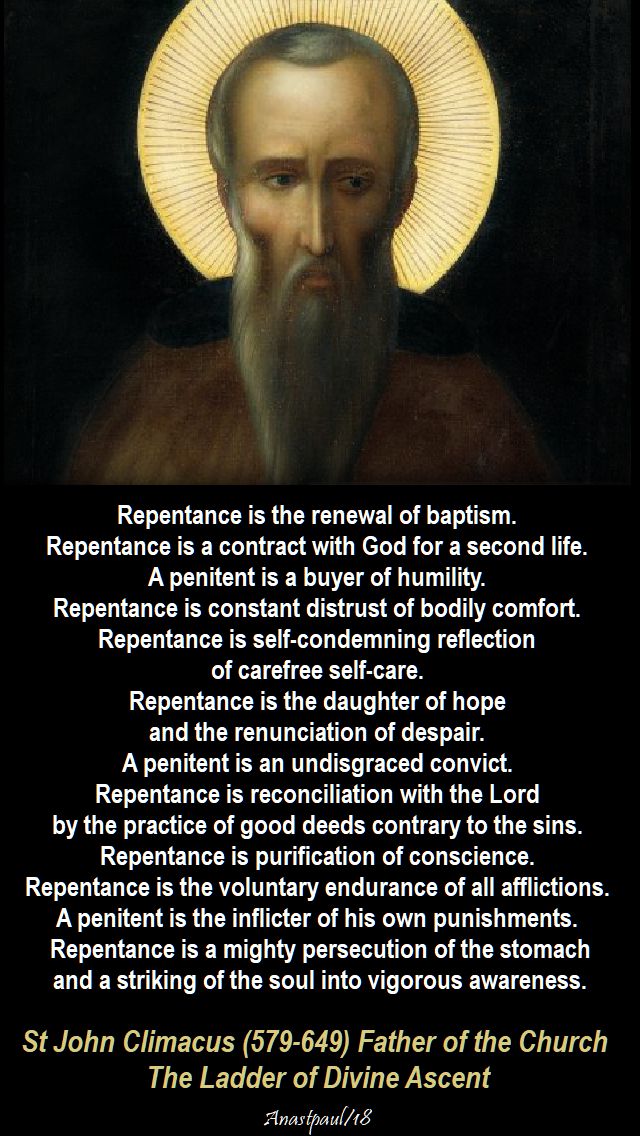
Quote of the Day – 30 March – St John Climacus – On Prayer
Quote of the Day – 30 March – Saturday of the Third week of Lent, Year C, Gospel: Luke 18:9–14 and the Memorial of St John Climacus (c 525-606)
On Prayer
“The one who requests less than he deserves from God will surely obtain more than he deserves.
This is clearly shown by the tax-collector who requested forgiveness but obtained justification.
And the thief merely requested to be remembered in His Kingdom, but he inherited Paradise.”
St John Climacus
Lenten Reflection – 30 March
Lenten Reflection – 30 March – Saturday of the Third week of Lent, Year C and the Memorial of St John Climacus (c 525-606)
The Readings
Hosea 6:1-6; Psalms 51:3-4, 18-19, 20-21AB; Luke 18:9-14
On sobriety in prayer
St John Climacus
Do not be over-sophisticated in the words you use when praying, because the simple and unadorned lisping of children has often won the heart of their heavenly Father. Do not attempt to talk much when you pray, lest your mind be distracted in searching for words. One word of the publican propitiated God and one cry of faith saved the thief. Loquacity in prayer often distracts the mind and leads to fantasy, whereas brevity- makes for concentration. If you feel sweetness or compunction at some word of your prayer, dwell on it, for then our guardian angel is praying with us.
Ask with tears, seek with obedience, knock with patience. For thus the one who asks, receives and the one who seeks, finds and to anyone who knocks it will be opened.
Those who keep constant hold of the staff of prayer will not stumble. And even if they do, their fall will not be fatal. For prayer is a devout coercion of God.
Daily Meditation:
Fill our hearts with Your love.
Our lesson today reminds us again of God’s love and Jesus’ desire
that we love one another as we are loved.
On this journey, we are learning why this is a challenge for us.
We are experiencing our human weaknesses and practising ways to be freer,
to open our hearts more fully to God’s love
and to give ourselves in fidelity, every day.
You ask us to express our thanks by self-denial.
“Come, let us return to the Lord,
for he has torn, that he may heal us,
he has stricken and he will bind us up.”
Hosea 6:1
Closing Prayer:
God of infinite love,
You shower me with limitless gifts in my life.
In my every thought and action today
guide me to the bright and loving light of Your kingdom.
Help me to be aware of
the many ways You allow me
to share in Your life so intimately today.
Thank You for the gifts You have placed in my life.
Let me be grateful every moment of this day..
May the Lord bless us,
protect us from all evil
and bring us to everlasting life.
Amen.
One Minute Reflection – 30 March –
One Minute Reflection – 30 March – Saturday of the Third week of Lent, Year C, Gospel: Luke 18:9–14
“…For everyone who exalts himself will be humbled but he who humbles himself, will be exalted.”...Luke 18:14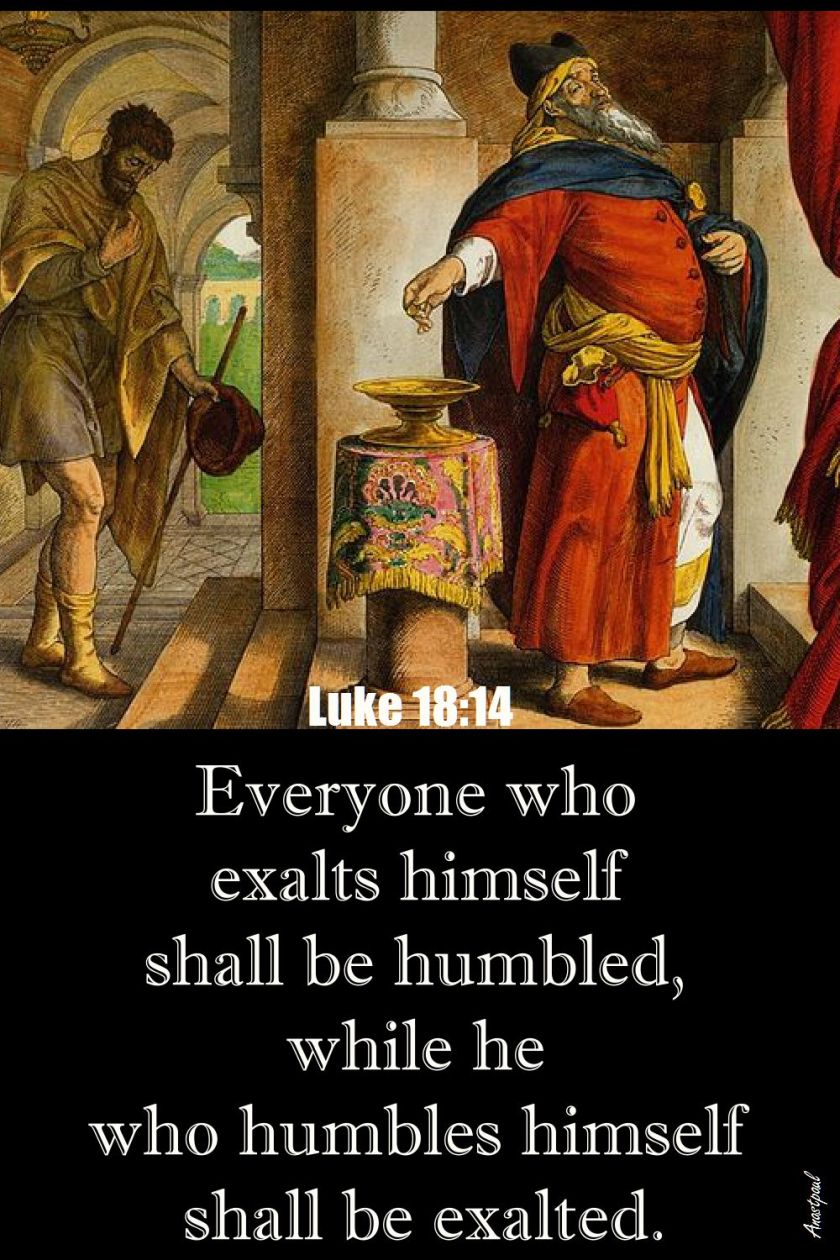
REFLECTION – “We must only pray by placing ourselves before God just as we are. Not like the pharisee who prays with arrogance and hypocrisy. We are all taken up by the frenetic pace of daily life, often at the mercy of feelings, dazed and confused. It is necessary to learn how to rediscover the path to our heart, to recover the value of intimacy and silence, because the God who encounters us and speaks to us, is there. Only by beginning there can we, in our turn, encounter others and speak with them.”…Pope Francis – General Audience, 1 June 2016
PRAYER – We turn to You our God and Father and seek Your comfort and assurance. Jesus, our Lord, Your Son, taught us how to pray and all we need to be and do, to reach You. Be patient good Father, as we grow by Your grace. May such a master of prayer, St John Climacus, be heard together with the Mother of Christ and of Prayer, as they pray on our behalf. Through Jesus our Lord, in union with the Holy Spirit, God now and forever, amen.
Our Morning Offering – 30 March 2019 – A Morning Salutation to Mary
Our Morning Offering – 30 March 2019 – Saturday of the Third week of Lent, Year C – Marian Saturdays
A Morning Salutation to Mary
A Coptic Catholic Prayer
We greet you,
glorious Mother of the Light,
O Blessed Mary,
from the rising of the sun to its setting,
praise is due to you,
O Mother of God.
You are the second heaven,
the bright unfading flower,
the ever-virgin mother.
For the Father chose you
and the Holy Spirit overshadowed you
and the Son,
humbled Himself
and took flesh from you.
Therefore, ask Him,
to give salvation to the world
He has created
and to deliver it from every tribulation.
And we will sing to Him a new song
and bless Him,
now and forever,
amen!
Saint of the Day – 30 March – St John Climacus (c 525-606)
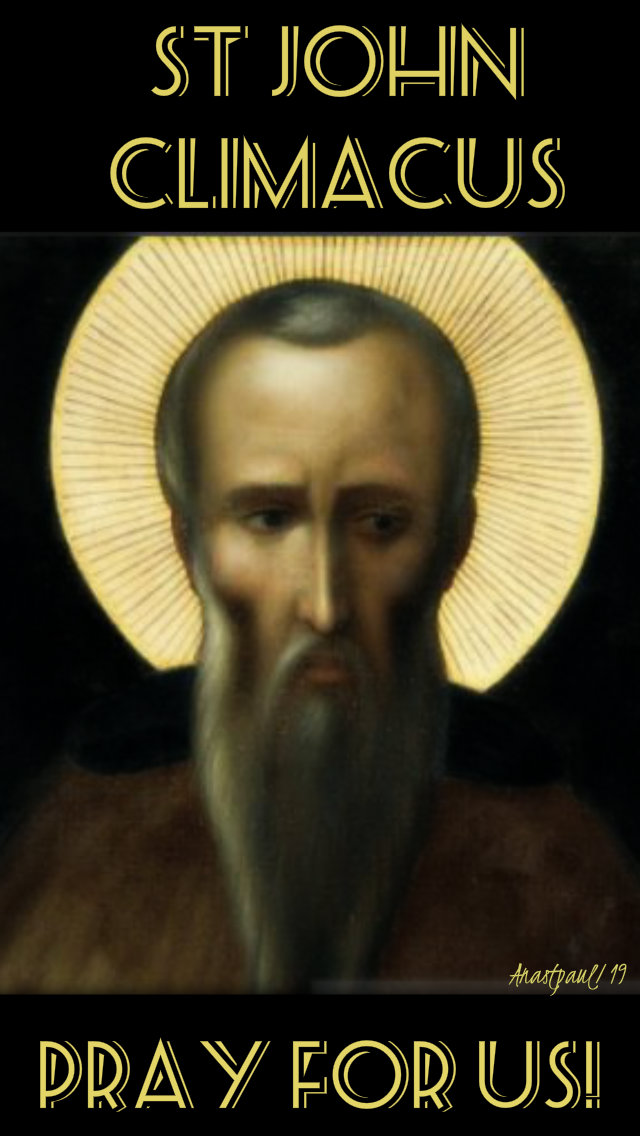
Saint of the Day – 30 March – St John Climacus (c 525-606) aged 80-81 – Anchorite Monk, Mystic, Poet, Writer, Ascetic – also known as St John of the Ladder, John Scholasticus, John the Sinaita. John made, while still young, such progress in learning that he was called the Scholastic.
A native of Palestine, at sixteen, John entered a monastery in the Palestinian desert. After four years of training in a community, he took the vows and an aged abbot foretold that he would some day be one of the greatest lights of the Church.
Nineteen years later, on the death of his director, he withdrew into a deeper solitude, where he studied the lives and writings of the Saints and was raised to an unusual height of contemplation. The fame of his holiness and practical wisdom drew crowds around him for advice and consolation. For his greater profit he visited the solitudes of Egypt. He lived forty years as a hermit. Like other desert fathers, he broke his near-total solitude only on Saturdays and Sundays to worship with other hermits and counsel his followers.
Early in his monastic career John decided that as a mark of submision to God he would receive all criticism as true. Once, for example, some monks reproached him for wasting time in idle conversation. So, to correct what he regarded as a serious fault, for a year John observed absolute silence. Only when his disciples insisted that they needed his spiritual teaching did the saint start speaking again.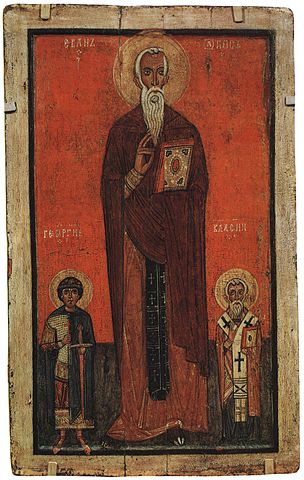
He was induced by a brother abbot to write the rules by which he had guided his life and his book called the Climax, or Ladder of Perfection/The Ladder of Divine Ascent, has been prized in all ages for its wisdom, its clearness and its unction. He took his name Climacus or “ladder” from his book . The reader who climbed The Ladder ascended thirty steps to holiness. According to St John, the goal was to reach a state of apatheia or passive disinterestedness in earthly life, so as to anticipate the wonders of heaven.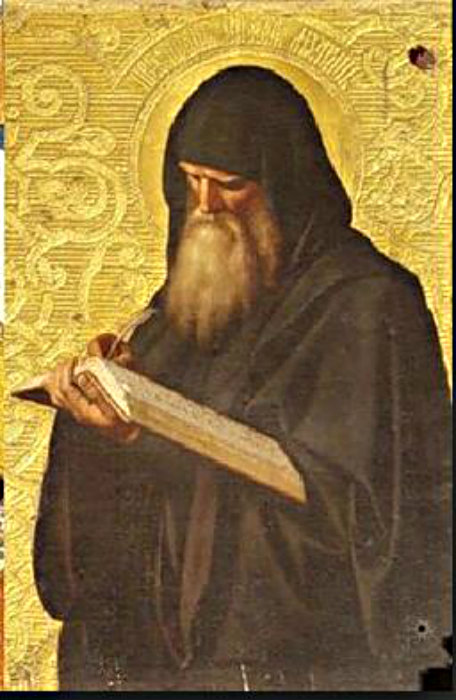
Each step communicates some practical insight into Christian living that twenty-first-century readers will still find beneficial. An icon known by the same title, Ladder of Divine Ascent, depicts a ladder extending from earth to heaven (cf. Genesis 28:12) Several monks are depicted climbing a ladder; at the top is Jesus, prepared to receive them into Heaven. Also shown are angels helping the climbers and demons attempting to shoot with arrows or drag down the climbers, no matter how high up the ladder they may be. Most versions of the icon show at least one person falling. Often, in the lower right corner St John Climacus himself is shown, gesturing towards the ladder, with rows of monastics behind him.

When John was seventy he was elected abbot of the monastery at Mount Sinai. That was an appropriate choice, for many monks saw John as a Moses who had received Christian commandments from God and recorded them in his Ladder. After four years in office, John retired to his cell and died there c 606 at around eighty years of age.
St John’s feast day is 30 March in both the East and West. The Eastern Orthodox Church and the Byzantine Catholic Churches additionally commemorate him on the Fourth Sunday of Great Lent. Many churches are dedicated to him in Russia, including a church and belltower in the Moscow Kremlin.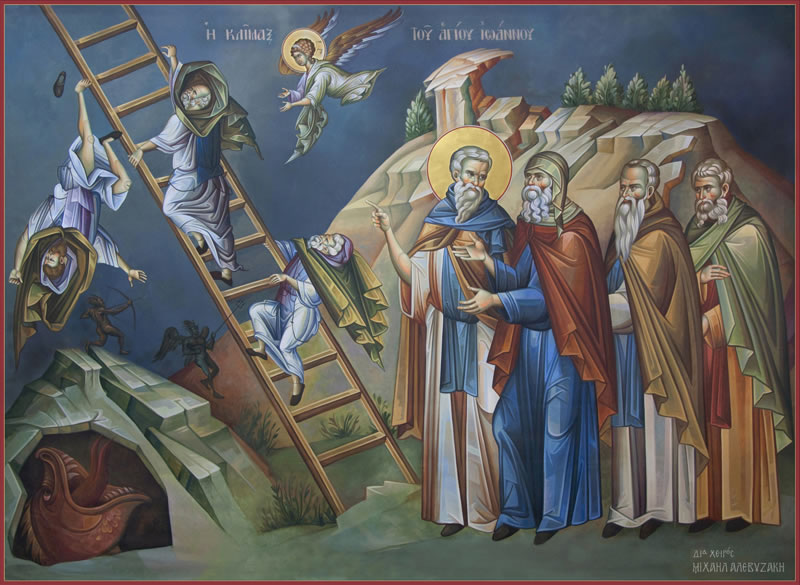
Memorials of the Saints – 30 March
Bl Amadeus of Savoy
St Clinius of Pontecorvo
St Cronan Mochua
St Damiano
St Domnino of Thessalonica
St Fergus of Downpatrick
St Irene of Rome
Bl Joachim of Fiore
St John Climacus (c 525-606) aged 80-81
St Julio Álvarez Mendoza
St Leonard Murialdo
St Ludovico of Casoria
St Mamertinus of Auxerre
St Marie-Nicolas-Antoine Daveluy
Bl Maria Restituta Kafka
St Osburga of Coventry
St Pastor of Orléans
St Patto of Werden
St Peter Regulatus
St Quirinus the Jailer
St Regulus of Scotland
St Regulus of Senlis
St Secundus of Asti
St Tola
St Zozimus of Syracuse
—
Martyrs of Constantinople: ourth-century Christians who were exiled, branded on the forehead, imprisoned, tortured, impoverished and murdered during the multi-year persecutions of the Arian Emperor Constantius. They were martyred
between 351 and 359 in Constantinople.
Martyrs of Korea:
Marie-Nicolas-Antoine Daveluy
Iosephus Chang Chu-gi
Lucas Hwang Sok-tu
Martin-Luc Huin
Pierre Aumaître
Lenten Reflection – 29 March – Repairing the Wrong Done by St John Vianney
Lenten Reflection – 29 March – Friday of the Third week of Lent, Year C, Gospel: Mark 12:28–34
“…You shall love the Lord your God
with all your heart and with all your soul
and with all your mind and with all your strength.’
The second is this,
‘You shall love your neighbour as yourself.’
There is no other commandment
greater than these.”
Mark 12:30-32
St John Vianney (1786-1859)
REPAIRING THE WRONG DONE
Having made satisfaction to God, we must then make satisfaction to our neighbour for the wrong which-either in his body or in his soul — we have done him. I say that it is possible to wrong him in his body, that is to say, in his person, by attacking him either by injurious or insulting words or by bad treatment. If we have sinned against him by injurious words, then we must apologise to him and make our reconciliation with him. If we have done him some wrong by belabouring his animals, as sometimes happens when we find that they have been doing damage among our crops, we are obliged to give him all that we have been the cause of his losing: -we could have got compensation without maltreating these animals. If we have done any harm, we are obliged to repay as soon as we can, otherwise we will be gravely at fault. If we have neglected to do that, we have sinned and we must confess it.
If you have done wrong to your neighbour in his honour, as, for instance, by scandalous talk, you are obliged to make up by favourable and beneficent talk for all the harm you have done to his reputation, saying all the good of him which you know to be true and concealing any faults which he may have and which you are not obliged to reveal. If you have calumniated your neighbour, you must go and find the people to whom you have said false things about him and tell them that what you have been saying is not true, that you are very grieved about it and that you beg them not to believe it.
But if you have done him harm in his soul, it is a still more difficult thing to repair and yet it must be done as far as possible, otherwise God will not pardon you.
You must also examine your conscience as to whether you have given scandal to your children or to your next-door neighbours. How many fathers, mothers, masters and mistresses are there who scandalise their children and their servants, by not saying their prayers morning or evening or by saying them when they are dressing or sitting back in a chair, who do not even make the Sign of the Cross before and after a meal? How many times are they heard swearing, or perhaps even blaspheming?
How many times have they been seen working on Sunday morning, even before Holy Mass?
You must consider, too, whether you have sung bad songs, or brought in bad books, or whether you have given bad counsel, as, for instance, advising someone that he should take his revenge on someone else, should exact satisfaction by force.
Consider, too, whether you have ever taken anything from a next-door neighbour and neglected to pay it back, whether you have neglected to give some alms which you had been told to give or make some restitution which your parents, who are dead, should have made. If you wish to have the happiness of having your sins forgiven, you must have nothing belonging to anyone else, which you should and could pay back. So if you have sullied your neighbour’s reputation, you must do all in your power to repair the damage. You must be reconciled with your enemies, speak to them as if they had never done you anything but good all your life, keeping nothing in your heart but the charity, which the good Christian should have for everyone, so that we can all appear with confidence before the tribunal of God. 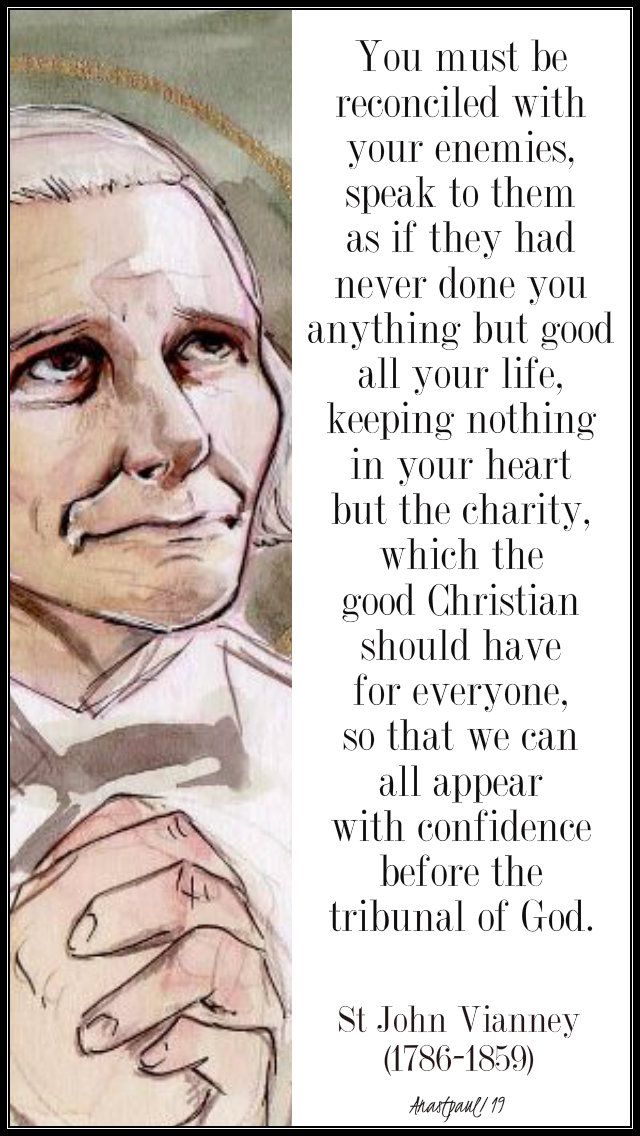
Quote of the Day – 29 March – O great and good God
Quote of the Day – 29 March – Friday of the Third week of Lent, Year C and the Memorial of St Ludolf of Ratzeburg O.Praem. (Died 1250) Martyr
“O great and good God,
allow me,
Your useless servant,
to belong to You
for all eternity.”
St Ludolf of Ratzeburg (Died 1250) Martyr
His last words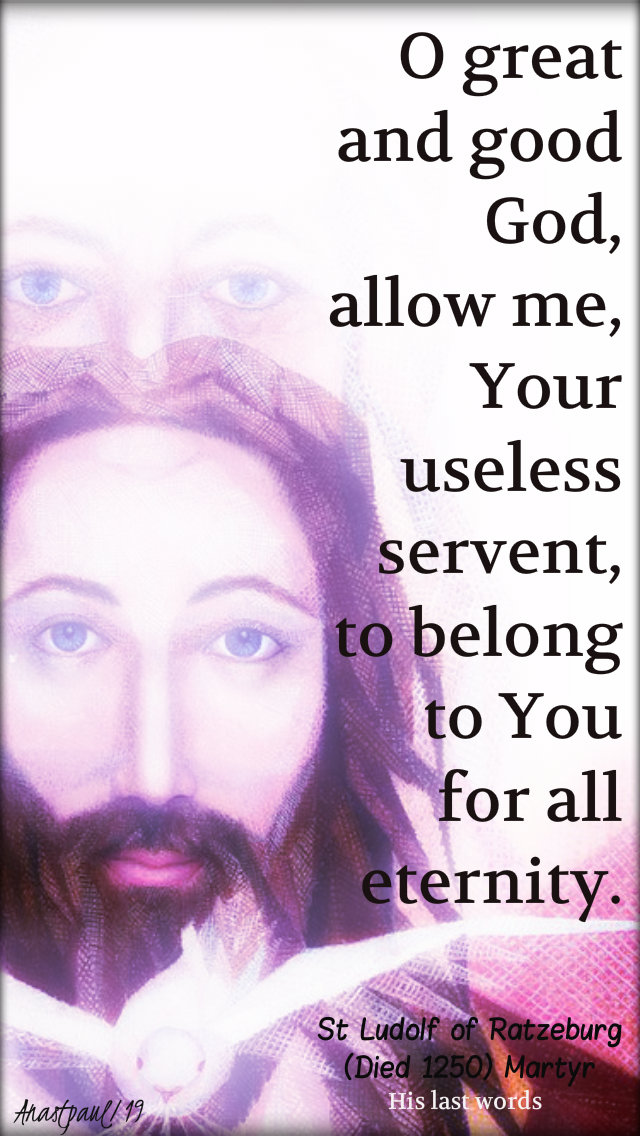
Lenten Reflection – 29 March – “At the end of your life, you will be judged by your love.”
Lenten Reflection – 29 March – Friday of the Third week of Lent, Year C, Gospel: Mark 12:28–34
“You shall love the Lord your God with all your heart and with all your soul, and with all your mind. This is the greatest and first commandment” (vv. 37-38). And he could have stopped there. Yet, Jesus adds something that was not asked by the doctor of the law. He says, in fact: “And a second is like it, You shall love your neighbour as yourself” (v. 39). And in this case too, Jesus does not invent the second commandment but takes it from the Book of Leviticus. The novelty is in His placing these two commandments together — love for God and love for neighbour — revealing that they are in fact inseparable and complementary, two sides of the same coin.”…Pope Francis – Angelus, 26 October 2014
“Stand fast, therefore,
in this conduct
and follow the example of the Lord,
firm and unchangeable in faith,
lovers of the brotherhood,
loving each other,
united in truth,
helping each other
with the mildness of the Lord,
despising no man.”
St Polycarp, Letter to the Philippians
Daily Meditation:
Fill our hearts with your love.
Our lesson today reminds us again
of God’s love and Jesus’ desire
that we love one another as we are loved.
On this journey, we are learning why this is a challenge for us.
We are experiencing our human weaknesses
and practising ways to be freer,
to open our hearts more fully to God’s love
and to give ourselves in fidelity, every day.
You ask us to express our thanks by self-denial.
We are to master our sinfulness
and conquer our pride.
We are to show to those in need
Your goodness to ourselves.
Preface for Lent III
Closing Prayer:
God of Mercy,
I feel my heart overflowing with Your tenderness.
I sense Your loving touch deep within my soul.
I ask for Your help in my weakness
that I might be faithful to Your word
and I am so grateful
that Your mercy for my failings
is as strong as Your unbounded love for me.
May the Lord bless us,
protect us from all evil
and bring us to everlasting life.
Amen.
“At the end of your life,
you will be judged by your love.”
St John of the Cross (1542-1591) Doctor of the Church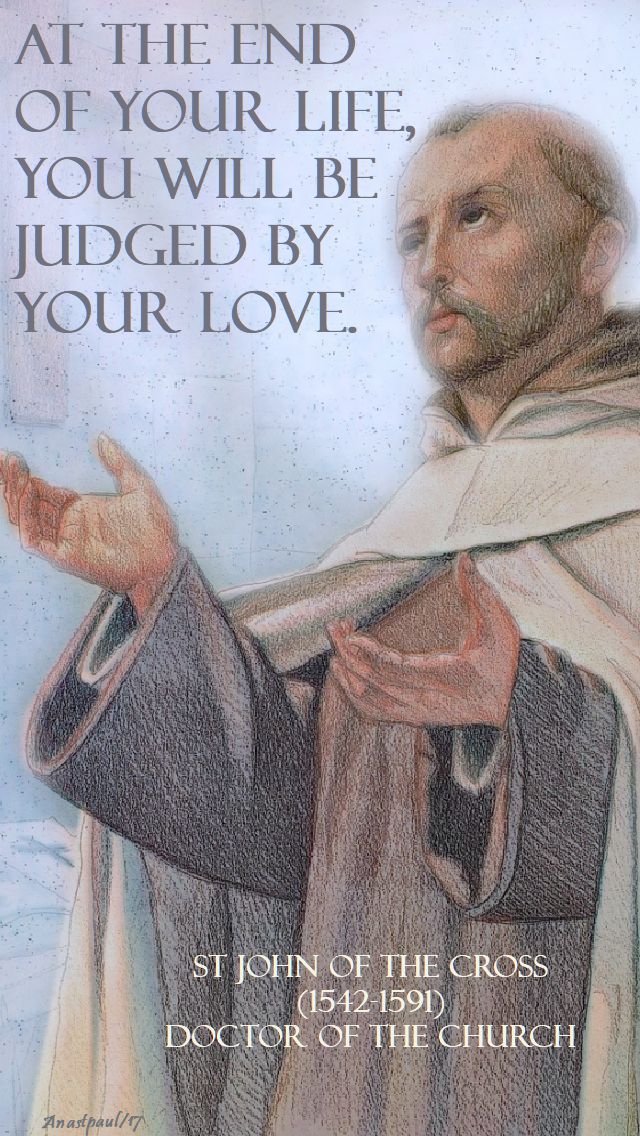
One Minute Reflection – 29 March – Seeing with the Eyes of Christ
One Minute Reflection – 29 March – Friday of the Third week of Lent, Year C, Gospel: Mark 12:28–34
“…You shall love the Lord your God with all your heart, and with all your soul and with all your mind and with all your strength.’ The second is this, ‘You shall love your neighbour as yourself.’ There is no other commandment greater than these.” …Mark 12:30-32
REFLECTION – “The love-story between God and man consists in the very fact that this communion of will, increases in a communion of thought and sentiment and thus our will and God’s will increasingly coincide – God’s will is no longer for me an alien will, something imposed on me from without by the commandments but it is now, my own will, based on the realisation that God is, in fact, more deeply present to me, than I am to myself. Then self- abandonment to God increases and God becomes our joy (cf. Ps 73 [72]:23-28).
Love of neighbour is thus shown to be possible, in the way proclaimed by the Bible, by Jesus. It consists in the very fact that, in God and with God, I love even the person whom I do not like or even know. This can only take place on the basis of an intimate encounter with God, an encounter which has become a communion of will, even affecting my feelings. Then, I learn, to look on this other person not simply with my eyes and my feelings but from the perspective of Jesus Christ. His friend is my friend… Seeing with the eyes of Christ, I can give to others much more, than their outward necessities, I can give them the look of love which they crave.”…Pope Benedict XVI – Encyclical “ Deus caritas est ”, § 17 – 18
PRAYER – Holy and eternal Father, we give praise to You for the radiant light You sent into the world, Your divine Son, Your Word made flesh. For He guides our steps in a path of light and teaches us how to live. May we love and glorify You and love our neighbour as ourselves. Grant, we pray, that by the help of Your angels and saints and Mary, our Immaculate Mother, we may proceed to live Your Word of Truth. Through Christ, our Lord, with the Holy Spirit, one God forever, amen.
Our Morning Offering – 29 March – I Beg You, O Lord
Our Morning Offering – 29 March – Friday of the Third week of Lent, Year C
I Beg You, O Lord
By St Peter Canisius SJ (1521-1597) Doctor of the Church
I beg You, O Lord
to remove anything
which separates me from You,
or You from me
Remove anything
that makes me unworthy
of Your sight,
Your control,
Your reprehension,
of Your speech and conversation,
of Your benevolence and love.
Cast from me,
every evil that stands in the way
of my seeing You,
hearing,
tasting,
savouring
and touching You,
fearing and being mindful of You,
knowing, trusting, loving
and possessing You,
being conscious of Your Presence
and as far as maybe,
enjoying You.
This is what I ask for myself
and earnestly desire from You.
Amen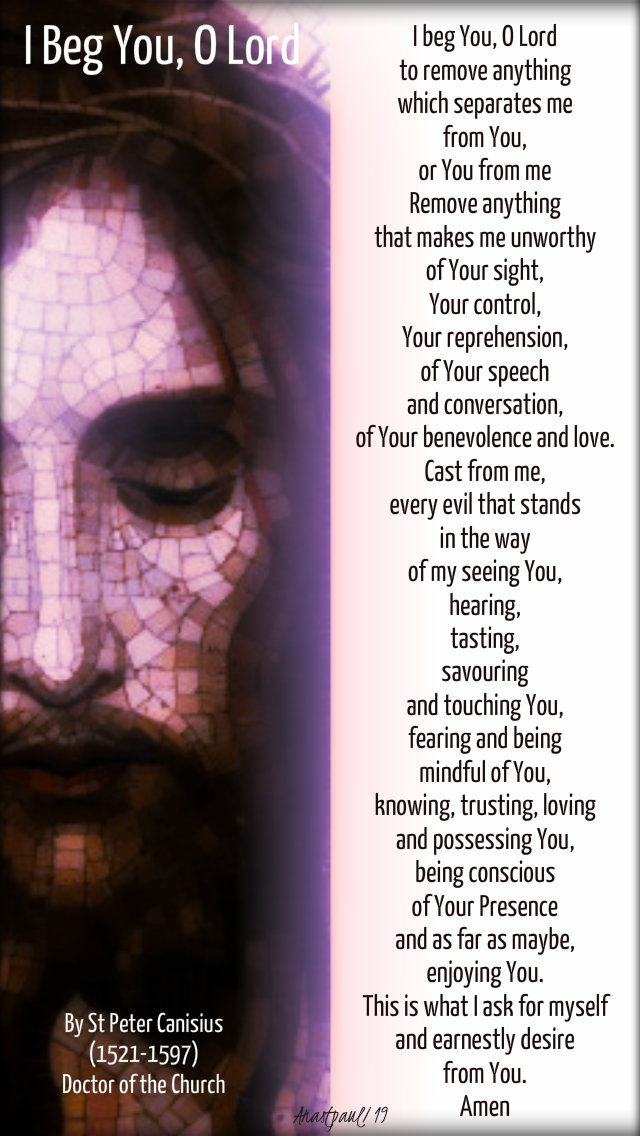
Saint of the Day – 29 March – St Ludolf of Ratzeburg O.Praem. (Died 1250) Martyr
Saint of the Day – 29 March – St Ludolf of Ratzeburg O.Praem. (Died 1250) Bishop and Martyr, Preacher and founder of a community of Norbertine Sisters, Reformer and Counseller. St Ludolf was a Priest of the Premonstratensian (Norbertines) Order, particularly invoked as a martyr for the freedom of the Church.
Ludolph was a Norbertine Canon who was appointed to the See of the newly-formed Prince-Bishopric of Ratzeburg in 1236. He led such a strict religious life that his community was nicknamed the “carcer ordinis” (Prison of the Order).
Nothing is known of the early years of Ludolph. He joined the Norbertine Cathedral Chapter of Ratzeburg where he was treasurer before being elected eighth bishop of Ratzeburg in 1236. He was renowned for his exemplary religious life and powerful preaching of the word of God. He also founded a community of Norbertine sisters at Rehna.
Like the Good Shepherd, Ludolph focused all his energies on the care of souls. He preached and made pastoral visitations. The pope entrusted him with several political missions, forcing him to fight for the rights and freedom of the Church. His most difficult trial involved standing up to Prince Albert, the “Bear of Saxony,” who had taken possession of cathedral properties—an act that Ludolph resisted. The prince’s insults and threats did not intimidate him. The Duke had him imprisoned, where he was beaten and later sent into exile. Albert consequently ordered Ludolph thrown into a dungeon, where he had to suffer severe tortures. Realising that his treatment of the bishop was unpopular, the prince decided to set Ludolph free. After his release from prison, he was brought half-dead to the Franciscans at Wismar but he died shortly after.
It was during this exile that Ludolph, weighed down by the infirmities suffered in prison and by his advancing old age, fell gravely ill. He celebrated his last Mass on Holy Thursday. His final words were “O great and good God, allow me, your useless servant, to belong to you for all eternity.”
His body was returned to Ratzeburg for burial. As the procession passed through Schlagsdorf, the bells of the city were said to ring of their own accord. At the command of the Duke, Ludolph’s body was carried from the bridge to the cathedral by the nobility of Ratzeburg. Ludolph’s confreres carried him into the cathedral themselves where he found his final resting place. Ludolph is honoured as a “Bishop and a Martyr for the Rights and Freedom of the Church.” He is portrayed with the regalia of a bishop, bearing the shackles that bound him in prison and holding the palm of martyrdom.
After his death, those who visited his grave in the Cathedral of Ratzeburg reported numerous favours received. The centuries-old veneration of Ludolph was confirmed and extended to the whole order by Pope Benedict XIII on 12 April 1728.
The head of Ludolph was kept in the possession of the Norbertine nuns of Meer in Prussia, beginning in the 17th century. After the secularisation of this convent, the relic came into the possession the abbot of Hamborn in 1826.  On 5 March 1984, the Congregation for Divine Worship granted permission for the public veneration of the three Norbertine bishop-saints of Ratzeburg, see image right – Ludolph, Evermode and Isfrid.
Concerning the “punishment”, the Apostle says: “Because through many trials it is fitting that we enter the kingdom of God”. And again: “The sufferings of this time are not worthy to be compared to the future glory which will be revealed in us”.
Concerning the “cause”, we read: “It is not the punishment that makes the martyr but the cause”. In this regard we read in the Gospel: “Blessed are those who suffer persecution for the sake of justice”.
– Life of St Norbert, Vita B, Chapter V
Almighty God, you made the bishop and martyr Ludolph a zealous and fearless witness of your Church. Through his intercession grant that we may be filled with patience in all the trials of life and be found worthy to belong to you for all eternity. We ask this through Christ our Lord, AMEN.
Memorials of the Saints – 29 March
St Acacia of Antioch
St Archmimus of Africa
St Armogastes of Africa
St Barachasius
Bl Bertold of Mount Carmel
St Constantine of Monte Cassino
St Eustachio of Naples
St Firminus of Viviers
St Gladys
St Gwynllyw
Bl Hugh of Vaucelles
Bl John Hambley
St Jonas of Hubaham
St Lasar
St Ludolf of Ratzeburg O.Praem. (Died 1250) Martyr
St Mark of Arethusa
St Masculas of Africa
St Pastor of Nicomedia
St Saturus of Africa
St Simplicius of Monte Cassino
St Victorinus of Nicomedia
St William Tempier
Lenten Thoughts – 28 March – St Ambrose: “Hold fast to God”
Lenten Thoughts – 28 March – Thursday of the Third Week of Lent, Year C
Hold fast to God, the one true good
Saint Ambrose (340-397)
Bishop and Great Latin Father and Doctor of the Church
An excerpt from his Flight from the World
Where a man’s heart is, there is his treasure also. God is not accustomed to refusing a good gift to those who ask for one. Since He is good and especially to those who are faithful to Him, let us hold fast to Him with all our soul, our heart, our strength and so enjoy His light and see His glory and possess the grace of supernatural joy. Let us reach out with our hearts to possess that good, let us exist in it and live in it, let us hold fast to it, that good which is beyond all we can know or see and is marked by perpetual peace and tranquillity, a peace which is beyond all we can know or understand.
This is the good that permeates creation. In it we all live, on it we all depend. It has nothing above it, it is divine. No-one is good but God alone. What is good, is therefore, divine, what is divine is therefore good. Scripture says: When you open your hand all things will be filled with goodness. It is through God’s goodness that all that is truly good is given us and in it, there is no admixture of evil.
These good things are promised by Scripture to those who are faithful – The good things of the land will be your food.
We have died with Christ. We carry about in our bodies the sign of His death, so that the living Christ may also be revealed in us. The life we live is not now our ordinary life but the life of Christ, a life of sinlessness, of chastity, of simplicity and every other virtue. We have risen with Christ. Let us live in Christ, let us ascend in Christ, so that the serpent may not have the power here below, to wound us in the heel.
Let us take refuge from this world. You can do this in spirit, even if you are kept here in the body. You can at the same time be here and present to the Lord. Your soul must hold fast to Him, you must follow after Him in your thoughts, you must tread His ways by faith, not in outward show. You must take refuge in Him. He is your refuge and your strength. David addresses Him in these words: I fled to you for refuge and I was not disappointed.
Since God is our refuge, God who is in heaven and above the heavens, we must take refuge from this world in that place where there is peace, where there is rest from toil, where we can celebrate the great sabbath, as Moses said – The sabbaths of the land will provide you with food. To rest in the Lord and to see His joy, is like a banquet and full of gladness and tranquillity.
Let us take refuge like deer beside the fountain of waters. Let our soul thirst, as David thirsted, for the fountain. What is that fountain? Listen to David – With you is the fountain of life. Let my soul say to this fountain, When shall I come and see You face to face? For the fountain is God Himself.
Quote/s of the Day – 28 March – Our Father
Quote/s of the Day – 28 March – Thursday of the Third Week of Lent, Year C
Speaking of: Our Father
Dear Father, all that I do
I do it for You.
“I do as the Father
has commanded me, so that the world
may know that I love the Father.”
John 14:31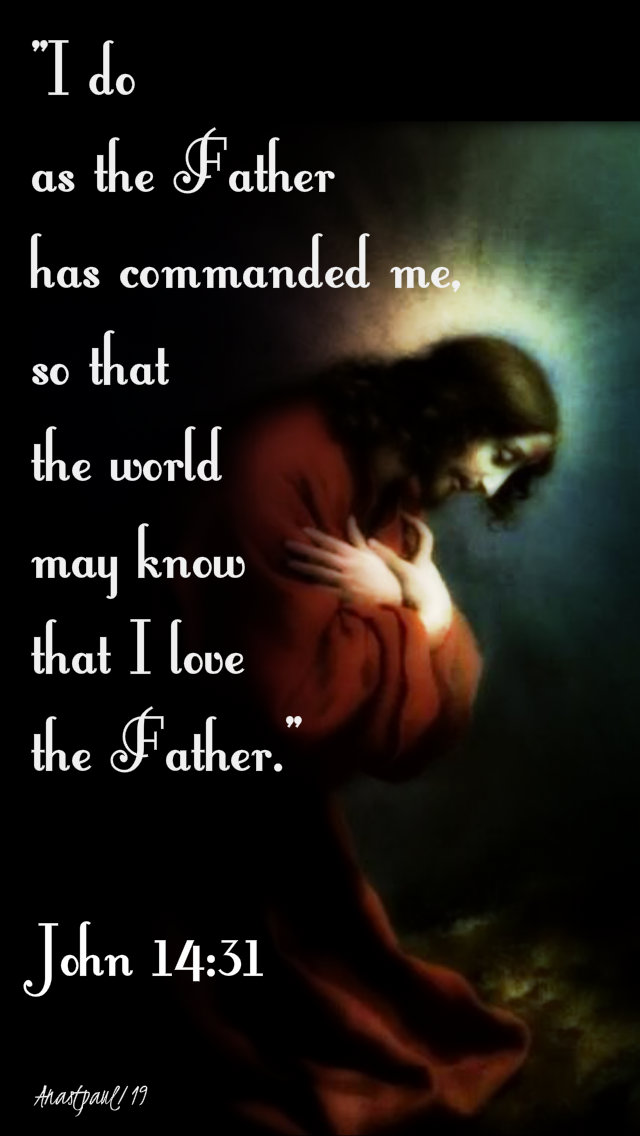
“God has created me to do Him some definite service.
He has committed some work to me,
which he has not committed to another.
I have my mission,
I never may know it in this life
but I shall be told it in the next.
I have a part in a great work,
I am a link in a chain,
a bond of connection between persons.
He has not created me for naught.
I shall do good,
I shall do His work,
I shall be an angel of peace,
a preacher of truth in my own place,
while not intending it,
if I do but keep His commandments
and serve Him in my calling.”
“Life passes,
riches fly away,
popularity is fickle,
the senses decay,
the world changes.
One alone is true to us.
One alone can be all things to us.
One alone can supply our need.”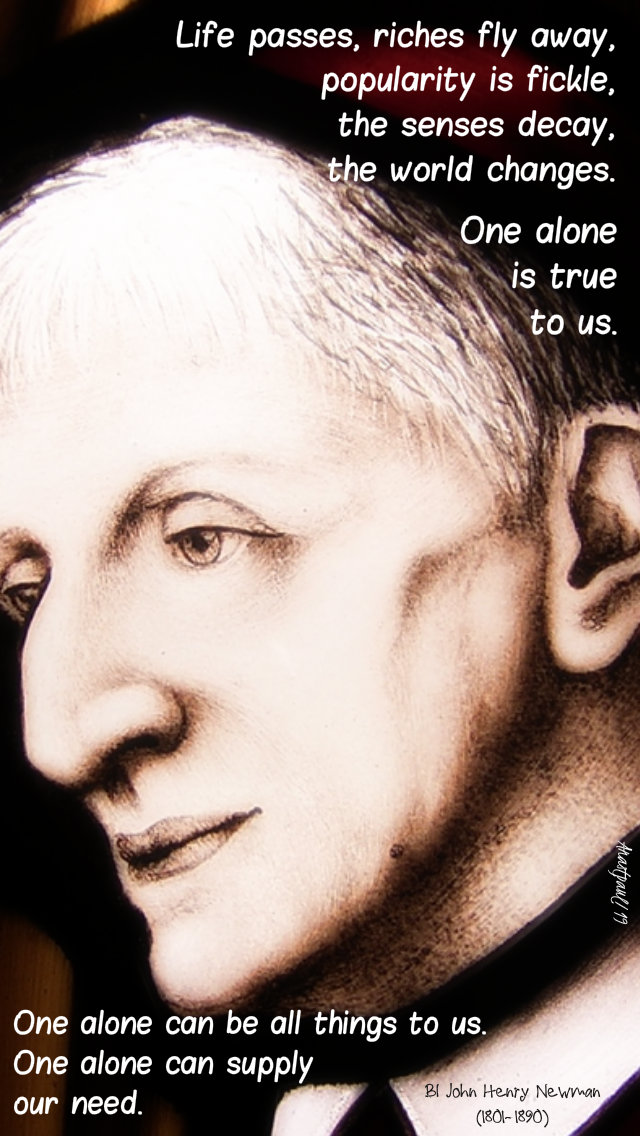
“I sought to hear the voice of God
and climbed the topmost steeple
but God declared:
“Go down again –
I dwell among the people.”
“I will trust Him.
Whatever, wherever I am,
I can never be thrown away.
If I am in sickness,
my sickness may serve Him,
in perplexity,
my perplexity may serve Him,
if I am in sorrow,
my sorrow may serve Him.
My sickness,
or perplexity,
or sorrow,
may be necessary causes
of some great end,
which is quite beyond us.
He does nothing in vain!”
“Fear not that
thy life shall come
to an end
but rather fear,
that it shall never have
a beginning.”
Blessed John Henry Newman (1801-1890)
Lenten Reflection – 28 March – “Whoever does not gather with me scatters”
Lenten Reflection – 28 March – Thursday of the Third Week of Lent, Year C
The Readings
Jeremiah 7:23-28; Psalms 95:1-2, 6-7, 8-9; Luke 11:14-23
“Whoever does not gather with me scatters.”
Luke 11:23St Simeon the New Theologian (949-1022)
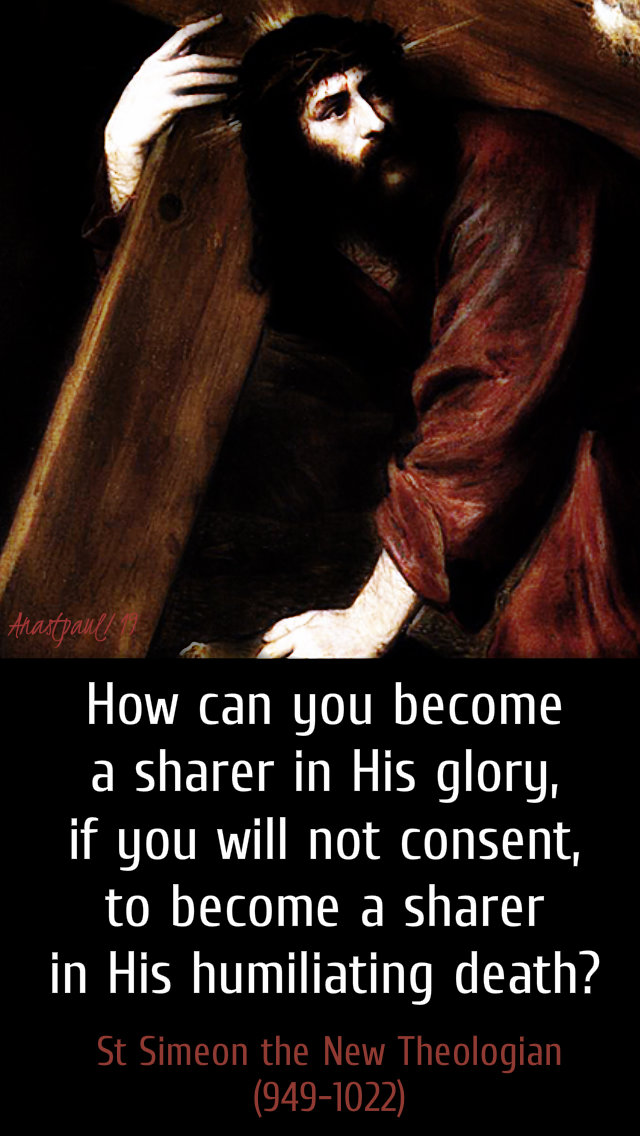
Catechesis 27Your Master is not disturbed by mockery and do you get upset? He bears spittle, blows, strokes of the lash and can you not take a harsh word? He accepts the cross, a humiliating death, the torture of the nails and can you not undertake to carry out the lowliest of tasks? How can you become a sharer in His glory (1 Pt 5:1) if you will not consent to become a sharer in His humiliating death?
Your having forsaken your wealth is truly useless if you have no wish to take up the cross, as He Himself commanded with His word of truth. “Sell what you have and give to the poor,” stipulated Christ to the young man, as also to ourselves, “Take up your cross”, “Come, follow me” (Mt 19:21; 16:24). You may indeed have shared out your goods yet without consenting to take up your cross, that is to say, courageously enduring the attack of all kinds of trials. You have strayed on the path of life and, to your own misfortune, have parted from your most sweet God and Master.
I implore you, my brethren, let us observe all Christ’s commands, let us bear until death, for love of the Kingdom of heaven, the trials that assail us so that we may have communion with the glory of Jesus, share in eternal life and inherit the joy of those good things that cannot be expressed in Christ Jesus our Lord.
Daily Meditation:
May our love grow each day.
We are at the half-way point in our Lenten journey today.
There is so much yet to learn, to examine, to heal, to renew.
We have a sense of the patterns we are naming and a sense of the graces we are asking for,
as well as the ways God is working in us.
We want to be ready and our Lord wants us to be confident.
So we keep asking and we keep giving thanks, throughout our day.
‘Obey my voice and I will be your God
and you shall be my people
and walk in all the way that I command you,
that it may be well with you.’
Jeremiah 7:23
Closing Prayer:
Loving God,
I hear Your invitation, “Come back to me”
and I am filled with such a longing to return to You.
Show me the way to return.
Lead me this day in good works I do in Your name
and send Your Spirit to guide me and strengthen my faith.
I ask only to feel Your love in my life today.
May the Lord bless us,
protect us from all evil
and bring us to everlasting life.
Amen.
One Minute Reflection – 28 March – A divided household falls.
One Minute Reflection – 28 March – Thursday of the Third Week of Lent, Year C, Luke Gospel – 11:14–23
“Every kingdom divided against itself is laid waste and a divided household falls.”…Luke 11:17
REFLECTION – “But this episode contains an admonishment which is useful to all of us. Indeed, it can happen that deep envy of a person’s goodness and good works can drive one to falsely accuse him or her. Here there is true, lethal poison, the malice with which, in a premeditated manner, one wants to destroy the good reputation of the other. May God free us from this terrible temptation! And if, by examining our conscience, we realise that this weed is sprouting within us, let us go straight away to confess it in the Sacrament of Penance, before it grows and produces its evil effects, which are incurable. Be careful, because this attitude destroys families, friendships, communities and even society.”...Pope Francis – Angelus, 10 June 2018
PRAYER – Lord God, You love innocence of heart and when it is lost, You alone can restore it. Turn then our hearts to You and kindle in them the fire of Your Spirit. Lead us to purity of heart, that we may be true radiant lights of Christ and no longer spread the darkness of unkindness, jealousy, gossip and may we atone for our sins. May Your Word take flesh in our lives and Your Truth shine forth in our actions. Mary, Blessed and Merciful, the Refuge of Sinners, help us! Through Jesus Christ our Lord and Saviour, with the Holy Spirit, one God forever, amen.
Our Morning Offering – 28 March -O Jesus, Mary’s Son!
Our Morning Offering – 28 March – Thursday of the Third Week of Lent, Year C
As, today, we celebrate Blessed Venturino of Bergamo OP, we pray a prayer, from one of the greatest of all Dominicans:
O Jesus, Mary’s Son!
By St Thomas Aquinas (1225-1274)
Doctor Angelicus, Doctor communis
Hail to Thee! True body sprung
From the Virgin Mary’s womb!
The same that on the cross was hung
And bore for man the bitter doom.
Thou Whose side was pierced and flowed
Both with water and with blood.
Suffer us to taste of Thee
In our life’s last agony.
O kind, O loving One!
O Jesus, Mary’s Son!
Amen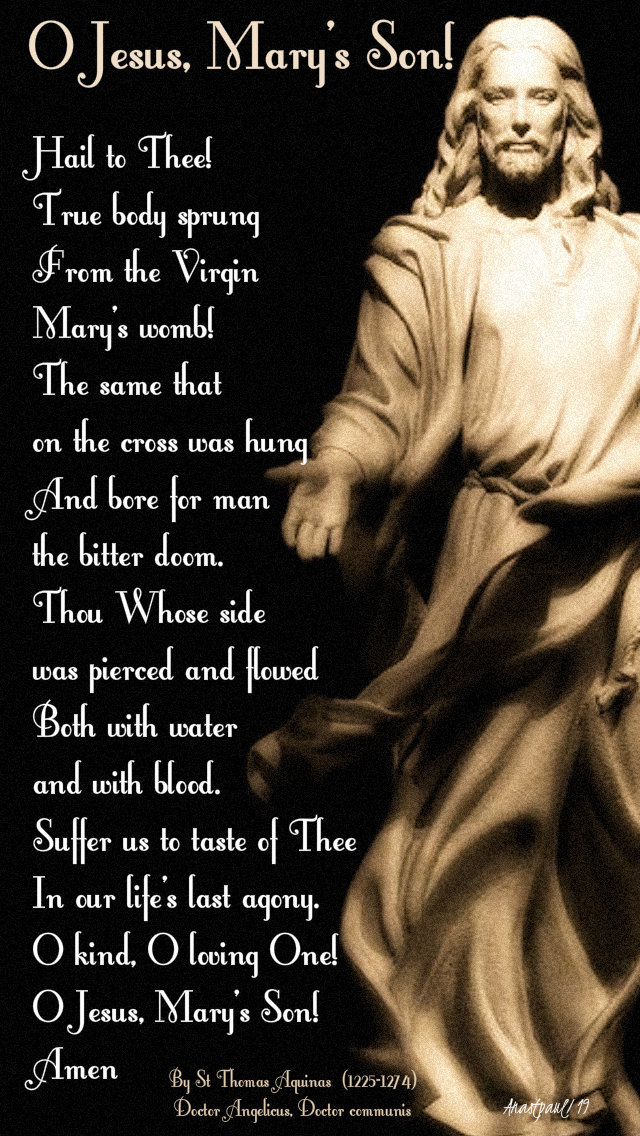
Saint of the Day – 28 March – Blessed Venturino of Bergamo OP (1304-1346)
Saint of the Day – 28 March – Blessed Venturino of Bergamo OP (1304-1346) – Priest, Friar of the Order of Preachers of St Dominic, Preacher, Missionary Preacher of the Crusades, Writer. Born on 9 April 1304 in Bergamo, Italy as Lorenzo de Apibus and died on 28 March 1346 at Smyrna, Asia Minor (in modern Turkey) of natural causes. Also known as – Venturinus, Lorenzo de Apibus.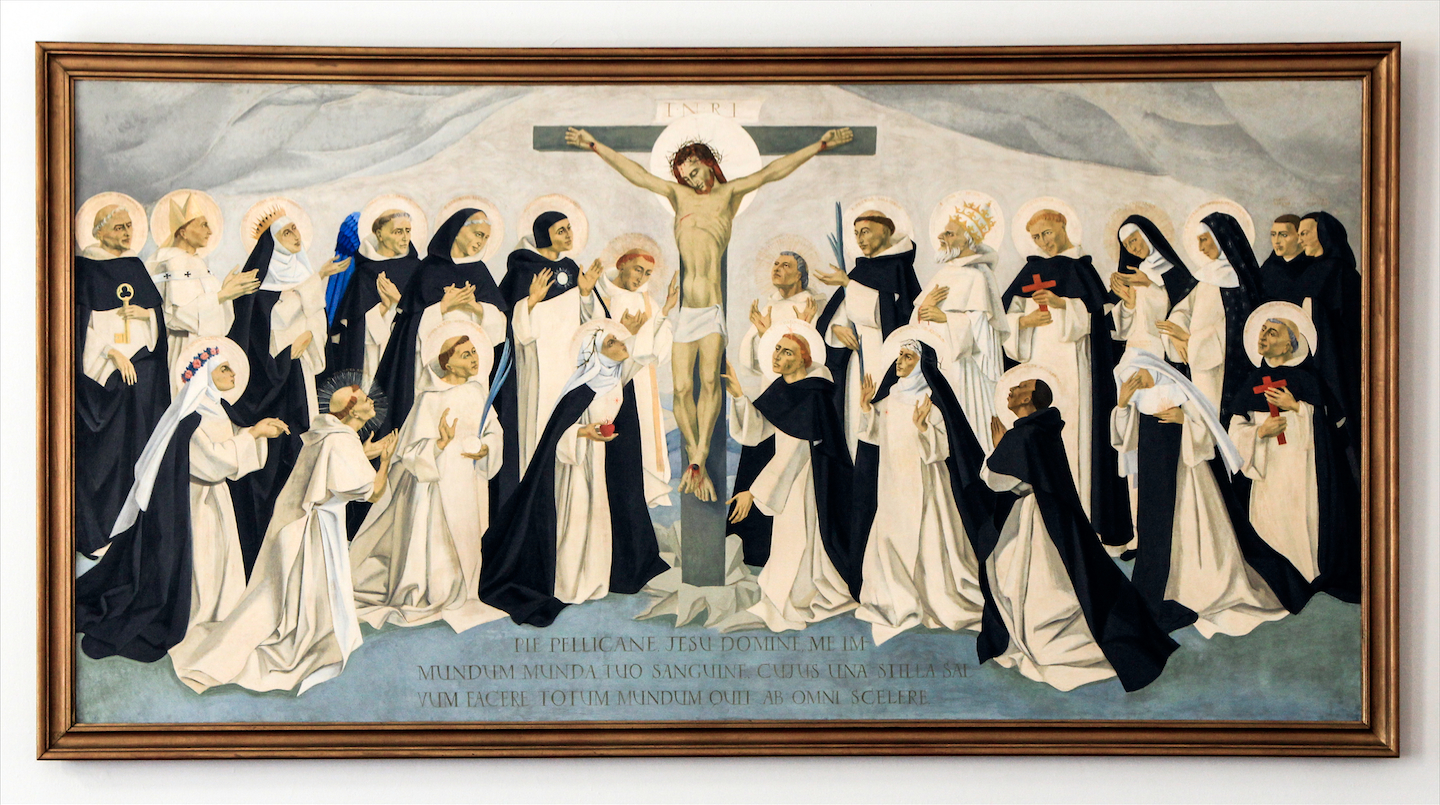
He was born at Bergamo and received the habit of the Order of Friars Preachers at the convent of St Stephen, Bergamo, on 22 January 1319.
His rich spiritual life, given expression in his treatise De profectu spirituali, suggests the mystical idea of penance propagated by Saint Vincent Ferrer OP. He founded the Convent of nuns, St Mary’s in Bergamo. From 1328 to 1335 he soon distinguished himself as a brilliant preacher, attracting huge crowds throughout northern Italy.

In February 1335, he planned to make a penitential pilgrimage to Rome with about thirty thousand of his converts. His purpose was misunderstood and Pope Benedict XII, then residing at Avignon, thought that Venturino wished to make himself pope . He wrote letters to Giovanni Pagnotti, Bishop of Anagni, his spiritual vicar, to the Canons of St Peter’s and St John Lateran’s and to the Roman senators empowering them to stop the pilgrimage.
This complaint to the Dominican Master General resulted in an ordinance of the Chapter of London (1335) condemning such pilgrimages. The pope’s letters and commands, however, did not reach Venturino and he arrived in Rome on 21 March 1335. He was well received and preached in various churches. Twelve days later he left Rome, as the news of the Ordinance of the Dominican Master General and the Pope had reached him and the pilgrimage ended.

In June, he requested an audience with Benedict XII at Avignon, in order to explain the intentions of the pilgrimage but he was seized and cast into prison (1335–43), where he was kept for eight years! He was restored to favour by Pope Clement VI, who appointed him to preach a crusade against the Turks on 4 January 1344. His success was remarkable. He urged the pope to appoint Humbert II of Dauphiné, whose friend and spiritual adviser he had been, leader of the crusade, but Humbert proved incapable and the crusade came to nothing.
Venturino’s writings consist of sermons (now lost) and letters. He died at Smyrna and although called “Blessed” he was never formally Beatified.
P.S. The only image available is NOT Blessed Venturino but is, in fact, St Raymond of Pennafort.

Memorials of the Saints – 28 March
St Alkelda of Middleham
Bl Antonio Patrizi
St Castor of Tarsus
Bl Christopher Wharton
Bl Conon of Naso
St Cyril the Deacon
Bl Dedë Maçaj
St Donal O’Neylan
St Dorotheus of Tarsus
St Gundelindis of Niedermünster
St Guntramnus
St Hesychius of Jerusalem
St Hilarion of Pelecete
Bl Jean-Baptiste Malo
Bl Jeanne Marie de Maille
St Proterius of Alexandria
Bl Renée-Marie Feillatreau épouse Dumont
St Rogatus the Martyr
St Successus the Martyr
St Tutilo of Saint-Gall
Bl Venturino of Bergamo OP (1304-1346)
Lenten Thoughts – 27 March – Progress towards Perfection
Lenten Thoughts – 27 March – Wednesday of the Third week of Lent, Year C
Progress towards Perfection
St Francis de Sales (1567-1622) Doctor of the Church
“We too often forget that maxim of the Saints which warns us to consider ourselves as each day recommencing our progress towards perfection. If we consider it frequently, we shall not be surprised at the poverty of our spirit, nor how much we have to refuse ourselves.
The work is never finished, we have continually to begin again and that courageously. What we have done so far is good but what we are going to commence, will be better and when we have finished that, we shall begin something else that will be better still and then another – until we leave this world to begin a new life that will have no end because it is the best that can happen to us.
It is not then a case for tears, that we have so much work to do for our souls, for we need great courage to go ever onwards (since we must never stop) and much resolution to restrain our desires. Observe carefully this precept that all the Saints have given to those who would emulate them – to speak little, or not at all, of yourself and your own interests.”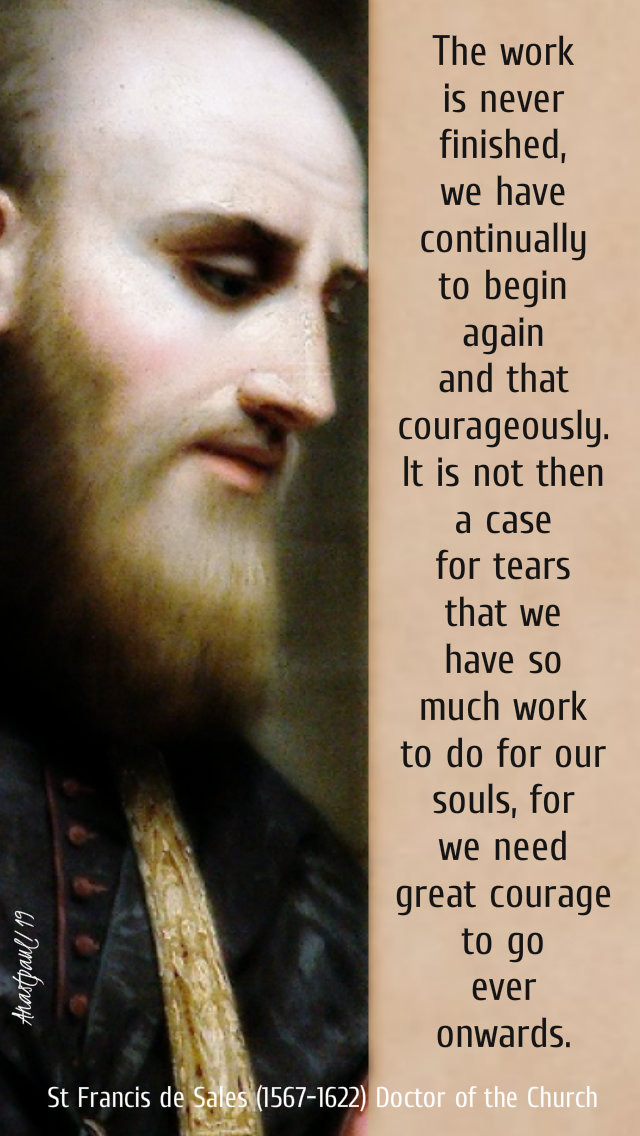
Quote of the Day – 27 March – “You must do this. I can’t.”
Quote of the Day – 27 March – Wednesday of the Third week of Lent, Year C
We cannot discover our failure to keep God’s law, except by trying our very hardest (and then failing). Unless we really try, whatever we say, there will always be at the back of our minds, the idea that, if we try harder next time, we shall succeed in being completely good.
Thus, in one sense, the road back to God, is a road of moral effort, of trying harder and harder.
But in another sense, it is not trying that is ever going to bring us home.
All this trying leads up to the vital moment, at which you turn to God and say,
“You must do this. I can’t.”
C S Lewis (1898-1963)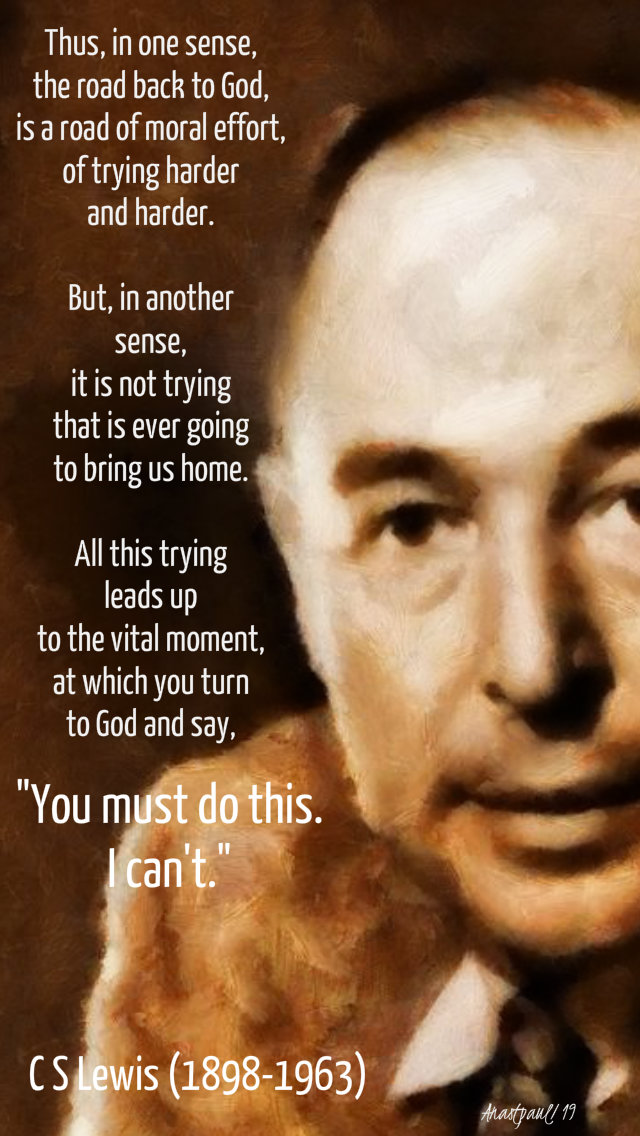
One Minute Reflection – 27 March – I have come not to abolish them but to fulfil them
One Minute Reflection – 27 March – Wednesday of the Third week of Lent, Year C, Gospel: Matthew 5:17–19
“Think not that I have come to abolish the law and the prophets; I have come not to abolish them but to fulfil them.”…Matthew 5:17
REFLECTION – “Grace, which was formerly veiled, so to speak, in the Old Testament, has been fully revealed in the Gospel of Christ by a harmonious disposition of the times, just as God usually disposes of everything with harmony… But within this wonderful harmony we notice a great difference between the two ages. On Sinai the people did not dare draw near the place where the Lord was giving His Law; in the Upper Room, the Holy Spirit comes down on all those assembled there, while waiting for the fulfilment of the promise (Ex 19:23; Acts 2:1). In the first instance, the finger of God inscribed the laws on tablets of stone but now, it is in human hearts, that He writes it (Ex 31:18; 2 Cor 3:3). Formerly the Law was written without and brought fear to sinners but now, it has been given to them within, to make them righteous…
Indeed, as the apostle Paul says, everything written on the stone tablets, “you shall not commit adultery, you shall not kill…, you shall not covet” and whatever other commandments there may be, are summed up in this saying: “You shall love your neighbour as yourself. Love does no evil to the neighbour, hence, love is the fulfilment of the Law” (Rm 13:9f.; Lv 19:18)… This charity has been “poured into our hearts through the Holy Spirit that has been given to us” (Rm 5:5)….St Augustine (354-430) Father & Doctor On the spirit and the letter, 28-30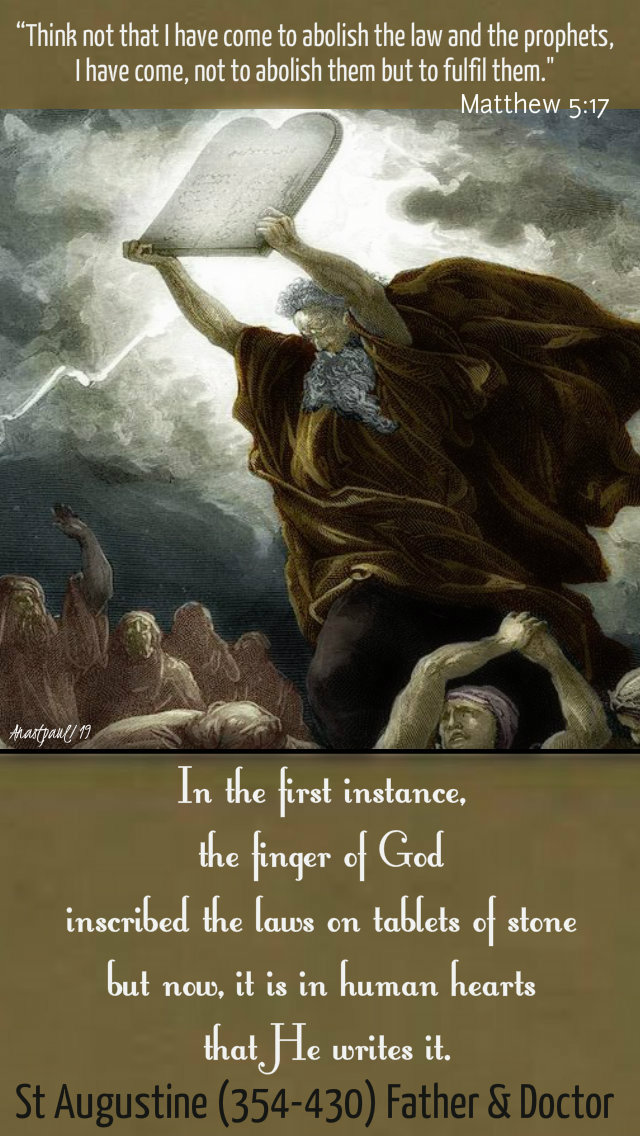
PRAYER – Protect Your family, Lord and strengthen us with Your consoling presence. Help us in our way to follow Your commandments and live as disciples of love. Look now on Your chosen people, grant us the light of Your Spirit and bring us forever to eternal life. May the Blessed Virgin Mary, Mother of Your Son and our Mother, be ever our protective shield. Through Jesus Christ, with the Holy Spirit, God forever, amen.
Lenten Reflection – 27 March
Lenten Reflection – 27 March – Wednesday of the Third week of Lent, Year C, Gospel: Matthew 5:17–19
“Think not that I have come to abolish the law
and the prophets, I have come,
not to abolish them but to fulfil them.”…Matthew 5:17
Daily Meditation:
Make us one in love and prayer.
This was a special liturgy in the early church.
On this day the first of the Scrutinies was celebrated.
We can see why the instruction is about fidelity but tone of the prayer is one of unity.
On this day when the community prayed so earnestly for those about to be baptised,
we can feel the power of asking that we be made one.
We might reflect upon what it is that divides us
and what I might do to let the Spirit of Unity draw us together.
I want all of them to be one with each other,
just as I am one with you and you are one with Me.
I also want them to be one with us.
Then the people of this world will believe that You sent Me.
Jesus’ prayer at the Last Supper for
“for everyone else who will have faith
because of what my followers will say about me. “
John 17:21
“We are called to conform our lives to the New Law of grace. This New Law was taught by Christ and established for us by Christ on the Cross. Through His passion and death, He merited for us the grace, that enables us to fulfil the New Law, to respond to the action of the Holy Spirit and to go beyond the demands of justice in our dealings with others. It is the Law of the children of God the Father, that fills our minds with the Wisdom of the Word and directs us to act in accord with the Love of the Holy Spirit.”…Father Jason Mitchell
Closing Prayer:
God, you love me as Your own child.
May I bend my life and will toward You
so that I might accept Your teaching and guidance.
I am so grateful for Your support in my life,
now and in the eternal life, You are preparing for me.
I beg for Your help and Spirit in my life today.
May the Lord bless us,
protect us from all evil
and bring us to everlasting life.
Amen.
Our Morning Offering – 27 March – I Want to Love You, My God
Our Morning Offering – 27 March – Wednesday of the Third week of Lent, Year C
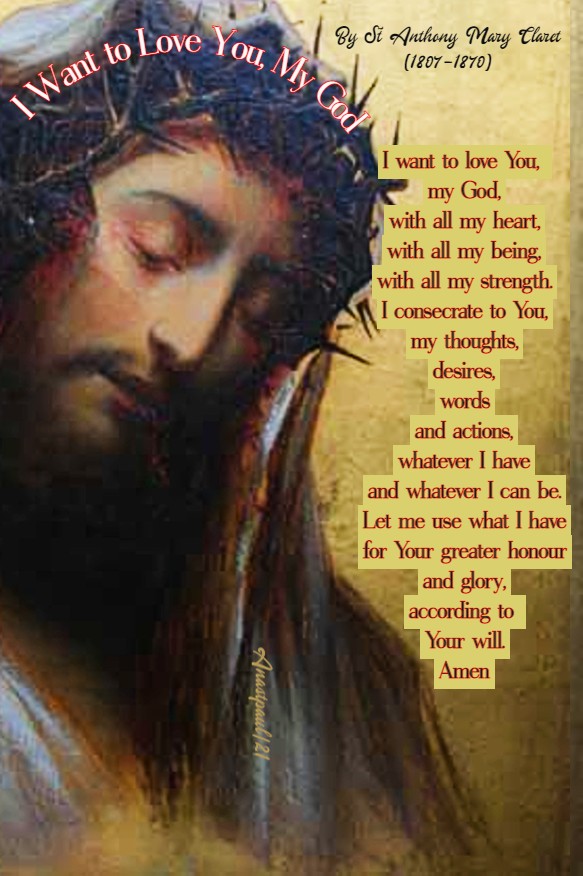
I Want to Love You, My God
By St Anthony Mary Claret (1807-1870)
I want to love You, my God,
with all my heart,
with all my being,
with all my strength.
I consecrate to You,
my thoughts,
desires,
words
and actions,
whatever I have
and whatever I can be.
Let me use what I have
for Your greater honour
and glory,
according to Your will.
Amen
Saint of the Day – 27 March – St Rupert of Salzburg (c 660–710)
Saint of the Day – 27 March – St Rupert of Salzburg (c 660–710) Bishop and Abbot Apostle to Bavaria and Austria – born c 660 probably in France and died in 710 in Salzburg, Austria. Patronages – Salzburg, Austria, city of and Salzburg, Austria, province of.

Holy tradition states that Rupert was a scion of the Frankish royal Merovingian dynasty. He was possibly related to the Robertians, most likely a descendant of Count Palatine Chrodbert II.
As Worms bishop, Rupert was at first accepted as a wise and devout dignitary, however, the mostly pagan community eventually came to reject him and forced him out of the city. By the end of the 7th century, Duke Theodo of Bavaria requested that he come to his residence at Regensburg (Ratisbon) to help spread the Christian faith among the Bavarian tribes.
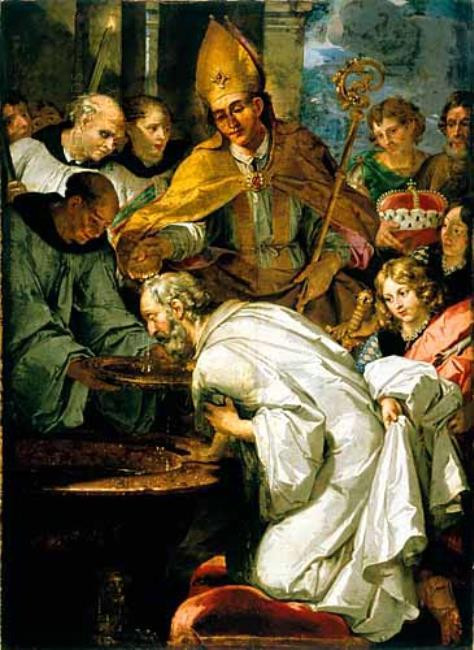
Rupert then moved to Altötting, where he converted the locals. He sailed down the Danube river, visiting many towns, villages and forts. Soon he had converted a large area along the Danube southeastward to the Bavarian border. Here he stayed at Lorch, where an Early Christian church—the present Basilica of St Lawrence—already existed.
Warlike conditions in the borderlands made him abandon plans of missionary work there. Instead he proceeded along the Roman road to the ruined city of Juvavum, where he made his base and renamed the city “Salzburg”. Like in Lorch, Rupert was able to build on ancient Early Christian traditions that were already in place. He re-established the convent at St Peter’s Abbey and laid the foundations of Salzburg Cathedral that was finished by his successor St Vergilius (c 700-784). He also founded the Benedictine nunnery of Nonnberg beneath the Festungsberg fortifications (later Hohensalzburg Castle), where his niece Erentrude became the first abbess.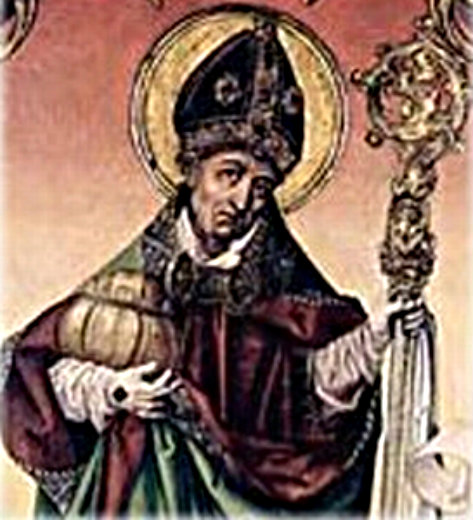
Rupert also introduced education and other reforms. From the hands of Duke Theodo of Bavaria, his bishopric received estates around, where he promoted the development of the local saltworks. Rupert’s mission work also spread into the Alps, where a first monastic cell was founded about 711.
Rupert reportedly died on Easter Sunday in 710. His mortal remains were transferred to Salzburg Cathedral by Bishop Vergilius on 24 September 774.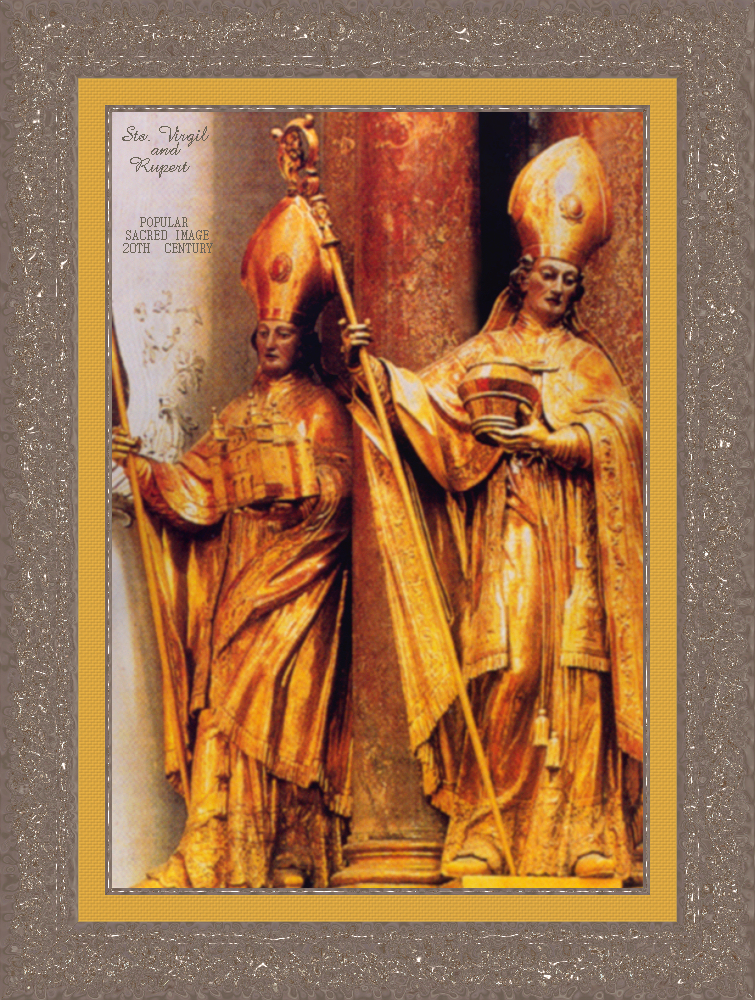
Rupert’s life and mission work is documented in medieval chronicles. In accordance with Christian tradition, St Rupert’s feast day is celebrated on the anniversary of his repose, 27 March. In Austria, it is 24 September commemorating the translation of his relics to Salzburg Cathedral. Rupertitag is also a public holiday in the State of Salzburg, associated with popular Volksfest events.


Rupert is the patron saint of the State of Salzburg, the Roman Catholic Archdiocese of Salzburg (together with his successor Vergilius) and of the adjacent Bavarian Rupertiwinkel region. He is also known as the “Apostle of the Bavarians” and patron of several settlements like Sankt Ruprecht in Styria or Šentrupert in Slovenia and of numerous church buildings.

Statue of St Rupert at Salzburg Cathedral

High Altar, Salzburg Cathedral (Salzburger Dom) Salzburg, Austria. Saint Rupert is depicted atop the altar carrying a barrel of salt in his left hand and a bishop’s crozier in his right. Saint Virgil is also represented atop the altar, opposite Saint Rupert.
Memorials of the Saints – 27 March
Bl Aimone of Halberstadt
St Amphilochius of Illyria
St Alexander of Drizipara
St Alexander of Pannonia
St Alkeld the Martyr
St Amator the Hermit
St Augusta of Treviso
St Claudio Gallo
St Cronidas of Illyria
St Ensfrid of Cologne
Bl Francesco Faà di Bruno
Bl Frowin of Engelberg
St Gelasius of Armagh
St John of Lycopolis
Bl Louis-Édouard Cestac (1801-1868)
Blessed Louis’s Story: https://anastpaul.wordpress.com/2018/03/27/saint-of-the-day-27-march-blessed-louis-edouard-cestac-1801-1868/
St Matthew of Beauvais
St Macedo of Illyria
St Panacea de’Muzzi of Quarona
Bl Pellegrino of Falerone
Bl Peter Jo Yong-sam
St Philetus
St Romulus the Abbot
St Rupert of Salzburg (c 660–710)
St Suairlech of Fore
St Theoprepius
—
Martyrs of Bardiaboch: A group of Christians who were arrested, tortured and executed together for their faith during the persecutions of Persian king Shapur II. Martyrs. – Abibus, Helias, Lazarus, Mares, Maruthas, Narses, Sabas, Sembeeth and Zanitas. 27 March 326 at Bardiaboch, Persia.
Lenten Thoughts – 26 March – Prayer knocks, fasting obtains, mercy receives – St Peter Chrysologus
Lenten Thoughts – 26 March – Tuesday of the Third week of Lent, Year C – Gospel: Matthew 18:21–35
St Peter Chrysologus (400-450)
Bishop of Ravenna, Father & Doctor of the Church
An excerpt from his Sermon 43
Prayer knocks, fasting obtains, mercy receives
There are three things, my brethren, by which faith stands firm, devotion remains constant and virtue endures. They are prayer, fasting and mercy. Prayer knocks at the door, fasting obtains, mercy receives. Prayer, mercy and fasting: – these three are one and they give life to each other.
Fasting is the soul of prayer, mercy is the lifeblood of fasting. Let no one try to separate them, they cannot be separated. If you have only one of them or not all together, you have nothing. So if you pray, fast; if you fast, show mercy; if you want your petition to be heard, hear the petition of others. If you do not close your ear to others, you open God’s ear to yourself.
When you fast, see the fasting of others. If you want God to know that you are hungry, know that another is hungry. If you hope for mercy, show mercy. If you look for kindness, show kindness. If you want to receive, give. If you ask for yourself what you deny to others, your asking is a mockery.
Let this be the pattern for all men when they practice mercy – show mercy to others in the same way, with the same generosity, with the same promptness, as you want others to show mercy to you.
Therefore, let prayer, mercy and fasting be one single plea to God on our behalf, one speech in our defence, a threefold united prayer in our favour.
Let us use fasting to make up for what we have lost by despising others. Let us offer our souls in sacrifice by means of fasting. There is nothing more pleasing that we can offer to God, as the psalmist said in prophecy – A sacrifice to God is a broken spirit, God does not despise a bruised and humbled heart.
Offer your soul to God, make Him an oblation of your fasting, so that your soul may be a pure offering, a holy sacrifice, a living victim, remaining your own and at the same time made over to God. Whoever fails to give this to God will not be excused, for if you are to give Him yourself, you are never without the means of giving.
To make these acceptable, mercy must be added. Fasting bears no fruit unless it is watered by mercy. Fasting dries up when mercy dries up. Mercy is to fasting as rain is to the earth. However much you may cultivate your heart, clear the soil of your nature, root out vices, sow virtues, if you do not release the springs of mercy, your fasting will bear no fruit.
When you fast, if your mercy is thin your harvest will be thin, when you fast, what you pour out in mercy overflows into your barn. Therefore, do not lose by saving but gather in by scattering. Give to the poor and you give to yourself. You will not be allowed to keep what you have refused to give to others.
Glory to the Father
and to the Son
and to the Holy Spirit:
as it was in the beginning,
is now, and will be forever.
Amen


You must be logged in to post a comment.