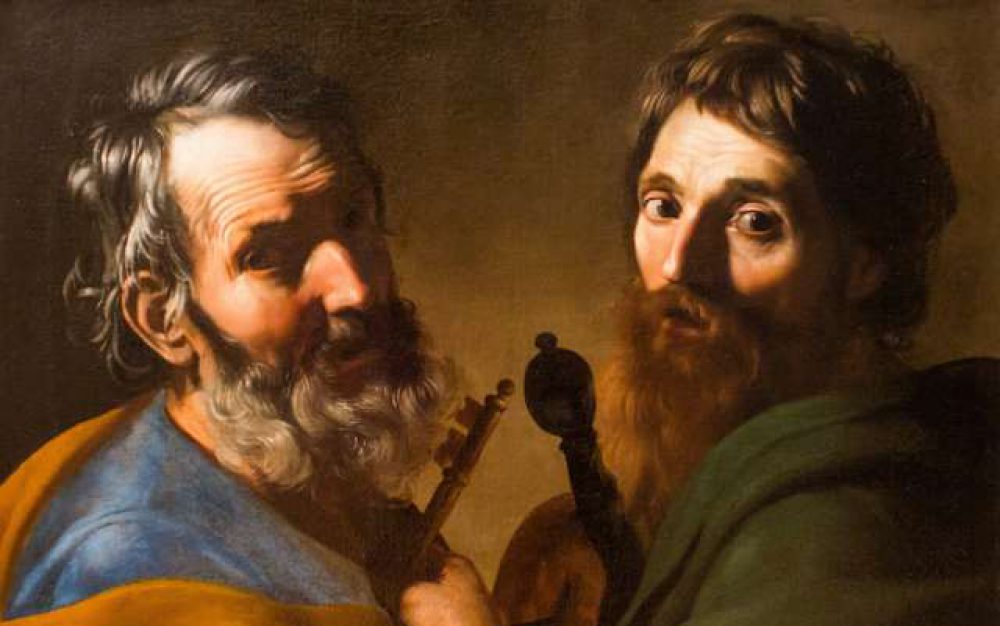
Saint Peter of Alexandria, was an Egyptian martyr and the Bishop of Alexandria in 300. Head of the catechetical school at Alexandria, Egypt, he opposed extreme Origenism and suffered in the persecution of Decius, but survived. Renowned for his knowledge of science and the Bible, he may have been the first to deal with the Arian heresy.
Forced into exile from the city during the anti-Christian persecutions, Peter traveled through many lands, encouraging his flock by letter, before returning to his city to guide the Alexandrian Church personally during this period. He secretly visited those imprisoned, assisted widows and orphans, and conducted clandestine services.
During the Diocletian persecution, Peter fled the area with many of his flock. He was criticized by many for being lenient and forgiving to Christians who had renounced their faith during the persecutions. However, when a rogue bishop usurped Peter’s position, the Meletian schism broke out in his clergy, and Peter had to return from hiding to deal with it. He excommunicated Meletius and convened a synod of bishops to condemn the schism. His writings were used in the Council of Ephesus and the Council of Chalcedon.
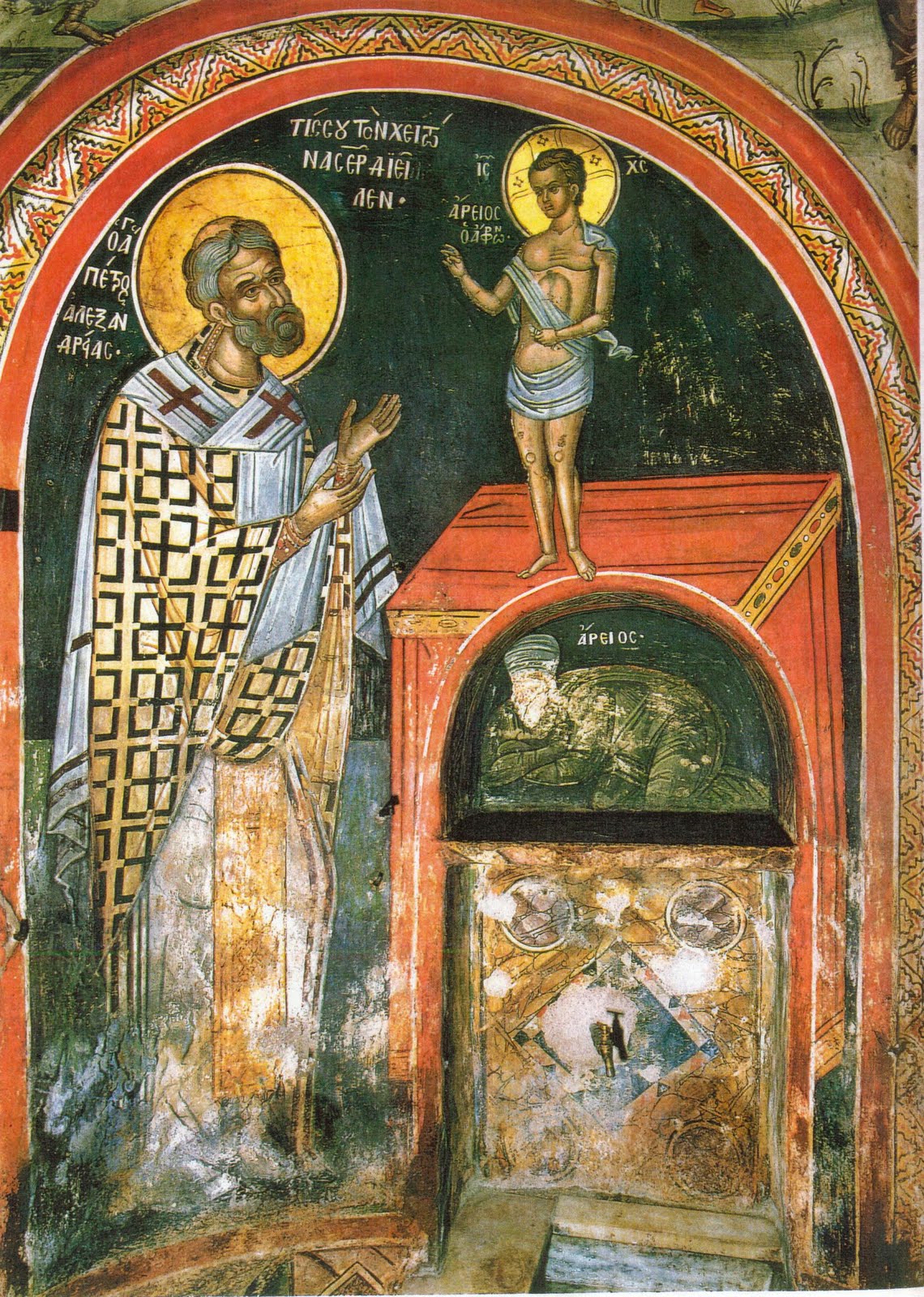
He was imprisoned for a time with bishop Meletius of Lycopolis and they fell into an argument over the treatment of Christians who had either offered pagan sacrifice or surrendered scriptures to the authorities to save their lives during the persecution. Peter urged leniency while Meletius held firmly that the lapsed had abandoned their faith and needed to be rebaptised. Their argument became heated, and was ended when Peter hung a curtain between him and Meletius. One of Meletius’ followers was a priest named Arius. Arius tried in vain to receive absolution from the Peter before he was was executed, but Peter instead anathematized Arius as a heretic and excommunicated him.
The bishop was seized and thrown in prison. When the emperor was informed about this, he ordered Peter to be beheaded. This was hindered by a large number of Christians who gathered at the prison willing to die for their Patriarch. The soldiers delayed the execution because they neither wanted to massacre the crowd nor create a riot. Peter, fearing for the life of his people, advised the soldiers with a plan to smuggle him out of jail by breaking a hole in a certain wall which he would point out. He could then be smuggled out and receive his sentence.

Peter was martyred with Father Dio, Father Ammonius, and Father Faustus, three of his priests, in the persecutions of Gaius Valerius Galerius Maximinus. As he was the last Christian martyred in Alexandria by civil authorities, the Coptic Church calls him “the seal and complement of the martyrs”.
Martyred in 311 at Alexandria, Egypt, he was initially buried in an Alexandria martyr’s cemetery. Most relics were later enshrined in a church at Grasse, France.
And he took off his omophorion, and bared his neck, which was pure before the Lord, and said to them: ‘Do as you have been commanded’. But the soldiers feared that trouble would befall them because of him. So they looked one at another, and not one of them dared to cut off his head, because of the dread which had fallen upon them. Then they took counsel together and said: ‘To him that cuts off his head each one of us will give five denarii’. Now they were six persons; and one of them had some money; so he took out five and twenty denarii from among the coins and said: ‘He that will go up to him, and cut off his head, shall receive this money from me and from the four others’. So one of the men went forward, and summoned up his courage, and cut off the head of the holy martyr and patriarch Peter.


You must be logged in to post a comment.