
Saint Olaf Haraldsson (995 – 29 July 1030), also called Saint Olaf, Olaf the Holy, Olaf II, and Olaf the Stout, was King of Norway from 1015 to 1028. A viking and convert to Christianity, he was baptised in Rouen, Normandy, in 1010. The son of Harald Grenske, a petty king in Vestfold, Norway. Olaf was a great-great-grandson in the male line of the founder of the Norwegian kingdom. His father died when his mother was pregnant with him. She later married Sigurd Syr, with whom she had other children, including Harald Hardrada, who later reigned as king of Norway, and who claimed the English throne.
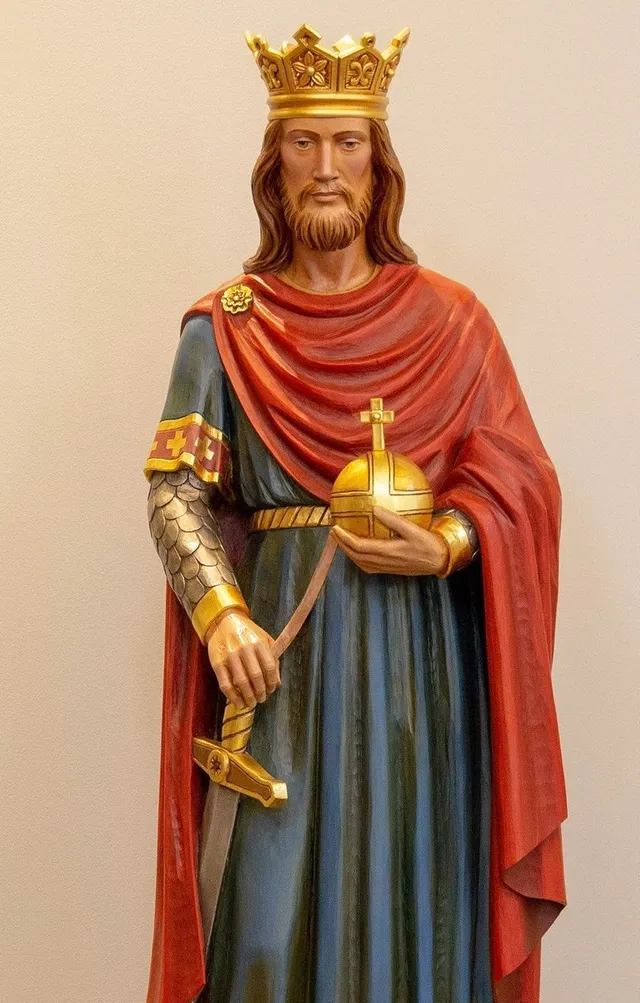
He helped King Ethelred of England (‘The Unready’) against pagan Danish invaders and brought missionaries, including Blessed Theodgar of Vestervig, to Norway to evangelize his people. He tried to force Christianity on them, so they revolted in 1029, and drove him first to Sweden and then to Kiev, in Russia. There he gathered his forces, and in 1030 attempted to re-take his throne. He was killed in battle, and regarded by Norwegians as the great champion of national independence. Many miracles were attributed to him. One such is that on the day of his death, a blind man regained his sight after rubbing his eyes with hands stained with Olaf’s blood. His cult spread extremely quickly, including across the sea to England.
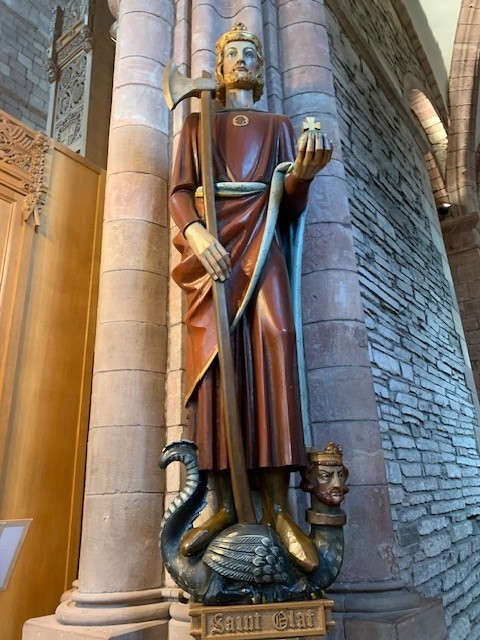
St. Olaf in Orkney Cathedral, Kirkwall, Scotland
His remains were enshrined in Nidaros Cathedral, built over his burial site. His sainthood encouraged the widespread adoption of Christianity by Scandinavia’s Norsemen. Pope Alexander III confirmed Olaf’s local canonisation in 1164. He was posthumously given the title Rex Perpetuus Norvegiae (Eternal King of Norway). Olaf is symbolised by the axe in Norway’s coat of arms, and many Christian institutions with Scandinavian links, as well as Norway’s Order of St. Olav, are named after him.
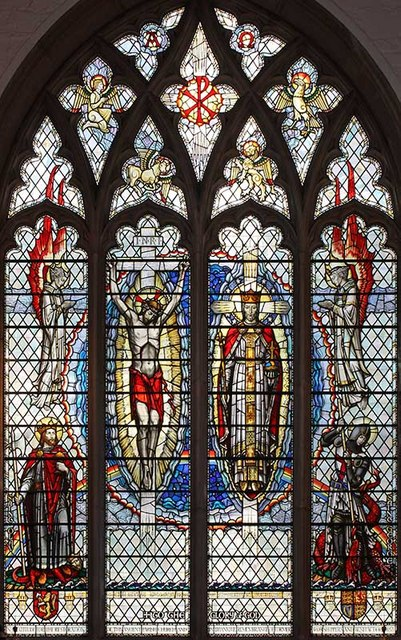
St. Olaf in stained-glass window at St Olave’s Church, in London
Patronage: Carvers, difficult marriages, kings, Norway


You must be logged in to post a comment.