Posted in SAINT of the DAY

Saint of the Day – 24 November – Saint Peter of Alexandria

Saint Peter of Alexandria, was an Egyptian martyr and the Bishop of Alexandria in 300. Head of the catechetical school at Alexandria, Egypt, he opposed extreme Origenism and suffered in the persecution of Decius, but survived. Renowned for his knowledge of science and the Bible, he may have been the first to deal with the Arian heresy.
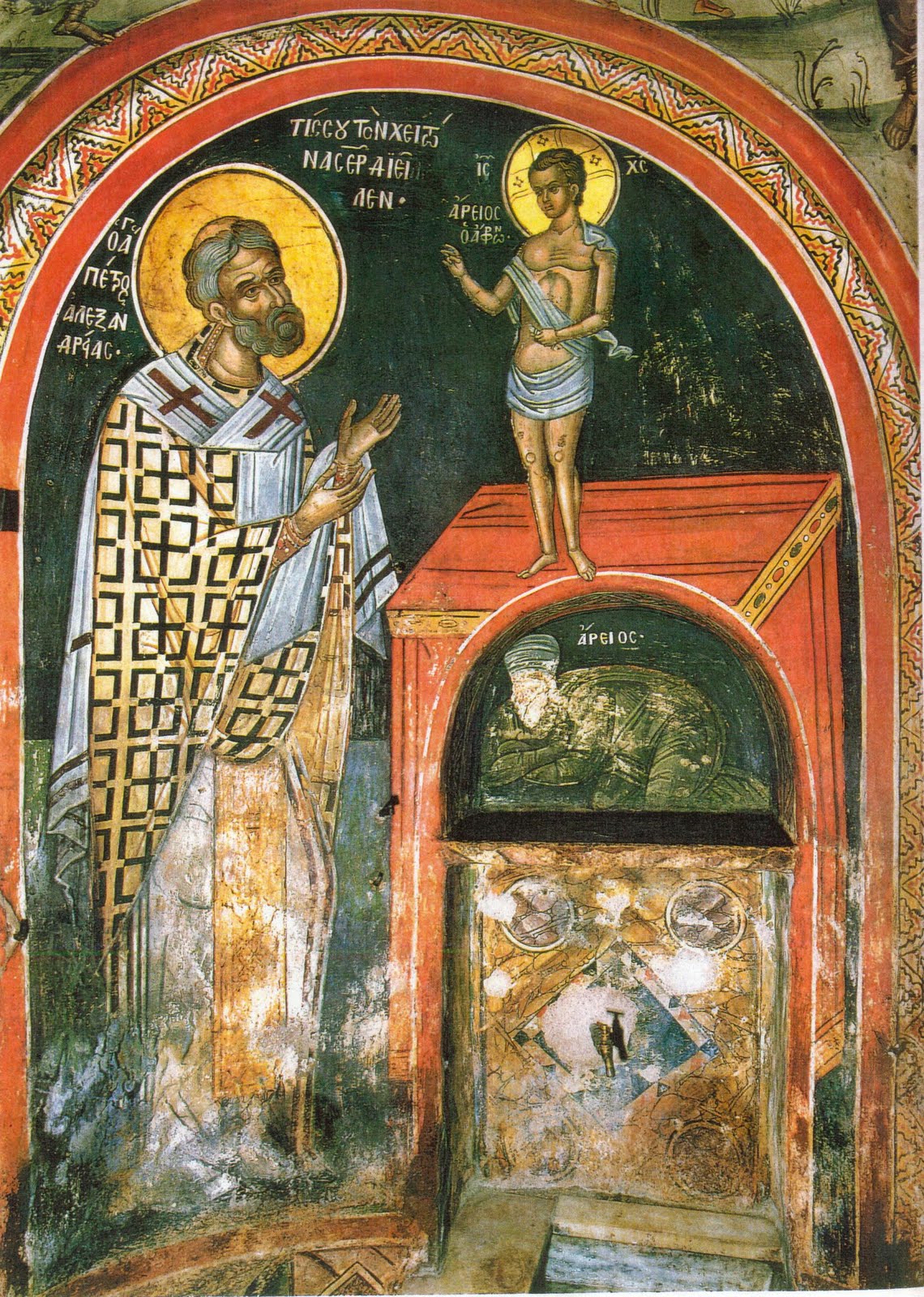
Forced into exile from the city during the anti-Christian persecutions, Peter traveled through many lands, encouraging his flock by letter, before returning to his city to guide the Alexandrian Church personally during this period. He secretly visited those imprisoned, assisted widows and orphans, and conducted clandestine services.

During the Diocletian persecution, Peter fled the area with many of his flock. He was criticized by many for being lenient and forgiving to Christians who had renounced their faith during the persecutions. However, when a rogue bishop usurped Peter’s position, the Meletian schism broke out in his clergy, and Peter had to return from hiding to deal with it. He excommunicated Meletius and convened a synod of bishops to condemn the schism. His writings were used in the Council of Ephesus and the Council of Chalcedon.

He was imprisoned for a time with bishop Meletius of Lycopolis and they fell into an argument over the treatment of Christians who had either offered pagan sacrifice or surrendered scriptures to the authorities to save their lives during the persecution. Peter urged leniency while Meletius held firmly that the lapsed had abandoned their faith and needed to be rebaptised. Their argument became heated, and was ended when Peter hung a curtain between him and Meletius. One of Meletius’ followers was a priest named Arius. Arius tried in vain to receive absolution from the Peter before he was was executed, but Peter instead anathematized Arius as a heretic and excommunicated him.

The bishop was seized and thrown in prison. When the emperor was informed about this, he ordered Peter to be beheaded. This was hindered by a large number of Christians who gathered at the prison willing to die for their Patriarch. The soldiers delayed the execution because they neither wanted to massacre the crowd nor create a riot. Peter, fearing for the life of his people, advised the soldiers with a plan to smuggle him out of jail by breaking a hole in a certain wall which he would point out. He could then be smuggled out and receive his sentence.

Peter was martyred with Father Dio, Father Ammonius, and Father Faustus, three of his priests, in the persecutions of Gaius Valerius Galerius Maximinus. As he was the last Christian martyred in Alexandria by civil authorities, the Coptic Church calls him “the seal and complement of the martyrs”.

Martyred in 311 at Alexandria, Egypt, he was initially buried in an Alexandria martyr’s cemetery. Most relics were later enshrined in a church at Grasse, France.

And he took off his omophorion, and bared his neck, which was pure before the Lord, and said to them: ‘Do as you have been commanded’. But the soldiers feared that trouble would befall them because of him. So they looked one at another, and not one of them dared to cut off his head, because of the dread which had fallen upon them. Then they took counsel together and said: ‘To him that cuts off his head each one of us will give five denarii’. Now they were six persons; and one of them had some money; so he took out five and twenty denarii from among the coins and said: ‘He that will go up to him, and cut off his head, shall receive this money from me and from the four others’. So one of the men went forward, and summoned up his courage, and cut off the head of the holy martyr and patriarch Peter.
Posted in SAINT of the DAY

Saint of the Day – 17 October – Saint John the Short

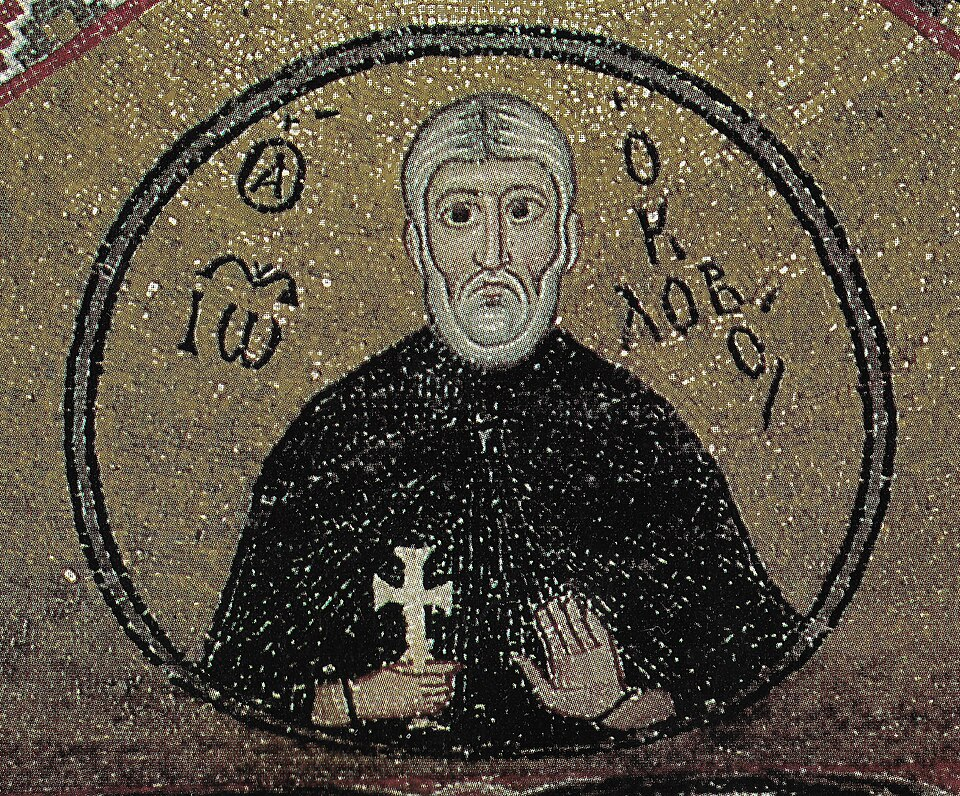
Saint John the Short, also known as John Colobus, John Kolobos, John the Little, John the Dwarf, Yoannis Pi Kolobos, was a Coptic Desert Father born in 339 at Thebes, Egypt. Born to a poor but pious family, from age 18, John lived in an underground cave he dug in the desert of Skete. He was the spiritual student of Saint Poemen and Saint Ammoes.

Noted for being short of stature, short of temper, and conceited by nature; he did not grow in height, but as his faith increased, so did his gentleness and humility. John lived on only flatbread and vegetables his entire life and ate only one meal a day. In later life he was known for absent-mindedness, his thoughts being on the spiritual life. As a test of his new humble obedience, his director Pambo ordered him to water a walking staff stuck in the sand; John obeyed and went on watering it twice a day even though the water was about 12 miles from where they lived. After three years, the piece of wood sprouted and grew into a fruitful tree. Pambo took some of this tree’s fruits and went around to all the elder monks, saying “take, eat from the fruit of obedience”. John was ordained a priest by Pope Theophilus and became abbot of the monastery he founded around the Tree of Obedience.

To escape Berber invaders around 395, he fled Skete and lived for years as a hermit on Mount Qolzum, near the current city of Suez. He was the spiritual teacher of Saint Arsenius, and died in 405 at Mount Qolzum, Egypt, of natural causes. When Saint John died, his servant, who had been in a nearby village, had a vision of him being carried to heaven by a group of angels and saints.

Posted in SAINT of the DAY

Saint of the Day – 24 September – Saint Paphnutius of Egypt

Saint Paphnutius of Egypt, a hermit and martyr. During the persecution under Diocletian (284-305), the governor Hadrian commanded that Paphnutius be brought to him. Instead of waiting to be brought, Paphnutius appeared before the governor, confessed his faith in Christ, and was subjected to torture.

The soldiers involved in his torture, Dionysius and Callimachus, were converted by his faith. They were then beheaded. Cast into prison after the tortures, Paphnutius converted forty prisoners to the Faith. They were all burnt alive.

Paphnutius was eventually set free, and a Christian named Nestorius took him in. He and all his family, through the influence of the saint, became steadfast in the Faith, and ultimately endured martyrdom. Paphnutius strengthened many other Christians to confess our Lord Jesus Christ, and they all died as martyrs. Some were cut down with swords, others were burned. There were 546 in all.

The hermit himself was thrown by the torturers into a river with a stone about his neck, but he miraculously floated to shore, still with the stone about him. Fustrated, they sent him to the emperor Diocletian himself, who commanded him to be crucified on a date tree.

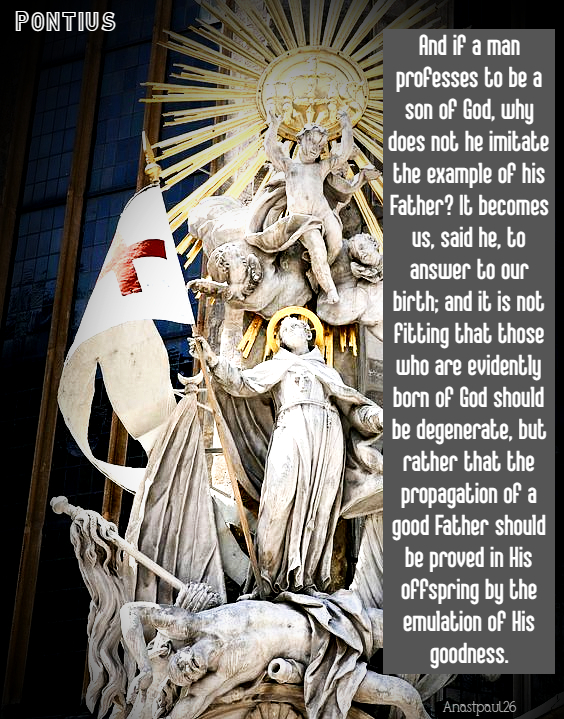
And if a man professes to be a son of God, why does not he imitate the example of his Father? It becomes us, said he, to answer to our birth; and it is not fitting that those who are evidently born of God should be degenerate, but rather that the propagation of a good Father should be proved in His offspring by the emulation of His goodness.

The Life and Passion of St Cyprian (Pontius)

Posted in SAINT of the DAY

Saint of the Day – 4 September – St Moses the Prophet

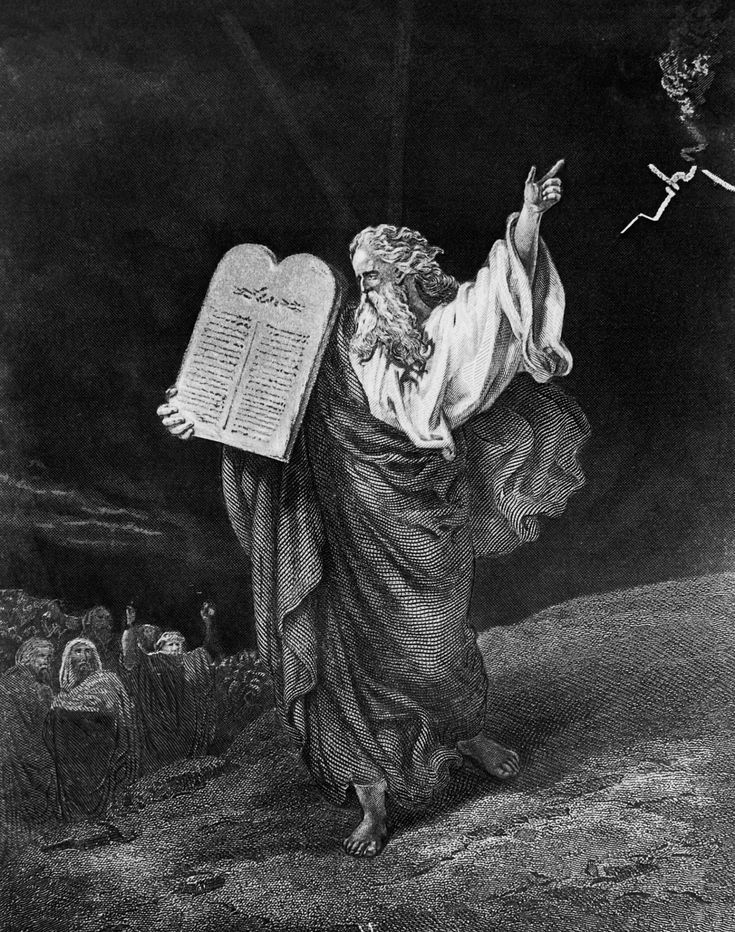
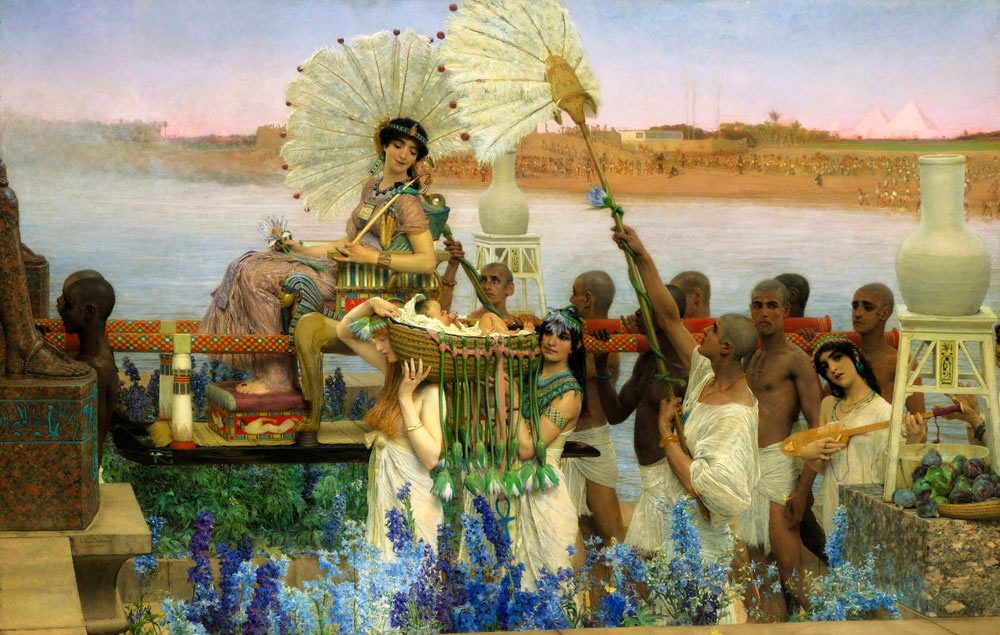
Moses (“saved from the waters”) was a Hebrew liberator, law giver, and prophet. He belonged to the tribe of Levi and was born in Egypt (10th century B.C.), at a time when Pharaoh had ordered the killing of all male Hebrew children. Exposed in the waters of the Nile, he was rescued by Pharaoh’s daughter and educated at court.

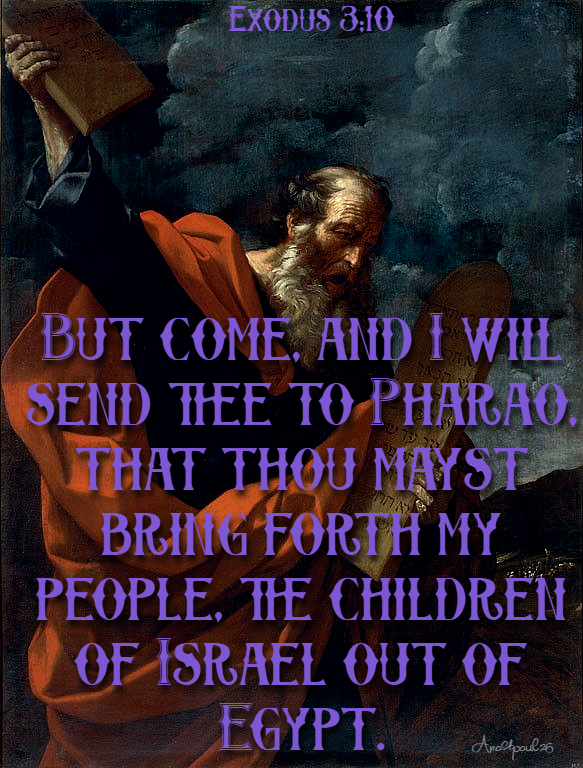
Having killed an Egyptian to save one of his brethren from ill-treatment, he fled to Madian where he married Jethro’s daughter. God appeared to him in the burning bush and commanded him to go and deliver his people, with the help of his brother Aaron, but Pharaoh refused to let the Israelites go, and the terrible chastisements known as the Ten Plagues of Egypt only hardened his heart. However the last one, the death of every first born, forced him to yield, and the Hebrews departed, after celebrating the first Pasch.

The Finding of Moses

Then began, under the leadership of Moses, a long journey in the direction of the Promised Land. Moses himself is excluded from it because of his lack of confidence at the “Waters of Contradiction”. The Israelites finally reached the banks of the Jordan, after defeating the Amorrhites and Moabites, and Moses died on Mount Nebo after pronouncing the three discourses preserved in Deuteronomy, his position being inherited by Joshua. He was buried in the valley of Moab, but “no man knows his sepulchre”.

Posted in SAINT of the DAY

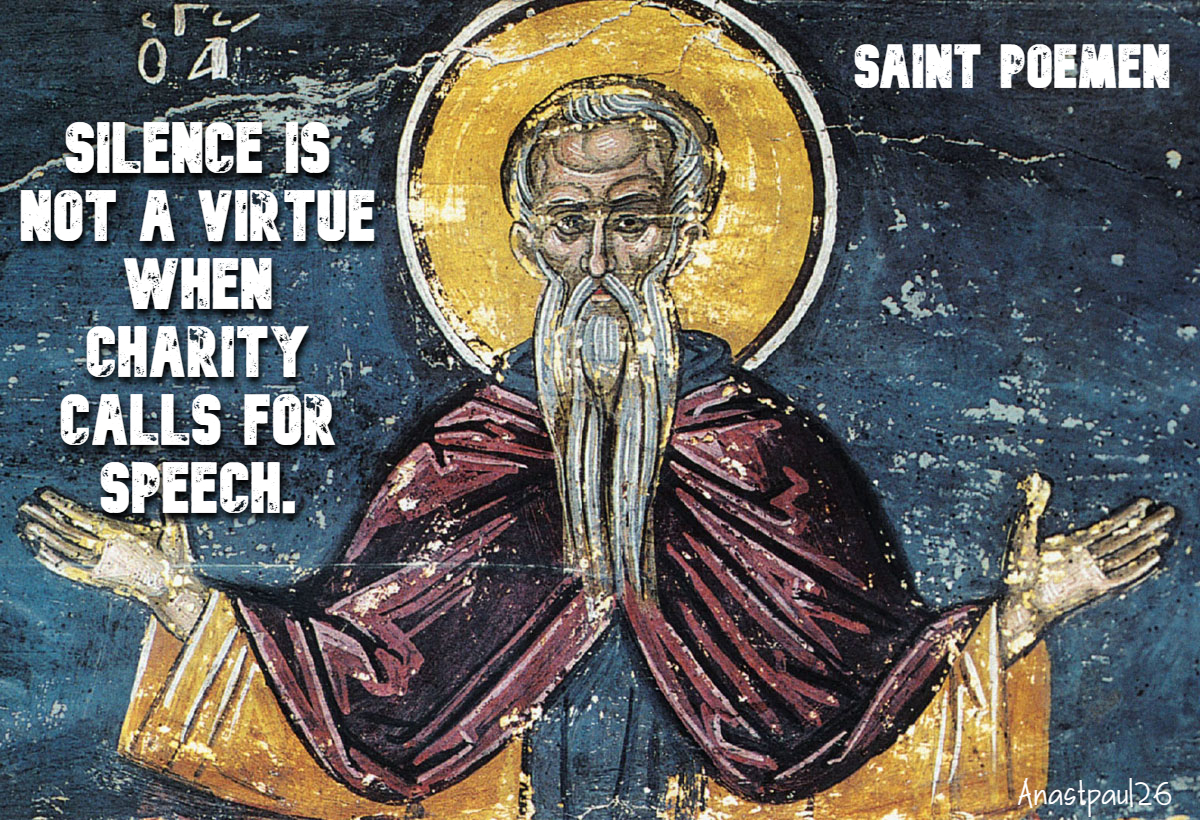
Saint of the Day – 27 August – Saint Poemen

Saint Poemen (meaning ‘Shepherd’), born in 340, is the most quoted Father in the Sayings of the Desert Fathers. 

Poemen lived at a monastery in Scetis in Egypt, one of the earliest centres of Christian monasticism. In 407 AD the monastery was overrun by barbarian raiders, scattering the monks. Poemen and Anoub, along with a handful of monks, fled to Terenuthis, on the river Nile. After leaving Scetis, his group first lived in an abandoned pagan temple. The diaspora of monks resulting from these raids lead to Poemen and his group keeping alive the collective wisdom of the monks of Scetis by creating the bulk of the Sayings of the Desert Fathers.

Although noted for his strong discipline, (permitting himself and his brothers four hours of sleep a day and spending the rest of the time in chores, prayers or study) he was also tolerant of the weakness of others. One story recounts that some of the older monks approached Poemen for his advice on how to treat monks who fell asleep during their prayers. They were inclined to wake the sleeping monk, while Poemen took a more compassionate approach, advising, “For my part, when I have seen a brother who is dozing, I put his head on my knees and let him rest.” Poemen was typically opposed to giving excessively harsh penances —when a monk came to him who had committed a “great sin”, Poemen reduced his penance from three years to three days.

He once recalled a straying monk back to virtue by sending him a bottle of wine on the birth of a bastard child, in ‘celebration’, which struck the monk’s conscience so hard that he dismissed his mistress. Poemen was described as a charismatic speaker who taught more by example than by lecturing others. When a visiting monk asked him if he should assume a role of authority over the brothers he was living with, Poemen responded by saying, “No, be their example, not their legislator.” Judgment of others was also abhorrent to him. He once stated that, “A man may seem to be silent, but if his heart is condemning others, he is babbling incessantly.” He also urged frequent Communion for all.

He died in 450, of natural causes.

Selected sayings of Poemen

  • The beginning of evil is the lack of vigilance.
  • Silence is not a virtue when charity calls for speech. 
  • A living faith consists of thinking little of self, and showing consideration for others.
  • Do not lay open your conscience to anyone whom you do not trust in your heart.
  • To instruct your neighbour is the same thing as reproving him. 
  • If you take little account of yourself, you will have peace, wherever you live. 
  • To throw yourself before God, not to measure your progress, to leave behind all self-will; these are the instruments for the work of the soul. 
  • Give not your heart to that which does not satisfy your heart.
  • If you are silent, you will possess peace wherever you live.
  • The nature of water is soft, and the nature of stone is hard; but if a bottle is hung above the stone, allowing the water to fall down drop by drop, it wears away the stone. So it is with the Word of God: it is soft and our heart is hard, but the man who hears the Word of God often opens his heart to the fear of God. 
Posted in CATECHESIS, CHRIST the PHYSICIAN, CHRIST the WORD and WISDOM, CONFESSION/PENANCE, DIVINE Mercy, Goodness, Patience, FATHERS of the Church, QUOTES on CONVERSION, QUOTES on FORGIVENESS, QUOTES on GOOD WORKS, QUOTES on REPENTANCE, St Francis de Sales, The WORD

Quote/s of the Day – 22 July – Departing from Egypt

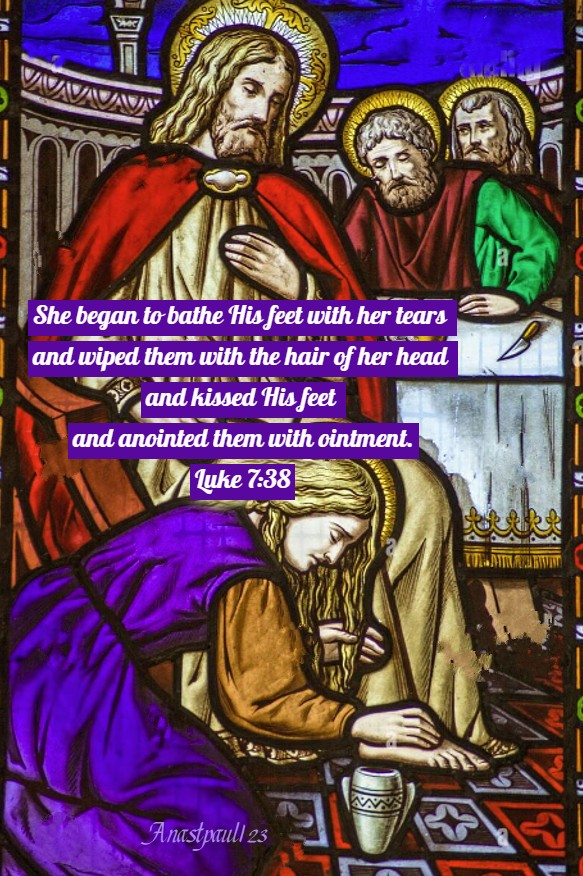
Quote/s of the Day – 22 July – St Mary Magdalen (1st Century) Penitent – Song 3:2-5; 8:6-7, Luke 7:36-50.

“She began to bathe His feet with her tears
and wiped them with the hair of her head
and kissed His feet
and anointed them with ointment.
”

Luke 7:38

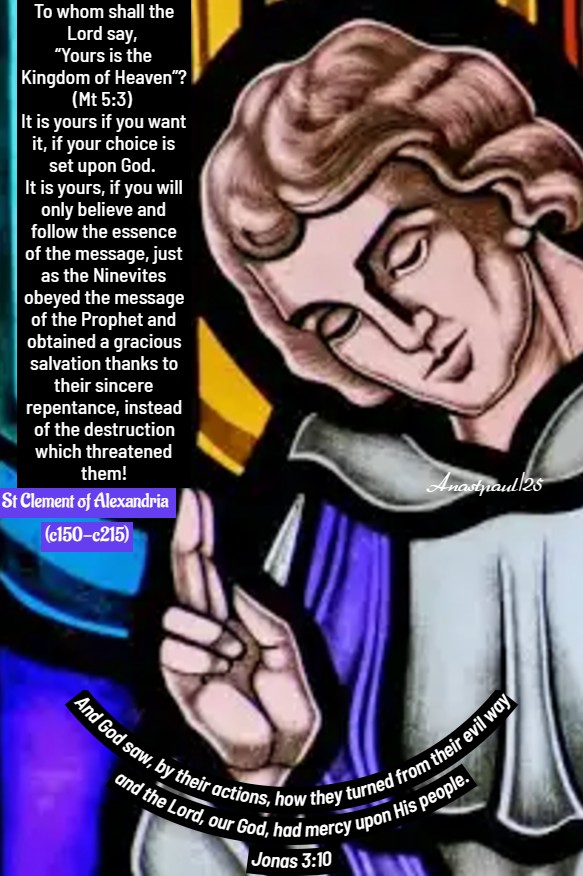
“And God saw, by their actions,
how they turned from their evil ways
and the Lord, our God,
had mercy upon His people.
”
Jonas 3:10

“To whom shall the Lord say,
“Yours is the Kingdom of Heaven”? (Mt 5:3)
It is yours if you want it,
if your choice is set upon God.
It is yours, if you will only believe
and follow the essence of the message,
just as the Ninevites obeyed the message of the Prophet
and obtained a gracious salvation
thanks to their sincere repentance,
instead of the destruction
which threatened them
!”

St Clement of Alexandria (c150-c215)

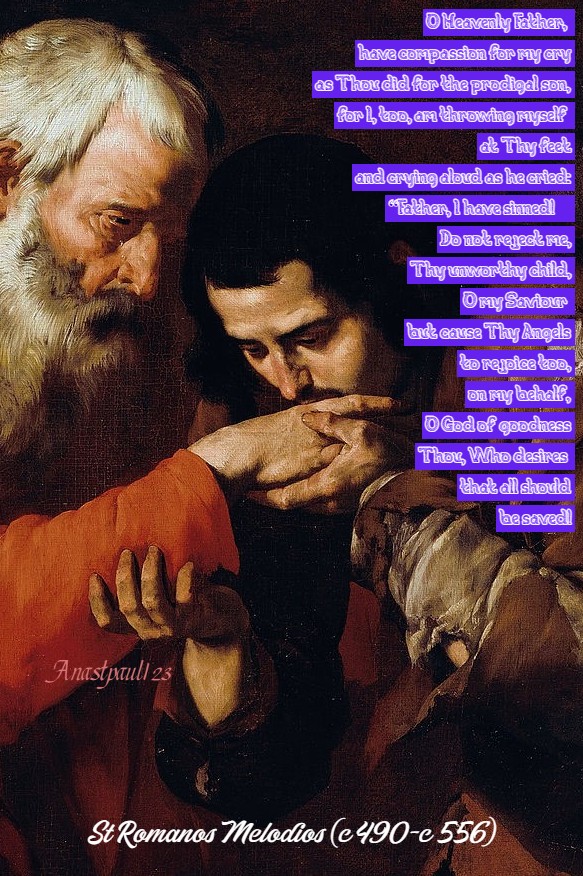
“O Heavenly Father, have compassion for my cry
as Thou did for the prodigal son,
for I, too, am throwing myself at Thy feet
and crying aloud as he cried:
“Father, I have sinned!”
Do not reject me,
Thy unworthy child, O my Saviour
but cause Thy Angels
to rejoice too, on my behalf,
O God of goodness Thou,
Who desires that all should be saved.
”

St Romanos Melodios (c490-c 556)
Monk, Composer of hymns, Poet

“Let us then depart, let us depart from Egypt,
let us approach Our Lord,
let us make provision of good works;
let the feet of our affections be bare,
let us clothe ourselves with innocence,
let us not be satisfied with crying for mercy,
let us go forth from Egypt, let us delay no longer.
The hour is come to arise from sleep,
since we know that He receives sinners;
the Angels await our repentance,
the Saints pray for it
!
”

St Francis de Sales 91567-1622)
Doctor of the Church