Posted in MARIAN TITLES

Notre-Dame de Boulogne -sur-Mer , France / Our Lady of Boulogne-Sur-Mer (1469) and Memorials of the Saints – 10 July

Notre-Dame de Boulogne -sur-Mer , France / Our Lady of Boulogne-Sur-Mer (1469) – 10 July:

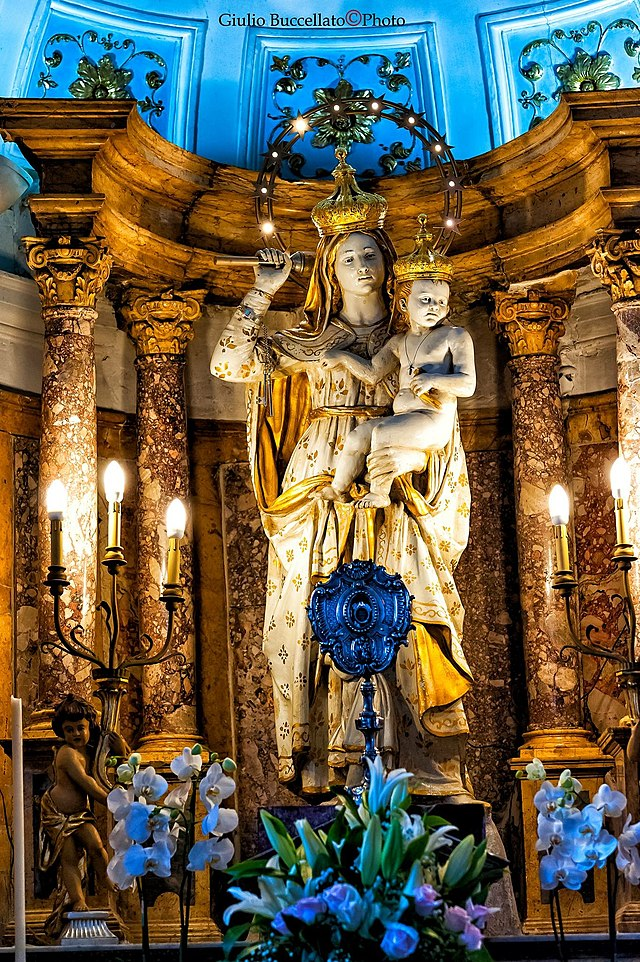
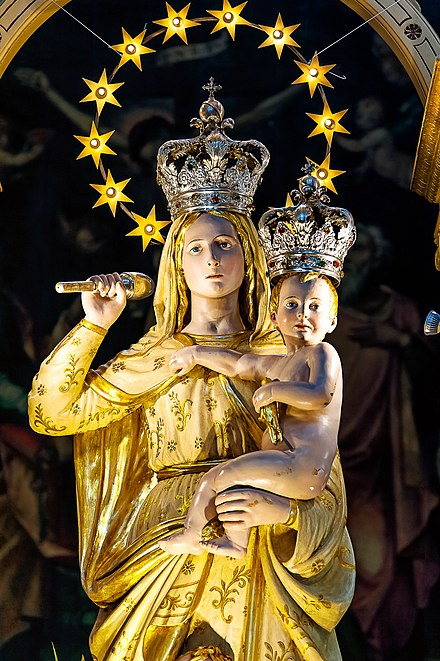
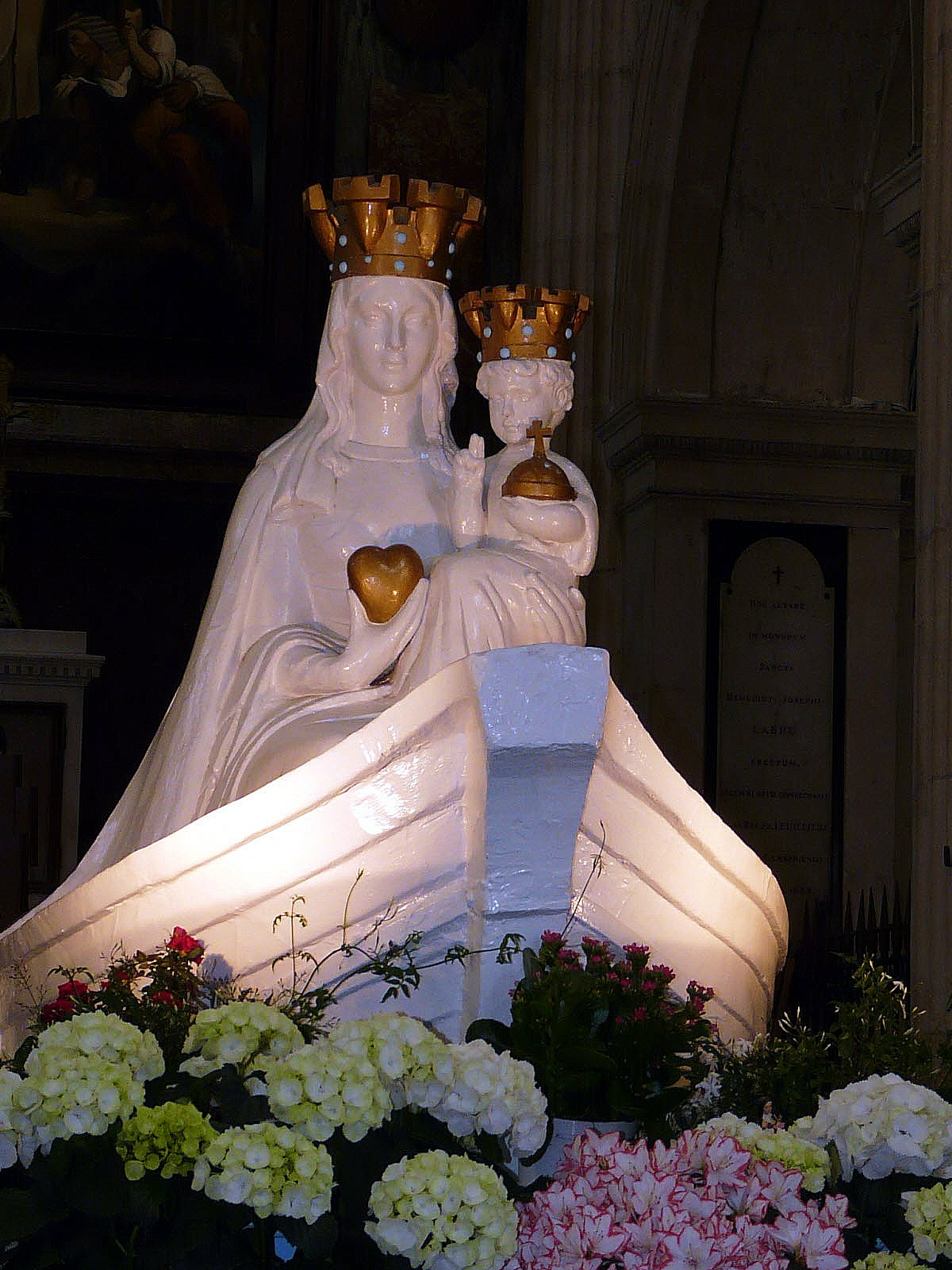
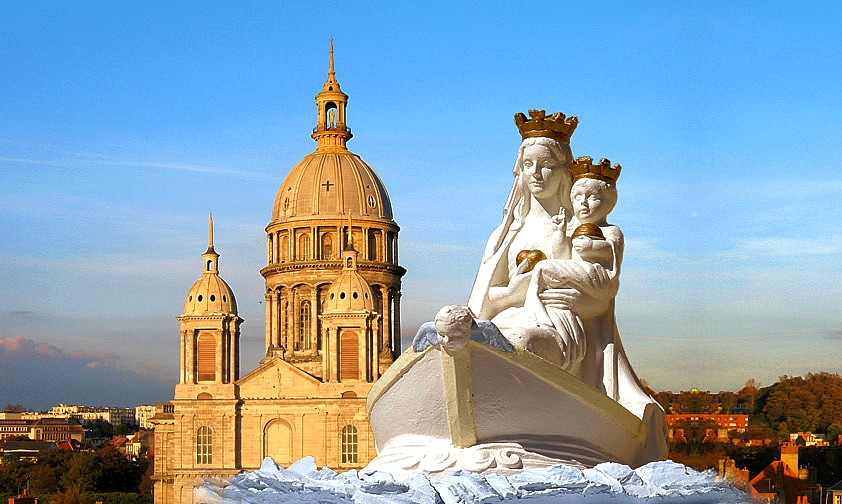
In the year 636, a small group of people standing on the seashore witnessed a boat without oars or sails came into the harbour of Boulogne. It finally came to rest in the estuary, seemingly of its own accord. One of the witnesses boarded the boat and confirmed that there was none aboard, and that the vessel had no rudder, oars or sails. The ship, however, bore a luminous Statue of Our Lady. Taking hold of it to bring it to land, a voice was heard saying, “I choose your City as a place of grace.” The citizens welcomed Mary to their City by erecting a Shrine in her honour, which reached its height of glory in the 12th Century.

King Henry VIII is reported to have stolen the Statue of Our Lady of Boulogne and taken it to England. After many negotiations, the French managed to get it back. The image had been stolen and hidden many other times, but always saved and returned.

World War II almost completely destroyed the Statue. In modern times, four exact replicas of Our Lady of Boulogne toured France for more than seven years as a symbol of French devotion to Mary. One of these was taken to Walsingham, England, in 1948 and carried in procession by the Cross-bearing pilgrims.

Boulogne was one of the most important Lady Shrines of medieval France; among its noted pilgrims have been: Henry III, Edward II, the Black Prince, John of Gaunt.
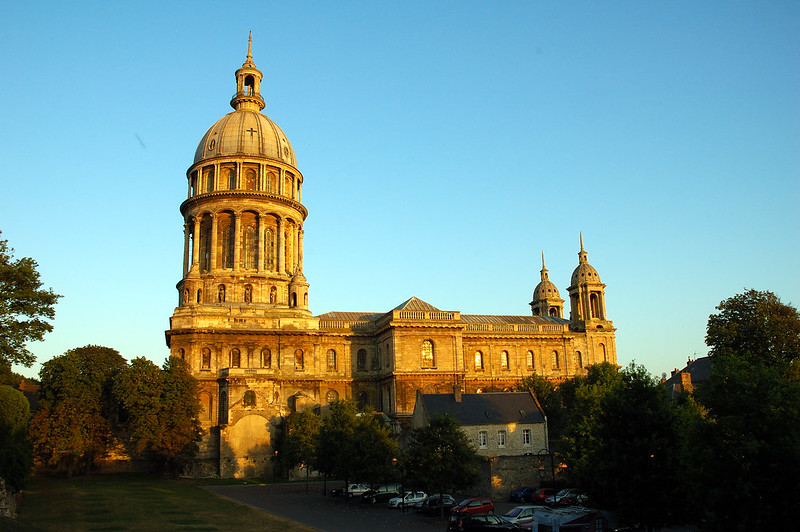
The dedication of a new Church built in honour of Our Lady of Boulogne was Consecrated in the year 1469 by Bishop Chartier of Paris. The confraternity of Our Lady of Boulogne was so celebrated, that six French Kings have chosen to belong to it.

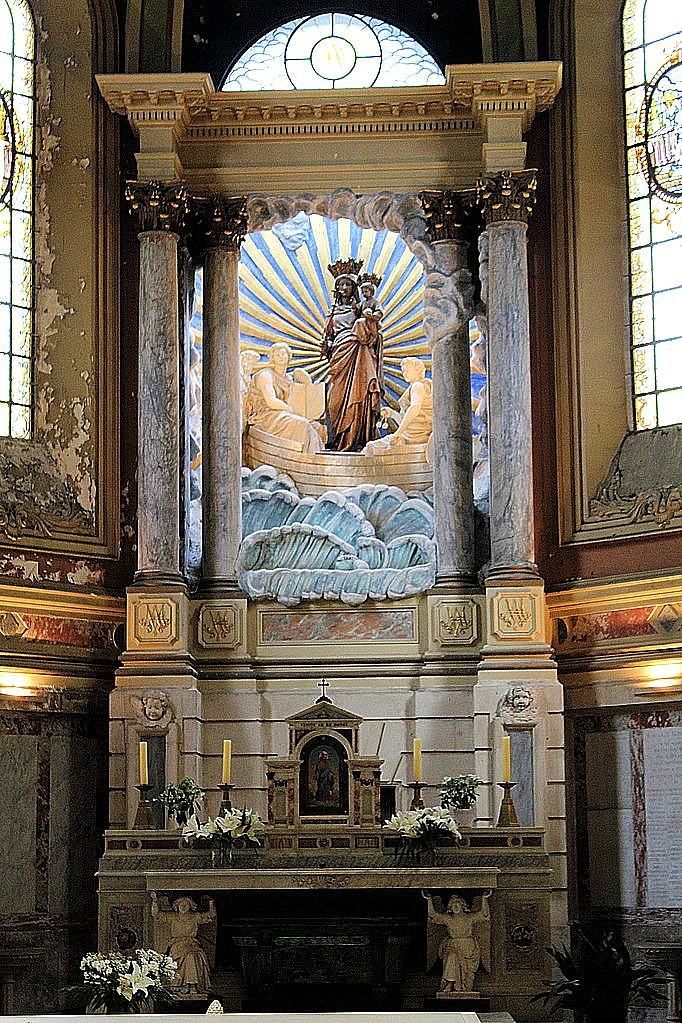
At the French Revolution, the Statue was burnt to ashes and the Church pulled down. A new Statue was made in 1803 and pilgrimages began again. The image represents the Mother with the Child in her arms, standing in a boat, with an angel on either side. At the Marian Congress in Bolougne in 1938, a the custom began, to take replicas of this Statue on visitations through France and abroad. A branch of the Confraternity of Our Lady of Compassion at Boulogne has been established for the reconciliation of the Church of England.

The Sanctuary Church at Boulogne was badly damaged during World War II, and Mary’s image smashed but the return, the “Great Return” of one of the copies of the Statue which had been sheltered at Lourdes, took place in 1943, and the occasion will long be remembered by lovers of the Blessed Virgin Mary. There is an ancient offshoot of this Shrine at Boulogne-sur-Seine.

St Amalberga of Mauberge (Died 690) Wife, Mother of 3 Saints: Gudila, Reinelda, and Emembertus. She and her husband mutually agreed to separate to become a Monk and a Nun, respectively, once the children were grown.

St Anatolia & Victoria (Died 250) Martyrs, Sisters who gave their lives for Christ.

St Antôn Nguyen Huu Quynh

St Apollonius of Sardis
Bl Arnold of Camerino
St Bianor of Pisidia

St Canute IV (c 1042-1086) Martyr, King of Denmark, known as “Canute the Holy.”

St Cuán of Airbhre
St Elilantus
St Etto
Bl Euménios
St Lantfrid
Bl Marie-Gertrude de Ripert d’Alauzier
Bl Parthenios
St Pascharius of Nantes
St Peter Vincioli
St Phêrô Nguyen Khac Tu
St Rufina and St Secunda of Rome (3rd Century) Virgin Martyrs

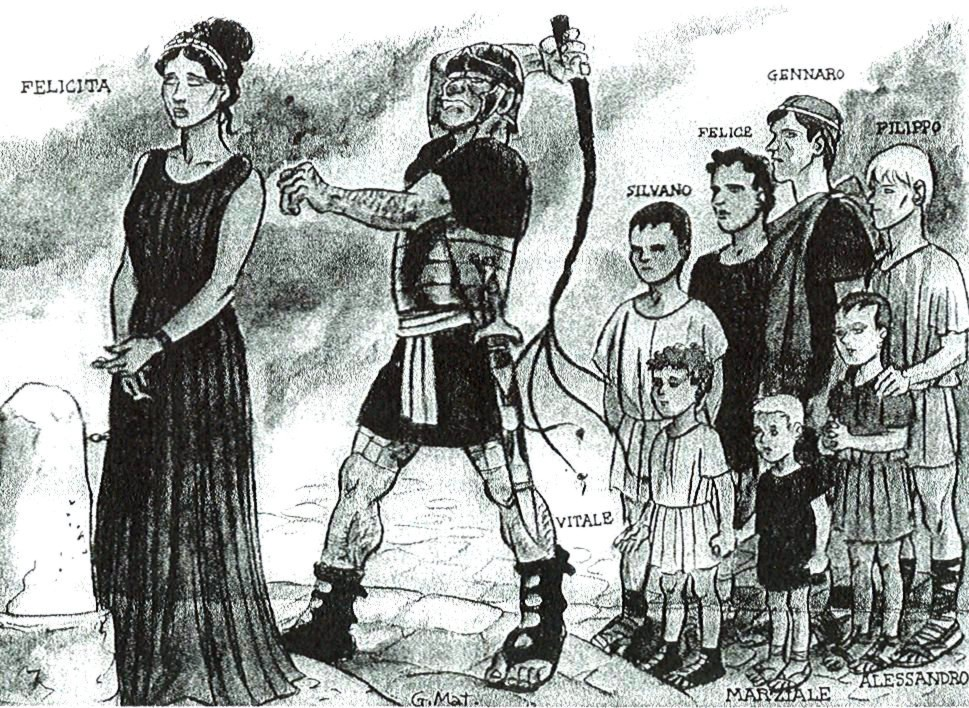
Seven Holy Brothers and their mother, St Felicitas (Died c 165) Martyrs. The Seven Sons of St Felicitas were the very first victims sacrificed by Emperor Marcus Aurelius to satisfy his false philosophy and the superstitions of his pagan subjects. St Felicitas is also celebrated separately on 23 November .

St Sylvanus of Pisidia
Bl Sylvie-Agnès de Romillon
St Waltram
—
Martyrs of Africa – 4 saints: A group of Christians martyred together in Africa. The only information that has survived are four of their names – Felix, Januarius, Marinus and Nabor.

Martyrs of Antioch – 10 saints: A group of ten Christians martyred together. We have no details about them but the names – Diogenes, Domnina, Esicius, Macarius, Maxima, Maximus, Rodigus, Timoteus, Veronia and Zacheus. They were martyred in Antioch, date unknown.

Martyrs of Damascus – 11 beati: A group of Franciscans and laymen ordered by Druz Muslims to convert to Islam. They refused and were hacked to pieces.
• ‘Abd Al-Mu’ti Masabki
• Carmelo Bolta Bañuls
• Engelbert Kolland
• Francisco Pinazo Peñalver
• Fransis Masabki
• Juan Jacobo Fernández y Fernández
• Manuel Ruiz López
• Nicanor Ascanio de Soria
• Nicolás María Alberca Torres
• Pedro Soler Méndez
• Rufayil Masabki
They were cut to pieces on 9-10 July 1860 in Damascus, Syria.
Beatified on 10 October 1926 by Pope Pius XI.

Martyrs of Nicopolis – 45 saints: A group of 45 Christians tortured and martyred together in the persecutions of emperor Licinius. We know nothing else but six of their names – Anicetus, Anthony, Daniel, Leontius, Mauritius and Sisinno. c 329 in Nicopolis, Armenia (modern Koyulhisar, Turkey).

Martyrs of Nitria – 5 saints: Fathers of Nitria – Four monks and the bishop of Alexandria, Egypt who were martyred by heretics. Saint John Chrysostom wrote about them but their names have not come down to us. They were martyred in the 4th century in Nitria, Egypt.

Posted in MARIAN TITLES

Our Lady of Chiquinquirá / La Chinita, Colombia and Memorials of the Saints – 9 July

Virgen del Rosario / Our Lady of the Rosary (Chiquinquirá, Boyacá, Colombia) (1586) – 9 July, 26 December:

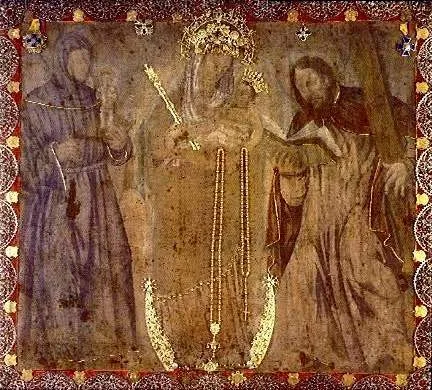
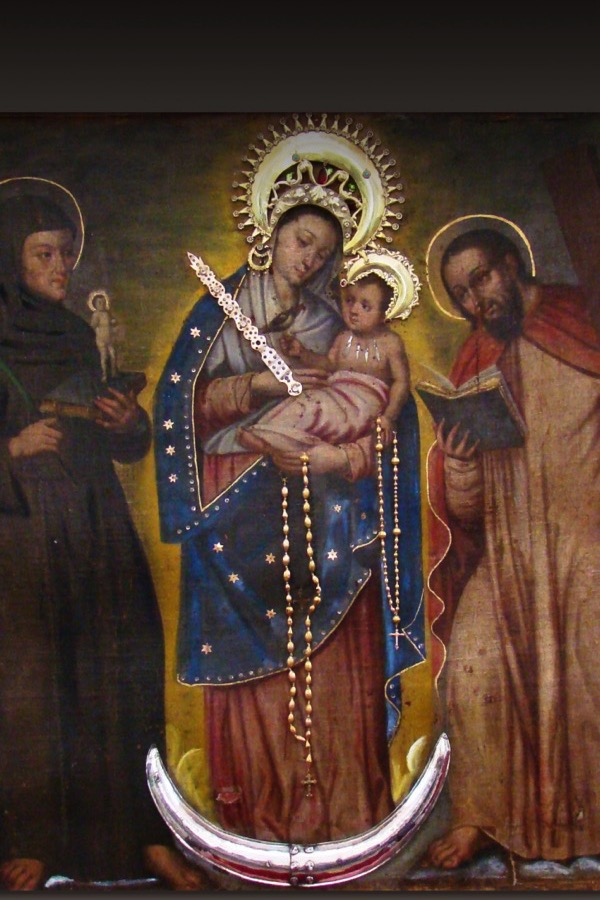
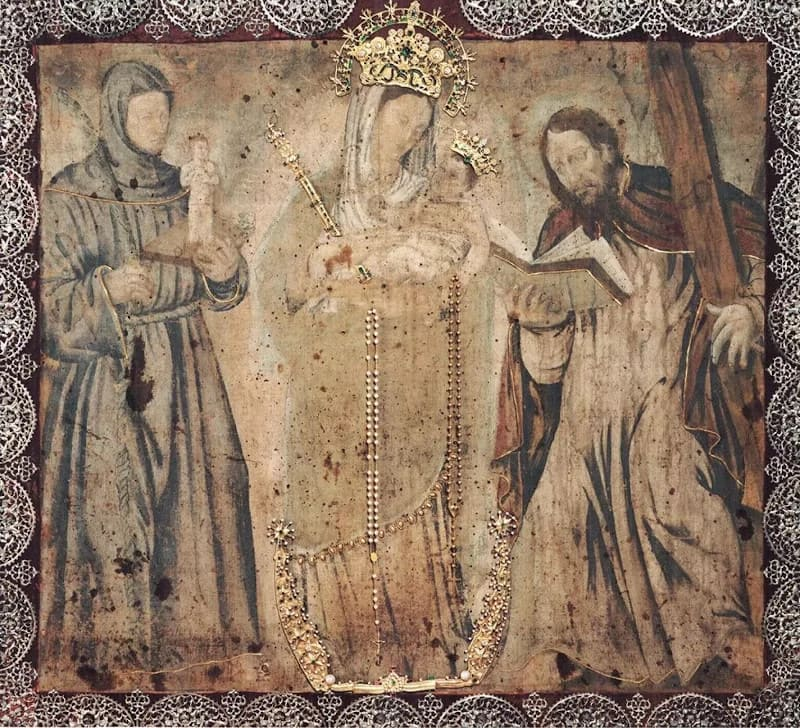
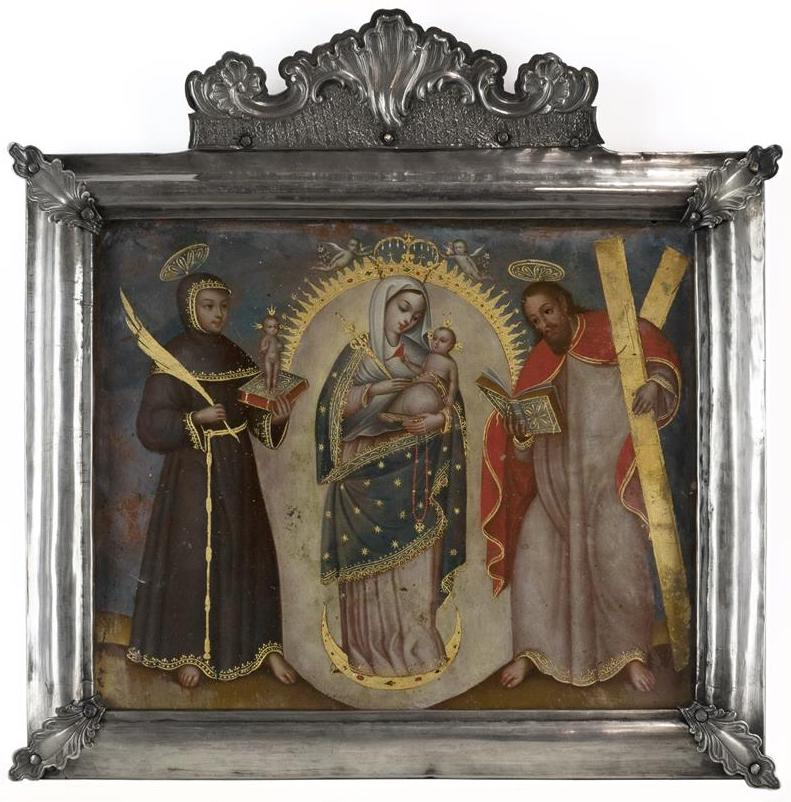
In the mid-16th century the Spanish painter Alonso de Narvaez created a portrait of the Virgin of the Rosary. He painted in pigments from the soil, herbs and flowers of the region of modern Colombia and his canvas was a rough 44 inch x 49 inch cloth woven by local Indians. The image of Mary is about a meter high. She has a small, sweet smile, both her face and the Divine Child’s are light coloured and she looks like she’s about to take a step. She wears a white toque, a rose-coloured robe and a sky blue cape. A Rosary hangs from the little finger of her left hand and she holds a sceptre in her right. She holds the Christ Child cradled in her left arm and looks toward Him. Christ has a little bird tied to His thumb and a small Rosary hangs from His left hand. To either side of Mary stand Saint Anthony of Padua and Saint Andrew the Apostle, the personal Patrons of the colonist, Don Antonio de Santana and Monk, Andrés Jadraque, who commissioned the work.

In 1562 the portrait was placed in a rustic Chapel. It was exposed to the air, the roof leaked and soon the damage caused by the humidity and sun completely obscured the image. In 1577 the damaged painting was moved to Chiquinquirá, Colombia and stored in an unused room. In 1585 Maria Ramos, a pious woman from Seville, cleaned up the little Chapel and hung the faded canvas in it. Though the image was in terrible shape, she loved to sit and contemplate it.

On Friday 26 December 1586 the faded, damaged image was suddenly restored. It’s colours were bright, the canvas cleaner, the image clear and seemingly brand new. The healing of the image continued as small holes and tears in the canvas miraculously self-sealed. It still has traces of its former damage and the figures seem brighter and clearer from a distance than up close. For 300 years the painting hung unprotected and thousands of objects were touched against the frail cotton cloth by pilgrims. This rough treatment should have destroyed it but it healed and survives. In 1829, Pope Pius VII declared Our Lady of Chiquinquirá Patroness of Colombia and granted a special liturgy. In 1897 a thick glass plate was placed over it to shield the painting from the weather and the excess zeal of the faithful. The image was canonically crowned in 1919 and in 1927 her sanctuary declared a Basilica.

Patronages – Colombia, Venezuelan National Guard.

St Augustine Zhao Rong, Priest and Martyr (Died + 1815) and his 119 companions or Martyrs of China (Died 1648–1930, Qing dynasty and Republic of China) (Optional Memorial): 25 priests, friars, nuns, seminarians and lay people. The 87 Chinese Catholics and 33 Western missionaries, from the mid-17th century to 1930, were martyred because of their ministry and, in some cases, for their refusal to apostatise.
Many died in the Boxer Rebellion, in which xenophobic peasants slaughtered 30,000 Chinese converts to Christianity along with missionaries and other foreigners.

Blessed Adrian Fortescue TOSD (1476-1539) Martyr,. A husband and father, a Justice of the Peace, a Knight of the Realm, a Knight of Malta and a Dominican Tertiary (Lay Dominican), he was at once a loyal servant of the Crown so far as he could be but still more, he was a man of unshakeable faith.

St Agrippinus of Autun
St Alexander of Egypt
St Audax of Thora
St Brictius of Martola
St Copra of Egypt
St Cyril of Gortyna
Bl Dionysius the Rhetorician
St Everild of Everingham
St Faustina of Rome
St Felician of Sicily
Bl Fidelis Chojnacki
Blessed Giovanna Scopelli O.Carm (1428 – 1491) Virgin, Religious of the Carmelites. Incorrupt.
St Floriana of Rome
St Hérombert of Minden
St Joachim Ho
Bl Luigi Caburlotto
Bl Marguerite-Marie-Anne de Rocher
Bl Marie-Anne-Madeleine de Guilhermier

St Patermutius of Egypt
St Paulina do Coração Agonizante de Jesus

St Veronica/Ursula Giuliani OSC Cap. (1660-1727) Italian Capuchin Poor Clares nun, Abbot, Mystic, Stigmatist.

Four Holy Polish Brothers – 4 saints: Four brothers who became hermits, Benedictine monks and saints – Andrew, Barnabas, Benedict and Justus. They were born in Poland and died in 1008 of natural causes.

Martyrs of Gorkum – 19 saints: Nineteen martyrs killed by Calvinists for loyalty to the Pope and for their belief in the Real Presence in the Eucharist. They are –
• Adrianus van Hilvarenbeek • Andreas Wouters • Antonius van Hoornaar • Antonius van Weert • Cornelius van Wijk • Francisus de Roye • Godfried van Duynen • Godfried van Melveren • Hieronymus van Weert • Jacobus Lacops • Joannes Lenaerts • John of Cologne • Leonardus van Veghel • Nicasius Janssen van Heeze • Nicolaas Pieck • Nicolaas Poppel • Petrus van Assche • Theodorus van der Eem • Willehad van Deem •
They werehanged on 9 July 1572 in Brielle, Zuid-Holland, Netherlands.
Beatified on 24 November 1675 by Pope Clement X and Canonised on 29 June 1867 by Pope Pius IX.

Martyrs of Orange – 32 beati: 32 nuns from several orders who spent up to 18 months in prison and were finally executed for refusing to renounce Christianity during the persecutions of the French Revolution.
• Anne Cartier • Anne-Andrée Minutte • Dorothée-Madeleine-Julie de Justamond • élisabeth Verchière • élisabeth-Thérèse de Consolin • Jeanne-Marie de Romillon • Madeleine-Françoise de Justamond • Madeleine-Thérèse Talieu • Marguerite-Eléonore de Justamond • Marguerite-Marie-Anne de Rocher • Marguerite-Rose de Gordon • Marguerite-Thérèse Charensol • Marie Cluse • Marie-Anastasie de Roquard • Marie-Anne Béguin-Royal • Marie-Anne Depeyre • Marie-Anne Doux • Marie-Anne Lambert • Marie-Anne-Madeleine de Guilhermier • Marie-Claire du Bac • Marie-Clotilde Blanc • Marie-Elisabeth Pélissier • Marie-Gabrielle-Françoise-Suzanne de Gaillard de Lavaldène • Marie-Gertrude de Ripert d’Alauzier • Marie-Marguerite Bonnet • Marie-Marguerite de Barbégie d’Albrède • Marie-Rose Laye • Rosalie-Clotilde Bes • Suzanne-Agathe Deloye • Sylvie-Agnès de Romillon • Thérèse-Henriette Faurie
They were guillotined between 6 July and 26 July 1794 at Orange, Vaucluse, France.
Beatified on 10 May 1925 by Pope Pius XI.

Martyrs of the Baths – 10,204 saints: A group of Christians enslaved by Diocletian to build the gigantic baths in imperial Rome, Italy. The end of their labours coincided with the beginning of the great persecutions of Diocletian and they were all executed. Ancient records indicated there were 10,204 of them; Zeno of Rome is the only one whose name has come down to us and we know nothing else about any of their individual lives.

Posted in SAINT of the DAY

Nostra Signora della Neve, Adro, Italy/ Our Lady of the Snow, Adro, Brescia, Italy (1519) and Memorials of the Saints – 8 July

Nostra Signora della Neve, Adro, Italy/ Our Lady of the Snow, Adro, Brescia, Italy (1519) – 8 July, 5 August:

Adro is a Town in the Province of Brescia, in the Lombardy region, northern Italy. The Sanctuary emerged after the appearance of the Madonna in this place. to Battista Bajoni Comino, the deaf-mute who was visited by the Holy Mother on 8 July 1519. The Virgin appeared saying she was the Mother of God and sent a message to the people of Adro. Our Lady’s message contained a reference to a Christian life, repentance for sins and conversion and reparation and the construction of a Sanctuary in her honour. The built the Church at the place of vision, and began to amend their lives. They practised devotion on Sundays and Holy Days, stopped blaspheming the Holy Name and refrained from other evil habits, for Our Lady had also said that if they did not repent they could expect a serious penalty. Mary said – “And if they wonder how it is that you speak, tell them that you have been with the Advocate of Sinners. Everyone knows you were dumb. Now take this stone with you and show it to them as it will change colour from time to time. “

The central Feast of Our Lady of the Snows is celebrated on 5 August
Immediately after the miracle, it was called “Madonna della Cava,” the place where the Virgin had appeared to the Shepherd and the feast was celebrated on 8 July the anniversary of the vision. Later, however, Church officials transferred the Feast to 5 August, the day the dedication of Santa Maria Maggiore in Rome, also known as “Santa Maria de las Nieves,” built by Pope Liberius commemorates after Miracle of snow (that happened in Rome). It was then that this temple took the name of “Our Lady of the Snows.”
In pilgrimage season (April to October) groups of pilgrims arriving from neighbouring provinces, especially from Brescia, Bergamo, Como, Varese, Milan, Cremona, Mantua and Verona. Sunday is preferred by families. All opportunities for spiritual growth are offered through preaching and the Sacraments.

Such is the fascination of the Virgin on the pilgrims who will then return again.
It is a ceremony in which you have to enter the crypt “to see the Madonna”.

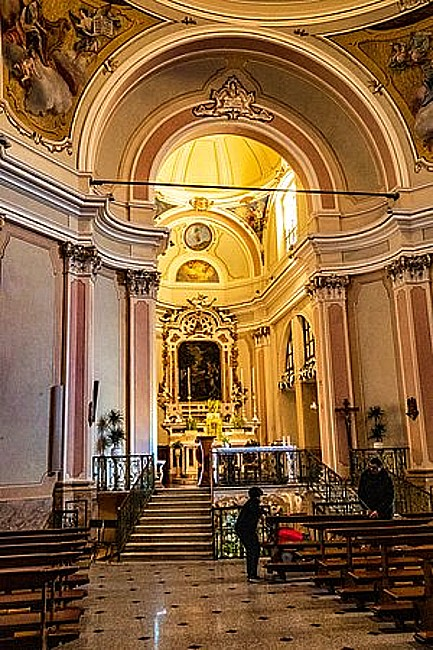
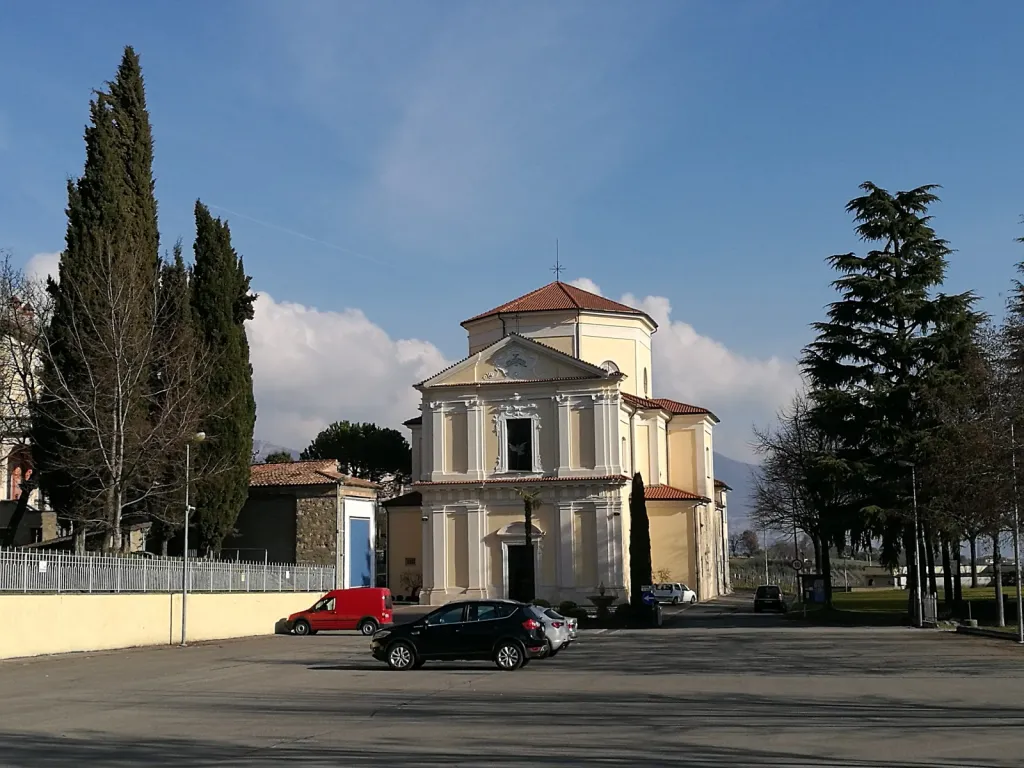
The miracle of the deaf-mute who began to hear and speak gave rise to a small Shrine. It remains alongside the current main Altar. It was visited by Saint Charles Borromeo in 1581. Being too small for the influx of pilgrims,the Church was demolished in 1750 and enlarged. It was built on a design by architect Gaspare Turbini and opened in 1776.

The Carmelites of St Teresa, built a Monastery nearby. The current statue is gilded wood sculptor. Next to the Shrine a discreet and well-shaded park with tables and benches offers a welcome drink to pilgrims.

St Abraham the Martyr
Bl Adolf IV of Schauenburg
St Pope Adrian III
St Ampelius of Milan
St Apollonius of Benevento

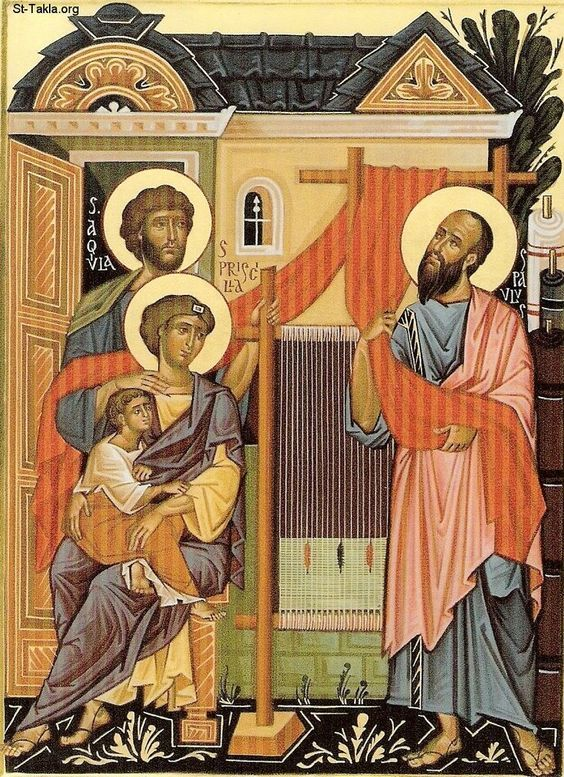
Sts Aquila & Priscilla – the Tentmakers, Collaborators of Saint Paul.

St Arnold
St Auspicius of Toul
St Auspicius of Trier
Brogan of Mothil
St Colman of Thuringia
St Doucelin
St Edgar the Peaceful
Blessed Pope Eugene III O.Cist (c 1080-1153) Papal Ascension – 15 February 1145 until his death. The 167th Pope.

Blessed Giulio of Montevergine (Died 1601) Hermit, Penitent

St Elizabeth of Portugal

St Glyceria of Heraclea
St Grimbald
St Ioannes Wu Wenyin
St Ithier of Nevers


St Killian (c 640-689) Martyr, Bishop, Missionary, “Apostle of Franconia”(nowadays the northern part of Bavaria).

St Landrada
Bl Mancius Araki Kyuzaburo
St Morwenna
St Pancras of Taormina
Bl Peter the Hermit

Blessed Peter Vigne (1670-1740) Missionary Priest, Apostle of the Holy Eucharist, of Charity, of Mary, Catechist, tireless missionary and teacher and Founder of the Religious of the Blessed Sacrament

St Procopius of Ceasarea
St Sunniva of Bergen
St Thibaud de Marly
St Totnan of Thuringia
—
Abrahamite Monks/Martyrs of Constantinople: A group of monks in a monastery founded by Saint Abraham of Ephesus. Martyred in the iconoclast persecutions of emperor Theophilus. In c 835 in Constantinople.
Martyrs of Shanxi – 7 saints: In 1898 seven sisters of the Franciscan Missionaries of Mary were sent to the Shanxi diocese in China to serve the poor in hospitals and care for the unwanted or other destitutes in orphanages. They were –
• Anne-Catherine Dierks
• Anne-Francoise Moreau
• Clelia Nanetti
• Irma Grivot
• Jeanne-Marie Kuergin
• Marianna Giuliani
• Pauline Jeuris
There they all died in one of the periodic crackdowns against foreign missionaries. They were beheaded on 9 July 1900 at Taiyuanfu, China- Beatified on 24 November 1946 by Pope Pius XII.

Martyrs of Syrmium – 5 saints: Five Christians martyred together for their faith. We know nothing else about them but the names – Cecilia, Eperentius, Eraclius, Sostratus and Spirus. They were martyred in the 4th century in Syrmium, Pannonia (modern Serbia).

Posted in MARIAN DEVOTIONS, MARIAN TITLES

Onze Zoeten Dame van Den Bosch, Arras / Our Lady of Arras, Netherlands (1380) and Memorials of the Saints – 7 July

Onze Zoeten Dame van Den Bosch , Arras / Our Lady of Arras, Netherlands (1380) – 7 July:

The image known as the “Kind Mother” at Sint Hertogenbosch, or “Our Sweet Lady” of Den Bosch, as she is also known in the north Brabant Province of the Netherlands, was an object of derision when it was first heard of in 1380. It had been found dirty and damaged in a builder’s junk-yard, but it soon became celebrated for the wonders connected with it. It was in 1380, when Saint John’s Cathedral was being renovated, that the Statue was found. An apprentice stone mason, was looking for wood for his fire when he uncovered a scruffy wooden Statue in the rubble. The Statue was in such poor condition, that he didn’t recognise it as the Mother of God. The mason in charge somehow recognised Her, even without the Infant Jesus in her arms.

The Statue was placed on the Altar of Saint Martin, in the Cathedral,but the faithful did not like it and were upset that such a dilapidated Statue was exposed for veneration. It wasn’t long before one of the Priests attempted to remove the Statue but found that it had become so heavy, that he could not move it.

It was soon noted, though, that any who spoke disapprovingly of the Statue became weak, fainted, or had nightmares. One woman mocked the Statue, and became partially paralysed. That night, she had a vision of Our Lord, who ordered her to repair the Statue and honour it. The next day she was able to drag herself to the Cathedral to begin the work. At the end of each day, she was able to walk a little more.

It was an entire year later when a Brother Wout found the missing image of the Infant Jesus that belonged to the Statue. Local children were using if for a toy but now the Statue was reunited and complete. There were still some who ridiculed the Statue but now they fainted on the spot. Many experienced strange pains, headaches,and even indigestion. On the other hand, those who prayed before the Statue received a cure of their illnesses and otherwise were greatly favoured. Due to the presence of the Statue, the Church became a place of pilgrimage. Emperor Maximilian, Holy Roman Emperor, and King Fernando of Castile were among the notables who visited the miraculous Statue.

The Statue of Our Sweet Lady is of oak and is nearly four feet tall and is of an unusual pattern – Our Lady stands upright, while her forearms are extended at right angles to her body. The Child is balanced on her left hand and in her right she holds an apple.

The dedication of the new Church of Our Lady of Arras occurred in the year 1484 by Bishop Peter de Ranchicourt, who was Bishop of that City. The first Church which had been built at the site had been constructed by Saint Vaast, who had been the Bishop of Arras, in the year 542, using the liberal donations of the first Kings of France.

The desolation caused by the Calvinists began in 1566 and many Churches were plundered. The Kind Mother was hidden and saved from the destruction. Years later, when the City was seized by the Spanish, two Carmelites took the Statue to Bishop Ophovius, who gave it to one of the women of the parish to safeguard.

Eventually it was feared that the Statue of the Kind Lady would not be safe if it stayed were it was and so, it was decided to take the Statue to Brussels for safety. The Statue had to be hidden and was placed in a chest and smuggled through the Town gates. It was then taken to St Geradus’ Church in Belgium before being taken to Koudenberg Church in Brussels.

It wasn’t until the year 1810 when the Cathedral at Den Bosch was returned to the Catholics by Napoleon. Then, it took the prolonged efforts of Bishop J. Zwijsen, the Bishop of Hertogenbosh, to have the beloved Statue of Our Sweet Lady returned to his Cathedral in 1878. It was Crowned by the grateful Bishop in the name of Pope Leo XIII that same year and the Feast is 7 July with proper Mass and Office in certain places.

INTERESTING NOTE: Around 7% of the men in the Netherlands are called Maria. Yes, over 1/20 of Dutch men are named after the Virgin Mary. In 1954, a Marian Year, 17% of Dutch men where named after the Blessed Virgin. Incidentally, most of those men named Mary live in or around Den Bosch, and Mary is one of the Patron Saints of this beautiful City.

Saint Cyril (827-869)
Saint Methodius (826-885)
“Apostles to the Slavs,” Sibling Brother Bishops, Confessors, Theologians, Missionaries, Writers, Preachers, Patrons of Europe. Creators of the Glagolitic alphabet, the first alphabet used to transcribe Old Church Slavonic and Cyrillic Alphabet, which was developed from it.
Their Feast Day is 7 July (moved in 1969).
The great Saints Cyril & Methodius: 
https://anastpaul.wordpress.com/2018/02/14/saints-of-the-day-14-february-sts-cyril-827-869-methodius-826-885/

St Alexander
St Angelelmus of Auxerre
St Antonino Fantosati
St Apollonius of Brescia

Blessed Pope Benedict XI OP (1240-1303) Cardinal-Priest of St Sabina, Bishop of Ostia then of Rome, Dominican Friar, Prior Provincial of Lombardy prior to becoming the Master of the Order in 1296, Apostolic Papal Legate to Hungary and France, Teacher, Preacher, Writer and renowned Scholar with special emphasis on Biblical commentary. His Papacy began on 22 Ocober 1303 and ended at his death on 7 July 1304.
His Life:

https://anastpaul.com/2020/07/07/saint-of-the-day-7-july-blessed-pope-benedict-xi-1240-1303/

Bl Bodard of Poitiers
St Bonitus of Monte Cassino
St Carissima of Rauzeille
St Eoaldus of Vienne
St Ethelburga of Faremoutier
Bl Francisco Polvorinos Gómez
St Hedda of Wessex
Bl Joseph Juge de Saint-Martin
Bl Juan Antonio Pérez Mayo
Bl Juan Pedro del Cotillo Fernández
Bl Justo González Lorente
St Maelruan
Bl Manuel Gutiérrez Martín
St Marcus Ji Tianxiang
Bl María del Consuelo Ramiñán Carracedo

Bl Marie-Gabrielle-Françoise-Suzanne de Gaillard de Lavaldène
St Medran
St Merryn
Bl Oddino Barrotti
St Odo of Urgell
St Odran
St Palladius of Ireland
St Pantaenus of Alexandria

St Pantænus (Died c 216) Father of the Church, Theologian, Philosopher, Teacher, Confessor and Defender of the Faith, Writer and interpreter of the Bible, the Trinity and Christology, |Missionary. Convert ofthe disciples of the Apostles. Head of the Alexandrian School of Learning – a famous pupil was St Clement of Alexandria.
Biography:

https://anastpaul.com/2019/07/07/saint-of-the-day-7-july-st-pantaenus-father-of-the-church-died-c-216/

Bl Pascual Aláez Medina

Blessed Peter To Rot (1912-1945) Martyr, Layman, Catechist and Defender of the Faith, Defender of the Sacrament of Marriage – (died c 1912 in Rakunai, East New Britain (part of modern Papua New Guinea) .
About Bl Peter:

https://anastpaul.com/2017/07/07/saint-of-the-day-7-july-blessed-peter-to-rot/

St Prosper of Aquitaine
St Syrus of Genoa
St Willibald of Eichstätt (c.700 – 787) Bishop, Prince, Missionary
—
Martyrs of Durres – 7 saints: Also known as – Martyrs of Dyrrachium/ Martyrs of Durazzo. A group of seven Italian Christians who fled Italy to escape the persecutions of emperor Hadrian. Arrived in Dyrrachium, Macedonia to find Saint Astius tied to a cross, covered in honey, laid in the sun and left to be tortured by biting and stinging insects. When they expressed sympathy for Astius, they were accused of being Christians, arrested, chained, weighted down, taken off shore and drowned. We know little more about each of them than their names – Germaus, Hesychius, Lucian, Papius, Peregrinus, Pompeius and Saturninus. They were born in Italy and were martyred at sea c117 off the coast of Dyrrachium (Durazzo), Macedonia (modern Durres, Albania).

Posted in MARIAN TITLES

Notre-Dame d’Iron / Our Lady of Iron, Dunois, France (1631) and Memorials of the Saints – 6 July

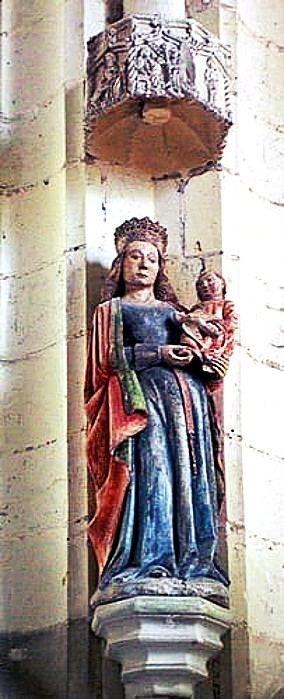
Notre-Dame d’Iron / Our Lady of Iron, Dunois, France (1631) – 6 July:

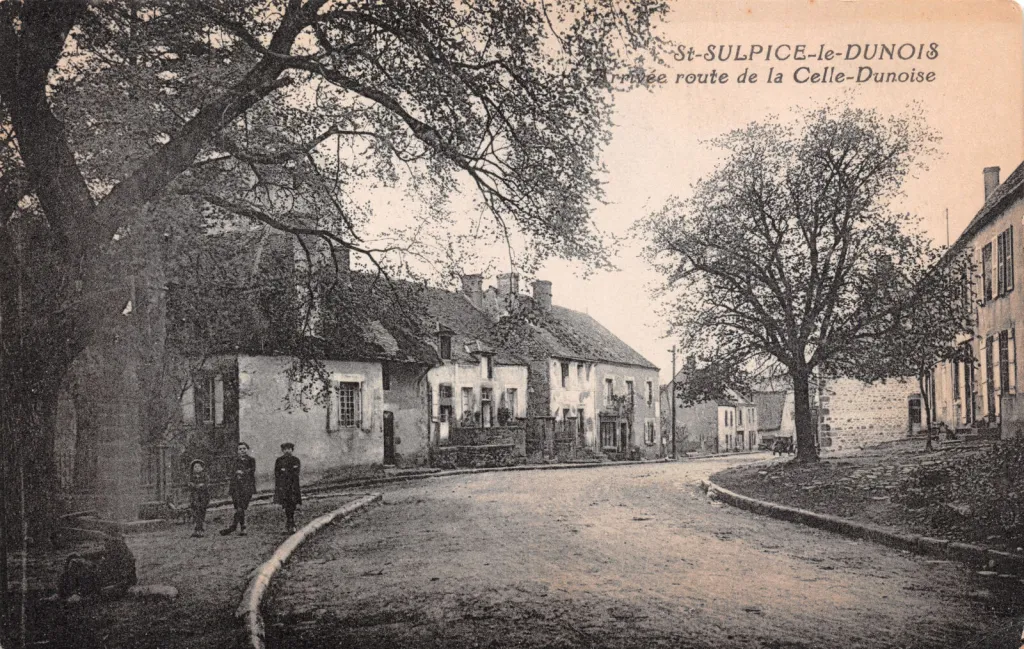
Saint-Sulpice-le-Dunois is a small Village located near the centre of France. Once home to Our Lady of Iron, it is situated near the larger Town of Blois, its population was only 517 citizens in the year 2007, which was a decrease from the 636 citizens who had lived there in 1999. It was in the Chapel of this tiny Village of Saint-Sulpice-le-Dunois, in the year 1631, that our story takes place involving Our Lady of Iron.

There was a young French couple living in the village at that time, who felt themselves singularly blessed. Were they not fortunate? They took pleasure in their youth and enjoyed good health, had happy employment,lived in a modest home and they had recently been blessed with a fine baby whom they felt was as sweet as the Babe of Bethlehem. Thus they mused on their way home together after early morning Mass one day.

As soon as they entered their home, Pierre hurried to the cradle to gaze lovingly at his infant son. The child must have been restless, he thought, as there was evidence that he had struggled with the bedclothes which were tossed about and tangled strangely about the infant. Pierre reached in and lifted his son to hold him in his arms, only to find that the tiny figure was rigid and cold. Stunned, he called for his wife disbelieving, for it seemed their baby was dead!

Pierre’s thoughts turned to Our Blessed Mother and then to the Statue of Our Lady of Iron at the Parish Church. They had spent many hours there in the past praying for her assistance and her help had never failed them. They determined to take their baby there instantly! Surely, Mary would not fail them in this time of dire need.

Together they entered the Church, and sadly laid the lifeless form at the feet of the Statue of Our Lady of Iron. As they began to pray for her intercession, they dedicated their baby to the Blessed Virgin Mary. In that very instant, the child who had been smothered by struggling in its cradle, cried out and came back to life. News of the miracle spread far and wide and the fame of Our Lady of Iron was assured.

St Maria Goretti (1890-1902) Martyr (Optional Memorial) Virgin and Martyr, known as “Saint Agnes of the 20th Century.” St Maria Goretti was Canonised on 24 June 1950 by Pope Pius XII.
About St Maria here:

https://anastpaul.wordpress.com/2017/07/06/saint-of-the-day-6-july-st-maria-goretti/

Bl Angela of Bohemia
Bl Augustin-Joseph Desgardin
Bl Christopher Solino
St Cyril of Thessaloniki
St Dominica of Campania (c 287-303) Virgin Martyr
St Gervais
St Giusto of Condat
St Goar of Aquitaine
St Godelieve

Blessed Maria Theresa Ledóchowska SSPC (1863-1922) Religious Sister and Co-Founder of the Missionary Sisters of St Peter Claver (commonly known as the Claverian Sisters), dedicated to service in Africa, Missionary – she is called the “Mother of the African Missions.”
Her Life:

https://anastpaul.com/2020/07/06/saint-of-the-day-6-july-blessed-maria-theresa-ledochowska-sspc-1863-1922/

St Monenna

St Nazaria Ignacia March y Mesa (1889-1943) – Religious and Founder of the Missionaries of the Crusade (later renamed Congregation of the Missionary Crusaders of the Church).
Her story:

https://anastpaul.com/2018/07/06/saint-of-the-day-6-july-blessed-sr-nazaria-of-saint-teresa-of-jesus-nazaria-ignacia-march-y-mesa-1889-1943/

St Noyala of Brittany
St Petrus Wang Zuolung

St Romulus of Fiesole (Died c 90) Martyr, Bishop, Disciple of Saint Peter.
Biography:

https://anastpaul.com/2019/07/06/saint-of-the-day-6-july-saint-romulus-of-fiesole-died-c-90-martyr/

St Saxburgh of Ely
St Sisoes the Great
Bl Suzanne Agathe de Loye
St Thomas Alfield
St Tranquillinus of Rome
—
Martyrs of Campania – 23 saints: A group of 23 Christians arrested, tortured and then beheaded together in the later 3rd century by order of governor Rictiovarus in the persecutions of Diocletian. The names that have come down to us are – Antoninus, Arnosus, Capicus, Cutonius, Diodorus, Dion, Isidore, Lucia, Lucian, Rexius, Satyrus and Severinus.

Martyrs of Fiesole – 5 saints: Five Christians martyred together in the persecutions of emperor Domitian – Carissimus, Crescentius, Dulcissimus, Marchisianus and Romulus. c 90 near Fiesole, Italy.

Posted in MARIAN TITLES, SAINT of the DAY

Our Lady of Refuge, Matamoros, Tamaulipas, Mexico (1720) and Memorials of the Saints – 4 July

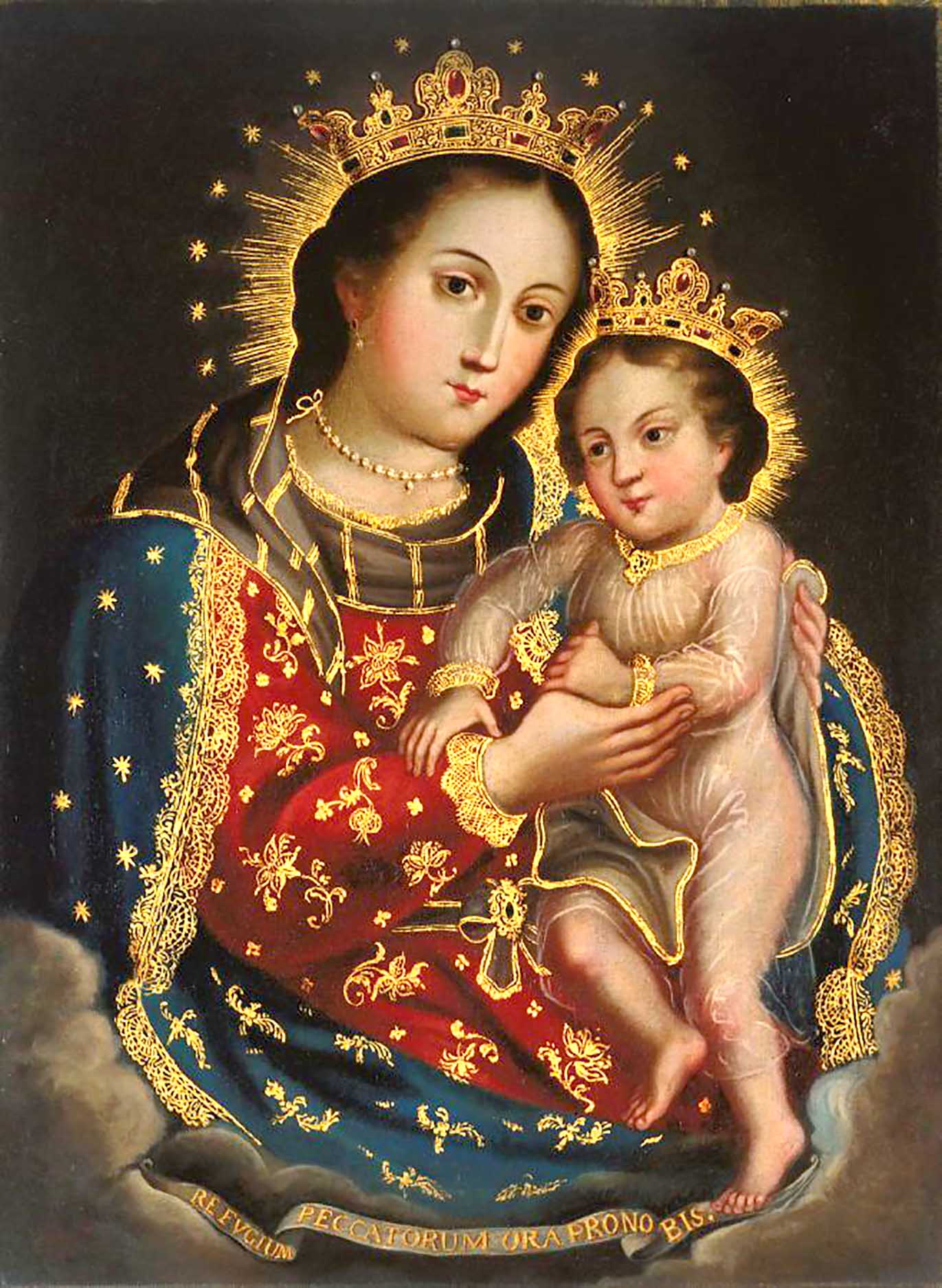
Nuestra Señora del Refugio / Our Lady of Refuge, Matamoros, Tamaulipas, Mexico (1720) – 4 July:

Jesuit Missionary Father Juan José Güica brought a painting of Our Lady, Refuge of Sinners from Italy to Mexico in 1720. In a dream, the Virgin told Padre Güica to ask the Franciscans of Zacatecas to use and promote the image; – they distributed over 150 copies, making this one of the most widespread Marian devotions in Mexico.

In 1793 Franciscan Friars came to the new settlement which would become Matamoros, renaming the area “Nuestra Señora del Refugio de los Esteros Hermosos” (Our Lady of the Refuge of the Lovely Marshes).

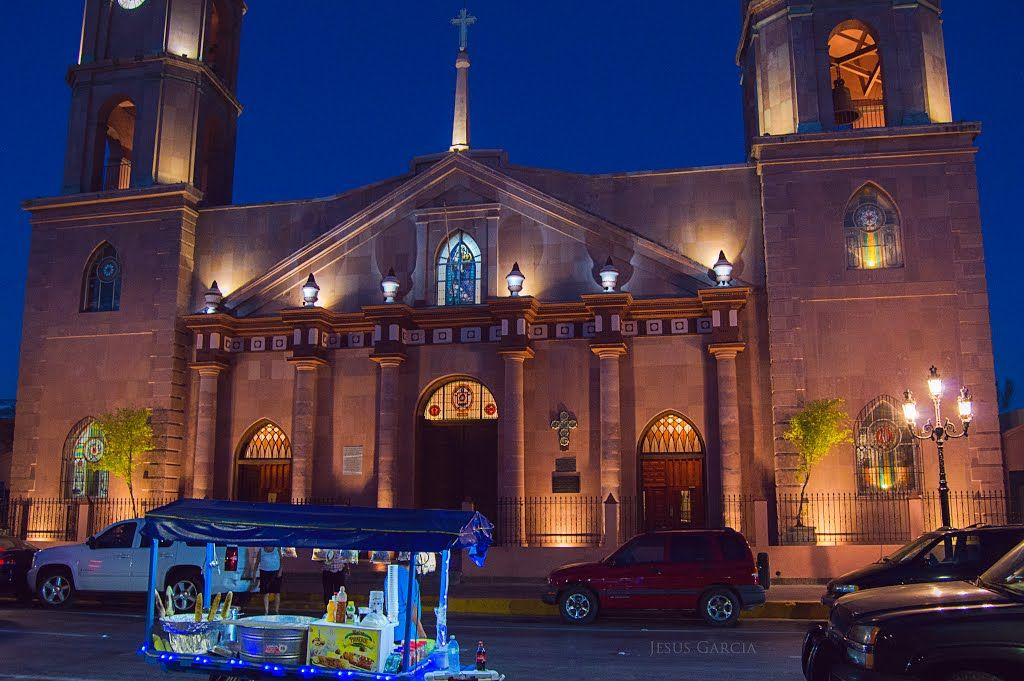
The Cathedral of Our Lady of Refuge, built in 1832, displays an 1886 painting of her. Her fiesta, celebrated in many Mexican Towns, commemorates the coronation of the original “Refugium Peccatori” in the Jesuit Church of Frascati, Italy, on 4 July 1717.

St Elizabeth of Portugal TOSF (1271-1336) Queen Consort, Franciscan Tertiary, Apostle of Charity and Peace, political negotiator and mediator.
Biography:

https://anastpaul.com/2018/07/04/saint-of-the-day-4-july-st-elizabeth-of-portugal-t-o-s-f-1271-1336/

Bl Agatha Yun Jeom-Hye
St Albert Quadrelli
St Andrew of Crete
St Anthony Daniel
St Aurelian of Lyons
St Bertha of Blangy
St Carileffo of Anille
Bl Catherine Jarrige
St Cesidio Giacomantonio
Bl Damiano Grassi of Rivoli
St Donatus of Libya
St Edward Fulthrop
St Elias of Jerusalem
St Finbar of Wexford
St Fiorenzo of Cahors
St Flavian of Antioch
St Giocondiano
Bl Giovanni of Vespignano
St Haggai the Prophet
Bl Hatto of Ottobeuren
Bl Henry Abbot
St Henry of Albano
St Hosea the Prophet
St Innocent of Sirmium
Bl John Carey
Blessed John Cornelius SJ (1557– 1594) Martyr, English Priest of the Society of Jesus, Missionary.
Bl Jozef Kowalski
St Jucundian
St Laurian of Seville
St Lauriano of Vistin
Bl Maria Crocifissa Curcio
St Namphanion the Archmartyr
Bl Natalia of Toulouse
St Odo the Good
Bl Odolric of Lyon
Bl Patrick Salmon
Bl Pedro Romero Espejo

Blessed Petrus Kasui Kibe SJ (c 1587-1639) Priest of the Society of Jesus and Martyr
The first of the 188 Japanese Martyrs
His Life and Death:

https://anastpaul.com/2020/07/04/saint-of-the-day-4-july-blessed-petrus-kasui-kibe-sj-c-1587-1639-priest-and-martyr-a-christian-walking-through-the-world/

St Sebastia of Sirmium
St Theodore of Cyrene
St Theodotus of Libya
Bl Thomas Bosgrave
Bl Thomas Warcop

St Ulric of Augsburg (c 890–973) Bishop of Augsburg, Germany, miracle-worker.
His Life:
https://anastpaul.com/2019/07/04/saint-of-the-day-4-july-saint-ulric-of-augsburg-c-890-973/

St Ulric of Ratzeburg
St Valentine of Langres
St Valentine of Paris
Bl William Andleby
Bl William of Hirsau

Posted in MARIAN TITLES

Notre Dame de la Visitation / Our Lady of the Visitation, Lescure, Valuéjols, Cantal, Auvergne, France (1717) and Memorials of the Saints – 2 July

Our Lady of the Walnut
Our Lady of Madhu
Our Lady of Montallegro
Our Lady of the Grove
Our Lady of the Leśniów Spring
Our Lady of the Visitation
Our Lady of the Way of Leon
Our Lady of Vaussivieres

Notre Dame de la Visitation / Our Lady of the Visitation, Lescure, Valuéjols, Cantal, Auvergne, France (1717) – Commemorated on the Fourth Sunday of June, 2 July :

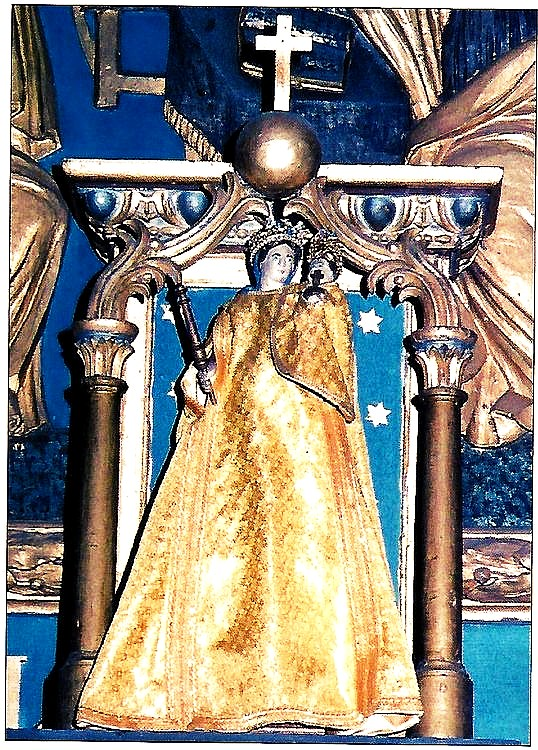
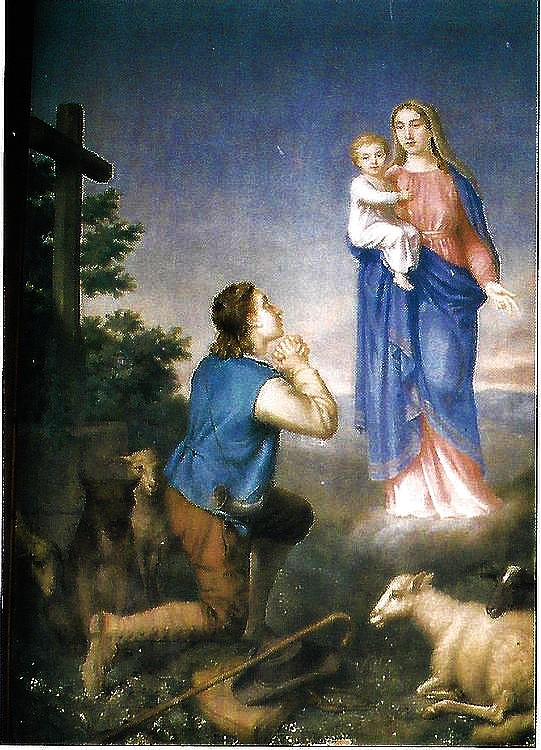
At around 19 years old, Shepherd Jean Paillé was devoted to the Virgin Mary, and would daily lead his flock, from his little village in central France ,to a wayside Cross on a bluff, where he would kneel to say the Rosary. On 2 July, 1717, his prayers at the Cross were met by an apparition of the Virgin herself, who asked that a Church be built on that spot, leaving behind a small Statuette of herself at the foot of the Cross. She returned several times with the same request. Finally, Jean answered, “But no one will believe me.” “Keep telling the people of Lescure,” she said “and eventually they will listen.” Both were right. When the shepherd mustered the courage to tell the villagers about his visions, they ridiculed him as a simpleton. So he built a small Shrine in the holy place himself, of dry stone, placing the Statuette inside it.

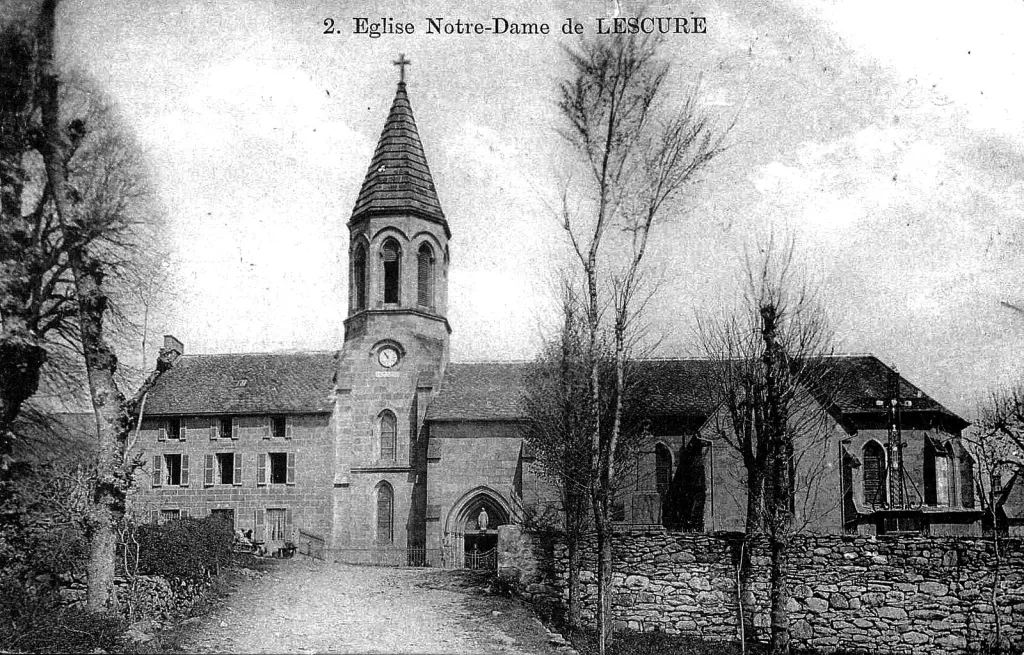
When bad weather threatened, Jean would go there to pray for help. Seeing those prayers answered, the villagers began to believe in his communication with the Virgin and decided to build her a Church in the village. Jean argued that the Holy Virgin wanted her Church on the promontory but wanting the convenience of building and having it in town, the people built the new Church in Lescure and installed the Statuette there. But, the next day, it had returned to the bluff. Jean was suspected of moving it but the same thing kept happening, even with the shepherd under watch, so finally everyone agreed, that Heaven wanted the Virgin’s Chapel to be on the heights and not in the town. This time Jean Paillé himself organised the work. Building materials poured in, which oxen carried up the hill as easily if they were made of feathers.

In 1724, some 3,000 pilgrims camped in the open air to witness the Consecration of the new Church. The Bishop’s delegate dedicated the Sanctuary to Our Lady of the Visitation, in memory of the first apparition date, 2 July, then the Catholic Feast of the Visitation, commemorating the visit of Mary, pregnant with Jesus, to her cousin Elizabeth, pregnant with John the Baptist. In recent years, the Feast of the Visitation has been moved to 31 May and the Solemnity of Our Lady of Lescure to the last Sunday in June.

She is invoked against illness, of the sick and for cures.
Notre-Dame de Lescure, santé des infirmes, priez pour nous.
Our Lady of Lescure, health of the sick, pray for us.

Bl Benedict Metzler

St Bernadino Realino SJ (1530-1616) Priest of the Society of Jesus, Lawyer, Teacher, Apostle of Charity. 
Biography:

https://anastpaul.com/2017/07/02/saint-of-the-day-2-july-st-st-bernadino-realino-sj/

Servant of God Bernard of Quintavalle OFM ( Died 1q241) “The First fruits of the Minor Orders” – The First Follower of St Francis of Assisi.

Blessed Eugénie Joubert (1876–1904) Religious of the Sisters of the Holy Family of the Sacred Heart . She died aged 28.
Her Life:

https://anastpaul.com/2019/07/02/saint-of-the-day-blessed-eugenie-joubert-1876-1904/

Bl Giovanni da Fabriano Becchetti
St Jacques Fermin
Bl Jarich of Mariengaarde
St Jéroche
St Lidanus of Sezze
St Martinian of Rome
St Monegundis
St Oudoceus

Blessed Peter of Luxembourg (1369-1387) Bishop and Cardinal. Because of his prudence and sanctity, at the early age of fifteen he was appointed Bishop of Metz.   He made his public entry into his See barefoot and riding on a donkey.
About Blessed Peter:

https://anastpaul.com/2018/07/02/saint-of-the-day-2-july-blessed-peter-of-luxembourg-1369-1387/

Bl Pietro Becchetti da Fabriano
St Processus of Rome

St Swithun (c 800-863) Bishop of Winchester, Miracle-worker.
About St Swithun:

https://anastpaul.com/2020/07/02/saint-of-the-day-2-july-saint-swithun-c-800-863-bishop/

Martyred Soldiers of Rome – 3 saints: Three soldiers who were converted at the martyrdom of Saint Paul the Apostle. Then they were martyred, as well. We known nothing else about them but their names – Acestes, Longinus and Megistus. Martyred c68 in Rome, Italy

Martyrs in Carthage by Hunneric – 7 saints: A group of seven Christians tortured and murdered in the persecutions of the Arian Vandal king Hunneric for remaining loyal to the teachings of orthodox Christianity. They were some of the many who died for the faith during a period of active Arian heresy. – Boniface, Liberatus, Maximus, Rogatus, Rusticus, Septimus and Servus.

Martyrs of Campania – 10 saints: A group of ten Christians marytred together in the persecutions of Diocletian. The only details about them to have survived are their names – Ariston, Crescention, Eutychian, Felicissimus, Felix, Justus, Marcia, Symphorosa, Urban and Vitalis. Martyred in 284 in Campania, Italy.

Martyrs of Seoul – 8 saints: Additional Memorial – 20 September as part of the Martyrs of Korea.

A group of eight Christians who were martyred together as part of the lengthy persecutions in Korea.
• Agatha Han Sin-ae
• Antonius Yi Hyeon
• Bibiana Mun Yeong-in
• Columba Gang Wan-suk
• Ignatius Choe In-cheol
• Iuliana Gim Yeon-i
• Matthaeus Gim Hyeon-u
• Susanna Gang Gyeong-bok
They were martyred on 2 July 1801 at the Small West Gate, Seoul, South Korea. Beatified on 15 August 2014 by Pope Francis.

Posted in JUNE-THE SACRED HEART, MARIAN REFLECTIONS, MARIAN TITLES, PATRONAGE - IMPOSSIBLE CAUSES, PRAYERS for VARIOUS NEEDS, SACRED HEART PRAYERS, SACRED HEART REFLECTIONS

Our Morning Offering – 15 June – Memorare to Our Lady of the Sacred Heart of Jesus

Our Morning Offering – 15 June – “The Month of the Sacred Heart of Jesus” – Our Lady’s Saturday

Memorare to Our Lady
of the Sacred Heart of Jesus

By the Missionaries of the Sacred Heart (MSC)
Patronag: Of Difficult and Impossible Causes.

Remember, Our Lady of the Sacred Heart,
what ineffable power thy Divine Son
hath given thee over His own adorable Heart.
Full of trust in thy merits,
we come before thee and beg thy protection.
O heavenly Treasurer of the Heart of Jesus
that Heart which is the inexhaustible source of all graces
which thou mayest open to us at thy good pleasure,
in order that, from it may flow forth upon mankind
the riches of love and mercy, light and salvation
which are contained therein;
grant unto us, we beseech thee, the favours which we seek.
We can never, never be refused by thee
and since thou art our Mother,
O our Lady of the Sacred Heart,
graciously hear our prayers and grant our request.
Amen

Our Lady of the Sacred Heart is a title which originated with the Missionaries of the Sacred Heart, founded by Fr J Chevalier (1824-1907) at Issoudun/France.
This religious Congregation was founded to revive and regenerate the Christian faith, thanks to a special devotion to the Sacred Heart and to Our Lady.
Their spirituality is based on a strong faith in the love of God the Father which revealed itself in the Heart of Jesus.
This Christocentric orientation is linked with a lively devotion to Mary under the title of Our Lady of the Sacred Heart.
It is said in the Rule of Life of the Missionaries of the Sacred Heart, “Since Mary was so intimately related to the Mystery of her Son’s Heart, we pray to her as did Fr Chevalier and we invoke her under the title of Our Lady of the Most Sacred Heart of Jesus.
She knew of the inexhaustible riches of Christ; she was totally filled with His Love. She leads us to Him and directs us to His Heart which is the Source of Love …” ( #18)