Saint Leopardus the Slave, martyr, was a slave in the household of Julian the Apostate, nephew of Constantine the Great, a maniacal persecutor of Christianity, and one of the many types of Antichrist which have arisen over the centuries. A more unfortunate or dangerous placement cannot be imagined.
Not much is recorded about Saint Leopardus’ early life, but in 362, in Rome, he was martyred for his faith, having withstood the tyrant.
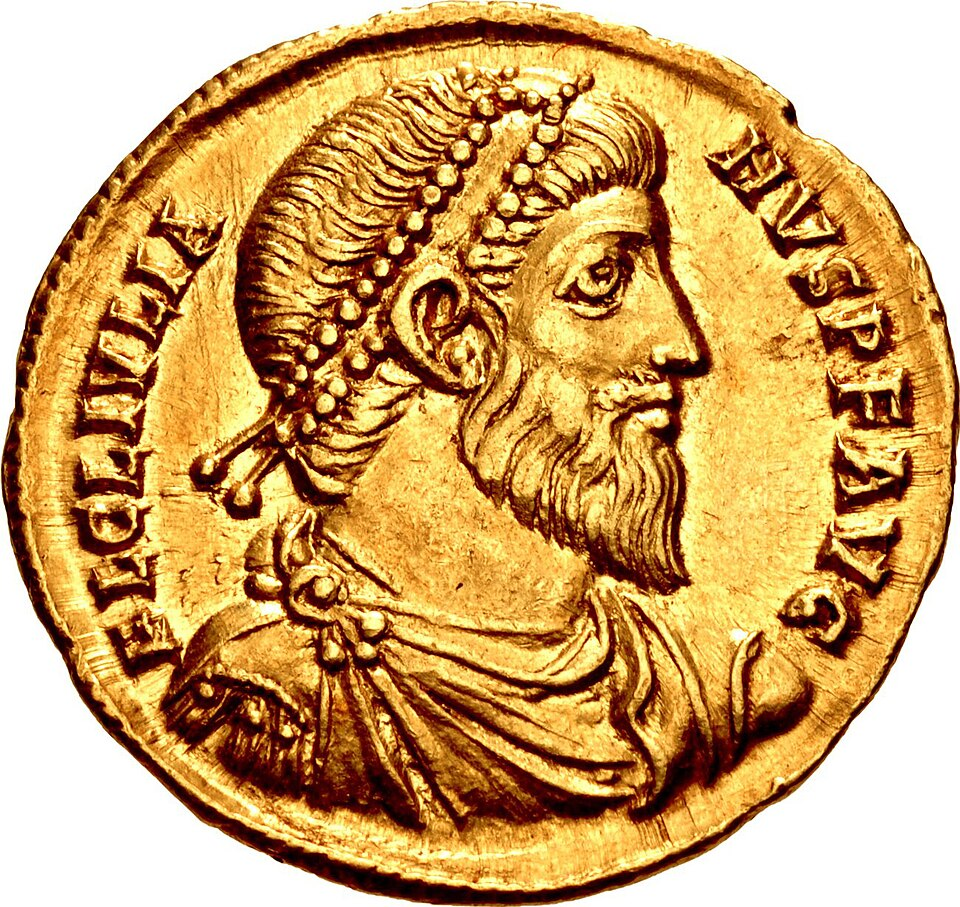
Julian the Apostate
Slain by Saint Mercurius, the Apostate’s last words were: “Thou hast conquered, Galilean.”
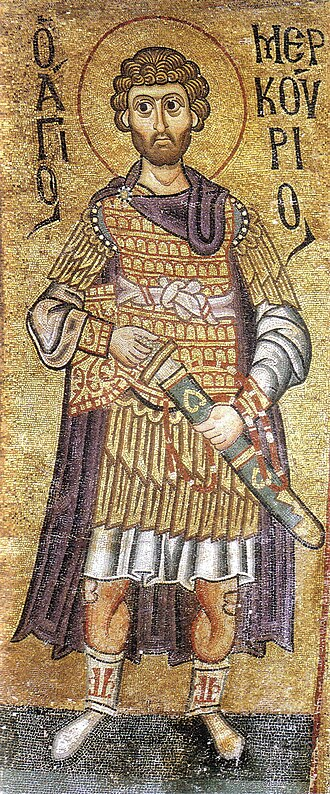
Saint Mercurius
Saint Mercurius, who wielded a sword given to him by the Archangel Michael.
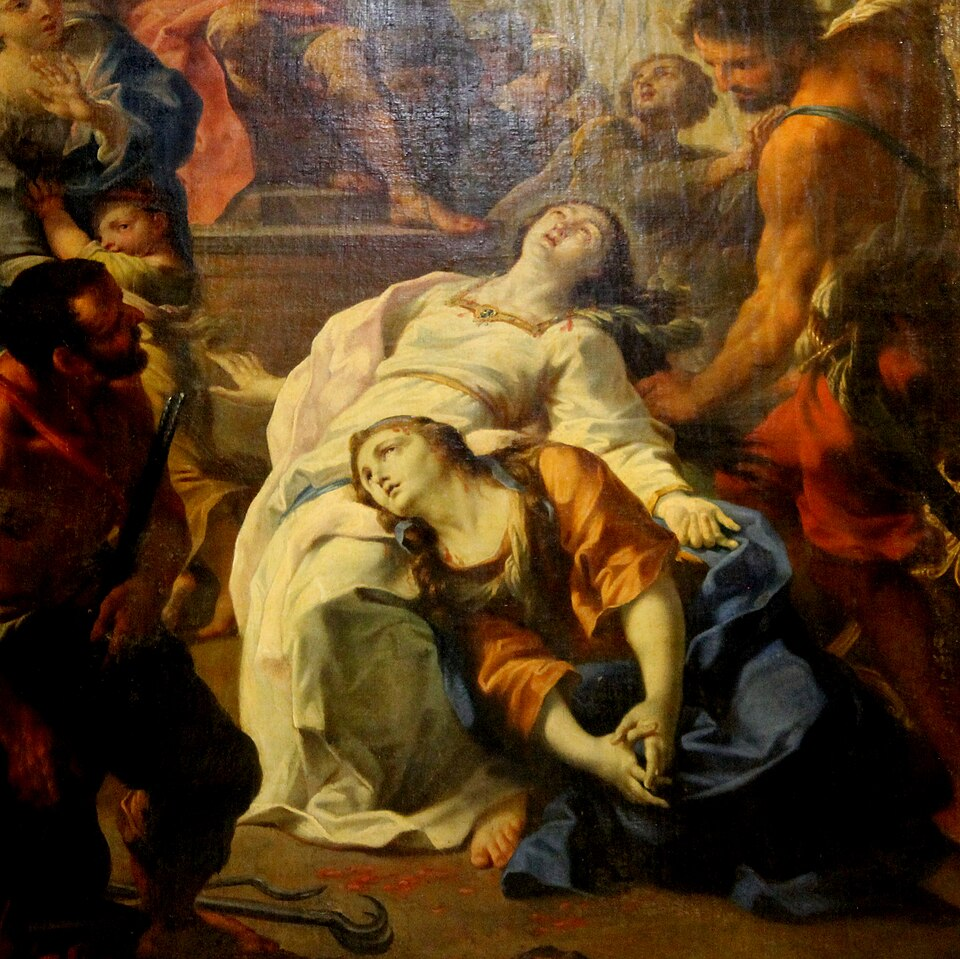
Saints Digna and Emerita of Rome, martyrs, were consecrated virgins in the 3rd century. When dragged to court for the crime of Christianity during the persecutions of Valerian, they simply stood in front of the judge and prayed.
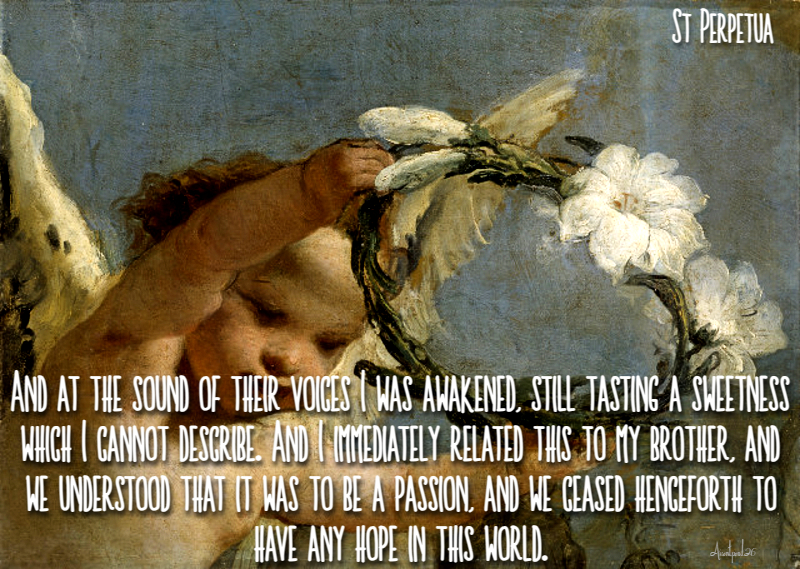
And at the sound of their voices I was awakened, still tasting a sweetness which I cannot describe. And I immediately related this to my brother, and we understood that it was to be a passion, and we ceased henceforth to have any hope in this world.
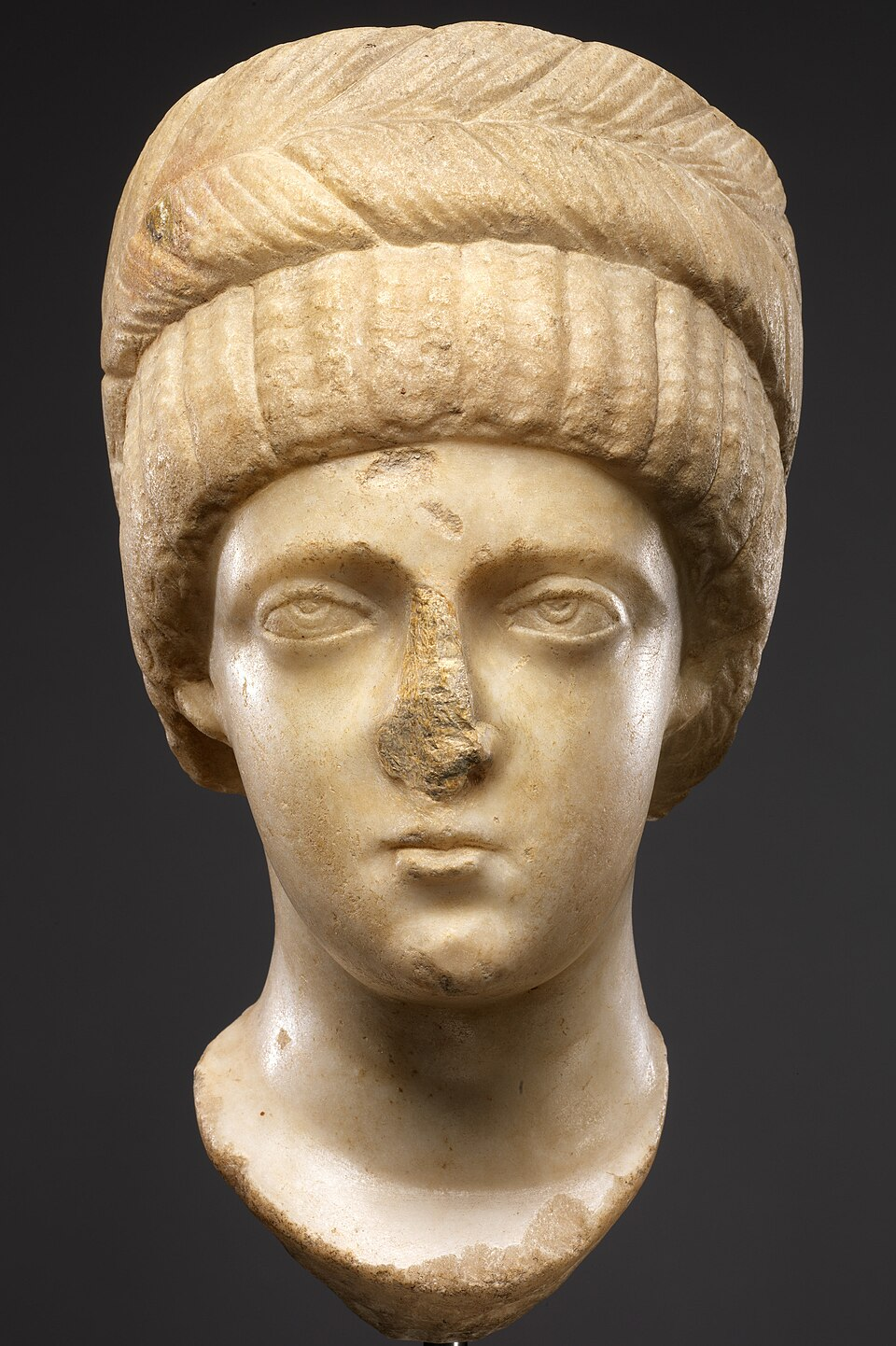
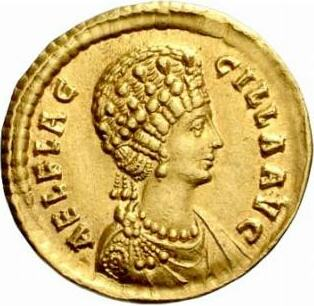
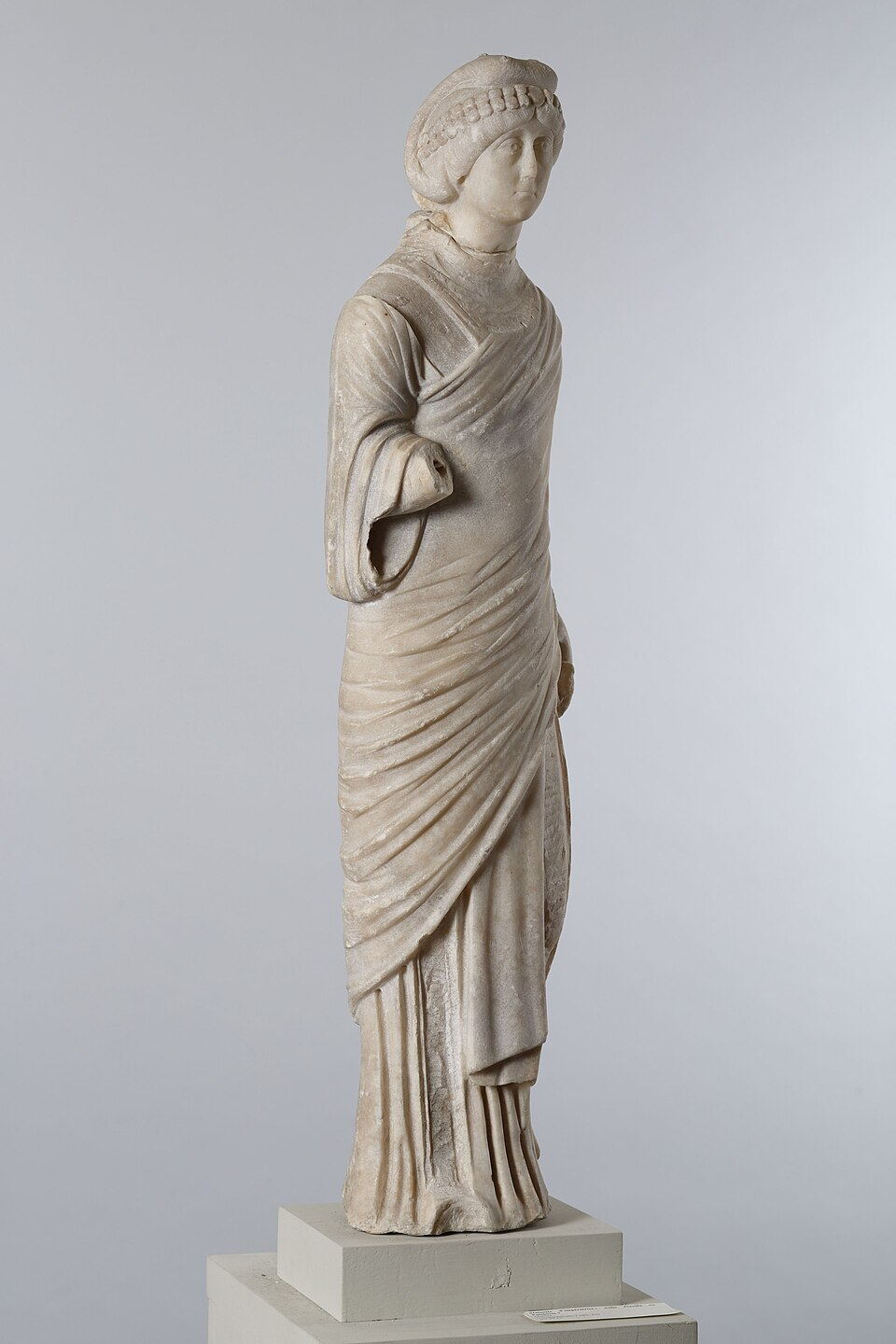
SaintAelia Flavia Flaccilla, known as Aelia Flacilla or Flacilla, was a Roman empress and may have been the daughter of Claudius Antonius, Prefect of Gaul. She was the first wife of Emperor Theodosius I. She was of Spanish descent. During her marriage to Theodosius, she gave birth to two sons, the future Emperors Arcadius and Honorius, as well as a daughter, Aelia Pulcheria.
Aelia Flacilla was a zealous supporter of the Nicene Creed, and she was considered a pillar of the Church and model of Christian virtue by Saint Gregory of Nyssa and others. She died in 385 of natural causes.
"The greatness of the good gift given her made her love for Him who gave it all the greater, so she bestowed every kind of attention on the maimed and the mutilated, declining all aid from her household and her guards, herself visiting the houses where the sufferers lodged, and providing every one with what he required. She also went about the chambers of the churches and ministered to the wants of the sick, herself handling pots and pans, and tasting broth, now bringing in a dish and breaking bread and offering morsels, and washing out a cup and going through all the other duties which are supposed to be proper to servants and maids. To them who strove to restrain her from doing these things with her own hands she would say, "It befits a sovereign to distribute gold; I, for the sovereign power that has been given me, am giving my own service to the Giver."
-Theodoret, Ecclesiastical History (Book V.18)
"It appears that, during the reign of Valens, had some dispute with his own clergy at Cyzicus, and had in consequence seceded from the Arians, and retired to Bithynia, near Constantinople. Here multitudes resorted to him; some also gathered from different quarters, a few with the design of testing his principles, and others merely from the desire of listening to his discourses. His reputation reached the ears of the emperor, who would gladly have held a conference with him. But the Empress Flacilla studiously prevented an interview from taking place between them; for she was the most faithful guard of the Nicene doctrines, and feared lest Eunomius might, by his powers of disputation, induce a change in the sentiments of the emperor."
St Crispus of Rome St Daig Maccairaill Bl Domenico de Molinar St Eonus of Arles St Ernan St Evan of Ayrshire St Firminus of Metz St Florus of Illyria Bl Francus of Francavilla Bl Gaspar di Salamanca St Hermas of Rome St John of Rome St Juliana of Myra St Juliana of Stobylum St Laurus of Illyria St Leo of Myra Bl Leonard of Cava St Maximus of Illyria Bl Milo of Fontenelle St Polyaenus of Rome St Proculus of Illyria
Blessed Rinaldo of Concorezzo (c 1245 – 1321) Bishop of Vicenza from 1296 until his 1303 appointment as the Archbishop of Ravenna-Cervia holding that until his death, Doctor of Canon Law, Papal envoy, Arbitrator and Peace-maker. Archbishop Rinaldo was also a close friend of Dante Alighieri.
St Ronan of Iona St Serapion of Rome
Massa Candida: Also known as Martyrs of Utica and the White Company: Three hundred 3rd century Christians at Carthage, who were ordered to burn incense to Jupiter or face death by fire. Martyrs. Saint Augustine of Hippo and the poet Prudentius wrote about them. They were forced to cast themselves into a pit of burning lime c 253 at Carthage, North Africa.
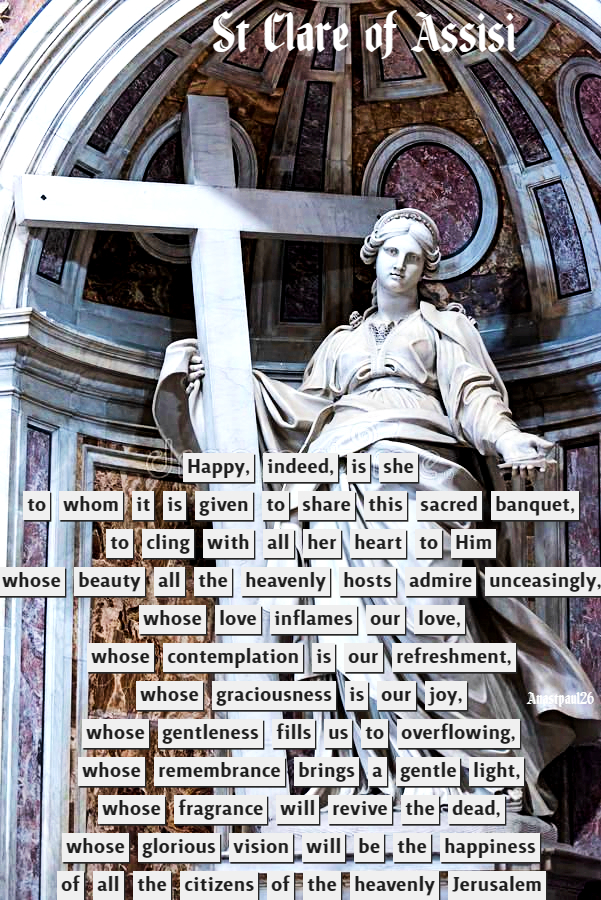
Happy, indeed, is she to whom it is given to share this sacred banquet, to cling with all her heart to Him whose beauty all the heavenly hosts admire unceasingly, whose love inflames our love, whose contemplation is our refreshment, whose graciousness is our joy, whose gentleness fills us to overflowing, whose remembrance brings a gentle light, whose fragrance will revive the dead, whose glorious vision will be the happiness of all the citizens of the heavenly Jerusalem
Saint AgrestiusChromatius the Prefect, martyr and father of Saint Tiburtius. Saint Chromatius was vicar to the city prefect of Rome under Emperor Diocletian. He had an ornate palace in the Parione district. Before becoming Christian, he condemned several martyrs to death during the reign of Emperor Carinus. He was later converted to Christianity by Saint Tranquillinus and baptized by Saint Polycarp. The occasion by which he received such a great grace was Saint Tranquillinus’ testifying to being cured of gout during baptism. Chromatius likewise suffered terribly from gout, so he sent for Polycarp, who baptized him, and he was also healed.
After becoming Christian, he released the Christian prisoners and freed his slaves. He then retired and was succeeded by Fabianus. Chromatius lived quietly on his country estate for many years, welcoming other Christians into his home to protect them from persecution.
Saint Chromatius’ son, Saint Tiburtius, took shelter in his father’s house during the persecution of Diocletian, but was later by an apostate, tortured and beheaded. Chromatius is said to have also been martyred, probably at the same time. However, no details of his martyrdom remain. According to Butler’s Lives of the Saints, Chromatius was mentioned in several ancient martyrologies alongside his son Tiburtius.
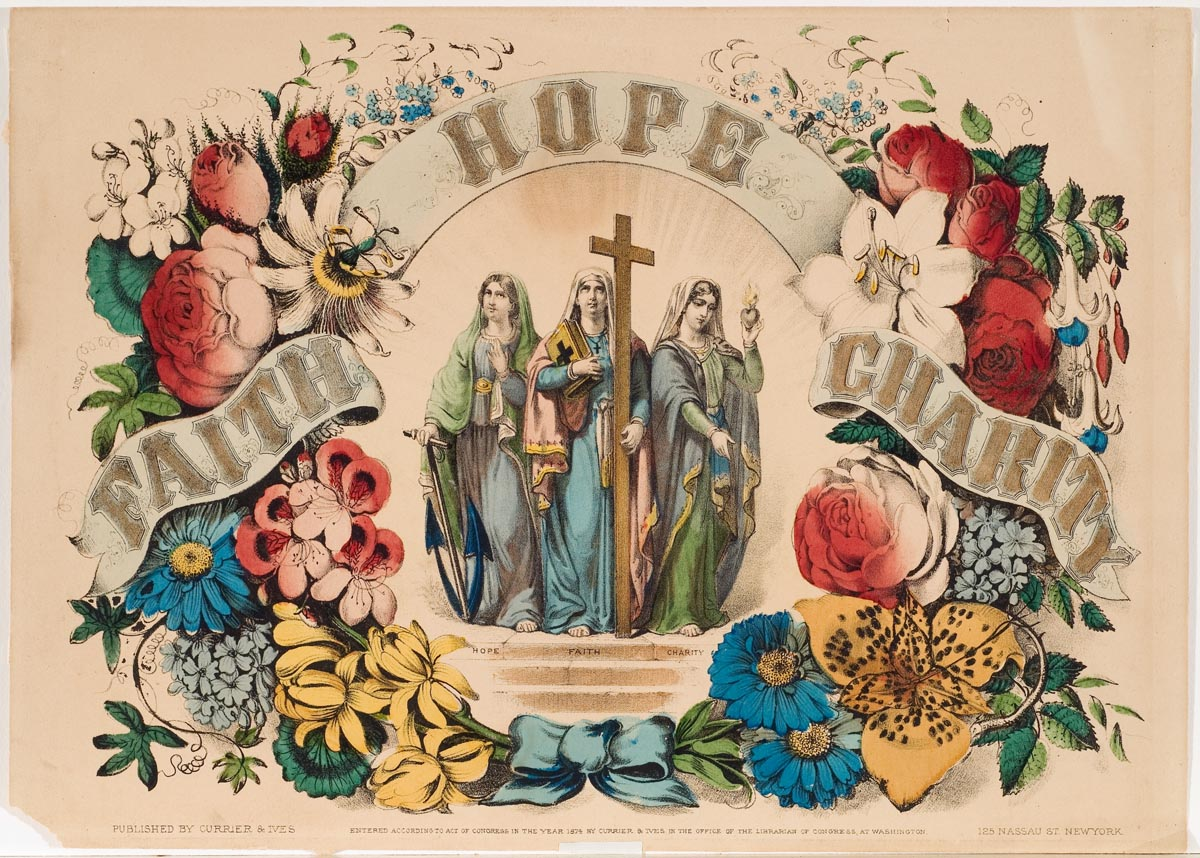
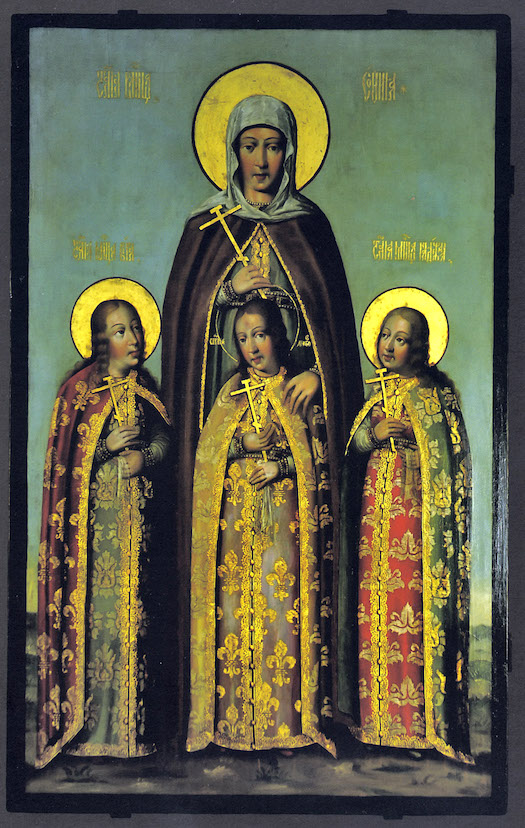
Saints Faith, Hope and Charity were the daughters of Saint Sophia (Wisdom). Sophia was a widow of Milan who gave away her possessions and moved to Rome with her daughters. Her daughters were martyred before her and she buried them at Via Appia. She died a natural death three days later while praying at their grave. Their tomb in a crypt beneath the church afterwards erected to Saint Pancratius was long a place of pilgrimage, as detailed in various documents of the seventh century. Oils were gathered from their tombs and sent to Queen Theodelinda in the time of Gregory the Great.
Early Christians from the 4th century often took in baptism mystical names indicative of Christian virtues, and Sophia, Sapientia, and Fides are attested as names of Christian women in Catacomb inscriptions. While still children, the daughters were tortured and martyred in the persecutions of Hadrian. They were scourged, thrown into a fire, and then beheaded.
‘At Rome, the holy martyr Tranquillinus, father of the holy martyrs Mark and Marcellian. He had been converted to Christ by the preaching of the holy martyr Sebastian, baptized by the blessed Priest, Polycarp, and himself ordained a Priest by the holy Pope Caius. He was praying at the grave of blessed Paul, upon the Octave Day of the Apostles, when the pagans under the Emperor Diocletian tried and stoned him. And so he finished his testimony, (in the year 286.)’ (Roman Martyrology)
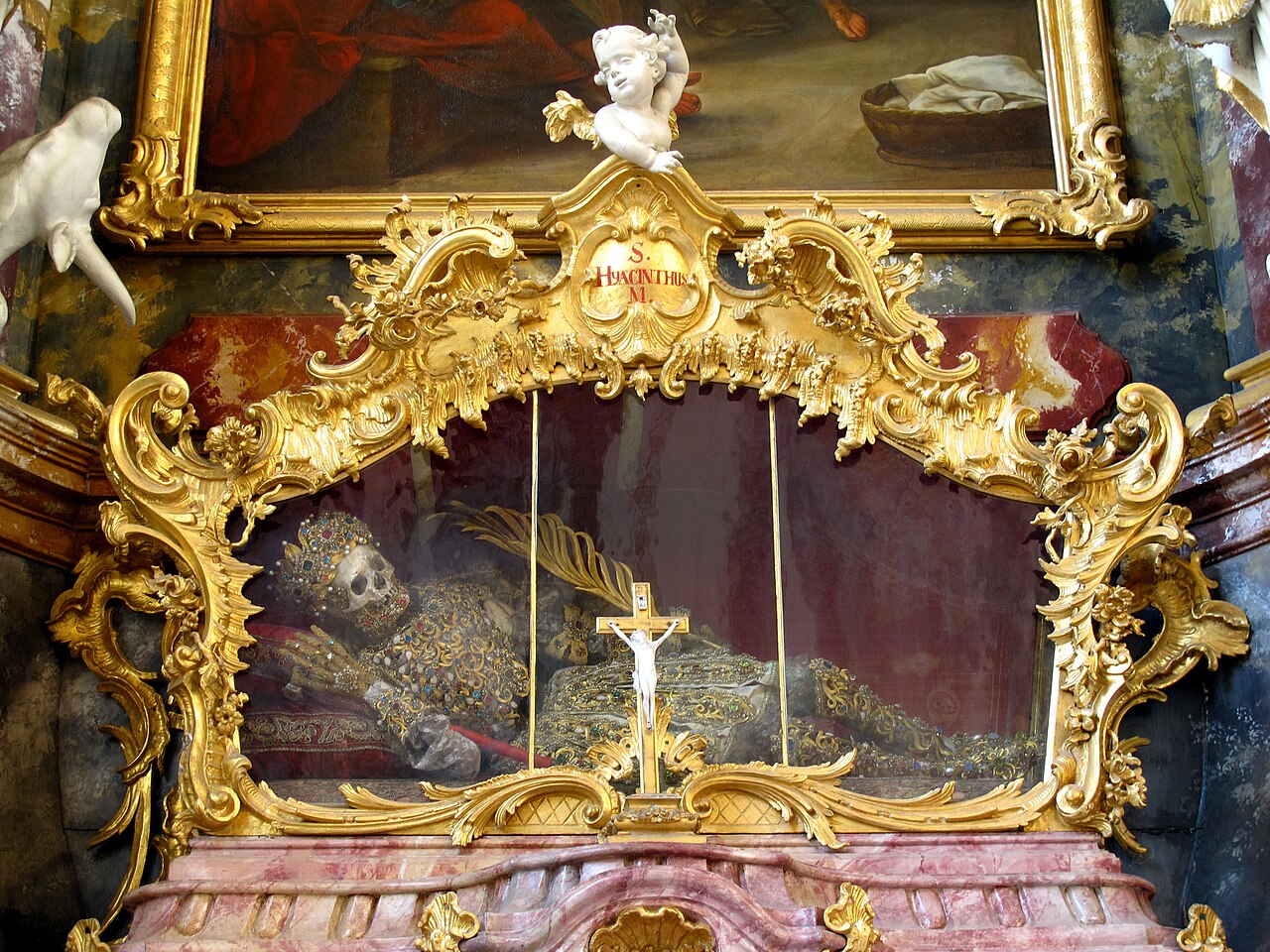
Hyacinth was a native of Caesarea in Cappadocia, and a member of a Christian family. As a boy, he was appointed to serve as an assistant to the chamberlain to the Emperor Trajan. His failure to participate in the sacrifices to the official Roman gods soon came to be noticed by other members of the Imperial household. One day, while the emperor and his entourage were offering sacrifice to idols, Hyacinth remained at the palace, shut himself up in a small room, and prayed fervently to the Lord Jesus Christ. One of the servants overheard him praying and denounced him to the emperor.
When he was denounced as a Christian, Hyacinth proclaimed his faith. He was brought to trial before Trajan, who tried to persuade him to deny Christ and sacrifice to idols, but the young boy refused. As a result, he was imprisoned and underwent numerous scourgings and tortures. He was deliberately served only food which had been blessed for sacrifice to the gods, the eating of which was banned to Christians. Thus, he starved to death after thirty-eight days, dying at the age of twelve. Just before his death, his jailers saw him being comforted by a pair of angels, one who covered him with his own robe, the other who bestowed a crown on him.
Hyacinth died in the city of Rome. Later, his relics were transferred to Caesarea.
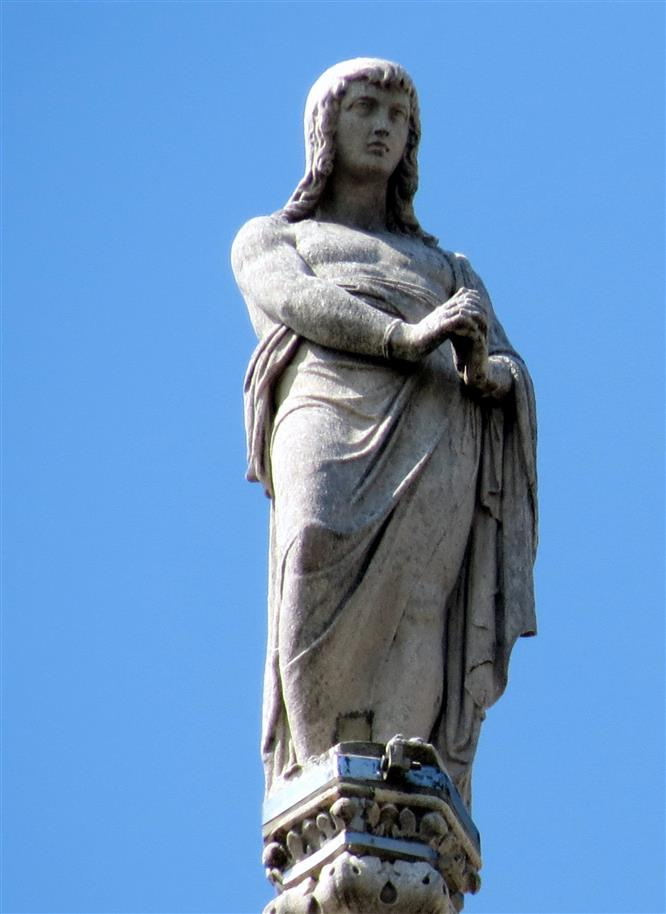
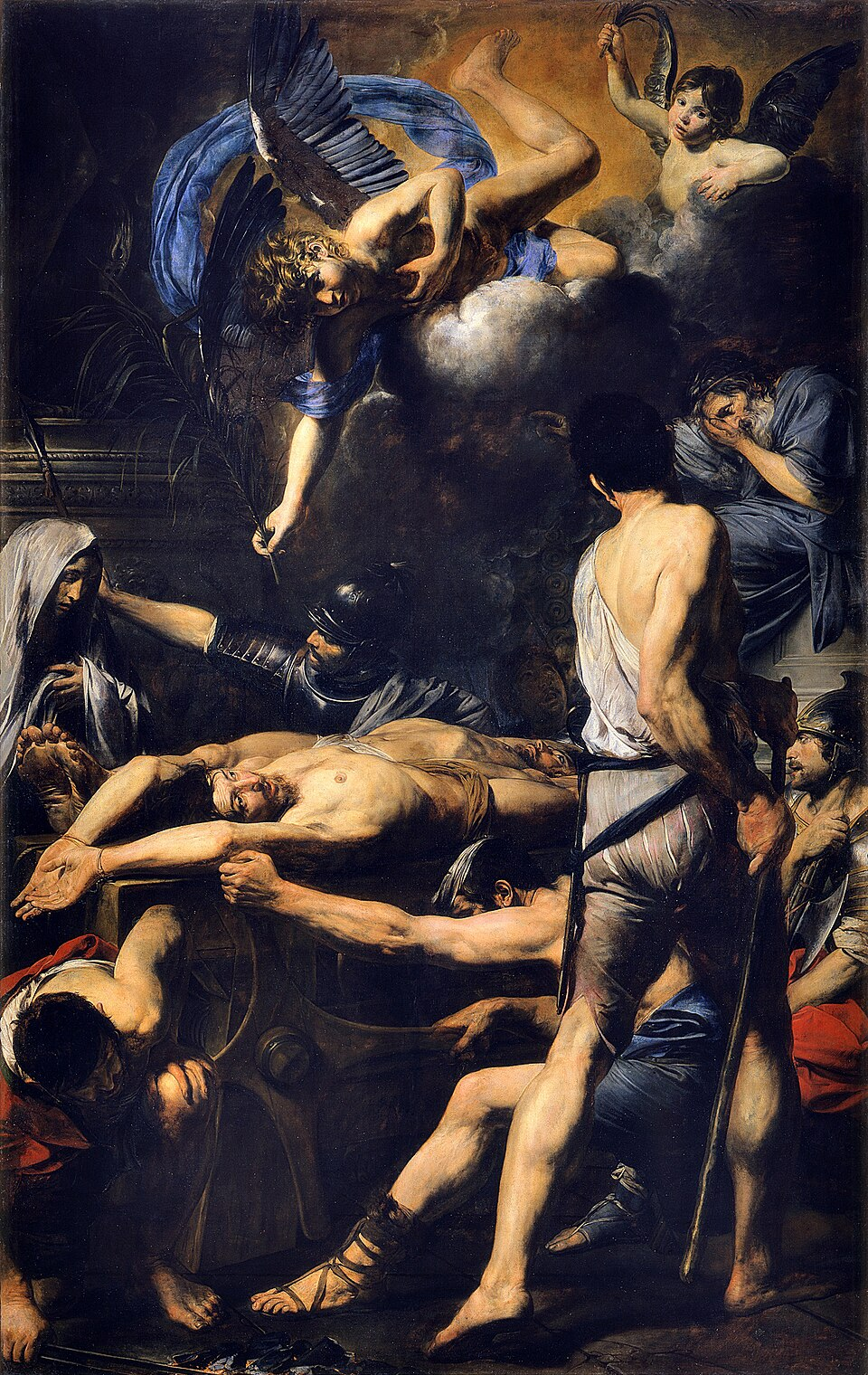
Saint Martinian of Rome was a member of the Praetorian Guard, the soldiers tasked with guarding the emperor. Assigned as the warden of Saint Peter and Saint Paul in the Mamertine Prison, the apostles converted him after a spring flowed miraculously in the prison. Peter then baptized him in these miraculous waters, which then led to Martinian’s own imprisonment within that very prison.
During his imprisonment, Martinian experienced visions and spiritual encounters that strengthened his resolve. Saint John the Baptist appeared to him, encouraging him in his suffering and reaffirming his faith. This spiritual encounter bolstered Martinian’s courage and determination to face martyrdom rather than renounce Christianity.
By order of the emperor Nero, Martinian was then tortured and beheaded. After his martyrdom with Paul, Lucina, a sympathizer, buried him in her own cemetery along the Aurelian Way. Pope Paschal I (817–824) translated the bones of the martyr to a chapel in the old Basilica of St. Peter. They still rest under the altar dedicated to him (and his fellow martyr, Processus) in the south transept of the present St. Peter’s Basilica.
Our Morning Offering – 29 June – Saints Peter and Paul, Apostles
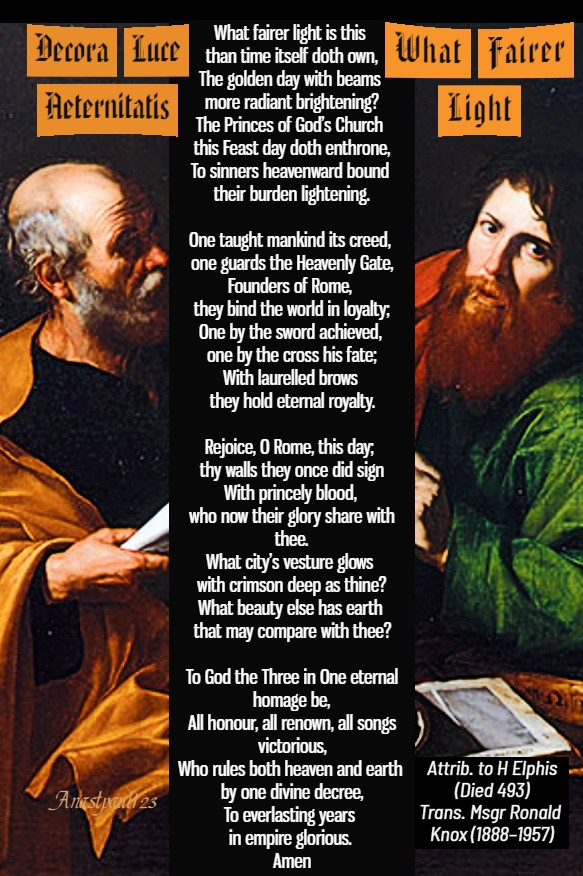
Decora Luce Aeternitatis What Fairer Light Attrib. to H Elphis (Died 493) Wife of Boethius c 477– 524) Trans. Msgr Ronald Knox (1888–1957)
What fairer light is this than time itself doth own, The golden day with beams more radiant brightening? The Princes of God’s Church this Feast day doth enthrone, To sinners heavenward bound their burden lightening.
One taught mankind its creed, one guards the Heavenly Gate, Founders of Rome, they bind the world in loyalty; One by the sword achieved, one by the cross his fate; With laurelled brows they hold eternal royalty.
Rejoice, O Rome, this day; thy walls they once did sign With princely blood, who now their glory share with thee. What city’s vesture glows with crimson deep as thine? What beauty else has earth that may compare with thee?
To God the Three in One eternal homage be, All honour, all renown, all songs victorious, Who rules both heaven and earth by one divine decree, To everlasting years in empire glorious. Amen
5th century Latin Hymn “Aurea Luce” attributed to H Elphis (Died 493), first wife of the Roman philosopher-poet Boethius (c475–c525). He would eventually be Martyred for his defence of the Faith against the Arian ruler: Theodoric. Msgr Knox, a convert from Anglicanism, was a noted Scholar, Author, Hymnist and Translator, becoming the Secretary to St Pius X. Under direction of his religious superiors, he re-translated the Latin Vulgate Bible into English from Hebrew and Greek sources. What Fairer Light is set to the tune, Decora Lux by the English Catholic Composer, Samuel Webbe (1740–1816).
In 1632, in accord with changes called for by the Council of Trent, Pope Urban VIII (1568-1644) revised the original text of Aurea Luce and divided it into two new Hymns for Lauds and Vespers: Decora Lux and Beate Pastor Petre. In the Liturgy of the Hours, What Fairer Light is used on 29 June, the Solemnity of Sts Peter and Paul, Apostles. The above is the Older version.





You must be logged in to post a comment.