Posted in FEASTS and SOLEMNITIES, MARIAN TITLES, SAINT of the DAY

The Solemnity of Corpus Christi Madonna della Lettera / Our Lady of the Letter (Messina, Sicily, Italy) 1693 and Memorials of the Saints – 3 June

The Solemnity of Corpus Christi, The Most Holy Body and Blood of Christ
https://anastpaul.com/2019/06/23/corpus-christi-the-solemnity-of-the-most-holy-body-and-blood-of-christ-23-june/

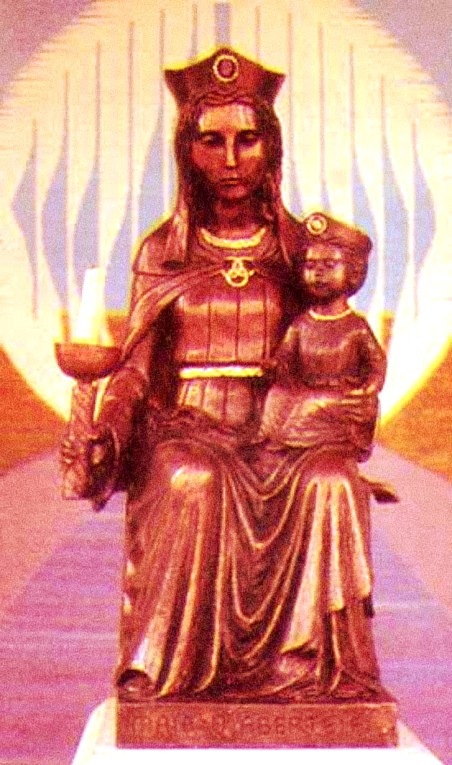
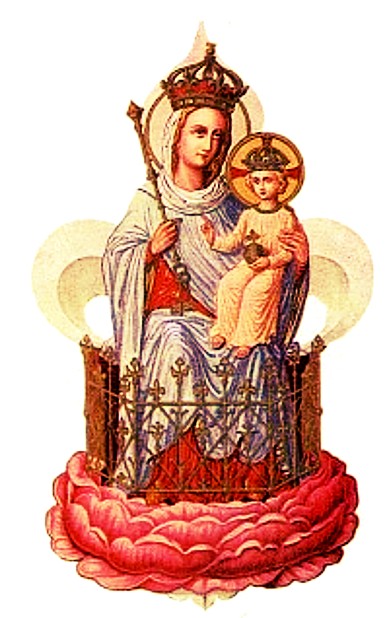
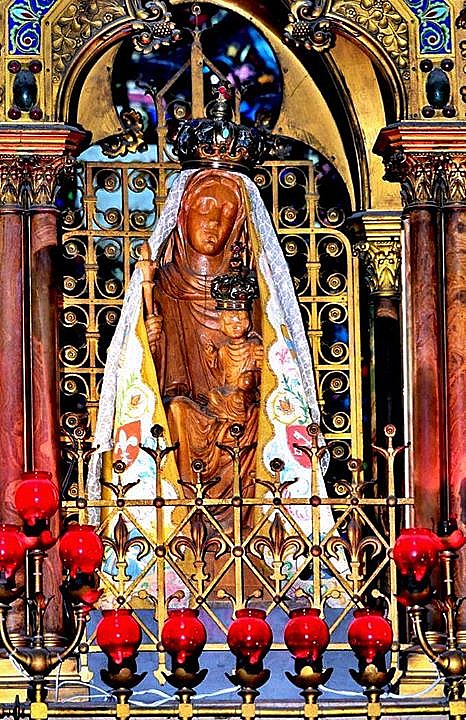
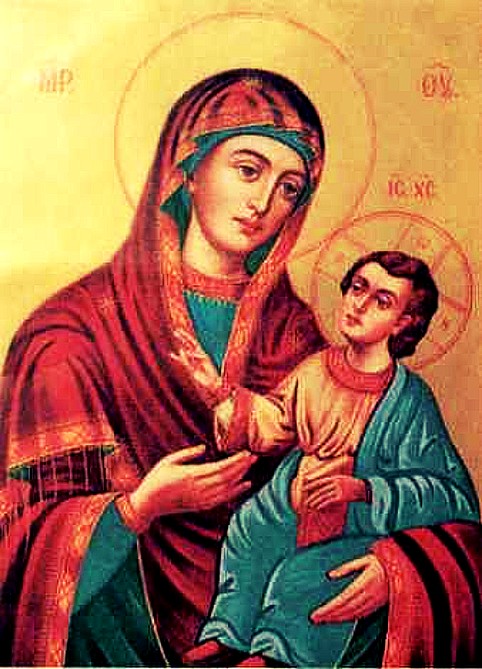
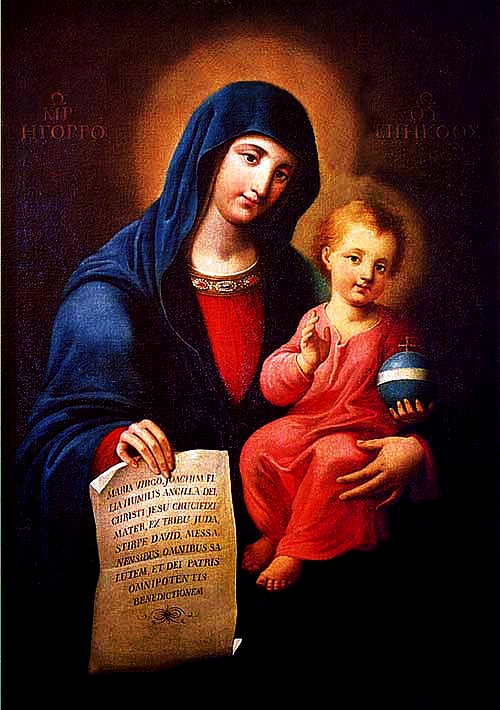
Madonna della Lettera / Our Lady of the Letter (Messina, Sicily, Italy) 1693 – Patron of Messina, Palmi (Reggio Calabria) and of Finale (Palermo) – 3 June and 9 January:

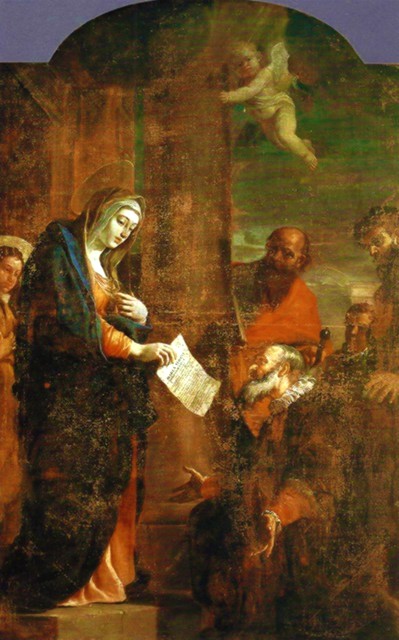
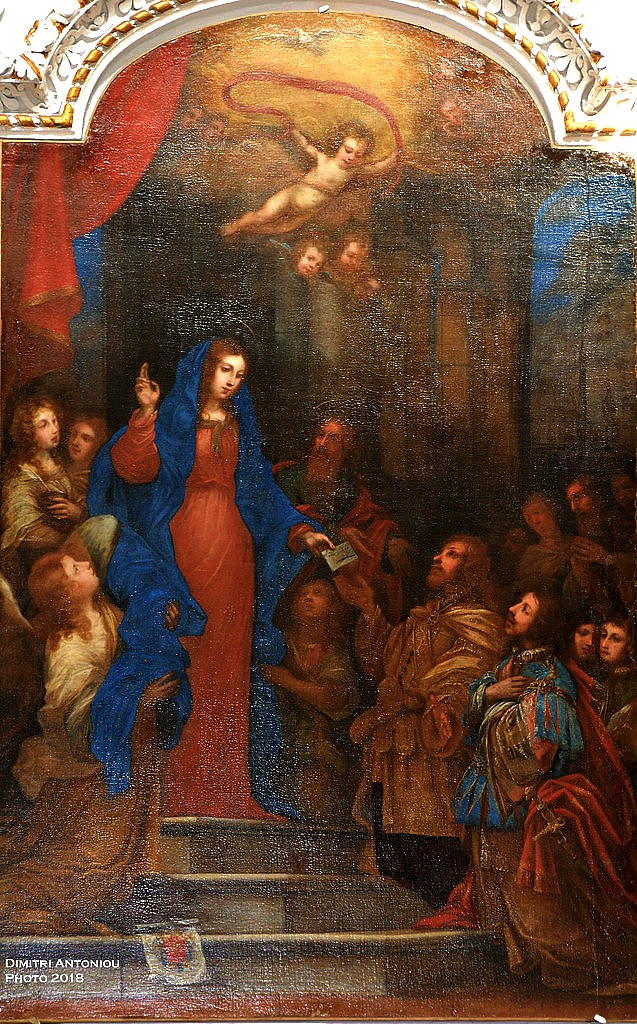
According to tradition, Saint Paul arrived in Messina to preach the Gospel and the population welcomed him with enthusiasm, thus obtaining many conversions. In 42, when Paul was about to return to Palestine, some Messinesi asked to accompany him in order to get to know Our Lady in person. So a delegation of Messinesi went to Palestine with a missive, in which many fellow citizens converted to the faith of Christ, professed their faith and asked for the protection of Mary.

Mary welcomed them and, in response to the letter, sent back a letter of her, written in Hebrew, rolled up and tied with a lock of her hair. The delegation returned to Messina on 8 September 42 carrying the important letter. In it, Mary praised their faith, mentioning that their devotion pleased her and assured them of her perpetual prayers and protection.

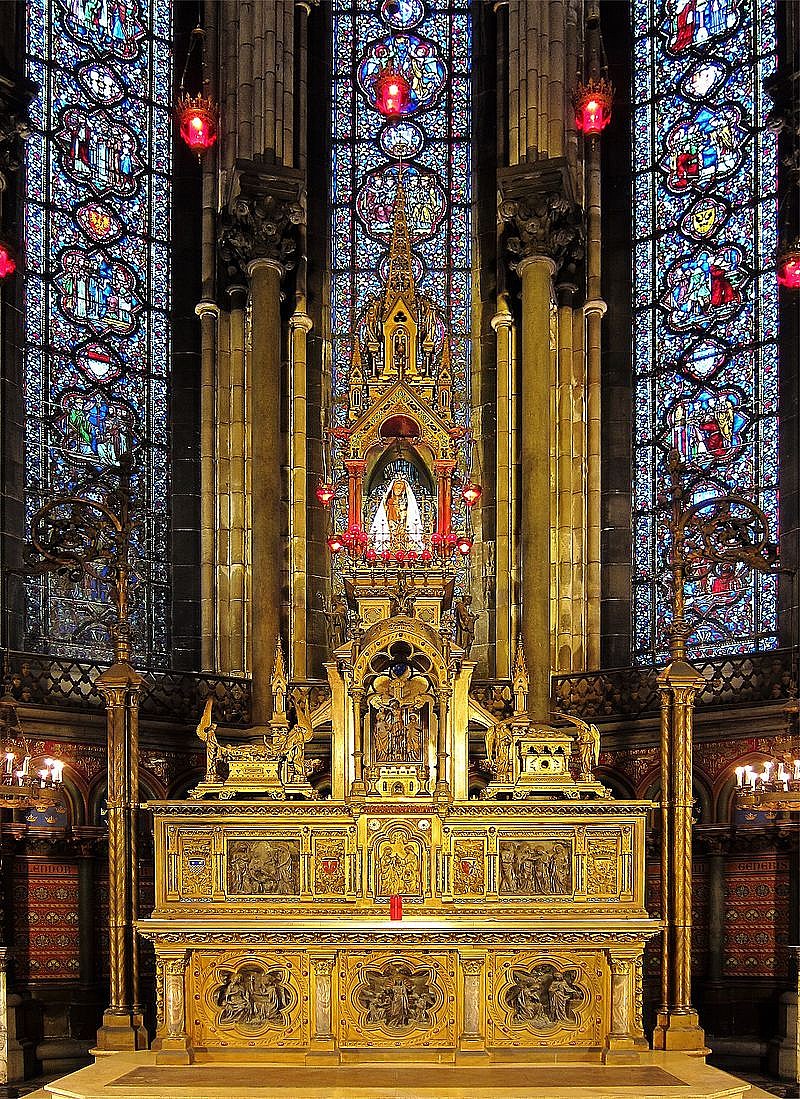
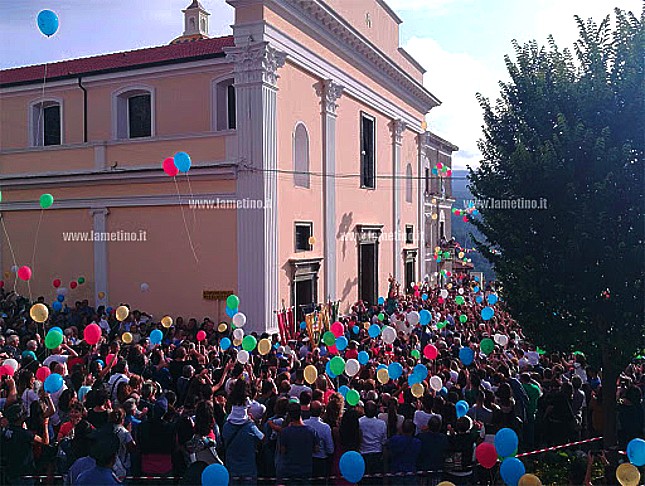
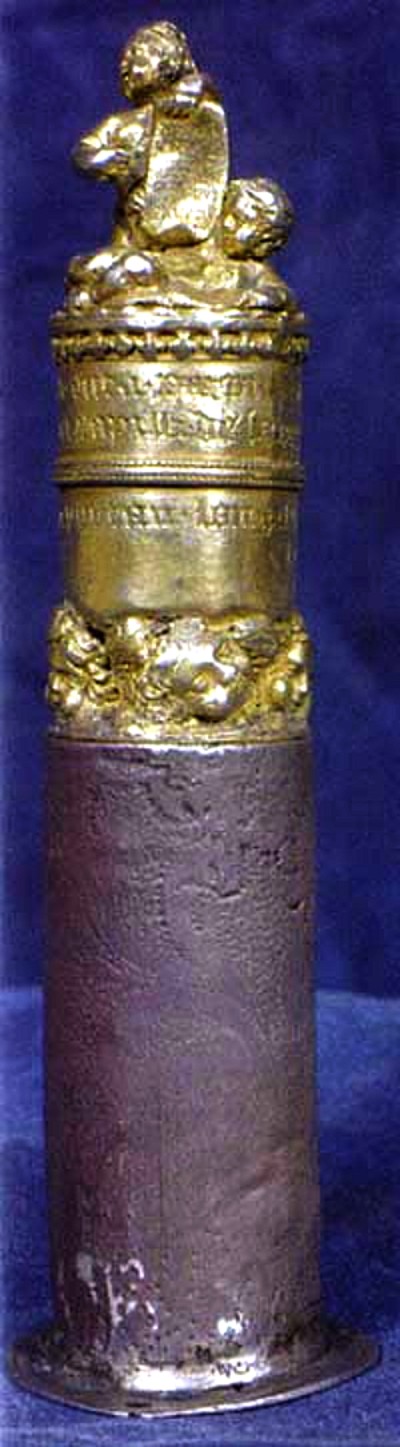
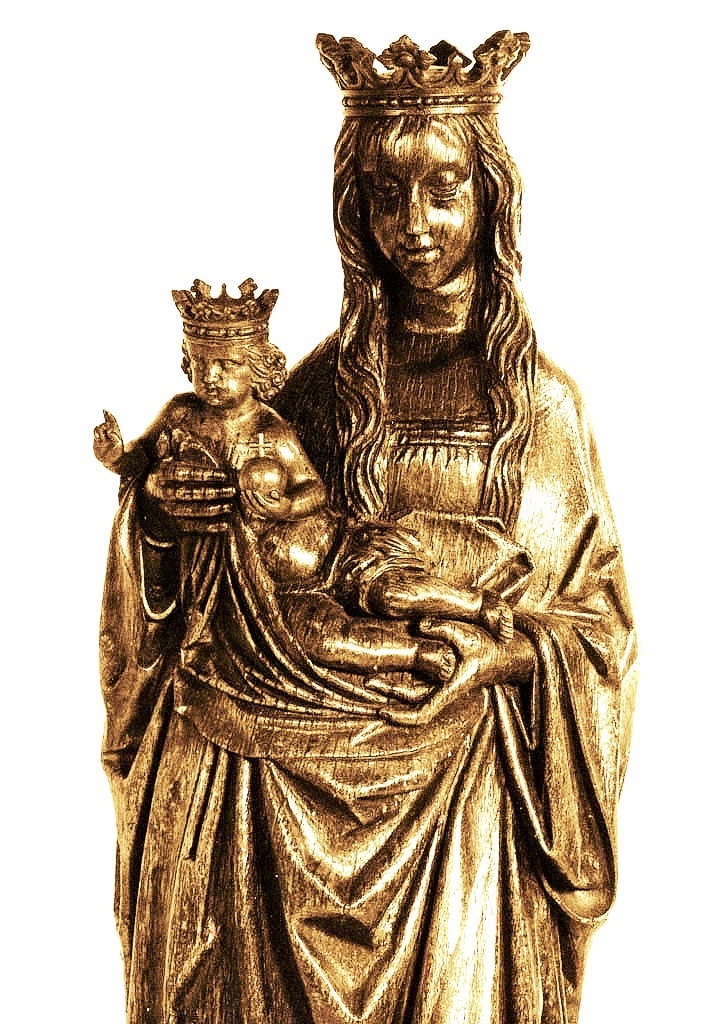
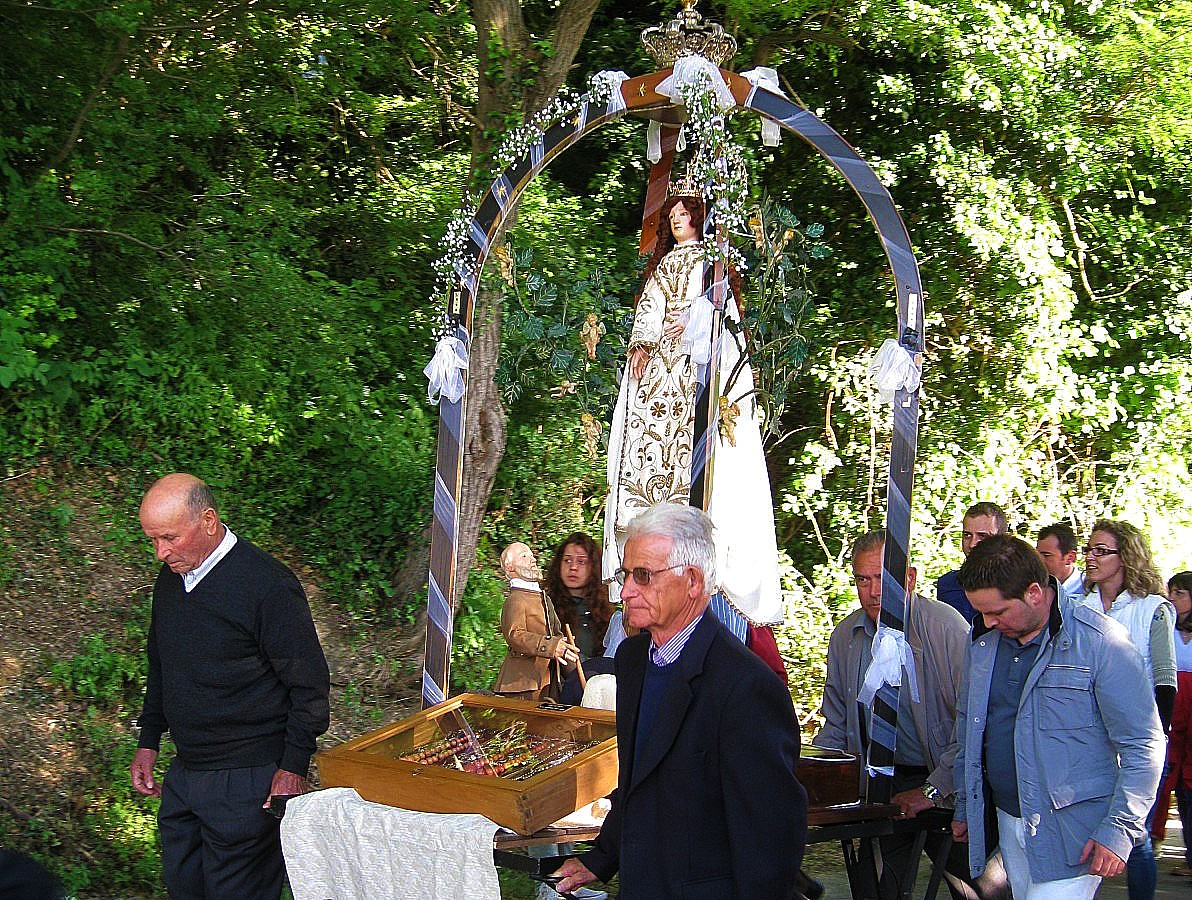
The lock of hair is kept in the Cathedral of Messina and exposed on the day of Corpus Christi set in the tree of a small galleon built in silver, which represents one of the examples of the protection of the Lady for Messina. (see image below)

The cult of Our Lady of the Letter, however, only became established in 1716, the year in which the Monk Gregorio Arena brought a translation of the letter of Mary from Arabic into Messina. Since then, the City of Messina has celebrated the festival on 3 June with a crowded procession of the silvery litter of Our Lady. The tradition of the names Letterio and Letteria (abbreviations, respectively Lillo and Lilla) derives from the cult of Our Lady of the Letter, spread above all in Messina and the Province.

The text of the letter delivered to the Messina delegation reads:

“Most humble servant of God, Mother of Jesus crucified, of the tribe of Judah, of the lineage of David, good health to all the Messinese and Blessing of God the Father Almighty. It is clear to us, through public instrument, that all of you with great faith, have sent Legates and Ambassadors, confessing that Our Son, begotten of God, is God and man and that after his Resurrection, ascended into heave. Having known the way of truth through the preaching of Paul, the chosen Apostle for whom we bless you and your city and, of which, we want to be its perpetual protector.

(From Jerusalem 3 June year 42 of Our Son. Indiction 1 moon XXVII)

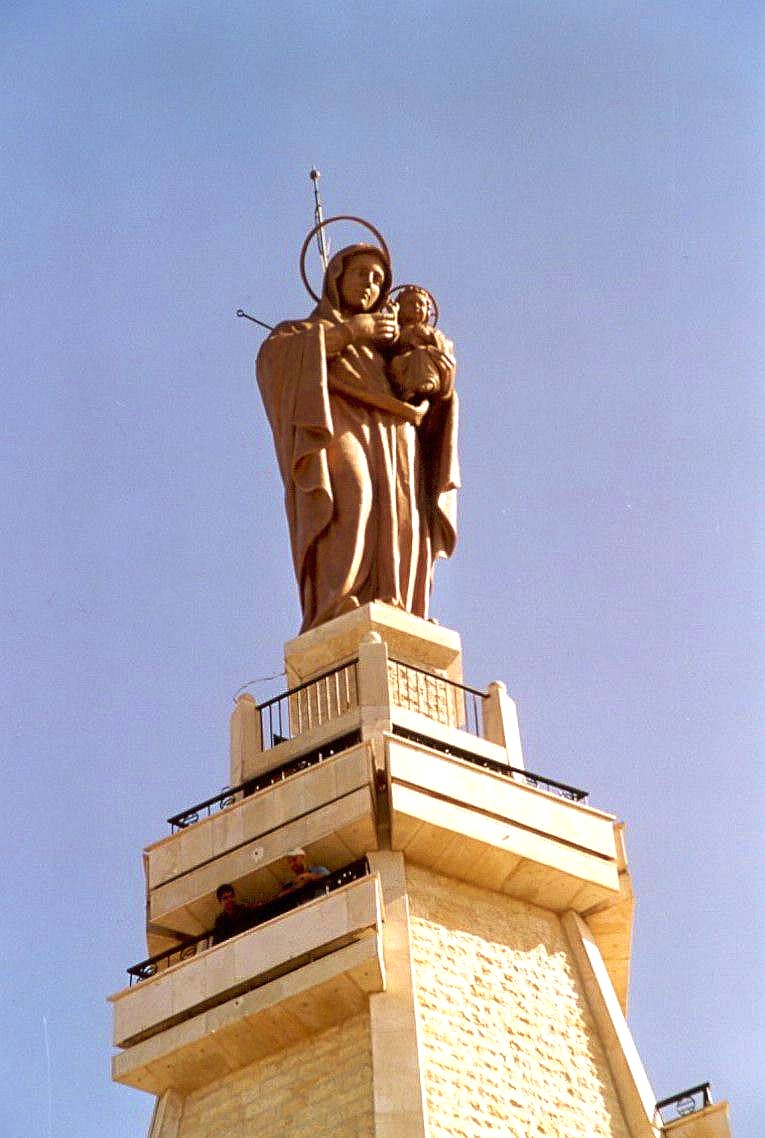
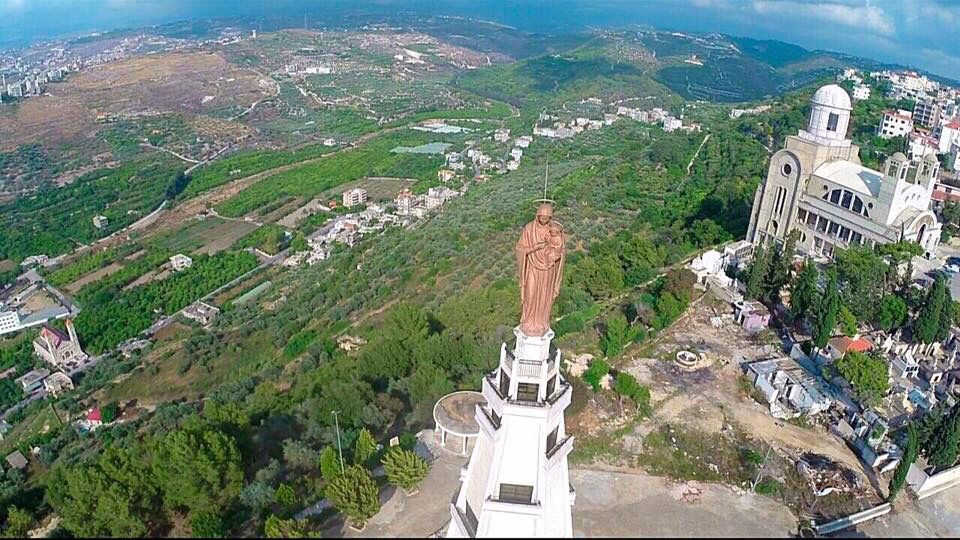
The phrase VOS ET IPSAM CIVITATEM BENEDICIMUS (“We bless you and your City”) is now written in large letters at the base of the Statue of Our Lady on the extreme arm of the Port of Messina. It should be noted that the text of the letter has an inconsistency in the date, since at that time Christian dating did not yet exist.

The devotion in Palmi (Reggio Calabria): – In 1575 an epidemic of plague broke out in Messina which caused the death of over 40,000 people. The citizens of Palmi welcomed those who fled the Peloritan City and also, through its sailors, sent aid of various kinds of food and oil. After the calamity, the City of Messina wanted to donate one of the hairs of Our Lady that were brought to the Sicilian City to the ecclesial authorities of Palmi, as a sign of gratitude for the help given.
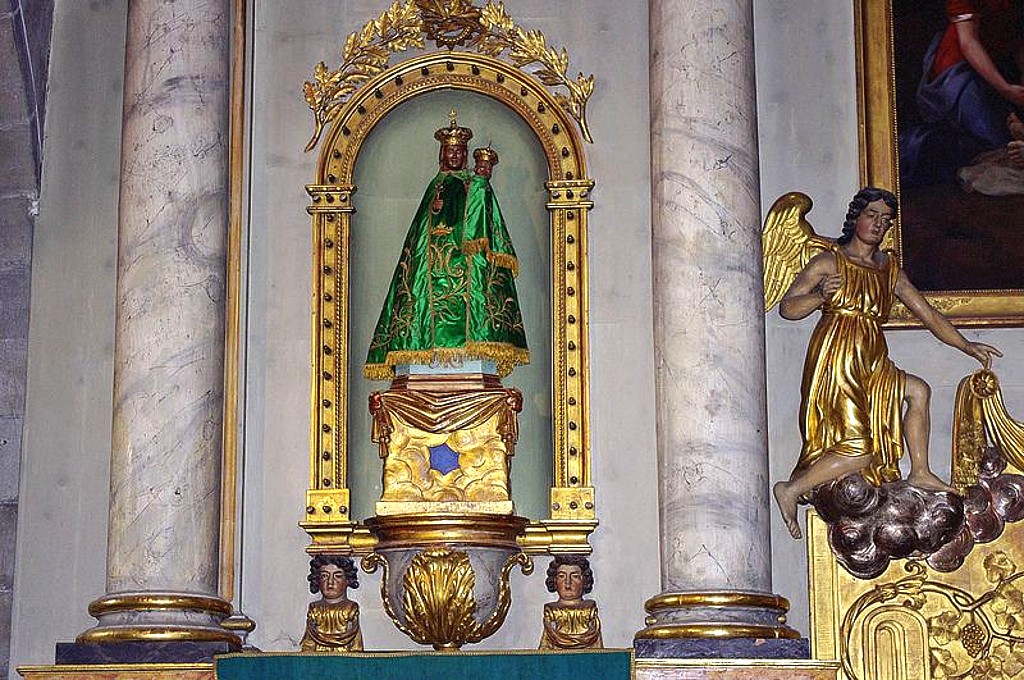
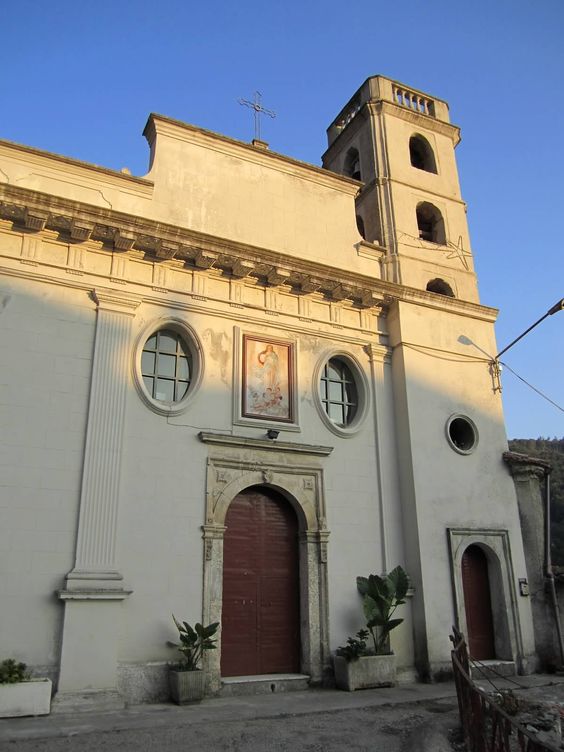
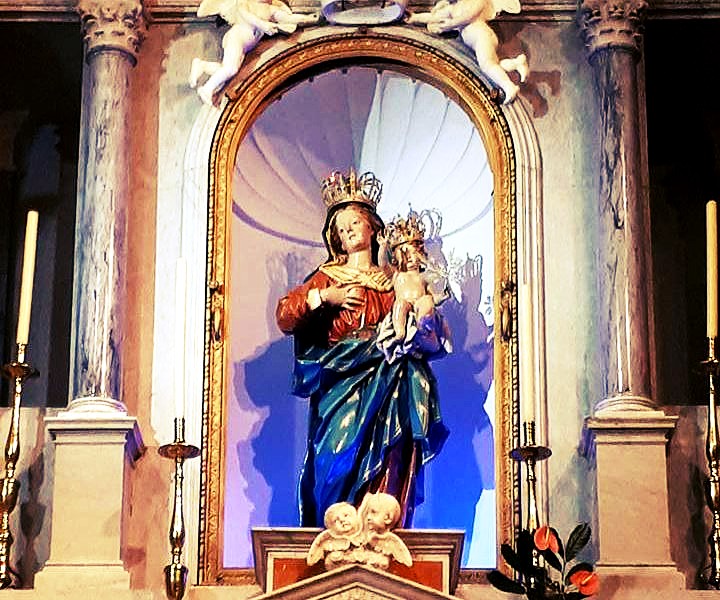
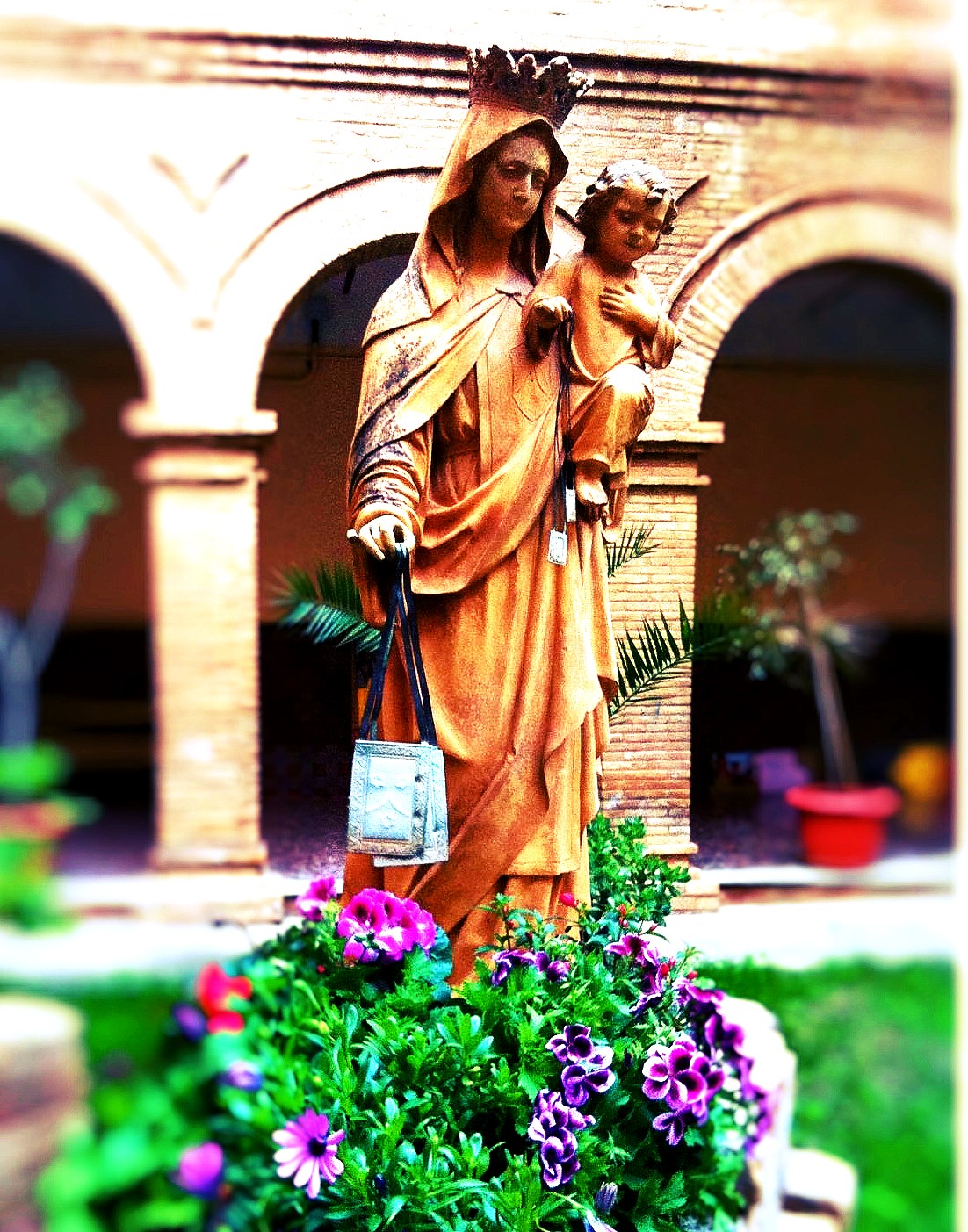
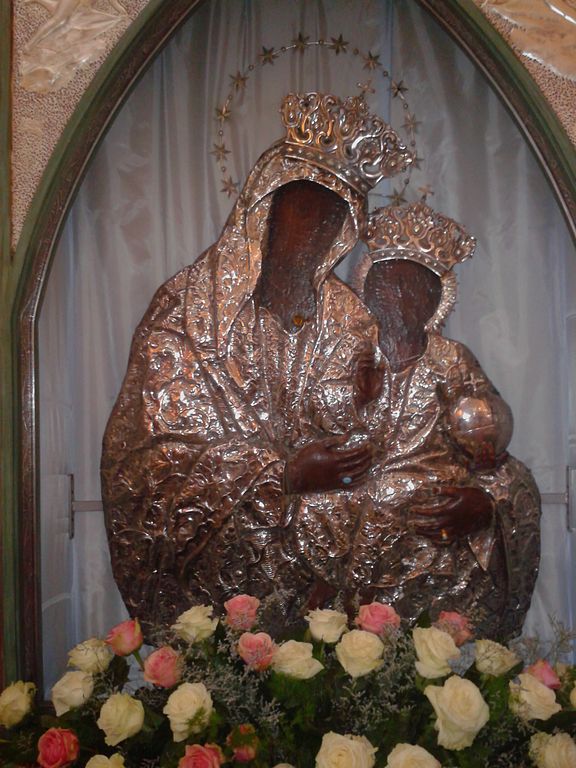
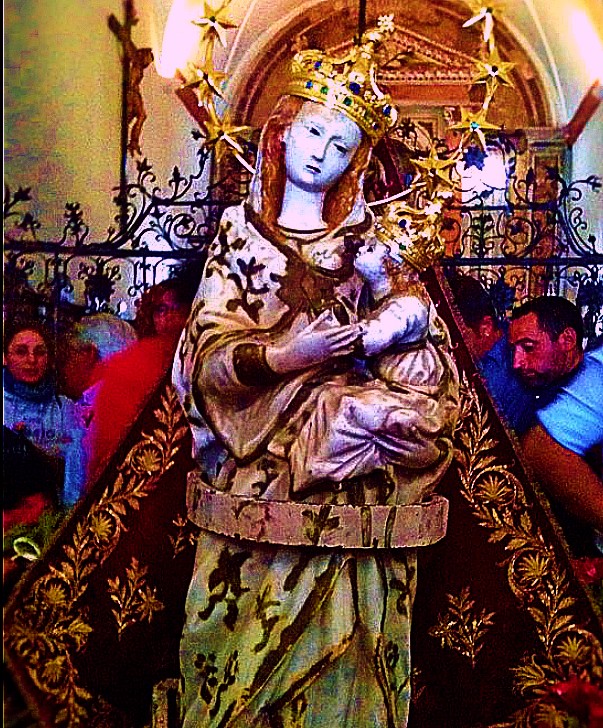
In 1582 a reliquary containing a Holy Hair of the Virgin arrived at the Marina di Palmi. From that moment, veneration towards Our Lady with the title “of the Holy Letter” began also in the people of Palmese and her Effigy carved in dark wood and enclosed in a silver mantle, similar to that venerated in the Peloritan City, was adopted.

Martyrs of Uganda (Memorial) – 22 saints: Twenty-two (22) young Ugandan converts martyred in the persecutions of King Mwanga. They are –
• Achileo Kiwanuka • Adolofu Mukasa Ludigo
• Ambrosio Kibuuka • Anatoli Kiriggwajjo
• Anderea Kaggwa • Antanansio Bazzekuketta
• Bruno Sserunkuuma • Charles Lwanga
• Denis Ssebuggwawo • Gonzaga Gonza
• Gyavire • James Buzabaliao
• John Maria Muzeyi • Joseph Mukasa
• Kizito • Lukka Baanabakintu
• Matiya Mulumba • Mbaga Tuzinde
• Mugagga • Mukasa Kiriwawanvu
• Nowa Mawaggali • Ponsiano Ngondwe
They were Canonised on 18 October 1964 by Pope Paul VI at Rome, Italy.
The Lives and Martyrdom of the Ugandan Martyrs:
https://anastpaul.com/2017/06/03/saints-of-the-day-3-june-uganda-martyrs-or-st-charles-lwanga-companions/

Bl Adam of Guglionesi
St Albert of Como
St Athanasius of Traiannos
St Auditus of Braga
Bl Beatrice Bicchieri
St Caecilius of Carthage

St Charles Lwanga & Companions (see the Martyrs of Uganda above)

Bl Charles-René Collas du Bignon
St Clotilde of France
St Conus of Lucania
St Cronan the Tanner
St Davinus of Lucca
Bl Diego Oddi
Bl Francis Ingleby
St Gausmarus of Savigny
St Genesius of Clermont
St Glunshallaich
St Hilary of Carcassone
St Isaac of Córdoba

St Juan Grande Román OH (1546-1600) Religious of the Hospitallers of Saint John of God whi adopted the name “John the Sinner”
Biography:

https://anastpaul.com/2020/06/03/saint-of-the-day-3-june-st-juan-grande-roman-oh-1546-1600/

St Kevin of Glendalough (c 498-618) Priest

St Laurentinus of Arezzo
St Liphardus of Orléans
St Morand of Cluny
St Moses of Arabia
St Oliva of Anagni
St Paula of Nicomedia
St Pergentinus of Arezzo
St Phaolô Vu Van Duong
St Urbicius

Dominicans Martyred in China

Martyrs of Africa – 156 saints: 156 Christians martyred together in Africa, date unknown; the only other information to survive are some of their names –
• Abidianus• Demetria• Donatus• Gagus• Januaria• Juliana• Nepor• Papocinicus• Quirinus• Quirus
Martyrs of Byzantium – 5 saints: A group of Christians, possibly related by marriage, who were martyred together. They were –
• Claudius• Dionysius• Hypatius• Lucillian• Paul
They were Martyred in 273 in Byzantium.

Martyrs of Rome – 8 saints: A group of Christians martyred together. We know nothing else about them but the names –
• Amasius• Emerita• Erasmus• Lucianus• Orasus• Satuaucnus• Septiminus• Servulus
They were Martyred in Rome, Italy, date unknown.

Martyrs of Rome – 86 saints: 85+ Christians martyred together in Rome, Italy, date unknown. The only details that have survived are some of their names –
• Apinus • Apronus • Aurelius • Avidus • Cassianus • Criscens • Cyprus • Domitius • Donata • Donatus • Emeritus • Extricatus • Exuperia • Faustina • Felicitas • Felix • Flavia • Florus • Fortunata • Fortunatus • Fructus • Gagia • Gagus • Gallicia • Gorgonia • Honorata • Januaria • Januarius • Justa • Justus • Libosus • Luca • Lucia • Matrona • Matura • Mesomus • Metuana • Nabor • Neptunalis • Obercus • Paula • Peter • Pompanus • Possemus • Prisca • Procula • Publius • Quintus • Rogatian • Romanus • Rufina • Saturnin • Saturnus • Secundus • Severa • Severus • Sextus • Silvana • Silvanus • Sinereus • Tertula • Titonia • Toga • Urban • Valeria • Veneria • Veranus • Victor • Victoria • Victorinus • Victuria • Victurina • Virianus • Weneria • Zetula.
They were Martyred in Rome date unknown.

Posted in MARIAN TITLES, SAINT of the DAY

Madonna delle Lacrime / Madonna of the Tears, Ponte Nossa, Bergamo, Lombardy, Italy , 1511 – 2 June:

Madonna delle Lacrime / Madonna of the Tears, Ponte Nossa, Bergamo, Lombardy, Italy , 1511 – 2 June:

In the territory of Ponte Nossa known as Campo Lungo there was a small Oratory dedicated to the Seven Martyr Brothers and the Madonna which had a fresco on the facade by Giacomo Borlone de Buschis depicting the Crucifixion with the Madonna and St John.

On 2 June 1511 , some shepherdesses of the town staring at the picture, saw Mary’s face change, open and close her left eye until tears of blood appeared o her cheek. Among them was a girl from the Bonelli de Ferrari family, who wiped away her tears with her apron. The Virgin said:

“To the first who will pass this way, you will make my apparition kown and you will report that the Blessed Virgin told you so, who she orders that a Church be built in her honour where she will give many graces.”

The young women made the miracle public and showed the blood left on the young woman’s apron as a testimony. Tradition tells of other miraculous facts, such as the story of a soldier who mocked the young girls by questioning what they had reported and who whe he remounted his horse, suddenly found himself blind and his horse too, struck by the ‘wrath of God.’ The punishment made him repent and asking forgiveness from God and the Madonna, he regained the gift of sight. The testimony of the miracle and what happened after, were then collected by the notary Guerinoni of Gorno and put in writing. The construction of the new Church had the authorisation to begin construction as early as 10 June of the same year.

The building was finished in 1533, was built in Lombard Romanesque style next to the existing Church. It was Consecrated with the rite of dedication to Santa Maria Annunziata on 19 April 1575 by the co-adjutor of theBbishop Federico Corner and elevated to Parish in 1583. The miraculous fresco was inserted as a side Altarpiece . The previous church was then demolished in 1716 in order to make room for the new sacristy of the complex.

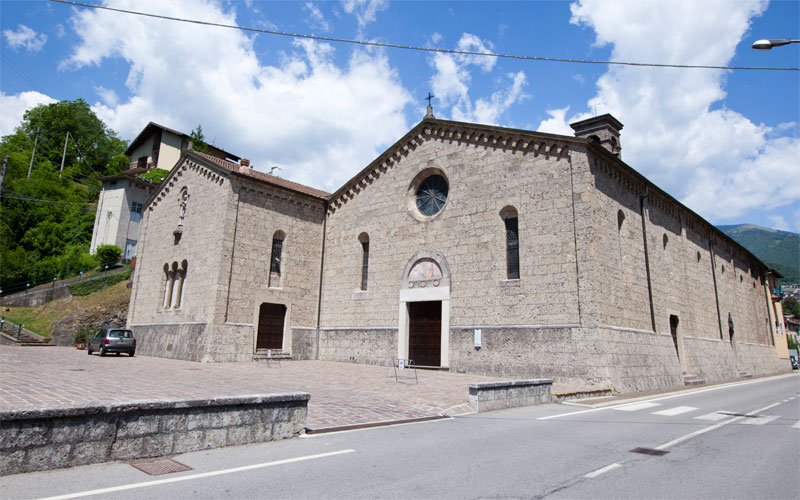
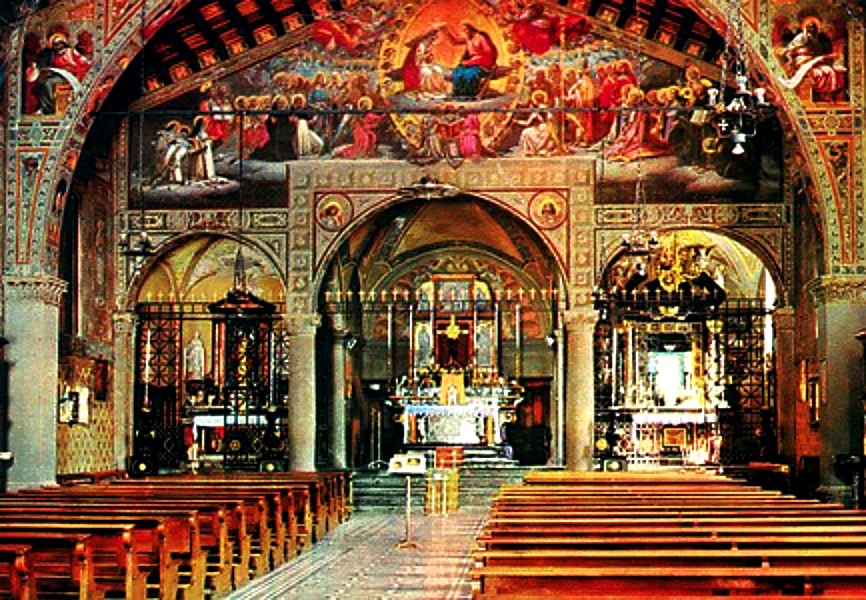
Although  the exterior of the Sanctuary appears austere, the interior is full of treasures and frescoes. The frescoe below depicts the blinded soldier begging forgiveness. The Altar of the Madonna delle Lacrime (Our Lady of Tears) was embellished in the seventeenth century with small twisted alabaster columns accompanied by a plague in memory of the graces received and a special prayer to the Virgin.

Hanging from the ceiling of the nave, on the right side, in front of the Altar of the Virgin there is a crocodile. There is no written documentation referring to the true reason for the presence of a crocodile inside the Church. The first citation of it presence is deducible from a document dated 24 January 1594 by Bishop Federico Corner who asked for its immediate removal: “In the Church of the Madonna’s oratory, remove that crocodile skin under the roof, for it is indecent .” This order, however, was eluded by the then Parish Priest, Don Celso Lotteri, who declared – “It would be a huge mistake to remove it because, if on one hand, the skin of a sea monster is indecent in a sacred place, on the other hand, it is a real display of a miracle and a very material votive proving a true miracle and grace obtained through the invocation of Santa Maria dei Campi by some villagers who were miraculously preserved from the jaws of that voracious monster.”

The testimony of this miracle remains only oral, handed down by the faithful. It would seem, that in Rimini a merchant who was travelling to sell his wares, found himself facing a ferocious crocodile. He entrusted his prayers to the Madonna di Campolungo and thus, managed to hit the monster in the throat, killing it (as shown in the third fresco on the right wall in the upper part.) However, it appears, that there are many legends about the crocodile and although they differ slightly in detail, the main focus always remains the same, the intervention of the Blessed Virgin Mary!

In the 19th century, the figure of Mary was solemnly crowned with a diadem of gold and precious jewels. An annual procssion is held each year in honour of Our Lady of Tears.

St Marcellinus Priest Martyr
St Peter the Exorcist Exorcist Martyr
(Martyred in 304)
Their Blessed Lives and Deaths:

https://anastpaul.com/2017/06/02/saints-of-the-day-sts-marcellinus-and-peter-the-exorcist/


St Ada of Ethiopia
St Adalgis of Thiérarche

Blessed Alexandru Rusu (1884-1963) Bishop and Martyr of the Soviet Regime, Professor, Activist.
His Life and Martyrdom:

https://anastpaul.com/2020/06/02/saint-of-the-day-2-june-blessed-alexandru-rusu-1884-1963-bishop-and-martyr-of-the-soviet-regime/

St Armin of Egypt
St Barbarinus
St Blandina the Slave
St Bodfan of Wales
St Daminh Ninh
Bl Demetrios of Philadelphia
St Dorotheus of Rome

St Erasmus (Died c 303) Martyr – also known as Saint Elmo – Bishop of Formiae, Campagna, Italy. St Erasmus or Elmo is also one of the Fourteen Holy Helpers and the Saint from whom comes the famous miracle of “Saint Elmo’s fire.”
His Holy Life and Death:

https://anastpaul.com/2018/06/02/saint-of-the-day-2-june-st-erasmus-died-c-303-martyr/

St Pope Eugene I,
St Evasius
Bl Giovanni de Barthulono
Bl Guy of Acqui
St Honorata
St Humatus
St John de Ortega
St Joseph Tien
St Nicholas Peregrinus the Pilgrim (1075-1094) Confessor
St Photinus of Lyons
St Rogate
Bl Sadoc of Sandomierz
St Stephen of Sweden

Martyrs of Lyons and Vienne: A group of 48 Christians from the areas of Vienne and Lyon, France, who were attacked by a pagan mob, arrested and tried for their faith, and murdered in the persecutions of Marcus Aurelius. A letter describing their fate, possibly written by Saint Irenaeus of Lyons, was sent to the churches in the Middle East. Only a few names and details of their lives have survived; some of them have separate entries on this date –
• Alexander of Vienne
• Attalus of Pergamos
• Biblis of Lyons
• Blandina the Slave
• Cominus of Lugdunum
• Epagathus of Lugdunum
• Maturus the Novice
• Photinus of Lyons
• Ponticus of Lugdunum
• Sanctius of Vienne
• Vettius of Lugdunum
They were martyred in assorted ways on on various during 177.

Martyrs of Sandomierz: A group of 49 Dominicans, some of whom received the habit from Saint Dominic de Guzman himself. They worked separately and together to bring the faith and establish the Dominican Order in Poland, basing their operations in and around Sandomierz. In 1260 they were all martyred by the Tartars as they were singing the Salve Regina at Compline; the custom of singing the Salve Regina at the deathbed of Dominicans stems from this incident. We know a few details about a few of the martyrs, but most survive only as names –
• Zadok• Andrea, chaplain• James, novice master• Malachi, convent preacher
• Paul, vicar• Peter, guardian of the garden• Simone, penitentiaryfriars
• Abel, Barnabas, Bartholomew, Clemente, Elia, John, Luke, Matthew, Philip
deacons• Giuseppe, Joachim, Stefanosub-deacons• Abraham, Basil, Moses, Taddeoclerics• Aaron, Benedict, David, Dominico, Mattia, Mauro, Michele, Onofrio, Timothyprofessed students• Christopher, Donato, Feliciano, Gervasio, Gordian, John, Mark, Medardo, Valentinonovices• Daniele, Isaiah, Macario, Raffaele, Tobialay brothers• Cyril, tailor• Jeremiah, shoemaker
• Thomas, organist
They were martyred in 1260 at Sandomierz, Poland and Beatified on 18 October 1807 by Pope Pius VII (cultus confirmation).

Posted in MARIAN TITLES, SAINT of the DAY

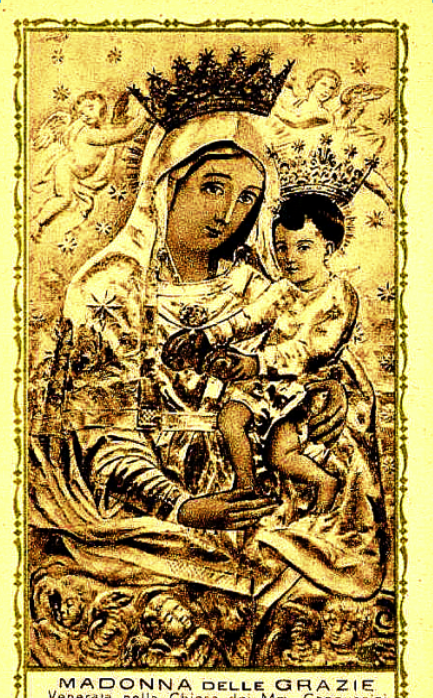
Madonna delle Grazie / Our Lady of Grace, Leini, Torino, Piedmont, Italy (1630) and Memorials of the Saints – 1 June

Month of the Most Sacred Heart of Jesus

Madonna delle Grazie / Our Lady of Grace, Leini, Torino, Piedmont, Italy (1630) – 1 June:

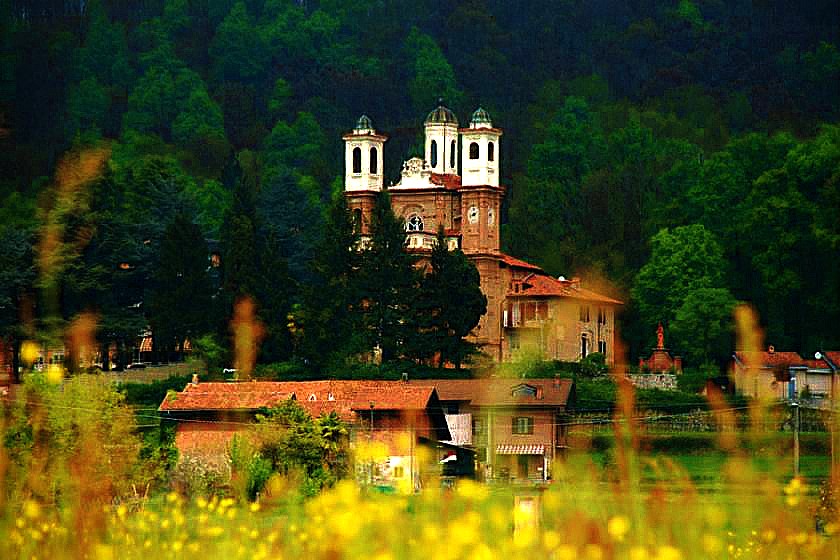
13 km from Turin, a short distance from the highway to Ivrea, stands a famous Sanctuary. From impeccable evidence and documents, the Madonna appeared to a humble deaf-mute, placing the Rosary around his neck.

For 3 years, since 1627, a famine had ravaged the town of Leini and the surrounding areas followed by the Black Plague, reducing the town to a handful of families. On 1 June 1630, a farmworker, of the Regina family, deaf and dumb from birth, when returning from the fields stopped before the image of the Virgin and implored her:
“… save Leini, Mary, Holy Mother, hear our prayer, save us …”
She appeared to him with a smile in answer to his prayer and placed a Rosary around his neck. His tongue loosed and from his mouth came a Hymn of praise and thanksgiving to the Virgin. The first voice he ever heard was the Blessed Mother who told him:
“… Go, announce, that in my honour a Church should be built in this place and I will ask my Son to stop the plague … “

He began running through the desolate streets shouting the news of the miracle and announcing that the plague had ceased, that the Blessed Virgin prayed for Leini. The few survivors heard the wonders of the miracle and joined with him in the Rosary prayer and supplication with thanksgiving. From that day the plague stopped, the sick were healed,and the survivors were thankful for the wonderful grace that the Virgin had given them. She had asked that they build a Sanctuary and the townspeople fulfilled their solemn promises. An inscription has been affixed on the front facade: “Sacellum hoc BM Gratiarum Virgini Matri against pestiferam emu to majoribus dicatum year 1630.”

The Church has become a famous pilgrimage destination where it is possible to admire inside, a gallery where numerous ex-votos accumulated over the years are collected. The structure was built immediately after the plague of the seventeenth century, to obtain protection from the Blessed Virgin, thanks to the people of Leini.

The Apparition and the Consecration of the Sanctuary are celebrated each year on 1 June and 15 August, the Feast of the Assumption, respectively.

St Justin Martyr (c 100-165) Father of the Church (Memorial) Martyr, first Christian Philosopher, Apologist, Orator, Teacher, Writer, Missionary.
Biography:

https://anastpaul.com/2017/06/01/saint-of-the-day-1-june-st-justin/

St Agapetus of Ruthenia
Bl Alfonso Navarrete Benito

Saint Annibale Maria di Francia (1851-1927) Priest, Founder of a series of orphanages and the Congregations of the Rogationist Fathers and the Daughters of Divine Zeal.
His Life Story:

https://anastpaul.com/2020/06/01/saint-of-the-day-1-june-saint-annibale-maria-di-francia-1851-1927/

Bl Arnald Arench
Bl Arnold of Geertruidenberg
St Atto of Oca
St Candida of Whitchurch
St Caprasius of Lérins
St Clarus of Aquitaine
St Claudius of Vienne
Bl Conrad of Hesse
St Conrad of Trier
St Crescentinus
St Cronan of Lismore
St Damian of Scotland
St Dionysius of Ruthenia
St Donatus of Lucania
St Felinus of Perugia
Bl Ferdinand Ayala
St Firmus
St Fortunatus of Spoleto
Bl Gaius Xeymon
St Gaudentius of Ossero
St Giuse Túc
St Gratian of Perugia
Bl Herculanus of Piegare
St Iñigo of Oña
St Ischryrion and Companions
Bl James of Strepar
St Jean-Baptiste-Ignace-Pierre Vernoy de Montjournal

Blessed John Baptist Scalabrini (1839-1905) “The Apostle of the Catechism” and “The Father of Migrants” Bishop, Prelate, Founder of both the Missionaries of St Charles and the Mission Sisters of Saint Charles.
His Life Story:

https://anastpaul.com/2018/06/01/saint-of-the-day-1-june-blessed-john-baptist-scalabrini-1839-1905-the-apostle-of-the-catechism-and-the-father-of-migrants/

Bl John Pelingotto
Bl John Storey
St Juventius
Bl Leo Tanaka
St Melosa
St Pamphilus of Alexandria
St Peter of Pisa
St Porphyrius of Alexandria
St Proculus of Bologna
St Proculus the Soldier
St Ronan
St Secundus of Amelia
St Seleucus of Alexandria
St Simeon of Syracuse
St Telga of Denbighshire
St Thecla of Antioch
Blessed Teobaldo Roggeri (c 1100-1150) Layman
St Thespesius of Cappadocia
St Wistan of Evesham
St Zosimus of Antioch

Martyrs of Alexandria – 5 saints: A group five of imperial Roman soldiers assigned to guard a group of Egyptian Christians who were imprisoned for their faith in the persecutions of Decius. During their trial, they encouraged the prisoners not to apostatize. This exposed them as Christians, were promptly arrested and executed. Martyrs. Their names are – Ammon, Ingen, Ptolomy, Theophilis and Zeno. They were beheaded in 249 at Alexandria, Egypt.

Martyrs of Caesarea – 3 saints: Three Christians martyred together in the persecutions of Galerius. We know little more about them than the name – Paul, Valens and Valerius. They diedf in 309 at Caesarea, Palestine.

Martyrs of Lycopolis – 6 saints: Five foot soldiers and their commander who were martyred for their faith by order of the imperial Roman prefect Arriano during the persecutions of Decius. In Lycopolis, Egypt.

Martyrs of Rome – 6 saints: A group of spiritual students of Saint Justin Martyr who died with him and about whom we know nothing else but their names – Carito, Caritone, Evelpisto, Ierace, Liberiano and Peone. In Rome, Italy.

Posted in MARIAN TITLES, SAINT of the DAY

The Solemnity of Pentecost , Virgen de Gracia / Virgin of Grace, Aés, Spain (1575) and Memorials of the Saints – 23 May

The Solemnity of Pentecost +2021
https://anastpaul.com/2018/05/20/the-solemnity-of-pentecost-20-may/

Virgen de Gracia / Virgin of Grace, Aés, Puente Viesgo, Pas-Miera, Cantabria, Spain (1575) – 23 May:

On 23 May, 1575, as widow María Saínz de Quijano prayed the rosary while watching sheep on Hediilla Mountain, she saw the Virgin appear :

with such great splendour that I didn’t dare look at Her Majesty and she said I should ask the Curate of the town to build a Chapel in that spot and lace an image of the Virgin of Grace and one of St Lawrence, in the ew Chapel.

To Maria’s objection that people wuld not believe her, the Virgin answered that she would make them believe. When the woman started to get up, she found she could not and stayed there, calling for her daughter Juana. Some neighbours passing bym found Juana, who carried her mother home on her back. María asked Juana to get the local Priest. She told him what had happened and he then told his superior, the Vicar of the valley, who dismissed it with a laugh, saying the shepherdess must have been dreaming. A few days later the Vicar passed through that place with his servant, who said, “Sir, they say the Virgin recently appeared to a woman in this spot.” The Vicar laughed again and was suddenly blinded. The servant led him home. In fear and remorse, the Vicar dictated a letter to the Archbishop, asking him to order construction of the Chapel so that he would regain his sight.

The Archbishop ordered workers to began cutting wood for construction. They cut some from high on the mountain and some from lower down, at the apparition site. But they couldn’t move the wood from the heights, although they moved that from the lower site easily.

Carmen González Echegaray, citing records in the National Archives of Spain, doesn’t say whether the Viosionary and the Vicar recovered but presumably they were among the first to receive the graces of the Virgin of Aés.

The Chapel has been rebuilt and renovated several times over the centuries, most recently in 1993. An annual procession to the mountain Shrine outside the village of Aés on 23 May, the apparition anniversary, draws participants from the entire valley. There are no acceptable images of the Chapel or the procession available.

St Basileus of Braga
St Desiderius of Langres
St Epitacius of Tuy
St Euphebius of Naples
St Euphrosyne of Polotsk
St Eutychius of Valcastoria
St Florentius of Valcastoria
St Goban Gobhnena
St Guibertus of Gorze (892-962) Monk, Hemit
Bl Ivo of Chartres
St Jane Antide Thouret

St John Baptist de Rossi (1698-1764) Priest, Preacher and Teacher
About St John:

https://anastpaul.wordpress.com/2018/05/23/saint-of-the-day-23-may-st-john-baptist-de-rossi-1698-1764/

Bl Józef Kurzawa
Bl Leontius of Rostov

St Michael of Synnada (Died 826) Bishop, Confessor, Monk, Emmissary and Diplomat of Peace.
His Life:

https://anastpaul.com/2020/05/23/saint-of-the-day-23-may-saint-michael-of-synnada-died-826/

St Onorato of Subiaco
St Spes of Campi
St Syagrius of Nice

St William of Rochester (Died c 1201) Martyr, Laymam – Patron of adopted children.
Biography:

https://anastpaul.com/2019/05/23/saint-of-the-day-23-may-st-william-of-rochester-died-c-1201-martyr/

Bl Wincenty Matuszewski

Martyrs of Béziers: 20 Mercedarian friars murdered by Huguenots for being Catholic. Martyrs. 1562 at the Mercedarian convent at Béziers, France.

Martyrs of Cappadocia: A group of Christians tortured and martyred in the persecutions of Diocletian and Galerius. Their names and the details of their lives have not come down to us. They were crushed to death in c.303 in Cappadocia (in modern Turkey).

Martyrs of Carthage: When a civil revolt erupted in Carthage in 259 during a period of persecution by Valerian, the procurator Solon blamed it on the Christians, and began a persecution of them. We know the names and a few details about 8 of these martyrs – Donatian, Flavian, Julian, Lucius, Montanus, Primolus, Rhenus and Victorius. They were beheaded in 259 at Carthage (modern Tunis, Tunisia).

Martyrs of Mesopotamia: A group of Christians martyred in Mesopotamia in persecutions by imperial Roman authorities. Their names and the details of their lives have not come down to us. They were suffocated over a slow fire in Mesopotamia.

Martyrs of North Africa: A group of 19 Christians martyred together in the persecutions of the Arian Vandal King Hunneric for refusing to deny the Trinity. We know little more than a few of their names – Dionysius, Julian, Lucius, Paul and Quintian. c 430.

Posted in MARIAN TITLES, SAINT of the DAY, The APOSTLES & EVANGELISTS

Vigil of Pentecost, Beata Vergine di San Luca, Bologna, Italy / The Blessed Virgin of Saint Luke, Bologna and Memorials of the Saints – 22 May

Vigil of Pentecost +2021

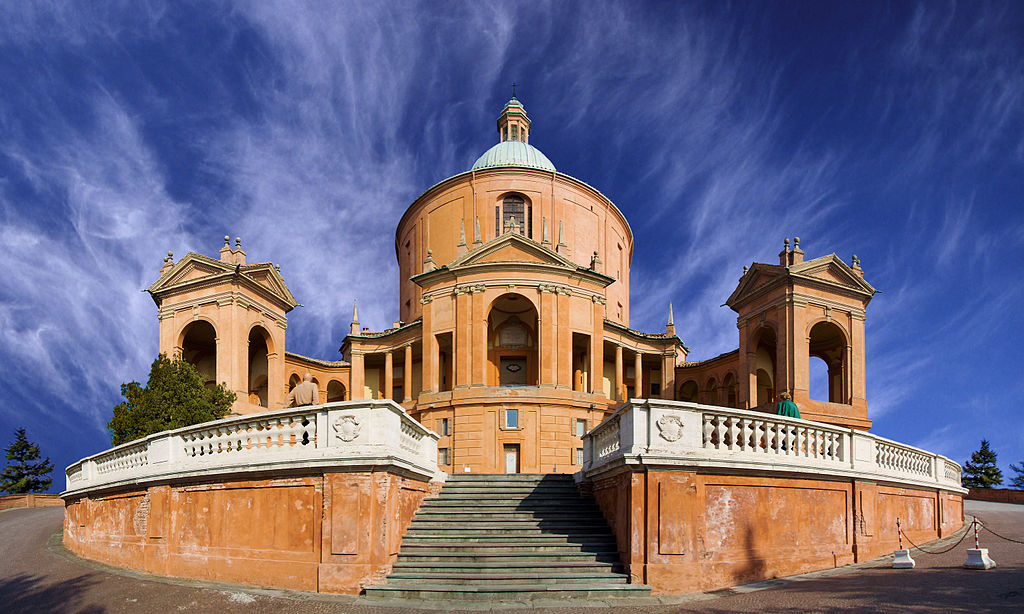
Beata Vergine di San Luca, Bologna, Italy / The Blessed Virgin of Saint Luke, Bologna – 22 May, Saturday before the Feast of the Ascension of our Lord:. The Blessed Virgin of St Luke is the Patron Saint of Bologna.

A Greek holy man named Theocles Kmnia, praying before this icon in the Church of St Sophia in Constantinople, saw an inscription on it: “This work made by St Luke, Chancellor of Christ, must be taken to the Church of St Luke on Guardia Mountain and installed on its Altar.”

Without knowing the mountain’s location, he pleaded with the clergy of St Sophia until they agreed to let him take the image there. For some time he travelled without finding anyone who knew of such a place. Finally, in Rome, he met the Bolognese Ambassador, who knew that two sisters, Azzolina and Beatrice Guezi, had retired to a life of prayer on Lookout Mountain, Monte della Guardia, outside Bologna and, had built a Chapel on the hill dedicated to St Luke.
Supplied by the Ambassador with a horse, a servant and letters of recommendation to the leaders of Bologna, Theocles carried the icon there. On 8 May 1160, the Bishop of Bologna led it in procession to the sisters’ hermitage on Monte della Guardia.
At this point, the story moves from legend to documented history.
In 1192, another holy woman, Angelica di Caicle, retired to the mountain with the intention of building a bigger Church there. On 15 May 1194, the Bishop of Bologna ,laid the first stone.
In 1249, Dominican sisters settled there. The image was carried in procession to Bologna on 4 April, 1302, during Charles de Valois’ invasion and again on 5 July 1433, after months of damaging rain. The rain’s end is commemorated in an annual procession from the Sanctuary to Bologna, which since 1476 has taken place on the Saturday before the Feast of Christ’s Ascension (always a Thursday).

The holy icon remains in Bologna for a week, returning to the Basilica Sanctuary on Ascension Sunday.
It was ceremonially Crowned 5 April 1653 by the Archbishop and in 1857 by Blessed Pope Pius IX.
Today the procession continues when pilgrims remove their shoes and begin the 3,796 meter (about 2 1/2 miles) climb up the longest uninterrupted portico in the world. to reach the Sanctuary and beg of our Holy Mother, intercession to her Son, for all their needs. Today, the highly veerated image is protected by a glass cover, see below.

St Rita of Cascia (1386-1457) (Optional Memorial) Mother, Widow, Stigmatist, Consecrated Religious, Mystic, – Patron of Impossible Causes, Abused Wives and Widows et al
About St Rita:

https://anastpaul.wordpress.com/2017/05/22/saint-of-the-day-22-may-st-rita-of-cascia-patron-of-impossible-causes-abused-wives-and-widows/

St Aigulf of Bourges
St Atto of Pistoia
St Aureliano of Pavia
St Ausonius of Angoulême
St Baoithin of Ennisboyne
St Basiliscus of Pontus

St Beuvon (Died 986) Pilgrim, Apostle of the poor, Hermit, Knight
About St Beuvon:

https://anastpaul.com/2020/05/22/saint-of-the-day-22-may-st-beuvon-died-986/

St Boethian of Pierrepont
St Castus the Martyr
St Conall of Inniscoel
Bl Diego de Baja
Bl Dionisio Senmartin
St Emilius the Martyr
St Faustinus the Martyr
St Francisco Salinas Sánchez
St Fulgencio of Otricoli
Bl Fulk of Castrofurli
Bl Giacomo Soler
Bl Giusto Samper
St Helen of Auxerre

St Humility of Faenza (c 1226–1310) Wife, Mother, Nun – a founder of Vallumbrosan convents, and is considered the Founder of the Vallumbrosan Nuns

Bl John Baptist Machado

Blessed John Forest OFM (1471-1538) Martyr of Oxford University, Priest of the Order of St Francis
Biography:

https://anastpaul.wordpress.com/2018/05/22/saint-of-the-day-22-may-bl-john-forest-o-f-m-1471-1538-martyr/

St John of Parma
St José Quintas Durán

St Julia (5th century) Vurgin Martyr
Her Life and Death:

https://anastpaul.com/2019/05/22/saint-of-the-day-22-may-st-julia-5th-century-martyr/

St Lupo of Limoges
St Marcian of Ravenna
St Margaret of Hulme
Bl Pedro of the Assumption
St Quiteria
St Romanus of Subiaco
St Timothy the Martyr
St Venustus the Martyr

Martyred in the Spanish Civil War:
• Blessed Francisco Salinas Sánchez
• Blessed José Quintas Durán

Posted in MARIAN TITLES, SAINT of the DAY

Nostra Signora degli Angeli / Our Lady of the Angels, Arcola, Italy (1556) and Memorials of the Saints – 21 May

Nostra Signora degli Angeli / Our Lady of the Angels, Arcola, Italy (1556) – 21 May:

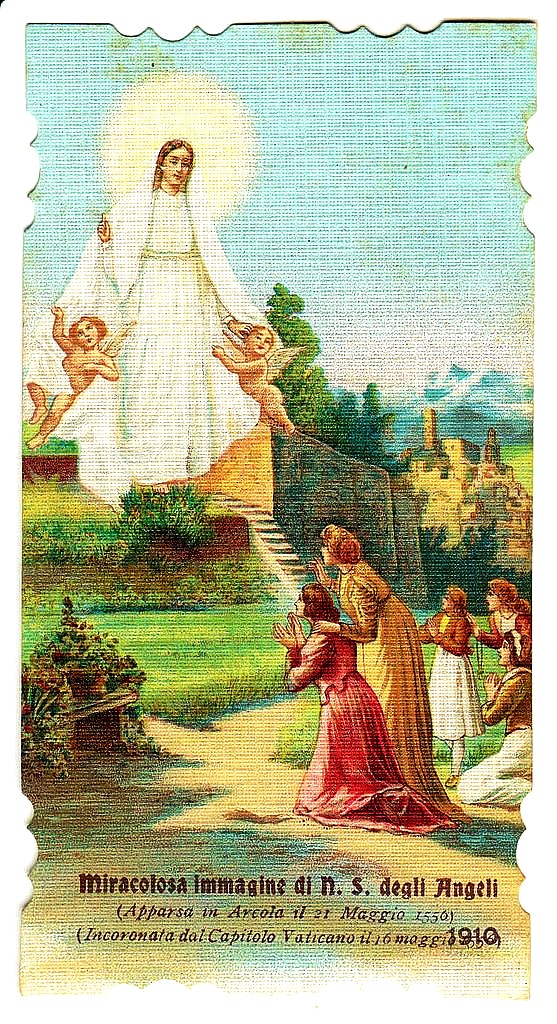
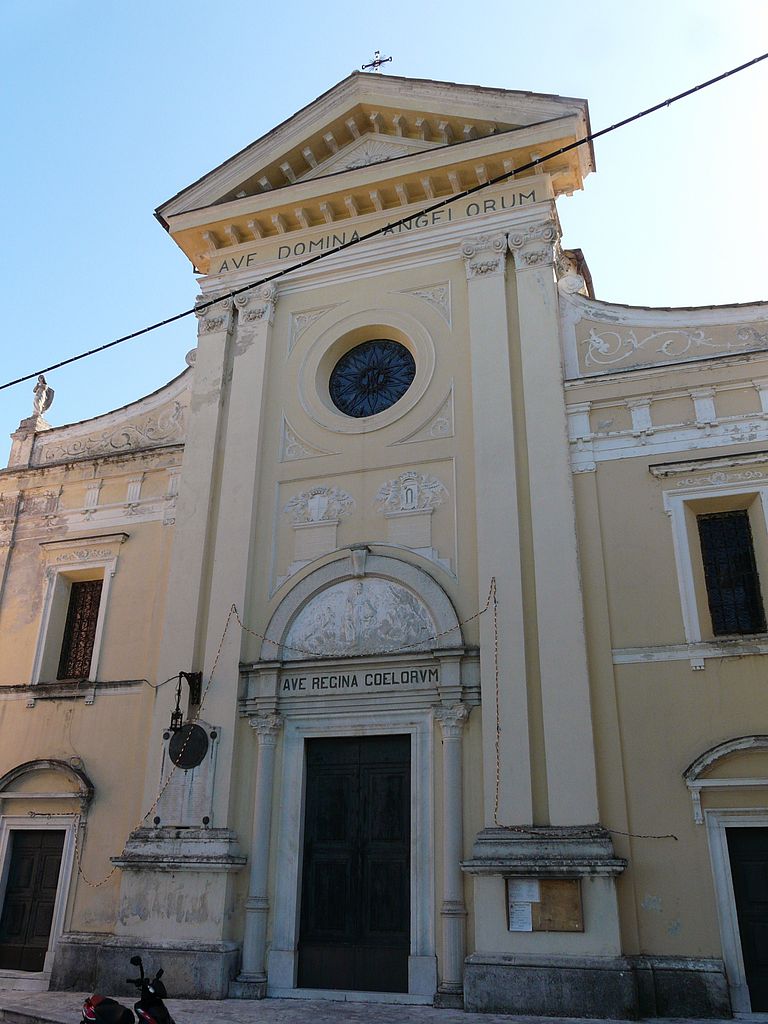
Going up the streets of the Village of Arcola, in the direction of Baccano, you reach the Sanctuary of Our Lady of the Angels, built in the place where the miraculous apparition of the Virgin took place, on 21 May 1556, in that year, it was the second day of Pentecost.

After Mass, whilst praying the Rosary on their farm, in Carbonara, the five Fiamberti sisters – Barbara, Camilla, Elisabetta, Catarinetta and Angela, in the company of their parents and brothers – saw a majestic Lady appear above a rosemary bush, shining brighter than the sun, dressed in white and flanked by two Angels.

The celestial image, raising her hand and with a sweet voice told them “go, beloved ones, tell the people to pray and do penance and tell the good villagers to build a temple in this place in my honour.”
In the year 1558, the now underground Chapel was built in the sacred place; a large Church was completed above it at the end of the century, while the current Church is the work of the second half of the eighteenth century.

The Sanctuary immediately became a pilgrimage destination and the subject of bequests and donations. On the walls at the sides of the main altar there are two large frescoes by the Arculian painter Luigi Agretti, representing the Apparition of the Madonna degli Angeli and the Solemn Coronation which took place on 16 May 1910.

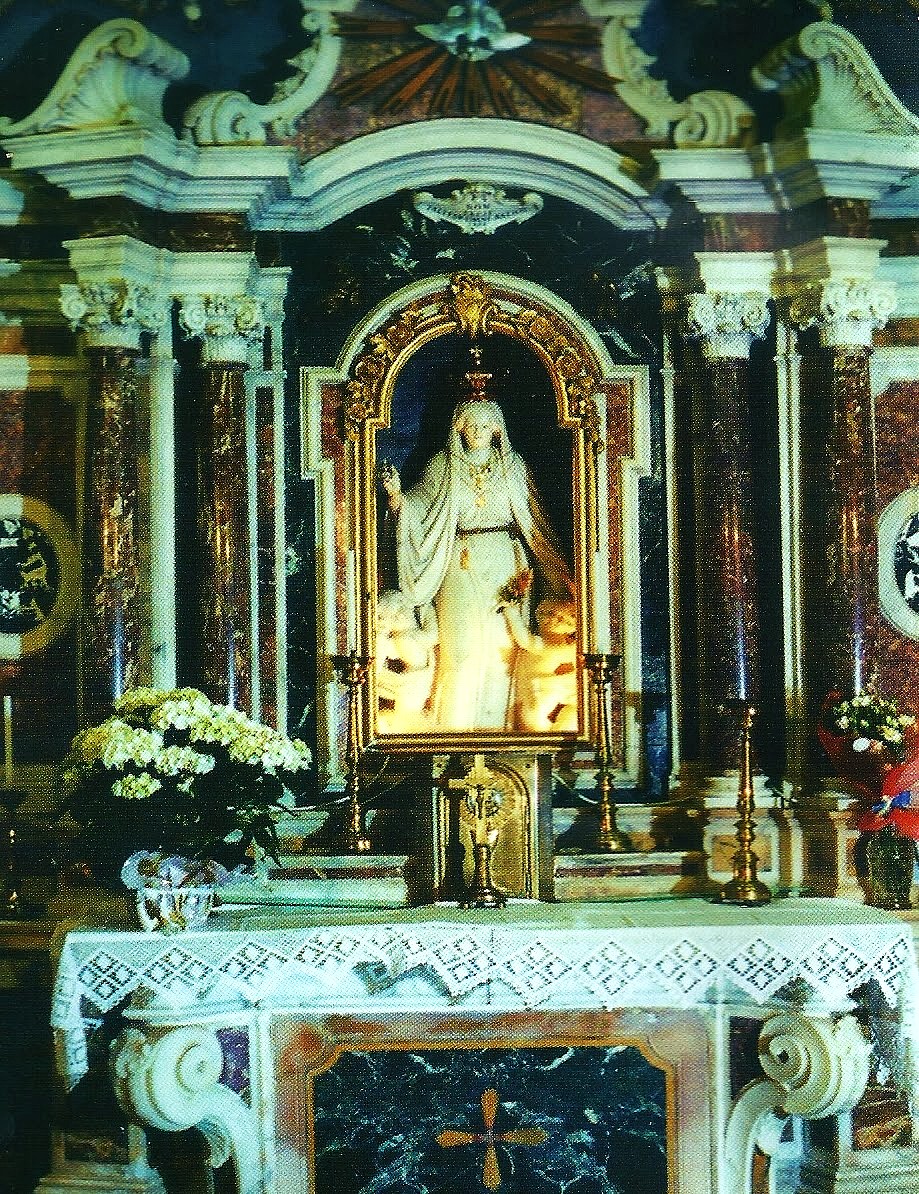
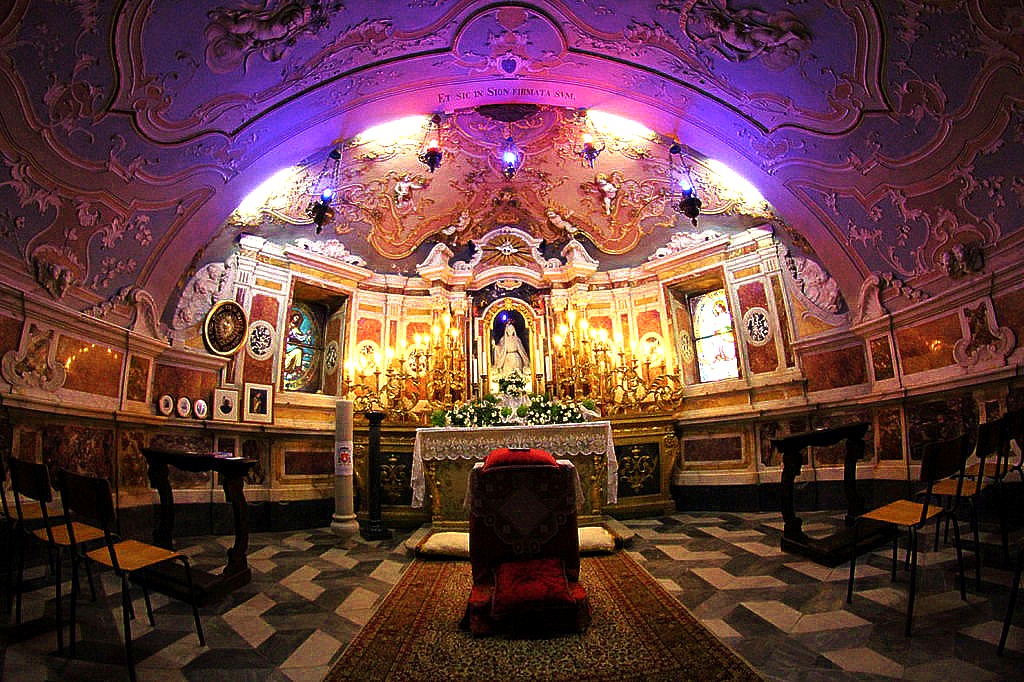
Under the altar floor there is the Chapel, a place of the Apparition of the Virgin of the Angels. The interior is somewhat rich in polychrome marbles that decorate the floor and walls, while stuccos and paintings adorn the ceiling. Above the Altar of precious marble, in a niche, there is the simulacrum of the Virgin of the Angels, work created in 1624 by the sculptor Battista Orsolini of Carrara. The minor aisles have two chapels dedicated one to the Madonna del Rosario, the other to the Sacred Heart of Jesus or of the Holy Cross. In the Chapel of the Rosary, there is a painting by the La Spezia painter Andrea Podenzana, year 1688.

Chapel of the apparition under the main altar of the sanctuary

St Eugene de Mazenod OMI (1782-1861) Bishop, Founder of the Oblates of Mary Immaculate, Evangeliser, Missionary Preacher
Biography:

https://anastpaul.wordpress.com/2018/05/21/saint-of-the-day-21-may-st-eugene-de-mazenod-o-m-i-1782-1861/

Martyrs of the Mexican Revolution (Optional Memorial): The 1917 Mexican constitution was pointedly anti-clerical and anti-Church, and its adoption instituted years of violent religious persecution including expulsion of foreign priests, closing of parochial schools and the murders of several priests and lay leaders who work to minister to the faithful and support religious freedom. 25 of them who died at different times and places but all as a result of this persecution were celebrated together. They each have separate memorials but are also remembered as a group.

• Saint Agustin Caloca Cortes
• Saint Atilano Cruz Alvarado
• Saint Cristobal Magallanes Jara
• Saint David Galván-Bermúdez
• Saint David Roldán-Lara
• Saint David Uribe-Velasco
• Saint Jenaro Sánchez DelGadillo
• Saint Jesús Méndez-Montoya
• Saint Jose Isabel Flores Varela

• Saint “Joselito” José Luis Sánchez del Río (1913-1928) Aged 14 known as “Joselito,” Boy Martyr was a Mexican Cristero War Martyr.
Memorial 10 February
Dear Joselito!

https://anastpaul.wordpress.com/2018/02/10/saint-of-the-day-10-february-st-jose-sanchez-del-rio-joselito-1913-1928-boy-martyr/comment-page-1/

• Saint José María Robles Hurtado
• Saint Julio álvarez Mendoza
• Saint Justino Orona Madrigal
• Saint Luis Batiz Sainz
• Saint Manuel Moralez
• Saint Margarito Flores-García
• Saint Mateo Correa-Magallanes
• Saint Miguel de la Mora
• Saint Pedro de Jesús Maldonado-Lucero

• Saint Pedro Esqueda Ramírez (1887-1927) Priest, Martyr of the Cristero War, Apostle of Eucharistic Adoration, of the Blessed Virgin Mary and of Charity, devoted to the youth and especially their Catechesis.
About St Pedro:

https://anastpaul.com/2019/11/22/saint-of-the-day-22-november-saint-pedro-esqueda-ramirez-1887-1927-priest-and-martyr-of-the-cristero-war/

• Saint Rodrigo Aguilar Alemán

• Saint Roman Adame Rosales (1859-1927) Priest and Martyr of the Cristero War, St Roman had a great devotion to the Blessed Sacrament and the Blessed Virgin, Founder of the association of the “Daughters of Mary and Nocturnal Adoration,”
Biography:

https://anastpaul.com/2020/04/21/saint-of-the-day-21-april-saint-roman-adame-rosales-1859-1927-priest-and-martyr

• Saint Sabas Reyes Salazar (1883-1927) Priest and Martyr of the Cristero War, Teacher, Catechist, Protector of children and the youth of Mexico, he had a special devotion to the Holy Trinity and the Souls in Purgatory.
His Life and Martyrdom:

https://anastpaul.com/2020/04/13/saint-of-the-day-13-april-st-jose-sabas-reyes-salazar-1883-1927-priest-and-martyr/

• Saint Salvador Lara Puente
• Saint Toribio Romo González
• Saint Tranquilino Ubiarco Robles

Canonised: 21 May 2000 by Pope John Paul II

St Adalric of Bèze
Bl Adilio Daronch
St Ageranus of Bèze
St Ansuinus of Bèze
St Antiochus of Caesarea Philippi

St Arcangelo Tadini (1846–1912) Priest, Founder of the Worker Sisters of the Holy House of Nazareth, of which Order, he is the Patron, Social Reformer, Apostle of the Holy Eucharist
Biography:

https://anastpaul.com/2019/05/21/saint-of-the-day-21-may-saint-arcangelo-tadini-1846-1912/

St Bairfhion of Killbarron
St Berard of Bèze
St Collen of Denbighshire

St Constantine the Great
St Donatus of Caesarea
St Eutychius of Mauretania

Blessed Franz Jägerstätter OFS (1907-1943) Married Layman Martyr, Father of 3 daughters, Conscientious Objector, Farmer, Third Order Franciscan
His Life and Death:

https://anastpaul.com/2020/05/21/saint-of-the-day-21-may-blessed-franz-jagerstatter-ofs-1907-1943-layman-martyr-franz-jagerstatter-who-would-not-bow-his-head-to-hitler/

The first video is from the author of a Biography of Blessed Franz. His life of “Conscientious Objection” is very appropriate for the times we find ourselves in right now!
The second video contains an interview and details of the Film made about Blessed Franz “A Hidden Life.”

St Genesius of Bèze
St Godric of Finchale
Bl Hemming of Åbo
St Hospitius of Cap-Saint-Hospice
Bl Hyacinth-Marie Cormier
St Isberga of Aire
Bl Jean Mopinot
Bl Lucio del Rio
St Mancio of Évora
Bl Manuel Gómez González
St Nicostratus of Caesarea Philippi
Blessed Pietro Parenzo (Died 1199) Layman Martyr
St Polieuctus of Caesarea
St Polius of Mauretania
St Restituta of Corsica
St Rodron of Bèze
St Secundinus of Cordova
St Secundus of Alexandria
St Serapion the Sindonite
St Sifrard of Bèze
Bl Silao
St Synesius
St Theobald of Vienne
St Theopompus
St Timothy of Mauretania
St Valens of Auxerre
St Vales
St Victorius of Caesarea

Martyrs of Egypt: Large number of bishops, priests, deacons and lay people banished when the Arian heretics seized the diocese of Alexandria, Egypt in 357 and drove out Saint Athanasius and other orthodox Christians. Many were old, many infirm and many, many died of abuse and privations while on the road and in the wilderness. Very few survived to return to their homes in 361 when Julian the Apostate recalled all Christians and then many of those later died in the persecutions of Julian.

Martyrs of Pentecost in Alexandria: An unspecified number of Christian clerics and lay people who, on Pentecost in 338, were rounded up by order of the Arian bishop and emperor Constantius and were either killed, or exiled, for refusing to accept Arian teachings. 339 in Alexandria, Egypt.

Posted in MARIAN TITLES, SAINT of the DAY

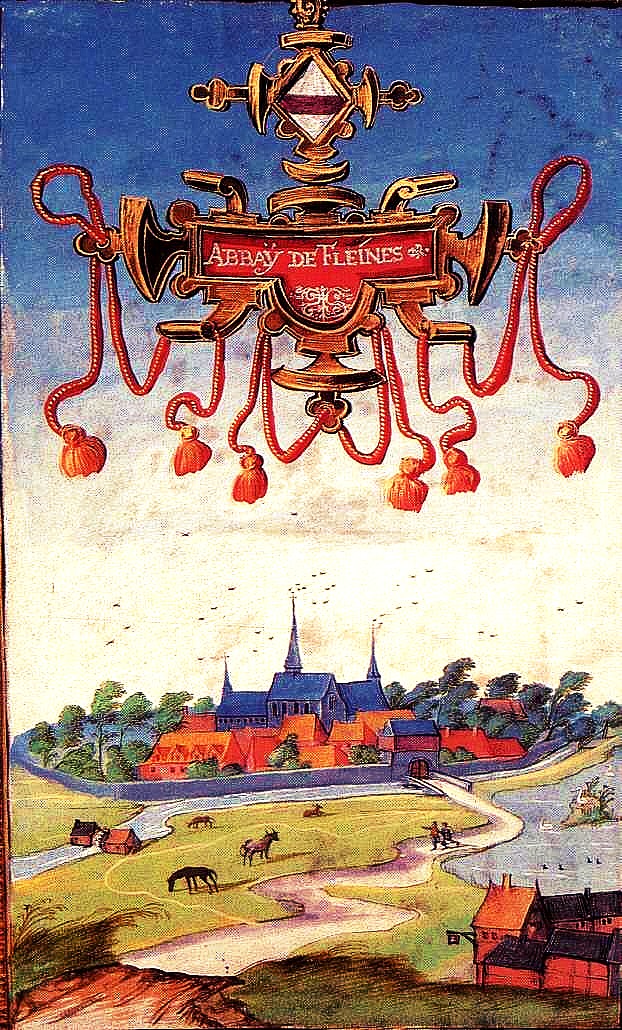
Notre-Dame de Flines / Our Lady of Flines, Douay (1279) and Memorial of the Saints – 19 May

Notre-Dame de Flines / Our Lady of Flines, Douay (1279) – 20 May:

The Abbot Orsini writes: “Dedication of Our Lady of Flines, near Douay, by Peter, Archbishop of Rheims, in the year 1279. This Abbey of Nuns, of the Order of Citeaux, was given to Saint Bernard by Margaret de Dampierre, in the year 1234.”

Margaret de Dampiere, also known as Margaret of Constantinople, was a relative of the Count Guy de Dampier. It appears that Saint Bernard had recently established an Order of Nuns according to the Rule of his Order and in the year 1234, Margaret presented Saint Bernard with the Abbey located near Douay.
Five years previous to this, Archbishop Peter of Rheims had dedicated the Shrine to Our Lady of Flines. This Shrine became a place of pilgrimage as a result of the miraculous cure of a child protégé of Margaret’s. The little one, unseen by Margaret’s coachman, had been seriously injured while playing about the stable-yard. The doctors pronounced her hopelessly lame for life.
Margaret, however, was confident in Our Lady’s intercession and took the child to the neighbouring Shrine every Saturday and begged the Mother of God to be merciful to the child, as well as to the grieving parents. After the fifteenth visit, the little girl, with a happy cry, jumped from the arms of her mother. “I can walk straight, see?” and proved that Our Lady had indeed cured her in that instant.
When Margaret de Dampiere died in 1280, she was buried in the centre of the choir.
The renown of the Shrine continued to spread over time and resulted in many pilgrimages to Our Lady of Flines. The Blessed Virgin Mary proved the words of her loyal son Saint Bernard, “Never was it known that anyone who fled to thy protection, implored thy help, or sought thine intercession was left unaided” to be true.
The Abbey was destroyed by the partisans of the French Revolution and there is now no trace of the once thriving and beautiful Convent and Shrine.

St Alcuin of York
Blessed Augustine Novello OSA (1240– 1309) Priest and Friar of the Order of St Augustine.
St Calocerus of Rome

St Pope Celestine V (1210-1296) Papal Ascension , 5 July 1294 – Papal Abdication, 13 December 1294.
Biography:

https://anastpaul.wordpress.com/2017/05/19/saint-of-the-day-19-may-st-pope-celestine-v/

St Crispin of Viterbo
St Cyriaca of Nicomedia and Companions
St Cyril of Trèves
St Dunstan of Canterbury
St Evonio of Auvergne

Saint Francisco Coll y Guitart OP (1812-1875) Spanish Priest of the Order of Preachers, (the Dominicans), Founder of the Dominican Sisters of the Annunciation of the Blessed Virgin, Confessor, Holy See Apostolic Missionary and was known as “The Apostle of Modern Times.”
About this Saint for modern times:

https://anastpaul.com/2020/05/19/saint-of-the-day-19-may-st-francisco-coll-y-guitart-op-1812-1875-the-apostle-of-modern-times/

St Hadulph of Saint-Vaast
Bl Humiliana de’ Cerchi

St Ivo Hélory of Kermartin TOSF (1253-1303) “Advocate of the Poor,” Priest, Franciscan Tertiary
An interesting man and Saint:

https://anastpaul.wordpress.com/2018/05/19/saint-of-the-day-19-may-st-ivo-of-kermartin-1253-1303-advocate-of-the-poor/

Bl Jean-Baptiste-Xavier Loir
Bl Józef Czempiel
Bl Juan of Cetina
Bl Louis Rafiringa
Bl Lucinio Fontanil Medina

St Maria Bernarda Bütler (1848-1924) Religious Sister, Founder, Missionary
Her Life:

https://anastpaul.com/2019/05/19/saint-of-the-day-19-may-st-maria-bernarda-butler-1848-1924/

St Parthenius of Rome
Bl Peter de Duenas
Bl Peter Wright
St Philoterus of Nicomedia
St Pudens of Rome
St Pudentiana of Rome
St Theophilus of Corte

Posted in MARIAN TITLES, SAINT of the DAY

Madonna dell’Alno / Our Lady of the White Poplar, Canzano, Teramo, Abruzzo, Italy (1480) and Memorials of the Saints – 18 May

Madonna dell’Alno / Our Lady of the White Poplar, Canzano, Teramo, Abruzzo, Italy (1480): 18 May

The Church, today a Parish Church, represents the centre of the Sanzanese devotion and was built and dedicated to the Madonna of the Alno in the year 1592 by the Congregation of the Most Holy Rosary as reported in the epigraph on the portal architrave : “Societas Rosarii erigendum curavit AD 1592.”

The Virgin Mary appeared on 18 May 1480 on the top of a tree , to the peasant Giovanni Floro, (also referred to as Floro di Giovanni, who was plowing the land in a field located just outside the town. He noticed that his oxen tended to kneel and, looking around, he saw the Madonna on the tree. The Virgin turned to him and asked him to build a Church dedicated to her in the locality of Piano del Castellano in Canzano. [ The farmer immediately returned to the village and reported what had happened to him but, he was not believed and he was mocked and insulted by his fellow villagers.

The next day, the Madonna appeared again and renewed the same request to Floro who, with sadness, told her that the people of Sesi had not believed her words. The Virgin, silent, disappeared but on 20 May, after 6 pm, she manifested herself again and asked Giovanni to return to the village, to explain what was happening to him and, to prove what she said ,by personally driving a horse, notoriously indomitable, owned by the family of Falamesca de Montibus. The Madonna told him to be guided by the animal which would trace and define by its path, the site on which to erect the Church. [The owner of the horse agreed to entrust it to Giovanni who, to the amazement of all present, managed to ride it leading it up to the Piano del Castellano. Here, the animal “without restraint and without guidance, circled a space three times, and finally knelt down and bent its head to the ground.” The bystanders, who until then had observed in silence, expressed their astonishment with a great roar and gave consent and life to the building of the new Church.

Of the original Renaissance construction , only the stone portal remains, showing mirrors and rosettes. The façade and the stucco decorations of the Sanctuary are attributable to the reconstruction work of 1750 , while the brick bell tower dates from 1810 .

The Church holds within it a ‘ holy water font of the XVII Century placed on a pedestal carved with motifs of acanthus leaves, a bust reliquary wood of the eighteenth century depicting holy meek, sister of St Blaise Patron of Canzano, and paintings, dated between the seventeenth and eighteenth centuries . Among these of particular value there is the Altarpiece of the Madonna del Rosario, placed behind the Altar, executed by Pasquale Rico of Montereale , portrayed with the Saints Domenic and Nicolas di Bari attributable to the workshop of Francesco Solimena . There is also the canvas depicting the Adoration of the Shepherds painted by the workshop of Guido Reni .

Veneration continues today with many pilgrims visiting all year but on 18 May each year, pilgrims devoutly process carrying the beautiful Statue and praying for all the special needs of the area, the Church and the world.

St Pope John I (c 470 – 526) – 53rd Pope from 13 August 523 to his death in 526. (Optional Memorial)
Biography:

https://anastpaul.wordpress.com/2017/05/18/saint-of-the-day-18-may-st-pope-john-i/

Blessed Burchard of Beinwil (Died c 1192) Priest
St Dioscorus of Kynopolis
St Elgiva of Shaftesbury
St Eric of Sweden (c1120-1160)

St Felix of Cantalice OFM Cap (1515-1587) Capuchin Friar – (the first Capuchin to be Canonised), Confessor, Apostle of Charity, Preacher, Teacher, Writer.
About St Felix:

https://anastpaul.com/2018/05/18/saint-of-the-day-18-may-st-felix-of-cantalice-o-f-m-cap-1515-1587/

St Felix of Spoleto
St Feredarius of Iona
Bl Jan Oprzadek
St Merililaun
St Ortasio of Alexandria
St Potamon of Heraclea
St Serapione of Alexandria
Bl Stanislaw Kubski

St Venantius of Camerino (Died c 250) Martyr – St Venantius was a 15-year-old who was tortured and martyred by decapitation at Camerino during the persecutions of Decius.
His Life and Death:

https://anastpaul.com/2020/05/18/saint-of-the-day-18-may-saint-venantius-of-camerino-died-c-250-martyr/

Blessed William of Toulouse OSA (c 1297-1369) Priest of the Order of St Augustine
His life:

https://anastpaul.com/2019/05/18/saint-of-the-day-blessed-william-of-toulouse-osa-c-1297-1369/

Martyrs of Ancyra – 8 saints: Seven nuns martyred in the persecutions of Diocletian and the innkeeper who was executed for giving them a Christian burial: Alexandria, Claudia, Euphrasia, Julitta, Matrona, Phaina, Thecusa and Theodatus. c.304 in Ancyra, Galatia (in modern Turkey)

Posted in MARIAN TITLES, SAINT of the DAY

Notre-Dame des Marches, Broc, Gruyère, Fribourg, Switzerland / Our Lady of the Steps (1884) and Memorials of the Saints – 17 May

Monday within the Octave of the Ascension _2021

Notre-Dame des Marches, Broc, Gruyère, Fribourg, Switzerland / Our Lady of the Steps (1884)- 17 May:

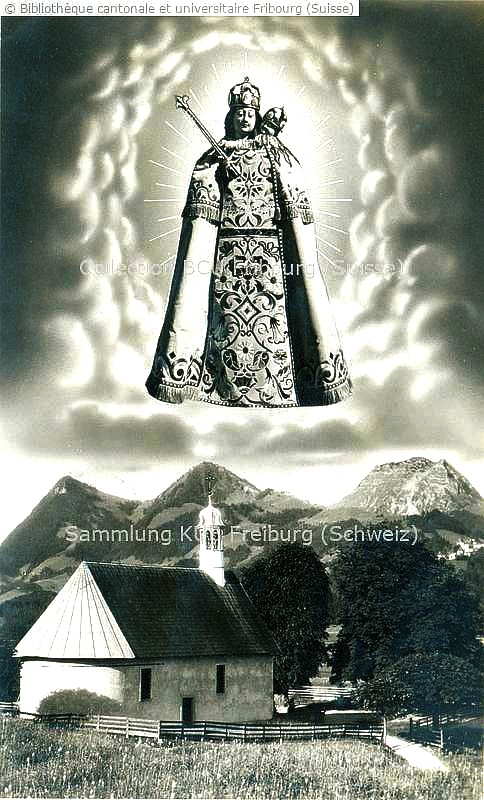
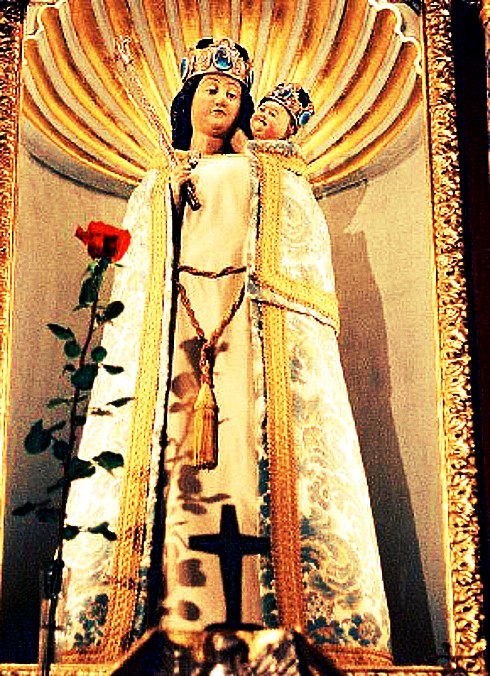
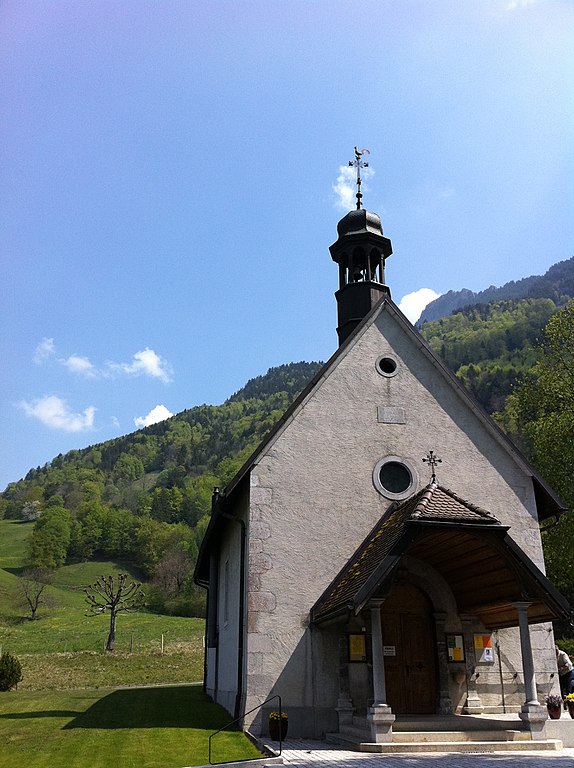
Nestled at the foot of Gruyères Hill, the Chapel overlooks the terraced deposits of the Saane River known as Les Marches, the Steps. The 28″ statue of Our Lady of the Steps, usually vested, is a standing Virgin and Child in the late Gothic style of the 1400s. Documentary evidence of a Chapel here dates to 1572.

The present building goes back to 1705, the work of three brothers, all Priests, from a family of cheese merchants. Dom Nicolas Ruffieux, prothonotary of Broc, decided to build “the most beautiful Chapel in the country.” His brother Jean-Jacques, Priest of neighboring Gruyères, took on the project with a third brother’s help. In 1721, the Commune of Broc added the enclosure and the linden trees that still shade the courtyard.
On 17 May 1884, a miracle occurred at Notre-Dame des Marches, the first of several in the 1880s, which turned the rural Chapel into a place of pilgrimage.
Stricken with a spinal malady, Léonide Andrey, 22, had been unable to walk for six years. She was carried to Mass at the Chapel and walked home easily. By the 1930s, the Sanctuary was known as the “Little Lourdes of Fribourg.” Two main pilgrimages were established: one in September, initially termed the “anti-alcoholic pilgrimage” and one on a Wednesday in spring, the Pilgrimage of the Sick.

St Adrione of Alexandria
Blessed Antonia Messina (1919-1935) Virgin Martyr of Holy Purity, Patron of Rape Victims

Her this brave 15 year old young girl:
https://anastpaul.com/2020/05/17/saint-of-the-day-17-may-blessed-antonia-messina-1919-1935-virgin-and-martyr/

Bl Bernard of Verdun
St Cathan of Bute
St Emiliano I of Vercelli (Died 506) Bishop
St Fionnchan of Druim-Eanaigh

St Giulia Salzano (1846-1929) Sister, Founder of the Catechetical Sisters of the Sacred Heart of Jesus
Her Life:

https://anastpaul.com/2019/05/17/saint-of-the-day-17-may-saint-giulia-salzano-1846-1929/

St Heraclius of Noviodunum
Bl Ivan Ziatyk
St Madron of Cornwall
St Maildulf of Malmesbury
St Maw

St Paschal Baylon OFM (1540-1592) “Seraph of the Eucharist,” “Saint of the Blessed Sacrament,” “Servant of the Blessed Sacrament.” Franciscan Lay Brother, Mystic…….. A man remarkable for innocence of life and the spirit of penance. Pope Leo XIII declared him the heavenly patron of Eucharistic Congresses and Societies and Apostolates, formed in honour of the Most Blessed Sacrament.
About this beautiful Saint:

https://anastpaul.wordpress.com/2018/05/17/saint-of-the-day-17-may-st-paschal-baylon-o-f-m-1540-1592-the-seraph-of-the-eucharist/

St Paul of Noviodunum
St Peter Lieou
St Rasso of Grafrath
St Restituta of Carthage
St Silaus of Lucca
St Solochanus of Chalcedon
St Thethmar
St Victor Roma

Martyrs of Alexandria – 3 saints: Three Christians martyred together; no details about them have survived except their names: Adrio, Basilla and Victor. 4th century Alexandria, Egypt.

Martyrs of Nyon: A group of Christians martyred together in the persecutions of Diocletian. We know little more than three of their names: Aquilinus, Heradius and Paul. 303 at Noyon, Switzerland.

Posted in DOCTORS of the Church, franciscan OFM, MARIAN PRAYERS, MARIAN TITLES, MAY - The Blessed Virgin MARY'S MONTH, Our MORNING Offering, PRAYERS of the SAINTS

Our Morning Offering – 15 May – Mother of Mercy By St Bonaventure

Our Morning Offering – 15 May – “Mary’s Month” – Wednesday of the Fourth week of Easter, C

Mother of Mercy
By St Bonaventure (1217-1274)
Serpahic Doctor

Virgin full of goodness,
Mother of Mercy,
I entrust to you my body and soul,
my thoughts, my actions,
my life and my death.
O my Queen, help me,
and deliver me from all
the snares of the devil.
Obtain for me the grace
of loving my Lord Jesus Christ,
your Son,
with a true and perfect love,
and after him, O Mary,
to love you with all my heart
and above all things.
Amen

Posted in MARIAN TITLES, SAINT of the DAY

Sunday within the Octave of the Ascension, Apparition of Our Lady to Saint Catherine of Alexandria (4th Century) and Memorials of the Saints – 16 May

Sunday within the Octave of the Ascension+2021

Apparition of Our Lady to Saint Catherine of Alexandria (4th Century) – 16 May:

The Abbot Orsini wrote: “Apparition of Our Lady to Saint Catherine of Alexandria, whose body was discovered on the 13th of this month, on Mount Sinai, in consequence of a revelation which the Queen of heaven gave of it.”

Saint Catherine of Alexandria, also known as Saint Catherine of the Wheel, is a Saint, Virgin, and Martyr. She was the beautiful daughter of King Costus and Queen Sabinella of Alexandria, who at a young age decided to remain a virgin until and unless, she should meet someone who exceeded her in status and political position, as well as beauty, intelligence and wealth. She decided upon Christ, who reigns over us all, for “His beauty is more radiant than the shining of the sun, His wisdom governs all creation and His riches are spread throughout all the world.”
While yet a teenager, Saint Catherine received a vision of the Blessed Virgin Mary and Her Divine Son Jesus Christ. In this vision, the Mother of God gave Catherine to her Son in a mystical marriage. Mystical marriage is in some senses, very similar to a marriage ceremony, as Christ presents the chosen soul with a ring that is often invisible to others and often there are Saints and Angels present. There have been well over 70 documented mystical marriages of Saints and ,although the action is mysterious and not well understood, it appears, that Christ gives special attention to these Saints. Saint Teresa explained, that it was the highest state a soul could achieve in this life, and represents a transforming and constant union with the Blessed Trinity.

Saint Catherine was Martyred by the Roman Emperor Maxentius when she refused his proposal of marriage. Again, according to tradition, her body was taken by Angels to Mount Sinai where a Church and Monastery were built in her honour. Saint Catherine’s relics were rediscovered about the year 800. Her hair was still growing and there was a continuous stream of oil coming from her body that was found to have miraculous properties. King Saint Edward was said to have collected some of that oil and taken it back to his kingdom.

Saint Catherine, along with Saint Margaret, were the two Saints who spoke to encourage Saint Joan of Arc in her mission.

St Abdas of Cascar
Bl Adam of Adami
Bl Adam of San Sabine

St Andrew Bobola SJ (1591-1657) Priest of the Order of the Society of Jesus (Jesuits), Missionary, known as the Apostle of Lithuania and the “Hunter of Souls.”
Biography:

https://anastpaul.wordpress.com/2017/05/16/saint-of-the-day-16-may-st-andrew-bobola-sj/

St Annobert of Séez
St Aquilinus of Isauria

St Brendan the Navigator (c 484–c 577) Priest, Abbot, founder of many Monasteries also known as “of Clonfert,” “the Voyager,” “the Anchorite” and “the Bold” is one of the early Irish Monastic Saints. and one of the Twelve Apostles of Ireland.
His wonderful life:

https://anastpaul.com/2019/05/16/saint-of-the-day-16-may-st-brendan-the-navigator-c-484-c-577/

St Carantac
St Carantoc
St Diocletian of Osimo
St Felix of Uzalis
St Fidolus of Aumont
St Fiorenzo of Osimo
St Fort of Bordeaux
St Francoveus
St Gennadius of Uzalis
St Germerius of Toulouse
St Hilary of Pavia
St Honorius of Amiens (Died 653) Bishop
Bl Louis of Mercy

St Margaret of Cortona TOSF (1247-1297) “The Mary Magdalene of the Franciscan Order,” Third Order Franciscan, Penitent, Mystic, Founder of a Third Order Francisca Apostalate the “Le Poverelle” (Italian for “The Little Poor Ones”).
Her Life:

https://anastpaul.com/2020/05/16/saint-of-the-day-16-may-saint-margaret-of-cortona-tosf-1247-1297/

(This is a very good homily – listen if you can).
St Maxima of Fréjus
Bl Michal Wozniak
St Peregrinus of Auxerre
St Peregrinus of Terni
St Possidius (c 370-c 440)
St Primael of Quimper

St Simon Stock OCD (1165-1265) Religious Monk, Visionary, Mystic, Marian devotee, early Prior General of the Carmelite religious order.
About St Simon:

https://anastpaul.wordpress.com/2018/05/16/saint-of-the-day-16-may-st-simon-stock-1165-1265/

St Ubaldus Baldassini
St Victorian of Isauria
Bl Valdimir Ghika

Martyrs of Saint Sabas: A group of monks, whose names have not come down to us, who were massacred by Moors at the monastery of Saint Sabas in Palestine.

Posted in MARIAN TITLES, SAINT of the DAY

Notre-Dame-du-Port, Clermont-Ferrand, Puy de Dôme, Auvergne / Our Lady of the Port, (1614) and Memorials of the Saints – 15 May

Notre-Dame-du-Port, Clermont-Ferrand, Puy de Dôme, Auvergne / Our Lady of the Port, (1614) – 15 May:

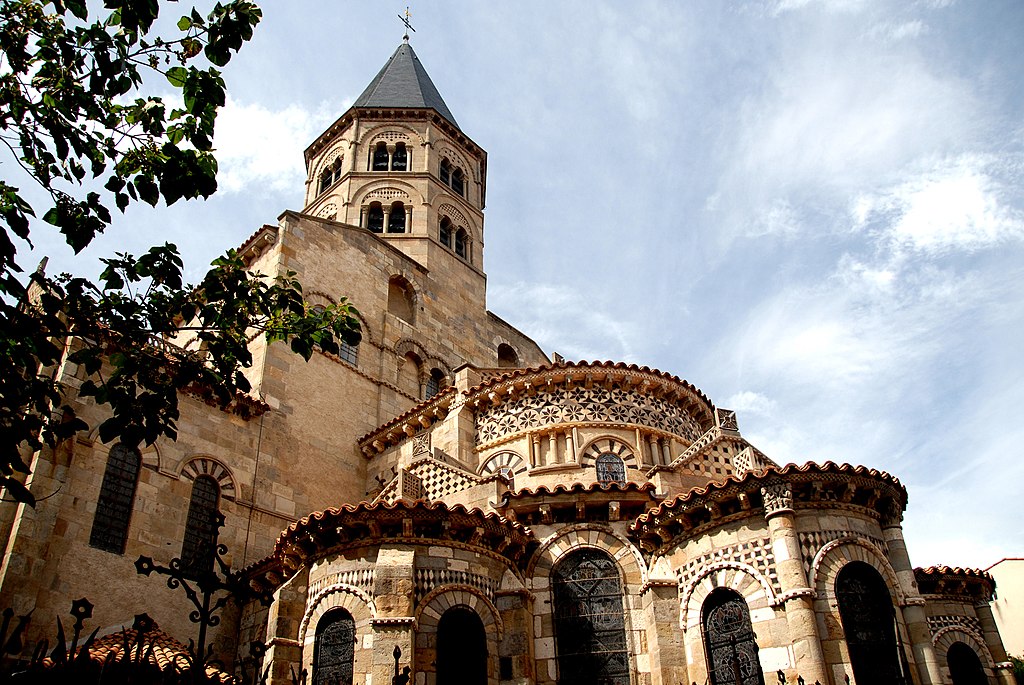
Clermont-Ferrand is located on a plain in the volcanic region of central France. Unlike most hub cities, it is not on a body of water. And yet ,for a thousand years, Clermont’s eastern district has been known as the Port.

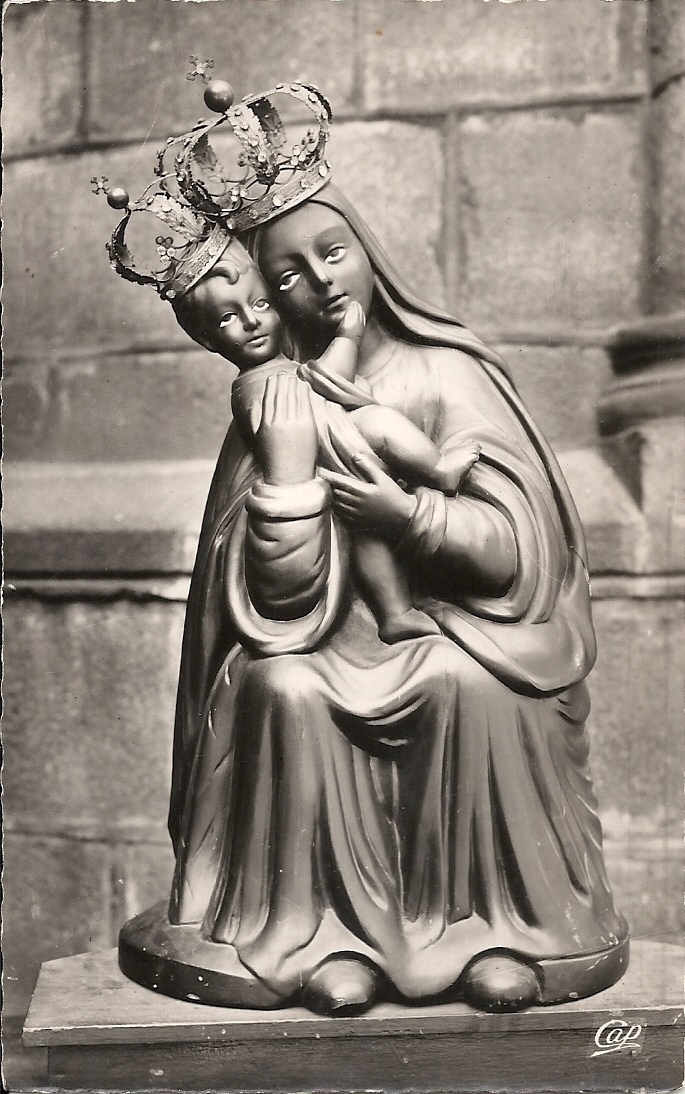
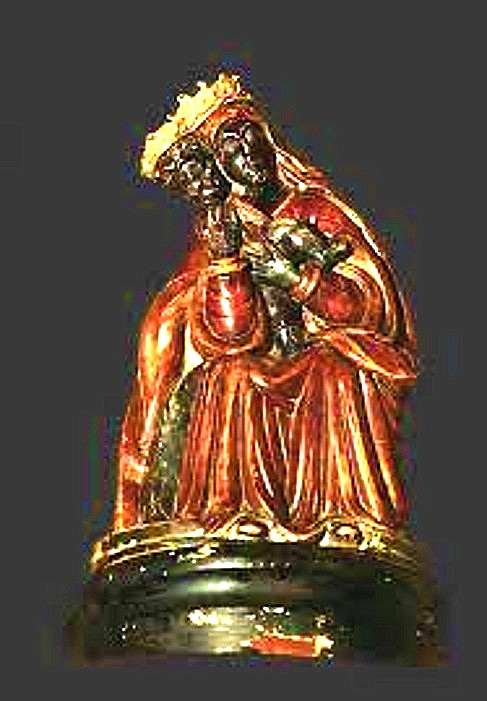
In the crypt of its Romanesque Church of Our Lady of the Port, dating to the early 1100s, is an unusual Black Virgin, a polychromed walnut Statue just under a foot high. This long-revered image is a copy made around 1800 of a Statue from the 1200s, which was held to be a copy of an even earlier image–possibly going back to the Shrine’s foundation by St Avit in the 500s, or possibly a copy of a Byzantine icon brought by returning Crusaders. Mary cradles the child against her cheek, such as the Notre-Dame de Grâce, given in 1450 to Cambrai Cathedral in northern France.
n 1614, snow and bitter cold enveloped the area without stopping from Martinmas (11 November) to Easter. By May, there were still no buds and no grass and famine loomed. The leaders and Priests conferred. They asked the Chapter to bring out the image of Our Lady of the Port from the collegiate Church.

The four-hour procession took place on the morning of Ascension Day, May 15, 1614. Some 8,000 people followed the holy image and relics of Saints around the City walls, chanting litanies. The next day, the weather grew milder and in the following days, truly beautiful. To the joy of all, the harvests were excellent that summer and even more abundant the next year.

The new Bishop, Joachim d’Estaing, on 5 May 1616, ordered an inquiry among the town notables, after which he issued an ordinance declaring that the Feast of Notre-Dame du Port would take place on 15 May in the Parish and be observed as a day of rest in the future.

The Statue was crowned in 1875 and on 15 May 1881, Pope Leo XII declared the Church a Minor Basilica. The procession of the first Sunday after 15 May remains joyously well attended.

St Isidore the Farmer (c 1070-1619) Confessor, Farm Worker (Optional Memorial)
About St Isidore:

https://anastpaul.wordpress.com/2017/05/15/saint-of-the-day-15-may-isidore-the-farmer/

St Achilles of Larissa
St Adiutor of Campania
St Alvardo

Bl Andrew Abellon OP (1375-1450)
Biography:

https://anastpaul.wordpress.com/2018/05/15/saint-of-the-day-15-may-blessed-andrew-abellon-o-p-1375-1450/

Bercthun of Beverley
Bertha of Bingen
St Caecilius of Granada
St Caesarea of Otranto
St Cassius of Clermont
Bl Clemente of Bressanone
St Colman Mc O’Laoighse
St Ctesiphon of Verga
Blessed Diego of Valdieri

St Dymphna (7th Century) Virgin Martyr “The Lily of Éire,” Virgin Martyr
About St Dymphna:

https://anastpaul.com/2020/05/15/saint-of-the-day-15-may-saint-dymphna-7th-century-the-lily-of-eire-virgin-martyr/

St Euphrasius of Andujar (1st Century) Martyr, Bishop, Missionary
St Euphrasius’ Life:

https://anastpaul.com/2019/05/15/saint-of-the-day-15-may-saint-euphrasius-of-andujar-1st-century/

St Gerebernus
St Hallvard of Oslo (c 1020-1043) Martyr
St Hesychius of Gibraltar
St Hilary of Galeata
St Indaletius of Urci
St Isaias
St Isidore of Chios
Bl Joan Montpeó Masip
St Maximus of Clermont
St Nicholas the Mystic
St Rupert of Bingen
St Secundus of Avila
St Simplicius of Sardinia
St Sophia of Rome
St Victorinus of Clermont
St Waldalenus of Beze

Posted in MARIAN REFLECTIONS, MARIAN TITLES, MAY - The Blessed Virgin MARY'S MONTH, MEDITATIONS - ANTONIO CARD BACCI, QUOTES on SIN, QUOTES on TEMPTATION

Thought for the Day – 14 May – The Refuge of Sinners

Thought for the Day – 14 May – Meditations with Antonio Cardinal Bacci (1881-1971)

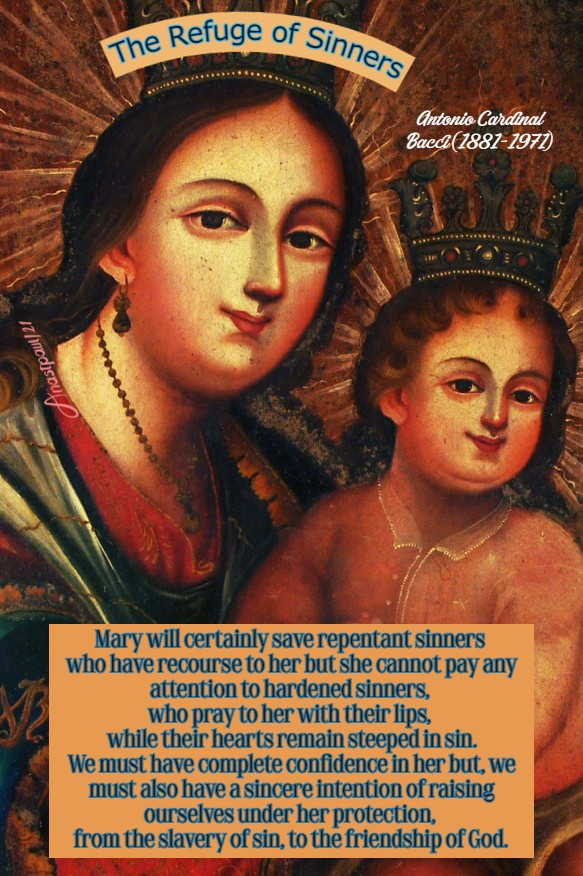
The Refuge of Sinners

“Mary is called, the Star of Sea because, as St Thomas Aquinas says, “even as sailors are guided into port, by means of a star, so Christians are guided towards Heaven, by means of Mary, .” (Opuse, 7).
This absolute guarantee of the protection of our heavenly Mother, should increase our trust in her and lead us to turn towards her in every difficulty and temptation.
It should not, however, result in an unhealthy attitude of spiritual inactivity, a passive dependence on Mary’s favours, without any co-operation on our part.
Such behaviour would be the height of filial ingratitude.
Mary will certainly save repentant sinners who have recourse to her but she cannot pay any attention to hardened sinners, who pray to her with their lips, while their hearts remain steeped in sin.
We must have complete confidence in her but, we must also have a sincere intention of raising ourselves under her protection, from the slavery of sin, to the friendship of God.

Antonio Cardinal Bacci

PART ONE HERE:
https://anastpaul.com/2020/05/14/thought-for-the-day-14-may-the-refuge-of-sinners/

Posted in MARIAN TITLES, SAINT of the DAY, The APOSTLES & EVANGELISTS

Feast of St Matthias Apostle, Madonna di Pinè, Montagnaga, Trento, Italy / Our Lady of Pinè, Montagnaga (1729) and Memorials of the Saints – 14 May

Madonna di Pinè, Montagnaga, Trento, Italy / Our Lady of Pinè, Montagnaga (1729) – Commemorated 14 May:

Domenica Targa of Guardia, thirty years old, was busy supervising the cattle grazing,which suddenly, with no apparent visible reason, started running in all directions as if she were crazy. The shepherdess then began to cry out: “Mary, Jesus, help me.” As soon as she uttered these words, the Virgin Mary appeared before her with a white veil on her head and thus addressed her: “You called Jesus and Mary for help and they will help you … Do you promised once again to visit Our Lady of Caravaggio? But do not go to Caravaggio! Go rather to the Feast of the Ascension of Christ in the Chapel of St Anne in Montagnaga. There you will find a portrait of the Blessed Virgin by Caravaggio. Kneel down and address your prayers with a sincere heart to Jesus and Mary, then you will see miraculous things.

On Sunday Domenica went to the Chapel of St Anne in Montagnaga, while praying fervently, she again had an apparition of Mary. The robe of the Blessed Virgin radiated a golden light. She was crowned with a diadem and rays of clear light shone all around her, as did the Child Jesus, who was in her arms. He was dressed all in gold. In the right hand of the Madonna held a crown. She said: “I am Mary, the Mother of the Lord. Please tell this apparition to the local priest. Do not be afraid! Nothing bad will happen to you. I will be with you. In my name you must announce, that every year on this day,a feast must be celebrated.

Only a few believed the story and especially the Priest showed himself very skeptical.

The Virgin appeared again the next on Sunday and said: “I chose this place as the throne of my Mercy. Those who care to pray here with living faith will not return home empty-handed. Take care that a Church be built for large numbers of my devotees.”

In 1730, an ecclesiastical investigation was ordered which resulted in a positive outcome and approval was granted to the apparitions. A Sanctuary was built and Consecrated in 1750. to which large crowds have flocked on pilgrimage and continue to do so to this day. Today, 14 May, special Masses and processions are held.

Domenica Targa led a life of deep Christian devotion and died in 1764.

St Matthias the Apostle (Feast)
St Matthias!

https://anastpaul.wordpress.com/2018/05/14/saint-of-the-day-feast-of-st-matthias-apostle/

St Ampelio (Died c 428)
St Boniface of Ferentino
St Boniface of Tarsus
St Corona the Martyr
St Costanzo of Capri
St Costanzo of Vercelli
Bl Diego of Narbonne
St Dyfan
St Engelmer
St Erembert of Toulouse
St Felice of Aquileia
St Fortunatus of Aquileia
St Gal of Clermont-Ferrand

Blessed Giles of Santarem OP (1185-1265) Friar of the Order of Preachers, Confessor, Penitent
About Bl Giles:
https://anastpaul.com/2020/05/14/saint-of-the-day-14-may-blessed-giles-of-santarem-op-1185-1265/

St Henedina of Sardinia
St Justa of Sardinia
St Justina of Sardinia
St Maximus

St Michel Garicoïts (1797-1863) “An Apostle of the Love of God,” Priest, Founder of the Congregation of the Sacred Heart of Jesus of Bétharram, Defender of the Faith, Confessor, Teacher, Preacher, ardent devotee pf the Holy Eucharist and the Sacred Heart.
Biography:

https://anastpaul.com/2019/05/14/saint-of-the-day-14-may-saint-michel-garicoits-1797-1863/

St Pons of Pradleves
St Pontius of Cimiez
St Tuto of Regensburg
St Victor the Martyr

Martyrs of Seoul – 5 Beata: A group of lay people martyred together in the apostolic vicariate of Korea.
• Petrus Choe Pil-je
• Lucia Yun Un-hye
• Candida Jeong Bok-hye
• Thaddeus Jeong In-hyeok
• Carolus Jeong Cheol-sang
14 May 1801 at the Small West Gate, Seoul, South Korea – Beatified: 15 August 2014 by Pope Francis

Posted in MARIAN TITLES, OCTOBER - The HOLY ROSARY and The HOLY ANGELS, SAINT of the DAY, The HOLY ROSARY/ROSARY CRUSADE

Solemnity of the Ascension of the Lord , 104th Anniversary of the First Apparition of Our Lady of Fatima, Madonna del Soccorso / Our Lady of Succour of Sicily (14th Century), Our Lady of the Most Blessed Sacrament (1800s) and Memorials of the Saints – 12 May

Solemnity of the Ascension of the Lord+2021
https://anastpaul.com/2018/05/13/13-may-the-solemnity-of-the-ascension-of-the-lord/

13 May 2021 +++ Our Lady of Fatima 104th Anniversary of the First Apparition

Our Lady of the Holy Rosary (the name she gave herself when Lucia asked her name). (Optional Memorial)
All about Our Lady of Fatima:

https://anastpaul.wordpress.com/2017/05/13/the-centenary-of-the-apparitions-of-our-lady-of-fatima-our-lady-of-the-holy-rosary-13-may-2017/

Madonna del Soccorso / Our Lady of Succour of Sicily (14th Century):

Madonna del Soccorso kept in the Mother Church of Castellammare del Golfo .

Devotion to the Blessed Virgin Mary under this title began in Palermo, Sicily in the 14th century and has since spread throughout the Augustinians. It began when Father Nicola Bruno, who suffered from severe and long-term pains in his side, prayed to Our Lady for a cure while meditating on a painting of Mary in which she used a stick or club to chase away the dragon and protect the Infant Jesus, the artist was making reference to passages in Genesis and Revelations that referred to the eternal enmity between The Woman and the serpent. That night, Father Nicola received a vision of Mary and was cured. The painting received the title “Our Lady of Succour” and the devotion began. Since 1804 the celebration has had its own liturgy.

Our Lady’s Altar

Our Lady of the Most Blessed Sacrament: St Peter Julian Eymard (1811-1868) and Our Lady of the Blessed Sacrament:

The title of Our Lady of the Blessed Sacrament was first given to Mary by St Peter Julian Eymard in May 1868, while speaking to his novices. A few years later he described what her statue should look like: “The Blessed Virgin holds the Infant in her arms and He holds a chalice in one hand and a Host in the other.”

He exhorted them to invoke Mary: “Our Lady of the Blessed Sacrament, pray for us who have recourse to thee!”

The Background:
https://anastpaul.wordpress.com/2018/05/13/feast-of-our-lady-of-the-most-blessed-sacrament-13-may/

St Abban of Abingdon
St Agnes of Poitiers

St André-Hubert Fournet (1752-1834) “The Good Father” – Priest and Co-Founder with St Jeanne-Élisabeth Bichier des Ages of the Congregation of the Daughters of the Cross, Apostle of the poor, needy, children and the aged. 
About St André-Hubert :

https://anastpaul.com/2020/05/13/saint-of-the-day-13-may-saint-andre-hubert-fournet-1752-1834-the-good-father/

St Anno of Verona
St Argentea of Cordoba
St Euthymius the Illuminator
Bl Fortis Gabrielli
Bl Gerard of Villamagna
Bl Gemma of Goriano
St Glyceria of Trajanopolis
Blessed Imelda Lambertini (1322-1333) Child Mystic
St John the Silent

Blessed Julian of Norwich (c 1342-c 1416) (aged 73–74) Anchorite, Mystic, Writer, Ascetic, Spiritual director
Biography:

https://anastpaul.com/2019/05/13/saint-of-the-day-13-may-blessed-julian-of-norwich-c-1342-c-1416/

St Lucius of Constantinople
St Mael of Bardsey
Bl Magdalen Albrizzi
St Merewenna of Rumsey
St Mucius of Byzantium
St Natalis of Milan
St Onesimus of Soissons
St Servatus of Tongres
St Valerian of Auxerre

Martyrs of Alexandria: A group of Catholic Christians martyred in the church of Theonas, Alexandria, Egypt by order of the Arian Emperor Valens. Their names have not come down to us. 372 in Alexandria, Egypt.

Posted in MARIAN TITLES, SAINT of the DAY

Notre-Dame-des-Vertus / Our Lady of Power, Aubervilliers, France (1336) and Memorials of the Saints – 12 May

Wednesday of the Sixth week of Easter +2021

Notre-Dame-des-Vertus / Our Lady of Power, Aubervilliers, France (1336) – 12 May:

The Abbot Orsini wrote: “This image has wrought so many miracles in this Church, that it is called Our Lady of Power, though the Church is dedicated to Saint Christopher.”

Known now as Notre-Dame-des-Vertus, this is the 14th century Church in Aubervilliers that is the very location that experienced so many miracles during the Middle Ages. As noted by the Abbot Orsini, the Church was originally dedicated to Saint Christopher, yet the name soon changed to honour the Mother of God, in recognition of the graces and miracles obtained there due to the intercession of the Blessed Virgin Mary. The Parish had been built around the Saint Christopher Chapel and after whom the road leading to the Church is named.
The first miracle occurred on 14 May 1336 and is known locally as the Miracle of Rain. It was during a time of terrible drought when a small girl entered the Church of Saint Christopher with flowers to adorn the Statue of the Blessed Virgin Mary. While praying that Our Lady would send rain to save the crops, the girl suddenly noticed, that the Statue had become covered, with what appeared to be drops of sweat and the sky turned dark, as the weather began to turn.

This, I believe, is a Holy Card of the original Statue which was desecrated during the French Revolution

The inhabitants of the Parish flocked to the Church, alerted by the sound of the Church bell, to see the wonder and give thanks to God for this miracle. This was but the beginning of the pilgrimages to the Church that began almost immediately, especially from the Parishes of Paris. These pilgrimages were encouraged by the authorities of the Church, as well as by the example of the many distinguished visitors and the continued occurrences of many other miracles over the following centuries. These miracles included many cures, as well as the miracles of two children who were brought back to life. Kings and Queens were among the many pilgrims who came during the Middle Ages, including King Louis XIII, who came to pray for the capture of Rochelle.
The Archbishop of Paris confirmed the celebration of the festival on the second Tuesday of May, which is the month of Mary. After all these miracles, the Chapel was far too small to contain the influx of pilgrims, in particular the processions coming from Paris to the Basilica that stopped at the miraculous little Chapel on their way.

This is our Blessed Lady on the Facade

The small Sanctuary was later replaced by a more imposing Church whose construction began in the fifteenth century. Particularly remarkable are the stained glass windows that adorn the Church and remind the visitor of the extraordinary history of this place, for they relate to the many different miracles performed by the Blessed Virgin in the Chapel, of which there were many. Virtually every great Saint is depicted in these windows too – if you wish to see them, although they are not professional photographs, go here: https://www.tripadvisor.com/Attraction_Review-g3347617-d10980848-Reviews-Eglise_Notre_Dame_des_Vertus- There are numerous Statues and Altars of the Blessed Virgin in the Sanctuary, all of them highly venerated by pilgrims.

During the French revolution, in 1789, the Statue of the miraculous Virgin was profaned. It was dragged on the road leading to Saint Denis with a rope around its neck; the Sans-Culottes movement burned it singing the French song “Carmagnole et Ah! Ca ira!” proof of the Satanic roots of the French Revolution. One of her hands was saved from the flames and was preserved.
The present Statue of the Virgin, located in the left Chapel, was sculpted in wood by Baffet House in 1873. It is a copy of an ancient Statue found that year in the Chapel Saint-Julien-Le-Pauvre at Hotel-Dieu. It was inserted into a Neo Gothic frame, flanked by two angels holding phylacteries, (a coiled-end speech scroll bearing legends) which recall the miracle in 1582 when the Virgin restored a stillborn child to life.

St Achilleus of Terracina Martyr (Optional Memorial)
AND –
St Nereus of Terracina Martyr (Optional Memorial)
About:
https://anastpaul.wordpress.com/2018/05/12/saints-of-the-day-12-may-sts-nereus-and-achilleus/
Together with St Flavia Domitilla, their mistress and fellow hermit, were Martyred for Christ:
St Flavia here:

https://anastpaul.com/2021/05/07/saint-of-the-day-7-may-saint-flavia-domitilla-of-terracina-1st-century-virgin-and-martyr/

St Pancras of Rome (c 289 – c 303) Martyr Child of 14, Roman Convert (Optional Memorial)
Biography:

https://anastpaul.com/2017/05/12/saint-of-the-day-st-pancras/

St Crispoldus
St Cyril of Galatz
St Dedë Malaj
St Diomma of Kildimo
St Dionysius of Asia
St Dominic de la Calzada
St Ejëll Deda
St Ephrem of Jerusalem

St Epiphanius (c 315 – 403) Bishop of Salamis (Cyprus) known as the Oracle of Palestine, Church Father, Theologian, Confessor, Writer, Defender of the Faith, Monk and Ascetic.
His story:

https://anastpaul.com/2019/05/12/saint-of-the-day-saint-epiphanius-c-315-403-the-oracle-of-palestine/

St Erc Nasca of Tullylish
St Ethelhard of Canterbury
St Euphrosyna of Terracina
Bl Francis Patrizzi of Siena
Bl Gemma of Goriano
St Germanus of Constantinople (c 640-733) Bishop

Blessed Joanna of Portugal OP (1452-1490) Religious of the Second Order of St Dominic, Virgin, Princess of Portugal of the House of Aviz, daughter of King Afonso V of Portugal and his first wife Isabella of Coimbra, Penitent.
About Blessed Joanna whom the Portuguese called “Saint Princess Joanna”:

https://anastpaul.com/2020/05/12/saint-of-the-day-12-may-blessed-joanna-of-portugal-1452-1490/

Bl Juan de Segalars
St Lucien Galan

St Maria Domenica Mazzarello

St Modoald of Trier
St Palladius of Rome
St Philip of Agira
St Richrudis of Marchiennes
St Theodora of Terracina
St Thomas Khampheuane Inthirath

Posted in MARIAN TITLES, SAINT of the DAY

Madonna dello Scoglio / Madonna of the Rock, Placanica, Reggio Calabria, Calabria, Italy – and Memorials of the Saints – 11 May

Monday of the Sixth week of Easter

Madonna dello Scoglio / Madonna of the Rock, Placanica, Reggio Calabria, Calabria, Italy (mid 1900s) – 11 May:

Fratel Cosimo Fragomeni was born in 1950 in Santa Domenica di Placanica, a village of Calabria, one of the poorest regions in Italy. From an early age he was a committed Roman Catholic and when he was 18, he reported to the village priest, Don Rocco Gregorace, having had four visions in which the Mother of God, standing on a rock (scoglio), appeared to him. The first of these visions took place on the 11th May 1968. The Virgin Mary asked Cosimo to transform the valley into a Shrine in order to bring people closer to God.

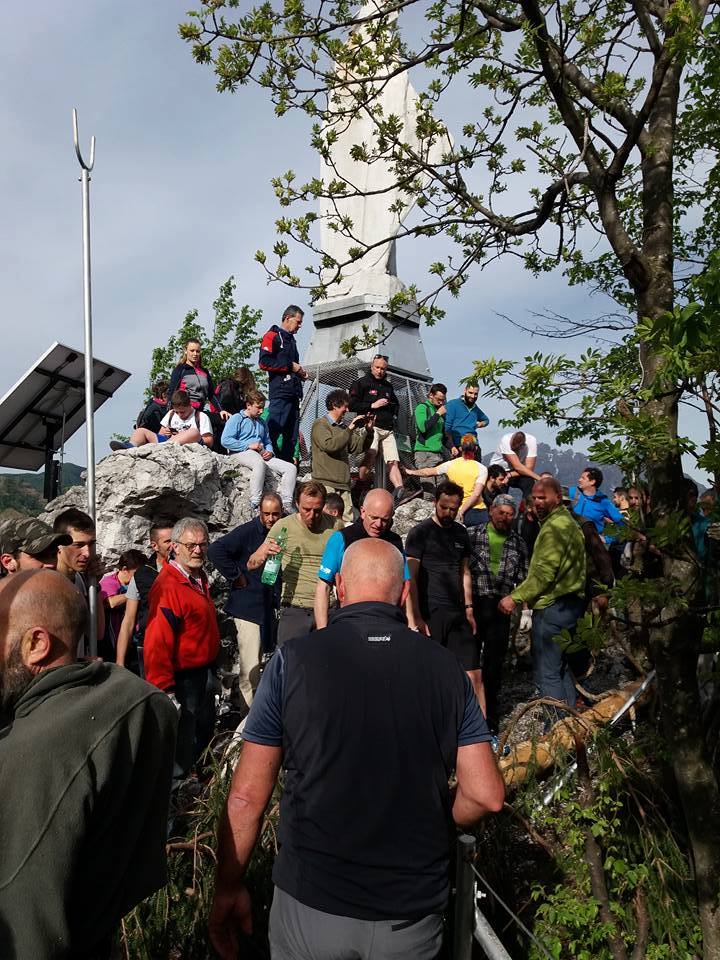
For that reason, on the rock of the apparition, Cosimo built a little Chapel,and called the Shrine “Madonna dello Scoglio” (Our Lady of The Rock) because the Virgin Mary appeared to him on the top of the rock. He also placed a marble Statue of Our Lady on the rock of the apparitions. Pilgrims come from all over the world to pray and touch the sacred rock, through the metal fencing that circumscribes it, testifying great miracles and conversions.

Shortly after the apparitions of the Virgin Mary, Cosimo began to lead prayer devotions for pilgrims and many people were cured from diseases. Although he had received little formal education, he was admitted to the lay order of the Franciscan brothers with the name of “Fratel Cosimo.” He led a mystical life, living in solitude in a house near the apparition rock, fasting and praying and avoiding any sense of celebrity.

Fratel Cosimo was a man of God, appreciated by his Bishop for his obedience and humility to the Catholic Church. He emphasised prayer as the primary vehicle for opening oneself to God and for receiving spiritual and physical renewal through the Divine Physician and His Holy Mother.
Thanks to the donations of the pilgrims, the Shrine grounds and facilities have been expanded. A foundation and a rosary prayer group have been established and on the 8th December 2007, the local Bishop Mnsgr Morosini, declared the “Scoglio” an official Catholic shrine.

St Anastasius of Lérida
St Anthimus of Rome
St Bassus of Sabina
St Bertilla
St Criotan of MacReddin
Bl Diego of Saldaña
St Evellius of Pisa
St Fabius of Sabina
St Fremund of Dunstable
St Gengulphus of Burgundy

Blessed Gregory Celli of Verucchio OSA (1225-1343) Priest of the Order of St Augustine , renowned Preacher, Contemplative, Hermit
His Life:

https://anastpaul.com/2020/05/11/saint-of-the-day-11-may-blessed-gregory-celli-of-verucchio-osa-c-1225-1343/

St Gualberto

St Ignatius of Laconi OFM Cap. (1701-1781) Frair of the Order of Friars Minor Capuchin. Known as “the Holy Friar,” “the Apostle of the Streets, “ “the Wonder-worker,” “the Miracle-Worker” and “Padre Santo.”
Biography:

https://anastpaul.wordpress.com/2018/05/11/saint-of-the-day-11-may-st-ignatius-of-laconi-o-f-m-cap-1701-1781/

Bl Illuminatus
St Illuminatus of San Severino
Bl James Walworth
Bl John Rochester
St Maiulo of Hadrumetum

St Mamertus (Died c 477) Bishop
His Life:
https://anastpaul.com/2019/05/11/saint-of-the-day-11-may-st-mamertus-died-c-475/

St Maximus of Sabina
St Mayeul of Cluny (c 906–994) Priest and Abbot
St Mozio of Constantinople
St Possessor of Verdun
St Principia of Rome
St Tudy
St Vincent L’Hénoret
Bl Vivaldus
St Walbert of Hainault

Martyrs of Camerino: An imperial Roman official, his wife, their children and servants, all of whom were converts and martyrs: Anastasius, Aradius, Callisto, Eufemia, Evodius, Felice, Primitiva, Theopista.

Posted in MARIAN TITLES, SAINT of the DAY

Madonna della Rovere, Roble San Bartolomeo al Mare, Italy and Memorials of the Saints – 10 May

Monday of the Sixth Week of Easter +2021

Madonna della Rovere, Roble San Bartolomeo al Mare, Italy (1671) – 19 May (Additional Memorial 18 April):

“The Madonna della Rovere is an ancient devotion from an image that was found in a village called Oak. There were two apparitions of the Virgin Mary and several miracles in the seventeenth century.
San Bartolomeo al Mare is a Town in the Province of Imperia, Liguria region in northwest Italy. The ancient and vast territory in the medieval village of Oak is located between the Towns of Cervo and Diano. In the pre-Roman era it was called “Lucus Bormani” where “Lucus” means “sacred forest,”,”Bor” to “source” and “man,” whereby the “Lucus Bormani” means “ sacred grove dedicated to the god Borman “the god of springs, cruel and bloodthirsty. The Romans also devoted to the jungle forests, Diana, goddess of the hunt, so the Town of Diano called “Pagus Dianius”.
The five oak trees that still surround the Shrine of Robre are the last remnants of the ancient forest. It is said that the Statue was found in an oak but perhaps more true is that the Statue was made of oak timber.

Perato Giacinto di Rollo, aged 50, on the night of 3 April 1671, after working all day in the fields, called his wife, saying his arm was hurt. The left arm was dead, insensible to pinching and medical punctures. After several attempts at restoring his arm, it remained insensitive.
A few days later, on 18 April, with his arm in a sling, Perato took his donkey to graze in the area of the Town of Armea. Below is his miraculous tale:
“A few hours before noon, a few steps ahead of me, I saw a woman dressed in turquoise shining like the sun … She told me that I should trust the Madonna to help me . “

On 19 April 1671, Giacinto, riding on his donkey, went to the Shrine of Our Lady of the Oak, with his wife and Don Damián Tagliaferro.
During the Mass, at the moment of Consecration, his eyes glazed over and he fell to the ground unconscious. When after three quarters of an hour he awoke and with the support of his wife, rose slowly, his arm functioned again. He was completely healed. This miracle has been recorded under oath by seven people, including a doctor, a lawyer and six priests. The documents are stored in the Curia of the Diocese of Albenga.

On 10 May 1671 Our Lady appeared to cure a peasant and asked him to build a Chapel in the place where she had appeared. The Church was built immediately, the faithful and clergy of the surrounding areas all being piously devoted to Our Lady.” (The above has been translated from Italian).
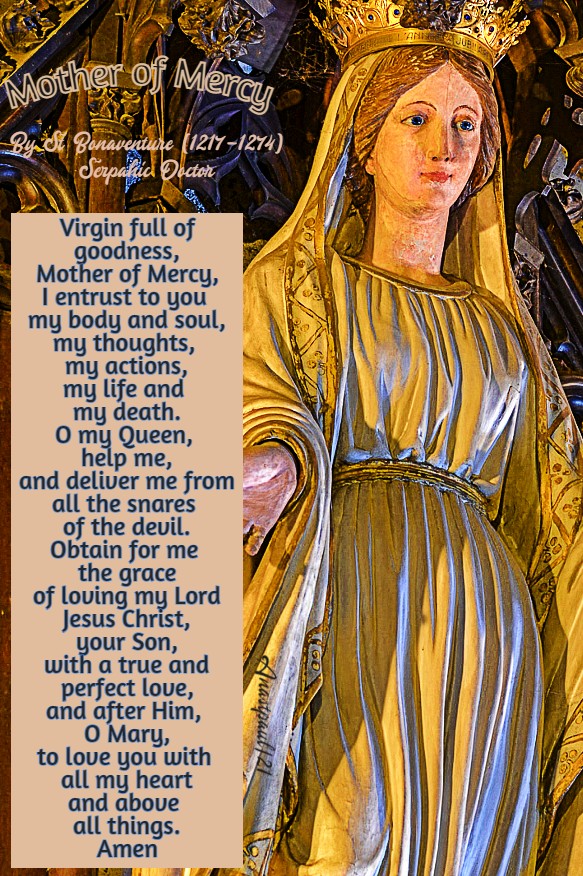
St John of Avila (1499-1569) “Apostle of Andalusia”– Doctor of the Church, known as “Father Master Avila”
About St John:

https://anastpaul.wordpress.com/2018/05/10/saint-of-the-day-10-may-st-john-of-avila-1499-1569-apostle-of-andalusia-known-as-father-master-avila-doctor-of-the-church/

St Joseph de Veuster SS.CC. (1840-1889) – St Damian of Molokai “The Martyr of Molokai,” Priest of the Congregation of the Sacred Hearts of Jesus and Mary, Missionary – known as “Martyr of Molokai”, “Martyr of Charity”, “Apostle to the Lepers” – Patron of lepers. (Optional Memorial)
St Damian’s life:

https://anastpaul.wordpress.com/2017/05/10/10-may-the-memorial-of-st-damian-de-veuster-de-molokai/

Robert Louis Stevenson and St Damian: https://anastpaul.wordpress.com/2017/05/10/blessed-memorial-of-s-damian-de-veuster-de-molokai/

St Alphius of Lentini
Bl Amalarius of Metz
Bl Antonio of Norcia
St Aurelian of Limoges
Bl Beatrix d’Este the Elder
St Blanda of Rome
St Calepodius of Rome
St Catald of Taranto (Died c 685) Bishop
St Comgall of Bangor
St Cyrinus of Lentini
St Dioscorides of Smyrna

Blessed Enrico Rebuschini MI (1860-1938) Priest of the Camillians [Clerics Regular, Ministers to the Sick, also known as the “Hospitallers” the Order founded by St Camillus de Lellis’ (1550-1614)]
His Story:

https://anastpaul.com/2020/05/10/saint-of-the-day-10-may-blessed-enrico-rebuschini-mi-1860-1938/
(The video shows great images of Italy).
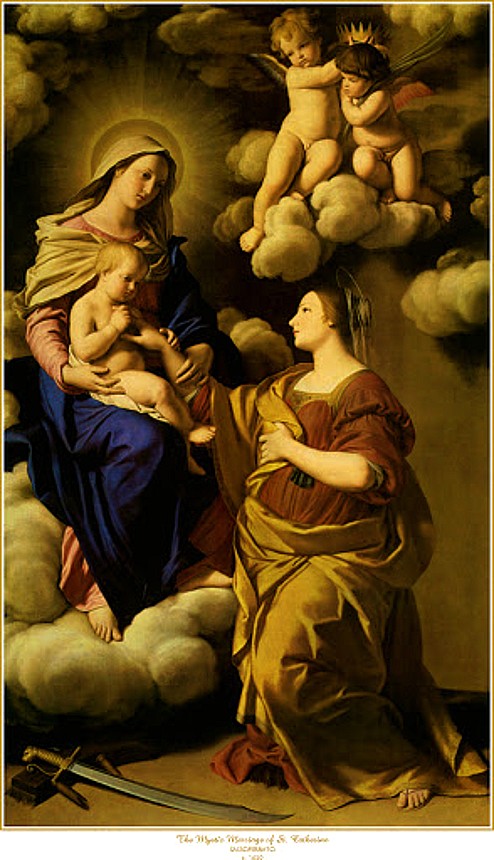
St Epimachus of Rome
St Felix of Rome
Bl Giusto Santgelp
St Gordian the Judge

Blessed Ivan Merz MI (1896-1928) Layman, Teacher, Professor, Apostle of the Blessed Sacrament and of prayer, Founder of Youth Movements in Croatia
Biography:

https://anastpaul.com/2019/05/10/saint-of-the-day-10-may-blessed-ivan-merz-1896-1928/

Bl Nicholas Albergati
St Palmatius of Rome
St Philadelphus of Lentini
St Quartus of Capua
St Quintus of Capua
St Simplicius of Rome
St Solange of Bourges
St Thecla
Bl William of Pontnoise

Posted in MARIAN TITLES, SAINT of the DAY

Madonna del Bosco / Our Lady of the Woods, Imbersago, Como, Lombardia, Italy (1617) and Memorials of the Saints

Saturday of the Fifth Week of Easter +2021

Madonna del Bosco / Our Lady of the Woods, Imbersago, Como, Lombardy, Italy (1617) – 9 May:

On 8 May 1617, three shepherds, one named Peter, saw the Madonna near a large tree, a chestnut tree to be exact. They reported that the apparition rose up and disappeared into the sky.
They were believed immediately as that particular and only chestnut tree, was found full of fruit out of its normal season. In 1632 at the site, visited by the Virgin, a Chapel was erected, then replaced with a large and most beautiful Church in 1677., which has since been raised to the status of a Minor Basilica. In it we honor what is called the Madonna del Bosco (The Our Lady of the Woods).u
Two years before this apparition, some had seen, in the same place, a lady bathed in light hovering on top of those chestnut trees and heard beautiful songs coming from the spot. Many other miracles occured here, the most well-known being that of a mother whose child was being attacked by wolves, which were very prevalent in the area. She called to the Virgin, who appeared and saved the child from the wolf-attack. The Statue within the Sanctuary commemorates these miracle.s

The main Altarpiece is a depiction of the Madonna and Child above a grove of Chestnut trees (1888).

The Sanctuary can be accessed via the 392 steps of the Scala Santa. Most are linear steps until the end with a scenic sweep of two accesses.

St Banban the Wise
St Beatus of Laon
St Beatus of Lungern
St Brynoth of Scara
St Dionysius of Vienne
Bl Fortis Gabrielli
St Gerontius of Cervia

Blessed Giovanni Benincasa of Montepulciano OSM (1375-1426) Religious Friar of the Servite Order, Hermit, Mystic, Penitent
Biography:

https://anastpaul.com/2020/05/09/saint-of-the-day-9-may-blessed-giovanni-benincasa-of-montepulciano-osm-1375-1426/

St Giuse Hien
St Gorfor of Llanover

St Gregory Nazianzen (330-390) Father, Doctor, Theologian
His Feast has since 1960, been conbined with that of St Basil the Great – “Two Bodies one Spirit” on 2 January.
Their lives here:

https://anastpaul.com/2019/01/02/saint-s-of-the-day-2-january-st-basil-the-great-329-379-and-st-gregory-of-nazianzen-330-390-two-bodies-one-spirit/

St Gregory of Ostia
St Hermas of Rome
Isaiah the Prophet
St John of Châlon

Blessed Theresa of Jesus/Karolina Gerhardinger SSND (1797-1879) Religious Sister, Foundress
Biography:

https://anastpaul.wordpress.com/2018/05/09/saint-of-the-day-9-may-blessed-theresa-of-jesus-karolina-gerhardinger-1797-1879/

St Maria del Carmen Rendiles Martinez (1903-1977) Religious and Foundress of the Servants of the Eucharist
Biography:

https://anastpaul.com/2019/05/09/saint-of-the-day-9-may-blessed-maria-carmen-rendiles-1903-1977/
St Sanctan of Kill-da-Les

Blessed Thomas Pickering (c 1621-1679) Martyr, Benedictine Lay Brother

St Vincent of Montes

Martyrs of Persia: 310 Christians murdered together for their faith in Persia. No details about them have survived.

20 Mercedarian Martyrs of Riscala: 20 Mercedarian friars who were murdered by Huguenot heretics for refusing to denounce their faith. 16th century at the Santa Maria convent at Riscala, France.

Posted in MARIAN TITLES, MIRACLES, SAINT of the DAY

Apparition of St Michael the Archangel at Monte Gargano, Italy (492), Nuestra Señora de Luján, Argentina / Our Lady of Luján: (1600s) and Memorials of the Saints – 8 May 2021

Apparition of St Michael the Archangel at Monte Gargano, Italy (492)
About this Apparition:

https://anastpaul.wordpress.com/2018/05/08/saint-of-the-day-8-may-apparition-of-michael-the-archangel-at-monte-gargano-italy-492/

Nuestra Señora de Luján, Argentina / Our Lady of Luján: (1600s) – 8 May:

The Virgin is a two feet tall terracotta Statue of Our Lady. It was made in Brazil and sent to Argentina in May 1630. Its original appearance seemed inspired by Murillo’s Immaculates. In 1887, to preserve and protect it, the image was given a solid silver covering.
It is usually clothed with a white robe and sky blue cloak, the colours of the Argentinian flag. Only the dark oval face with big blue eyes and the hands folded in prayer are now visible.
Tradition tells us that a settler ordered the image of Mary Immaculate in 1630 because he intended to create a Shrine in her honour to help reinvigorate the Catholic faith in Santiago del Estero, his region. After embarking from the Port of Buenos Aires, the caravan carrying the image stopped at the residence of Don Rosendo Oramas, located in the present town of Zelaya.
When the caravan wanted to resume the journey, the oxen refused to move. Once the crate containing the image were removed, the animals started to move again. Given the evidence of a miracle, people believed the Virgin wished to remain there. The image was venerated in a primitive Chapel for 40 years. Then the image was acquired by Ana de Matos and carried to Luján, where it currently resides. A Basilica was built in its honour, where the image now resides above the high Altar.

Among the Popes who have honoured Our Lady of Luján are Clement XI, Clement XIV, Pius VI, Pius IX, Leo XIII, Pius XI, Pius XII, and John Paul II. In 1824, Fr John Mastai Ferretti, visited the Shrine on his way to Chile. He later became Blessed Pope Pius IX and defined the dogma of the Immaculate Conception on 8 December 1854.
Cardinal Eugenio Pacelli served as the Papal Legate to the XXXII International Eucharistic Congress ,held in Buenos Aires in October 1934 and visited the Basilica on 15 October. When he became Pope Pius XII, he made a radio address to the pilgrims in Luján on the occasion of the First Marian Congress in Argentina in 1947.
In 1982, during the Falklands War, John Paul II became the first Pope to visit Our Lady of Luján. During this visit the Pope celebrated an outdoor Mass in the square of the Basilica of Our Lady of Luján and bestowed upon her the Golden Rose. Both in his homily of 11 June and his Angelus back in Rome reflecting on the trip, he commented on Our Lady’s never failing maternal solicitude for the faithful in times of distress. On 11 June 1982, John Paul II personally bestowed a Papal Golden Rose on Our Lady of Luján.

St Acacius of Byzantium
Bl Aloysius Luis Rabata
St Amatus Ronconi
Bl Angelo of Massaccio
St Arsenio of Mount Scete
St Benedict II, Pope
St Boniface IV, Pope (c 550-615) Bishop of Rome fro 608 until his death

Bl essed Clara Fey (1815-1894) Religious Sister and Founder of the Sisters of the Poor Child Jesus.
Her Life:

https://anastpaul.com/2019/05/08/saint-of-the-day-8-may-blessed-clara-fey-1815-1894/

St Desideratus of Bourges
Bl Domenico di San Pietro
St Gibrian
St Helladius of Auxerre

Blessed Henri Vergès FMS (1930-1994) Martyr, Religious Brother of the Order of Marist Brothers, Teacher, Missionary, one of the Nineteen Martyrs of Algeria
His Life and Death:

https://anastpaul.com/2020/05/08/saint-of-the-day-8-may-blessed-henri-verges-fms-1930-1994-martyr/

St Ida of Nivelles
St Martin of Saujon
St Metrone of Verona
St Odrian of Waterford
St Otger of Utrecht
St Peter of Besançon
Bl Pietro de Alos
Bl Raymond of Toulouse
Bl Teresa Demjanovich
Bl Ulrika Fransiska Nisch
St Victor Maurus
St Wiro of Utrecht

Posted in MARIAN TITLES, SAINT of the DAY

Santa Maria Della Pace / Our Lady of Peace in the Church of Our Lady of Peace, Rome (1483) and Memorials of the Saints – 6 May

Thursday of the Fifth Week of Easter +2021

Santa Maria Della Pace / Our Lady of Peace in the Church of Our Lady of Peace, Rome (also called Our Lady of Miracles) (1483) – 6 May:

The Abbot Orsini wrote: “It is related ,that in the year 1483, a man who had lost his money by gaming, after blaspheming at this picture, gave it four stabs with a dagger and that it bled so copiously, that the miracle was at once divulged all over the City. This picture is still preserved in the Church of Our Lady of Peace, where it is to be seen at the high Altar, framed in marble.”

The present cCurch of Our Lady of Peace, or Santa Maria Della Pace, in Rome, Italy, is still standing. It was built by Pope Sixtus IV after the City of Rome had been under siege by the Duke of Calabria. The Pope had made a vow ,that he would build a new Church in Rome in honour of Our Lady , if peace would somehow be re-established between his Papal States and the Cities of Florence, Milan and Naples. Construction actually started in 1482 as an act of thanksgiving to the Blessed Virgin but the work was not completed until the time of Pope Innocent VIII (1432-1492) who was Pope from 1484 until his death.
According to various traditions, the particular site for the Church was chosen because of an incident, in which a drunken soldier had stabbed a statue of the Madonna in the breast, at which the figure had started bleeding as if it were alive. There is also another legend that perhaps a stone was thrown at the image of Our Lady of Miracles, that currently hangs over the high Altar in the Church of Our Lady of Peace, which subsequently started bleeding. In any event, the Church was in fact built, on the foundations of an earlier Church, known as Saint Andrea de Aquarizariis.
The venerated painting of Our Lady of Miracles depicts the Blessed Virgin holding the Divine Child. It currently hangs over the high Altar at the Church, which was specifically designed by Carlo Maderno to display and enshrine the famous painting.

The now famous image was once believed to have been venerated in the portico of St Andrew’s of the Watercarriers. There is also another famous fresco inside the Church known as the Four Sibyls, which was painted by Raphael in the year 1514.

Santa Maria Della Pace in Rome

St John the Evangelist before the Latin Gate

St John’s Feast Day here:
https://anastpaul.com/2017/12/27/saint-of-the-day-27-december-st-john-the-apostle-and-evangelist/

St Acuta

Blessed Anna Rosa Gattorno (1831-1900) Wife, Mother, Widow, Religious, Foundress of the Daughters of St Anne, Stigmatist, Mystic.
Biography:

https://anastpaul.wordpress.com/2018/05/06/saint-of-the-day-6-may-blessed-anna-rosa-gattorno-1831-1900/

Bl Anthony Middleton
Bl Bartolomeo Pucci-Franceschi
St Benedicta of Rome
St Colman Mac Ui Cluasigh of Cork
St Colman of Loch Eichin
St Dominic Savio
St Edbert of Lindisfarne
Bl Edward Jones
St Evodius of Antioch

St Francis-Xavier de Montmorency Laval (1623-1708) Bishop, Missionary
His Life:

https://anastpaul.com/2019/05/06/saint-of-the-day-6-may-st-francis-xavier-de-montmorency-laval-francois-laval-1623-1708/

St Heliodorus
Bl Henryk Kaczorowski
St James of Numidia
St Justus of Vienne
Bl Kazimierz Gostynski
St Lucius of Cyrene

Blessed Maria Catalina of Saint Rose Troiani (1813-1997) Virgin, Nun, Missionary, Founder of the Franciscan Missionaries of the Immaculate Heart of Mary, Third Order Franciscan.
Her Story:

https://anastpaul.com/2020/05/06/saint-of-the-day-6-may-blessed-maria-catalina-of-saint-rose-troiani-1813-1997/

St Marianus of Lambesa
Bl Peter de Tornamira
St Petronax of Monte Cassino
St Protogenes of Syria
Bl Prudence Castori
St Theodotus of Kyrenia
St Venerius of Milan
St Venustus of Africa
St Venustus of Milan
Bl William Tandi

Posted in MARIAN TITLES, SAINT of the DAY

Nuestra Señora de Europa / Our Lady of Europe, Gibraltar (1492) and Memorials of the Saints – 5 May

Wednesday of the Fifth Week of Easter +2021

Nuestra Señora de Europa / Our Lady of Europe, Gibraltar (1492) – 5 May:

Together with Saint Bernard of Clairvaux, Our Lady is the Catholic patron Saint of Gibraltar and as such, protector of the whole of Europe.

In thanksgiving for the reconquest of Spain by Christian forces in 1492, the Catholics of Gibraltar converted a mosque into the Shrine of Nuestra Señora de Europa. Beneath a lighthouse tower, Our Lady presided over the Straits, its mariners and the continent of Europe for over two centuries. But in 1704, the British captured Gibraltar and pillaged the Shrine. They mutilated the wooden statue of the Virgin and Child and threw it over the cliff. A fisherman found the floating pieces and took them to Father Juan Romero de Figueroa at the Church on Main Street (now the Catholic Cathedral of St Mary the Crowned), who carried them to Spain for safekeeping, while the Church of Our Lady of Europe served as a British guardroom.

There across the bay in Algeciras, the Capillita de Europa housing the repaired Statue became a focus of devotion. A replica was placed in Gibraltar’s Cathedral.

In 1864, the Bishop attended the First Vatican Council, where he interested Blessed Pope Pius IX in building a new Shrine to Our Lady of Europe. Two years later,, the new Church was completed. The Vicar Apostolic John Baptist Scandella arranged for the original Statue to be returned to Gibraltar from Algeciras, where a replica replaced it.

This is the replica Statue

But military occupation during two World Wars left the Shrine in such disrepair, that in 1960 it was torn down for construction of the Old People’s Home. In 1961, the Government of Gibraltar returned the original Chapel, the former mosque, to the Catholic Church. In 1962, it was renovated and reopened as the Shrine of Our Lady of Europe, where the Statue was reinstalled on 17 October 1961. In 1979 Pope John Paul II proclaimed the Most Blessed Virgin Mary, Principal Patroness of the Diocese of Gibraltar under this title.

The feast of Our Lady of Europe was celebrated on 30 May until 1980, when the Vatican authorised its transfer to 5 May, then celebrated as Europe Day in honour of the Council of Europe’s founding on 5 May 1949.

Plague on the Shrine of Our Lady of Europe

Conversion of Saint Augustine of Hippo (354-430)

ALSO HERE:
https://anastpaul.com/2020/08/28/the-memorial-of-saint-augustine-servant-of-god-28-august/

St Pope Pius V OP (1504-1573) (optional memorial) changed in 1969 this feast which had been celebrated on this day of his birth into Heaven since 1713.
Bishop of Rome, Ruler of the Papal States, Pope of the Council of Trent, the Counter-Reformation, the Battle of Lepanto, the Holy Rosary and the Pope who declared St Thomas Aquinas as a Doctor of the Church
(Optional Memorial)
The Roman Martyrology states of St Pius V today: “At Rome, Pope St Pius V, of the Order of Preachers, who laboured zealously and successfully for the re-establishment of Ecclesiastical discipline, the extirpation of heresies, the destruction of the enemies of the Christian name and, governed the Catholic Church by holy laws and the example of a saintly lfe.”
His Life:
https://anastpaul.com/2019/04/30/saint-of-the-day-saint-pope-pius-v-1504-1572/
Lepanto by G K Chesterton:
https://anastpaul.com/2019/04/30/lepanto-30-april/

St Angelus of Jerusalem O.Carm (1185-1220) Priest, Martyr, Hermit, Mystic, Reformer, Thaumaturge, Missionary, convert from Judaism and a professed Priest of the Order of the Brothers of the Blessed Virgin Mary of Mount Carmel – The 800th Anniversary of his death – 5 MAY 2020..
His Life and Death:

https://anastpaul.com/2020/05/05/saint-of-the-day-5-may-the-800th-anniversary-of-the-martyrdom-of-saint-angelus-of-jerusalem-o-carm-1185-1220-priest-martyr/

St Avertinus of Tours
Bl Benvenuto Mareni
St Britto of Trier

Blessed Caterina Cittadini (1801-1857) Italian Sister from Bergamo who established the Ursuline Sisters of Saint Jerome Emiliani.
Biography:

https://anastpaul.com/2018/05/05/saint-of-the-day-5-may-blessed-caterina-cittadini-1801-1857/

St Crescentiana
St Echa of Crayke
St Eulogius of Edessa
St Euthymius of Alexandria
St Geruntius of Milan
St Godehard of Hildesheim
Bl Grzegorz Boleslaw Frackowiak
St Hilary of Arles
St Hydroc
St Irenaeus of Thessalonica
St Irenes of Thessalonica
Bl John Haile
St Jovinian of Auxerre
St Jutta Kulmsee
St Leo of Africo
St Maurontius of Douai
St Maximus of Jerusalem
St Nectarius of Vienne
St Nicetas of Vienne

St Nunzio/Nuntius Sulprizio (1917-1836) Aged 19
St Nunzio’s very short life:

https://anastpaul.com/2019/05/05/saint-of-the-day-5-may-saint-nunzio-sulprizio-1917-1836/

St Peregrinus of Thessalonica
St Sacerdos of Limoges
St Sacerdos of Saguntum
St Silvanus of Rome
St Theodore of Bologna
St Waldrada of Metz

Posted in franciscan OFM, JESUIT SJ, MARIAN TITLES, SAINT of the DAY

Notre-Dame de Gray, Gray, Haute-Saône, Franche-Comté, France (1400s) and Memorials of the Saints – 4 May

Tuesday of the Fifth Week of Easter +2021

Notre-Dame de Gray, Gray, Haute-Saône, Franche-Comté, France / Our Lady of Gray (1400s) – 4 May

By the 1200s, a cruciform oak tree had become a place of devotion in the Flemish Town of Scherpenheuvel.(Montaigu in French) In the early 1400s, the Shrine became famous after a Statue of the Virgin placed on the tree, fell down and could not be moved from the spot.

The copy of the orginal Statue, made in 1613

But Protestants destroyed the Sanctuary in 1568 and in 1604 the tree was cut down. In 1613, a poor widow, Jeanne Bonnet, made a pilgrimage to Montaigu at the age of 70. She brought a piece of the sacred oak home to Salins-les-Bains in eastern France, where sculptor Jean Brange, carved a Statue of the Virgin from it, copying the Belgian original from the description.

From 1616 until the French Revolution, this Statue presided over a long series of miracles at the Capuchin Monastery in the Town of Gray, 37 miles away. When the revolutionaries expelled the Monks and pillaged the Monastery, a family hid the holy image until it could be safely installed in the Basilica at Gray.

In thanksgiving for the end of the 1849 cholera epidemic, Cardinal Mathieu, Archbishop of Besançon, gave the Shrine a silver Statue covered in gold and jewels, which he dedicated on 4 May 1851, at a ceremony attended by 92 Priests, throngs of the faithful, artillery salvos and the ringing of all the bells in Town. Afterwards, the Parish celebrated the feast of Our Lady of Gray with a procession every 4 May.

The new Statue dating from 1849

St Albian of Albée
Bl Angela Bartolomea dei Ranzi
Bl Angela Isabella dei Ranzi
St Antonia of Constantinople
St Antonina of Nicaea
St Antonia of Nicomedia
St Antonius of Rocher
St Arbeo of Freising
St Augustine Webster
St Cunegund of Regensburg
St Curcodomus of Auxerre
St Cyriacus of Ancona
St Enéour
St Ethelred of Bardney
St Florian of Lorch
Bl Hilsindis

Blessed Jean-Martin Moyë (1730-1793) Priest, Missionary, Founder
Biography:

https://anastpaul.wordpress.com/2018/05/04/saint-of-the-day-4-may-blessed-jean-martin-moye-1730-1793/

St Jose Maria Rubio y Peralta SJ (1864-1929) “the Apostle of Madrid” and “Father of the Poor,” Confessor
His Life:

https://anastpaul.com/2019/05/04/saint-of-the-day-4-may-saint-jose-maria-rubio-y-peralta-sj-1864-1929-the-apostle-of-madrid/

St Judas Cyriacus
Blessed Ladislas of Gielniów OFM Cap (c 1440-1505) Priest
St Luca da Toro
Bl Margareta Kratz
Bl Michal Giedroyc
St Nepotian of Altino
Bl Paolino Bigazzini
St Paulinus of Cologne
St Paulinus of Senigallia
St Pelagia of Tarsus
St Porphyrius of Camerino Rino
St Richard Reynolds
St Robert Lawrence
St Silvanus of Gaza

Blessed Tommaso da Olera OFM Cap (1563-1631) Lay Brother of the the Order of Friars Minor Capuchin, Spiritual Advisor, Confessor, Apostle of Charity, Writer, Mystic, Penitent and Ascetic.
His Life:

https://anastpaul.com/2020/05/04/saint-of-the-day-4-may-blessed-tommaso-da-olera-ofm-cap-1563-1631/


Carthusian Martyrs: A group of Carthusian monks who were hanged, drawn and quartered between 19 June 1535 and 20 September 1537 for refusing to acknowledge the English royalty as head of the Church:
• Blessed Humphrey Middlemore
• Blessed James Walworth
• Blessed John Davy
• Blessed John Rochester
• Blessed Richard Bere
• Blessed Robert Salt
• Blessed Sebastian Newdigate
• Blessed Thomas Green
• Blessed Thomas Johnson
• Blessed Thomas Redyng
• Blessed Thomas Scryven
• Blessed Walter Pierson
• Blessed William Exmew
• Blessed William Greenwood
• Blessed William Horne
• Saint Augustine Webster
• Saint John Houghton
• Saint Robert Lawrence

Martyrs of Cirta: Also known as
• Martyrs of Cirtha
• Martyrs of Tzirta
A group of clergy and laity martyred together in Cirta, Numidia (in modern Tunisia) in the persecutions of Valerian. They were – Agapius, Antonia, Emilian, Secundinus and Tertula, along with a woman and her twin children whose names have not come down to us.

Martyrs of England: 85 English, Scottish and Welsh Catholics who were martyred during the persecutions by Protestants in the 16th and 17th centuries. They are commemorated together on 22 November.
• Blessed Alexander Blake • Blessed Alexander Crow • Blessed Antony Page • Blessed Arthur Bell • Blessed Charles Meehan • Blessed Christopher Robinson • Blessed Christopher Wharton • Blessed Edmund Duke • Blessed Edmund Sykes • Blessed Edward Bamber • Blessed Edward Burden • Blessed Edward Osbaldeston • Blessed Edward Thwing • Blessed Francis Ingleby • Blessed George Beesley • Blessed George Douglas • Blessed George Errington • Blessed George Haydock • Blessed George Nichols • Blessed Henry Heath • Blessed Henry Webley • Blessed Hugh Taylor • Blessed Humphrey Pritchard • Blessed John Adams • Blessed John Bretton • Blessed John Fingley • Blessed John Hambley • Blessed John Hogg • Blessed John Lowe • Blessed John Norton • Blessed John Sandys • Blessed John Sugar • Blessed John Talbot • Blessed John Thules • Blessed John Woodcock • Blessed Joseph Lambton • Blessed Marmaduke Bowes • Blessed Matthew Flathers • Blessed Montfort Scott • Blessed Nicholas Garlick • Blessed Nicholas Horner • Blessed Nicholas Postgate • Blessed Nicholas Woodfen • Blessed Peter Snow • Blessed Ralph Grimston • Blessed Richard Flower • Blessed Richard Hill • Blessed Richard Holiday • Blessed Richard Sergeant • Blessed Richard Simpson • Blessed Richard Yaxley • Blessed Robert Bickerdike • Blessed Robert Dibdale • Blessed Robert Drury • Blessed Robert Grissold • Blessed Robert Hardesty • Blessed Robert Ludlam • Blessed Robert Middleton • Blessed Robert Nutter • Blessed Robert Sutton • Blessed Robert Sutton • Blessed Robert Thorpe • Blessed Roger Cadwallador • Blessed Roger Filcock • Blessed Roger Wrenno • Blessed Stephen Rowsham • Blessed Thomas Atkinson • Blessed Thomas Belson • Blessed Thomas Bullaker • Blessed Thomas Hunt • Blessed Thomas Palaser • Blessed Thomas Pilcher • Blessed Thomas Pormort • Blessed Thomas Sprott • Blessed Thomas Watkinson • Blessed Thomas Whitaker • Blessed Thurstan Hunt • Blessed William Carter • Blessed William Davies • Blessed William Gibson • Blessed William Knight • Blessed William Lampley • Blessed William Pike • Blessed William Southerne • Blessed William Spenser • Blessed William Thomson •
They were Beatified on 22 November 1987 by Pope John Paul II.

Martyrs of Novellara: A bishop and several his flock who were martyred together in the persecutions of Diocletian and whose relics were kept and enshrined together. We know nothing else about them but the names – Apollo, Bono, Cassiano, Castoro, Damiano, Dionisio, Leonida, Lucilla, Poliano, Tecla, Teodora and Vespasiano. They were Martyred on 26 March 303. Their relics were enshrined in the parish of Saint Stephen in Novellara, Italy in 1603.

Posted in FEASTS and SOLEMNITIES, MARIAN TITLES, QUOTES on the CROSS of CHRIST, SAINT of the DAY, The APOSTLES & EVANGELISTS, The HOLY CROSS, The STATIONS of the CROSS

The Feast of the Finding of the Holy Cross, Feast St James and St Philip, Apostles of Christ, Virgen de la Carrasca, Bordón, Teruel, Aragón, Spain (1212) and Memorials of the Saints – 3 May

THE FEAST of the FINDING OF THE HOLY CROSS

St James the Lesser Apostle (Feast)
St Philip the Apostle (Feast)
Sts James and Philip:

https://anastpaul.wordpress.com/2018/05/03/3-may-feast-of-sts-philip-and-james-apostles-and-martyrs/

Virgen de la Carrasca, Bordón, Teruel, Aragón, Spain (1212) 3 May:

Commemorated on First Monday of May

In 1212, a herder found an image of the Virgin in a holm oak (carrasca) in the rocky countryside of Aragón in Spaon. There are several stories about what happened then, all of them ending with a Shrine in Bordón. Templars carried the Statue to Castellote, 12 miles north but the next day the image was back in the oak, the Virgin made those carrying her to Castellote keep turning toward Bordón and springs arose at each turn.

Original Statue

In the place where it was found, a hermitage was built to house it, which would later be replaced by the building that today is the Parish Church of Bordón, built in 1306 by the Templar Order (The Order was dissolved by Pope Clement V in 1312 ).

Although its exterior hardly stands out, its interior is magical and fascinating, a place full of mystery. In one of the Chapels inside, the Templar novices who previously made a pilgrimage on foot from Castellote, capital of the Templar Commandery, performed initiation rites to become Knights of the Order.

In the 18th century, the interior of the Church was covered with marvellous frescoes, which have been recently restored. Unfortunately, the venerated carving of the Black Virgin of the Carrasca was lost during the Civil War, along with another very famous Romanesque carving with a reputation for miraculously calming storms, the Virgin of the Spider, only a series of photographs being preserved, which allowed the making a replica.

Replica Statue

On the first Monday in May, the faithful from the three towns to the south—Tronchón, Olocau del Rey and Mirambel—conduct a processional pilgrimage to the Virgin de la Carrasca. They have done this “from time immemorial,” according to a document of 1390 in the Parish archives of Tronchón.

St Adalsindis of Bèze
Bl Adam of Cantalupo in Sabina
St Ahmed the Calligrapher
St Aldwine of Peartney
St Pope Alexander I
St Alexander of Constantinople
Bl Alexander of Foigny
St Alexander of Rome
Bl Alexander Vincioli
St Ansfrid of Utrecht (c 940-1010) Bishop
St Antonina of Constantinople
St Diodorus the Deacon

Blessed Edoardo Giuseppe Rosaz TOSF (1877-1903) Bishop of Susa from 1877 until his death, Founder of Franciscan Mission Sisters of Susa, Third Order Franciscan.
His Life:

https://anastpaul.com/2020/05/03/saint-of-the-day-3-may-blessed-edoardo-giuseppe-rosaz-tosf-1877-1903/

St Ethelwin of Lindsey
St Eventius of Rome
St Fumac
St Gabriel Gowdel
St Juvenal of Narni
Bl Maria Leonia Paradis
St Maura of Antinoe
St Peter of Argos
St Philip of Zell
Bl Ramon Oromí Sullà
St Rhodopianus the Deacon
St Scannal of Cell-Coleraine
Bl Sostenaeus

St Stanislas Kazimierczyk CRL (1433–1489)
His Life:

https://anastpaul.com/2019/05/03/saint-of-the-day-3-may-saint-stanislaw-kazimierczyk-crl-1433-1489/

St Theodolus of Rome
St Timothy of Antinoe
Bl Uguccio
Bl Zechariah

Posted in MARIAN TITLES, SAINT of the DAY

The Fifth Sunday of Easter, Nuestra Señora de Oviedo / Our Lady of Oviedo, Spain (711) and Memorials of the Saints – 2 May

The Fifth Sunday of Easter +2021

Nuestra Señora de Oviedo / Our Lady of Oviedo, Spain (711) – 2 May:

The Abbot Orsini wrote: “Our Lady of Oviedo, Spain, where they possess some of the Blessed Virgin’s hair.”

The Cathedral of Oviedo was founded in 781 AD, and enlarged by Alfonso the Chaste, who made Oviedo the Capital of the Kingdom of Asturias. The Chapel was once called the Sancta Ovetensis, owing to the quantity and quality of relics contained in the Camara Santa (Holy Chamber).

There is in the City of Oviedo a Holy Chest that contains many and varied relics. It rests in the Town where King Alfonso II, the Chaste, built a Shrine to house it and there it can be seen even today as it was well over a millennium ago. Like the Arc of the Covenant, or the Holy Grail, it is a singular thing the like of which is almost utterly unknown in the entire history of mankind.

This Holy Chest is made of oak and was skillfully constructed without the use of any nails. It measures roughly four feet by three feet by two feet and has been venerated, by faithful Catholics, since apostolic times. Indeed, it is believed to have been fashioned by devoted disciples of the twelve Apostles. Many men and woman throughout history have given their entire lives in service to the holy relics contained therein, or to save the chest from pagans who sought its destruction.
The chest originated in the Holy City of Jerusalem. When the Persain’s attacked and conquered Jerusalem in 614, many priceless relics from the region were gathered and placed in it for protection, as the Persians sought relics to destroy them. The chest was taken for safekeeping to a small community of Catholiacs in Alexandria, Egypt. A short time later, Alexandria was also sacked by the Muslims and the chest was taken across the Mediterranean Sea to Spain, where St Isidore kept it in Seville. Upon St. Isidore’s death, the chest was transferred to the City of Toledo, which was then becoming an important centre in Spain. When the wave of Muslim aggression reached even Toledo in 711, the Holy Chest was taken to the Asturias and hidden in a well in Pelayo’s mountain.
The chest has a lock and key but by the time of the eleventh century it had not been opened for hundreds of years. The last time it was known to have been opened was when it was done by a living saint, St Ildephonsus, for in it he had placed a chasuble that the Mother of God herself had given him during an apparition.
By the year 1030, the exact contents of the Holy Chest were no longer known. Bishop Ponce of Oviedo and with him many clerics, determined to examine the chest to unlock its secrets. As soon as the lid was raised only the slightest bit, “there burst forth so stupendous a light that the terrified clerics, some of them stricken blind, dropped the lid and fled, leaving the mystery unsolved.”
After Mass, on Friday, 13 March 1075, the key was again placed in the lock. On this occasion, God was pleased to reveal the contents of the Holy Chest. The chest contained the Sudarium, mentioned by St John the Evangelist in his Gospel, as the cloth that covered the face of Christ, after the crucifixion. On it can be seen the bloodstains of Our Lord that evidence his passion and death. It alone is a treasure without reckoning…
The chest also contained a piece of the True Cross of Our Lord, a small stone of the sepulcher in which He was buried, some of the cloths in which He was wrapped in the manger, several thorns from the Crucifixion, a piece of the earth of Mount Olivet touched by His feet when He ascended into heaven, one of the thirty coins given to Judas, a lock of the Blessed Mother’s hair, the chasuble given by the Virgin Mary to Saint Ildephonsus, a chest of gold and precious stones containing the forehead of St John the Baptist and his hair and a host of other relics from many saints and prophets, including St Stephen, the first martyr, St Mary Magdalene, St Peter the Apostle, St Vincent and the rod of Moses which parted the Red Sea and the manna supplied from heaven during the Exodus from Egypt, and many other priceless relics.

King Alfonso VI commissioned a silversmith to sheath the Holy Chest in gilded silver, adorning it with figures of Our Lord and His angels and saints. It can still be seen even today.”

Cathedral of Oviedo

There are numerous Marian images, in their different invocations, which can be seen in the Cathedral of Oviedo. The month of May dedicated to the Virgin inspires a tour of different chapels and altarpieces in which the Immaculate, Virgin Asuntas are preserved, also affectionate Mothers with a Child in their arms, without forgetting the suffering Mothers of the Piedades and ,of course ,the Virgin from Covadonga, our Santina.
In the Chapel of Santa María del Rey Casto a small Altarpiece houses one of the most precious Marian images of the Cathedral of Oviedo and which, perhaps, due to its modest size, goes unnoticed. The Altarpiece of Our Lady of Light . This Altarpiece was donated in 1552 by Gutierre González de Cienfuegos, magistrate of Medina del Campo and Salamanca and was placed in the retrochoir of the Cathedral, where it served as an Altar.

OLYMPUS DIGITAL CAMERA

St Athanasius (c 295-373) – Father and Doctor of the Church, “Father of Orthodoxy,” Bishop of Alexandria, Defender of the true faith, throughout his life he opposed the Arian heresy. (Memorial)
Biography:

https://anastpaul.wordpress.com/2018/05/02/saint-of-the-day-2-may-st-athanasius-c295-373-father-and-doctor-of-the-church-father-of-orthodoxy/

St Antoninus of Florence OP (1389-1459) “Antoninus the Counsellor,” Dominican Priest, Bishop, Confessor
His Life:

https://anastpaul.com/2019/05/02/saint-of-the-day-2-may-saint-antoninus-of-florence-op-1389-1459-antoninus-the-counsellor/

Bl Bernard of Seville
St Bertinus the Younger
Bl Boleslas Strzelecki
Bl Conrad of Seldenbüren
St Cyriacus of Pamphylia
St Eugenius of Africa
St Exsuperius of Pamphylia
St Felix of Seville
St Fiorenzo of Algeria
St Gennys of Cornwall
St Germanus of Normandy (Died c 460)
St Gluvias
St Guistano of Sardinia

St José María Rubio y Peralta SJ (1864-1929) “The Apostle of Madrid” and “Father of the Poor,” Jesuit Priest, Confessor, Professor, Preacher, Spiritual Director, Apostle of Eucharistic Adoration.
His Life:

https://anastpaul.com/2019/05/04/saint-of-the-day-4-may-saint-jose-maria-rubio-y-peralta-sj-1864-1929-the-apostle-of-madrid/

St Joseph Luu
Bl Juan de Verdegallo
St Longinus of Africa
St Neachtain of Cill-Uinche
St Theodulus of Pamphylia
St Ultan of Péronne
St Vindemialis of Africa
St Waldebert of Luxeuil

St Wiborada of Saint Gallen OSB (Died 926) Martyr, Virgin, Benedictine Nun, Anchorite,ascetic, gifted with the charism of prophecy and miracles
Her Life and Death:

https://anastpaul.com/2020/05/02/saint-of-the-day-2-may-saint-wiborada-of-saint-gallen-osb-died-926-martyr/

Bl William Tirry
St Zoe of Pamphylia (Died 127) Martyr, Laywoman

Martyrs of Alexandria – 4 saints: A group of Christians marytred together in the persecutions of Diocletian. We know little more than their names – Celestine, Germanus, Neopolus and Saturninus. 304 in Alexandria, Egyp

Posted in MARIAN TITLES, SAINT of the DAY

Madonna of Giubino, Sicily (1655) and Memorials of the Saints – 1 May

Saturday of the Fourth Week of Easter +2021

Maria Santissima di Giubino, Siciliy / Madonna of Giubino, Sicily (1655) – 1 May:

The Church of the Madonna of Giubino was built in 1721 to house a miraculous marble-relief icon of the Madonna. (A copy of the relief is housed in the Church of St Joseph in Brooklyn, New York, giving testimony to the large emigrant community of Calatafimesi who lived in Brooklyn in the early 20th century).
The Church of Maria Santissima di Giubino is dedicated to the Patroness of the Town. It has a single nave, with an elegant barrel vault decorated with frescoes and ornamental motifs. Inside there are some important works – the painting with the Assumption, Our Lady with Angels and Saints dated 1617, the Altarpiece of All Saints, an 18th-century wooden organ and a 15th-century marble alto-rilievo representing Madonna of Giubino with the Infant Jesus.
In 1655 an invasion of grasshoppers was destroying all the crops in the countryside of Calatafimi. The people, assembled in a Church, decided that, after putting all the names of the Saints who had an aAtar in Town inside a ballot box, they would choose as a Patron that one whose name had been drawn. After they invoked the Holy Ghost, it was chosen the name of Maria Santissima di Giubino by lots.
The central part of the triptych with the image of the Virgin was soon taken out from the wall in the country Church of Giubino and taken in procession: with prayer and Holy Mass and thereafter, Calatafimi was free from grasshoppers.

Maria Santissima di Giubino was elected Patroness of the Town (25 April 1655) and the bas-relief of the Virgin of Giubino was then placed on the high Altar of the new Church, designed by Giovanni Biagio Amico (the same planner of the Church of Santissimo Crocifisso) in 1721.
In 1931 the triptych was recomposed in the Town Sanctuary and restored.

St Joseph the Worker (Optional Memorial)
About this Memorial, which was established by Pope Pius XII in 1955:

https://anastpaul.wordpress.com/2018/05/01/memorial-of-st-joseph-the-worker-1-may/

AND here:
https://anastpaul.wordpress.com/2017/05/01/saint-of-the-day-1-may-st-joseph-the-worker/

St Aceolus of Amiens
St Acius of Amiens
St Aldebrandus of Fossombrone
St Amator of Auxerre
St Ambrose of Ferentino
St Andeolus of Smyrna
Bl Arigius of Gap
St Arnold of Hiltensweiler
St Asaph of Llanelwy
St Augustine Schöffler
St Benedict of Szkalka OSB (Died 1012) Monk and Hermit
St Bertha of Avenay
St Bertha of Kent
St Brieuc of Brittany
St Ceallach of Killala
St Cominus of Catania
Evermarus of Rousson
Bl Felim O’Hara
St Grata of Bergamo
St Isidora of Egypt
St Jeremiah the Prophet
St John-Louis Bonnard
Bl Klymentii Sheptytskyi
St Marculf
St Orentius of Auch
St Orentius of Loret
St Patientia of Loret

St Peregrine Laziosi OSM (1260-1345) The “Angel of Good Counsel,” Priest of the Servite Order (The Order of Servants of Mary )
Beautiful St Peregrine:

https://anastpaul.com/2020/05/01/saint-of-the-day-1-may-saint-peregrine-laziosi-osm-1260-1345-today-is-the-675th-anniversary-of-his-death/

Bl Petronilla of Moncel

St Richard Pampuri OH (1897-1930) aged 33 – Religious of the Hospitallers of St John of God, Medical Doctor, Founder of the Band of Pius X (a Youth movement)
Biography:

https://anastpaul.com/2019/05/01/saint-of-the-day-1-may-saint-richard-pampuri-oh-1897-1930/

St Romanus of Baghdad
St Sigismund of Burgundy (Died 524) King and Martyr
St Theodard of Narbonne
St Thorette
St Torquatus of Guadix
Blessed Vivald of Gimignano

Martyrs of Amiens:
Aceolus
Acius

Martyrs of Loret:
Orentius
Patientia

Martyrs of Vietnam:
Augustine Schöffler
John-Louis Bonnard

Posted in MARIAN TITLES, SAINT of the DAY

Onze Liewe-Vrouw van Afrika / Heilige Maria van Afrika / Notre Dame d’Afrique/ Our Lady of Africa , Algiers (1876) and Memorials of the Saints – 30 April

Friday of the Fourth Weekof Easter +2021

Onze Liewe-Vrouw van Afrika / Heilige Maria van Afrika / Notre Dame d’Afrique / Our Lady of Africa , Algiers (1876) (Feast) – 30 April:

North Africa, the land of Saints Monica, Augustine, among others, as part of Roman Empire began to become Christian in the 3rd century under Emperor Constantine. It remained Christian until the Arab invasions in later centuries. The French re-established themselves early in the 19th century.
The first Bishop, Bishop Dupuch, found it impossible to build a Church because the local population was hostile to the French. He went back to France for assistance. The Sodality of Our Lady in Lyon offered the Bishop a bronze statue of the Immaculate Conception ,with the understanding, that she would be the Protectress of both the Mohammedans and the natives. It was brought from France in 1840 and was entrusted to the Cistercian Monks of Staueli. Later, Cardinal Lavigiers, Founder of the White Sisters, enshrined it in the new Basilica at Algiers, where in 1876 the image was crowned. This bronze statue, very dark in colour, is known as Onze Liewe-Vrouw van Afrika / Heilige Maria van Afrika / Our Lady of Africa.
Pilgrims began to come to venerate the image where the lame, the blind and the crippled were miraculously cured and sailors came also, to beg for protection of their long and perilous voyages.

The Basilica of Our Lady of Africa, or Notre Dame d’Afrique, was eventually built, and is situated on a height overlooking the Bay of Algiers. It took fourteen years to construct in an attractive Neo-Byzantine style and was consecrated in the year 1872.

The Statue venerated in Algiers today, is this same bronze image, very dark in colour but with European features. The walls of the basilica are now covered with votive offerings testifying to the assistance the faithful have received from the Mother of Mercy.

At this and other North African Shrines the veneration given to Mary by Mohammedans is very marked. The full name of Cardinal Lavigiers’ congregation of White Sisters is Missionary Sisters of Our Lady of Africa. There is an indulgenced prayer to Mary under that title for the conversion of the Africans on the apse: Notre Dame d’Afrique priez pour nous et pour les Musulmans (Our Lady of Africa, pray for us and for the Muslims.)

This feast commemorates the crowning of the Algiers statue.

St Marie Guyart of the Incarnation OSU (1599-1672) Ursuline Religious and Missionary ( Optional Memorial)
Biography:
https://anastpaul.wordpress.com/2017/04/30/saint-of-the-day-30-april-st-marie-guyart-of-the-incarnation-o-s-u/

St Pope Pius V (1504-1572) Bishop of Rome, Ruler of the Papal States, Pope of the Council of Trent, the Counter-Reformation, the Battle of Lepanto, the Holy Rosary and the Pope who declared St Thomas Aquinas as a Doctor of the Church (Optional Memorial)
Wonderful blessed St Pius V:

https://anastpaul.com/2019/04/30/saint-of-the-day-saint-pope-pius-v-1504-1572/

St Adjutor of Vernon
St Aimo of Savigny
St Amator of Córdoba
St Aphrodisius of Alexandria
Blessed Benedict Passionei of Urbino OFM Cap (1560– 1625) Priest
St Cynwl
St Dedë Plani
St Diodoro of Aphrodisias
St Donatus of Euraea

St Erconwald of London (Died c 693) Bishop, Monk, Abbot, Confessor, “The Light of London”
About this “The Light of London”
:
https://anastpaul.com/2020/04/30/saint-of-the-day-30-april-saint-erconwald-of-london-died-c-693-the-light-of-london/

St Eutropius of Saintes
St Forannan
St Genistus of Limoges
St Giuse Tuân
Bl Gualfardus of Augsburg
Bl Hildegard the Empress

St Joseph Benedict Cottolengo (1786-1842) Priest, Founder, Confessor, Apostle of Charity.
About St Joseph Cottolengo:

https://anastpaul.wordpress.com/2018/04/30/saint-of-the-day-30-april-st-joseph-benedict-cottolengo-1786-1842-an-intense-day-of-love/

St Lawrence of Novara
St Louis of Córdoba
St Mariano of Acerenza
St Maximus of Ephesus
St Mercurialis of Forlì
St Peter of Córdoba
St Pomponius of Naples
St Quirinus of Rome
St Rodopiano of Aphrodisias
St Sophia of Fermo
St Swithbert the Younger
Bl Ventura of Spello
Bl William Southerne

Posted in MARIAN TITLES, SAINT of the DAY

Memorials of the Saints – 29 April

Thursday of the Fourth Week of Easter +2021

Notre-Dame de Amiens / Our Lady of Faith, Amiens, France – 29 April:
Sadly no information available

St Catherine of Siena (1347-1380) Doctor of the Church, Dominican Tertiary, Virgin, Stigmatist, Mystic (Memorial)
St Catherine here:

https://anastpaul.wordpress.com/2018/04/29/saint-of-the-day-29-april-st-catherine-of-siena-1347-1380-doctor-of-the-church/

Abbots of Cluny: A feast that recognises the great and saintly early abbots of Cluny Abbey:
• Saint Aymardus of Cluny
• Saint Berno of Cluny
• Saint Hugh of Cluny
• Saint Mayeul
• Saint Odilo of Cluny
• Saint Odo of Cluny
• Saint Peter the Venerable


St Antonius Kim Song-u
St Ava of Denain
St Daniel of Gerona
St Dichu
St Endellion of Tregony
St Fiachan of Lismore
St Hugh of Cluny (1024-1109) St Hugh the Great, Priest, Abbot

St Gundebert of Gumber

Blessed Mary Magdalene of the Incarnation/Caterina Soderini FSPA (1770-1824) Religious Sister and Founder of the Sisters of Perpetual Adoration, Mystic
Her Life:

https://anastpaul.com/2020/04/29/saint-of-the-day-29-april-blessed-mary-magdalene-of-the-incarnation-fspa-1770-1824/

St Paulinus of Brescia

St Peter of Verona OP (1205–1252) – St Peter Martyr, Dominican Priest
His Life:

https://anastpaul.com/2019/04/29/saint-of-the-day-29-april-st-peter-of-verona-op-1205-1252/

Bl Robert Gruthuysen
St Senan of Wales
St Severus of Naples
St Theoger
St Torpes of Pisa
St Tychicus
St Wilfrid the Younger

Martyrs of Cirta: A group of clergy and laity martyred together in Cirta, Numidia (in modern Tunisia) in the persecutions of Valerian. They were – Agapius, Antonia, Emilian, Secundinus and Tertula, along with a woman and her twin children whose names have not come down to us.

Martyrs of Corfu: A gang of thieves who converted while in prison, brought to the faith by Saint Jason and Saint Sosipater who were had been imprisoned for evangelizing. When the gang announced their new faith, they were martyred together. They were – Euphrasius, Faustianus, Insischolus, Januarius, Mammius, Marsalius and Saturninus. They were boiled in oil and pitch in the 2nd century on the Island of Corcyra (modern Corfu, Greece.
Also known as:
• Martyrs of Corcyra
• Seven Holy Thieves
• Seven Holy Robbers
• Seven Robber Saints

Posted in DOGMA, INCORRUPTIBLES, MARIAN TITLES, SAINT of the DAY, St Louis-Marie Grignion de MONTFORT

Nuestra Señora del / Our Lady of Quito, Ecuador (1534) and Memorials of the Saints – 28 April

Wednesday of the Fourth Week of Easter +2021

Nuestra Señora del / Our Lady of Quito, Ecuador (1534) – 28 April:

This miraculous image of Our Lady of Quito currently in the Capital City of Ecuador ,is said to date from the first Spanish settlement there in the year 1534. At the very least, it has certainly been venerated there for a long time and is popularly called ,by the people of Quito, Our Lady of the Earthquake. The painting represents the Sorrowful Mother and in the early years of the twentieth century, devotion to Mary under the title of Our Lady of Quito was introduced into England ,by the Servite Friars in London. Saint Pius X accorded them an indulgence for those who should pray before her picture, and the devotion was greatly promoted in England by the Sisters of the Holy Child Jesus, Mother Cornelia Connelly’s congregation. The original image at Quito was solemnly crowned in 1918.
On 20 April 1906, thirty-six boys attending the boarding school of the Jesuit Fathers at Quito, Ecuador, together with Father Andrew Roesch, witnessed a miracle of this famous picture of Our Lady. While in the refectory they all saw the Blessed Mother slowly open and shut her eyes. The same miracle occurred no less than seven times after that, in favour of the boys at the school but this time, in the Chapel to which the picture had been taken.

Ecclesiastical authorities soon investigated these incidents and finally concluded by ordering the picture to be transferred, in procession from the college to the Church of the Jesuit Fathers. Once at the Church, the miracle was repeated several times before large crowds and many, many conversions took place because of these miracles. At one time, the wonder continued for three consecutive days. At Riobamba, before a faithful reproduction of Our Lady of Quito, the same wonder was seen by more than 20 persons, including the president of the City. In Quito this picture is known as the Dolorosa del Colegio.

A Conceptionist Sister, named Mother Mariana de Jesús Torres received Marian apparitions under this title from 2 February 1594 to 2 February 1634. In 1611, the local Bishop gave his approval to the apparitions.

Mother Mariana de Jesús Torres

Our Lady appeared to Mother Mariana and predicted many things about our own times. This following, is part of what she told her. We can see for ourselves how it relates directly to our own time.
“…. I make it known to you, that from the end of the 19th century and shortly after the middle of the 20th century…. the passions will erupt and there will be a total corruption of customs (morals)….
“They will focus principally on the children, in order to sustain this general corruption. Woe to the children of these times! It will be difficult to receive the Sacrament of Baptism and also, that of Confirmation…
“As for the Sacrament of Matrimony… it will be attacked and deeply profaned… The Catholic spirit will rapidly decay; the precious light of the Faith will gradually be extinguished… Added to this, will be the effects of secular education, which will be one reason for the dearth of priestly and religious vocations.
“The Sacrament of Holy Orders will be ridiculed, oppressed and despised… The Devil will try to persecute the ministers of the Lord in every possible way; he will labour with cruel and subtle astuteness, to deviate them from the spirit of their vocation and will corrupt many of them. These depraved priests, who will scandalise the Christian people, will make the hatred of bad Catholics and the enemies of the Roman Catholic and Apostolic Church ,fall upon all priests…
“Further, in these unhappy times, there will be unbridled luxury, which will ensnare the rest ,into sin and conquer innumerable frivolous souls, who will be lost. Innocence will almost no longer be found in children, nor modesty in women. In this supreme moment of need of the Church, the one who should speak will fall silent.”
In a subsequent apparition, Our Lady told Mother Mariana that these apparitions were not to become generally known until the twentieth century.

On 8 December 1634, the apparition predicted that Papal Infallibility “will be declared a Dogma of the Faith by the same Pope chosen to proclaim the Dogma of the Mystery of My Immaculate Conception.” In 1854, Blessed Pope Pius IX defined the Dogma of the Immaculate Conception and in 1870, he declared the Dogma of Papal Infallibility as defined by the First Vatican Council.

Mother Mariana died on 16 January 1635, shortly after the last apparition. When her tomb was reopened in 1906, her body was found to be perfectly incorrupt, after nearly 300 years in an ordinary, unprotected, wooden coffin. The Archdiocese of Quito opened her cause for Canonisation in 1986 and finished the Diocesan stage of the process ,in 1997.

St Louis Marie Grignion de Montfort (1673-1716) (Optional Memorial)
The Wondrous St Louis!:

https://anastpaul.wordpress.com/2018/04/28/saint-of-the-day-28-april-st-louis-marie-grignion-de-montfort-1673-1716/

St Peter Chanel SM (1803-1841) Priest of the Society of Mary (Marists), Missionary, Martyred aged 37 Protomartyr of Oceania (Optional Memorial)
Biography:

https://anastpaul.wordpress.com/2017/04/28/saint-of-the-day-28-april-st-peter-chanel/

St Adalbero of Augsburg
St Agapio of Cirtha
St Artemius of Sens

Blessed Itala Mela ObSB (1904–1957)
Her life:

https://anastpaul.com/2019/04/28/saint-of-the-day-28-april-blessed-itala-mela-obsb-1904-1957/

St Benedict of the Bridge
St Cronan of Roscrea
St Cyril of Turov
Bl Gerard of Bourgogne
St Gianna Beretta Molla (1922-1962)

Bl Hanna Helena Chrzanowska OSB (1902-1973)
Bl Józef Cebula
Bl Luchesius

Blessed María Felicia of Jesus in the Blessed Sacrament / Guggiari Echeverría OCD (1925-1959)
Her Life:

https://anastpaul.com/2020/04/28/saint-of-the-day-28-april-blessed-maria-felicia-of-jesus-in-the-blessed-sacrament-ocd-1925-1959-the-lily-of-paraguay/

St Mark of Galilee
St Pamphilus of Sulmona
St Prudentius of Tarazona
St Vitalis of Ravenna (Died c 171) Martyr, Layman


Martyrs of Alexandia:
Didymus
Theodora

Martyrs of Durostorum:
Dada
Maximus
Quintilian

Martyrs of Languedoc:
Agapius
Aphrodisius
Caralippus
Eusebius

Martyrs of Laon:
Germaine
Probe

Martyrs of Larino:
Alexander
Firmianus
Primianus
Tellurius

Martyrs of Nicomedia:
Caralampo
Eusebius

Martyrs of Prusa:
Acacius
Menander
Patritius
Polyenus

Martyrs of Ravenna:
St Ursicinus
St Valeria
St Vitalis (see above)

Martyrs of Vietnam:
Gioan Baotixta Ðinh Van Thành
Phaolô Pham Khac Khoan
Phêrô Nguyen Van Hien

Pilgrims of Gallinaro:
Arduin
Bernhard
Gerard
Hugh

Posted in MARIAN TITLES, SAINT of the DAY

La Moreneta / Our Lady of Montserrat, Spain (718) and Memorials of the Saints – 27 April

Tuesday of the Fourth Week of Easter +2021

La Moreneta / Our Lady of Montserrat, Spain (718) – 27 April:

The one and only “Lady of Spain,” is a black Madonna who reigns from the lofty heights of Montserrat. The Virgin smiles down from her place of honour above the main Altar of the Basilica of Montserrat.

Our lady of Montserrat, patroness of Catalonia. The statue of the black Madonna is in the Church of Santa Maria de Montserrat Abbey, Catalonia, Spain. Photographed from 21.07.2015.

La Moreneta means the “Little Black One.” The Statue is four feet high and made of wood, blackened from the smoke of innumerable candles which have burned before her through the ages. Our Lady of Moreneta is seated upon a chair and holds her Divine Child who has a fir apple in His left hand. Our Queen is clothed in a golden mantle, a tunic and a veil of diverse colours; the Infant wears a simple tunic and He and His Mother wear matching wooden crowns. The miraculous Statue reposes upon a gleaming throne of marble, and over all, the sunlight diffuses a gleaming glow.

The origin of the Statue and the manner in which it first came to a lowly grotto in the mountainside is not known but is told by an uninterrupted folklore describing its descent from heaven. The legends date from the ninth century when it is believed the hermits who dwelt in caves, kept watch over a tiny Chapel known as Santa Maria de Montserrat. Reliable documents have it that a great monastic centre was founded among the same cliffs in the eleventh century and that a small black Statue of the Madonna drew the Kings of Aragon, the Monarchs of Spain, Emperor Charles V, Saints and celebrities, as well as common folks to the difficult mountain. Here arduous pilgrimages terminated, and here wondrous miracles were wrought.

As the fame of La Moreneta spread, her original Chapel underwent many transformations before the Basilica was constructed in the sixteenth century. Now the first Chapel is called the “Holy grotto” and is decorated within with marble, fine tapestries, and two altars; one to Saint Scholastica, the other to Saint Benedict so that Mass can be said on feast-days and other special occasions.
Montserrat, or “Saw-tooth Mountain,” which Our Lady chose for her shrine is believed to have an intrinsic holiness. Its highest peak bears the name. Tradition says this is the place the devil took Christ after His forty days fast; there is possibility of this being true. Legend further says it was the sight of the Holy Grail in Wagner’s opera “Parsifal.” The mountain of the shrine is 4,070 feet high, multicolored and interspersed with lush patches of tropic vegetation.

St Adelelmus of Le Mans
St Asicus of Elphin
St Castor of Tarsus
St Enoder
St Floribert of Liege

Blessed Jakov Varingez OFM (c 1400–1496)
His Life:

https://anastpaul.com/2019/04/27/saint-of-the-day-27-april-blessed-jakov-varingez-ofm-c-1400-1496/

St John of Kathara
St Joseph Outhay Phongphumi
St Laurensô Nguyen Van Huong
St Liberalis of Treviso
St Maughold

Blessed Nicolas Roland (1642-1678) Priest and Founder
About Blessed Nicolas:

https://anastpaul.com/2020/04/27/saint-of-the-day-27-april-blessed-nicolas-roland-1642-1678/

St Noël Tenaud
Blessed Osanna of Cattaro OP (1493-1565) Virgin, Mystic and Anchoress
Bl Peter Armengol
St Pollio of Cybalae
St Simeon of Jerusalem
St Stephen of Tarsus
St Tertullian of Bologna
St Theophilus of Brescia
St Winewald of Beverley

St Zita of Lucca (1212-1272) Laywoman – Her reputation was such that Dante in the Inferno referred to the city of Luccam her birthplace ad home, as “Santa Zita”
Biography:.

https://anastpaul.wordpress.com/2017/04/27/saint-of-the-day-27-april-st-zita-of-lucca/

Martyrs of Nicomedia: A group of Christians murdered together for their faith. In most cases all we have are their names – Dioscurus, Evanthia, Felicia, Felix, Germana, Germelina, Johannes, Julius, Laetissima, Nikeforus, Papias, Serapion and Victorinus. They died at Nicomedia, Bithynia, Asia Minor (modern Izmit, Turkey).