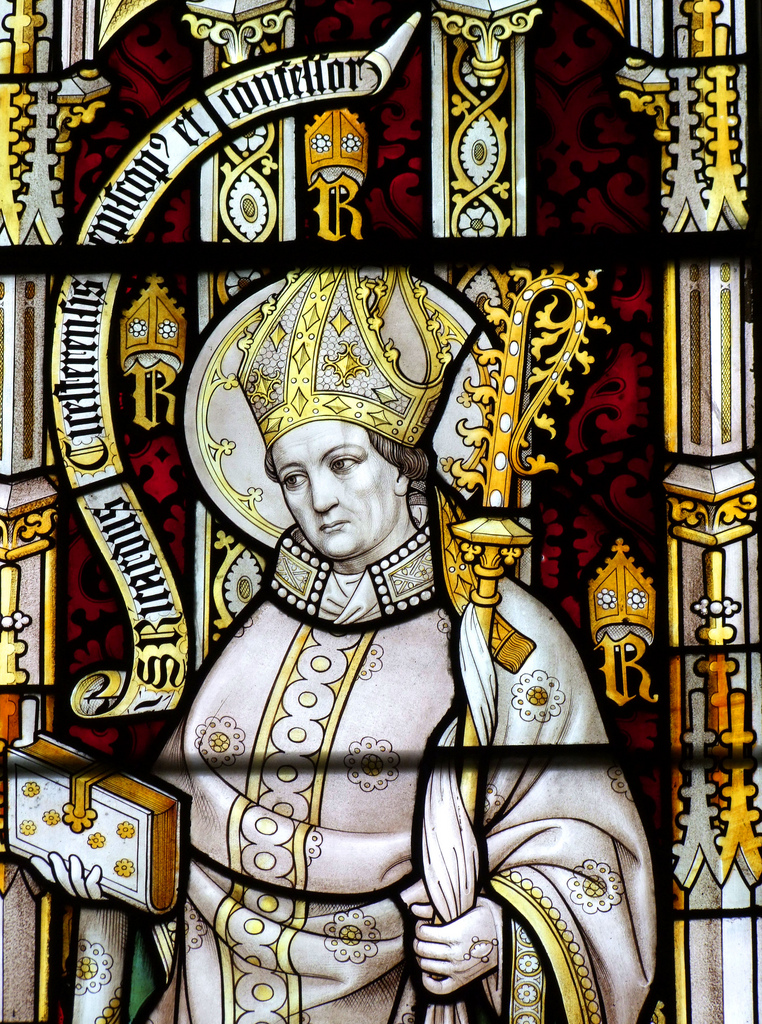
Thought for the Day – 13 Noivember – Meditations with Saint Alphonsus Maria de Liguori (1696-1787) Bishop, Confessor, Most Zealous Doctor of the Church
“How to Pray at All Times” By St Alphonsus Maria de Liguori (1696-1787)
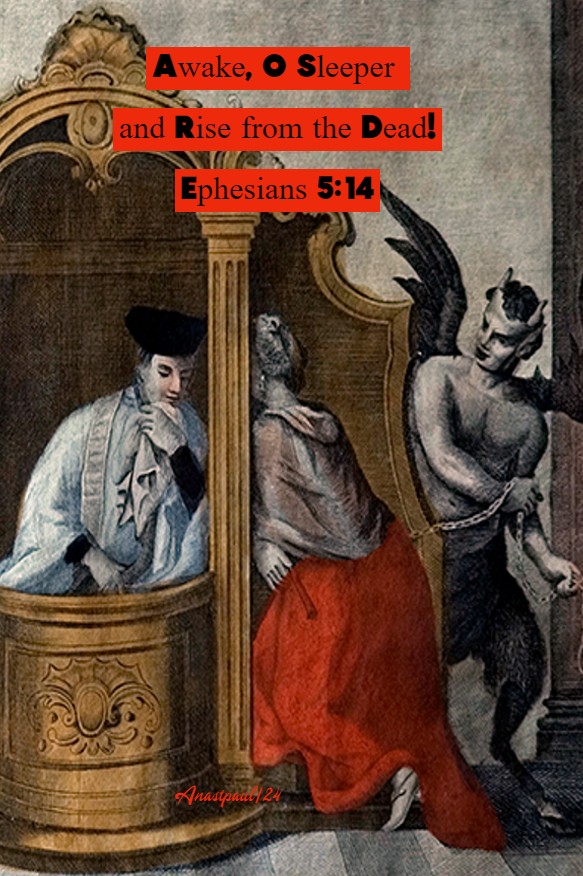
Pray After a Fault Excerpt from Chapter Three:IV
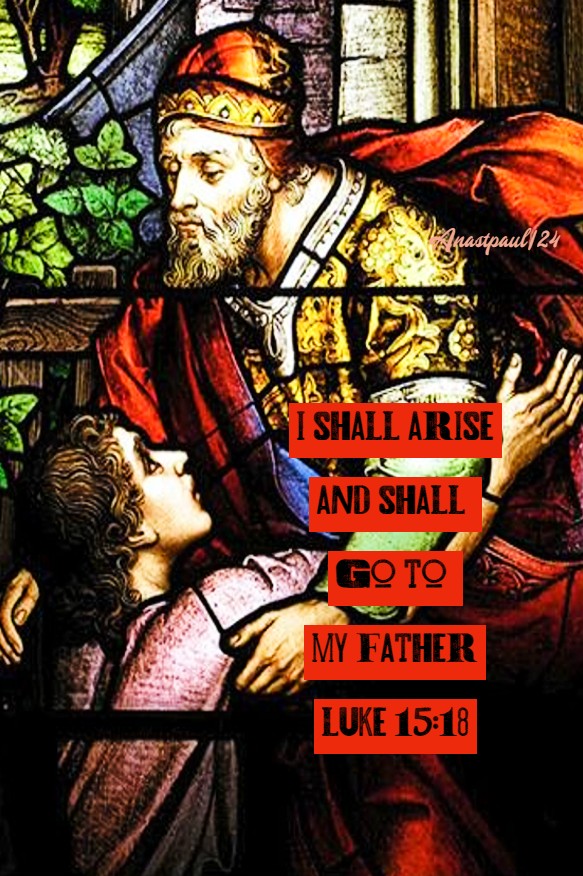
“Another mark of confidence, highly pleasing to our most loving God, is this – that when you have committed any fault, you are not ashamed to go at once to Him and seek His pardon. Consider that God is so willing to pardon sinners that He laments their perdition, when they depart far from Him and live lives dead to His grace.
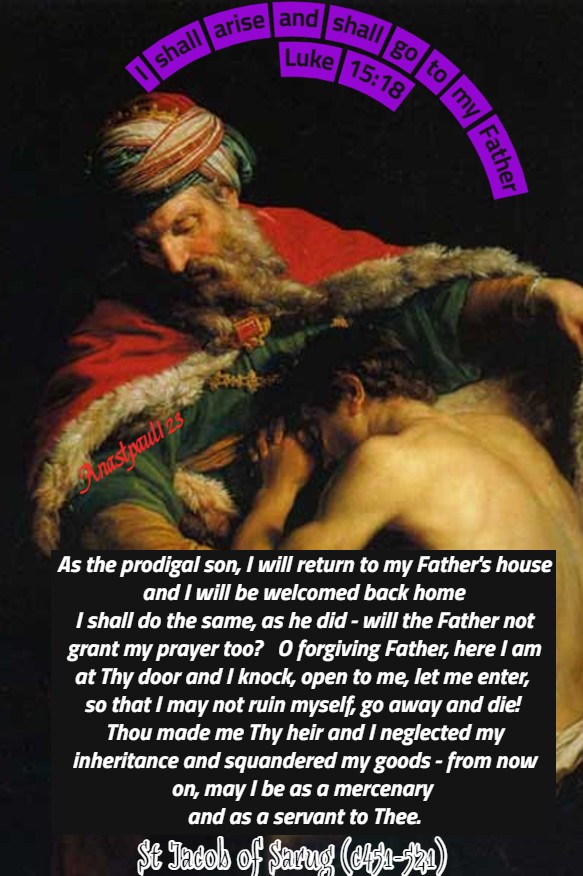
… He promises to receive a soul who has forsaken Him, if only the soul returns to His arms … If you come to Me and repent, though your soul be dyed deep crimson with crime, by My grace it shall be made white as snow.
… Attend, especially, devout soul, to what is commonly taught by masters of the spiritual life, who recommend you to have recourse immediately to God after you have fallen, although you should repeat the fall a hundred times in the day. Having done this, do not be disturbed. If you remain discouraged and troubled because of the fault committed, you will scarcely speak to God; your confidence will grow less; your desire to love God will grow cold and you will make little or no advancement in the way of the Lord. On the other hand, by having immediate recourse to God, asking His pardon and promising amendment for the future, your very faults will help you to advance in Divine love. Between friends, who sincerely love one another, it sometimes happens that when one offends the other and then. humbles himself and asks pardon, their friendship becomes stronger than ever. Do you act in like manner with regard to God – let your faults and falls, only strengthen the bonds of love which unite you to Him.”
Quote/s of the Day – 13 November – St Stanislaus Kostka SJ (1550-1568) Jesuit Novice
“Think of the joy the soul will feel in its escape from the prison of this body. So long has it lived in perpetual exile, expelled from its own heavenly home. How much greater its uncontainable joy and complete satisfaction, when it arrives in its own Country to enjoy the Vision of God, with the Angels and the blessed.”
“I am so ashamed and confused because I see how many have been lost on account of a single mortal sin and, how many times, I have deserved eternal damnation.”
One Minute Reflection – 13 November – “The Month of the Holy Souls in Purgatory” – St Didacus de Alcalá de Henares) OFM (c 1400-1463) Confessor – 1 Corinthians 4:9-14; Luke 12:32-34 – Scripture search here: https://www.drbo.org/
“For where your treasure is, there will your heart be too.” – Luke 12:34
REFLECTION – “…If, therefore, you wash, by a good life, the filth which has been glued on your heart like plaster, the Divine Beauty will again shine forth in you. It is the same as happens in the case of iron. If freed from rust by a whetstone that which but a moment ago, was black will shine and glisten brightly in the sun. So it is too with the inner man which the Lord calls “the heart.” When he has scraped off the rustlike dirt which dank decay has caused to appear on his form, he will once more recover the likeness of the Archetype (Gn 1:27) and, be good. For what is like to the Good is certainly itself good.
Hence, if a man who is pure of heart sees himself, he sees in himself what he desires and thus, he becomes blessed because, when he looks at his own purity, he sees the Archetype in the image. To give an example. Although men, who see the sun in a mirror, do not gaze at the sky itself, yet they see the sun in the reflection of the mirror, no less than those who look at its very orb. So, He says, it is also with you. Even though you are too weak to perceive the Light itself, yet if you but return to the grace of the image with which you were informed from the beginning, you will have all you seek in yourselves.
…For the Godhead is purity, freedom from passion and separation from all evil. If, therefore, these things be in you, God is indeed in you. Hence, if your thought is without any alloy of evil, free from passion, arid alien from all stain, you are blessed because you are clear of sight.” – St Gregory of Nyssa (c335-395) Bishop, Father of the Church (Brother of St Basil the Great) (Sermons 6 sur les Béatitudes – on the Beatitudes 6).
PRAYER – Almighty, eternal God, Who in Thy wondrous providence, choose the weak things of the world to overcome the strong, mercifully grant unto us Thy humble servants that, by the loving prayers of blessed Didacus, Thy Confessor, we may be found worthy to be raised unto the everlasting glory of Heaven. Through Jesus Christ, Thy Son our Lord, Who lives and reigns with Thee, in the unity of the Holy Ghost, God, world without end. Amen (Collect).

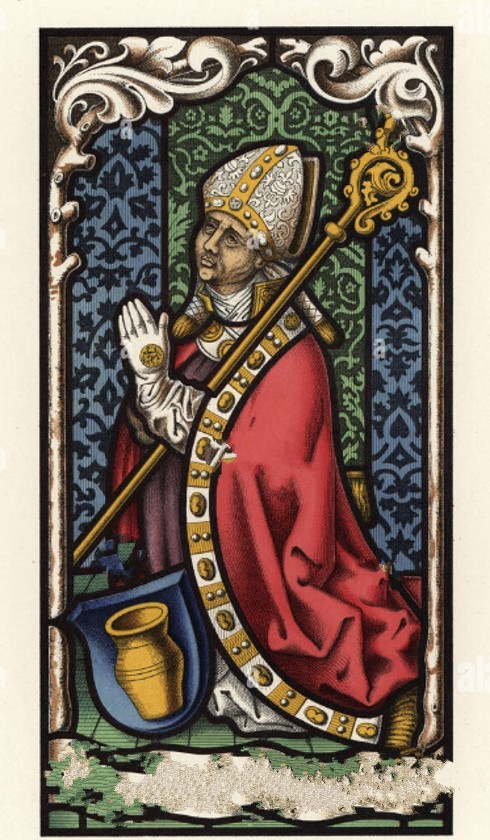
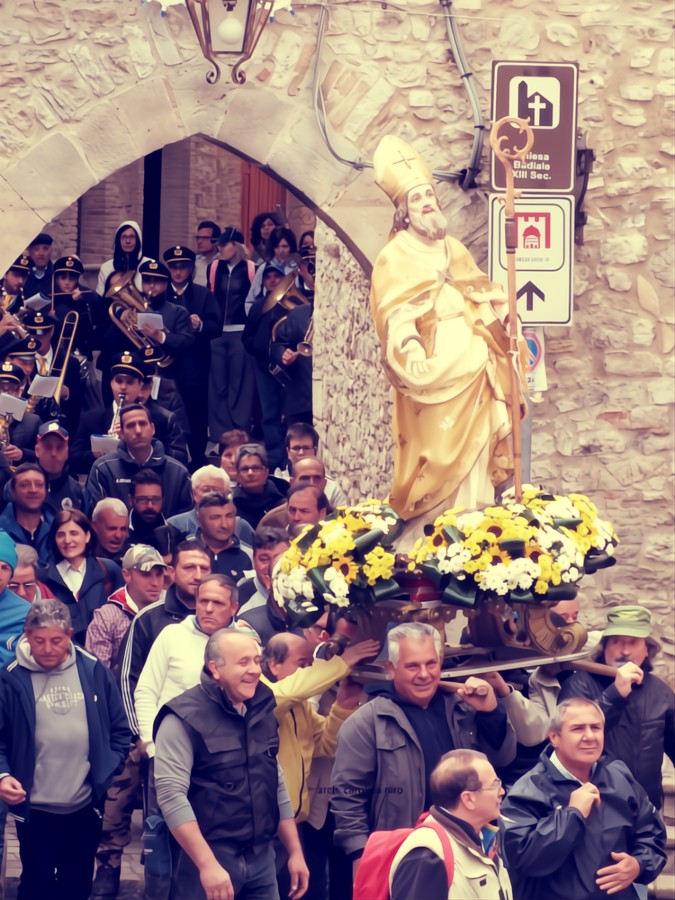
Saint of the Day – 13 November – Saint Brice of Tours (c370-444) Bishop, disciple of St Martin of Tours, Penitent, Miracle-worker. Born in Gaul, modern France and died in Tours, France of natural causes. Patronages – against colic, against stomach diseases, of Tours, of Calimera and Samperone in Italy. Also known as – Briccius, Brictius, Britius, Brixius, Brizio, Brizo.
The Roman Martyrology reads today: “At Tours, St Brice, Bishop, disciple of the blessed Bishop Martin.”
St Martin, whose Feast we kept two days ago, was succeeded in the See of Tours, as he had predicted, by a Monk named Brice, a singularly unpromising candidate to succeed such a holy Bishop.
Martin had spent as much time as his Episcopal duties permitted among a monastic community at Marmoutier near Tours, into which he himself had taken the orphaned Brice. St Gregory of Tours describes Brice as “proud and vain” and St Martin’s Biographer, St Sulpicius Severus, tells the story in his Dialogues (3.15) of Brice being led by devils to “vomit up a thousand reproaches against Martin” even daring to assert that he, himself, was much holier for being raised from childhood in a Monastery, while Martin was raised in a military camp. Although Brice repented of this (as St Sulpicius believed, due to Martin’s prayers) and asked for the Saint’s forgiveness, he continued to be a very difficult character. Martin refused to remove him from the Priesthood, lest he would be judged to do so, as an act of vengeance but, expressed his tolerance in less than-complimentary terms: “If Christ could put up with Judas, why should I not put up with Brice?”
St Brice and St Martin
St Martin had predicted, not only that Brice would succeed him as the Bishop, but, that he would suffer much in the Episcopacy, words which Brice dismissed as “ravings.” Both predictions were fulfilled in the following manner. Although Brice was vain and proud, he was “chaste in body” and yet, he was accused of fathering a child. The revised Butler’s Lives of the Saints says, with characteristic reticence that he vindicated himself by “a very astonishing miracle” without saying what the miracle was. St Gregory of Tours tells us that Brice called together the faithful and before them ordered the month-old infant to say whether or not he was the father, at which the child did indeed say, “You are not my father!” The people ask Brice to make the infant say who its father was but Brice replied, “That is not my job. I have taken care of the part of this business which pertains to me; if you can, ask for yourselves.”
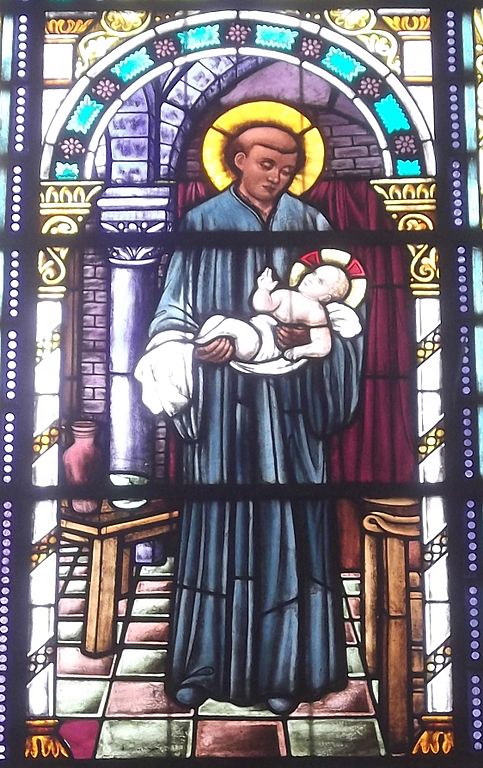
St Brice with the Infant, from the Church of St Médard in Boersch in Eastern France.
This miraculous event was attributed, perhaps understandably, to the use of magic, rather than holiness and so Brice attempted to vindicate himself by carrying hot coals in his cloak to the Tomb of St Martin; when he arrived his cloak was not burnt. But this sign was also not accepted and so he was driven from his See, “that the words of the Saint might be fulfilled, ‘Know that, in the Episcopate, you will suffer many adversities.’ …
Then Brice sought out the Pope of Rome, weeping and mourning and saying ‘Rightly do I suffer these things because I sinned against God’s Saint and often called him crazy and deluded and, seeing his virtues, I did not believe.’ ” After staying in Rome for seven years and purging his sins by the celebration of many Masses, he was restored to his See which he governed for a further seven years as a man “of magnificent sanctity,” according to St Gregory, very much changed for the better by the experience.
I believe, a Polish image of St Brice with the Infant
His popularity in the medieval period was very great and his Feast is found on most calendars, although not that of Rome. This is due in part to his association with St Martin but perhaps more, as an example of something which the medievals understood very well and loved to dwell upon – it is never too late for God’s grace to bring us away from sin to sanctity and even to Sainthood. And so we ask St Brice to assist us by his intercession, in our repentance and our growth in holiness. (Adapted from Gregory DiPippo’s articleon NLM).
Our Morning Offering – 13 November – “The Month of the Holy Souls in Purgatory”
Lord, Help Me to Live This Day By St Frances of Assisi (c1181-1226)
Lord, help me to live this day, quietly, easily. To lean upon Thy great strength, trustfully, restfully. To wait for the unfolding of Thy will, patiently, serenely. To meet others, peacefully, joyously. To face tomorrow, confidently, courageously. Amen
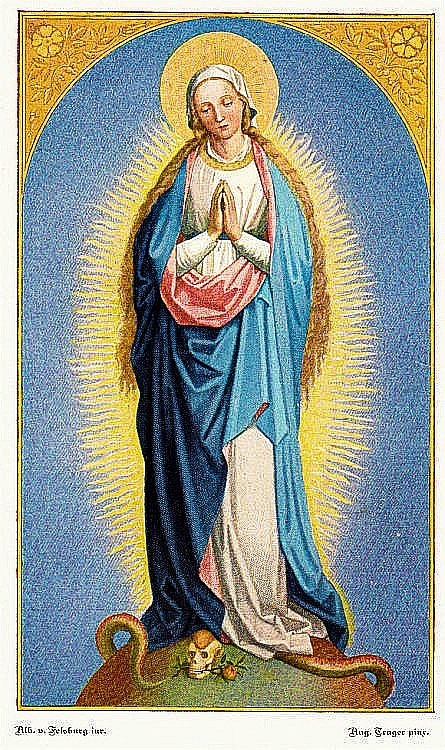
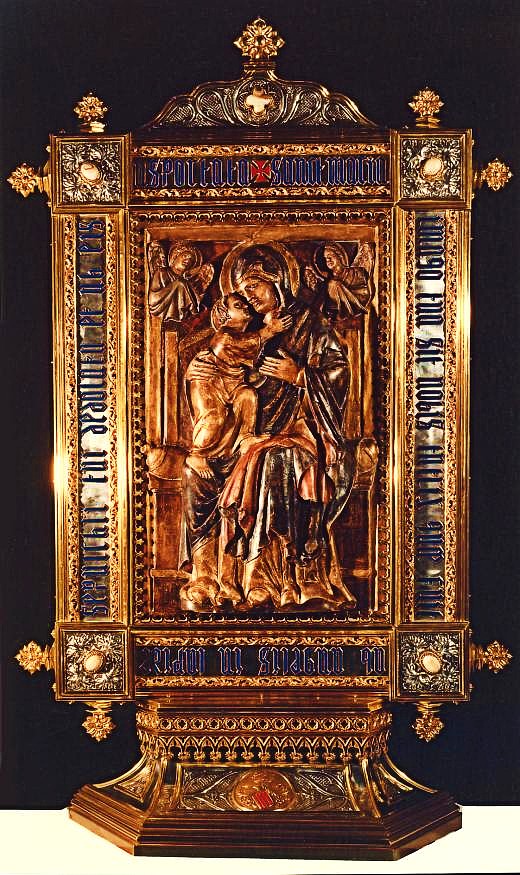
Fiesta del Patronato de Nuestra Señora / Feast of the Patronage of Our Lady (1679):
Statue of Our Lady in Barcelona Cathedral
This Feast was first permitted by Decree of the Sacred Congregation of Rites, on 6 May, 1679, for all the Provinces of Spain, in memory of the victories obtained over the Saracens, heretics and other enemies, from the sixth century to the reign of Philip IV. Pope Benedict XII ordered it to be kept in the Papal States on the third Sunday of November. To other places it is granted, on request, for a Sunday in November, to be designated by the ordinary. The Office is taken entirely from the Common of the Blessed Virgin and the Mass is the “Salve sancta parens”. In many places the Feast of the Patronage of Our Lady, is held with an additional title of Queen of All Saints, of Mercy, Mother of Graces.
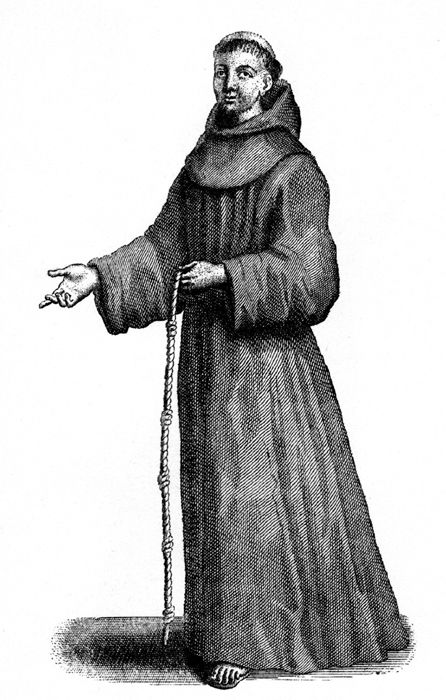
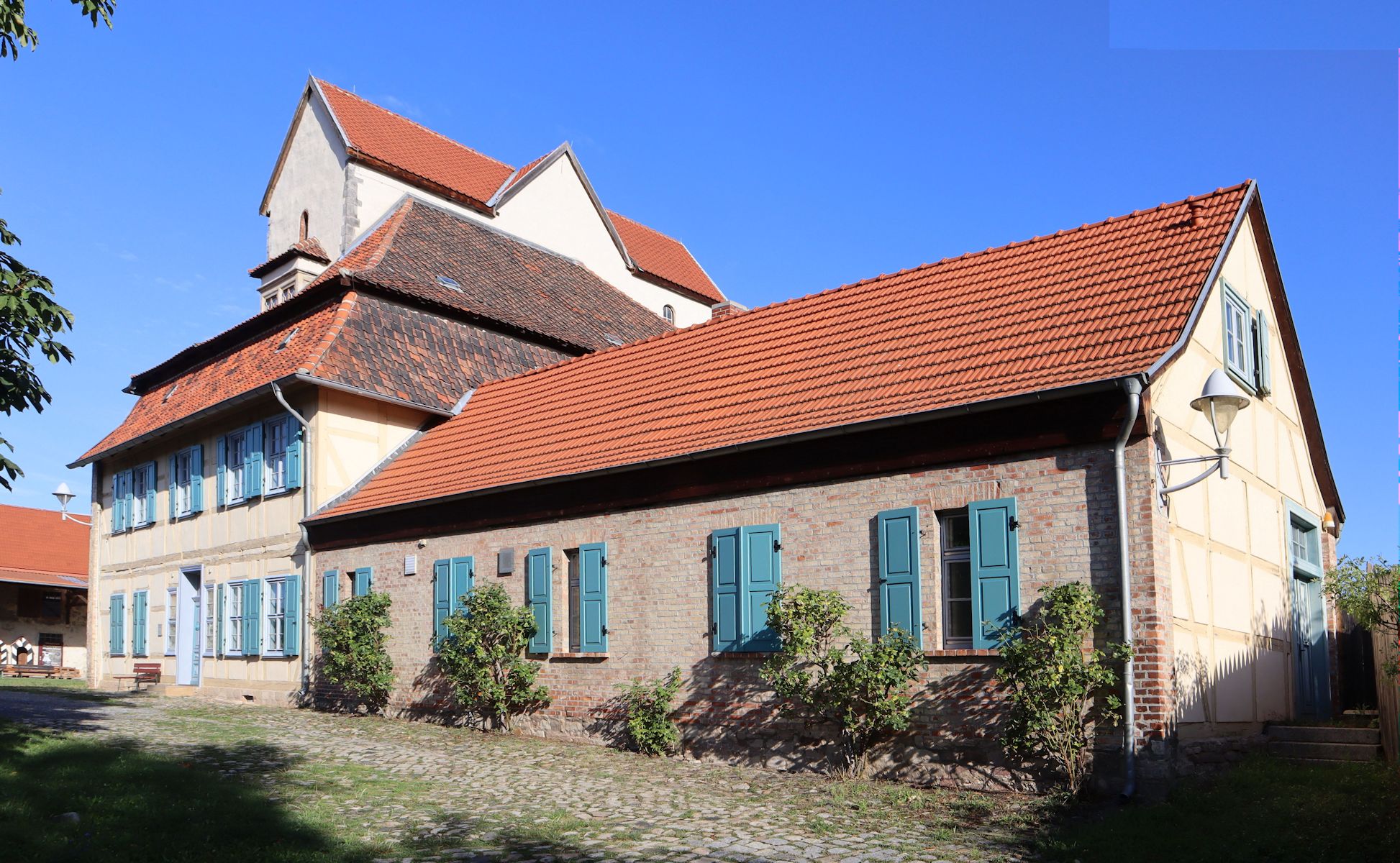
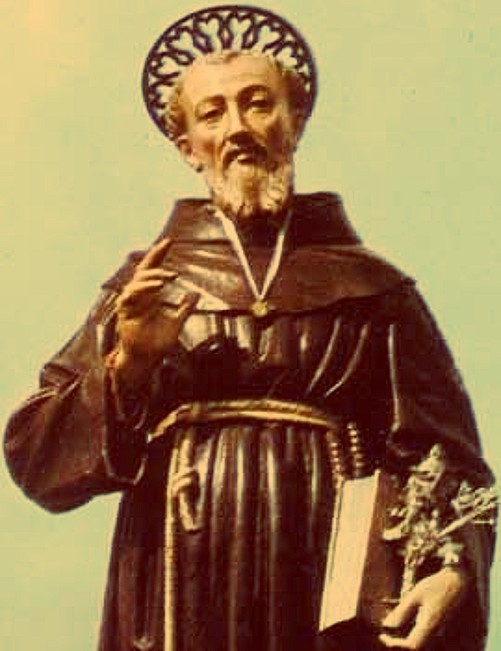
St Didacus de Alcalá de Henares) OFM (c 1400-1463) Confessor, Lay Brother of the Order of Friars Minor, Hermit, Mystic. Months passed before it was possible to bury Brother Didacus, so great was the number of people who came to venerate his remains. Not only did his body remain incorrupt but it diffused a pleasant odour. After it was laid to rest in the Franciscan Church at Alcalá de Henares, astounding miracles continued to occur at his tomb. Pope Sixtus V, himself a Franciscan, Canonised Brother Didacus in 1588. About this lovely Sainst: https://anastpaul.com/2021/11/13/saint-of-the-day-13-november-saint-didacus-ofm-c-1400-1463/
All Saints of the Augustinian Order: On 13 November – St Augustine’s Birthday, we celebrate the Feast of All Saints of the Augustinian Order. On this day we call to mind the many unsung brothers and sisters of the Augustinian family who have “fought the good fight” and celebrate now, in Heaven. Let us pray for one another that we too may one day join in the “unceasing chorus of praise” with all our Augustinian brethren in Heaven.
All Saints of the Benedictine & Cistercian Orders: Those interested in the Benedictine family may be interested to know that today, within the Benedictine liturgical tradition, is traditionally celebrated the Feast of All Saints of the Benedictine Order – In Festo Omnium Sanctorum Ordinis S.P.N. Benedicti. The Cistercians — who also follow the Rule of St Benedict — likewise observe this day for All Saints of their Order. (On a related note, the Benedictines also traditionally observe 14 November as All Souls of their Order.
All Benedictine Saints
St Benedict and St Bernard -1542
All Saints of the Premonstratensian Order or the “Norbertines.” The Order of Canons Regular of Prémontré, also known as the Premonstratensians, the Norbertines and, in Britain and Ireland, as the White Canons , are a Roman Catholic religious order of canons regular founded in Prémontré near Laon in 1120 by Saint Norbert, who later became Archbishop of Magdeburg. Premonstratensians are designated by O.Praem. following their name. St Norbert was a friend of Saint Bernard of Clairvaux and so was largely influenced by the Cistercian ideals as to both the manner of life and the government of his order. Aside from St Norbert there are at present fifteen saints of the Order who have been Canonised or have had their immemorial cults confirmed by the Holy See. St Norbert (c 1080-1134) “Defender of the Eucharist” and “Apostle of the Eucharist” – Bishop, Confessor, Founder. Patron for peace, invoked during childbirth for safe delivery, of infertile married couples. St Norbert here: https://anastpaul.com/2017/06/06/saint-of-the-day-6-june-st-norbert/
St Norbert
All Saints of the Norbertines
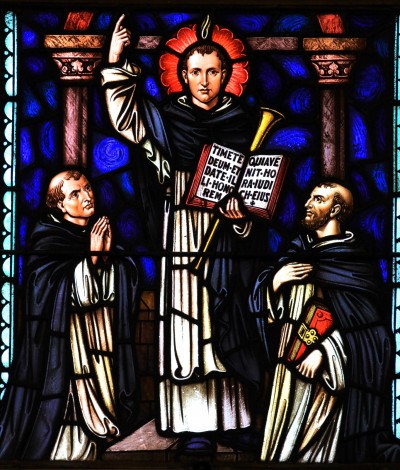
All Deceased Dominican Brothers and Sisters
St Abbo of Fleury St Amandus of Rennes St Amanzio St Beatrix of Bohemia St Brice of Tours (Died 444) Bishop St Caillin St Chillien of Aubigny St Columba of Cornwall St Dalmatius of Rodez St Devinicus St Eugenius of Toledo St Florido of Città di Castello St Gredifael St Himerius St Homobonus of Cremona St Juan Ortega Uribe
St Leoniano of Vienne St Maxellendis St Mitrius St Pope Nicholas I St Paterniano St Quintian of Rodez Bl Robert Scurlock Bl Warmondus of Ivrea
Martyrs of Caesarea – 5 Saints: A group of Christians murdered for their faith in the persecutions of Diocletian, Galerius Maximian and Firmilian. – Antoninus, Ennatha, Germanus, Nicephorus and Zebinas. 297 at Caesarea, Palestine.
Martyrs of Ravenna – 3 Saints: A group of Christians murdered together in the persecutions of Diocletian. The only information about them that has survived are three names – Solutor, Valentine and Victor. c 305 in Ravenna, Italy.
Martyrs of Salamanca – 5 Saints: The first group of Christians exiled, tortured and executed for their adherence to the Nicene Creed during the persecutions of the Arian heretic Genseric. – Arcadius, Eutychianus, Paschasius, Paulillus and Probus. Born in Spain and Martyred in 437. Their relics are at Medina del Campo, Spain.
Thought for the Day – 12 November – Meditations with Saint Alphonsus Maria de Liguori (1696-1787) Bishop, Confessor, Most Zealous Doctor of the Church
“How to Pray at All Times” By St Alphonsus Maria de Liguori (1696-1787)
Pray In Your Joys Excerpt from Chapter Three:III
“When you receive some pleasant news, do not act like those unfaithful and thankless souls, who have recourse to God in time of trouble but forget and forsake Him, when things go well. Show Him the fidelity you would show to a sincere friend, who rejoices in your happiness. Go at once and tell Him of your joy and praise Him and give Him thanks, acknowledging your good fortune as a gift from His Hands alone! Rejoice in the fact that you owe your happiness to Him and place all your joy and comfort in Him – I will rejoice in the Lord (Hab 3:18) Say to Him: My Jesus, I bless and will ever bless Thee, for granting me so many favours, when I deserved at Thy hands not favours but chastisements for the affronts I have offered Thee.
… But, if you love your God, you ought to rejoice more in His blessedness than in your own. He, who has a dear friend, sometimes takes more delight in that friend’s good fortune than if it had been his own. Comfort yourself, then, in the knowledge that God is infinitely happy. Often say to Him – My beloved Lord, I rejoice more in Thy blessedness than in any happiness of my own, for I love Thee more than I love myself.”
Quote/s of the Day – 12 November – St Theodore the Studite (759-826) Abbot, Confessor, Father of the Church
“Day by day follow God’s path, keeping Him closely attached to you by His promise. In fact, He Himself said, through the mediation of His Apostles, to all those who seek His will and His testimonies that He would be with them until the end of the world (Mt 28:20) where paths and footsteps will be unknown (cf Ps 76:20), as the divine David said in his songs. Yet, in an invisible way, He is present to the eyes of the mind, making Himself seen by those who have a pure heart and conversing with them. So pursue your path …. ”
“He who is immortal, voluntarily shed His Blood. He who created the Host of Angels, was bound at the hands of soldiers and He who is to judge the living and the dead, was dragged to justice (cf. Acts 10:42; 2 Tm 4:1). Truth was exposed to false witnesses, was slandered, struck, covered with spittle, hung on the Wood of the Cross – the Lord of Glory (cf. 1 Cor 2:8) endured every outrage and suffering without Himself needing these trials. …
So there is nothing surprising about it, if we submit to even one of these trials, since such is our condition … Therefore, we too have to be offended and tempted, afflicted by the cutting off of our wills.” (Catecheses 1)
“By the Cross, death was slain and Adam was restored to life. The Cross is the glory of all the Apostles, the Crown of the Martyrs, the Sanctification of the Saints. By the Cross, we put on Christ and cast aside our former self. By the Cross we, the sheep of Christ, have been gathered into one flock, destined for the Sheepfold of Heaven.”
“Who will gather the fruits of life without having planted virtues in his soul? Cultivate them, prepare the earth with the greatest care, take trouble over it, sweat over it, children, God’s workers, imitators of the Angels, competitors with incorporeal beings, lights for those who are in the world!”
“Let us hike up our tunics, be on the alert, have eagle eyes – this is the speediest flight for the trip which leads us from earth to Heaven! It is true, travellers can have something to endure. And this happens to you too – indeed, as you see, you struggle under hard labours … Briefly, each is at their post. All go forward on the highway to God, they approach the great City and, in death, they will have entry to the unutterable joy of the good things God reserves, for all those who have loved Him! ”
“Rejoice, O Mary, House of the Lord, earth trodden by the Footsteps of God… Rejoice, O Paradise more happy than the Garden of Eden, where every virtue has been seeded and where the Tree of Life has grown.”
St Theodore the Studite (759-826) Abbot, Confessor, Father of the Church
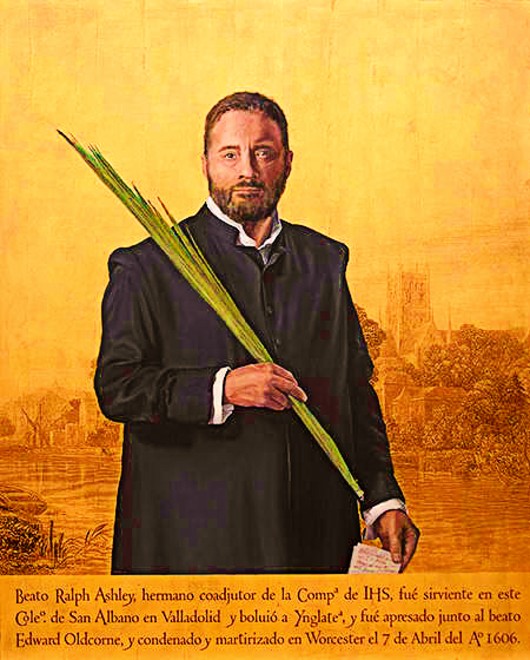
One Minute Reflection – 12 November – St Martin I, Pope (598-655) Martyr – 1 Peter 5:1-4; 5:10-11; Matthew 16:13-19 – Scripture search here: https://www.drbo.org/
“Thou art the Christ, the Son of the living God.” – Matthew 16:16
REFLECTION – “Peter did not say “Thou are a Christ” or “a son of God” but “the Christ,the Son of God.” For there are many christs by grace, who have attained the rank of adoption [as sons] but, [there is] only One ,Who is by nature the Son of God. Thus, using the definite article, he said, THE Christ, THE Son of God. And in calling Him, Son of the LIVING God, Peter indicates that Christ Himself is Life and that death has no authority over Him. And even if the flesh, for a short while, was weak and died, nevertheless, it rose again, since the Word, Who dwelled in it, could not be held under the bonds of death.” – St Cyril of Alexandria (376-444) Known as “The Pillar of Faith” Archbishop of Alexandria, Father and Doctor Incarnationis (Doctor of the Incarnation) (Fragment 190).
PRAYER – Look forgivingly on Thy flock, Eternal Shepherd and keep it in Thy constant protection, by the intercession of blessed Martin Thy Martyr and Sovereign Pontiff, whom thou didst constitute Shepherd of the whole Church. Through Jesus Christ, Thy Son our Lord, Who lives and reigns with Thee, in the unity of the Holy Ghost, God, world without end. Amen (Collect).
Our Morning Offering – 12 November – “The Month of the Holy Souls in Purgatory”
Daily Prayer to the Most Holy Name By St Bernardine of Siena (1380-1444) Apostle of the Most Holy Name
Jesus, Name full of glory, grace, love and strength! Thou art the Refuge of those who repent, our Banner of warfare in this life, the Medicine of souls, the Comfort of those who mourn, the Delight of those who believe, the Light of those who preach the True Faith, the Wages of those who toil, the Cure of the sick. To Thou, our devotion aspires; by Thee, our prayers are received; we delight in contemplating Thee. O Name of Jesus, Thou art the glory of all the Saints for eternity. Amen
Saint of the Day – 12 November – St Theodore the Studite (759-826) Abbot of the Stoudios Monastery in Constantinople, Confessor, stern Reformer, zealous Defender of the sanctity of Marriage and of Sacred Images, two of several conflicts which set him at odds with both the Emperor and Bishops. He played a major role in the revivals both of Byzantine monasticism and of classical literary genres in Byzantium. He was a spiritual writer and exegesis and throughout his life, he maintained letter correspondences with many important spiritual, political and cultural figures of the Byzantine Empire. Born in 759 in Constantinople, (modern-day Istanbul, Turkey) and died on 11 November 826 (aged 66/67) whilst in exile in Cape Akritas (modern-day Tuzla, Istanbul, Turkey). Also known as – Theodorus Studita, Theodore of Studium, of Stoudios, of studion.
The Roman Martyrology reads today: “At Constantinople, St Theodore Studita, who became celebrated througout the whole Catholic Chirch by his vigorous defence of the Faith against the Iconoclasts.”
Theodore was born in Constantinople in 759 and from his youth he fought courageously in defence of the Sacred Imagery present in the capital of the Byzantine Empire, threatened by the adverse religious policy of the imperial government.
In 794 he succeeded his uncle Plato, (who ten years earlier had persuaded him to take monastic vows) in the direction of the Monastery of Sakkoudion in Bithynia. Shortly afterwards, however, he was sent into exile in Thessalonica, for having excommunicated the Emperor Constantine VI, later also venerated as a Saint, who had divorced his wife Mary to marry Theodota. This incident was not a simple occurence of one man’s sinful adultery but, under the name of “Synod of Adultery” an assembly of errant Bishops who, in the 9th Century, wished to approve the practice of second marriage after the repudiation of the legitimate wife, entered the history of the Church – (ring any bells – only no-one is being exiled for this now!?) Saint Theodore was the one who most vigorously opposed it and for this reason he was persecuted, imprisoned and exiled three times.
In 797, after the death of the Emperor, Theodore was recalled to his homeland with full honours, left Sakkoudion Monastery which, in the meantime, had been sacked by the Arabs and Theodore moved to the Monastery of Studios in Constantinople, from which he took his nickname. Here he undertook a powerful campaign in favour of asceticism and radical monastic reforms. The key points of his rule, later used in both Byzantine and Eastern Monasteries, were strict seclusion, poverty, discipline, study, religious offices and manual labour.
Abbot Theodore is also remembered for allowing his Monks to sprinkle nutmeg, one of the most expensive spices at the time, ontp their pea soup when they were forced to eat it. This anecdote, the veracity of which is difficult to ascertain, far from ridiculing the Saint, helps us to approach him in aspects of his daily life, as the shepherd of a community, certainly a firm spiritual leader but also, at the same time, a kindly shepherd displaying a generous love.
In 809, Theodore was again banished because of his refusal to receive Communion from Patriarch Nicephorus, who had reinstated the Priest Joseph, guilty of having officiated at the wedding between Constantine and Theodote. Two years later, Emperor Michael I, over whom our Saint had much influence, recalled him from exile but, he was again banished and flogged in 814 because of his strenuous opposition to the iconoclastic edict promulgated by Emperor Leo V which prohibited the veneration of Sacred Images. Released in 821 by Emperor Michael II, in 824 he promoted an insurrection against the latter, whom the Saint judged to be too indulgent towards the iconoclasts. However, when his plans failed, Theodore then thought it appropriate to leave Constantinople.
From that moment he wandered between various Monasteries in Bithynia and died in that of Chalcis on 11 November 826. Initially buried in that Monastery, on 26 January 844, his body was translated to Studios Monastery.
He is celebrated today 12 November, the day after his death. Saint Theodore composed several literary works. First of all, as an intrepid fighter for the defence of the indissolubility of Marriage; he wrote a treatise and a paper ‘On the economy in general’ which were unfortunately lost or more probably destroyed by order of the Patriarch Methodius. His letters the importance of which is constituted by the picture of the life and character of St Theodore which is displayed within them and, which also shed light, on the theological disputes in which he intervened. St Theodore also wrote Catechetical works divided into two collections, addressed to Monks and containing warnings and advice connected with spiritual life and monastic communities; funeral orations for his mother and for his uncle Plato; theological works focused on the use and veneration of Sacred Images; epigrams on various subjects, some of which demonstrate considerable originality and some Sacred Hymns. Furthermore, like all the Monks of the Studios, Saint Theodore was renowned too for his calligraphy and for his skill in copying manuscripts.
St Theodore the Studite, a simple but deeply religious man who dared to challenge the imperial power and the Ecclesiastical hierarchies of the time, should be considered one of the heavenly protectors of those who, even today, faced with the changed Church, have the courage to repeat an inflexible love of the One True Church and a denial of all unlawful practices. St Theodore the Studite, Pray for us!
Byzantine miniature depicting the Stoudios Monastery and the Sea of Marmara.
St Livinus of Alost St Machar of Aberdeen St Namphasius St Nilus the Elder St Paternus of Sens St Publius St Renatus of Angers St Rufus of Avignon St Theodore the Studite (759-826) Abbot St Ymar of Reculver
Five Polish Brothers – Martyrs: They weren’t Polish and they weren’t related but were instead five Italian Benedictine Monks who worked with Saint Adalbert of Prague as missionaries to the Slavs and were Martyred together. They were – Benedict, Christinus, Isaac, John and Matthew. Born in Italy. They were Martyred in 1005 at the Benedictine Monastery near Gnesen, Poland and Canonised by Pope Julius II.
Thought for the Day – 11 November – Meditations with Saint Alphonsus Maria de Liguori (1696-1787) Bishop, Confessor, Most Zealous Doctor of the Church
“How to Pray at All Times” By St Alphonsus Maria de Liguori (1696-1787)
Pray In Your Trials. Excerpt from Chapter Three:II
“When you are afflicted with sickness, persecution, temptation, or any other trouble, turn at once to God and ask His aid. It is enough for you to lay your affliction before Him – to go to Him and say: Behold, O Lord, for I am in distress (Lam 1:20). He will not fail to comfort you, or at least, to give you strength to suffer the trial with patience and, in this case, it will prove a greater good than if He had freed you altogether from it. Tell Him of all the things which make you fear, or make you sad and say to Him: My God, in Thee are all my hopes. I offer this cross to Thee. I resign myself to Thy Will. Take pity on me and either deliver me from my trial or give me strength to endure it. He will remember immediately the promise He made in the Gospel, of consoling and comforting all those who have recourse to Him in tribulation: Come to Me all you who labour and are burdened and I will refresh you (Matt II:28).
He will not be displeased if you seek comfort from your friends in the hour of trial but, He wishes you to have recourse principally to Himself. At least, therefore, when you have had recourse to creatures and they have not been able to console your heart, go to your Creator and say to Him: Lord, men have only words; they cannot afford me consolation. I no longer desire to be consoled by them. Thou alone, art my Hope; Thou alone, my only Love. By Thee alone, do I desire to be comforted and the consolation I ask for, is to do, on this occasion, that which is most pleasing to Thee. Behold, I am ready to endure this trial for the whole of my life and for all eternity, if such be Thy Will. Only help me.
Do not be afraid of offending Him if you sometimes gently complain, saying: Why, Lord, has Thou retired afar off? (Ps 9:1). Lord, Thou knowest that I love Thee and that I desire nothing but Thy Love. Have pity on me and help me. Do not abandon me.”
Quote/s of the Day – 11 November – St Martin of Tours (c316-397) “Martin the Merciful,” Bishop, Confessor, Miracle-Worker.
“Hitherto I have served you as a soldier; allow me now to become a soldier of God. Let the man who is to serve you receive your largesse. I am a soldier of Christ; combat is not permitted me.”
“In the Name of the Lord Jesus and protected only by the Sign of the Cross, without shield or helmet, I shall penetrate the enemy’s ranks and not be afraid.”
I Will Fight Beneath Thy Banner, Lord Prayer of St Martin of Tours (c316-397)
Lord, if Thy people still have need of my services, I will not avoid the toil. Thy Will be done. I have fought the good fight long enough. Yet, if Thou bid me continue, to hold the battle line in defence of Thy camp, I will never beg to be excused from failing strength. I will do the work Thou entrust to me. While Thou command,, I will fight beneath Thy banner. Amen
One Minute Reflection – 11 November – “The Month of the Holy Souls in Purgatory” – St Martin of Tours (c316-397) “Martin the Merciful,” Bishop, Confessor, Miracle-Worker. – Sirach 44:16-27; 45:3-20, Luke 11:33-36 – Scripture search here: https://www.drbo.org/
“No man lights a candle and puts it in a hidden place, nor under a bushel but upon a candlestick that they, who come in, may see the light.” – Luke 11:33
REFLECTION – “There must be simplicity in one’s intention and purity in one’s affection. Simplicity seeks God; purity finds Him and savours Him. No good work will be difficult, if you are interiorly free of all disordered affection. If you want only what God wants and that which is useful for your neighbour, you will enjoy interior freedom. If your heart were upright, then every creature would be, for you, a mirror of life and a book full of holy instruction.
There is no creature so small and so base that it does not show, some image of God’s goodness. If you had enough innocence and purity within you, you would see everything without hindrance. A pure heart penetrates Heaven and hell. Each person judges that which is outside, according to that which is within himself. If there is any joy in the world, the pure heart possesses it.” – Thomas à Kempis CRSA (1380-1471) (Attrib) The Imitation of Christ (Book II:4)
PRAYER – O God, Who sees that we cannot survive by any power of our own, mercifully grant that, by the intercession of blessed Martin, Thy Confessor and Bishop, we may be made safe from all harm. Through Jesus Christ, Thy Son our Lord, Who lives and reigns with Thee, in the unity of the Holy Ghost, God, world without end. Amen (Collect).
Our Morning Offering – 11 November – “The Month of the Holy Souls in Purgatory”
My God! I Recommend to Thee … Prayer for the Holy Souls in Purgatory By St Alphonsus Maria de Liguori (1696-1787) Most Zealous Doctor
My God! I recommend to Thee, the souls of my relatives, my benefactors, my friend, my enemies and of those, who are in Purgatory on my account. I recommend to Thee, the souls of Evangelical labourers, of Religious and Priests and especially of those, who had charge of my soul. I recommend to Thee, the souls of those, who were most devout to the Passion of Our Lord, to the Blessed Sacrament, to the Sacred Heart of Jesus and to the Blessed Virgin Mary, the souls, who are most abandoned, those, who suffer most and those, who are nearest to the entrance into Paradise. Amen
Saint of the Day – 11 November – Saint Bertuinus of Malonne (c634-698) Bishop. Abbot, Missionary, Founder of Churches and Monasteries. Born in England and died at his Monastery dedicated to him since his death in Malonne, Belgium of natural causes. Also known as – Bertuin, Bertwinus, Berthuin, Bertuino.
Statue of Bertuinus of Malonne in a niche of a Chapel in Malonne Abbey
Bertuinus was born in England and educated in the Monastery of Obtell (a place perhaps identified with Outwell, in the County of Norfolk) which was part of his family’s property and there, he became a Monk.
When the Bishop of the Diocese died, the people forced Bertuinus to accept the Episcopal dignity. In his high office he distinguished himself for his qualities as a skilled administrator, for the numerous conversions of pagans and for the foundation of several Monasteries.
Reliquary bust of St Bertuinus of Malonne
By Divine inspiration, however, he decided to go to the continent to preach the Gospel there and, faithful to Anglo-Saxon customs, he wanted to go first to Rome to visit the Tombs of the Apostles Peter and Paul. From Rome, through Gaul, he went to Belgium, settling in Malonne (Namur), where he built a Church and founded a Monastery, in which he died and was buried.
Chalice of Saint Berthuinus part of the protected Art Treasures of the Cathedral of Namur
From the Vita Bertuinus of which there are four editions, the oldest of which could date to the 8th Century. It is not possible to deduce, with certainty, the precise period in which the holy Bishop lived. The most probable opinion attributes it to the 7th Century. His Feast is celebrated on 11 November but in some places, recently, it has been transferred to the 16th and then to the 27th of the same month.
St Bertuinus Abbey of Malonne
His cult which survived the French Revolution and the suppression of the St Bertuinus Abbey of Malonne, over the centuries has received a notable boost from the recognition and solemn translation of his Relics which took place in 1202 and from the celebrations of the Twelfth Centenary of his death, celebrated in 1898 on the basis of calculations made by hagiographers, who considered 698 to be the year of the Saint’s death. In 1601, the Relics of St Bertuinus were placed in an Urn at Malonne Abbey, which still contains them. The Sepulchre below MIGHT be this Urn mentioned here.
Arm Reliquary of St Bertuinus, in the Treasury of the Basilica of Saint Servatius in Maastricht
St Mennas (Died c 300) Martyr, Layman, Miracle-worker, Soldier, he may have been a camel driver and merchant, Hermit. Born in Egypt and died by beheading in c 300 at Cotyaes, Phrygia, under Emperor Diocletian. He was one of the most popular Saints in the early Eastern Church. Patronages – falsely accused people, physical ailments, peddlers, pilgrims, travelling merchants. His Life and Death: https://anastpaul.com/2022/11/11/saint-of-the-day-11-november-saint-mennas-died-c-300-marty/
St Bartholomew of Rossano (c970-c 1065) Abbot Confessor, Spiritual disciple and friend of St Nilus (910-1005), Hymnist an highly skilled Calligrapher of sacred manuscripts – the art of calligraphy he had learned from his blessed guide and teacher, He is known as the “Second Founder,” of the Monastery of Grottaferrata founded by St Nilus. A copyist of many codices, Bartholomew is also considered the greatest hymnographer of the 11th century. His Life: https://anastpaul.com/2021/11/11/saint-of-the-day-11-november-saint-bartholomew-of-rossano-c-970-c-1065/
St Bertuinus of Malonne (c634-698) Bishop St Cynfran of Wales St Isidre Costa Hons Bl Josaphat Chichkov St Marina of Omura St Mennas of Santomenna St Mercurius the Soldier Bl Pavel Dzjidzjov St Rhediw St Turibius of Palencia St Veranus of Lyon St Veranus of Vence
Thought for the Day – 10 November – Meditations with Saint Alphonsus Maria de Liguori (1696-1787) Bishop, Confessor, Most Zealous Doctor of the Church
“How to Pray at All Times” By St Alphonsus Maria de Liguori (1696-1787)
ON WHAT AND HOW, WE SHOULD CONVERSE WITH GOD. Excerpt from Chapter Three:I
“Never, then, forget His sweet Presence, as do the greater part of men. Speak to Him as often as you can, for He does not grow weary of this, nor disdains it … If you love Him, you will not be at a loss of what to say to Him. Tell Him all that occurs to you, about yourself and your affairs, as you would tell it to a dear friend. Do not look upon Him as a haughty King Who will converse only with the superior and on great matters. He, your God, is pleased to lower Himself to you and to hear you communicate to Him, your smallest and most ordinary concerns.
… Say not: Why disclose all my wants to God, since He already sees and knows them better than I do? Yes, He knows them but, He acts as if He did not know the needs about which you do not speak to Him and for which, you do not seek His aid. Our Saviour knew that Lazarus was dead and yet, He acted as if He did not know until Martha told Him of it. It was only then, He comforted her by bringing her brother back to life.”
Quote/s of the Day – 10 November – St Andrew Avellino CR (1521–1608) Confessor, Patron against sudden death/of a Holy Death, against Apoplexy or Strokes.
“If they, must regard themselves as useless servants, who have done all their duty, what must I do, who have done so small a part of what I ought to have done?”
“Will that magnificent mansion of the blessed spirits, allow the entrance of one so miserable, despicable and sinful as I am?”
[From this fear, however, he was afterwards freed by a comforting vision. St Augustine and St Thomas Aquinas, both of whom he honoured as Patrons, appeared to him, consoled him and promised him their aid, especially in that hour on which eternity depends.]
“Although, at the age of 83 years, I am excused from the law of fasting, I find, when thinking of my sins and my indolence in the service of the Most High, that I am obliged to fast and to observe other austerities, in order to appease the wrath of God.”
One Minute Reflection – 10 November – “The Month of the Holy Souls in Purgatory” – St Andrew Avellino CR (1521–1608) Confessor – Col ossians 3:12-17: Matthew 13:24-30 – Scripture search here: https://www.drbo.org/
“Suffer both to grow until the harvest” – Matthew 13:30
REFLECTION – “In today’s Gospel, my friends, we see that when the owner of the field had sowed his seed in good soil, the enemy came while he was sleeping and sowed weeds in it. What this means, is that God created man good and perfect but the enemy came and sowed sin. This was Adam’s downfall and a terrible fall which opened the door to sin in the human heart.
Are you saying that we must exterminate the weeds? “But no,” the Lord replies, “for fear that in pulling up the weeds ,you harm the good seed at the same time. Wait until the harvest.” This is how the human heart must remain until the end – a mixture of good and bad, vice and virtue, light and darkness, good seed and weeds. God did not wish to destroy this mix and refashion a nature in us where there would be nothing but good seed. He wants us to fight, to strive to prevent the weeds from overwhelming us. The devil comes to sow temptation across our path but we are able to overcome it by grace, we can smother the weeds.
Three things are absolutely necessary against temptation – prayer to enlighten us, the Sacraments to strengthen us and vigilance to preserve us. Happy are the souls who are tempted! It is when the devil judges a soul is tending towards union with God that he redoubles his rage.” – St Jean-Marie Baptiste Vianney (1786-1859) Priest and the Patron of Priests, The Curé d’Ars (The Spirit of the Curé d’Ars, Sermons Conversations).
PRAYER – O God, by his difficult vow to make daily progress in holiness, Thou placed in the heart of blessed Andrew, Thy Confessor, a wondrous longing to ascend unto Thee, grant us, by his merits and intercession, so to become sharers of that same grace that, ever pursuing the more perfect things, we may be happily brought unto the height of Thy glory. Through Jesus Christ, Thy Son our Lord, Who lives and reigns with Thee, in the unity of the Holy Ghost, God, world without end. Amen (Collect).
Saint of the Day – 10 November – Saint Elaeth the King (6th Century) Monk, Poet, founder of a Church on Anglesea Island which is dedicated to him and a miraculous Holy Well. Born as a Prince in the North of England and died in Anglesea, Wales of natural causes. Patronage – of Llaneleth, Anglesea, Wales. Also known as – Eleth…. “Elaeth Frenhin.”
Saint Elaeth Church
Little is known for certain about Elaeth’s life; his date and place of birth and date of death are unknown but we do know that he lived in the 6th Century. He was the son of Meurig and his wife, Onen Greg, the daughter of Gwallog. Elaeth was a King in the North of England and is sometimes referred to as “Elaeth Frenhin” (the Welsh for Elaeth the King).
He was ousted from his land and, thereafter, travelled to Anglesey, an Island off the coast of North Wales and settled there in the Monastery run by St Seiriol at Penmon, at the South Eastern corner of the Island.
Some religious poetry the wrote has been preserved in medieval manuscripts. The Black Book of Carmarthen, from the 12th Century, attributes two poems of seven stanzas to his authorship, one of simple construction and the other more complex. Both “are written in a strain of deepest piety.”
He is the Founder of St Eleath’s Church, Amlwch, in the North of Anglesey. A Holy Well nearby, known as “Ffynnon Elaeth” is regarded as having miraculous qualities.
St Baudolino (c700–c740) Hermit, Pilgrim. Mystic, Miracle-worker. Baudolino lived at the time of the Lombard King Liutprand (712-744) and the oldest testimony which speaks of him is given to us by the historian Paolo Diacono, a Lombard Benedictine Monk (c720-799) practically a contemporary of the Saint. A “Man of Wonderful Sanctity”: https://anastpaul.com/2023/11/10/saint-of-the-day-10-november-saint-baudolino-c700-c740-hermi/
St Demetrius of Antioch St Elaeth the King (6th Century) Monk St Eustosius of Antioch St Grellen St Guerembaldus St Hadelin of Sees St John of Ratzenburg St Joseph the Martyr
St Leo of Melun Venerated at Melun, France, but no details of their life have survived. St Monitor of Orleans St Narses of Subagord St Nonnus of Heliopolis St Orestes of Cappadocia St Probus of Ravenna Bishop St Theoctiste St Tryphaena of Iconium St Tryphosa of Iconium
Martyrs of Agde – 3 Saints: A group of Christians who were tortured and Martyred together in the persecutions of Diocletian. The only about them to survive are the names – Florentia, Modestus and Tiberius. Martyred c 303 in Agde, France.
Thought for the Day – 89November – Meditations with Saint A lphonsus Maria de Liguori (1696-1787) Bishop, Confessor, Most Zealous Doctor of the Church
“How to Pray at All Times” By St Alphonsus Maria de Liguori (1696-1787)
IT IS EASY AND AGREEABLE TO CONVERSE WITH GOD Excerpt (2) from Chapter Two
“You may sleep but God will place Himself at your side and watch over you continually: I will rest with Him and He will be a comfort in my cares and grief (Cf Wis 8:9,16). When you take your rest He does not leave your bedside. He remains there, always thinking of you, that if you awake in the night He may speak to you by His inspirations and, receive from you in return, some act of love, of oblation, of thanksgiving. Thus, He desires to continue, even in the hours of the night, His sweet and gracious converse with you. Sometimes too, He will speak to you while you sleep and make you hear His Voice, so that, in waking, you may put into practice that which He has spoken: I will speak to Him in a dream (Num 12:6).
He is there also in the morning, to hear from you some word of affection, of confidence; to be the depository of your first thoughts and of all the actions which you promise to perform that day, to please Him; of all the griefs, too, which you offer to willingly endure for His glory and love. But as He fails not to present Himself to you at the moment of your waking, do not fail, on your part, to immediately give Him a look of love and, to rejoice, when your God announces to you the glad tidings that He is not far from you (as once He may have been, by reason of your sins) but that, He loves you and would be beloved by you.”
Quote/s of the Day – 9 November – Dedication of The Archbasilica of the Most Holy Saviour
“Zeal for Your House will consume me.”
John 2:17
“God is One and Christ is One, His Church is One, His See is One, founded by the Voice of the Lord on Peter. No other Altar can be set up, no other Priesthood instituted apart from that One Altar and that One Priesthood. Who so gathers elsewhere, scatters!”
St Cyprian of Carthage (c 200-258) Martyr, Bishop of Carthage, Father of the Church
“…The great movement of apostasy being organised in every country for the establishment of a One-World Church which shall have neither dogmas, nor hierarchy, neither discipline for the mind, nor curb for the passions and which, under the pretext of freedom and human dignity, would bring back to the world, (if such a Church could overcome) the reign of legalised cunning and force and the oppression of the weak and of all those who toil and suffer. […] Indeed, the true friends of the people are neither revolutionaries, nor innovators – they are traditionalists.”
“The Church alone, being the Bride of Christ and having all things in common with her Divine Spouse, is the depository of the Truth.”
One Minute Reflection – 9 November – “The Month of the Holy Souls in Purgatory” – Dedication of The Archbasilica of the Most Holy Saviour – Apocalypse 21:2-5, Luke 19:1-10 – Scripture search here: https://www.drbo.org/
“ … He climbed up into a sycamore tree that he might see Him …” – Luke 19:2
REFLECTION – “I’m writing with the desire to see you, a bold and good shepherd, pasturing and guiding the sheep entrusted to you with perfect zeal and thus, imitating the sweet Master of Truth, Who gave His life for us who are His sheep, who have strayed away from the path of grace. True…, we cannot do this without God and we cannot possess God while remaining on earth. But here is a sweet remedy – when our hearts are reduced to nothing and feeling small, we must do as Zacchaeus did. He was not tall and he climbed a tree to see God. This zeal of his, allowed him to hear these sweet words: “Zacchaeus, go home, for I must dine with you today.”
We must do this too, when we are feeling low, when our hearts are constricted and lacking in charity. We must climb the tree of the most holy Cross and there, we shall see, we shall touch God. There we shall find the fire of His inexpressible charity, the love that propelled Him, even to the humiliation of the Cross that raised Him up and made Him desire His Father’s honour and our salvation, with the craving of hunger and thirst… If this is what we want, if our carelessness does not get in the way, we can, in mounting the tree of the Cross, fulfill in ourselves, this word issuing from the mouth of Truth: “When I am lifted up from the earth, I shall draw all things to Myself” (Jn 12,32 Vg). Indeed, when the soul is thus raised up, it sees the blessings of the Father’s goodness and power…, it sees the mercy and lavishness of the Holy Ghost, that is to say, the inexpressible love holding Jesus bound to the wood of the Cross. Nails and bonds cannot hold Him there, only charity… O climb this most holy tree where hang, the ripe fruits of all the virtues which the Body of the Son of God bears, ardently hasten. Dwell within the holy and sweet love of God. O sweet Jesus, Jesus love.” – St Catherine of Siena (1347-1380) (Letter 119, to the prior of the Olivetan Monks).
PRAYER – O God, Who for us bring each year the recurrence of the Consecration day of this Thy holy temple and always bring us back safely to the Sacred Rites, hear the prayers of Thy people and grant that, whoever enters this temple to pray for blessings., may rejoice in having obtained whatever he sought. Through Jesus Christ, Thy Son our Lord, Who lives and reigns with Thee, in the unity of the Holy Ghost, God, world without end. Amen (Collect).
Our Morning Offering – 9 November – “The Month of the Holy Souls in Purgatory”
O DIVINE Heart of JESUS Pope Leo XIII Indulgence 100 Days, Once a day Raccolta 167 13 March 1901.
O DIVINE Heart of JESUS, grant, we beseech Thee, eternal rest to the Souls in Purgatory, the final grace to those who shall die today, true repentance to sinners, the light of the faith to pagans and Thy Blessing to me and mine. To Thee, O most compassionate Heart of JESUS! I commend all these souls and I offer to Thee, on their behalf, all Thy merits, together with the merits of Thy most Holy Mother and of all the Saints, Angels and all the Sacrifices of the Holy Mass, Communions, prayers and good works, which shall be accomplished today, throughout the Christian world. Amen
Saint of the Day – 9 November – St Agrippinus of Naples (3rd Century) Bishop, Miracle-worker, a zealous shepherd and Defender of his faithful people. Patronage – Arzano, Italy. Also known as – Agrippino, Arpinus.
The Roman Martyrology reads today: “At Naples in Campania, St Agri[[inus, the Bishop, renowned for miracles”
Saint Agrippino was almost as popular as Saint Januarius of the Liquifying blood.
According to tradition, Agrippino was the 6th Bishop of the Neapolitan Diocese. A 9th Century writer praised him thus: “In love with his country, defender of the City, he did not cease to pray everyday, for us, his fellow servants.” He greatly increases the army of those who believe in the Lord and gathers them in the bosom of the Holy Mother, the Church.
There is not much information about him. He lived and died at the end of the 3rd Century .There is, however, in the words of the unknown author, a particular warmth, an intent of praise which demonstrates how the memory of St Agrippinus, even in the absence of more precise details, had particular prominence among that of other Neapolitan Bishops. It is clear, in short, how the veneration of this Saint was, exceptionally fervent. There does seem to be a Biography too by L Caspar, I would be fascinated to read it.
The translation of his Relics took place in the so-called Stefania, that is, in the Church built in the 5th Century to make room for the new Cathedral. Previously, his Relics had rested in the Catacombs of St Januarius.
A thousand years later, in 1744, Cardinal Spinelli searched for the Relics of the ancient Bishop. He found a marble vase with the following inscription: “Uncertain Relics which are thought to be the body of Saint Agrippinus.” Uncertain Relics which only a more examination or new documents will be able to assign with certainty to our Saint Bishop Agrippinus, a shepherd venerated and loved almost on a par with San Januarius because he too was in love with his City and protected the Neapolitan faithful.
Blessed Gabriel Ferretti OFM (1385-1456) Priest, Friar of the Order of Friars Minor, Provincial Superior, Mystic. renowned missionary Preacher. He was zealous in the restoration and establishment of new Convents. He was an ancestor to both Cardinal Gabriele Ferretti and Blessed Pope Pius IX, having been descended from a long noble lineage. Patronage – Ancona. His body is incorrupt. He was Beatified on 19 September 1753 by Pope Benedict XIV. Biography: https://anastpaul.com/2021/11/09/saint-of-the-day-9-november-blessed-gabriel-ferretti-ofm-1385-1456/
Blessed George Napper (1550-1610) Priest Martyr Beatified by Pope Pius XI on 15 December 1929
St Pabo St Sopatra St Theodore Stratelates St Ursinus of Bourges St Vitonus of Verdun
Martyrs of Constantinople – 3 Saints: A group of ten Christians who tried to defend an image of Jesus over the Brazen Gate of Constantinople from an attack by Iconoclasts during the persecutions of Emperor Leo the Isaurian. The group of was seized by soldiers, condemned by judges for opposing the emperor, and Martyred. The only details that have survived are three of their names – Julian, Marcian and Maria. They were martyred in 730 at Constantinople (modern Istanbul, Turkey).
You must be logged in to post a comment.