Virgen Blanca – The Dedication of the Cathedral of Our Lady of Toledo, Spain and the White Virgin (Also known as the Smiling Madonna) (1085) – 25 October:
The Abbot Orsini wrote: “Dedication of Our Lady of Toledo, in Spain, about the year 1075, by Bernard, Archbishop of that City.”
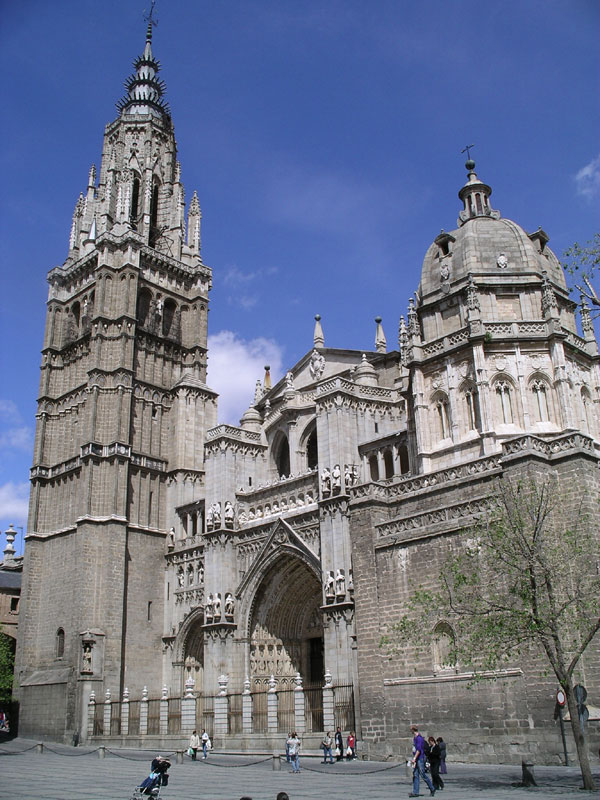
The City of Toledo in Spain was not reconquered until 1085, when King Alfonso VI, King of Leon and Castile, took the City from the Moors. This was an important step in the Reconquista, as Toledo had once been the capital of Visigothic Spain. The City’s Cathedral had been desecrated and used as a mosque by the Moslem invaders of Spain but the people had the pleasure of seeing it blessed and consecrated in the year 1087. It was placed under the advocacy of the Blessed Virgin Mary, as King Alfonso wrote:
“I, Alfonso, Emperor of all Spain by God’s Providence, convened with the Bishops, namely, that for these ten will I preserve the papal honour of Saint Mary of the City of Toledo, which was formerly the See…”
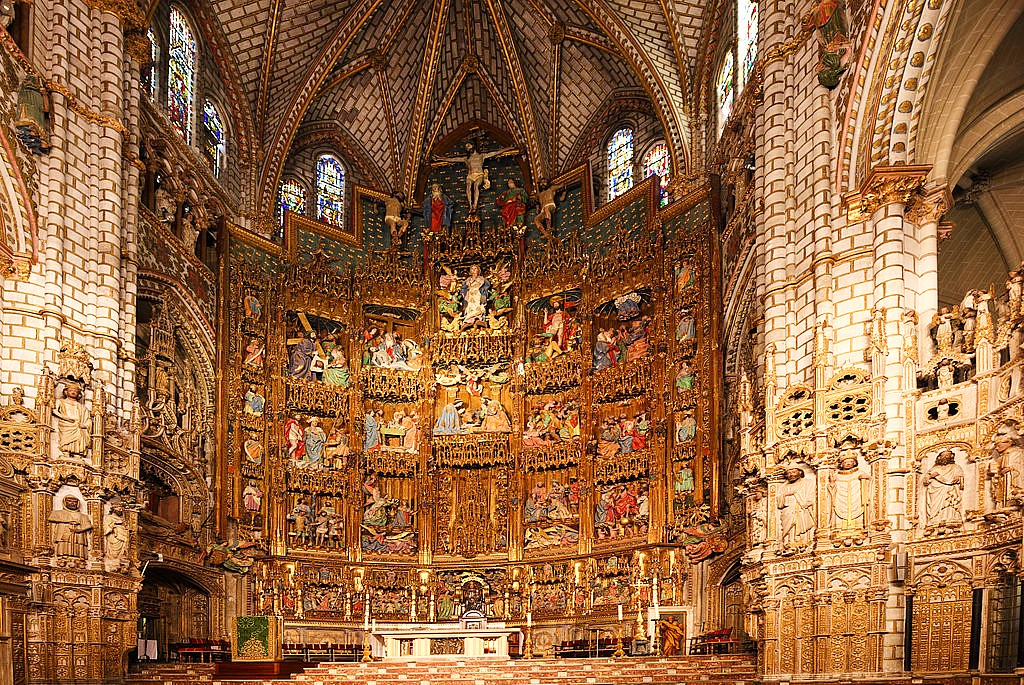
In 1225 a new Cathedral was begun to replace the older one, for which King Fernando III drew up the plans and laid the cornerstone. Fernando’s good friend, the Archbishop Rodrigo Ximenez de Rada, worked very enthusiastically for the completion of the new Cathedral where he was Bishop.
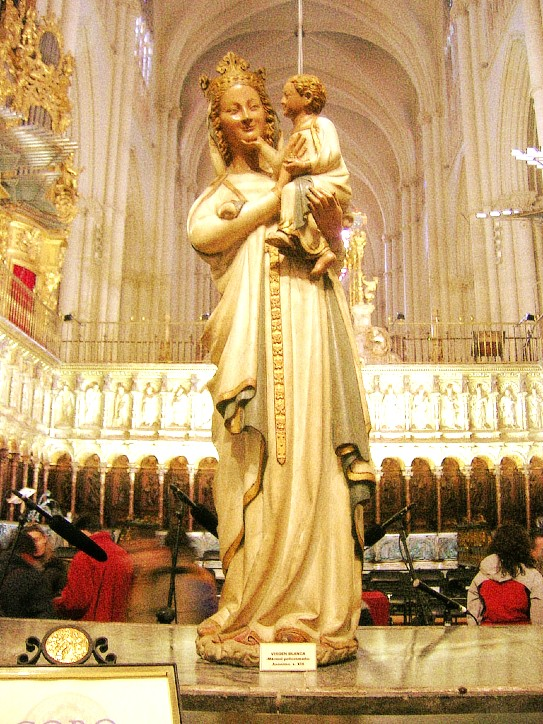
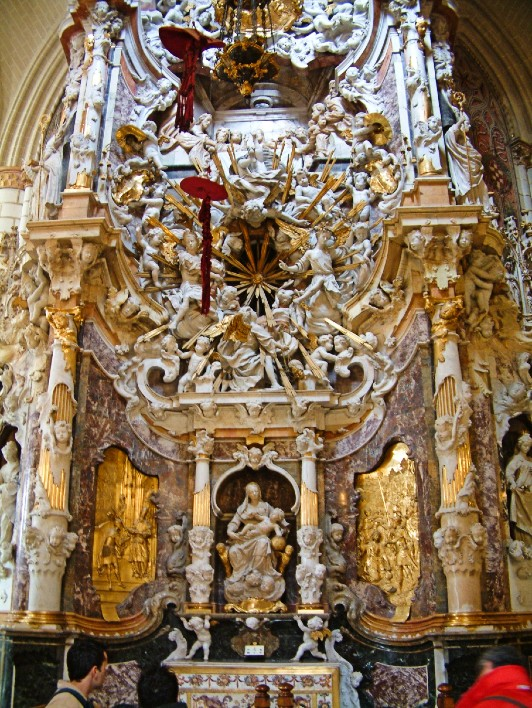
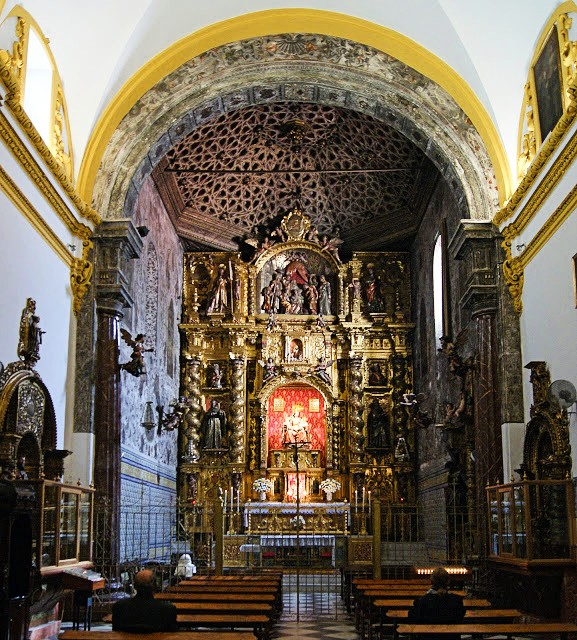
There are so many masterpieces of art and beautiful Shrines in the City of Toledo, Spain, that a visitor may easily miss the White Virgin. She stands atop an Altar in the choir of Toledo’s magnificent Cathedral. It is said that you can live to be 100 years old, visit this wonderful Cathedral once a week for all of your life and still never finish discovering its glories!
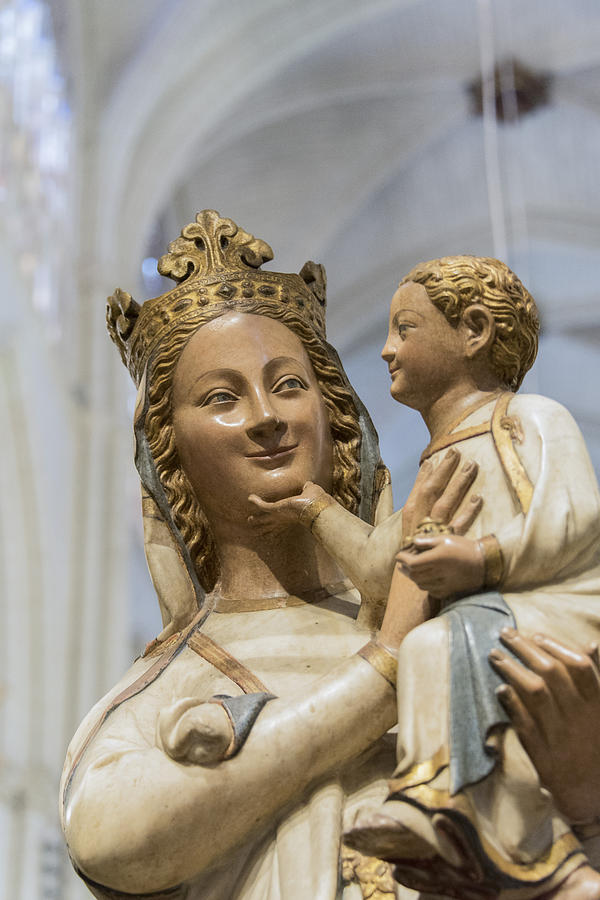
The sacred image of Our Lady is a polychromed alabaster Statue of French origin from the twelfth century. Both Mother and Child are clothed in white, their garments bordered with jeweled gold. Their faces darkened by time, are framed with curly, strawberry-blond hair.
The Statue has also been called the “Smiling Virgin of Toledo;” for the Child’s right hand caresses His Mother’s face, tickling her chin. She responds with a smile that gives this image its popular name. It is also called the “Virgin of Prima” and the “Virgen Blanca.”
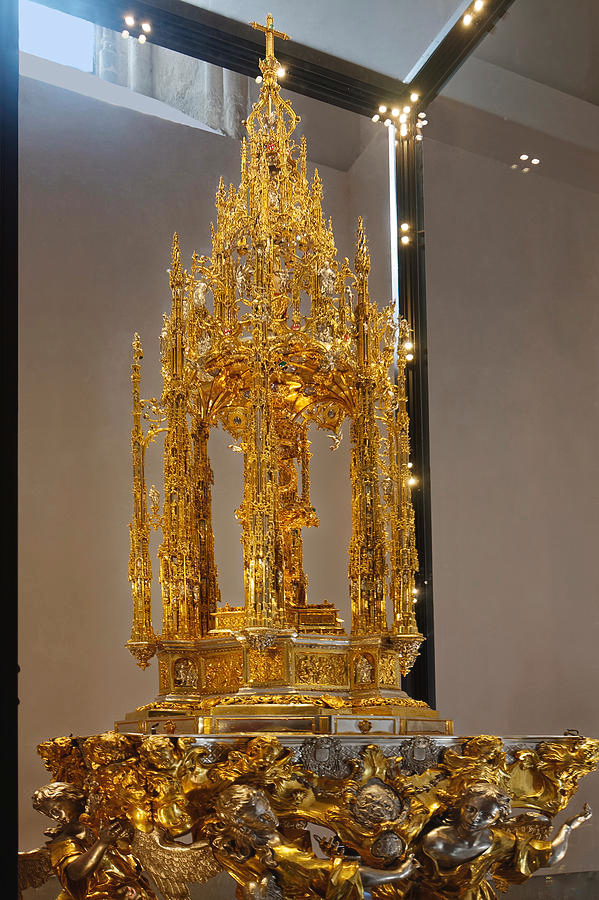
There is also another artifact worthy of special mention and that is the ten foot tall great Monstrance of Arfe. It is made of both silver and gold, inset with precious gems. It took nearly 8 years to construct and is done in a Gothic style that is truly a magnificent work of art.
St Cyrinus of Rome St Daria St Dulcardus Bl Edmund Daniel St Fronto of Périgueux St Fructus of Segovia St Gaudentius of Brescia (Died 410) Bishop St George of Périgueux St Goeznoveus of Leon St Guesnoveus Bl Henry of Segusio St Hilary of Javols / St Hilary of Mende St Hildemarca of Fecamp St Januarius of Sassari St Lucius of Rome St Lupus of Bayeux St Mark of Rome
St Maurus of Pécs OSB (c 1000-c 1075) Bishop, the first Hungarian Benedictine Monk and Abbot, Peace-maker, Writer and Hagiographer.
St Miniato of Florence St Peter of Rome St Protus of Sassari St Recaredo Centelles Abad St Tabitha
Martyrs of Cruz Cubierta: A mother, Blessed María Teresa Ferragud Roig de Masiá and her four daughters, Blessed María Joaquina Masiá Ferragud, Blessed María Vicenta Masiá Ferragud, Blessed María Felicidad Masiá Ferragud and Blessed Josefa Ramona Masiá Ferragud, all nuns, who were Martyred in the Spanish Civil War, on 25 October 1936 in Cruz Cubierta, Alzira, Valencia, Spain.
Forty Martyrs of England and Wales: 40 represent a group of 300+.
Martyred in the Spanish Civil War: • Blessed Alfons Arimany Ferrer • Blessed Recaredo Centelles Abad
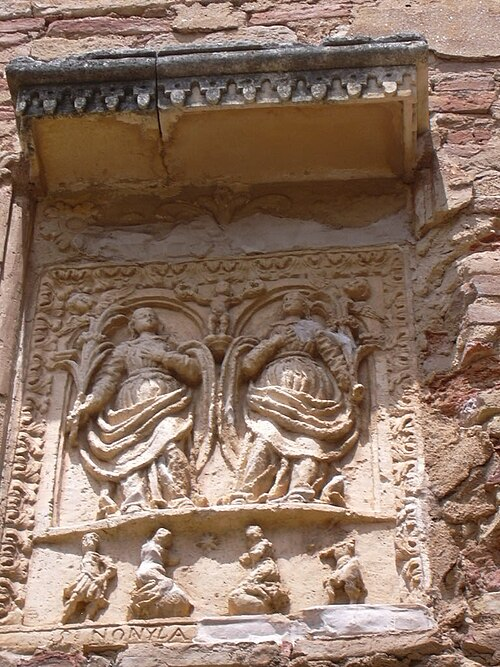
Saints Alodia & Nunilo of Huesca, Spanish sisters and martyrs, born in Huesca, Spain in the 9th century. They were born to a Muslim father and Christian mother, and were raised Christian. When their father died, their mother married another Muslim man who persecuted the girls, imprisoned them, and turned them over to die during the persecution of Abdur Rahman II.
In defiance of thier stepfather’s prohibition that they attend church and his demand that they marry and convert to Islam, they were sent to live with their aunt, who was also Christian, in Castile. In 851, Abd ar-Rahman II issued a decree that all Christian children to a Muslim father had to convert to their father’s religion or be executed. After repeated failed attempts to get the sisters to agree to convert, they were arrested, put in solitary confinement, then “handed over to women of dubious morality to make them change their lifestyle”, and “were also pestered by many suitors to marry”. The sisters still refused, so they were beheaded in Huesca, Spain, on October 22, 851.
Their patronages are: child abuse victims, martyrs, people ridiculed for their piety, runaways, unmarried laywomen.
Carving of Nunilo and Alodia on the collegiate church of Alquézar.
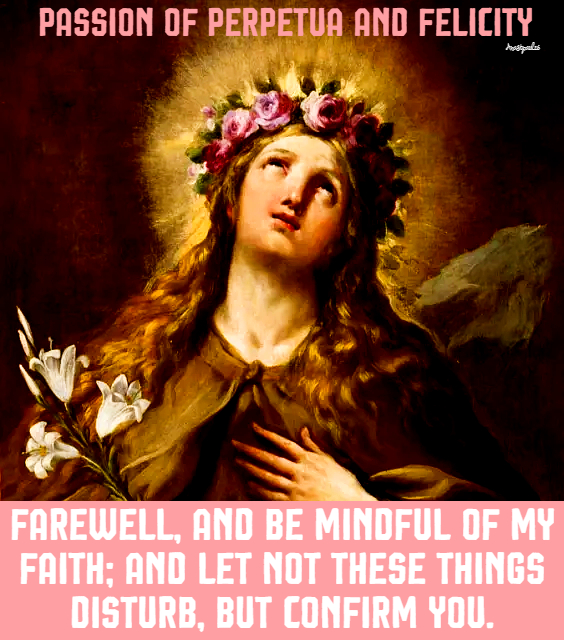
Farewell, and be mindful of my faith; and let not these things disturb, but confirm you.
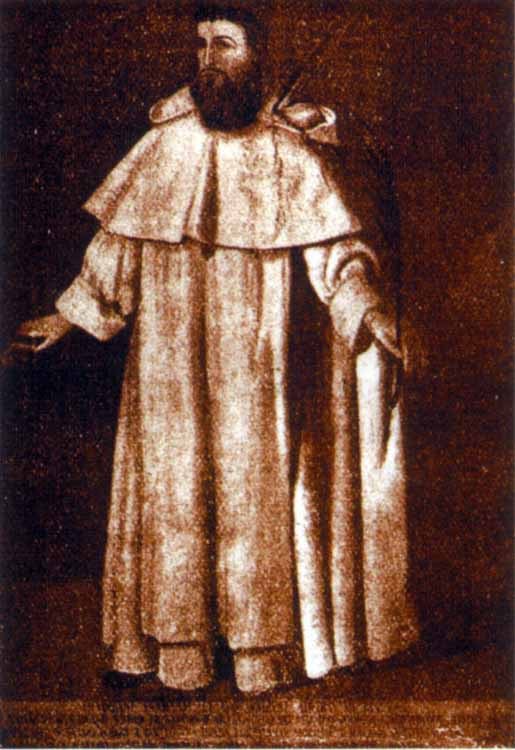
Blessed Sancho of Aragon, priest and martyr. Born a prince (infante) of Spain, he was the fourth son of Blessed James I, King of Aragon. Turning from worldly ways, he joined the Mercedarians (Order of the Blessed Virgin Mary of Mercy), receiving the habit from Saint Peter Nolasco himself.
He became Archbishop of Toledo, Spain n 1266, when he was only 16 years old.
In 1275 he raised troops to engage Marinid armies that had attacked Andalusia. On 21 October 1275 he tried to intercept a numerically superior Marinid army in the battle of Martos but was defeated and taken prisoner. Muslims cut off his hand with the ring of his office, and then martyred him for refusing to apostatise.
But let the world look to this, which accounts banishment a penalty. To them, their country is too dear, and they have the same name as their parents; but we abhor even our parents themselves if they would persuade us against God.
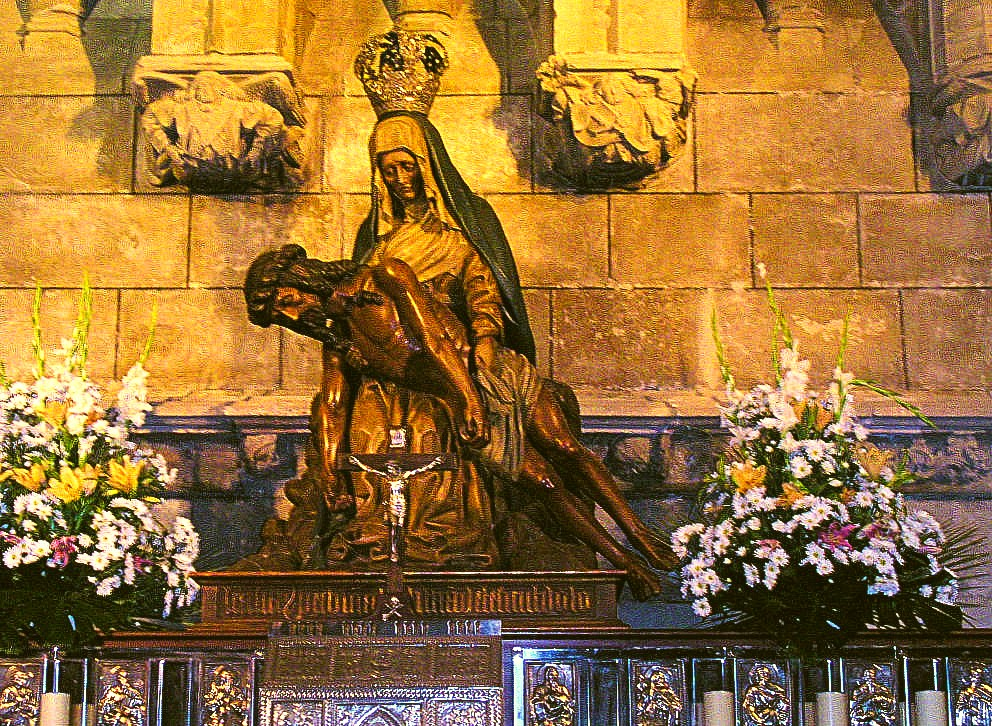
Virgen del Camino / Our Lady of the Way, Valverde de la Virgen, León, Castile and León, Spain (1505) – 19 October:
On 2 July 1505, while watching his sheep, Alvar Simón Fernández saw the Virgin, radiant with light and heard her say: “Go to the city and tell the Bishop to come to this place and install this image my Son wishes to appear here, for the good of this land.” The shepherd answered, “Señora, how will they believe it was you who sent me?” She asked for his slingshot and with it launched a small stone, saying, “When the Bishop sees this stone it will be so large that he will know I have sent you and where you find the stone, is where my Son and I want you to put the image.”
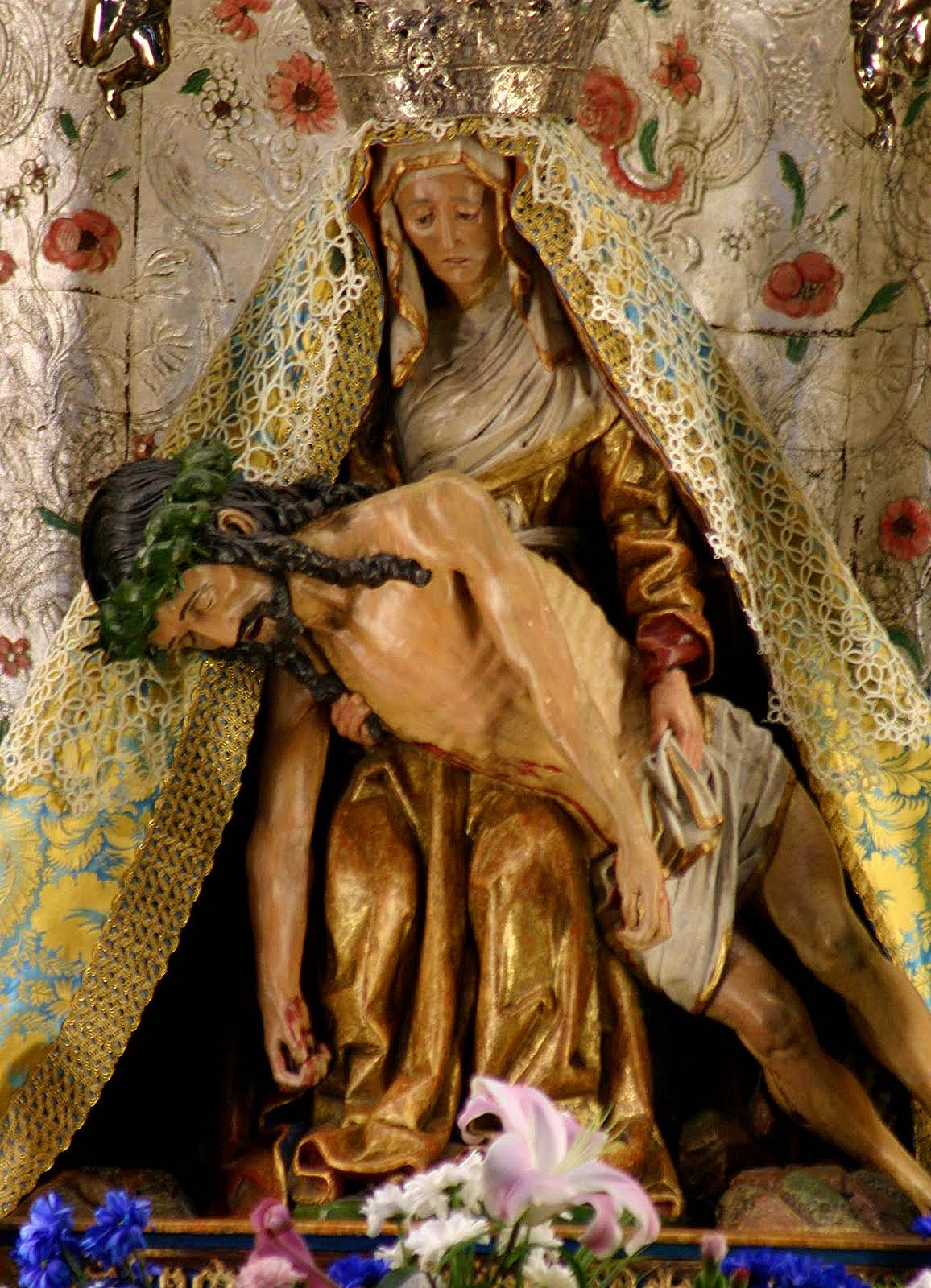
The miraculously-located Shrine was outside the City of León on the Camino de Santiago, the pilgrim road to Compostela, hence the title Virgin of the Way The Virgen del Camino was declared Patron of the León region in 1914. The Statue is a 84 centimetre wooden Pietà, which the Basilica’s website dates to 1514. Its coronation, which Pope Benedict XI authorised in 1917, was carried out on 19 October 1930. The large, modern Sanctuary was completed in 1961 and houses the Statue. The Virgin of the Way is honoured today and on 15 September, the feast of Our Lady of Sorrows.
St Paul of the Cross CP (1604-1775) Priest, Mystic, Preacher, endowed with miraculous powers of healing and prophecy, Founder of the Congregation of the Passion of Jesus Christ known as the Passionists. Canonised on 29 June 1867 by Blessed Pope Pius IX who placed his Feast on 28 April. It was moved in 1969. So great was his eloquence when he spoke of the Passion that both he and his hearers would shed tears and the most hardened hearts were moved to repentance.
Bl Agnes of Jesus St Altinus St Aquilinus of Evreux St Asterius of Ostia St Beronicus of Antioch St Desiderius of Longoret St Ednoth St Ethbin St Eusterius of Salerno St Frideswide
St Laura of Cordoba St Lucius of Rome St Luke Alonso Gorda St Lupus of Soissons St Matthaeus Kohyoe St Pelagia of Antioch
St Peter of Alcantara OFM (1499-1562) Franciscan Friar and Priest, Mystic, Ecstatic, Writer, Preacher, Reformer, Hermit, Apostle of Prayer, Eucharistic Adoration, the Passion and Charity, Miracle-worker.
St Potenzianus of Sens St Ptolemy of Rome St Sabiniano of Sens St Theofrid
Blessed Thomas Hélye (c 1180-1257) Priest, Penitent, Teacher, Missionary and renowned Preacher.
St Varus of Kemet St Verano of Cavaillon — Martyred in the Spanish Civil War: 18 Beati • Blessed Antonio Elizalde Garvisu • Blessed Constantino Miguel Moncalvillo • Blessed Dionisio Arizaleta Salvador • Blessed Emiliano Pascual Abad • Blessed Eusebio de Las Heras Izquierdo • Blessed Ferran Castán Messeguer • Blessed Francesc Solá Peix • Blessed Francisco Marco Martínez • Blessed Francisco Milagro Mesa • Blessed Francisco Simón Pérez • Blessed Josep Ferrer Escolà • Blessed Josep Ribé Coma • Blessed Julio Leache Labiano • Blessed Juan Senosiaín Zugasti • Blessed Manuel Font y Font • Blessed Narcís Simón Sala • Blessed Nicolas Campo Giménez • Blessed Pere Vives Coll
Blessed Domenico of Perpignano was a Mercedarian (the Royal, Celestial and Military Order of Our Lady of Mercy and the Redemption of the Captives) friar of the Holy Savior convent on Mallorca, Spain. He freed 153 Christians enslaved and imprisoned by Muslims for their faith in Tunisia.
Members of Blessed Domenico’s order took a fourth vow: to die, if necessary, for a Christian captive who is in danger of losing their faith.
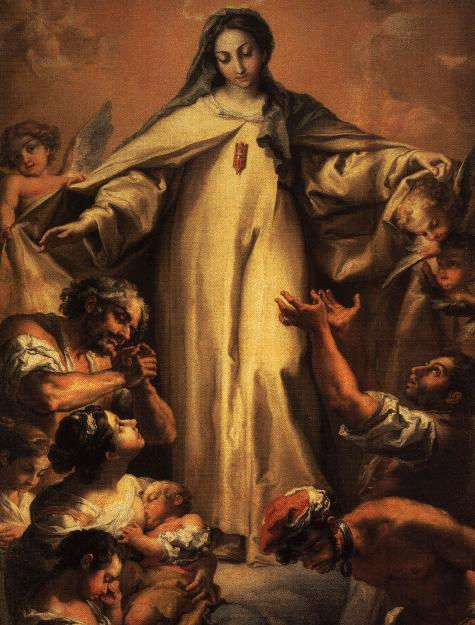
Our Lady of Mercy – From the Generalate of the Mercedarian Order.
St. Callistus of Huesca, was a Spanish martyr and companion of St. Mercurialis. Callistus was born in Huesca, in Aragon, Spain. Callistus went to France with St. Mercurialis to fight against the Saracens/Moors (Muslims), dying in battle in 1003.
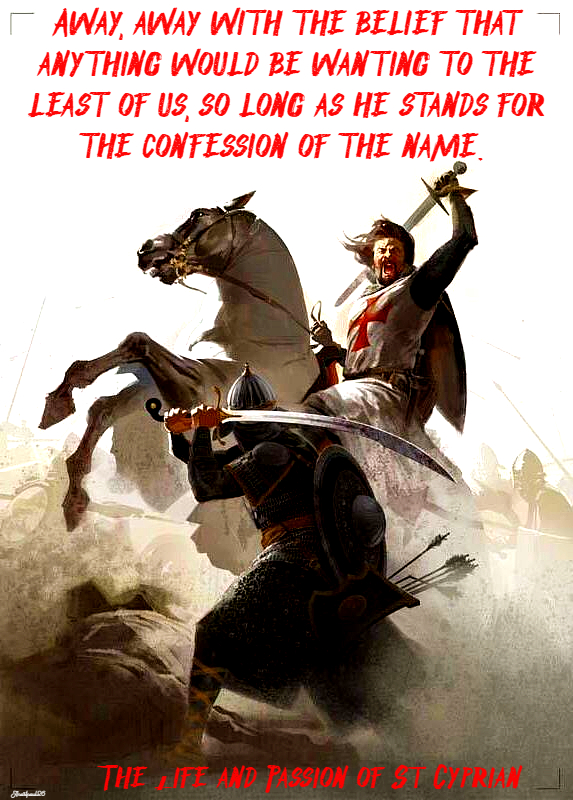
Away, away with the belief that anything would be wanting to the least of us, so long as he stands for the confession of the Name.
Virgen de los Remedios / Virgin of the Remedies, Rubite, Granada, Spain (12th Century) – 15 October:
The Virgin of Los Remedios is the title of the Virgin Mary which was promoted by the Trinitarian Order, founded in the late 12th century. The devotion became tied to the re-conquest of Spain, then still at its height. In the following century it spread to other parts of Europe. When Spain began the exploration and conquest of the Americas, it was a favourite devotion of the Spanish conquistadores.
It remains a popular devotion in Spain. Patronages – Diocese of San Cristóbal de La Laguna, the island of Tenerife, and the city of Cali, Colombia.
St Antiochus of Lyon St Aurelia of Strasbourg (Died 1027) Virgin Recluse, Princess St Callistus of Huesca St Cannatus of Marseilles Bl Cipriano Alguacil Torredenaida St Euthymius the Younger Bl Josefa Martínez Pérez St Leonard of Vandoeuvre Bl Narcis Basté y Basté Bl Pere Verdaguer Saurina Bl Ramón Esteban Bou Pascual St Sabinus of Catania St Severus of Trier
St Thecla of Kitzengen OSB (Died c 790) a Benedictine Nun and Abbess. Born in England, she went to Germany to assist Saint Boniface in his missionary labours.
St Willa of Nonnberg — Martyrs of Cologne: A group of 360 Christian soldiers martyred together in the persecutions of Diocletian and Maximian. They were martyred in 303 outside the city walls of Cologne, Germany.
Martyred in the Spanish Civil War: • Blessed Cipriano Alguacil Torredenaida • Blessed Josefa Martínez Pérez • Blessed Narcis Basté y Basté • Blessed Pere Verdaguer Saurina • Blessed Ramón Esteban Bou Pascual
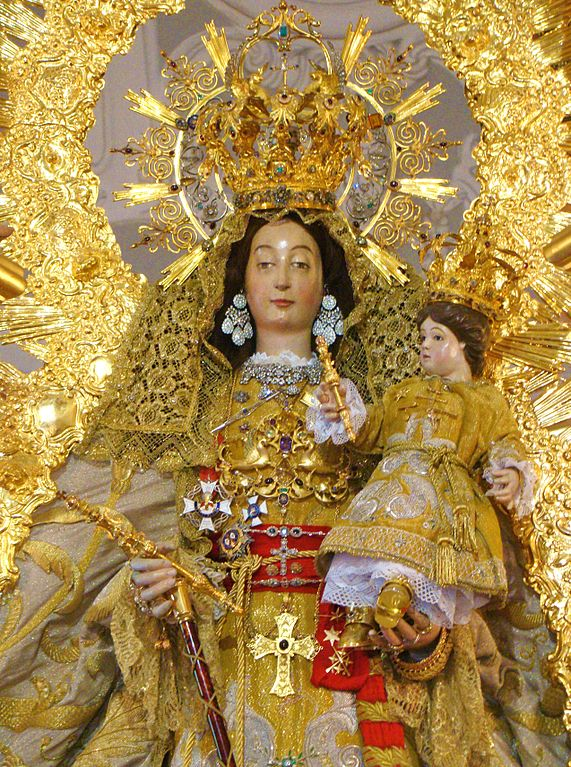
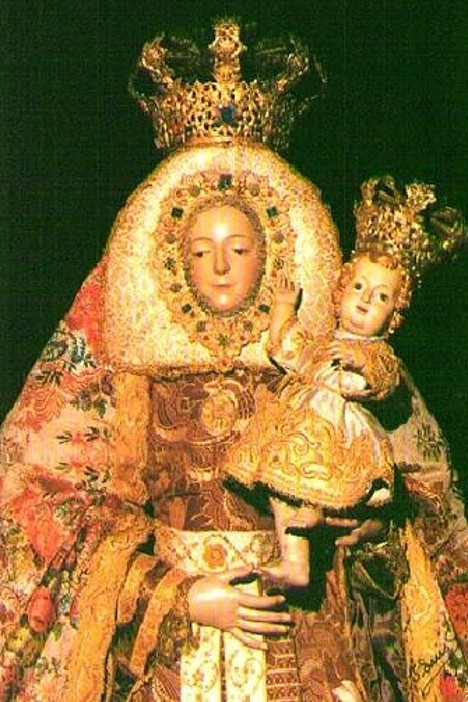
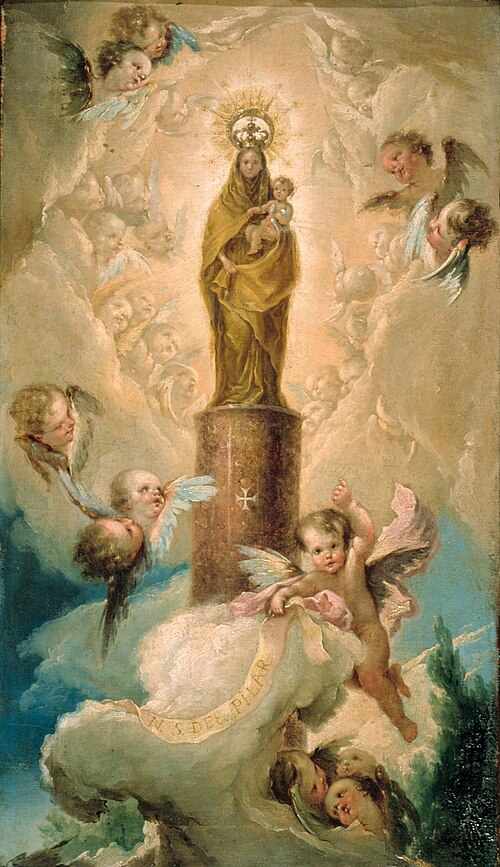
Nossa Senhora Aparecida / Our Lady Aparecida, Aparecida, Sao Paulo, Brazil (1717) – 12 October: Also known as – Our Lady Who Appeared: Nuestra Señora del Pilar / Our Lady of the Pillar – 12 October:
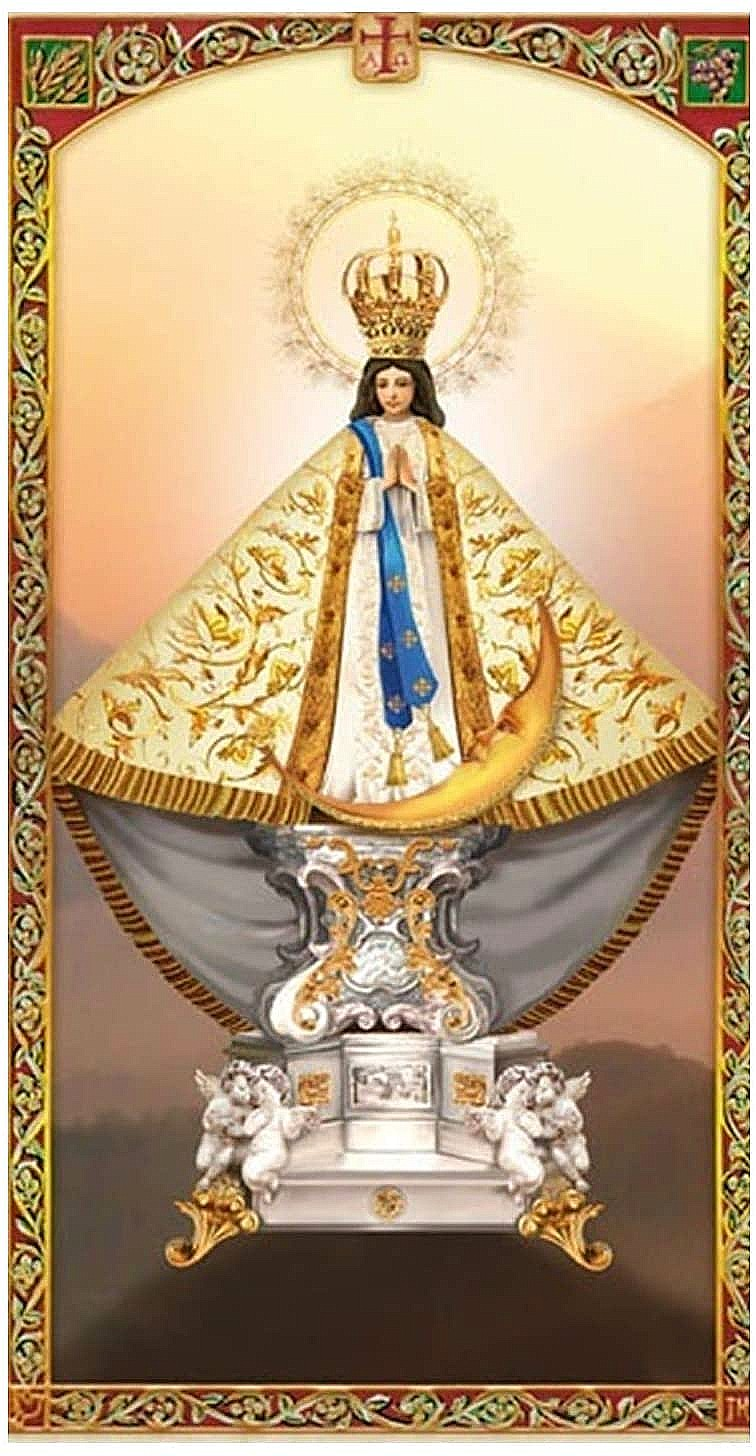
Virgen de Zapopan / Our Lady of Zapopan, Zapopan, Jalisco, Mexico, (1541) – 18 January, 12 October:
Today the village of Zapopan is a quiet little place not many miles from Guadalajara, reached by an excellent highway. Its tranquility and religious atmosphere must be a far cry from pre-Conquest times, when it was a feudal district and tributary of the powerful King of Tonala. In those days the Indians of the district worshiped an idol called Teopintzintl, “The Child God,” to which they offered gifts of hare and partridge. When the kingdom of Tonala bowed to Nuno de Guzman in 1530, Zapopan came under Spanish dominion. The Indian Queen, Chihuapili Tzapotzinco, ordered all the chieftains under her rule, to render their obedience to the Spanish Crown and in March of 1530 the Governor of Atemajac, under whose jurisdiction lay Zapopan, complied with this order. The Mixton War of 1541, however, depopulated the district and the Commander of Tlaltenango, Francisco de Bobadilla, obtained the Viceroy’s permission to repopulate Zapopan with Indians from Tlaltenango, thus lessening the chance of another uprising.
On the eighth of December, 1541, the people of Zapopan was resettled in accordance with the agreement, and on that day, the Franciscan Fray Antonio de Segovia, gave to the newly settled colony, a small image of Our Lady of the Immaculate Conception. For ten years it had accompanied him on his apostolic journeys. In fact, only a short while before, while the Mixton War was still in progress, Fray Antonio, with his missionary companion Fray Miguel de Bolonia, had gone among the warring Indians, the image about his neck, exhorting them to make peace with the Spaniards. It is related that while Fray Antonio was preaching, the Indians saw luminous rays issuing from the image of Our Lady, and that this fact, as much as his preaching, caused them to stop fighting. In thirty-six hours Fray Antonio de Segovia brought to the Viceroy for pardon, more than six thousand Indians, who had laid down their arms. From that time Fray Antonio called the image La Pacificadora, “She Who Makes Peace.”
The image is made of paste – pieces of cornstalk, smoothed and cemented together with glue. It is little more than 30 centimetres in height and represents the Virgin Mary under her title of the Immaculate Conception. The hands, joined before the breast, are of wood. The original sculpture donated by Fray Antonio de Segovia consisted only of the upper half, it is believed, the lower section having been added at a later date. As the lower half is not in proportion to the upper, the reconstruction gives a stunted effect to the image. However, nowadays the Statue is always covered with rich vestments of fabric, the disproportion is not apparent.
In its sculptured form, the Statue represents Our Lady standing with her feet upon a rudely formed crescent moon. She wears a red tunic and a dark blue mantle outlined in gold. One may find much to be desired in the image, considered as a work of art. Yet we must remember that it has the honour of being the first image of the Virgin Mary venerated in the State of Jalisco and that it has seen the Church, in that part of Mexico, grow from the tiniest seed to the great, many-branched tree of the present-day Catholic Faith. Furthermore, for over four centuries, Our Lady of Zapopan has been a constant channel of heavenly favours to the people of Jalisco. A beautiful Church has bee built to house and enshrine her and it remains a vital source of devotion and pilgrimage. Our Lady under this title is celebrated on 18 January and 12 October.
St Amelius of Mortara St Amicus of Mortara
St Cyprian St Domnina of Anazarbus St Edisto St Edistius of Ravenna
St Pantalus of Basle St Priscian the Martyr St Relindis
St Rodobaldo II Cipolla of Pavia (Died 1254) Bishop of Pavia. St Roboaldo II is remembered as a zealous shepherd and for his intense charitable activity.
St Wilfrid (c 633-709) Bishop, Abbot, Founder of Monasteries and Churches.
Martyred in the Spanish Civil War: • Blessed Bartolomé Caparrós García • Blessed Eufrasio of the Child Jesus • Blessed José González Huguet • Blessed Pedro Salcedo Puchades • Blessed Rafael Lluch Garín
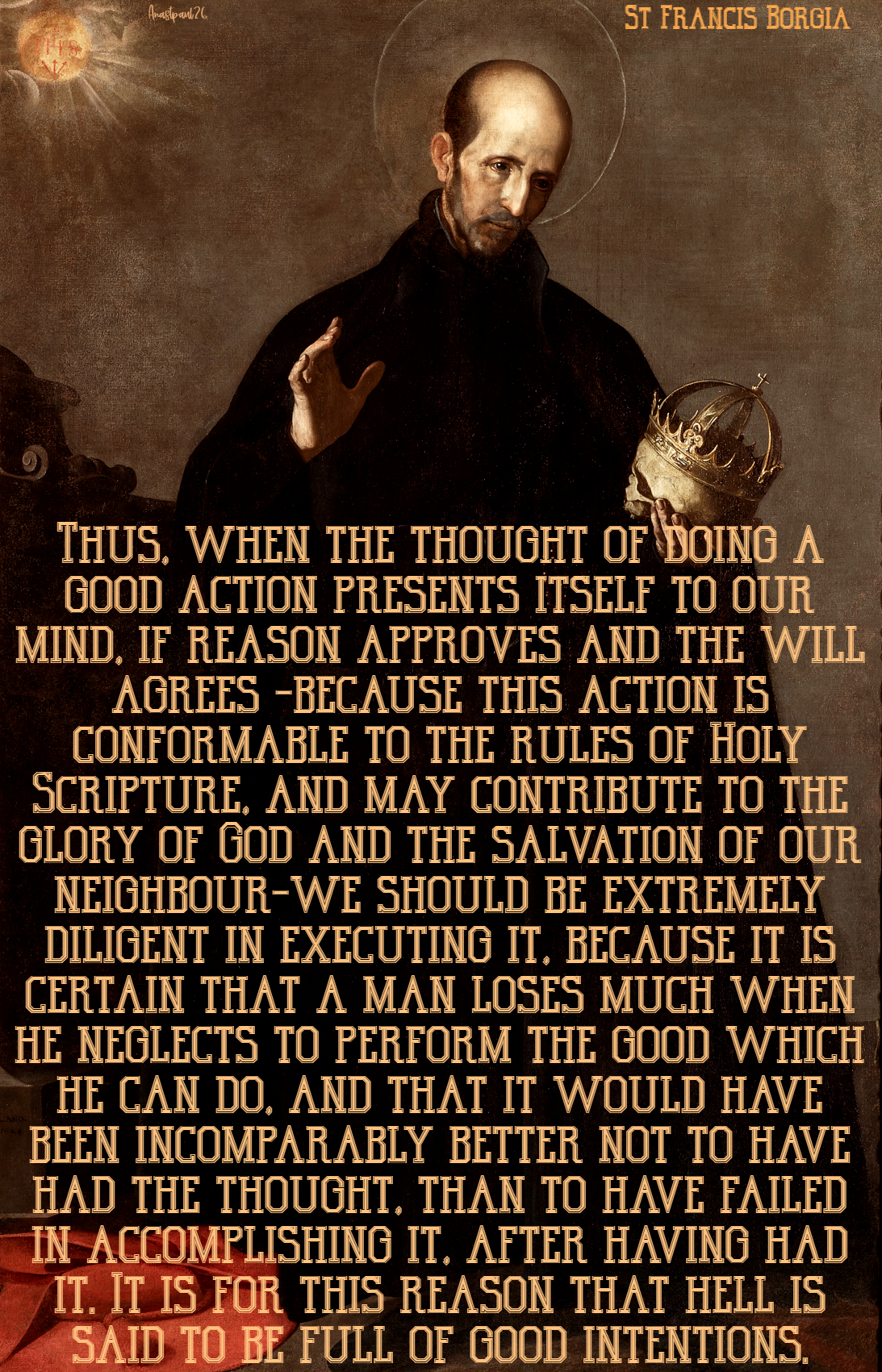
Thus, when the thought of doing a good action presents itself to our mind, if reason approves and the will agrees -because this action is conformable to the rules of Holy Scripture, and may contribute to the glory of God and the salvation of our neighbour-we should be extremely diligent in executing it, because it is certain that a man loses much when he neglects to perform the good which he can do, and that it would have been incomparably better not to have had the thought, than to have failed in accomplishing it, after having had it. It is for this reason that hell is said to be full of good intentions.
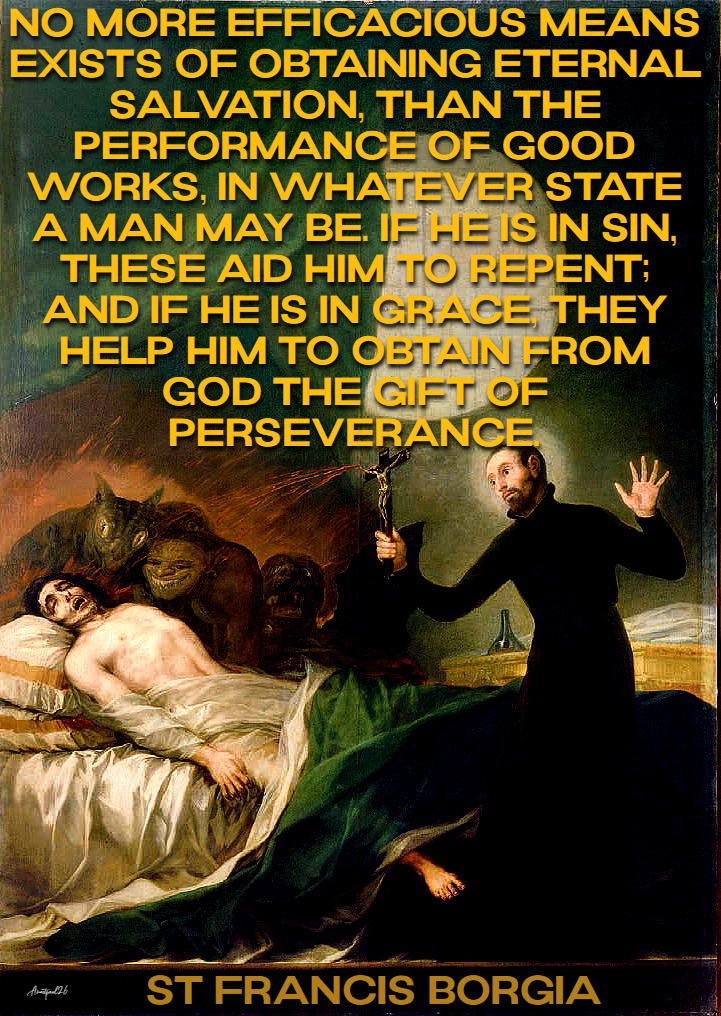
No more efficacious means exists of obtaining eternal salvation, than the performance of good works, in whatever state a man may be. If he is in sin, these aid him to repent; and if he is in grace, they help him to obtain from God the gift of perseverance.
While dressing in the morning.
Enter into a profound sentiment of confusion, in considering that you are well clothed, and that Jesus Christ was fastened naked to a cross for love of you.
Thank Him for having assumed our nature, although He knew at the time how ungrateful we should be for this favour; and also for having given us clothes to cover us, although we have so often despised the nuptial robe of grace, with which He clothed us. While dressing yourself, yon are performing one of the works of mercy, which is to clothe the naked: implore Him to accept this action, in consideration of the garment of ignominy with which He was covered in the palace of Herod.
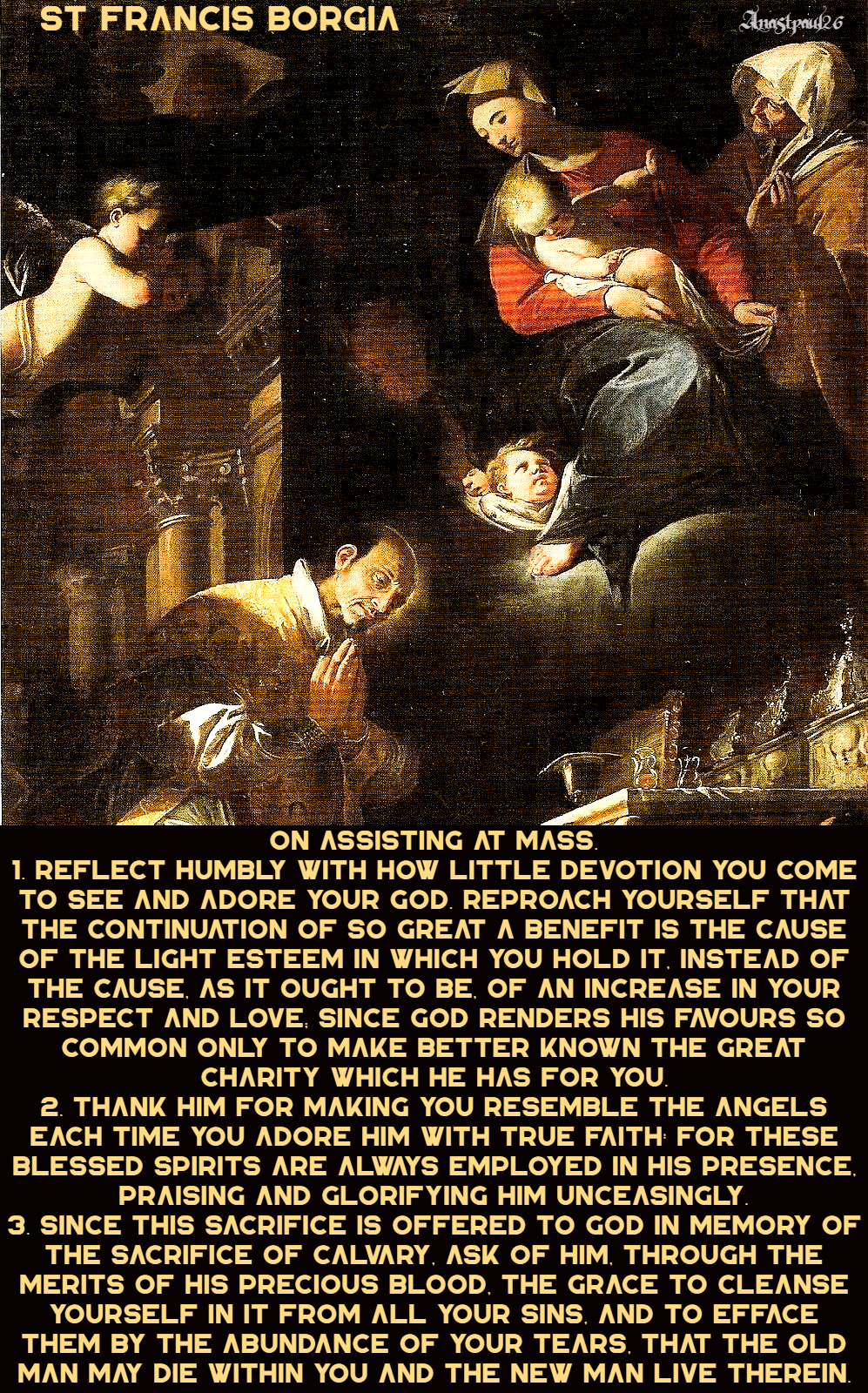
On assisting at Mass.
Reflect humbly with how little devotion you come to see and adore your God. Reproach yourself that the continuation of so great a benefit is the cause of the light esteem in which you hold it, instead of the cause, as it ought to be, of an increase in your respect and love; since God renders His favours so common only to make better known the great charity which He has for you.
Thank Him for making you resemble the Angels each time you adore Him with true faith: for these blessed spirits are always employed in His presence, praising and glorifying Him unceasingly.
Since this sacrifice is offered to God in memory of the sacrifice of Calvary, ask of Him, through the merits of His precious blood, the grace to cleanse yourself in it from all your sins, and to efface them by the abundance of your tears, that the old man may die within you and the new man live therein.
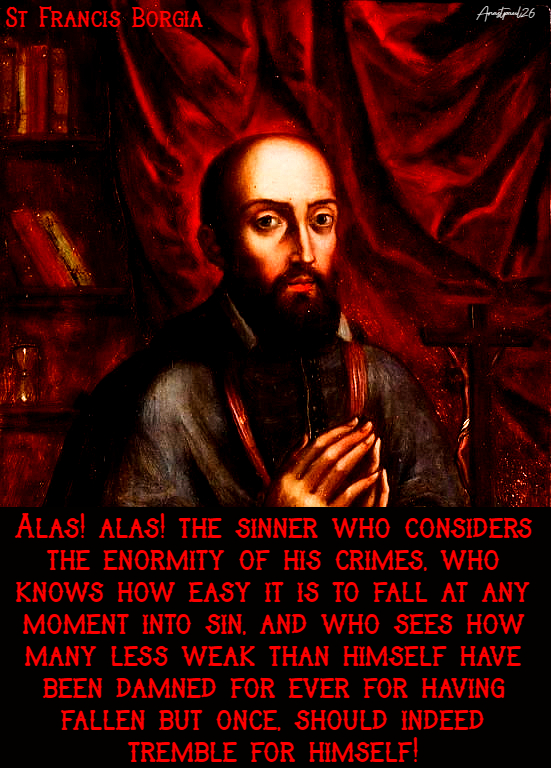
Alas! alas! the sinner who considers the enormity of his crimes, who knows how easy it is to fall at any moment into sin, and who sees how many less weak than himself have been damned for ever for having fallen but once, should indeed tremble for himself!
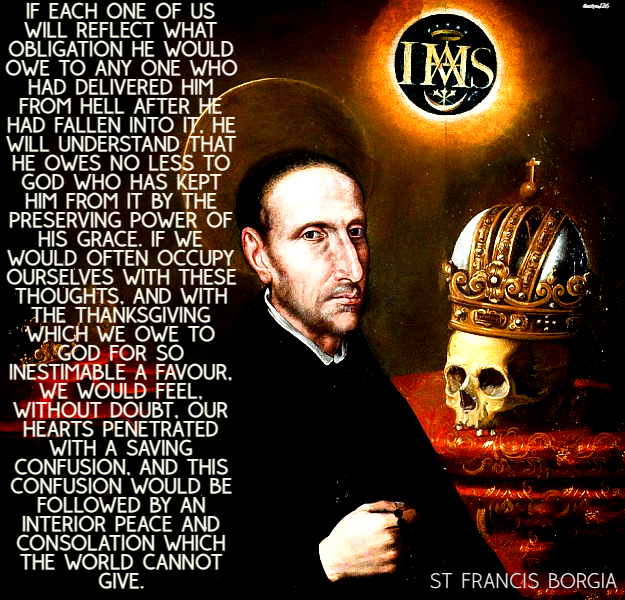
If each one of us will reflect what obligation he would owe to any one who had delivered him from hell after he had fallen into it, he will understand that he owes no less to God who has kept him from it by the preserving power of His grace. If we would often occupy ourselves with these thoughts, and with the thanksgiving which we owe to God for so inestimable a favour, we would feel, without doubt, our hearts penetrated with a saving confusion, and this confusion would be followed by an interior peace and consolation which the world cannot give.
Nuestra Señora del Fresno / Our Lady of Fresno, Grado, Asturias, Spain (9th Century) – 8 and 28 September:
The Sanctuary of the Virgen del Fresno is one of the most visited Sanctuaries in the central area of Asturias despite the difficulty of its access. The Sanctuary is located on the Camino de Santiago hence it’s popularity dating from the 9th Century when pilgrims stopped to rest in the hostel provided. They were known as “the Novenarios” as, during their rest, they prayed the St Michael Novena before his Feast Day on 29 September.
In honour of the Virgen del Fresno two festivals are held, one on 8 September and the other 28 of the same month preceded by a Novena that has traditionally started at four in the afternoon.
The current image dates from 1975, since the original was lost in the looting it suffered in 1936. It is made of cedar from Lebanon, made in Madrid. She is dressed and holds the Child in her arms and the Rosary between her fingers. She remain above her Altar and another processional image accompanies the Novena.
St Wenceslaus (907-935) King of Bohemia, Martyr (Optional Memorial)
Bl Aaron of Auxerre St Alodius of Auxerre St Annemond of Lyons St Bardomianus
Blessed Bernardine of Feltre OFM (1439-1494) Franciscan Priest and Friar, Missionary Preacher, Poet, peace-maker, Civil protestor against the practice of usury, defender of the poor. He was a true ‘child prodigy’ – by the time he was 12 he was fluent in Latin and at the age of 15 he composed a poem and read it in the Town Square to celebrate a local peace treaty. He is remembered most especially, in connection with the “Monti di Pietà” “Mount of Piety” of which he was the reorganiser and, in a certain sense, the Founder, together with the Blessed Michele Carcano.
St Machan St Martial of North Africa St Martin of Moyenmoutier St Paternus of Auch St Privatus of Rome St Salonius of Geneva St Silvinus of Brescia
St Simón de Rojas O.SS. (1552-1624) , “Father Ave Maria”/ “Apostle of the Ave Maria,” Religious Priest of the Trinitarian Order, Founder of the Lay Apostolate of the Congregation of the Slaves of the Sweet Name of Mary, Marian Devotee, Theologian, Philosopher, Spiritual Writer, Apostle of Charity, Apostolic Visitor.
St Solomon of Genoa St Stacteus St Tetta of Wimborne Bl Thiemo St Willigod of Moyenmoutier St Zama of Bologna — Augustinian Martyrs of Japan: The first Augustinian Missionaries arrived in Japan in 1602 and met with immediate success; many were brought to the faith; many of them became Augustinians; and many of them were martyred in the periodic persecutions of Christians. This memorial commemorates all of them, whether they have a sanctioned Cause for Canonisation or not. They include: • Blessed Bartolomé Gutiérrez Rodríguez • Blessed Ferdinand Ayala • Blessed Francisco Terrero de Ortega Pérez • Blessed Ioannes Mukuno Chozaburo • Blessed Laurentius Kaida Hachizo • Blessed Mancius Yukimoto Ichizaemon • Blessed Martín Lumbreras Peralta • Blessed Melchor Sánchez Pérez • Blessed Michaël Ichinose Sukezaemon • Blessed Pedro de Zúñiga • Blessed Petrus Sawaguchi Kuhyoe • Blessed Thomas Jihyoe of Saint Augustine • Blessed Thomas Terai Kahyoe • Blessed Vicente Simões de Carvalho • Saint Magdalena of Nagasaki
Martyrs of Antioch – 37 saints: A group of 30 soldiers and 7 civilians who were murdered together for their faith. The names that have come down to us are – Alexander, Alphinus, Heliodorus, Mark, Neon, Nicon and Zosumus. c 303 at Antioch, Pisidia (in modern Turkey).
Martyrs of China – 120 saints: A common memorial for the hundreds of the faithful, lay and clergy, who have died for their faith in the last couple of centuries in China.
Martyred in the Spanish Civil War: • Blessed Amalia Abad Casasempere de Maestre • Blessed Francesc Xavier Ponsa Casallach • Blessed Josep Casas Juliá • Blessed Josep Casas Ros • Blessed Josep Tarrats Comaposada • Blessed María Fenollosa Alcaina
Matka Boża Leśniańska / Blessed Mother of Leśna, Leśna Podlaska, Biała Podlaska, Lublin, Poland (1683) – 26 September:
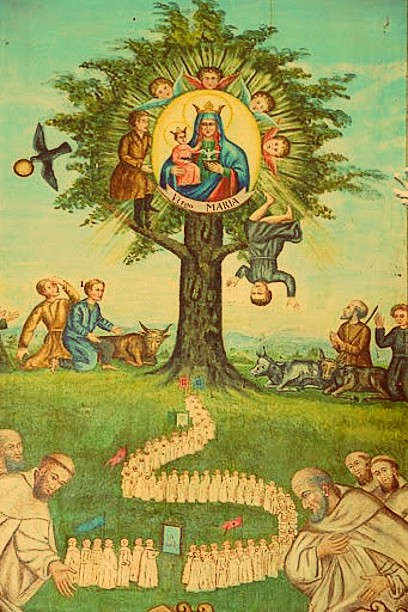
The Leśnia Sanctuary begins on 26 September 1683. On that day, two shepherds – Miron Makaruk and Aleksander Stelmaszuk – looking for the lost cattle in the bushes, noticed a stone image of the Mother of God hanging on a wild pear tree, which gave an extraordinary glow. Wanting to take the painting off, one of the bravest young men climbed the tree but each time fell to the ground. The local inhabitants, seeing what was happening, began to pray fervently. Soon, Zabłocki’s elders from nearby Bordziłówka arrived and only he, as an unusually prayerful man, took the painting off the tree. Droplets of “sweat” appeared on the image and this phenomenon continued for a long time. Then the painting was taken to the manor in Bukowice.
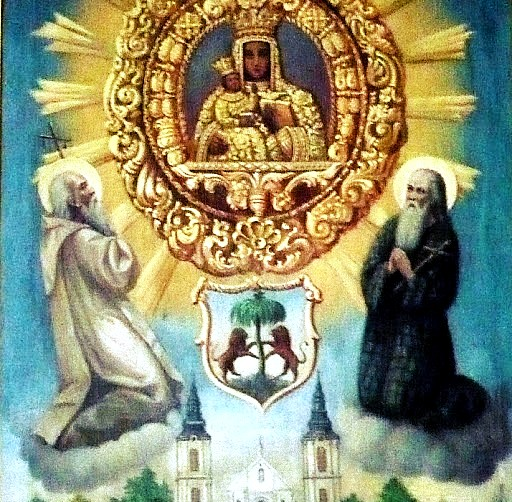
This extraordinary find deeply touched the religious and secular authorities of the time. Soon a wooden Church was erected on the site of the appearance of the Image. On 26 September 1695, a Parish was established in Lesna. From the very beginning, the Image attracted crowds of believers who experienced many favours thanks to the Blessed Mother, especially cures of illnesses. The Bishop of Lutsk, Franciszek Prażmowski, issued a decree in 1700, in which he stated that the appearance of the Image should be considered miraculous.
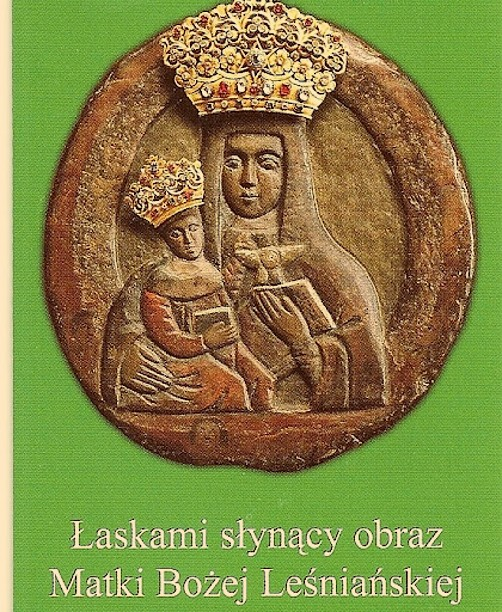
In the Lesnian Image, Mary is presented, embracing the Child Jesus with her right arm. The Child Jesus is holding the book with his right hand and his left hand is raised up in a gesture of teaching. Mary, standing in half-figure, is facing the viewer. In her left hand she holds an open book, on which, with outstretched wings, a dove – a symbol of the Holy Spirit – is supported. The figure of the Mother of God is covered with a coat.
The image of the Mother of God is a relief carved in field stone. The dimensions of the Image are: width 29.3 cm, height 31.4 cm, thickness 4.6 cm, weighs 9.5 kg.
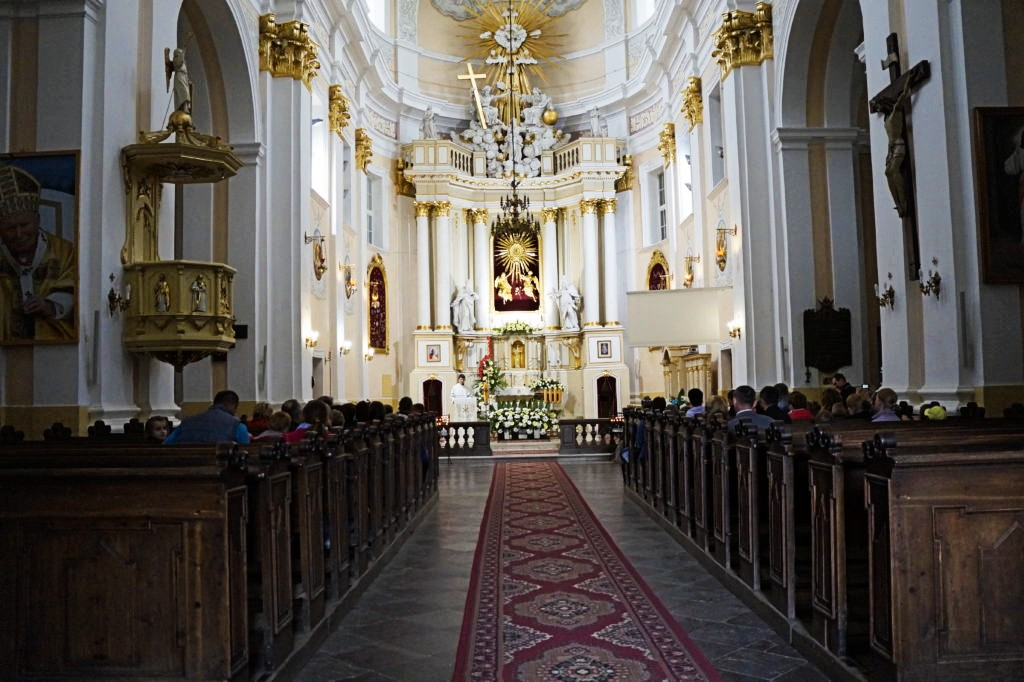
On the site of the appearance of the Image of the Mother of God in 1718. a small Church was built. It exists to this day and is called the “Chapel of the Appearance of the Miraculous Image.” In 1727, the Parish of Leśna and the care of the Miraculous Image were taken over by the Pauline Fathers from Jasna Góra. They began the construction of a magnificent Church, which was erected in the years 1731 – 1758. It was consecrated under the invocation of the “Nativity of the Blessed Virgin Mary and the Holy Apostles Peter and Paul” on 8 September 1758. Huge crowds of the faithful of the Latin and Uniate rite were drawn to the Leśnia Sanctuary.
The situation changed with the partitions of Poland, when Leśna found itself under the Russian partition. After the fall of the January Uprising, the Lesnian Sanctuary found itself in a desperate situation. As part of the repression for helping the insurgents, on the night of 27-28 October 1864 , the Pauline Fathers were deported from Leśna. It was then, that the Bishop of Janów, Beniamin Szymanski, ordered to secretly take out the Miraculous Image and put a copy in its place. It was done in 1865. Soon the tsarist government abolished the Podlasie Diocese. The exiled Bishop took the Miraculous Picture with him to Łomża. He put it in the Church of the Benedictine Sisters. In 1875, the Church in Leśnia was taken over for the purposes of the Orthodox Church. Then the pilgrimages stopped. In 1889, an Orthodox nunnery was established in Lesna. It was to become the centre of Russification of Poles. In 1905 Tsar Nicholas II came to Lesna, whose relative was the superior of the nuns of Leśna. After the outbreak of World War I, the sisters left Leśna and took with them a copy of the painting of the Mother of God, still being firmly convinced that it was the original painting.
On 16 August 1915, the temple in Leśnia returned to Catholic worship. On 25 May 1919 . The Pauline Fathers returned to Lesna and immediately began renovation works in the Sanctuary. First of all, the search for the Miraculous Picture began, which was not found until 5 May 1926 in Łomża. It happened thanks to Fr. Aleksander Łaziński. After the canonical trial conducted by Bishop H. Przeździecki, the Miraculous Image returned in a triumphant parade from Siedlce to Leśna on 25 September 1927. It was a great celebration for the entire Podlasie Diocese and over 25,000 people attended this event. In the interwar period, the Pauline Fathers decorated the Sanctuary. They looked after the pilgrims who were again in large numbers at the feet of their Lesnian Mother.
In 1939, the difficult time of the Nazi occupation began. In the fall of 1940, the Germans occupied the Monastery and expelled the Pauline Fathers. After the war, in 1951, under the direction of the Prior – Father Jerzy Tomziński, the Church received a Pulpit and an Organ.
On 18 August 1963 , the Primate of Poland, Cardinal Stefan Wyszyński, together with the Bishop of Podlasie, Ignacy Świrski, crowned the Miraculous Image with papal crowns. From 11 to 12 June 1970, Cardinal Karol Wojtyła stayed in Leśna. On 25 September 1977, the 50th anniversary of the return of the Miraculous Image was solemnly celebrated. In 1983, the solemn celebrations of 300 years of the appearance of the Miraculous Image took place and in 1984 the Church in Leśnia was elevated to the rank of a Minor Basilica. In 1992, a break-in was made to the temple in Leśnia and attempts were made to steal the golden crowns from the Miraculous Image. In 1995, the 300th anniversary of the establishment of the Parish in Leśna Podlaska was celebrated. This time the ceremony was presided over by the Primate of Poland, Cardinal Józef Glemp. In 1996, works on frescoes and paintings in the Basilica began and they were completed in 2002. On 26 September 2019, the Leśnia Sanctuary celebrated the 100th anniversary of the return of the Pauline Order to Leśna Podlaska.
St Cosmas(Optional Memorial) St Damian(Optional Memorial) (Died c 286 ) Martyrs. Twin brothers and Physicians, Apostles of Charity, Evangelists – born in the 3rd century, of Arabic descent and died by being tortured, without suffering any injury and finally they were beheaded c 286 in Aegea, Cilicia (modern Ayas, Turkey). The Martyr twins are remembered in the Roman Canon of the Mass in the prayer known as the Communicantes (from the first Latin word of the prayer). They are also recalled in the Litany of the Saints and in the older form of the Roman rite, in the Collect for Thursday in the Third Week of Lent, as the Station Church for this day is Santi Cosma e Damiano.
St Nilus the Younger (910-1005) Abbot and Confessor and Founder of Italo-Greek Monasticism in southern Italy.. St Nilus was a charismatic leader and leading spiritual personality of his time.
St Senator of Albano St Vigilius of Brescia — Martyrs of Korea – 12 saints: Twelve lay people in the apostolic vicariate of Korea who were imprisoned, tortured and martyred together in the persecutions in Korea. • Saint Agatha Chon Kyong-Hyob • Saint Carolus Cho Shin-Ch’ol • Saint Catharina Yi • Saint Columba Kim Hyo-Im • Saint Ignatius Kim Che-Jun • Saint Iulitta Kim • Saint Lucia Kim • Saint Magdalena Cho • Saint Magdalena Ho Kye-Im • Saint Magdalena Pak Pong-Son • Saint Perpetua Hong Kum-Ju • Saint Sebastianus Nam I-Gwan They were beheaded September 1839 in Seoul Prison, South Korea and Canonised on 6 May 1984 by St Pope John Paul II.
Martyred in the Spanish Civil War: • Blessed Amalia Abad Casasempere de Maestre • Blessed Andreu Felíu Bartomeu • Blessed Antonio Cid Rodríguez • Blessed Josefa Romero Clariana • Blessed Manuel Legua Martí • Blessed María Jord´ Botella • Blessed Pau Castell´ Barber´ • Blessed Teresa Rosat Balasch
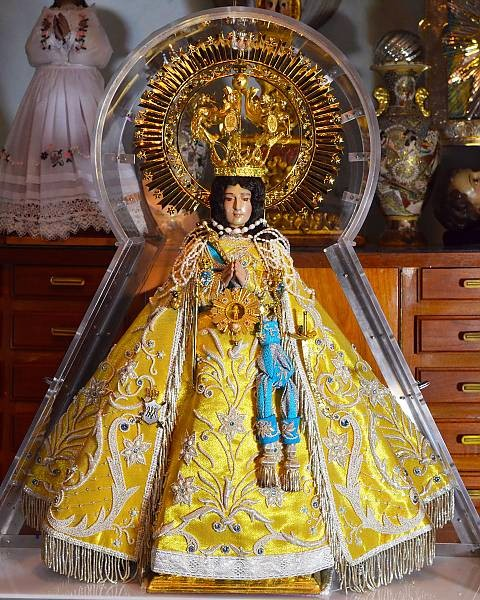
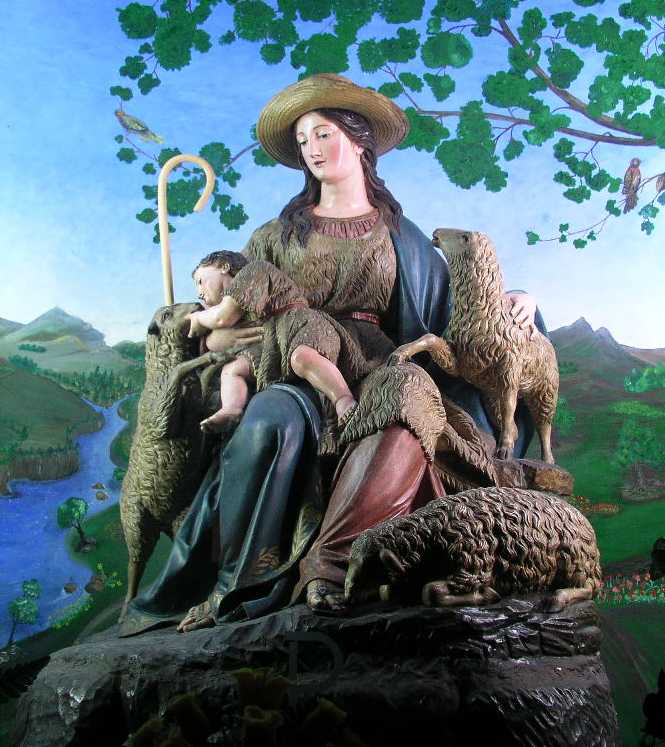
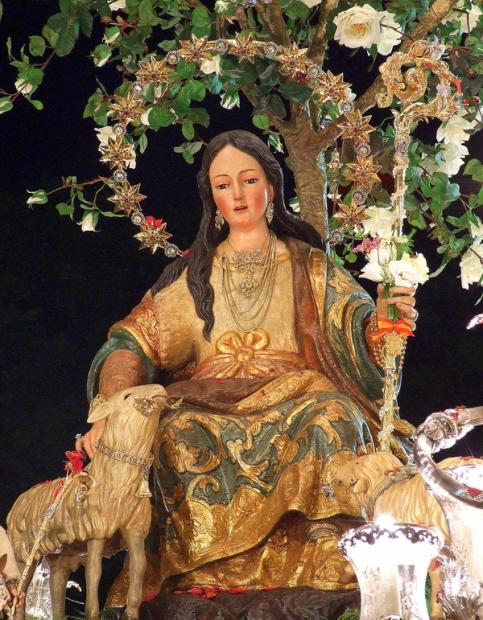
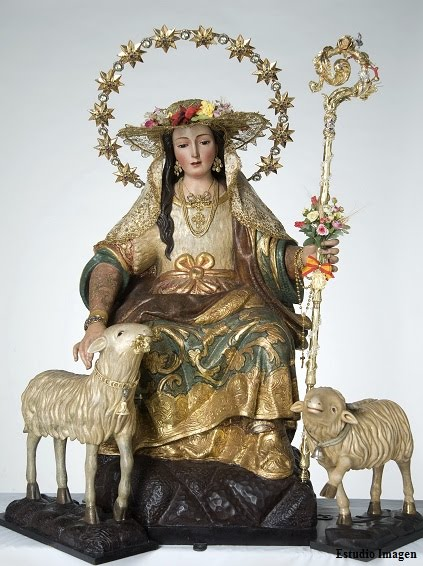
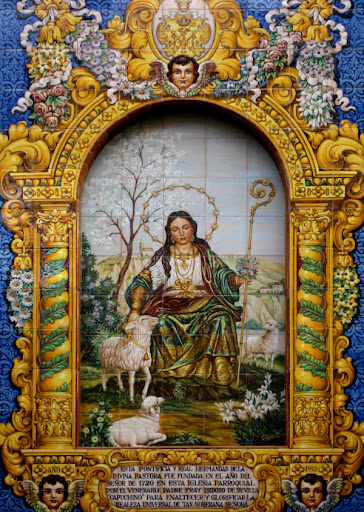
Divina Pastora de las Almas ‘ The Divine Shepherdess of Souls, Cantillana, Sevilla, Andalucía, Spain (1703)
St. Isidore of Seville (560-636) Bishop of Seville, Father and Doctor of the Church, spread devotion to the Divine Shepherdess of Souls. The first image of the Divina Pastora in Cantillana was a banner, attributed to the painter Germán Llorente, carried in Rosary.
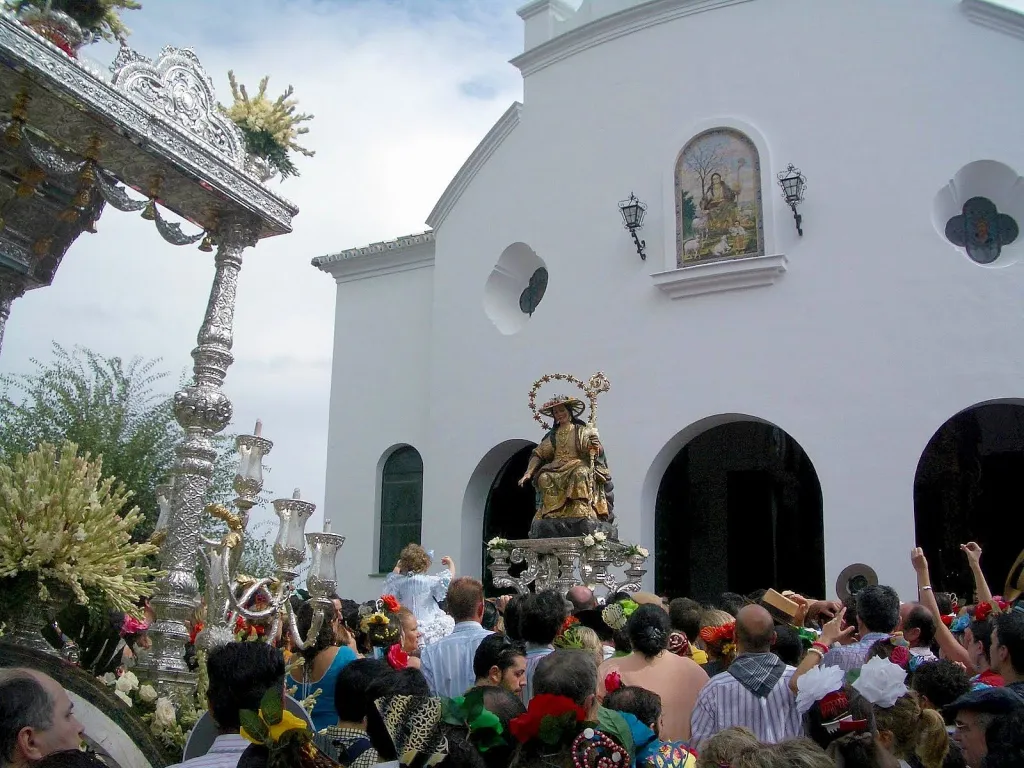
In 1800 a yellow fever epidemic ravaged the area,but Cantillana was largely spared, for which people thanked the Divine Shepherdess of Souls. Soon thereafter, the Hermandad de la Divina Pastora was chartered, a Rosary apostolate or brotherhood. The Brotherhood’s processional image is a seated statue, attributed to Francisco Antonio Ruiz Gijón (1653-1705).
For special occasions, of which there are many, she wears a large sombrero. On 31 August, a grand procession fetches the Statue from its Sanctuary into the Town, for celebrations leading up to the fiesta from 8 September. On the last weekend in September, with equal splendour and devotion, the Divine Shepherdess returns to her Shrine. A procession accompanies her canopied float on Saturday. On Sunday, there is Mass and music and then an all-night exposition of the Statue with devotions lasting into Monday morning.
St Anacharius of Auxerre St Aurelia of Macerata St Caian of Tregaian St Ceolfrid St Cleopas St Egelred of Crowland St Ermenfridus of Luxeuil
St Firminus of Amiens St Fymbert St Herculanus the Soldier
Blessed Herman of Reichenau/the Cripple (1013–1054) Benedictine Monk, Confessor, Scholar, Scientist, Writer, Hymnist, Poet, Musical Composer, Teacher. In his own day, the heroic cripple who achieved learning and holiness was called ‘The Wonder of His Age.’. Composer of the “Salve Regina” Hail Holy Queen, “Veni Sancte Spiritus” Come Holy Spirit and “Alma Redemptoris Mater” amongst many others.
Bl Marco Criado St Mewrog St Neomisia of Mecerata St Paphnutius of Alexandria St Principius of Soissons St Sergius of Moscow St Solemnis of Chartres
Martyrs of Damascus: A Christian family of six who were tortured to death in a persecution by Roman authorities. They were: Eugenia, Maximus, Paul, Rufus, Sabinian and Tatta. They were tortured to death in Damascus, Syria, date unknown.
Martyred in the Spanish Civil War: • Blessed Jose María Bengoa Aranguren • Blessed Josep Maria Vidal Segú • Blessed Juan Agustín Codera Marqués • Blessed Julio Esteve Flors • Blessed Pedro Leoz Portillo • Blessed Rafael Pardo Molina • Blessed Tomás Gil de La Cal
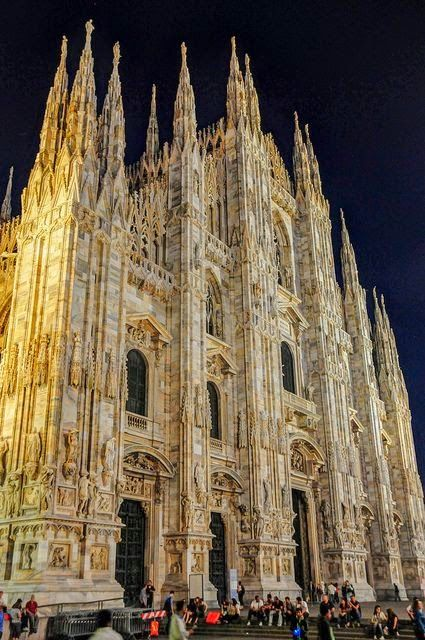
Feast of the Holy Bishops of Milan – a 1st Century Diocese!
Imagine being part of a Diocese in which 36 of your past Bishops are saints and some are also Doctors of the Church and Popes (and others being considered for sanctity)! The latest addition to this illustrious role-call, is Pope Paul VI. Today, the Church in Milan commemorates these holy Bishops. They are: • Blessed Alfredo Ildefonso Schuster • Blessed Andrea Carlo Ferrari • Pope Pius XI • Saint Ambrose of Milan • Saint Ampelius of Milan • Saint Anathalon of Milan • Saint Antoninus of Milan • Saint Auxanus of Milan • Saint Benedict Crispus of Milan • Saint Benignus of Milan • Saint Calimerius of Milan • Saint Castritian of Milan • Saint Charles Borromeo • Saint Datius of Milan • Saint Dionysius of Milan • Saint Eugene of Milan • Saint Eusebius of Milan • Saint Eustorgius II of Milan • Saint Eustorgius of Milan • Saint Gaius of Milan • Saint Galdinus of Milan • Saint Geruntius of Milan • Saint Glycerius of Milan • Saint Honoratus of Milan • Saint John Camillus the Good • Saint Lazarus of Milan • Saint Magnus of Milan • Saint Mansuetus of Milan • Saint Marolus of Milan • Saint Martinian of Milan • Saint Mirocles of Milan • Saint Mona of Milan • Saint Natalis of Milan
• Saint Protasius of Milan • Saint Senator of Milan • Saint Simplician of Milan • Saint Venerius of Milan
Our Lady of Walsingham / Virgin of the Sea (1061) – 24 September:
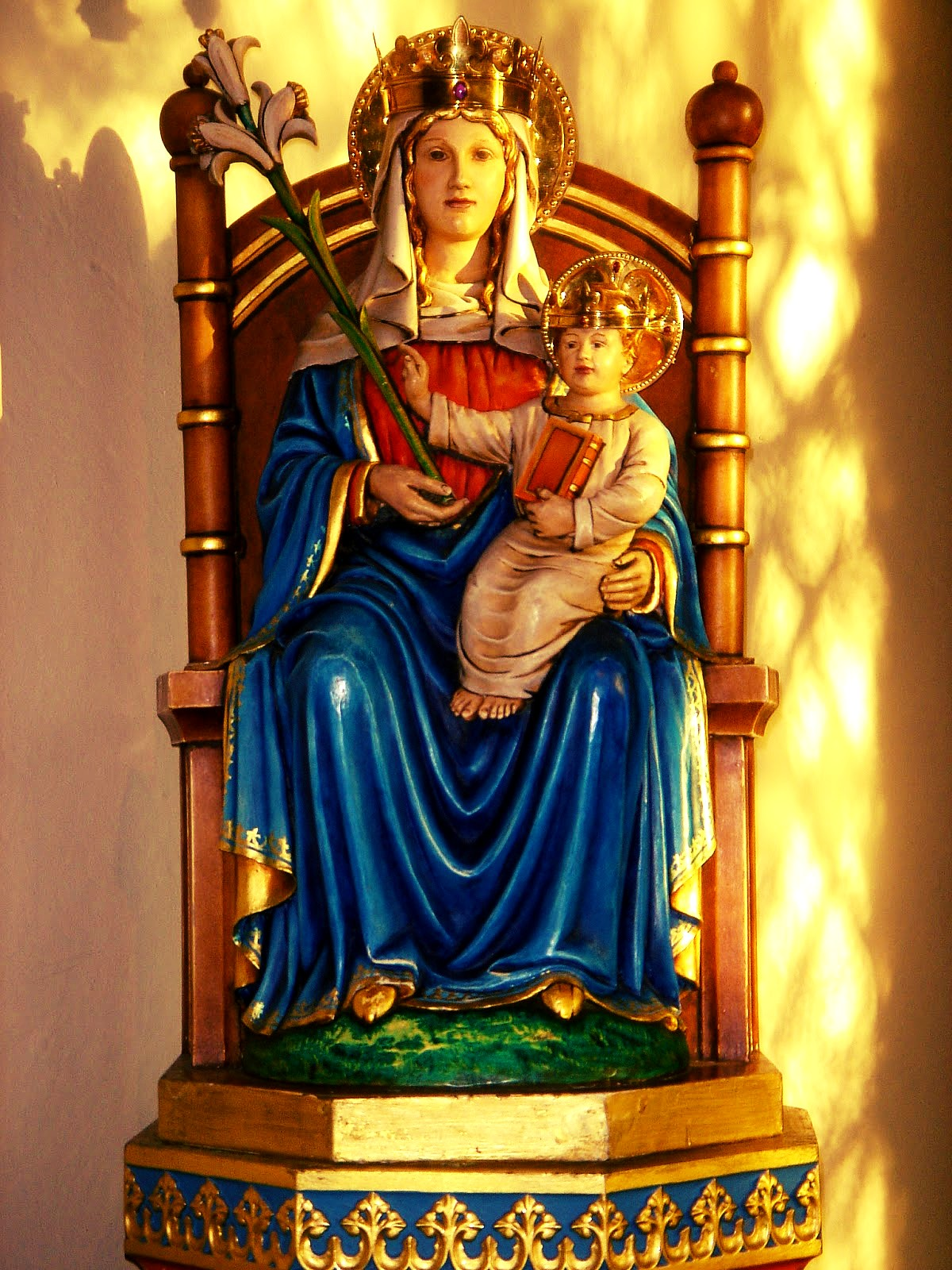
The story of the Walsingham Shrine begins in Saxon times. In 1061, the Lady of the Manor, Richeldis de Faverches, was taken in spirit to Nazareth, shown the House where the Annunciation took place and asked by Our Lady, to build a replica in Norfolk. She was promised that ‘Whoever seeks my help there will not go away empty-handed.‘ The simple wooden house that she built soon became the focus of special devotion to Our Lady. The ‘Holy House’ was later encased in stone to protect it from the elements.
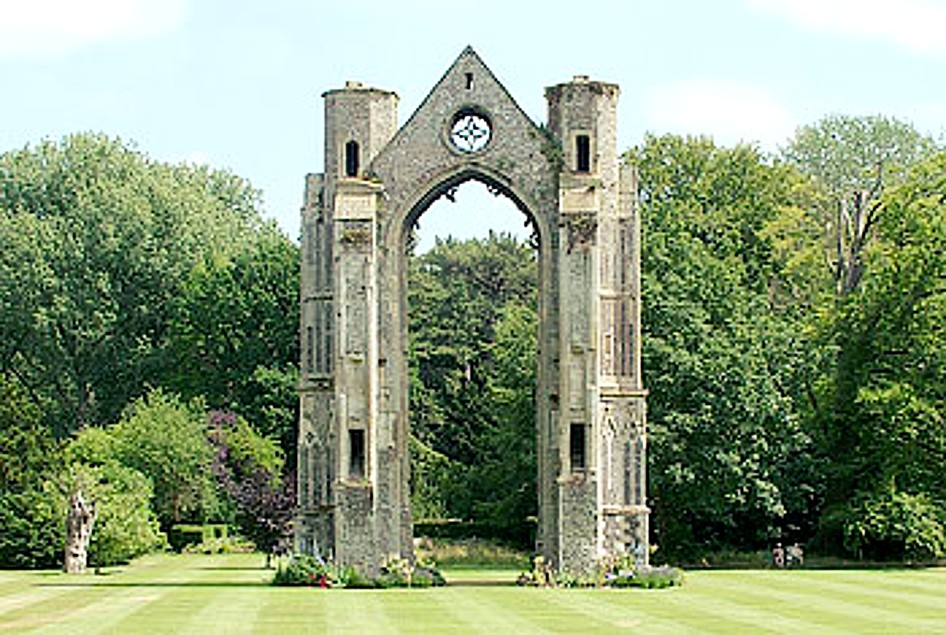
In 1153, the Augustinian Canons founded a Priory to care for the spiritual needs of the pilgrims. Their magnificent Priory Church was added in the fifteenth century. Only the ruin of the Priory Arch remains and archaeology has placed the site of the ‘Holy House’ in its shadow.
Walsingham became one of the foremost Shrines of medieval Christendom. Among the pilgrims to the ‘Holy House’ were many royal visitors. Henry III in 1226, Edward I (eleven times), Edward II in 1315, Edward III in 1361, Richard II in 1383, Edward IV in 1469, Henry VI in 1487 (and many other times) and Henry VIII in 1511, in thanksgiving for the birth of his son, Prince Henry. In 1340, the Slipper Chapel was built at Houghton St Giles, a mile outside Walsingham. This was the final ‘Station’ Chapel on the way to Walsingham. It was here, that pilgrims would remove their shoes to walk the final ‘Holy Mile’ to the Shrine barefoot.
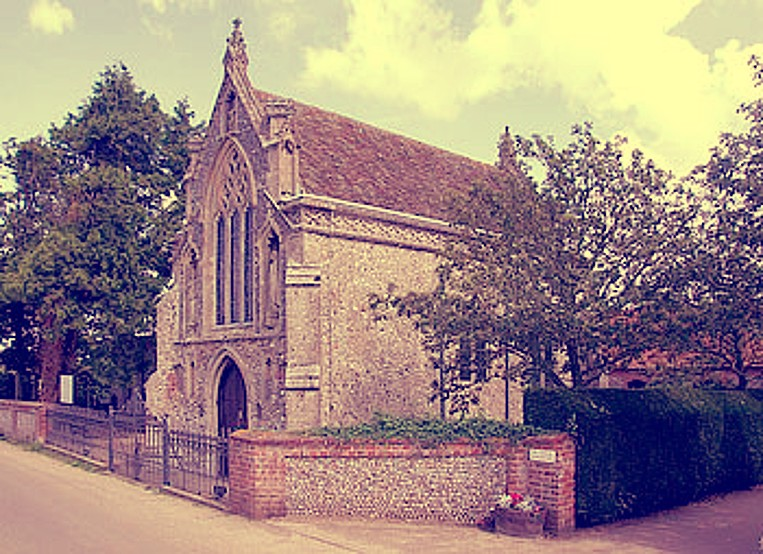
The Slipper Chapel
Erasmus, the Dutch scholar, visited Walsingham in 1513 and was impressed by the splendour of the Shrine. He wrote:
‘When you look inside, you would say, it is the abode of saints, so brilliantly does it shine with gems, gold and silver … Our Lady stands in the dark at the right side of the Altar … a little image, remarkable neither for its size, material or workmanship.’
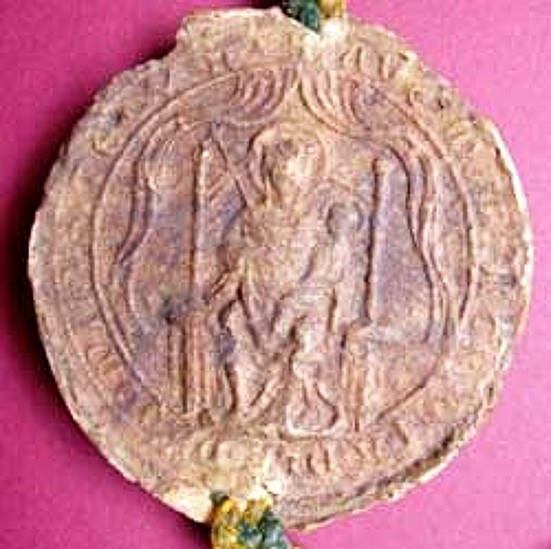
This was soon to come to an end. Henry VIII ordered the dissolution of the monasteries and in 1538 the Priory was closed, the ‘Holy House’ burned to the ground and the Statue of Our Lady taken to London to be destroyed. In 1896 Miss Charlotte Boyd bought the Slipper Chapel, which had seen centuries of secular use. She devoted herself to its restoration. The Statue of the Mother and Child was carved at Oberammergau and based on the design of the original statue – a design found on the medieval seal of Walsingham Priory, an imprint of which is in the British Museum.
The Walsingham seal: around the edges Ave Maria gratia plena dominus tecum
The first Mass since the Reformation was offered in the Slipper Chapel on 15 August 1934 and a few days later Cardinal Francis Bourne led a pilgrimage of 10,000 people to the Chapel and declared it to be the Catholic National Shrine of Our Lady.
St Chuniald Bl Colomba Matylda Gabriel St Coprio St Erinhard St Felix of Autun
St Gerard Sagredo OSB (980-1046) Bishop and Martyr, “The Apostle of Hungary,” Venetian nobleman, Benedictine monk, Prior of San Giorgio, Missionary to Hungary, Adviser to King Saint Stephen, Tutor to Prince Saint Emeric, Hermit, Bishop of Csanád, Writer, Reformer
St Pacificus of Severino OFM (1653-1721) Priest, Franciscan Friar, Mystic, Miracle-worker, Missionary, Superior of the Friary of San Severino and joyful sufferer for Christ.
St Paphnutius of Egypt Bl Robert Hardesty St Rusticus of Clermont St. Rupert of Salzburg St Terence of Persaro (c 210-c 247) Martyr Layman St Thyrsus of Autun St Ysarn of Saint Victor Bl William Spenser — Martyrs of Chalcedon – (49 saints): Forty-nine Christian choir singers of the church in Chalcedon in Asia Minor who were martyred together in their persecutions of Diocletian in 304.
Martyred in the Spanish Civil War: • Blessed Antonio Pancorbo López • Blessed Esteban García y García • Blessed José María Ferrándiz Hernández • Blessed Juan Francisco Joya Corralero • Blessed Luis de Erdoiza Zamalloa • Blessed Manuel Gómez Contioso • Blessed Melchor Rodríguez Villastrigo • Blessed Pascual Ferrer Botella • Blessed Rafael Rodríguez Mesa • Blessed Santiago Arriaga Arrien
Saint Pomposa of Cordoba, a martyr from Spain. She was a nun in a convent near Cordoba. When the muslims invaded Spain, she refused to deny her faith and convert to Islam. As such, she was beheaded by them in 835.
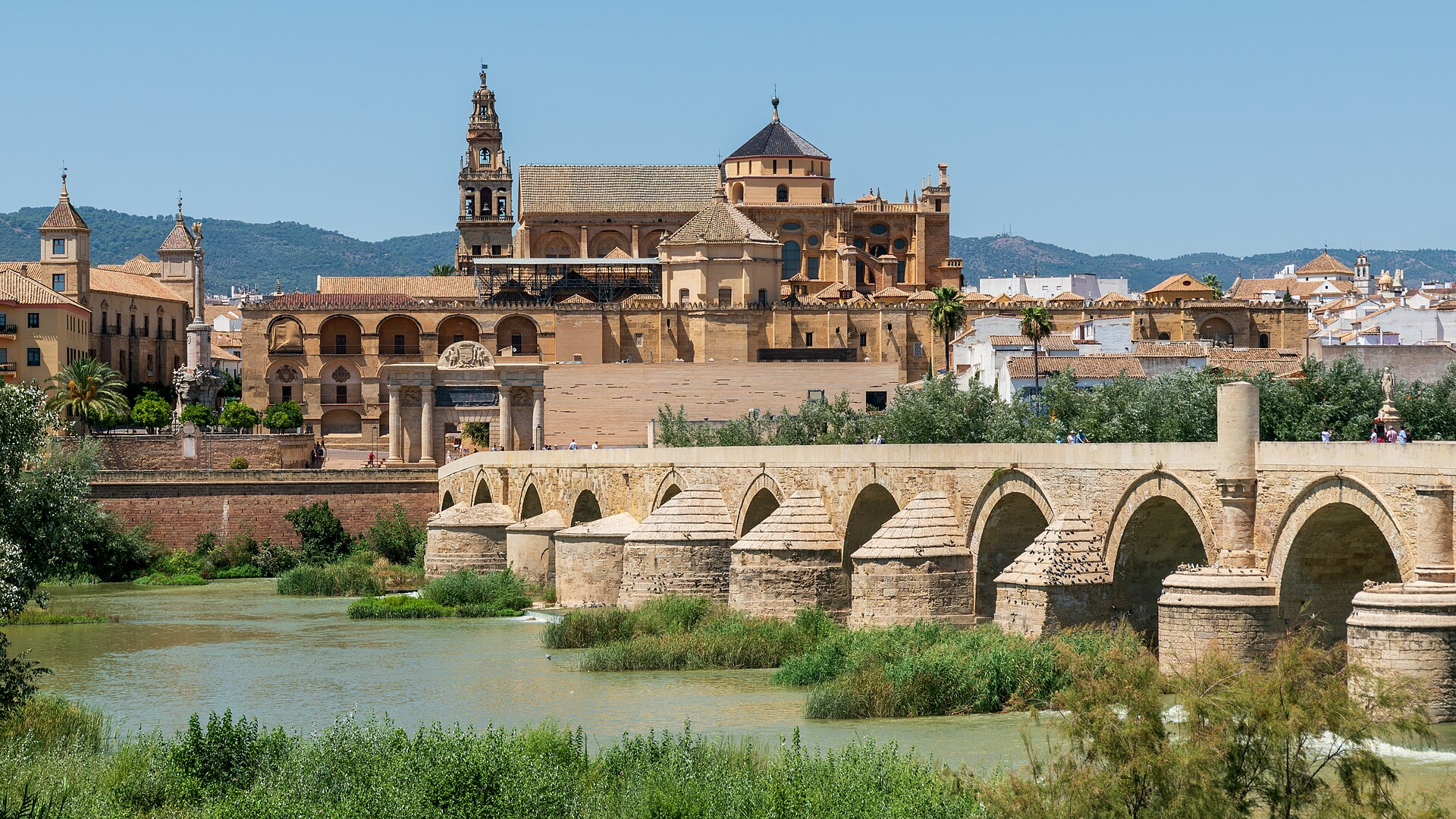
View of the historic centre of Córdoba
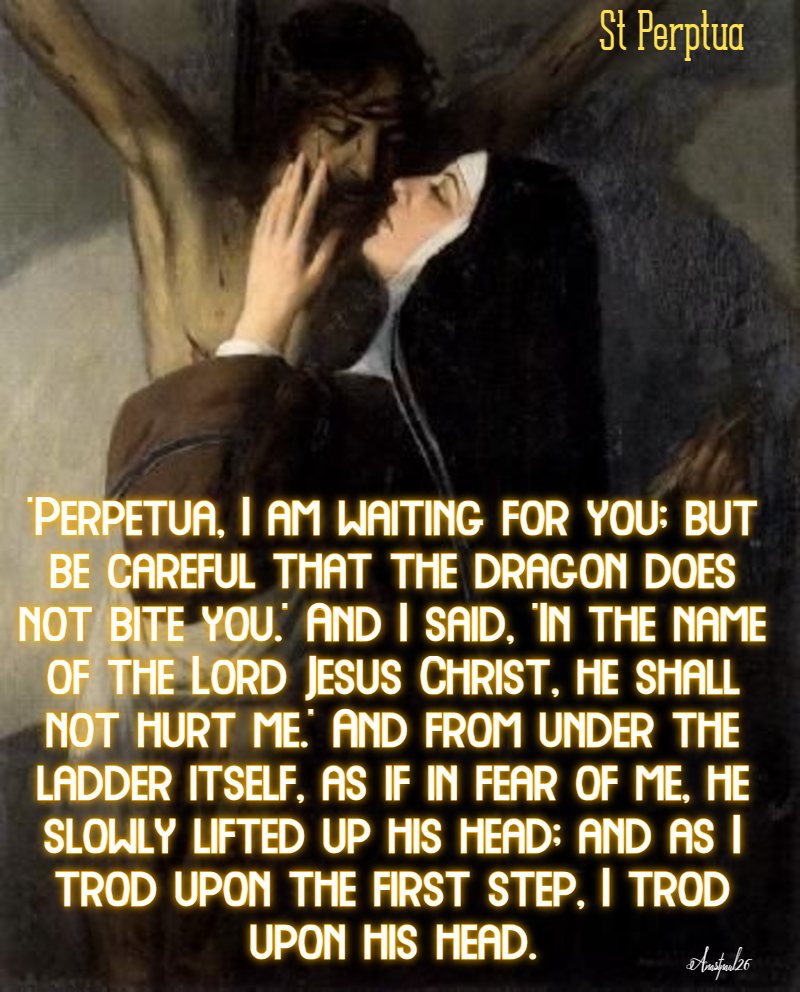
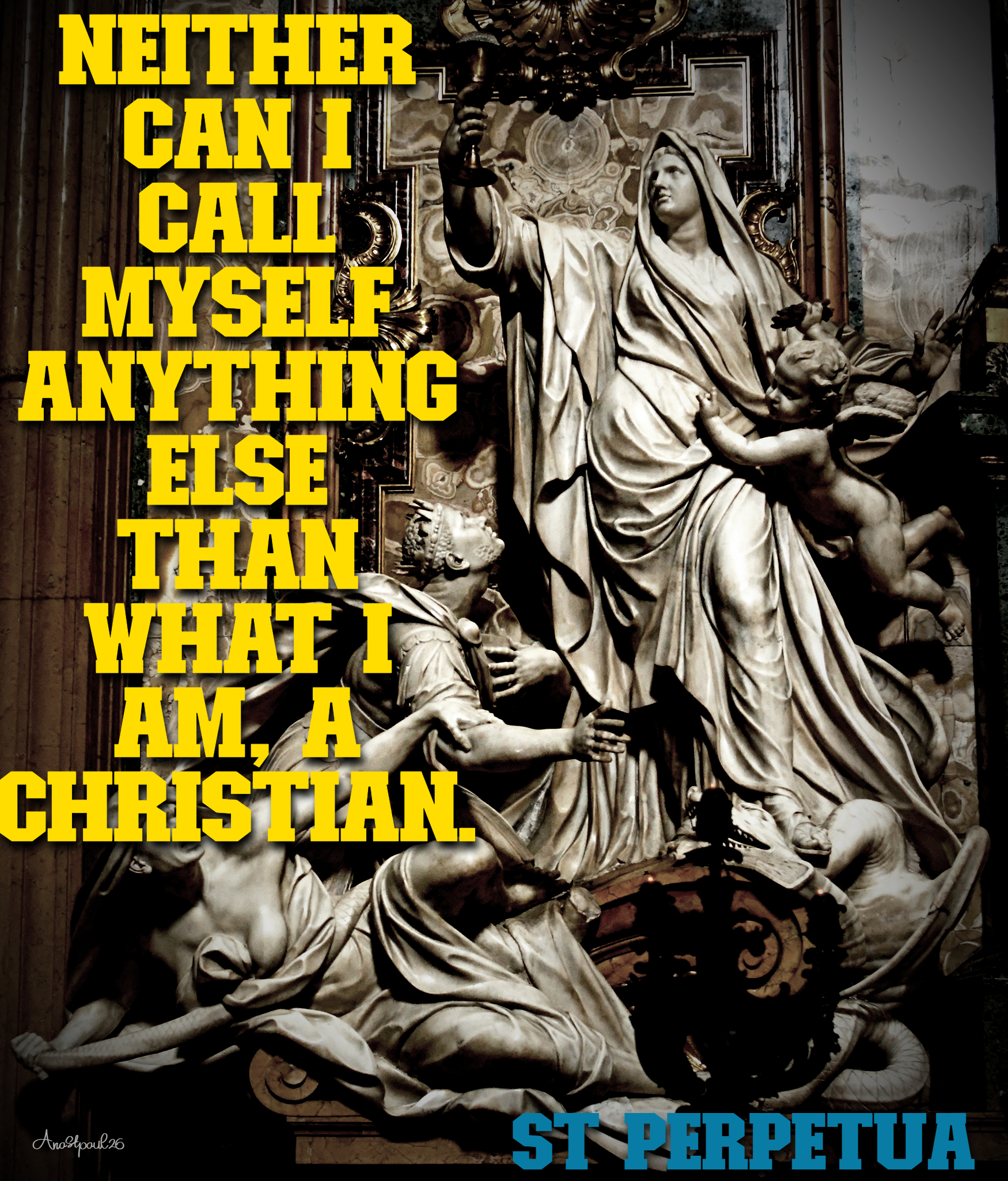
‘Perpetua, I am waiting for you; but be careful that the dragon does not bite you.’ And I said, ‘In the name of the Lord Jesus Christ, he shall not hurt me.’ And from under the ladder itself, as if in fear of me, he slowly lifted up his head; and as I trod upon the first step, I trod upon his head.
Saint Columba of Cordova, also known as Columba of Cordoba and Columba of Spain, martyr. She is a part of the Martyrs of Córdoba. Born to a pious family in the 8th century, Columba’s brother was an abbot, and her sister and brother-in-law founded a double monastery at Tabanos, Spain. Her mother wanted her to marry, but Columba was drawn to religious life, and entered her sister’s monastery at Tabanos.
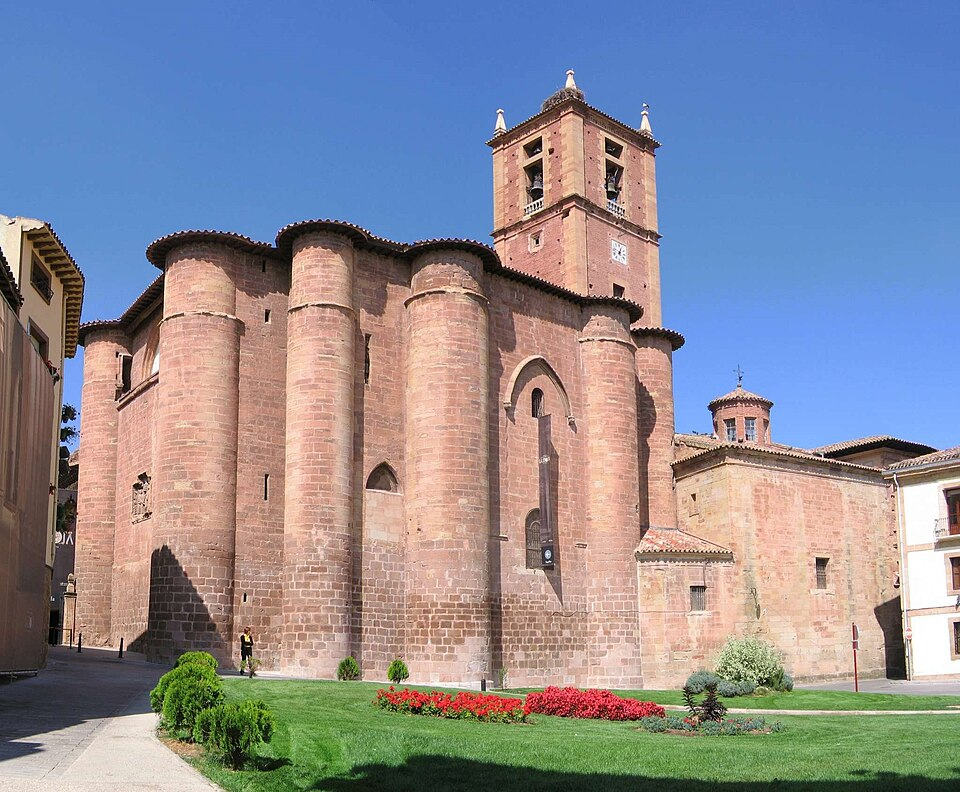
During the Moorish persecutions of Christians in 852, most of the nuns of Tabanos fled to Cordova. Columba refused to run, and made a public proclamation of her faith to a Moorish magistrate and denounced Muhammed and his law. The magistrate condemned her to be beheaded on September 17, 853. Her body was thrown into the Guadalquivir Marshes, but was recovered by other Christians and buried at the basilica of St. Eulalia at Fragellas. Her relics were taken later to and venerated at two churches, the abbey of Santa Maria de Nájera and to its dependent priory, which was dedicated to Saint Columba.
The fortified Santa María la Real of Nájera
Neither can I call myself anything else than what I am, a Christian.
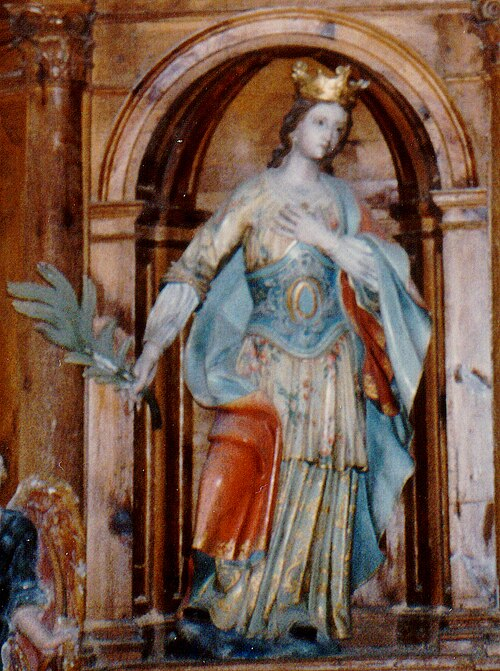
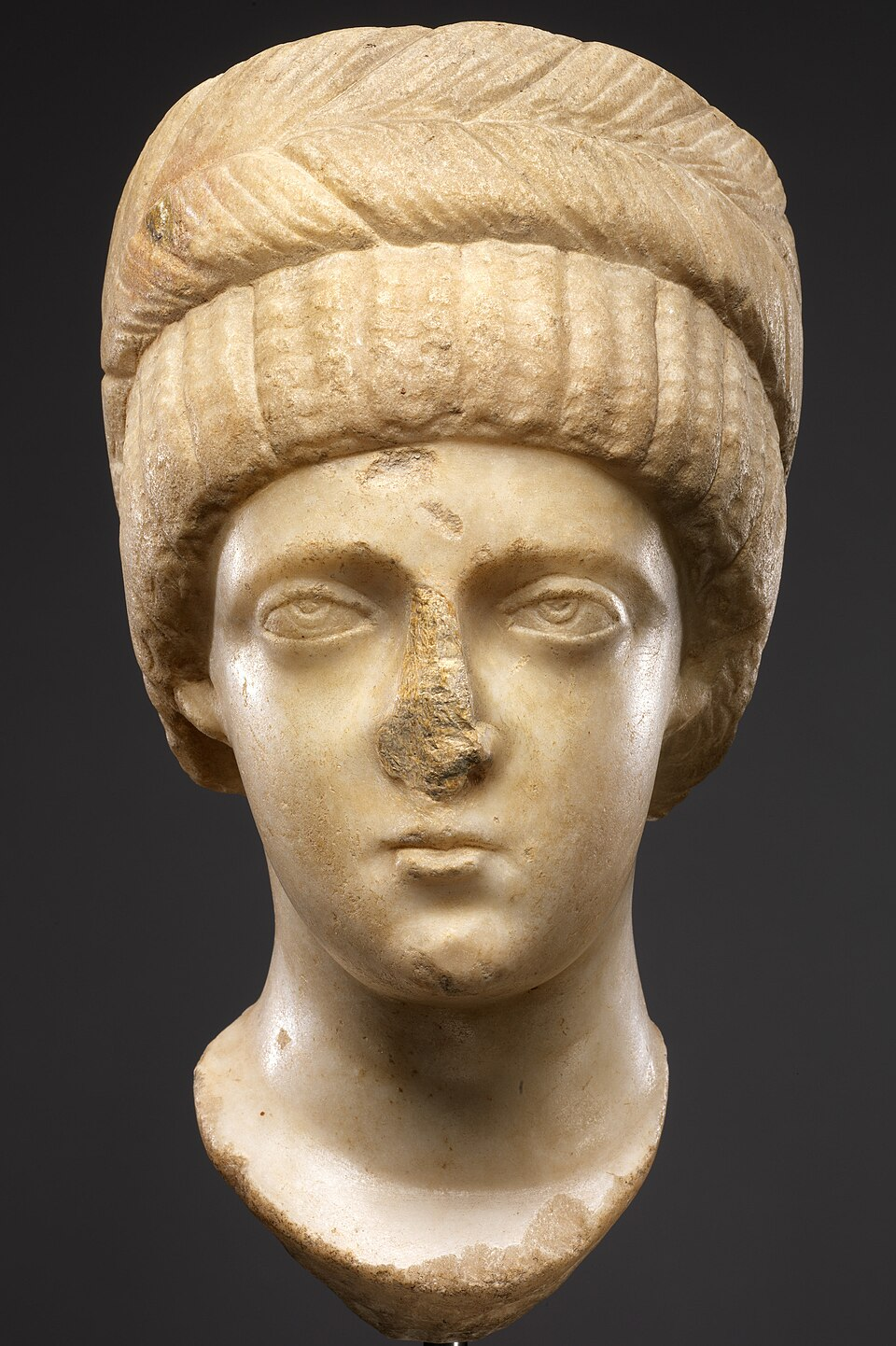
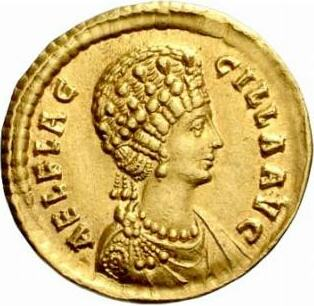
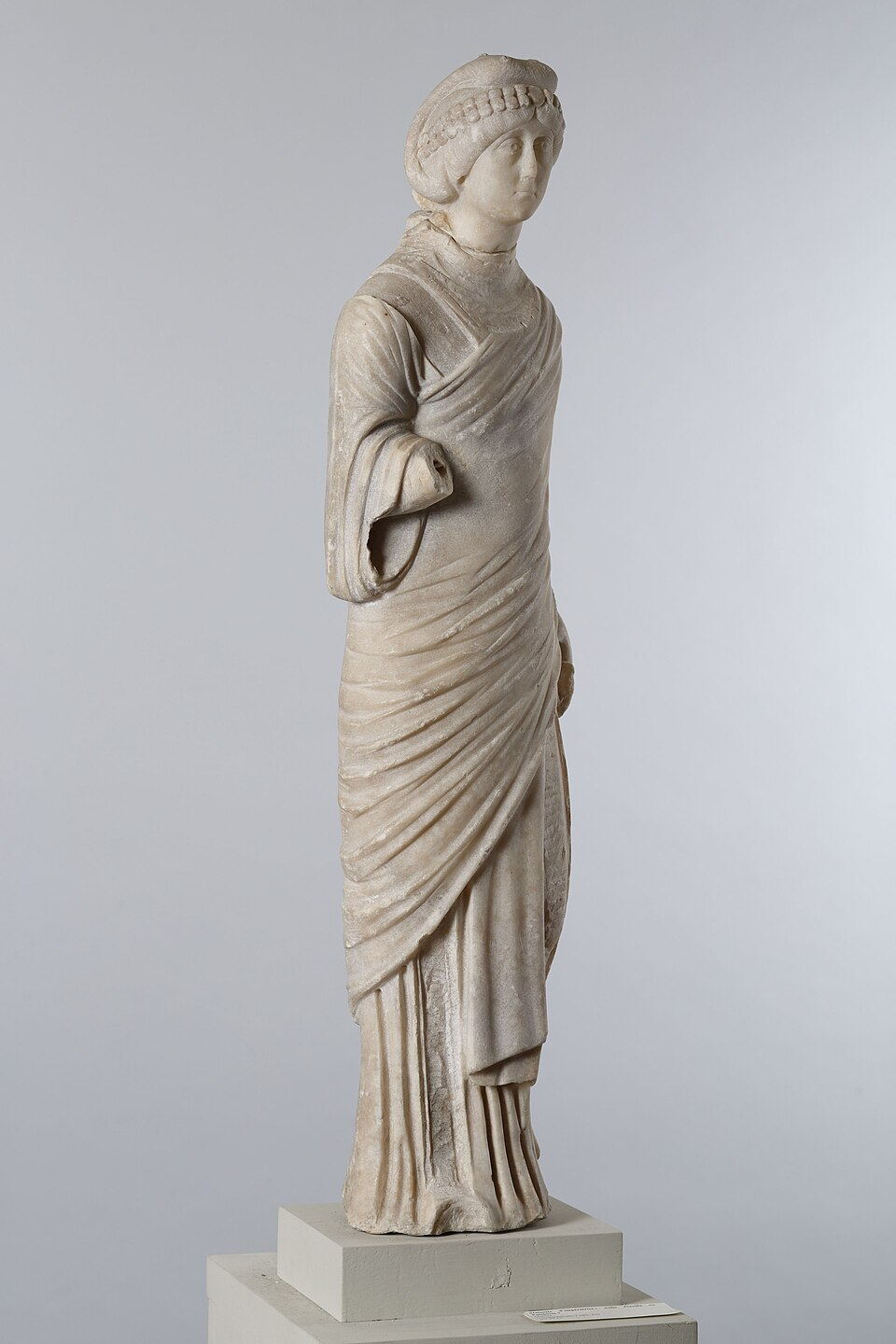
SaintAelia Flavia Flaccilla, known as Aelia Flacilla or Flacilla, was a Roman empress and may have been the daughter of Claudius Antonius, Prefect of Gaul. She was the first wife of Emperor Theodosius I. She was of Spanish descent. During her marriage to Theodosius, she gave birth to two sons, the future Emperors Arcadius and Honorius, as well as a daughter, Aelia Pulcheria.
Aelia Flacilla was a zealous supporter of the Nicene Creed, and she was considered a pillar of the Church and model of Christian virtue by Saint Gregory of Nyssa and others. She died in 385 of natural causes.
"The greatness of the good gift given her made her love for Him who gave it all the greater, so she bestowed every kind of attention on the maimed and the mutilated, declining all aid from her household and her guards, herself visiting the houses where the sufferers lodged, and providing every one with what he required. She also went about the chambers of the churches and ministered to the wants of the sick, herself handling pots and pans, and tasting broth, now bringing in a dish and breaking bread and offering morsels, and washing out a cup and going through all the other duties which are supposed to be proper to servants and maids. To them who strove to restrain her from doing these things with her own hands she would say, "It befits a sovereign to distribute gold; I, for the sovereign power that has been given me, am giving my own service to the Giver."
-Theodoret, Ecclesiastical History (Book V.18)
"It appears that, during the reign of Valens, had some dispute with his own clergy at Cyzicus, and had in consequence seceded from the Arians, and retired to Bithynia, near Constantinople. Here multitudes resorted to him; some also gathered from different quarters, a few with the design of testing his principles, and others merely from the desire of listening to his discourses. His reputation reached the ears of the emperor, who would gladly have held a conference with him. But the Empress Flacilla studiously prevented an interview from taking place between them; for she was the most faithful guard of the Nicene doctrines, and feared lest Eunomius might, by his powers of disputation, induce a change in the sentiments of the emperor."
Blessed Thomas of Zumárraga was a Dominican friar, priest, missionary, and martyr of Japan.
Thomas was born in Vitoria, Spain, in 1577. In 1594, he was professed in the Order of Preachers in Vitoria. After he entered the Convento de San Esteban de Salamanca, he received the name of Fray Tomás del Espíritu Santo(Brother Thomas of the Holy Spirit). In 1601, he was sent to Mexico en route to the Philippines. Shortly after arriving, in 1603, Fray Francisco Morales, superior of the Dominicans in Manila, sent him to Japan to found a mission.
By the early 17th century Japan was mostly closed to foreigners, but he fearlessly preached the Gospel and worked tirelessly to establish Christian communities. He hid in the mountains in the area of Nagasaki and Ōmura, but in 1617 he was arrested alongside several other missionaries. After five years of imprisonment, he was burnt alive on 12 September 1622.
Pope Pius IX venerated him on 26 February 1866 with a decree of martyrdom, and later proclaimed him blessed on 7 May 1867.
On all sides all men were flocking together to a spectacle, to us glorious from the devotion of faith, and to be mourned over even by the Gentiles.
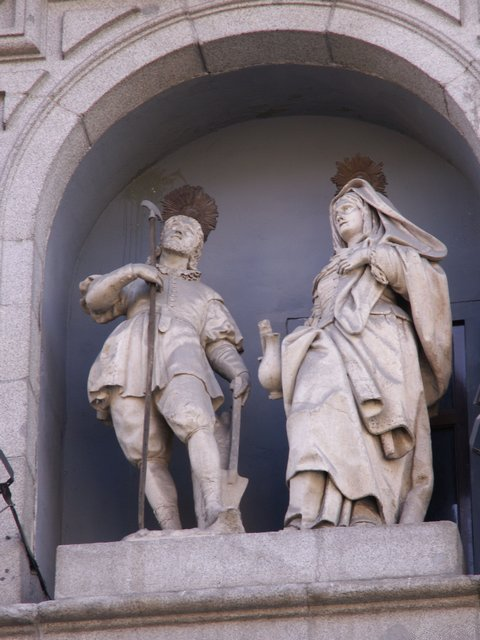
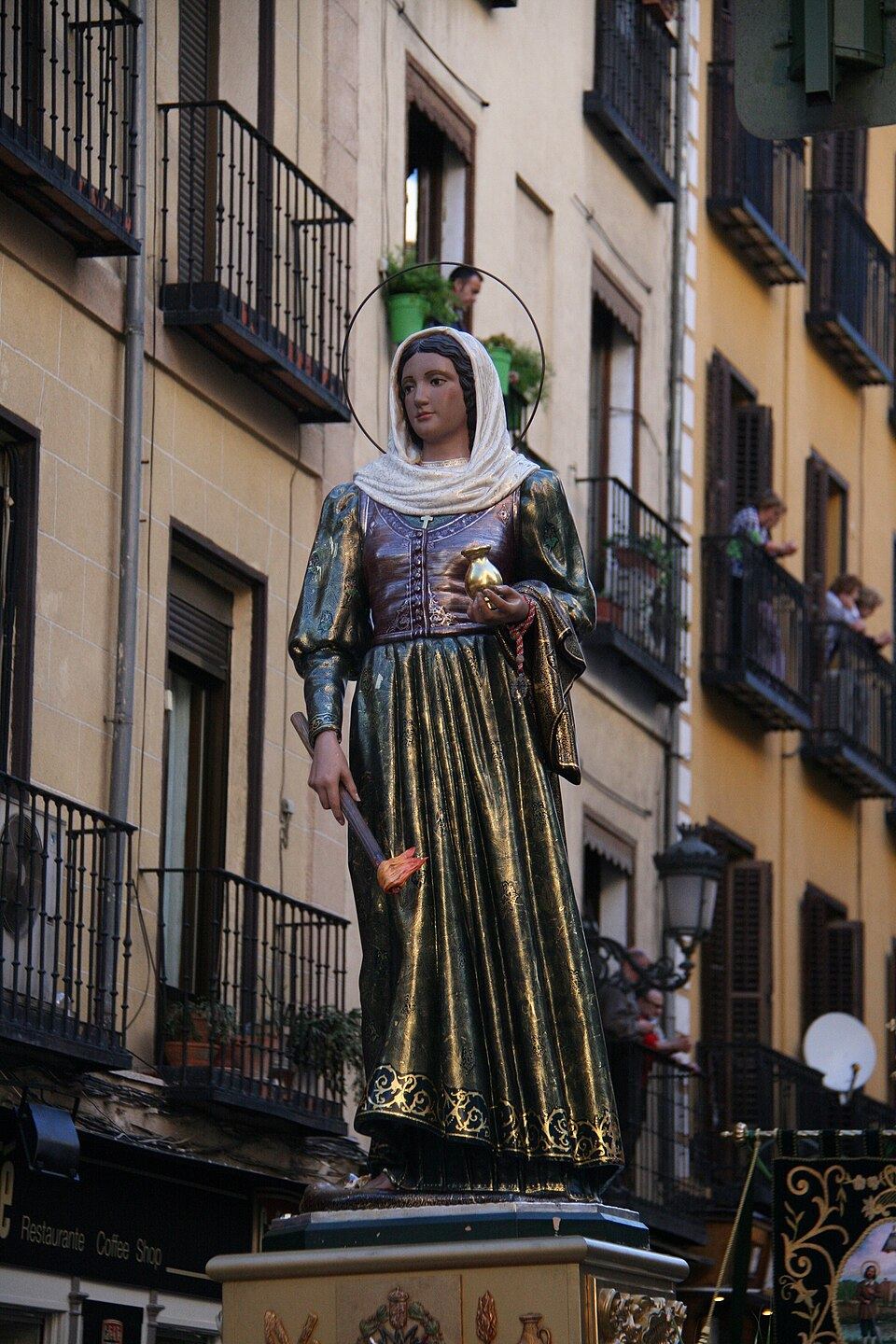
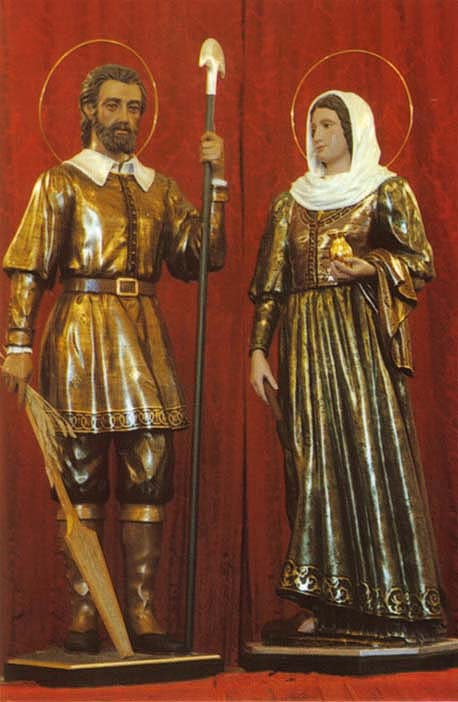
Blessed Maria de la Cabeza, born at Uceda, Guadalajara, Spain, was a Spanish peasant woman who married Saint Isidore. She is known in Spain as Santa María de la Cabeza (“Saint Mary of the Head”) or Maria Toribia.
Ss. Isidore and Maria Torribia
Maria’s date of birth is unknown, but it was sometime near the end of the 11th century or at the beginning of the 12th century. She is believed to have been born in Caraquiz, a little village close to Uceda. She subsequently lived in Torrelaguna, where she met and married Saint Isidore the Farmer. She spent her life working on the farm, cleaning local chapels and shrines, helping the poor.
With her husband she had her only son, Illan. The child one day fell down a deep well, leaving the parents with no recourse but prayer. Miraculously, the water level suddenly rose to the level of the ground, and the floating baby was rescued unharmed. As a result of this, she and her husband committed themselves to sexual abstinence as a form of devotion, and, from that time on, lived in different homes.
One story relates that Maria always kept a pot of stew on the fireplace in their humble rural dwelling. She knew that her husband Isidore would often bring home anyone who was hungry. One day he brought home more hungry people than usual. After she served many of them, Maria told him that there simply was no more stew in the pot. He insisted that she check the pot again, and she was able to spoon out enough stew to feed them all.
Torribia outlived her husband, who died in 1130. After his death, she lived as a hermit, performed miracles, and had visions.
The title of the Head is due to her head being a relic venerated for centuries, and the need to distinguish her from so many other Saints Mary.
She died in 1175 and her relics were displayed in a Franciscan convent in Torrelaguna, Spain, before being moved to Saint Andrew’s Church in Madrid in 1645, placed with the incorruptible body of her husband. In 1769, Charles III of Spain had the remains of Saint Isidore and his wife Maria relocated to the San Isidro Church, Madrid. The sepulcher has nine locks and only the King of Spain has the master key.
She was beatified by Pope Innocent XII on 11 August 1697.
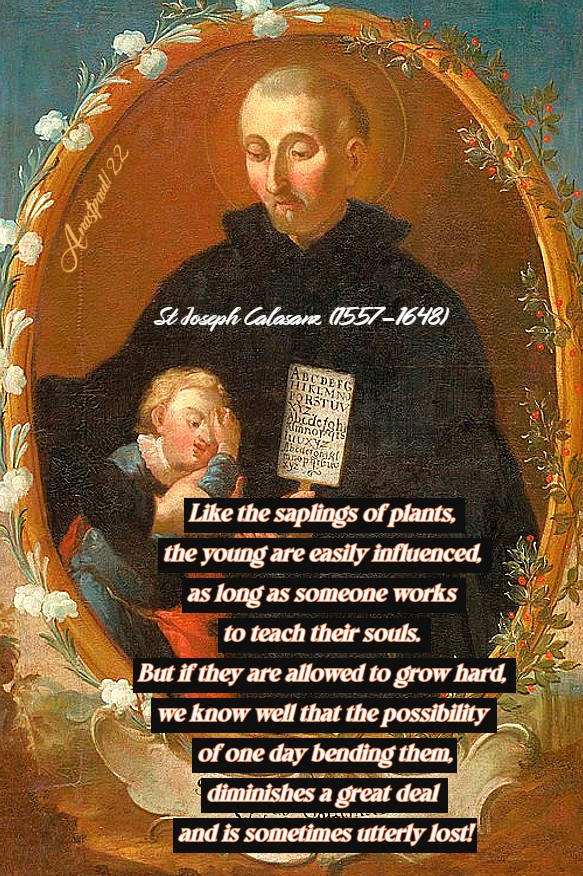
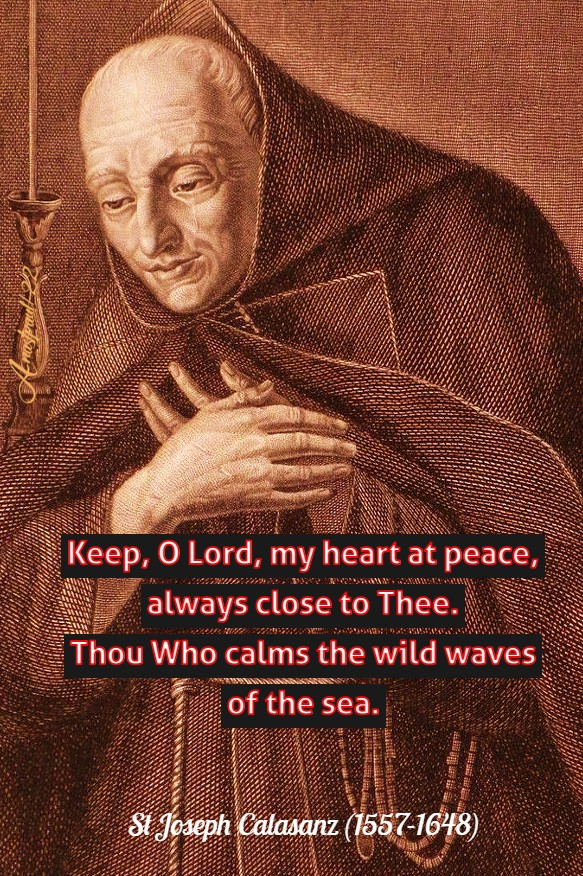
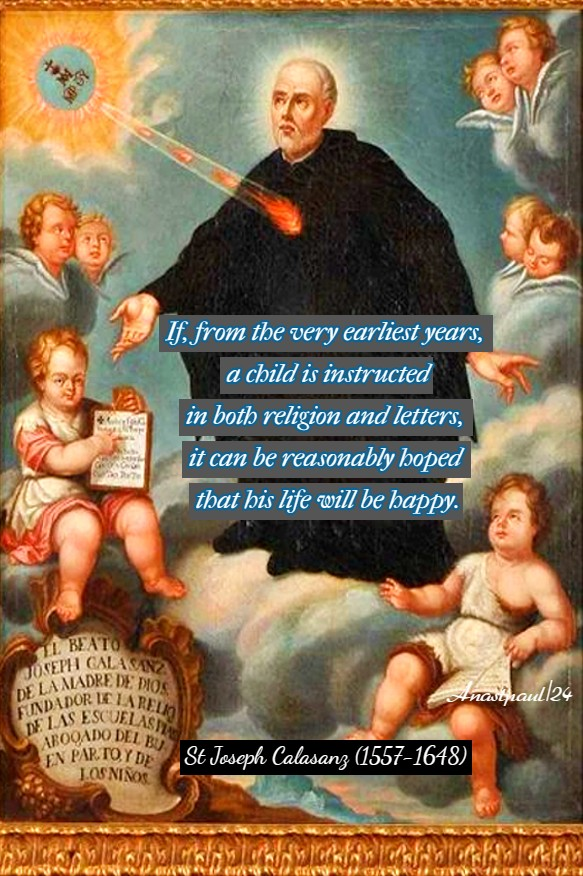
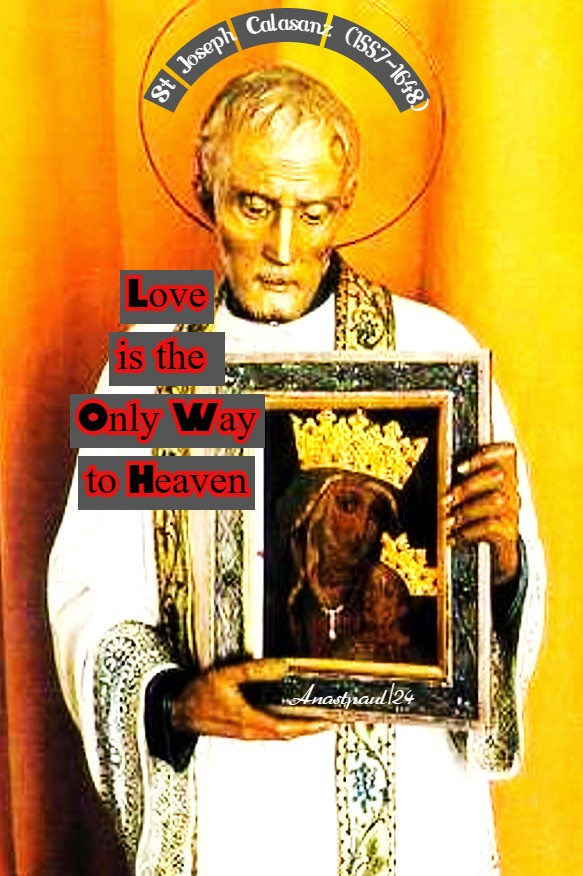
Quote/s of the Day – 27 August – St Joseph Calasanz/Calasantius (1557-1648) Spanish Confessor
“Like the saplings of plants, the young are easily influenced, as long as someone works to teach their souls. But if they are allowed to grow hard, we know well that the possibility of one day bending them, diminishes a great deal and is sometimes utterly lost.”
“Keep, O Lord, my heart at peace, always close to Thee. Thou Who calms the wild waves of the sea.”
“If, from the very earliest years, a child is instructed in both religion and letters, it can be reasonably hoped that his life will be happy.”
Siblings, and children of Almanzor, Muslim caliph of Lerida, Catalonia, Spain, during the Moorish Occupation in the 12th century. Saint Bernard converted and became a Benedictine Cistercian monk at Poblet, taking the name Bernard. He then converted his two sisters Gracia and Maria, and together they attempted to convert their other brother, Almanzor, who turned them over to Moorish authorities. They were martyred in 1180.
Saint Bernard
Saint Gracia
Saint Maria
The exact circumstances surrounding their deaths are not known. Bernard, Gracia and Maria are venerated as the patron saints of Alcira, Valencia, Spain.
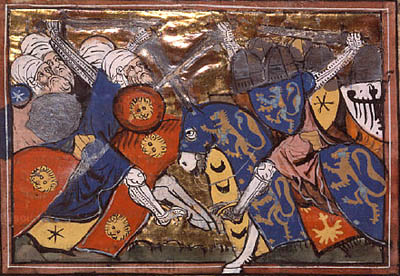
Muslim army in Iberia
Stand fast in the faith, and love one another, all of you, and be not offended at my sufferings.
Saint Cucuphas, also known as Cobad, Cocoba, Cucufate (and many more). His name is said to be of Phoenician origin with the meaning of “he who jokes, he who likes to joke.”
Cucuphas was born into a noble Christian family in Scillis, North Africa. He and Saint Felix were deacons in Carthage and they later arrived at Barcelona to evangelize. Cucuphaslived as a merchant in Barcelona while preaching the Faith, baptizing converts, and aiding the Christian community there. He was generous with the poor and a worker of miracles.
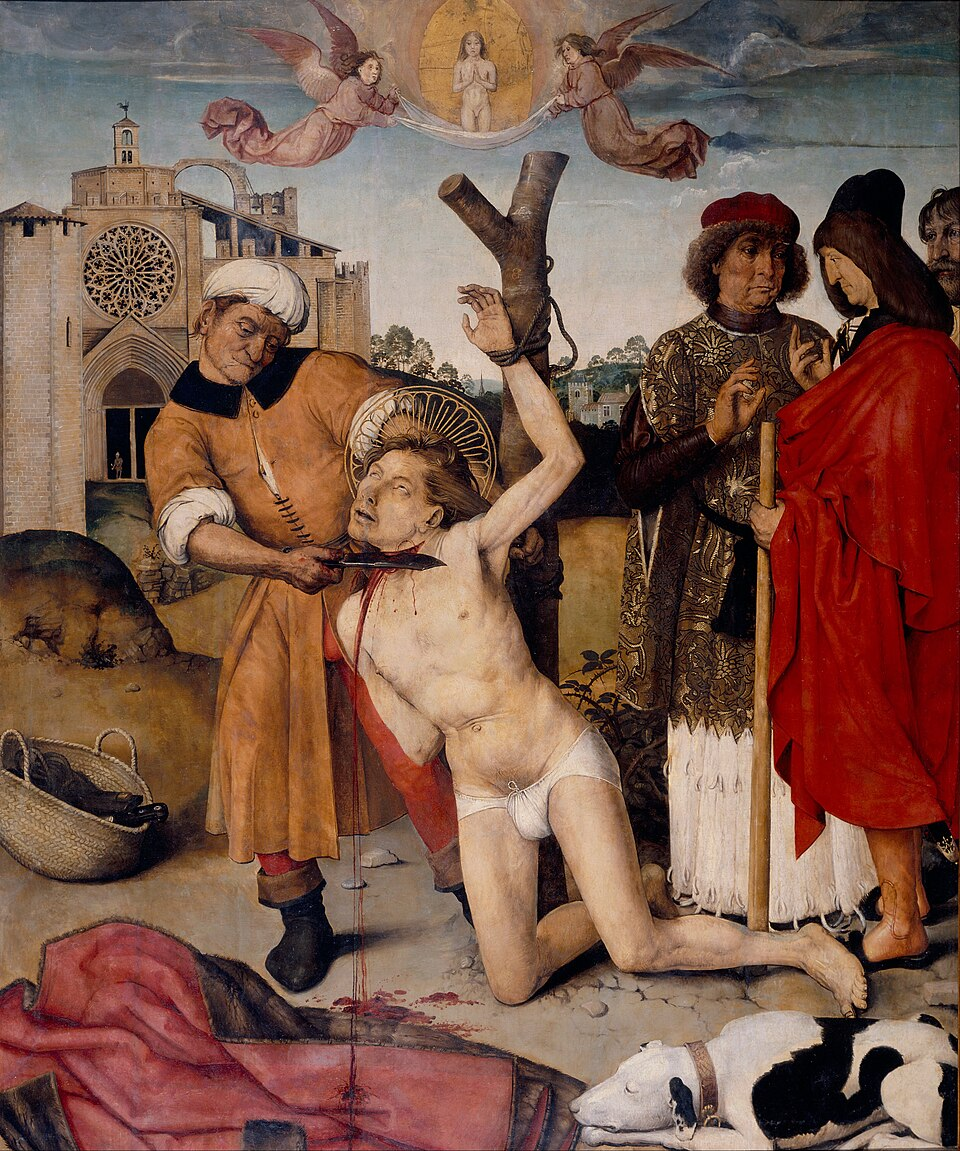
He was martyred near Barcelona during the persecution of Diocletian. He suffered many torments. He was handed over to twelve strong soldiers, who were ordered to whip him and tear his skin with iron nails and scorpions. He was then roasted alive after being covered in vinegar and pepper, but was miraculously saved him from death and injury. A great bonfire also failed to kill him and instead killed his would-be executioners. His jailers then converted to Christianity after they found Cucuphas in his cell illuminated by a heavenly light. The next day, he was flagellated with iron whips. Divine intervention slew the prefect Maximianus when his carriage caught on fire. Rufus, the new prefect, having learnt from the experiences of his predecessor, did not dare practice torture of any kind on the saint, and instead ordered his immediate execution by sword, ordering his throat to be cut.
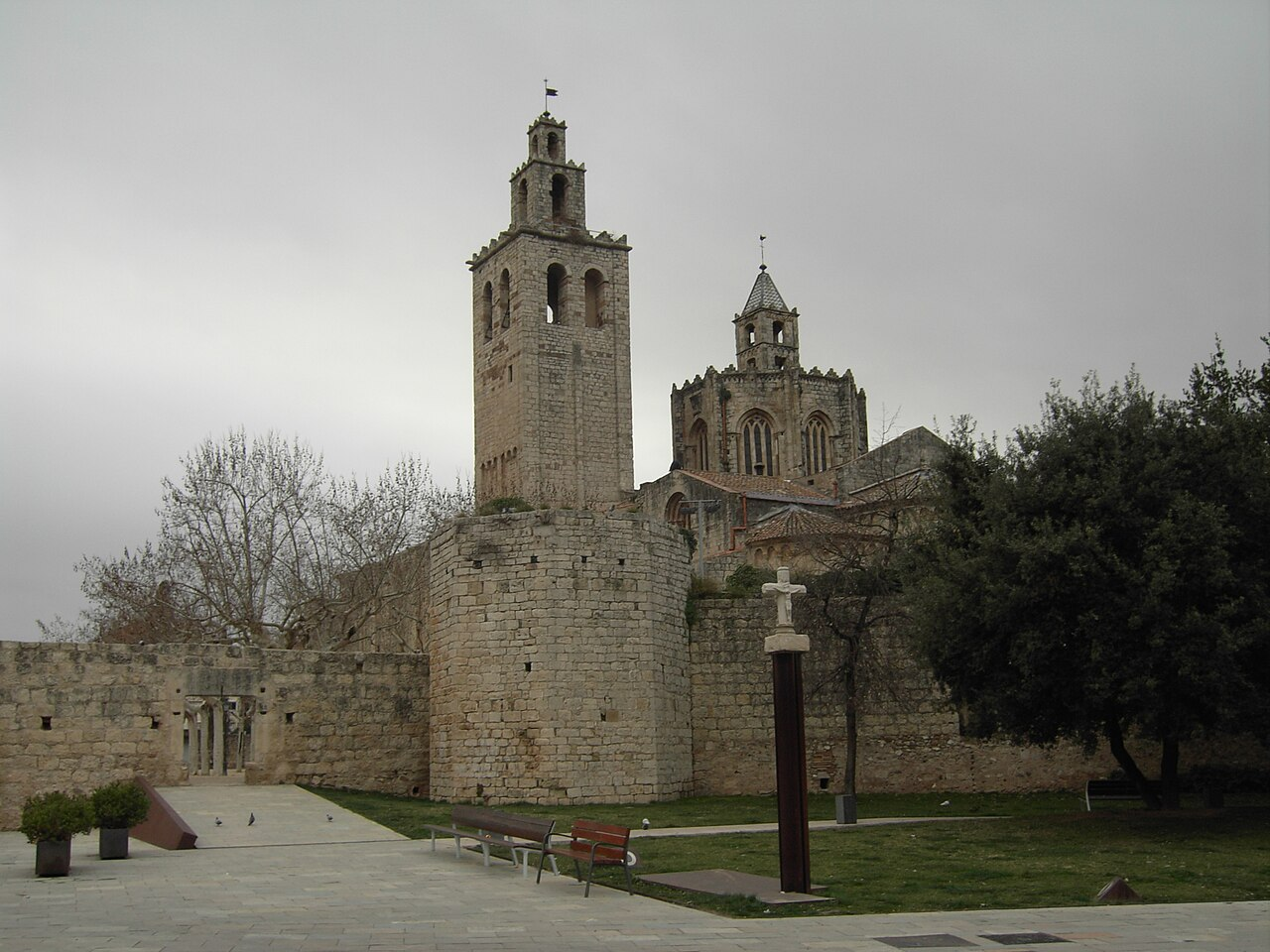
Two Christian women, Juliana and Semproniana, buried his body and were subsequently martyred as well. The Benedictine abbey of Sant Cugat del Vallès is situated on the site of his martyrdom.
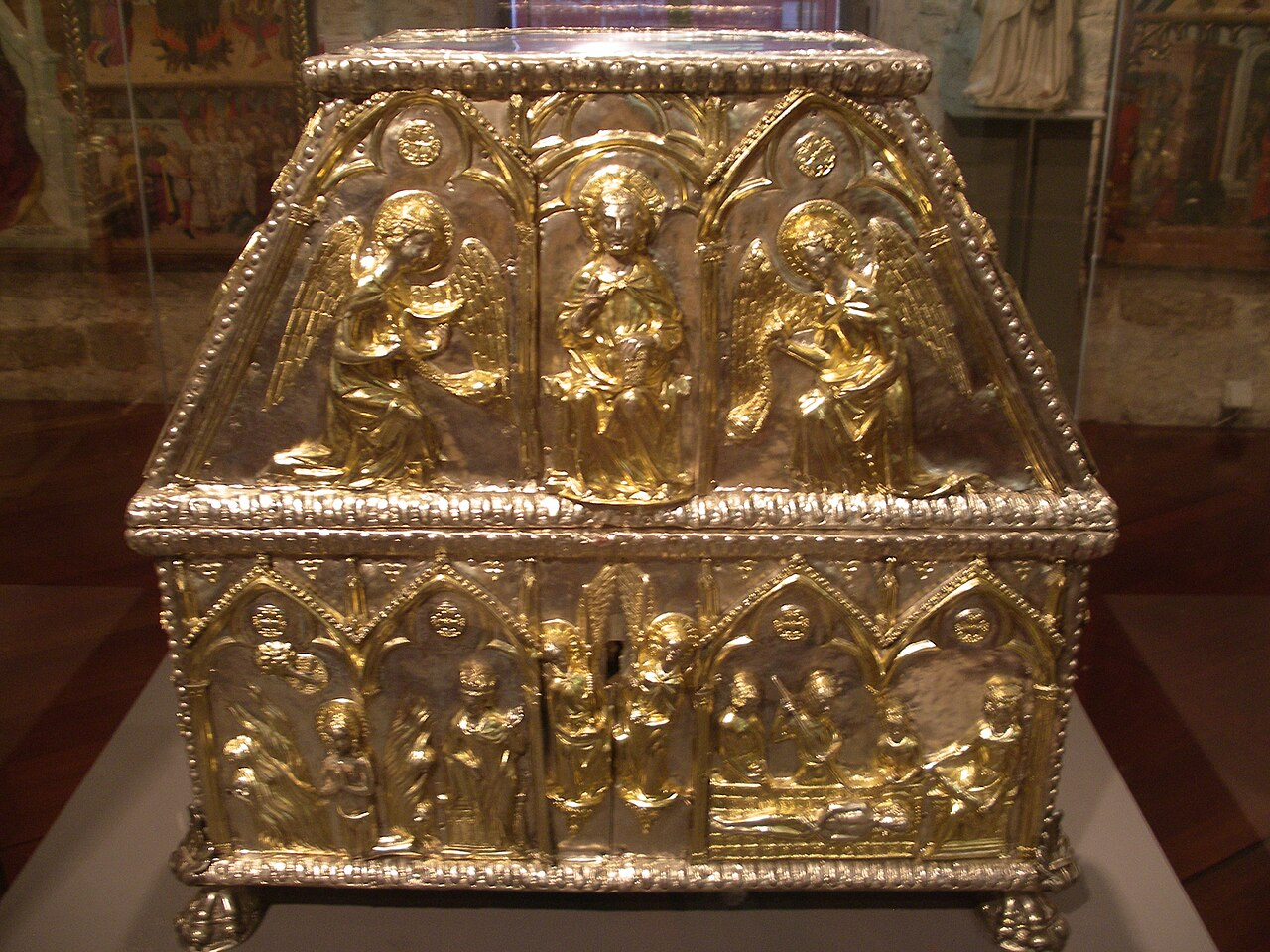
Reliquary casket of Saint Cucuphas
The poet Prudentius honored him in a hymn. Cucuphas is mentioned in the Hieronymian Martyrology; the Prayer Book of Verona; in a hymn called Barcino laeto Cucufate vernans, which says: “Barcino bursts into the vernal joy,of Saint Cucuphas, honoring his remains, and spreads privet branches on the burial mound and on the tomb”.
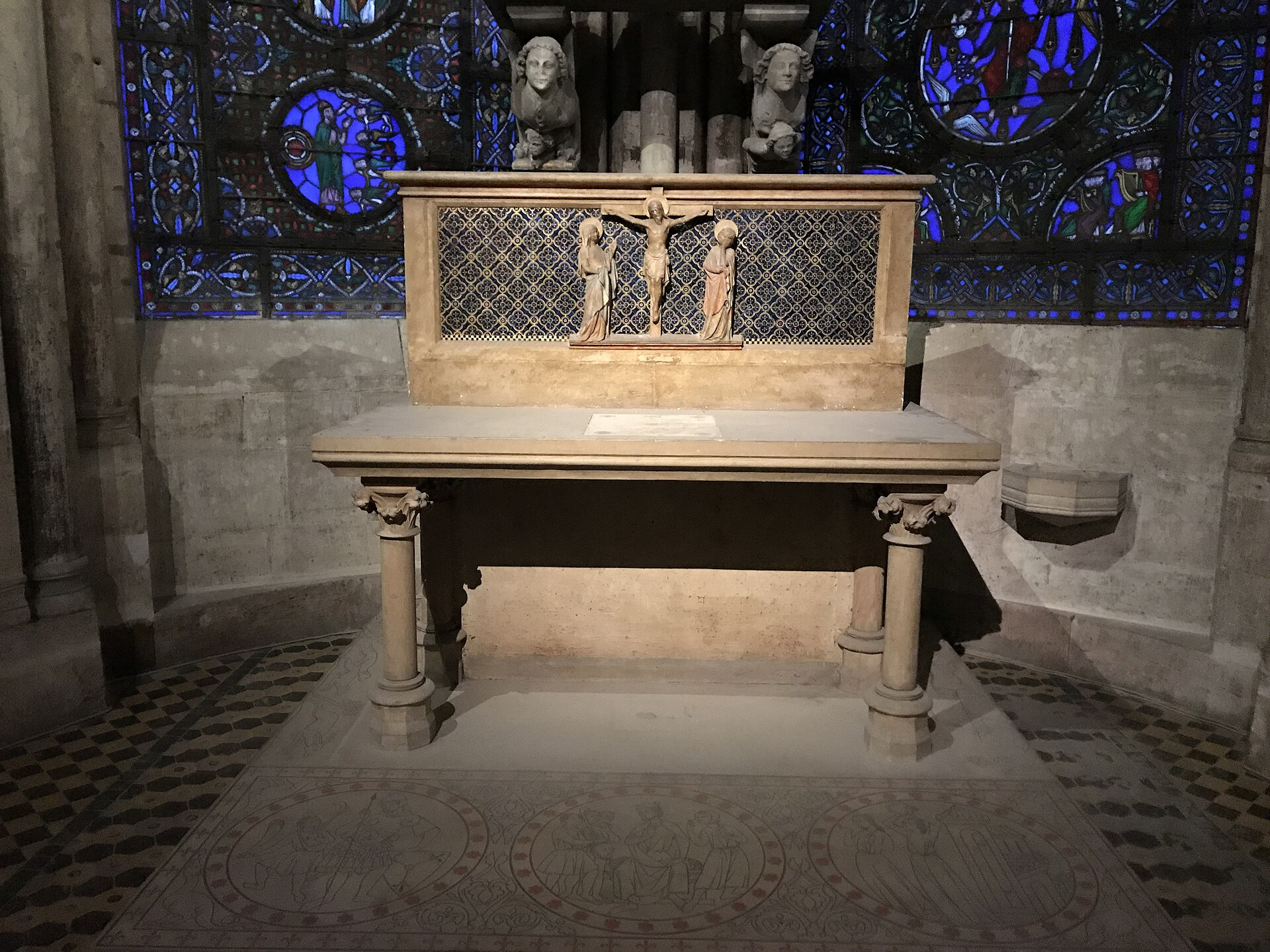
Saint Cucuphas Chapel Basilica Saint Denis
Since the eighth century, Sant Cugat has claimed Cucuphas’ relics. In the eighth century, Saint Fulrad took a relic of Cucuphas from Sant Cugat to Saint-Denis. The relics of Cucuphas occupy a place of honor in the apse to the right of Saint Denis to this day. Many churches in Europe claim his relics, including Reichenau; the cathedrals of Braga, Oviedo; and Lièpvre.
Nuestra Señora de Zocueca / Our Lady of Zocueca, Bailén, Jaén, Andalucía, Spain (1808 – 20 July:
Around 1150, Mozarabic Christians built a rudimentary Chapel near the Rumblar River, the Guadalquivir tribuitary that waters this region in southern Spain, at a place called Zocueca. When Alfonso VII reconquered the area in 1155, people gave thanks to the Virgin at the Shrine. In the 1400s it was was rebuilt, and from this period the graceful, standing Gothic Statue of the Mother and Child seems to date, although tradition holds it to be older than the first Chapel.
During the cholera epidemic of 1681, the people vowed to hold an annual feast in honour of the Virgin, preceded by a day of fasting, if she would save them. The promise has been kept on 5 August ever since. The Chapel was re-decorated in Baroque style in the 1700s.
In 1808, people again thanked the Virgin of Zocueca for her help during the Battle of Bailén, the first Spanish victory against Napoleon. Annually since 1810, the municipality commemorates the battle with a series of civil, patriotic, and religious events from 17-22 July, reaching their greatest splendour on the 20th, when the Patroness, the Virgin of Zocueca, goes through the City streets in procession. Another event in her honour, the romería or pilgrimage, takes place on the last Sunday in September in thanks for her help in ending a plague of locusts which threatened the region’s crops in the late 1800s. Men carry the Statue, bristling with decorations, on their shoulders from its usual home in the Church of the Incarnation in Bailén, to the Sanctuary four miles distant, where overnight vigil is kept before a sunrise Mass. In 1925, the Virgin of Zocueca was proclaimed “Captain General” and her Statue given a military sash. After the Statue burned in the Civil War, religious sculptor Jose Maria Alcacer made a replica, blessed on 5 August1954.
Bl Anne Cartier St Ansegisus St Aurelius of Carthage St Cassian of Saint Saba St Chi Zhuze St Elijah the Prophet
St Elswith
Blessed Gregory Lopez (1542-1596) “The Mystery Man” – Hermit, Spiritual Advisor, Writer. Around 1585, word of a “Mystery Man” began to leak into Mexico City, a strange hermit who lived out in the lonely valley of Guesteca, who walked miles to go to Mass, lived totally subject to “Lady Poverty” and had travelled from the Shrine of Our Lady of Guadalupe in Spain (which dates from 712), to her Shrine in Mexico (which dates from 1531).
St Margaret of Antioch (3rd century) Virgin Martyr. Margaret is one of the Fourteen Holy Helpers and is one of the Saints who spoke to St Joan of Arc.
St Maria Fu Guilin St Mère St Paul of Saint Zoilus St Rorice of Limoges St Severa of Oehren St Severa of Saint Gemma St Wulmar
Martyrs of Corinth – 22 saints: 22 Christians who were martyred together. We know nothing else about them but the names – • Appia • Calorus • Cassius • Celsus • Cyriacus • Donatus • Emilis • Felix • Fructus • Magnus • Maximus • Nestita • Partinus • Pasterus • Paul • Romanus • Spretus • Tertius • Theodolus • Ueratia • Valerian • Victor. They were martyred in Corinth, Greece.
Martyrs of Damascus – 16 saints: 16 Christians who were martyred together. We know the names of six of then, but no details about any of them – Cassia, Julian, Macrobius, Maximus, Paul and Sabinus. They were martyred in Damascus, Syria, date unknown.
Martyrs of Seoul – 8 saints: Eight lay native Koreans in various states of life who were murdered together for their faith. • Anna Kim Chang-gum • Ioannes Baptista Yi Kwang-nyol • Lucia Kim Nusia • Magdalena Yi Yong-hui • Maria Won Kwi-im • Martha Kim Song-im • Rosa Kim No-sa • Theresia Yi Mae-im They were martyred on 20 July 1839 at the Small West Gate, Seoul, South Korea
Martyrs of Zhaojia – 3 saints: Married lay woman and her two daughters in the apostolic vicariate of Southeastern Zhili, China. During the persecutions of the Boxer Rebellion, the three of them hid in a well to avoid being raped. They were found, dragged out, and killed for being Christian. Martyrs. They were – Maria Zhao Guoshi (mother), Maria Zhao and Rosa Zhao (sisters). They were martyred in late July 1900 in Zhaojia, Wuqiao, Hebei, China.
Martyrs of Zhujiahe – 4 saints: Two Jesuit missionary priests and two local lay people who supported their work who were martyred together in the Boxer Rebellion during and immediately after Mass. • Léon-Ignace Mangin • Maria Zhu Wushi • Paul Denn • Petrus Zhu Rixin They were martyred on 20 July 1900 in church in Zhujiahe, Jingxian, Hebei, China
Martyred in the Spanish Civil War: • Blessed Abraham Furones y Furones • Blessed Antoni Bosch Verdura • Blessed Francisca Aldea y Araujo • Blessed Jacinto García Riesco • Blessed Joan Páfila Monllaó • Blessed Josep Tristany Pujol • Blessed Matías Cardona-Meseguer • Blessed Rita Josefa Pujalte y Sánchez • Blessed Vicente López y López
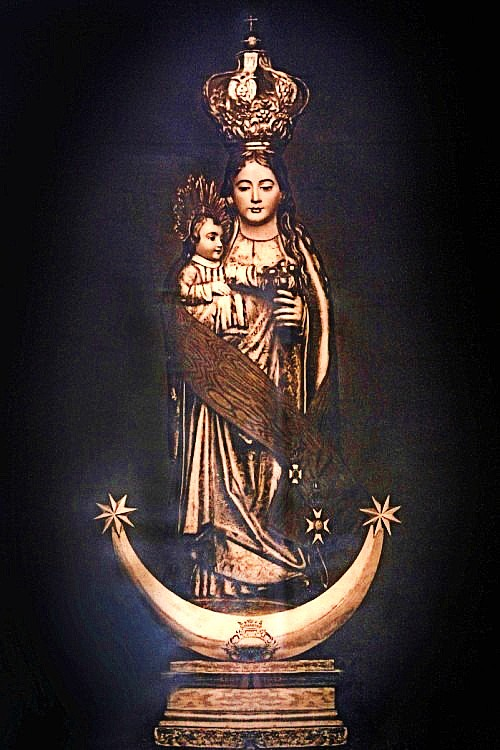
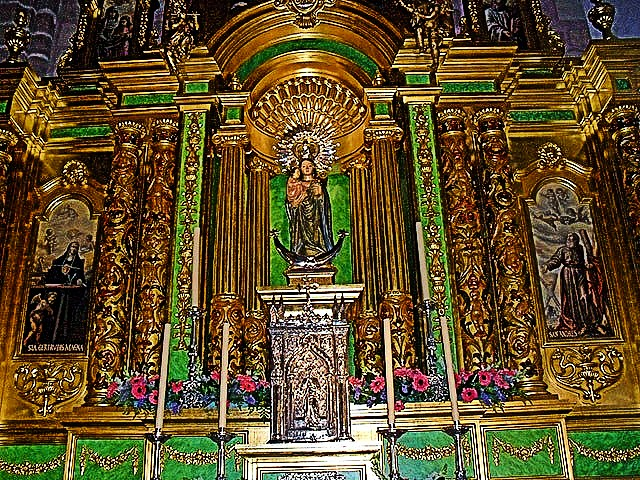
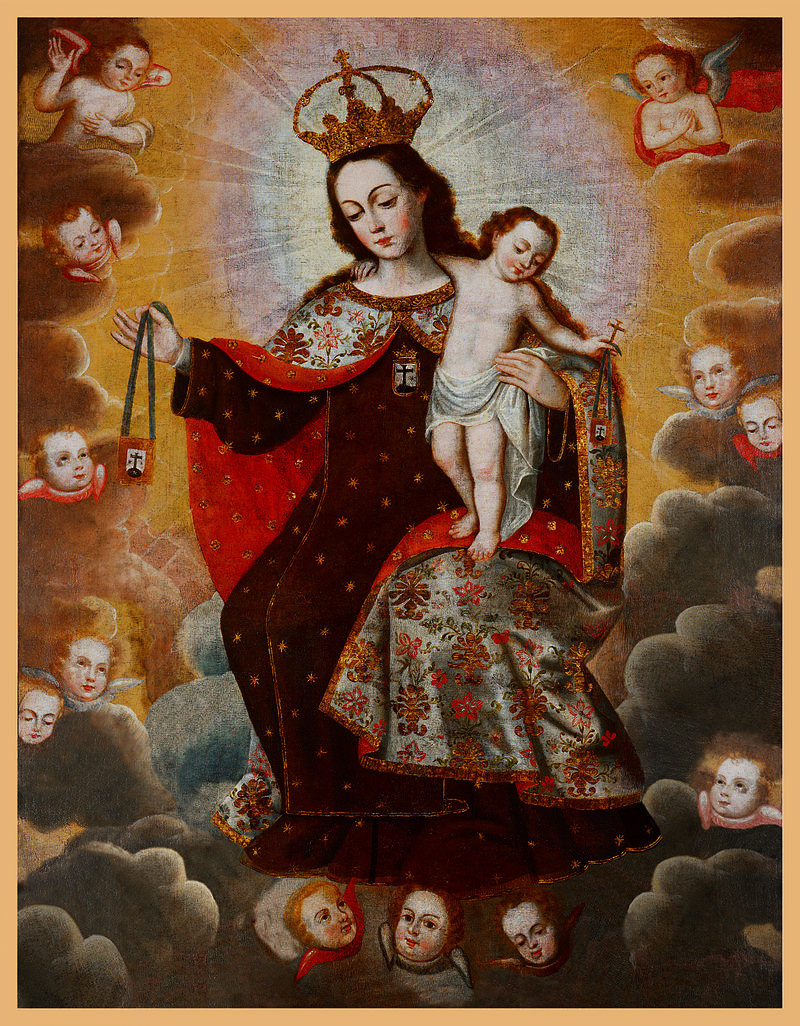
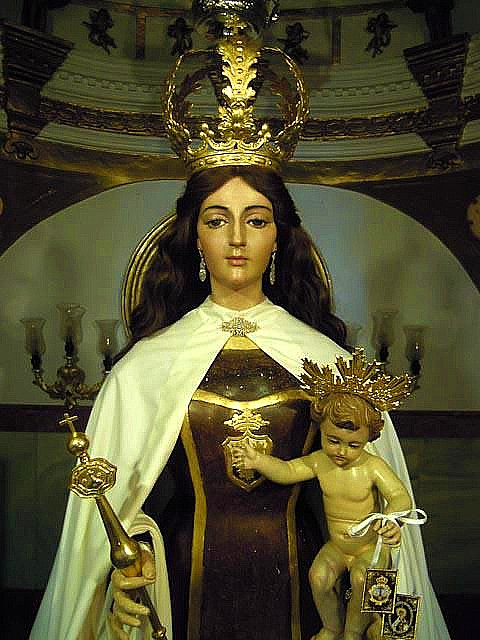
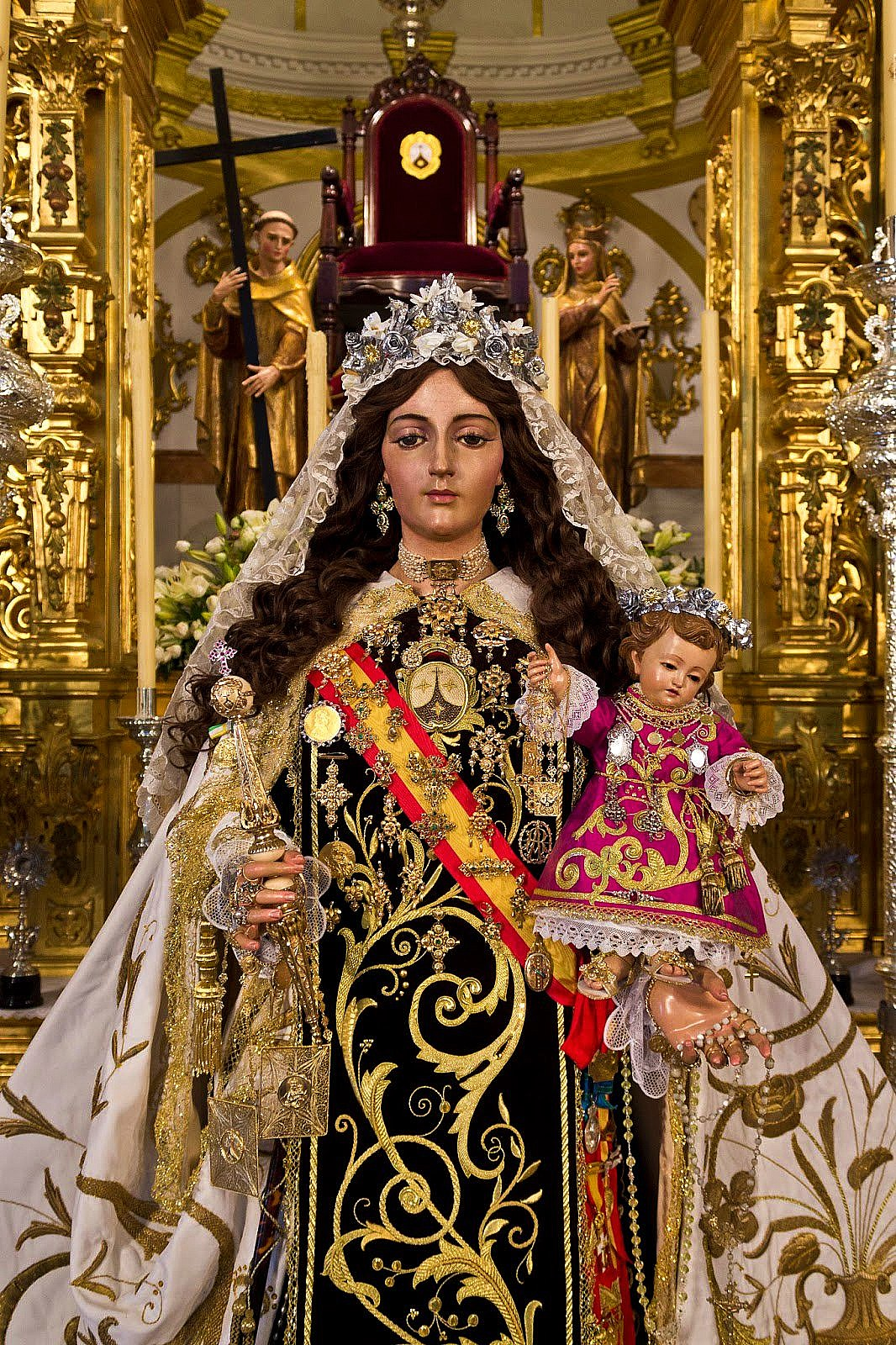
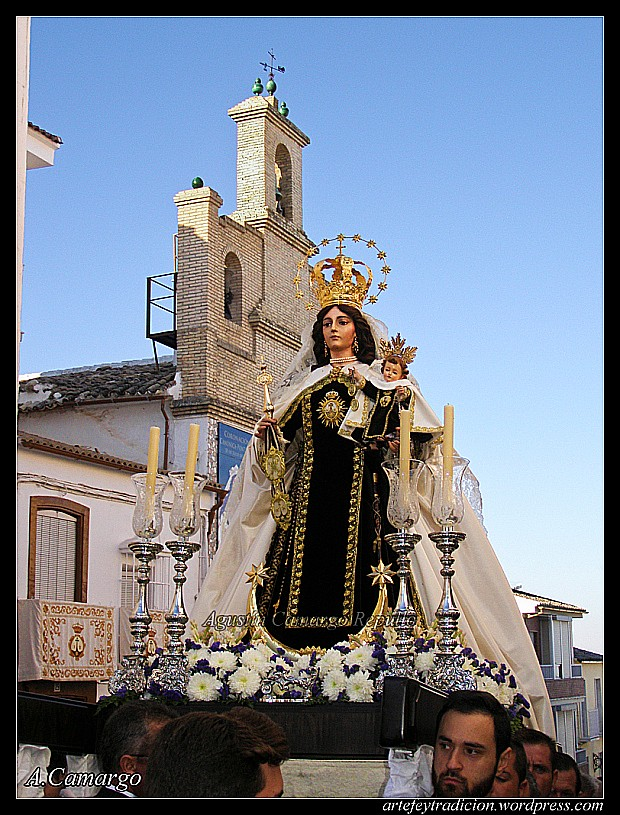
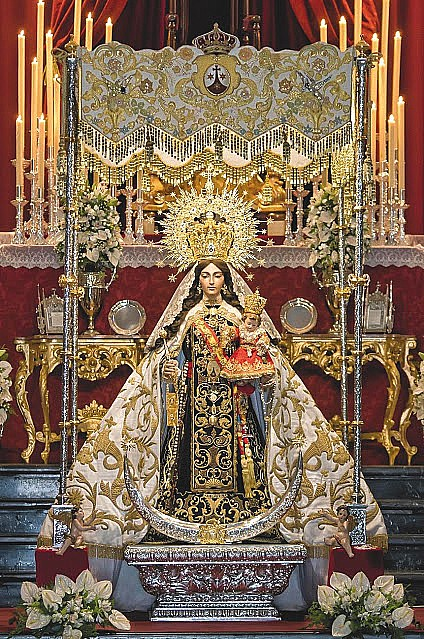
Nuestra Señora del Carmen (Rute, Córdoba, Andalucía, Spain) (17th Century)– 16 July, 13 February – Patron of Rute:
By order of Pope Pius XI, Our Lady of Mount. Carmel was proclaimed Patron of the Town of Rute in southern Spain on 13 February1924. Her beloved image goes back to the late 1600s, when Luisa Roldán (La Roldana) of Seville carved the head and hands. Made to be dressed, the Statue did not have a proper body until the 1960s.
It occupies a neo-baroque setting over the High Altar, also of the 1960s. Rute honours its Patron several times a year. The anniversary celebration lasts three days, culminating on 13 February with Mass, presentations to the Chief of the Brotherhood and the Fiesta Queen of gifts made for the Virgin, and a ceremony of kissing the Scapular of Our Lady of Mount. Carmel. Her liturgical feast day, 16 July is the focus of another three-day celebration. On the last Sunday of June, the procession is held, when the Statue goes in procession through the neighbourhood to the main Parish Church of Santa Catalina Mártir. Another triduum is celebrated around the feast of the Assumption, 14-16 August.
Bl André de Soveral St Andrew the Hermit St Antiochus of Sebaste Bl Arnold of Clairvaux Bl Arnold of Hildesheim
St Bartholomew of Braga OP – Archbishop of Braga also known as Bl Bartholomew of the Martyrs (Bartolomeu Fernandez dei Martiri Fernandes) (1514-1590) Portuguese Dominican Friar and Priest, Writer, Theologian, Advisor, Teacher and Catechetical writer, Apostle of Charity founding a series of hospitals and hospices in Braga and surrounds.
St Benedict the Hermit
Blessed Ceslaus Odrowaz OP (c 1184– 1242) (Brother of St Hyacinth) Priest and Friar of the Order of Preachers, Confessor, Spiritual Advisor, miracle-worker.
Bl Claude Beguignot Bl Domingos Carvalho St Domnin St Domnio of Bergamo Bl Dorothée-Madeleine-Julie de Justamond St Elvira of Ohren St Eugenius of Noli St Faustus St Faustus of Rome and Milan St Fulrad of Saint Denis St Generosus of Poitou St Gobbán Beg St Gondolf of Saintes St Grimoald of Saintes St Helier of Jersey Bl Irmengard Bl John Sugar St Landericus of Séez Bl Madeleine-Françoise de Justamond Bl Marguerite-Rose de Gordon Bl Marguerite-Thérèse Charensol Bl Marie-Anne Béguin-Royal Bl Marie-Anne Doux
St Marie-Madeline Postel (1756-1846) Religious Sister and Founder of the Sisters of Christian Schools of which she is the Patron, Teacher, Franciscan tertiary.
Bl Marie-Rose Laye Bl Milon of Thérouanne Bl Nicolas Savouret Bl Ornandus of Vicogne St Paulus Lang Fu St Reinildis of Saintes ( c 630 – c 700) Virgin, Laywoman, Martyr Bl Robert Grissold Bl Simão da Costa St Sisenando of Cordoba St Tenenan of Léon St Teresia Zhang Heshi St Valentine of Trier St Vitalian of Capua St Vitaliano of Osimo St Yangzhi Lang — Martyrs of Antioch – 5 saints: Five Christians who were martyred together. No details about them have survived by the names – Dionysius, Eustasius, Maximus, Theodosius and Theodulus. They were Martyred in Antioch, Syria, date unknown.








You must be logged in to post a comment.