Posted in SAINT of the DAY

Saint of the Day – 27 August – Saint Poemen

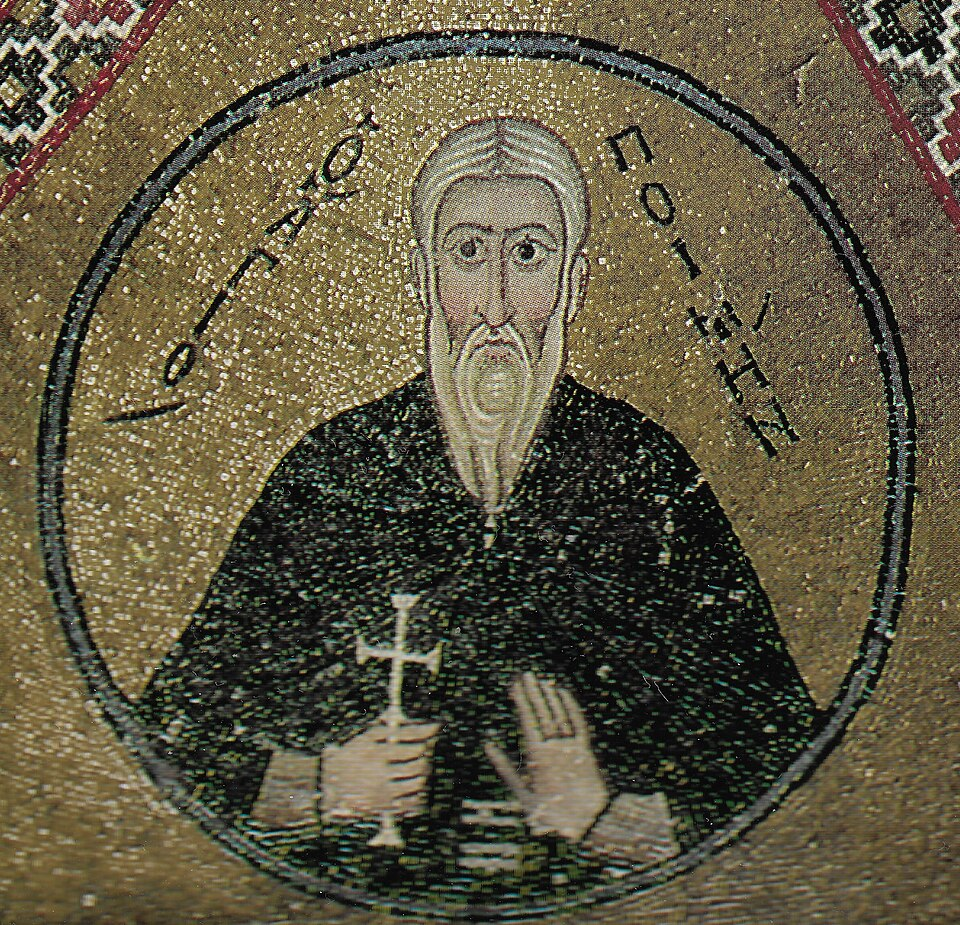
Saint Poemen (meaning ‘Shepherd’), born in 340, is the most quoted Father in the Sayings of the Desert Fathers

Poemen lived at a monastery in Scetis in Egypt, one of the earliest centres of Christian monasticism. In 407 AD the monastery was overrun by barbarian raiders, scattering the monks. Poemen and Anoub, along with a handful of monks, fled to Terenuthis, on the river Nile. After leaving Scetis, his group first lived in an abandoned pagan temple. The diaspora of monks resulting from these raids lead to Poemen and his group keeping alive the collective wisdom of the monks of Scetis by creating the bulk of the Sayings of the Desert Fathers.

Although noted for his strong discipline, (permitting himself and his brothers four hours of sleep a day and spending the rest of the time in chores, prayers or study) he was also tolerant of the weakness of others. One story recounts that some of the older monks approached Poemen for his advice on how to treat monks who fell asleep during their prayers. They were inclined to wake the sleeping monk, while Poemen took a more compassionate approach, advising, “For my part, when I have seen a brother who is dozing, I put his head on my knees and let him rest.” Poemen was typically opposed to giving excessively harsh penances —when a monk came to him who had committed a “great sin”, Poemen reduced his penance from three years to three days.
He once recalled a straying monk back to virtue by sending him a bottle of wine on the birth of a bastard child, in ‘celebration’, which struck the monk’s conscience so hard that he dismissed his mistress. Poemen was described as a charismatic speaker who taught more by example than by lecturing others. When a visiting monk asked him if he should assume a role of authority over the brothers he was living with, Poemen responded by saying, “No, be their example, not their legislator.” Judgment of others was also abhorrent to him. He once stated that, “A man may seem to be silent, but if his heart is condemning others, he is babbling incessantly.” He also urged frequent Communion for all.

He died in 450, of natural causes.

Selected sayings of Poemen

  • The beginning of evil is the lack of vigilance.
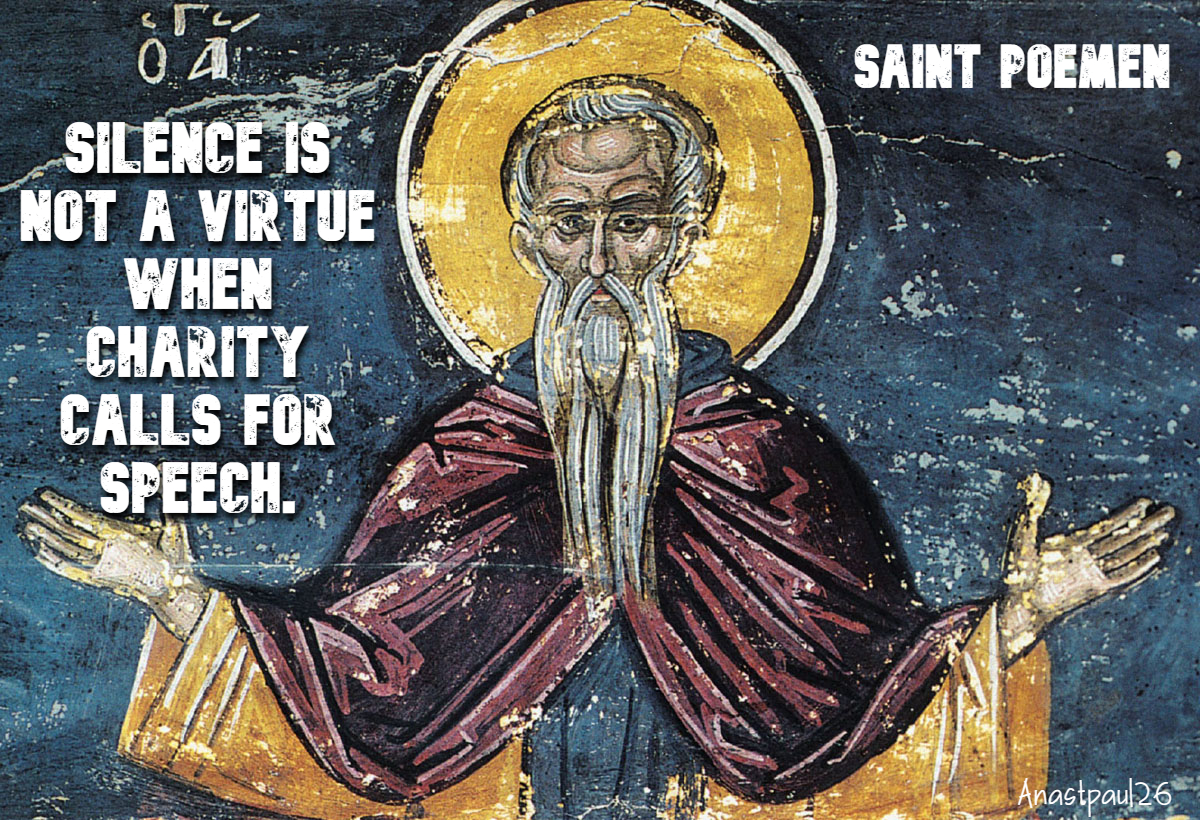
  • Silence is not a virtue when charity calls for speech. 
  • A living faith consists of thinking little of self, and showing consideration for others.
  • Do not lay open your conscience to anyone whom you do not trust in your heart.
  • To instruct your neighbour is the same thing as reproving him. 
  • If you take little account of yourself, you will have peace, wherever you live. 
  • To throw yourself before God, not to measure your progress, to leave behind all self-will; these are the instruments for the work of the soul. 
  • Give not your heart to that which does not satisfy your heart.
  • If you are silent, you will possess peace wherever you live.
  • The nature of water is soft, and the nature of stone is hard; but if a bottle is hung above the stone, allowing the water to fall down drop by drop, it wears away the stone. So it is with the Word of God: it is soft and our heart is hard, but the man who hears the Word of God often opens his heart to the fear of God. 
Posted in Our MORNING Offering

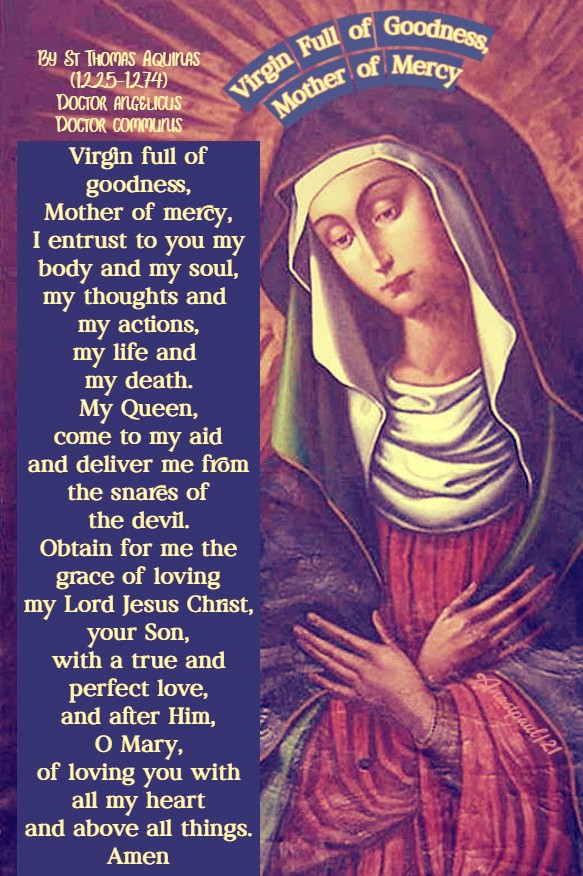
Our Morning Offering – 27 August – Virgin Full of Goodness, Mother of Mercy By St Thomas Aquinas

Our Morning Offering – 27 August – “The Month of the Immaculate Heart of Mary” and Feast of Our Lady Health of the Sick and Mary’s Day

Virgin Full of Goodness,
Mother of Mercy
By St Thomas Aquinas (1225-1274)
Doctor angelicus

Doctor communis

Virgin full of goodness,
Mother of mercy,
I entrust to you my body and my soul,
my thoughts and my actions,
my life and my death.
My Queen,
come to my aid
and deliver me from the snares of the devil.
Obtain for me the grace of loving
my Lord Jesus Christ, your Son,
with a true and perfect love,
and after Him,
O Mary,
of loving you with all my heart
and above all things.
Amen.

Posted in SAINT of the DAY

Feast of the Seven Joys of Our Lady – 27 August

The Seven Joys of Our Lady – 27 August

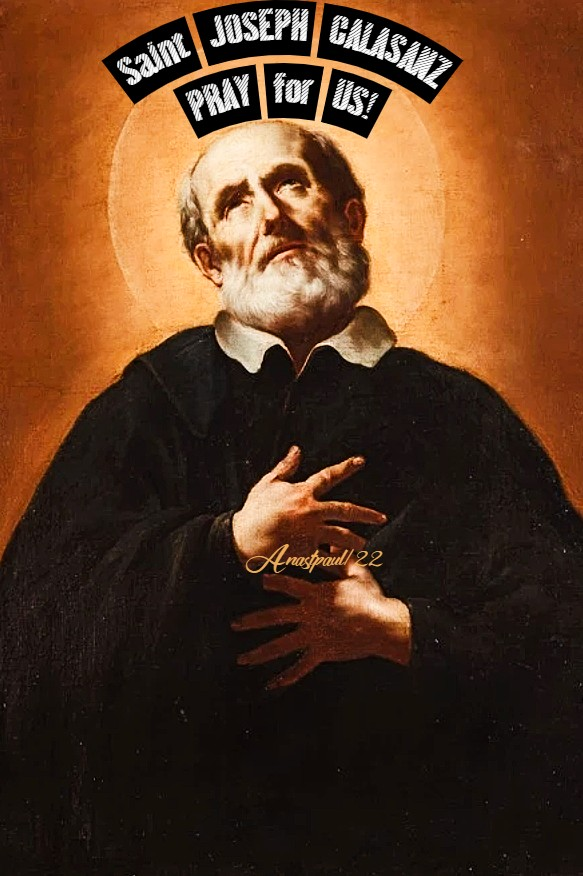
St Joseph Calasanz Sch.P. (1557-1648) Spanish Confessor, Priest, Teacher, Lawyer, Founder of the Pious Schools. Patron of all Schools, Colleges, all study institutions and of all students.

St Caesarius of Arles (470-543) Archbishop and Church Father, Theologian, Preacher, Apostle of charity, Legislator, Administrator, Writer, Reformer.

St Carpophorus
St David Lewis
St Decuman
St Ebbo of Sens
St Etherius of Lyons
St Euthalia of Leontini
St Fortunatus of Potenza
Bl Gabriel Mary
St Gebhard of Constance
St Giovanni of Pavia
St Honoratus of Potenza
St John of Pavia
St Licerius of Couserans
St Malrubius of Merns
St Narnus of Bergamo
St Phanurius
St Poemen
Bl Roger Cadwallador
St Rufus of Capua
St Sabinian of Potenza
St Syagrius of Autun

Martyrs of Tomi – 5 Saints: A group of 17 Christians imprisoned and executed for their faith during the persecutions of Diocletian. They miraculously were unburned by fire and untouched by wild animals. We know the names and a few details on five of them – John, Mannea, Marcellinus, Peter and Serapion. They were tied to stakes and burned alive; they emerged unharmed – thrown to wild animals in the amphitheatre; the animals ignored them; they were beheaded in 304 in Tomi, Mesia (modern Costanza, Romania).

Martyrs of Nagasaki – 14 Beati: A group of fourteen missionaries and Japanese native Christians, who were Martyred together for their faith. They died on 16 August 1627 in Nagasaki, Japan and were Beatified on 7 May 1867 by Pope Pius IX.
• Blessed Antonius of Saint Francis
• Blessed Bartolomé Díaz Laurel
• Blessed Caius Akashi Jiemon
• Blessed Francisca Pinzokere
• Blessed Francisco of Saint Mary
• Blessed Franciscus Kuhyoe
• Blessed Leo Kurobyoe Nakamura
• Blessed Lucas Tsuji Kyuemon
• Blessed Ludovicus Matsuo Soyemon
• Blessed Magdalena Kiyota
• Blessed Maria Shobyoe
• Blessed Michaël Koga Kizayemon
• Blessed Thomas Sato Shin’emon
• Blessed Tsuji Shobyoe

Posted in SAINT of the DAY

One Minute Reflection – 27 August – “The one who is least among all of you is the one who is the greatest.”

One Minute Reflection – 27 August – “The Month of the Immaculate Heart of Mary” and the celebration of St Joseph Calasantius (1557-1648) Spanish Confessor – Readings: Ps 33:12, Ps 33:2, Wis 10:10-14, Matt 18:1-5

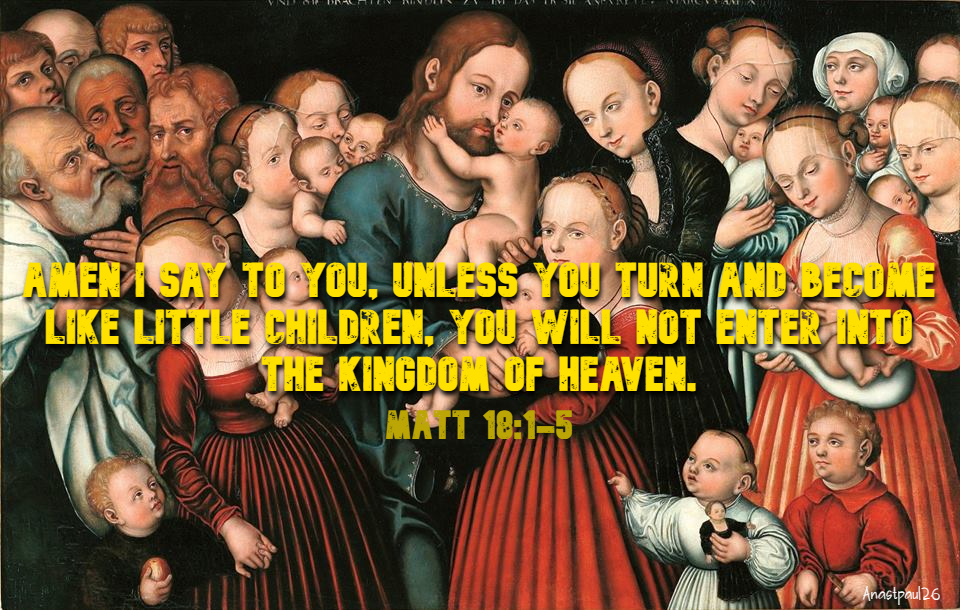
At that time, the disciples came to Jesus, saying, Who then is greatest in the kingdom of heaven? And Jesus called a little child to Him, set him in their midst, and said, Amen I say to you, unless you turn and become like little children, you will not enter into the kingdom of heaven.

Matt 18:1-5

REFLECTION – “Come,” said Christ to his apostles, “and learn from me” – not, to be sure, how to cast out demons with heavenly power, nor how to cleanse lepers, nor how to enlighten the blind, nor how to raise the dead… But you, he says, “Learn from me, for I am meek and humble of heart”. For this can be learned and practiced by everyone in general, whereas the works of signs and mighty deeds are neither always necessary and appropriate for everyone, nor are they bestowed on everyone.

Humility, then, is the teacher of all the virtues; it is the most firm foundation of the heavenly edifice; it is the Savior’s own magnificent gift. For a person may perform without danger of pride all the miracles that Christ worked if he strains after the meek Lord not because of his exalted signs but because of his patience and humility. But a person who itches to command unclean spirits, to bestow the gift of health on the sick, or to show some wondrous sign to the people is far from Christ even though he invokes the name of Christ in his displays, because by reason of his proud mind he does not follow the Teacher of humility.

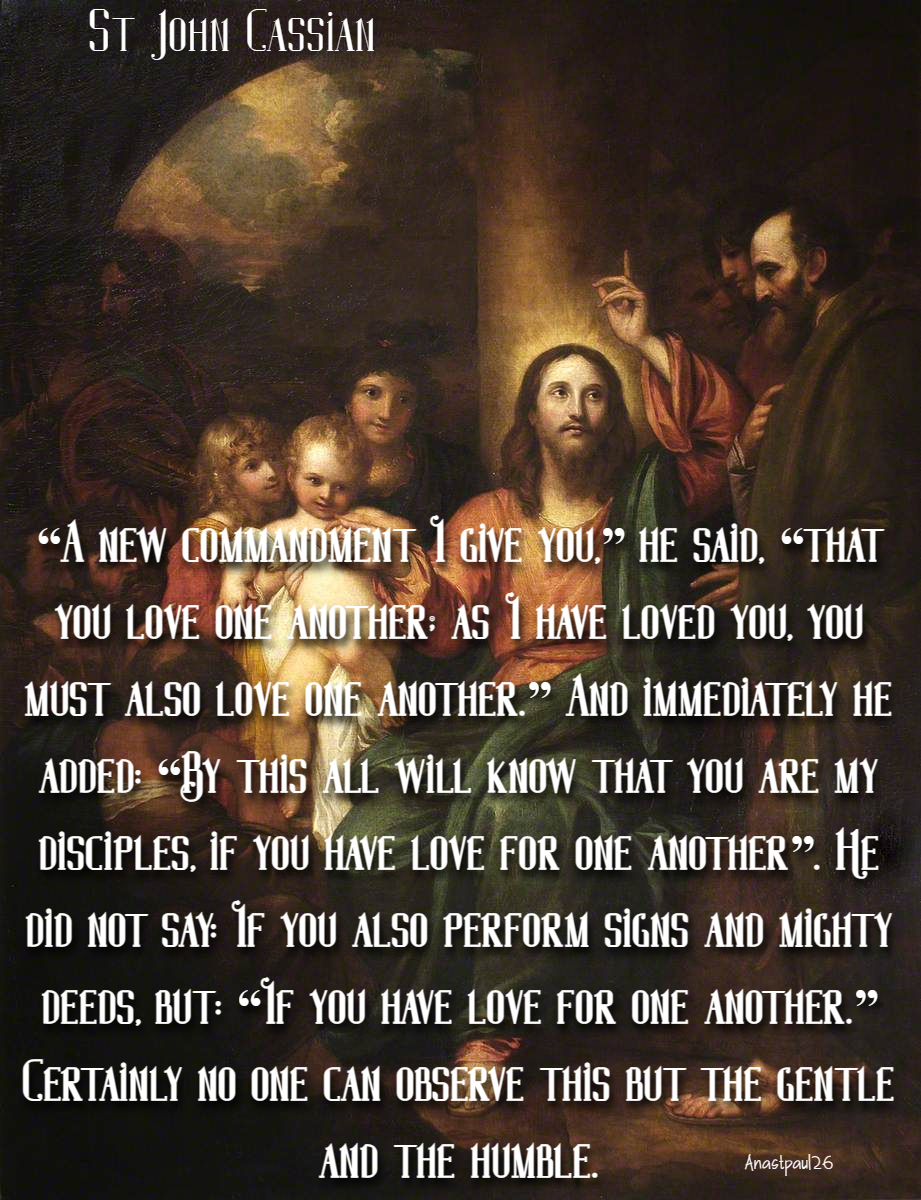
Even when he was returning to his Father he prepared what I might call his testament, and he left this to his disciples: “A new commandment I give you,” he said, “that you love one another; as I have loved you, you must also love one another.” And immediately he added: “By this all will know that you are my disciples, if you have love for one another”. He did not say: If you also perform signs and mighty deeds, but: “If you have love for one another.” Certainly no one can observe this but the gentle and the humble.

St John Cassian

PRAYER – O God, Who through St Joseph, Thy Confessor, did graciously will to provide Thy Church with a new method for the training of youth, in the spirit of understanding and holiness grant, we beseech Thee, that, following his example and through his intercession, we may live and teach so as to acquire an everlasting reward. Through Jesus Christ, Thy Son our Lord, Who lives and reigns with Thee, in the unity of the Holy Ghost, God, world without end. Amen

Posted in CATHOLIC Quotes, QUOTES on EDUCATION

Quote/s of the Day – 27 August – St Joseph Calasanz/Calasantius (1557-1648)

Quote/s of the Day – 27 August – St Joseph Calasanz/Calasantius (1557-1648) Spanish Confessor

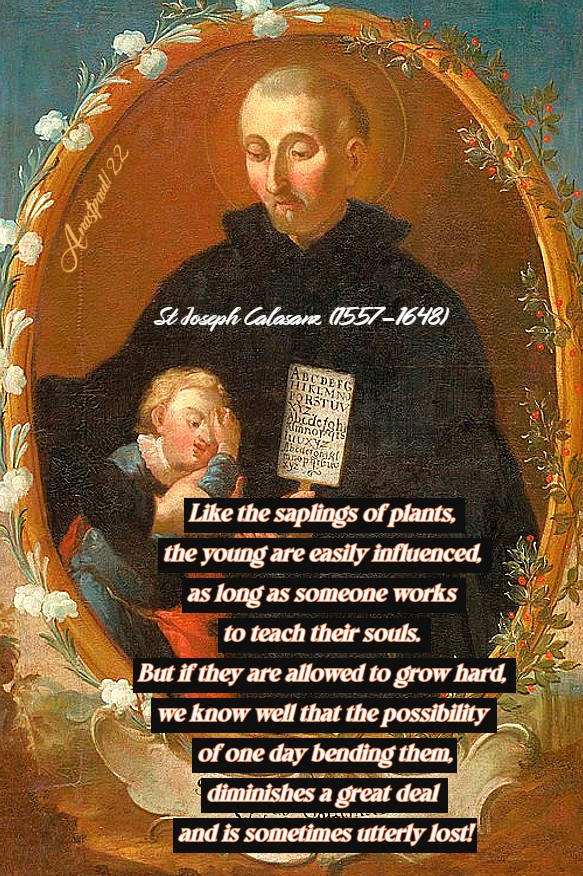
Like the saplings of plants,
the young are easily influenced,
as long as someone works
to teach their souls.
But if they are allowed to grow hard,
we know well that the possibility

of one day bending them,
diminishes a great deal
and is sometimes utterly lost
.”

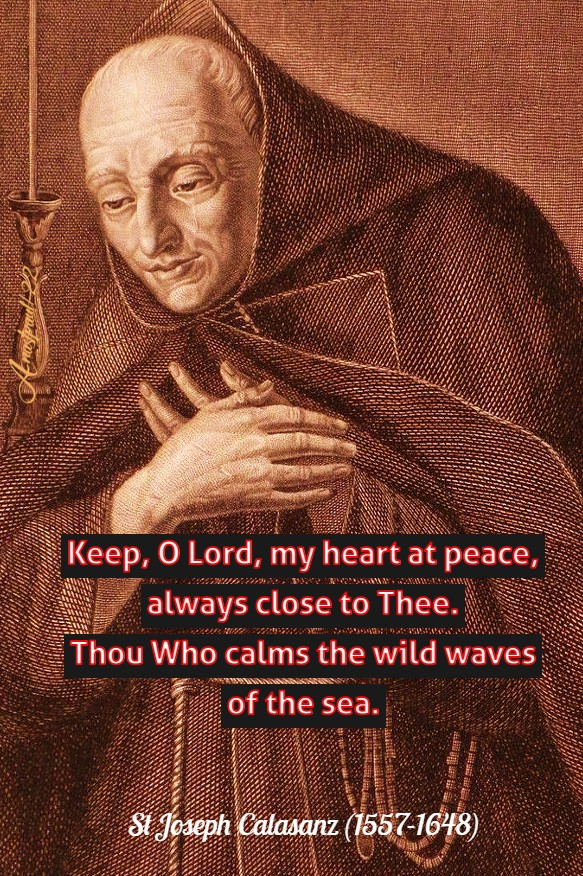
Keep, O Lord, my heart at peace,
always close to Thee.
Thou Who calms the wild waves of the sea.

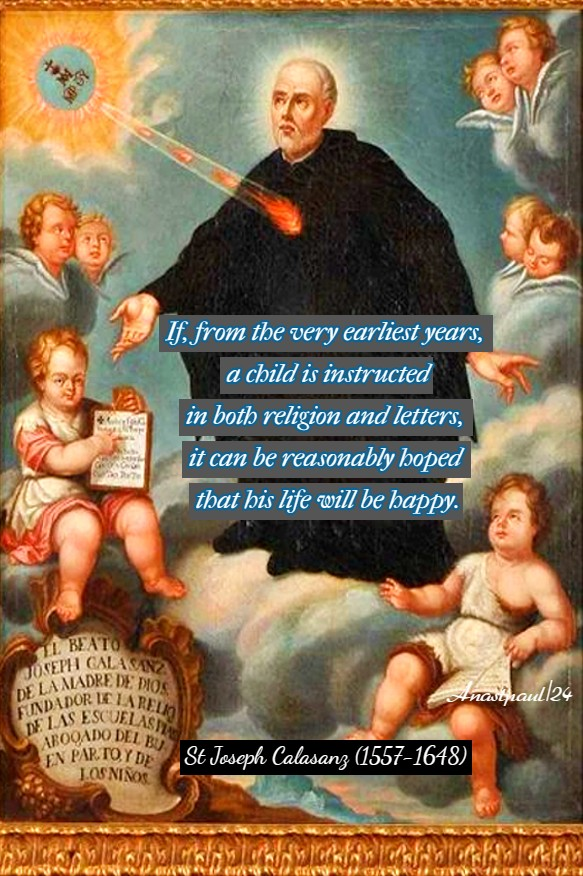
If, from the very earliest years,
a child is instructed
in both religion and letters,
it can be reasonably hoped
that his life will be happy.

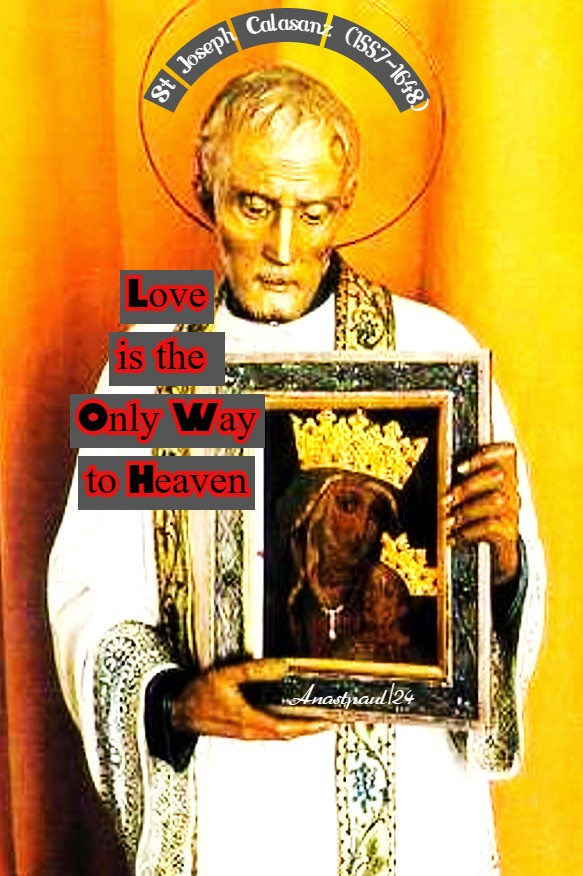
LOVE
is the only way
to HEAVEN.

Posted in AUGUST - The Immaculate Heart of Mary

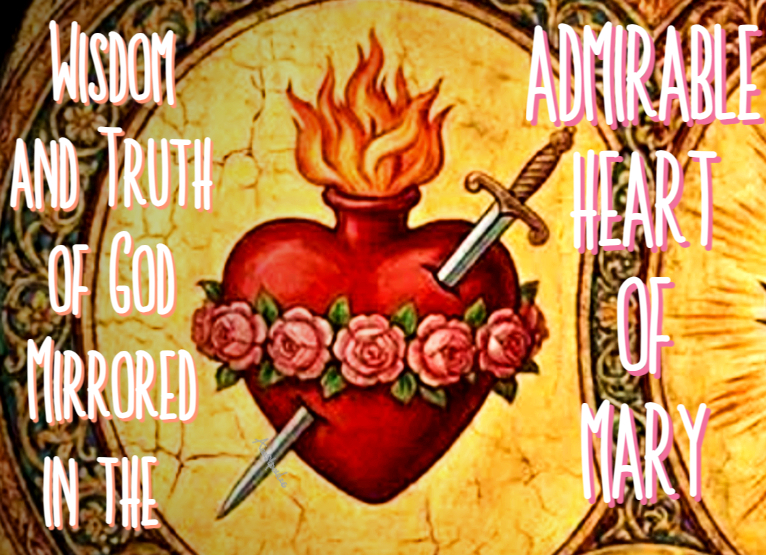
Thought for the Day – 27 August – Wisdom and Truth of God Mirrored in the Admirable Heart of Mary

St John Eudes – The Admirable Heart of Mary

Wisdom and Truth of God Mirrored in the Admirable Heart of Mary

Divine wisdom and truth are communicated to the holy Heart of the Blessed Virgin Mary in no lesser degree than Divine power and strength. If the Holy Ghost assures us that the soul of the just man is the seat of Divine Wisdom, we can well say that the Heart of Mary, Mother of Jesus, is the throne of this same Wisdom, the highest and most magnificent throne that it ever had or shall have on earth and in heaven.

The Heart of Mary is not merely the throne of Wisdom, but its living image, for it is the Heart of the Mother of Him whom Sacred Scripture calls “the wisdom of God.” In Christ are all the treasures of the wisdom and knowledge of God, and He certainly dispensed them in an incomparably higher manner to His Mother than to King Solomon and all the sages and wise men of the universe. Mundane prudence and the wisdom of the flesh never found admittance into her wise Heart, which was and still is an inexhaustible treasure and bottomless abyss of angelic prudence, holy science, heavenly light and wisdom divine, because her luminous Heart always was and ever shall be the abode of the Eternal Sun and of Uncreated Wisdom, Who has always dwelt therein. It is the city mentioned by the Prophet Isaias: “One shall be called the city of the Sun.”

St. Bernardine of Siena expressly states that Our Lady was so completely filled with the light of Divine Wisdom from her mother’s womb that from the initial moment of her existence she possessed a perfect general knowledge of the Creator and of all irrational, rational and intellectual creatures. Our Lady knew all these things in God, as in their first and universal cause, for God was the single object of her gaze as well as of her love. She saw God in all things, and all things in God.

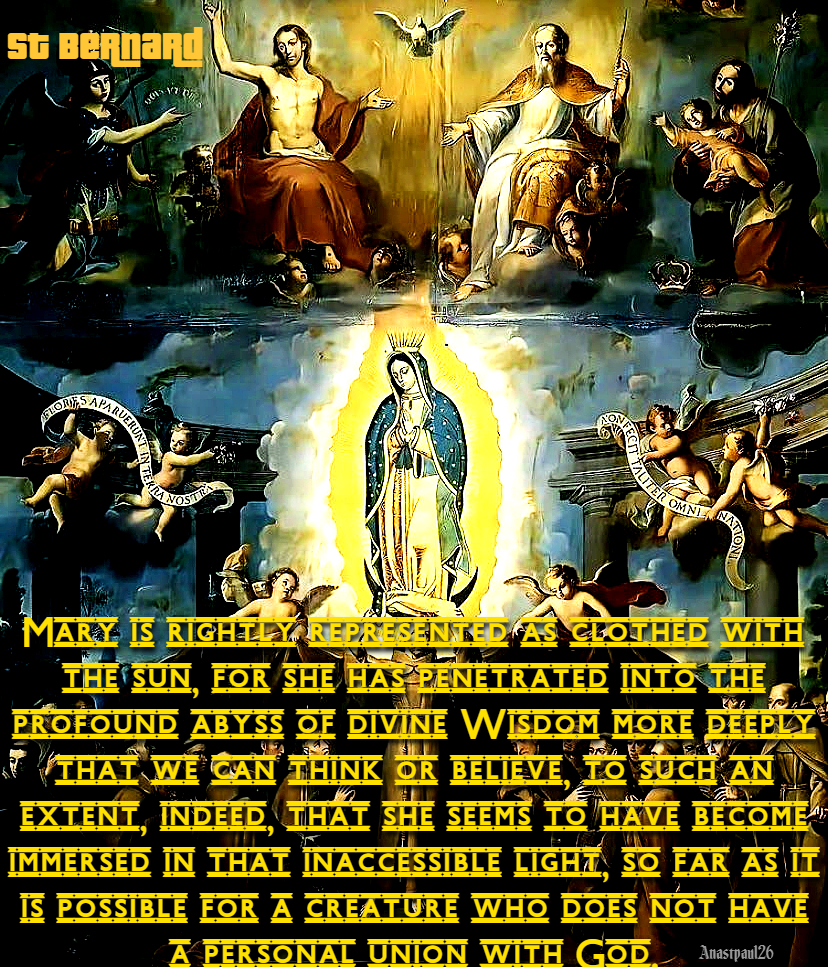
“Mary is rightly represented as clothed with the sun,” says St. Bernard, “for she has penetrated into the profound abyss of divine Wisdom more deeply that we can think or believe, to such an extent, indeed, that she seems to have become immersed in that inaccessible light, so far as it is possible for a creature who does not have a personal union with God.”

Our Lady possesses a special knowledge of those who are most devoted to her; she knows God’s designs concerning them, the road they should follow to reach God, the state and dispositions of their souls, all the accidents that befall them, all their possible perils, the pains they suffer, interiorly and exteriorly. She knows the temptations that assail them, the evil schemes of their enemies and all their corporal and spiritual needs, so that she may assist, protect, defend and strengthen her faithful followers, obtain from her divine Son the help they need most, and be herself the best of mothers to them. From this you can estimate the happiness and advantages enjoyed by those who make themselves worthy to be numbered among the true children of Our Lady’s loving Heart.

Such are some of the effects wrought by Divine Wisdom in this admirable Heart. We shall now contemplate in it the workings of the Eternal Truth of God. Divine veracity stamps its image most excellently on the Blessed Virgin’s Heart. As God is paramountly the God of all truth and calls Himself the Holy and True One, so is the Heart of the Mother of God filled with truth. Only of the Heart of Mary can it be said, speaking of simple creatures, that truth always filled it, because it was the only Heart ever completely faithful to its divine rule and exemplar, the Heart of God Himself. Give me all the hearts of the children of Adam, and I shall repeat of them all the words of the Holy Spirit: “Their heart is vain,” for none will be found who were always truthful and faithful to God.

Only of the Heart of the Mother of Him who is essential and uncreated Truth, could it be said from the first to the last moment of her life: “The Heart of Mary is holy and truthful,” because it always conforms to God’s eternal decrees. “Whatever was done in her,” says St, Jerome, “was all purity and simplicity, sanctity and truth.”

Furthermore, as God is infallible in His judgments and knowledge and can commit no error, knowing and judging all things in His own truth, so also He gave the Blessed Virgin Mary a knowledge of the truth which enlightened all her judgments. Her Heart was ever filled and possessed by the spirit of truth, which guided her with the infallible light of faith that can truly be called a participation of divine truth.

Finally, as all the actions and words of God are imbued with Truth itself, in like manner were the words and actions of God’s Mother always truthful, that is, they were always conformable to the holiness, perfection and truth of the deeds and words of God. This was because they stemmed from a Heart most holy, perfect, and truthful, and the Son of God Himself teaches us that man’s heart is the principle of all his thoughts, words and actions, be they good or bad.

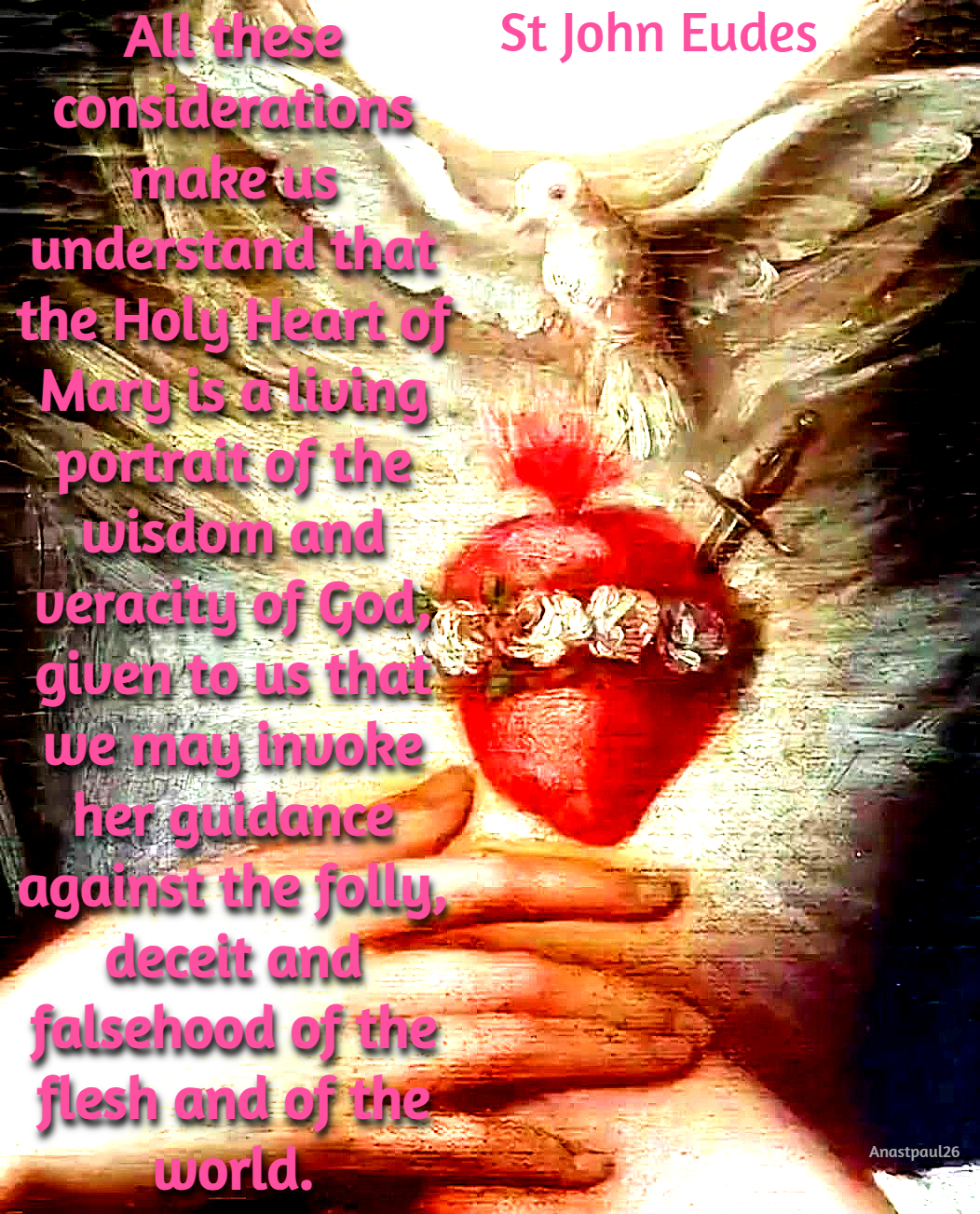
All these considerations make us understand that the Holy Heart of Mary is a living portrait of the wisdom and veracity of God, given to us that we may invoke her guidance against the folly, deceit and falsehood of the flesh and of the world.