Posted in MARIAN TITLES

Victory of the King of France (Philip the Fair), imploring the help of Our Lady of Chartres (1304) and Memorials of the Saints – 17 August

Victory of the King of France (Philip the Fair), imploring the help of Our Lady of Chartres (1304) – 17 August:

It was on this day in the year 1304 that “Philip the Fair” gained a signal victory over the Flemish after recommending himself to Our Lady of Chartres.
The eldest son of King Philip and Isabella of Aragon, he was nicknamed Philip the Fair while yet a Prince for his handsome features. He became King of France at only 17 years of age and married Joan of Navarre in 1284, which enlarged his Kingdom.

In the year 1302, Philip sent an inadequate army into Flanders to suppress the Flemish, who were making incursions into his realm at will. His army was soundly defeated at the Battle of the Golden Spurs. Philip responded by winning a naval victory over the Flemish at Zierichzee and then met the Flemish army at the Battle of Mons-en-Pevele, also known as Mons-en-Puelle, on 17 August 1304.
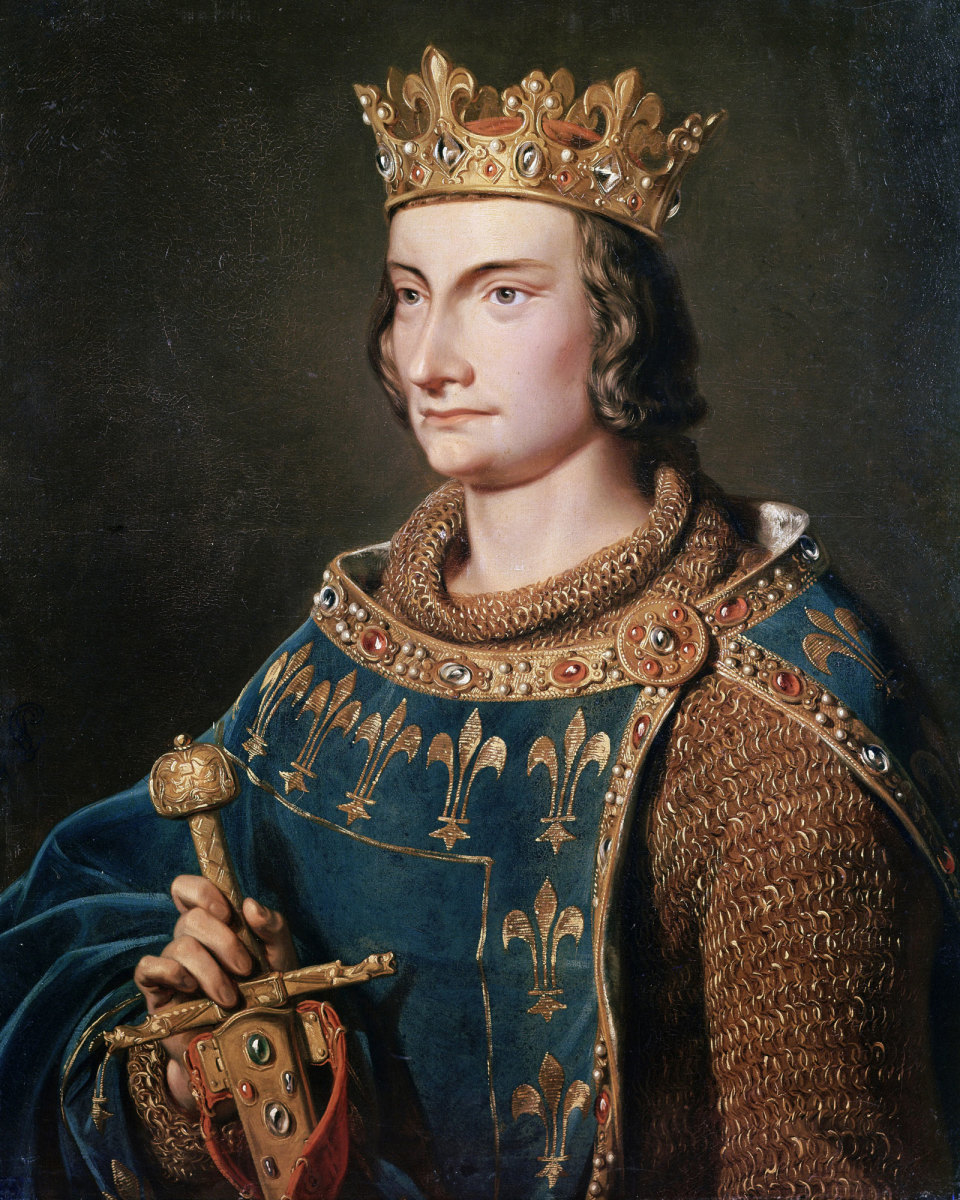
The battle was furious, lasting all day in extreme heat. Eventually the majority of the French army fled the field, leaving Philip alone with only ten Knights fighting desperately to save themselves and their King. Philip’s horse collapsed, having been killed under him and his life was in great danger of being lost. At that moment, while facing death and certain defeat in battle, Philip turned to the Queen of Heaven, Our Lady of Chartres, begging her assistance to save the day and his life.

Suddenly the French Knights, who had been fleeing the field, turned and saw the King’s Royal Standard still stood, and that he, himself, fought like a Knight of great renown amidst a sea of raging enemies. Racing to the scene with their swords and lances, they turned the Flemish and drove them from the field in what became a resounding victory for the King of France. The Battle of the Golden Spurs was well compensated.

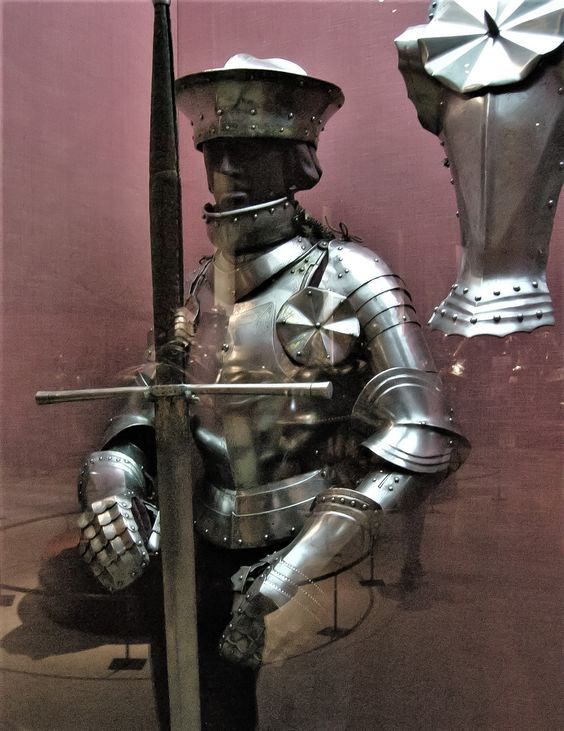
In gratitude for this victory and favour of Our Lady of Chartres, King Philip went at once to do homage to the Virgin Mary at her Cathedral. He took off his own armour and gave it to the cathedral at the Altar. He also gave to it, in perpetuity, the land and lordship of Barrus, founded a daily Mass forever and left to this church ,all of the other accoutrements which he had worn on that day of victory. This feast is kept in the Church of Notre Dame, at Paris, on the following day, the 18th and the office is double. This armour is formerly exhibited in the church, on the Anniversary of the battle.
St Amor of Amorbach
St Anastasius of Terni
St Beatrice da Silva Meneses OIC (1424-1492) Virgin, Nun, Founder

St Benedicta of Lorraine
St Carloman
St Cecilia of Lorraine

St Clare of the Cross of Montefalco (c 1269-1308) Augustinian Nun and Abbess, before becoming a nun, St Clare was a member of the Third Order of St Francis (Secular), Mystic, Penitent, Spiritual adviser.

St Donatus of Ripacandida
St Drithelm
St Elias the Younger
Bl Enric Canadell Quintana
Bl Eugenio Sanz-Orozco Mortera
St Pope Eusebius
St Eusebius of Sicily

St Hyacinth OP (1185-1257) ) “Apostle of Poland” and “Apostle of the North” also known as “the Polish St Dominic”– Religious Priest of the Order of Preachers, Confessor, Doctor of Law and Divinity, Missionary, Preacher, Miracle Worker, Mystic.

St Jacobo Kyushei Gorobioye Tomonaga
St James the Deacon

St Jeanne of the Cross Delanoue (1666-1736) Virgin, Sister and Foundress of the Congregation of St Anne de la Providence

St Jeroen of Noordwijk
St Juliana of Ptolemais
St Leopoldina Naudet
St Mamas
Bl Marie-Élisabeth Turgeon
St Michaël Kurobyoie
St Myron of Cyzicus

St Nicolò Politi (1117-1167) Basilian Monk and Hermit. He was known for his miracles even during his childhood and was Venerated as a saint even before his death.

Bl Noël-Hilaire Le Conte
St Paul of Ptolemais
St Theodore of Grammont

Martyred in the Spanish Civil War: Bl Antoni Carmaniú Mercarder, Bl Facundo Escanciano Tejerina, Bl Eugenio Sanz-Orozco Mortera, Bl Enric Canadell Quintana, Florencio López Egea and see below –
Martyrs of Malaga – 8 beati: A priest and seven brothers, all members of the Hospitallers of Saint John of God, all martyred together in the Spanish Civil War.
Posted in SAINT of the DAY

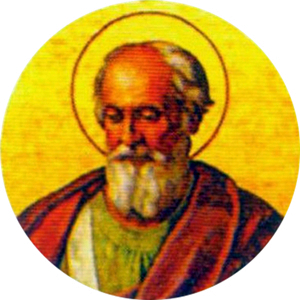
Saint of the Day – 17 August – Pope St. Eusebius

Saint Eusebius (died 21 October 310) was the bishop of Rome from 18 April 309 until his exile on 17 August 310. Not much is known about Eusebius’s early life, but he was probably Greek. His reign was short. The Liberian Catalogue gives its duration as only four months, from 18 April to 17 August, 309 or 310. 

We learn some details of his career from an epitaph for his tomb which Pope Damasus ordered. It appears that the grave internal dissentions caused in the Roman Church by the readmittance of the apostates (lapsi) during the persecution of Diocletian, and which had already arisen under Marcellus, continued under Eusebius. The latter maintained the attitude of the Roman Church, adopted after the Decian persecutions (250-51), that the apostates should not be forever debarred from ecclesiastical communion, but on the other hand, should be readmitted only after doing proper penance.

This view was opposed by a faction of Christians in Rome under the leadership of one Heraclius. It is likely that Heraclius and his supporters sought to compel by force their admittance to divine worship, which was resented by the faithful gathered in Rome about Eusebius. In consequence both Eusebius and Heraclius were exiled by Emperor Maxentius. Eusebius was deported to Sicily, where he died soon after. Miltiades ascended the papal throne, 2 July, 311. The body of his predecessor was brought back to Rome, probably in 311, and was placed in a separate cubiculum of the Catacomb of Callistus. His firm defense of ecclesiastical discipline and the banishment which he suffered therefore caused him to be venerated as a martyr, and in his epitaph Pope Damasus honours Eusebius with this title.

Posted in Our MORNING Offering

Our Morning Offering – 17 August – Jesus, Joy of Loving Hearts By St Bernard

Our Morning Offering – 17 August – “Month of the Immaculate Heart”

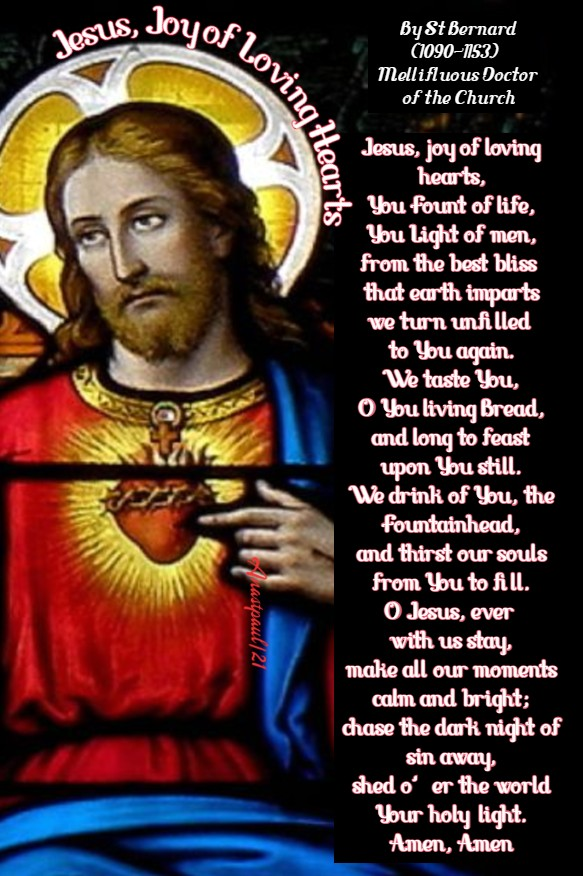
Jesus, Joy of Loving Hearts
By St Bernard (1090-1153)

Mellifluous Doctor of the Church
and the last Father of the Church

Jesus, joy of loving hearts,
You Fount of life,
You Light of men,
from the best bliss that earth imparts
we turn unfilled to You again.
We taste You,
O You living Bread,
and long to feast upon You still.
We drink of You, the Fountainhead,
and thirst our souls from You to fill.
O Jesus, ever with us stay,
make all our moments calm and bright;
chase the dark night of sin away,
shed o’er the world Your holy light.
Amen, Amen

Posted in ONE Minute REFLECTION

One Minute Reflection – 17 August – “Be vigilant at all times and pray”

You also must be ready, because at an hour that you do not expect, the Son of Man is coming.

Luke 12:35-40

REFLECTION – My beloved, that a person should do the will of God is what constitutes prayer. That is how prayer seems to me to excel. Above all, be eager for prayer and do not weary in it, as it is written that our Lord said: “Pray and do not weary.” You should be eager in wakefulness and remove far from yourself drowsiness and sleep; you should be watchful both by day and by night and not be disheartened.

Now I shall show you the different occasions for prayer. There is petition, thanksgiving, and praise. In petition one asks for mercy for one's sins, in thanksgiving you give thanks to your Father who is in heaven, while in praise you praise Him for his works. At a time when you are in trouble, offer up petition, and when you are well supplied with good things, you should give thanks to the Giver, and when your mind rejoices, offer up praise.

Make all these prayers of yours with discernment to God. See how David was always saying: “I have risen to give thanks to you for your judgments, O Just One.”. And in another psalm he said: “Praise the Lord in heaven, praise him in the heights”. Again he says: “I will bless the Lord at all times, and at all times his praises are in my mouth”. Do not pray using only one kind of prayer, but all separately according to circumstance.

I am convinced, my beloved, that everything people ask for with diligence, God will grant them. But he takes no pleasure in the person who offers up prayer in mockery. As it is written: “This is required of the person who prays, offering up prayer: that he turn over and inspect his offering well, lest some blemish be found on it; only then should he offer it” , so that your offering does not remain on earth. What is this offering if not prayer? Of all offerings pure prayer is the best.

Aphrahat (?-c.345) monk and Bishop near Mosul

PRAYER – Father of might and power, every good and perfect gift comes to us from You. Implant in our hearts the love of Your Name and Your creatures. Increase our zeal for Your service by following behind Your Son with determination and joy. Nourish in us what good and tend it with watchful care. Grant that the prayers and caring love of the Blessed Virgin, our Mother, may help us to follow Jesus our Saviour unreservedly and thus attain eternal life. We make our prayer through Christ, our Lord in the union of the Holy Spirit, one God for all eternity, amen.

Posted in CATHOLIC Quotes

Quote/s of the Day – 17 August – Happy the man found without fault

Quote/s of the Day – 17 August – “Month of the Immaculate Heart” – Readings: Ps 36:30-31, Ps 36:1, Sir 31:8-11, Luke 12:35-40

Happy the man found without fault, who turns not aside after gain, nor puts his trust in money nor in treasures! Who is he, that we may praise him? For he has done wonders in his life.

Sir 31:8-11

Place your mind before the mirror of eternity!
Place your soul in the brilliance of glory!
Place your heart in the figure of the divine substance!
And transform your whole being
into the image of the Godhead itself through contemplation!
So that you too may feel what His friends feel
as they taste the hidden sweetness
which God Himself has reserved
from the beginning
for those who love Him.

St Clare

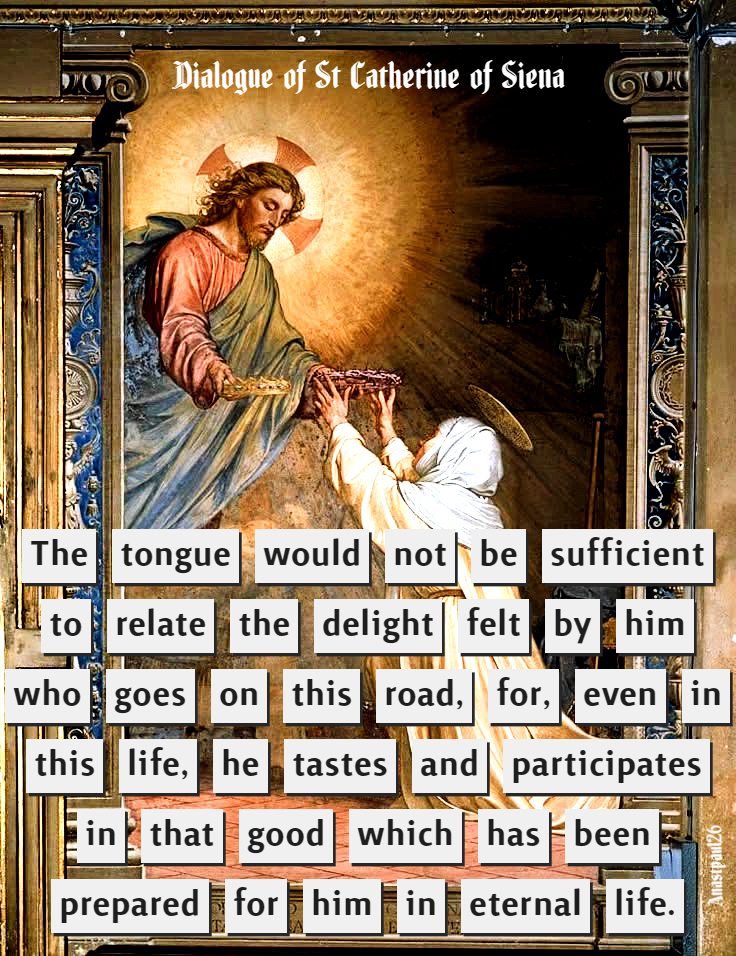
For those who cross by the Bridge, being still in the darkness of the body, find light, and, being mortal, find immortal life, tasting, through love, the light of Eternal Truth which promises refreshment to him who wearies himself for Me, who am grateful and just, and render to every man according as he deserves. Wherefore every good deed is rewarded, and every fault is punished. The tongue would not be sufficient to relate the delight felt by him who goes on this road, for, even in this life, he tastes and participates in that good which has been prepared for him in eternal life. He, therefore, is a fool indeed, who despises so great a good, and chooses rather to receive in this life, the earnest money of Hell, walking by the lower road with great toil, and without any refreshment or advantage.

The Dialogue of St Catherine of Siena

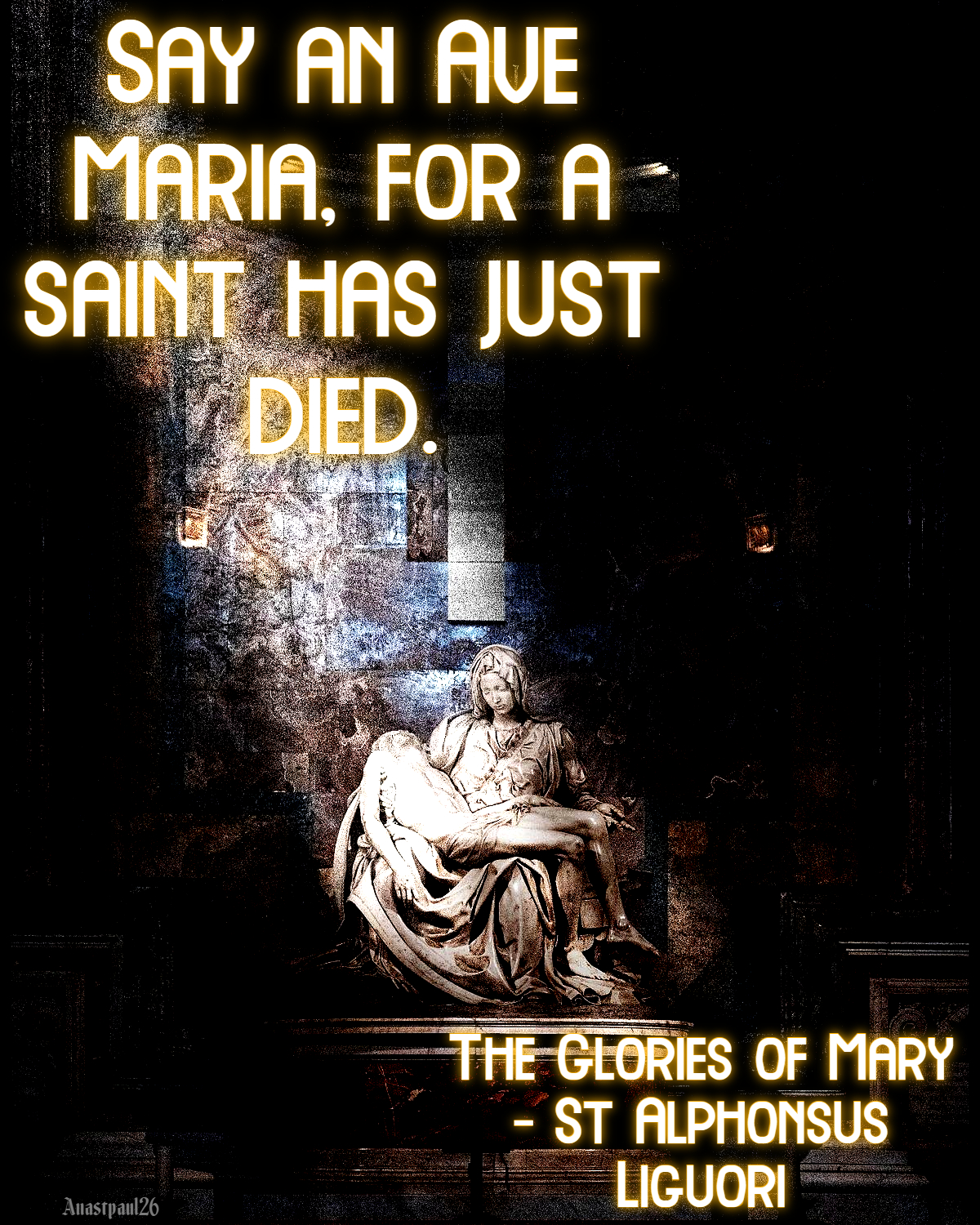
Yet they were consoled by seeing that the saint often turned his eyes, as if seeking help, towards a devout image of Mary, for they remembered that he had often said in life, that in the hour of his death, Mary must be his refuge. It finally pleased God to terminate this struggle by a glorious victory, for the agitation of his body ceased, his countenance gained its natural shape and color, and fixing his eyes tranquilly on that image, he devoutly bowed his head to Mary, who, it is believed, then appeared to him, as if to thank her, and quietly breathed forth in her arms his blessed soul, with heavenly peace depicted on his countenance. At the same time a Capuchin nun, in her agony, turned to the religious who were with her and said: “Say an Ave Maria, for a saint has just died.”

St Alphonsus Liguori

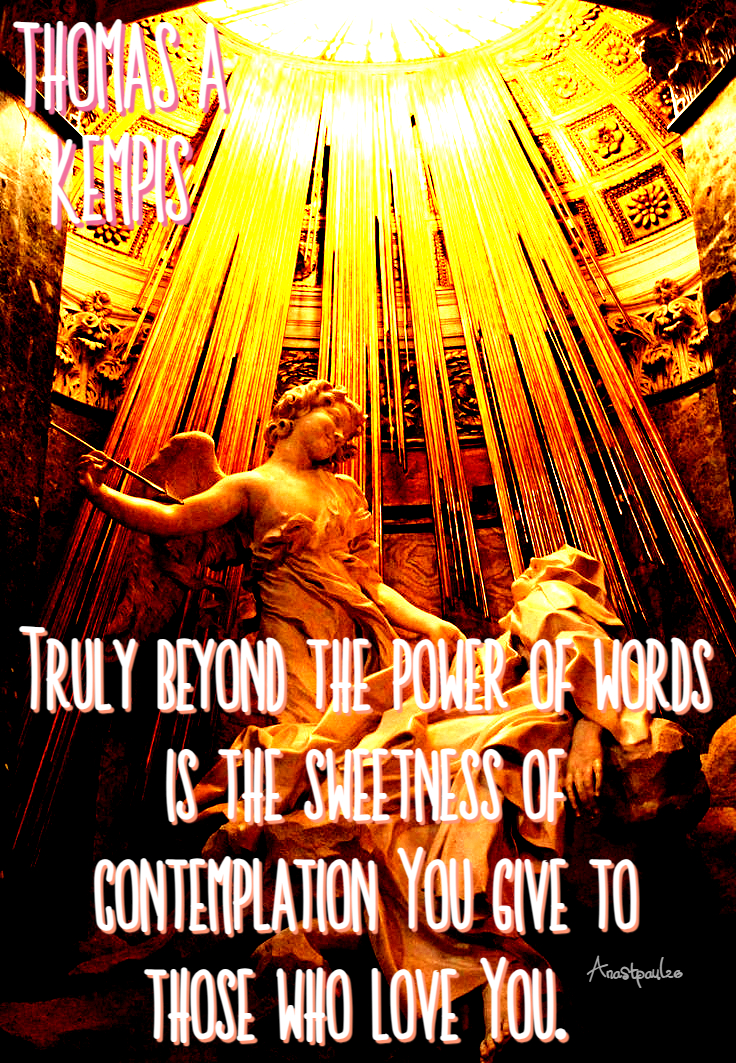
Truly beyond the power of words is the sweetness of contemplation You give to those who love You.

Thomas a Kempis

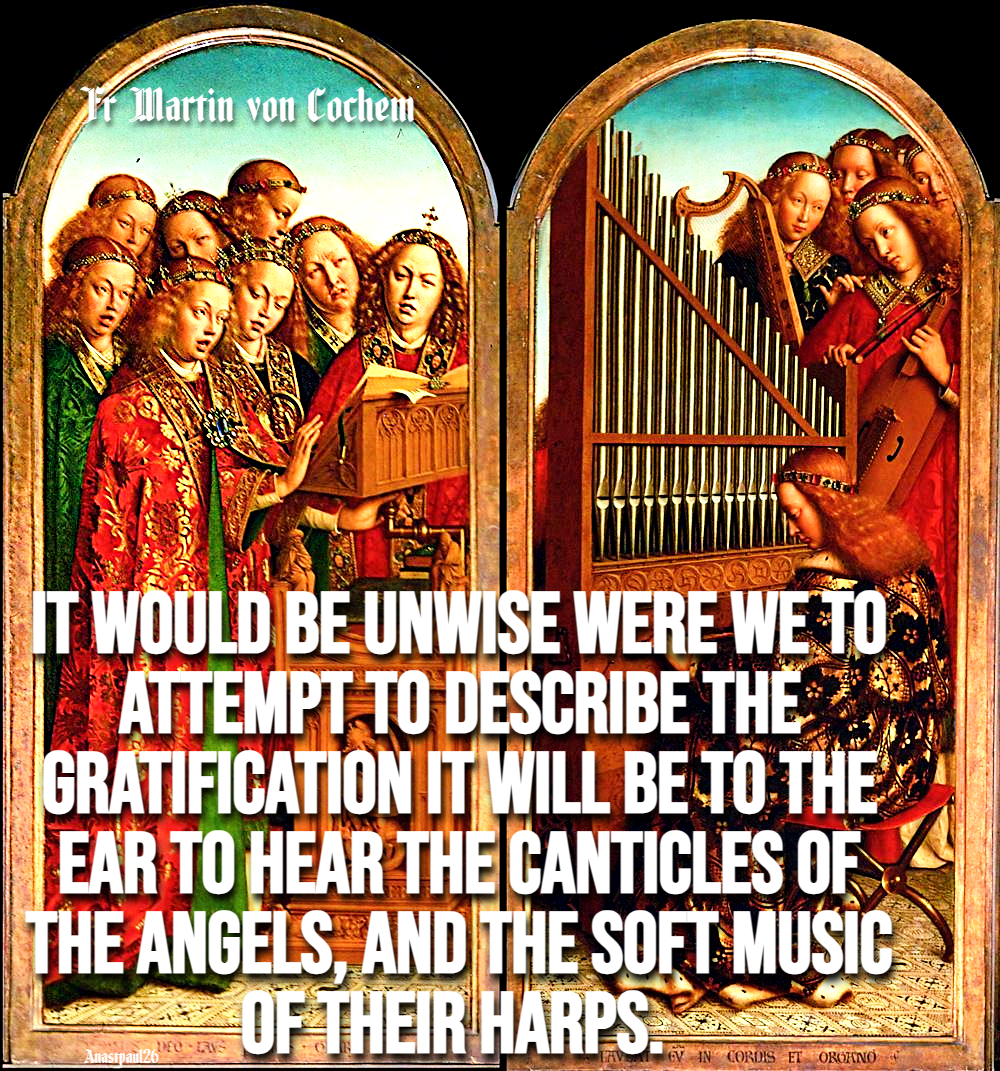
It would be unwise were we to attempt to describe the gratification it will be to the ear to hear the canticles of the Angels, and the soft music of their harps. The nine choirs of Angels will sing the praise of God, and the blessed will join them not only in heart, for they will mingle their voices also in the sweet harmony. Thus the powers of both soul and body will be exercised, and the praises of God will ascend in melodious hymns and celestial songs. For if we mortals are impelled by fervent love and heartfelt joy to lift our voice in song, how much more will the holy Angels and blessed Saints do so, who are all aflame with the love of God, and filled with joy unspeakable. Their hymns of praise will resound without ceasing through the courts of Heaven. 

Posted in AUGUST - The Immaculate Heart of Mary

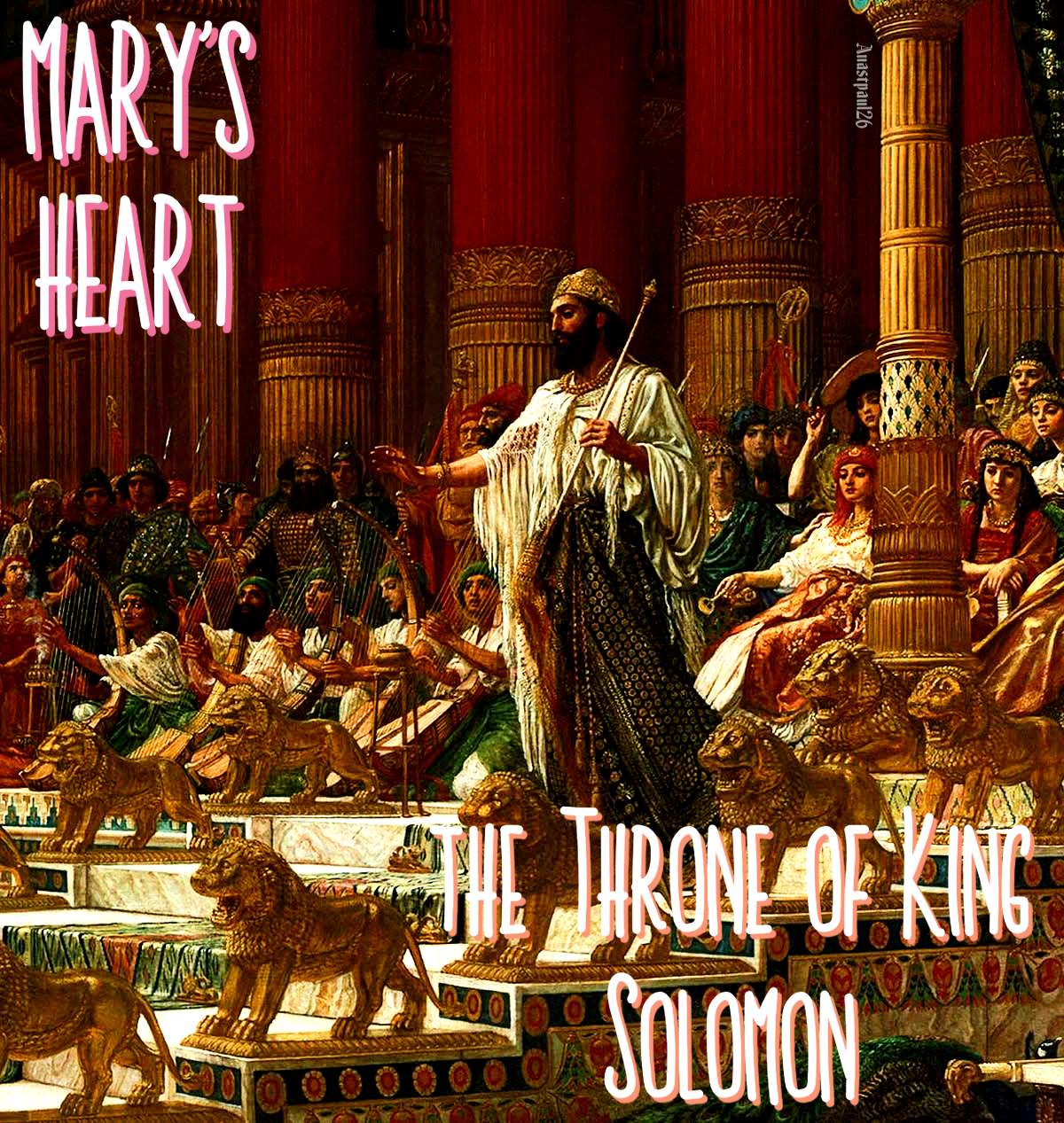
Thought for the Day – 17 August – Mary’s Heart, the Throne of King Solomon

St John Eudes – The Admirable Heart of Mary

Mary’s Heart, the Throne of King Solomon

Among the many beautiful qualities attributed by the Holy Ghost to the Blessed Virgin Mary, one stands out preeminently. It is contained in these words of the eighty-sixth psalm, which Holy Church and her Doctors apply to the Mother of God: “Glorious things are said of thee, O city of God.” Mary is indeed the great and glorious city of God, the holy city, the city of Jerusalem, the city of peace, the royal city, “the city of the great King.” The King of Kings built this city with His own hands; He exempted her entirely from the infamous tribute of sin; He honored her with countless great and extraordinary privileges; He enriched her with inestimable gifts and treasures and He established His first and most glorious abode within her Heart. In her He chose to reveal the rarest marvels of His power and royal magnificence.

Now, if Mary is the palace of the King of Kings, her heart must be the King’s imperial throne. This magnificent throne is perfectly represented by the throne of King Solomon, as described in the Book of Kings. We read there that this great king erected a throne of ivory in his house on Lebanus and covered it with brilliant gold. Six steps led up to this throne; the top of it was rounded at the back, and there were two hands on either side to hold the seat, with two large lions standing near, while small lions stood upon either side of the six steps. Never was any similar throne made in any kingdom of the world.

The throne and the couch of Solomon symbolize the same representation, namely the holy Heart of the Queen of the world, the couch representing the Heart in contemplation, the litter describing in it action. Mary’s Heart is at once the throne and the bed of the true Solomon, Jesus Christ, Our Lord. It is the bed on which He rests in the sweetness and calm of contemplation. It is the litter in which love and charity that set Him on this throne, carry Him from place to place, that He may reign everywhere for the glory of God and the salvation of souls.

St. Gregory of Nyssa tells us that this throne of Solomon is “a figure of the heart of every faithful Christian,” and a famous Doctor says that “the heart of the true Christian is the litter of the Son of God, because it goes where the one it bears wills that it should go, and never elsewhere.” This was fulfilled more perfectly in the Heart of the holy Virgin than in the hearts of even the holiest of creatures. Her virginal Heart never experienced inclinations or affections other than those it derived from the Master who held absolute sway over it.

Solomon’s throne was made of incorruptible wood of the cedar of Libanus, to show that the Immaculate Heart of the Mother of God was not only preserved from the corruption of sin, but also that its superabundance of heavenly graces rendered it incapable of sin by grace, as God is incapable of sin by nature.

The four columns of Solomon’s throne are the four cardinal virtues, which sustain the throne of the true Solomon, namely justice, prudence, fortitude and temperance. The pillars made of silver denote the candor of innocence preserved in the heart that possesses them. This symbol was eminently verified in the most pure and innocent Heart of the Queen of all virtues.

The gold seat represents free-will transformed by love into the adorable love of God. It Every human will attaining this state of submission becomes the seat of the throne of Jesus, and in the will of His Blessed Mother this was accomplished in a most perfect manner. Therefore St. Peter Damian calls her “the golden seat on which, after the tumult and disorder occasioned by the sins of angels and men, He sought and found His rest.” The “going up” or back of purple represents ardent desire for the glory of God, for the sanctification of His name and the accomplishment of His will on earth as it is accomplished in heaven. It symbolizes the divine love that constantly urged the zealous Heart of the Mother of Love upward and onward to do and suffer great things towards the fulfillment of the designs of the Creator.

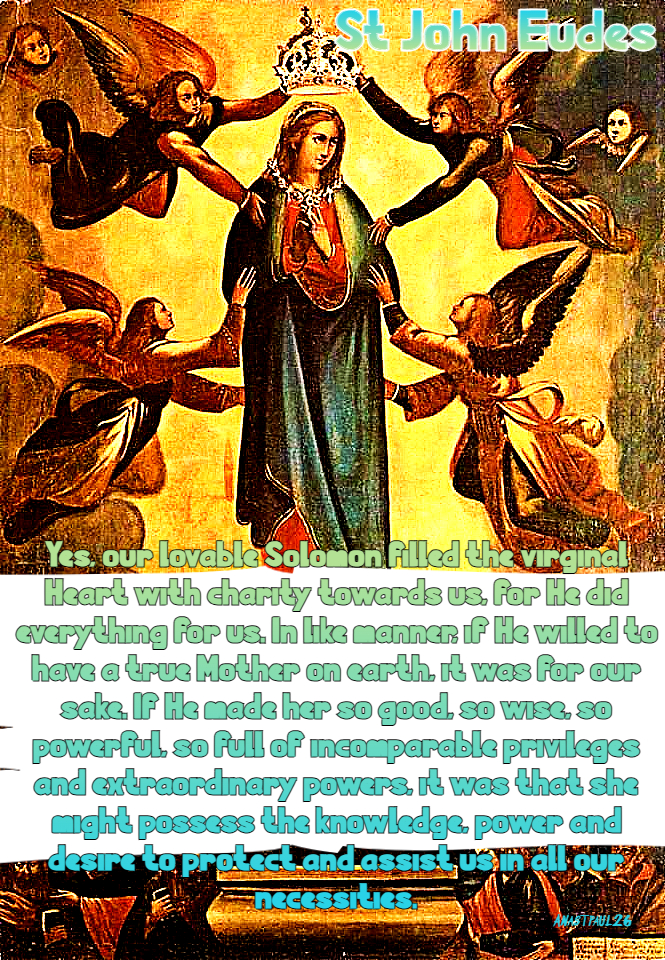
Finally, our beloved Christ prefigured by Solomon, filled His throne with Charity for the daughters of Jerusalem, that is, for all souls, especially for each Christian soul, and more particularly still for the beloved children of His Blessed Mother’s Heart. These are the humble, pure and charitable souls who entertain a singular devotion towards her maternal Heart. Yes, our lovable Solomon filled the virginal Heart with charity towards us, for He did everything for us. In like manner, if He willed to have a true Mother on earth, it was for our sake. If He made her so good, so wise, so powerful, so full of incomparable privileges and extraordinary powers, it was that she might possess the knowledge, power and desire to protect and assist us in all our necessities.

He gave her a Heart filled with charity, benignity, zeal, care and vigilance towards us, that we might profit thereby, if we but invoke it in our needs with utmost confidence. Our Lord grants with extraordinary goodness the requests presented by those who render to Him, in the Heart of His most honored Mother, the homage He desires to receive there. He wishes to be praised and glorified in the hearts and even in the bodies of His saints and “Glorify and bear God in your body.” How much more, then,should we not honor and magnify Our Saviour in the Heart of His Blessed Mother?