Posted in MARIAN TITLES

Nuestra Señora de las Gracias de Torcoroma / Our Lady of Graces of Torcoroma, Colombia (1711) and Memorials of the Saints – 16 August

Nuestra Señora de las Gracias de Torcoroma / Our Lady of Graces of Torcoroma, Ocaña, Norte de Santander, Colombia (1711) – 16 August:
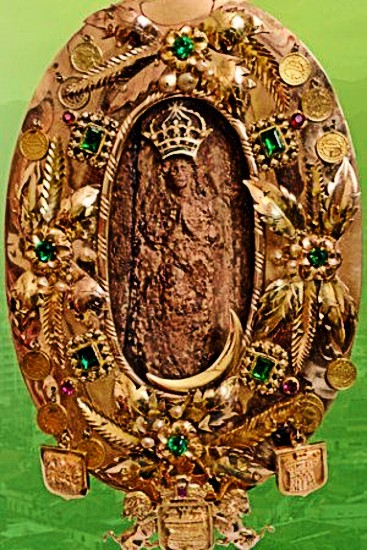
The holy apparition took place on 16 August, 1711. At that time, there lived in the Mountains of Torcoroma in the Ocaña region, a peasant family dedicated mainly to the cultivation of cane with which they made sweets. The family consisted of Don Cristóbal Melo, his wife Pascuala Rodríguez and their two children, José and Felipe. According to their contemporaries, the Melo-Rodríguez were people of good morals and a life consecrated to the Christian Faith.

One morning Don Cristóbal sent his children to cut down a tree, that had wood good enough to carve the box or “canoe” with which he made his sweets. The young boys went into the mountain and as they entered the thick of the forest, they marked the oaks that were suitable for their purpose. Until they found one that was a “wonder” and despite the fact that it was summer, it had fragrant red flowers. Such was the perfume that it could be perceived from afar.

Excited about the great find, they proceeded to cut down the tree. Given its complicated location, when cutting its base, the main part fell into a ravine. It was dusk and the boys resolved to return home and discuss the event with their father. The next day they restarted their search for the appropriate tree, but not finding one that suited their purposes, they determined to use the one already felled and went to the place where it had fallen.

They began to carve the “canoe” right there and shortly after taking the first ax blows, a light so intense came out that it reached out and illumined the lush forest. When the father realised what was lying in the middle of the splinters of the trunk, he, without thinking for a second, put his hands where his sons were preparing to take the next blow, stopping them suddenly. The father and his children were astonished when they saw, in the heart of the trunk, the image of the Virgin, with her hands together and placed on her chest, with the action of her face “as if directed to heaven,” shining with a great light and with an intense and aromatic perfume.

The news of the holy apparition quickly spread through the Ocaña region. Upon reaching the ears of the Priest and Vicar of the City, Fr.Diego Gabino Quintero, he asked Cristóbal Melo to present himself with the image of the Virgin. After carefully examining it and having listened to numerous testimonies that affirmed the divinity of the image, the Priest authorised its private worship.
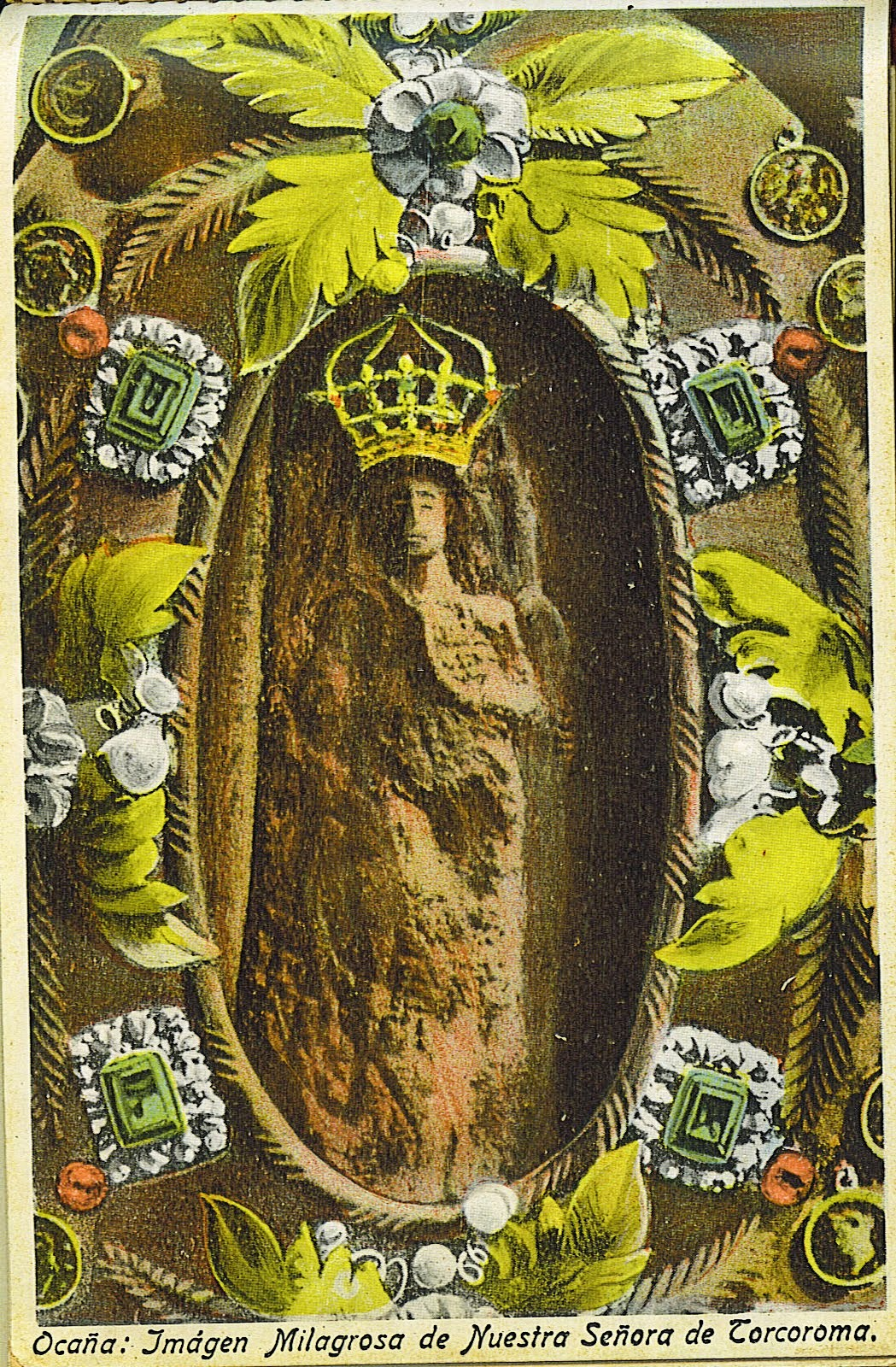
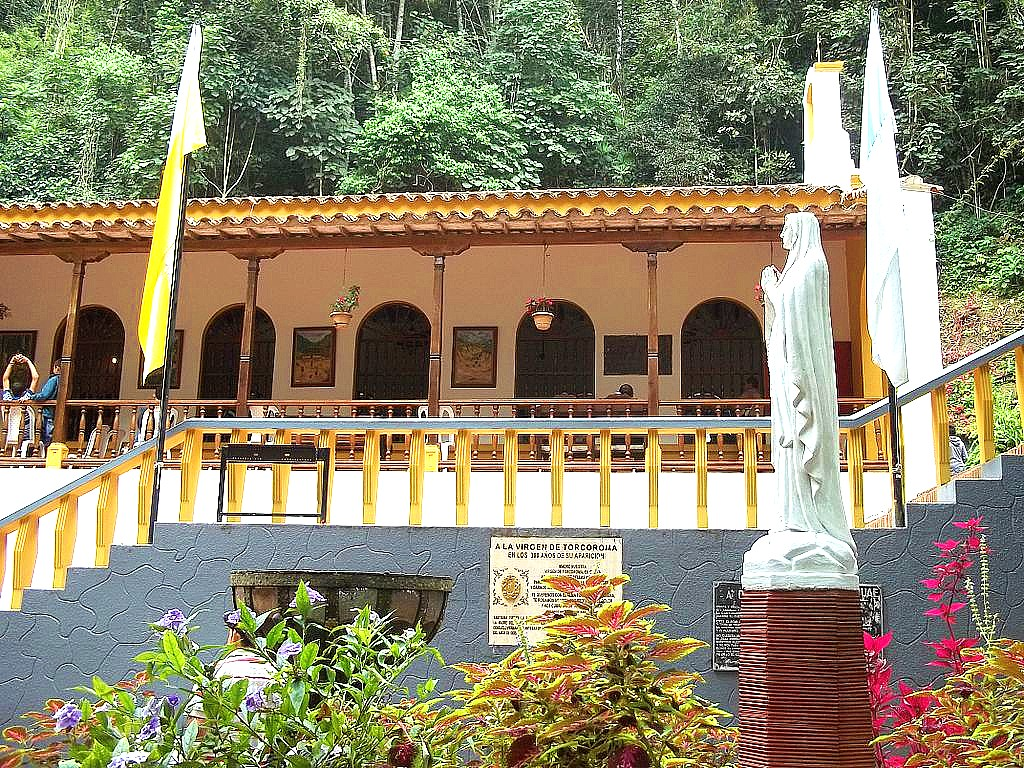
In 1716 Fray Antonio Monroy y Meneses, Bishop of Santa Marta, came on a pastoral visit and after a rigorous analysis of the image that appeared and the testimony of the witnesses, he granted permission for a Chapel to be erected on the site of the appearance and ordered that the image be brought to the city to place it on the Altar of the main Church, today the Cathedral of Santa Ana. The image would rest in the Church for several years while awaiting the Chapel, which was only built in 1882 thanks to the financing of Bogota parishioners. Finally, at the beginning of the 20th century, the image would be definitively transferred to the Sanctuary, where it is visited not only by its faithful but by thousands of pilgrims every year.
St Stephen of Hungary (c 975- 1038) King of Hungary (Optional Memorial) “Apostle of Hungary,” King and Confessor, Marian devotee,  Apostle of Charity, Evangeliser and Missionary. 

Blessed Angelo Agostini Mazzinghi O.Carm. (1385-1438) was an Italian Priest and a professed member of the Carmelite Order.   He was a noted preacher, prior and reformer, teacher of theology and was known for his pious devotion to the Holy Eucharist, the Blessed Virgin Mary and the Carmelite Rule of Life and to the profession of the Gospel. 

St Armel of Brittany (Died c 570) Priest, Monk, Missionary, Confessor, Evangeliser, spiritual adviser, Miracle-worker 

St Arsacius of Nicomedia
St Frambaldo
Bl Iacobus Bunzo Gengoro
Bl Jean-Baptiste Menestrel
Bl John of Saint Martha
Bl Laurence Loricatus
Bl Magdalena Kiyota Bokusai
Bl Maria Gengoro
Bl Ralph de la Futaye

St Roch (1295-1327) “Pilgrim,” Confessor, Hermit, Apostle of the Sick, Miracle Worker.

St Serena
Bl Simon Kiyota Bokusai
Bl Thomas Gengoro
St Titus the Deacon
St Ugolina of Vercelli (c 1239-c 1300) Anchorite, Recluse

Martyrs of Palestine – 33 saints: Thirty-three Christians martyred in Palestine; they are commemorated in old martyrologies, but the date and exact location have been lost.

Martyred in the Spanish Civil War:
Bl Amadeu Monje Altés
Bl Antonio María Rodríguez Blanco
Bl José María Sanchís Mompó
Bl Laurentí Basil Matas
Bl Plácido García Gilabert
Posted in SAINT of the DAY

Saint of the Day – 16 August – Bl. Simon Kiyota Bokusai and Companions

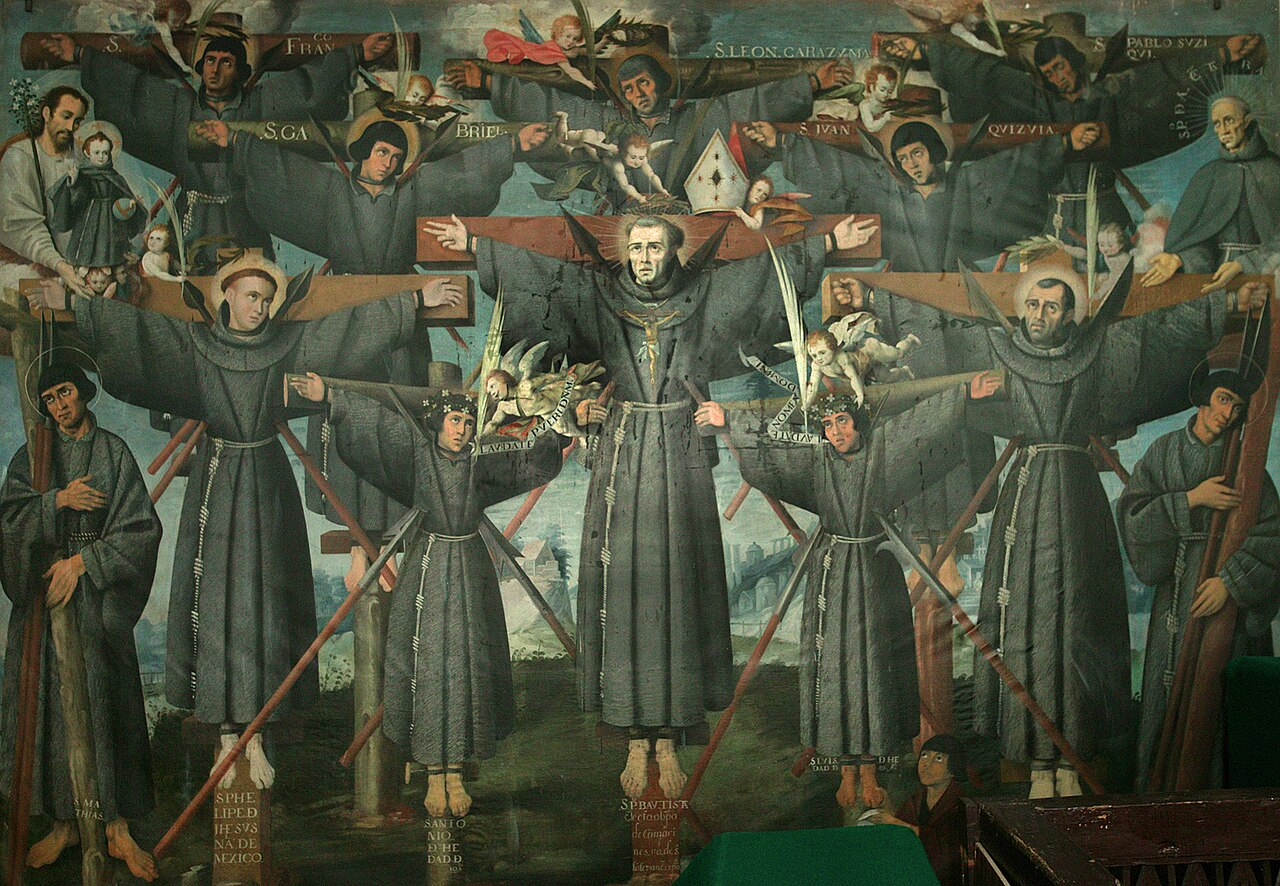
Bl. Simon Kiyota Bokusai and Companions were Japanese converts to the Faith, and martyrs. After having served in the military, the nobleman Simon Kiyota Bokusai (born 1559 in Kiyota) became a catechist, founding a school for this purpose. After learning of the catechetical school, the pagan Japanese emperor ordered him to close it. When in turn he refused to comply with this unjust order, the emperor condemned Simon and his wife Magdalena to be put to death by crucifixion together with another Catholic family living under their roof. The latter family consisted of Thomas Gengoro, his wife Mary, and their young son, James Bunzo.

Shortly before his execution, Simon confided to a religious in a letter, “I hope that, if my sins offer no obstacle, I may go in a few hours to enjoy eternal happiness. I entreat you to obtain for me perseverance.” The next day, before setting out for the place of their crucifixion in Kokura, Simon, Magdalena, Thomas, Mary, and James all knelt down before a crucifix to prepare themselves. When later the five reached the execution site, they individually prostrated themselves before the respective crosses on which they were to die. Simon and the rest were then crucified upside down soon after sunrise on 16 August, their bodies burned and their ashes scattered.

Nagasaki Martyrs

They were beatified on 7 May 1867 by Pope Pius IX. There is an additional memorial for Blessed Simon Kiyota Bokusai on 10 September as one of the 205 Martyrs of Japan.

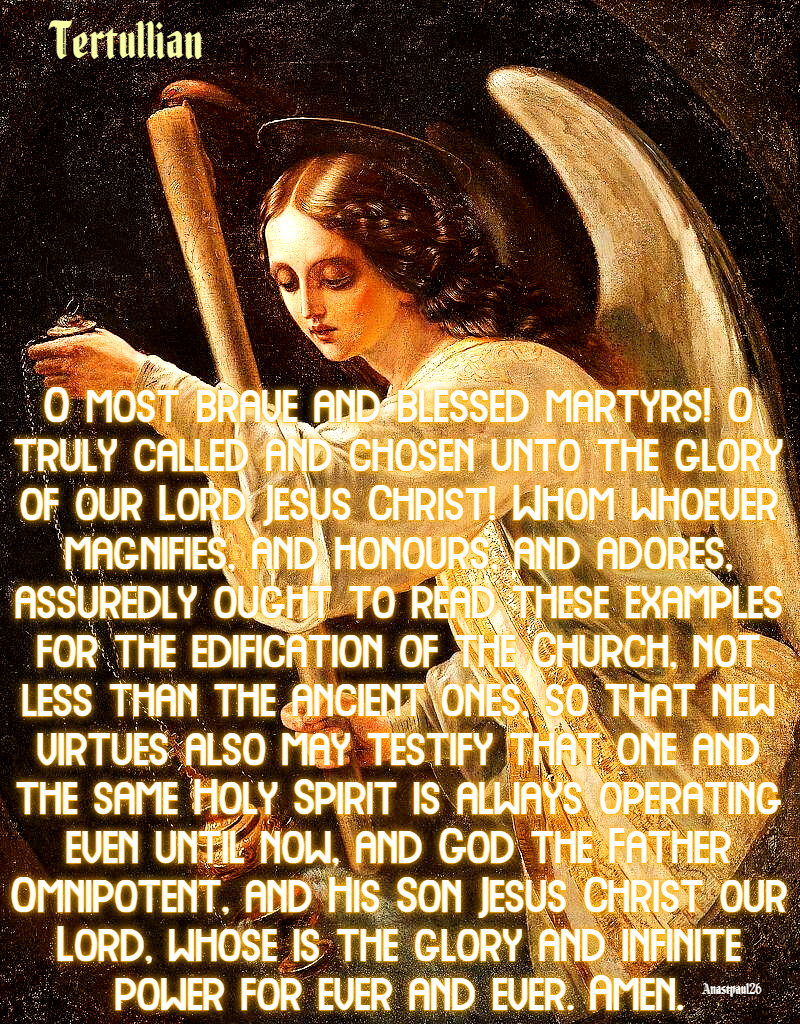
O most brave and blessed martyrs! O truly called and chosen unto the glory of our Lord Jesus Christ! Whom whoever magnifies, and honours, and adores, assuredly ought to read these examples for the edification of the Church, not less than the ancient ones, so that new virtues also may testify that one and the same Holy Spirit is always operating even until now, and God the Father Omnipotent, and His Son Jesus Christ our Lord, whose is the glory and infinite power for ever and ever. Amen.

Tertullian

Posted in Our MORNING Offering

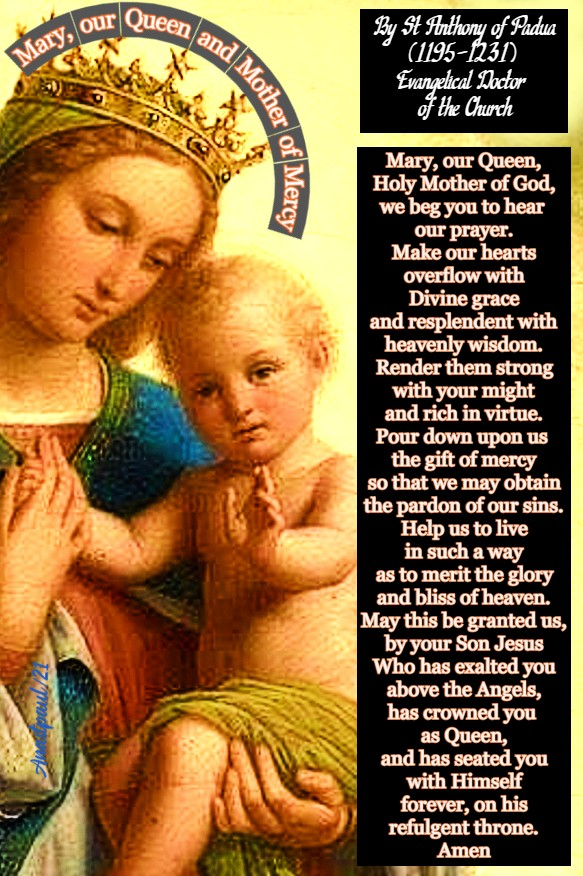
Our Morning Offering – 16 August – Mary, our Queen and Mother of Mercy By St Anthony of Padua

Our Morning Offering – 16 August – “Month of the Immaculate Heart”

Mary, our Queen and Mother of Mercy
By St Anthony of Padua (1195-1231)
Evangelical Doctor of the Church

Mary, our Queen,
Holy Mother of God,
we beg you to hear our prayer.
Make our hearts overflow with Divine grace
and resplendent with heavenly wisdom.
Render them strong with your might
and rich in virtue.
Pour down upon us the gift of mercy
so that we may obtain the pardon of our sins.
Help us to live in such a way
as to merit the glory and bliss of heaven.
May this be granted us, by your Son Jesus
Who has exalted you above the Angels,
has crowned you as Queen,
and has seated you with Himself
forever, on his refulgent throne.
Amen.

Posted in ONE Minute REFLECTION

One Minute Reflection – 16 August – “Many prophets and kings longed to see what you see”

At that time, Jesus said to His disciples: Blessed are the eyes that see what you see! For I say to you, many prophets and kings have desired to see what you see, and they have not seen it; and to hear what you hear, and they have not heard it.

Luke 10:23-37

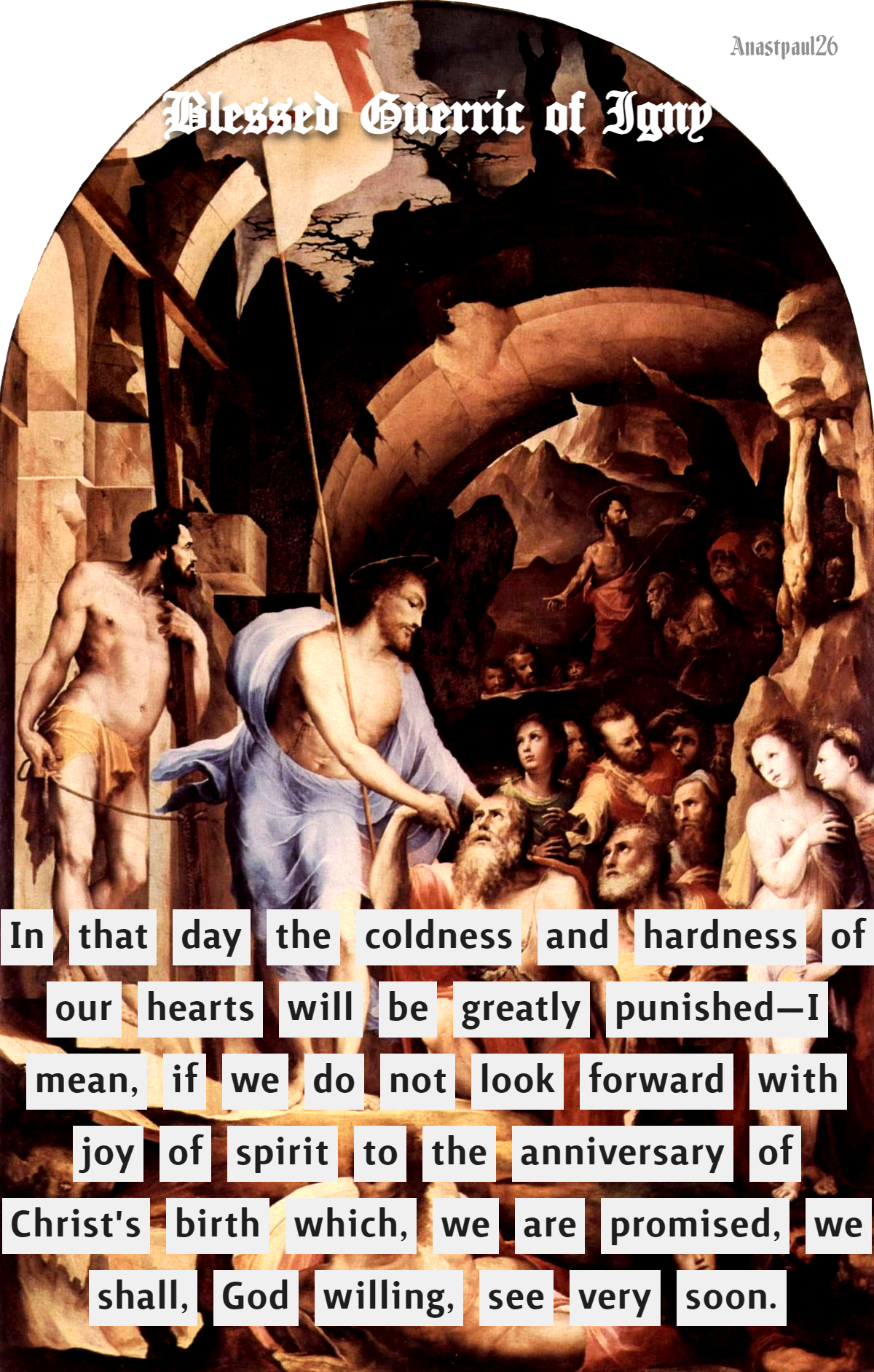
REFLECTION – Come then, Lord, “save me and I shall be saved” (Jer 17:14). Come and “smile upon us and we shall find deliverance”. We have waited for you, “be our stronghold, our deliverer in time of trouble” (Is 33:2). In this fashion did the prophets and holy men, with great desire and longing, run to greet the Christ who was to come, hoping if possible to see with their eyes what they foresaw in their hearts. Hence the words of the Lord to his disciples: “Blessed are the eyes that see what you see; I tell you there have been many prophets and holy men who longed to see what you see and never saw it, to hear what you hear and never heard it.” Abraham, our father, “was full of joy to see the day” of Christ. “He saw it” — but in the lower regions — “and rejoiced”.

In that day the coldness and hardness of our hearts will be greatly punished—I mean, if we do not look forward with joy of spirit to the anniversary of Christ’s birth which, we are promised, we shall, God willing, see very soon. In fact Holy Scripture seems to insist we have such joy so that our spirit, lifted out of itself, may run to meet the arrival of Christ in transports of joy, and, straining forward impatient of delay, may strive to pierce the future even now.

Blessed Guerric of Igny

PRAYER – Lord God, You filled the Saints with strength and courage and gave them the knowledge of unity with You. Grant, we pray, that in imitation of them, we may defend the Catholic faith and renew all things in Christ, Your Son. Help us Holy Father, to follow the example of the Immaculate Heart of the Mother of Your Son and all Your Saints and finally inherit eternal life, with You. We make our prayer through Christ, our Lord with the Holy Spirit, one God forever, amen.

Posted in QUOTES on FAITH, QUOTES on MYSTERIES of our FAITH

Quote/s of the Day – 16 August – Blessed are the eyes that see what you see!

Quote/s of the Day – 16 August – “Month of the Immaculate Heart” – Readings: Ps 69:2-3, Ps 69:4, 2 Cor. 3:4-9, Luke 10:23-37

At that time, Jesus said to His disciples: Blessed are the eyes that see what you see! For I say to you, many prophets and kings have desired to see what you see, and they have not seen it; and to hear what you hear, and they have not heard it.

Luke 10:23-37

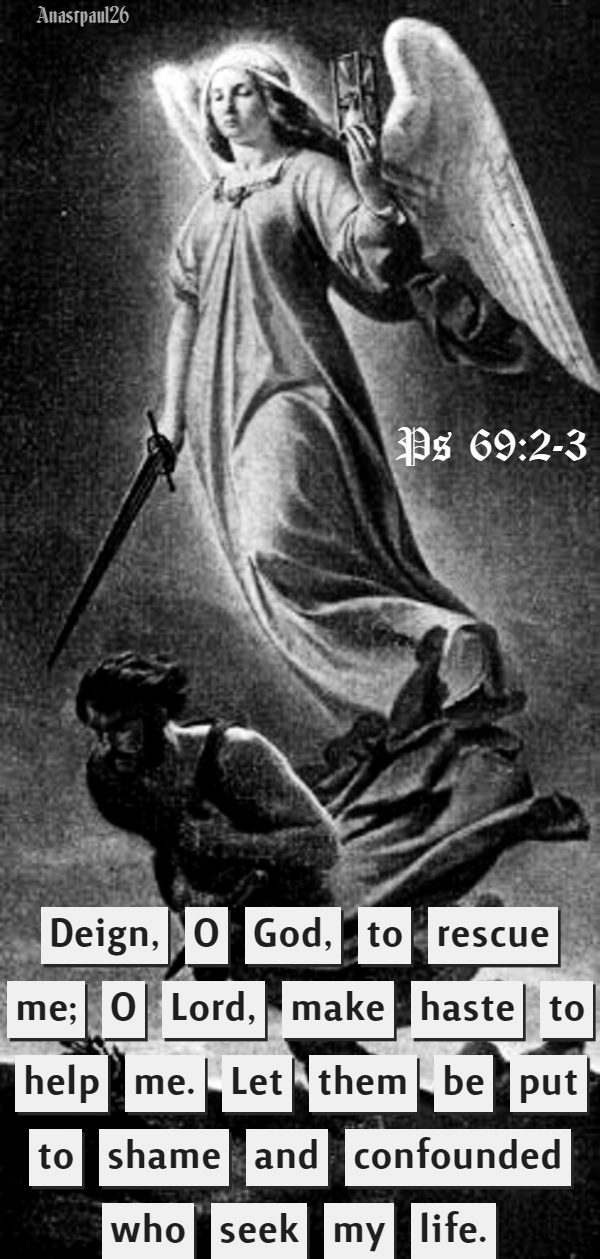
Deign, O God, to rescue me; O Lord, make haste to help me. Let them be put to shame and confounded who seek my life.

Ps 69:2-3

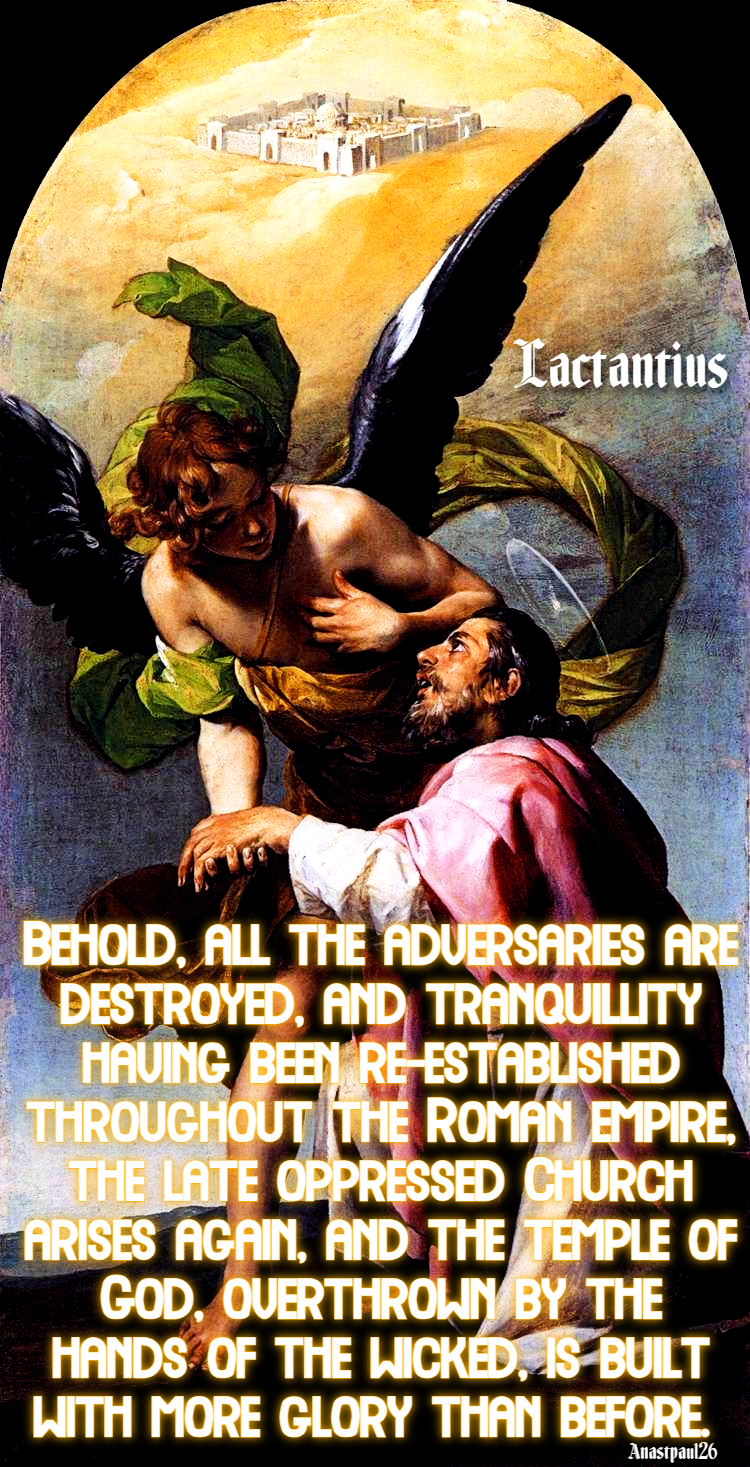
The Lord has heard those supplications which you, my best beloved Donatus, pour forth in His presence all the day long, and the supplications of the rest of our brethren, who by a glorious confession have obtained an everlasting crown, the reward of their faith. Behold, all the adversaries are destroyed, and tranquillity having been re-established throughout the Roman empire, the late oppressed Church arises again, and the temple of God, overthrown by the hands of the wicked, is built with more glory than before. 

Lactantius

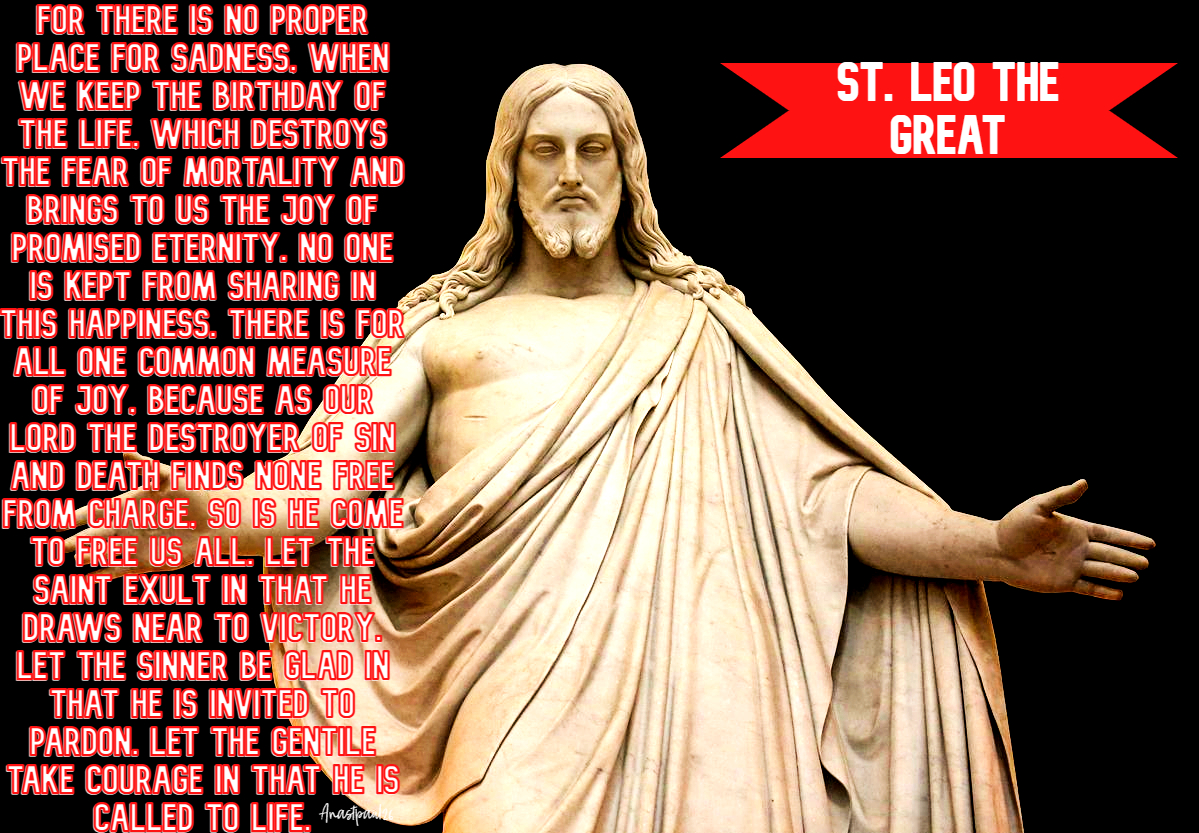
For there is no proper place for sadness, when we keep the birthday of the Life, which destroys the fear of mortality and brings to us the joy of promised eternity. No one is kept from sharing in this happiness. There is for all one common measure of joy, because as our Lord the destroyer of sin and death finds none free from charge, so is He come to free us all. Let the saint exult in that he draws near to victory. Let the sinner be glad in that he is invited to pardon. Let the gentile take courage in that he is called to life.

St Leo the Great

The Law laid hold on one that gathered sticks on a sabbath day, and stoned him. This is the meaning of, the letter kills. The Gospel takes hold on thousands of homicides and robbers, and baptizing delivers them from their former vices. This is the meaning of, the Spirit gives life.

St John Chrysostom

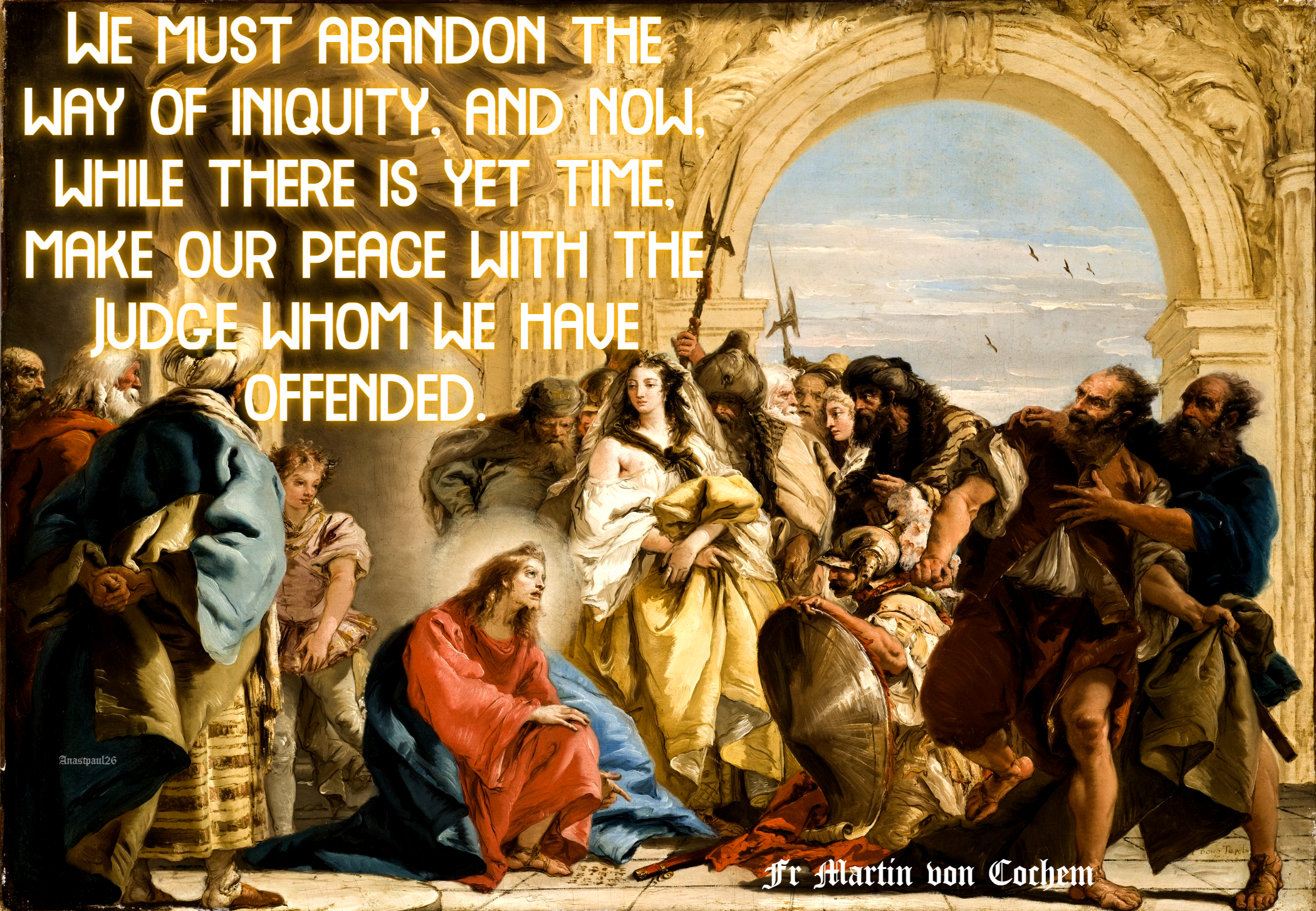
We must abandon the way of iniquity, and now, while there is yet time, make our peace with the Judge whom we have offended.

Fr Martin von Cochem

Posted in AUGUST - The Immaculate Heart of Mary

Thought for the Day – 16 August – Mary’s Heart, the Harp of King David

St John Eudes – The Admirable Heart of Mary

Mary’s Heart, the Harp of King David

The mysterious harp of King David, mentioned in several passages of Sacred Scripture, is another symbolic picture of the Holy Heart of Mary. It is an excellent representation because her pure Heart was indeed the harp of the true David, namely Our Lord Jesus Christ. He fashioned it with His own hands; He alone always possessed it. No other fingers but His ever evoked its melodies, because her virginal Heart never vibrated with sentiments, affections or impulses other than those inspired by the Holy Ghost.

The strings of this royal harp are the virtues of Mary’s Heart, especially her faith, hope, love of God, charity towards her neighbor, religion, humility, purity, obedience, patience, mercy, hatred of sin, love of the cross. On these twelve strings the Divine Spirit played with wondrous harmony melodious canticles of love which so greatly charmed the ears of the Eternal Father that He forgot His anger against sinners, He laid aside the thunderbolts wherewith He vowed to destroy mankind and gave His own Son to be the Saviour of humanity.

Sacred Scripture tells us that King David employed his harp specially on four great occasions and we see Jesus, the Son of David, using His mystical harp to accomplish four infinitely greater achievements. In the first instance, David, the man of God, by the mere sound of his harp, put to flight the evil spirit which possessed Saul. Similarly, the new David used the Heart of His loving Mother as a sublime harp and consequently freed by its divine music the human race that grovelled under the evil dominion of Satan.

The prophet David also employed His harp to sing many psalms and canticles to the honor and glory of God. Our true David, likewise, sang with His instrument five types of canticles in praise of the Most Blessed Trinity. The first were canticles of love, the strongest, purest, most perfect love that ever was or shall be. The second were canticles of praise and thanksgiving for the benefits of divine goodness on behalf of all creatures, for the Blessed Virgin Mary did not limit herself to thanking God for the infinite favors she received from His hand, but she praised Him unceasingly for the graces He pours on all created beings. The third were canticles of sorrow, of anguish and bereavement at the time of the sufferings and death of her beloved Son. The fourth were canticles of triumph for all the victories won by herself as general of the great King’s armies over His enemies and, we may truly say, over Himself, having so often disarmed divine vengeance when it stood ready to destroy the world and punish its innumerable crimes. The fifth were canticles of prophecy to announce the great designs of God for the future, many of which were foretold by the Queen of Prophets in the wonderful canticle she composed when greeting her cousin St. Elizabeth.

The third purpose for which King David used his harp was to praise God and especially to praise Him with joy. In like manner, Christ the second David, not only attuned His holy Mother’s Heart to praise and bless His divine Majesty in every way, but He also induced Mary to seek her joy and bliss exclusively in His praises, and in all the acts she performed for His glory and in His service.

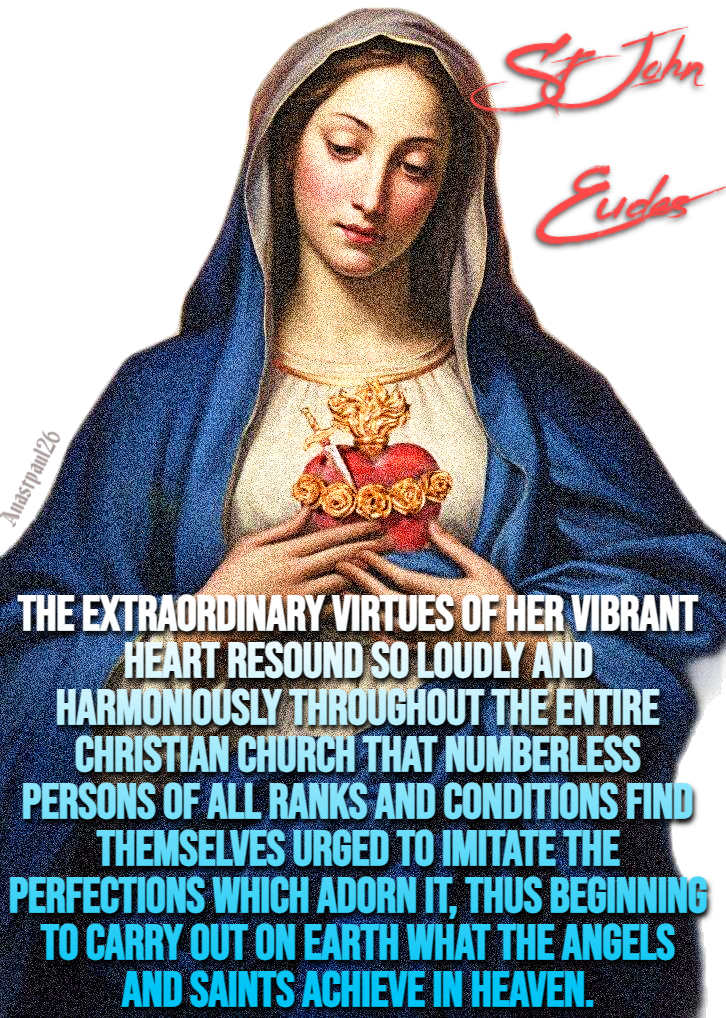
King David chose as the fourth function of his harp to excite and attract other men to the praise of God, with hearts full of joy and gladness like his own. So too Christ the King attracts innumerable souls to the love and praise of His heavenly Father by the sweet sound of His precious harp, that is, by means of the blessed Heart of His glorious Mother. The extraordinary virtues of her vibrant Heart resound so loudly and harmoniously throughout the entire Christian Church that numberless persons of all ranks and conditions find themselves urged to imitate the perfections which adorn it, thus beginning to carry out on earth what the angels and saints achieve in Heaven. In other words, they place their entire contentment and felicity in all that concerns the sovereign Monarch in Heaven and earth.