Posted in SAINT of the DAY

Memorials of the Saints – 19 August

Within the Octave of the Assumption

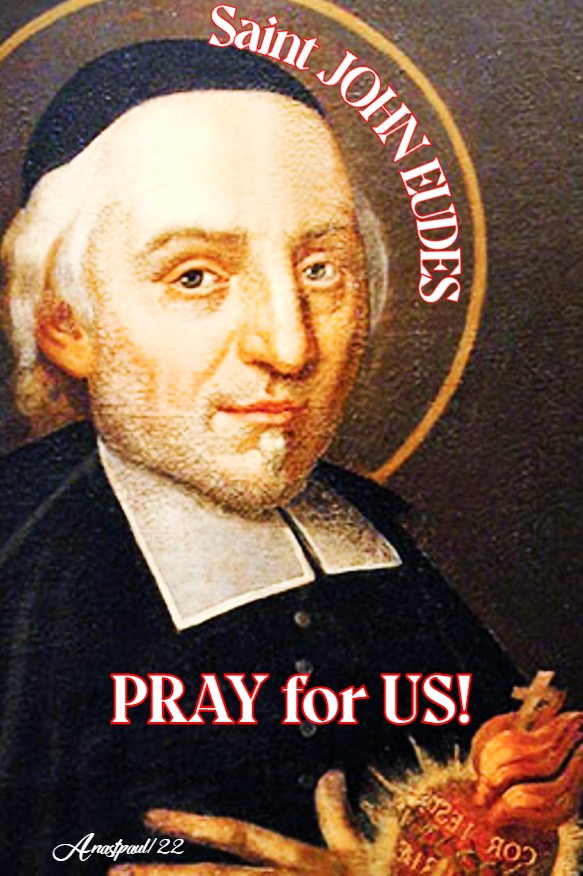
St John Eudes (1601-1680) Confessor, Priest, Missionary, Founder, Preacher, Writer, Mystic, he founded the Congregation of Jesus (The Eudists) and Mary and the Order of Our Lady of Charity and was the Author of the propers for the Mass and Divine Office of the Sacred Hearts of Jesus and Mary. Known as “The Apostle of Two Hearts.” Beatified on 25 April 1909 by Pope Pius X and Canonised on 31 May 1925 by Pope Pius XI. 

St Andrew the Tribune
St Badulf of Ainay
St Bertulf of Luxeuil
St Calminius
St Credan of Evesham
St Donatus of Mount Jura
St Elaphius of Châlons
St Guenninus
Bl Guerricus
Bl Hugh Green

Blessed Jordan of Pisa OP (c 1255–1311) Dominican Friar, Theologian, Professor, renowned Preacher, Founder of the Confraternity of the Holy Redeemer at Pisa, Visionary, Marian devotee, promoter and daring innovator of the vernacular Italian language as a ‘church’ language and a tool for evangelisation. On 23 August 1833, Blessed Jordan’s cultus was confirmed by Pope Gregory XVI and in 1838 he was Beatified by Pope Gregory XVI.

St Julius of Rome

St Louis of Toulouse OFM (1274-1297) Prince and Bishop, Neapolitan Prince of the Capetian House of Anjou, Franciscan Friar and Priest, Apostle of Prayer, of Penance and of the poor and the sick. He had received the last sacraments on the Feast of the Assumption of Our Lady and on the 19th of August, 1297, while pronouncing the holy name of Mary, he yielded his soul to God. Because of the many miracles that were wrought at his tomb, he was Canonised as early as 1317, during the lifetime of his mother.

St Magnus of Anagni
St Magnus of Avignon
St Magnus of Cuneo
St Marianus of Entreaigues
St Marinus of Besalu
St Magino of Tarragona
St Mochta
St Namadia of Marsat
St Rufinus of Mantua
St Sarah the Matriarch
St Sebaldus
St Thecla of Caesarea
St Timothy of Gaza

Martyrs of Nagasaki – 15 Beati: A group of missionaries and their laymen supporters who were executed for spreading Christianity in Japan.
• Antonius Yamada
• Bartholomaeus Mohyoe
• Iacobus Matsuo Denji
• Ioachim Díaz Hirayama
• Ioannes Miyazaki Soemon
• Ioannes Nagata Matashichi
• Ioannes Yago
• Laurentius Ikegami Rokusuke
• Leo Sukeemon
• Ludovic Frarijn
• Marcus Takenoshita Shin’emon
• Michaël Díaz Hori
• Paulus Sankichi
• Pedro de Zúñiga
• Thomas Koyanagi
They were beheaded on 19 August 1622 at Nagasaki, Japan and Beatified on 7 May 1867 by Pope Pius IX.

Posted in SAINT of the DAY

Saint of the Day – 19 August – Saint Sarah the Matriarch

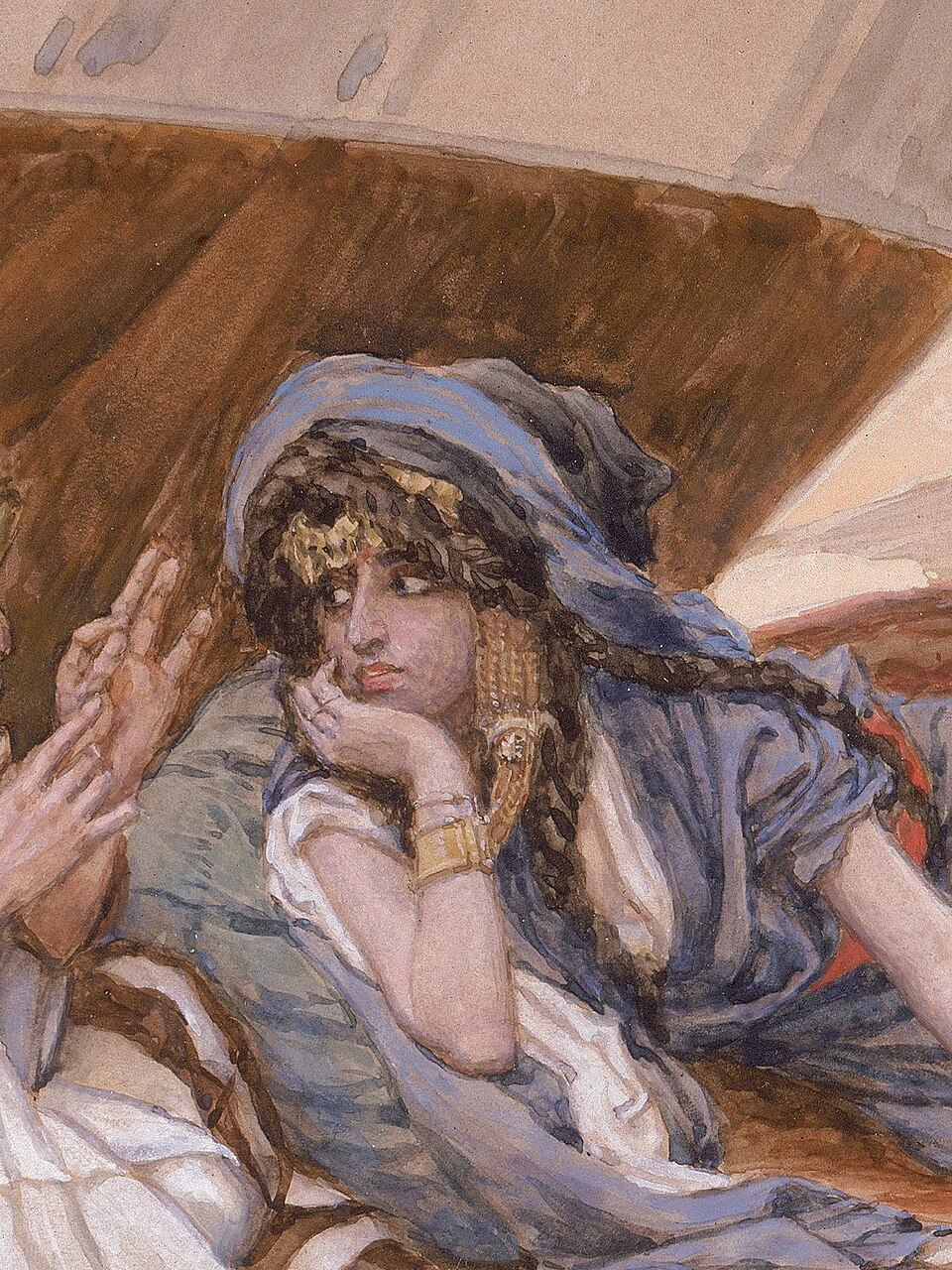
Saint Sarah the Matriarch, also known as Sari, Sarai, Sara, the wife of the Patriarch Abraham and also his step-sister. Her name means ‘princess’. A pious woman, renowned for her hospitality and beauty, she was a convert from paganism, the first female convert to the faith of Abraham. With her husband she was a nomad in the desert of Canaan.

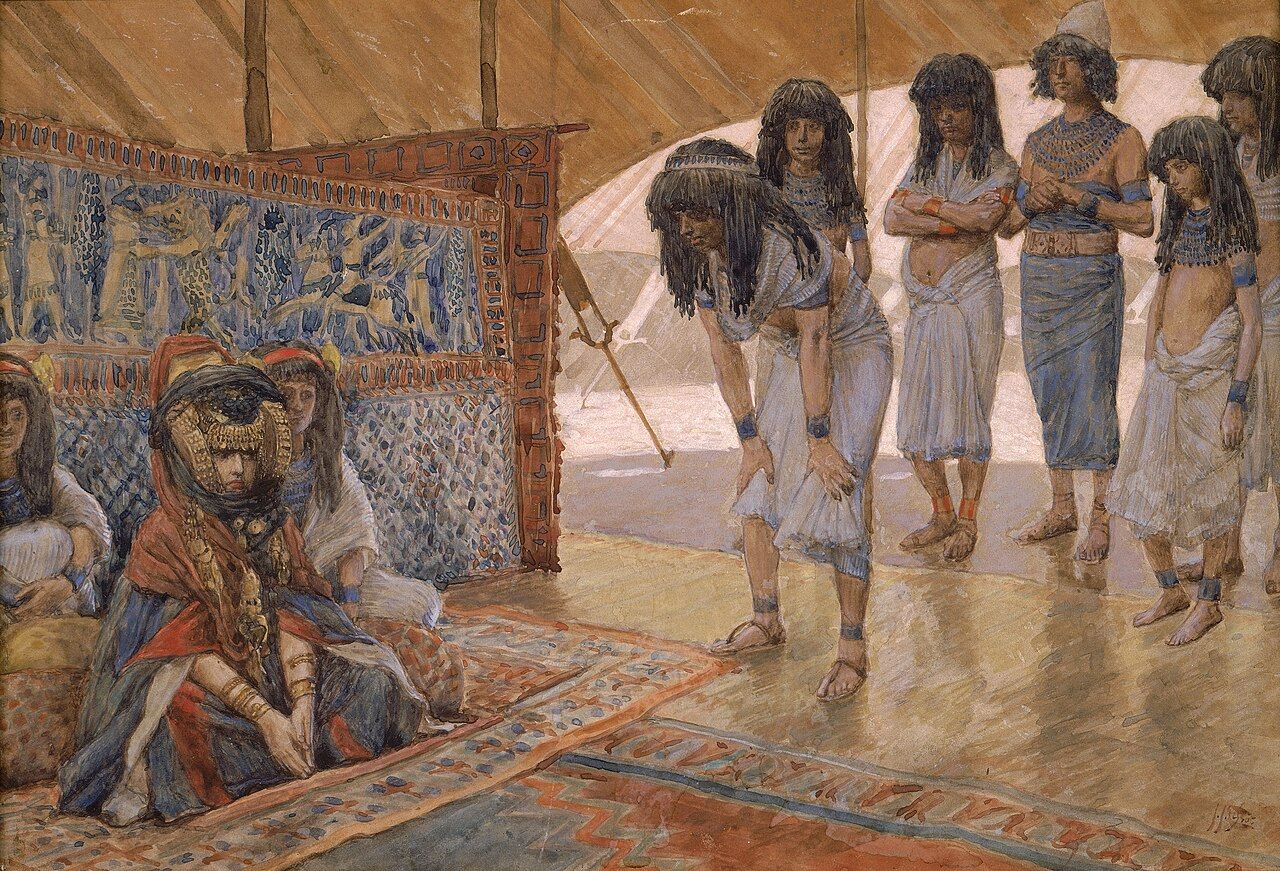
When Abraham goes down to Egypt because of the famine, he induces Sara, who though sixty-five years of age is very beautiful, to say that she is his sister; whereupon she is taken to wife by the King of Egypt, who, however, restores her after a Divine admonition. In a variant account, she is taken in similar circumstances by Abimelech, King of Gerara, and restored likewise to Abraham through a Divine intervention.

Sarai Is Taken to Pharaoh’s Palace 

After having been barren till the age of ninety, Sara, in fulfilment of a Divine promise, gives birth to Isaac (A name which means ‘Laughter’). Later, through jealousy, she ill-treats her handmaiden Hagar the Egyptian, who had borne a child to Abraham, and finally she forces that latter to drive away the bond-woman and her son Ishmael. Sara lived to the age of one hundred and twenty-seven years, and at her death her husband mourned greatly and buried her in the cave of Macphelah in Hebron. This was the first land owned by the Israelites in Canaan, which became known as the Cave of the Patriarchs. Isaiah alludes to Sara as the mother of the chosen people, and St. Peter praises her submission to her husband. In Galatians Paul also uses her as an allegory of the new covenant.

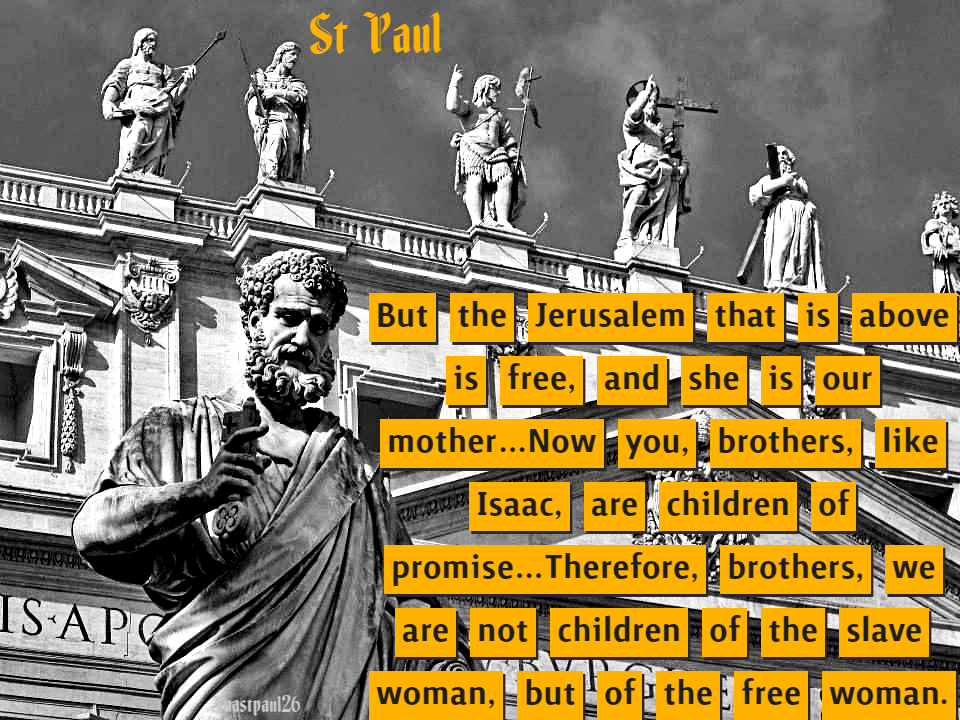
“For it is written that Abraham had two sons, one by the slave woman and the other by the free woman. His son by the slave woman was born in the ordinary way; but his son by the free woman was born as the result of a promise. These things may be taken figuratively, for the women represent two covenants. One covenant is from Mount Sinai and bears children who are to be slaves: This is Hagar. Now Hagar stands for Mount Sinai and corresponds to the present city of Jerusalem, because she is in slavery with her children. But the Jerusalem that is above is free, and she is our mother…Now you, brothers, like Isaac, are children of promise…Therefore, brothers, we are not children of the slave woman, but of the free woman.”

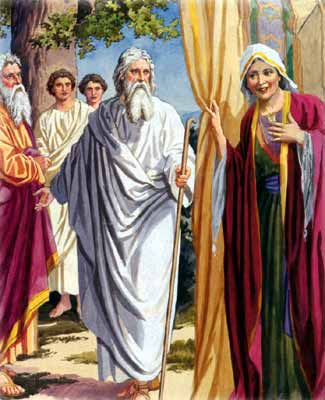
Sarah and Abraham
Posted in Our MORNING Offering

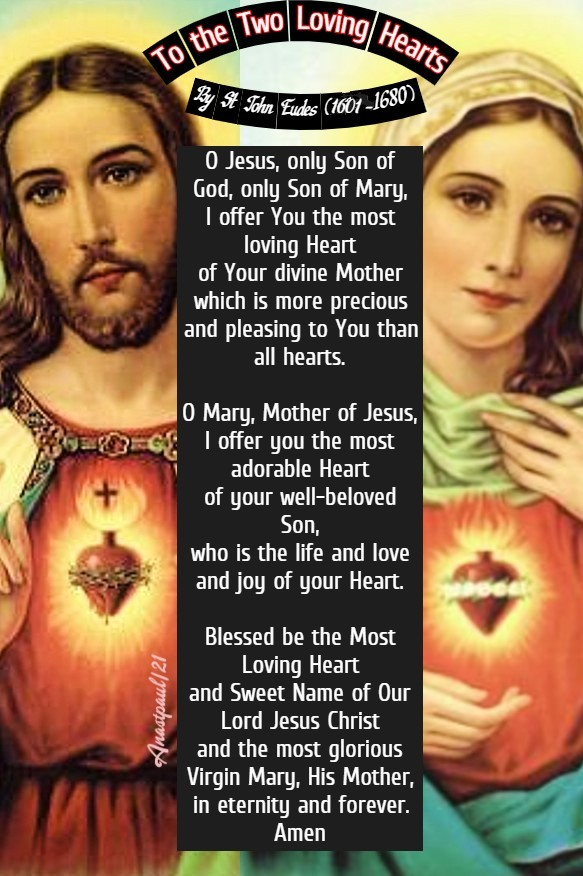
Our Morning Offering – 19August – To the Two Loving Hearts By St John Eudes

Our Morning Offering – 19August – “The Month of the Immaculate Heart of Mary” and the Memorial of St John Eudes (1601-1680) Confessor, “The Apostle of Two Hearts.”

To the Two Loving Hearts
By St John Eudes (1601-1680)

O Jesus, only Son of God, only Son of Mary,
I offer You the most loving Heart
of Your divine Mother
which is more precious
and pleasing to You than all hearts.

O Mary, Mother of Jesus,
I offer you the most adorable Heart
of your well-beloved Son,
who is the life and love and joy of your Heart.

Blessed be the Most Loving Heart
and Sweet Name of Our Lord Jesus Christ
and the most glorious
Virgin Mary, His Mother,
in eternity and forever.
Amen

Posted in ONE Minute REFLECTION

One Minute Reflection – 19 August– “You are the light of the world” 

One Minute Reflection – 19 August – “The Month of the Immaculate Heart of Mary” and the Memorial of St John Eudes (1601-1680) Confessor, “The Apostle of Two Hearts”– Readings: Ps 36:30-31, Ps 36:1, Sir 31:8-11, Luke 12:35-40

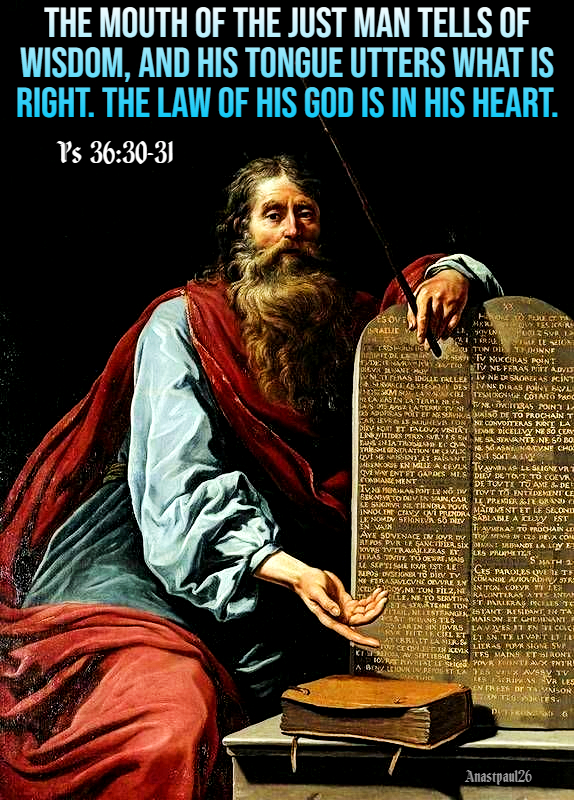
The mouth of the just man tells of wisdom, and his tongue utters what is right. The law of his God is in his heart.

Ps 36:30-31

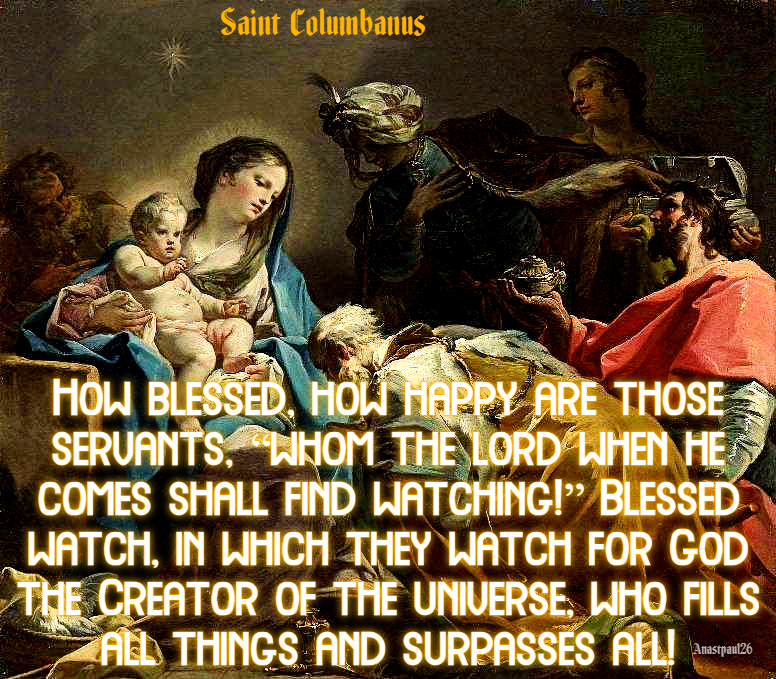
REFLECTION How blessed, how happy are those servants, “whom the lord when he comes shall find watching!” Blessed watch, in which they watch for God the Creator of the universe, who fills all things and surpasses all!

Would that me also, wretched though I be, yet his poor servant, he might deign so to arouse from the sleep of idleness, so to kindle with that fire of divine love, that the flame of his love, the longing of his so great charity, would mount above the stars, and the divine fire would ever burn within me!

Would that I were of such deserving, that my lamp might ever burn by night in the temple of my Lord, that to all entering the house of my God it might give light. Lord, grant me, I pray you in the name of Jesus Christ your Son, my God, that love which knows no fall, so that my lamp may feel the kindling touch and know no quenching, may burn for me and for others may give light.

Saint Columbanus

PRAYER – O God, Who wondrously enkindled St John, Thy Confessor, to promote the religious veneration of the Sacred Hearts of Jesus and Mary and through him, willed to found new religious families in the Church, grant, we beseech Thee that we may honour his holy merits and may learn from the example of his virtues. Through Jesus Christ, Thy Son our Lord, Who lives and reigns with Thee, in the unity of the Holy Ghost, God, world without end. Amen. 

Posted in AUGUST - The Immaculate Heart of Mary

Quote/s of the Day – 19 August – St John Eudes

Quote/s of the Day – 19 August – “The Month of the Immaculate Heart of Mary” – and the Memorial of St John Eudes (1601-1680) Confessor, “The Apostle of Two Hearts”

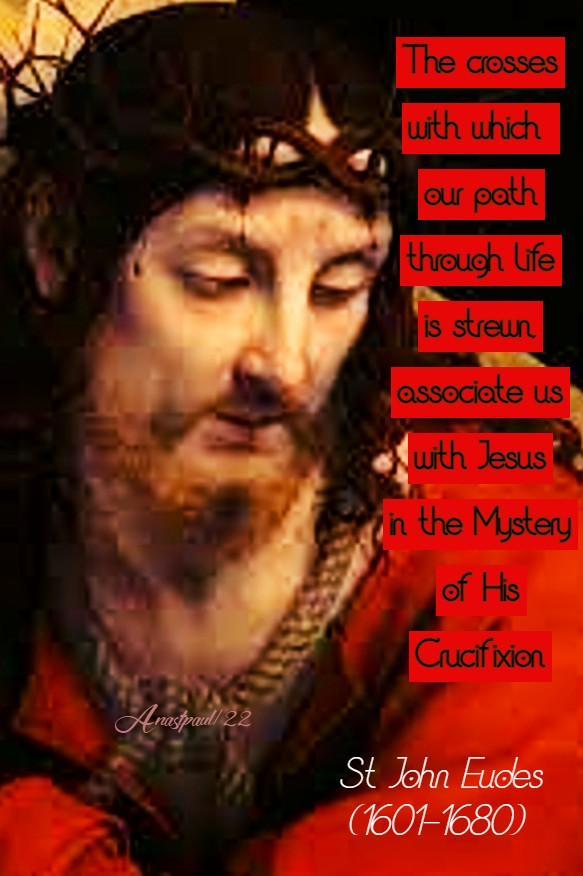
The crosses with which our path
through life is strewn,
associate us with Jesus
in the Mystery of His Crucifixion
.”

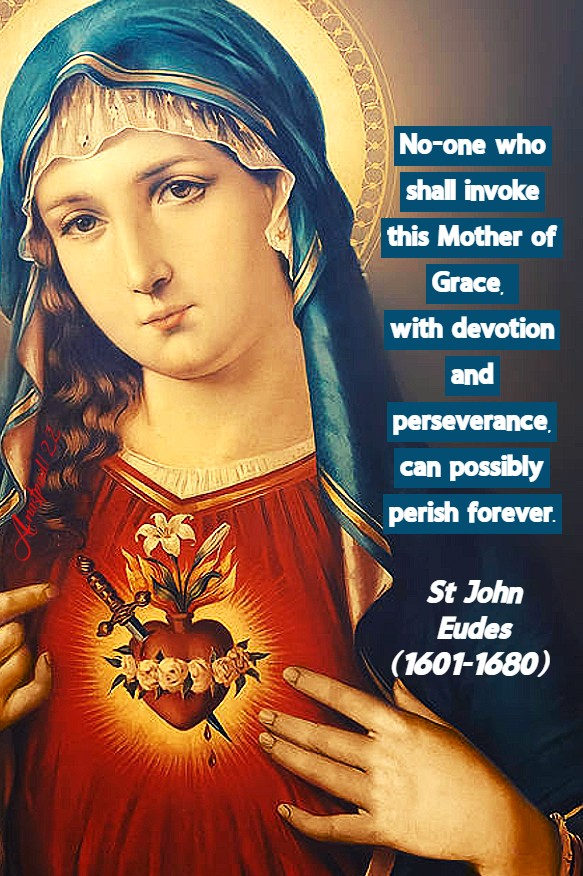
No-one who shall invoke
this Mother of Grace,
with devotion and perseverance,
can possibly perish forever.”

Let infidels and heretics,
let the relatives and the friends
of bad Catholics,
weep without consolation
and weep unceasingly,
for the death of their departed ones!

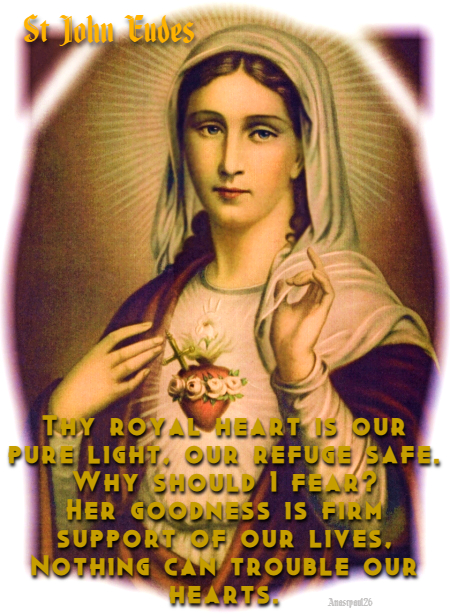
Thy royal heart is our pure light, our refuge safe. Why should I fear? Her goodness is firm support of our lives, Nothing can trouble our hearts.

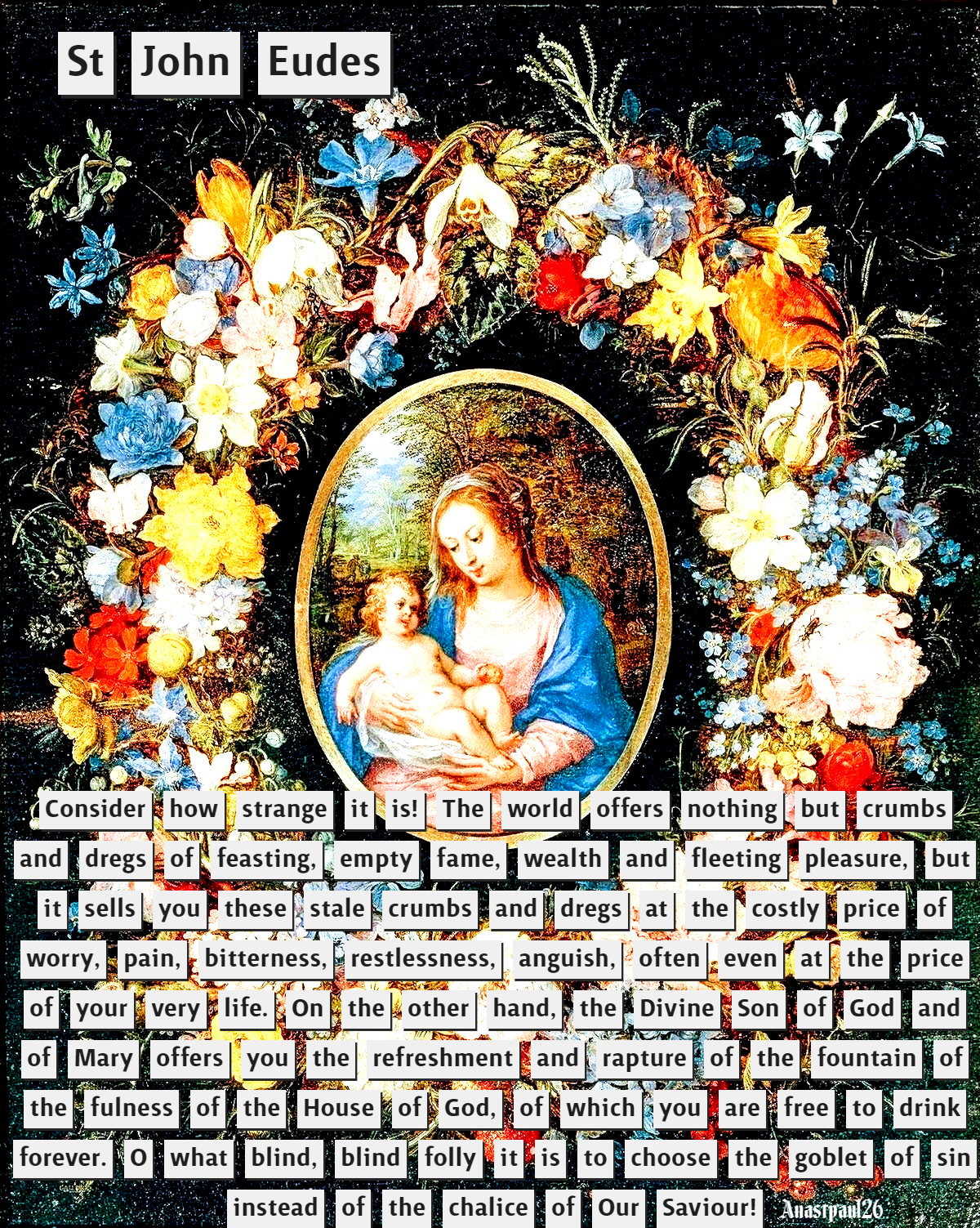
Consider how strange it is! The world offers nothing but crumbs and dregs of feasting, empty fame, wealth and fleeting pleasure, but it sells you these stale crumbs and dregs at the costly price of worry, pain, bitterness, restlessness, anguish, often even at the price of your very life. On the other hand, the Divine Son of God and of Mary offers you the refreshment and rapture of the fountain of the fulness of the House of God, of which you are free to drink forever. O what blind, blind folly it is to choose the goblet of sin instead of the chalice of Our Saviour!

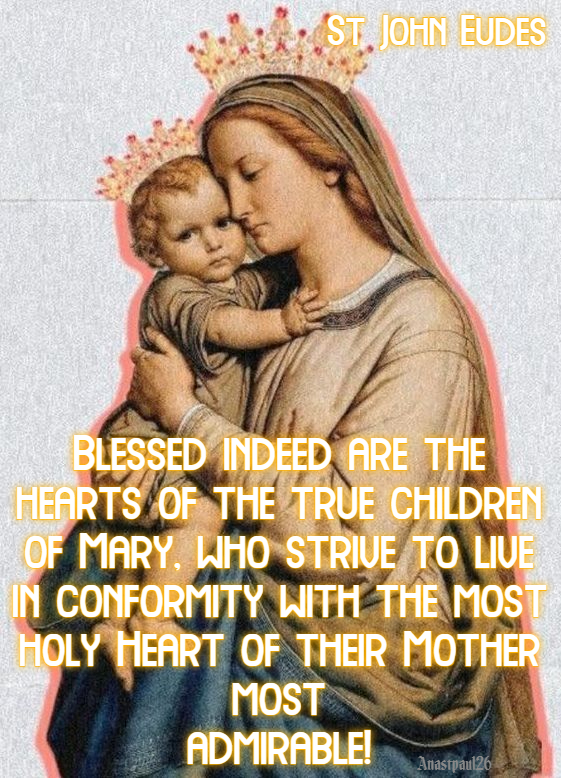
Blessed indeed are the hearts of the true children of Mary, who strive to live in conformity with the most holy Heart of their Mother most admirable!

Posted in AUGUST - The Immaculate Heart of Mary

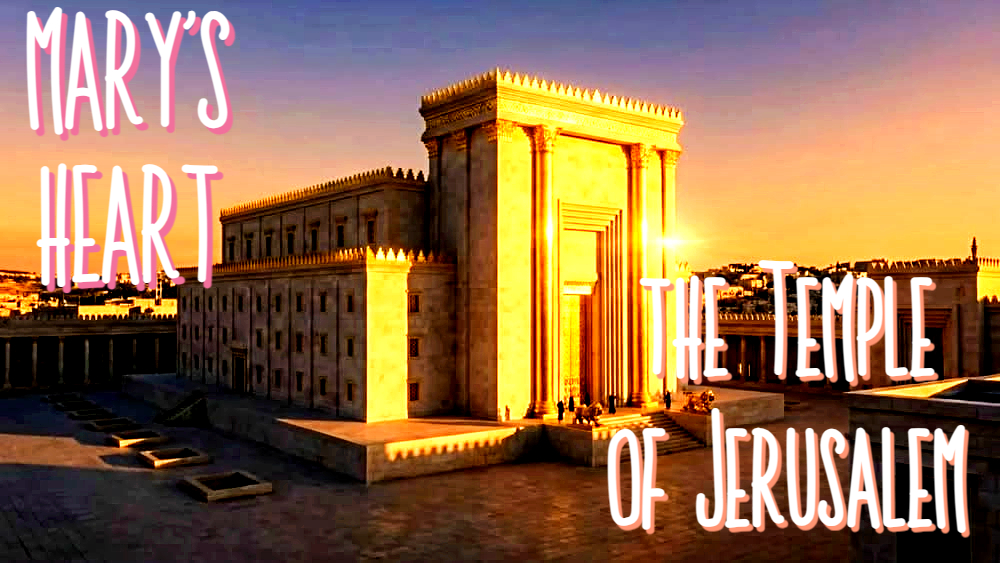
Thought for the Day – 19 August – Mary’s Heart, the Temple of Jerusalem

St John Eudes – The Admirable Heart of Mary

Mary’s Heart, the Temple of Jerusalem Part Two

St. Epiphanius and St. John Damascene, together with several other Doctors, tell us that the golden candlestick is a figure of the Holy Mother of God. Next to Jesus, her beloved Son, Mary is the most luminous torch and the brightest light of the House of God. “O virginal candlestick,” says St. Epiphanius,” which enlightened those who sat in the shadow of death! O virginal torch, which dissipated the gloom of hell, and caused the brilliance of heaven to shine in our souls! O radiant lamp, ever filled with the oil of grace and light, with the fire of divine love, lighting our minds and inflaming our hearts! This virginal light has spread its splendour throughout the world!”

The remarkable table in Solomon’s temple, described in the twenty fifth chapter of Exodus, was made by divine command from the wood of Setim, not a common variety of cedar, but according to the Septuagint, a most rare and altogether incorruptible wood. The table was completely covered with gold-plate and edged with a gold-plated cornice or border surrounding it like a crown while two additional golden crowns embellished it. It was designed to hold the loaves of proposition that were offered to God daily by the priests, and were thus named because they lay in the temple as a perpetual sacrifice proposed or exposed to the Divine Majesty. Afterwards they were consumed by the priests.

The Fathers of the Church all agree that the loaves of proposition were a figure of Our Lord Jesus Christ, the royal bread that came down from Heaven. Christ is the bread of the angels, the bread of God, the bread of the children of God, a bread which is the nourishment and life of the Christian soul, and all Christians are called priests in Sacred Scripture: Fecisti nos Deo nostro sacerdotes. Some are priests by office and bear the special character of consecrated priesthood; others share it by participation. What is the table bearing this divine bread, prefigured by the table carrying the loaves of proposition? St. Germanus, Patriarch of Constantinople, answers that it was the Blessed Virgin Mary and St. Epiphanius confirms his words.

Is not the table designed to receive the bread and food laid on it? Is it not true that the Heart of the Mother of God was the first to receive Our Lord as He came forth from the bosom of the Eternal Father? Did she not receive Him in order to give Him to us? Is it not true that the Eternal Father carries His Beloved Son in His all-glorious Heart from all eternity and that the Blessed Virgin will carry her Son in her Heart for all eternity? Hence we hear the words which the Holy Ghost puts on Mary’s lips: “I was with him,” that is, with the Eternal Father, “forming all things.” In the Hebrew version this passage reads: “I was with Him and near Him as a nurse,” which reveals Mary’s role as the Mother who gives nourishment to mankind.

Several learned interpreters of Sacred Scripture teach us that the altar of perfumes of the Mosaic temple represents the hearts of the faithful, which are symbolized as altars on which each one should offer a perpetual sacrifice of prayer and praise to God. Now if the hearts of the children of God were figured by this altar, how much more truly does it symbolize the Heart of the Mother of God, which is after the Heart of Jesus, the first and holiest of all altars? It is “the golden altar, which is before the throne of God,” mentioned in the eighth chapter of the Apocalypse. On this altar the Mother of the Saviour offered to God a sacrifice of love, adoration, praise, thanksgiving and prayer far more to His Divine Majesty than all the sacrifices that ever were or ever shall be offered on all other altars.

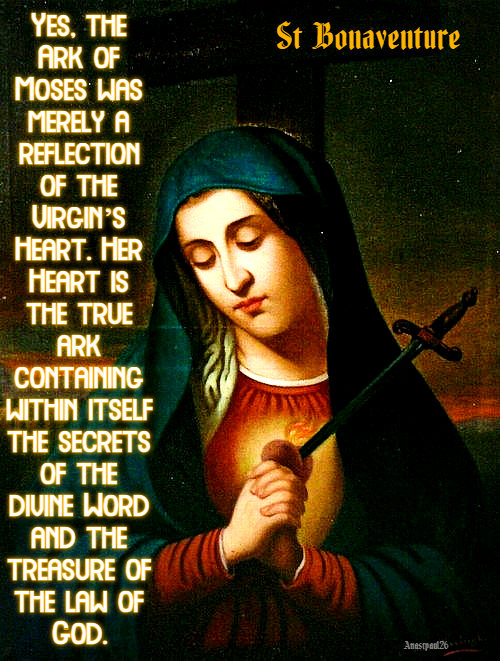
If we consult the Fathers of the Church we learn particularly from St. Ambrose that the Ark of the Covenant was a figure of the Blessed Virgin Mary, and therefore of her most holy Heart, the holy Heart, the first and noblest part of her person. “Yes,” exclaims the seraphic St. Bonaventure “the Ark of Moses was merely a reflection of the Virgin’s Heart. Her Heart is the true ark containing within itself the secrets of the divine Word and the treasure of the law of God.” A holy Abbot of the Cistercian Order calls Mary the Ark of Sanctification, containing revelations written by the hand of God. She is the holy Ark of the Covenant, the Covenant by which God reconciled us with Himself and pledged His alliance with us forever. Next to God, Mary’s Heart should be the first object to which we look up when we pray.


But let us remember that the Heart of Mary is a tower of ivory, zurris eburnea, which does not suffer within its precincts anything defiled and unclean. It is the tower of David, open only to those who follow the meekness of Jesus Christ, the true David.

St. Gregory of Nyssa states that the Tables of the Mosaic Law kept in the temple of Solomon were a figure symbolic of the hearts of the Saints. Now, if the hearts of the Saints are real tables of the evangelical law, what shall we say of the holy Heart of the Queen of Saints, who is the Mother of the Saint of saints? Her glorious Heart is the first and holiest table of the Christian law. It is not made of stone, but of gold, or better still, of diamond; it is not dead but living; not breakable like the tables of Moses but indestructible. On it the Holy Ghost, the finger of God, has written and engraved in golden letters, not merely the will of God and His laws, but all the counsels, maxims and-truths of the gospel as well. They are so deeply engraved that the united forces of hell and of earth could more easily snatch the sun from the sky and-destroy the world than remove a single iota or tarnish a single letter of this sacred writing.

The Propitiatory is regarded as another figure symbolic of the glorious Virgin because by her intercession the flame of God’s wrath was extinguished, His Divine Majesty was turned to look upon mankind with favor and His infinite mercy moved Him to compassion for our infirmities. For this reason St. Ildephonsus calls the Mother of Grace; Propitiatio humanae salutis. “The propitiation of man’s salvation.” St. Andrew of Crete styles Mary: Universi mundi commune propitiatorium. “The universal propitiatory of the entire world.”

St. Augustine, St. Gregory the Great, and several other Fathers say that the Altar of Holocausts also symbolized the hearts of all the Saints, who are the real altars on which God is honored by the spiritual sacrifices offered day and night to His Divine Majesty. Yet much more truly can this be said of the Holy Heart of Mary. “Her Heart is the true altar of holocaust,” says the illustrious John Gerson, “and on it the sacred fire of divine love blazed day and night.” The Mother of the Sovereign Priest constantly offered to God sacrifices of love, praise, thanksgiving, expiation for the sins of the world and every possible sacrifice. On the altar of her Heart Mary sacrificed to God all the things of the world and every creature of the universe as so many different victims. She sacrificed her being, life, body, soul, all her thoughts, words and actions, the employment of her senses and faculties, and in general, all that she was, all that she possessed and every power of her soul. She offered to the Divine Majesty the very sacrifice that her Son Jesus Christ offered on Calvary. Our adorable Saviour offered Himself to the Eternal Father only once on the altar of the Cross, but His holy Mother immolated Him ten thousand times on the altar of her pure Heart.

What veneration is then due to this sacred altar! Be thou blessed, O God of my heart, for having consecrated this most worthy altar to the glory of thy most adorable majesty. Deign to transform our cold hearts into glowing altars on which we may offer Thee an unremitting sacrifice of praise and love.