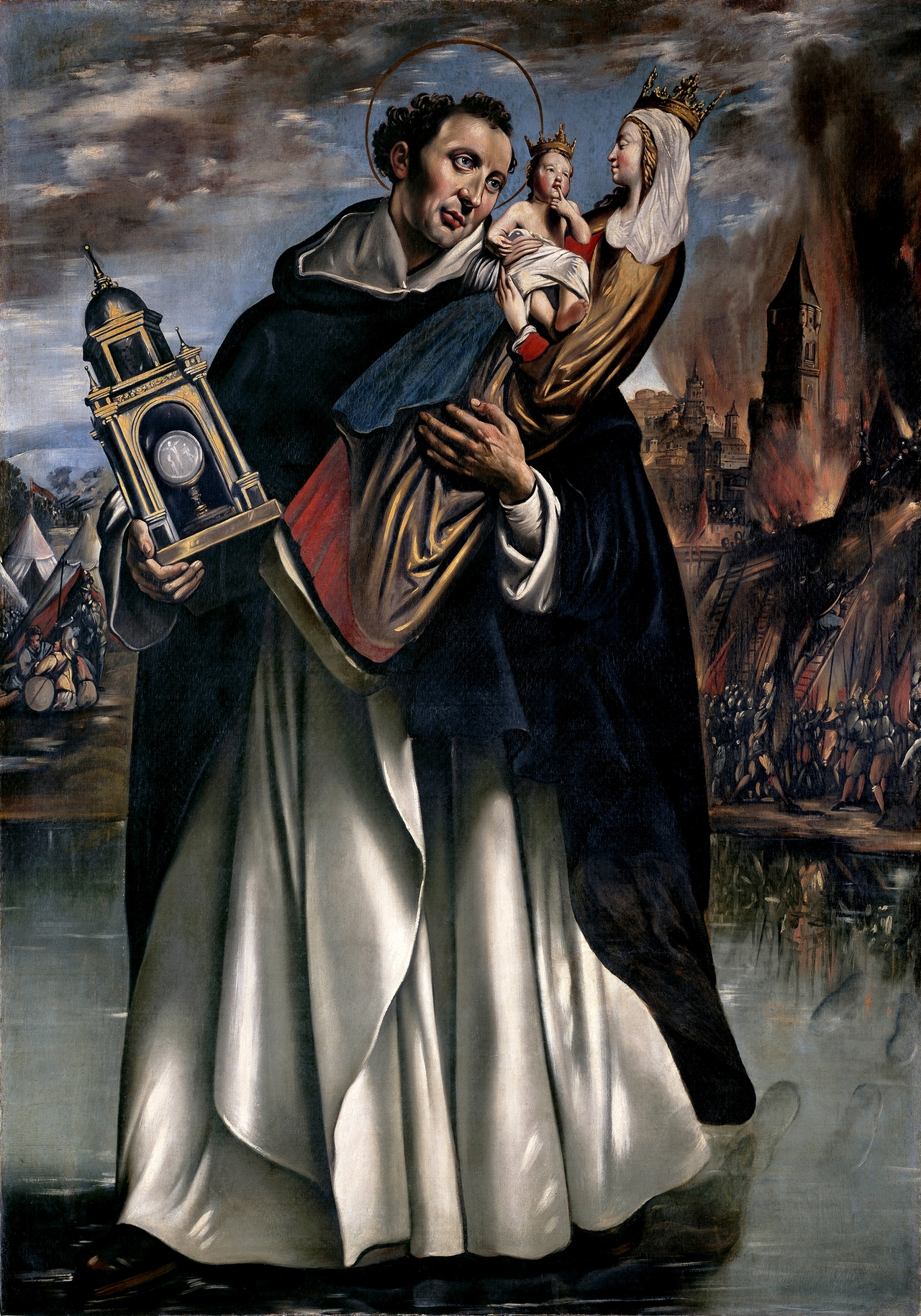
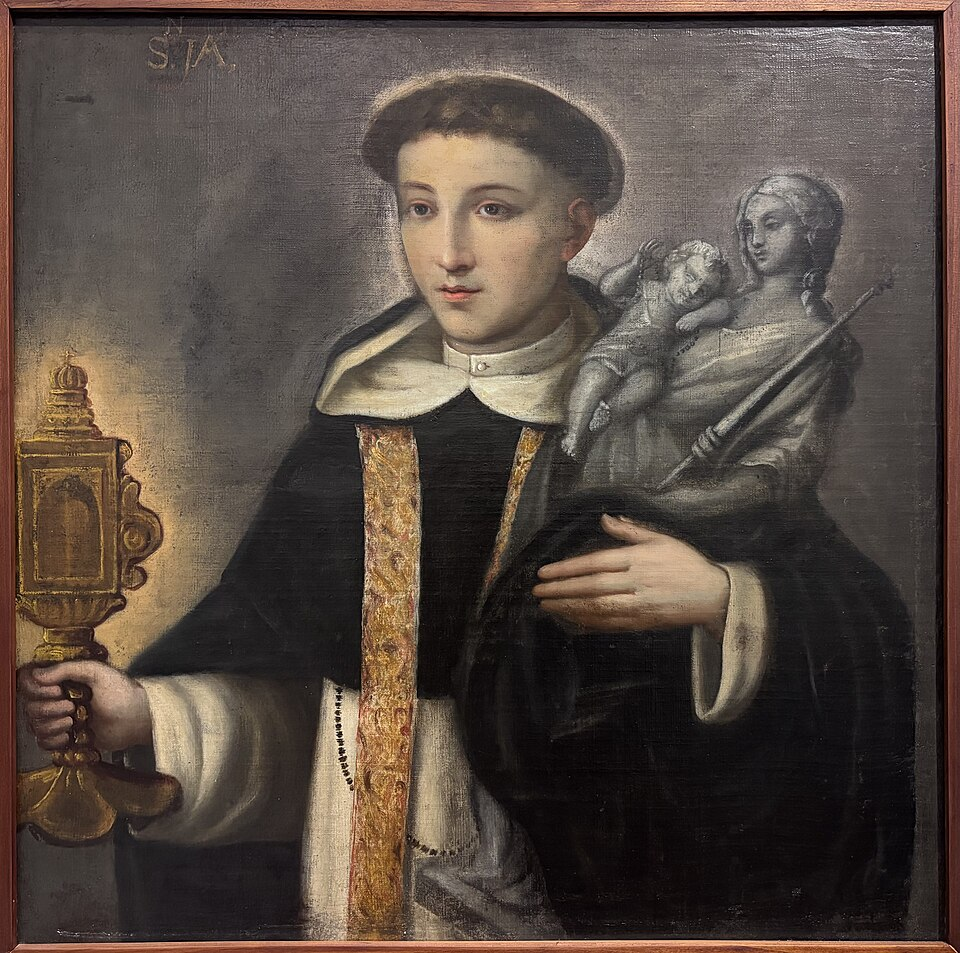
Saint Hyacinth of Poland, the Apostle of the North, during the Siege of Kiev in 1240 by Mongols, went to save save the Blessed Sacrament from capture and desecration. He had removed the Sacred Host from the Tabernacle and was hurrying down the aisle when he heard a voice call, “Hyacinth, are you going to leave me here at the mercy of the Tartans?” The voice seemed to be coming from the statue of the Blessed Virgin on one of the side altars. Hyacinth stopped and turned his gaze toward the statue which was of alabaster, fairly large in size, and obviously much too weighty for one man to carry.
Then the voice spoke again: “Take me with you, Hyacinth, I will make the burden light.” So, holding the Blessed Sacrament in one hand, he picked up the statue with the other, and, to his surprise, found he could easily carry it. Leaving the church, he fled from the city, and saved the Blessed Sacrament and the statue of Our Lady from harm.
Eighty years later, the statue was returned to Kiev. The city became the center of great devotion to the Blessed Virgin, and people gave the statue the name of Our Lady of Kiev.
The statue was later taken to a Dominican convent in Lwow in Poland. What has happened to it since the Communists took over Poland is unknown. Meanwhile, the icon known as The Virgin of Kyiv (created by a Byzantine artist about the year 1132) and the most famous icon in the world, is housed in the Tretyakov Gallery in Moscow.
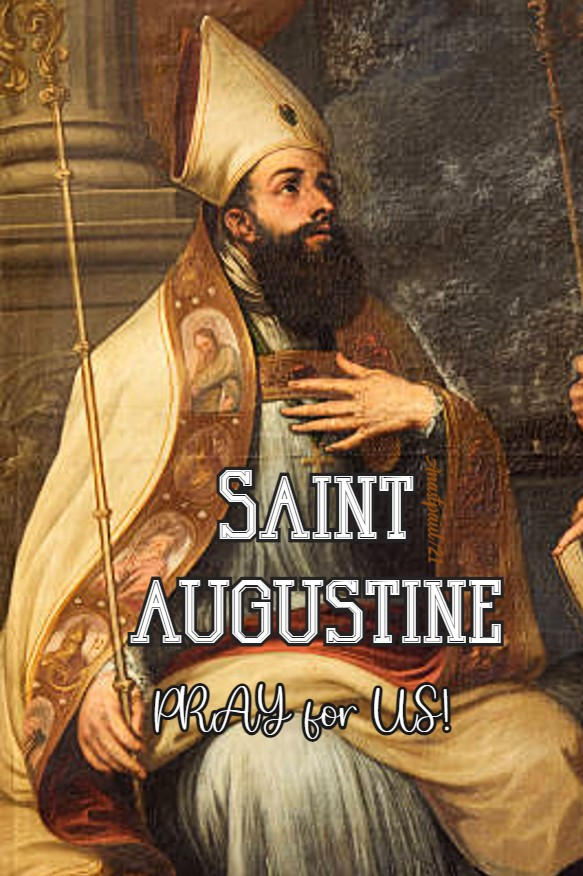
St Augustine of Hippo (354-430) – Bishop, Confessor, Doctor of Grace and one of the original Four Fathers & Doctors of the Latin Church.
Bl Adelindis of Buchau St Agnes of Cologne St Alexander of Constantinople St Ambrose of Saintes
Blessed Angelo da Pesche d’Isernia TOR (c 1400-1460) Lay Franciscan Tertiary, Holy Beggar, gifted with the charism of levitation, Apostle of the poor, spiritual adviser.
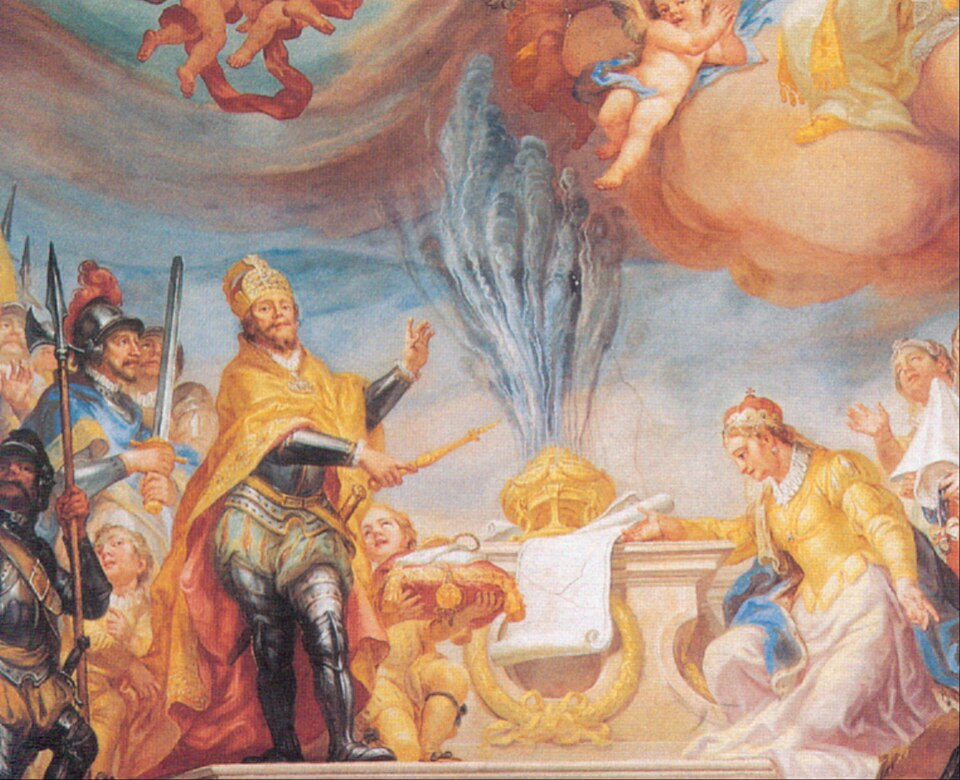
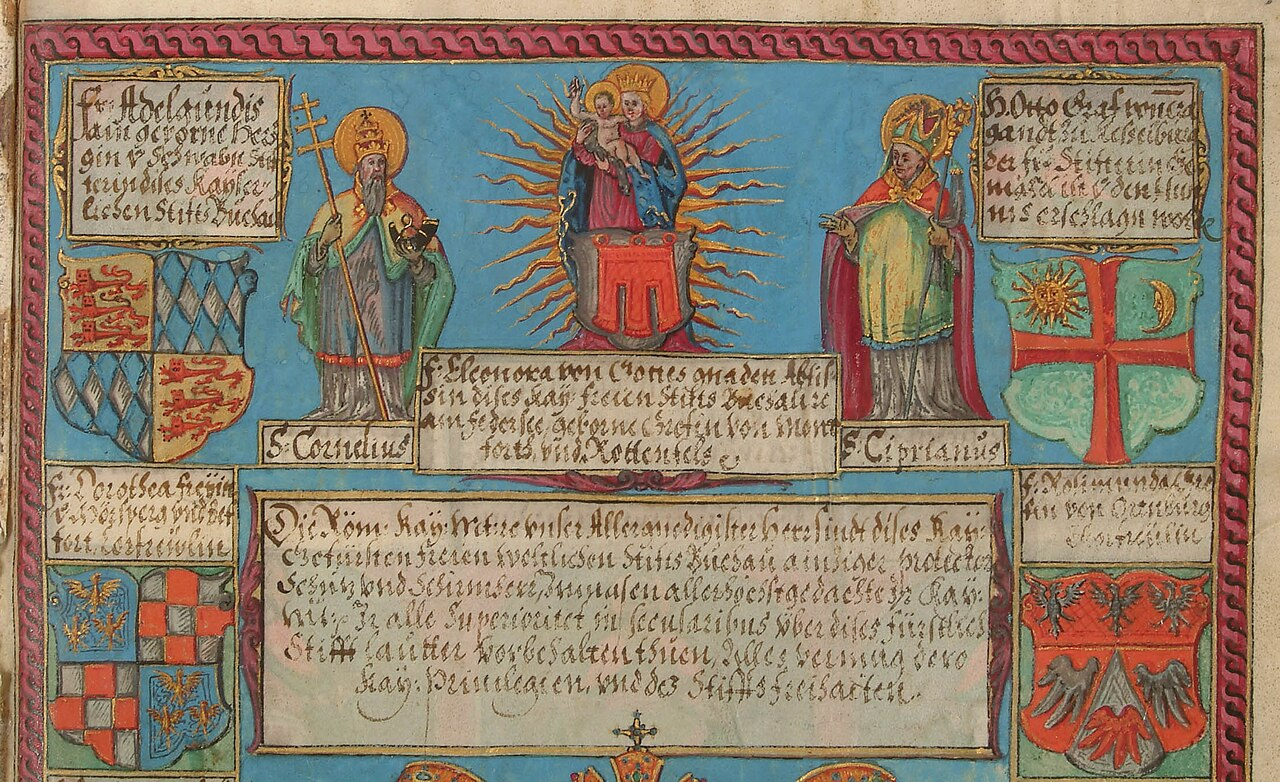
Blessed Adelindis of Buchau, also known as Adelindis of Poulagy, Adelindis of Swabia and Adelinda, Adele, Adelaide. Blessed Adelindis was the founder of the Imperial Abbey Buchau Ladies’ Convent, in today’s Bad Buchau near the Federsee lake in Swabia, Francia (Württemberg, Germany).
Adelindis kneels at right at the founding of the Abbey
Adelindis was born c. 729, the daughter of Duke Hildeprand of Spoleto, a member of the Lombard nobility, later under the protection of Charlemagne. Her mother Regarde was the daughter of Gotfrid and came from Bavaria. She married the Frankish Count Warin II around 750. In 770 she and her husband founded the Buchau Abbey.
She is not to be confused with the second Abbess, a woman of the same name and a countess who entered the convent as a nun to atone when her three sons were killed attempting to abduct their sister from it in order to marry her off.
In her memory, the Adelindis Festival, a homeland and children’s festival, is celebrated in Bad Buchau every two years on August 28.
Our Morning Offering – 28 August – St Augustine (354-430) – Bishop, Confessor, Doctor of Grace and Father
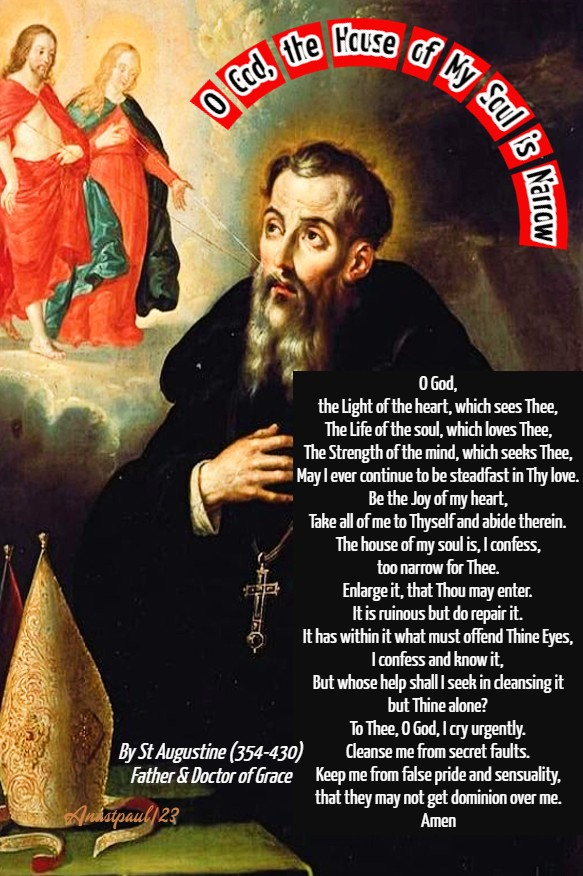
O God, the House of My Soul is Narrow By St Augustine (354-430) Father & Doctor of Grace
O God, the Light of the heart, which sees Thee, The Life of the soul, which loves Thee, The Strength of the mind, which seeks Thee, May I ever continue to be steadfast in Thy love. Be the Joy of my heart, Take all of me to Thyself and abide therein. The house of my soul is, I confess, too narrow for Thee. Enlarge it, that Thou may enter. It is ruinous but do repair it. It has within it what must offend Thine Eyes, I confess and know it, But whose help shall I seek in cleansing it but Thine alone? To Thee, O God, I cry urgently. Cleanse me from secret faults. Keep me from false pride and sensuality, that they may not get dominion over me. Amen
One Minute Reflection – 28 August – St Augustine (354-430) – Bishop, Confessor, Doctor of Grace and Father – Readings: Sir 15:5, Ps 91:2, 2 Tim 4:1-8, Matt 5:13-19
You are the light of the world. A city seated on a mountain cannot be hid.
Matt 5:13-19
REFLECTION – This “day which the Lord has made” penetrates all things, contains all things and simultaneously embraces heaven, earth and the underworld! The light which is Christ is neither hindered by walls nor broken by the elements nor darkened by shadow. Yes, I say, the light of Christ is a day without night, a day without end, shining everywhere, extending everywhere, remaining everywhere. Christ is day, says the apostle Paul: “The night is advanced, the day is near”. The night is advanced, he says, it precedes the day. Understand by this that, as soon as the light of Christ appears, the darkness of the devil is dispersed and the night of sin does not follow, eternal splendor casts out the shadows of yesterday and halts the insinuating advance of evil.
Scripture attests that the day of Christ illumines heaven, earth and hell. It shines on the earth: "He was the true light" says saint John, "who enlightens everyone, coming into the world". It gives light in the underworld: "The people who walked in darkness have seen a great light;" says the prophet, "upon those who lived in a land of gloom a light has shone". And in heaven this day remains, as David said: "His dynasty will continue forever, his throne like the sun before me".
Saint Maximus of Turin
PRAYER – Give heed to our humble prayers, Almighty God and through the intercession of blessed Augustine, Thy Confessor and Bishop, kindly grant Thy oft-given mercy to those upon whom Thou bestows great hope in Thy forgiveness. Through Jesus Christ, Thy Son our Lord, Who lives and reigns with Thee, in the unity of the Holy Ghost, God, world without end. Amen
Quote/s of the Day – 28 August – St Augustine (354-430) Bishop, Confessor, Doctor of Grace and Father–
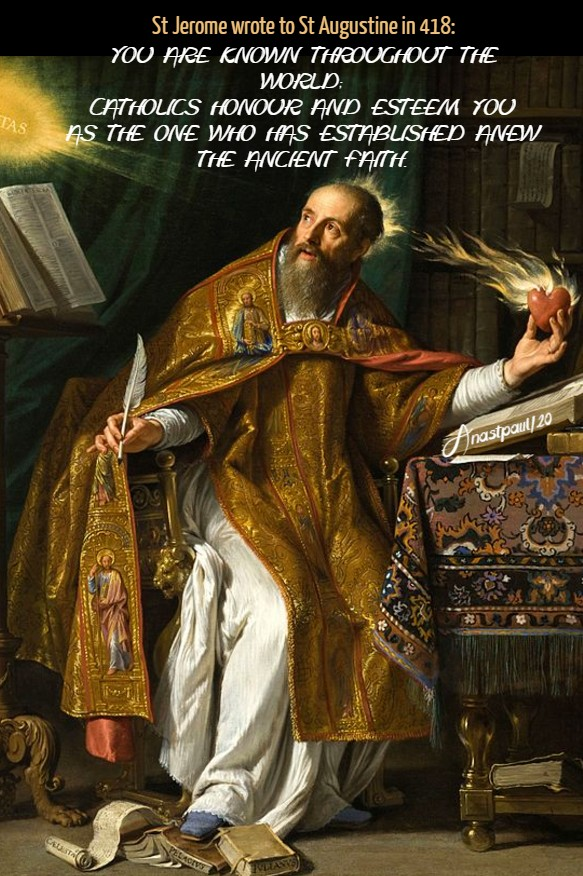
St Jerome wrote to Augustine in 418: “You are known throughout the world; Catholics honour and esteem you as the one who has established anew the ancient Faith.”
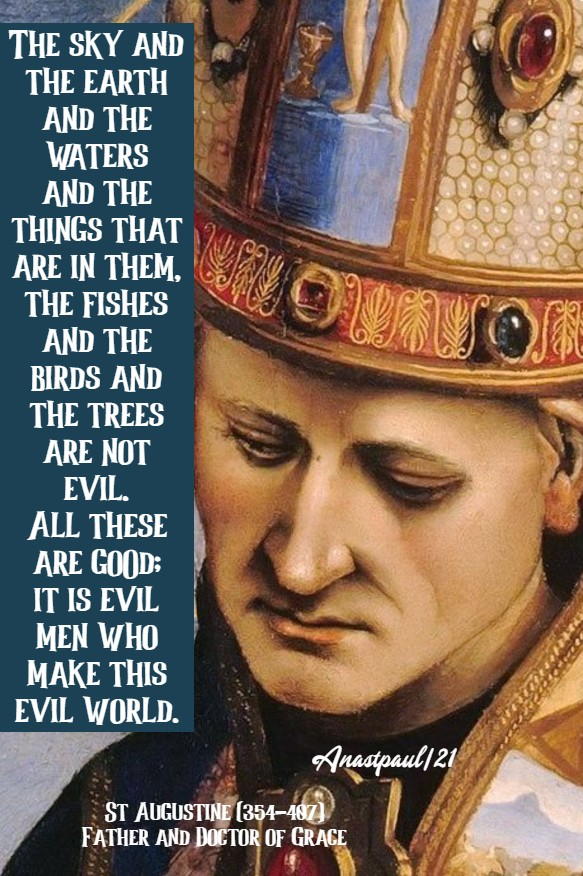
“The sky and the earth and the waters and the things that are in them, the fishes and the birds and the trees are not evil. All these are good; it is evil men who make this evil world.”
“What is reprehensible, is that while leading good lives themselves and abhorring those of wicked men, some, fearing to offend, shut their eyes to evil deeds instead of condemning them and pointing out their malice.”
“Give of your earthly goods and receive eternal ones; give earth and receive heaven!”
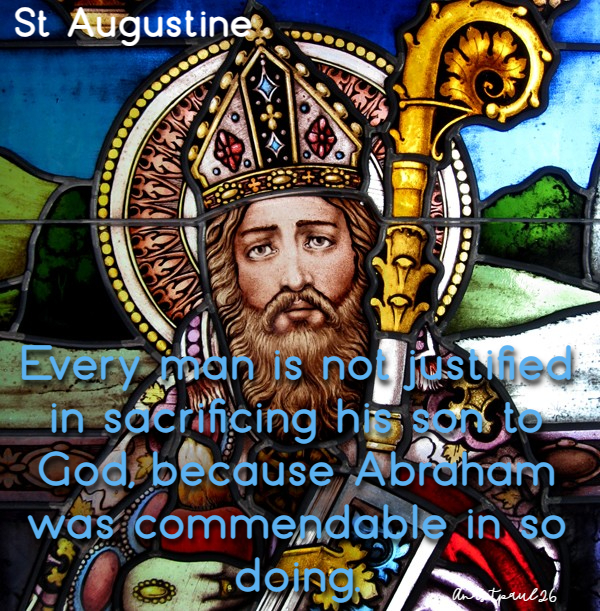
Every man is not justified in sacrificing his son to God, because Abraham was commendable in so doing.
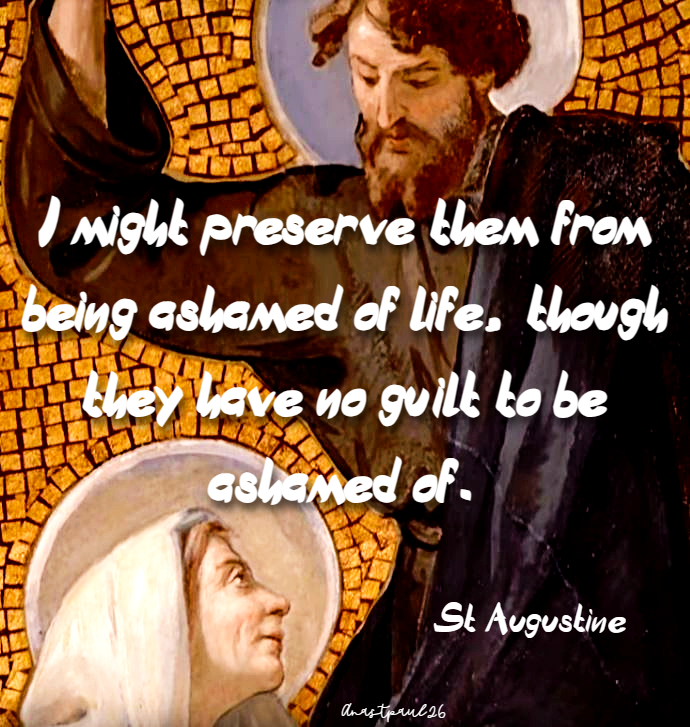
I occupied some considerable space, partly that I might relieve the anxieties which disturb many when they observe that the blessings of God, and the common and daily human casualties, fall to the lot of bad men and good without distinction; but mainly that I might minister some consolation to those holy and chaste women who were outraged by the enemy, in such a way as to shock their modesty, though not to sully their purity, and that I might preserve them from being ashamed of life, though they have no guilt to be ashamed of.
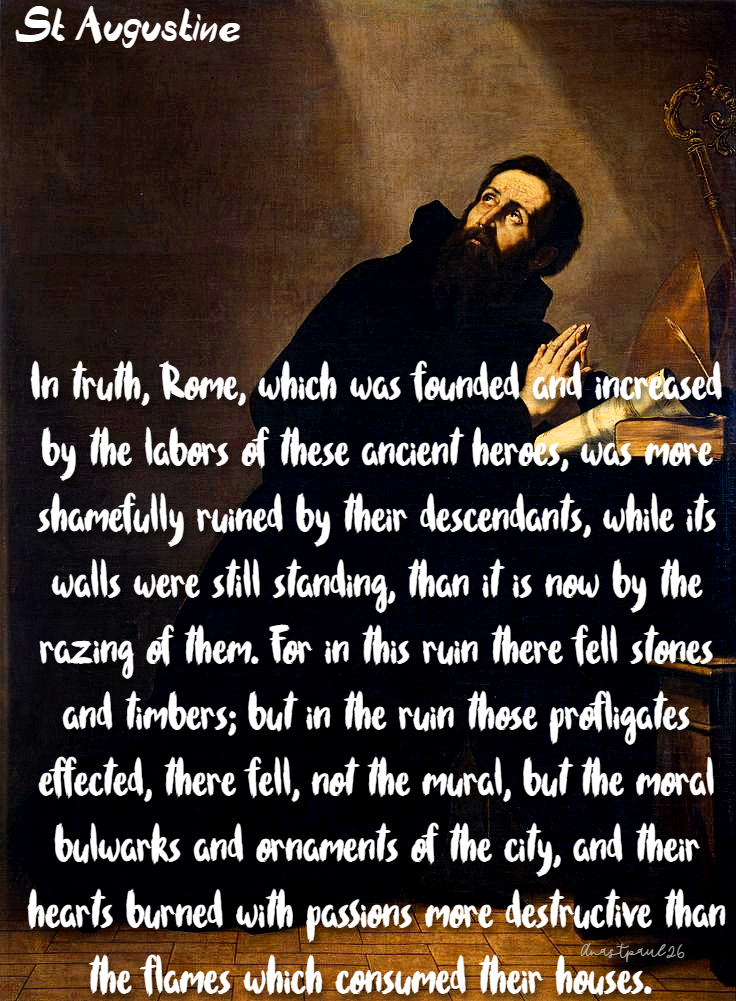
In truth, Rome, which was founded and increased by the labors of these ancient heroes, was more shamefully ruined by their descendants, while its walls were still standing, than it is now by the razing of them. For in this ruin there fell stones and timbers; but in the ruin those profligates effected, there fell, not the mural, but the moral bulwarks and ornaments of the city, and their hearts burned with passions more destructive than the flames which consumed their houses.
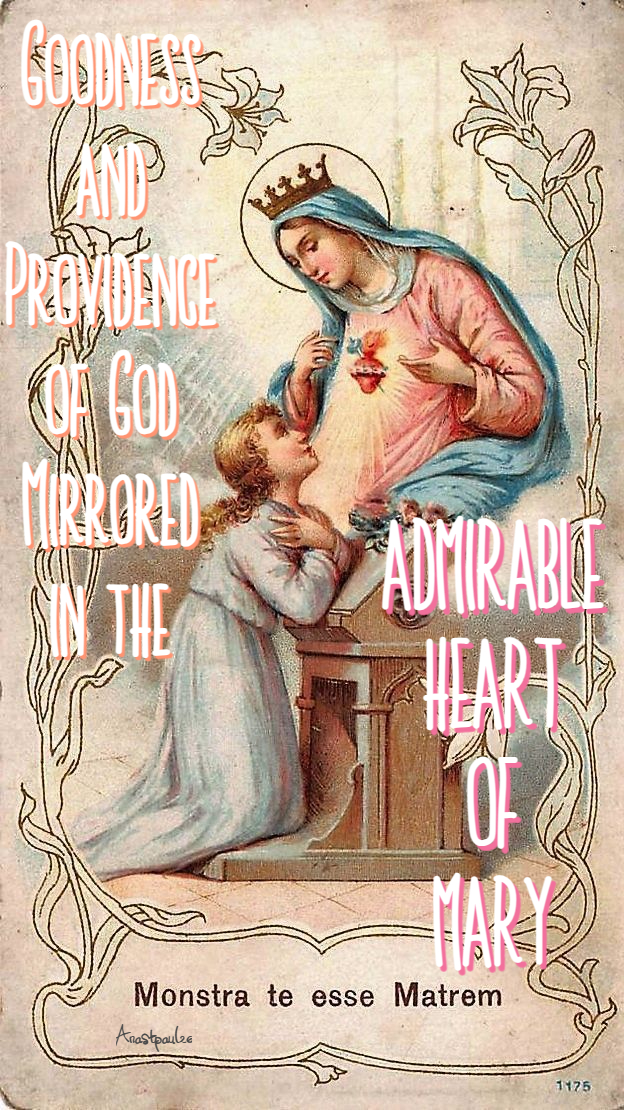
Goodness and Providence of God Mirrored in the Admirable Heart of Mary
Sacred theology distinguishes in God three kinds of goodness, which are fundamentally one and the same: natural goodness, moral goodness and goodness of benevolence or bounty, which is sometimes called benignity. Natural goodness is none other than the perfection and beauty of divine nature, containing the infinite excellences of the Godhead. Moral goodness comprises all the moral virtues that God possesses so eminently and in so high a degree that they are infinitely beyond what a created spirit can think or express. The goodness of benevolence or bounty is God’s infinite inclination to communicate Himself and it proceeds from His natural goodness. In the order of glory God communicates Himself most fully and perfectly to all the souls in heavenly bliss, clothing them in His radiant glory, surrounding them with His felicity, enrapturing them with His holy joys, and making them partakers of all the goodness He Himself possesses.
The superlative Goodness communicates Its adorable perfections to the holy Heart of Mary with much greater abundance and plenitude than to all other creatures put together. Next to the Heart of God, there never was and never shall be a heart so good, liberal, benevolent, magnificent and so replete with kindness as the most admirable Heart of Mary.
The Heart of Mary is so full of goodness that St. Bernard thus speaks of her: “Why does human weakness fear to come unto Mary? Nothing in her is austere, nothing frightful, for she is filled with sweetness. Go over the Gospel story with the greatest attention; if you find therein the least mark of harshness or severity on Mary’s part, the least sign of indignation, you may well fear to appear before her. But if, on the contrary, you find (as you surely will) her virginal Heart full of love, piety, sweetness and goodness, then give thanks to Him who in His infinite mercy has provided such a mediatrix for us.”
“Her Heart is so alive with pity that she never rejects any suppliant coming to her with humility and confidence,” says Raymund Jourdain. It is this loving confidence that we express as often as we recite that beautiful prayer, attributed by many annotators to St. Bernard, and by others to St. Augustine: “Remember, O most gracious Virgin Mary, that never was it known that anyone who fled to thy protection, implored thy help and sought thine intercession, was left unaided.”
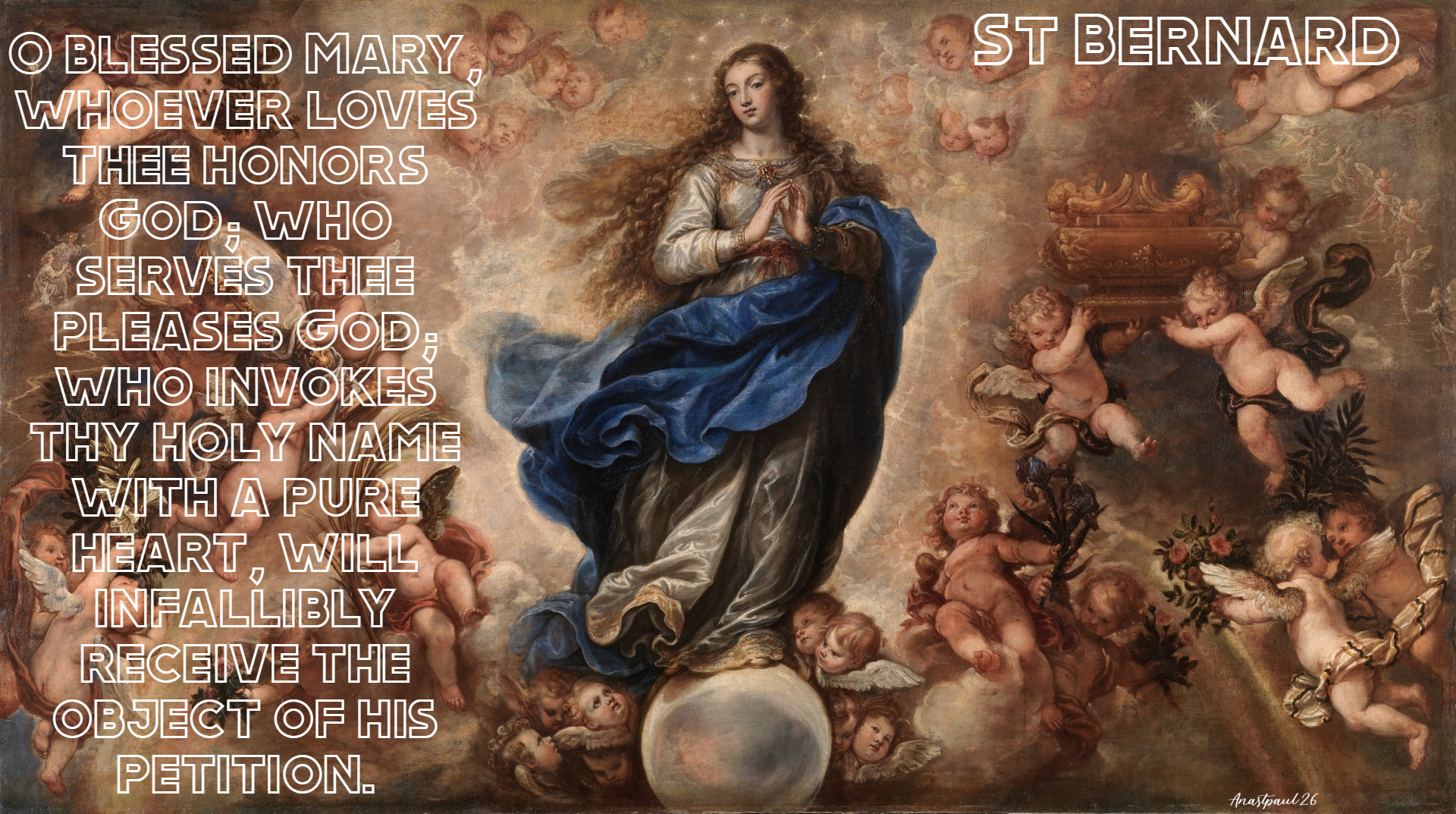
Her Heart is so filled with bounty that she readily grants whatever we ask of her. St. Bernard says: “O blessed Mary, whoever loves thee honors God; who serves thee pleases God; who invokes thy holy name with a pure heart, will infallibly receive the object of his petition.”
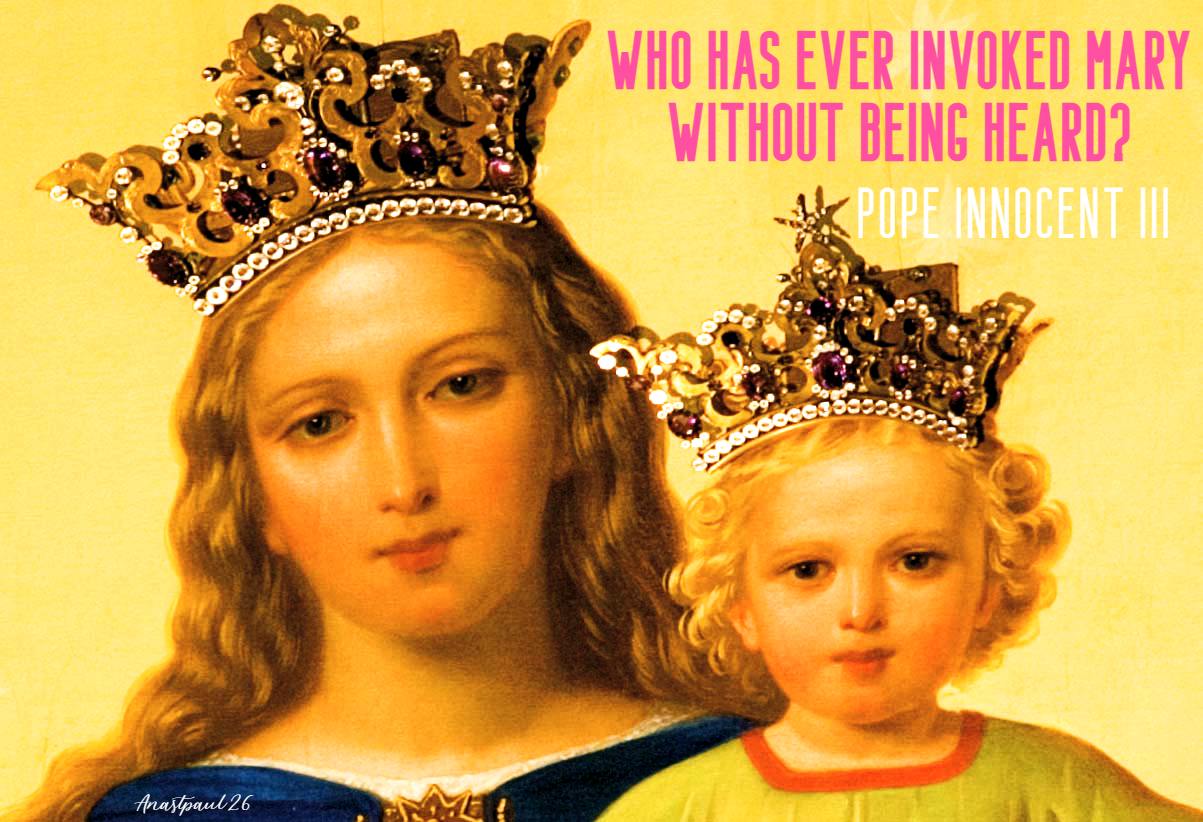
“Who has ever invoked Mary without being heard?” says Pope Innocent III. The venerable Abbot Blosius adds: “She rejects no one but lends a favorable ear to the petitions of all.” “Heaven and earth would sooner perish, than Mary refuse her help to such as invoke her seriously and with affection,” reiterates St. Bernard, adding: “Let him be silent in praise of thy mercy, O most Blessed Virgin, who having invoked thee in his necessities, should remember not having received thy help.”
Her Heart is so good and merciful that she extends her kindness not only to the good but also to the wicked, not only to the faithful but to sinners as well. “In this life, thou art a help to the just and unjust,” says Raymund Jourdain. “Thou dost aid the just man and the sinner; the former by keeping him in the state of grace, wherefore the Church calls thee the Mother of Grace; the latter by bringing them back to divine Mercy, for which thou art named the Mother of Mercy.” Our Lady’s Heart is so kind and gentle that she helps not only those who implore her aid, but even the careless souls who neglect to invoke her. Listen again to St. Bernard: “Why should we marvel to see her stretch a helping hand to such as beseech her, if she assist even them who do not pray to her?”
Her Heart is so merciful that she loves even those who hate her. Mary always renders good for evil because she willingly sacrificed her own beloved Son to save the reprobates who crucified Him. Other Fathers of the Church express the same thoughts and assure us that the almost boundless charity of the Heart of Mary extends to all places, times and things in general, through a most abundant communication and eminent participation of God’s infinite goodness and likewise of His divine providence.
She leads all created things to the last end for which God made them, namely the glory of His Divine Majesty. But her special care is the guidance of rational beings, above all, of Christians, and most particularly of her own devout children, who strive faithfully to honor, serve and imitate her.
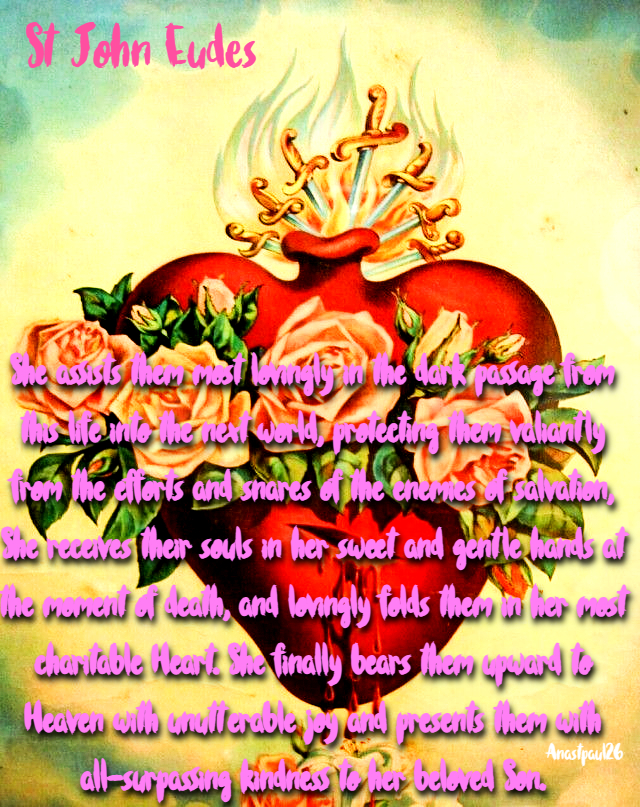
Her maternal Heart protects and cherishes her devotees in a unique manner, having her eyes ever intently fixed upon them. She preserves and guards them as the apple of her eye, and assumes the guidance and conduct of their entire life and actions. She leads them by the hand in all their ways, removing from their path the obstacles and hindrances which might make them stumble, or retard their progress. She obtains the assistance and the means whereby they will receive strength and advance more rapidly. She bears their soul in her arms and on her virginal breast through the dangerous crises where their peril is greatest. She assists them most lovingly in the dark passage from this life into the next world, protecting them valiantly from the efforts and snares of the enemies of salvation, She receives their souls in her sweet and gentle hands at the moment of death, and lovingly folds them in her most charitable Heart. She finally bears them upward to Heaven with unutterable joy and presents them with all-surpassing kindness to her beloved Son.
If such is the miraculous goodness of Mary to those who love and venerate her, how can there possibly be any Christians who hold back from devotion to the center and principle of her benignity, her Admirable Heart?
Praise, honour and glory be forever to the Most High, who has thus caused the Heart of this incomparable Mother to reflect to mankind the perfect image of His goodness and all-merciful providence!









You must be logged in to post a comment.