La Madonna della Riconciliazione e della Pace / Our Lady of Reconciliation and Peace, Balestrino Italy (1949) – 4 October
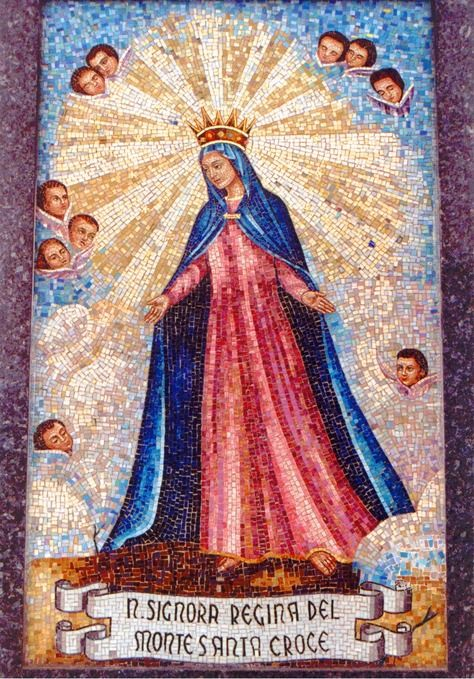
Caterina Richero was born on 7 October 1940 in Bergalla, the highest hamlet of Balestrino, of a humble peasant family. She was the first of four siblings and her life passed in the serenity of childhood until the age of nine. On 4 October 1949, something radically changed her life. Something that will lead Catherine to humbly sacrifice her life with a continuous and silent witness of faith. A life devoted to prayer and devotion to that female figure who appeared to her 138 times until 5 November 1986 and who, on 5 June 1950 when asked: ” Who are you?” replied: ” I am the Immaculate Conception.”
Catarina’s life, from that distant day in 1949 was by no means easy. She had to face the ridicule and mistrust of many and above all, she had to stick to what was given to her by the Bishop. She was also forbidden to go to Mount Croce but the Madonna began to appear in Catarina’s home. In all those years, Our Lady asked her to pray constantly for the conversion of sinners and to do many penances for all, without faith. On 5 October 1971 she said: “ On Mount Croce you will find light and strength and I, in this place, will obtain many graces for you.”
Now on Monte Croce there is a splendid Chapel with a Statue of Christ awaiting pilgrims at the top of a staircase. Inside, intent on arranging the flowers on the Altar or absorbed in prayers, Catarina, who with her silent presence tells everyone much more than thousands of articles and books could say. The Statue venerated in the Chapel of the Sanctuary was crowned on 7 October 1992 by Msgr. Mario Oliveri.
St Adauctus of Ephesus Bl Alfonso Tabela St Ammon the Great (c 286-c 348) Hermit, Layman St Aurea St Berenice St Caius of Corinth St Callisthene of Ephesus St Crispus of Corinth St Damaris of Athens St Diogenes of Milan St Domnina St Hierotheus Bl Julian Majali St Lucius of Alexandria St Peter of Damascus
St Prosdoce St Quintius of Tours — Martyrs of Alexandria – 2+ saints: A group of Christians, men and women, young and old, murdered together for their faith. The only names that have come down to us are the brothers Mark and Marcian.
Martyred in the Spanish Civil War: • Blessed Alfredo Pellicer Muñoz • Blessed Avelí Martínez de Arenzana Candela • Blessed Dionisio Ibáñez López • Blessed Francisco Martínez Granero • Blessed Fulgencio Martínez García • Blessed José Aloy Doménech • Blessed José Gafo Muñiz • Blessed José Miguel Peñarroya Dolz • Blessed Juan de Francisco Pío • Blessed Juan José Orayen Aizcorbe • Blessed Martina Vázquez Gordo • Blessed Publio Fernández González • Blessed Tomás Barrios Pérez
Madonna di Valverde, / Our Lady of Valverde di Rezzato, Italy (1399 and 1711) – 1 October:
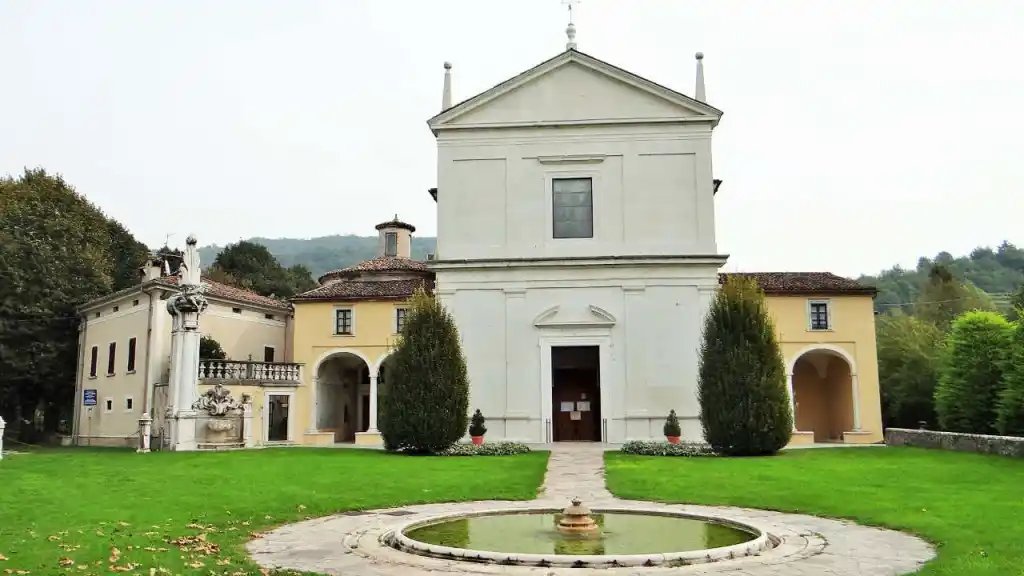
The Sanctuary of the Madonna di Valverde, belonging to the Parish of San Giovanni Battista di Rezzato Diocese of Brescia, is located in Valverde, at the foot of the Botticino and Serle hills. The Sanctuary was born in the places of the apparitions of 1399, the only one in history where both the Madonna and her Divine Son, Jesus Christ, the Saviour aooeared with His Mother and the second Marian Apparition of 1711.
For over six centuries the Sanctuary of the Madonna di Valverde has been a destination of pilgrimages from all over the north of Italy and is, above al,l in the heart of the community of Rezzato – Virle, which every year, on the Feast of St Anna on 26 July, recalls, with a solemn historical procession, the miracle of the apparitions.
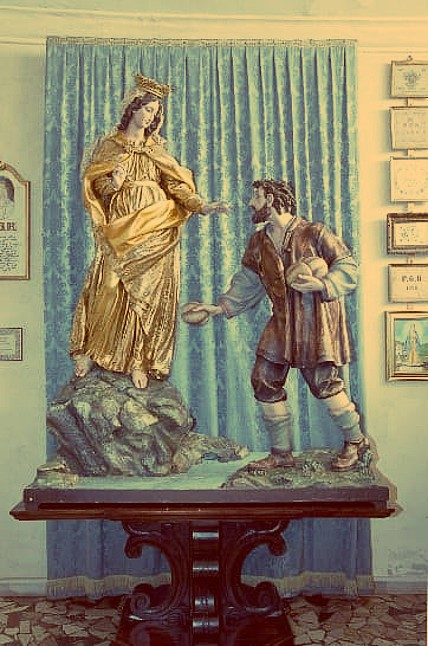
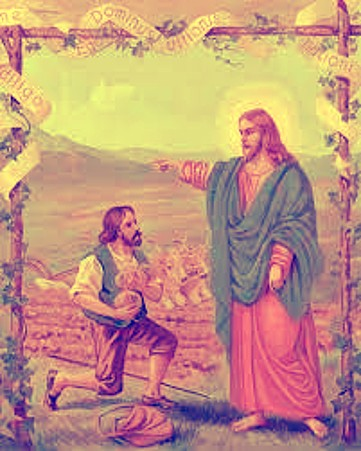
In 1399, more than six hundred years ago, during the ploughing work in a field near Valverde, the oxen pulling the plough stopped and bent their knees. A man in a red robe and a blue mantle (Christ) appeared to the worker who guided them and ordered him to throw the three loaves that he kept in his saddlebag into the nearby pond. The peasant got ready to obey the order but was held back by the Apparition of the Madonna who advised him to return to beg the Lord, to revoke the order just given. If the three loaves had touched the waters of the lake, three scourges would have been unleashed (famine, plague and war) with which Christ intended to punish men for their impiety. Jesus, by the insistence of tHis Holy Mother, consented to the peasant’s plea and agreed that only one of the loaves need be thrown into the water and, therefore, only the scourge of the epidemic would spread throughout the area. Our Lady recommended to the peasant to announce to everyone, what he had seen with his own eyes, exhorting men to repent and to approach faith and the Sacraments again.
A Chapel was first built near the lake, then, in the early seventeenth century, a large and beautifully decorated Sanctuary followed.
St Thérèse of Lisieux/St Thérèse of the Child Jesus and the Holy Face/The Little Flower OCD (1873 – 1897) Virgin, Carmelite Nun, Doctor of the Church (Memorial) She was Canonised by Pope Pius XI on 17 May 1925. The same Pope proclaimed her Universal Patron of the Missions, alongside Saint Francis Xavier, on 14 December 1927. Up until 1969 her Memorial was celebrated on 3 October.
St Aizan of Abyssinia St Albaud of Toul Bl Andrew Sushinda Bl Antoni Rewera St Aretas of Rome St Bavo of Ghent (c 589–654) Married. Widower, Monk and Hermit. Bl Cecilia Eusepi Bl Christopher Buxton St Crescens of Tomi St Dodo Bl Dominic of Villanova Bl Edward James St Evagrius of Tomi St Fidharleus Bl Gaspar Fisogiro St John Kukuzelis Bl John Robinson
St Maxima of Lisbon Bl Nikita Budka St Piaton of Tournai St Priscus of Tomi Bl Ralph Crockett Bl Robert Widmerpool Bl Robert Wilcox
St Romanos the Melodist (c 490-c 556) Deacon, Hymnographer, Poet, Writer. He is said to have composed more than 1,000 hymns celebrating various festivals of the ecclesiastical year, the lives of the saints and other sacred subjects, some 60 to 80 of which survive.
St Sazan of Abyssinia St Verissimus of Lisbon St Virila St Wasnulf — Martyred in the Spanish Civil War: • Blessed Carmelo Juan Pérez Rodríguez • Blessed Higinio Mata Díez • Blessed Juan Mata Díez • Blessed Álvaro Sanjuán Canet • Blessed Florencia Caerols Martínez
Nostra Signora di Loreto di Forno / Our Lady of Loreto of Forno, Alpi Graie, Italy (1629) – 30 September:
At the beginning of the Vallone di Sea, at about 1340 metres above sea level, in the Forno di Groscavallo hamlet, stands the Sanctuary dedicated to the Madonna di Loreto, built around 1630, after the apparition occurred to Pietro Garino, a native of Forno.
In those times, the region was tormented by the wars fought by Carlo Emanuele of Savoy against the neighbouring states; by the increasingly high taxes that weighed on the poor people, by hunger and the plague.
It was customary for devotees to go annually to the Chapel of the Virgin on Rocciamelone. On that occasion, Pietro Garino found the small pictures, which are still preserved in the Church, depicting the Madonna of Loreto and San Carlo Borromeo, leaning against the facade of the Chapel. They were in bad shape. Pietro took them with him to have them restored and promised himself to bring them back to the Chapel the following year, keeping them in the meantime at his home in Forno.
Twice the pictures eluded his custody – the first time he found them right up there, at the mouth of the Vallone di Sea, where he had gone to collect leaves for the litter intended for livestock. On that occasion he had an apparition – the Virgin appeared to him between two women and promised him to stop the plague that claimed victims among the population of the plain. Brought home by Pietro, the paintings again disappeared from his home and were found in the same place as the apparition – it was a precise indication of the Virgin’s desire to see a Chapel built in that place.
A Chapel was built at the spot of the apparition, of which the remains have recently been found. The current building dates back to the second half of the 1700s; it is the work of Luigi Baretta; internally it has elements of considerable artistic and historical interest. The marvelous Altar by Prinotto, a masterpiece of eighteenth-century cabinet-making; the baroque reliquary, in which the pictures are kept; hundreds of ex-votos, including some of considerable value.
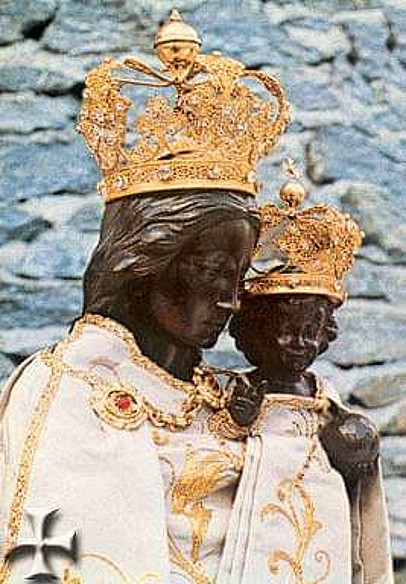
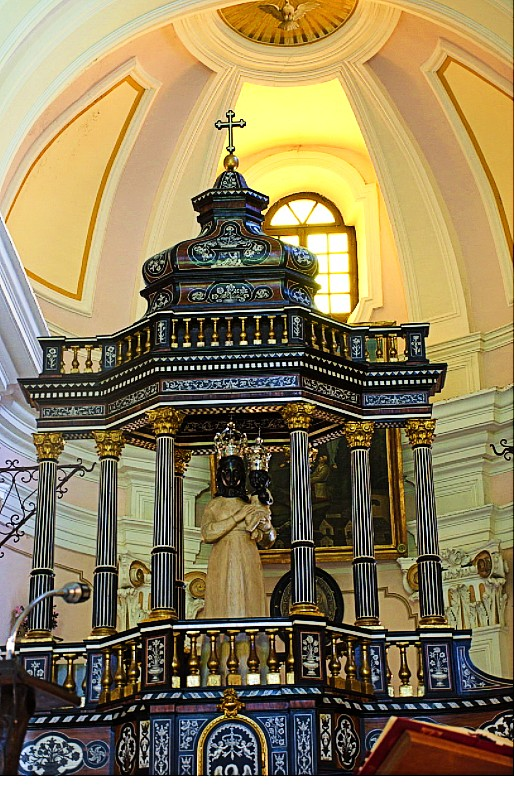
Historically, a Madonna with black features did not appear but the Sanctuary is known as such, as the faces of the Madonna and the Child she holds in her arms are ebony. The current Statue is the work of Raimondo Santifaller, from Ortisei and replaces the original one from the 18th century, stolen in 1977.
To access the Sanctuary it is necessary to climb the 440 steps that must be taken to reach the small square where the Sanctuary stands and which, pilgrims climb on their knees and in prayer.
The Sanctuary is open from July to September and Our Lady is celebrated annually on the Feast of the Assumption (16 August), the Nativity of Mary (8 September) and the Apparition of the Virgin Mary (30 September). The video below shows this beautiful Sanctuary very clearly.
St Amato of Nusco (c 1003-1093) Bishop, Confessor, Monk, Apostle of the poor.
St Antoninus of Piacenza St Castus of Piacenza St Colman of Clontibret St Desiderius of Piacenza St Enghenedl of Anglesey St Eusebia of Marseilles Bl Frederick Albert
St Gregory the Illuminator (c 257 – c 331) “Apostle to Armenia” and “Father of Armenia”- Bishop, First Patriarch of the Armenian Church, Missionary, Wonder-worker.
St Honorius of Canterbury (Died 653) Archbishop of Canterbury St Ismidone of Die Bl Jean-Nicolas Cordier St Laurus St Leopardus the Slave Bl Ludwik Gietyngier St Midan of Anglesey St Simon of Crépy St Ursus the Theban St Victor the Theban — Martyrs of Valsery Abbey: An unknown number of Premonstratensian monks at the Abbey of Notre-Dame de Valsery, Picardie, France who were martyred by Calvinists. They were martyred in 1567 at Valsery, Pircardy, France.
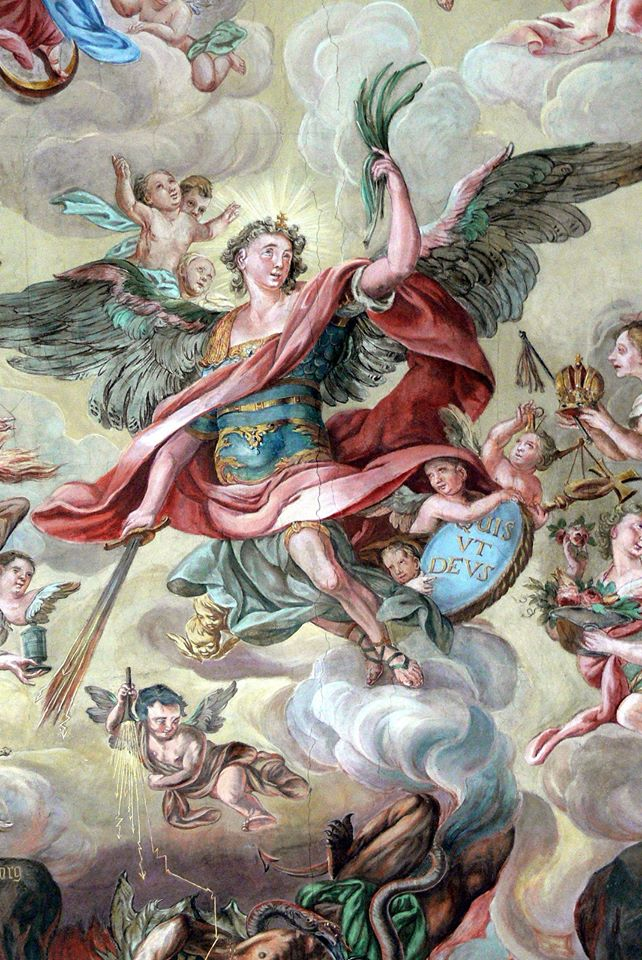
THIS festival has been kept with great solemnity on the 29th of September ever since the Fifth Century and was certainly initially celebrated in Apulia in 493. The Dedication of the famous Church of St Michael on Mount Gargano, in Italy, gave occasion to the institution of this feast in the West, which is hence called in the Martyrologies of St Jerome, St Bede and others, ‘The Dedication of St Michael.’ About the Apparition of St Michael at Mount Gargano in 492
The Dedication of St Michael’s Church in Rome, which was performed by Pope Boniface IV. in 610 and that of several other Churches in the West, in honour of this Archangel, were also performed on this same day.
The name Michaelmas comes from a shortening of “Michael’s Mass,” in the same style as Christmas (Christ’s Mass) and Candlemas (Candle Mass, the Mass where traditionally the candles to be used throughout the year would be blessed).During the Middle Ages, Michaelmas was celebrated as a Holy Day of Obligation but this tradition was abolished in the 18th century.
The Church gives to St Michael four offices:
To fight against Satan.
To rescue the souls of the faithful from the power of the enemy, especially at the hour of death.
To be the champion of God’s people, the Jews in the Old Law, the Christians in the New Testament; therefore, he is the Patron of the Church and of the Orders of Knights during the Middle Ages.
To call away from earth and bring men’s souls to judgement.
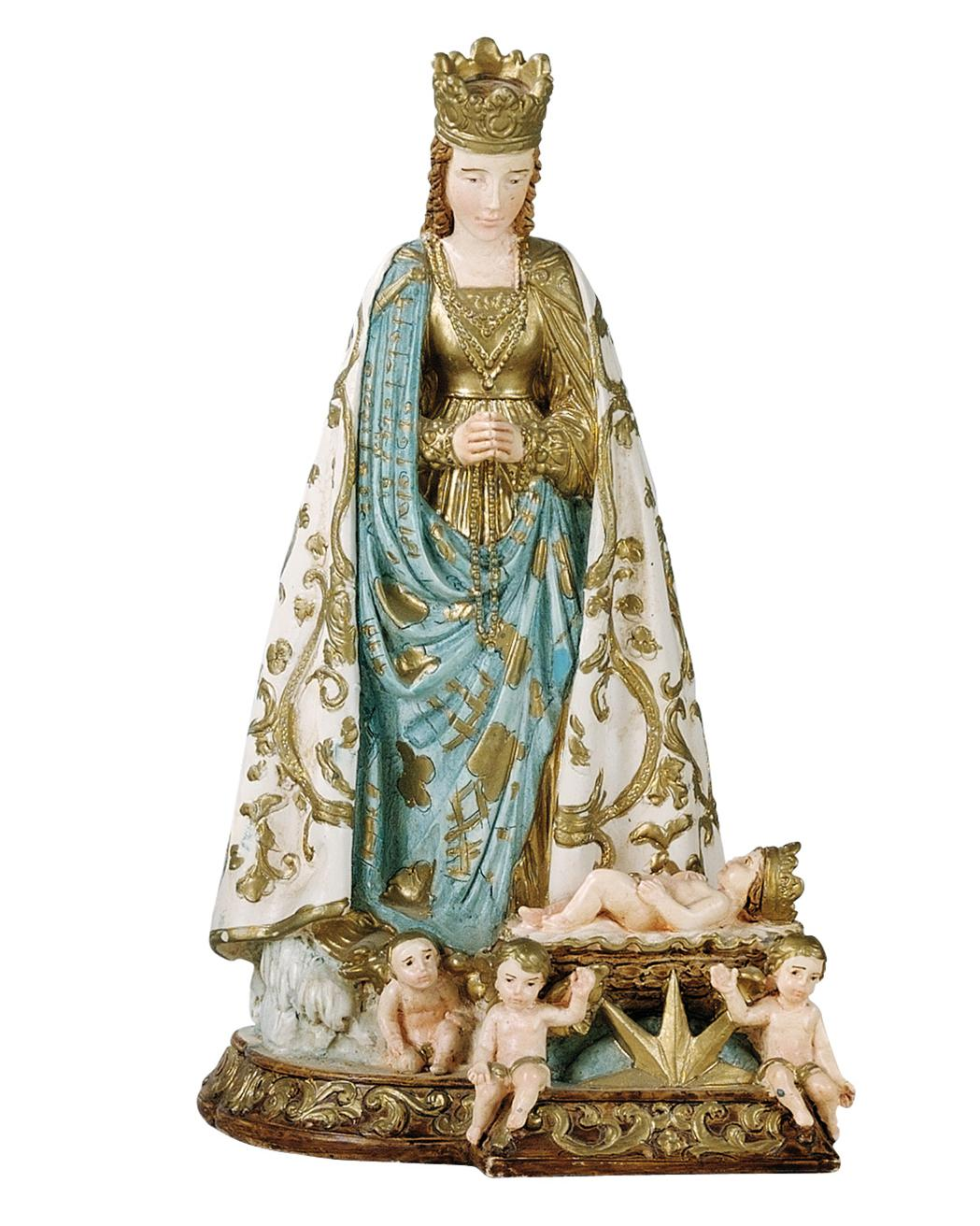
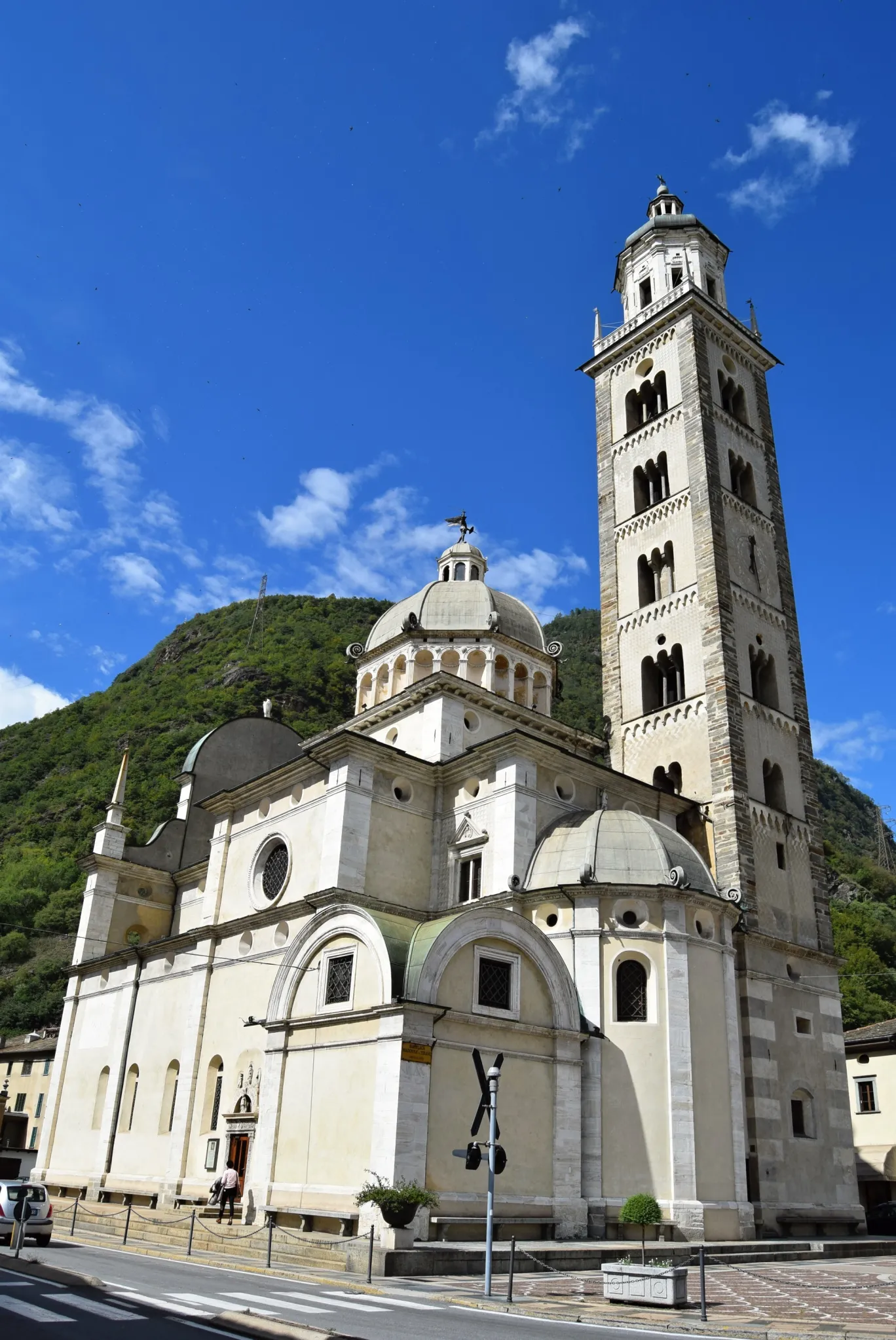
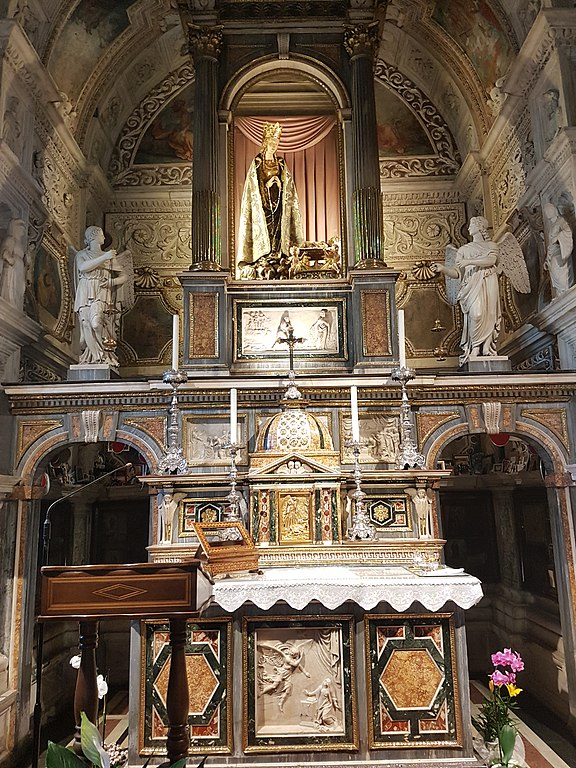
Madonna di Tirano / Our Lady of Tirano, Sondrio, Lombardy, Italy (1504) – 29 September:
The Sanctuary of the Madonna of Tirano stands on the Swiss-Italian border, where the Virgin appeared to Mario Omodei on 29 September 1504, promising an end to the plague which was decimating the region, if a Church in her honour would be built, on the spot outside the City walls. The epidemic subsided and the townspeople placed the first stone of the Sanctuary on 25 March 1505.
Because of its crossroads location, it has always drawn pilgrims from throughout Europe.
The Virgin’s Statue was part of a silver-clad grouping executed by woodcarver G Angelo Mayno around 1520. Napoleonic raiders stripped off the precious metal and destroyed the other Statues.
In 1946 Pope Pius XII proclaimed the Blessed Virgin of Tirano “special heavenly Patron of all Europe.”
Bl Alericus St Anno of Eichstätt St Casdoe of Persia St Catholdus of Eichstätt
St Dadas of Persia St Diethardus of Eichstätt St Fraternus of Auxerre St Gabdelas of Persia St Grimoaldus of Pontecorvo St Gudelia St Guillermo Courtet
St Miguel de Aozaraza St Quiriacus of Palestine St Rene Goupil St Rhipsime Bl Richard Rolle St Sapor of Persia St Theodota of Thrace St Vicente Shiwozuka de la Cruz — Martyrs of Thrace – 3 saints: Three Christian men murdered in Thrace for their faith. They are – Eutychius, Heracleas and Plautus.
Martyred in the Spanish Civil War: • Blessed Antonio Arribas Hortigüela • Blessed Antonio Martínez López • Blessed Dario Hernández Morató • Blessed Francesc de Paula Castelló Aleu • Blessed Francisco Edreira Mosquera • Blessed José Villanova Tormo • Blessed Pau Bori Puig • Blessed Vicente Sales Genovés • Blessed Virgilio Edreira Mosquera
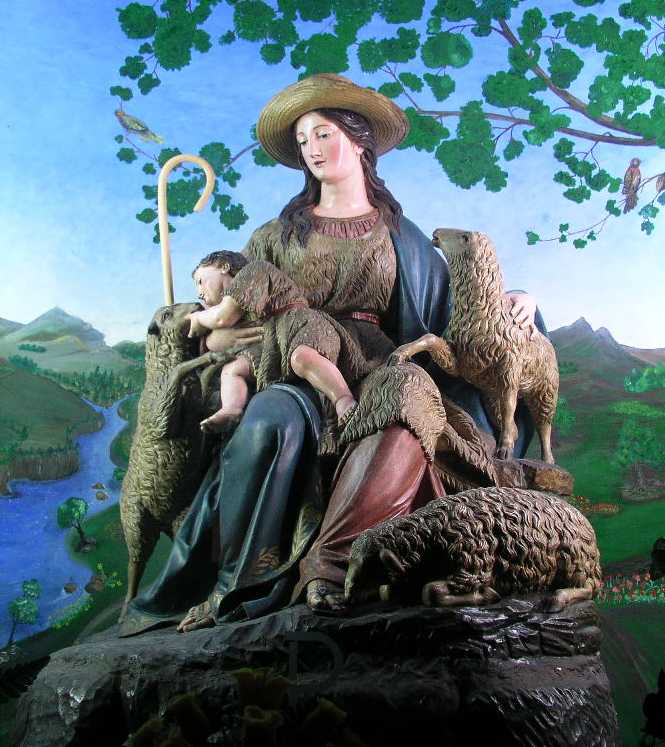
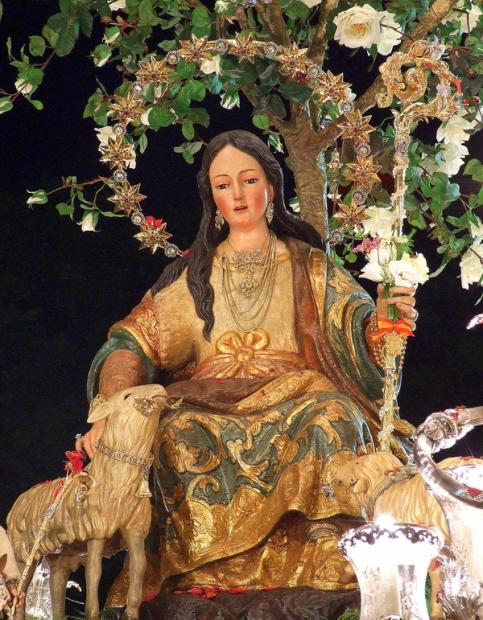
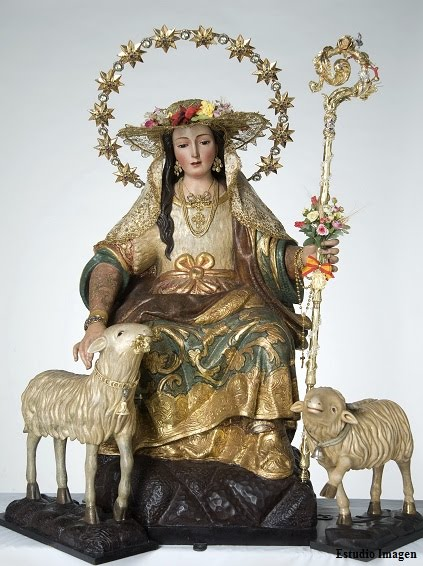
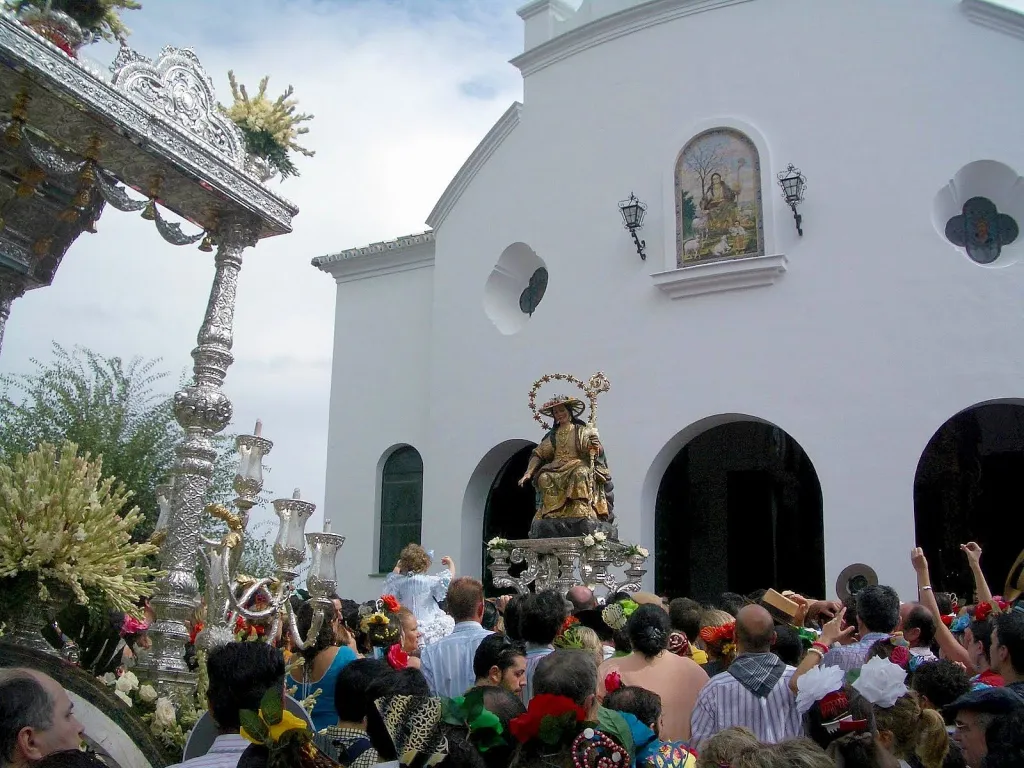
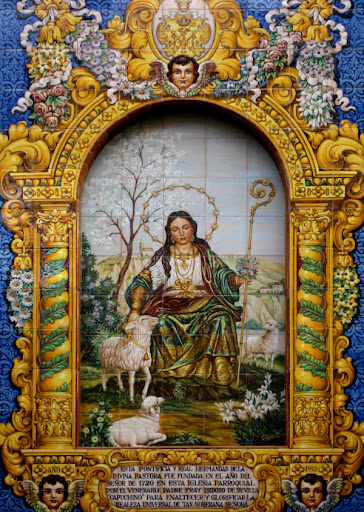
Divina Pastora de las Almas ‘ The Divine Shepherdess of Souls, Cantillana, Sevilla, Andalucía, Spain (1703)
St. Isidore of Seville (560-636) Bishop of Seville, Father and Doctor of the Church, spread devotion to the Divine Shepherdess of Souls. The first image of the Divina Pastora in Cantillana was a banner, attributed to the painter Germán Llorente, carried in Rosary.
In 1800 a yellow fever epidemic ravaged the area,but Cantillana was largely spared, for which people thanked the Divine Shepherdess of Souls. Soon thereafter, the Hermandad de la Divina Pastora was chartered, a Rosary apostolate or brotherhood. The Brotherhood’s processional image is a seated statue, attributed to Francisco Antonio Ruiz Gijón (1653-1705).
For special occasions, of which there are many, she wears a large sombrero. On 31 August, a grand procession fetches the Statue from its Sanctuary into the Town, for celebrations leading up to the fiesta from 8 September. On the last weekend in September, with equal splendour and devotion, the Divine Shepherdess returns to her Shrine. A procession accompanies her canopied float on Saturday. On Sunday, there is Mass and music and then an all-night exposition of the Statue with devotions lasting into Monday morning.
St Anacharius of Auxerre St Aurelia of Macerata St Caian of Tregaian St Ceolfrid St Cleopas St Egelred of Crowland St Ermenfridus of Luxeuil
St Firminus of Amiens St Fymbert St Herculanus the Soldier
Blessed Herman of Reichenau/the Cripple (1013–1054) Benedictine Monk, Confessor, Scholar, Scientist, Writer, Hymnist, Poet, Musical Composer, Teacher. In his own day, the heroic cripple who achieved learning and holiness was called ‘The Wonder of His Age.’. Composer of the “Salve Regina” Hail Holy Queen, “Veni Sancte Spiritus” Come Holy Spirit and “Alma Redemptoris Mater” amongst many others.
Bl Marco Criado St Mewrog St Neomisia of Mecerata St Paphnutius of Alexandria St Principius of Soissons St Sergius of Moscow St Solemnis of Chartres
Martyrs of Damascus: A Christian family of six who were tortured to death in a persecution by Roman authorities. They were: Eugenia, Maximus, Paul, Rufus, Sabinian and Tatta. They were tortured to death in Damascus, Syria, date unknown.
Martyred in the Spanish Civil War: • Blessed Jose María Bengoa Aranguren • Blessed Josep Maria Vidal Segú • Blessed Juan Agustín Codera Marqués • Blessed Julio Esteve Flors • Blessed Pedro Leoz Portillo • Blessed Rafael Pardo Molina • Blessed Tomás Gil de La Cal
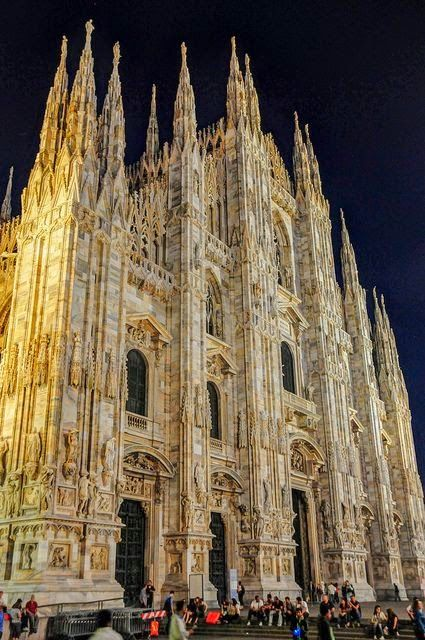
Feast of the Holy Bishops of Milan – a 1st Century Diocese!
Imagine being part of a Diocese in which 36 of your past Bishops are saints and some are also Doctors of the Church and Popes (and others being considered for sanctity)! The latest addition to this illustrious role-call, is Pope Paul VI. Today, the Church in Milan commemorates these holy Bishops. They are: • Blessed Alfredo Ildefonso Schuster • Blessed Andrea Carlo Ferrari • Pope Pius XI • Saint Ambrose of Milan • Saint Ampelius of Milan • Saint Anathalon of Milan • Saint Antoninus of Milan • Saint Auxanus of Milan • Saint Benedict Crispus of Milan • Saint Benignus of Milan • Saint Calimerius of Milan • Saint Castritian of Milan • Saint Charles Borromeo • Saint Datius of Milan • Saint Dionysius of Milan • Saint Eugene of Milan • Saint Eusebius of Milan • Saint Eustorgius II of Milan • Saint Eustorgius of Milan • Saint Gaius of Milan • Saint Galdinus of Milan • Saint Geruntius of Milan • Saint Glycerius of Milan • Saint Honoratus of Milan • Saint John Camillus the Good • Saint Lazarus of Milan • Saint Magnus of Milan • Saint Mansuetus of Milan • Saint Marolus of Milan • Saint Martinian of Milan • Saint Mirocles of Milan • Saint Mona of Milan • Saint Natalis of Milan
• Saint Protasius of Milan • Saint Senator of Milan • Saint Simplician of Milan • Saint Venerius of Milan
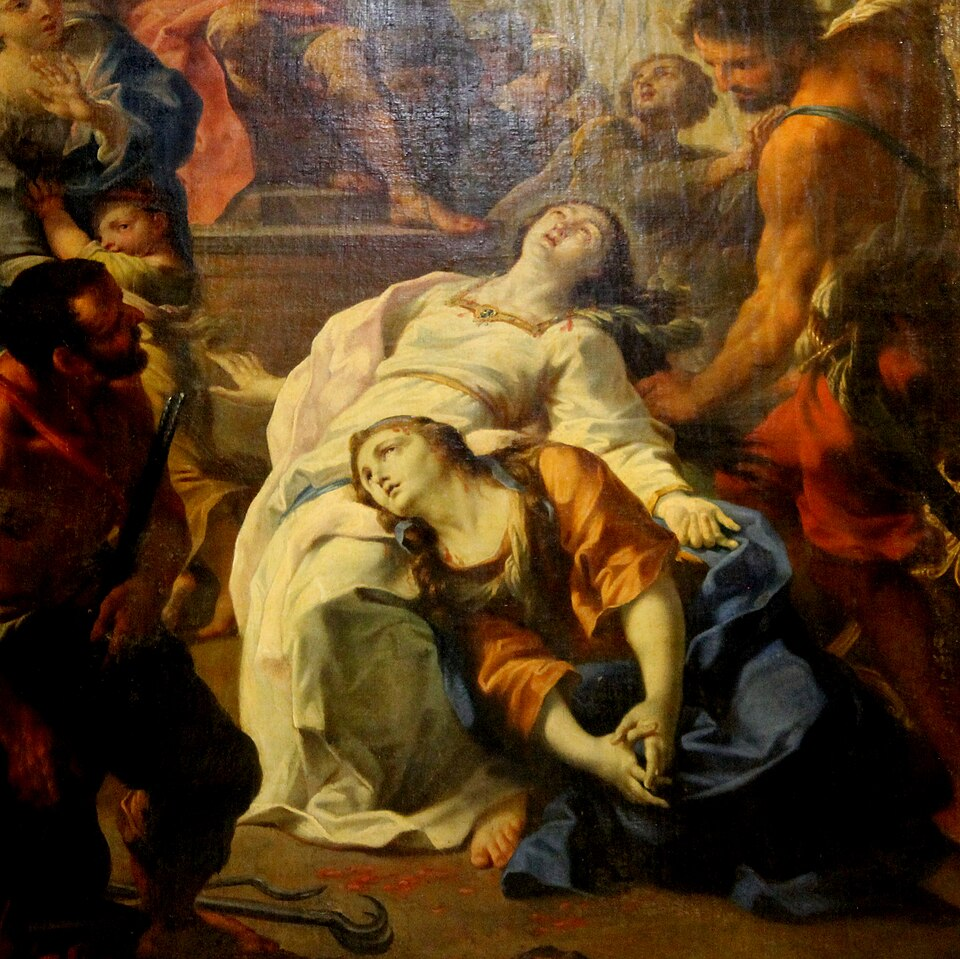
Saints Digna and Emerita of Rome, martyrs, were consecrated virgins in the 3rd century. When dragged to court for the crime of Christianity during the persecutions of Valerian, they simply stood in front of the judge and prayed.
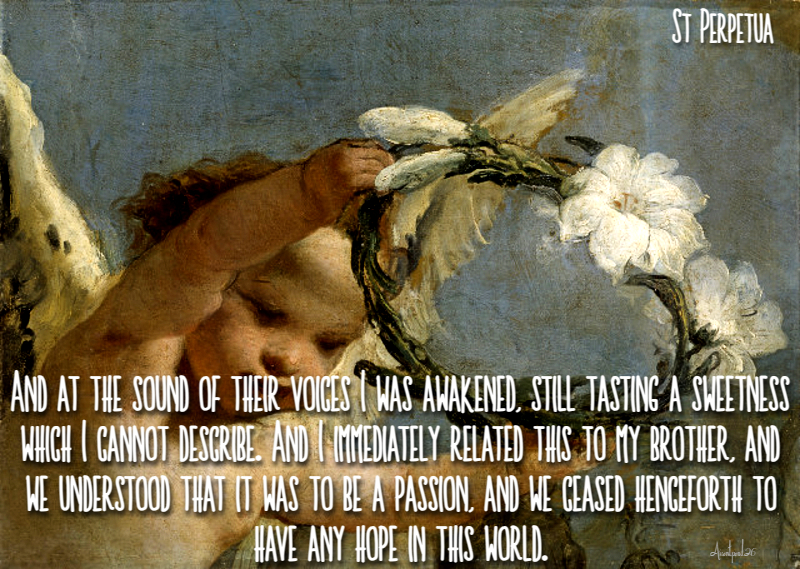
And at the sound of their voices I was awakened, still tasting a sweetness which I cannot describe. And I immediately related this to my brother, and we understood that it was to be a passion, and we ceased henceforth to have any hope in this world.
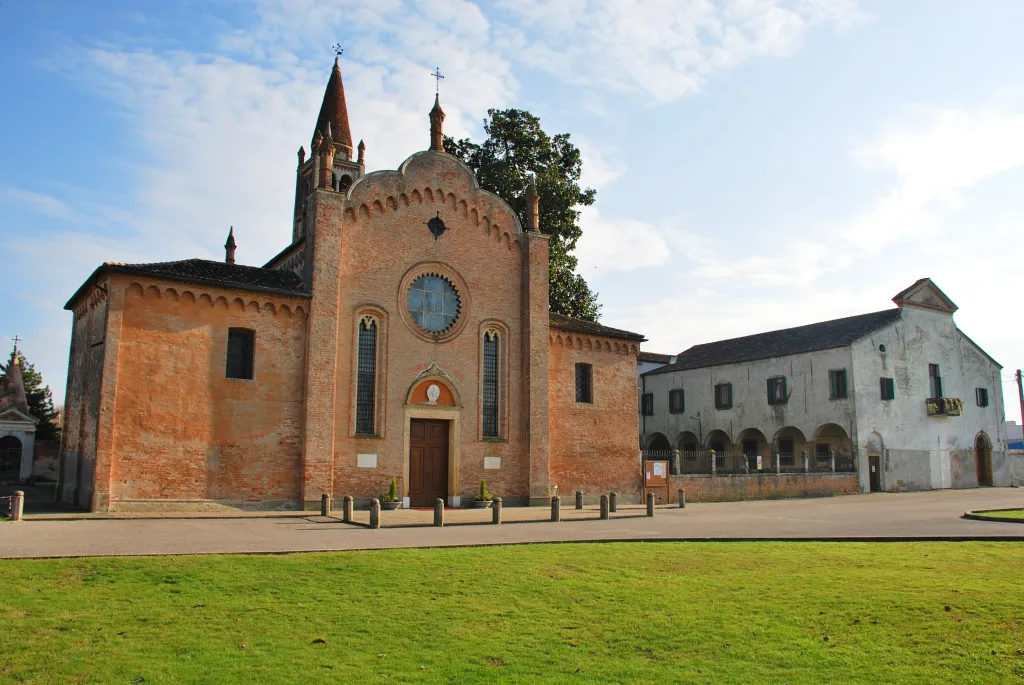
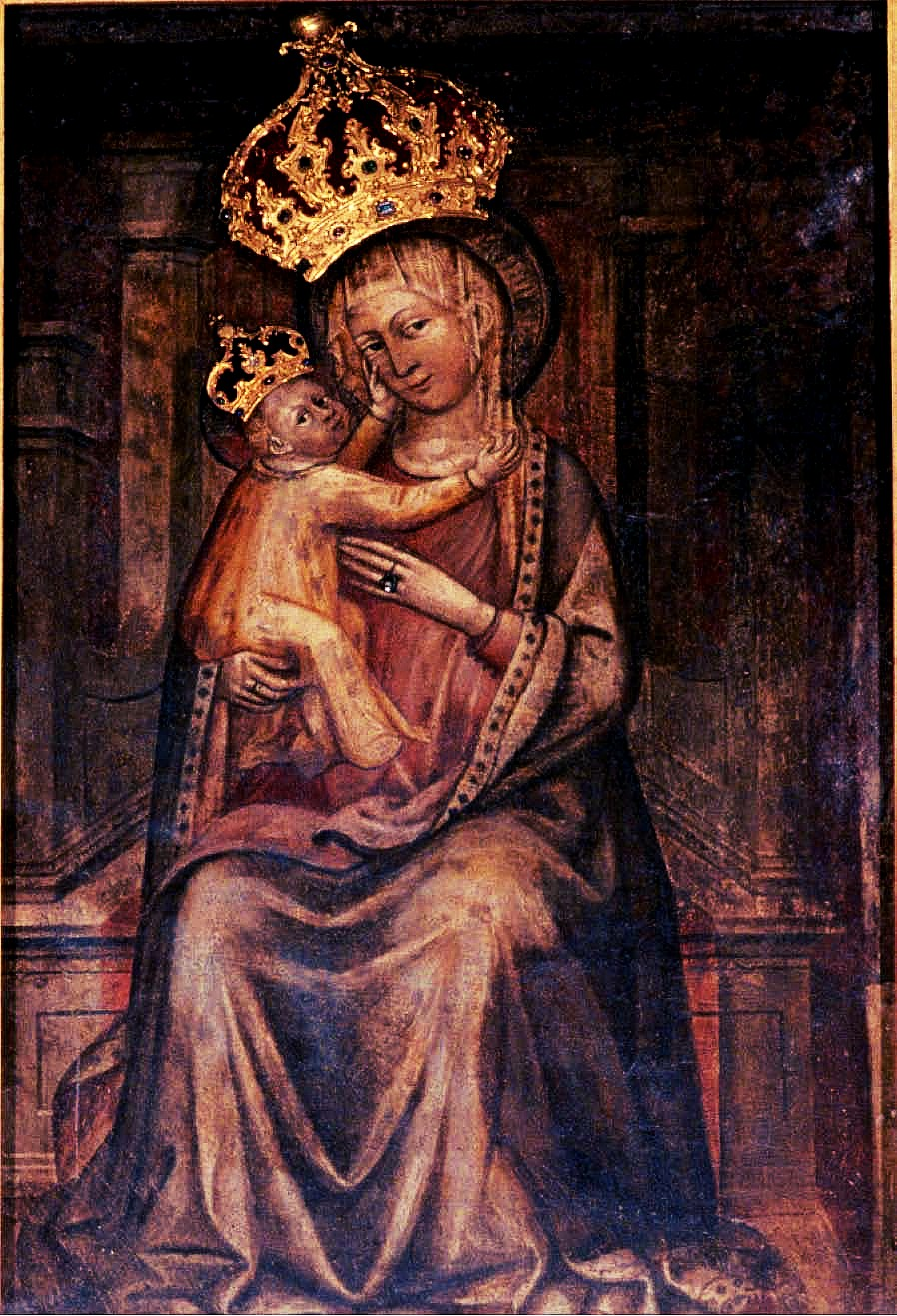
Beata Vergine del Tresto / The Blessed Virgin of Tresto, Ospedaletto Euganeo, Italy (1468) – 21September:
The complex of the Sanctuary of Tresto was built in the place of the miraculous Marian apparition to the boatman Giovanni di Bartolomeo Zielo da Ponso on the night of 21 September 1468, in the locality of Tresto, current fraction of the Municipality of Ospedaletto Euganeo near Padua, from where he was returning. Reaching Este in the evening, the man had stopped to sleep in the boat under the Borini bridge. Around midnight he was awakened by a female voice who called him three times. The man saw two beautiful ladies who enjoined him to follow them.
Strangely finding the drawbridge of the City lowered, they walked towards the countryside where, in the locality of Tresto, one of the two ladies sat on the bank of a ditch and told the other to fetch her a bunch of grapes. Then she asked Giovanni if he knew her. To his negative answer she said that she was Mary, the Mother of God. She then enjoined him not to amend his life and to do his best to have a Church built on that place according to the plan and the measures she illustrated to him.
But Giovanni objected saying that because of his poverty and ignorance, he would not be believed. Then Mary gave him a knife, instructing him to stick it into the ground and then to remove it. Giovanni obeyed and when he removed the blade from the ground, blood gushed. After having blessed him, the Madonna disappeared with her companion. T he next day Giovanni, afraid of not being believed, did not carry out the commands he had received but only confided in three friends. Losing his peace of mind, he eventually went with some people to the site of the apparition, where he tried to stick the knife into the ground, pulling it back wet with blood. Others wanted to try: the incredulous could not move the blade from the ground, while the others withdrew it bloody.
The miraculous event, renewed several times, convinced everyone to work together to erect the required Church. At the halfway point, due to the exceptional drought that had hit the area, there was no water. Everyone then invoked the help of Mary, who caused a spring appear next to the construction site. This spring since then, over the centuries, has been a source of miraculous cures just like the one at Lourdes. The custody of the Church, built in 9 months, was entrusted by the Paduan clergy to a Congregation of Mendicants of whom Giovanni wore the habit in a lay state.
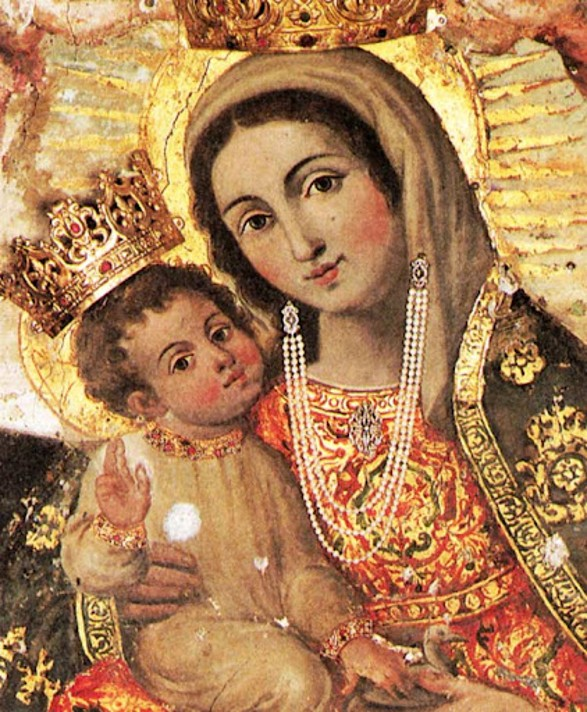
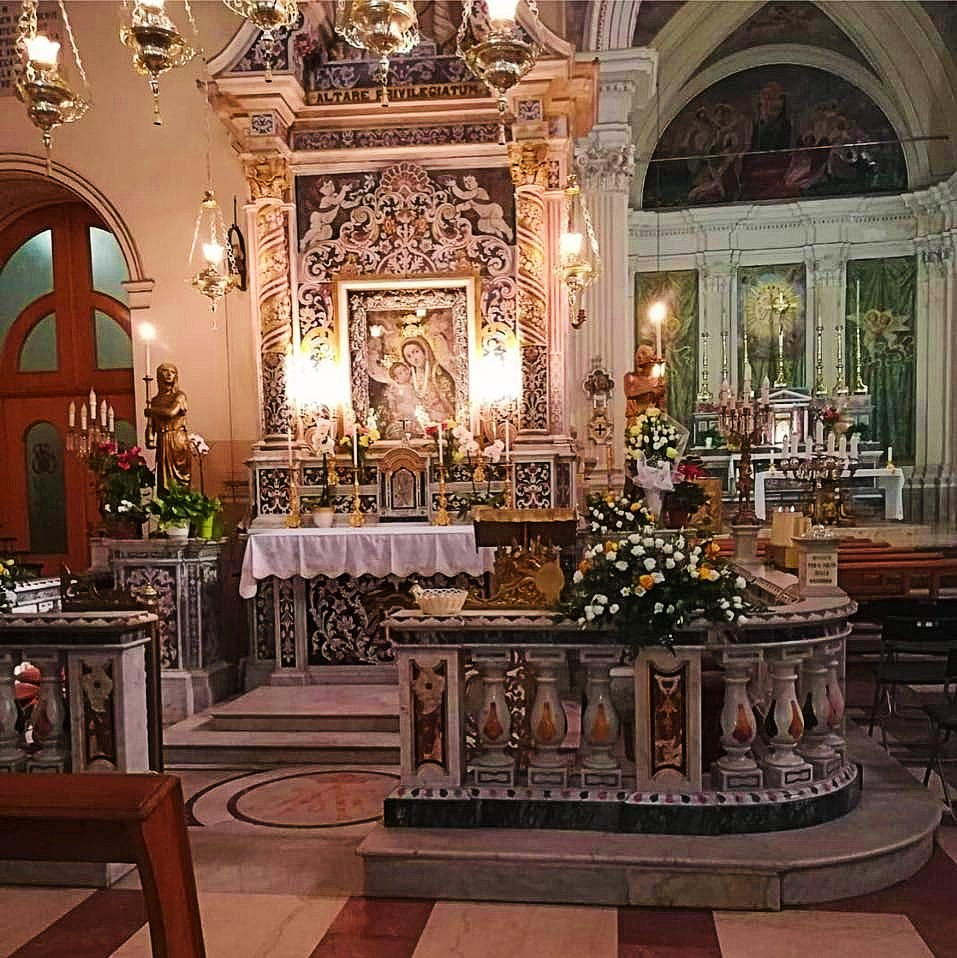
The Sanctuary of Tresto became and remains a site of devotion and pilgrimage with the powerful and healing waters of the miraculous Spring, bringing many sick seeking cures. The Sanctuary preserves several works of art among which the painting on wood depicting the Virgin and Child shown above, stands out, a masterpiece attributed to Jacopo da Montagnana who created it between 1475 and 1480.
St Alexander of the Via Claudia Bl Diego Hompanera París St Eusebius of Phoenicia St Francisco Pastor Garrido St François Jaccard St Gerulph St Herminio García Pampliega St Iphigenia St Isaac of Cyprus Bl Jacinto Martínez Ayuela St Jacques Honoré Chastán St Johannes Ri St Jonah the Prophet Bl José María Azurmendi Mugarza Bl Josep Vila Barri St Landelino of Ettenheim Bl Manuel Torró García Blessed Mark Scalabrini of Modena OP (c 1420-1498) St Maura of Troyes St Meletius of Cyprus Bl Nicolás de Mier Francisco St Pamphilus of Rome St Pierre Philibert Maubant St Tôma Tran Van Thien Bl Vicente Galbis Gironés Bl Vicente Pelufo Orts — Martyrs of Gaza – 3 saints: Three brothers, Eusebius, Nestulus and Zeno, who were seized, dragged through the street, beaten and murdered by a pagan mob celebrating the renunciation of Christianity by Julian the Apostate. They were burned to death in 362 on a village garbage heap in Gaza, Palestine.
Martyred in the Spanish Civil War: • Blessed Diego Hompanera París • Blessed Jacinto Martínez Ayuela • Blessed José María Azurmendi Mugarza • Blessed Josep Vila Barri • Blessed Manuel Torró García • Blessed Nicolás de Mier Francisco • Blessed Vicente Galbis Gironés • Blessed Vicente Pelufo Orts
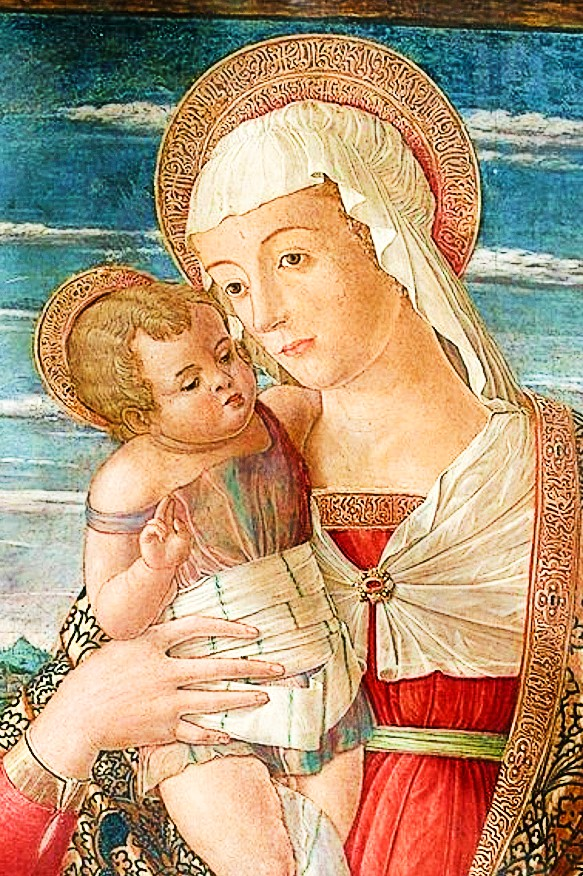
Beata Vergine Maria della Vita / Our Lady of Life (1289) 10 September: Patronage – hospitals in the Diocese of Bologna, Italy.
The cult of the Madonna della Vita is connected with the hospital of the same name founded in 1289 by the Compagnia dei Battuti, present in Bologna since 1261. In the Sanctuary dedicated to her, between 1370 and 1380, Simone dei Crocefissi frescoed the image of the Blessed Virgin, which remained covered during the renovations in the years 1454-1502 and accidentally found among the exultation of the Bolognese people on 10 September 1614. It depicts Mary Mother and Queen as she rests her face to the cheek of Jesus, according to the iconography of the Mother of Tenderness. The close link between the original hospital activity and the devotion of the brothers, was also expressed by the motto inscribed under the double Cross: “Vitam dat nobis crux tua, Christe Jesu” “Your Cross gives us life, Christ Jesus.”
St Peter Martinez St Pulcheria (399-453) Empress, Widow St Salvius of Albi St Sosthenes of Chalcedon St Theodard of Maastricht St Victor of Chalcedon — Martyrs of Bithynia – 3 sister saints: Three young Christian sisters martyred in the persecutions of emperor Maximian and governor Fronto: Menodora, Metrodora, Nymphodora. They were martyred in 306 in Bithynia, Asia Minor (in modern Turkey).
Martyrs of Japan – 205 beati: A unified feast to memorialise 205 missionaries and native Japanese known to have been murdered for their faith between 1617 and 1637.
Martyrs of Sigum – 8 saints: A group of Nicomedian martyrs, condemned for their faith to be worked to death in the marble quarries of Sigum. There were priests, bishops and laity in the group but only a few names have come down to us: Dativus, Felix, Jader, Litteus, Lucius, Nemesian, Polyanus, Victor. They were worked to death c 257 in Sigum.
Martyred in the Spanish Civil War: • Blessed Félix España Ortiz • Blessed Leoncio Arce Urrutia • Blessed Tomàs Cubells Miguel
In the year 981 Saracens came ashore with a raiding party near the Italian town of Rossano. Seeking to surprise the slumbering inhabitants of the town, they snuck up to the walls and silently placed their ladders against them and began to climb. When the first of them reached the top, they were met and repulsed by Our Lady, who appeared attired in purple, while holding in her hand a lighted torch. The sight of the glory of the heavenly Queen so terrified the invaders that they advanced no further and took to flight. Thus, the Muslims were driven from the walls by Our Lady of Rossano, who appeared to save the people of this town located in southern Italy in the province of Calabria.
Rossano, or Roscianum as it was known in Roman times when it was an outpost of the budding empire, was thought to have actually been founded well over a millennium before the time of Christ. The town experienced attacks from the Visigoths, Ostrogoths, and Lombards when the Roman Empire fell in the west, although it was never subjugated by any enemy. The town reached its peak of wealth and influence during the 6th through the 11th century when it was ruled by Byzantium. Located near the Gulf of Taranto, and being close to the water, Rossano was subject to Muslim raids over the following centuries.
The image of Maria Achiropita in Rossano cathedral
St Louis IX (1214-1270) King of France Confessor, King, Reformer, Apostle of Charity.
St Alessandro Dordi St Andreas Gim Gwang-Ok St Aredius of Limoges St Ebbe the Elder St Eusbius of Rome St Genesius of Arles St Genesius of Brescello St Genesius of Rome St Gennadius of Constantinople St Geruntius of Italica St Ginés de la Jara St Gregory of Utrecht St Gurloes of Sainte Croix St Hermes of Eretum St Hunegund of Homblieres St Julian of Syria St Julius of Eretum Bl Ludovicus Baba Bl Ludovicus Sasada Bl Luis Cabrera Sotelo St Maginus St Marcian of Saignon
St Maria Micaela of the Blessed Sacrament (1809-1865) “Mother Sacramento” was a Spanish professed Religious and the Founder of the Handmaids of the Blessed Sacrament, Apostle and martyr of charity. In 1922, Pope Pius XI, proclaimed Mother Sacramento’s heroic virtues. On 25 July 1925, he Beatified her and on 4 March 1934, he Canonised her.
St Menas of Constantinople Bl Miguel Carvalho St Nemesius of Rome St Patricia of Naples Bl Pedro de Calidis Bl Pedro Vázquez St Peregrinus of Rome St Petrus Gim Jeong-Duk St Pontian of Rome
Madonna del Bosco / Our Lady of the Woods, Montemilone, Potenza, Basilicata, Italy(13th Century) – 12 August:
The shrine of the Glorious Virgin was built on the slopes of a hill, about 400 meters above sea level, at the behest of the Basilian Monks, who preferred to raise their convents and shrines on the banks of rivers or on the mountain ranges, with the intention to raise, more and more, the spirit to Heaven. The site is located about 3 kilometers from the Town centre. the church was built on the design of the brothers Luigi and Ruggiero Sarolo , sculptors of Muro Lucano, which began construction in 1187 and finished in 1189 . The sanctuary, to see it from a distance, has something magical with its stand on the slope of the hill.
The statue, which was recently restored, is roughly made but expressive and full of solemn majesty. The Virgin seated on a throne in the chest holds the Divine Child. The peculiar characteristics of the statue and , particularly , the crowns of the Virgin and Child, recall those of the French art of the post- Carolingian period but the clothes and painted decorations are purely Byzantine and Byzantine unmistakably is the posture of the blessing hand of the Child – the two fingers, the index and middle fingers open and the other closed.
St Jeanne de Chantal/Jane Frances de Chantal (1572-1641) Mother, Widow, Foundress of the Congregation of the Visitation with the assistance and guidance of St Francis de Sales, whose great friend and collaborator she was. St Vincent de Paul served as her spiritual director after St Francis de Sales’ death. Her favourite devotions were the Sacred Heart of Jesus and the Immaculate Heart of Mary. St Jane was buried in the Annecy Convent next to St Francis de Sales. Canonised on 16 July 1767 by Pope Clement XIII .(Optional Memorial)
Blessed Pope Innocent XI (1611-1689) Lawyer, Apostle of Charity, Reformer, Administrator. He is known in Budapest as the “Saviour of Hungary” and “Father of the Poor”
St Jambert of Canterbury St Julian of Syria
St Macarius of Syria St Merewenna St Micae Nguyen Huy My St Murtagh of Killala St Photinus of Marmora
St Pedro del Barco (1088-1155) Hermit, Penitent, Canon, Apostle of the needy, he is regarded as the father of the agricultural industry in Avila, Spain.
St Porcarius of Lerins St Simplicio of Vercelli St Ust — Martyrs of Augsburg – 4 saints: The mother, Hilaria, and three friends of of Saint Afra of Augsburg. While visiting the tomb of Saint Afra who were seized by the authorities and martyred when they visited Afra’s tomb – Digna, Eunomia, Euprepia and Hilaria. They were burned alive c 304.
Martyrs of Rome – 5 saints: A group of Christians martyred together in the persecutions of Diocletian. We know little more than their names – Crescentian, Juliana, Largio, Nimmia and Quiriacus. • c.304 in Rome, Italy • buried on the Ostian Way outside Rome.
Saint AgrestiusChromatius the Prefect, martyr and father of Saint Tiburtius. Saint Chromatius was vicar to the city prefect of Rome under Emperor Diocletian. He had an ornate palace in the Parione district. Before becoming Christian, he condemned several martyrs to death during the reign of Emperor Carinus. He was later converted to Christianity by Saint Tranquillinus and baptized by Saint Polycarp. The occasion by which he received such a great grace was Saint Tranquillinus’ testifying to being cured of gout during baptism. Chromatius likewise suffered terribly from gout, so he sent for Polycarp, who baptized him, and he was also healed.
After becoming Christian, he released the Christian prisoners and freed his slaves. He then retired and was succeeded by Fabianus. Chromatius lived quietly on his country estate for many years, welcoming other Christians into his home to protect them from persecution.
Saint Chromatius’ son, Saint Tiburtius, took shelter in his father’s house during the persecution of Diocletian, but was later by an apostate, tortured and beheaded. Chromatius is said to have also been martyred, probably at the same time. However, no details of his martyrdom remain. According to Butler’s Lives of the Saints, Chromatius was mentioned in several ancient martyrologies alongside his son Tiburtius.
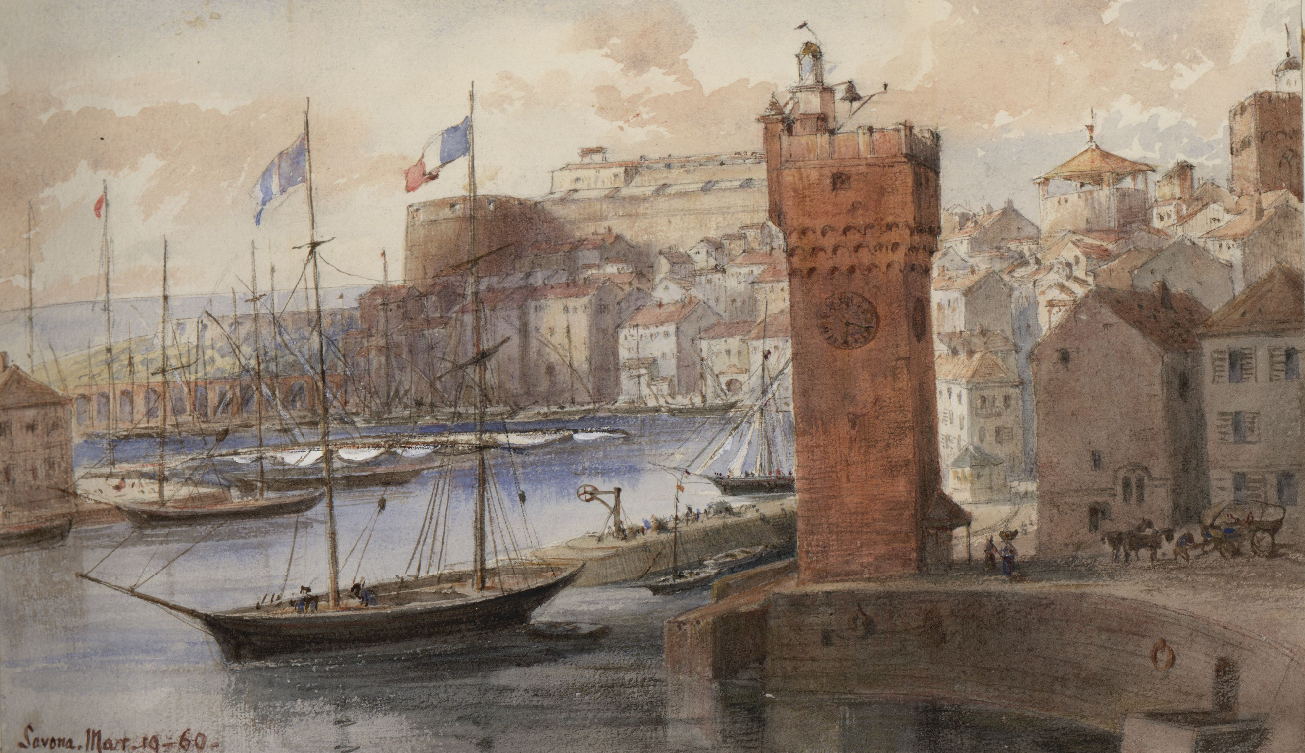
Blessed Octavian of Savona, also known as Ottaviano, was born in 1060 in Quingey, in France. He was the brother of Pope Saint Callistus II. Educated by the Benedictines, he became a monk at the Benedictine community at Saint Peter’s Abbey in Pavia, Italy. His devotion and commitment to the monastic way of life meant he rose through the ranks of the Benedictine order. In 1129, Octavian was appointed the Bishop of Savona, in northern Italy.
Savona, 1860
He was venerated for his deep devotion and strong faith, in only a short time becoming an extremely powerful force for good in the lives of those around him by inspiring them to follow Christ more diligently. He died peacefully in 1132, of natural causes. In recognition of his virtues and the impact he had on the lives of others, Octavian was beatified by Pope Pius VI in 1793, confirming his cultus and recognizing him as a blessed.
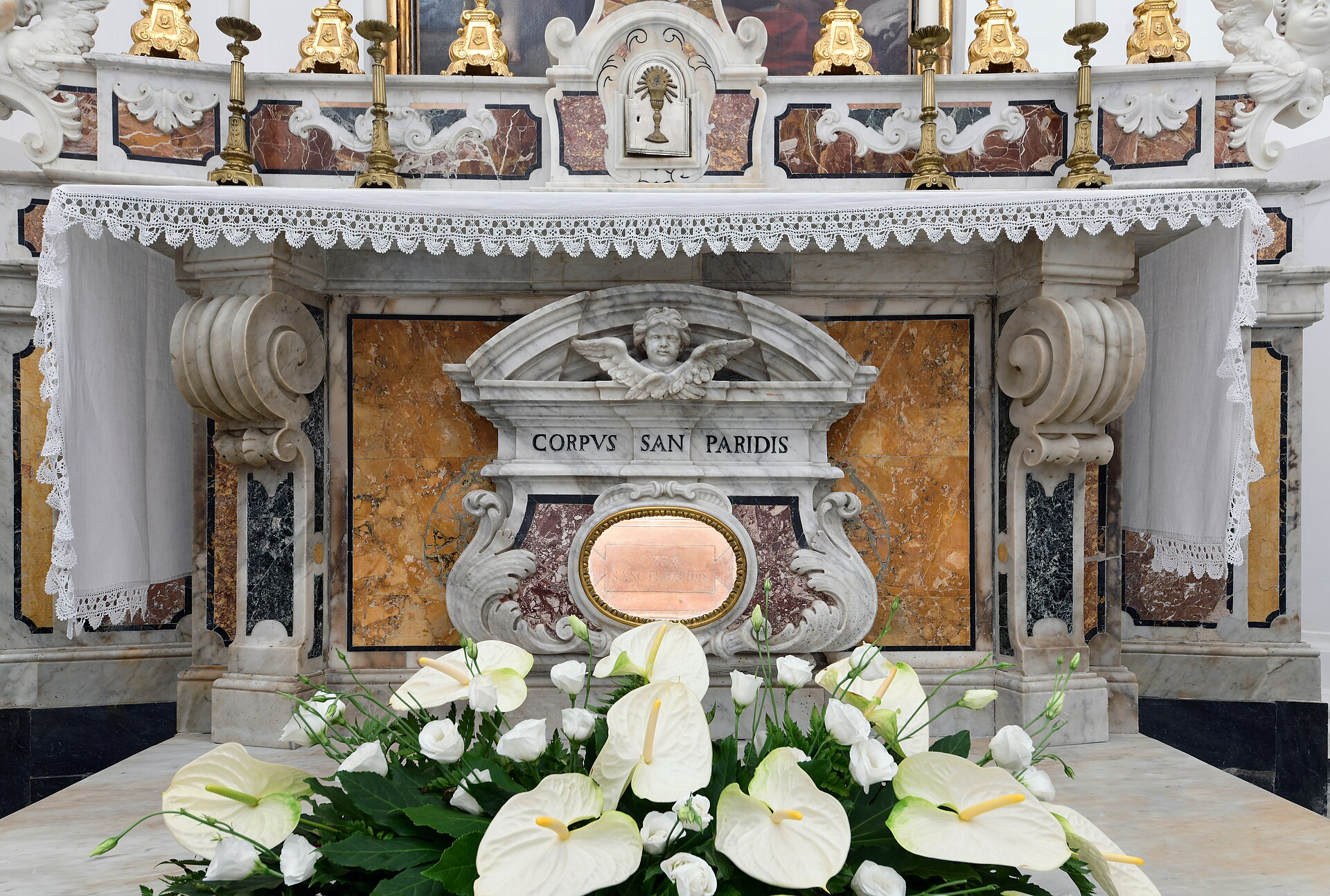
Saint Paris or Paris of Teano or Paride. A dragon slayer. From Athens, Greece, he was the apostle and first bishop of Teano. Upon arriving in town, his eyes were greeted with a procession of the locals, including young women carrying food and votive offerings. When asked by the saint what what they were doing, they replied they were honouring a serpent god living in a cave nearby. Holy indignation filled Saint Paris’ breast, and as soon as the monster emerged from its lair, the saint crushed its head with a stick. Then he dragged it to the river, where it drowned. For this holy deed the inhabitants of the town threw him to the hungry lions in the arena, but the animals refused to touch him. The miracle converted the entire town, and Paris was appointed the much beloved bishop.
Saint Paris’ Tomb
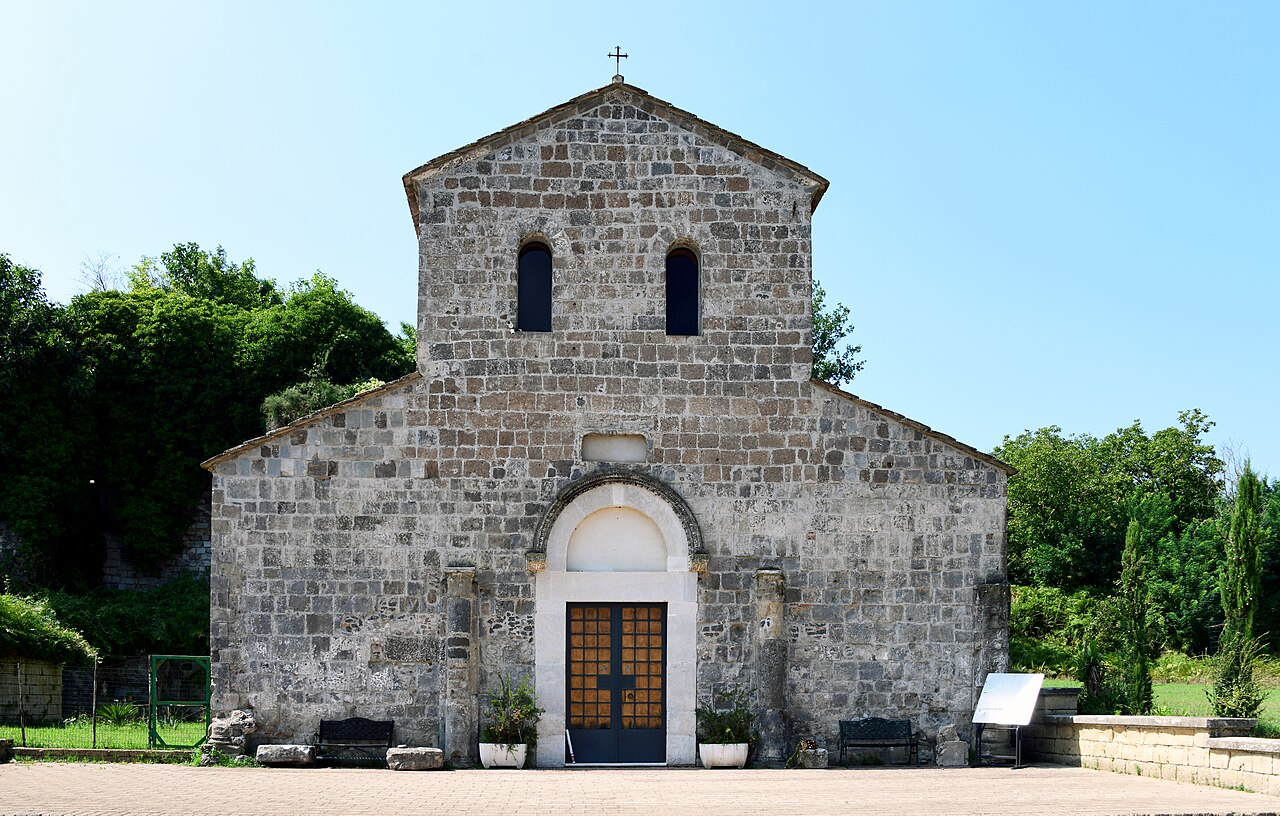
The original cathedral, San Paride ad Fontem (“Saint Paris at the Spring”) was erected at the location of his heroic deed, and dedicated to him. Built over a Roman cistern, it was named ad Fontem because the low ground once had a spring at which Paris preached.
San Paride ad Fontem
Paris died at Teano in 346. His remains lie in a chapel in the later Cathedral of San Clemente.
Madonna dell’Apparizione / Our Lady of the Apparition, Pellestrina, Italy (1716) – 4 August:
The Sanctuary of Madonna dell’Apparizione in Pellestrina was built in July 1717, a year after the appearance of the Madonna on the island. The event of 4 August 1716, the Feast day of St Dominic, was in fact confirmed true by canonical process: – a young boy from Pellestrina met a woman who advised him to tell the parish priest to celebrate Mass and to pray for the salvation of Venice, which, at that time, was besieged by the Turks. The following day, at the same hour of the Apparition, the Venetians won the Battle of Petrovaradin against the Turks.
Throughout the entire year the Sanctuary is a destination for many pilgrims and devotees in search of grace and even today, on 4 August in Pellestrina, the Madonna dell’Apparizione and the victory of Venice is celebrated over three days.
St Dominic de Guzman OP (1170-1221) (Memorial) Founder of the Dominican Order of Preachers – Priest, Founder, Confessor, Teacher, Preacher, Mystic, Miracle-Worker, Apostle of the Holy Rosary. At Dominic’s baptism, Blessed Joan, his Mother, saw a star shining from his chest, which became another of his symbols in art, and led to his patronage of astronomy. The Roman Martyrology states today: “At Bologna, St Dominic, Confessor, Founder of the Order of Friars Preachers, most renowned for sanctity and learning. He preserved his chastity unsullied to the end of his life and by his great merits, raised three persons from the dead. After having repressed heresies by his preaching and instructed many in the religious and Godly life, he rested in peace on the 6th of this month. His Feast, however, is celebrated on this day by decree of Pope Paul IV.
St Hyacinth of Rome St Ia of Persia St Isidore of Besançon St Lua of Limerick St Onofrio of Panaia St Perpetua of Rome St Protasius of Cologne St Rainerio of Split St Sithney (Died c 529) St Tertullinus of Rome Bl William Horne
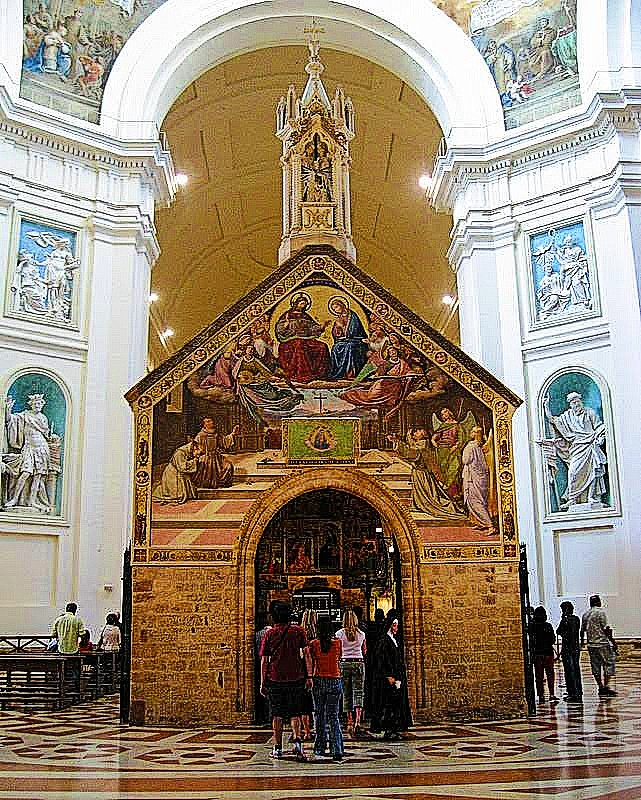
Santa Maria degli Angelis / Our Lady of Angels, Assisi, Italy (13th Century) Feast Day and Portiuncula Indulgence: 2 August
Our Lady of Angels, or of the Portiuncula, is located on the outskirts of the City of Assisi, in Italy. It was a desolate locality and apparently an unsettled one where robbers and the lawlessness flourished, for the Benedictines who had lived at the Monastery felt it was too hazardous to remain there. They abandoned the Monastery, relocating to Mount Subasio, which was a fortified Monastery.
The original chapel is thought to date from the 4th Century and was built by holy hermits who had come from the Valley of Josaphat. It is said that they brought relics of the Blessed Virgin with them to the region when they constructed the chapel.
The history of the feast is inspiring. St Francis of Assisi, in the early days of his conversion, while he was still uncertain as to what path to pursue, was praying earnestly for enlightenment before the Crucifix at the Church of San Damiano, when he heard within himself the command of the Crucified: “Build up my house, for it is nearly falling down.” Taking the words literally, Francis began to restore San Damiano and other dilapidated Churches in and near Assisi. The most famous of these was the Church of Our Lady of the Angels.
Some time after the restoration of this little chapel, an angel told St Francis to come to the church of Our Lady of Angels, or Portiuncula. There he found Our Lord, His Blessed Mother and the Angels waiting for him. Our Lord commended Francis because of his zeal for the salvation of souls and promised to grant him whatever he should ask on behalf of sinners. St Francis asked for this great favour – that all those who came to this church to pray and, truly sorry for their sins, confessed them, should “Obtain in perpetuity a Plenary Indulgence” so that they would have nothing to account for when God called them. This was the great favour he asked, but Our Lord granted it to him through Mary.
When Saint Francis came upon the little, run down and abandoned chapel of Our Lady of Angels, or Santa Maria degli Angelis, in the year 1208, it was almost completely hidden in shrubs and bush. Saint Francis entered the hidden church, which measured only (7 x 4 metres) twenty-two feet by thirteen feet and saw the ancient fresco that had been placed above the main Altar. It was an image of the Assumption of the Blessed Virgin surrounded by Angels. Some say that this is why the chapel was named Our Lady of Angels, although there are also legends that Angels could often be heard singing there.
The place took its name, the Little Portion, or Portiuncula in the native Italian, from the small section of fertile land that was gifted to the Monks to work for their support. It is said that this was the place where Saint Francis first understood his vocation, received visions and was also where the saint desired to live. The Benedictines had lived at that location for hundreds of years but the Benedictine Monks gave this Chapel to Saint Francis upon his request. It was certainly here that the Franciscan Order was founded.
At first Saint Francis wished the convent which he built there to be the principal one of his Order. He assembled the first General Chapter there, where there were five thousand religious. It was also where he yielded up his spirit on 3 October 1226, the twentieth of his conversion and the forty-fourth of his age. The cell in which the poor man of Assisi died can still be seen where it rests against one of the columns of the cupola under the choir bay.
The Roman Martyrology states of St Alphonsus today: “At Nocera-de-Pagani, Saint Alphonsus Maria de Liguori, Bishop of St Agatha of the Goths and Founder of the Congregation of the Most Holy Redeemer (the Redemptorists), distinguished by his zeal for the salvation of souls, by his writings, his preaching and his example.
He was inscribed on the Calendar of the Saints by Pope Gregory XVI in the year 1839, the 52nd after his happy death and , in 1871, was declared Doctor of the Universal Church by Pius IX, according to a decree of the Sacred Congregation of Rites.“
St Eusebius of Vercelli (c 283-371) Bishop (Optional Memorial) Bishop, Confessor, Founder of monasticism in his region of Italy.
St Peter Julian Eymard SSS (1811-1868) – “Apostle of the Eucharist”Priest, Founder of two religious institutes, Congregation of the Blessed Sacrament Fathers and Brothers and the Servants of the Blessed Sacrament.
St Auspicius of Apt St Betharius of Chartres St Centolla of Burgos St Etheldritha of Croyland Bl Frederic Campisani Bl Giustino Maria Russolillo Bl Gundekar of Eichstätt Bl Joanna of Aza Bl John of Rieti St Maximus of Padua St Pedro de Osma
St Peter Faber SJ (1506-1546) the “Second Jesuit” – as co-Founder with St Ignatius. He was the first Priest and theologian of the Order.
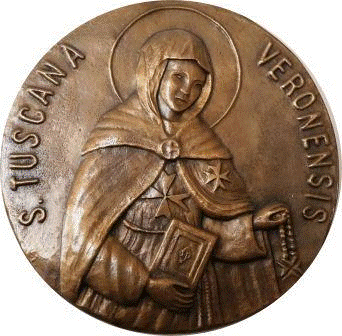
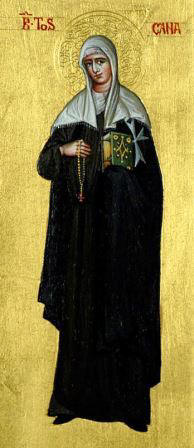
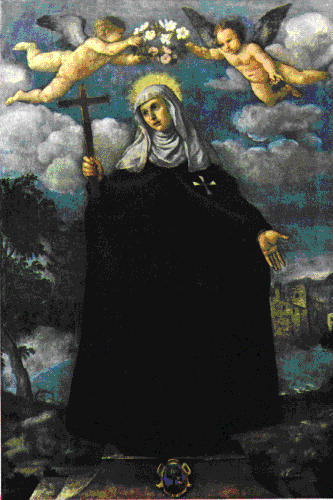
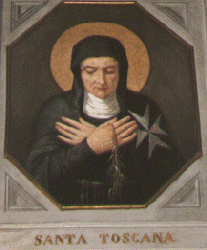
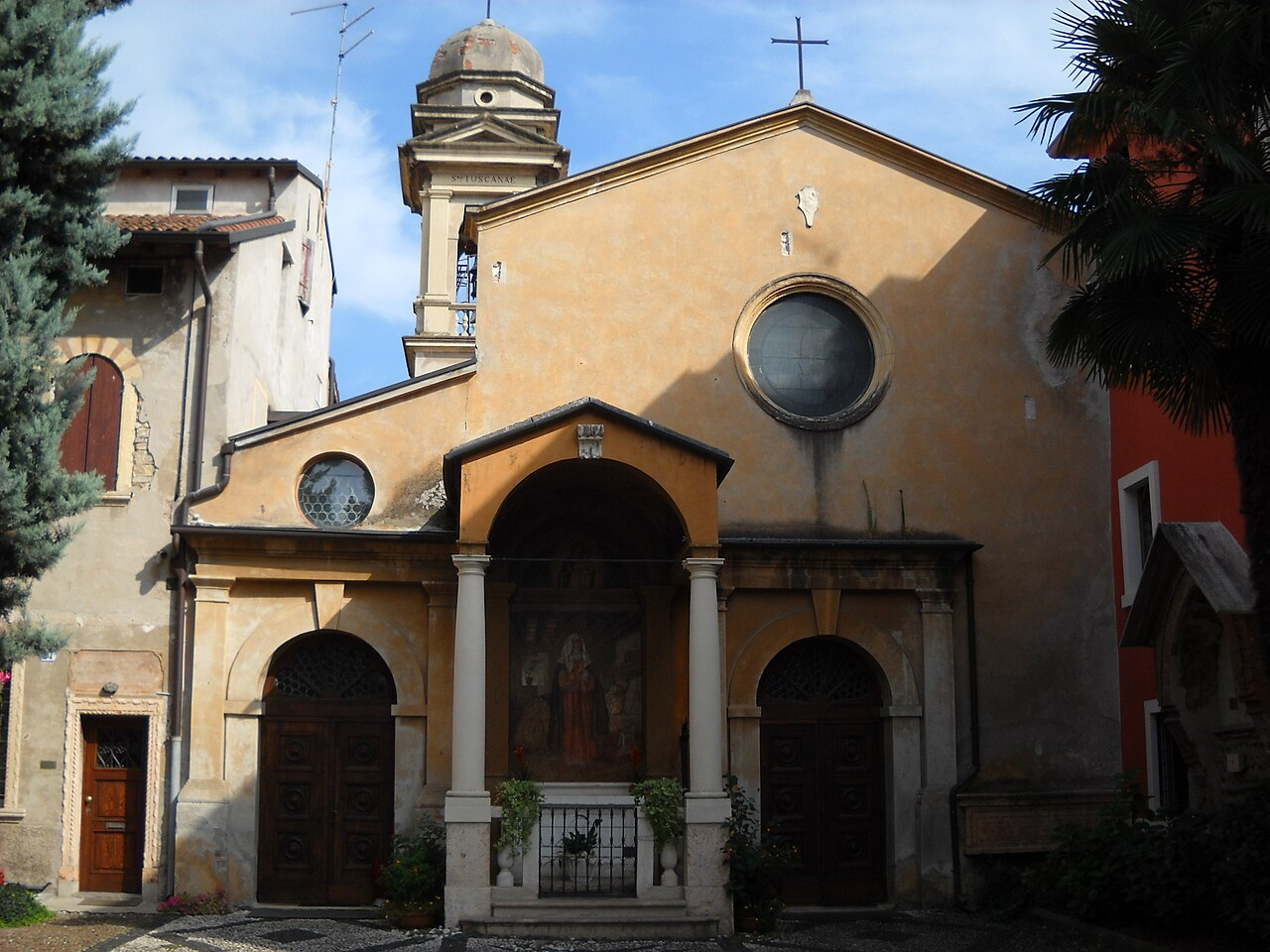
She was born in Zevio, near Verona about 1280. Her parents were noble and good Christians. As a child she had a great devotion for virginity so she refused all her suitors. But her family insisted that she marry. So she married a nobleman, Alberto, of the house of Occhi di Cape. She went to live in Verona with him, where she imitated the women of the Old Testament, as well as Saint Anna and Saint Elizabeth, living in perfect matrimonial chastity and taking care of her husband and her house, and also doing good works. She gave all the alms she could, and each day at three in the afternoon, she went to the Hospital of the Holy Sepulchre belonging to the Order of Saint John of Jerusalem in order to visit the poor and wash their feet, to take care of the sick and wounded, from whose ulcers she pressed the pus without showing disgust or revulsion.
She did not bear any children, and so, when her husband died young, she took a vow of chastity. She mourned he companion and said:
“I thank Thee, o Christ! for having delivered my husband from the perils of the world and from its trials and tribulations, and me from the very heavy burden of marriage. Now, I consecrate myself entirely to Thee; now, I offer Thee myself as Thy servant and Thy slave. I desire no other husband or beloved than Thee; no one, if not Thee, will I take as a second husband. I love no one. Receive me. I shall follow the path which is straight in Thine eyes. In Thee are my hope and my faith. Thou wilt give me strength and aid; then I shall overcome the very cunning enemy. What can man do without Thee? And what would the creature do without its Creator? If Thou art present, I am victorious. If Thou bringest help, I win a glorious triumph.”
With these words she began an angelic life of prayer, penance, and works of mercy. The price of her labour was always divided into three parts: one for the priests, the other for the pilgrims and the poor, and the third for her own livelihood. In spite of the austerity of her life, her beauty only increased. Three young men saw her, admired her, and were impelled by the devil to plot to share her, with or without her consent.
One evening, Toscana was absorbed in contemplation in her room when one of these wicked men entered through the window and approached her. But he had not taken three steps when the Lord permitted the devil to choke him; the fiend fell to the floor, dead. Horrified, the saint did not dare call out, for fear of scandal, and, feeling faint with fear before the lifeless body, she besought God’s counsel: she knelt and began to pray. Meanwhile, the second would-be thief of honour grew impatient outside. He was troubled by the long silence, expecting a great deal of commotion. He followed the path taken by the first. Stunned, he noticed the corpse and the woman prostrated at its feet. Seized by fright, he was rushing headlong toward the window when the Evil One seized him by the collar and strangled him. At the outcry of his companion, the third malefactor rushed in. Before the terrifying spectacle, he fell stone dead.
Although her embarrassment grew, the saint did not lose confidence and awaited the Lord’s decision. It appeared in the guise of the parents of the three young men. Surprised at not seeing them return to tell of their progress, the parents came for news to the young widow’s house. How great was their consternation when received by the saint, they found their offspring lifeless! They threw themselves at her feet and implored her to restore the men to life so that they might do penance for their sin. She consented to do so and began to pray fervidly; the three villains revived, went to confession, said their prayers and died again – an event which excited the greatest astonishment and the most respectful fears in the city.
But this incident convinced Toscana of the difficulty a young woman experiences when living alone in the world. She decided to enter the Order of Saint John of Jerusalem to which she had already rendered so many services. She obtained a very solitary little cell in the garden of the convent of the Holy Sepulchre, in Verona. She took on the habit of the sisters and continued with renewed ardour her noble work.
She begged for her food and ate only bread and water, never eating to satiety. On Sundays, she made a feast of vegetables mixed with a small amount of oil. Entirely free now, she visited the churches and the holy places of Verona on solemn occasions in order to earn indulgences. But not to be seen. – she went there as soon as dawn appeared in the sky, when there was still no one in the streets. One day, as she went toward the church of the Holy Apostles, she met some thieves who took her poor cloak. She relinquished it to them gladly and ran away. But they wishing to divide their booty, drew their swords; immediately their hands withered. Stunned and grieving, they ran after the saint, returned her cloak, and implored her forgiveness. She consented to pray for them, made the sign of the cross on the hands struck by the wrath of God, and they became whole again as before. But she did not allow these wretches to leave without delivering to them a sermon to exhort them to change their lives and do penance.
She was seized by a serious attack of fever, and an angel came to warn her that her end was near. She felt such deep joy at the news that she gave thanks profusely. Then she had herself laid on the bare ground and remained there in the greatest spirit of mortification. She asked to be buried in the gateway of the Hospital, in the road, without honours. Finally she died, saying:
“I have chosen to be scorned in the house of God, rather than to live under the tents of sinners”.
As she was closing her eyes there was heard, like an echo, the sound of angels answering her in Latin:
Veni, famula Christi, Toscana, accipe coronam quam tibi Dominus praeparavit in aeternum.
Come bride of Christ, accept the crown ; which the Lord has prepared for you.
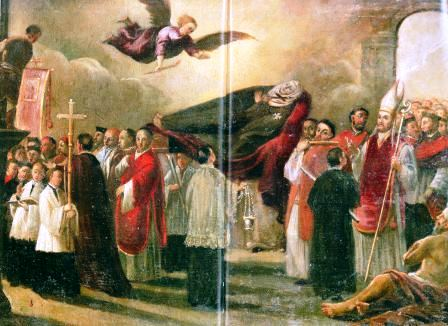
Santa Toscana – In 1342, the Knights Hospitaller acquired the relics of Santa Toscana which were placed in an ark atop the main altar.
“Transfer of the body of Saint Toscana”, oil painting on canvas, end of the 17th century, at the seat of the Delegation of the Order of Malta in Verona








You must be logged in to post a comment.