Quote/s of the Day – 18 August – “The Month of the Immaculate Heart of Mary” – Within the Octave of the Assumption
“No matter how sinful one may have been, if he has devotion to Mary, it is impossible that he be lost.”
St Hilary of Poitiers
“The very fact that God has elected her, proves, that none was ever holier than Mary; if any stain had disfigured her soul, if any other virgin had been purer and holier, God would have selected her and rejected Mary.”
St Jacob of Sarug
At the mention of this name [the Blessed Virgin Mary], the Angels rejoice and the devils tremble. Through this invocation, sinners obtain grace and pardon.
St Peter Canisius SJ
Let us run to Mary and, as her little children, cast ourselves into her arms with a perfect confidence.
St Francis de Sales
It is Mary alone to whom God has given the keys of the cellars of divine love, and the power to enter into the most sublime and secret ways of perfection, and the power likewise to make others enter in there also. It is Mary alone who has given to the miserable children of Eve, the faithless, the entry into the terrestrial paradise, that they may walk there agreeably with God, hide themselves there securely against their enemies, and feed themselves there deliciously, without any more fear of death, on the fruit of the trees of life and of the knowledge of good and evil, and drink in long draughts the heavenly waters of that fair fountain, which gushes forth there with abundance; or rather she is herself that terrestrial paradise, that virgin and blessed earth, from which Adam and Eve, the sinners, have been driven, and she gives no entry there except to those whom it is her pleasure to make Saints.
St Louis de Montfort
St. Bonaventure says that Mary sends the archangel Michael, with all the angels, to the defence of her dying servants, to protect them from the assaults of evil spirits, and to receive the souls of all those who have especially and constantly recommended themselves to her.
Among the many beautiful qualities attributed by the Holy Ghost to the Blessed Virgin Mary, one stands out preeminently. It is contained in these words of the eighty-sixth psalm, which Holy Church and her Doctors apply to the Mother of God: “Glorious things are said of thee, O city of God.” Mary is indeed the great and glorious city of God, the holy city, the city of Jerusalem, the city of peace, the royal city, “the city of the great King.” The King of Kings built this city with His own hands; He exempted her entirely from the infamous tribute of sin; He honored her with countless great and extraordinary privileges; He enriched her with inestimable gifts and treasures and He established His first and most glorious abode within her Heart. In her He chose to reveal the rarest marvels of His power and royal magnificence.
Now, if Mary is the palace of the King of Kings, her heart must be the King’s imperial throne. This magnificent throne is perfectly represented by the throne of King Solomon, as described in the Book of Kings. We read there that this great king erected a throne of ivory in his house on Lebanus and covered it with brilliant gold. Six steps led up to this throne; the top of it was rounded at the back, and there were two hands on either side to hold the seat, with two large lions standing near, while small lions stood upon either side of the six steps. Never was any similar throne made in any kingdom of the world.
The throne and the couch of Solomon symbolize the same representation, namely the holy Heart of the Queen of the world, the couch representing the Heart in contemplation, the litter describing in it action. Mary’s Heart is at once the throne and the bed of the true Solomon, Jesus Christ, Our Lord. It is the bed on which He rests in the sweetness and calm of contemplation. It is the litter in which love and charity that set Him on this throne, carry Him from place to place, that He may reign everywhere for the glory of God and the salvation of souls.
St. Gregory of Nyssa tells us that this throne of Solomon is “a figure of the heart of every faithful Christian,” and a famous Doctor says that “the heart of the true Christian is the litter of the Son of God, because it goes where the one it bears wills that it should go, and never elsewhere.” This was fulfilled more perfectly in the Heart of the holy Virgin than in the hearts of even the holiest of creatures. Her virginal Heart never experienced inclinations or affections other than those it derived from the Master who held absolute sway over it.
Solomon’s throne was made of incorruptible wood of the cedar of Libanus, to show that the Immaculate Heart of the Mother of God was not only preserved from the corruption of sin, but also that its superabundance of heavenly graces rendered it incapable of sin by grace, as God is incapable of sin by nature.
The four columns of Solomon’s throne are the four cardinal virtues, which sustain the throne of the true Solomon, namely justice, prudence, fortitude and temperance. The pillars made of silver denote the candor of innocence preserved in the heart that possesses them. This symbol was eminently verified in the most pure and innocent Heart of the Queen of all virtues.
The gold seat represents free-will transformed by love into the adorable love of God. It Every human will attaining this state of submission becomes the seat of the throne of Jesus, and in the will of His Blessed Mother this was accomplished in a most perfect manner. Therefore St. Peter Damian calls her “the golden seat on which, after the tumult and disorder occasioned by the sins of angels and men, He sought and found His rest.” The “going up” or back of purple represents ardent desire for the glory of God, for the sanctification of His name and the accomplishment of His will on earth as it is accomplished in heaven. It symbolizes the divine love that constantly urged the zealous Heart of the Mother of Love upward and onward to do and suffer great things towards the fulfillment of the designs of the Creator.
Finally, our beloved Christ prefigured by Solomon, filled His throne with Charity for the daughters of Jerusalem, that is, for all souls, especially for each Christian soul, and more particularly still for the beloved children of His Blessed Mother’s Heart. These are the humble, pure and charitable souls who entertain a singular devotion towards her maternal Heart. Yes, our lovable Solomon filled the virginal Heart with charity towards us, for He did everything for us. In like manner, if He willed to have a true Mother on earth, it was for our sake. If He made her so good, so wise, so powerful, so full of incomparable privileges and extraordinary powers, it was that she might possess the knowledge, power and desire to protect and assist us in all our necessities.
He gave her a Heart filled with charity, benignity, zeal, care and vigilance towards us, that we might profit thereby, if we but invoke it in our needs with utmost confidence. Our Lord grants with extraordinary goodness the requests presented by those who render to Him, in the Heart of His most honored Mother, the homage He desires to receive there. He wishes to be praised and glorified in the hearts and even in the bodies of His saints and “Glorify and bear God in your body.” How much more, then,should we not honor and magnify Our Saviour in the Heart of His Blessed Mother?
Quote/s of the Day – 17 August – “Month of the Immaculate Heart” – Readings: Ps 36:30-31, Ps 36:1, Sir 31:8-11, Luke 12:35-40
Happy the man found without fault, who turns not aside after gain, nor puts his trust in money nor in treasures! Who is he, that we may praise him? For he has done wonders in his life.
Sir 31:8-11
Place your mind before the mirror of eternity! Place your soul in the brilliance of glory! Place your heart in the figure of the divine substance! And transform your whole being into the image of the Godhead itself through contemplation! So that you too may feel what His friends feel as they taste the hidden sweetness which God Himself has reserved from the beginning for those who love Him.
St Clare
For those who cross by the Bridge, being still in the darkness of the body, find light, and, being mortal, find immortal life, tasting, through love, the light of Eternal Truth which promises refreshment to him who wearies himself for Me, who am grateful and just, and render to every man according as he deserves. Wherefore every good deed is rewarded, and every fault is punished. The tongue would not be sufficient to relate the delight felt by him who goes on this road, for, even in this life, he tastes and participates in that good which has been prepared for him in eternal life. He, therefore, is a fool indeed, who despises so great a good, and chooses rather to receive in this life, the earnest money of Hell, walking by the lower road with great toil, and without any refreshment or advantage.
The Dialogue of St Catherine of Siena
Yet they were consoled by seeing that the saint often turned his eyes, as if seeking help, towards a devout image of Mary, for they remembered that he had often said in life, that in the hour of his death, Mary must be his refuge. It finally pleased God to terminate this struggle by a glorious victory, for the agitation of his body ceased, his countenance gained its natural shape and color, and fixing his eyes tranquilly on that image, he devoutly bowed his head to Mary, who, it is believed, then appeared to him, as if to thank her, and quietly breathed forth in her arms his blessed soul, with heavenly peace depicted on his countenance. At the same time a Capuchin nun, in her agony, turned to the religious who were with her and said: “Say an Ave Maria, for a saint has just died.”
St Alphonsus Liguori
Truly beyond the power of words is the sweetness of contemplation You give to those who love You.
Thomas a Kempis
It would be unwise were we to attempt to describe the gratification it will be to the ear to hear the canticles of the Angels, and the soft music of their harps. The nine choirs of Angels will sing the praise of God, and the blessed will join them not only in heart, for they will mingle their voices also in the sweet harmony. Thus the powers of both soul and body will be exercised, and the praises of God will ascend in melodious hymns and celestial songs. For if we mortals are impelled by fervent love and heartfelt joy to lift our voice in song, how much more will the holy Angels and blessed Saints do so, who are all aflame with the love of God, and filled with joy unspeakable. Their hymns of praise will resound without ceasing through the courts of Heaven.
Nuestra Señora de las Gracias de Torcoroma / Our Lady of Graces of Torcoroma, Ocaña, Norte de Santander, Colombia (1711) – 16 August:
The holy apparition took place on 16 August, 1711. At that time, there lived in the Mountains of Torcoroma in the Ocaña region, a peasant family dedicated mainly to the cultivation of cane with which they made sweets. The family consisted of Don Cristóbal Melo, his wife Pascuala Rodríguez and their two children, José and Felipe. According to their contemporaries, the Melo-Rodríguez were people of good morals and a life consecrated to the Christian Faith.
One morning Don Cristóbal sent his children to cut down a tree, that had wood good enough to carve the box or “canoe” with which he made his sweets. The young boys went into the mountain and as they entered the thick of the forest, they marked the oaks that were suitable for their purpose. Until they found one that was a “wonder” and despite the fact that it was summer, it had fragrant red flowers. Such was the perfume that it could be perceived from afar.
Excited about the great find, they proceeded to cut down the tree. Given its complicated location, when cutting its base, the main part fell into a ravine. It was dusk and the boys resolved to return home and discuss the event with their father. The next day they restarted their search for the appropriate tree, but not finding one that suited their purposes, they determined to use the one already felled and went to the place where it had fallen.
They began to carve the “canoe” right there and shortly after taking the first ax blows, a light so intense came out that it reached out and illumined the lush forest. When the father realised what was lying in the middle of the splinters of the trunk, he, without thinking for a second, put his hands where his sons were preparing to take the next blow, stopping them suddenly. The father and his children were astonished when they saw, in the heart of the trunk, the image of the Virgin, with her hands together and placed on her chest, with the action of her face “as if directed to heaven,” shining with a great light and with an intense and aromatic perfume.
The news of the holy apparition quickly spread through the Ocaña region. Upon reaching the ears of the Priest and Vicar of the City, Fr.Diego Gabino Quintero, he asked Cristóbal Melo to present himself with the image of the Virgin. After carefully examining it and having listened to numerous testimonies that affirmed the divinity of the image, the Priest authorised its private worship.
In 1716 Fray Antonio Monroy y Meneses, Bishop of Santa Marta, came on a pastoral visit and after a rigorous analysis of the image that appeared and the testimony of the witnesses, he granted permission for a Chapel to be erected on the site of the appearance and ordered that the image be brought to the city to place it on the Altar of the main Church, today the Cathedral of Santa Ana. The image would rest in the Church for several years while awaiting the Chapel, which was only built in 1882 thanks to the financing of Bogota parishioners. Finally, at the beginning of the 20th century, the image would be definitively transferred to the Sanctuary, where it is visited not only by its faithful but by thousands of pilgrims every year.
St Stephen of Hungary (c 975- 1038) King of Hungary (Optional Memorial) “Apostle of Hungary,” King and Confessor, Marian devotee, Apostle of Charity, Evangeliser and Missionary.
Blessed Angelo Agostini Mazzinghi O.Carm. (1385-1438) was an Italian Priest and a professed member of the Carmelite Order. He was a noted preacher, prior and reformer, teacher of theology and was known for his pious devotion to the Holy Eucharist, the Blessed Virgin Mary and the Carmelite Rule of Life and to the profession of the Gospel.
St Armel of Brittany (Died c 570) Priest, Monk, Missionary, Confessor, Evangeliser, spiritual adviser, Miracle-worker
St Arsacius of Nicomedia St Frambaldo Bl Iacobus Bunzo Gengoro Bl Jean-Baptiste Menestrel Bl John of Saint Martha Bl Laurence Loricatus Bl Magdalena Kiyota Bokusai Bl Maria Gengoro Bl Ralph de la Futaye
St Roch (1295-1327) “Pilgrim,” Confessor, Hermit, Apostle of the Sick, Miracle Worker.
St Serena Bl Simon Kiyota Bokusai Bl Thomas Gengoro St Titus the Deacon St Ugolina of Vercelli (c 1239-c 1300) Anchorite, Recluse — Martyrs of Palestine – 33 saints: Thirty-three Christians martyred in Palestine; they are commemorated in old martyrologies, but the date and exact location have been lost.
Martyred in the Spanish Civil War: Bl Amadeu Monje Altés Bl Antonio María Rodríguez Blanco Bl José María Sanchís Mompó Bl Laurentí Basil Matas Bl Plácido García Gilabert
Our Morning Offering – 16 August – “Month of the Immaculate Heart”
Mary, our Queen and Mother of Mercy By St Anthony of Padua (1195-1231) Evangelical Doctor of the Church
Mary, our Queen, Holy Mother of God, we beg you to hear our prayer. Make our hearts overflow with Divine grace and resplendent with heavenly wisdom. Render them strong with your might and rich in virtue. Pour down upon us the gift of mercy so that we may obtain the pardon of our sins. Help us to live in such a way as to merit the glory and bliss of heaven. May this be granted us, by your Son Jesus Who has exalted you above the Angels, has crowned you as Queen, and has seated you with Himself forever, on his refulgent throne. Amen.
The mysterious harp of King David, mentioned in several passages of Sacred Scripture, is another symbolic picture of the Holy Heart of Mary. It is an excellent representation because her pure Heart was indeed the harp of the true David, namely Our Lord Jesus Christ. He fashioned it with His own hands; He alone always possessed it. No other fingers but His ever evoked its melodies, because her virginal Heart never vibrated with sentiments, affections or impulses other than those inspired by the Holy Ghost.
The strings of this royal harp are the virtues of Mary’s Heart, especially her faith, hope, love of God, charity towards her neighbor, religion, humility, purity, obedience, patience, mercy, hatred of sin, love of the cross. On these twelve strings the Divine Spirit played with wondrous harmony melodious canticles of love which so greatly charmed the ears of the Eternal Father that He forgot His anger against sinners, He laid aside the thunderbolts wherewith He vowed to destroy mankind and gave His own Son to be the Saviour of humanity.
Sacred Scripture tells us that King David employed his harp specially on four great occasions and we see Jesus, the Son of David, using His mystical harp to accomplish four infinitely greater achievements. In the first instance, David, the man of God, by the mere sound of his harp, put to flight the evil spirit which possessed Saul. Similarly, the new David used the Heart of His loving Mother as a sublime harp and consequently freed by its divine music the human race that grovelled under the evil dominion of Satan.
The prophet David also employed His harp to sing many psalms and canticles to the honor and glory of God. Our true David, likewise, sang with His instrument five types of canticles in praise of the Most Blessed Trinity. The first were canticles of love, the strongest, purest, most perfect love that ever was or shall be. The second were canticles of praise and thanksgiving for the benefits of divine goodness on behalf of all creatures, for the Blessed Virgin Mary did not limit herself to thanking God for the infinite favors she received from His hand, but she praised Him unceasingly for the graces He pours on all created beings. The third were canticles of sorrow, of anguish and bereavement at the time of the sufferings and death of her beloved Son. The fourth were canticles of triumph for all the victories won by herself as general of the great King’s armies over His enemies and, we may truly say, over Himself, having so often disarmed divine vengeance when it stood ready to destroy the world and punish its innumerable crimes. The fifth were canticles of prophecy to announce the great designs of God for the future, many of which were foretold by the Queen of Prophets in the wonderful canticle she composed when greeting her cousin St. Elizabeth.
The third purpose for which King David used his harp was to praise God and especially to praise Him with joy. In like manner, Christ the second David, not only attuned His holy Mother’s Heart to praise and bless His divine Majesty in every way, but He also induced Mary to seek her joy and bliss exclusively in His praises, and in all the acts she performed for His glory and in His service.
King David chose as the fourth function of his harp to excite and attract other men to the praise of God, with hearts full of joy and gladness like his own. So too Christ the King attracts innumerable souls to the love and praise of His heavenly Father by the sweet sound of His precious harp, that is, by means of the blessed Heart of His glorious Mother. The extraordinary virtues of her vibrant Heart resound so loudly and harmoniously throughout the entire Christian Church that numberless persons of all ranks and conditions find themselves urged to imitate the perfections which adorn it, thus beginning to carry out on earth what the angels and saints achieve in Heaven. In other words, they place their entire contentment and felicity in all that concerns the sovereign Monarch in Heaven and earth.
One Minute Reflection – 15 August – Solemnity of the Assumption of the Blessed Virgin Mary into Heaven, Readings: Apoc 12:1, Ps 97:1, Judith 13:22-25; 13:15; 13:10, Luke 1:41-50
“For behold, henceforth, all generations shall call me blessed.”
Luke 1:48
REFLECTION – If Saint Mary Magdalene – who had been a sinner and from whom the Lord had cast out seven demons – merited to be glorified by him to the extent that her praise abides forever among the assembly of the saints, who can measure the extent to which “the upright rejoice and dance for joy in the presence of the Lord” with regard to holy Mary, who knew not man? If the apostle Peter – who was not only unable to watch for one hour with Christ but who even went so far as to deny him – afterwards won such favor that the keys of the Kingdom of heaven were entrusted to him, of what praises is holy Mary not worthy, who bore the king of angels himself in her womb, he whom the heavens cannot contain? If Saul, who “breathed murderous threats against the disciples of the Lord” was the object of such mercy that he was “caught up to the third heaven, whether in the body or out of the body”, it is not surprising that the holy Mother of God – who stayed beside her son through all the trials he endured from his cradle onwards – should have been lifted up to heaven, even in her body, and exalted high above the choirs of angels.
If there is “joy in heaven before the angels over one sinner who repents”, who can tell what joyful and lovely praises rise up before God concerning holy Mary who never sinned? Indeed, if those who “once were darkness” and have now become “light in the Lord” “will shine like the sun in the kingdom of their Father”, who is able to tell “the eternal weight of glory” of holy Mary, who came into the world “like dawn arising, beautiful as the moon, resplendent as the sun” and of whom was born “the true light which enlightens everyone coming into the world”? Moreover, since our Lord said: “Whoever serves me must follow me, and where I am there will my servant also be”, where do we think his mother must be who served him with such eagerness and fidelity? If she followed him and obeyed him even to death, no one can wonder that now, more than anyone else, she “follows the Lamb wherever he goes.”
PRAYER – God our Father, You crowned the Blessed Virgin Mary on the day of her Assumption with a glory beyond compare. You had looked on her lowliness and had made her the Mother of our Lord Jesus Christ, Your only-begotten Son. Grant that by her prayers, we may be saved by the mystery of Your redemption and share with her in the glory of eternal life. We make our prayer through Christ Your Son, our Lord, in the unity of the Holy Spirit, one God now and for all eternity, amen.
Our Morning Offering – 15 August – The Solemnity of the Assumption of the Blessed Virgin Mary
Prayer in Honour of the Assumption of the Blessed Virgin Mary By Pope Pius XII (1876-1958)
O Immaculate Virgin, Mother of God and Mother of men, we believe with all the fervour of our faith, in thy triumphal Assumption, both body and soul, into Heaven, where thou art acclaimed as Queen by all the Choirs of Angels and all the legions of the Saints. And we unite with them to praise and bless the Lord, who has exalted thee above all other pure creatures and to offer thee the tribute of our devotion and our love. Amen
Quote/s of the Day – 15 August – Solemnity of the Assumption of the Blessed Virgin Mary into Heaven
And now death came, not indeed clothed in mourning and sadness, as it comes to others, but adorned with light and joy. But why death, why death? Rather should we say that divine love came to cut the thread of that noble life. And as a lamp before going out, her life, amid these last flickerings, flashed forth more brightly, and then expired. Thus, this beautiful soul, her Son inviting her to follow him, wrapped in the flame of her charity and in the midst of her amorous sighs, breathed forth a greater sigh of love, expired and died and thus that great soul, that beautiful dove of our Lord, was released from the bonds of this life, and entered into the glory of the blessed, where she sits, and will sit, as queen of paradise, for all eternity.
St Alphonsus Liguori
“How can death devour this truly blessed woman, who gave birth to the Whole Person of the Word of God, through union with God? How can hell receive her? When Christ, who is the way and the truth, said “Where I am, there will my servant be also, .” why would there not be a dwelling for His own Mother with Him, with an even greater justification? It is well said, that precious in the sight of the Lord God of Hosts, is the death of his saints – but even more precious, is the passing of the Mother of God from this life..”
St John Damascene
“As the most glorious Mother of Christ, our Saviour and our God and the giver of life and immortality, has been endowed with life by Him, she has received an eternal incorruptibility of the body together with Him who has raised her up from the tomb and has taken her up to Himself in a way known only to Him.”
St Modestus of Jerusalem
“And with regard to ourselves, how deservedly do we keep the Feast of the Assumption with all solemnity. What reasons for rejoicing, what motives for exultation have we on this most beautiful day! The presence of Mary illumines the entire world so that even the holy city above has now a more dazzling splendour from the light of this virginal Lamp. With good reason, thanksgiving and the voice of praise, resound today throughout the courts of Heaven… let us not complain, for here we do not have a lasting city but we seek one that is to come, the same which the blessed Mary entered today.”
St Bernard of Clairvaux
Now Mary has left the earth, now she is in heaven. From thence this kind mother looks down upon us, who are still in this valley of tears, compassionates us, and promises us her support if we wish for it. Let us pray her always that by the merits of her blessed death she may obtain for us a happy death; and if it please God, that she may obtain for us to die on a Saturday, which is dedicated to her honor, or on a day of the Novena, or of the octave of some of her feasts, as she has obtained for so many of her servants, and especially for St. Stanislas Kostka, for whom she obtained to die on the day of her glorious Assumption.
The Assumption of the Blessed Virgin into Heaven by St Alphonsus Liguori
On this day the Church proposes to us to celebrate two solemn observances in honor of Mary: one, her happy departure from this earth; the other, her glorious assumption into heaven. In the present discourse we shall speak of her departure from this earth, and in the next of her assumption.
How precious was the death of Mary! 1st, On account of the special grace which attended it; 2d, On account of the manner of it.
Death being the punishment of sin, it would seem that the divine mother, all holy and exempt from every stain, should not be subject to death, nor suffer the same misfortune as the children of Adam, who are infected by the poison of sin. But God, wishing Mary in all things to be like to Jesus, required, as the Son had died, that the mother should also die; and because he wishes to give to the just an example of the blessed death prepared for them, he decreed that the virgin should die, but by a sweet and happy death.
Death is called a passage, since, through death we pass from this short life to life eternal. And, as the dread is great of those who die in doubt of their salvation, and who approach the solemn moment with just fear of passing into an eternal death, thus, on the other hand, very great is the joy of the saints at the end of life, hoping with some security to go and possess God in heaven. A. nun of the order of St. Theresa, when the physician announced to her that death was near, was so full of joy that she said to him: “And how does it happen, sir, that you tell me this good news and ask no fee for it?” St. Lawrence Justinian being at the point of death, and seeing his friends weeping around him, said to them : “Away, away with your tears, this is no time for tears.” Go elsewhere to weep; if you will remain with me you must rejoice, as I rejoice, in seeing the gate of paradise open to unite me with my God. And thus, also, a St. Peter of Alcantara, a St. Louis of Gonzaga, and so many other saints, on hearing that death was at hand, burst forth into ex clamations of joy and gladness. And yet they were not certain of the divine favor, nor secure of their own sanctity, as Mary was secure of hers. But what joy must the divine mother have felt in learning that her death was at hand; she, who had the fullest security of enjoying the divine favor, especially after the angel Gabriel had assured her that she was full of grace, and already possessed God! “Hail, full of grace, the Lord is with thee …. thou hast found grace.” And well did she herself know that her heart was burning continually with divine love, for that as Bernardine de Bustis says, Mary, by a singular grace not granted to any other saint, loved, and was always actually occupied in loving God every moment of her life, and so ardently, that, as St. Bernard says, it required a perpetual miracle to preserve her life in the midst of such burning flames.
Cedrenus, Nicephorus, and Metaphrastes, relate, that the Lord, some days before his death, sent to her the angel Gabriel, the same who once announced to her that she was the blessed woman chosen to be the mother of God: My Lady and Queen, said the angel to her, God has already graciously heard thy holy desires, and he has sent me to tell thee to prepare to leave the earth, for he wishes thee with him in paradise. Come then, to take possession of thy kingdom, for I and all its holy citizens await and desire thee. After receiving this precious intelligence, she imparted it to St. John, and we may imagine with what grief and tender emotion he heard this news; he who for so many years had been near her as a son, and had enjoyed the celestial conversation of this most holy mother. She then visited anew the holy places of Jerusalem, tenderly taking leave of them, especially of Calvary, where her beloved Son had died. And then she returned to her poor dwelling to prepare for death. During this time the angels did not cease to come and visit this their beloved queen, consoling themselves with the thought that they should soon see her crowned in heaven.
But behold, Jesus himself comes to take his mother to the kingdom of the blessed.
John Gerson, very learned and devout chancellor of the famous University of Paris, when commenting on the Magnificat, says that Mary’s incomparable Heart was prefigured by the burning bush seen by Moses on Mount Horeb.! Gerson does not speak thus without good reason. The extraordinary spectacle of a bush burning in the midst of a blazing fire without being consumed is a beautiful representation of the Heart of Mary, which it excellently portrays in several ways.
First, we should consider that the mountain on whose slopes the bush grew is called in Sacred Scripture “the mountain of God,” mons Dei? It is also spoken of as “a holy mountain,” for Moses heard a voice saying to him: “The place whereon thou standest is holy ground.” We shall easily be convinced, therefore, that it represents the most Blessed Virgin Mary, who is the true mountain of God, a mountain of holiness of whom we can well say with St. Gregory the Great that she is the mountain foretold by the Prophet Isaias as the peak towering above all other heights: “A mountain . . . on the top of mountains,” because God has raised her in dignity, in sanctity and power above the chief Seraphim and the greatest saints.
Secondly, we ought not to despise this insignificant bush, a lowly shrub, the least of all plants. On the contrary, we should regard it with respect, since God so honored this bush as to choose it in preference to the tallest cedars of Lebanon for this manifestation of His glory, amid the fire and flames of its miraculous blaze. Would you know the reason of this? Listen to the Holy Ghost: “The Lord is high and looketh on the low: and the high he knoweth afar off.” Though God is most high and infinitely above His creatures, nevertheless it delights His divine Providence to look with a kind and loving eye at that which is small and lowly. While He draws near to the humble, He surveys the great and mighty from afar, as though He disregarded and despised them. Thus was He attracted by the humility of Mary, His handmaid. Respexit humilitatem ancillae suae.” St. Bernard speaks as follows of the profound humility of Mary’s Heart: “She who in her own mind and heart was the least of all creatures, has rightly been made the first, because, even though she was in fact the first, she considered herself as being the last.” This humility of the Heart of Heaven’s Queen is represented by the lowliness of the mysterious bush of Mount Horeb.
Thirdly, we must not be frightened or horrified by the sharp thorns which guard this bush on all sides, both outside and inside. This should, on the contrary, make us love it more, because God Himself loves it for this reason. It is obvious that God loves all His creatures and hates none of the works of His hands, for it is written: “Thou lovest all things that are, and hatest none of the things which thou hast made.” It is also obvious that God cherished a specially tender love for this little bush, that His Heart was there and that He took pleasure in it. He chose it to be His throne, the place where He would manifest His glory to His servant Moses, where He would speak to His prophet, disclose divine secrets and reveal His providential designs to deliver the Chosen People from Egyptian bondage.
God loved the burning bush because the fire that encompassed without consuming it represented the fire of divine love which filled the Heart of Mary, a love far greater than that of all the hearts of men and angels. The thorns symbolized the bitter sorrow and unspeakable anguish which pierced the Heart of the Mother of God, suffering that she accepted for the love of God and the salvation of mankind.
Moreover, God descended from Heaven into the bush on Mount Horeb and manifested Himself to Moses, “in the flame of fire,” to show His love and charity towards his people, and spoke “from the midst of the bush,” or according to another version “from the heart of the bush,” to declare His intention of delivering the children of Israel from the captivity of Pharaoh through the instrumentality of Moses. In like manner the Son of God, in the excess of His love, descended from the bosom of the Eternal Father into His Mother’s Heart, ablaze as it was with love for God and charity towards men, in order to bring about our redemption and to associate her with Himself as the instrument of this great work.
Likewise, dear reader, do not forget that your heart must burn with the loving fire that enkindled the virginal Heart of Mary, the fire that the Son of God came to spread upon earth, or else it must burn forever in the dreadful conflagration prepared for the devil and his cohorts. Oh, what a difference between these two kinds of fire! The devouring flames that torment eternally without consuming, and the delightful, joyous flames that constantly ravish the hearts of the ardent seraphim!Rejoice, each one of you who reads or listens to these words! Give thanks to God that you are still alive, that yours is still the power to choose which of these fires shall enkindle your heart. Strive earnestly to extinguish the flame of self-love, of worldliness, the burning of anger, lust, envy and ambition. Give your heart entirely to Jesus Christ, asking Him to set it on fire with His love. For this purpose there is no better prayer than the words of St. Augustine:
“O divine fire that burneth always and is never extinguished; O love always ardent and never growing cold, enkindle my being! Set me on fire completely, so that I may become nothing but a glowing flame of love for Thee.”
The Vigil of the Assumption of the Blessed Virgin Mary – 14 August:
Mention is made of this vigil, with fasting, by Pope Nicolas I, who was the Pope in the year 858. It is recorded that on this day, Angels were heard, near the City of Soissons, singing this anthem:
“Felix namque es, sacra Virgo Maria, et omni laude dignissima, quia ex te ortus est Sol justitiae, Christus Deus noster.”
Vigils were kept on the evening before each feast day from the earliest days of the Church. On that evening all of the faithful would gather together to prepare themselves for the feast they were about to celebrate. This might also include listening to readings from the Scriptures and a sermon on the topic by a Priest. Mass would then be celebrated on the feast day and the fast would be broken. It is said that both Saint Augustine and Saint Jerome practiced and fully supported, the idea of the vigil. The Vigil of the Assumption would have been one of the Church’s most important vigils.
“Of the glory and felicity of the Saints in the beatific vision Saint Paul says with Isaias (I Cor. 2,9; Is. 64, 4), that neither have mortal eyes seen, nor ears heard, nor can it enter into the heart of man what God has prepared for those who love Him and who hope in Him. In accordance with this Catholic truth, we should not wonder at what is related of Saint Augustine, the great light of the Church, that, in setting out to write a book on the glory of the blessed, he was visited by his friend, Saint Jerome, who had just died and entered into the glory of the Lord and was admonished by his visitor, that he would not be able to compass his design; since no tongue or pen of man could describe the least part of the blessings enjoyed by the Saints in the Beatific Vision. Such is the testimony of Saint Jerome; and if through holy Scriptures we had no other information than that this glory is eternal, it would be beyond all our comprehension. For, however much of our intellect may expand, it will never comprehend eternity and ,as this is infinite and boundless, it is inexhaustible and incomprehensible, how much soever it may be known and loved. Just as God, the Infinite and the Almighty, created all things, without being thereby exhausted and even if He had created endless worlds ever anew, would remain still infinite and immutable; so also, although seen and enjoyed by countless Saints, He will remain an infinite source of new knowledge and love; for in creation and in glory, all creatures participate in Him only to a limited extent, each according to its condition, while He, in Himself, is without limitation or end.
If on this account the glory even of the least of the Saints is ineffable, what shall we say of the glory of the most Blessed Mary, since among the Saints she is the most holy and she by Herself is more like to her Son than all the Saints together, and since her grace and glory, exceed those of all the rest, as those of an Empress or Sovereign over her vassals?” – From the writings of Abbot Giovanni Battista Orsini (c 1450-1503) (the 39th Grand Master of the Order of the Knights Hospitaller from 1467 to 1476).
St Athanasia of Timia St Callistus of Todi St Demetrius of Africa St Domingo Ibáñez de Erquicia St Eberhard of Einsiedeln St Eusebius of Palestine
St Eusebius of Rome (Died 357) Priest, Confessor. “At Rome, the birthday of the blessed Priest Eusebius, who for the defence of the Catholic Faith, was shut up in a room of his own house by the Arian Emperor, Constantius, where constantly persevering in prayer for seven months, he rested in peace. His body was removed by the Priests, Gregory and Orosius and buried in the cemetery of Cllistus on the Appian Way.” – Roman Martyrology.
Our Morning Offering – 14 August – “Month of the Immaculate Heart of Mary”
O Immaculate Heart of Mary, Heart of Love and Mercy
O Most Blessed Mother, heart of love, heart of mercy, ever listening, caring, consoling, hear our prayer. As your children, we implore your intercession with Jesus your Son. Receive with understanding and compassion the petitions we place before you today, especially those so deep in our heart. We are comforted in knowing your heart is ever open to those who ask for your prayer. We trust to your gentle care and intercession, those whom we love and those who are sick or lonely or hurting. Help all of us, Holy Mother, to bear our burdens in this life until we may share eternal life and peace with God forever. Amen
At that time, as Jesus was speaking to the multitudes, a certain woman from the crowd lifted up her voice and said to Him, Blessed is the womb that bore You, and the breasts that nursed You. But He said, Rather, blessed are they who hear the word of God and keep it.
Luke 11:27-28
REFLECTION – May Christ help you, dearest brethren, always to welcome with an eager and thirsting heart the reading of God’s word; then your faithful obedience will fill you with spiritual joy. But if you wish Holy Scripture to bring you sweetness and the divine precepts to profit you as much as they should, then relax from your material preoccupations for a few hours. Read God’s words over again in your house, dedicate yourselves entirely to his mercy. Thus you will succeed in realizing within yourself what is written of the man who is blessed: “meditating on the Law of the Lord day and night” and “Happy are they who observe his decrees, who seek him with all their heart”.
Merchants don’t seek to make a profit on one single product but on several. Cultivators seek a better return by sowing different kinds of seed. You who look for spiritual gains don’t be satisfied just with listening to the sacred texts in church. Read them at home. When days are short, profit by the long evenings. Thus you will be able to gather spiritual grain into your heart’s storehouse and lay out in the treasure house of your souls the precious pearls of Scripture.
Saint Caesarius of Arles
PRAYER – God almighty Father, grant that we may be instruments of welcome and of that love with which Jesus, Your Son, embraces the littlest ones. May we be a society of love and of holy parenting of all children, especially those most in need. Holy Mother, teach us and guide us in prayer and love of God and neighbour. We make our prayer through Christ our Lord, in the unity of the Holy Spirit, one God forever, amen.
Quote/s of the Day – 14 August – “Month of the Immaculate Heart of Mary” – Readings: Ps 44:13; 44:15-16., Ps 44:2, Sir 24:23-31, Luke 11:27-28
I am the mother of fair love, and of fear, and of knowledge, and of holy hope.
Sir 24:23-31
We believe that God was born of the Virgin, because we read it. That Mary was married after she brought forth, we do not believe, because we do not read it. Nor do we say this to condemn marriage, for virginity itself is the fruit of marriage; but because when we are dealing with saints we must not judge rashly. If we adopt possibility as the standard of judgment, we might maintain that Joseph had several wives because Abraham had, and so had Jacob, and that the Lord’s brethren were the issue of those wives, an invention which some hold with a rashness which springs from audacity not from piety. You say that Mary did not continue a virgin: I claim still more, that Joseph himself on account of Mary was a virgin, so that from a virgin wedlock a virgin son was born.
St Jerome
I have become rhetorical, and have disported myself a little like a platform orator. You compelled me, Helvidius; for, brightly as the Gospel shines at the present day, you will have it that equal glory attaches to virginity and to the marriage state. And because I think that, finding the truth too strong for you, you will turn to disparaging my life and abusing my character (it is the way of weak women to talk tittle-tattle in corners when they have been put down by their masters), I shall anticipate you. I assure you that I shall regard your railing as a high distinction, since the same lips that assail me have disparaged Mary, and I, a servant of the Lord, am favoured with the same barking eloquence as His mother.
St Jerome
It is Mary alone who has found grace before God, without the aid of any other mere creature: it is only by her that all those who have found grace before God have found it at all; and it is only by her that all those who shall come afterwards shall find it. She was full of grace when she was saluted by the Archangel Gabriel, and she was superabundantly filled with grace by the Holy Ghost when He covered her with His unspeakable Shadow; and she has so augmented, from day to day and from moment to moment, this double plenitude, that she has reached a point of grace immense and inconceivable; in such sort that the Most High has made her the sole treasurer of His treasures, and the sole dispenser of His graces, to ennoble, to exalt, and to enrich whom she wishes; to give the entry to whom she wills into the narrow way of heaven; to pass whom she wills, and in spite of all obstacles, through the strait gate of life; and to give the throne, the sceptre, and the crown of the King to whom she wills. Jesus is everywhere and always the Fruit and the Son of Mary; and Mary is everywhere the veritable tree, who bears the Fruit of life, and the true Mother, who produces it.
St Louis de Montfort
Cling to His most sweet Mother who carried a Son whom the heavens could not contain; and yet she carried Him in the little enclosure of her holy womb and held Him on her virginal lap.
St Clare of Assisi
He that is a friend loveth at all times; and a brother is proved in distress.” True friends and relatives are not known in times of prosperity, but in the season of adversity and misery. Worldly friends do not desert their friend when he if in prosperity; but if any misfortune over takes him, particularly in the hour of death, immediately his friends abandon him. Not so does Mary desert her devoted servants. In their distresses, and especially at the trying hour of death, when our sufferings are the greatest that can be endured on earth, she our good Lady and mother cannot abandon her faithful servants; and as she is our life in the time of our exile, so is she also our sweetness in the hour of death, by obtaining for us that it may be sweet and blessed. For since that great day in which it was the lot and the grief of Mary to be present at the death of Jesus, her Son, who was the head of the elect, she obtained the grace of aiding at death all the elect.
Daily Prayer: Lord Jesus Christ, Thou has destroyed the power of death and given the hope of eternal life, for body and soul. Thou granted Thy Mother a special place in Thy glory and did not allow decay to touch her body. As we rejoice in the Assumption of the Blessed Virgin Mary, grant us renewed confidence in the victory of life over death. Amen
Day 9: O Blessed Mother Assumed into Heaven, after years of heroic martyrdom on earth, we rejoice that thou hast at last been taken to the throne prepared for thee in Heaven by the Holy Trinity. Lift our hearts with thee in the glory of thy Assumption above the dreadful touch of sin and impurity. Teach us how small earth becomes when viewed from Heaven. Make us realise, that death is the triumphant gate through which we shall pass to thy Son and that someday, our bodies shall rejoin our souls in the unending bliss of Heaven. From this earth, which we tread as pilgrims, we look to thee for hope and help. In honour of thy Assumption into Heaven, we ask for this favour: ……………………………….. (Mention your request) At the hour of our death, lead us safely to the presence of Jesus to enjoy the vision of God for all eternity together with thee. O Queen Assumed into Heaven, pray for us, that we may be made worthy of the promises of Christ. Amen
Such then are the trees to be found in the first’and the second gardens of Eden. Are any flowers to be found there? Sacred Scripture does not mention the presence of any blossoms in the first garden; yet who can doubt that a garden of delight must have contained flowers in great abundance? It is certain, however, that the garden of Jesus is filled with heavenly flowers, the most beautiful and sweet-scented imaginable. The Heart of Christ’s Mother is a celestial flower-bed dotted with the holy blossoms of all Christian virtues, immortal flowers, which never fade, whose ravishing beauty and delightful fragrance remain in every season. They fill the universe with their sweet perfume and give joy to the Angels, yea, even, to God Himself. They are at once flowers and fruits, for the Holy Ghost inspires the words: “My flowers are the fruit of honour and riches.”
The Eternal King adorns His garden with these flowers, and by means of their divine fragrance attracts innumerable hearts to Himself. He eats of these fruits, which are among the choicest viands of His heavenly table, and gives them as nourishment to His children. He assures us, moreover, that He takes His rest and refreshment in the works of mercy which are among the first flowers of His garden: “This is my rest, refresh the weary, and this is my refreshing.” So also does He feast with delight on the other acts of virtue which proceed from devoted hearts, and especially from the perfect Heart of His glorious Mother. With them He nourishes and strengthens the souls of His children.
This is what God meant when He said that He came into His garden, ate His honey and drank His wine with milk, and then invited His friends and children o eat, drink and be inebriated with Him. Among the flowers in Mary’s Garden for her divine Spouse, St. Bernard admires especially the perfume of violets, the whiteness of lilies and brilliant color of the roses. Here are his words: “Thou art an enclosed garden, O Mother of God, wherein we cull all kinds of flowers. Among them, we gaze with particular admiration on thy violets, thy lilies and thy roses, which fill the House of God with their sweet fragrance. Thou art, O Mary, a violet of humility, a lily of chastity, and a rose of charity.” We may add: “Thou art, O Mary, a carnation of mercy, a double carnation,-because thy wondrous Heart is filled with mercy and compassion, not only for our corporal infirmities, but still more for our spiritual misery, which is infinitely more painful and complex than our bodily ills can ever be. O Mother of Mercy, have pity on all who are miserable, and especially on those who remain unaware of their own misery.”
And now I go on to another object to be envisioned in the earthly paradise. In the second chapter of Genesis, we read that God brought to the first man the animals and the birds He had created that Adam might give them suitable names, as a sign of his dominion over them and of their dependence on him. We may now ask if any qualities of the Heart of the Queen of Heaven can have been symbolized by such humble things as animals and birds? Yes, and this should not surprise you, since her Son, Who is God Himself, willed to be represented by oxen, sheep, lambs, and several other beasts which, under the Old Law, were sacrificed to God.
What, then, is represented by the animals and birds subjected by God to the dominion of Adam in Paradise? They represent the natural passions that have their seat in the corporal and physical heart of man. These passions are of two kinds, that is, the more earthly and animal instincts, such as anger, hatred, fear, sadness, aversion, distrust, which are represented by the animals, and the more spiritual emotions, such as love, desire, hope, courage and joy typified by the birds.
All these passions existed as we have seen, in the Heart of the Blessed Virgin Mary, Just as they are found in the hearts of all children of Adam, but she enjoyed the great privilege that in her Heart they were completely subject to reason, just as the savage beasts were under the complete con-trol of Adam in the earthly paradise. The spirit of Christ, the new man, reigned so perfectly in Mary’s Heart and so absolutely ruled her passions, that they never experienced any motivation contrary to the will of God. She never employed them except under the guidance of God’s Holy Spirit and for the glory of His Divine Majesty. She never loved anything besides God; she never desired anything except to please Him; she feared nothing save to displease Him. All the difficult tasks she undertook were accomplished in His service and for His glory, the sole cause of her joy, even as the offence and dishonor afforded Him by sin were the only motives of her hatred, her aversion, and her anger. So truly were her natural passions uplifted and almost annihilated towards the world and all worldly objects and concerns, even with regard to herself and her own interests, that her emotions existed and vibrated only for what was pleasing to Him who possessed, animated and directed them in all thoughts. From this we learn that the Heart of the Blessed Virgin Mary was truly the Earthly Paradise, in which there was no war, trouble or disorder of any kind, but peace, tranquility and marvellous order, combined with ceaseless praise and adoration of the God who had established His throne in this Paradise.
Now let us study the gardeners. In the first terrestrial paradise, Adam was appointed “to dress it, and to keep it,” but instead of cherishing his beautiful garden, he sold it to his arch-enemy the serpent, for a mere taste of the forbidden fruit. Instead of cultivating the Garden of Eden, Adam brought sin into it, filling it with thorns and thistles. What an unfaithful guardian! What a wicked gardener!
But in the second Paradise, the enclosed garden of the Heart of Mary, the gardener is Wisdom, eternal, watchful and faithful, and the three assistant gardeners are Love, which digs and prepares the soil to receive the seed of heavenly inspiration, Grace which sows the seed, and Patience that cultivates it to fruition by perseverance. Thus the flowers of Mary’s heart grow ever more beautiful, more admirable to us and more delightful to God, while the fruits of her garden multiply a hundred thousandfold.
In the first garden, God pronounced sentence upon the serpent: “The woman shall crush thy head and thou shalt lie in wait for her heel.” In the garden of Mary’s heart, this pronouncement was fulfilled. Her Immaculate Conception crushed original sin, her sanctity routed the powers of evil, and her love obtained the commutation of our death sentence, bringing us the Saviour of the world.
Man, having rebelled against God in the first paradise, was driven from that garden and banished forever with all his posterity, and at the gate was placed an angel with a flaming sword in his hand to prevent the children of Adam from re-entering the Garden of Eden. From this we learn that to enter and share the second paradise, namely the pure heart of the Mother of the new Adam, we must cease to be sons of Adam and become children of Jesus Christ, that is, our old life must die. This death seems fearful; the sword of the cherubim is terrifying; yet actually it is a sword of love, which wounds, or even slays the blessed, in order to heal their souls and make them live the life of God. “Precious in the sight of the Lord is the death of his saints” ” says Sacred Scripture, meaning the death that is not death but the beginning of eternal life.
Now that I have shown you, dear reader, the admirable Heart of Mary as the garden of delectation of the God-Man, I would warn you that your own heart must be one of two things, either a hell of torment for yourself, or a paradise of delights for you and for Jesus Christ. If you banish sin and self-love from the garden of your heart, opening wide the door to grace and to the King of Virtue, He will enter in and find repose in that place. If you drive away grace and mortification, letting sin grow in your garden, then the demons will enter and make it their abode, a veritable hell instead of paradise. But if you strive to imitate Mary, your Queen, tending your heart with wisdom, love, grace and patience, God will not refuse you the full measure of His gifts so that you may cultivate your garden fruitfully, and make it, like Mary’s, a paradise of delight for your Lord and Saviour, as well as a place of refreshment, deep sweetness and peace for yourself.
Our Morning Offering – 13 August – “Month of the Immaculate Heart of Mary”
Shelter Me Under Your Mantle, O Refuge of Sinners By St Alphonsus Liguori (1696-1787) Most Zealous Doctor
Most holy Virgin Immaculate, my Mother Mary, to you who are the Mother of my Lord, the Queen of the Universe, the Advocate, the hope, the refuge of sinners, I, who am the most miserable of all sinners, have recourse this day. I venerate you, great Queen and I thank you for the many graces you have bestowed upon me even unto this day, in particular for having delivered me from the hell which I have so often served by my sins. I love you, my dearest Lady and because of that love, I promise to serve you willingly forever and to do what I can, to make you loved by others also. I place in you all my hopes for salvation, accept me as your servant and shelter me under your mantle, you who are the Mother of Mercy. And since you are so powerful with God, deliver me from all temptations, or at least obtain for me the strength to overcome them until death. From you I implore a true love for Jesus Christ. Through you I hope to die a holy death. My dear Mother, by your love for Almighty God, I pray you to assist me always but most of all, at the last moment of my life. Forsake me not then, until you shall see me safe in heaven, there to bless you and sing of your mercies through all eternity. Such is my hope. Amen
The Garden of Eden described in the second and third chapters of Genesis is one of the most expressive figures drawn by the omnipotent and all-wise hand of God to represent the Heart of His beloved Daughter, the Blessed Virgin Mary. His infinite goodness has given us an excellent picture of her immaculate Heart. The earthly paradise of Scripture is the perfect representation of another paradise; it is the paradise of the first man, Adam, excellently portraying the paradise of the second man, Jesus Christ, Our Redeemer.
To view this picture in its true light, we must consider many aspects of it. Let us begin with the name. If we consult Sacred Scripture, we shall learn that the first paradise was called “a paradise of pleasure,” “a place of pleasure.” The name of the garden of delights can very properly be applied to the admirable Heart of the Mother of God, true paradise of the new man, Jesus Christ. It is a garden of the Beloved, a garden sealed and doubly barred, a garden of delights. The Divine Spirit gives three names to the Heart of His holy bride, and they contain many profound meanings.
In the first place Mary’s Heart is the Garden of the Beloved. Do we not hear the Holy Ghost inspiring her to say: “Let my beloved come into his garden.” Who is the beloved of whom she speaks? Is it not her Son Jesus, the single and only object of her love? Into what garden does she invite Him to come, if it be not her virginal Heart, into which He was attracted, as we have said, by her humility and her love? Such is the explanation of the learned Balingham. The Garden of the Beloved, therefore, is the Heart of the Beloved Bride; the Heart of Mary is the Garden of Jesus.
In the second place, the Admirable Heart of the Mother of God is a sealed garden. Her heavenly Spouse says of her: “My sister, my spouse, is a garden enclosed, a garden enclosed, a fountain sealed up.” But why does He twice repeat that it is an enclosed garden? He thereby means to teach us that the Heart of His Beloved Bride is absolutely shut against two things: it is shut against sin, which together with the serpent, the author of sin, never entered there: and it is shut against the world and all things of the world, against everything that is not God. He alone has always occupied this garden entirely, and there never existed place in it for anything else.
The third name given by the Holy Ghost has reference to the prophetic figure, the first Paradise, and He calls it a garden of delights, locus voluptatis, paradisus voluptatis.” Mary’s spotless heart is indeed a garden of rapture for the Son of God a garden where He experienced joys which were His greatest delights after those enjoyed from all eternity in the heart and bosom of His Eternal Father.
If Thou dost assure us, O Jesus, that Thy delight is to be with the children of men, even though they are full of sin, ingratitude and infidelities, what must not have been Thy delight in the most amiable Heart of Thy Blessed Mother, where Thou didst never meet anything displeasing to Thee, but found Thyself always praised, glorified and loved more perfectly than in the Paradise of the Cherubim and Seraphim? One can easily say that, after the adorable Bosom of the Eternal Father, no place ever was or will be so holy, so worthy of Thy majesty, so filled with glory and contentment for Thy delectation as the virginal Heart of Thy most amiable Mother.
I see three principal objects in the garden of the First Adam. I see the Tree of Life and the Tree of Knowledge of Good and Evil, planted in the centre of Paradise. I see also many other trees bearing all kinds of fruit, agreeable to look upon and delightful to taste. In the second Garden, I behold incomparably better trees, of which the first are but shadows. I see the real Tree of Life, Jesus Christ, the only Son of God, Whom the Father planted in the midst of this divine paradise of the virginal Heart of His most Holy Mother, when the Angel said to her: “The Lord is with thee.” St. Augustine thus explains this passage: “The Lord is with thee, to abide first in thy Heart and then in thy virginal womb, to fill thy soul before descending into thy chaste bosom.”
Was it not the fruit of this Tree of Life that restored to us the eternal life which we had lost by eating another fruit given to us by a woman whose name was Eve? Was not the fruit of everlasting life given to us by the hands of a celestial woman whose name was Mary? “What didst thou say, O Adam?” exclaims St. Bernard. “ “The woman whom Thou didst give to me gave me of the fruit, and I did eat” These words tend to increase thy guilt, rather than diminish it. Change this unjust excuse into words of gratitude, and say: ‘Lord, the woman thou gavest me, gave me of the fruit of the Tree of Life, and I did eat, and my mouth found it sweeter than honey, because by this precious fruit Thou hast restored me to life.’ ” Then the Saint adds: “O Marvellous Virgin, worthy of every honor! O woman to whom the highest veneration is due, who are admirable above all others, who hast repaired thy parents’ fault and hast imparted life to those who will come after thee!”
Such is the first tree I behold in the second Paradise, the Virginal Heart of Mary, which is more of Heaven than of earth. But I also see there the Tree of Knowledge of Good and Evil, because the luminous and most enlightened Heart of the Mother of God has been filled with the science of the Saints, with the wisdom and science of Jesus Christ, the Saint of Saints. Her Heart is the dwelling-place of the Sun, ever united to Him in Whom all the treasures of God’s wisdom and knowledge are hidden. Mary’s heart has therefore perfectly known the sovereign good, which is God, and the supreme evil, which is sin. She did not know sin, however, as Adam and Eve knew it, by transgressing the commands of God; she knows sin in the light of God and as God knows it, hating it as God hates it.
Madonna del Bosco / Our Lady of the Woods, Montemilone, Potenza, Basilicata, Italy(13th Century) – 12 August:
The shrine of the Glorious Virgin was built on the slopes of a hill, about 400 meters above sea level, at the behest of the Basilian Monks, who preferred to raise their convents and shrines on the banks of rivers or on the mountain ranges, with the intention to raise, more and more, the spirit to Heaven. The site is located about 3 kilometers from the Town centre. the church was built on the design of the brothers Luigi and Ruggiero Sarolo , sculptors of Muro Lucano, which began construction in 1187 and finished in 1189 . The sanctuary, to see it from a distance, has something magical with its stand on the slope of the hill.
The statue, which was recently restored, is roughly made but expressive and full of solemn majesty. The Virgin seated on a throne in the chest holds the Divine Child. The peculiar characteristics of the statue and , particularly , the crowns of the Virgin and Child, recall those of the French art of the post- Carolingian period but the clothes and painted decorations are purely Byzantine and Byzantine unmistakably is the posture of the blessing hand of the Child – the two fingers, the index and middle fingers open and the other closed.
St Jeanne de Chantal/Jane Frances de Chantal (1572-1641) Mother, Widow, Foundress of the Congregation of the Visitation with the assistance and guidance of St Francis de Sales, whose great friend and collaborator she was. St Vincent de Paul served as her spiritual director after St Francis de Sales’ death. Her favourite devotions were the Sacred Heart of Jesus and the Immaculate Heart of Mary. St Jane was buried in the Annecy Convent next to St Francis de Sales. Canonised on 16 July 1767 by Pope Clement XIII .(Optional Memorial)
Blessed Pope Innocent XI (1611-1689) Lawyer, Apostle of Charity, Reformer, Administrator. He is known in Budapest as the “Saviour of Hungary” and “Father of the Poor”
St Jambert of Canterbury St Julian of Syria
St Macarius of Syria St Merewenna St Micae Nguyen Huy My St Murtagh of Killala St Photinus of Marmora
St Pedro del Barco (1088-1155) Hermit, Penitent, Canon, Apostle of the needy, he is regarded as the father of the agricultural industry in Avila, Spain.
St Porcarius of Lerins St Simplicio of Vercelli St Ust — Martyrs of Augsburg – 4 saints: The mother, Hilaria, and three friends of of Saint Afra of Augsburg. While visiting the tomb of Saint Afra who were seized by the authorities and martyred when they visited Afra’s tomb – Digna, Eunomia, Euprepia and Hilaria. They were burned alive c 304.
Martyrs of Rome – 5 saints: A group of Christians martyred together in the persecutions of Diocletian. We know little more than their names – Crescentian, Juliana, Largio, Nimmia and Quiriacus. • c.304 in Rome, Italy • buried on the Ostian Way outside Rome.
One Minute Reflection – 12 August – “Month of the Immaculate Heart of Mary” – Readings: Ps 44:8, Ps 44:2, 2 Cor 10:17-18; 11:1-2, Matt 25:1-13.
Then will the kingdom of heaven be like ten virgins who took their lamps and went forth to meet the bridegroom and the bride. Five of them were foolish and five wise.
Matt 25:1-13
REFLECTION – Inexpressible birth, conception without seed, exempt of corruption, the deliverance of a mother that has no spouse. The birth of God renews the human nature; this is why all the generations magnify you as is due, O mother and Spouse of God!
O my Christ, friend of man, God of all goodness, in the middle of the night, before the trumpet sounds, as the scripture says, "Rise, the Spouse is here!" Purify my soul and my mind, and give me the force to go to meet you with the wise virgins.

When the souls of the just are filled with Joy while sinners groan and cry, when judgement is at the door, and you appear as one coming down from heaven, spare me then, O compassionate One, have mercy and save me
You who are without beginning, uncreated, Son of God, Supreme Deity, in your mercy save me, and give me the strength to stand in your presence, without flinching, till morning that I might worship you and glorify you, O my Creator. Glory be to the Father and the Son and the Holy Ghost.
Book of hours of Sinai
PRAYER – Holy God, grant we pray, Your Holy Spirit of love and divine grace to grow ever more in faith and love. . By our prayers and love for You and our neighbour, may we merit Your divine assistance. Lord Jesus, help us to dwell often on the manner in which we are following You. Let us strive each day to become more and more like You in all things and, to become beacons of Your Light, to all the world. St Clare of Assisi, and St Jane Frances de Chantal, you who were lights to all, pray for us,amen.
The Admirable Heart of the Blessed Virgin Mary is not only a fountain, as we have seen, it is also a sea, of which the ocean created by God on the Third Day is a beautiful figure. This is the fifth symbolic picture or representation of Our Lady’s immaculate Heart.
The Holy Ghost declares that Mary, His most worthy Bride, is a sea. A humble and learned writer who, while revealing his brilliant gifts in his excellent commentary on the psalms, has chosen that his name and person remain unknown, teaches us that the name of sea is given in Sacred Scripture to the glorious Virgin because she is indeed a sea of purity, vast in extent and in usefulness. We shall consider shortly that Mary is an ocean in purity and in extent. As for usefulness, this holy Doctor tells us that just as the sea does not permit the adjoining land to remain sterile, so the souls who approach the Mother of God with true devotion bring forth abundant fruits of benediction, thanks to the graces she lavishly bestows on them. Let us say of her Heart that it is a sea full of great and wondrous riches.
In the order of nature, the sea is one of the greatest marvels of God’s omnipotence. “Wonderful are the surges of the sea.” * God, Who is great everywhere, is especially admirable in the sea. “Wonderful is the Lord in the depths.” The holy Heart of Mary is an ocean of wonders and an abyss of miracles, It is the extraordinary masterpiece of essential and un-created Love, in which the effects of infinite power, wisdom and goodness shine more brilliantly than in all the hearts of angels and men.
What is the sea? It is the gathering of the waters, says Sacred Scripture, or if you prefer, it is the place where all the waters are gathered. “Let the waters that are under the heaven, be gathered together into one place.” And the sacred text adds: “The gathering together of the waters, he called Seas.” Now what is the august Heart of Mary? It is the place where are gathered and united the living waters of all graces springing from the Heart of God, as from their first source. St. Jerome says: “Grace is divided among other saints, but Mary possesses the plenitude of sanctity.”
All the graces of heaven and earth merge their waters in the great sea of the Holy Heart of the Mother of the Saint of Saints. “In me is all grace of the way and the truth.” In Mary’s Heart are all the graces of the angels and of men, all the graces of the Seraphim, Cherubim, Thrones, Dominations, Virtues, Powers, Principalities, Archangels and Angels, all the graces of the holy Patriarchs, Prophets, Apostles, Evangelists, disciples of Jesus, martyrs, priests and levites, confessors, hermits, virgins and widows, of the Holy Innocents and of all the blessed in heaven. There is no overflow of grace in Mary; she is not overwhelmed, for her Heart is worthy of all the gifts and all the liberalities of God’s infinite goodness, and is capable of receiving and using them all for the glory of His Divine Majesty.
St. Bernardine of Siena tells us that all the gifts and graces of the Holy Ghost descended into the soul and heart of this heavenly Virgin in such fulness, especially when she conceived the Son of God within her chaste womb, that her Heart forms an abyss of grace which no human or angelic intellect can comprehend. The mind of God, that of her Son, Jesus Christ, and her own, are alone capable of understanding the abundance and perfection of this ocean of grace.
The sea does not hoard its waters, but freely dispenses them to the earth through the rivers, which flow into the ocean only to come out of it again, that they may water the whole earth and make it bear all kinds of fruit. “Unto the place from whence the rivers come, they return, to flow again.” The Heart of our munificent Queen does not withhold any of the graces she receives from the generous hand of God. She returns them all to the first source, and waters the barren earth of our hearts to the extent needed to make them fruitful for God and for eternity. “That we may bring forth fruit to God.”
Her heart is an ocean more strong than the firmament itself, that sea of which St. John speaks in the Apocalypse: “And in the sight of the throne was, as it were, a sea of glass like to crystal; a sea of glass mingled with fire, and them that had overcome the beast . . . standing on the sea of glass, having the harps of God.”
Daily Prayer: Lord Jesus Christ, Thou has destroyed the power of death and given the hope of eternal life, for body and soul. Thou granted Thy Mother a special place in Thy glory and did not allow decay to touch her body. As we rejoice in the Assumption of the Blessed Virgin Mary, grant us renewed confidence in the victory of life over death. Amen
Day 7: Mary, Queen of every heart, accept all that we are and bind us to Jesus and to thyself, with the bonds of love, so that we may be thine forever and may be able to say in all truth: “I belong to Jesus through Mary.” Our Mother, Assumed into Heaven and Queen of the Universe, ever-Virgin Mother of God, obtain for us our petitions, if it be for the glory of God and the good of our souls. ……………………………….. (Mention your request) Our Mother, assumed into Heaven, we love thee. Give us a greater love for Jesus and for thee. O Queen Assumed into Heaven, pray for us. Amen
Our Lady’s Veil was given by the Byzantine Empress Irene as a gift to the Emperor Charlemagne. In 876, Charles the Bald, Charlemagne’s grandson, donated the unfathomably precious relic to Chartres, where it remains. One of the many miracles which it has performed, is the saving of Chartres from pagan Viking invaders. Rollo, the Norsemen’s chieftain, besieged the city, but when the bishop of Chartres processed with Our Lady’s veil around the city walls, the Christian army rallied and launched a ferocious counter attack, while the Vikings suddenly lost courage and fled in terror.
Later that same year, Rollo was baptised and granted Normandy as his fiefdom. The time of the Vikings was almost over.
Our Lady’s Veil at Chartres CathedralRollo’s grave within Rouen Cathedral
St Cassian of Benevento St Chromatius the Prefect St Digna of Todi St Equitius of Valeria
St Géry/Gaugericus of Cambrai (c 550 – 626), Bishop of Cambrai, France, Founder of Monasteries, Churches and of St Géry Island off Belgium, Géry devoted himself to the fight against paganism, Miracle-worker.
Bl Jean-Georges Rehm Bl John Sandys St Lelia St Rusicola of Arles St Rufinus of Marsi Bl Theobald of England and Companion St Taurinus of Evreux Bl William Lampley
Our Morning Offering – 11 August – “The Month of the Immaculate Heart of Mary”
Hail, O Mother! By St John Chrysostom (347-407) Father and Doctor of the Church
Hail, O Mother! Virgin, heaven, throne, glory of our Church, it’s foundation and ornament. Earnestly pray for us to Jesus, your Son and Our Lord, that through your intercession, we may have mercy on the day of judgement. Pray that we may receive, all those good things which are reserved for those who love God. Through the grace and favour of Our Lord, Jesus Christ, to Whom, with the Father and the Holy Spirit, be power, honour and glory, now and forever. Amen
Daily Prayer: Lord Jesus Christ, Thou has destroyed the power of death and given the hope of eternal life, for body and soul. Thou granted Thy Mother a special place in Thy glory and did not allow decay to touch her body. As we rejoice in the Assumption of the Blessed Virgin Mary, grant us renewed confidence in the victory of life over death. Amen
Day 6: Mary, our dear Mother and mighty Queen, take and receive our poor hearts with all their desires, all the love and all the virtues and graces with which they may be adorned. All we are and all we might be, all we have and hold in the order of nature as well as of grace, we have received from God, through thy loving intercession. Help us dear Mother, to surrender to God, all that we have, including our petitions. ………………………………… (Mention your request) Our Lady and Queen, into thy gentle hands, we entrust all, that it may be returned to its noble origin. O Queen Assumed into Heaven, pray for us. Amen
Her most generous Heart is indeed a fountain of living waters whose salutary streams flow on all sides, over the land of the wicked as well as of the just, in imitation of the All-good and All-merciful Heart of our Heavenly Father who causes His providential rain to fall on the good and the bad alike. This is the reason why the Holy Ghost calls the charitable Heart of the Mother of Mercy “the fountain of gardens,” fons hortorum. In another passage He names it the fountain that “shall water the torrent of thorns.” What are these gardens, what is this torrent of thorns, watered by this beautiful fountain?
The gardens are all the Orders of the Church that lead a truly Christian and holy life. They are delicious gardens for the Son of God, blooming with flowers and fruit that the Spouse longs for when she exclaims: “Stay me up with flowers, compass me about with apples: because I languish with love.” These mystical gardens likewise represent all holy souls, no matter what their state or condition, in whom the heavenly Bridegroom finds His delight among the flowers of holy thoughts, desires and affections, and among the refreshing fruits of virtues and good works.
The thorns represent the wicked, whose lives are infested with the thorns of their sins, This torrent is the world, which resembles an impetuous torrent, full of refuse and evil odors, making much noise, but flowing swiftly past, dragging the majority of men into the abyss of perdition. “The world passeth away, and the concupiscence thereof.”
But the Heart of the Mother of Mercy is so full of goodness that its effects are felt even by the torrent of thorns, or rather, by the poor thorns which are swept in this torrent to be thrown into the eternal whirlpool of hell. The wonderful waters of her holy fountain, coming in contact with these barren and dead thorns, fit only for eternal fire, cause many of them to awaken to new life, and some are even transformed into beautiful trees that bear quantities of good fruit, worthy to be placed on the table of the Eternal King. The reason is that this fountain’s divine waters are not only living, but lifegiving. Mary’s Heart is, therefore, not only a fountain of living waters but a fountain of life, and of life eternal.
But it is not enough to love life without furnishing the substance to nourish and sustain it. For this reason, Mary’s maternal Heart is not only a fountain of living and life-giving waters; it is, moreover, a fountain of milk, of honey, of oil and of wine.
The Heart of the Mother of Fair Love is a fountain of milk and honey for all her children, especially for those who are still weak, tender and delicate, not yet capable of taking more solid food.
Her Heart is also a fountain of oil, that is, of mercy for all sinners. It is, moreover, a fountain of wine to give strength and vigor to the weak and comfort to the sorrowful and afflicted, according to the divine words: “Give strong drink to them that are sad: and wine to them that are grieved in mind.”
All those who comfort other men for the sake of charity, and, above all, who work for the salvation of their neighbor, should be inebriated with the wine of divine love! To such as these our charitable Mother, ever burning with zeal for the salvation of souls, cries in a loud voice:
“Come, children, come beloved of my Heart, come, draw from the fountain of your Mother’s Heart the heavenly wine of divine love; drink long and deep; filled with the rapture of the spirit, you need fear no excess. Drink, and be inebriated, my dearly beloved. Drink of this pure wine, father of virginity and of all holy virgins. ‘Wine springing forth virgins.’
“This heavenly wine fills the Seraphim with delight; it inebriated the Apostles of my Divine Son; it filled the Redeemer Himself with holy rapture when, in the excess of His love for you, He renounced the grandeurs of His divinity and humbled Himself in the lowly crib and on the ignominious Cross. Drink with Him of this delicious wine, that you may forget and despise what the world loves and esteems, that you may love and value God alone, and exert yourself with all your might to establish the reign of His love and His glory in the souls of men. Thus will you become the beloved children of His Heart and of my own.”
Who will give me a voice strong enough to be heard in all the world, crying to all men: “All you that thirst, come to the waters: and you that have no money make haste, buy, and eat: Come ye, buy wine and milk without money, and without any price.”
You who thirst vainly after the false honors of the world, come instead to the most honorable Heart of the Queen of Heaven, and you will learn by the example of this Heart’s thirst for the glory of God alone, that true honor consists in following His Divine Majesty: “It is great glory to follow the Lord.” Every other honor is only smoke, vanity and illusion.
You who thirst after the riches of earth, come hither, and you will find incomparable treasures. You who thirst after worldly pleasures, come and you will find the contentment of the angels, the delights of God, the peace and joy of the children of God and of God’s Mother, according to the divine promise addressed to each faithful soul: “Behold I will bring upon her as it were a river of peace, and as an overflowing torrent the glory of the Gentiles.”
Emerge from the filth of the world’s horrible torrent, of the torrent of thorns that is whirling you into the abyss of perdition! Emerge and enter the sweet waters of the river of peace. Give yourself up in holy ecstasy to this torrent of delights.
Virgen de la Peña / Our Lady of the Crag, Bogotà, Colombia (1685 )– 10 August:
On 10 August 1685, Bernardino Rodríguez de León“saw a great and unusual radiance that was not the natural light of day” in the peaks east of Bogotá. On drawing near, he realised the light was coming from an image of an Angel, the Virgin and Child and St Joseph, outlined in the living rock.
News of the discovery soon spread throughout the capital and after an investigation, the Archbishop authorised the construction of a chapel on the mountainside and public veneration on the Sunday before Ash Wednesday of 1686. The thatched chapel collapsed in 1714 and a sturdier stone building took its place. Mysteriously, people began to see Our Lady’s face change expression – sad, tearful, joyous. On 8 May 1716, the left wall of the chapel collapsed to its foundation, after only 150 days. It was decided to move the images from the mountain. In early June, stonemason Luis de Herrera began separating the images from the underlying rock. Legend relates that when he finished, a bird flew out. The images were cleaned, polished and touched up to make the figures and clothing more distinct. They still weighed 750 pounds. In November, men carried them on their shoulders to the plain, where they were greeted with rejoicing and dancing. Another straw shelter protected the statues until completion of a new chapel in 1722. Now a national monument, Our Lady of the Crag is still a very active church and an Archdiocesan Sanctuary.
St Lawrence (Died 258) Martyr (Feast) “Keeper of the Treasures of he Church,” Martyr, Archdeacon. St Lawrence was one of the seven Deacons of the City of Rome under Pope St Sixtus II, who were martyred in the persecution of the Christians by decree of the Roman Emperor Valerian.
St Agathonica of Carthage St Agilberta of Jouarre
Blessed Amadeus of Portugal OFM (1420–1482) Friar of the Order of Friars Minor, Reformer, Miracle-Worker and Confessor
Bl Claude-Joseph Jouffret de Bonnefont St Deusdedit the Cobbler Bl Edward Grzymala Bl Franciszek Drzewiecki Bl Francois François St Gerontius Bl Hugh of Montaigu Bl Lazare Tiersot St Paula of Carthage St Thiento of Wessobrunn — Martyrs of Alexandria – 260+ saints: A large number of Christians who died in Alexandria, Egypt between 260 and 267 in the persecutions of Decius and Valerian, whose names have not come down to us and who are commemorated together.
Martyrs of Rome – 165 saints: Group of 165 Christians martyred in the persecutions of Aurelian. 274 in Rome, Italy.
Martyred in the Spanish Civil War: • Blessed Antonio González Penín • Blessed José Toledo Pellicer • Blessed José Xavier Gorosterratzu Jaunarena • Blessed Juan Martorell Soria • Blessed Pedro Mesonero Rodríguez • Blessed Victoriano Calvo Lozano
Our Morning Offering – 10 August – “Month of the Immaculate Heart of Mary”
Save Us, O Mary! By Pope Pius XII (1876-1958) (Pontiff 1939-1958)
O Virgin, fair as the moon, delight of the Angels and Saints in Heaven, grant that we may become like you and that our souls may receive a ray of your beauty, which does not decline with the years but shines forth into eternity. O Mary, sun of Heaven, restore life where there is death and enlighten spirits, where there is darkness. Turn your countenance to your children and radiate on us your light and your fervour. O Mary, powerful as an army, grant victory to our ranks. We are very weak and our enemy rages with uttermost conceit. But under your banner we are confident of overcoming him. …. Save us, O Mary, fair as the moon, bright as the sun, awe-inspiring as an army set in battle array and sustained not by hatred but by the ardour of love. Amen
Daily Prayer: Lord Jesus Christ, Thou has destroyed the power of death and given the hope of eternal life, for body and soul. Thou granted Thy Mother a special place in Thy glory and did not allow decay to touch her body. As we rejoice in the Assumption of the Blessed Virgin Mary, grant us renewed confidence in the victory of life over death. Amen.
Day 5: O merciful and loving Mother, may thy glorious beauty fill our hearts with a distaste for earthly things and an ardent longing for the joys of Heaven. May thy merciful eyes glance down upon our struggles and our weakness in this vale of tears. Hear then loving Mother, our request and plead to Jesus for us. ……………………………….. (Mention your request) Crown us with the pure robe of innocence and grace here and with immortality and glory in Heaven. O Queen Assumed into Heaven, pray for us. Amen



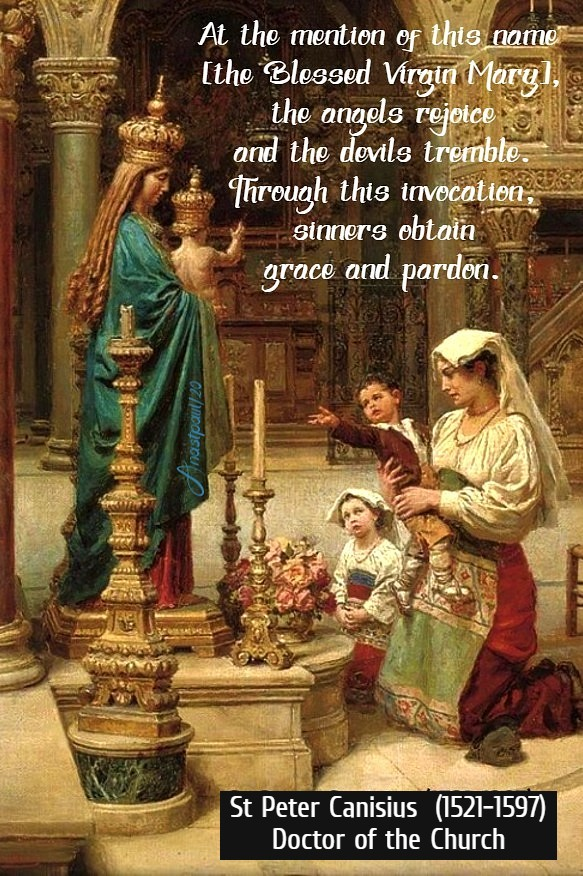
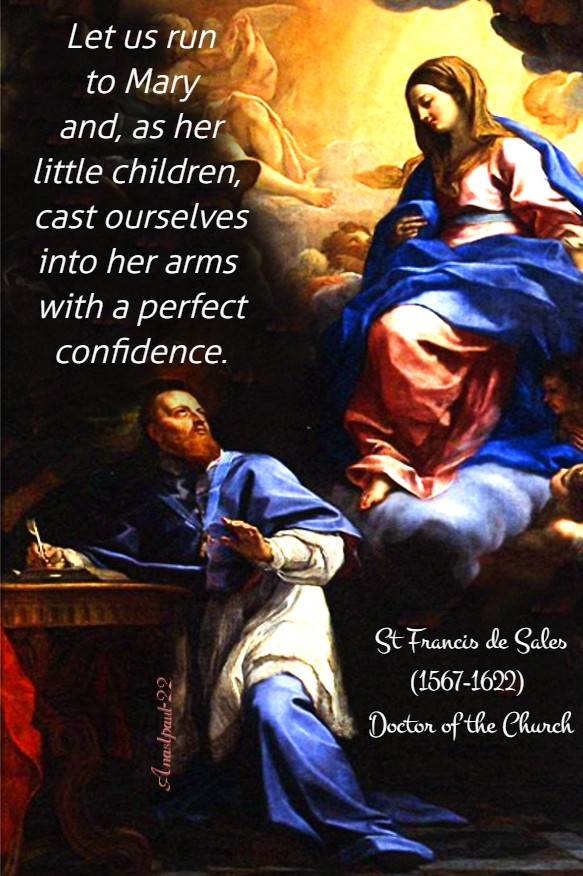
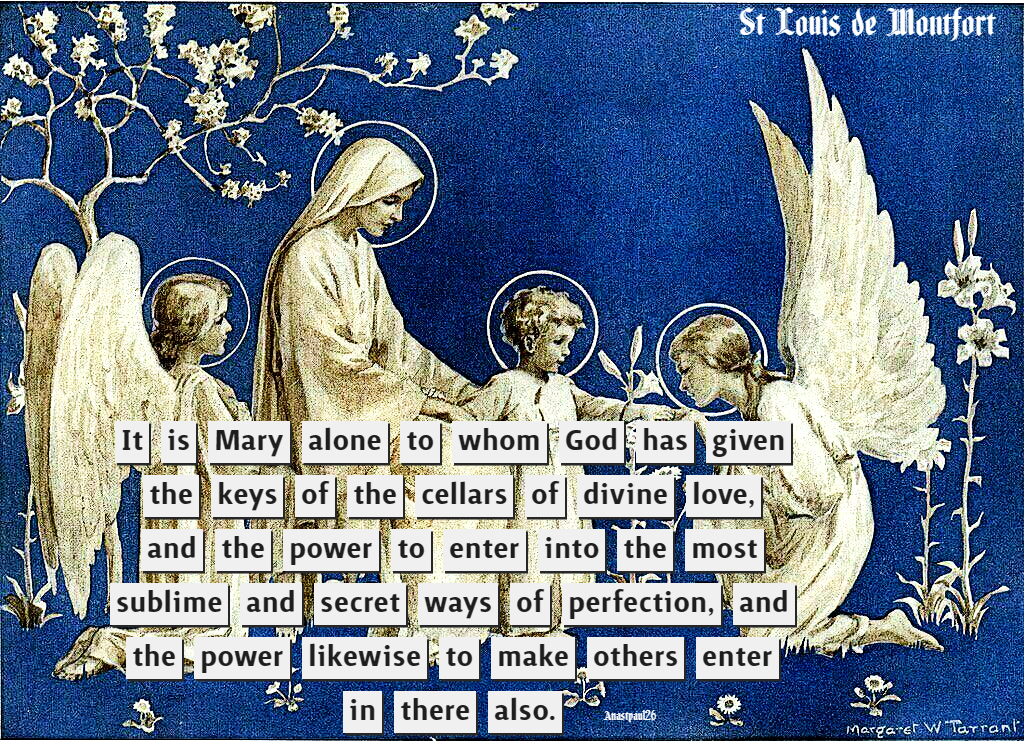
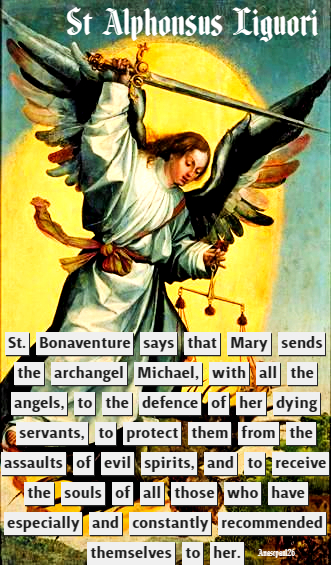
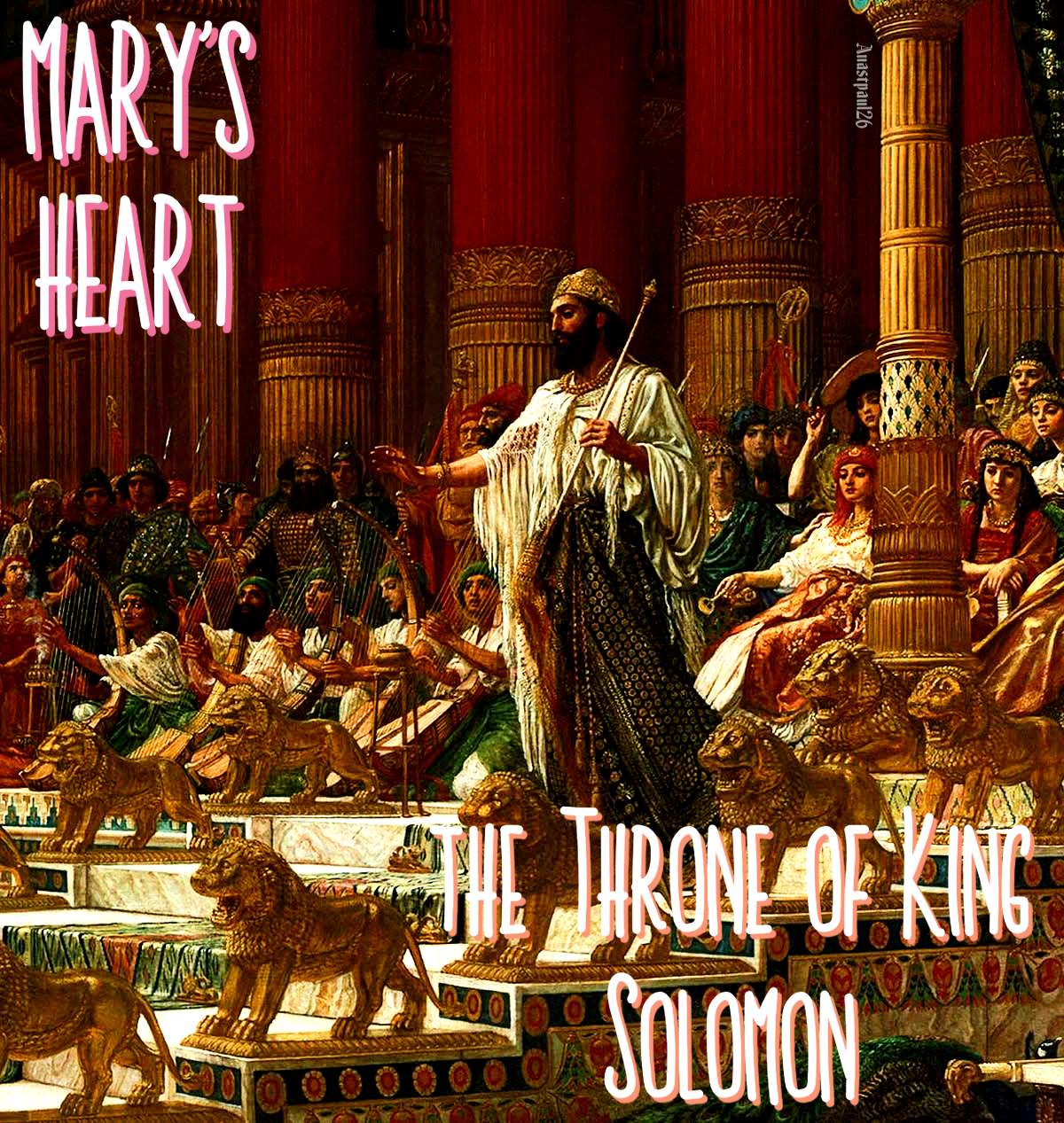
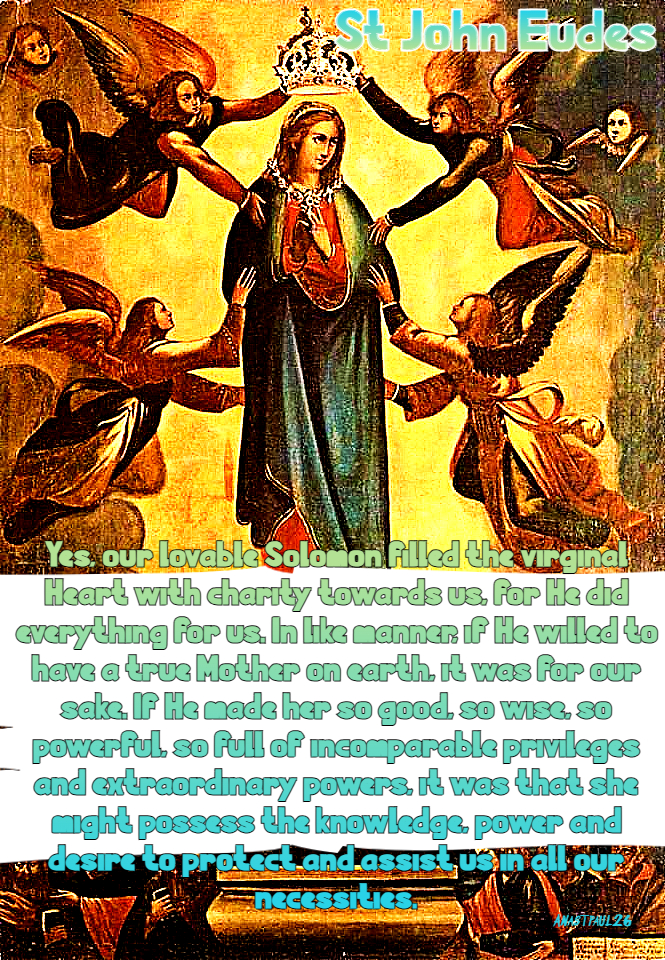
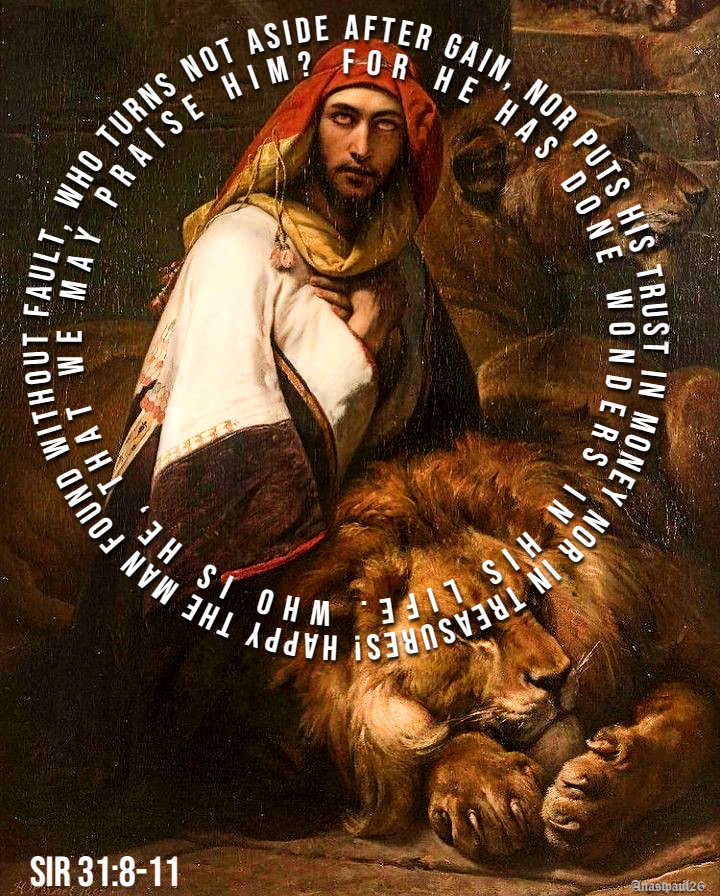
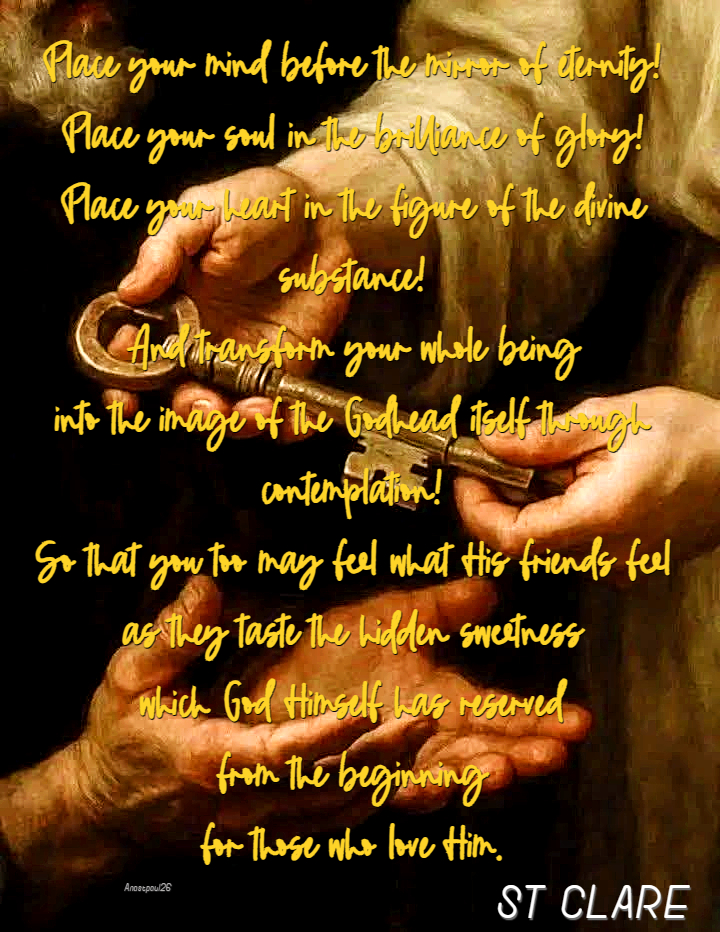
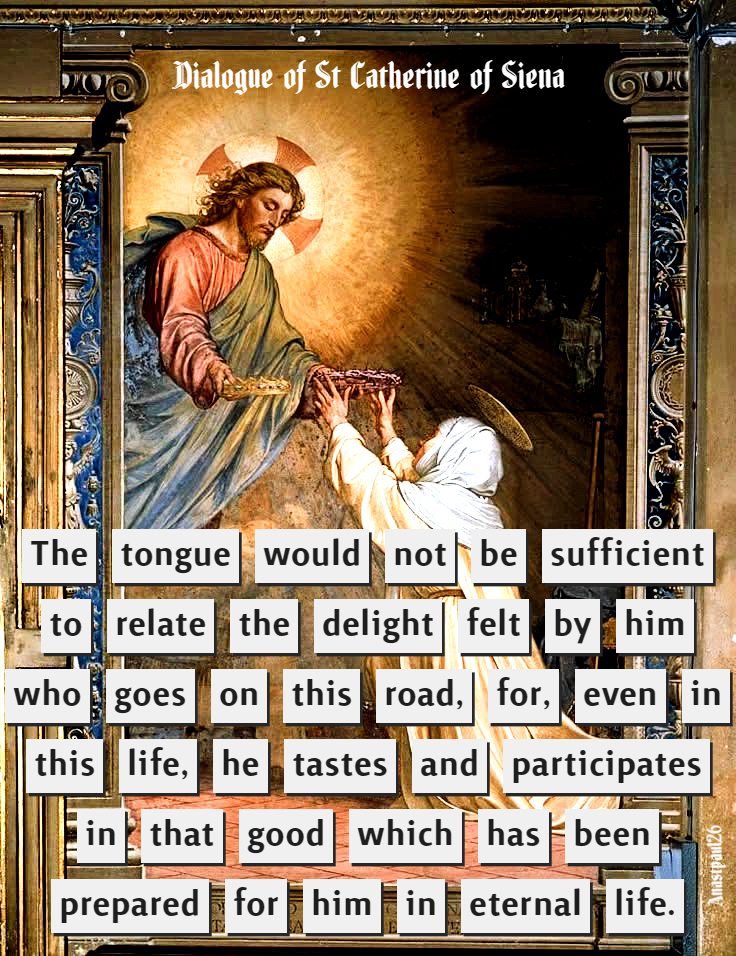
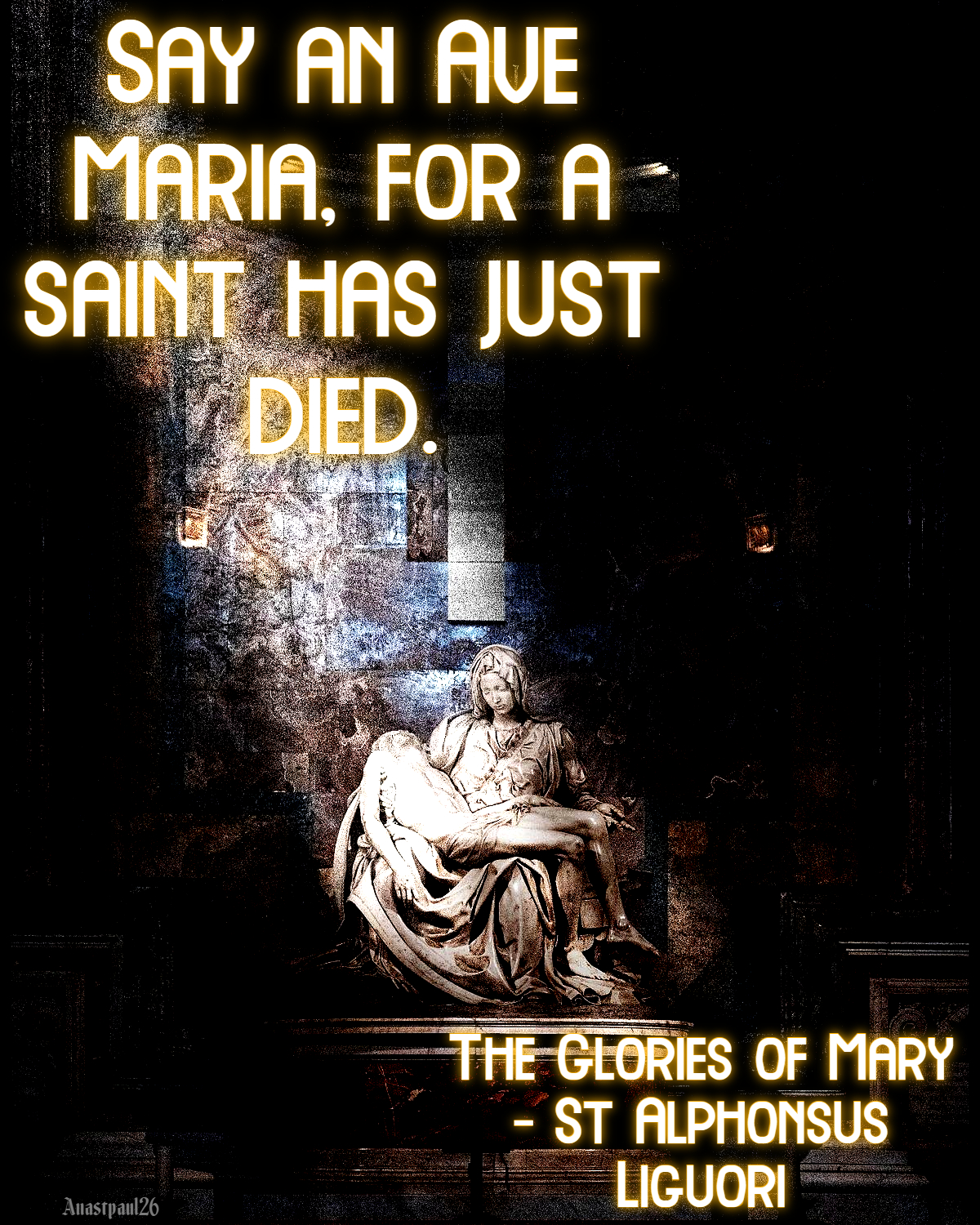
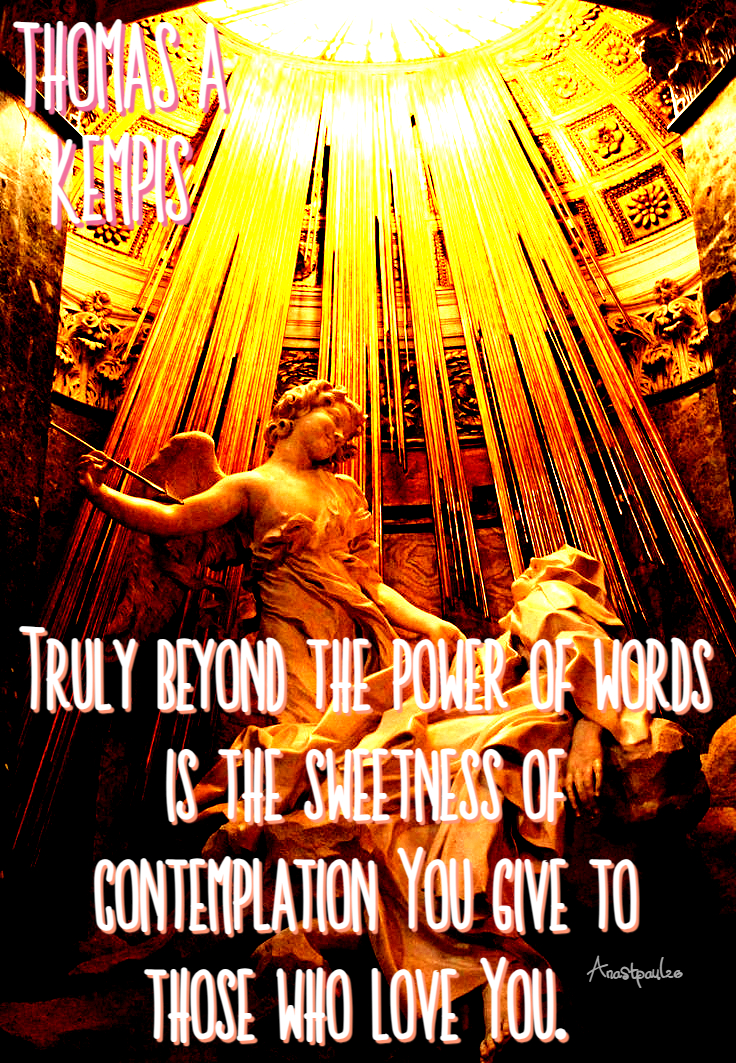
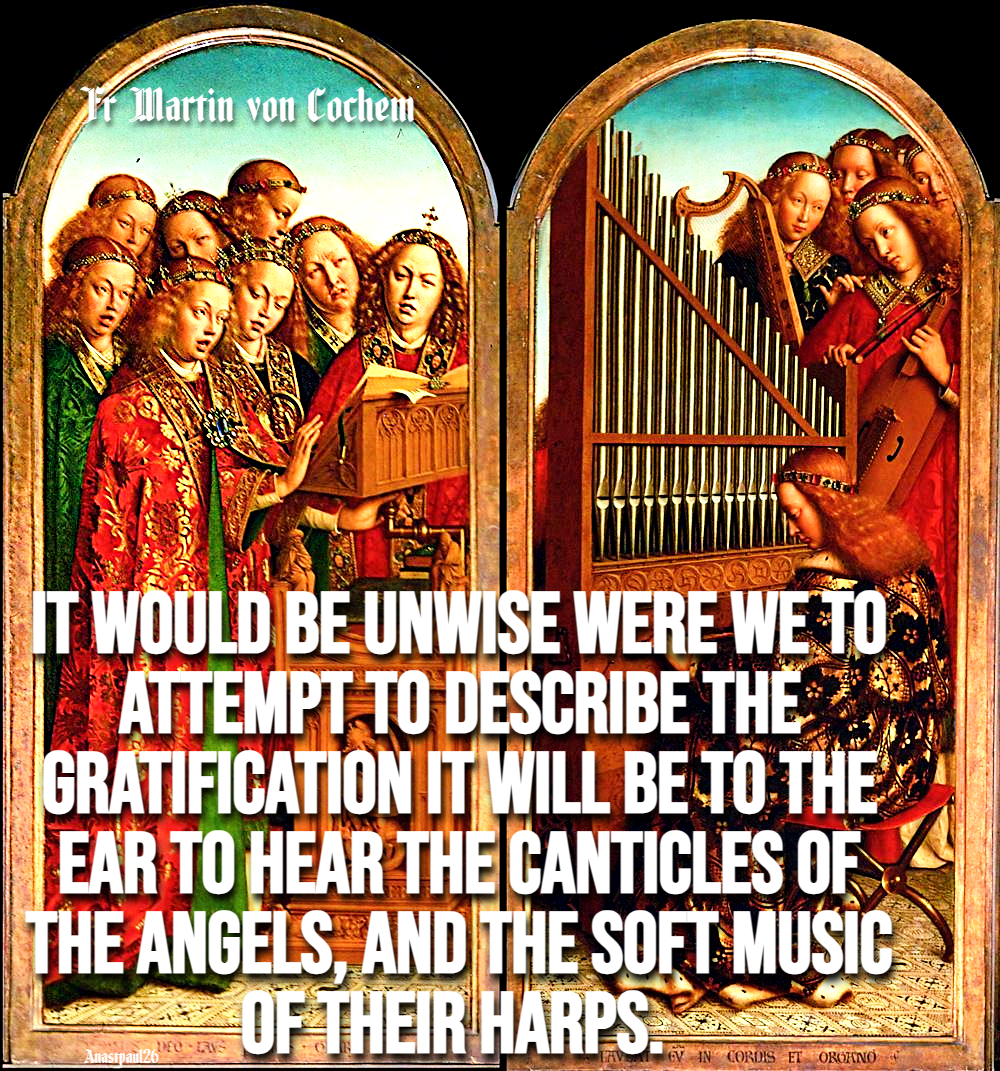

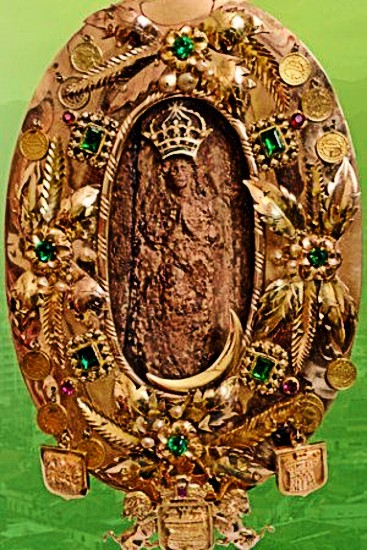
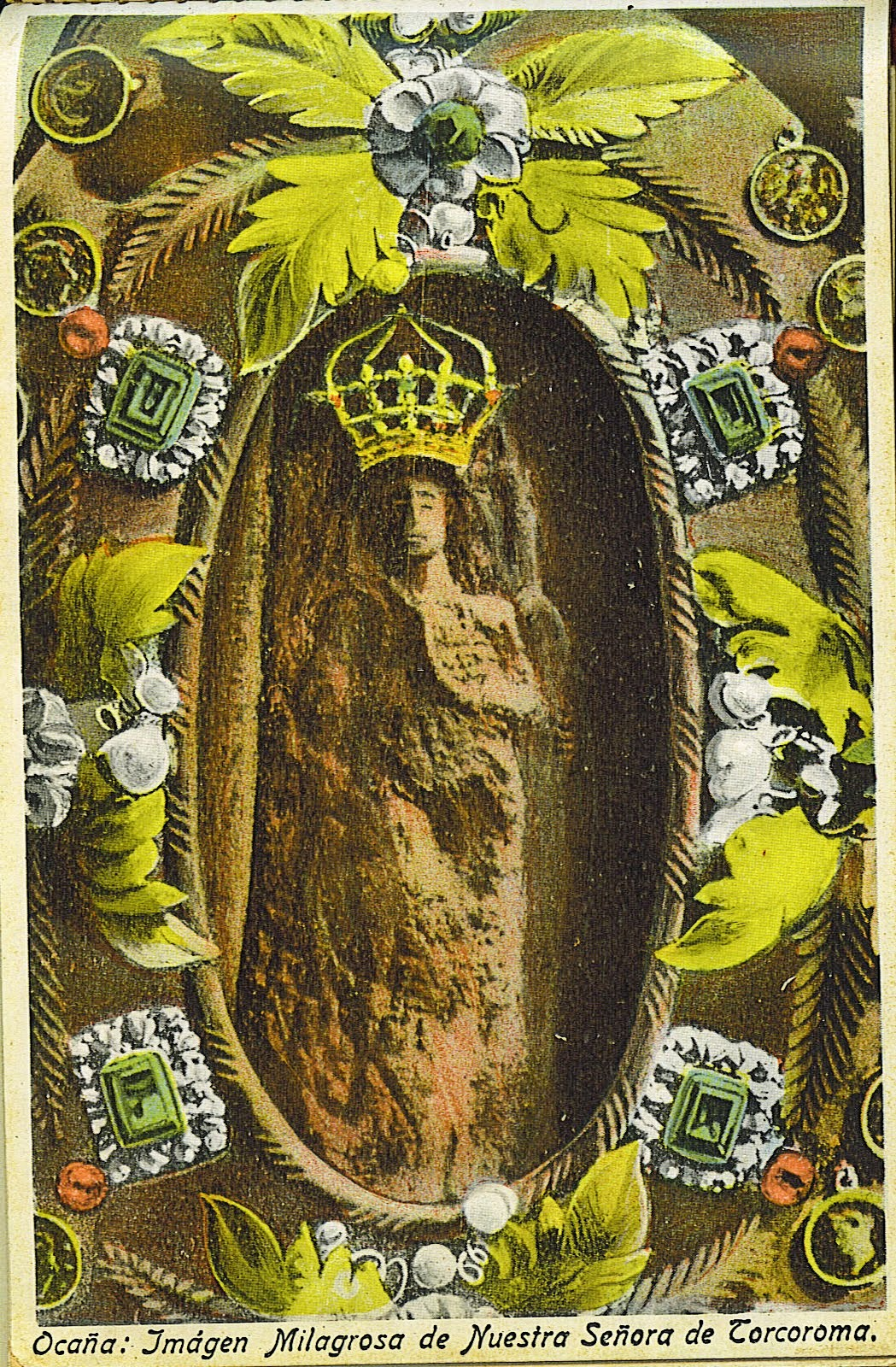
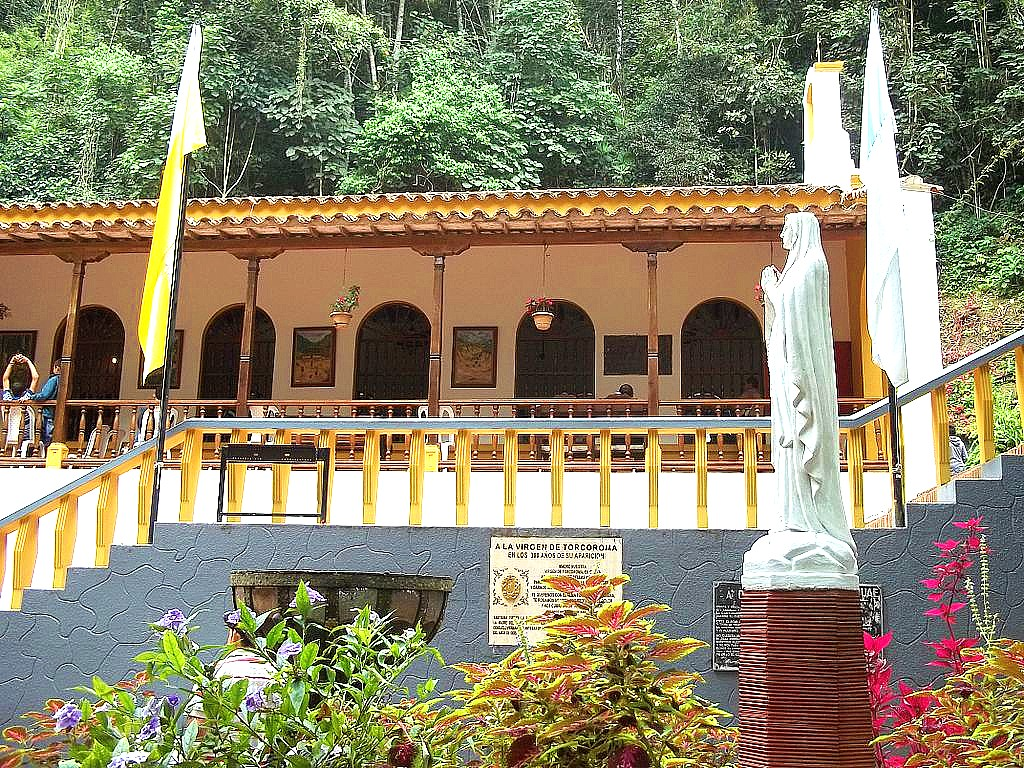
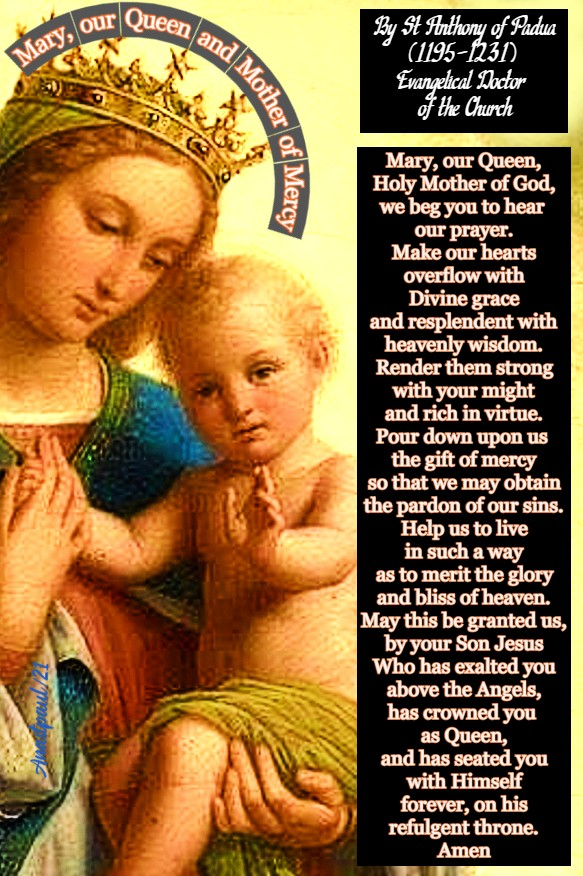
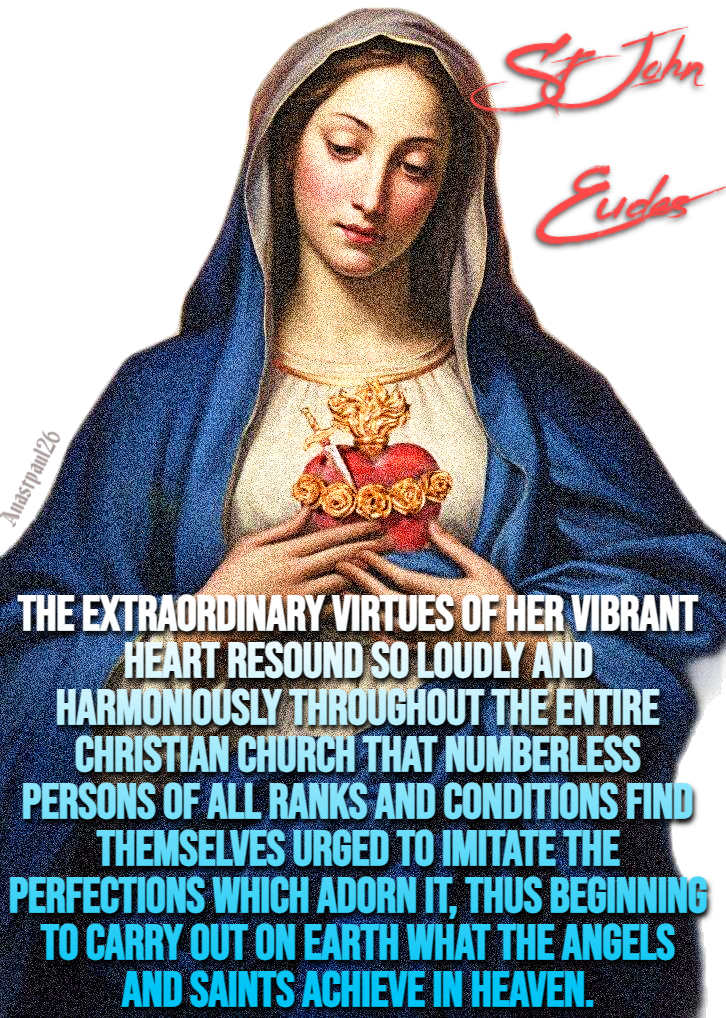
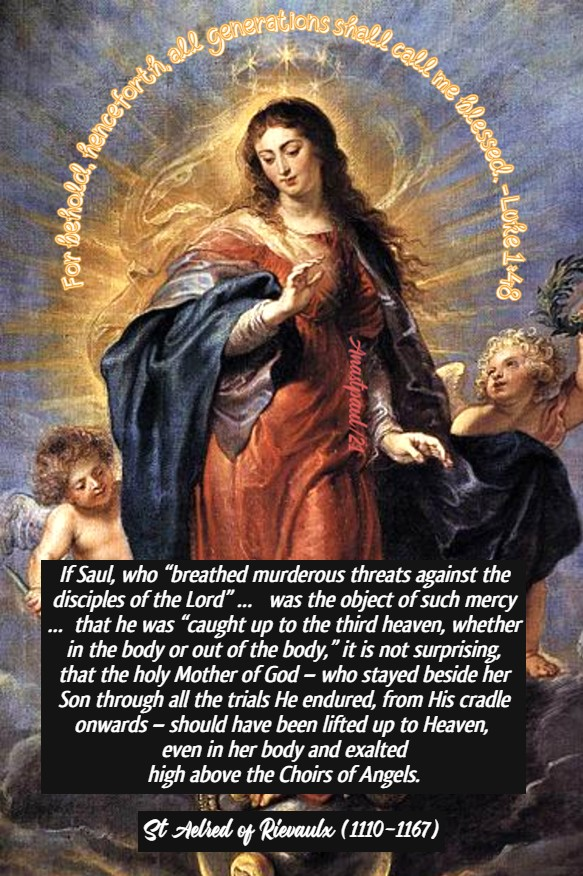
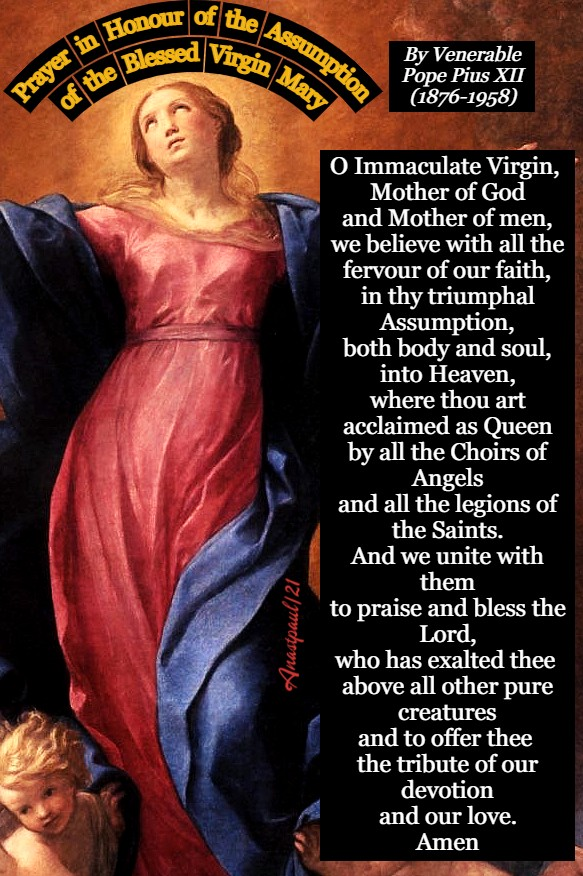
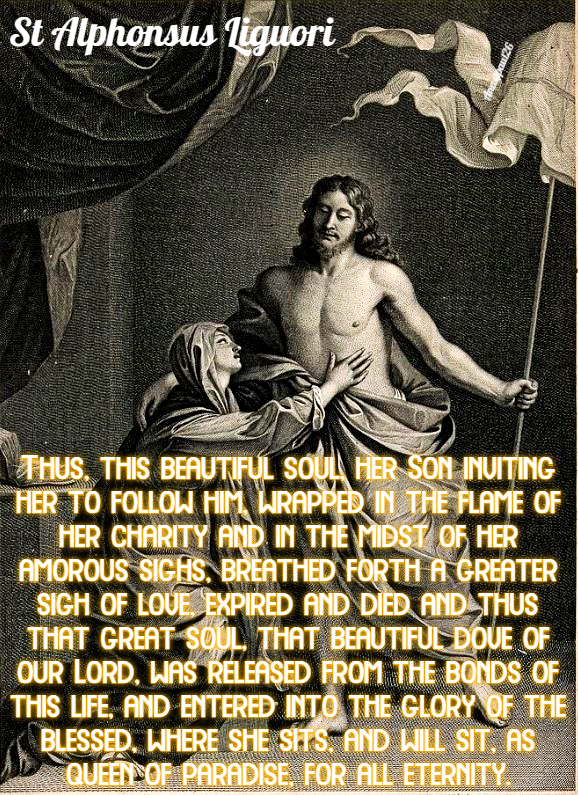
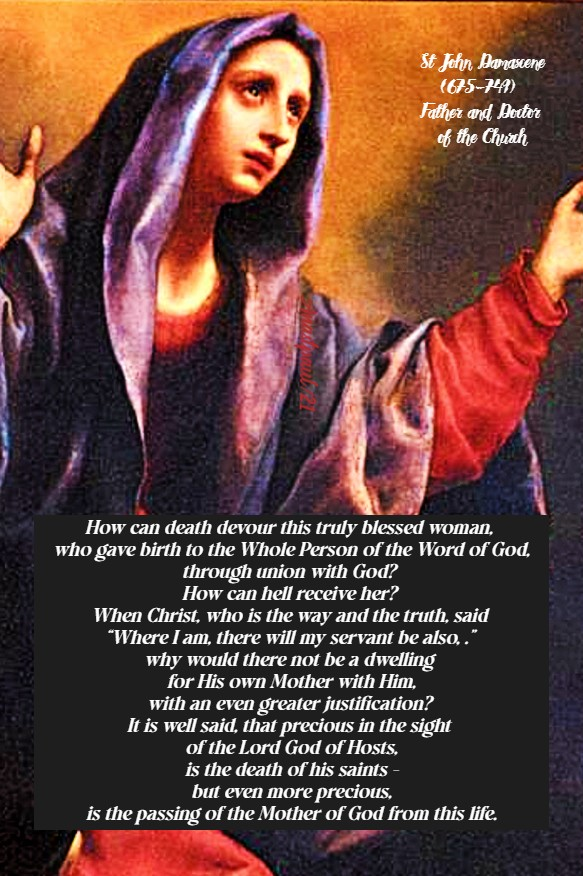
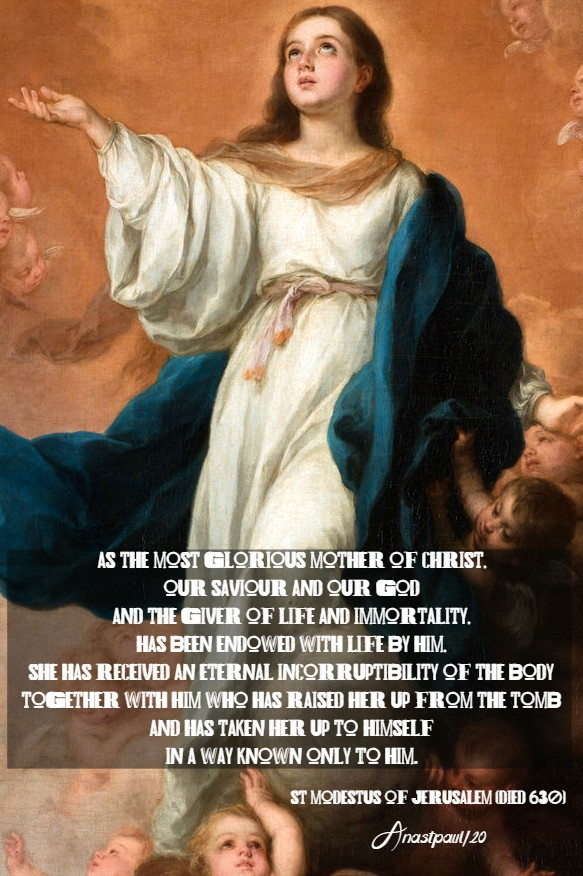
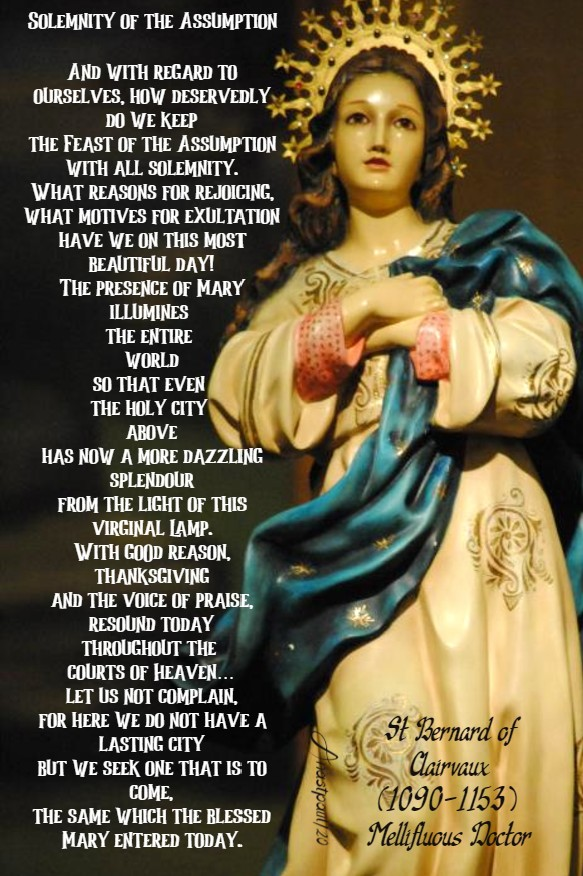
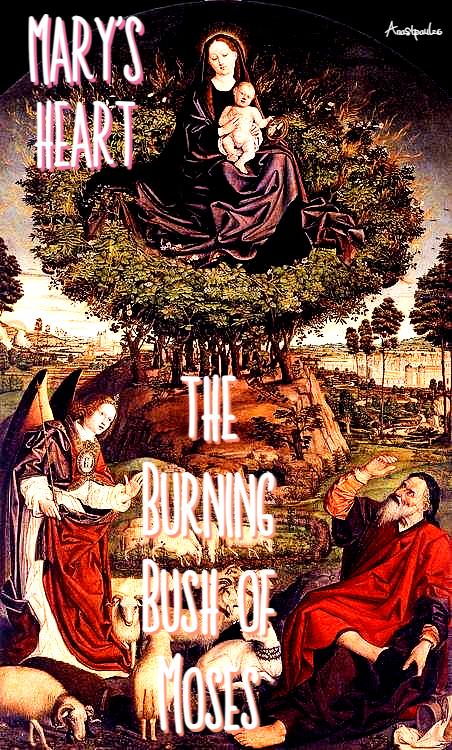
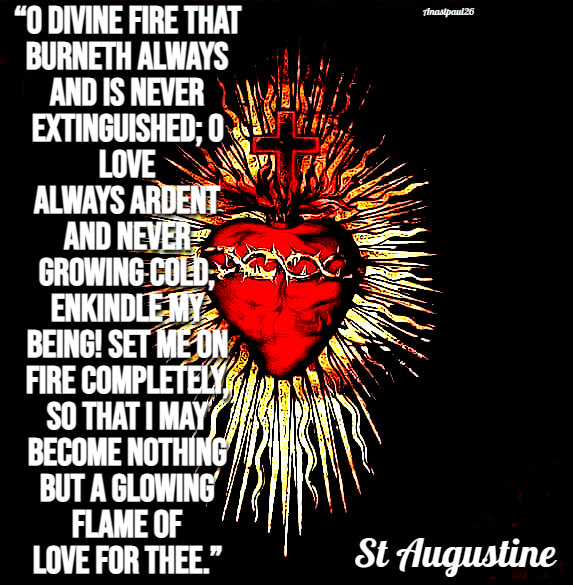

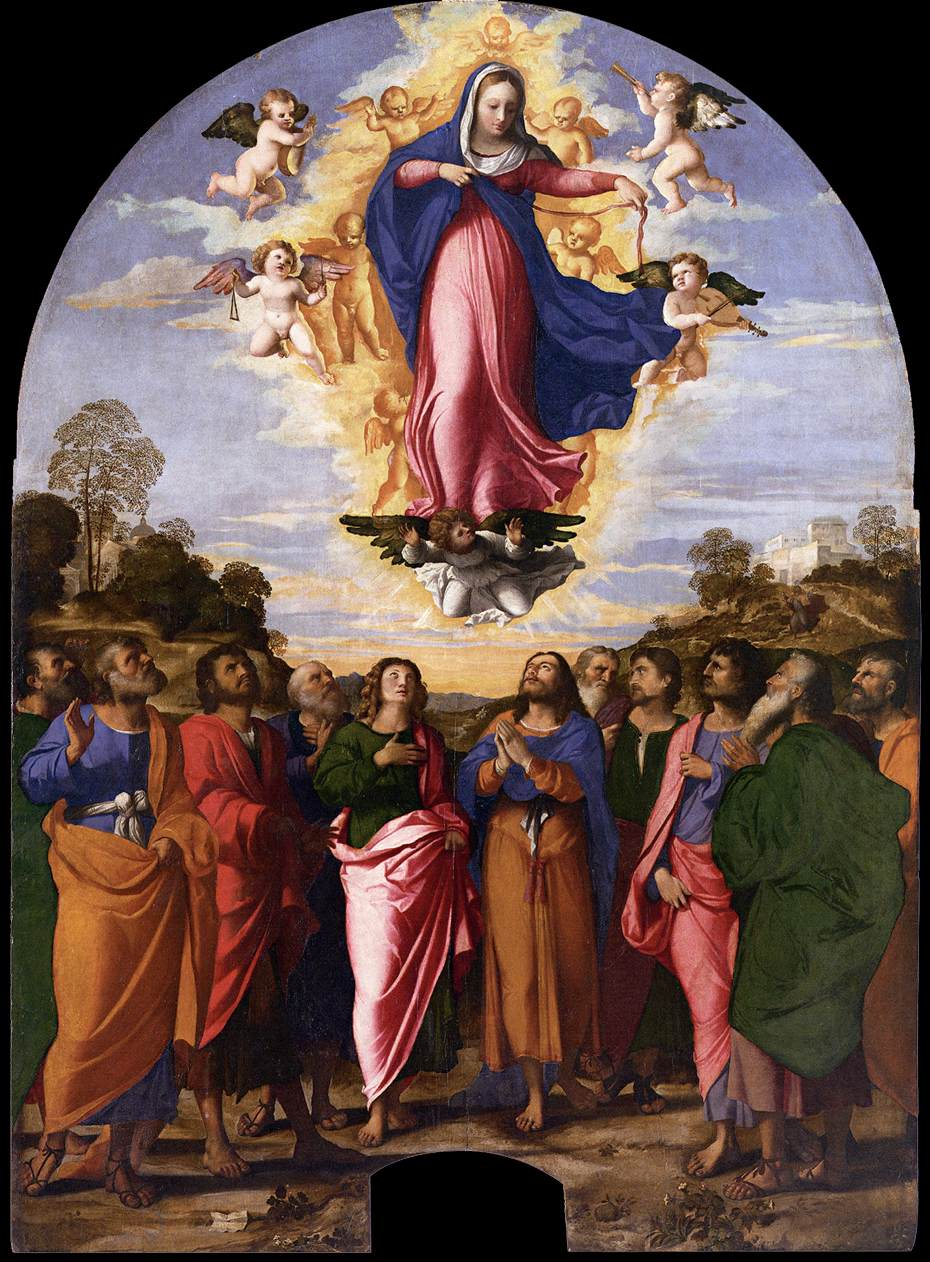

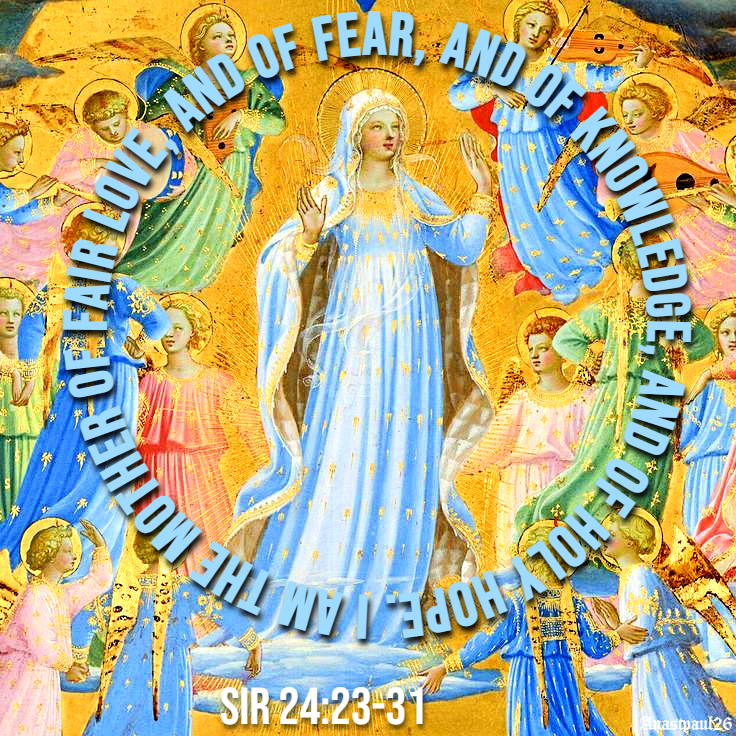
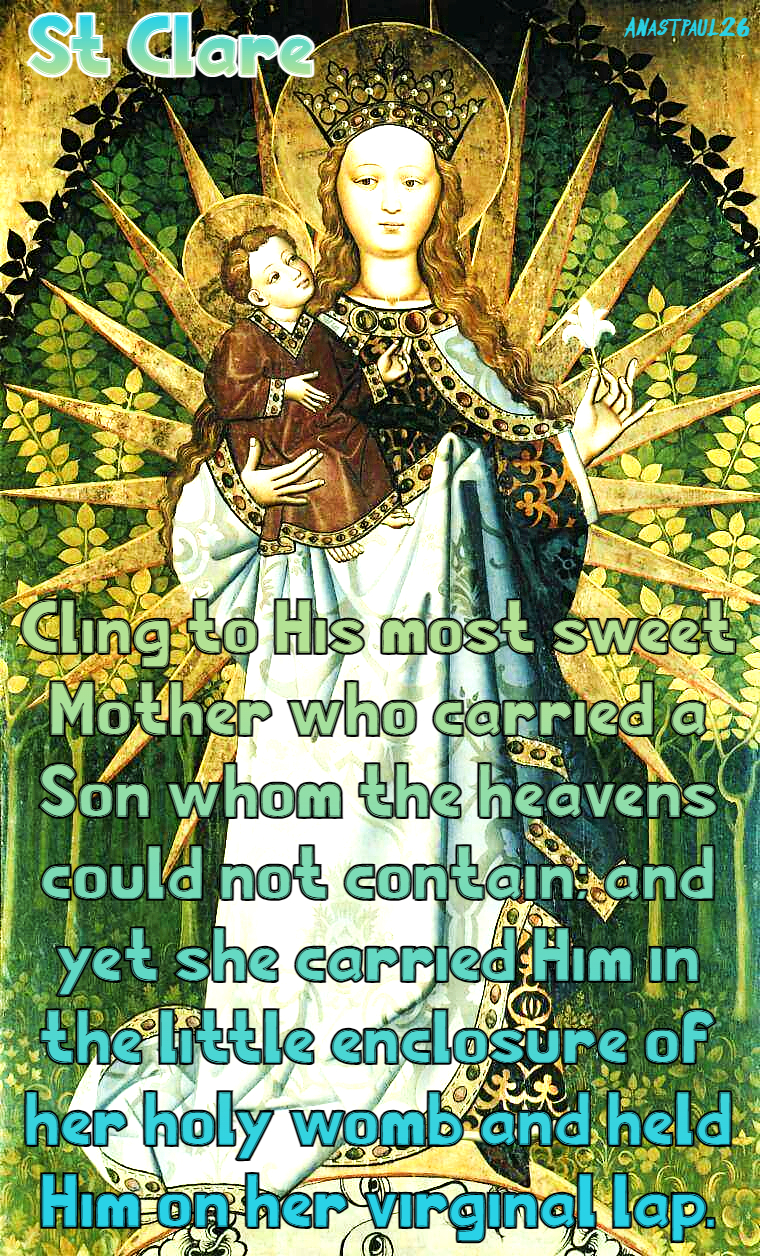
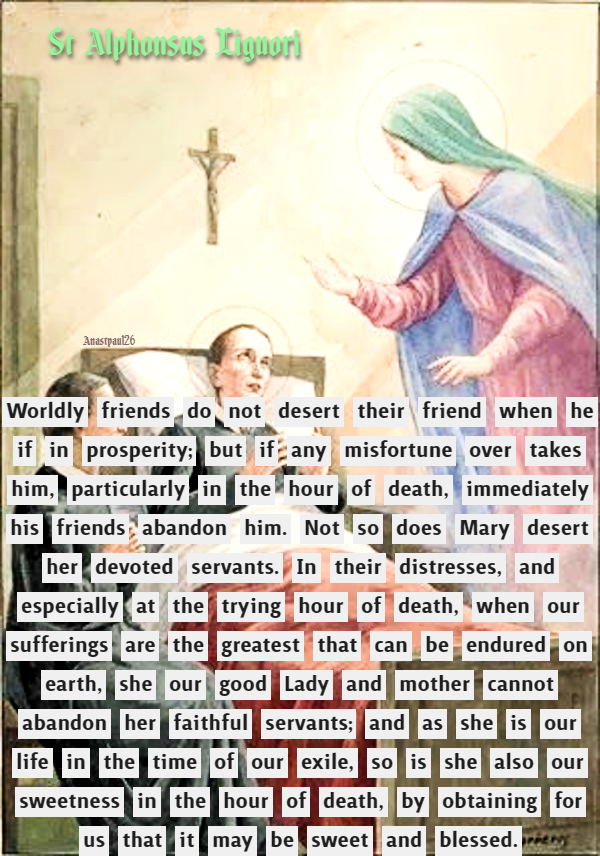
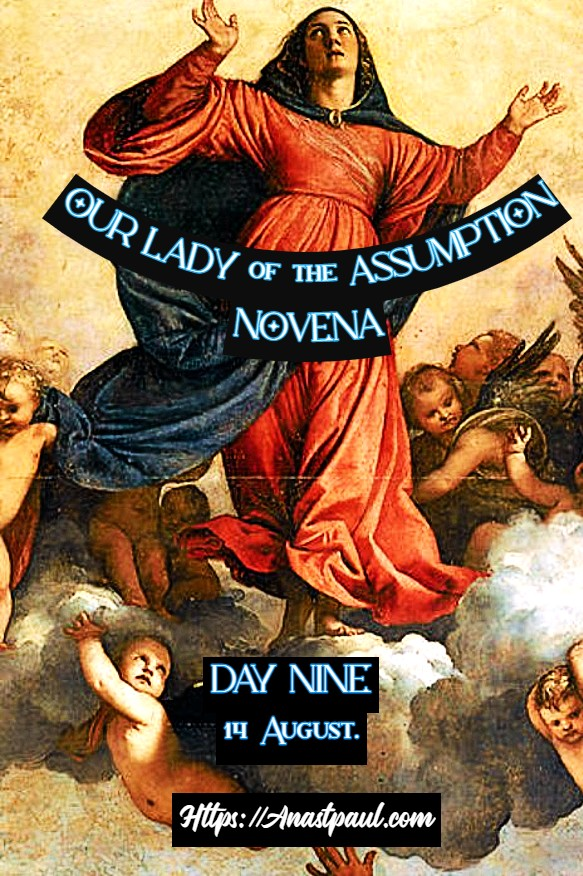
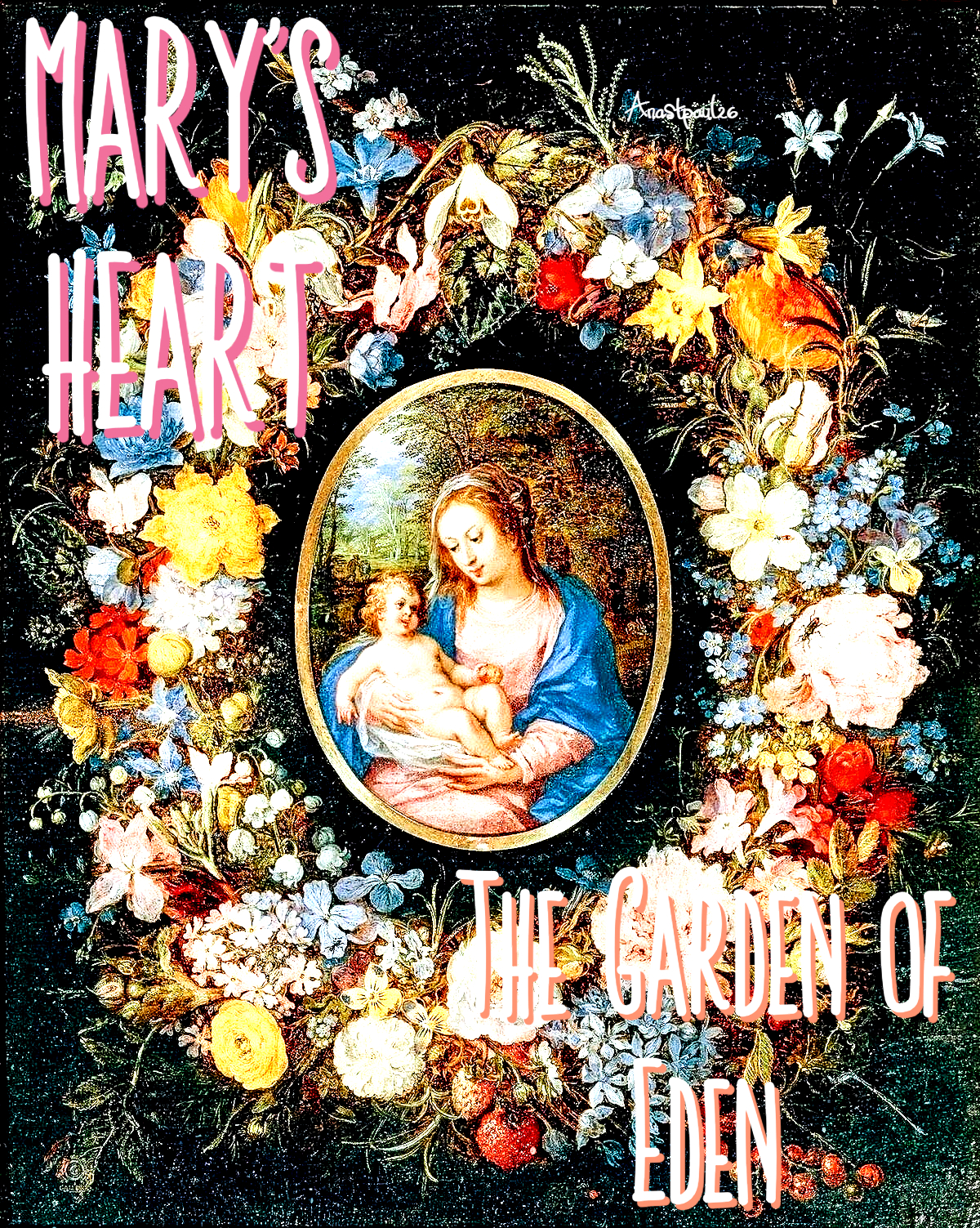
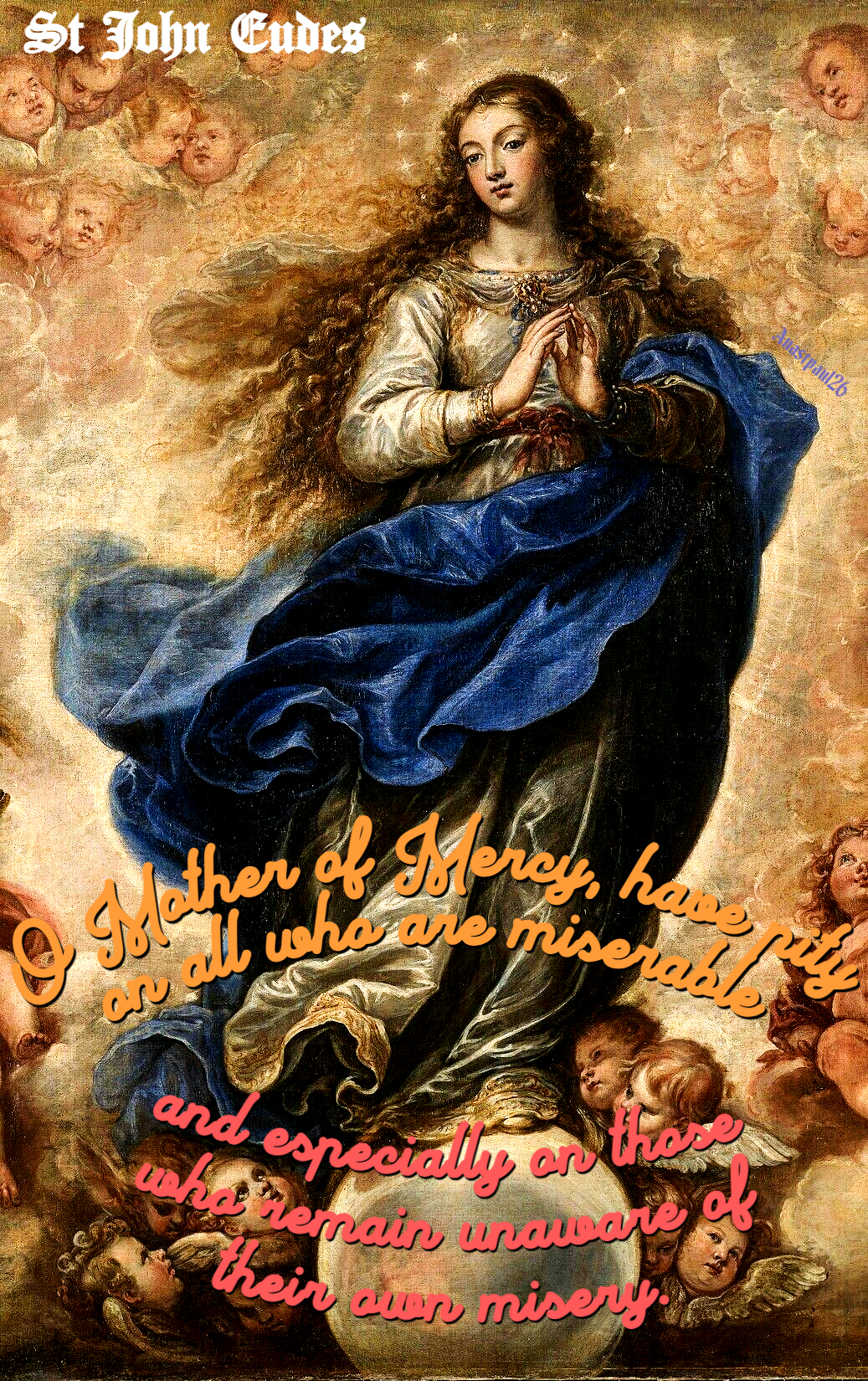

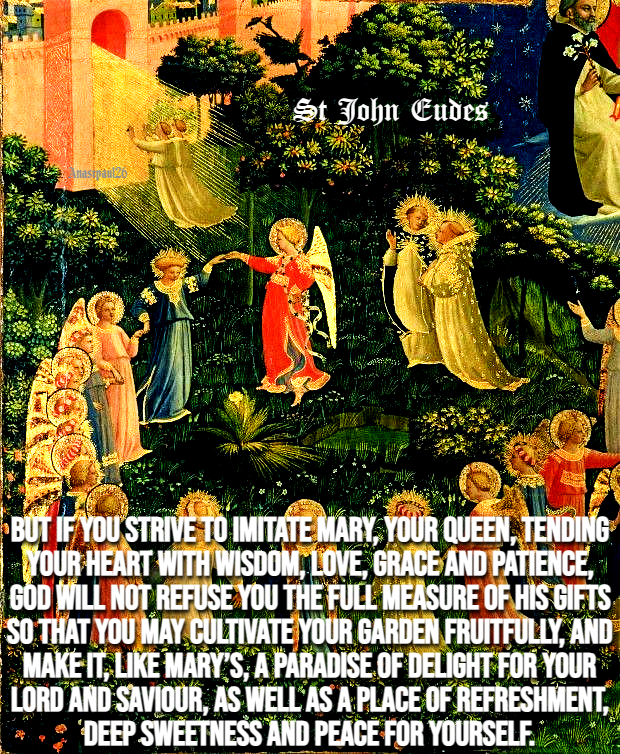
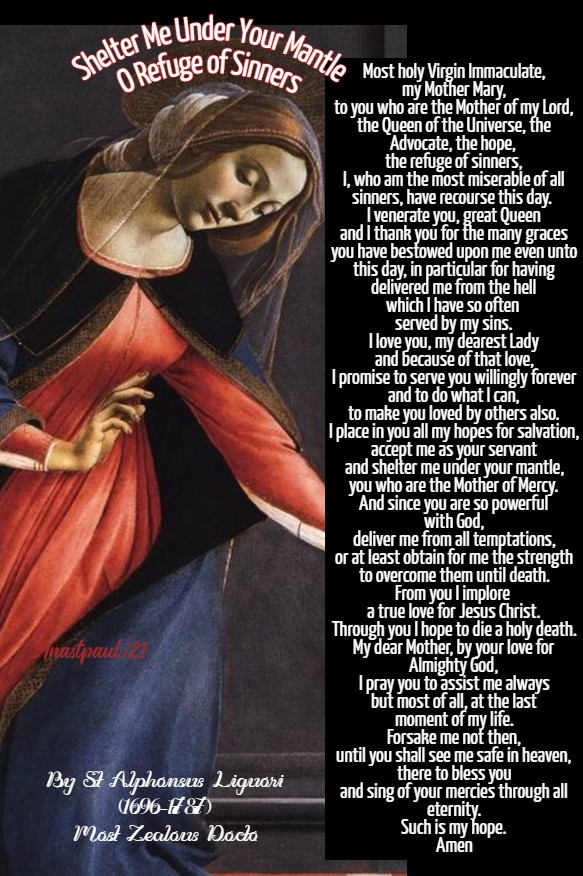
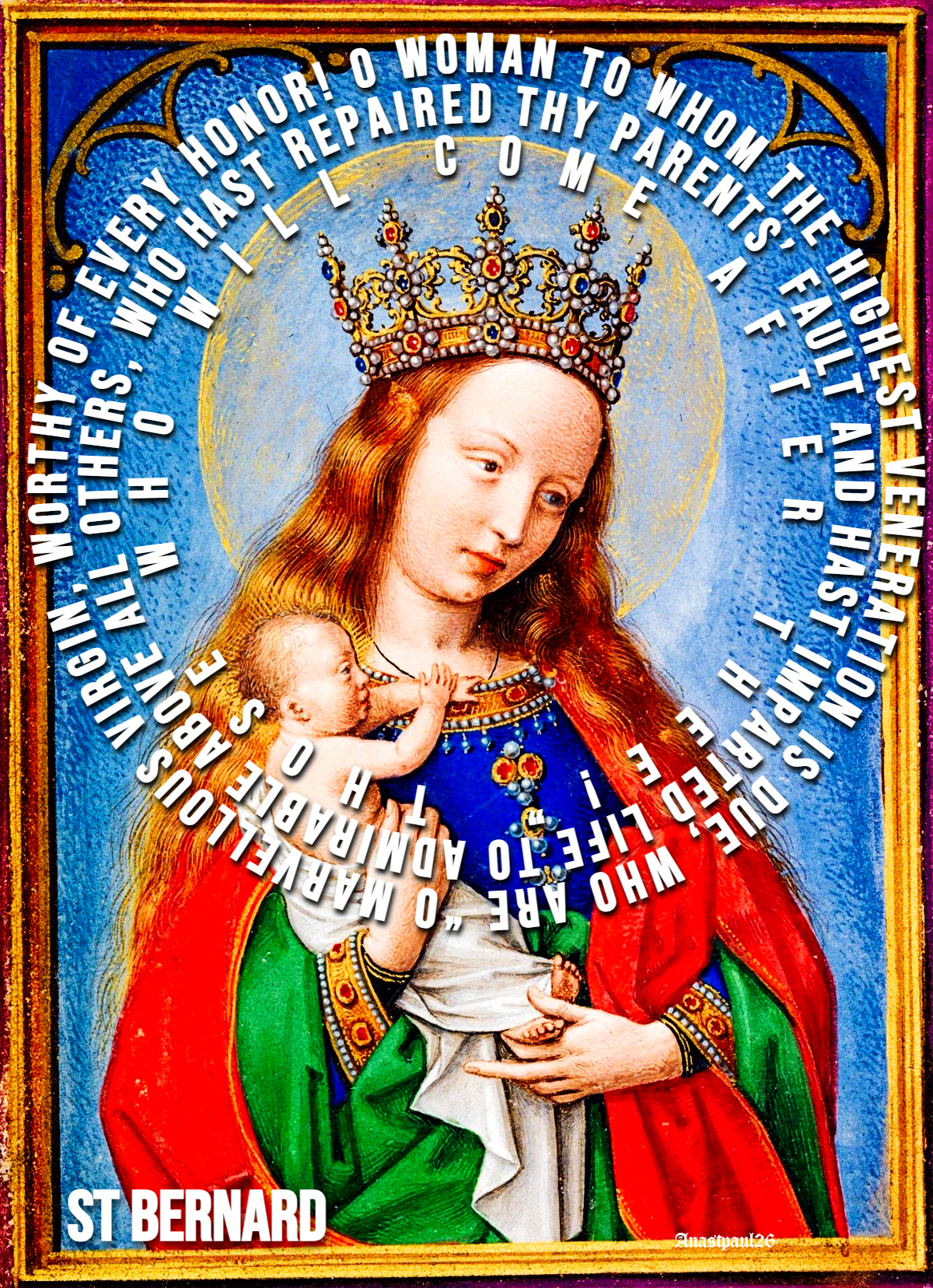


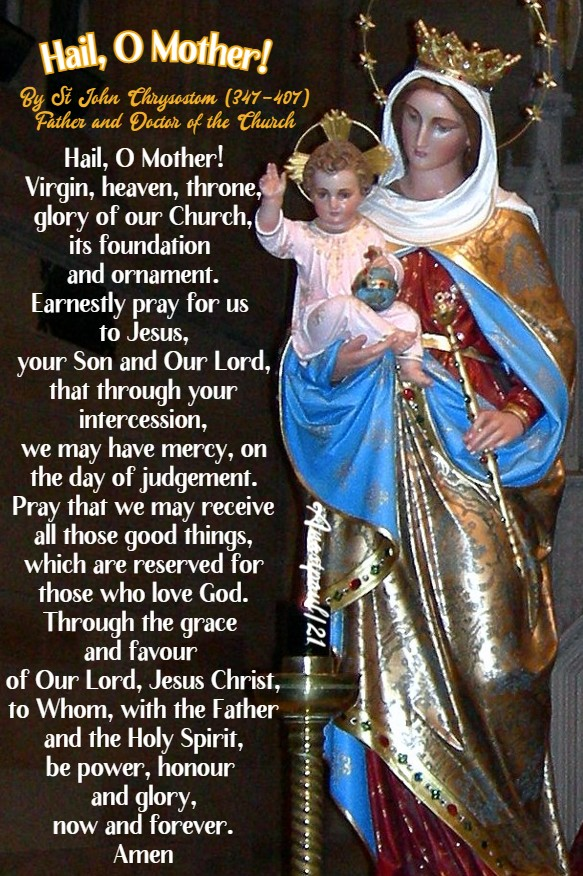
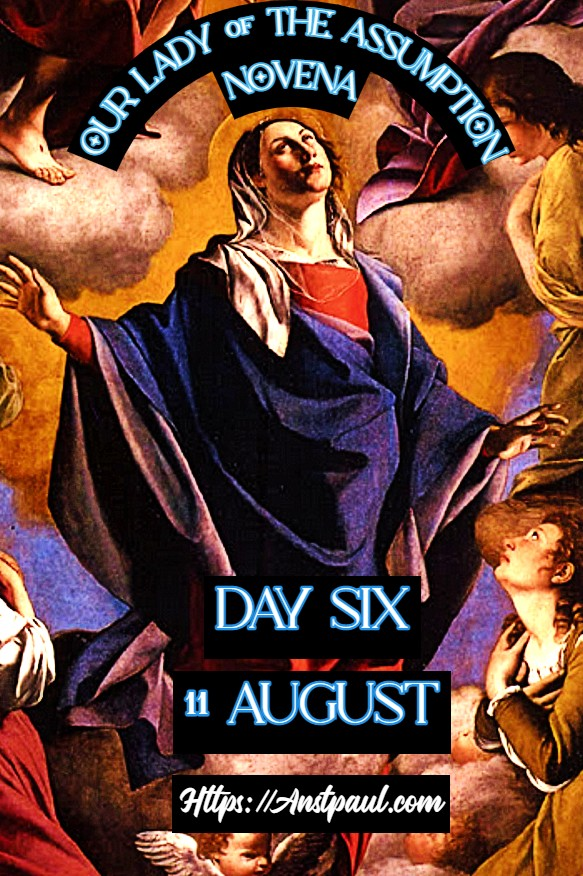
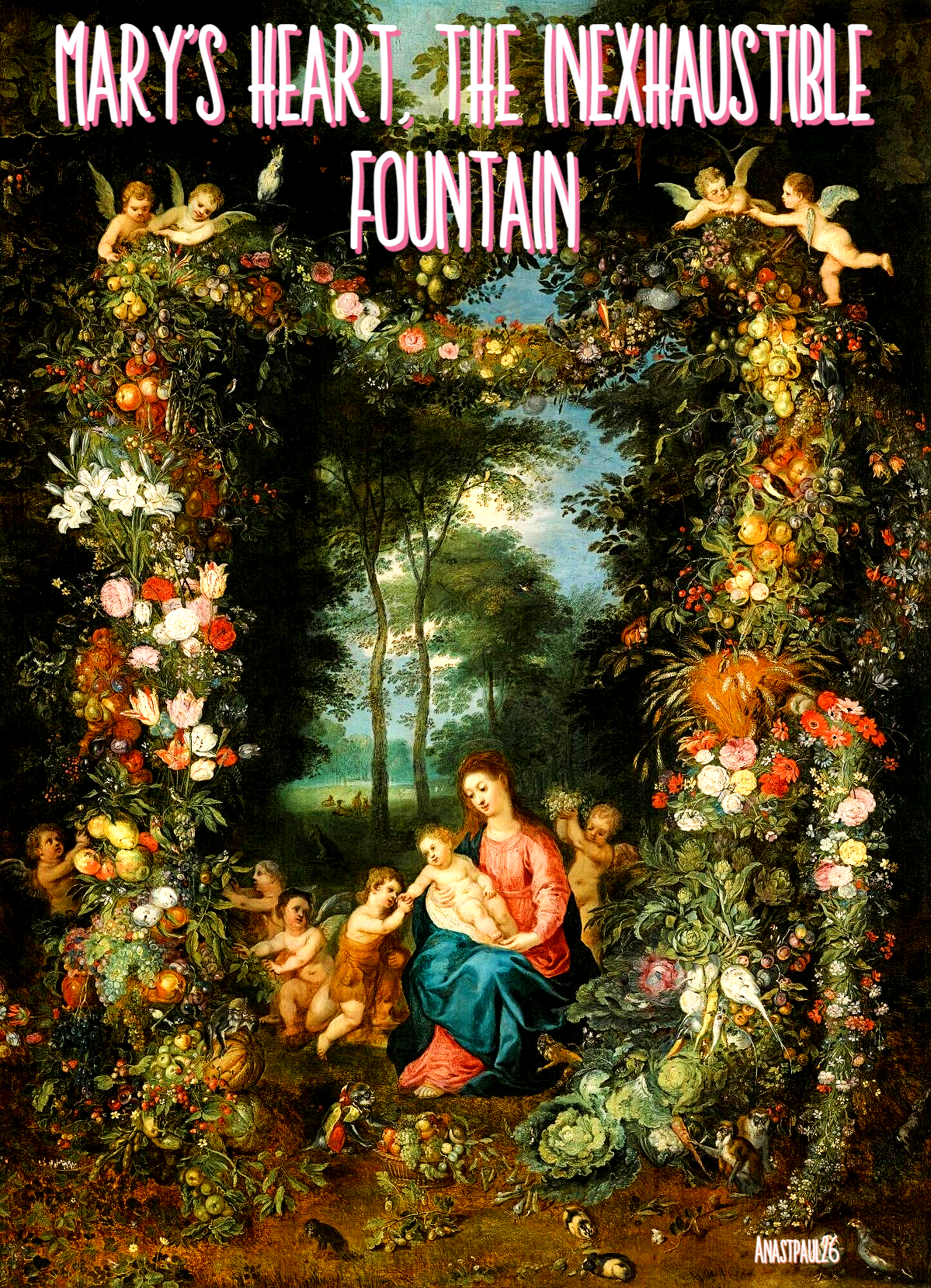
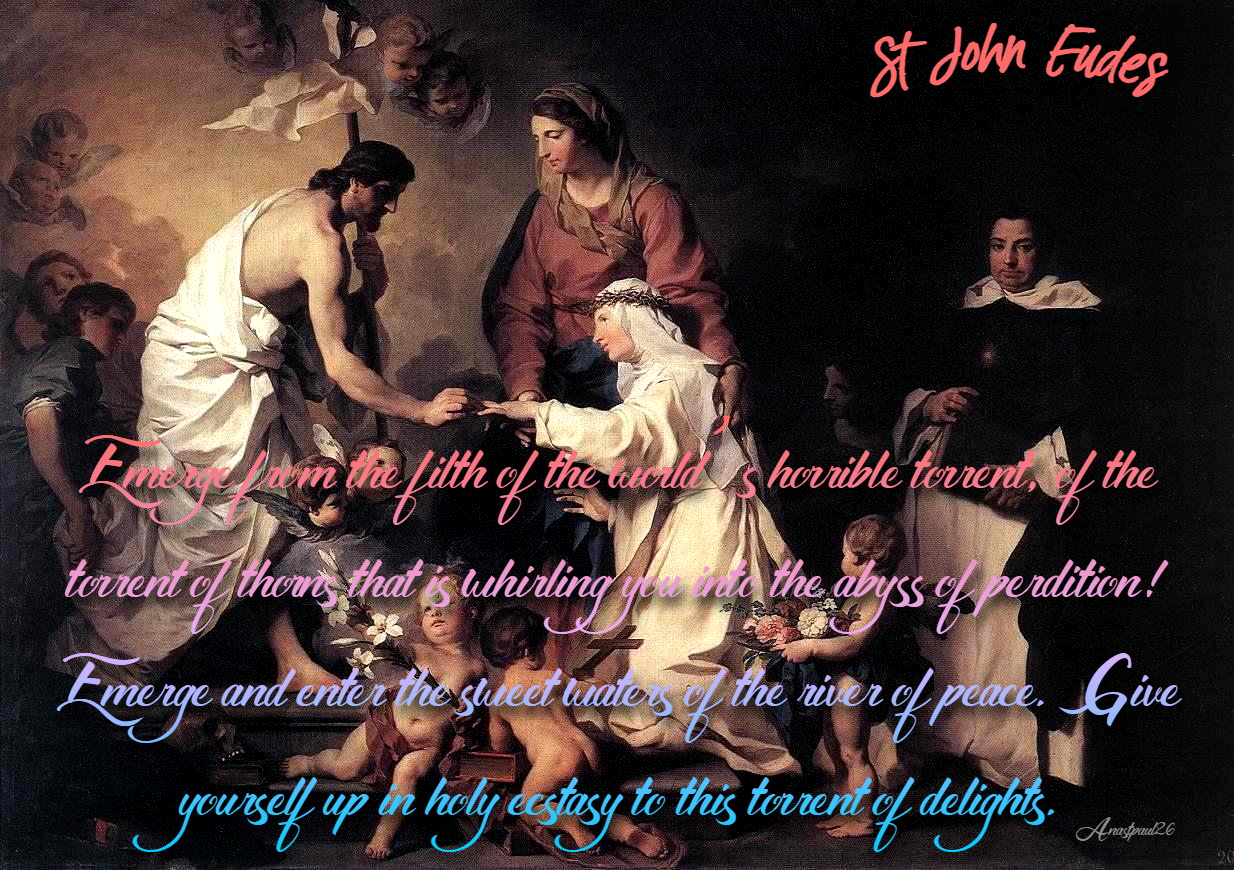
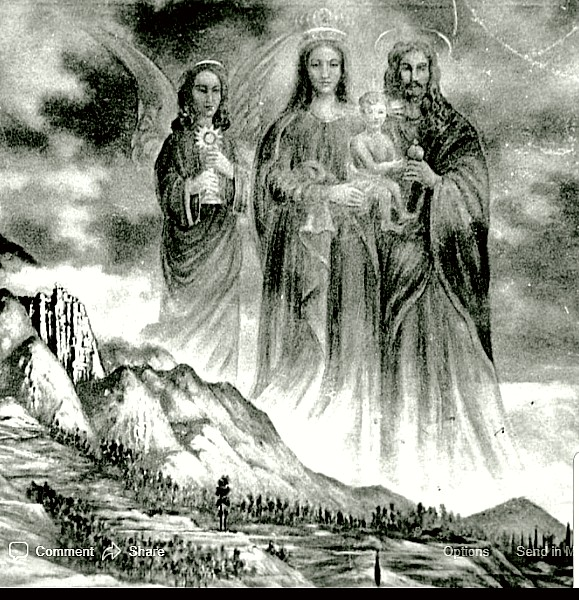
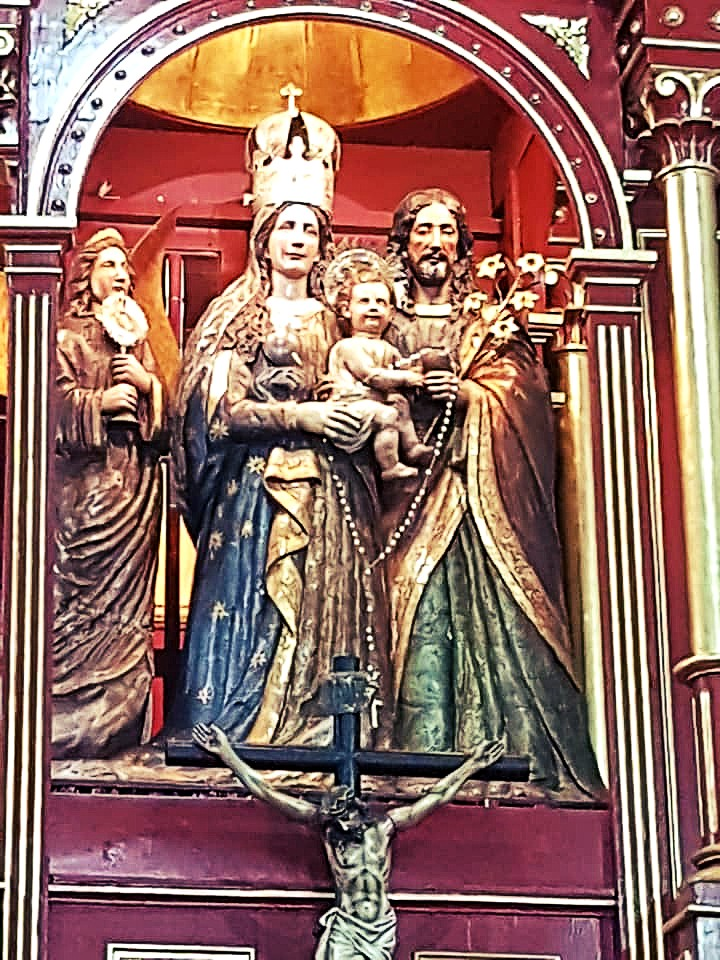
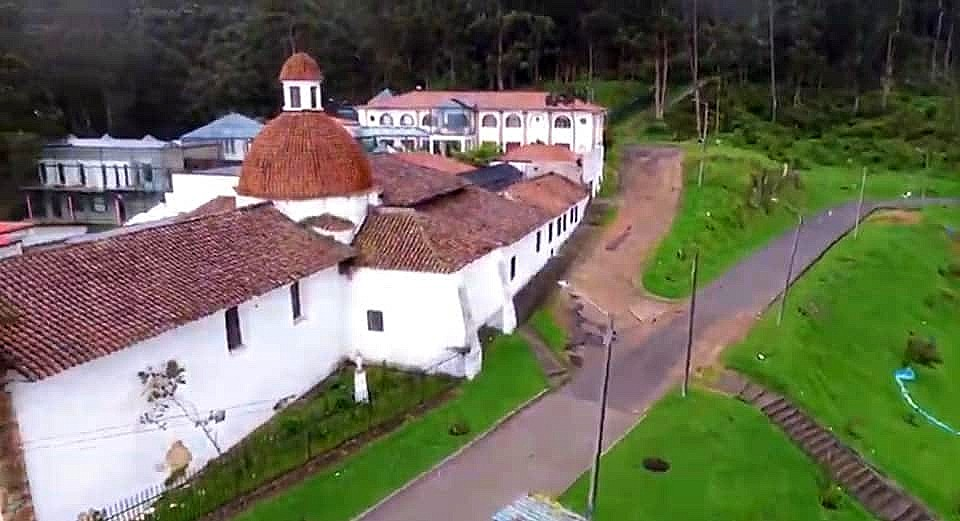
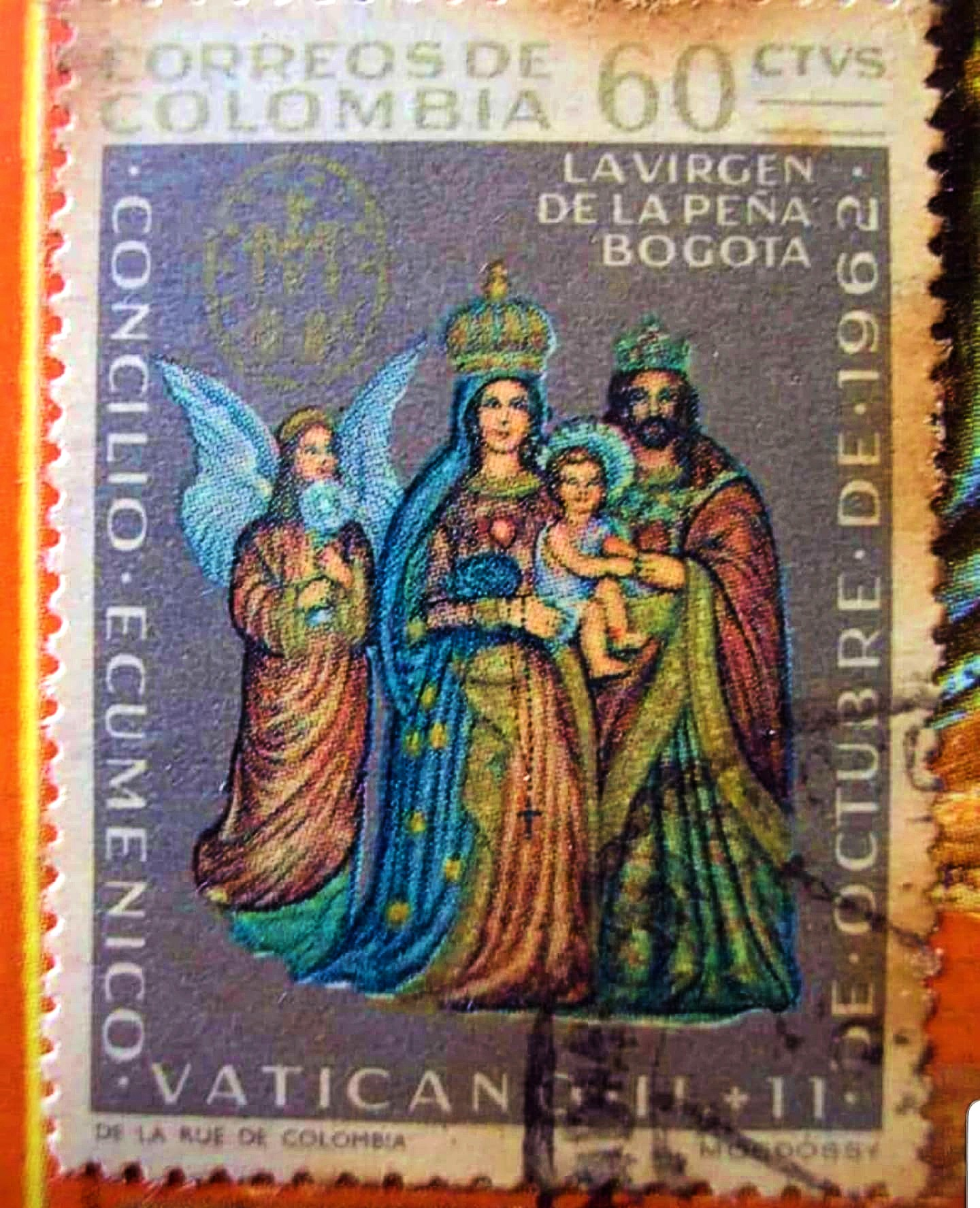
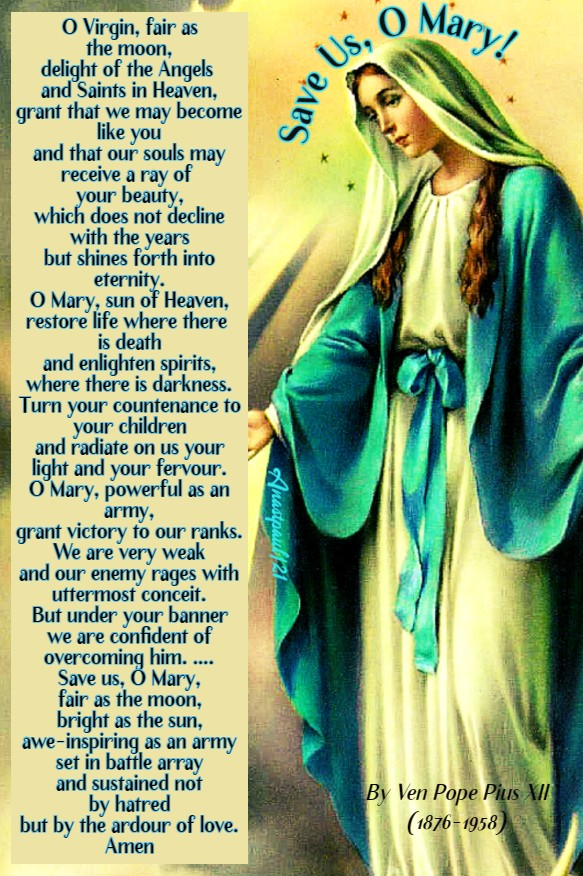
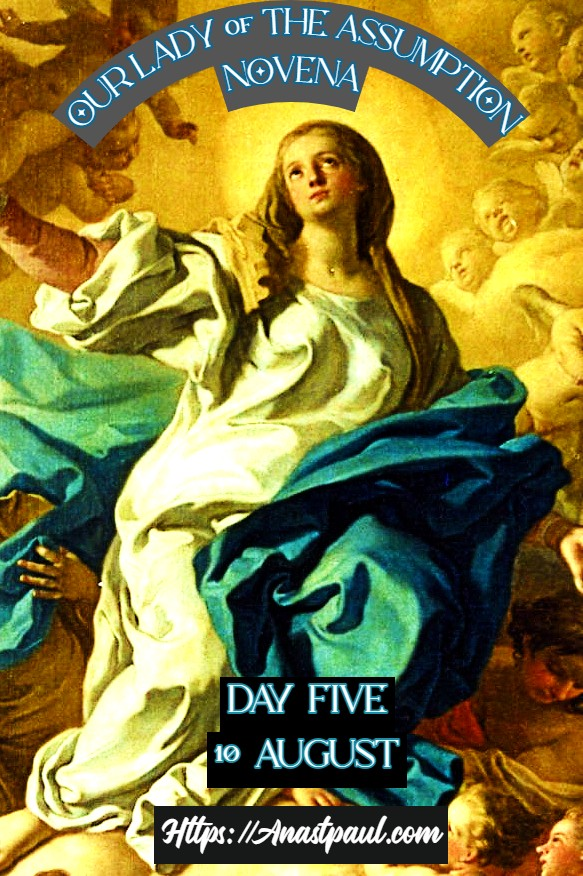
 AnaStpaul
You must be logged in to post a comment.