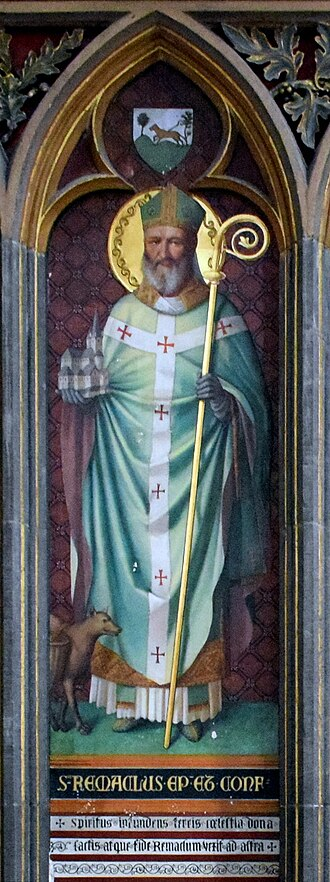
Saint Remaclus, also known asRemaclus von Stablo, Remacle, Remaculus, Rimagilus, was a Benedictine monk, priest, and the first abbot at Solignac Abbey in France, a position to which he was appointed by Saint Eligius. Th leader of a busy life, he was born in the early 7th century, in Aquitaine, France, he came from nobility. Remaclus grew up in and around the royal court of Aquitaine, and studied under Saint Sulpicius of Bourges.
He became an advisor to King Sigebert II of Austrasia and convinced the king to found the double abbey of Stavelot, Belgium, and Malmedy, Ardennes, France, in 648. Saint Remaclus served as its first abbot. He then became missionary bishop of Maastricht, Netherlands from 652 to 663, a diocese frequently out of touch with the Church. Also a diocese which had murdered some of its previous bishops. He worked to spread monasticism in the region.
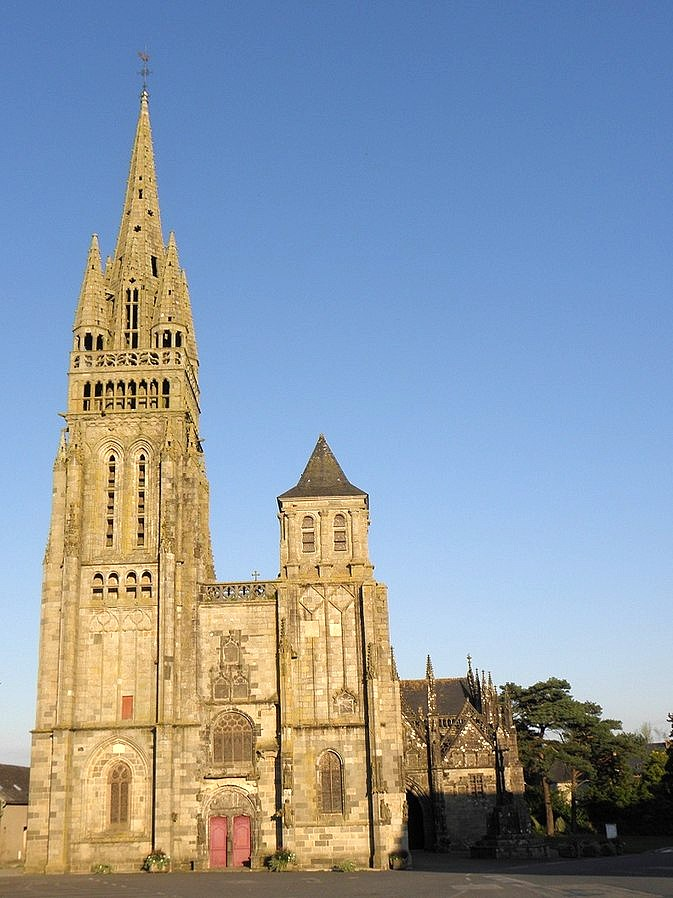
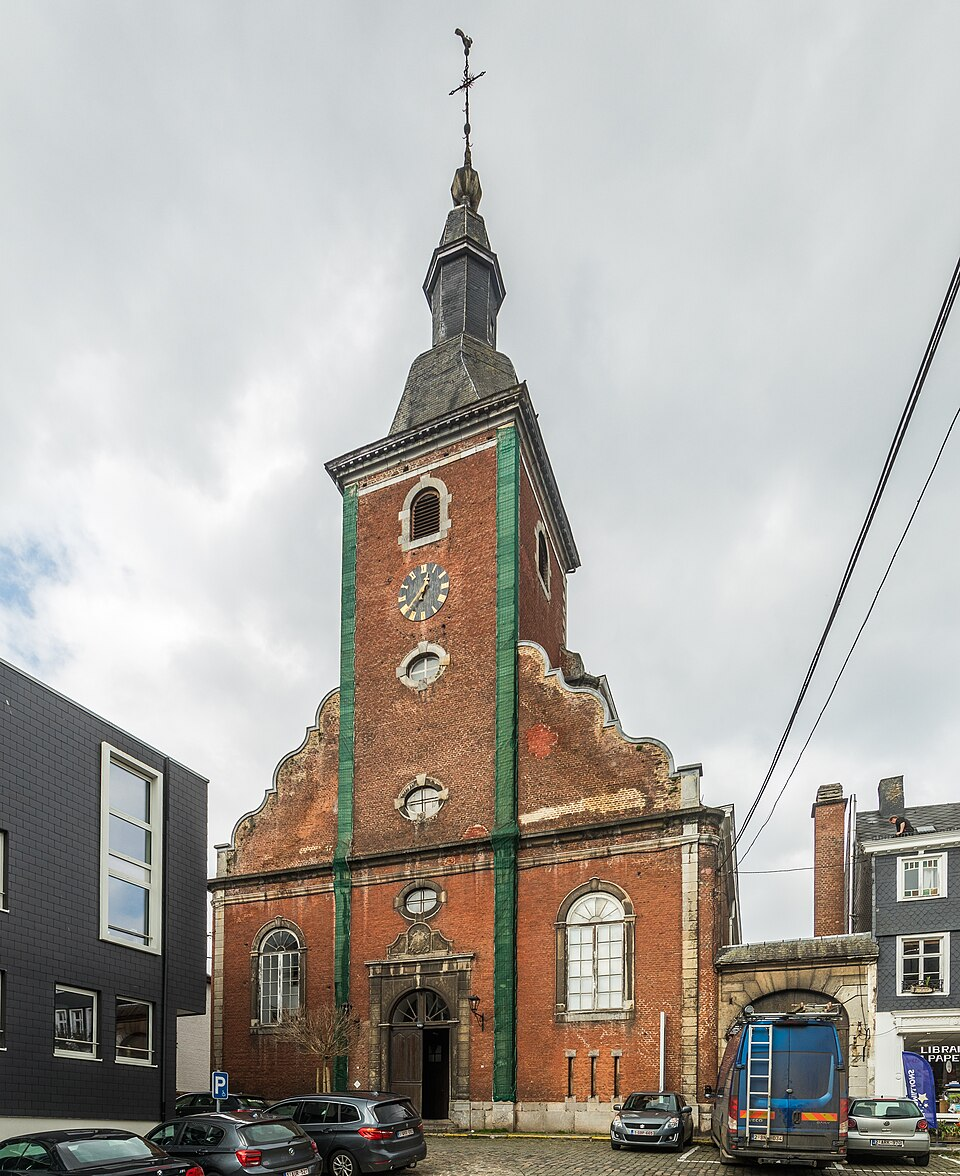
He was friends with Saint Hadelin and the spiritual father of Saint Trond, Saint Babolen, Saint Theodard of Maastricht, and Saint Lambert of Maestricht. In his later years retired to the abbey at Stavelot to spend his final days as a prayerful monk, dying 663 of natural causes. His relics lie in St. Sebastian Church in Stavelot.
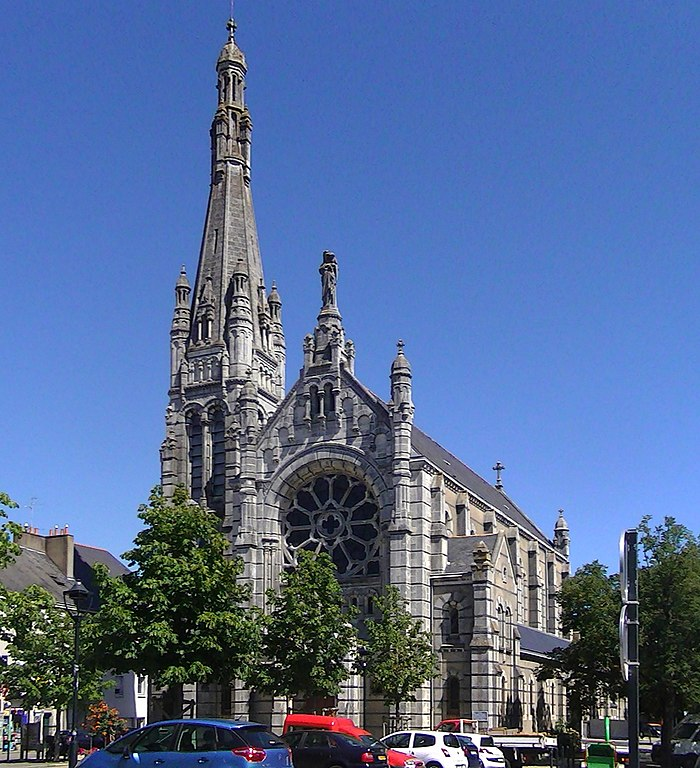
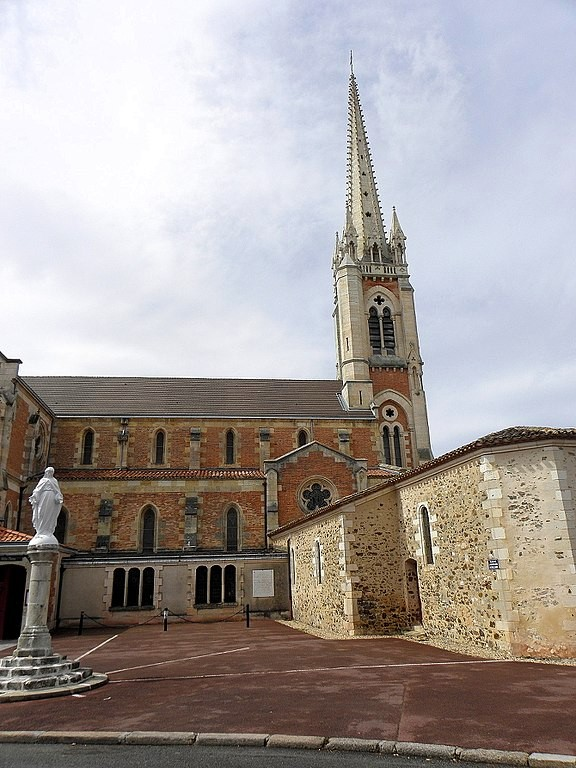
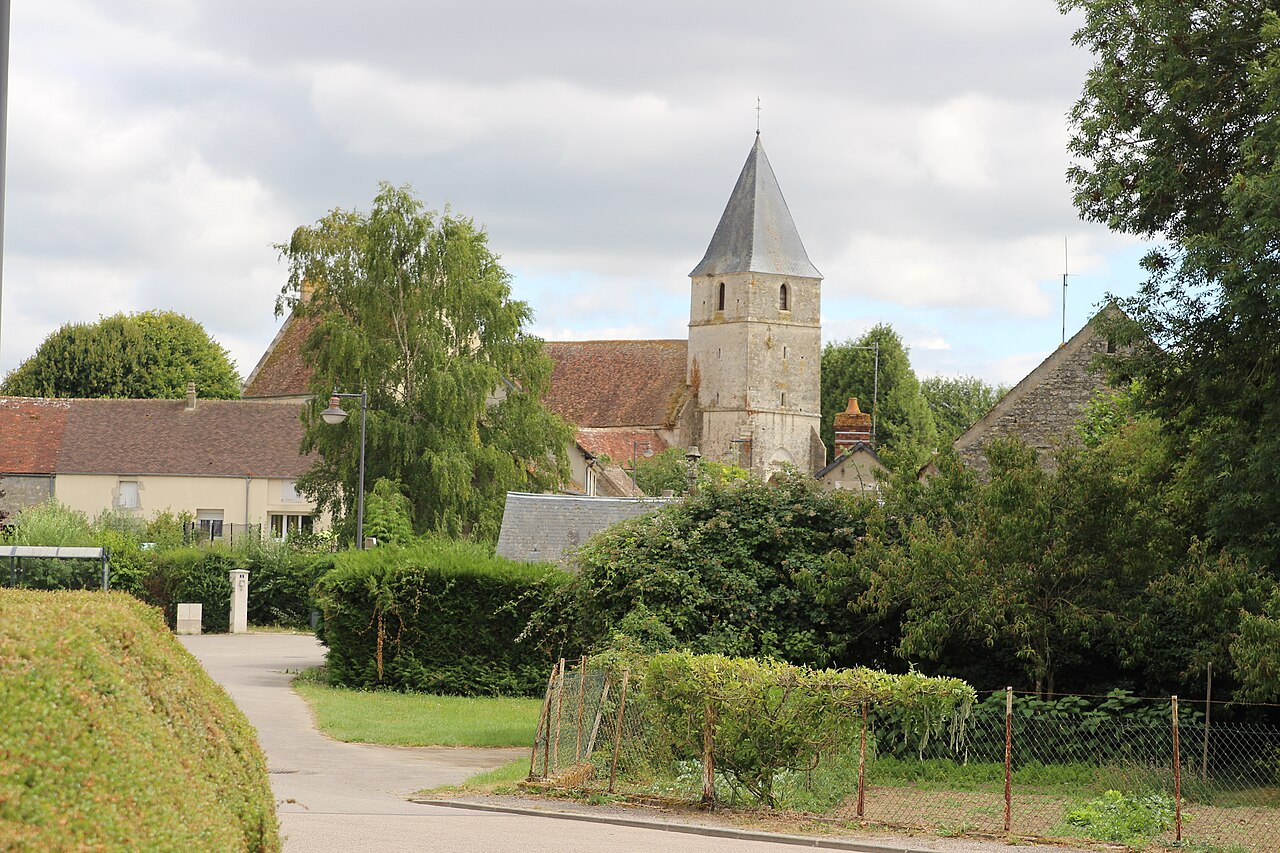
Church of St. Sebastian in Stavelot
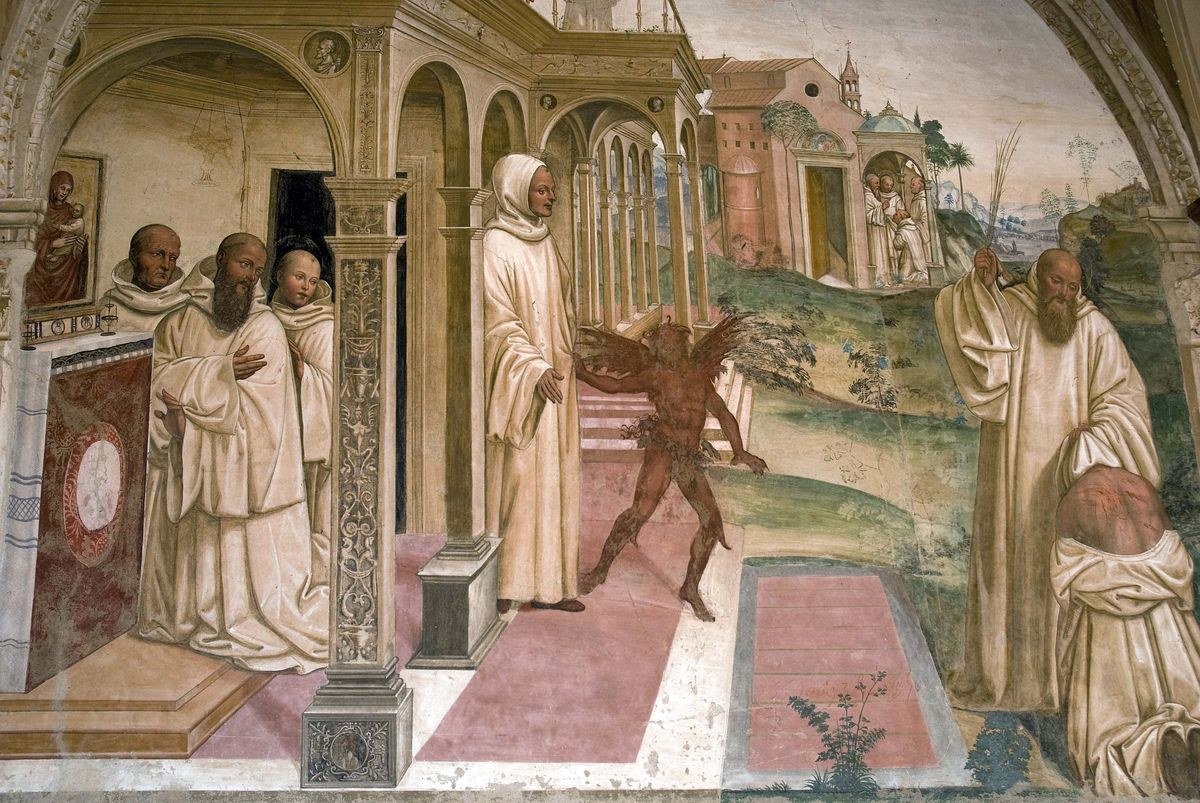
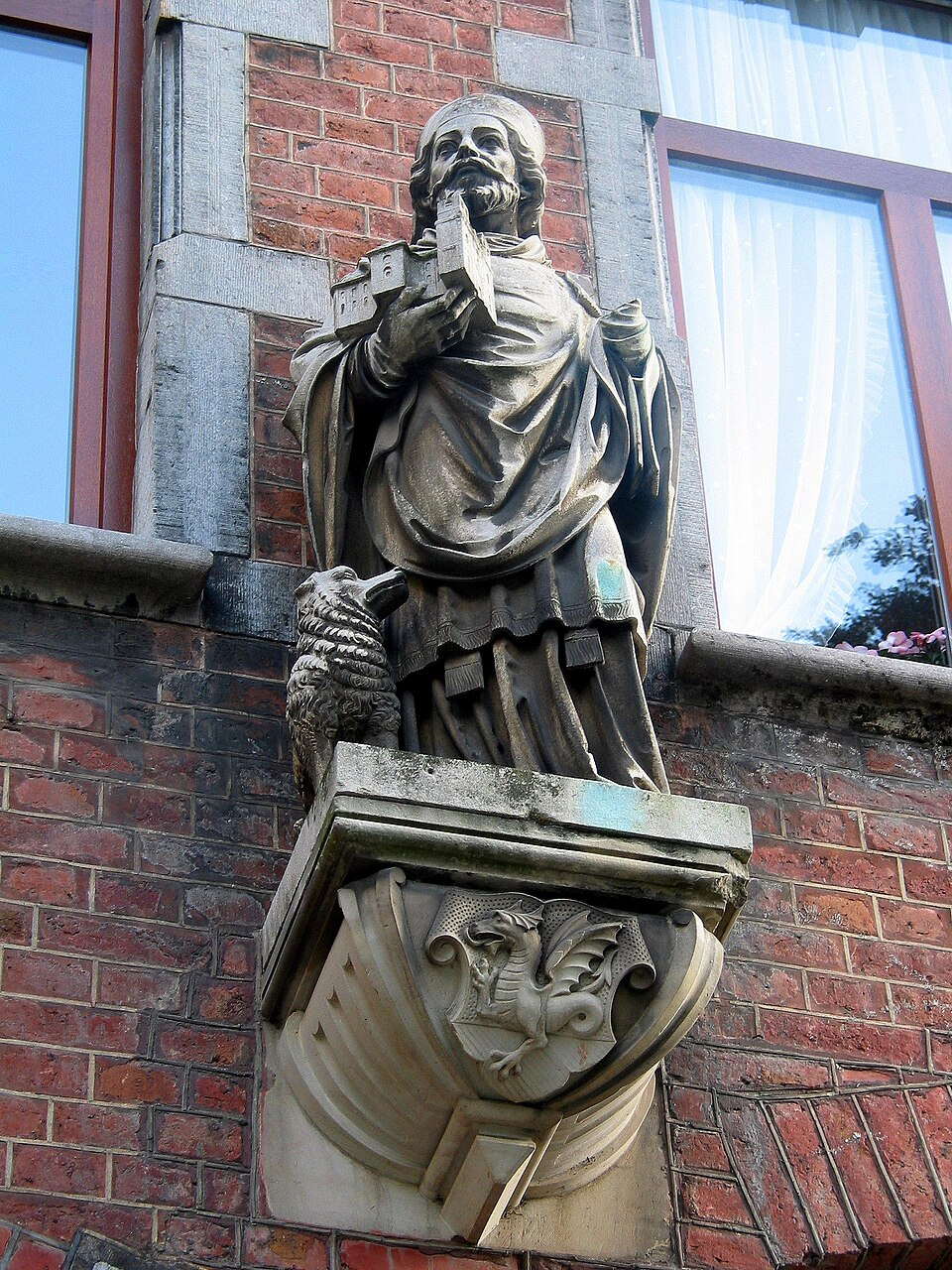
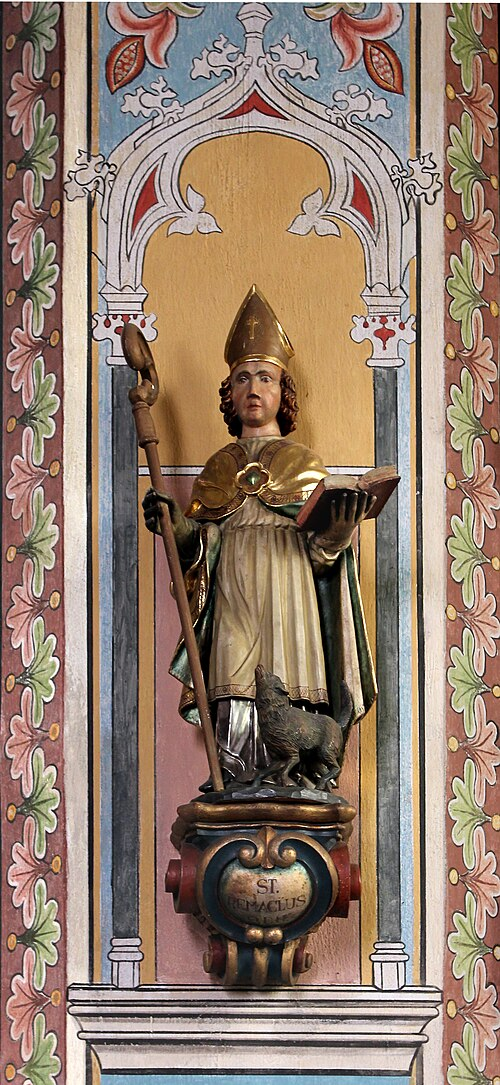
He is often depicted with a wolf because a wolf able to drive away the devil accompanied him. With his staff, the saint discovered springs which possessed healing waters.
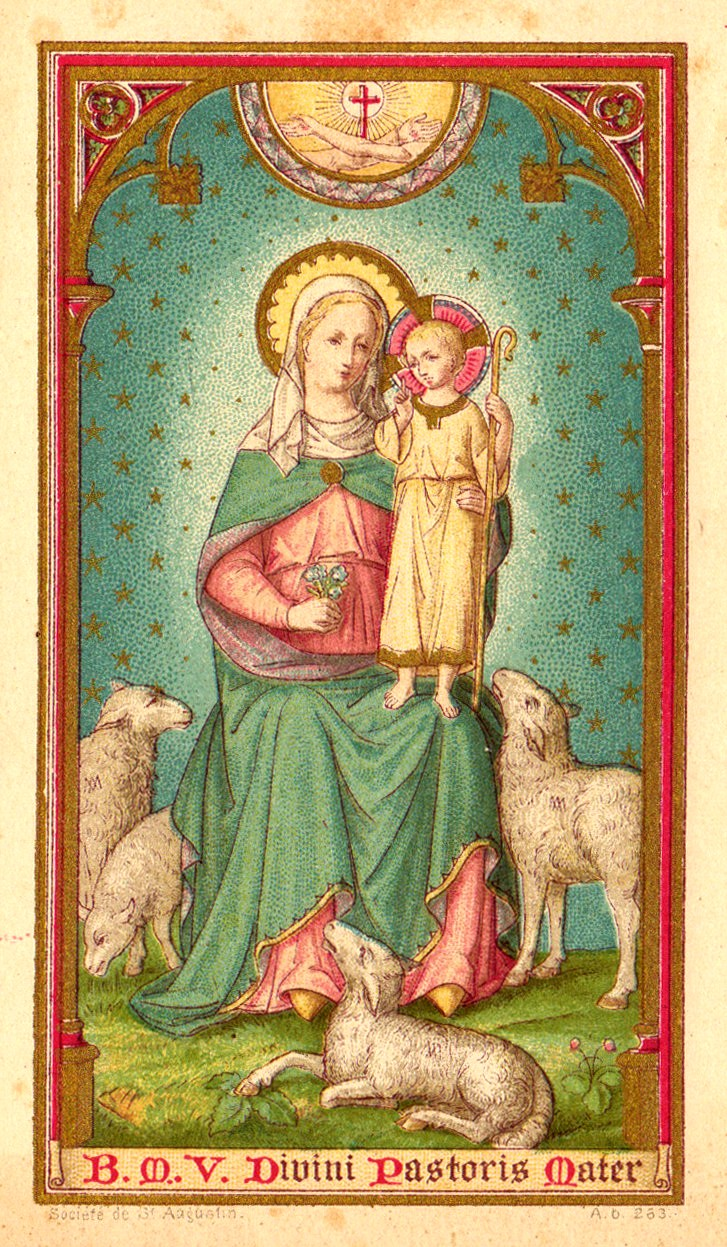
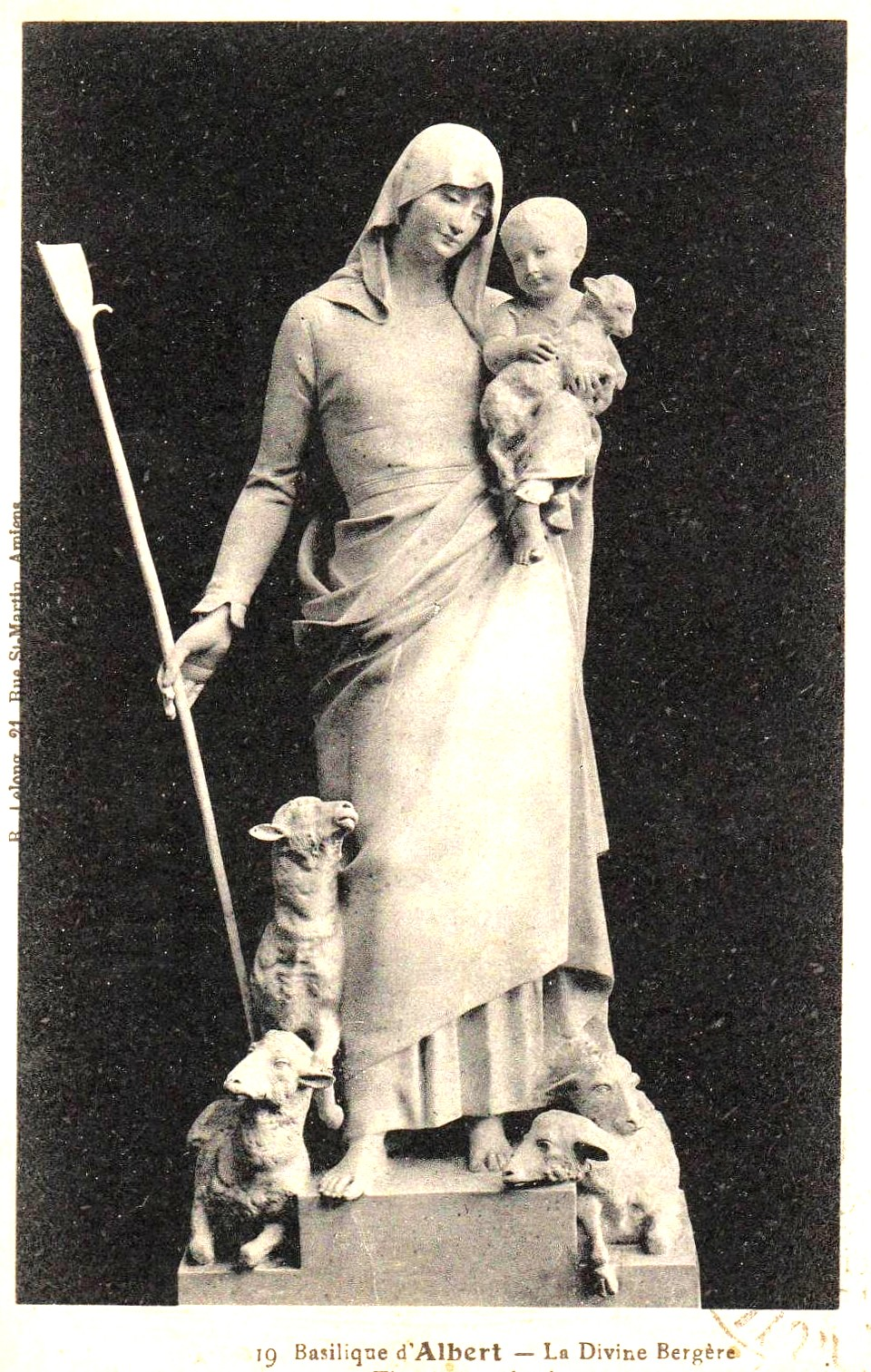
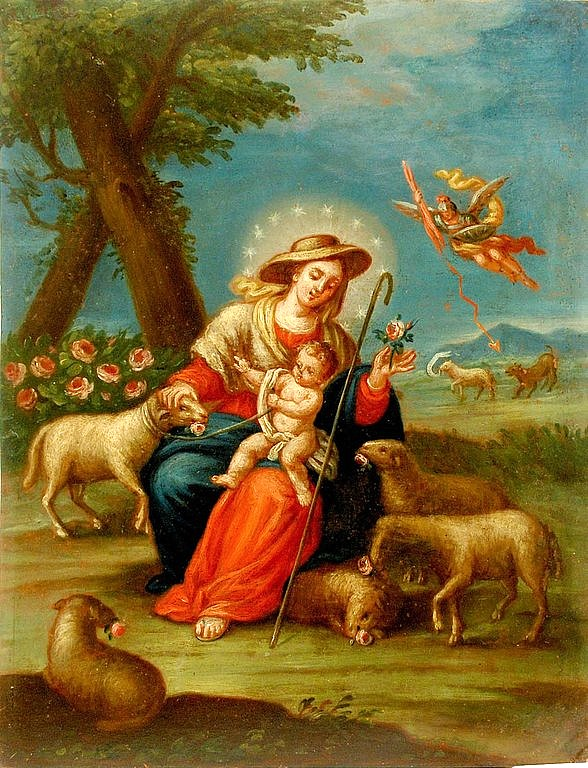
Notre Dame de Brebières / Mother of the Divine Shepherd, France (also known as Le Divine Bergère – The Divine Shepherdess) – 3 September:
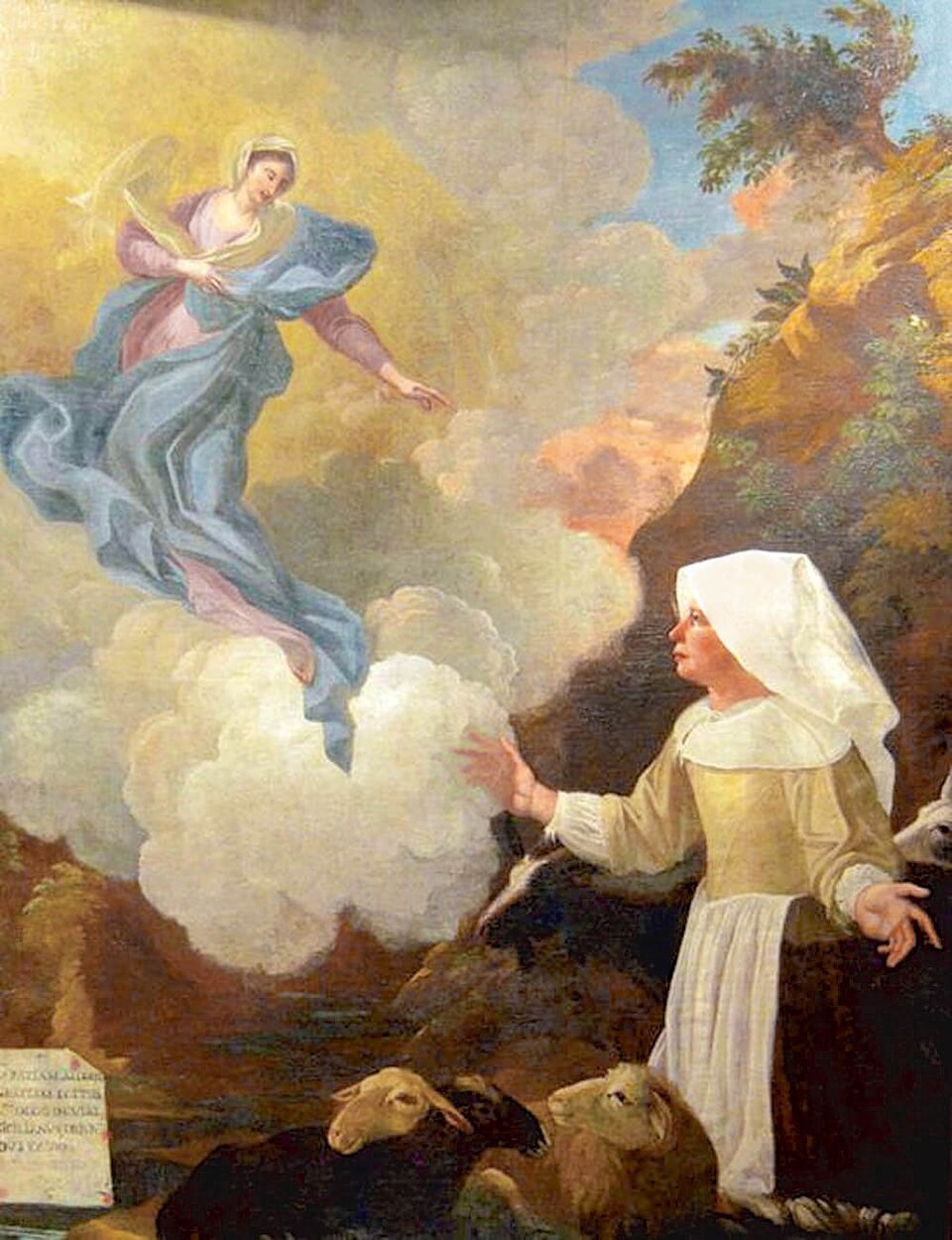
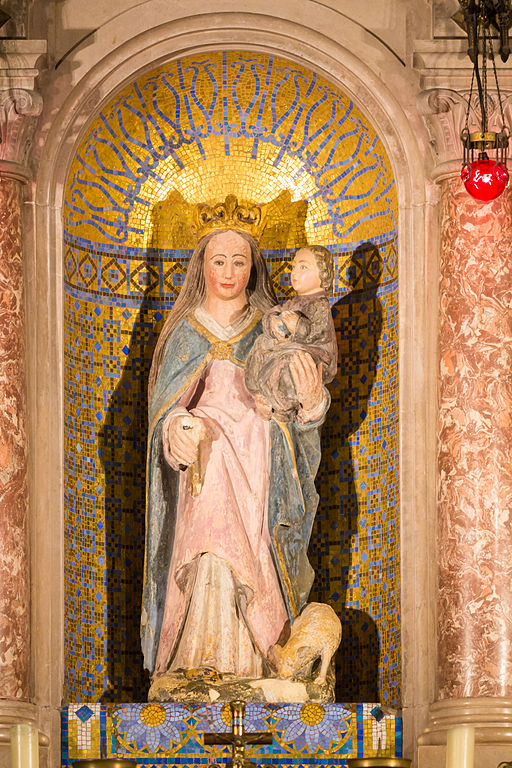
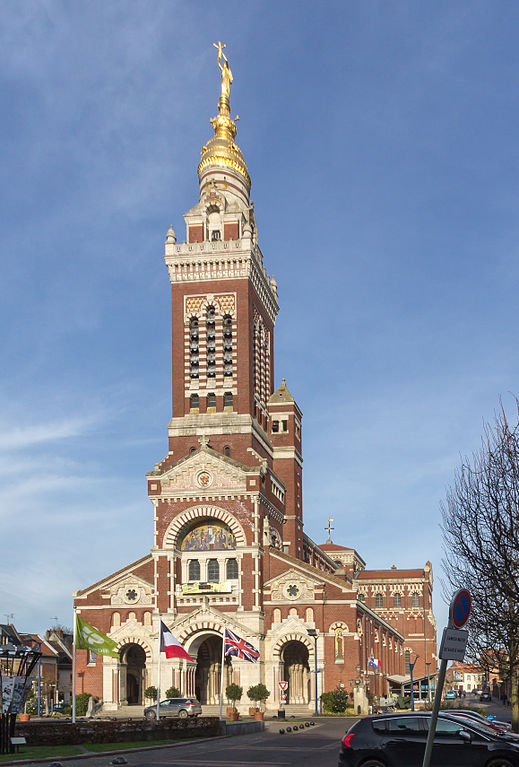
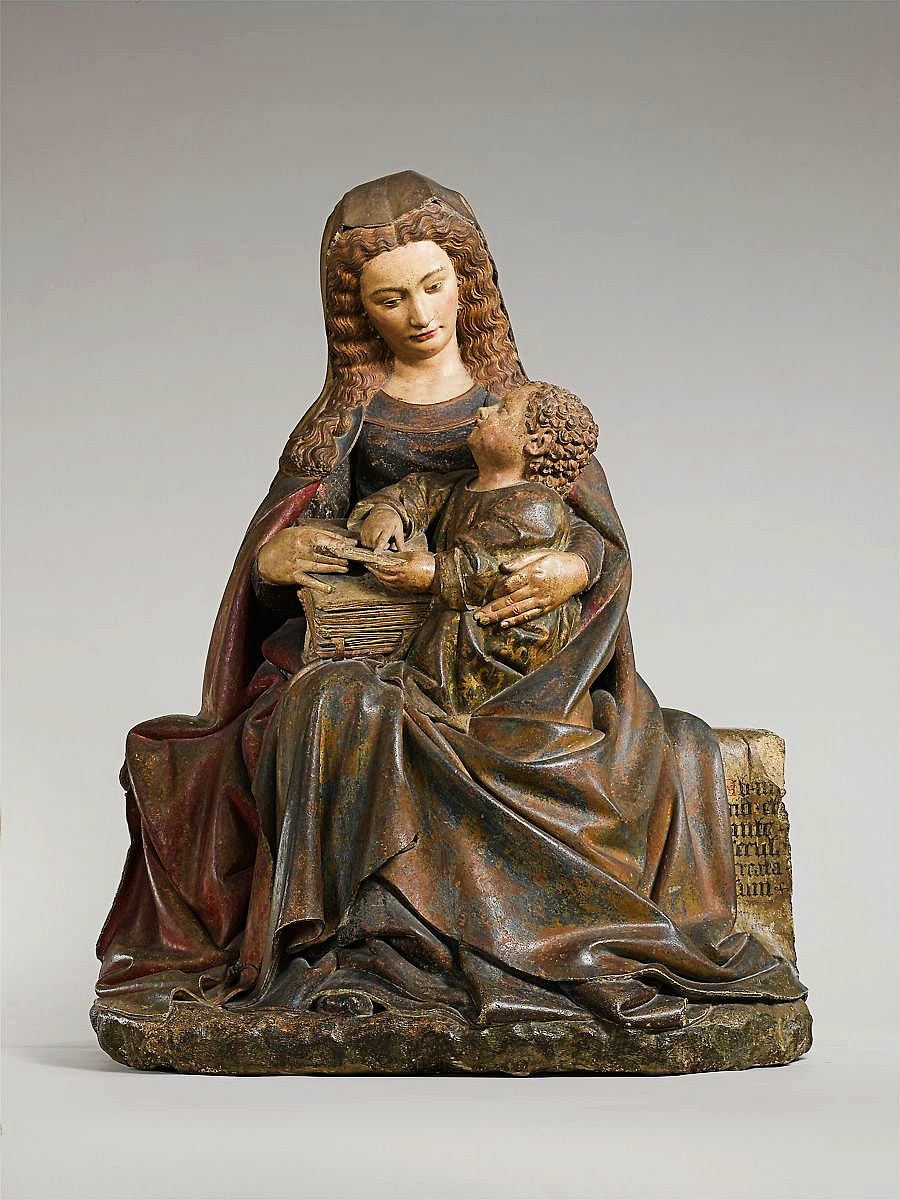
Our Lady, Mother of the Divine Shepherd, or Notre Dame de Brebières, is located in the small town of Albert in the Diocese of Amiens, France. At one time, probably sometime in the 12th century and according to local tradition, a shepherd was grazing his sheep at Brebières when he observed that many of the animals were staying in the same area to eat, ripping the grass out by the roots. It must have seemed very odd to the shepherd, who decided that the sheep were trying to uncover something, so he started to dig in the very spot himself. In a short time he uncovered a Statue of the Blessed Virgin sculpted from a single piece of solid stone.
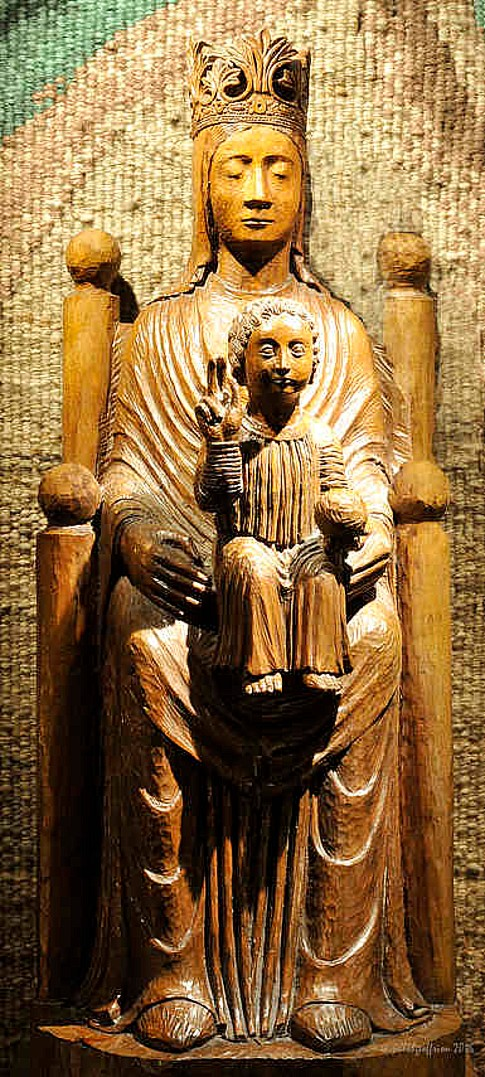
The Statue was fairly large, nearly 1,22 metres tall and represented the Blessed Mother holding the Divine Child in her arm. There was a sheep depicted quietly reclining at Mary’s feet. As has happened so often throughout history, the finding of the Statue increased the enthusiasm and affection of the local populace toward the Mother of God. A small Chapel was built at the site to honour the Statue and receive the pilgrims who had already begun coming to Albert to visit the Holy Mother.
Saint Colette can be credited for helping to spread the fame of Our Lady, Mother of the Divine Shepherd. At age fourteen, she was somewhat short and had a delicate constitution. Seeking a remedy through the favour of the Blessed Virgin, Saint Colette prayed to Our Lady of Brebières She not only obtained vigour and good health, she also found that several inches were miraculously added to her height!
In 1637 the Sanctuary was partially burned and IN 1727 the miraculous image was moved to the Parish Church of Albert. During the French Revolution the Church was made into a pagan temple to the goddess of Reason, while the image of the Mother of God was hidden until 1802 when the horrors of the Terror during this supposed time of reason subsided.
This feast is celebrated in a number of places and by certain religious communities and congregations: Capuchins, Marists and others, on widely different dates. It is a special festival of the Shrine of Our Lady of Brebières a very old Sanctuary near Albert in France, formerly much resorted to by the shepherds.
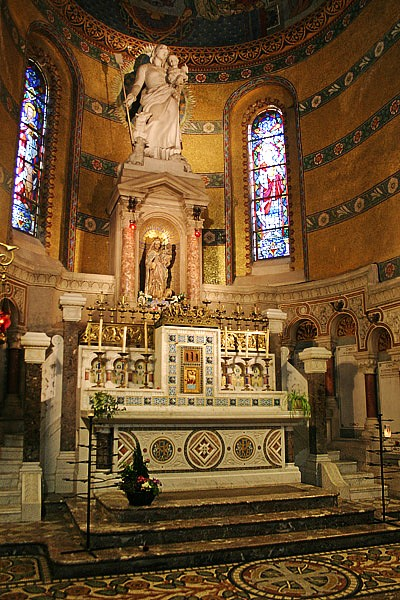
The pilgrimage here was revived after 1870 and a beautiful Basilica was completed in 1887. The Statue was crowned in 1901 and miraculously survived the devastation of both world wars. The Basilica has again been rebuilt.
The collect of the Mass prays that by following the Good Shepherd on earth, we may reach the pastures of eternal life with Mary in heaven.
St Chariton St Chrodegang of Séez St Frugentius the Martyr Bl Guala of Brescia St Hereswitha Bl Herman of Heidelberg St Macanisius St Mansuetus of Toul St Marinus (Died c 366) St Martiniano of Como St Natalis of Casale
St Phoebe (1st Century) Disciple of St Paul – Deaconess at Cenchrese, Matron and possibly a widow. She is mentioned by the Apostle St Paul in his Epistle to the Romans, verses 16:1-2.
St Regulus of Rheims St Remaclus St Sandila of Cordoba St Vitalian of Capua (Died 699) Bishop — Martyrs of Aquileia – 4 saints: Four young women, variously sisters and cousins, who were born to the nobility, the daughters of the pagans Valentinianus of Aquileia and Valentius of Aquileia. Each woman converted and made private vows, dedicating themselves to God. They were arrested, tortured and martyred by order of Valentius for becoming a Christian. We know little else but their names – Dorothy, Erasma, Euphemia and Thecla. They were martyred by beheaded in the 1st century in Aquileia, Italy and their bodies were thrown into a nearby river.
Martyrs of Nagasaki – 6 beati: A group of priests and clerics, native and foreign, murdered together in the anti-Christian persecutions in Japan. They were scalded in boiling water and then burned alive on 3 September 1632 in Nishizaka, Nagasaki, Japan and Beatified on 7 May 1867 by Pope Pius IX.
• Anthony Ishida • Bartolomé Gutiérrez Rodríguez • Francisco Terrero de Ortega Pérez • Gabriel Tarazona Rodríguez • Jerome of the Cross de Torres • Vicente Simões de Carvalho
Martyrs of Seoul – 6 saints: A group of Christian lay people martyred together in the persecutions in Korea. • Agnes Kim Hyo-Ch’u • Barbara Kwon Hui • Barbara Yi Chong-hui • Ioannes Pak Hu-jae • Maria Pak K’Un-agi • Maria Yi Yon-hui
Martyred in the Spanish Civil War: • Blessed Andrea Calle González • Blessed Concepción Pérez Giral • Blessed Dolores Úrsula Caro Martín • Blessed Joaquim Balcells Bosch • Blessed Pius Salvans Corominas
Quote of the Day – 25 August – St Louis IX (1214-1270) Confessor, King of France
The instructions which St Louis gave to the heir of his crown and which, he had constantly observed himself, testify to his great devotion and holiness. These were the last admonitions of the Holy King:
Love God, the Almighty, above all else.
Flee sin more quickly than you would a serpent.
Become not fainthearted, in adversity.
Become not elevated, in the days of prosperity.
Show the wounds of your soul frequently, to your spiritual physician and refuse no remedies, however bitter, to heal them.
Pray diligently.
Be compassionate and generous to the poor.
If your mind is harassed with doubt, consult a devout man.
Keep faithful and pious counsellors around you and dismiss those who are wicked.
All that is good hold fast: all that is bad discard.
Lend a willing ear to those who speak of God.
Listen not to calumniators and slanderers.
So long as you reign, leave not unpunished those who blaspheme God and the Saints.
First be grateful to God, then to men.
Love and protect justice and neither neglect nor despise the complaints of the needy.
In your own affairs, when they are not perfectly clear, speak and act against yourself.
Refund immediately the possessions of others.
Protect the clergy.
Love and honour your parents.
If you are obliged to war against Christians, spare the Churches and the Convents.
Endeavour to terminate all contentions with kindness.
Guard all your officials with a watchful eye.
Ever show due reverence to the Pope.
Overstep not the bounds of moderation in your expenses.
When I have departed, let prayers and Masses be said for the repose of my soul.
Saints Altigianus and Hilarinus, martyrs and monks of the French Burgundian monastery of Saint-Seine founded two centuries earlier by Saint Sequanus. The Moors who had invaded Spain in the early eighth century spread their conquest for a time into parts of France, and penetrated the country all the way to the Burgundian city of Autun. Their advance was not halted until 732, when the Frankish ruler Charles Martel defeated them between Poitiers and Tours. It was about this time that Altigianus and Hilarinus were slain with the sword by the Moors at or close to the Saint-Seine monastery, not far from Autun.
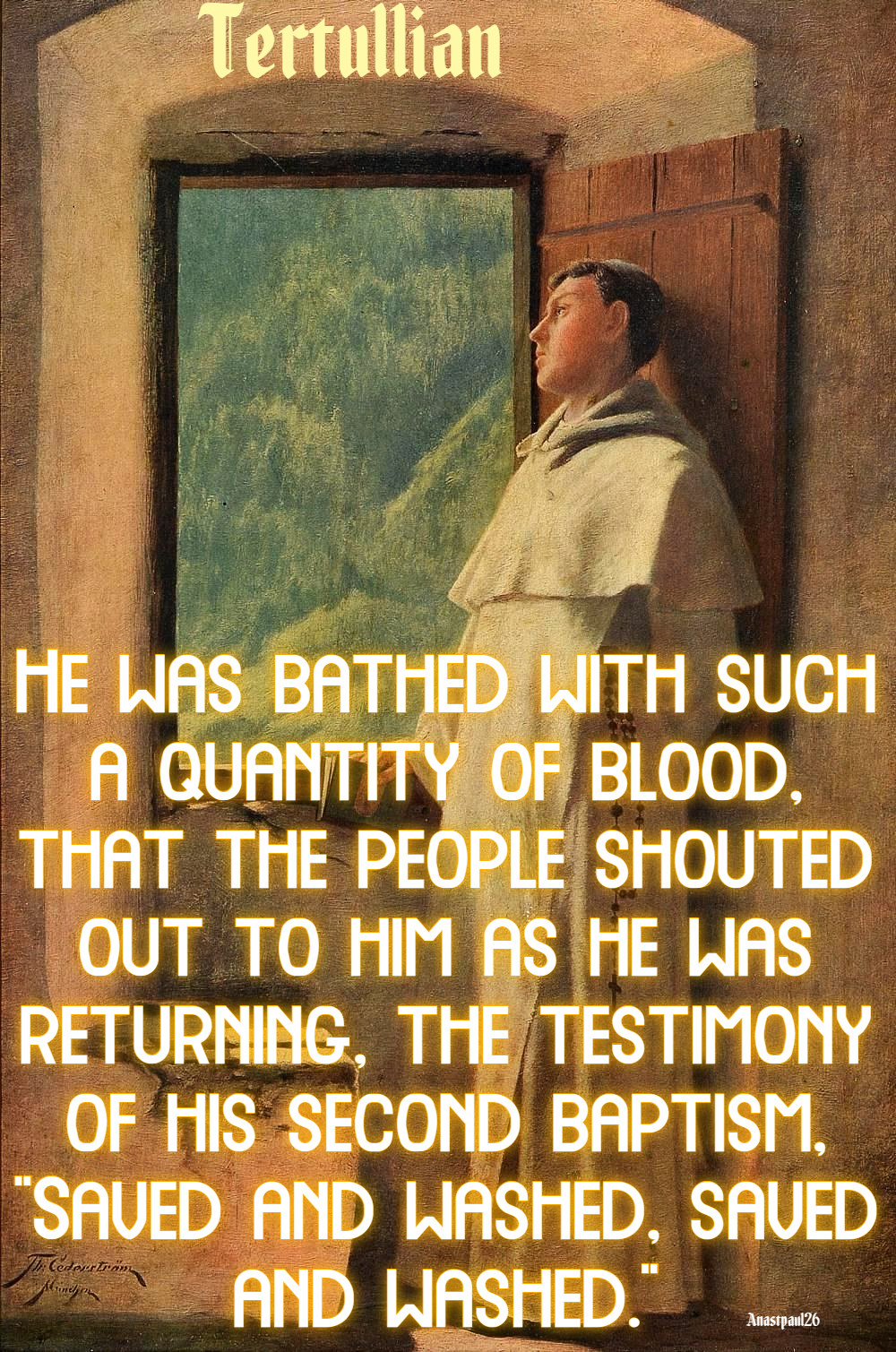
He was bathed with such a quantity of blood, that the people shouted out to him as he was returning, the testimony of his second baptism, “Saved and washed, saved and washed.”
St Philip Benizi OSM (1233-1285) Confessor, Co-Founder (one of the Seven Holy Founders of the Order of Servants of Mary) OSM, Servite Priest Genera\Superior, Reformer, Preacher, Medical Doctor. St Philip was Beatified on 8 October 1645 by Pope Innocent X and Canonised on 12 April 1671 by Pope Clement X – he was first Servite to be Canonised.
Notre-Dame de la Victoire de Valois / Our Lady of Victory of Valois, France (1328) – 23 August:
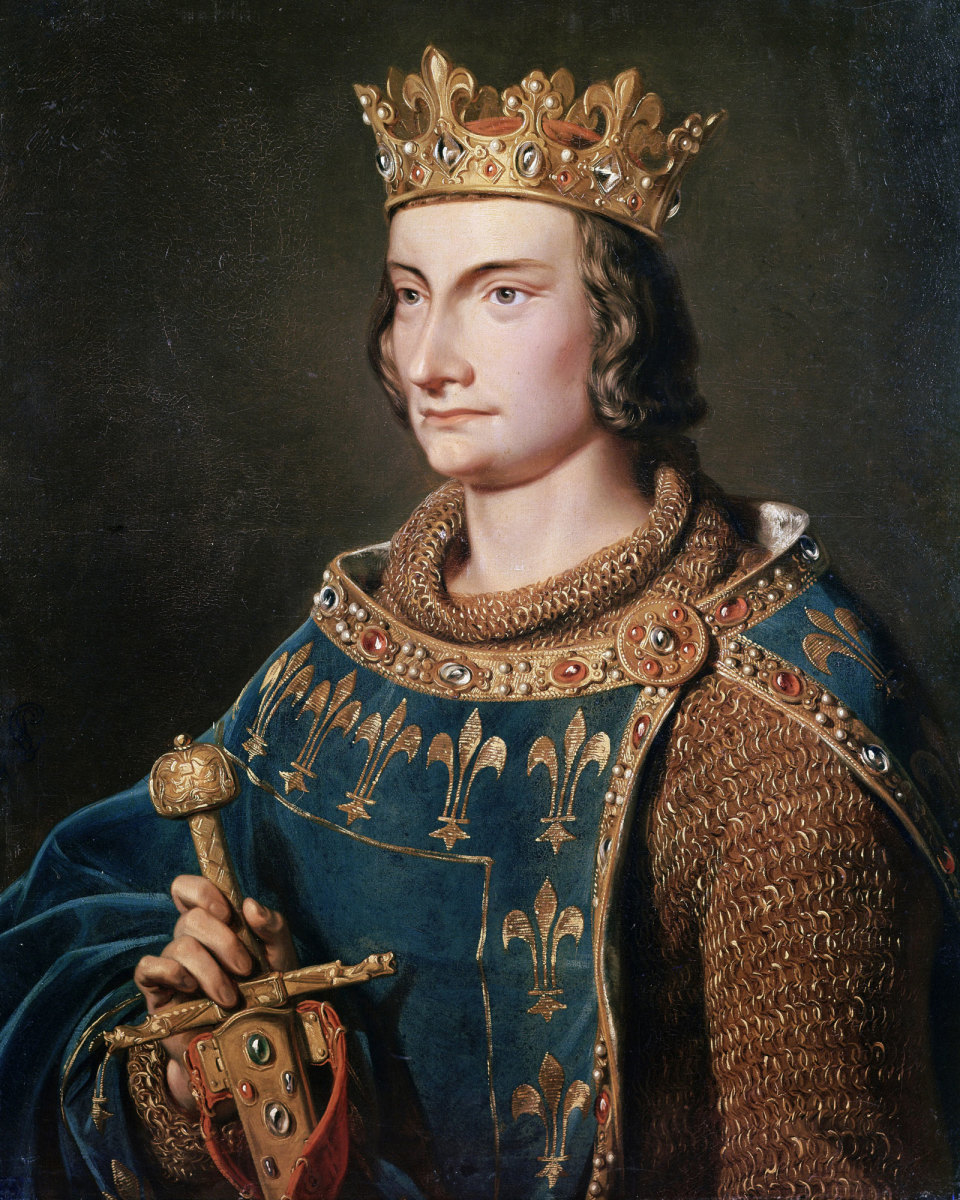
The Feast of Our Lady of Victory of Valois concerns Our Lady’s intercession in the Battle of Cassel, which was fought between the French, under Philip of Valois and the Flemish near Mount Cassel on 23 August in the year 1328. Philip of Valois, or King Philip VI, “Philip the Fortunate,” was the King of France beginning that year until his death in 1350.
Philip led his army against the band of Flemish rebels under Nicolas Zannekin, who were seeking independence from French rule. Having refused to pay what they considered to be excessive taxes to the Count of Flanders, they eventually imprisoned the King’s representative and captured several French towns. The Pope asked Philip to do what he could with the rebels but after having restored the Flemish aristocracy, the Flemish rebels had turned even on them, killing many of them.
Philip was certain of victory, taking 2,500 knights and 12,000 infantry and archers with him into battle. Not knowing where he would attack, the Flemish rebels would have to divide their forces to protect their territory. Even so, the Flemish under Zannekin brought 15,000 soldiers into the field at Cassel.
For three days the two armies did nothing but taunt each other, although the Flemish commenced a direct attack on the French on the third day. Apparently, the French were caught off-guard, for many of them had taken off their armour because of the extreme heat that day. Fleeing in panic, the knights left the field, while much of the French nobility, who stood their ground were wounded. The Duke of Lorraine was slain and the situation appeared desperate.
It is recorded that Philip of Valois, being surrounded by Flemish soldiers as the flower of his nobility fell, had recourse to the Blessed Virgin, who immediately delivered him from that danger. The Dauphin of Vienne, Guigues VIII de la Tour-du-Pin, had been given the command of Philip’s 7th Corps. He led a counter attack which shattered the Flemish assault, while the knights regrouped and attacked the Flemish from the rear. The Flemish were defeated and victory assured by Our Lady of Victory of Valois.
Our of gratitude for this favour, when he made his entry into Paris, Philip went straight to Notre Dame Cathedral. Going into the Church on horseback, he proceeded the whole length of the nave to the Crucifix and there, laid down his arms. The picture of this Monarch on horseback, was, for a long time, to be seen in that Church, to which Philip gave a revenue of 100 livres, to be levied on his domain of Gatinais.
St Abbondius of Rome St Altigianus St Apollinaris of Rheims St Archelaus of Ostia St Asterius of Aegea St Claudius of Aegea St Domnina of Aegea St Eleazar of Lyons St Eonagh St Flavian of Autun Bl Franciszek Dachtera Bl Giacomo Bianconi of Mevania St Hilarinus St Ireneus of Rome Bl Jean Bourdon St Lupo of Novi St Luppus St Maximus of Ostia St Minervius of Lyons St Neon of Aegea St Quiriacus of Ostia St Theonilla of Aegea St Timothy of Rheims
St Tydfil (Died c 480) Martyr of Wales, Confessor, Princess, Apostle of Mercy to the sick and the needy.
Martyrs of Agea – 4 Saints: A group of Christian brothers, Asterius, Claudius and Neon, denounced by their step-mother who were then tortured and Martyred in the persecutions of Pro-consul Lysias. They were crucified in 285 outside the walls of Aegea, Cilicia (in Asia Minor) and their bodies left for scavengers.
Victory of the King of France (Philip the Fair), imploring the help of Our Lady of Chartres (1304) – 17 August:
It was on this day in the year 1304 that “Philip the Fair” gained a signal victory over the Flemish after recommending himself to Our Lady of Chartres.
The eldest son of King Philip and Isabella of Aragon, he was nicknamed Philip the Fair while yet a Prince for his handsome features. He became King of France at only 17 years of age and married Joan of Navarre in 1284, which enlarged his Kingdom.
In the year 1302, Philip sent an inadequate army into Flanders to suppress the Flemish, who were making incursions into his realm at will. His army was soundly defeated at the Battle of the Golden Spurs. Philip responded by winning a naval victory over the Flemish at Zierichzee and then met the Flemish army at the Battle of Mons-en-Pevele, also known as Mons-en-Puelle, on 17 August 1304.
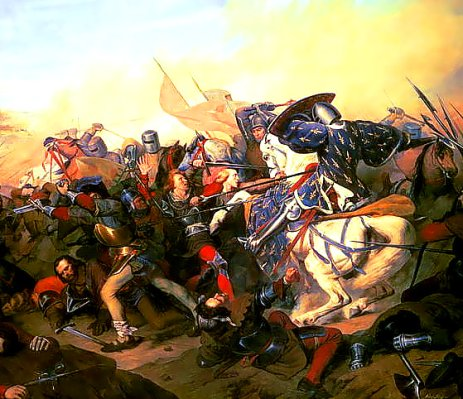
The battle was furious, lasting all day in extreme heat. Eventually the majority of the French army fled the field, leaving Philip alone with only ten Knights fighting desperately to save themselves and their King. Philip’s horse collapsed, having been killed under him and his life was in great danger of being lost. At that moment, while facing death and certain defeat in battle, Philip turned to the Queen of Heaven, Our Lady of Chartres, begging her assistance to save the day and his life.
Suddenly the French Knights, who had been fleeing the field, turned and saw the King’s Royal Standard still stood, and that he, himself, fought like a Knight of great renown amidst a sea of raging enemies. Racing to the scene with their swords and lances, they turned the Flemish and drove them from the field in what became a resounding victory for the King of France. The Battle of the Golden Spurs was well compensated.
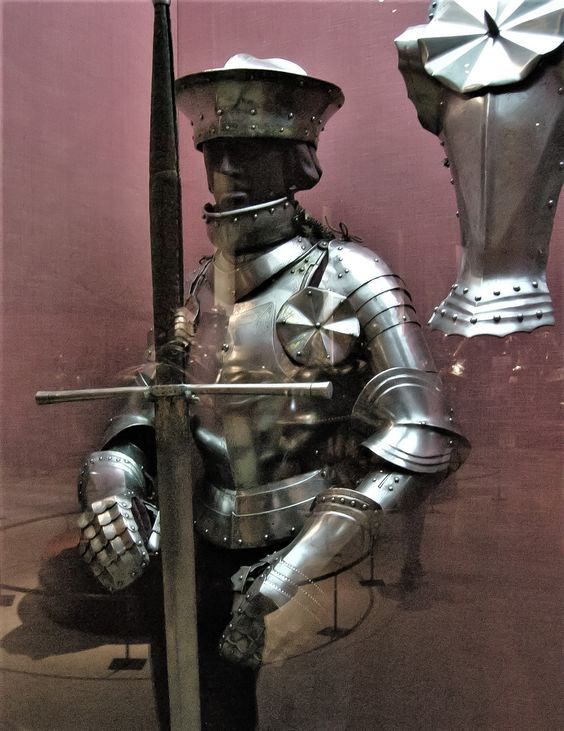
In gratitude for this victory and favour of Our Lady of Chartres, King Philip went at once to do homage to the Virgin Mary at her Cathedral. He took off his own armour and gave it to the cathedral at the Altar. He also gave to it, in perpetuity, the land and lordship of Barrus, founded a daily Mass forever and left to this church ,all of the other accoutrements which he had worn on that day of victory. This feast is kept in the Church of Notre Dame, at Paris, on the following day, the 18th and the office is double. This armour is formerly exhibited in the church, on the Anniversary of the battle.
St Benedicta of Lorraine St Carloman St Cecilia of Lorraine
St Clare of the Cross of Montefalco (c 1269-1308) Augustinian Nun and Abbess, before becoming a nun, St Clare was a member of the Third Order of St Francis (Secular), Mystic, Penitent, Spiritual adviser.
St Donatus of Ripacandida St Drithelm St Elias the Younger Bl Enric Canadell Quintana Bl Eugenio Sanz-Orozco Mortera St Pope Eusebius St Eusebius of Sicily
St Hyacinth OP (1185-1257) ) “Apostle of Poland” and “Apostle of the North” also known as “the Polish St Dominic”– Religious Priest of the Order of Preachers, Confessor, Doctor of Law and Divinity, Missionary, Preacher, Miracle Worker, Mystic.
St Jeroen of Noordwijk St Juliana of Ptolemais St Leopoldina Naudet St Mamas Bl Marie-Élisabeth Turgeon St Michaël Kurobyoie St Myron of Cyzicus
St Nicolò Politi (1117-1167) Basilian Monk and Hermit. He was known for his miracles even during his childhood and was Venerated as a saint even before his death.
Bl Noël-Hilaire Le Conte St Paul of Ptolemais St Theodore of Grammont — Martyred in the Spanish Civil War: Bl Antoni Carmaniú Mercarder, Bl Facundo Escanciano Tejerina, Bl Eugenio Sanz-Orozco Mortera, Bl Enric Canadell Quintana, Florencio López Egea and see below – Martyrs of Malaga – 8 beati: A priest and seven brothers, all members of the Hospitallers of Saint John of God, all martyred together in the Spanish Civil War.
Our Lady’s Veil was given by the Byzantine Empress Irene as a gift to the Emperor Charlemagne. In 876, Charles the Bald, Charlemagne’s grandson, donated the unfathomably precious relic to Chartres, where it remains. One of the many miracles which it has performed, is the saving of Chartres from pagan Viking invaders. Rollo, the Norsemen’s chieftain, besieged the city, but when the bishop of Chartres processed with Our Lady’s veil around the city walls, the Christian army rallied and launched a ferocious counter attack, while the Vikings suddenly lost courage and fled in terror.
Later that same year, Rollo was baptised and granted Normandy as his fiefdom. The time of the Vikings was almost over.
Our Lady’s Veil at Chartres CathedralRollo’s grave within Rouen Cathedral
St Cassian of Benevento St Chromatius the Prefect St Digna of Todi St Equitius of Valeria
St Géry/Gaugericus of Cambrai (c 550 – 626), Bishop of Cambrai, France, Founder of Monasteries, Churches and of St Géry Island off Belgium, Géry devoted himself to the fight against paganism, Miracle-worker.
Bl Jean-Georges Rehm Bl John Sandys St Lelia St Rusicola of Arles St Rufinus of Marsi Bl Theobald of England and Companion St Taurinus of Evreux Bl William Lampley
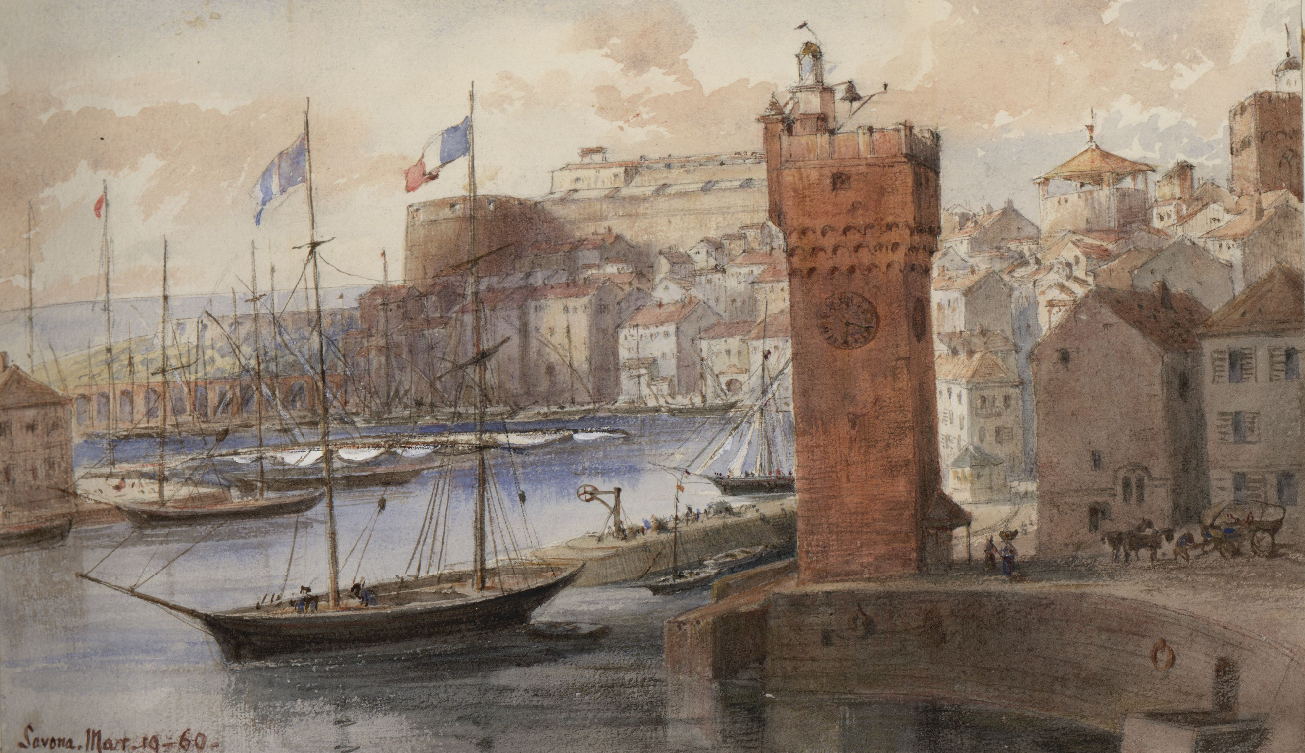
Blessed Octavian of Savona, also known as Ottaviano, was born in 1060 in Quingey, in France. He was the brother of Pope Saint Callistus II. Educated by the Benedictines, he became a monk at the Benedictine community at Saint Peter’s Abbey in Pavia, Italy. His devotion and commitment to the monastic way of life meant he rose through the ranks of the Benedictine order. In 1129, Octavian was appointed the Bishop of Savona, in northern Italy.
Savona, 1860
He was venerated for his deep devotion and strong faith, in only a short time becoming an extremely powerful force for good in the lives of those around him by inspiring them to follow Christ more diligently. He died peacefully in 1132, of natural causes. In recognition of his virtues and the impact he had on the lives of others, Octavian was beatified by Pope Pius VI in 1793, confirming his cultus and recognizing him as a blessed.
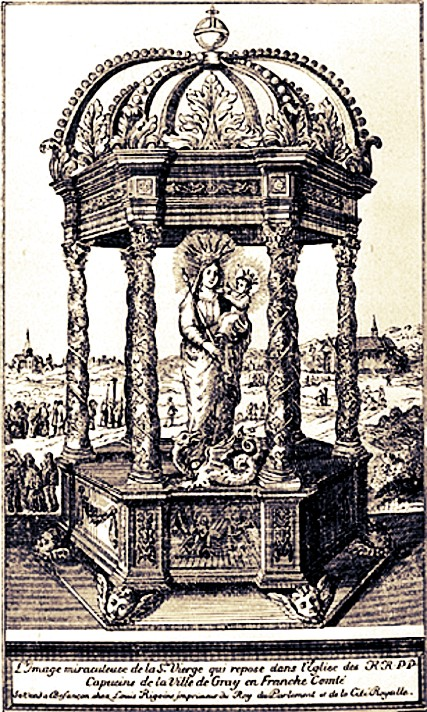
Notre-Dame-de-Gray / Our Lady de Gray, France (1602) – 30 July:
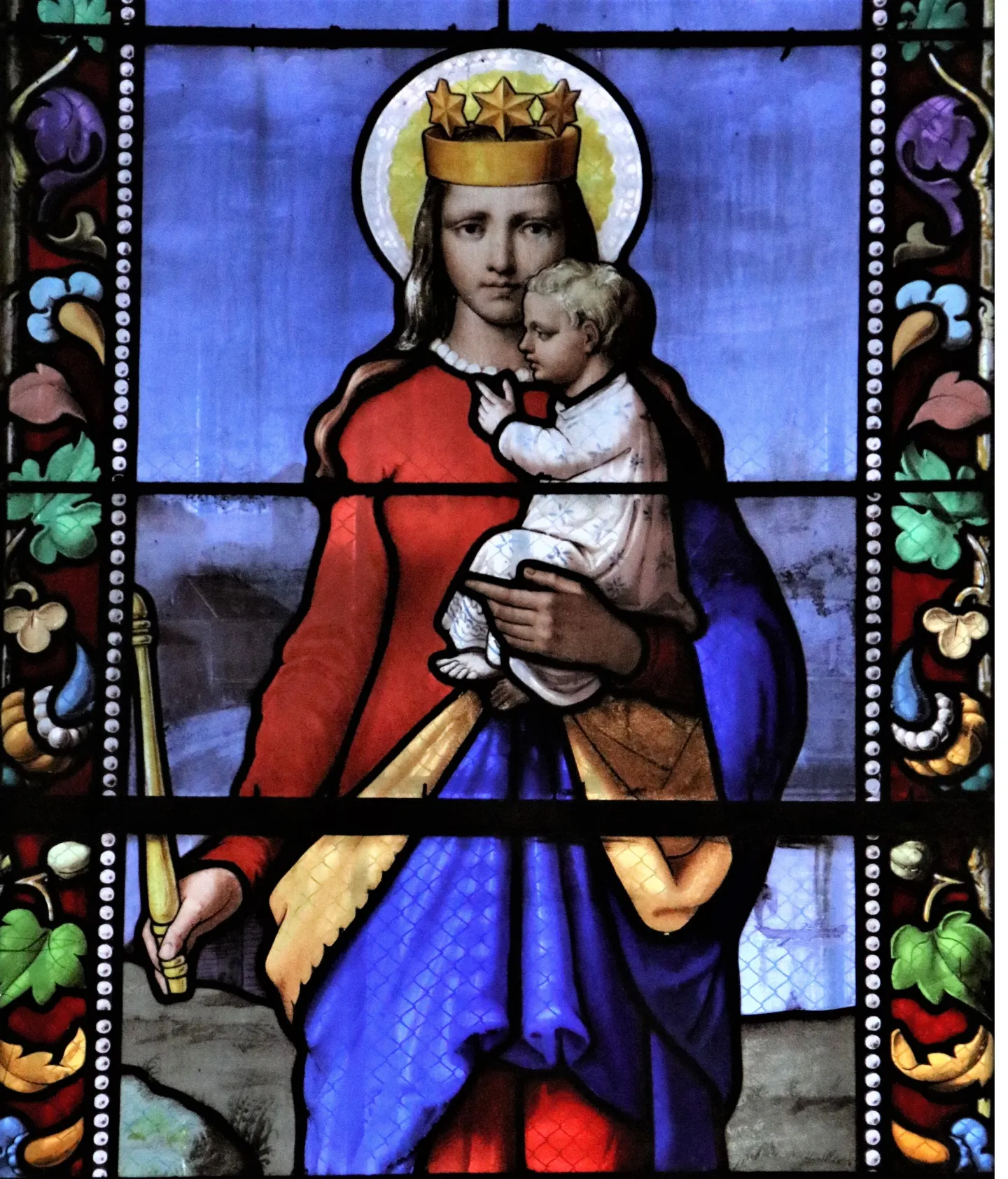
The Shrine of Notre-Dame-de-Gray, or Our Lady of Gray, is located near Besancon in Northern France near Franche-Comte. The Statue of Our Lady of Gray is made of an oak tree from Montaigu, has a dark wooden colour and is only 14.5 centimeters tall. It is much honoured in the country and there are many miracles and graces granted to petitioners that are attributed to Our Lady’s intercession at this shrine.
About five centuries ago, on a hill near Montaigu, a pious person placed a small statue of the Blessed Virgin Mary upon an old oak tree. The tree itself is believed to date from the time of the Druids and crested one of the hills in the Diocese of Malines. Soon the faithful began to come in crowds from throughout the region, for there were miraculous cures and various miracles granted to the pilgrims who invoked Mary under the name of Our Lady of the Oak.
In the year 1602 a small wooden chapel was built on the hill of Montaigu. The oak upon which the statue of Our Lady had once been displayed was now cut up into small pieces and carved by a local craftsman into statuettes of the same image. These statues were presented as a mark of respect to patrons of the shrine. Even the wood of the oak was considered almost a precious relic, for it had once touched the miraculous statue of the Blessed Virgin. Wherever they went these figures were enshrined with honour and it seemed as if Our Lady of Montaigu sent her favour, for her miraculous power went with them.
In the year 1613, a poor, seventy year old widow named Jeanne Bonnet de Salins made a pilgrimage to the shrine. She obtained a piece of the venerable old oak and took it to a sculptor named Jean Brange to carve into a statue similar to that of the original. On 4 April 1613, the Archbishop of Besancon blessed the Statue and allowed it to be exhibited for public veneration.
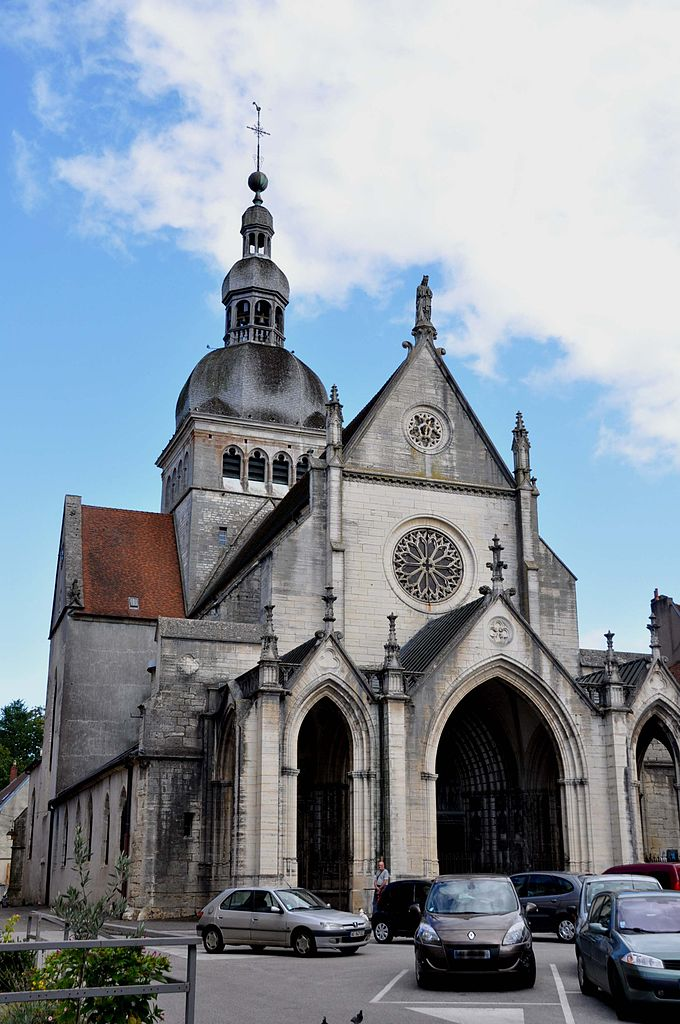
It is reported, that Jeanne Bonnet was rewarded by signal graces she obtained through Our Lady’s intercession. She intended to give the statue to a local church but, in 1616, yielded to the repeated entreaties of Father Gabriel Appremont, who wanted to have the image for the Capuchins of Gray. A special chapel was richly decorated to receive it. The news soon spread in the region of Gray and the faithful flocked to pay their respects to the new Madonna, Our Lady of Gray.
Our Lady of Gray holds in her right hand a gleaming sceptre of gold that a parishioner donated in the year 1807. It was at this time that the chapel – now a Basilica (see below), was undergoing reconstruction after the ravages of the French Revolution. There are also three semi-precious stones set in the front of the base of the statue that were given by grateful petitioners to the Blessed Virgin. Finally, the two gold crowns were created in 1909 on the occasion of the celebration of the coronation of the statue of Our Lady of Gray.
St Abdon Bl Antonio di San Pietro Bl Edward Powell St Ermengyth St Hatebrand St Julitta of Caesarea Blessed Manés de Guzmán OP (c 1168-1235) Dominican Priest and Friar, Brother of Saint Dominic
Bl Richard Featherstone St Rufinus of Assisi St Senen St Tatwine of Canterbury St Terenzio of Imola Bl Thomas Abel St Ursus of Auxerre Bl Vicenta Chavez-Orozco — Martyrs of Castelseras: Three Dominicans, two of them priests, one a novice, who were martyred together in the Spanish Civil War for refusing to renounce Christianity. • Joaquín Prats Baltueña • José María Muro-Sanmiguel • Zosimo Izquierdo Gil They were shot on 30 July 1936 at a farm house outside Castelserás, Teruel, Spain.
Martyrs of Tebourba – 3 saints: Three girls martyred together in the persecutions of Diocletian. We know little else about them but the names – Donatilla, Maxima and Secunda. 304 at Tebourba in North Africa.
The Martyrs of the Spanish Civil War: Bl Alejandro González Blanco Bl Eugenio García Tribaldos Bl Guillermo Álvarez Quemada Bl Juan Lanz Palanca Bl Luis Herrero Arnillas Bl Miguel Solas del Val Bl Pablo Díaz de Zárate y Ortiz de Zárate Bl Racardo Pla Espí Bl Sergio Cid Paz
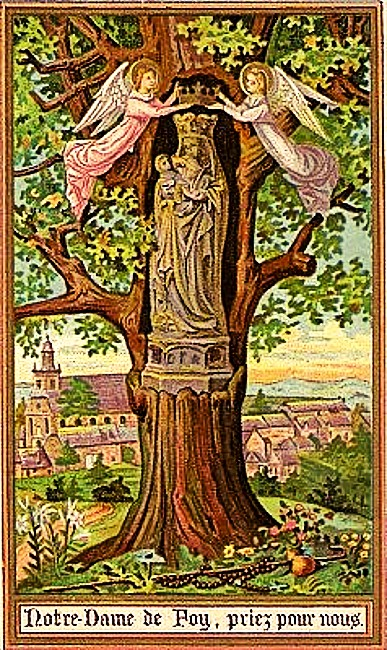
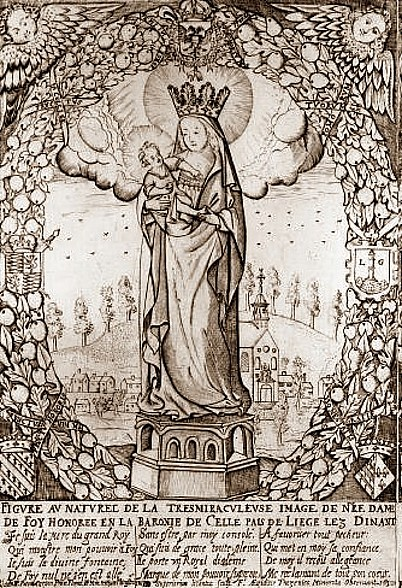
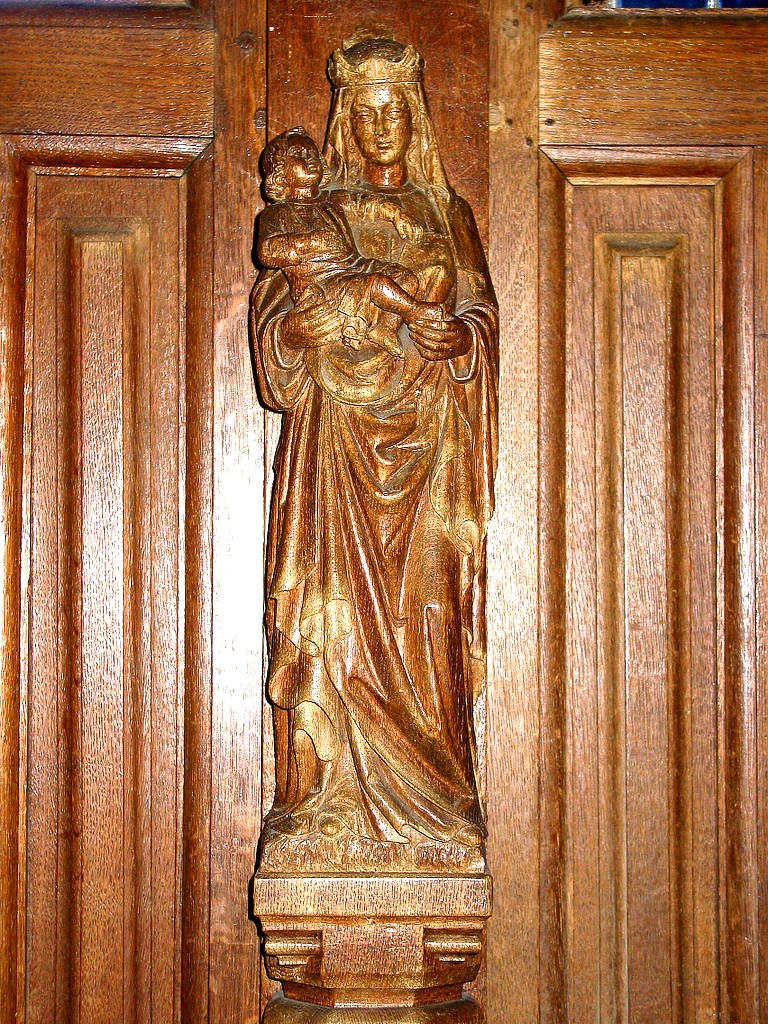
Notre-Dame-de-Foy / Our Lady of Faith,Gravelines, Liege, France (1616) – 27 July:
Not far from the small town of Dinant, in Liege near a home belonging to the Lord of Celles, two magnificent oaks once grew. One of the two venerable old trees was felled in the year 1609 by a man named Gilles, a lumberjack. The worker who inspected the tree found a small terracotta statue of the Mother of God, enthroned, as it were, with three iron bars that served as a trellis. The old oak stood on the edge of a path taken by pilgrims travelling to St Hubert. Apparently, at some time in the distant past, some pious Christian soul had placed the holy image in a hollow of the oak, as if in a niche. Then, over a period of time, the opening the tree had made while it was still young gradually closed and as it grew, the tree hid in its womb, the precious figure. Over the years the bark of the tree closed upon it and, as the road became less frequented, the existence of the Statue was completely forgotten.
To honour the Virgin, the Statue was subsequently displayed on the other oak, once again behind an iron grating, by order of the Baron of Celles. In this new Sanctuary, the Mother of God was honoured with the title of Our Lady of Faith. Those passing by did not fail to venerate the Statue;and there were many unexpected miracles. Graces of all kinds multiplied,and soon pilgrims began to flock to the area because of the dazzling miracles and very quickly a spontaneous cult grew.
The Statue was first placed in another oak but it was almost thrown away by servants who thought it had no value. The local Baron placed it near the door to his oratory at the Castle of Veves as pilgrims began to flock there. In this new Sanctuary, the image of Our Lady was honoured under the title of Our Lady of Faith, which was the name of the farm.
The first miracle occurred in 1616. As a result of the intercession of the Blessed Virgin Mary an old man was healed from a painful and debilitating hernia. The canonical investigation prescribed by the Bishop of Liege, was positive in its conclusion.
A Priest of the Society of Jesus had recently been sent to Gravelines. He worked diligently to cultivate souls, as if upon a fruitful vine and by his sermons excited the people of the region to a greater love for the Mother of God. Seeing that this devotion had taken root, he met with the local Magistrate to discuss how to maintain and increase the piety of the people. It was decided that they should make replicas of the Statue of Our Lady of Faith, made from the wood of the first oak. When the first was completed, the image was observed to have a great resemblance to the original. Received with great joy, it was placed in a large reliquary above the high Altar in the Parish Church.
St Aetherius of Auxerre St Anthusa of Constantinople St Arethas St Aurelius of Cordoba St Benno of Osnabruck (c 1020-1088) Bishop Bl Berthold of Garsten
St Pope Celestine I (Died 432) called “the Heresy Fighter.” Much is unknown about Celestine, including his birthday. But his reign as Pope – from 422 to his death in 432 – is credited with many achievements.
St Ecclesius of Ravenna Bl Felipe Hernández Martínez St Felix of Cordoba St Galactorio of Lescar St George of Cordoba St Hermippus St Hermocrates St Hermolaus Bl Jaime Ortiz Alzueta Bl Joaquín Vilanova Camallonga Bl José María Ruiz Cano St Juliana of Mataró St Lillian of Cordoba Bl Lucy Bufalari St Luican
Bl Maria Klemensa Staszewska Blessed Maria Magdalena Martinengo OSC Cap (1687-1737) Nun St Maurus of Bisceglia Bl Modesto Vegas y Vegas St Natalia of Cordoba Bl Nevolone of Tavenisa St Pantaleimon
St Pantaleon (Died c 305) Martyr, Lay Physician, one of the Fourteen Holy Helpers.
Bl Rudolf Aquaviva S.J. Bl Robert Sutton St Semproniana of Mataró St Sergius of Bisceglia Bl William Davies Bl Zacarías Abadía Buesa
Martyrs of Nicomedia – 3 saints: Three Christians martyred together. The only other information to survive are their names – Felix, Jucunda and Julia. Nicomedia, Asia Minor.
Seven Sleepers of Ephesus: A group of seven young Christian men who hid in a cave in hopes of avoiding the persecution of Decius in the year 250. Found and arrested, they were ordered by the pro-consul in Ephesus to renounce their faith; they refused and were sentenced to die. Legend says that they were walled up in their hiding cave, guarded by the dog Al Rakim; when the cave wall was breached in 479 – they all woke up!
It is likely that the youths were tortured to death in various ways and buried in the cave. The resurrection story confusion came from the phrase “went to sleep in the Lord” which was used to describe the death of Christians and 479 is when their relics were discovered. Their names were Constantinus, Dionysius, Joannes, Malchus, Martinianus, Maximianus and Serapion. They were martyred in 250 in Ephesus (in modern Turkey); tradition says that they were walled up in a cave to suffocate but other records indicate that they were tortured to death in various ways. Their relics discovered in 479 and translated to Marseilles, France and enshrined in a large stone coffin.
Saints Rasyphus and Ravennus are martyrs. Natives of Britain, they fled their country during the Anglo-Saxon invasions, settling in Gaul to become hermits. The parish church of St-Aubin in Macé, Normandy, states that the two saints founded their hermitage near the site of the current building, near a miraculous spring of water. Their reputation as holy men quickly spread, drawing pilgrims from all over the region who came seeking guidance and healing.
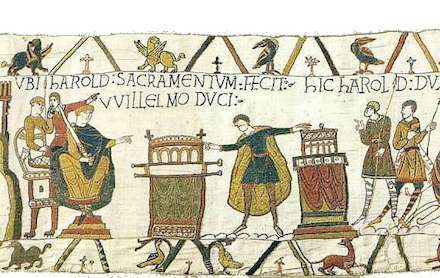
King Harold swearing an oath to his enemy, William the Conqueror, at an altar consecrated to Rasyphus and Ravennus in the Bayeux Cathedral (Bayeux Tapestry)
But this renown also brought the Goths, who demanded that the saints convert to Arianism. Of course they refused. As a result they were tossed against a great block of sandstone. Their heads dented the stone but the saints were not hurt (there are two visible prints in the church of St-Aubin of Macé that are considered to be the marks made by the heads of the two saints). They were then decapitated and buried near the present grounds of St-Aubin de Macé; a tombstone marks the site of their former grave.
Macé
The two saints were venerated as great healers, responsible for many miracles. Their relics were taken from St-Aubin to Bayeux Cathedral during the Viking invasions. The relics were then taken to Caen during the Wars of Religion. Finally, they were taken to Grancey in Champagne, where they rest today.
You must be logged in to post a comment.