Quote/s of the Day – 12 July – “Month of the Most Precious Blood” – Readings: Ps 46:2, Ps 46:3, Rom 6:19-23, Ps 33:12, 6, Ps 46:2, Matt 7:15-21
A good tree cannot bear bad fruit, nor can a bad tree bear good fruit. Every tree that does not bear good fruit is cut down and thrown into the fire. Therefore, by their fruits you will know them.
Matt 7:15-21
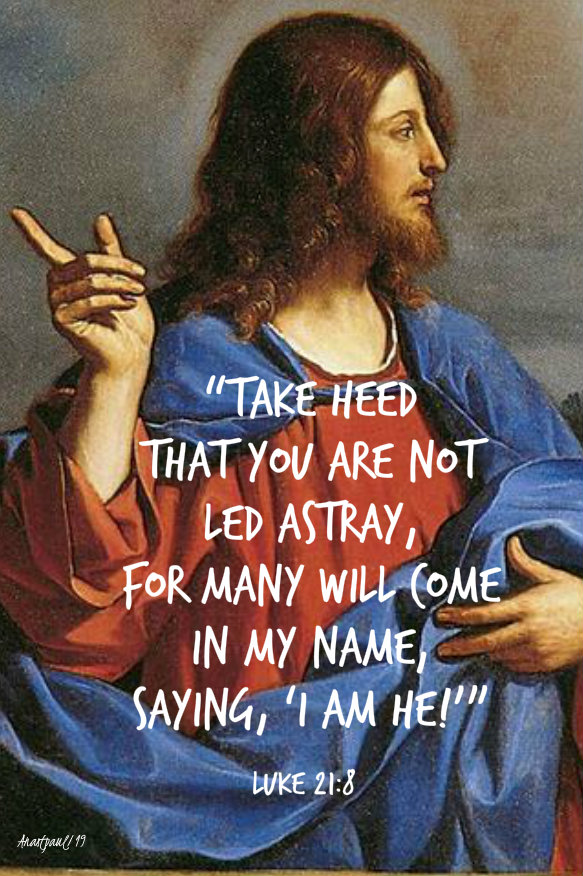
“Take heed that you are not led astray, for many will come in my name, saying, ‘I am he!’“
Luke 21:8
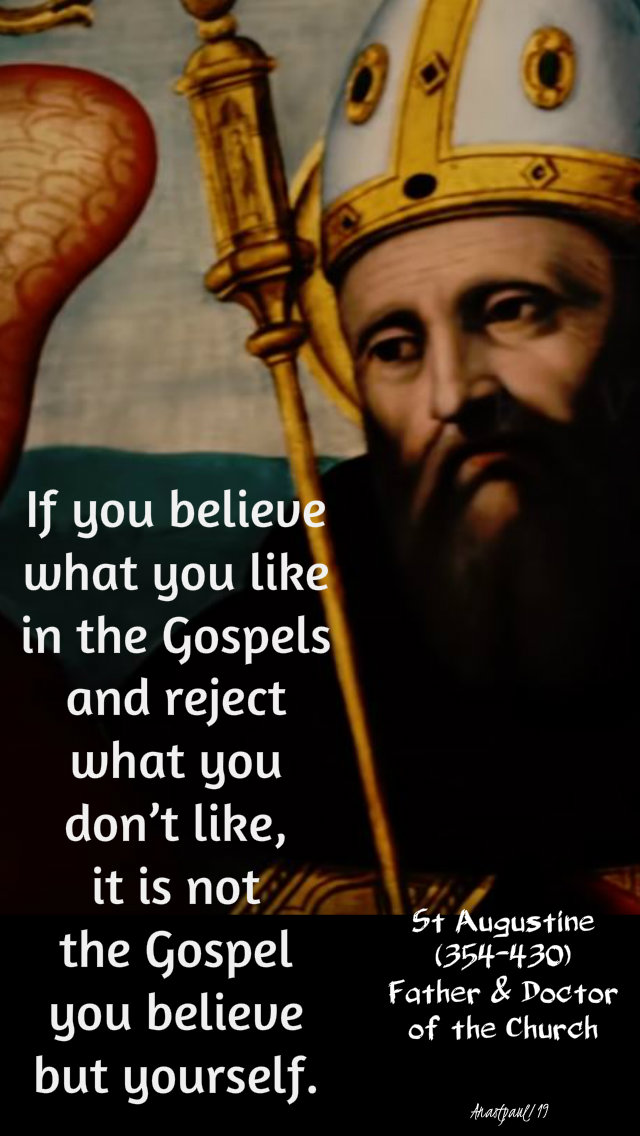
“If you believe what you like in the Gospels and reject what you don’t like, it is not the Gospel you believe but yourself.”
Saint Augustine (354-430)
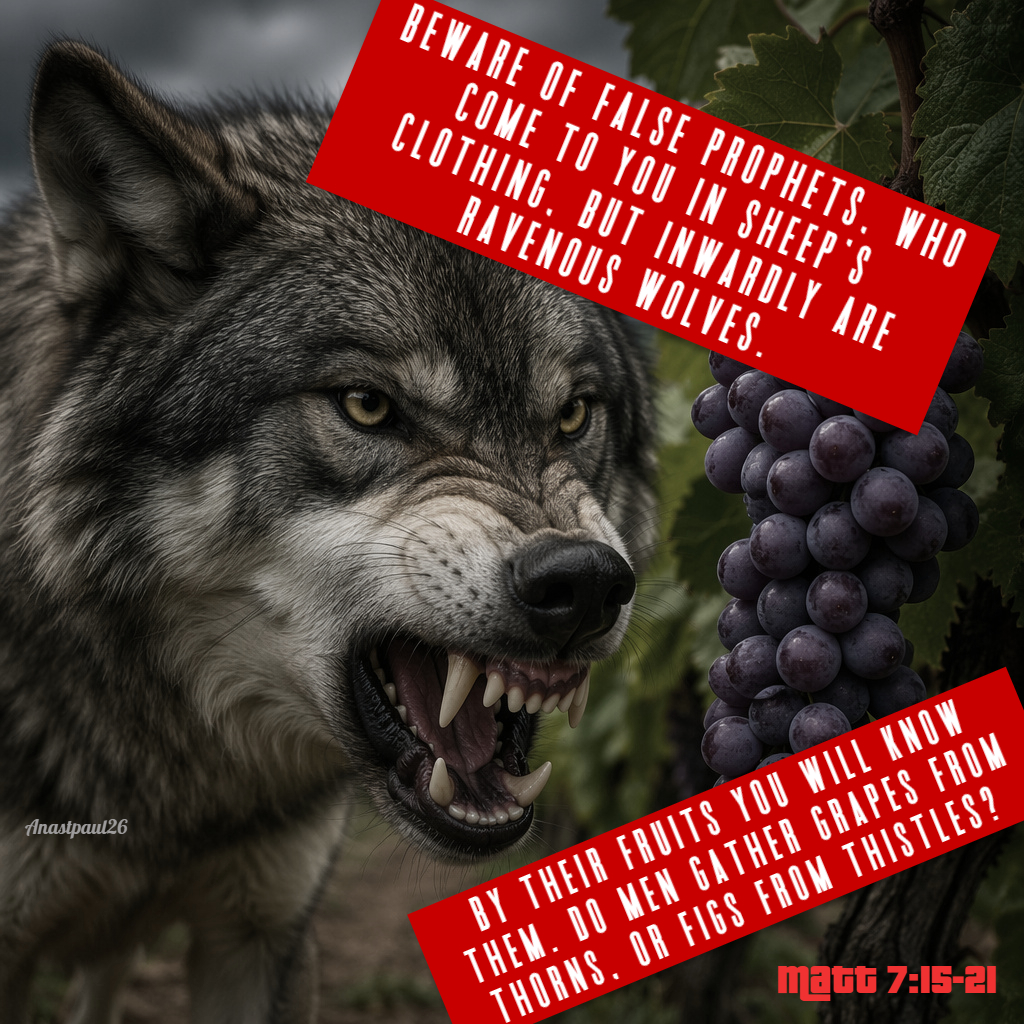
At that time, Jesus said to His disciples: Beware of false prophets, who come to you in sheep’s clothing, but inwardly are ravenous wolves. By their fruits you will know them. Do men gather grapes from thorns, or figs from thistles? Even so, every good tree bears good fruit, but the bad tree bears bad fruit. A good tree cannot bear bad fruit, nor can a bad tree bear good fruit. Every tree that does not bear good fruit is cut down and thrown into the fire. Therefore, by their fruits you will know them.
Matt 7:15-21
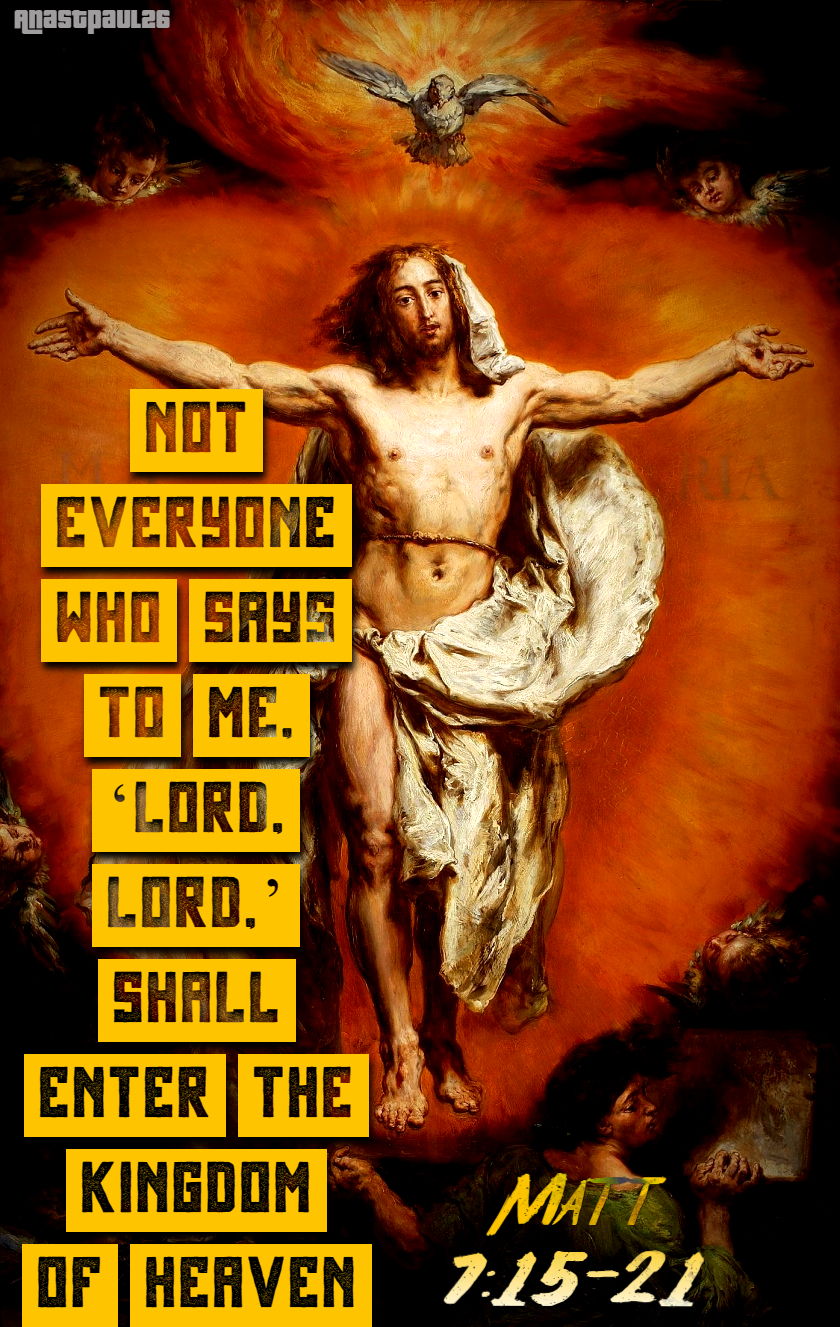
Not everyone who says to Me, ‘Lord, Lord,’ shall enter the kingdom of heaven; but he who does the will of My Father in heaven shall enter the kingdom of heaven.
Matt 7:15-21
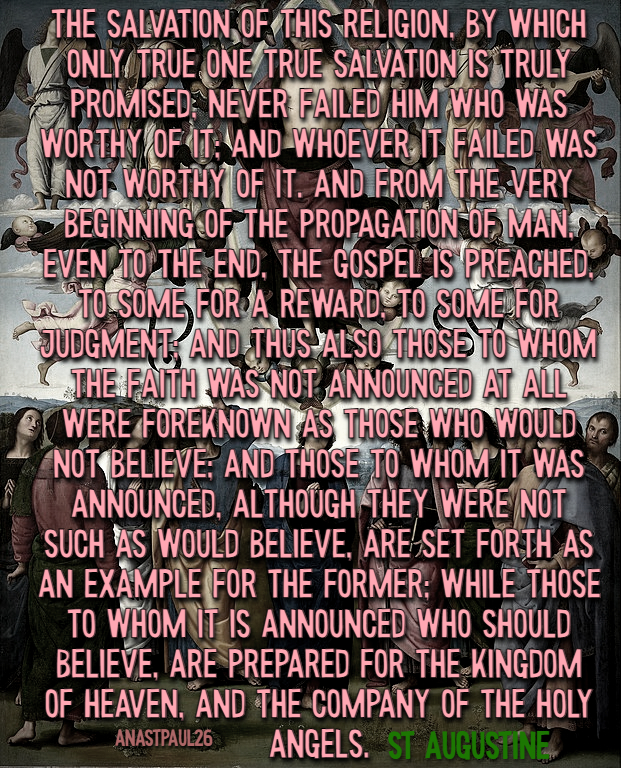
For as some are mentioned in the sacred Hebrew books, as early as the time of Abraham — neither of his fleshly race nor of the people of Israel nor of the foreign society among the people of Israel — who were, nevertheless, sharers in their sacrament, why may we not believe that there were others elsewhere among other people, here and there, although we do not read any mention of them in the same authorities? Thus the salvation of this religion, by which only true one truesalvation is truly promised, never failed him who was worthy of it; and whoever it failed was not worthy of it. And from the very beginning of the propagation of man, even to the end, the gospel is preached, to some for a reward, to some for judgment; and thus also those to whom the faith was not announced at all were foreknown as those who would not believe; and those to whom it was announced, although they were not such as would believe, are set forth as an example for the former; while those to whom it is announced who should believe, are prepared for the kingdom of heaven, and the company of the holyangels.
St Augustine (On the Predestination of the Saints)
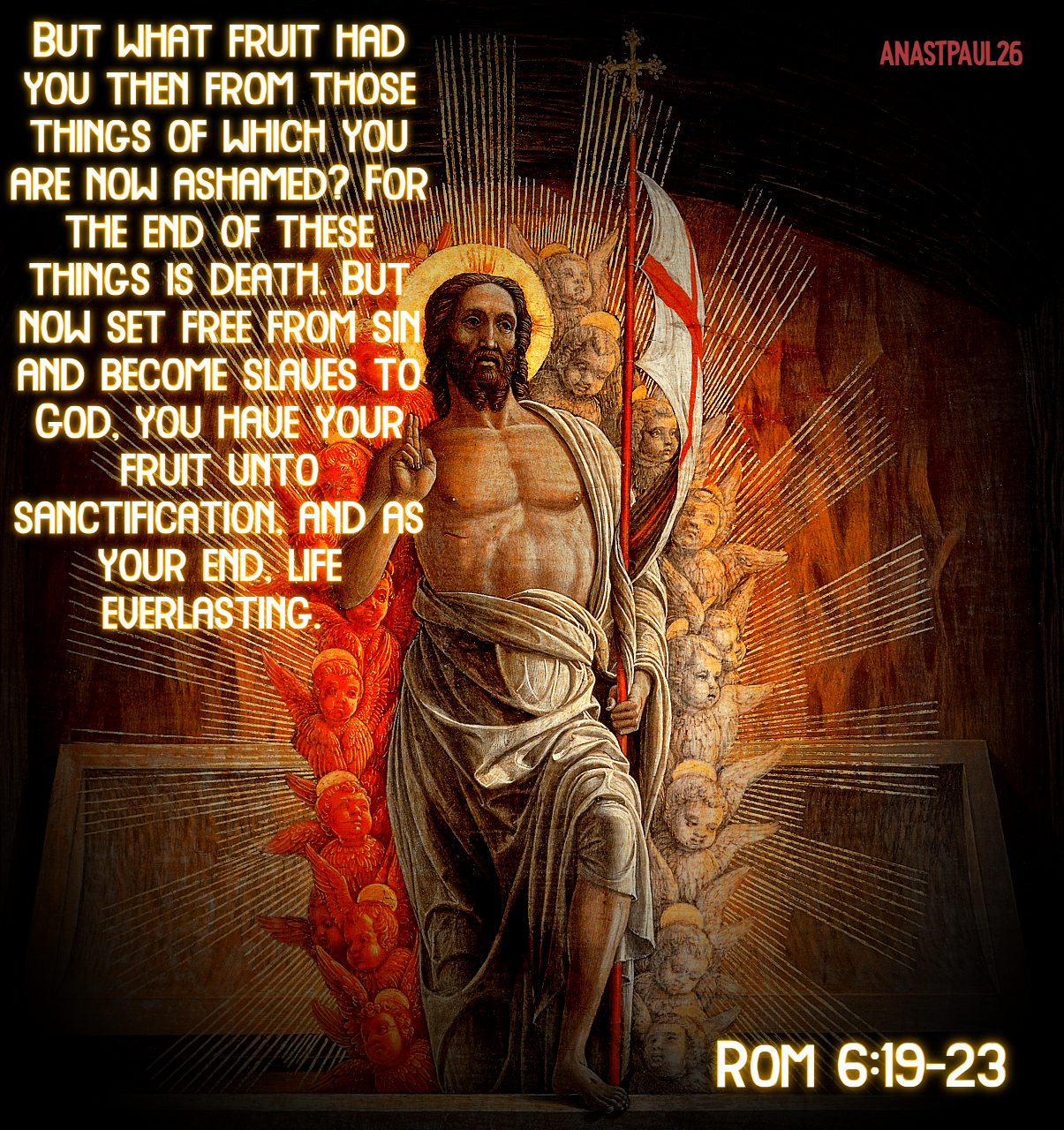
Brethren: I speak in a human way because of the weakness of your flesh; for as you yielded your members as slaves of uncleanness and iniquity unto iniquity, so now yield your members as slaves of justice unto sanctification. For when you were slaves of sin, you were free as regards justice. But what fruit had you then from those things of which you are now ashamed? For the end of these things is death. But now set free from sin and become slaves to God, you have your fruit unto sanctification, and as your end, life everlasting. For the wages of sin is death, but the gift of God is life everlasting in Christ Jesus our Lord.
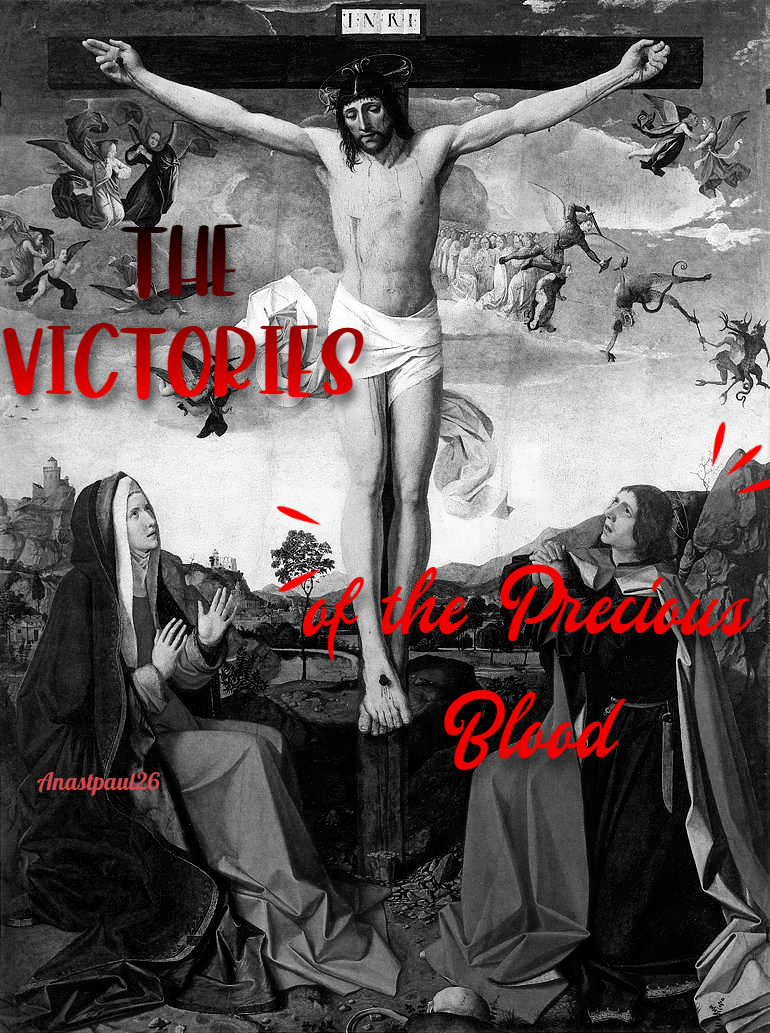
The Precious Blood has conquered sin and Satan. It was the shedding of it on the cross which gave the death-blow to the kingdom of the devil. It was when the Son of God had by the loss of His Sacred Blood been reduced to the extremity of weakness and of misery, and brought down to the very gates of death, that He triumphed over the tyrant that had enslaved the world, and compelled all the rebel angels to bow the knee before His sacred humanity. Rejoice with your victorious King, and pray that you may deserve to share His triumph.
The Precious Blood has also conquered sinner by thousands, who, if it had not been shed, would have remained hardened sinners unto the end. Who can withstand its silent appeal, as it trickles down from His head, His hands, His feet? Who can refuse to listen to its silent pledgings? Who can turn away from Him Who has thus loved us even unto death? O my Jesus, may I never turn away from Thy voice calling me from Thy throne upon the cross to love Thee and obey Thy voice!
The Precious Blood has also conquered and averted the anger of God, Whose decree of just retribution would but for it have fallen upon sinners. Can the Father resist the pleadings of his co-equal Son when He holds out His hands, still marked with the scars of His sacred wounds, and asks for mercy and forgiveness for the sinner? May Thy wounds, O Jesus, plead for me now and at the hour of death!
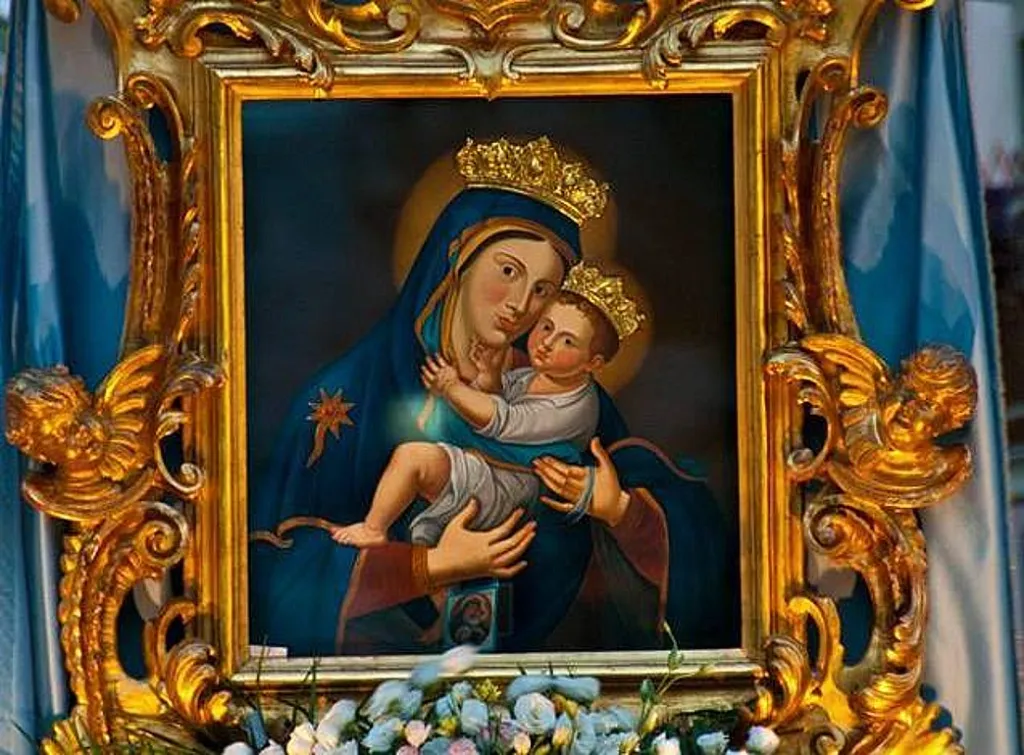
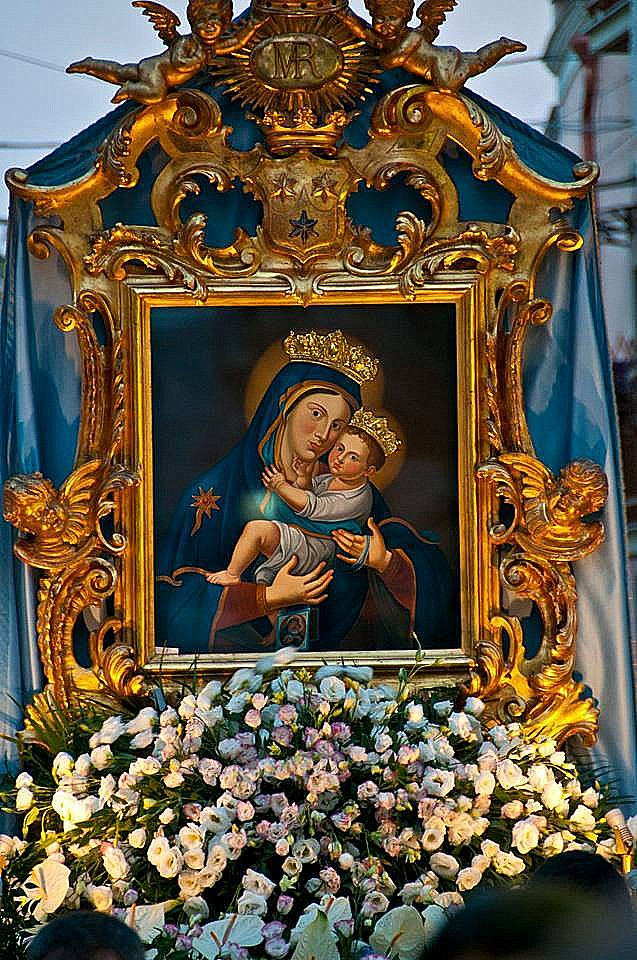
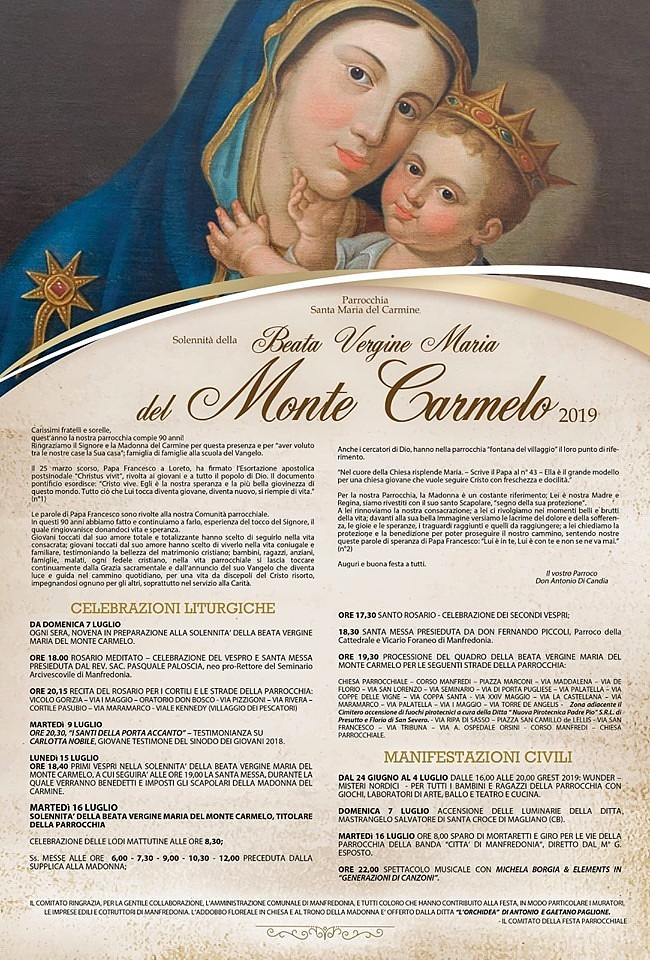
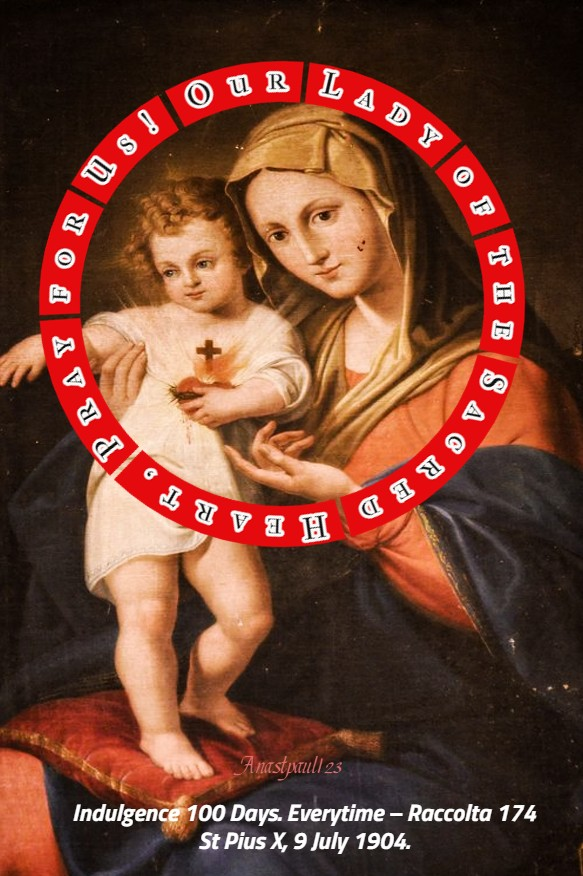
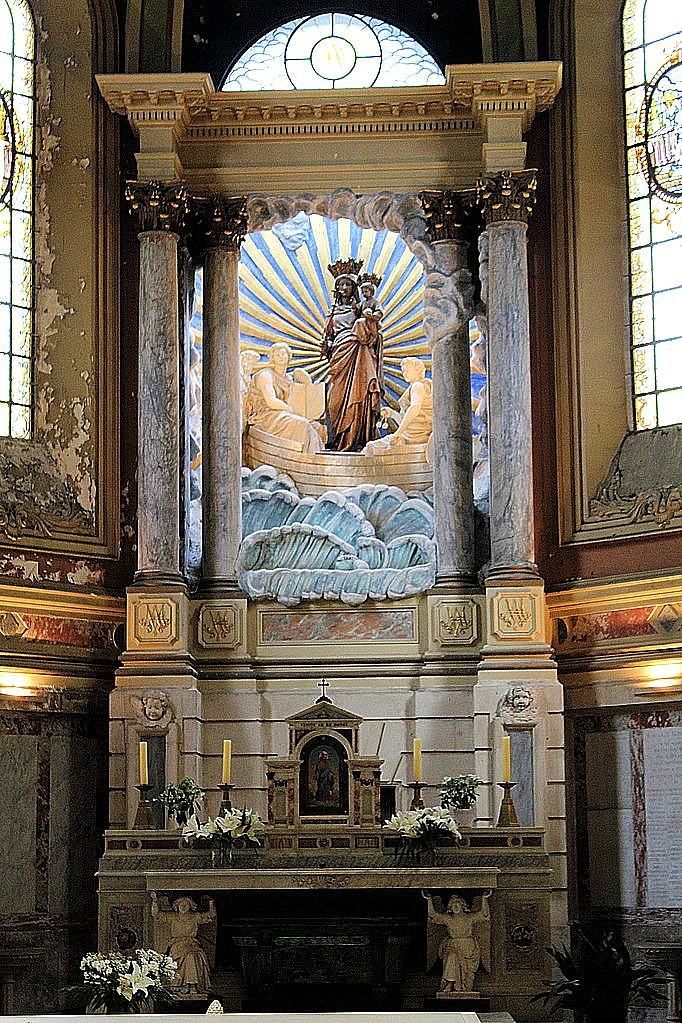
Madonna del Carmine / Our Lady of Carmine, Combarbio di Anghiari, Arezzo, Tuscany, Italy, (1536) – 11 July:
A 12-year-old shepherdess, Marietta Del Mazza, reported apparitions of the Virgin on 11 July 1536 and days following. When news spread through the region, along with reports of miracles attributed to the Virgin’s intercession, the Bishops of Arezzo and Sansepolcro, conducted an investigation and authorised a Shrine at the apparition site.
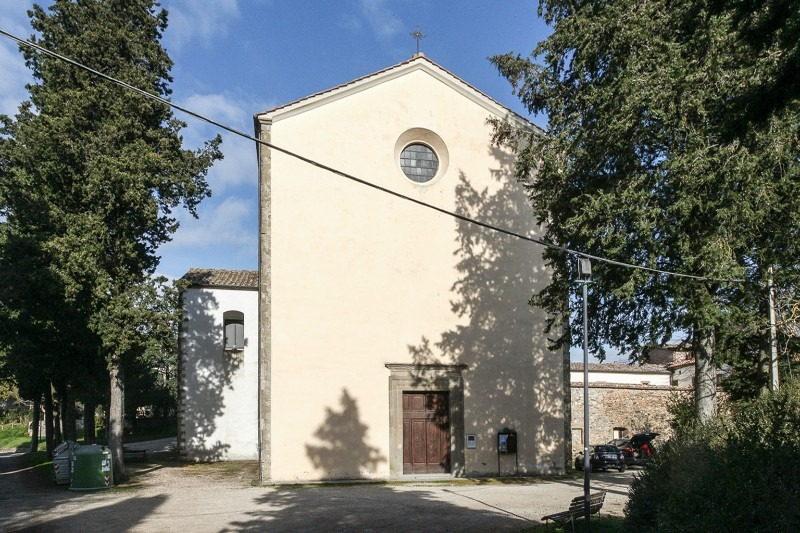
The Shrine was completed in 1539. The Sanctuary was staffed by the Franciscan order at first, then by the Carmelites until 1782. Since 1987 it has been under the jurisdiction of the local Bishop.
The Sanctuary took the name of Our Lady of Carmel and over the centuries, it has continued uninterruptedly to recall the devotion of the people of the surrounding area. A fervent testimony of trust and love to Our Lady of Carmel occurred on the evening of 11 July 1986, 450 years anniversary from the date of the first apparition.
On the main Altar you can admire a beautiful Florentine school painting representing the Madonna and the Child with Saint John the Baptist pointing to the Lord, from the 16th century.
St Abundius of Ananelos St Amabilis of Rouen St Anna An Jiaoshi St Anna An Xingshi Bl Antonio Muller St Berthevin of Lisieux St Cindeus St Cowair St Cyprian of Brescia St Cyriacus the Executioner St Hidulf of Moyenmoutier St Januarius St John of Bergamo Bl Kjeld of Viborg St Leontius the Younger St Marcian of Lycaonia St Marciana of Caesarea Bl Maria An Guoshi Bl Maria An Linghua Bl Marie-Clotilde Blanc Bl Marie-Elisabeth Pélissier Bl Marie-Marguerite de Barbégie d’Albrède
St Olga Queen of Kiev (c 890-969) She was known as a ruthless and effective ruler but “when Olga was enlightened, she rejoiced in soul and body. The Bishop, who instructed her in the faith, said to her, ‘Blessed art thou among the women of Rus’, for thou hast loved the light and quit the darkness. The sons of Rus’ shall bless thee to the last generation of thy descendants.”
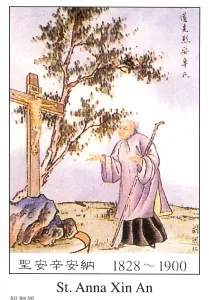
During the Boxer Rebellion, Christians were persecuted in China. Anna An Jiao was arrested by the rebels on July 11, 1900, along with her family ( Anna An Xin, Maria An Guo, and Maria An Linghua). They attempted to force them to renounce their faith. When they refused, they were tortured and then taken outside the village and murdered.
“If you wish to remain alive, you must give up your western Catholic beliefs.” said the rebels.
This subgrouping of the Martyrs of China incorporates three generations of the An family. They were among the 2,072, killed between June and August 1900. There is a statue of Anna Wang outside the Cathedral of the Immaculate Conception in Beijing, which was originally built by Jesuit missionaries in the 17th century. The cathedral was severely damaged during the Boxer Rebellion, but was later restored. Anna Wang was beatified by Pope Pius XII on November 24th, 1946.
Our Morning Offering – 11 July – “Month of the Most Precious Blood”
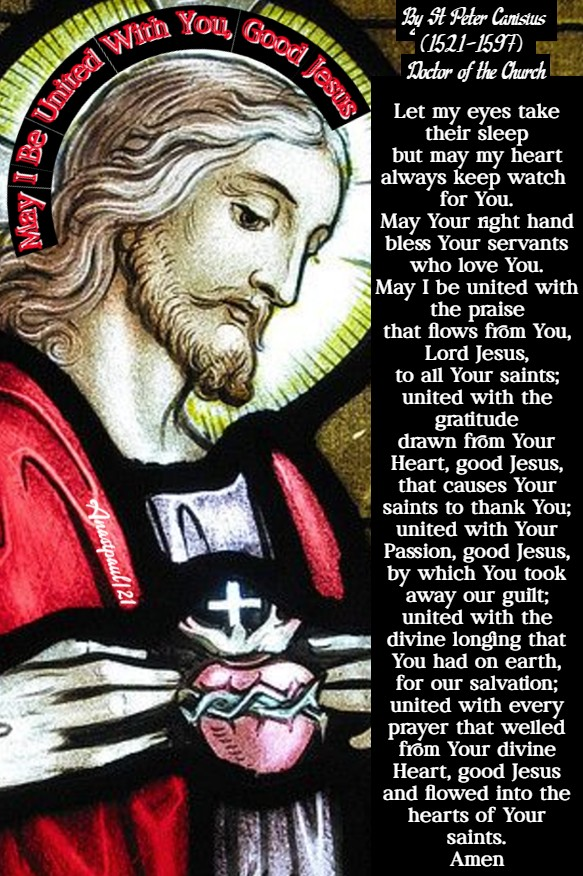
May I Be United With You, Good Jesus By St Peter Canisius (1521-1597) Doctor of the Church
Let my eyes take their sleep but may my heart always keep watch for You. May Your right hand bless Your servants who love You. May I be united with the praise that flows from You, Lord Jesus, to all Your saints; united with the gratitude drawn from Your Heart, good Jesus, that causes Your saints to thank You; united with Your Passion, good Jesus, by which You took away our guilt; united with the divine longing that You had on earth, for our salvation; united with every prayer that welled from Your divine Heart, good Jesus and flowed into the hearts of Your saints. Amen.
“Blessed is the womb which bore Thee ” – Luke 11:27”
REFLECTION – And so you say, O heretic, whoever you may be, who deny that God was born of the Virgin, that Mary the Mother of our Lord Jesus Christ ought not to be called Theotocos, i.e., Mother of God, but Christotocos, i.e., only the Mother of Christ, not of God. For no one, you say, brings forth what is anterior in time. And of this utterly foolish argument whereby you think that the birth of God can be understood by carnal minds, and fancy that the mystery of His Majesty can be accounted for by human reasoning, we will, if God permits, say something later on. In the meanwhile we will now prove by Divine testimonies that Christ is God, and that Mary is the Mother of God. Hear then how the angel of God speaks to the Shepherds of the birth of God. There is born, he says, to you this day in the city of David a Saviour who is Christ the Lord.In order that you may not take Christ for a mere man, he adds the name of Lord and Saviour, on purpose that you may have no doubt that He whom you acknowledge as Saviour is God, and that (as the office of saving belongs only to Divine power) you may not question that He is of Divine power, in whom you have learned that the power to save resides.
But perhaps this is not enough to convince your unbelief, as the angel of the Lord termed Him Lord and Saviour rather than God or the Son of God, as you certainly most wickedly deny Him to be God, whom you acknowledge to be Saviour. Hear then what the archangel Gabriel announces to the Virgin Mary. The Holy Ghost, he says, shall come upon you, and the power of the Most High shall overshadow you: therefore also that holy thing which shall be born of you shall be called the Son of God. Do you see how, when he is going to point out the nativity of God, he first speaks of a work of Divinity. For the Holy Ghost, he says, shall come upon you, and the power of the Most High shall overshadow you. Admirably did the angel speak, and explain the majesty of the Divine work by the Divine character of his words.
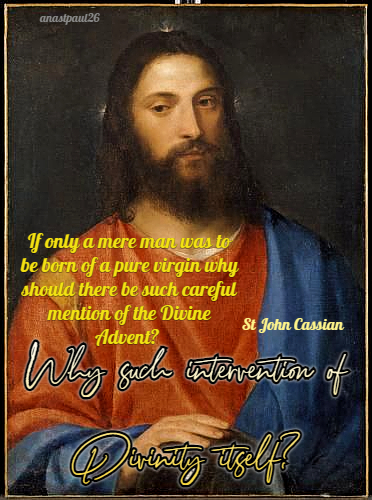
If only a mere man was to be born of a pure virgin why should there be such careful mention of the Divine Advent? Why such intervention of Divinity itself?
St John Cassian (On the Incarnation)
PRAYER – Human weakness finds its anchor in You, Lord and our faith is built on You as on a rock. Supported by the teachings, lives and prayers of our fathers, Your Apostles, may we always answer Your call and live in ever-closer union with You. And may the Blessed Virgin Mary, Mother of God and our Mother and all your Angels, Martyrs and Saints, pray for Holy Mother Church and for us all. Through Christ, our Lord, in the unity of the Holy Spirit, God forever and ever, amen.
Quote/s of the Day – 11 July – “Month of the Most Precious Blood” – Readings: Ps 44:2, Ecclus 24:14-16, Luke 11:27-28
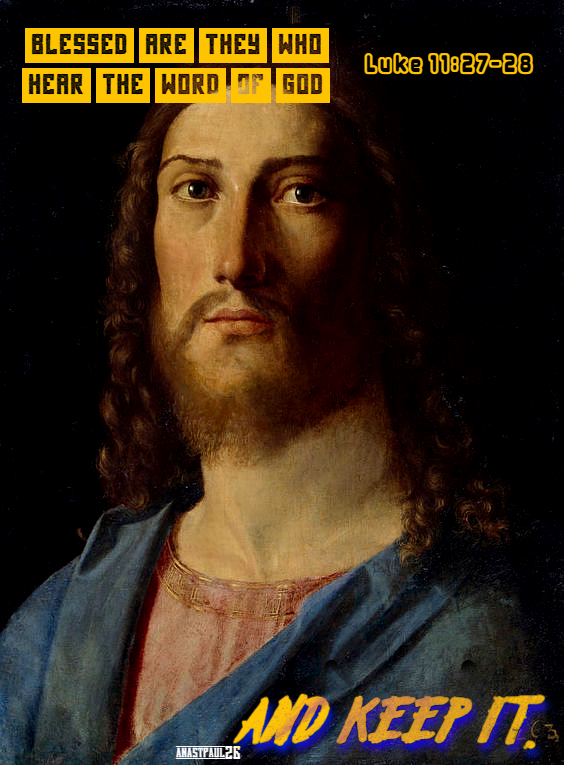
“Blessed are they who hear the word of God and keep it.”
Luke 11:27-28
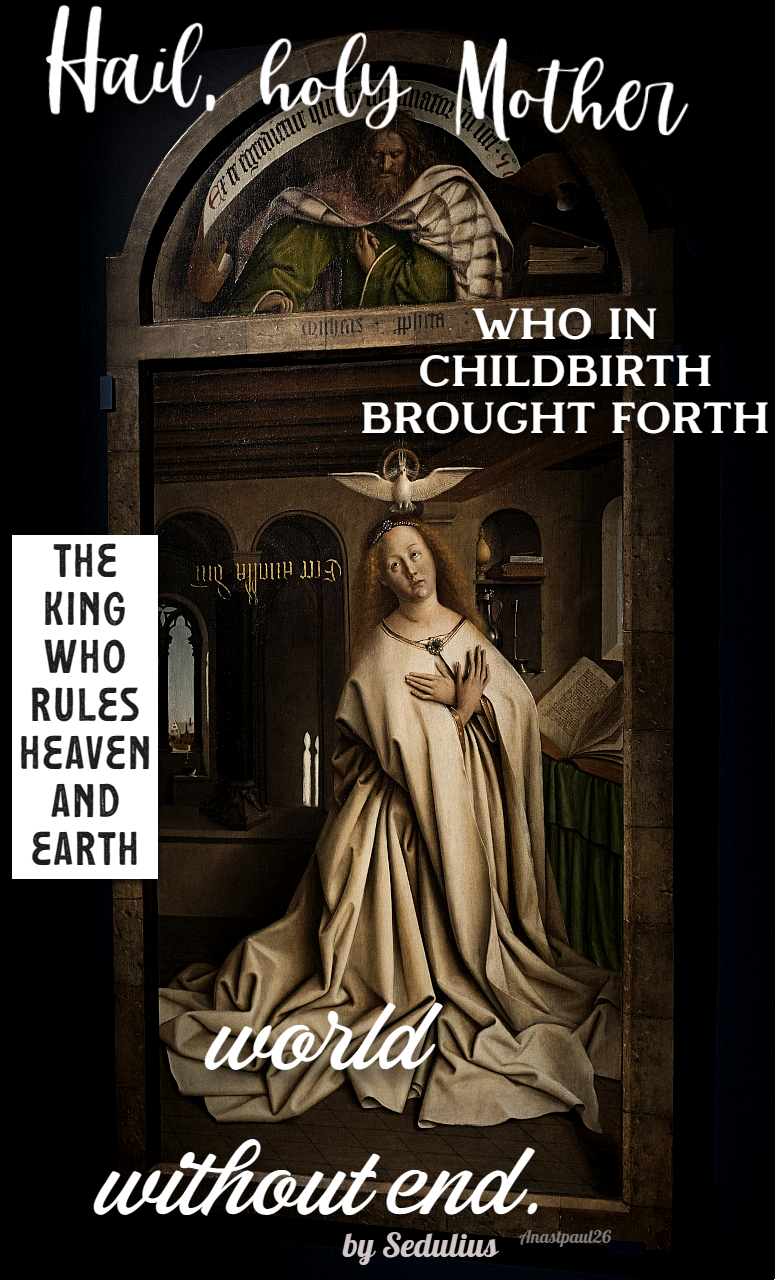
Hail, holy Mother, who in childbirth brought forth the King Who rules heaven and earth world without end.
Sedulius
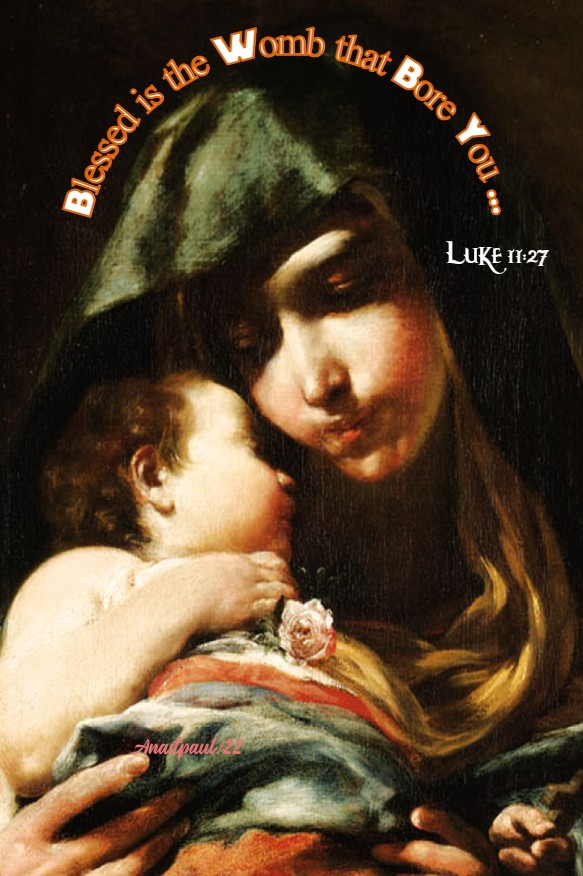
“Blessed is the womb that bore you ’”
Luke 11:27
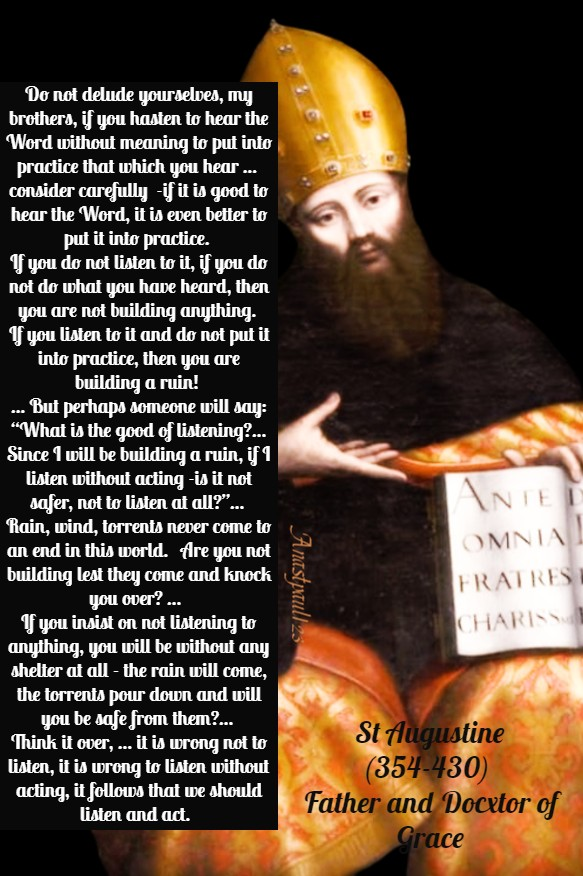
“Do not delude yourselves, my brothers, if you hasten to hear the Word without meaning to put into practice that which you hear … consider carefully – if it is good to hear the Word, it is even better to put it into practice. If you do not listen to it, if you do not do what you have heard, then you are not building anything. If you listen to it and do not put it into practice, then you are building a ruin! “
St Augustine (354-430)
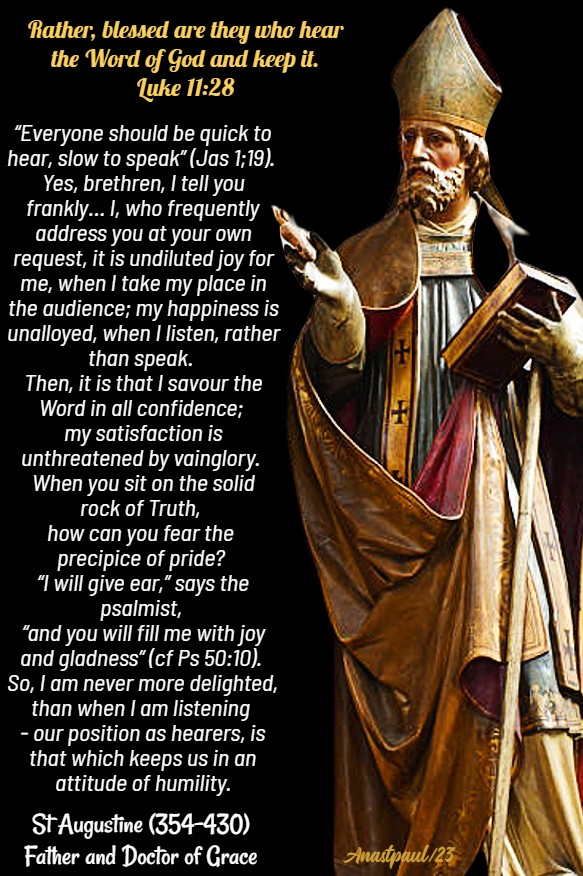
“Everyone should be quick to hear, slow to speak” (Jas 1;19). Yes, brethren, I tell you frankly… I, who frequently address you at your own request, it is undiluted joy for me, when I take my place in the audience; my happiness is unalloyed, when I listen, rather than speak. Then, it is that I savour the Word in all confidence; my satisfaction is unthreatened by vainglory. When you sit on the solid rock of Truth, how can you fear the precipice of pride? “I will give ear,” says the psalmist, “and you will fill me with joy and gladness” (cf Ps 50:10). So, I am never more delighted, than when I am listening – our position as hearers, is that which keeps us in an attitude of humility.
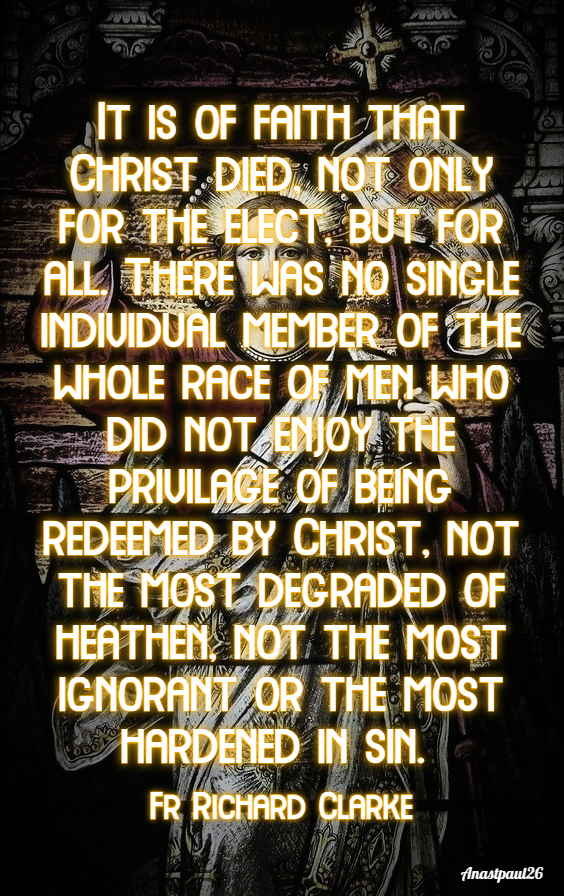
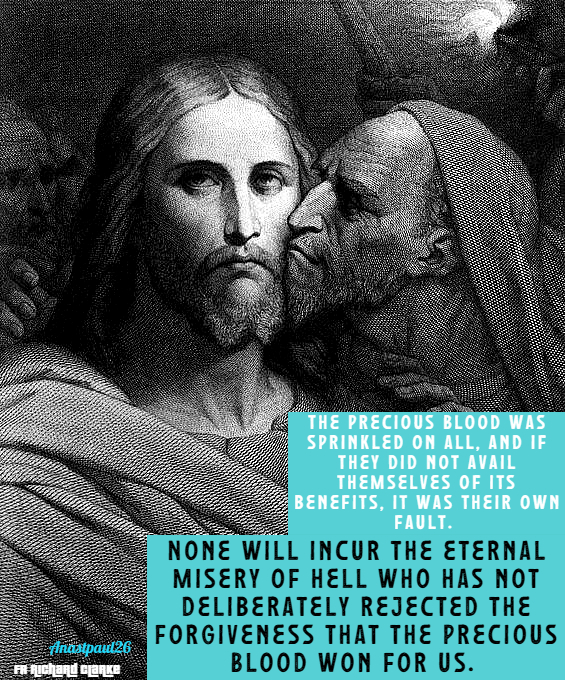
It is of faith that Christ died, not only for the elect, but for all. There was no single individual member of the whole race of men who did not enjoy the privilege of being redeemed by Christ, not the most degraded of heathen, not the most ignorant or the most hardened in sin. The Precious Blood was sprinkled on all, and if they did not avail themselves of its benefits, it was their own fault. None will incur the eternal misery of hell who has not deliberately rejected the forgiveness that the Precious Blood won for us.
What about the innocent child who dies without Baptism? For it, too, the Precious Blood was shed, and if it does not attain to eternal salvation in heaven, this is owing to the willful sin of man, and not to any lack of efficacy in the Precious Blood. It will at least enjoy great natural happiness through all eternity. He who shed His Precious Blood for all is not unmindful of those who through no fault of their own fail of attaining the joy of the beatific vision.
Does the Precious Blood do anything for sinners who have rejected it? Yes, for though their rejection of it excludes them from all right to share in the blessings it won for man, and has deserved for them eternal punishment, yet their punishment, terrible as it will be, will nevertheless be in some way short of what they deserved and this is through the merits of the Precious Blood. Thank God for His infinite mercy, and pray that you may never forfeit any of the graces won for you.
Notre-Dame de Boulogne -sur-Mer , France / Our Lady of Boulogne-Sur-Mer (1469) – 10 July:
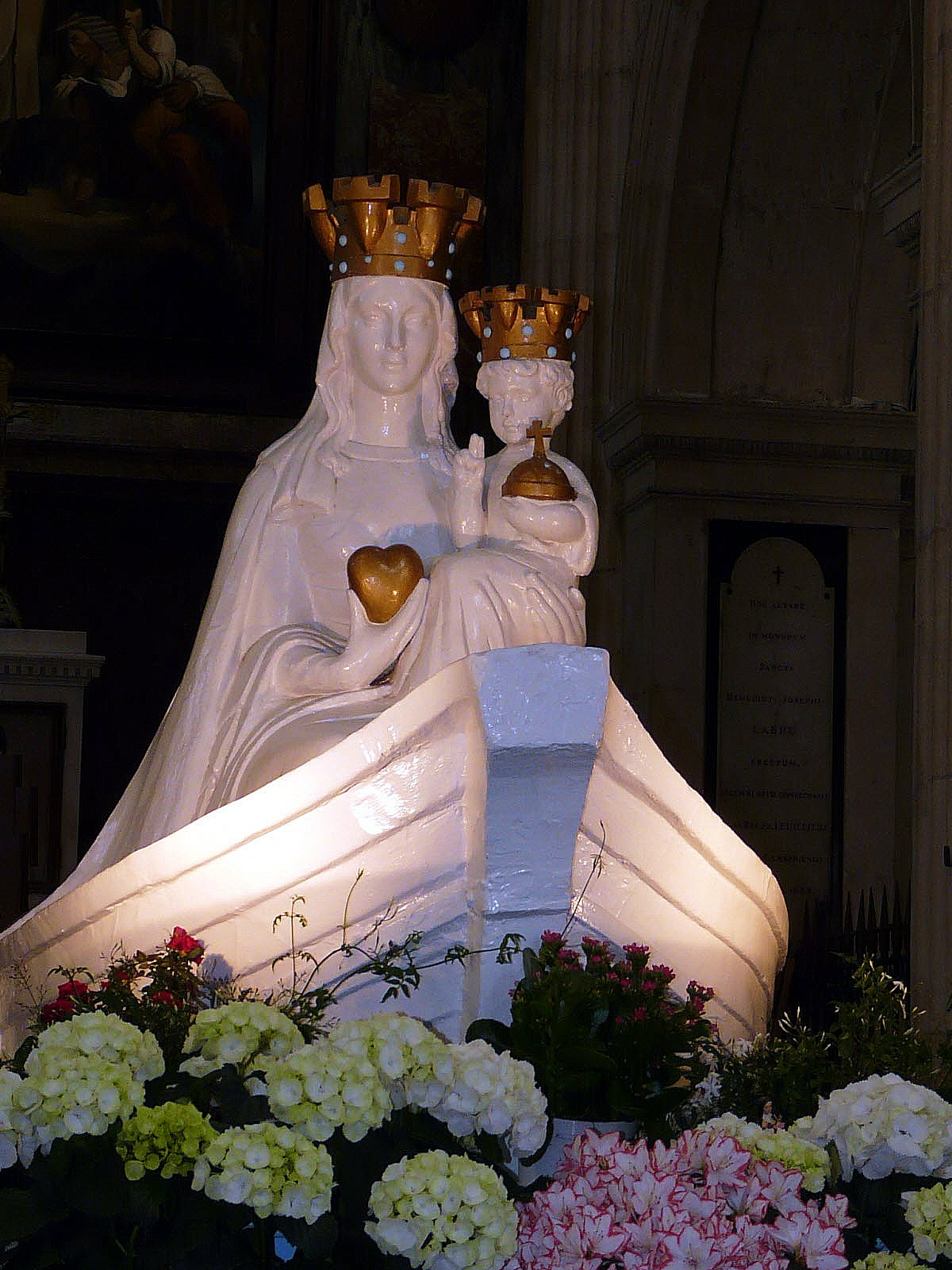
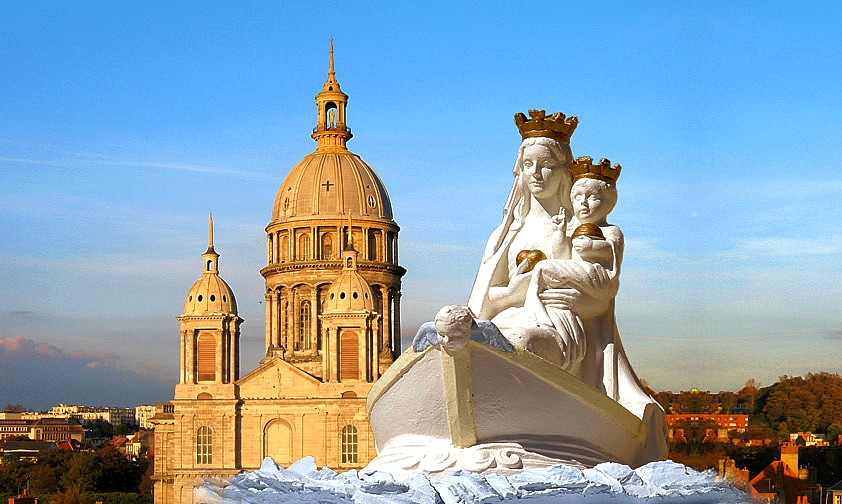
In the year 636, a small group of people standing on the seashore witnessed a boat without oars or sails came into the harbour of Boulogne. It finally came to rest in the estuary, seemingly of its own accord. One of the witnesses boarded the boat and confirmed that there was none aboard, and that the vessel had no rudder, oars or sails. The ship, however, bore a luminous Statue of Our Lady. Taking hold of it to bring it to land, a voice was heard saying, “I choose your City as a place of grace.” The citizens welcomed Mary to their City by erecting a Shrine in her honour, which reached its height of glory in the 12th Century.
King Henry VIII is reported to have stolen the Statue of Our Lady of Boulogne and taken it to England. After many negotiations, the French managed to get it back. The image had been stolen and hidden many other times, but always saved and returned.
World War II almost completely destroyed the Statue. In modern times, four exact replicas of Our Lady of Boulogne toured France for more than seven years as a symbol of French devotion to Mary. One of these was taken to Walsingham, England, in 1948 and carried in procession by the Cross-bearing pilgrims.
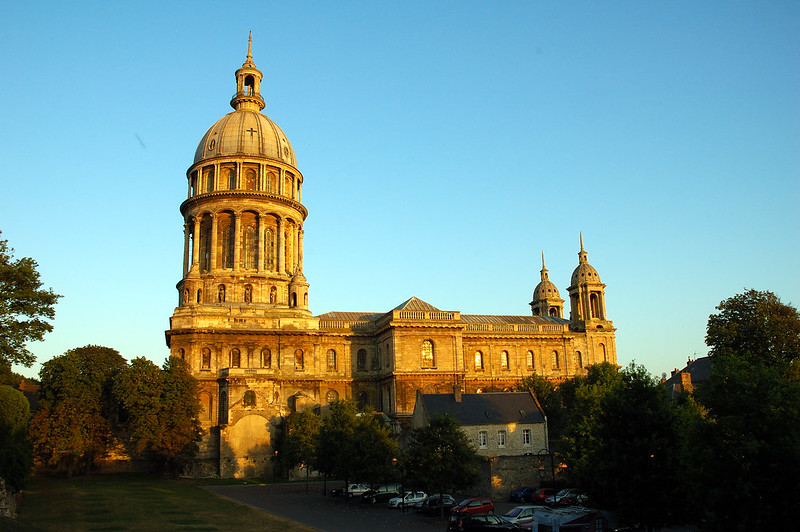
Boulogne was one of the most important Lady Shrines of medieval France; among its noted pilgrims have been: Henry III, Edward II, the Black Prince, John of Gaunt. The dedication of a new Church built in honour of Our Lady of Boulogne was Consecrated in the year 1469 by Bishop Chartier of Paris. The confraternity of Our Lady of Boulogne was so celebrated, that six French Kings have chosen to belong to it.
At the French Revolution, the Statue was burnt to ashes and the Church pulled down. A new Statue was made in 1803 and pilgrimages began again. The image represents the Mother with the Child in her arms, standing in a boat, with an angel on either side. At the Marian Congress in Bolougne in 1938, a the custom began, to take replicas of this Statue on visitations through France and abroad. A branch of the Confraternity of Our Lady of Compassion at Boulogne has been established for the reconciliation of the Church of England.
The Sanctuary Church at Boulogne was badly damaged during World War II, and Mary’s image smashed but the return, the “Great Return” of one of the copies of the Statue which had been sheltered at Lourdes, took place in 1943, and the occasion will long be remembered by lovers of the Blessed Virgin Mary. There is an ancient offshoot of this Shrine at Boulogne-sur-Seine.
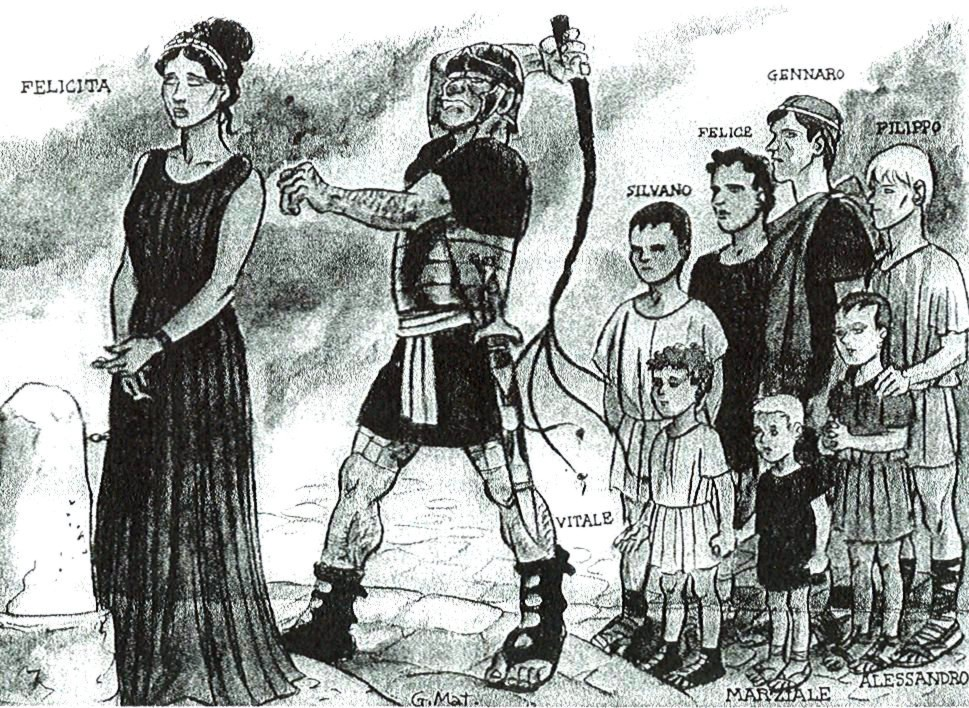
St Sylvanus of Pisidia Bl Sylvie-Agnès de Romillon St Waltram — Martyrs of Africa – 4 saints: A group of Christians martyred together in Africa. The only information that has survived are four of their names – Felix, Januarius, Marinus and Nabor.
Martyrs of Antioch – 10 saints: A group of ten Christians martyred together. We have no details about them but the names – Diogenes, Domnina, Esicius, Macarius, Maxima, Maximus, Rodigus, Timoteus, Veronia and Zacheus. They were martyred in Antioch, date unknown.
Martyrs of Damascus – 11 beati: A group of Franciscans and laymen ordered by Druz Muslims to convert to Islam. They refused and were hacked to pieces. • ‘Abd Al-Mu’ti Masabki • Carmelo Bolta Bañuls • Engelbert Kolland • Francisco Pinazo Peñalver • Fransis Masabki • Juan Jacobo Fernández y Fernández • Manuel Ruiz López • Nicanor Ascanio de Soria • Nicolás María Alberca Torres • Pedro Soler Méndez • Rufayil Masabki They were cut to pieces on 9-10 July 1860 in Damascus, Syria. Beatified on 10 October 1926 by Pope Pius XI.
Martyrs of Nicopolis – 45 saints: A group of 45 Christians tortured and martyred together in the persecutions of emperor Licinius. We know nothing else but six of their names – Anicetus, Anthony, Daniel, Leontius, Mauritius and Sisinno. c 329 in Nicopolis, Armenia (modern Koyulhisar, Turkey).
Martyrs of Nitria – 5 saints: Fathers of Nitria – Four monks and the bishop of Alexandria, Egypt who were martyred by heretics. Saint John Chrysostom wrote about them but their names have not come down to us. They were martyred in the 4th century in Nitria, Egypt.
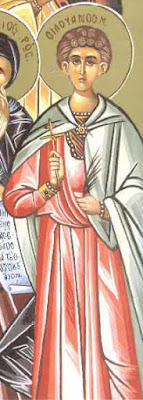
Saint Bianor came from the Pisidia district of Asia Minor. As a confessor of Christianity they brought him to the prefect of the city of Isauria in Lykaonia, who demanded that Saint Bianor renounce Christ. The saint stood steadfast in the true Faith, in spite of the refined tortures applied to him. A man by the name of Silvanus beheld the suffering of the martyr. The endurance and bravery of Saint Bianor inspired Silvanus, and he openly declared his faith in Christ. They cut out his tongue and then cut off his head. Saint Bianor, after long torture, was also beheaded.
The date of the suffering of the holy Martyrs Bianor and Silvanus is not precisely known. It is presumed that they died in Pisidia under the Roman emperor Diocletian (284-305).
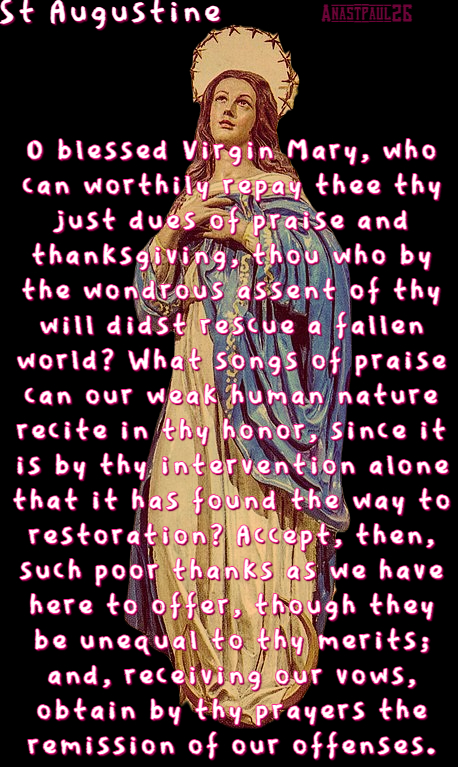
O blessed Virgin Mary, who can worthily repay thee thy just dues of praise and thanksgiving, thou who by the wondrous assent of thy will didst rescue a fallen world? What songs of praise can our weak human nature recite in thy honor, since it is by thy intervention alone that it has found the way to restoration? Accept, then, such poor thanks as we have here to offer, though they be unequal to thy merits; and, receiving our vows, obtain by thy prayers the remission of our offenses.
Carry thou our prayers within the sanctuary of the heavenly audience, and bring forth from it the antidote of our reconciliation. May the sins we bring before Almighty God through thee, become pardonable through thee; may what we ask for with sure confidence, through thee be granted. Take our offering, grant us our requests, obtain pardon for what we fear, for thou art the sole hope of sinners. Through thee we hope for the remission of our sins, and in thee, O blessed Lady, is our hope of reward. Holy Mary, succour the miserable, help the fainthearted, comfort the sorrowful, pray for thy people, plead for the clergy, intercede for all women consecrated to God; may all who keep thy holy commemoration feel now thy help and protection. Be thou ever ready to assist us when we pray, and bring back to us the answers to our prayers. Make it thy continual care to pray for the people of God, thou who, blessed by God, didst merit to bear the Redeemer of the world, who liveth and reigneth, world without end. Amen..
When one finds a worthy wife, her value is far beyond pearls. Her husband, entrusting his heart to her, has an unfailing prize. She brings him good, and not evil, all the days of her life.
– Prov 31:10-31
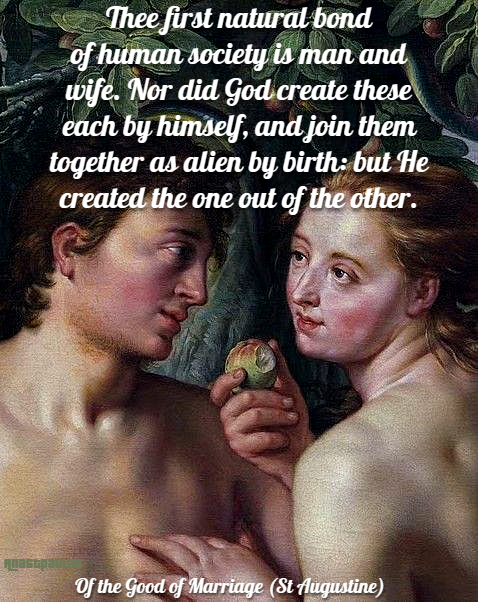
REFLECTION – Forasmuch as each man is a part of the human race, and human nature is something social, and has for a great and natural good, the power also of friendship; on this account God willed to create all men out of one, in order that they might be held in their society not only by likeness of kind, but also by bond of kindred. Therefore the first natural bond of human society is man and wife.Nor did God create these each by himself, and join them together as alien by birth: but He created the one out of the other,setting a sign also of the power of the union in the side, whence she was drawn, was formed. For they are joined one to another side by side, who walk together, and look together whither they walk. Then follows the connection of fellowship in children, which is the one alone worthy fruit, not of the union of male and female, but of the sexual intercourse. For it were possible that there should exist in either sex, even without such intercourse, a certain friendly and true union of the one ruling, and the other obeying.
This we now say, that, according to this condition of being born and dying, which we know, and in which we have been created, the marriage of male and female is some good; the compact whereof divine Scripture so commends, as that neither is it allowed one put away by her husband to marry, so long as her husband lives: nor is it allowed one put away by his wife to marry another, unless she who have separated from him be dead.
Therefore, concerning the good of marriage, which the Lord also confirmed in the Gospel, not only in that He forbade to put away a wife, save because of fornication, but also in that He came by invitation to a marriage, there is good ground to inquire for what reason it be a good. And this seems not to me to be merely on account of the begetting of children, but also on account of the natural society itself in a difference of sex. Otherwise it would not any longer be called marriage in the case of old persons, especially if either they had lost sons, or had given birth to none. But now in good, although aged, marriage, albeit there has withered away the glow of full age between male and female, yet there lives in full vigor the order of charity between husband and wife: because, the better they are, the earlier they have begun by mutual consent to contain from sexual intercourse with each other: not that it should be matter of necessity afterwards not to have power to do what they would, but that it should be matter of praise to have been unwilling at the first, to do what they had power to do. If therefore there be kept good faith of honor, and of services mutually due from either sex, although the members of either be languishing and almost corpse-like, yet of souls duly joined together, the chastity continues, the purer by how much it is the more proved, the safer, by how much it is the calmer. Marriages have this good also, that carnal or youthful incontinence, although it be faulty, is brought unto an honest use in the begetting of children, in order that out of the evil of lust the marriage union may bring to pass some good. Next, in that the lust of the flesh is repressed, and rages in a way more modestly, being tempered by parental affection. For there is interposed a certain gravity of glowing pleasure, when in that wherein husband and wife cleave to one another,they have in mind that they be father and mother.
Of the Good of Marriage (St Augustine)
PRAYER –
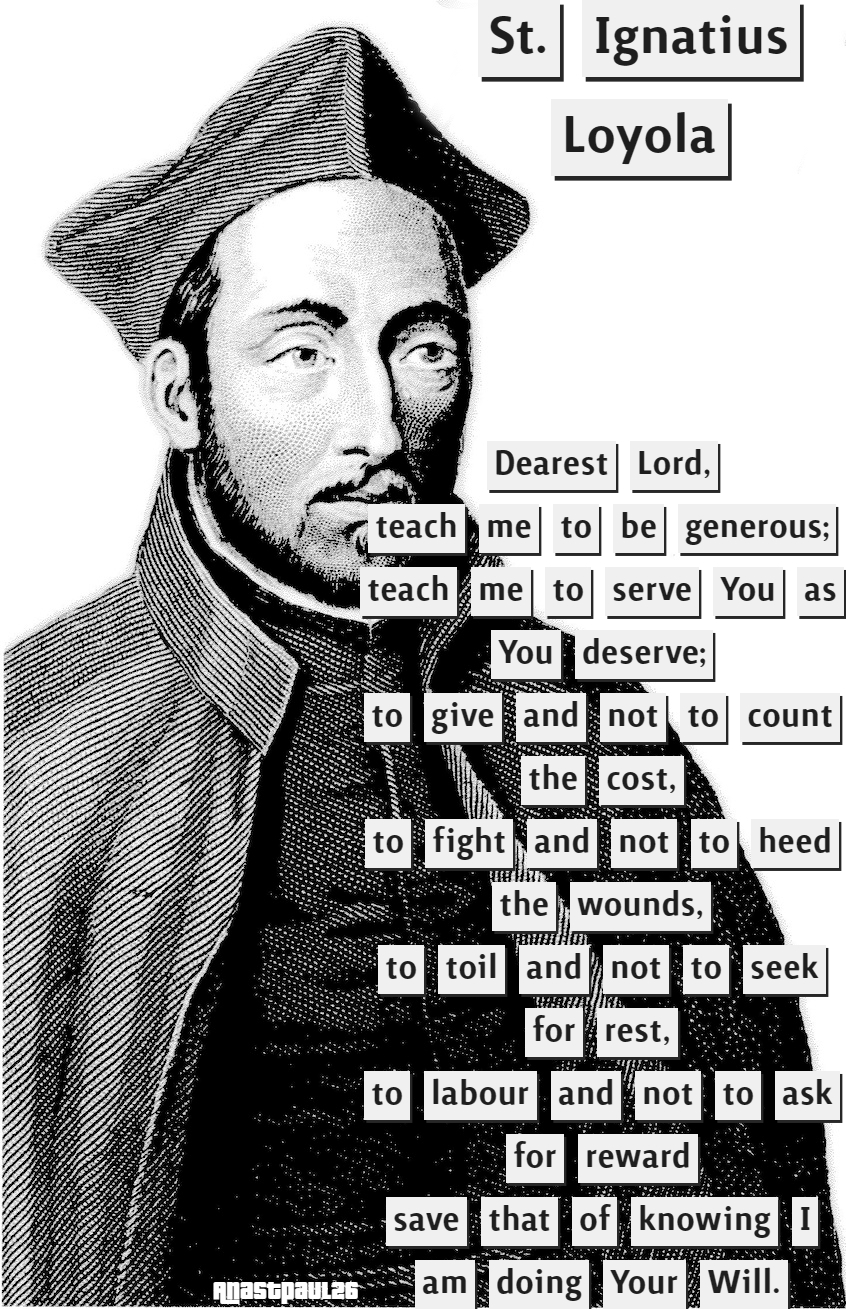
Dearest Lord, teach me to be generous; teach me to serve You as You deserve; to give and not to count the cost, to fight and not to heed the wounds, to toil and not to seek for rest, to labour and not to ask for reward save that of knowing I am doing Your Will.
Quote/s of the Day – 10 July – “Month of the Precious Blood” – Readings: Ps 112:1, 9, Ps 112:2, Prov 31:10-31, Ps 123:7-8, Matt 12:46-50
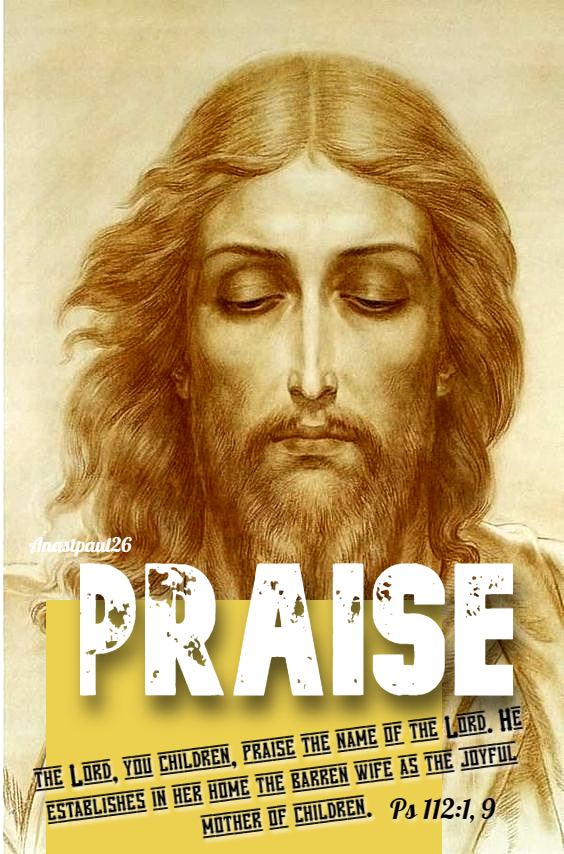
Praise the Lord, you children, praise the name of the Lord. He establishes in her home the barren wife as the joyful mother of children.
Ps 112:1, 9
Praise the Lord, you children, praise the name of the Lord. He establishes in her home the barren wife as the joyful mother of children.
Ps 112:1, 9
Blessed be the name of the Lord both now and forever.
Ps 112:2
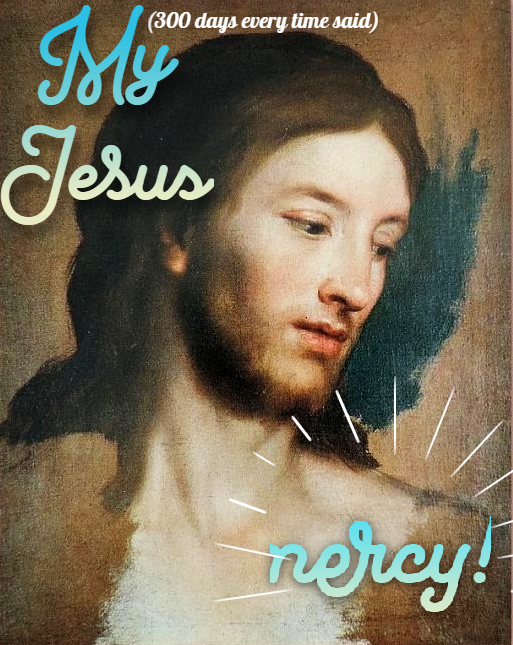
My Jesus, mercy!
(300 days every time said)
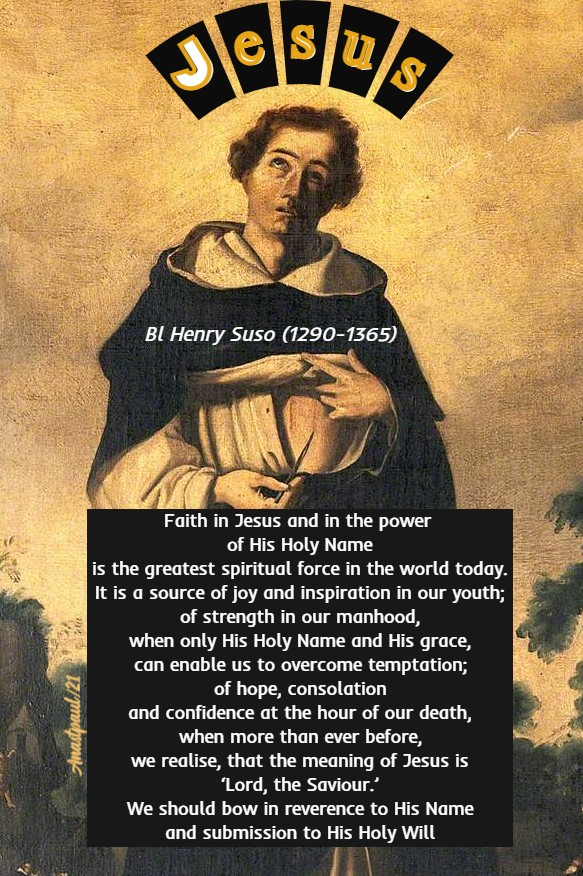
“Faith in Jesus and in the power of His Holy Name is the greatest spiritual force in the world today. It is a source of joy and inspiration in our youth; of strength in our manhood, when only His Holy Name and His grace, can enable us to overcome temptation; of hope, consolation and confidence at the hour of our death, when more than ever before, we realise, that the meaning of Jesus is ‘Lord, the Saviour.’ We should bow in reverence to His Name and submission to His Holy Will.”
Bl Henry Suso (1290-1365)
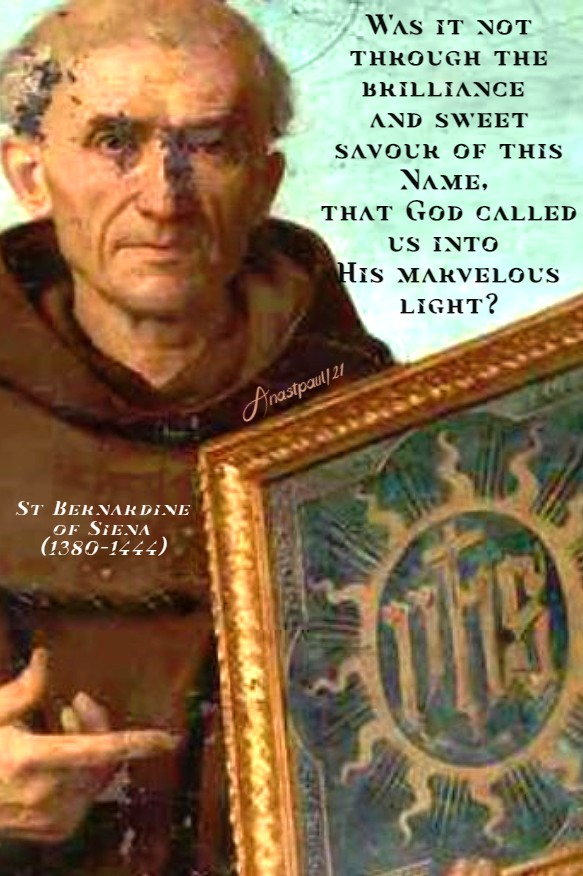
“Was it not through the brilliance and sweet savour of this Name, that God called us into His marvelous light?”
St Bernardine of Siena (1380-1444)
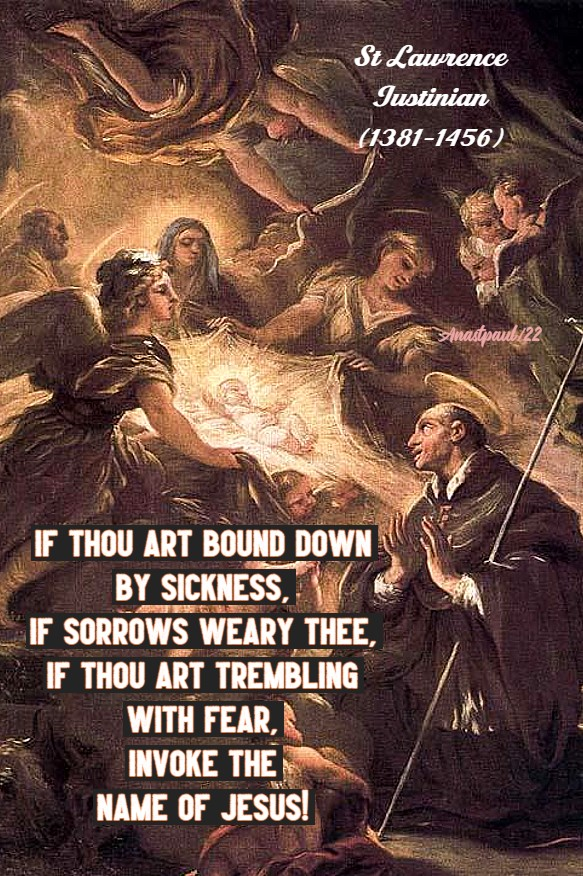
“If thou are bound down by sickness, if sorrows weary thee, if thou are trembling with fear, invoke the name of Jesus.”
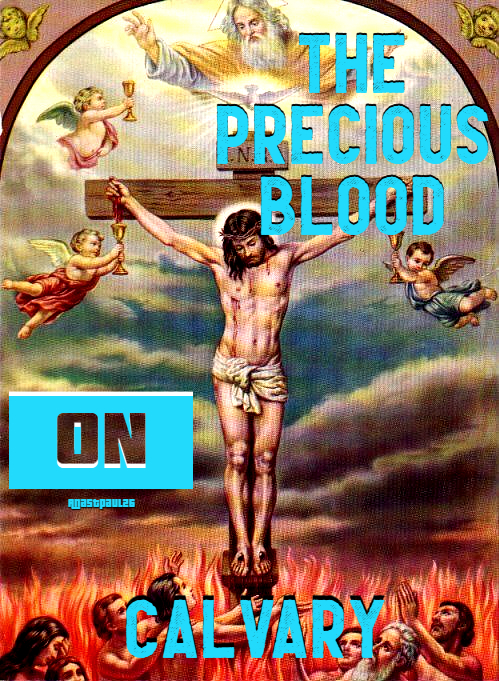
In old pictures and engravings of the crucifixion we often see angels holding a chalice to catch the drops of the Precious Blood as they fall from the sacred wounds in the hands and feet of Jesus. We are also told that the angels collected all the blood that Our Lord had shed during His Passion, that not a drop might be lost. How they must have counted each drop as a treasure of infinite value. What were all the treasures of the earth compared with these drops, instinct with the Godhead of Jesus! Pray that you may scorn all earthly things in comparison with the Precious Blood of Jesus.
The angels not only treasure up the Precious Blood, but they pay to each drop their supreme homage. So we kneel and adore the Precious Blood in the chalice upon the altar. In each drop Christ is present whole and undivided. Make an act of faith in this wondrous miracle, and pray that you may adore with a reverent homage like that of the angels present at the crucifixion.
As the three hours advance, the body of Jesus is more and more drained of the Precious Blood. Hence follows a thirst so agonising that it forced from the lips of Jesus the cry, ‘I thirst!’. When our lips are parched and dry in sickness or in the agony of death, may we remember Thee, O Lord, and Thy sacred thirst endured for us, and may we offer up our sufferings in union with Thy unspeakable and agonising thirst upon the cross!
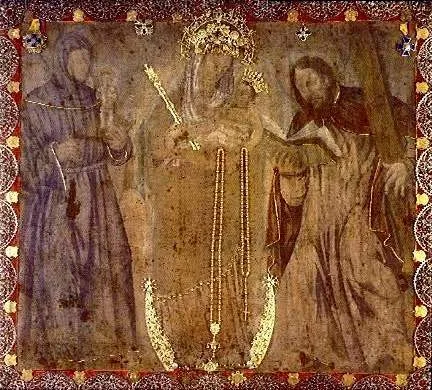
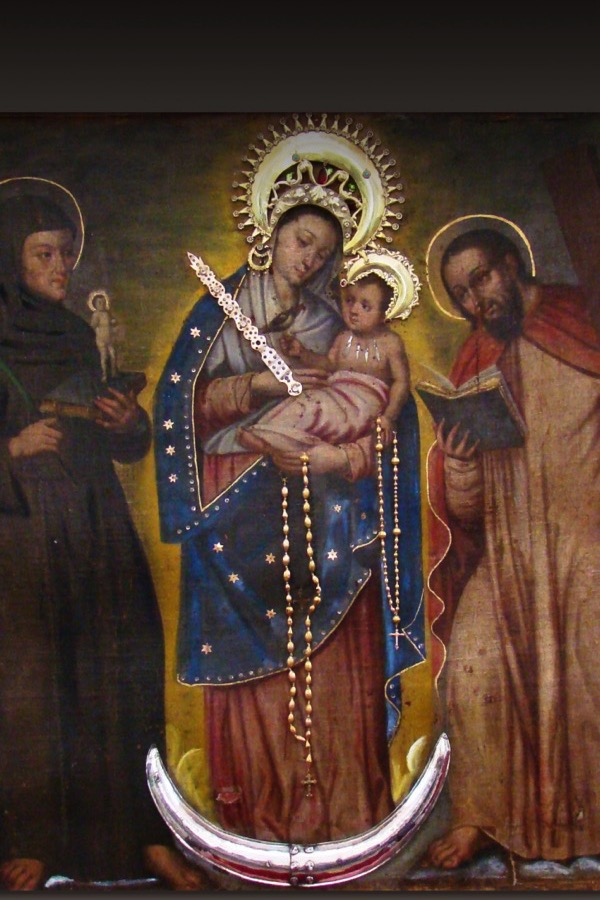
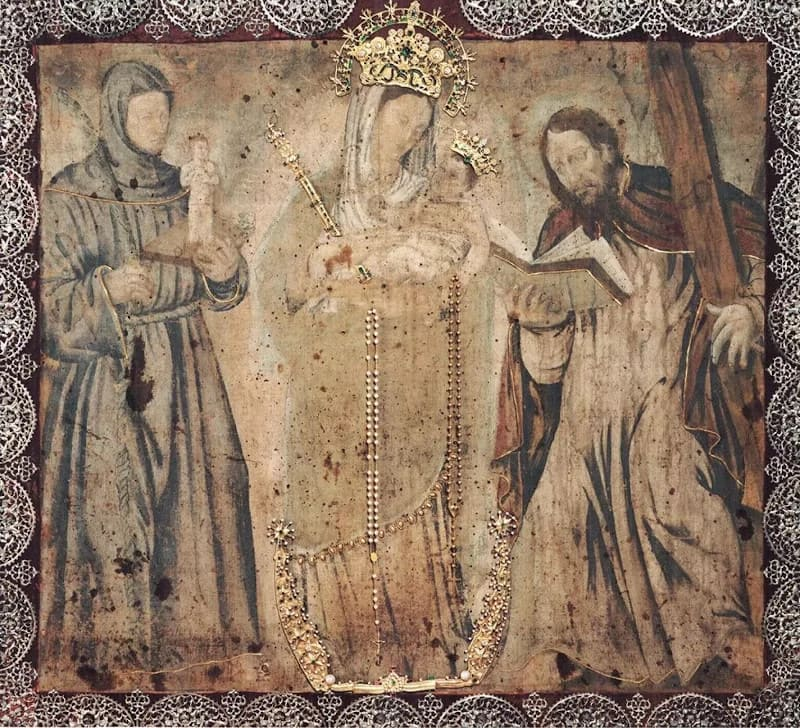
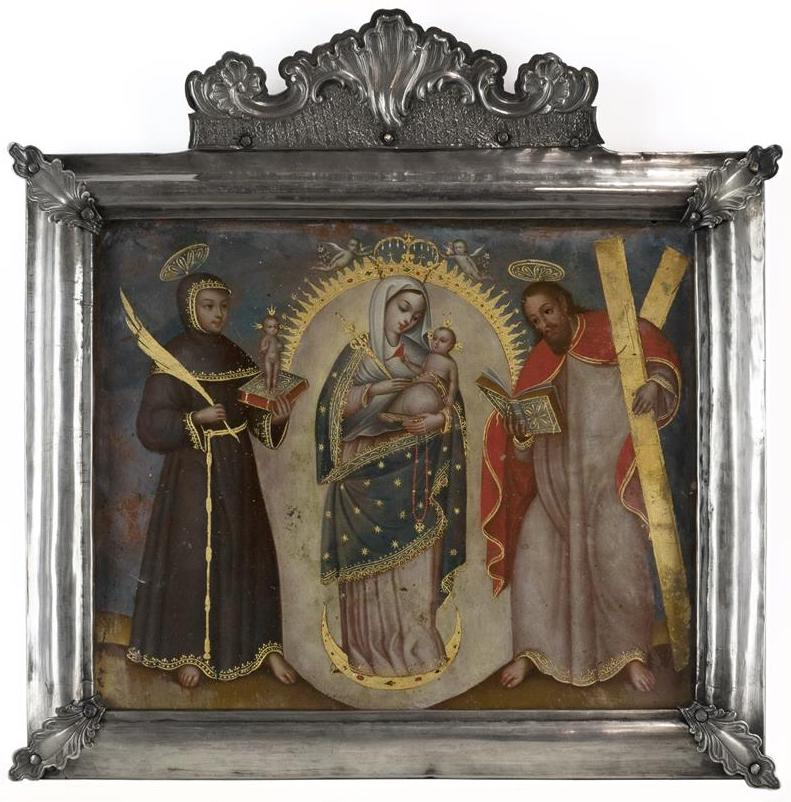
Virgen del Rosario / Our Lady of the Rosary (Chiquinquirá, Boyacá, Colombia) (1586) – 9 July, 26 December:
In the mid-16th century the Spanish painter Alonso de Narvaez created a portrait of the Virgin of the Rosary. He painted in pigments from the soil, herbs and flowers of the region of modern Colombia and his canvas was a rough 44 inch x 49 inch cloth woven by local Indians. The image of Mary is about a meter high. She has a small, sweet smile, both her face and the Divine Child’s are light coloured and she looks like she’s about to take a step. She wears a white toque, a rose-coloured robe and a sky blue cape. A Rosary hangs from the little finger of her left hand and she holds a sceptre in her right. She holds the Christ Child cradled in her left arm and looks toward Him. Christ has a little bird tied to His thumb and a small Rosary hangs from His left hand. To either side of Mary stand Saint Anthony of Padua and Saint Andrew the Apostle, the personal Patrons of the colonist, Don Antonio de Santana and Monk, Andrés Jadraque, who commissioned the work.
In 1562 the portrait was placed in a rustic Chapel. It was exposed to the air, the roof leaked and soon the damage caused by the humidity and sun completely obscured the image. In 1577 the damaged painting was moved to Chiquinquirá, Colombia and stored in an unused room. In 1585 Maria Ramos, a pious woman from Seville, cleaned up the little Chapel and hung the faded canvas in it. Though the image was in terrible shape, she loved to sit and contemplate it.
On Friday 26 December 1586 the faded, damaged image was suddenly restored. It’s colours were bright, the canvas cleaner, the image clear and seemingly brand new. The healing of the image continued as small holes and tears in the canvas miraculously self-sealed. It still has traces of its former damage and the figures seem brighter and clearer from a distance than up close. For 300 years the painting hung unprotected and thousands of objects were touched against the frail cotton cloth by pilgrims. This rough treatment should have destroyed it but it healed and survives. In 1829, Pope Pius VII declared Our Lady of Chiquinquirá Patroness of Colombia and granted a special liturgy. In 1897 a thick glass plate was placed over it to shield the painting from the weather and the excess zeal of the faithful. The image was canonically crowned in 1919 and in 1927 her sanctuary declared a Basilica.
Patronages – Colombia, Venezuelan National Guard.
St Augustine Zhao Rong, Priest and Martyr (Died + 1815) and his 119 companions or Martyrs of China (Died 1648–1930, Qing dynasty and Republic of China) (Optional Memorial): 25 priests, friars, nuns, seminarians and lay people. The 87 Chinese Catholics and 33 Western missionaries, from the mid-17th century to 1930, were martyred because of their ministry and, in some cases, for their refusal to apostatise. Many died in the Boxer Rebellion, in which xenophobic peasants slaughtered 30,000 Chinese converts to Christianity along with missionaries and other foreigners.
Blessed Adrian Fortescue TOSD (1476-1539) Martyr,. A husband and father, a Justice of the Peace, a Knight of the Realm, a Knight of Malta and a Dominican Tertiary (Lay Dominican), he was at once a loyal servant of the Crown so far as he could be but still more, he was a man of unshakeable faith.
St Agrippinus of Autun St Alexander of Egypt St Audax of Thora St Brictius of Martola St Copra of Egypt St Cyril of Gortyna Bl Dionysius the Rhetorician St Everild of Everingham St Faustina of Rome St Felician of Sicily Bl Fidelis Chojnacki Blessed Giovanna Scopelli O.Carm (1428 – 1491) Virgin, Religious of the Carmelites. Incorrupt. St Floriana of Rome St Hérombert of Minden St Joachim Ho Bl Luigi Caburlotto Bl Marguerite-Marie-Anne de Rocher Bl Marie-Anne-Madeleine de Guilhermier
St Patermutius of Egypt St Paulina do Coração Agonizante de Jesus
Four Holy Polish Brothers – 4 saints: Four brothers who became hermits, Benedictine monks and saints – Andrew, Barnabas, Benedict and Justus. They were born in Poland and died in 1008 of natural causes.
Martyrs of Gorkum – 19 saints: Nineteen martyrs killed by Calvinists for loyalty to the Pope and for their belief in the Real Presence in the Eucharist. They are – • Adrianus van Hilvarenbeek • Andreas Wouters • Antonius van Hoornaar • Antonius van Weert • Cornelius van Wijk • Francisus de Roye • Godfried van Duynen • Godfried van Melveren • Hieronymus van Weert • Jacobus Lacops • Joannes Lenaerts • John of Cologne • Leonardus van Veghel • Nicasius Janssen van Heeze • Nicolaas Pieck • Nicolaas Poppel • Petrus van Assche • Theodorus van der Eem • Willehad van Deem • They werehanged on 9 July 1572 in Brielle, Zuid-Holland, Netherlands. Beatified on 24 November 1675 by Pope Clement X and Canonised on 29 June 1867 by Pope Pius IX.
Martyrs of Orange – 32 beati: 32 nuns from several orders who spent up to 18 months in prison and were finally executed for refusing to renounce Christianity during the persecutions of the French Revolution. • Anne Cartier • Anne-Andrée Minutte • Dorothée-Madeleine-Julie de Justamond • élisabeth Verchière • élisabeth-Thérèse de Consolin • Jeanne-Marie de Romillon • Madeleine-Françoise de Justamond • Madeleine-Thérèse Talieu • Marguerite-Eléonore de Justamond • Marguerite-Marie-Anne de Rocher • Marguerite-Rose de Gordon • Marguerite-Thérèse Charensol • Marie Cluse • Marie-Anastasie de Roquard • Marie-Anne Béguin-Royal • Marie-Anne Depeyre • Marie-Anne Doux • Marie-Anne Lambert • Marie-Anne-Madeleine de Guilhermier • Marie-Claire du Bac • Marie-Clotilde Blanc • Marie-Elisabeth Pélissier • Marie-Gabrielle-Françoise-Suzanne de Gaillard de Lavaldène • Marie-Gertrude de Ripert d’Alauzier • Marie-Marguerite Bonnet • Marie-Marguerite de Barbégie d’Albrède • Marie-Rose Laye • Rosalie-Clotilde Bes • Suzanne-Agathe Deloye • Sylvie-Agnès de Romillon • Thérèse-Henriette Faurie They were guillotined between 6 July and 26 July 1794 at Orange, Vaucluse, France. Beatified on 10 May 1925 by Pope Pius XI.
Martyrs of the Baths – 10,204 saints: A group of Christians enslaved by Diocletian to build the gigantic baths in imperial Rome, Italy. The end of their labours coincided with the beginning of the great persecutions of Diocletian and they were all executed. Ancient records indicated there were 10,204 of them; Zeno of Rome is the only one whose name has come down to us and we know nothing else about any of their individual lives.
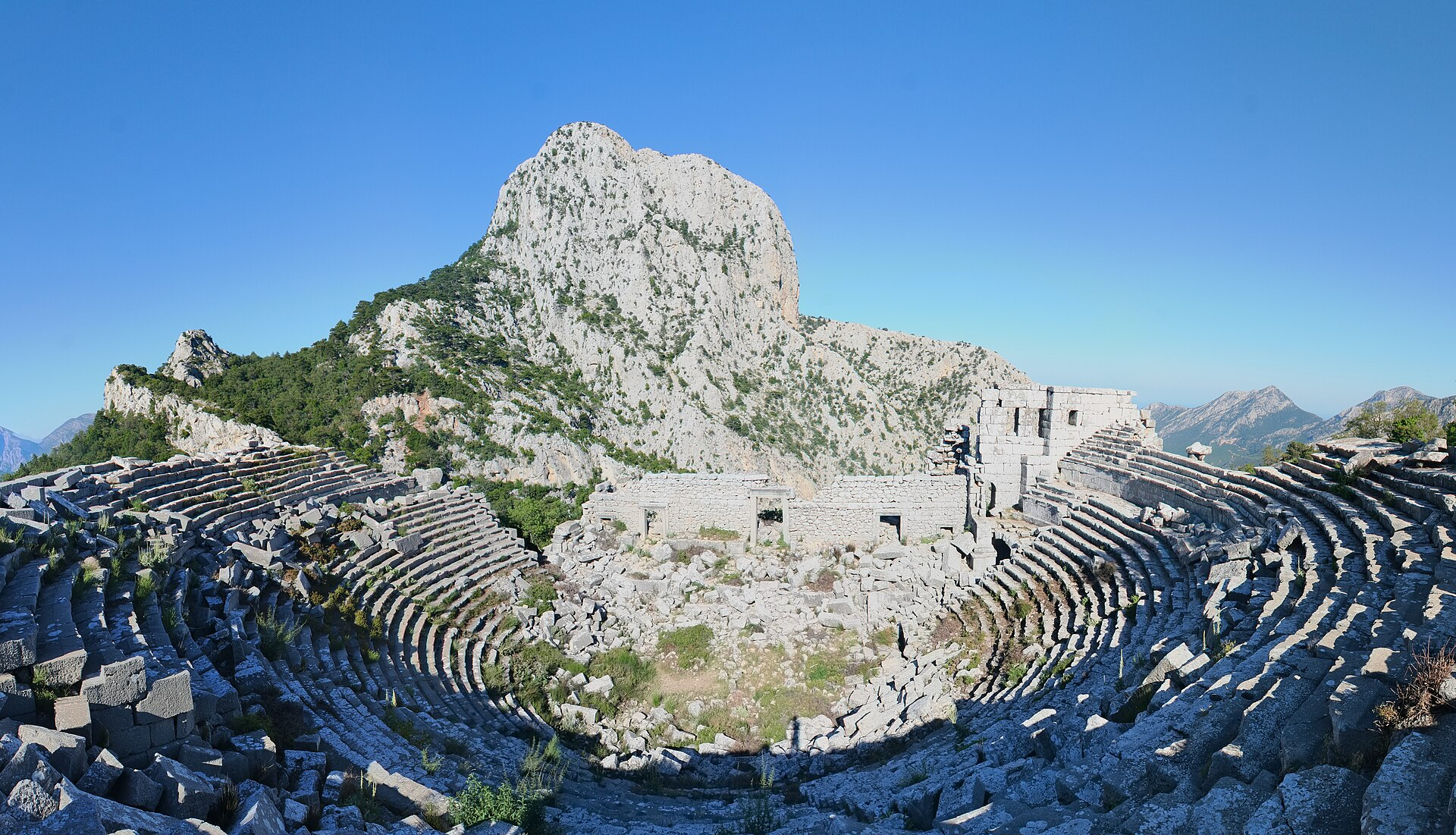
‘In the town of Thora, on lake Velino, in Italy, the martyrdom of the Saints Anatolia and Audax, under the emperor Decius. Anatolia, a virgin consecrated to Christ, cured, through the whole province of Picenum, many persons laboring under various infirmities, and made them believe in Christ. By order of the judge Fustinian, she was condemned to various kinds of punishments. She was cured of the sting of a serpent to which she had been exposed; a miracle which converted Audax to the faith. Finally she was transpierced with a sword, whilst her hands were extended in prayer. Audax was committed to prison, and being without delay sentenced to capital punishment, obtained the crown of a martyr.’
(The Roman Martyrology)
In the time of the Emperor Decius, Anatolia and Victoria were sisters whose marriage was arranged to two noble, non-Christian Roman men. They resisted this. Their prospective grooms were reluctant to denounce them as Christians as that would mean that the women’s possessions would be forfeited to the state, so instead they received permission to imprison the women on their estates and convince them to renounce their faith. Anatolia’s suitor, Titus Aurelius, gave up, and gave her back to the authorities. Victoria’s suitor, Eugenius, was more persistent, but also ended up returning her to the authorities.
Victoria’s legend states that she was stabbed through the heart in 250 AD at Trebula Mutuesca after chasing away a dragon terrorizing the residents in exchange for their conversion. An elaboration states that her murderer was immediately struck with leprosy, and died six days later. Anatolia was killed, also in 250 AD, at Thora. Her legend states that she was at first locked up with a poisonous snake. The snake refused to bite her, and a soldier named Audax was sent into her cell to kill her. The snake attacked him instead, but Anatolia saved him from it. Impressed by her example, he converted to Christianity and was martyred by the sword with her.
Due to the translation of their relics, their cult spread across Italy. Some relics of Saint Victoria were transferred in 827 by Abbot Peter of Farfa from the Abbey to Mount Matenano in the Picene area because the Abbey was besieged by Saracens. The town of Santa Vittoria in Matenano is named after her. Ratfredus, a later Abbot of Farfa, brought the body from Farfa to Santa Vittoria in Matenano on 20 June 931.
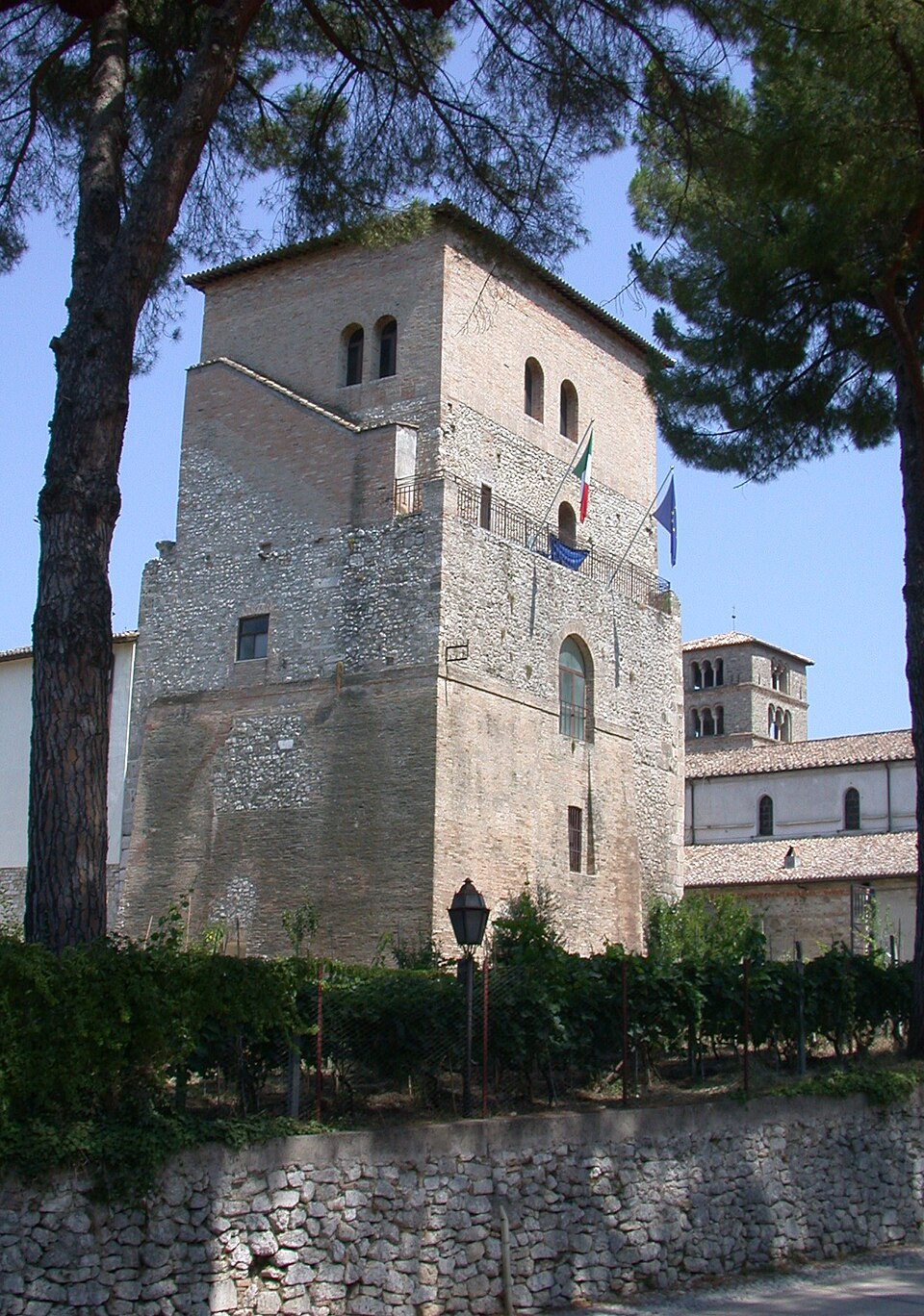
The bodies of Anatolia and Audax were transferred by Abbot Leo to Subiaco around 950. At an unknown date, a scapula of Anatolia was translated to the present-day Sant’Anatolia di Borgorose and an arm of the saint was translated to the present-day Esanatoglia. The bodies of Anatolia and Audax still rest at Subiaco in the basilica of Santa Scholastica, under the altar of the sacrament.
St Mary’s Cathedral, Kilkenny, Ireland also claims to hold St Victoria’s body, preserved in wax, along with a chalice containing some of her blood. These were sent to Kilkenny in 1845 by Pope Gregory XVI.
Our Morning Offering – 9 July – “Month of the Most Precious Blood”
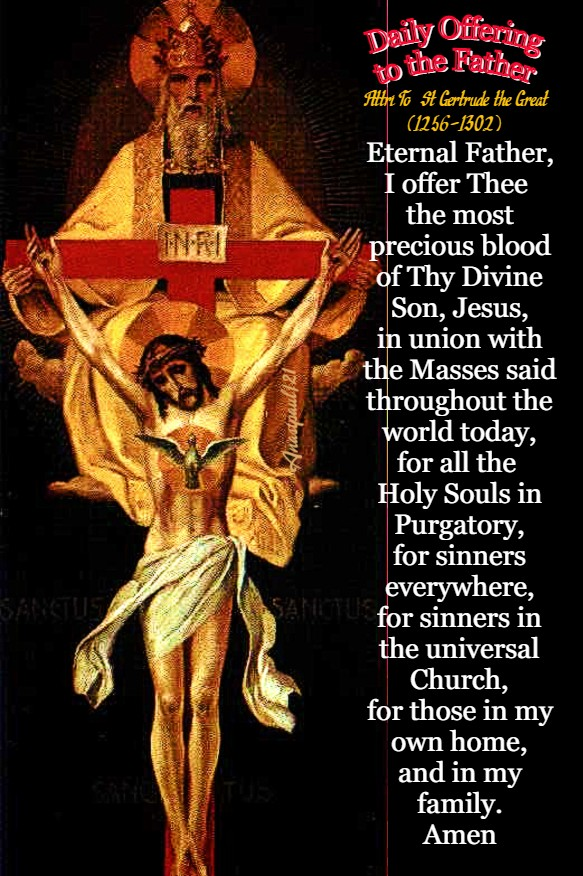
Daily Offering to the Father Attri To St Gertrude the Great (1256-1302)
Eternal Father, I offer Thee the most precious blood of Thy Divine Son, Jesus, in union with the Masses said throughout the world today, for all the Holy Souls in Purgatory, for sinners everywhere, for sinners in the universal Church, for those in my own home, and in my family. Amen
I will go round, and offer in His tent, sacrifices with shouts of gladness; I will sing and chant praise to the Lord.
Ps. 26:6
REFLECTION – “I urge you, by the grace in which you are clothed, to press on in your race and urge everyone to be saved. Assert your office with all the diligence of flesh and spirit. Give your attention to unity, for there is nothing better. Carry your brethren as the Lord also carries you. Patiently, bear with them all in love, as indeed you do bear with them. Devote yourself to unceasing prayer. Ask for greater understanding than you have. Be watchful, possessing a wakeful spirit. Speak to each one individually, concerning God’s way. “Bear the infirmities” (cf Mt 8,17) of each as a perfect athlete. Where there is more toil, there is greater gain. If you only love the good disciples, this wins you no advantage. Rather, subdue by meekness the more annoying. Not every wound is cured by the same salve. Ease sharp pains with a hot compress. In everything “be wise as serpents” and always “harmless as doves”. You who are of flesh and spirit, humour those things visibly present before you but pray, too, that what is invisible may be manifested to you, so that you may lack nothing and may abound in every spiritual gift.
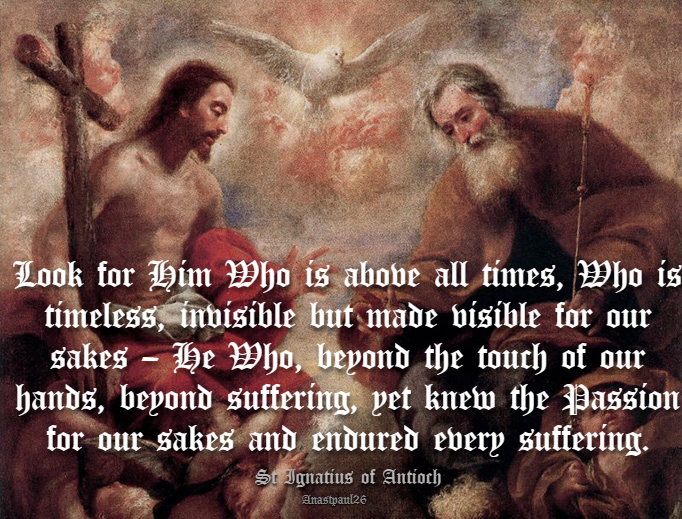
As pilots invoke the winds and tempest-tossed mariners call for haven, this season invites you to return to God. Be temperate, as God’s athlete. The prize is incorruption and life eternal… It is the part of a great athlete to suffer blows and to conquer. It is above all for God’s sake we ought to endure all things, that He too, may endure us. Become more zealous than you are already. Consider the times. Look for Him Who is above all times, Who is timeless, invisible but made visible for our sakes – He Who, beyond the touch of our hands, beyond suffering, yet knew the Passion for our sakes and endured every suffering.” – St Ignatius of Antioch (c 35-c 108) Father of the Church, Martyr, Bishop – Letter to St Polycarp (69-155) Bishop and Martyr), 1-3 ; SC 10
PRAYER – Mercifully hear our humble prayers, O Lord, and graciously accept these offerings of Your people, and grant that no prayer may be without effect, no petition in vain, so that what we ask in faith, we may really obtain. Through our Lord…
Quote/s of the Day – 9July – “Month of the Precious Blood” – Readings: Ps. 27:8-9., Ps 27:1, Rom 6:3-11, Ps. 89:13, 1, Ps. 30:2-3, Mark 8:1-9
The Lord is the strength of His people, the saving refuge of His anointed. Save Your people, O Lord, and bless Your inheritance; and rule them forever!
Ps. 27:8-9
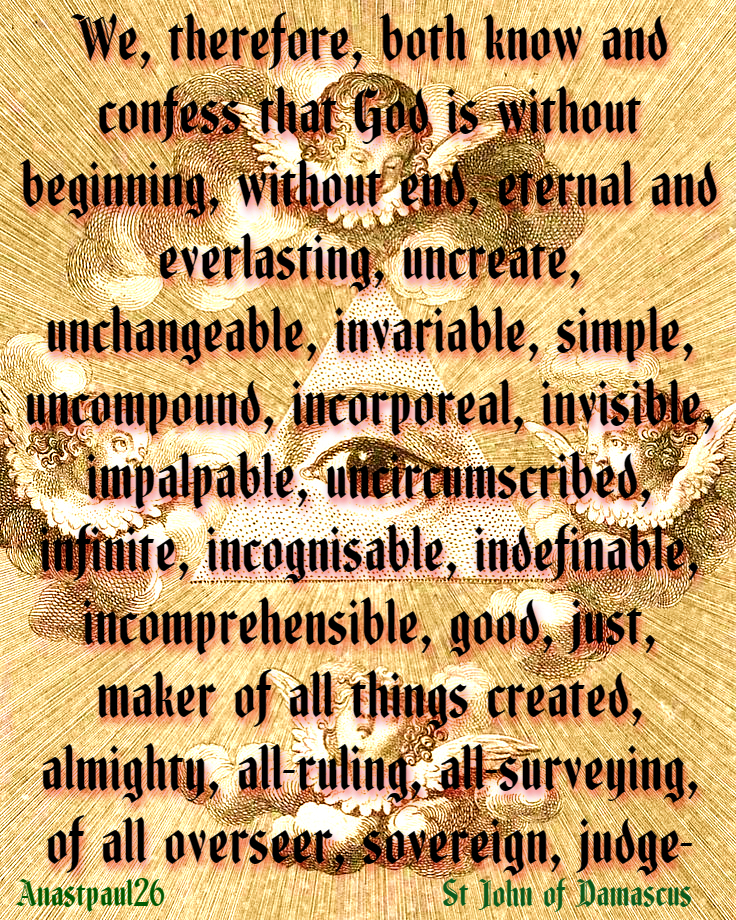
We, therefore, both know and confess that God is without beginning, without end, eternal and everlasting, uncreate, unchangeable, invariable, simple, uncompound, incorporeal, invisible, impalpable, uncircumscribed, infinite, incognisable, indefinable, incomprehensible, good, just, maker of all things created, almighty, all-ruling, all-surveying, of all overseer, sovereign, judge; and that God is One, that is to say, one essence ; and that He is known , and has His being in three subsistences, in Father, I say, and Son and Holy Ghost…
An Exposition of the Orthodox Faith (Book I) (St John of Damascus)
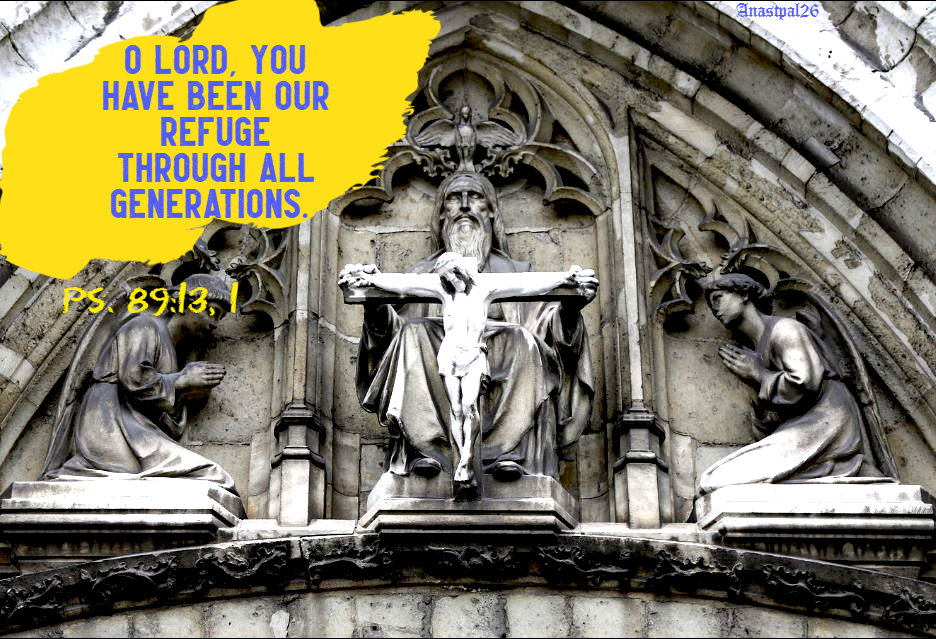
Return, O Lord! How long? Have pity on Your servants! ℣. O Lord, You have been our refuge through all generations.
Ps. 89:13, 1
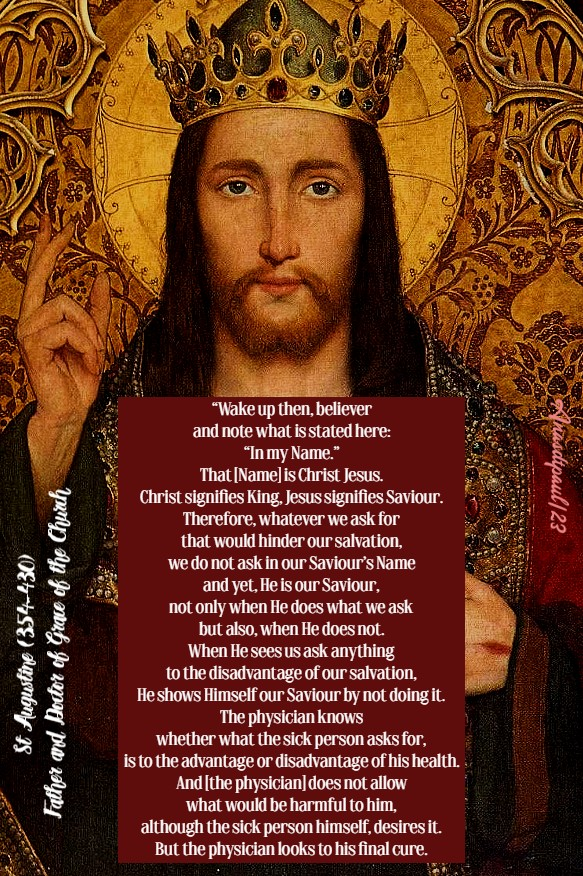
“Wake up then, believer and note what is stated here: “In My Name.” That [Name] is Christ Jesus. Christ signifies King, Jesus signifies Saviour. Therefore, whatever we ask for that would hinder our salvation, we do not ask in our Saviour’s Name and yet, He is our Saviour, not only when He does what we ask but also, when He does not. When He sees us ask anything to the disadvantage of our salvation, He shows Himself our Saviour by not doing it. The physician knows whether what the sick person asks for, is to the advantage or disadvantage of his health. And [the physician] does not allow what would be harmful to him, although the sick person himself, desires it. But the physician looks to his final cure.”
St Augustine (354-430) Father and Doctor of Grace of the Church
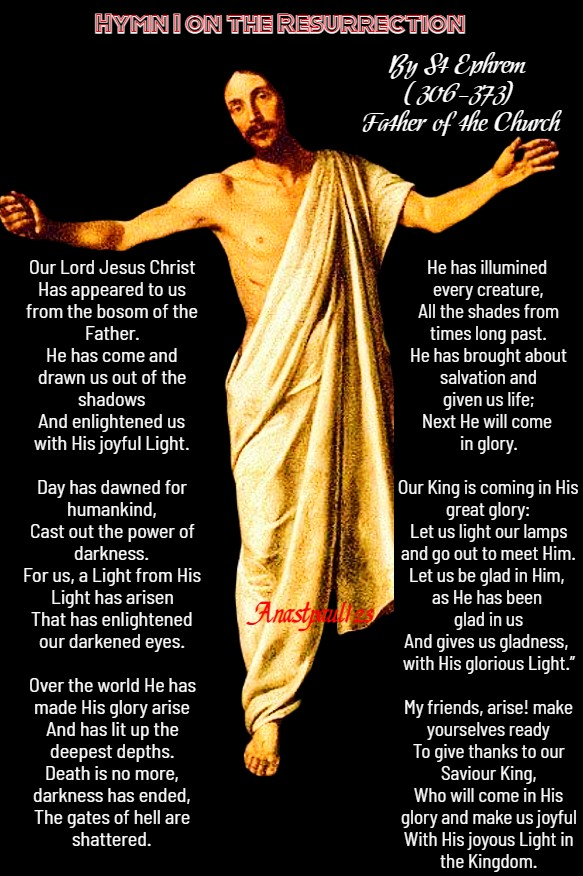
“Our Lord Jesus Christ Has appeared to us from the bosom of the Father. He has come and drawn us out of the shadows And enlightened us with His joyful Light.
Day has dawned for humankind, Cast out the power of darkness. For us, a Light from His Light has arisen That has enlightened our darkened eyes.
Over the world He has made His glory arise And has lit up the deepest depths. Death is no more, darkness has ended, The gates of hell are shattered.
He has illumined every creature, All the shades from times long past. He has brought about salvation and given us Life; Next He will come in glory.
Our King is coming in His great glory: Let us light our lamps and go out to meet Him (Mt 25,6); Let us be glad in Him, as He has been glad in us And gives us gladness, with His glorious Light.
My friends, arise! make yourselves ready To give thanks to our Saviour King, Who will come in His glory and make us joyful With His joyous Light in the Kingdom.”
St Ephrem (306-373) Father of the Church (Hymn I on the Resurrection)
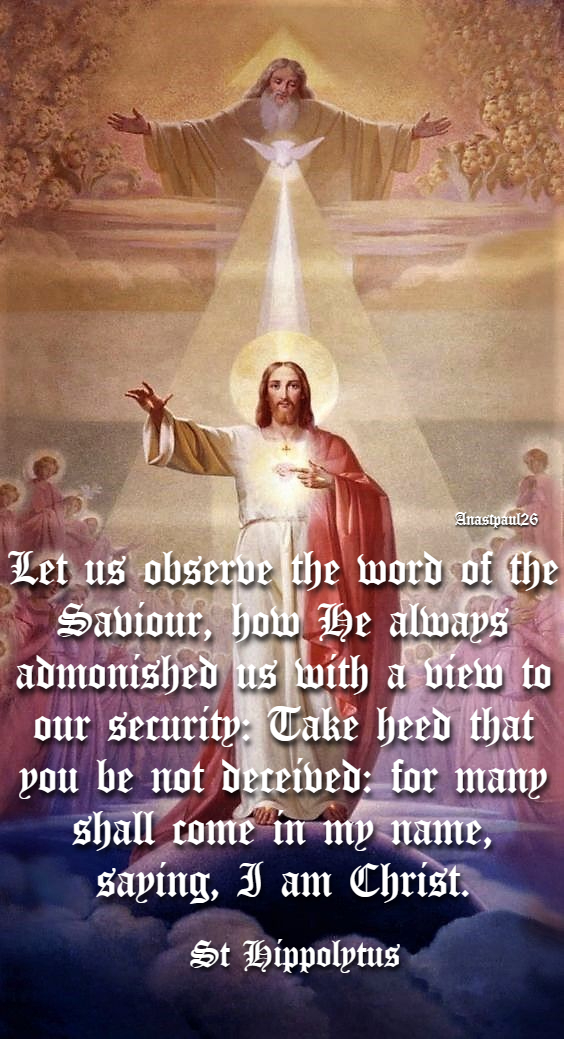
For, because iniquity shall abound, the love of many shall wax cold. By reason of the agitation and confusion of all these, the Lord of the universe cries in the Gospel, saying, Take heed that you be not deceived; for many shall come in my name, saying, I am Christ, and the time draws near: go not therefore after them. But when you shall hear of wars and commotions, be not terrified: for these things must first come to pass; but the end is not yet by and by. Let us observe the word of the Saviour, how He always admonished us with a view to our security: Take heed that you be not deceived: for many shall come in my name, saying, I am Christ.
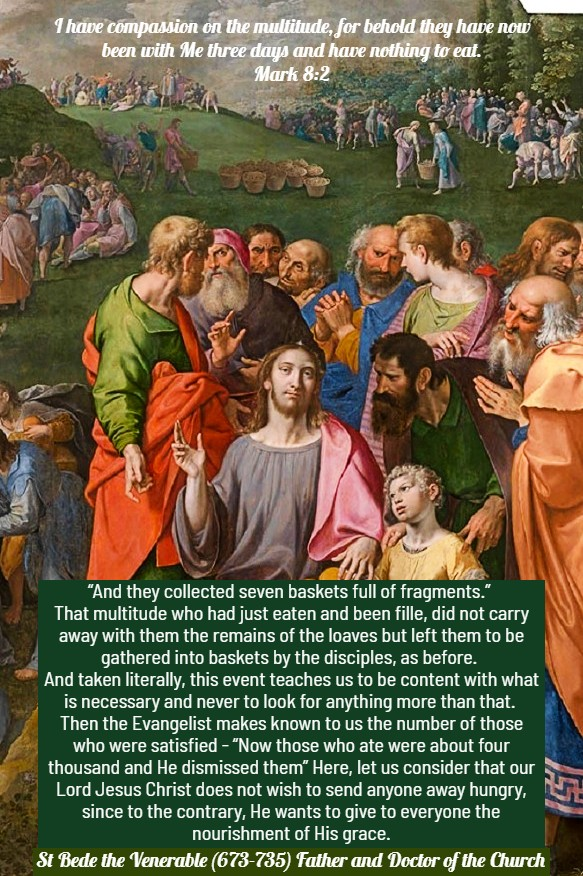
“I have compassion on the multitude, for behold they have now been with Me three days and have nothing to eat.” – Mark 8:2
REFLECTION – “ In this account of the miracle we must consider, in one and the same Redeemer, the separate operation of His Divinity and of His Humanity. And the error of Eutyches, who dared to teach that in Christ there is but one operation, must be wholly driven out from Christian lands. Who cannot see that the Lord, in having compassion on the multitude, lest they faint from want of food or from the weariness of the long journey home, was moved by the compassion of human pity but that, feeding four thousand people from seven loaves and a few fish, is a work of Divine Power?
“And they collected seven baskets full of fragments.” That multitude who had just eaten and been fille, did not carry away with them the remains of the loaves but left them to be gathered into baskets by the disciples, as before. And taken literally, this event teaches us to be content with what is necessary and never to look for anything more than that. Then the Evangelist makes known to us the number of those who were satisfied – “Now those who ate were about four thousand and He dismissed them” Here, let us consider that our Lord Jesus Christ does not wish to send anyone away hungry, since to the contrary, He wants to give to everyone the nourishment of His grace.
In a figurative sense, there is this difference between this second miracle and the first multiplication of the five loaves and two fish – the first prefigures the letter of the Old Testament, which was as though full of the spiritual grace of the New, whereas the second, represents the truth and grace of the New Testament fully communicated to the faithful. The multitude who, according to Saint Matthew’s testimony, wait three days for the healing of their sick (Mt 15), represent the elect in the faith of the Holy Trinity, who beg for the forgiveness of their sins, with persevering prayer, or those who are converted to the Lord, through their thoughts, words and deeds.” – St Bede the Venerable (673-735) Monk, Father and Doctor of the Church (Homilies on Mark, Book II, ch8 cf PL 92 – quoted by Saint Thomas Aquinas in the Catena Aurea Vol 4)
PRAYER – O God of the heavenly powers, creator of all good things, implant in our hearts the love of Thy Name and bestow upon us, an increase of godliness, fostering what is good and, by Thy loving care, guarding what Thou hast fostered. Through the same Jesus Christ, Thy Son our Lord, Who lives and reigns with Thee, in the unity of the Holy Ghost, God, world without end. Amen
9th Day – The Precious Blood in its Earthly Origin
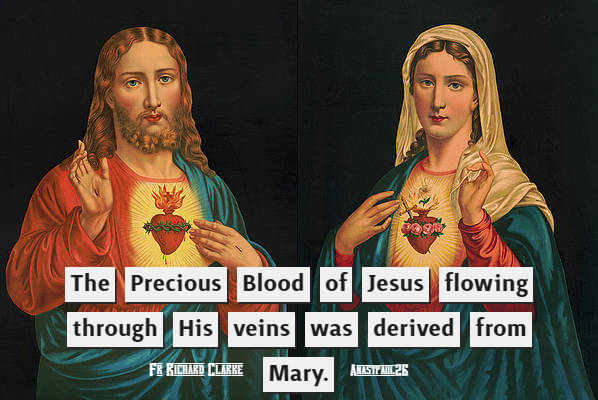
A child in its mother’s womb lives with the physical life of its mother. It is nourished by its mother, and her blood circulates in its veins. The Precious Blood of Jesus flowing through His veins was derived from Mary. She furnished from her immaculate body the Precious Blood that Jesus shed for us. How close must have been the union of Jesus and Mary! Can we wonder at her surpassing holiness when she not only carried her God within her womb, but furnished the very body with which His humanity clothed itself?
We also find in this thought a fresh proof of Mary’s unblemished purity. It is repugnant to our reverence for the Second Person of the Blessed Trinity to imagine Him dwelling in a womb that had ever been defiled by sin, and much more to suppose that the Precious Blood which flowed in His veins and was the price of our redemption did not come from a source as pure as God could make it. Make an act of faith in the Immaculate Conception of Mary, and thank God for that privilege conferred on her.
We must also remember that Jesus’ was wholly Mary’s. It was not as in the case of other children who have an earthly father. The body of Jesus was formed in Mary’s womb by the operation of the Holy Ghost, and naturally Jesus was altogether hers. In heaven, the body that Jesus wears is still derived from Mary, and their union is now closer than ever. In holy Communion Jesus is altogether ours. Do we conform ourselves to Him as Mary did?
Nostra Signora della Neve, Adro, Italy/ Our Lady of the Snow, Adro, Brescia, Italy (1519) – 8 July, 5 August:
Adro is a Town in the Province of Brescia, in the Lombardy region, northern Italy. The Sanctuary emerged after the appearance of the Madonna in this place. to Battista Bajoni Comino, the deaf-mute who was visited by the Holy Mother on 8 July 1519. The Virgin appeared saying she was the Mother of God and sent a message to the people of Adro. Our Lady’s message contained a reference to a Christian life, repentance for sins and conversion and reparation and the construction of a Sanctuary in her honour. The built the Church at the place of vision, and began to amend their lives. They practised devotion on Sundays and Holy Days, stopped blaspheming the Holy Name and refrained from other evil habits, for Our Lady had also said that if they did not repent they could expect a serious penalty. Mary said – “And if they wonder how it is that you speak, tell them that you have been with the Advocate of Sinners. Everyone knows you were dumb. Now take this stone with you and show it to them as it will change colour from time to time. “
The central Feast of Our Lady of the Snows is celebrated on 5 August Immediately after the miracle, it was called “Madonna della Cava,” the place where the Virgin had appeared to the Shepherd and the feast was celebrated on 8 July the anniversary of the vision. Later, however, Church officials transferred the Feast to 5 August, the day the dedication of Santa Maria Maggiore in Rome, also known as “Santa Maria de las Nieves,” built by Pope Liberius commemorates after Miracle of snow (that happened in Rome). It was then that this temple took the name of “Our Lady of the Snows.” In pilgrimage season (April to October) groups of pilgrims arriving from neighbouring provinces, especially from Brescia, Bergamo, Como, Varese, Milan, Cremona, Mantua and Verona. Sunday is preferred by families. All opportunities for spiritual growth are offered through preaching and the Sacraments.
Such is the fascination of the Virgin on the pilgrims who will then return again. It is a ceremony in which you have to enter the crypt “to see the Madonna”.
The miracle of the deaf-mute who began to hear and speak gave rise to a small Shrine. It remains alongside the current main Altar. It was visited by Saint Charles Borromeo in 1581. Being too small for the influx of pilgrims,the Church was demolished in 1750 and enlarged. It was built on a design by architect Gaspare Turbini and opened in 1776.
The Carmelites of St Teresa, built a Monastery nearby. The current statue is gilded wood sculptor. Next to the Shrine a discreet and well-shaded park with tables and benches offers a welcome drink to pilgrims.
St Abraham the Martyr Bl Adolf IV of Schauenburg St Pope Adrian III St Ampelius of Milan St Apollonius of Benevento
St Arnold St Auspicius of Toul St Auspicius of Trier Brogan of Mothil St Colman of Thuringia St Doucelin St Edgar the Peaceful Blessed Pope Eugene III O.Cist (c 1080-1153) Papal Ascension – 15 February 1145 until his death. The 167th Pope.
St Procopius of Ceasarea St Sunniva of Bergen St Thibaud de Marly St Totnan of Thuringia — Abrahamite Monks/Martyrs of Constantinople: A group of monks in a monastery founded by Saint Abraham of Ephesus. Martyred in the iconoclast persecutions of emperor Theophilus. In c 835 in Constantinople. Martyrs of Shanxi – 7 saints: In 1898 seven sisters of the Franciscan Missionaries of Mary were sent to the Shanxi diocese in China to serve the poor in hospitals and care for the unwanted or other destitutes in orphanages. They were – • Anne-Catherine Dierks • Anne-Francoise Moreau • Clelia Nanetti • Irma Grivot • Jeanne-Marie Kuergin • Marianna Giuliani • Pauline Jeuris There they all died in one of the periodic crackdowns against foreign missionaries. They were beheaded on 9 July 1900 at Taiyuanfu, China- Beatified on 24 November 1946 by Pope Pius XII.
Martyrs of Syrmium – 5 saints: Five Christians martyred together for their faith. We know nothing else about them but the names – Cecilia, Eperentius, Eraclius, Sostratus and Spirus. They were martyred in the 4th century in Syrmium, Pannonia (modern Serbia).
Pope Adrian III or Hadrian III was the bishop of Rome and leader of the Papal States from 17 May 884 to his death on 8 July 885. He served for little more than a year, during which he worked to help the people of Italy in a very troubled time of famine and war. Adrian III was the 109th pope and was born within the Papal States. During his brief reign of sixteen months, violent vendettas that arose from the assassination of John VIII continued. He laboured hard to alleviate the misery of the people of Italy, prey to famine and to continuous war. He is also known to have written a letter condemning the Christians of both Muslim-ruled and Christian-ruled parts of Spain for being too friendly with the Jews in these lands. Adrian also sent Theodosius, the bishop of Brindisi and Oria, to Constantinople to deliver a synodal letter about faith and the filioque to patriarch Photius I.
Adrian died in July 885 at San Cesario sul Panaro, not long after embarking on a trip to Worms, in the Rhineland. The purpose of the journey was to attend an Imperial Diet after being summoned by Emperor Charles the Fat to settle the imperial succession and discuss the rising power of the Saracens. His death under dubious circumstances led many to believe that he had been assassinated.
Adrian’s death and subsequent burial in the church of San Silvestro Nonantola Abbey near Modena is commemorated in the sculpted reliefs that frame the doorway of this church. His relics are found near the high altar, and his tomb at once became a popular place of pilgrimage. His cult was confirmed by Pope Leo XIII on 2 June 1891, and his feast day is celebrated on 8 July.
Our Morning Offering – 8 July – “Month of the Most Precious Blood”
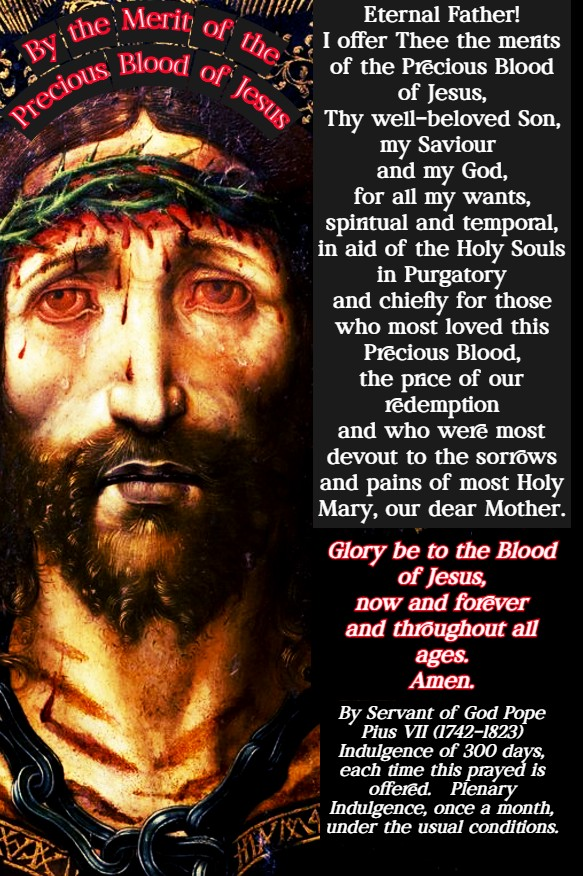
By the Merit of the Precious Blood of Jesus By Servant of God Pope Pius VII (1742-1823) Papacy from 1800 to 1823 Indulgenced Act of Oblation to Our Father
Eternal Father! I offer Thee the merit of the Precious Blood of Jesus, Thy well-beloved Son, my Saviour and my God, for all my wants, spiritual and temporal, in aid of the Holy Souls in Purgatory and chiefly for those who most loved this Precious Blood, the price of our redemption and who were most devout to the sorrows and pains of most Holy Mary, our dear Mother.
Glory be to the Blood of Jesus, now and forever and throughout all ages. Amen.
Indulgence of 300 days, each time this prayed is offered, with a Plenary Indulgence, once a month, under the usual conditions.
Note of Interest: On 15 August 1811 – the Feast of the Assumption – it is recorded that the Pope celebrated Mass and was said to have entered a trance and began to levitate in a manner that drew him to the Altar. This particular episode aroused great wonder and awe among attendants, which included the French soldiers guarding him, who were awestruck at what had occurred and left records of it.
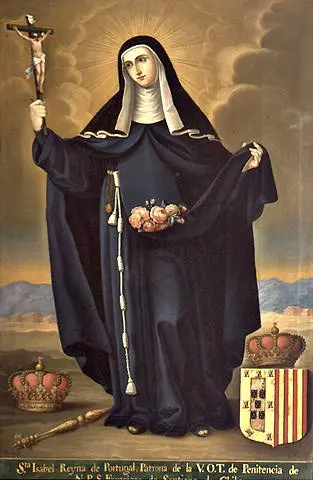
One Minute Reflection – 8 July – “Month of the Most Precious Blood” – St Elizabeth Queen of Portugal
I know, O Lord, that Your ordinances are just, and in Your faithfulness You have afflicted me. Pierce my flesh with Your fear; I fear Your ordinances. (Alleluja, alleluja.)
–Ps 118:75; 118:120
REFLECTION – Since, then, the blessed prophets have been eyes to us, setting forth for our behoof the clear declaration of things secret, both through life, and through declaration, and through inspiration of the Holy Spirit, and discoursing, too, of things not yet come to pass, in this way also to all generations they have pictured forth the grandest subjects for contemplation and for action. Thus, too, they preached of the advent of God in the flesh to the world.
Hence, too, they indicated the day of the consummation to us, and signified beforehand the day of the apostate that is to appear and deceive men at the last times, and the beginning and end of his kingdom, and the advent of the Judge, and the life of the righteous, and the punishment of the sinners, in order that we all, bearing these things in mind day by day and hour by hour, as children of the Church, might know that not one jot nor one tittle of these things shall fail, as the Saviour’s own word announced. Let all of you, then, of necessity, open the eyes of your hearts and the ears of your soul, and receive the word which we are about to speak.
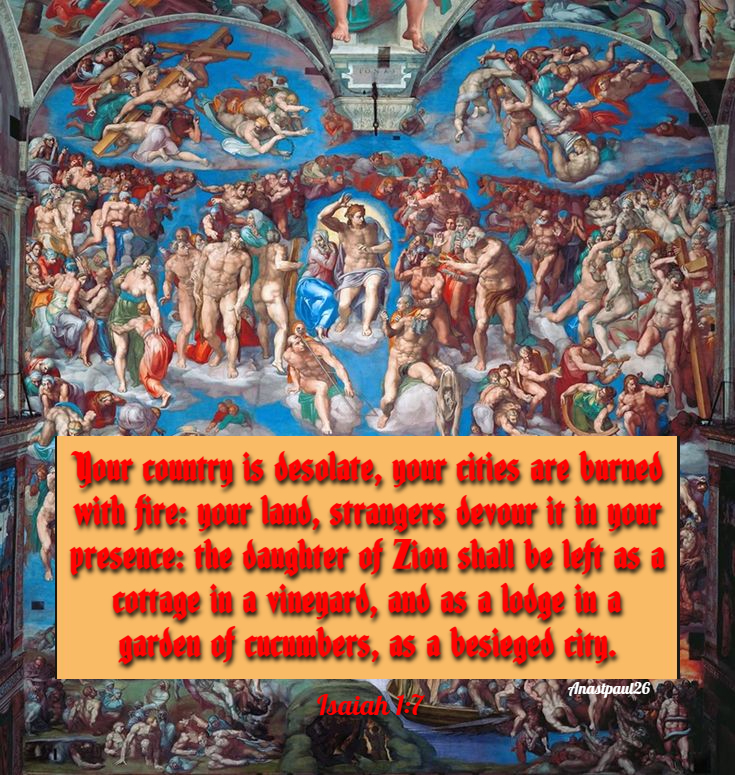
Let us bring forward Isaiah as our first witness, inasmuch as he instructs us in the times of the consummation. What, then, does he say? Your country is desolate, your cities are burned with fire: your land, strangers devour it in your presence: the daughter of Zion shall be left as a cottage in a vineyard, and as a lodge in a garden of cucumbers, as a besieged city.You see, beloved, the prophet’s illumination, whereby he announced that time so many generations before. For it is not of the Jews that he spoke this word of old, nor of the city of Zion, but of the Church. For all the prophets have declared Zion to be the bride brought from the nations.
–On the End of the World (Blessed Hippolytus, bishop and martyr)
PRAYER – Most merciful God, Who among other admirable gifts, endowed blessed Queen Elizabeth with the special grace of calming the tumult of war; grant by her intercession that, after the peace for which we humbly pray, we may attain everlasting happiness. Through our Lord…
Quote/s of the Day – 8 July – “Month of the Most Precious Blood” – Readings: Ps 118:75; 118:120, Ps 118:1, Prov 31:10-31, Ps 44:3; 44:5, Ps 44.5, Matt 13:44-52.
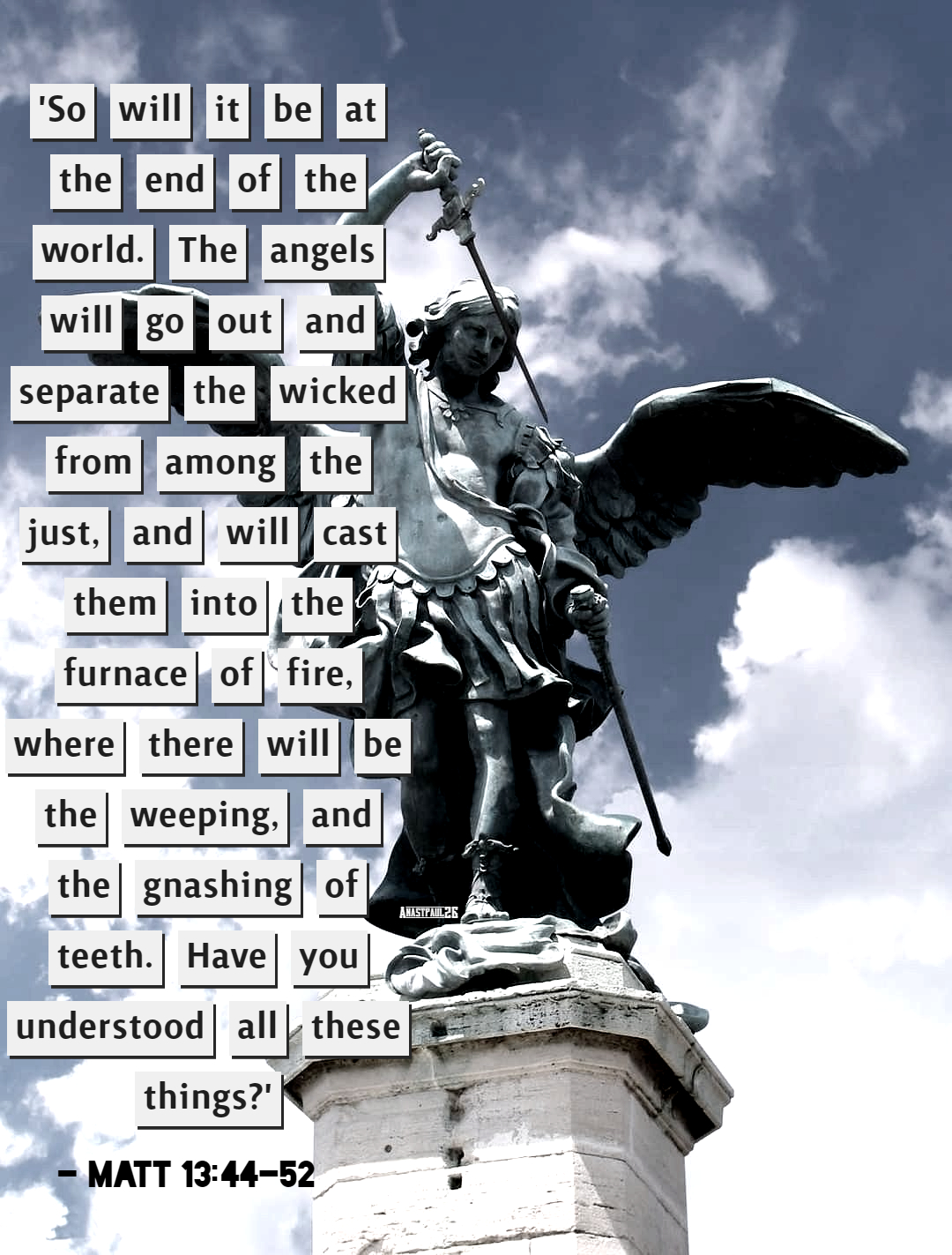
‘So will it be at the end of the world. The angels will go out and separate the wicked from among the just, and will cast them into the furnace of fire, where there will be the weeping, and the gnashing of teeth. Have you understood all these things?‘
– Matt 13:44-52
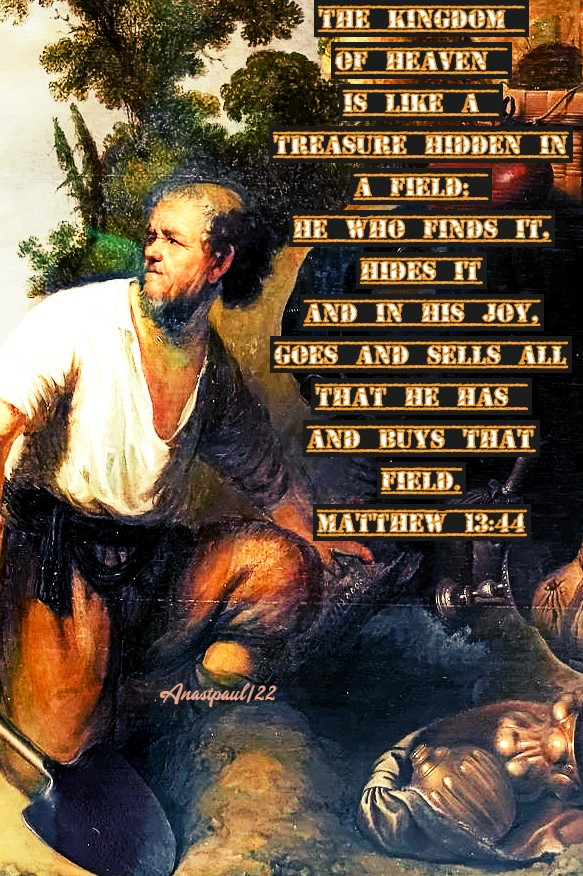
“The Kingdom of Heaven is like a treasure hidden in a field; he who finds it, hides it and in his joy, goes and sells all that he has and buys that field.”
Matthew 13:44
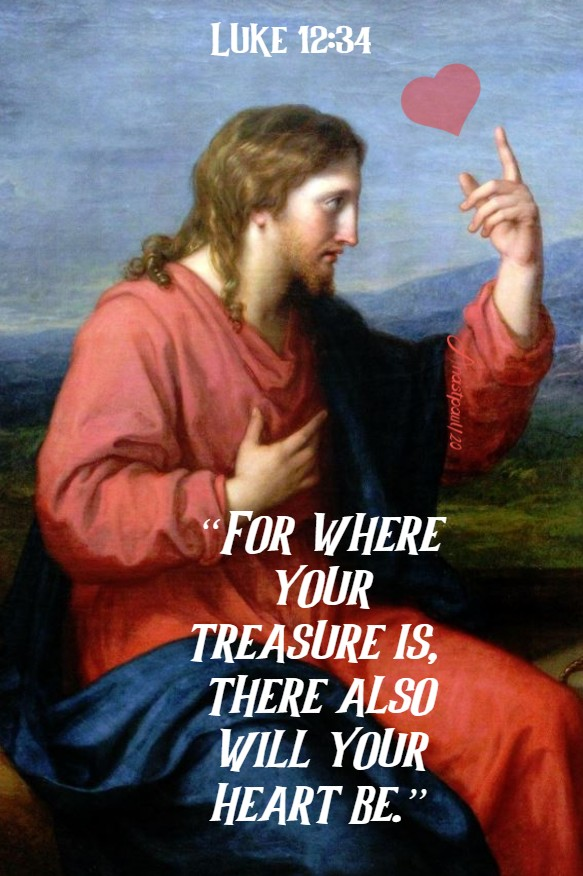
“For where your treasure is, there also will your heart be.”
Luke 12:34
“We have had Your treasure hidden within us, ever since we received baptismal grace, it grows ever richer at Your sacramental table.”
St Ephrem (306-373) Father and Doctor of the Church
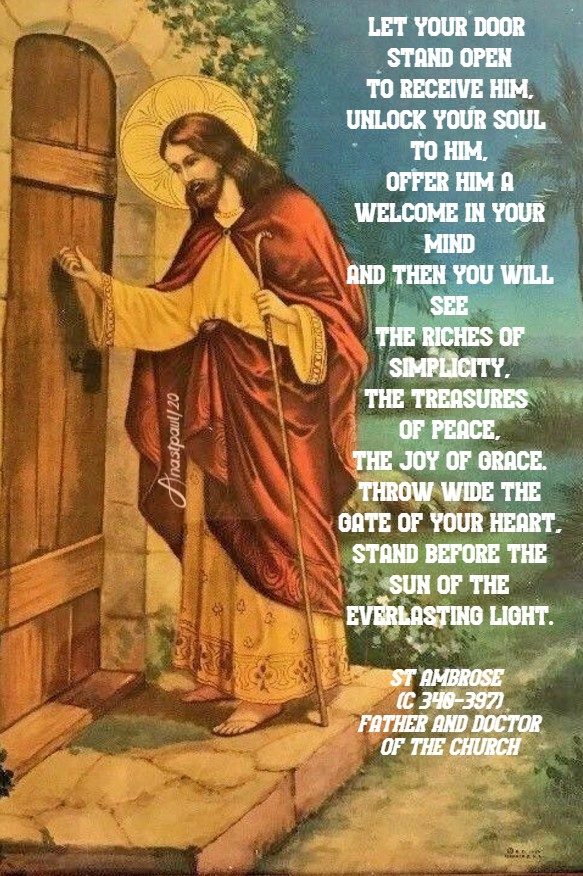
“Let your door stand open to receive Him, unlock your soul to Him, offer Him a welcome in your mind and then you will see the riches of simplicity, the treasures of peace, the joy of grace. Throw wide the gate of your heart, stand before the Sun of the everlasting Light.”
St Ambrose (c 340-397) Father and Doctor of the Church
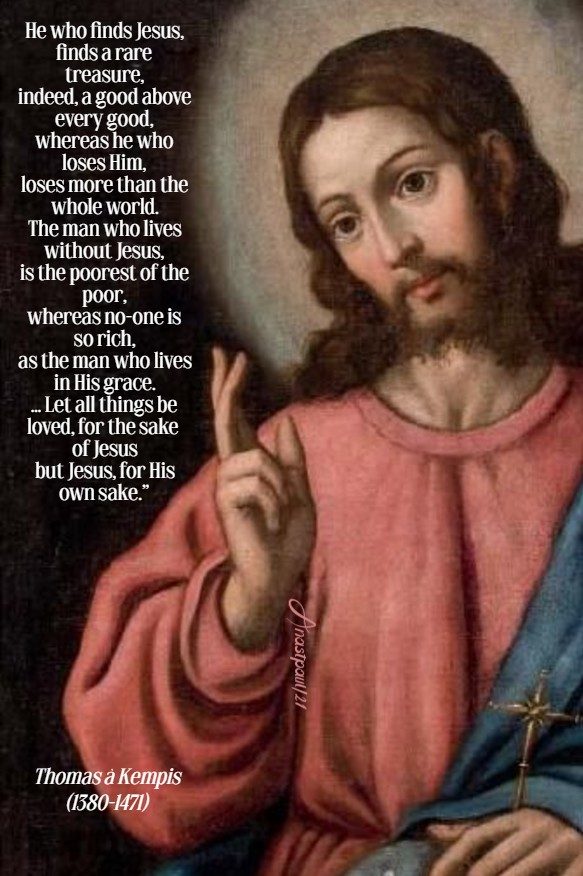
“ He who finds Jesus, finds a rare treasure, indeed, a good above every good, whereas he who loses Him, loses more than the whole world. The man who lives without Jesus, is the poorest of the poor, whereas no-one is so rich, as the man who lives in His grace. … Let all things be loved, for the sake of Jesus but Jesus, for His own sake.”
Thomas à Kempis (1380-1471)
“Do not be afraid any longer, little flock, for your Father is pleased to give you the kingdom. Sell your belongings and give alms. Provide money bags for yourselves that do not wear out, an inexhaustible treasure in heaven that no thief can reach nor moth destroy.”
St John Leonardi (1541-1609)
“You leave the land just as it is when you depart, you do not carry anything away. Our first aim is to go to God, we are not on earth for anything but this!”
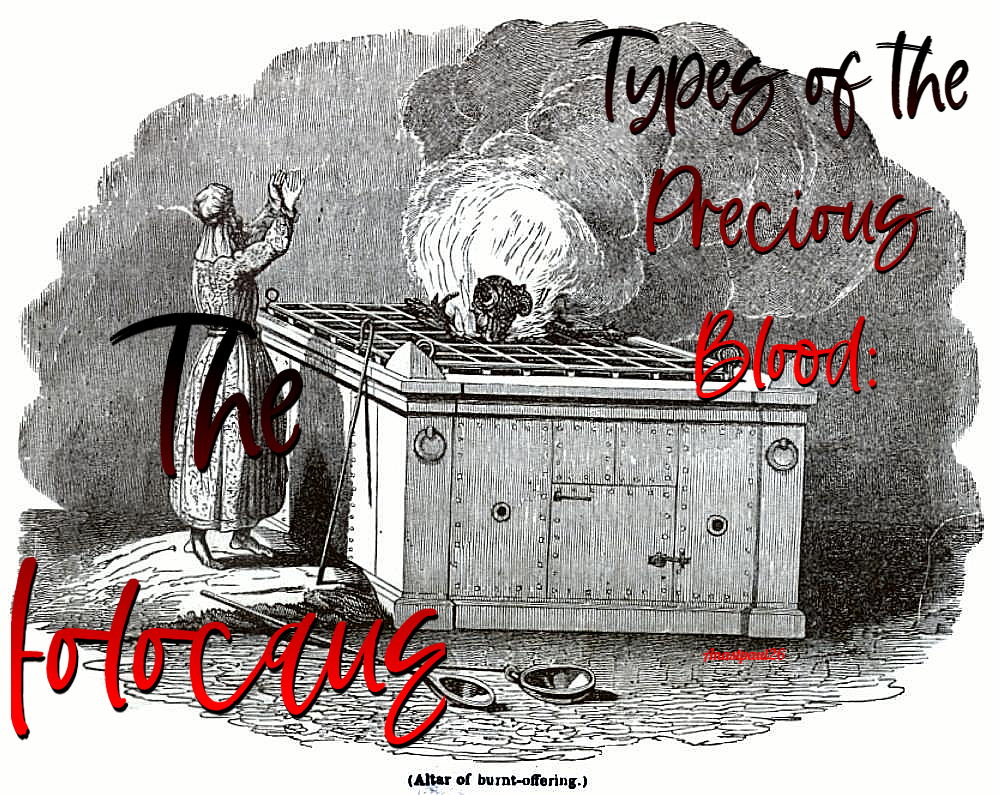
8th Day – Types of the Precious Blood: (5) The Holocaust
The holocaust, or whole burnt offering, could be an ox or sheep, or pigeon, or turtle-dove, according to the abilities of him who offered it. Its blood was to be shed, and the whole body was afterwards to be burnt upon the altar. So Christ offered Himself a holocaust to God, there was no part of His human nature that was not sacrificed for the sins of men. All the faculties of His soul, every thought and wish and inclination, every nerve and fibre in His body, all were offered to God and consecrated to Him. Try and realise the extent of this sacrifice.
In this offering Christ left us an example. If we are really to tread in His footsteps, a partial offering is not enough. As long as keep anything for ourselves and deny it to God, there is rapine in our holocaust, that is, we keep back part of what we profess to sacrifice entirely to God, and such an offering cannot be acceptable. Is there anything which I consciously still keep back from God?
First of all, the blood of the sacrifice was to be shed, and the blood, as we read in Holy Scripture, signifies the life. We must therefore dedicate our lives to God before we can belong wholly to Him. Hence the virtue of religious vows. If we are not called to these, at least we are called to make the service of God the end and aim of our daily life. Is this the character of my life?
Onze Zoeten Dame van Den Bosch , Arras / Our Lady of Arras, Netherlands (1380) – 7 July:
The image known as the “Kind Mother” at Sint Hertogenbosch, or “Our Sweet Lady” of Den Bosch, as she is also known in the north Brabant Province of the Netherlands, was an object of derision when it was first heard of in 1380. It had been found dirty and damaged in a builder’s junk-yard, but it soon became celebrated for the wonders connected with it. It was in 1380, when Saint John’s Cathedral was being renovated, that the Statue was found. An apprentice stone mason, was looking for wood for his fire when he uncovered a scruffy wooden Statue in the rubble. The Statue was in such poor condition, that he didn’t recognise it as the Mother of God. The mason in charge somehow recognised Her, even without the Infant Jesus in her arms.
The Statue was placed on the Altar of Saint Martin, in the Cathedral,but the faithful did not like it and were upset that such a dilapidated Statue was exposed for veneration. It wasn’t long before one of the Priests attempted to remove the Statue but found that it had become so heavy, that he could not move it.
It was soon noted, though, that any who spoke disapprovingly of the Statue became weak, fainted, or had nightmares. One woman mocked the Statue, and became partially paralysed. That night, she had a vision of Our Lord, who ordered her to repair the Statue and honour it. The next day she was able to drag herself to the Cathedral to begin the work. At the end of each day, she was able to walk a little more.
It was an entire year later when a Brother Wout found the missing image of the Infant Jesus that belonged to the Statue. Local children were using if for a toy but now the Statue was reunited and complete. There were still some who ridiculed the Statue but now they fainted on the spot. Many experienced strange pains, headaches,and even indigestion. On the other hand, those who prayed before the Statue received a cure of their illnesses and otherwise were greatly favoured. Due to the presence of the Statue, the Church became a place of pilgrimage. Emperor Maximilian, Holy Roman Emperor, and King Fernando of Castile were among the notables who visited the miraculous Statue.
The Statue of Our Sweet Lady is of oak and is nearly four feet tall and is of an unusual pattern – Our Lady stands upright, while her forearms are extended at right angles to her body. The Child is balanced on her left hand and in her right she holds an apple.
The dedication of the new Church of Our Lady of Arras occurred in the year 1484 by Bishop Peter de Ranchicourt, who was Bishop of that City. The first Church which had been built at the site had been constructed by Saint Vaast, who had been the Bishop of Arras, in the year 542, using the liberal donations of the first Kings of France.
The desolation caused by the Calvinists began in 1566 and many Churches were plundered. The Kind Mother was hidden and saved from the destruction. Years later, when the City was seized by the Spanish, two Carmelites took the Statue to Bishop Ophovius, who gave it to one of the women of the parish to safeguard.
Eventually it was feared that the Statue of the Kind Lady would not be safe if it stayed were it was and so, it was decided to take the Statue to Brussels for safety. The Statue had to be hidden and was placed in a chest and smuggled through the Town gates. It was then taken to St Geradus’ Church in Belgium before being taken to Koudenberg Church in Brussels.
It wasn’t until the year 1810 when the Cathedral at Den Bosch was returned to the Catholics by Napoleon. Then, it took the prolonged efforts of Bishop J. Zwijsen, the Bishop of Hertogenbosh, to have the beloved Statue of Our Sweet Lady returned to his Cathedral in 1878. It was Crowned by the grateful Bishop in the name of Pope Leo XIII that same year and the Feast is 7 July with proper Mass and Office in certain places.
INTERESTING NOTE: Around 7% of the men in the Netherlands are called Maria. Yes, over 1/20 of Dutch men are named after the Virgin Mary. In 1954, a Marian Year, 17% of Dutch men where named after the Blessed Virgin. Incidentally, most of those men named Mary live in or around Den Bosch, and Mary is one of the Patron Saints of this beautiful City.
Saint Cyril (827-869) Saint Methodius (826-885) “Apostles to the Slavs,” Sibling Brother Bishops, Confessors, Theologians, Missionaries, Writers, Preachers, Patrons of Europe. Creators of the Glagolitic alphabet, the first alphabet used to transcribe Old Church Slavonic and Cyrillic Alphabet, which was developed from it. Their Feast Day is 7 July (moved in 1969). The great Saints Cyril & Methodius: https://anastpaul.wordpress.com/2018/02/14/saints-of-the-day-14-february-sts-cyril-827-869-methodius-826-885/
Blessed Pope Benedict XI OP (1240-1303) Cardinal-Priest of St Sabina, Bishop of Ostia then of Rome, Dominican Friar, Prior Provincial of Lombardy prior to becoming the Master of the Order in 1296, Apostolic Papal Legate to Hungary and France, Teacher, Preacher, Writer and renowned Scholar with special emphasis on Biblical commentary. His Papacy began on 22 Ocober 1303 and ended at his death on 7 July 1304. His Life: https://anastpaul.com/2020/07/07/saint-of-the-day-7-july-blessed-pope-benedict-xi-1240-1303/
Bl Bodard of Poitiers St Bonitus of Monte Cassino St Carissima of Rauzeille St Eoaldus of Vienne St Ethelburga of Faremoutier Bl Francisco Polvorinos Gómez St Hedda of Wessex Bl Joseph Juge de Saint-Martin Bl Juan Antonio Pérez Mayo Bl Juan Pedro del Cotillo Fernández Bl Justo González Lorente St Maelruan Bl Manuel Gutiérrez Martín St Marcus Ji Tianxiang Bl María del Consuelo Ramiñán Carracedo
Bl Marie-Gabrielle-Françoise-Suzanne de Gaillard de Lavaldène St Medran St Merryn Bl Oddino Barrotti St Odo of Urgell St Odran St Palladius of Ireland St Pantaenus of Alexandria
St Pantænus (Died c 216) Father of the Church, Theologian, Philosopher, Teacher, Confessor and Defender of the Faith, Writer and interpreter of the Bible, the Trinity and Christology, |Missionary. Convert ofthe disciples of the Apostles. Head of the Alexandrian School of Learning – a famous pupil was St Clement of Alexandria. Biography: https://anastpaul.com/2019/07/07/saint-of-the-day-7-july-st-pantaenus-father-of-the-church-died-c-216/
St Prosper of Aquitaine St Syrus of Genoa St Willibald of Eichstätt (c.700 – 787) Bishop, Prince, Missionary — Martyrs of Durres – 7 saints: Also known as – Martyrs of Dyrrachium/ Martyrs of Durazzo. A group of seven Italian Christians who fled Italy to escape the persecutions of emperor Hadrian. Arrived in Dyrrachium, Macedonia to find Saint Astius tied to a cross, covered in honey, laid in the sun and left to be tortured by biting and stinging insects. When they expressed sympathy for Astius, they were accused of being Christians, arrested, chained, weighted down, taken off shore and drowned. We know little more about each of them than their names – Germaus, Hesychius, Lucian, Papius, Peregrinus, Pompeius and Saturninus. They were born in Italy and were martyred at sea c117 off the coast of Dyrrachium (Durazzo), Macedonia (modern Durres, Albania).
StAngelelmus (Angelelme, Angelaume, died 828) was bishop of Auxerre from 813 to 828. He was Bavarian, and became abbot of the monastery of SS Gervais and Protase, Auxerre. Angelelmus may have been a Benedictine.
St. Maelruain of Tallaght
St Maelruain is venerated as the founder and first abbot of Tallaght Monastery in County Dublin in Ireland, as well as the compiler of the martyrology of the same name. He is considered to be one of the leading figures in the Irish monastic movement known as the Culdees (‘Companions of God’) which flourished in Ireland and Scotland from the eighth to the twelfth centuries.
“Maelruain” (not to be confused with the later namesake Máel Ruain, bishop of Lusca) is not the baptismal name of the saint, rather, it was his monastic name. The form “Maelruain” consists of two parts: “mael” meaning “he who was tonsured”, and “ruain” which refers to the saint with the name Ruadan. From this it can be concluded that St. Maelruain was trained in the monastery founded by St. Ruadan, in Lothra in County Tipperary. The Martyrology of Tallaght (below) says that Maelruain “came here with the relics of holy martyrs and virgins”, to establish a monastery there. The foundation was dedicated to ‘God and St Michael’, and held the Virgin Mary and St Michael in special veneration. The monastery was later joined with Finglas in the reform movement as ‘the two eyes of Ireland’.
By the eighth century Irish monasteries had become lax, and Maelruain’s reform was necessarily severe. It put emphasis on preserving the enclosure and there was a strong ascetical component, focused spiritual direction, frequent confession, as well as long fasts and harsh penances, such as standing in cold water for long periods to control the flesh. With Aengus his disciple, Maelruain is regarded as joint author of The Rule of the Céilí Dé which contains a detailed series of rules for the regulation of the lives of the Companions.
Little is known of his early life. The Annals of Ulster report that in the year 792 Máel Ruain died a peaceful death, calling him a bishop and soldier of Christ.
These are two lines from a poem in the Leabhar Breac. They say of Maelruan:
Our Morning Offering – 7 July – “Month of the Most Precious Blood”
Constant Prayer to the Precious Blood of Jesus By St Catherine of Siena (1347-1380)
Precious Blood, Ocean of Divine Mercy, Flow upon us! Precious Blood, most pure Offering, Procure us every grace! Precious Blood, Hope and Refuge of sinners, Atone for us! Precious Blood, Delight of holy souls, Draw us! Amen









You must be logged in to post a comment.