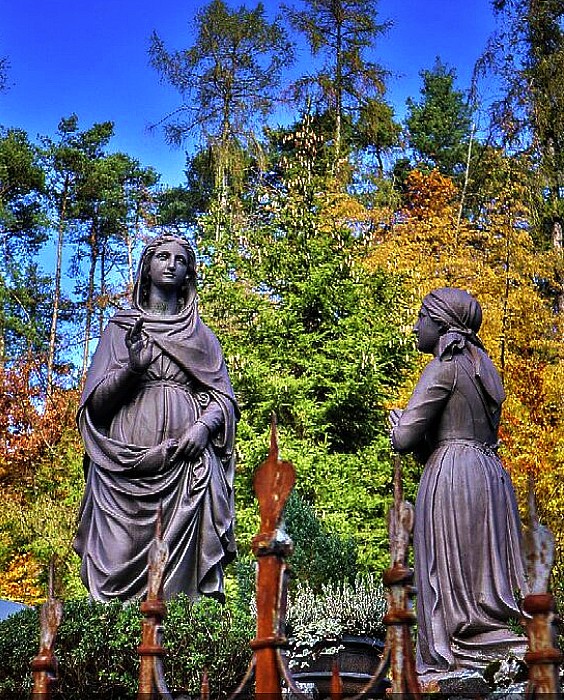
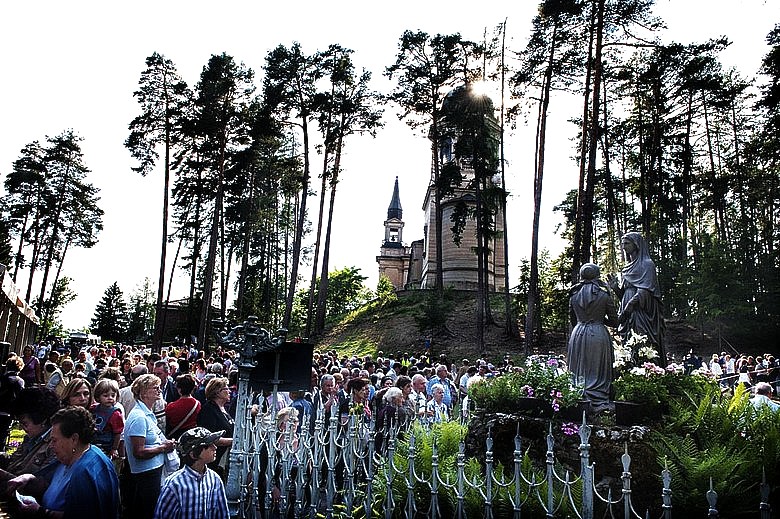
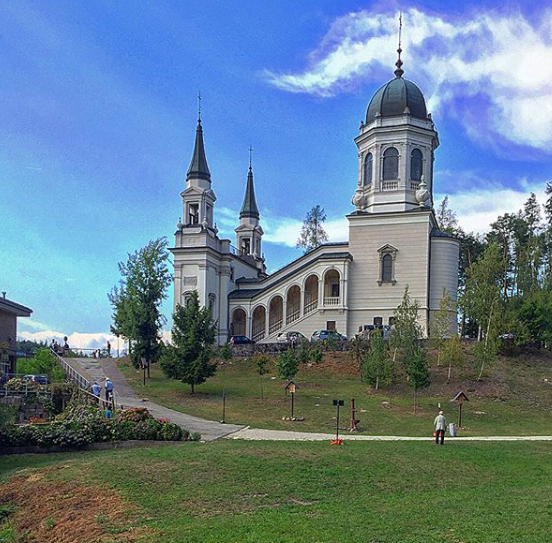
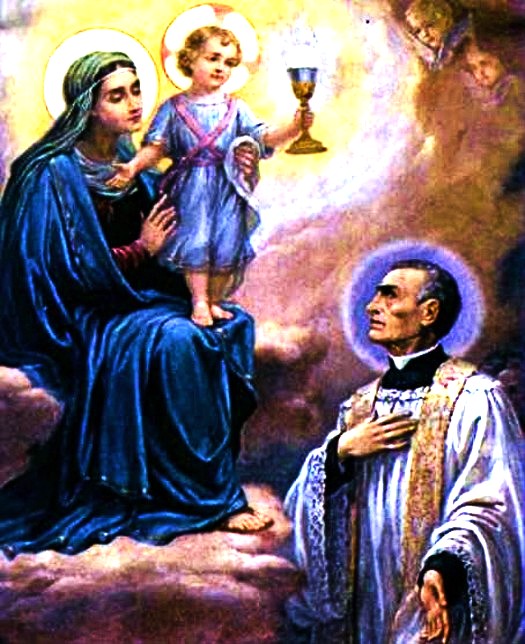
Quote/s of the Day – 27 February – The Memorial of St Gregory of Narek (950-1003) Father & Doctor of the Church and St Gabriel Francis Possenti of Our Lady of Sorrows CP (1838-1862)
โIn the face of my darkness, You are light. In the face of my mortality, You are life.โ
โThe soul’s every movement is a reminder of God, the taking of a step, the extension of the right hand, the raising of the arm, with thanks for good works, with shame for bad, for familiar conversation and public addresses, in rational discourse, in works of success, in the fervour of virtue, day and night, we are guided by You in the useful movements for our spirit, asleep or awake โฆ โ
Assist me by the wings of your prayers, O you who are called the Mother of the living, so that on my exit from this valley of tears I may be able to advance without torment, to the dwelling of life that has been prepared for us to lighten the end of a life burdened by my iniquity.
Healer of the sorrows of Eve, change my day of anguish into a feast of gladness. Be my Advocate, ask and supplicate. For as I believe in your inexpressible purity, so do I also believe in the good reception that is given to your word.
O you who are blessed among women, help me with your tears for I am in danger. Bend the knee to obtain my reconciliation, O Mother of God.
Be solicitous for me for I am miserable, O Tabernacle of the Most High. Hold out your hand to me as I fall, O heavenly Temple.
Glorify your Son in you, may He be pleased to operate Divinely in me the miracle of forgiveness and mercy. Handmaid and Mother of God, may your honour be exalted by me and may my salvation be manifested, through you. Amen.
St Gregory of Narek (950-1003) Father & Doctor of the Church
โI will attempt, day by day, to break my will into pieces. I want to do Godโs Holy Will, not my ownโ
โDo not bestow your love on the world!โ
โLove Mary!โฆ She is loveable, faithful, constant. She will never let herself be outdone in love but will ever remain supreme. If you are in danger, she will hasten to free you. If you are troubled, she will console you. If you are sick, she will bring you relief. If you are in need, she will help you. She does not look to see what kind of person you have been. She simply comes to a heart that wants to love her. She comes quickly and opens her merciful heart to you, embraces you and consoles and serves you. She will even be at hand, to accompany you on the trip to eternity.โ
(From a letter to his brother).
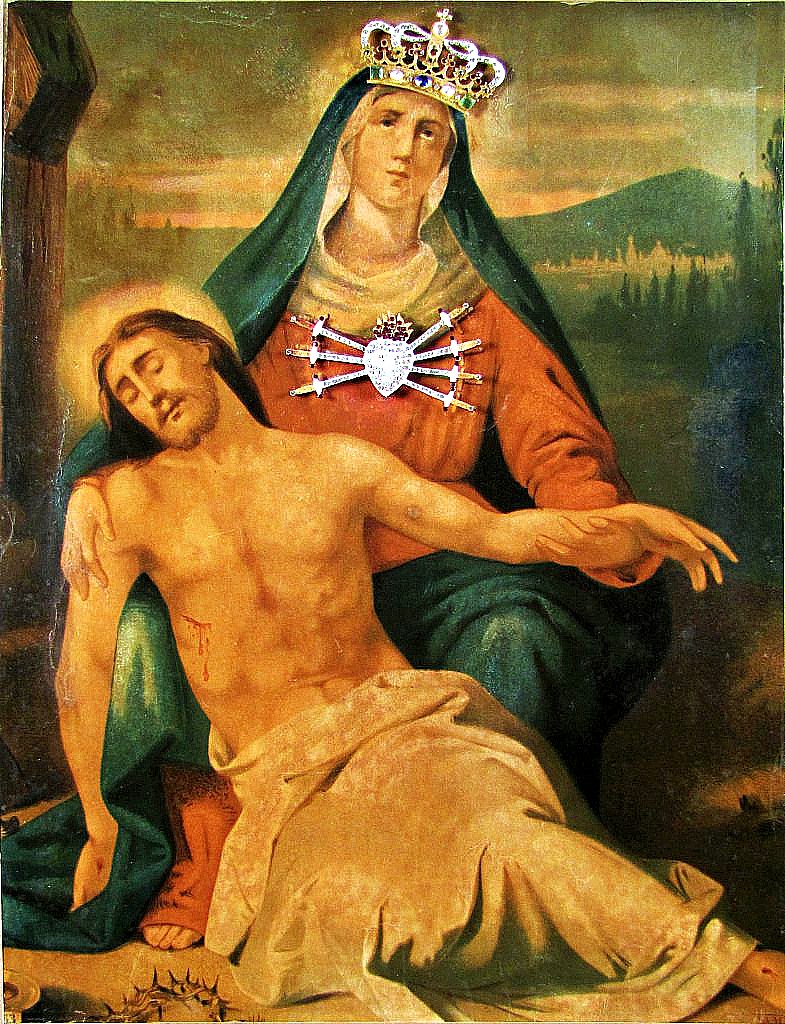
St Gabriel Francis Possenti of Our Lady of Sorrows (1838-1862)
Our Morning Offering โ 27 February – Saturday of the First week of Lent, the Memorial of St Gabriel Francis Possenti of Our Lady of Sorrows (1838-1862) and a Marian Saturday
O Mother of Sorrows, Stand by Me in My Last Agony By St Gabriel Francis Possenti of Our Lady of Sorrows (1838-1862)
O Mother of Sorrows, by the anguish and love with which thou didst stand at the Cross of Jesus, stand by me in my last agony. To thy maternal heart I commend the last three hours of my life. Offer these hours to the Eternal Father in union with the agony of our dearest Lord, in atonement for my sins. Offer to the Eternal Father the Most Precious Blood of Jesus, mingled with your tears on Calvary, that I may obtain the grace of receiving Holy Communion with the most perfect love and contrition, before my death and that I may breathe forth my soul in the adorable Presence of Jesus. Dearest Mother, when the moment of my death has at last come, present me as your child to Jesus. Ask Him to forgive me for having offended Him, for I knew not what I did! Beg Him to receive me into His Kingdom of Glory to be united with Him forever. Amen
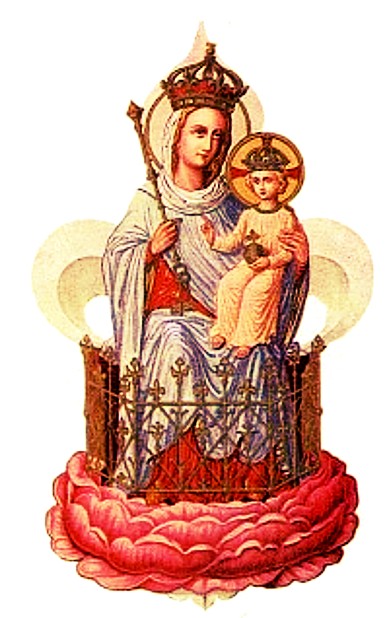
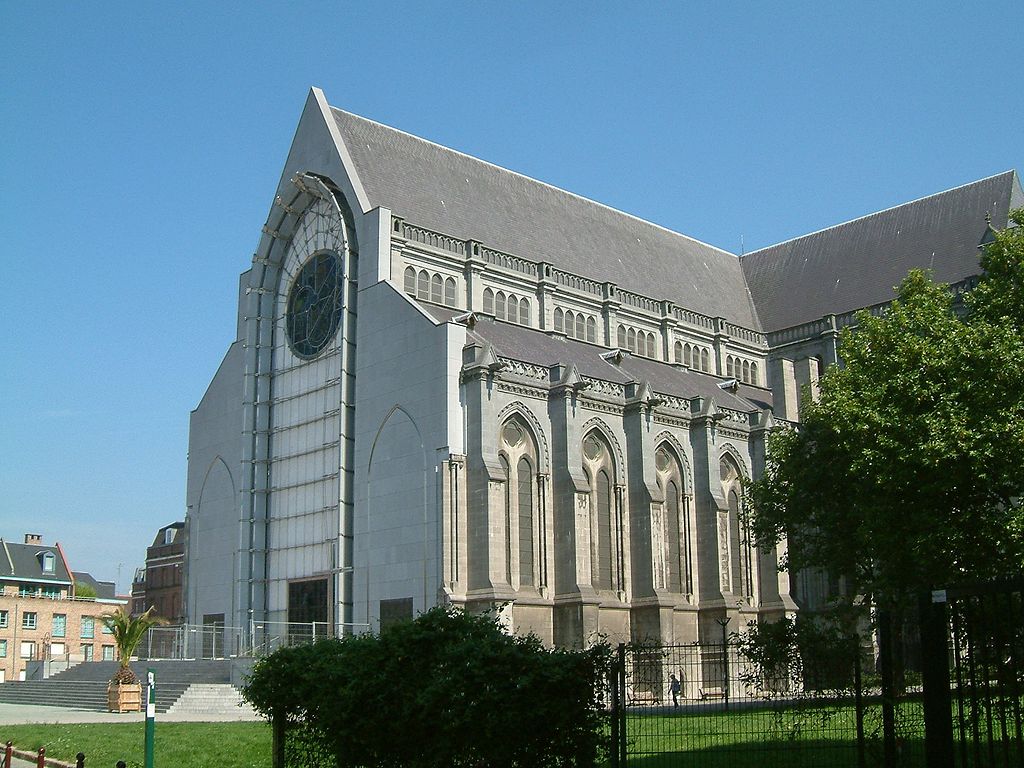
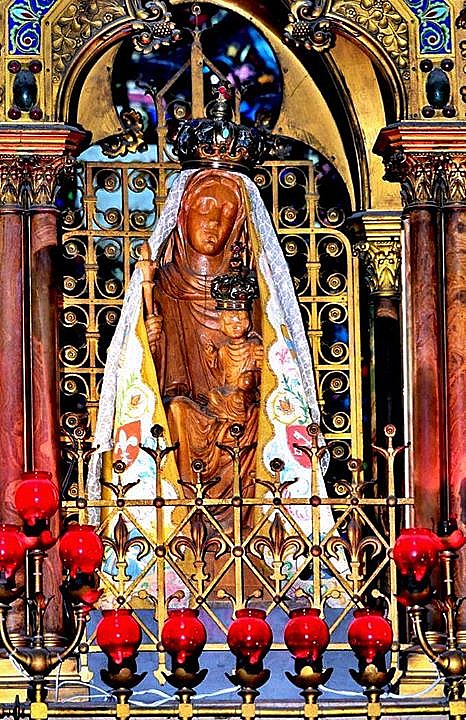
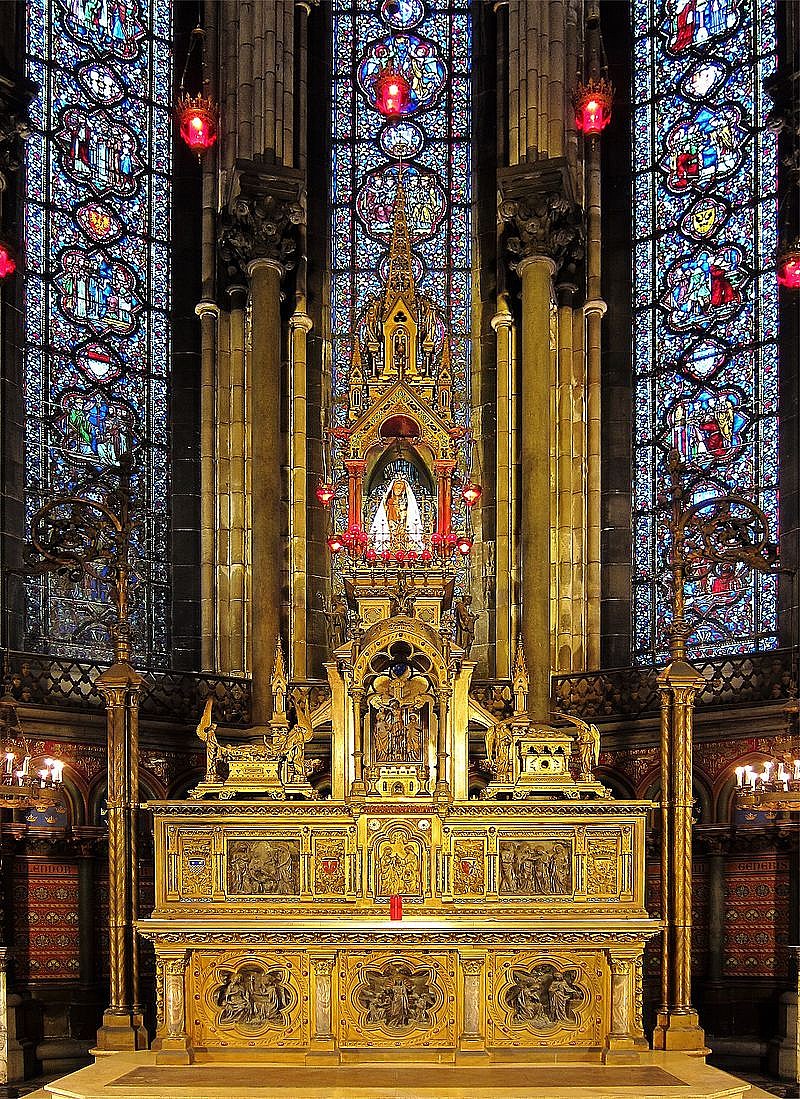
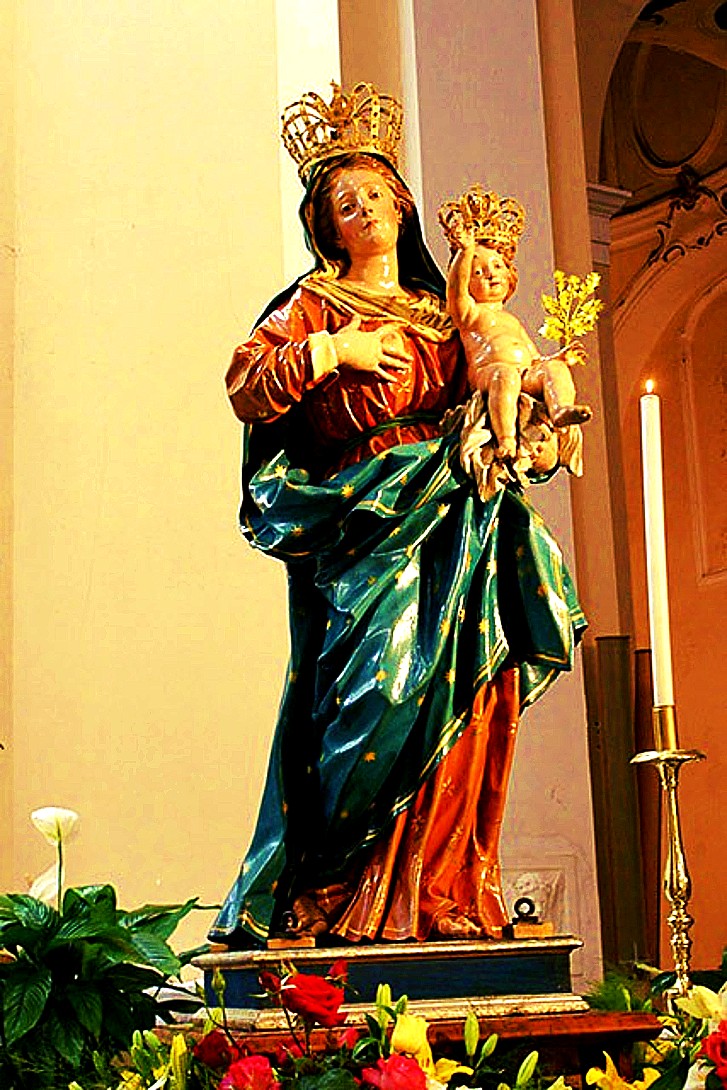
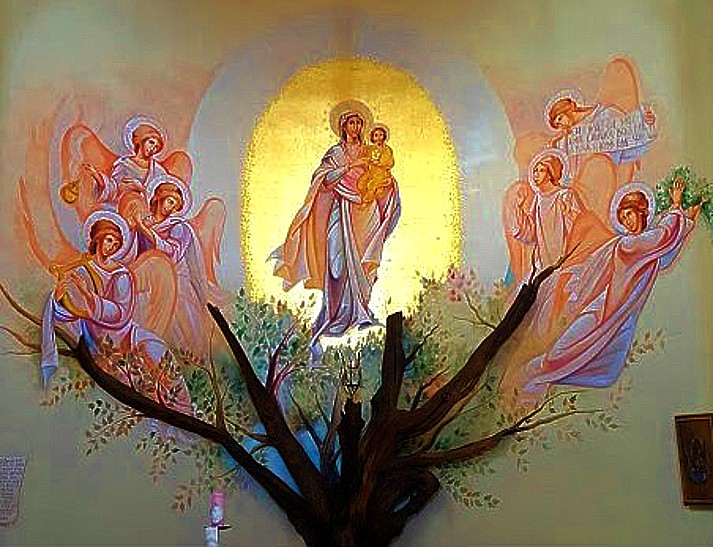
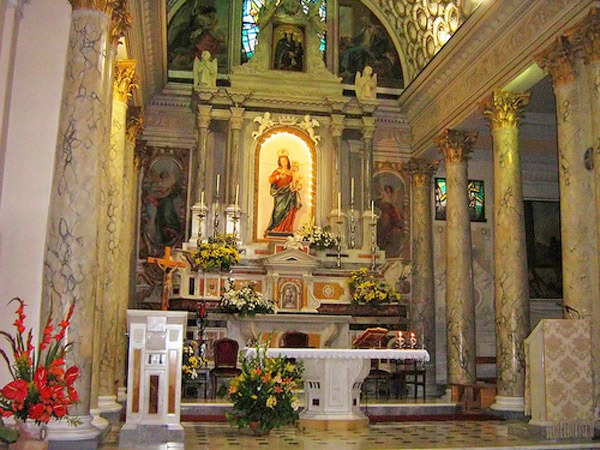
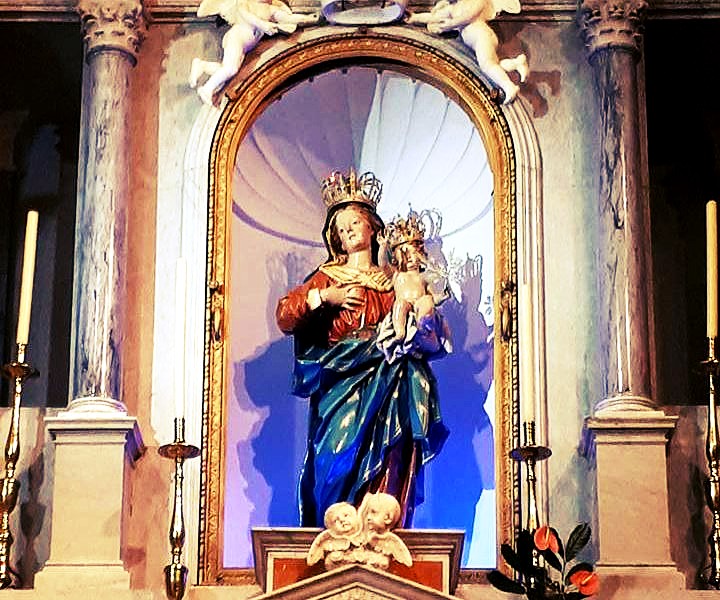
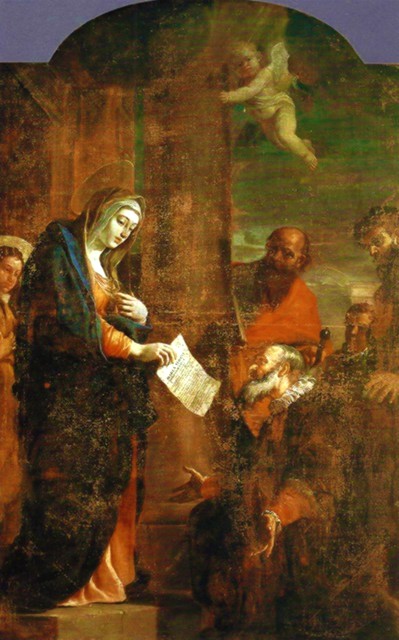
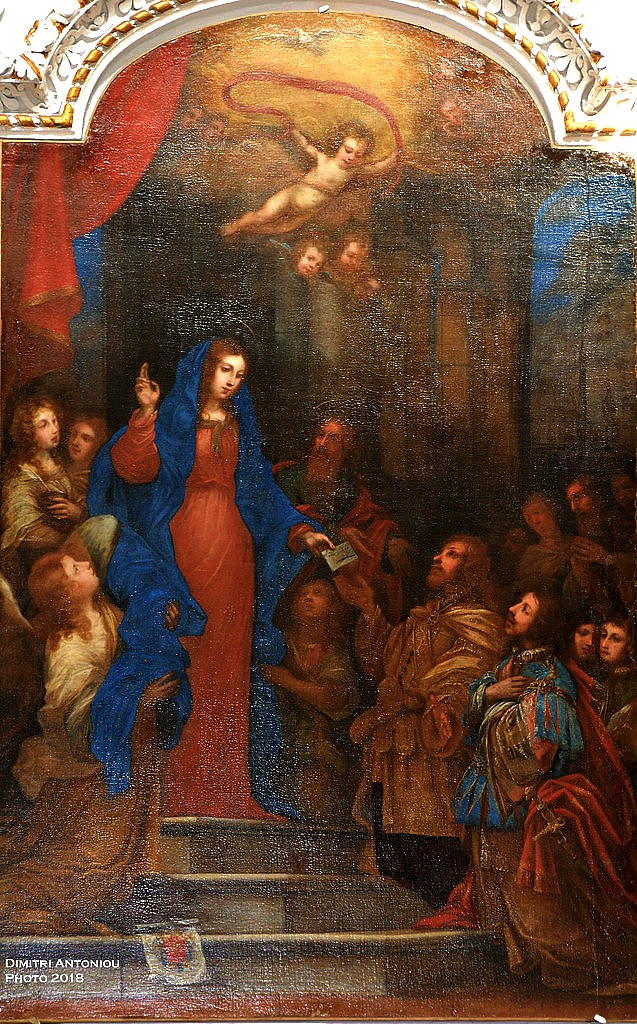
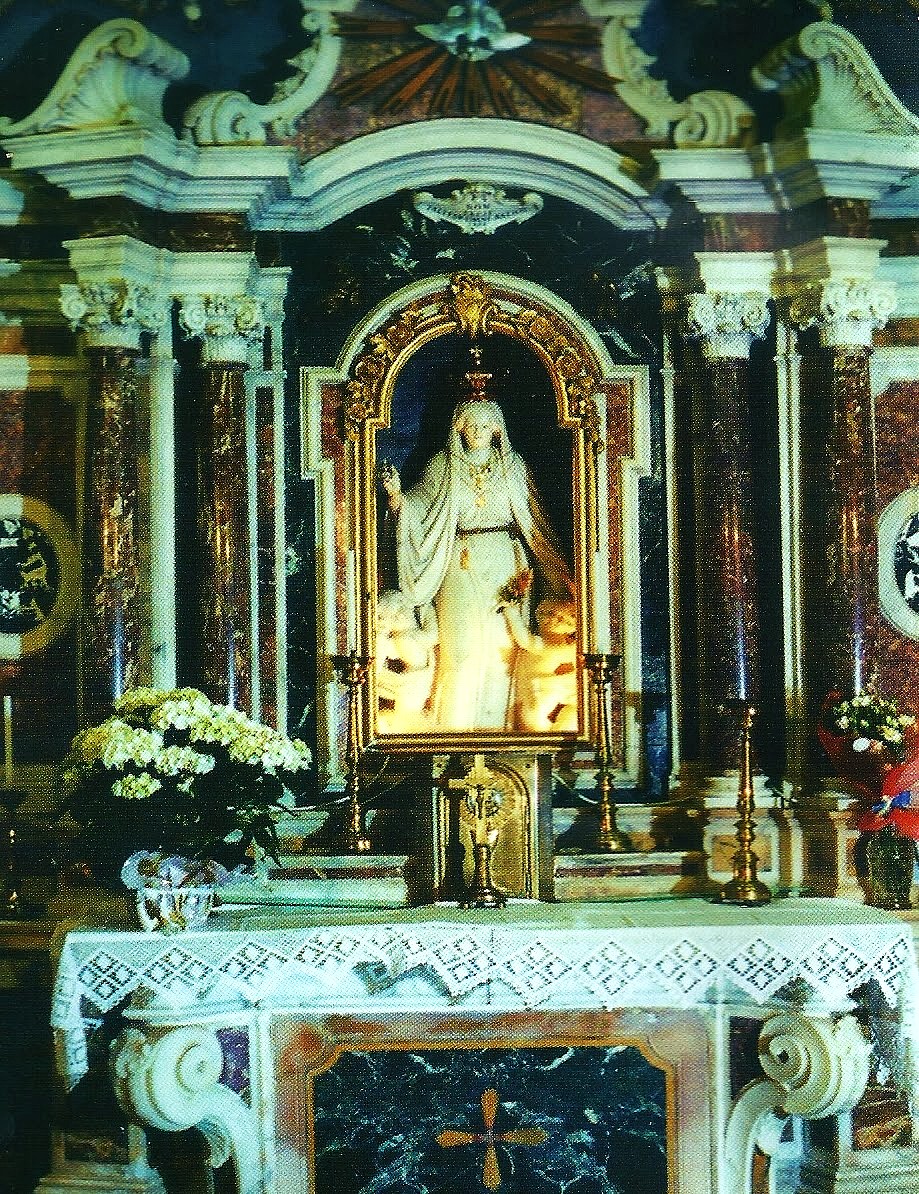
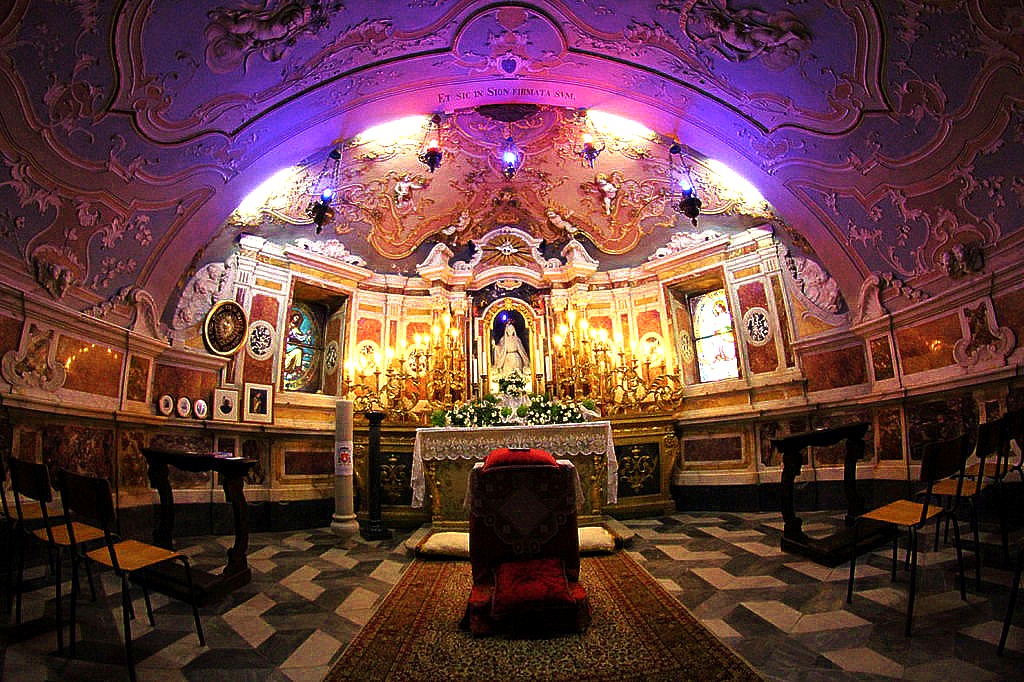
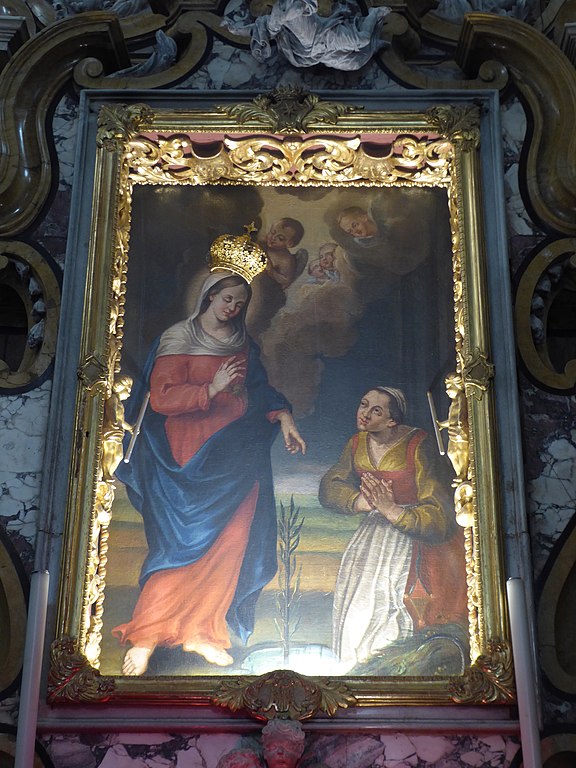
Nostra Signora della Luce / Our Lady of Light, Palermo, Italy, (18th Century) – 27 February:
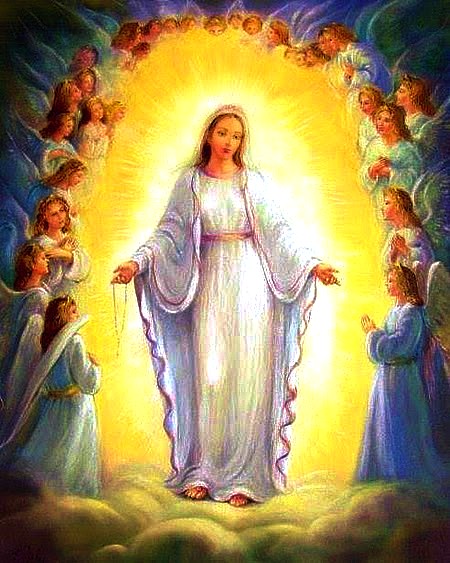
Early in the 18th century, a Jesuit, Father John Genovesi, lived in Palermo, Italy. At the beginning of his missionary career, he placed the souls over which he would have charge, under the protection of the Blessed Mother, deciding to take with him, to each of his missions, an image of Mary. Not knowing which image of Our Lady to use, he consulted a pious visionary telling her to ask Our Lady what she desired. One day as this lady knelt in prayer, she beheld approaching her, the Queen of Heaven, surrounded by pomp, majesty and glory, surpassing anything else she had ever beheld in any of her visions. A torrent of light was shed from the body of the Virgin which was so clear, that in comparison with it, the sun seemed obscure. Yet, these rays were not painful to the sigh; but seemed rather, directed to the heart, which they instantly penetrated and filled with sweetness. A group of Seraphs hovering in the air were suspended over their Empress and held a triple crown. The virginal body was clothed in a flowing robe, whiter than the snow and more brilliant than the sun. A belt inlaid with precious stones encircled Maryโs beautiful form and from her graceful shoulders, hung a mantle of azure hue. Countless angels surrounded their Queen but, what most enchanted the contemplative soul, was the untold sweetness and grace and benignity shown in the motherly face of Mary. She radiated clemency and love. Our Lady told the pious woman, that she wished to be represented as she was now under the title of Most Holy Mother of Light, repeating the words three times. The Jesuit hired labourers to begin the work on the picture of Our Lady of Light, however, neither the pious lady, nor the priest, were able to direct it and the result was that after completion, it did not answer Our Ladyโs orders. Our Lady directed the woman to look at the image and seeing the mistake, she again betook herself to prayer and asked Mary to help her. Mary appeared again, commanding the woman to supervise the work, giving directions, while Mary would aid in an invisible manner. Pleased by the finished work, Mary appeared over it and blessed it with the Sign of the Cross. This wonderful treasure is now in the City of Mexico in the Cathedral of Leon, formerly known as the Jesuit Church. The back of the picture bears the authenticity and four signatures, including that of Father Genovesi, SJ. The painting was transferred from Palermo, Sicily in 1702 and placed on the Altar in Leon in 1732. The people of Leon have an innate devotion and great tenderness toward the Mother of God. In 1849 they solemnly promised before the picture to make Our Lady of Light the patroness of Leon. This promise was confirmed by Pope Pius IX; Leo XIII authenticated the crowning of the image of Our Lady of Light in 1902.
St Abundius of Rome St Alexander of Rome St Alnoth St Anne Line St Antigonus of Rome St Baldomerus of Saint Just St Basilios of Constantinople St Comgan St Emmanuel of Cremona St Fortunatus of Rome St Gabriel of Our Lady of Sorrows/Gabriel Possenti CP (1838-1862) Passionist Religious
St Herefrith of Lindsey St Honorina St John of Gorze Bl Josep Tous Soler St Luke of Messina Bl Maria Caridad Brader Bl Mark Barkworth St Procopius of Decapolis Bl Roger Filcock St Thalilaeus Bl William Richardson โ Martyrs of Alexandria: โ Besas of Alexandria Cronion Eunus Julian of Alexandria
Notre-Dame des Champs / Our Lady of the Fields, Paris, France, consecrated by St Denis (250) – 26 February:
The title of Our Lady of the Fields, or Notre-Dame des Champ and the devotion to Mary as such, takes us back to the earliest days of Catholic life in France. Our Lady des Champs, at Paris, was dedicated in ancient times to Ceres. Saint Denis, to whom we owe a great deal of our traditional devotion to Mary, was the first Bishop of Paris. According to tradition he drove the demons from the Temple of Ceres, the pagan goddess of agriculture and placed therein, an image of the Madonna modelled after Saint Lukeโs famous painting. The Temple was henceforth dedicated to the Blessed Virgin, whom Parisians have honoured for centuries under the title of Our Lady of the Fields. It is said that a picture of the Blessed Virgin is still to be seen there, on a small stone, a foot square, which was made after that which Saint Denis brought to France.
This house, which is a Benedictine priory, was afterwards occupied by the Carmelites, who were received there in the year 604 and founded by Catherine, Princess of Longueville. It was the first occupied by those nuns in France; the mother Ann of Jesus, the companion of Saint Teresa, was its first superior. If the Blessed Virgin were a goddess she would be a very human goddess โ simple and approachable, forgetful of her privileges and of her beauty. Her constant humility adds to her charm. Saint Denis knew this well. He found her so gloriously beautiful that he gave to her the place in the temple โ and in the hearts of the people โ formerly held by the pagan goddess. โI am the Flower of the Fields,โ the Holy Ghost has the Blessed Virgin say. A flower of the fields has a simple beauty that charms us even more because it blossoms by itself without care or cultivation. Our Saviour Himself marvelled at such a flower and of it He spoke these words of praise that have been repeated through the centuries: โSee how the lilies of the field grow; they neither toil nor spin, yet I say to you that not even Solomon in all his glory was arrayed like one of these.โ But lilies soon fade and roses are hardly open, before they begin to shed their petals before the wind. The beauty of Mary is less perishable; it remains ever fresh and unchanged in the valley of our exile.
Bl Adalbert of Tegernsee St Agricola of Nevers St Alexander of Alexandria St Andrew of Florence St Dionysius of Augsburg St Faustinian of Bologna St Felix St Fortunatus St Irene St Isabelle of France Bl Ottokar of Tegernsee St Paula Montal Fornรฉs of Saint Joseph of Calasanz (1799-1889) Biography: https://anastpaul.com/2018/02/26/saint-of-the-day-26-february-st-paula-montal-fornes-de-san-jose-de-calasanz-1799-1889/ Bl Piedad de la Cruz Ortiz St Porphyrius of Gaza Bl Robert Drury St Victor the Hermit (Died 6th Century) Priest
Notre-Dame-de-Grande-Puissance / Our Lady of Great Power, Quebec, Canada, (1673) – 25 February:
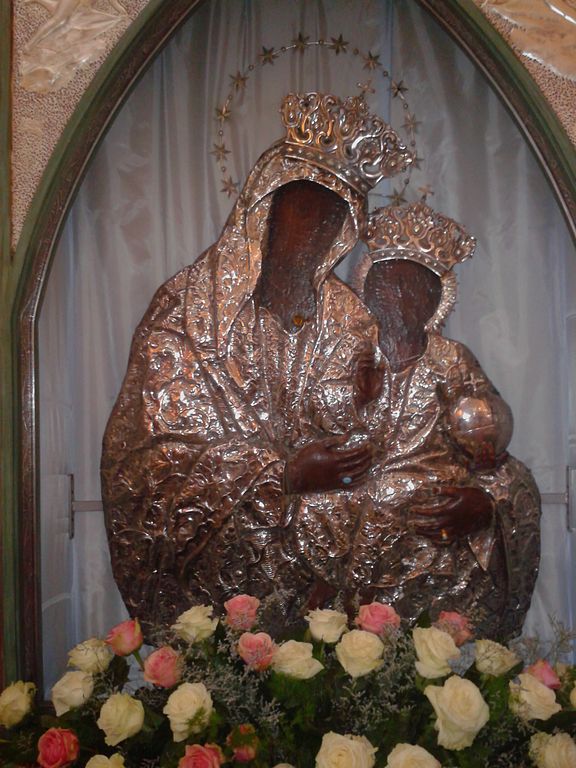
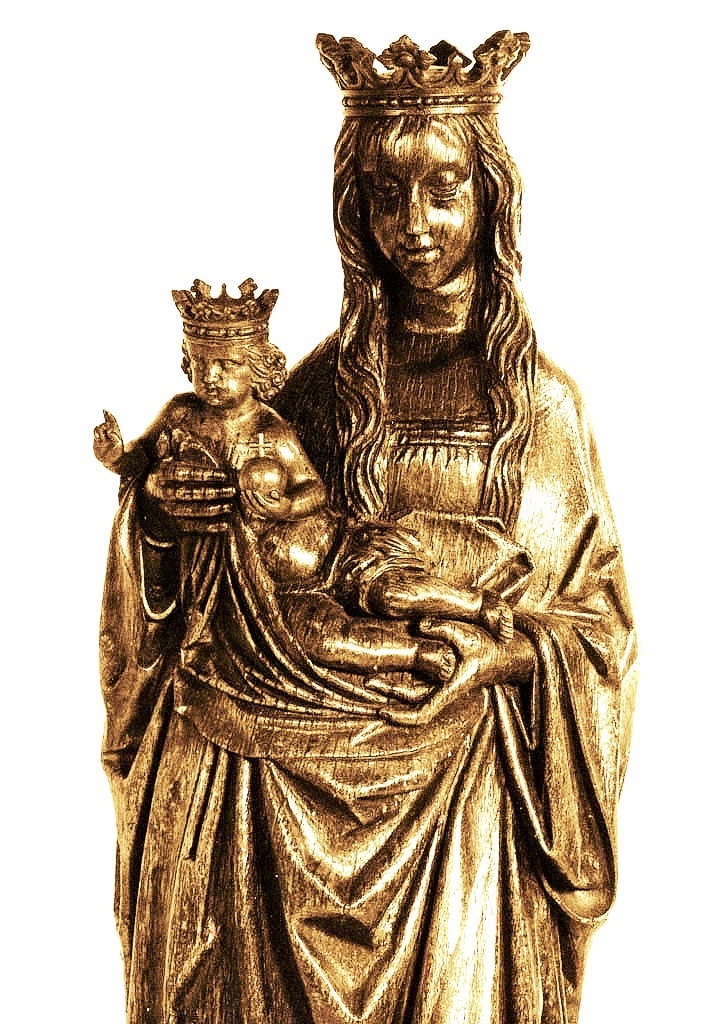
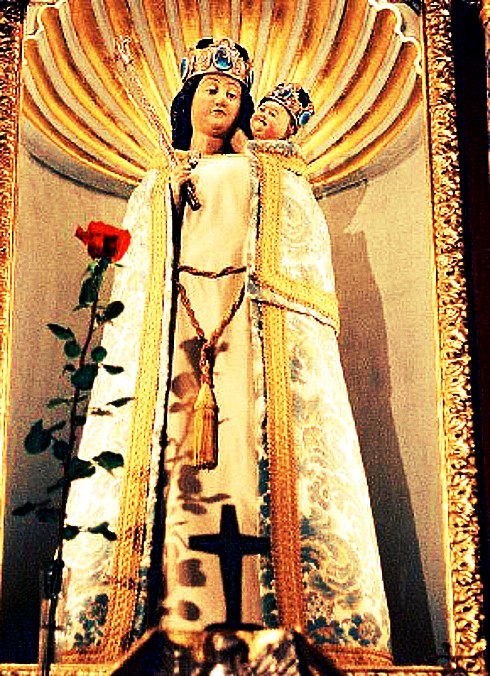
Our Lady of Great Power is little known in America, unless among the pupils of the Ursulines in Quebec. Generations of these, however, have dwelt within the walls of the Old Monastery during two centuries and more, since the arrival of the statue in the last years of the 17th century. In the annals of the Ursulines of the Sacred Heart at Perigueux, France, where the statue was solemnly crowned, we find the origin of the devotion. The devotion to Our Lady of Great Power began in the monastery of Issoudun. There a holy Ursuline nun, Mother Saint Peter, was inspired during her prayer to invoke Our Lady under this title. She spoke of her inspiration to her Sisters and her Superiors. The devotion was adopted with enthusiasm and very soon it was decided, that a statue be sculptured and a Chapel built, dedicated to Our Lady of Great Power; she would henceforth be chosen, as first and principal Superior of the Monastery. The feast of the dedication took place 25 February 1673 and was celebrated with great pomp, as the chronicle testifies:
โAfter High Mass two ecclesiastics carried the statue to the entry of the monastery where the nuns, in solemn procession, received it. It was placed on a richly decorated litter and, to the chanting of hymns, psalms and canticles, it was brought to the prepared Chapel. When the same statue was raised on its pedestal, the Superior laid the keys of the monastery, the seals and constitutions at Our Ladyโs feet, begging her, in the name of the community, to accept the gift of all hearts and of the entire monastery and to allow them, to look on her as their Superior forever. Each rendered homage while hymns and canticles of thanksgiving were sung in Maryโs honour.โ
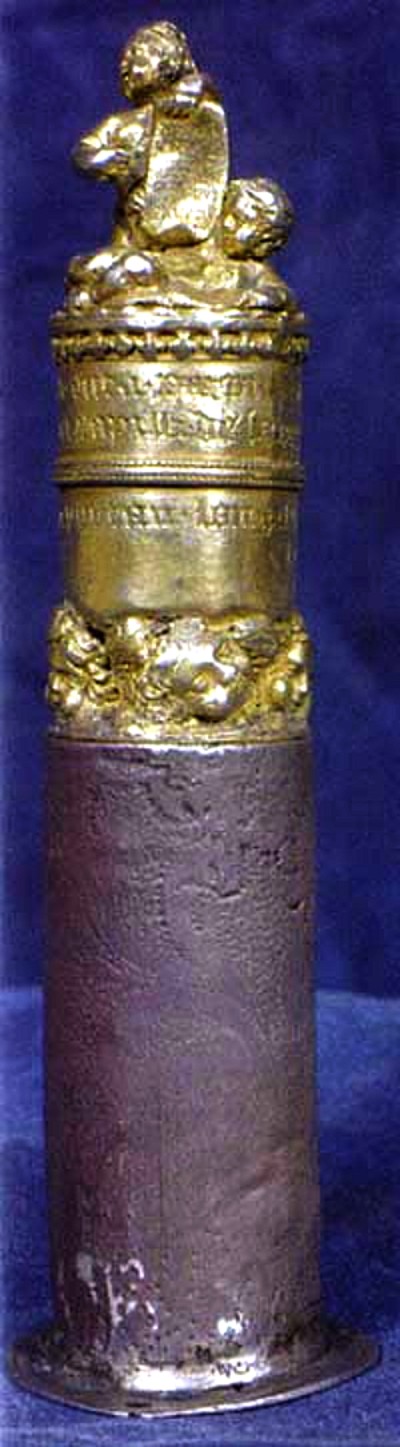
Ever after, when a Superior was elected, the ceremony was renewed and is still renewed in each Ursuline community every year on a principal feast of the Blessed Virgin; though homage is rendered only every three years, after the election or nomination of Superiors. The statue of Our Lady of Great Power was carried off and profaned during the dark days of the French Revolution. It was found and returned to the monastery at Perigueux and the devotion continued fervently until 1892, when the Bishop of Perigueux, in the name of the Soverign Pontiff, placed a richly jewelled crown on the head of the Mother and the Child and ratified the numberless and signal favours obtained through Our Lady of Great Power. Through the Ursulines in Quebec, the devotion soon spread through the New World. Before the Altar in Quebec hangs the famous votive light promised to be kept burning as a token of thanks for favours granted to Mother Saint Agatha (Madeleine de Repentigny). Relatives and descendants of this holy nun have kept the lamp burning. One relative, Miss Anthon, had a new lamp made, an artistic gem, the work of the celebrated ecclesiastical goldsmith Calliat of Lyon, France.
St Adelelmo of Engelberg St Aldetrudis St Ananias of Phoenicia Bl Avertano of Lucca St Caesarius of Nanzianzen St Callistus Caravario Bl Ciriaco Maria Sancha Hervas Bl Didacus Yuki Ryosetsu St Domenico Lentini St Donatus the Martyr Saint Felix III, Pope St Gerland the Bishop St Gothard the Hermit St Herena the Martyr St Justus the Martyr St Laurentius Bai Xiaoman St Luigi Versiglia Blessed Maria Adeodata Pisani (1806-1855) Biography: https://anastpaul.com/2018/02/25/saint-of-the-day-25-february-blessed-maria-adeodata-pisani-osb-1806-1855/ St Nestor of Side St Riginos Bl Robert of Arbrissel Blessed Sebastian of Aparicio OFM (1502-1600) Franciscan Lay Brother St Tharasius St Toribio Romo Gonzรกlez St Victor of Saint Gall St Walburga โ Martyrs of Egypt โ A group of Christian men who were exiled to Egypt for their faith and were eventually martyred for their faith in the persecutions of Numerian. We know little more than their names: Claudianus Dioscurus Nicephorus Papias Serapion Victor Victorinus
REFLECTION – โGod showed patience in the face of man’s weakness because He saw beforehand, the victory He would eventually give him, through His Word. For, when โpower was made perfect in weaknessโ (2 Cor 12:9), the Word caused God’s goodness and tremendous power, to be made manifest. Indeed, it was the same with man, as it was with the prophet Jonah. God permitted Jonah to be swallowed by a sea-monster, not to make him altogether vanish away and die but, so that when he had been vomited out by the monster, he would become more subject to God and would give all the more glory to Him who had given him this unexpected deliverance. It was, too, to lead the Ninevites to firm repentance and to convert them to Him, Who would deliver them from death, amazed as they were by the sign accomplished in Jonah โฆ In the same way, God permitted man to be swallowed by that great monster, the author of disobedience, not so that he should altogether vanish away and die but because God, had prepared beforehand, the salvation fulfilled by His Word by means of the โsign of Jonah.โ This salvation has been prepared, for those who have the same feelings for God as Jonah did and, who confess Him in the same words: โI am the servant of the Lord and I worship the Lord, the God of heaven, who made the sea and the dry landโ (Jon 1:9). God desired that man, by receiving an unanticipated salvation from Him, would rise from the dead and worship God, saying with Jonah: โOut of my distress I called to the Lord; from the midst of the nether world he heard my voiceโ (Jon 2:2). God desired, too, that man would always remain faithful in giving Him worship and unceasing thanks for the salvation he has received from Him.โ – St Irenaeus (130-208) Bishop of Lyons, Martyr, Theologian – Against the heresies III, 20, 1
PRAYER โ โDear Lord! It is just when I am in the world that I have most need of You because You know it is full of snares that the devil has set for me. You must hold my hand, dear Lord, if You will not abandon me. A little of the world is not bad for me; it is even good, for it teaches me how small it is and I feel the greater happiness when I come back to You. But that I may surely do so, You must only loose Your hold a little, that it may not try me too far, You must not entirely leave hold. Do You see dear Lord? I wish to clasp Your hand โ do not refuse me!โ(I Wish to Clasp Your Hand โ Do Not Refuse Me! โ Prayer of Eugene de Ferronays) Mary, Health of the Sick, pray for us!
Plague in Rome ends after Saint Pope Gregory the Great leads a procession with a painting of Our Lady by Saint Luke (591): – 24 February
The Abbot Orsini wrote: โOn this day, in the year 591, St Gregory the Great, having had the picture of Our Lady, which was painted by St Luke, carried in procession, the plague ceased at Rome.โ
The miseries that afflicted Rome in the year 591 were substantial. The Gothic War between the Byzantine Empire and the Goths had substantially depopulated Italy, so much so that a Germanic tribe of Lombards had entered the peninsula and established their own kingdom. They were pagans and Arians who did not respect Catholics, burning the famous Benedictine Monastery of Monte Cassino and pillaging the land at will. The instability and warfare caused famine in large regions, though Rome was still able to obtain grain by sea. Then came earthquakes and flooding to further the suffering, and from this plague Rome was not immune. The banks of the Tiber overflowed and when the waters did not recede, all of the low-lying lands became swamps that brought death and the plague. The disease struck with such rapidity that the victim would often die shortly after realising he had contracted the disease, although there were some who sickened but recovered. Our custom of saying, โGod Bless you,โ to someone who sneezes came about at this time, for sneezing was one of the signs that someone had contracted the disease. Even the Roman Pontiff died of the plague on 7 February 590. His successor, was Pope Saint Gregory the Great, who was both a humble and pious man. It would be an understatement to say he did not want the honour of being the next Pope but once in that position, he did everything in his power to try to save his people. He understood that the plague was a chastisement from God and encouraged the faithful to repent of their sins and pray for deliverance while he and the religious cared for the people of Rome. Finally, Saint Gregory called for a procession to take place at dawn on 24 April. On that day, the faithful first assembled in their groups throughout Rome and then walked through the streets of the City praying and singing as they approached the Church of Saint Mary Major. The plague was so potent at that time, that eighty people collapsed and died as they walked toward the meeting place. Pope Saint Gregory met them upon their arrival, joining them in prayer as he took his place with them holding aloft the miraculous image of Our Lady painted by Saint Luke the Evangelist. This image is the very famous, Salus Populi Romani (the health or salvation, of the Roman People) As the procession neared the Vatican the participants all saw Saint Michael the archangel standing upon the cupola of Hadrianโs mausoleum as he sheathed his flaming sword. It was a sign that the chastisement had come to an end and, at once, the heaviness in the air abated and the air itself seemed to freshen and clear. Indeed, at that moment the plague ended, as the faithful rejoiced and lifted up their voices to thank the Mother of God.
Regina Coeli laetare, Alleluia! (Queen of heaven, rejoice, Alleluia!)
Quia quem meruisti portare, Alleluia! (Son whom you merited to bear, Alleluia!)
Resurrexit sicut dixit, Alleluia! (He has risen as He said, Alleluia!)
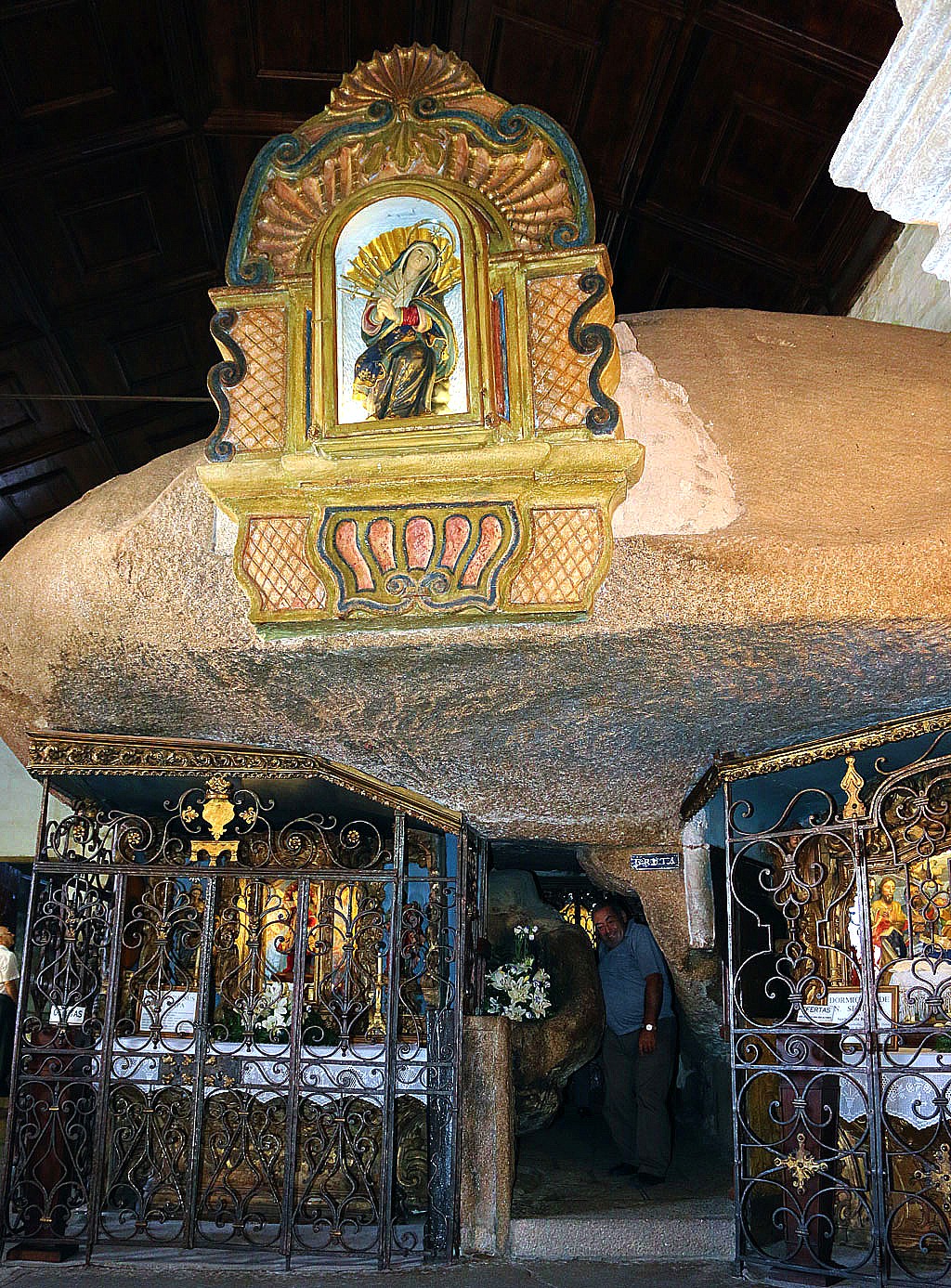
Nuestra Seรฑora de la Peรฑaย / Our Lady of the Rock, Pena de Francia, near Salamanca, Spain (1434) – 23 February: The Abbot Orsini wrote: โOur Lady of Roches, near Salamanca, in Spain; an image is there venerated, which was found miraculously, in the year 434, by Simon Vela, who caused a Church to be built there.โ
The Simon mentioned above by the Abbot Orsini, was actually born in the year 1401 in Paris, France. The incident that he states had occurred in the year 434 actually occurred in 1434 but that is getting ahead of our story. Simon was born on4 September 1401, in the City of Paris, France, to pious and wealthy parents. Growing up a good Catholic, Simon despised money and luxury, so that when he grew up and inherited his parentsโ money and property, he recognised it for the threat to his eternal welfare that it was and gave all that he owned to the Church and to relieve the poor. Once the money was gone, he went to a Franciscan Monastery and took a position as a chamber boy. Simon naturally spent a great deal of time in prayer and was especially devoted to the Blessed Virgin Mary. Sometimes when he prayed he asked the Mother of God if there was anything he might do, that would be especially pleasing to her. On one of these occasions, he fell asleep while praying. He was suddenly awakened when he heard a voice speak to him from the empty Church: โSimon, wake up; be on the watchโฆFrom now on, your name will be Simon Vela. Go to Pena de Francia, for there you will find the Shrine of the Blessed Virgin Mary.โ Simon travelled for five years over fields and mountains, searching through lonely valleys and gloomy caves, in his quest for this place called Pena de Francia but he could not even find anyone who had ever heard of the place. On the verge of giving up in frustration, he had already begun working his way back home from Spain, when the voice spoke to him from the darkness once again: โSimon, do not give up the search, do not give up what you have begun. Persevere and your labours will be recompensed.โ Feeling that it was still the will of God, Simon was determined to continue the search. Simon was passing through the market square in Salamanca on his way to the Church of Santiago, when he observed two men who began shouting in a serious disagreement. Weapons flashed and one of the pair fell wounded at Simonโs feet. The other was restrained from finishing the man, by the crowd, who held him back. Unable to reach his adversary, he shouted: โHad I killed my enemy, I would have escaped to Pena de Francia where no-one, not even the king, could find me!โ Simonโs heart leapt for joy when he heard this, for it was the first time he had heard the place spoken of, and now he was certain that his search would not be in vain.
THE STORY OF SIMON’S SEARCH SURROUNDS THE IMAGE OF OUR LADY OF THE ROCK
It was a short time later when Simon received a second bit of good news. He was on his way to the Church of Saint Martin when he happened upon a travelling merchant. Simon asked the man where he had come from and he answered, Pena de Francia. Thrilled to hear the name, he felt his search was nearly over but when he asked the man to take him there, he refused. He did not want to go back the way he had come, no matter how much Simon begged him. All he would do was point out the general direction. Simon went down the road from which he had seen the merchant approach, hoping he was not too far from his destination. The road led him to a villa named San Martin de Castanar, which he reached on 14 May 1434. He found a Church there and after Mass, he asked if anyone knew of a place called Pena de Francis. One man knew of it and when Simon kindly asked him to show him where it was, the man walked with him a good distance from the Church and then pointed out a hill in the far distance. That, he said, was Pena de Francia. Simon was elated, thanking God and the man for revealing to him the place that meant the end of his quest.
The place was far off but Simon went off at once, thinking the years he had spent in seeking, were nearly at an end. He gave no thought to his provisions and as the journey was long and arduous, he was far from any help when he realised how weakened his fast had made him. Suffering intense pangs of hunger, Simon did not despair, for he felt certain that God would not forsake him. He continued on his way and soon came across an abandoned pack that contained a loaf of bread and a piece of meat. Refreshed, he turned his attention to finding shelter as the night approached. Finding a suitable cave, he went inside and prayed for guidance until he dropped off into welcome slumber. Waking early in the morning, Simon began to search the area for the Shrine and quickly found that there were caves all over the hill where he had slept. He naturally became discouraged when it became apparent that it could take him weeks or even months to find what he sought and so, feeling that it was almost as if his quest had started all over again, he fell to his knees and prayed for the grace of perseverance. His prayer was quickly answered, as the now familiar voice said: โSimon, be awake: do not sleep.โ Simon got up at once and continued his search, awakening with renewed enthusiasm the following morning. As he prepared to leave his cave a brilliant light struck his eyes, the source of which was a spot some distance away on a rocky hill. Trembling with joy, Simon approached the source of that light and found the Blessed Virgin Mary sitting on a golden throne with the Child Jesus in her arms. His heart overflowing with inexpressible joy, he knelt and said: โOh, Lady, dream of my soul and inspiration of men and women! My labours are now ended. Many years have I travelled far and wide to seek you and to drink in the beauty of your eyes! Do not forsake me but be my protection.โ
Our Lady answered sympathetically: โSimon, rejoice! Your constancy will be rewarded. Your dream will be realised. Your labours are now ended. Take heed and keep in your heart what I wish you to do. Dig in this spot and take what you can see and place it on the summit of this rocky hill. Build on this hill a beautiful Shrine. You are to begin it and others will come to finish it. This must come to pass as it has been the wish of my Child.โ When the vision ended, Simon remained alone for some time, filled with wonder and awe. On the spot where the apparition of the Holy Virgin had appeared, Simon began the work of excavating. He had barely begun digging when he heard the same voice once again saying: โSimon, do not attempt to undertake this large of a task alone. Undertake it in the presence and with the help of two, three, or more persons.โ Evidently this demand was made to ward off any suspicion about the veracity of the coming miracle, as well as Simonโs credibility. So Simon went back to San Martin de Castanar and asked five men to help him, and all of them agreed. Even though Simon told them the truth, these men believed that they were digging for hidden treasure. Simon repeated that they were after an objective worthier than merely worldly goods and that it was something their hearts would forever cherish. They dug for some time, until finally, on 19 May 1434, they removing a huge stone that was barring their way. They found beneath it, sheltered among several smaller rocks, the most coveted image of the Blessed Virgin Mary with the Divine Child in her arms, now known as Our Lady of Rocks.
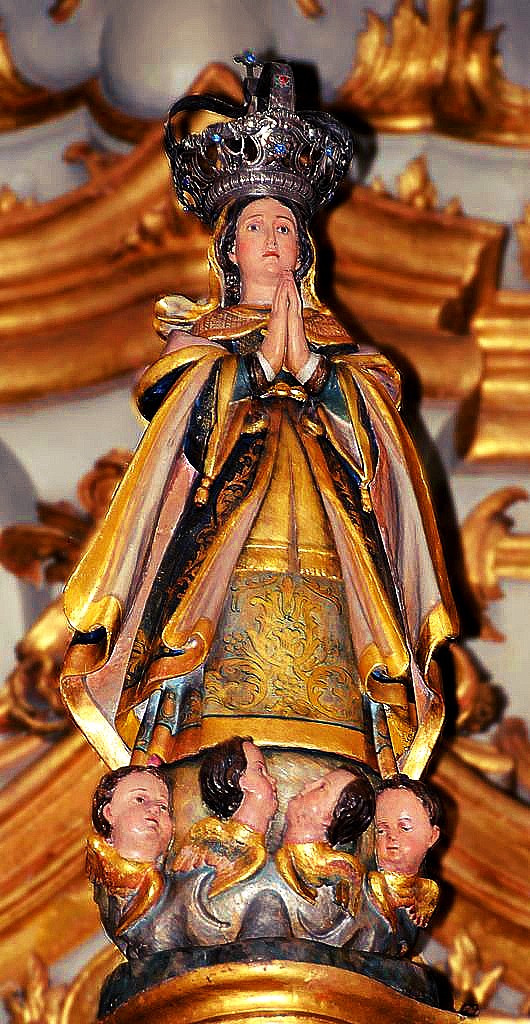
THE IMAGE OF PENA DE FRANCIA,FOUND BY SIMON VELA AND HIS COMPANIONS IN 19 MAY 1434
St Alexander Akimetes St Boswell St Dositheus of Egypt St Felix of Brescia St Florentius of Seville St Giovanni Theristi (1049โ1129) Monk Bl Giovannina Franchi Bl John of Hungary St Josephine Vannini (1859-1911) Bl Juan Lucas Manzanares Bl Ludwik Mzyk St Martha of Astorga St Medrald St Milburga Bl Nicolas Tabouillot St Ordonius St Polycarp of Rome Bl Rafaela Ybarra de Villalongo St Romana St Serenus the Gardener (Died 307) Martyr His story: https://anastpaul.com/2019/02/23/saint-of-the-day-23-february-st-serenus-the-gardener-died-307-martyr/ Bl Stefan Wincenty Frelichowski St Willigis of Mainz (c 940-1011) Bishop St Zebinus of Syria โ Martyrs of Syrmium โ 73 Christians who were martyred together in the persecutions of Diocletian. We know no details about them, and only six of their names โ Antigonus, Libius, Rogatianus, Rutilus, Senerotas and Syncrotas.
Notre-Dame de Rennes / Our Lady of Miracles and Virtues, Rennes, France (1357) – 22 February:
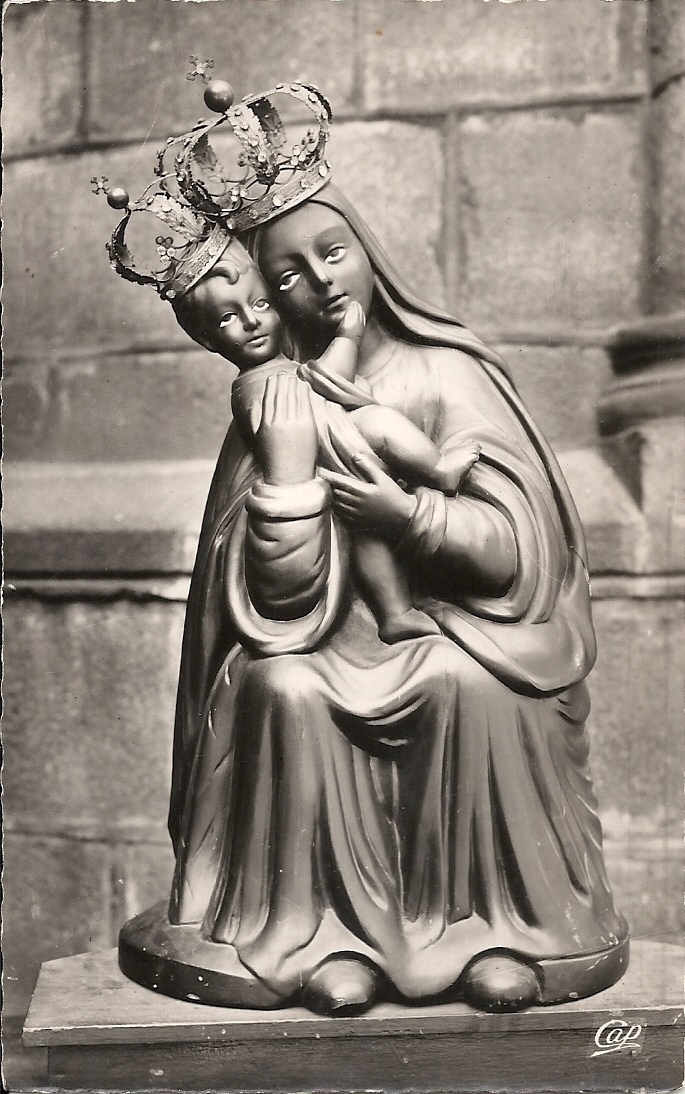
The Statue of Our Lady of Miracles and Virtues in the Lady Chapel at Saint Sauveur at Rennes
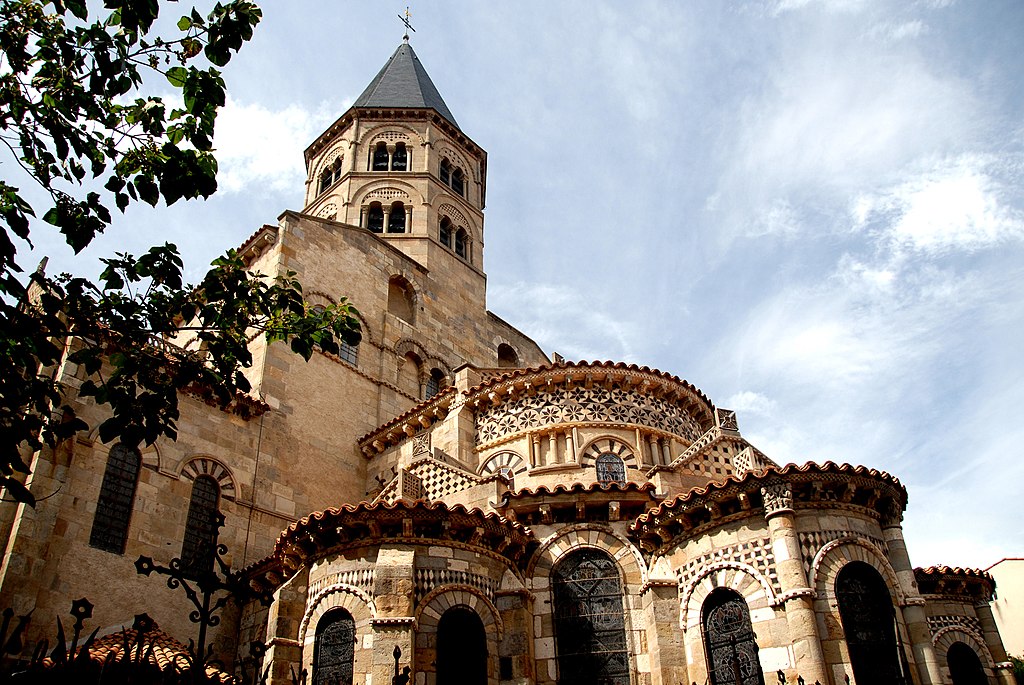
Our Lady of Rennes, in Britanny. The English, having made a mine to blow up the town, it is said that the candles in theCchapel were found miraculously lighted; the bells rung of themselves and the image of the Blessed Virgin was seen to stretch out its arms towards the middle of the Church, where the mine was, which, by that means was discovered. The people rushed to the spot and so, the plot was discovered and the entire town saved through the intervention of Our Lady of Rennes. Great was the rejoicing and deep the gratitude of the people. Known today as the Basilica of Saint Sauveur in Rennes, it is located in the heart of historic Rennes, which was once the capital of Brittany. It is situated at the termination of Saint-Sauveur Street on which its faรงade faces. As the original Gothic Church partially collapsed in the year 1682, the Classical style Church that can currently be seen, was constructed beginning in 1703 and consecrated in August of 1719. In the year 1793, during the French Revolution, the Church was made into a Temple of Reason and the miraculous statue of Our Lady was destroyed. It was not until 1802, after the end of the Terror, that the Church was opened again to worship. The Church was made into a minor Basilica in 1916 by Pope Benedict XV.
The Altar of Our Lady in the main body of the Basilica of Saint Sauveur at Rennes
According to popular tradition there was a famous miracle attributed to Our Lady at Rennes during the War of Succession at Brittany. As Rennes was being besieged by the invading English army under the Duke of Lancaster, the people of the city expected the English forces to mine their way under the walls into the City. On the night of 8 February 1357, the Church bells began to ring of their own accord and the candles were spontaneously lit. The Statue of Our Lady, known as Our Lady of Miracles and Virtues, pointed out a particular slab in the Church. The inhabitants of the city thus were alerted to the mine and the point of the English attack, and were able to repulse the invasion. The miracle was a popular subject for ballads, especially the troubadour Cavalier. In 1634 the miracle was officially recognised by the Bishop of Rennes, Pierre Cornulier. There are many miracles attributed to Our Lady, including the miraculous healing of Magdalene Morice in the year 1761. She had gangrene in her right foot which was instantly healed on Easter Sunday. The Statue of Our Lady of Miracles and Virtues currently displayed at the Basilica was placed there in February of 1876. In 1684 a boy of eleven left home for the City of Rennes, in hopes of enrolling at the Jesuit College of Thomas a Becket. The young Louis-Marie was an intelligent boy who was taken under the guidance of the Jesuit Priests and it was at Rennes that he began to consider a possible vocation to the Priesthood. It was here, at the Shrine of Our Lady at Rennes, that Saint Louis de Montfort made the final decision to become a Priest. Amen! We thank our Lady for giving us St Louis-Marie Grignion de Montfort!
St Maximian of Ravenna St Miguel Facerรญas Garcรฉs St Mohammed Abdalla St Papias of Heirapolis St Paschasius of Vienne St Raynerius of Beaulieu St Thalassius โ Martyrs of Arabia โ A memorial for all the unnamed Christians martyred in the desert and mountainous areas south of the Dead Sea during the persecutions of Emperor Valerius Maximianus Galerius.
Notre-Dame de Bon-Port / Our Lady of Bon Port/Good Haven, Paimpol, France (1838) – 21 February:
In 1838, the crew of a vessel which had just arrived at Paimpol, in France, forty-eight in number, accomplished a vow they had made in a most perilous voyage from Newfoundland. A terrific tempest had arisen, their sails were tor, and for three days they were in continual danger of finding a watery grave. The ship began to fill with water and all hope of safety seemed lost, when the crew, by common consent, turned their eyes to Mary, Star of the Sea and asked for good haven. They promised if she saved them, they would visit in the most supplicant manner, the Church at Paimpol, where there is an image of Our Lady much venerated by the people. They had scarcely ended their prayer, when the weather became more calm and the waves began to subside. Profiting by this providential change, they repaired their sails and had a favourable wind, until they reached the coasts of Brittany. They landed in safety at Knod, toward the decline of day and their first act was to prostrate themselves on the ground and give God thanks for their safe return. They then intoned the Litany of the Blessed Virgin and advanced barefooted and bare-headed along the banks and through the streets of Paimpol, to the Church of the Good Haven. The people attracted in crowds by the novelty of the sight, followed them. There were parents who went to give thanks to Our Lady of Good Haven for the return of their sons and wives, to thank Mary for restoring their husbands to them. Tears streamed down from every eye, and the immense multitude knelt down before the Altar of that powerful Virgin, who had received from her Son, the power to command wind and wave. The torches shed a dim light on the recessed of the sanctuary, where stood the image of the Blessed Virgin, Our Lady of Good Haven, whose inclined head and exteneded arms seemed to say to all, โCome to me, I am your Mother.โ These pious mariners with the most touching expression of sentiment, chanted the hymn, โAve Maria Stellaโ in which they were joined in gratitude by the people.
โBright Mother of our Maker, hail! Thou Virgin ever blest, The oceanโs star, by which we sail, And gain the port of rest.โ
St Avitus II of Clermont Blessed Caterina Dominici/Maria Enrichetta SSA (1829โ1894) Nun Bl Claudio di Portaceli St Daniel of Persia Bl Eleanora St Ercongotha St Eustathius of Antioch St Felix of Metz St George of Amastris St Germanus of Granfield St Gundebert of Sens Blessed Noel Pinot (1747-1794) Priest and Martyr His Life and Death: https://anastpaul.com/2020/02/21/saint-of-the-day-21-february-blessed-noel-pinot-1747-1794-priest-and-martyr/ St Paterius of Brescia (Died 606) Bishop St Pepin of Landen St Peter Mavimenus St Randoald of Granfield
St Severian of Scythopolis St Severus of Syrmium Bl Thomas Pormort St Valerius of San Pedro de Montes St Verda of Persia โ Martyrs of Sicily โ 79 saints โ Seventy-nine Christians martyred together in the persecutions of Diocletian. They were martyred in c 303 on Sicily.
Martyrs of Hadrumetum โ A group of 26 Christians martyred together by Vandals. We know little more than eight of their names โ Alexander, Felix, Fortunatus, Saturninus, Secundinus, Servulus, Siricius and Verulus. c 434 at Hadrumetum (modern Sousse, Tunisia)
Martyrs Uchibori โ Three Japanese laymen, all brothers, all sons of Paulus Uchibori Sakuemon, one a teenager, one only five years old and all martyred for their faith in the persecutions in Japan. 21 February 1627 in Shimabara, Nagasaki, Japan. Beatified 24 November 2008 by Pope Benedict XVI. Antonius Balthasar Ignatius
Notre-Dame de Bolougne-sur-Mer / Our Lady of Bolougne-sur-Mer, France (633) – 20 February:
In the year 636, a small group of people standing on the seashore witnessed a ship without oars or sails came into the harbour of Boulogne. It finally came to rest in the estuary, seemingly of its own accord. One of the witnesses boarded the boat and confirmed that there was no-one aboard and that the vessel had no rudder, oars or sails. The ship, however, bore a luminous statue of Our Lady. Taking hold of it to bring it to land, a voice was heard saying, “I choose your City as a place of grace.” The citizens welcomed Mary to their city by erecting a Shrine to her, which reached its height of glory in the 12th Century.
King Henry VIII is reported to have stolen the Statue of Our Lady of Boulogne and taken it to England. After many negotiations, the French managed to get it back. The image had been stolen and hidden many other times but always saved and returned. World War II almost completely destroyed the Statue. In modern times, four exact replicas of Our Lady of Boulogne toured France for more than seven years, as a symbol of French devotion to Mary. One of these was taken to Walsingham, England in 1948 and carried in procession by the โCross-bearing pilgrimateโ when many other Statues and images of the Virgin visited England. Bologne was one of the most important Lady shrines of medieval France; among its noted pilgrims have been: Henry III, Edward II, the Black Prince, John of Gaunt. Marian Feast Day, 10 July: The dedication of a new Church built in honour of Our Lady of Boulogne was consecrated in the year 1469 by Bishop Chartier of Paris. The confraternity of Our Lady of Boulogne was so celebrated, that six French kings have chosen to belong to it.
At the French Revolution, the Statue was burnt to ashes and the Church pulled down. A new Shrine and Statue was made in 1803 and pilgrimages began again. The image represents the Mother with the Child in her arms, standing in a boat, with an angel on either side. At the Marian Congress in Bolougne in 1938, a custom began to take replicas of this Statue โin turnโ in France and abroad. A branch of the Confraternity of Our Lady of Compassion at Bolougne has been established for the reconciliation of the Church of England. The Sanctuary Church at Bolougne was badly damaged during World War II and Maryโs image smashed but the return, the โGreat Returnโ of one of the copies of the Statue which had been sheltered at Lourdes, took place in 1943 and the occasion will long be remembered by lovers of the Blessed Virgin Mary.
The shrine of Our Lady of Boulogne-sur-Mer, built in 1866.
Most remarkable about the Grand Return was the unprecedented avalanche of graces, especially of conversions and penance. Thousands upon thousands of atheists, communists, freemasons and fallen-away Catholics converted on the spot when they saw Our Lady enter their village. One bishop described the effect on the faithful:
โThe passing of Our Lady in my Diocese is the most extraordinary contemporary religious event of our times and the most significant. Crowds of people rose up, motivated and enthusiastic. In fact, the confessionals and communion rails were besieged during the holy vigils, while the recitation of the mysteries of the Rosary kept the faithful praying in the Churches. In some Parishes, there were tremendous conversions like never seen before on the missions.โ
Young men of the French Boy Scouts, barefoot in the spirit of penance, carry Our Lady of the Grand Return in February 1946.
Notre Dame-de-Bonne Nouvelle / Our Lady of Good Tidings, Lempdes, France (1500โs) – 18 February:
The Abbot Orsini wrote: โOur Lady of Good Tidings, near Rouen, where a great number of people are seen, particularly on Saturdays.โ
It was on 23 December 1563, when the Bishop of Lucon, Jean-Baptiste Tiercelin, consecrated the Church under the patronage of the Blessed Virgin, Notre-Dame-de-Bonne-Nouvelle. This first Chapel came into the world in the midst of religious convulsions that were then taking place in Switzerland, Germany and England, by the leaders of the โReformationโ and must necessarily be seen, as an action bravely going against the tide. The religious wars that began raging in France ten years after its erection, began to be another reason for some concern for faithful Catholics but the pilgrimages to the Church of Notre-Dame-de-Bonne-Nouvelle continued undisturbed. From time immemorial, there had been venerated at Notre Dame a Statue of the Blessed Virgin, holding in her arm the Infant Jesus. Many went to her in procession, especially children, who came each year to ask Mary for perseverance after their first Communion. The revolutionary turmoil in France, which was to take the throne and the altar, could not leave behind the parish of Our Lady of Good Tidings. In 1790 the National Assembly decreed a new law in which the Church of Our Lady of Good Tidings was dissolved. As the Priest, Fr M Fabre, had the courage to refuse the oath of the Civil Constitution of the Clergy, he was thrown into the street. A short time later, on 22 May 1791, the Abbot Fourquet de Damalis, convened in the Church an assembly of the faithful and there were very many who responded. This occurred under the noses of twelve national guardsmen and so the Police Commissioner, a man named Cafin, responded there quickly. He asked the Abbot why there was such a meeting and the Abbot answered him, that he was explaining to the faithful the decrees of the National Assembly for the public good. The Police Commissioner accepted the explanation and the meeting, having been perfectly peaceful, the police commissioner was obliged to agree to the monthly meetings and record it in his minutes. One might think that the worship would be suspended at Notre-Dame-de-Bonne-Nouvelle during the Terror but we have evidence to the contrary. As at Chartres, a great number of the faithful remained active and opposed the removal of the sacred ornaments of the Church and defended their Priests and eager to fulfil their religious duties, they were not to be intimidated by the fear of imprisonment and even death. From the registry of marriages and baptisms, including a few that date back to 1793, we know that there were religious ceremonies such as baptisms and weddings held there secretly, sometimes in an oratory, sometimes in the Church. In the year 1818, a severe epidemic was ravaging the country. The faithful vowed, with the agreement of their Bishop, to go in procession to Our Lady of Good Tidings and celebrate in perpetuity the feast of the Visitation, which was the feast of the Chapel. The procession took place and God quickly put an end to the scourge of the plague. At about that time, a young boy began making regular visits to the Church of Our Lady of Good Tidings, who was the patroness of the village. He was a poor boy materially, for Lempdes was one of the poorer villages in France and he had been born into a peasant family, that was struggling to eke out a living in the wreck of post-revolutionary France. He kept the faith and when he grew up, Jean Baptiste Lamy was Ordained a Priest, eventually becoming the first Archbishop of Sana Fe, New Mexico.
Bl Jรณzef Zaplata St Lucia Yi Zhenmei St Mansuetus of Milan St Odran St Proclus of Bisignano St Quodvultdeus St Valerius of Antibes St Zambdas of Jerusalem
Notre-Dame de Laon / Our Lady of Laon, Rheims, France (500), founded by St Remigius – 18 February:
Our Lady with St Gabriel at the Annunciation on the North-west Entrance
The Abbot Orsini wrote: โThe Shrine or Chapel of Our Lady of Laon was erected into a Cathedral and founded by Saint Remigius, Archbishop of Rheims, about the year 500, where he consecrated as his first Bishop Saint Geneband, his nephew. Miracles were wrought there and, among others, we read that in the year 1395, there was seen on the steeple, the picture of a Crucifix, the wounds of which bled.โ The present Cathedral located in Laon, Picardy, France, the Laon Cathedral, or Notre-Dame de Laon, was begun in about 1155 and completed in 1235. It was built on the foundation of an earlier Cathedral that was consecrated in the year 800 but burned to the ground in the year 1111 during an uprising, and was, therefore, not the same Cathedral founded by Saint Remigius. The people of Laon took pride in their Cathedral and tried to make it rival the great shrine of Chartres. They did not succeed but the result is the sum of an emotion, clear and strong as love and much stronger than logic and clearer; the charm of the Laon cathedral lies in its unstable balance; which without doubt Our Lady accepted in love as it was meant by her devoted children. It was one of the first Cathedrals constructed in the new Gothic style.
One other unusual aspect of the Cathedral, is that there are sixteen carved bullocks carved in stone like gargoyles. There is a tradition that once when some of the stone was being hauled up the slope for use in the construction of the Church, at one point, the animals hauling the wagon could go no further under the strain of the load. A huge ox appeared at that moment and assisted them in moving the load up into position but then disappeared as quickly as it had appeared.
Much of the stained-glass is original and, as at Notre Dame Cathedral in Paris, there is a beautiful rose window dating from the 13th century. It depicts the Blessed Virgin seated on a throne with her Divine Child between Saint John the Baptist and the prophet Isaiah. The interior of the Cathedral was finished with white stone, it is considerably brighter than Notre Dame Cathedral in Paris.
St Gertrude Caterina Comensoli St Helladius of Toledo St Ioannes Chen Xianheng St Ioannes Zhang Tianshen St Jean-Franรงois-Rรฉgis Clet St Jean-Pierre Nรฉel Bl Jerzy Kaszyra Bl John Pibush โ one of the Martyrs of Douai St Leo of Patera St Martinus Wu Xuesheng Bl Matthew Malaventino St Paregorius of Patara St Sadoth of Seleucia St Simeon St Tarasius of Constantinople St Theotonius (1082-1162) Priest Bl William Harrington โ Martyrs of North Africa โ 7 saints: Group of Christians who were martyred together, date unknown. We know nothing else but seven of their names โ Classicus, Fructulus, Lucius, Maximus, Rutulus, Secundinus and Silvanus. They were born and martyred in North Africa.
Martyrs of Rome โ 5 saints: A group of Christians martyred together in the persecutions of Diocletian. We know nothing else but their names โ Alexander, Claudius, Cutias, Maximus and Praepedigna. They were martyred in 295 in Rome, Italy.
Our Lady of Constantinople, Bari, Turkey (566) – 17 February:
The Abbot Orsini wrote: โOur Lady of Constantinople, formerly the synagogue of the Jews, which was converted into a Church of the Blessed Virgin by the Emperor Justin the Younger, in the year 566.โ The remains of the great Byzantine Church of Sainte-Marie-du-Rosaire, called Notre-Dame de Constantinople, which is encumbered by later wild constructions and debris of all kinds, are scarcely representative of what this important sanctuary had once been. In the 1930โs, Paul Schatzmann, a Swiss archaeologist, had made important discoveries here, supplemented by another archaeologist, Stephan Westphalen, a German, in the 1990โs. We do not know much about the Byzantine past of the building, we only know for certain, that the Church was transferred to the Dominicans in 1475 and it took the name of Our Lady of Constantinople and later, that of Saint Mary of the Rosary. In 1640 Our Lady of Constantinople was converted into a mosque in the name of Kemankes, then Odalar camii. Much of the substructure had been rebuilt before the fire of 1919, which led to its eventual abandonment. Despite the painstaking searches conducted by the two archaeologists, it is not easy to have a very clear idea of the scale of the building and its dependencies. However, the proximity of the mosque Kasim Aga, which also has Byzantine structures and the Aetius (Ipek Bodrumu) suggest that the Church belonged to a large monastery, whose name remains unknown. From the point of view of the two archaeologists, the foundations of the Church date from the seventh century but the final form of the Church was given after the fire of 1203. After the reconstruction and expansion of the Church in the thirteenth century, the foundations of the old Church were used as a mausoleum, while two slightly asymmetrical chapels were added in the apse. Part of the old Church was filled to construct the new Church with the Greek cross plan. Nothing suggests that the substructure of the second building was originally a funerary chapel, as its primary function was to provide a basis for a monumental Church. It appears the sub-structure was gradually used for tombs of the faithful. In the upper part, there are paintings of the life of the Blessed Virgin dating from the eleventh and twelfth centuries. Fragments of frescoes have been discovered on several walls. In the small central chamber of the crypt, a crowned Virgin surrounded by angels suggests that a Marian relic may have once been enshrined here.
__ Seven Founders of Servants of Mary (Optional Memorial) โข St Alexis Falconieri (c (1200โ1310) One of the Seven Founders of the Servites โข St Bartholomew degli Amidei โข St Benedict dellโAntella โข St Buonfiglio Monaldi โข St Gherardino Sostegni โข St Hugh dei Lippi-Uguccioni โข St John Buonagiunta Monetti
St Alexis Falconieri โ SEVEN HOLY FOUNDERS (13th century โ1310) His Life: https://anastpaul.com/2020/02/17/saint-of-the-day-17-february-saint-alexis-falconieri-13th-century-1310/ St Antoni Leszczewicz St Bartholomew degli Amidei โ SEVEN HOLY FOUNDERS St Benedict dellโAntella โ SEVEN HOLY FOUNDERS St Benedict of Cagliari St Buonfiglio Monaldi โ SEVEN HOLY FOUNDERS St Bonosus of Trier Bl Constabilis of Cava St Donatus the Martyr Bl Elisabetta Sanna St Evermod of Ratzeburg St Faustinus the Martyr St Finan of Iona St Fintan of Clonenagh (c 524 – 603) Abbot, โFather of the Irish Monksโ St Flavian of Constantinople St Fortchern of Trim St Gherardino Sostegni โ SEVEN HOLY FOUNDERS St Guevrock St Habet-Deus St Hugh dei Lippi-Uguccioni โ SEVEN HOLY FOUNDERS St John Buonagiunta Monetti โ SEVEN HOLY FOUNDERS St Julian of Caesarea St Loman of Trim Blessed Luke Belludi (c 1200- c 1285) Biography: https://anastpaul.com/2019/02/17/saint-of-the-day-17-february-blessed-luke-belludi-ofm-c-1200-c-1285/ St Lupiano Bl Martรญ Tarrรฉs Puigpelat St Mesrop the Teacher St Petrus Yu Chong-nyul St Polychronius of Babylon St Romulus the Martyr St Secundian the Martyr St Silvinus of Auchy St Theodulus of Caesarea Bl William Richardson
Notre-Dame de lโ Epine / Our Lady of the Thorn, Chalons-sur-Marne, France (1400) – 16 February:
On the night of the Feast of the Annunciation, 24 March in the year 1400, some shepherds tending their flocks were attracted by a bright light coming from the Chapel of Saint John the Baptist near Chalons, France. As they approached the light, they saw that it was actually a thorn bush fully engulfed in flames and they discovered a statue of the Blessed Virgin standing unharmed in the midst of the flames. In fact, though the fire burned brightly, the branches and leaves of the thorn bush were unaffected by the flames. The miracle continued all that night and into the next day and news of the miracle spread quickly. Mobs of people crowded around the burning bush that was so reminiscent of the one witnessed by Moses on Mount Horeb. The Bishop of Chalons, Charles of Poiters, also witnessed the burning bush and the miraculous statue โ both still unaffected by the fire. When the flames finally did die down, the bishop reverently took the statue and carried it in his own hands to the nearby Chapel of Saint John. On the very site of the miracle, construction of a Church was begun for the enshrinement of the miraculous statue. Since the Church was built so rapidly โ in a little over 24 years โ a charming local legend claims that angels continued the work at night after the labourers had left for home. Our Lady of the Thorn (Notre Dame de lโ Epine) became a place of pilgrimage very rapidly. Today, a minor Basilica, the Shrine proved to be so beautiful that the people considered it a worthy place to venerate the Blessed Virgin. The flamboyant Gothic church boasts majestic great doors, a splendid rosette decorating the principle entrance and two chiselled stone spires, rise high and imposing on the plain in Champagne. During the terrible French Revolution, the statue of Our Lady of Thorns was removed from the main altar and hidden for safekeeping. After it had ended, the statue was brought back out for veneration. Many miracles have also been reported at the Shrine, many verified by physicians. The beautiful Basilica of Our Lady of the Thorn has been recognised by several Popes, including Pope Calixtis III, Pius II and Gregory XV. Pope Leo XIII ordered the solemn coronation of the miraculous statue, saying, โYes, Our Lady of the Thorn will be crowned in my name. Prepare for her a diadem worthy of the Mother of God and the people whom she protectsโฆโ
It is a place of grandeur where Christian souls can expand in adoration of the Son of God and many are the pilgrims of all descriptions, who have visited the Shrine over the years, including Saint Joan of Arc in 1429.
Martyrs of Cilicia โ 12 saints: A group of Christians who ministered to other Christians who were condemned to work the mines of Cilicia in the persecutions of Maximus. They were arrested, tortured and martryed by order of the governor Firmilian. โข Daniel โข Elias โข Isaias โข Jeremy โข Samuel The group also includes the three known have been sentenced to the mines โ โข Pamphilus โข Paul of Jamnia โข Valens of Jerusalem and those who were exposed as Christians as a result of these murders โ โข Julian of Cappadocia โข Porphyrius of Caesarea โข Seleucius of Caesarea โข Theodule the Servant They were martyred in 309 in Cilicia, Asia Minor (in modern Turkey).
Notre-Dame de Paris / Our Lady of Paris, France (522) – 15 February:
There does not seem to be a great deal of information about Our Lady of Paris; it is an ancient title and can be traced well back before the 12th Century, when the Cathedral of Notre Dame de Paris (Our Lady of Paris) was begun. Some authorities say that veneration of the Blessed Virgin in Paris can be traced to the first apostles of the city. Since Saint Paul was in Gaul (France) during his travels, it may be assumed that this veneration dates to the first century of the Christian era. And, if Mary was venerated in Paris at that early date, it is possible that she was, even then, known as Our Lady of Paris. Briefly, as long as Christian minds can remember, Paris was consecrated to the Virgin Mary, whom the inhabitants always venerated. It is known that Our Lady of Paris was a Church first built by King Childebert in the year 522. About the year 1257, the King, Saint Louis IX assisted in the construction of a larger Church carried on in the same place, on the foundations which King Philip Augustus had laid in the year 1191. The older Church built by King Childebert, which had been dedicated to the Blessed Virgin, had became too ruinous to be repaired, so Maurice, Bishop of Paris, decided to rebuild it and, at the same time, adorn Paris with a Cathedral that would outshine all those which had hitherto been built anywhere.
Plans were drawn up during the reign of King Louis VII and work had actually begun on Notre Dame de Paris, Notre Dame Cathedral, in 1162. The cornerstone was laid in the presence of Pope Alexander III. Notre Dame is a huge Gothic Cathedral on the Ile de la Cite, with beautiful flying buttresses to support the tremendous height of the walls and are adorned with stylish gargoyles. It is home to a reliquary which contains Christโs Crown of Thorns. By the beginning of the fourteenth century, perhaps 1345, the Cathedral was finished, virtually as it stands today. Sometime during the building of the Cathedral, a statue of Our Lady was fashioned and installed in place. As was typical, the Cathedral was desecrated during the French Revolution and many of the religious artifacts were lost to future generations, although the incredible stained glass windows were not destroyed, including the three spectacular โrose windowโ that can still be seen today.
A smoke detector first alerted building staff to a fire beneath the roof at 6:18 pm on 15 April 2019, f Notre-Dame de Paris. By the time it was extinguished, the building’s spire collapsed and most of its roof had been destroyed and its upper walls severely damaged. Extensive damage to the interior was prevented by its stone vaulted ceiling, which largely contained the burning roof as it collapsed.
The restoration in early 2020
Many works of art and religious relics were moved to safety early in the emergency but others suffered some smoke damage and some exterior art was damaged or destroyed. The Cathedral’s altar, two pipe organs, and its three 13th-century rose windows suffered little to no damage.
The Nave before the fireThe Nave after the fire
Three emergency workers were injured. French President, Emmanuel Macron, said that the Cathedral would be restored by 2024 and launched a fundraising campaign which brought in pledges of over โฌ1 billion as of 22 April 2019. A complete restoration could require twenty years or more. On 25 December 2019, the Cathedral did not host ChristmasMass for the first time since 1803.
Martyrs of Passae: Castulus Lucius Magnus Saturninus
Martyrs of Prague โ 14 beati โ Franciscan Friars Minor martyred together by a mob led by Lutherans โ โข Blessed Antonรญn of Prague โข Blessed Bartolomeo Dalmasoni โข Blessed Bedrich Bachstein โข Blessed Christoffel Zelt โข Blessed Didak Jan โข Blessed Emmanuel of Prague โข Blessed Gaspare Daverio โข Blessed Giovanni Bodeo โข Blessed Girolamo degli Arese โข Blessed Jakob of Prague โข Blessed Jan of Prague โข Blessed Juan Martรญnez โข Blessed Klemens of Prague โข BlessedSimon of Prague They were martyred on โข Shrove Tuesday 15 February 1611 at the Church of Our Lady of the Snows in Prague, Czech Republic โข body dumped nearby but given Christian burial on 19 February 1611 in the monastery โข re-interred in the side chapel of the church in 1616. Beatified 13 October 2012 by Pope Benedict XVI
Martyrs of Sweden: Sigfrid Sunaman Unaman Winaman
Martyred in the Spanish Civil War: Bl Pere Vallmitjana Abarca
Sixth Sunday in Ordinary Time +2021 Quinquagesima Sunday (Traditional Calendar) +2021 – From Latin quinquagesimus meaning “fiftieth,” therefore, this is the period of fifty days before Easter. It begins with the Sunday before Ash Wednesday, called Dominica in Quinquagesima or Esto Mihi from the beginning of the Introit of the Mass; it is a Sunday of the second class and the colour the Mass and Office is violet.
Notre-Dame de Bourbourg /Our Lady of Bourbourg, Flanders (1383) – 14 February:
Jean Froissart, born in the 1330s, was a man devoted to literature. His famous Chronicles was aimed at a knightly and aristocratic audience and was devoted to “the honourable enterprises, noble adventures and deeds of arms, performed in the wars between England and Franceโฆto the end that brave men taking example from them may be encouraged in their well-doing.” His history is one of the most important sources for the first half of the Hundred Years’ War, and certain events of the era, such as the battles of Crecy and Poitiers and the English Peasant Revolt of 1381. He was also an eyewitness to the miracles of Our Lady of Bourbourg that occurred in the year 1383. โWhen the king of France came before Bourbourg there were never seen such fine men at arms nor such numbers as he had with him. The lords and their men were all drawn up, and eager for the attack. Those who had reconnoitred the place, said it could not hold out long. The Bretons, Burgundians, Normans, Germans and others, who knew there was much wealth in the place, which, if taken by storm, would probably fall to their share, began to skirmish with the infantry at the barriers, without waiting for orders from the constable or marshals of the army. This skirmish increased so much that the French set fire to the town by means of fire-arrows and cannons, so that such a flame and smoke came from the houses of Bourbourg as might have been seen forty leagues off. Many gallant deeds were done and the assailants leaped cheerfully into the mud of the ditches above the knees when they engaged with the English at the palisade and barriers. The garrison defended themselves handsomely, indeed, they had need of their exertions, for they knew not on which side to turn themselves. They were attacked on all part and the houses of the town were blazing with fire, which more confounded the English than anything else. This, however, did not throw them off their guard, nor cause them to quit their posts. Sir Matthew Redman and Sir Nicholas Drayton, with their men, in the centre of the town, endeavoured to check the progress of the fire but it was such a dry season, that the smallest spark set the houses in flames. It is certain, that if the attack had begun earlier, or had not the night come on soon, the town must have been taken by storm but the approach of night put an end to it. On the attack ceasing, the French retired to their quarters, to attend the sick and bury the dead. They said that on the morrow they would renew the attac, and it should be irresistible. The English were employed in repairing the palisades which had been broken, in putting all things in a good state and in extinguishing the fires in the town. They were in a most perilous situation, being surrounded on all sides, without means of escaping by flight. The Duke of Brittany, who was on the opposite side of the town to the King, entered into negotiations with the English, aware of the peril they were in. He advised them to surrender the town, on their lives and fortunes being spared. This they were very willing to do and they entreated the Duke, through love of God and in honour of his gentility, to undertake the business. The King of France replied, that, in God’s name, he would willingly agree to a treaty. The English had been much renowned for gallantry and deeds of arms and it was settled that the English should depart from Bourbourg and Gravelines and carry away with them as much of their wealth as they could. Several of the Bretons, French, Normans and Burgundians were much vexed at this treaty, for they thought of partaking of the spoils but the King and his council had ordered it otherwise. The whole of Tuesday they employed in shoeing their horses and in packing up all their wealth, of which they had much and in making preparations for their departure. On the Wednesday morning they loaded their baggage-horses and began their march, passing through the army with passports from the King. The Bretons were much exasperated when they saw them so loaded, waiting at Calais for a favourable wind to return to England. The King of France and all the lords of his army, with their attendants, entered Bourbourg on Thursday morning. The Bretons began to plunder it, without exception, even the Church of St John. In that Church a pillager stood upon an Altar with the intent of forcing out a precious stone that was in the crown of an image of Our Lady. As he reached to steal the stone, the image suddenly turned about and the pillager in his fright, fell from the Altar and was instantly struck dead. This is a certain truth, for many persons were witnesses of it. Shortly afterwards, another pillager came with a similar intent of robbing the image but all the bells began a peal without anyone touching them, for no-one could have rung them, the bell-ropes being drawn up and fastened. On account of these miracles, the Church was visited by large crowds. The King made a handsome present to the Church, as did all the lords, so that the amount of their gifts was upwards of three thousand francs.โ __
Martyrs of Terni: Three Christians who gave proper burial to Saint Valentine of Terni. Martyred in the persecutions of Aurelius. 273 in Terni, Italy โ Apollonius, Ephebus, Proculus.
Martyrs of Alexandria: A group of Christians murdered in various ways for their faith in Alexandria, Egypt. We know the names and a few details about 16 of them โ Agatho, Agatone, Ammonio, Ammonius, Antonius, Bassiano, Bassianus, Cirione, Cyrio, Dionysius, Dionysius, Lucio, Moses, Moses, Proto and Tonione.
Our Morning Offering – 13 February – The Memorial of Blessed Jordan of Saxony OP (1190-1237) and a blessed Marian Saturday
It was Jordan who initiated the custom of singing the Salve Regina in procession each night after Compline, to ask Our Ladyโs protection of the brothers against temptations from the devil. This is a custom still practised by Dominicans throughout the world and by our community each night.
Salve Regina Hail Holy Queen By Blessed Herman the Cripple of Reichenau(1013โ1054)
Hail, holy Queen, Mother of Mercy, Hail our life, our sweetness and our hope. To thee do we cry, Poor banished children of Eve; To thee do we send up our sighs, Mourning and weeping in this valley of tears. Turn then, most gracious advocate, Thine eyes of mercy toward us; And after this our exile, Show unto us the blessed fruit of thy womb, Jesus.
This line, below, by St Bernard of Clairvaux (1090-1153) Doctor of the Church
O clement, O loving, O sweet Virgin Mary.
โฃ Pray for us, O holy Mother of God, โ that we may be made worthy of the promises of Christ.
Let us pray: Almighty, everlasting God, who by the co-operation of the Holy Spirit didst prepare the body and soul of the glorious Virgin-Mother Mary to become a dwelling-place fit for Thy Son, grant that as we rejoice in her commemoration, so by her fervent intercession, we may be delivered from present evils and from everlasting death. Through the same Christ our Lord. Amen
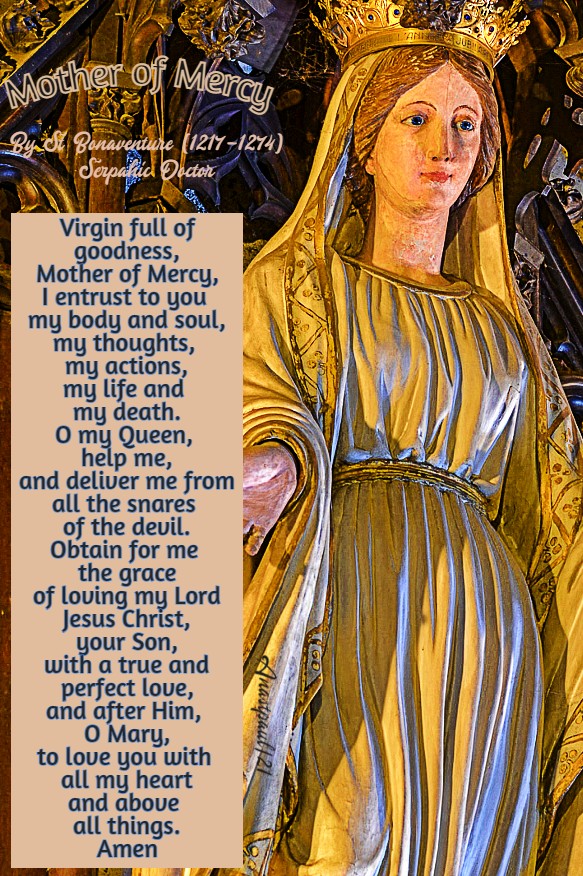
Mother of Mercy, Notre-Dame de Pellevoisin / Our Lady of Pellevoisin, France (1876) – 13 February: Pellevoisin is a little village not far from Tours in France. In 1876, a young woman, Estelle Faguette, lay dying from tuberculosis, at the aged of 33 โ only five hours to live in the opinion of the doctors. With childlike faith, Estelle composed a letter to the Blessed Virgin Mary in which she asked for a cure. The letter was laid at the feet of a Statue of the Virgin in Montbel, the summer chateau of the Rochefoucaulds, about 3 km from Pellevoisin.
And, on the 13th of February, when all were expecting her death, Our Lady appeared near the sickbed. This occurred on three successive nights and then, as Our Lady had promised, the sick woman was instantly cured on a Saturday. During the visits, Our Lady of Pellevoisin frequently spoke to Estelle, her theme being that which she so often has expressed during the past hundred years:
โI am all-merciful and have great influence over my Son. What distresses me most is the lack of respect for my Son. Publish my glory.โ
For some months after her miraculous cure, Estelle continued to live quietly at Pellevoisin. She was at a loss to find the means of fulfilling the mission entrusted to her by Our Lady. Her heavenly visitor, however, was watching over her and Estelle was to see her again and receive more minute instructions as to what was required of her. On the feast of Our Ladyโs Visitation in the same year, 1876, as Estelle was praying in her room, she was granted another vision. Our Lady, robed in white and wearing on her breast a white scapular with the image of the Sacred Heart of Jesus, appeared to her favoured friend. This was the first of a series of wonderful visions enjoyed by Estelle, ten in all. Again and again Mary pointed to the great need for penance and expiation โ a return to God. During one of these apparitions, Our Lady of Pellevoisin, taking her white scapular in her hand, held it before Estelle saying,
โI love this devotion.โ
Immediately Estelle knew that her lifeโs work was to propagate devotion to the Sacred Heart by means of a scapular modeled on Maryโs. On her last appearance, December 8th, Our Lady commanded Estelle to approach her Bishop and give him a copy of the new scapular.
โTell him to help you with all his power and that nothing would be more agreeable to me, than to see this badge on each one of my children, in reparation for the outrages that my Son suffers in the Sacrament of His Love. See, the graces I pour upon those who wear it with confidence and who help to make it known.โ
The Prelate in question, the Archbishop of Bourges, Mnsgr de La Tour d’Auvergne, gave Estelle a favourable hearing and immediately set up a commission to investigate the whole matter. The result of all this was the establishment at Pellevoisin in 1894 by Pope Leo XIII of an Archconfraternity under the title of Mother of Mercy, Our Lady of Pellevoisin. The membership of this Confraternity has gone on increasing year after year, while Pellevoisin itself has become a centre of pilgrimages for thousands of Maryโs friends. Estelle lived her quiet and peaceful life at Pellevoisin, neither desiring nor receiving any personal credit. She died in 1929. Her miraculous cure was recognised in 1983 by Monsignor Paul Vignancour. Although no formal approval has been granted acknowledging the authenticity of the events at Pellevoisi, either by the local bishop at Bourges or by the Holy See, numerous acts of secondary level of approval, including recognition of Mary’s scapular request, have been granted. Pope Leo XIII, by a Motu Proprio, granted indulgences to encourage the pilgrimage to Pellevoisin on 20 December 1892, and on 4 April 1900, The Congregation of Rites issued a decree granting approval to the Scapular of the Sacred Heart.
St Julian of Lyon St Lucinus of Angers St Marice St Martinian the Hermit St Maura of Ravenna St Modomnoc St Paulus Lio Hanzuo St Peter I of Vercelli St Phaolรด Lรช Van Loc St Stephen of Lyons St Stephen of Rieti
Madonna del Pilerio, Italy (12th Century) – 12 February: is the Patron of the City of Cosenza and of the Archdiocese of Cosenza-Bisignano, Italy. The Madonna del Pilerio is depicted in an icon dating back to the twelfth century that is found since 1607 in the Chapel built specifically within the Cathedral of Cosenza , commissioned by Msgr Giovani Battista Costanzo ( 1591 โ 1617 ). On 10 May 1981, the Cathedral of Cosenza was raised to the Shrine of Our Lady of Pilerio by the Archbishop Msgr Dino Trabalzini. The patronal feast of Cosenza is not celebrated on 8 September, the Feast of Our Lady of Pilerio and date to which the Nativity of the Virgin is recognised but 12 February, to remember the devastating earthquake that hit Calabria on that date, in 1854.
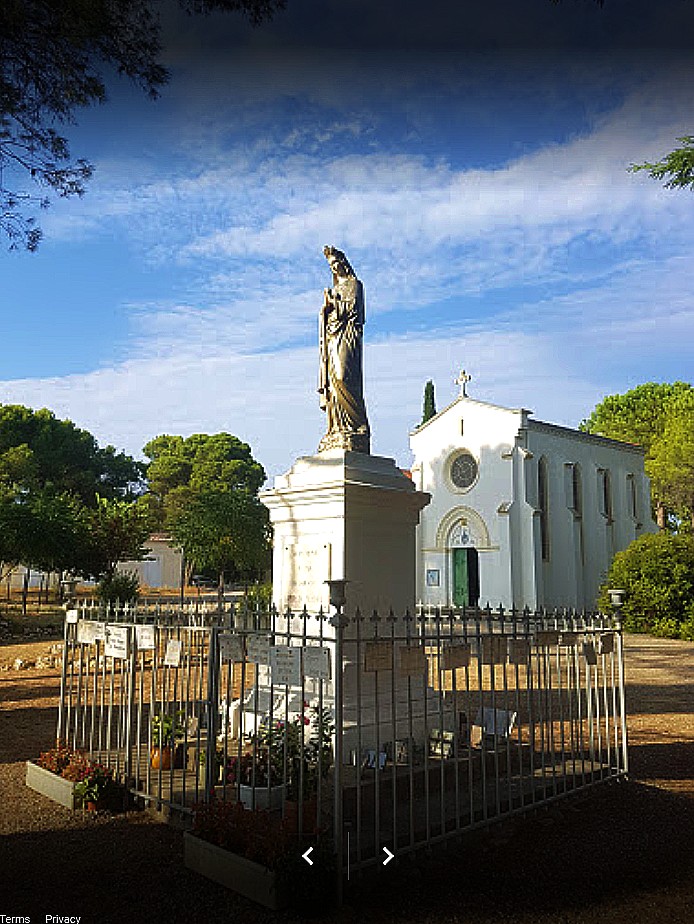
Official Prayer to the Madonna del Pilerio
Virgin of Pilerio, Mother of the Church, You are for us Support, Help and Hope. We thank you and bless you but above all we love you. You are our tender Mother, given to us by Christ on the Cross. Listen to your childrenโs prayer. Do not let us ever turn away from you. Strengthen our faith in us, sustain hope, revive charity. May you praise the Father, the Son and the Holy Spirit forever and ever. Amen O Madonna del Pilerio, our glorious Patron, pray for us.
St Modestus of Alexandria St Modestus of Carthage St Modestus the Deacon Bl Nicholas of Hungary St Sedulius Bl Thomas of Foligno โ Martyrs of Albitina โ 46 saints: During the persecutions of Diocletian, troops were sent to the churches of Abitina, North Africa on a Sunday morning; they rounded up everyone who had arrived for Mass and took them all to Carthage for interrogation by pro-consul Anulinus. The 46 who proclaimed their Christianity were executed. We know some of their names and stories. They were tortured to death in 304 in prison at Albitina, North Africa.
Martyred in England: Bl George Haydock Bl James Fenn Bl John Nutter Bl John Munden Bl Thomas Hemeford
Martyred in the Spanish Civil War: Josep Gassol Montseny
Quo/ste of the Day โ 11 February โ The Memorial of Our Lady of Lourdes
โI am the Immaculate Conception.โ
Our Lady of Lourdes to St Bernadette 25 March 1858
โMary is the great mould of God โฆ He who is cast in this divine mould is soon formed and moulded in Jesus Christ and Jesus Christ in him. With little effort and in a short time, he will become divine, since he is cast in the same mould which formed a God.โ
St Louis Marie Grignion de Montfort (1673-1716)
O daughter of King David and Mother of God, the universal King. O Divine and living object whose beauty has charmed God the Creator; your whole soul is completely open to Godโs action and attentive to God alone. โฆ Your womb will be the abode of the one whom no place can contain. Your milk will provide nourishment for God, in the little Infant Jesus. Your hands will carry God and your knees will serve as a throne for Him that is more noble than the throne of the Cherubim. โฆ You are the temple of the Holy Spirit, the city of the living God, made joyous by abundant flowers, the sacred flowers of Divine grace. You are all-beautiful and very close to God, above the Cherubim and higher than the Seraphim, right near God Himself! Amen
St John Damascene (675-749) Father and Doctor of the Church
One Minute Reflection โ 13 February โ Readings: Genesis 2:18-25, Psalms 128:1-2, 3,4-5, Mark 7:24-30 and the Feast of Our Lady of Lourdes
โYes, Lord, yet even the dogs under the table eat the childrenโs crumbs.โ โฆ Mark 7:28
REFLECTION – โO woman, your faith is great. Let it be done to you as you wishโ (Mt 15:28). Indeed, she had great enough faith, since she knew neither the ancient miracles, commands and promises of the prophets, nor the more recent ones of the Lord Himself. In addition, as often as she was disregarded by the Lord, she persevered in her entreaties and she did not cease knocking by asking Him, though she knew only by popular opinion that He was the Saviour. On account of this, she secured the great object for which she implored. โฆ If one of us has a conscience polluted by the stain of avarice, conceit, vain-glory, indignation, irascibility, or envy and the other vices, he has “a daughter badly troubled by a demon” like the Canaanite woman. He should hasten to the Lord, making supplication for her healing. โฆ Being submissive with due humility, [such a person] must not judge himself to be worthy of the company of the sheep of Israel, (that is, souls that are pure) but instead, he must be of the opinion, that he is unworthy of heavenly favours. Nevertheless, let him not in despair rest from the earnestness of his entreaty but with his mind free of doubt, let him trust in the goodness of the supreme Benefactor, for the One who could make a confessor from a robber (Lk 23:39f.), an Apostle from a persecutor (Acts 9:1-30, an Evangelist from a publican (Mt 9:9-13) and who could make sons for Abraham out of stones, could turn even the most insignificant dog, into an Israelite sheep.โ – St Bede the Venerable (673-735) Father and Doctor of the Church – Homilies on the Gospels
PRAYER โ Grant us, O merciful God, protection in our weakness, that we, who keep the Memorial of the Immaculate Mother of God, may, with the help of her intercession, rise up from our iniquities. Grant, we pray that our lives may be gifts to all those who cry out in pain. Through our Lord Jesus Christ, your Son, Who lives and reigns with you in the unity of the Holy Spirit, One God, forever and ever, amen.
Our Morning Offering โ 11 February โ The Memorial of Our Lady of Lourdes
Queen on Whose Starry Brow Doth Rest St Venantius Fortunatus (c 530-c 609) Translation by Monsignor Ronald A Knox (1888 – 1957)
Queen, on whose starry brow doth rest The crown of perfect maidenhood, The God who made thee, from thy brest Drew, for our sakes, His earthly food.
The grace that sinful Eve denied, With thy Child-bearing, reppears; Heaven’s lingering door, set open wide, Welcomes the children of her tears.
Fate, for such royal progress meet, Beacon, whose rays such light can give, Look, how the ransomed nations greet The virgin-womb that bade them live!
O Jesus, whom the Vrgin bore, Be praise and glory unto Thee. Praise to the Father evermore And His life-givine Spirit be. Amen!
Saint Venantius Fortunatus (c 530 โ c 609) Bishop, Poet, Hymnist, Writer โ born c 530 at Rreviso, Italy and died c 609 at Poitiers, modern France of natural causes. St Venantius was unique, first a travelling lay poet, he later became a Priest and then a Bishop. But he always remained a professional author of poetry, a โtroubadourโ of Christ. He is the author of the Ave Maris Stella, amongst many others.
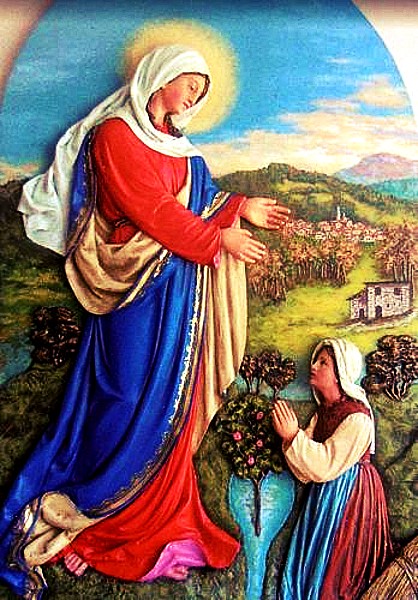
In 1858, there lived in the village of Lourdes, a little peasant girl, Bernadette Soubirous, 14 years old, uneducated, simple, poor, good. On 11 February, she was sent with two more girls to collect wood. They walked to the Rock of Massabielle, where the two companions crossed a mountain stream; while Bernadette was removing her shoes to follow them, she became conscious of a ravishing beautiful Lady, standing in the hollow of the rock, looking at her. Bernadette fell involuntarily upon her knees, gazing enraptured at the lovely Lady, who smiled lovingly at Bernadette and then disappeared. The mysterious Lady from heaven appeared in all, eighteen times to the little girl and among other things told her to drink the water from a mysterious fountain which was not yet observed. Bernadette scratched in the sand at a spot indicated and water began to trickle through the earth; after a few days there gushed forth every day 27,000 gallons of pure, clear spring water and this water flows still.
Bernadette was asked by Our Lady of Lourdes, who always showed her a sweet heavenly courtesy, to request the Priest to have a Church built on the spot, that processions should be made to the grotto, that people should drink of the water. The main emphasis of her message was that the faithful should visit the grotto in order to do penance for their sins and for those of the whole world. In answer to Bernadetteโs inquiry, โWho are you?โ the Lady answered, โI am the Immaculate Conception.โ
The apparitions appeared for the last time on 16 July 1858. Bernadette never again had the supreme privilege of seeing and visiting with Our Lady. Later, Bernadette became a nun at Nevers and there spent the rest of her life. Through her, “Lourdes was destined to become a focus of faith and mercy; thousands of souls were to flock thither to increase their piety, to borrow new energy and resolution. Suffering and charity were to join hands under the eyes of the Divine Mother. Miracles were to be never-ceasing.” Four years after, the Bishop declared, upon an exhaustive and scrupulous investigation, to the faithful, that they are โjustified in believing the reality of the apparitions.โ In 1873, a Basilica was built on top of the rock and in 1883 another Church was built below and in front of the rock. From 1867 when records began to be kept until 1908, about 5,000,000 pilgrims had visited the grotto; now about 1,000,000 people visit Lourdes every year. Although Our Lady never at any time promised that pilgrims who visited the grotto would be healed of their physical ills, remarkable cures began at once and have continued ever since. Many of them are of such a character that they can be ascribed only to supernatural power.
There is no doubt that the cures are miraculous because every possible natural cause has been proved false. There is no chemical composition in the water to make it have curative properties. It has been claimed that the cures might be due to suggestion but Bernheim, head of the famous school of Nancy, says that although suggestion has a chance of success in certain functional diseases, it requires the co-operation of time. Suggestion cures slowly and progressively, while complete cures at Lourdes are instantaneous, the supreme Life Giver Himself is responsible for the many cures witnessed at this shrine of the Immaculate Conception and He chose a simple peasant to reveal to the world the love He bears all mankind, as the adopted children of His Blessed Mother. Bernadette died in 1879 at the age of 35 and was later Canonised. The body of the blessed Saint can still be seen in its glass coffin, intact and incorrupt, looking as its photographs show, like a young woman asleep. The chair at which she prayed, the altar where she received her First Holy Communion, the bed in which she slept, the room in which she lived โ all can be seen at Lourdes. Lourdes is one of the greatest Marian shrines in the world. Here, praying to Our Lady of Lourdes, one may obtain refreshment, courage, energy and inspiration to continue the age-old struggle of the great Catholic Faith against the forces of darkness and disintegration. This great shrine, all its miracles and the streams of grace that are poured into the world through Our Lady of Lourdes, were made possible, through the faithfulness and the sanctity of a little peasant girl. Amen Our Lady of Lourdes, pray for us, St Bernadette, pray for us!
St Calocerus of Ravenna St Castrensis of Capua St Dativus the Senator Bl Elizabeth Salviati St Etchen of Clonfad St Eutropius of Adrianopolis St Felix the Senator St Gobnata St Pope Gregory II (669-731) About “The Defender of Icons” https://anastpaul.com/2020/02/11/saint-of-the-day-11-february-saint-pope-gregory-ii-669-731-defender-of-icons/ Bl Gaudencia Benavides Herrero St Helwisa St Jonas of Muchon St Lazarus of Milan (Died 449) Bishop
St Lucius of Adrianople St Pope Paschal I St Pedro de Jesรบs Maldonado-Lucero St Saturninus of Africa St Secundus of Puglia St Severinus of Agaunum St Soter of Rome St Theodora the Empress Bl Tobias Francisco Borrรกs Romรกn โ Guardians of the Holy Scriptures: Also known as โ โข Anonymous Martyrs in Africa โข Martyrs of Africa โข Martyrs of Numidia โข Martyrs of the Holy Books A large number of Christians tortured and murdered in Numidia (part of modern Algeria) during the persecutions of Diocletian, but whose names and individual stories have not survived. They were ordered to surrender their sacred books to be burned. They refused. Martyrs. c 303 in Numidia.
Martyrs of Africa โ 5 saints: A group of five Christians who were martyred together; we know nothing else but the names of four of them โ Cyriacus, Oecominius, Peleonicus and Zoticus.
Nostra Signora delle Colombe / Our Lady of the Doves (Bologna, Italy) – 10 February:
While the Pilgrim Virgin Statue was touring Europe, three snow-white doves came unexpectedly as the procession passed through a tiny village. No-one could be identified as their owner and they did not seem to be lost. They settled at the feet of the Madonna โ soft, white doves, at home with Mary. Day by day, as the pilgrimage drew near its destination of Bologna, Italy, the doves stayed on. They left the Statue only for short flights and never all at once. No minute passed that at least one of them was not at Our Ladyโs feet. When the procession neared the Cathedral where the Statue was to be enthroned, conjecture was made about the possible action of the doves. Eager eyes watched them as strong arms carried the Madonna to her pedestal in the Sanctuary. Softly, the doves hovered over, undisturbed by the noisy devotion of the crowd of Latin enthusiasts for Our Lady. When the Statue was finally set firmly and left free to them once more, the doves returned to their resting place, as before, at the feet of Mary. High Mass began at once. Through all the singing and incensing and preaching, the birds remained, watchful but not alarmed. Only as the Mass reached its climax at the Consecration did they stir. Then, as if by instinct, they left the Statue and flew to the Altar. Upon the high Crucifix they perched for the rest of the Mass. Then, at the โIte Missa est,โ with one accord they flew from the Church and vanished. The doves of Mary had escorted her, Our Lady of the Doves, to the palace of the King. Earthly royalty selects eagles for insignia. Mary, Queen of Peace and Mother of the Prince of Peace, selects doves. This type of incident has occurred several times, at a variety of different locations, in recent history.
St Andrew of Bethlehem St Aponius of Bethlehem St Austrebertha of Pavilly OSB (630โ704) Abbess St St Baldegundis St Baptus of Magnesia Bl Catherine du Verdier de la Soriniรจre St Charalampias Bl Clare Agolanti of Rimini St Desideratus of Clermont St Erluph of Werden Bl Eusebia Palomino Yenes Bl Hugh of Fosse St Josรฉ Sรกnchez del Rรญo โJoselitoโ (1913-1928) Martyr Biography: https://anastpaul.wordpress.com/2018/02/10/saint-of-the-day-10-february-st-jose-sanchez-del-rio-joselito-1913-1928-boy-martyr/
Bl Louise Bessay de la Voรปte Bl Louise Poirier รฉpouse Barrรฉ Bl Marie-Anne Hacher du Bois Bl Marie-Louise du Verdier de la Soriniรจre Bl Mikel Beltoja Bl Paganus Bl Paul of Wallachia Bl Pierre Frรฉmond St Porfirio St Prothadius of Besanรงon St Salvius of Albelda St Silvanus of Terracina St Soteris the Martyr St Troiano of Saintes St Trumwin of Whitby St William the Hermit (Died 1157) About St William: https://anastpaul.com/2020/02/10/saint-of-the-day-10-february-saint-william-the-hermit-died-1157/
Martyred Soldiers in Rome: A group of ten Christian soldiers who were martyred together for their faith. We know little more about them but four of their names โ Amantius, Hyacinth, Irenaeus and Zoticus. โข 120 at Rome, Italy. They were buried on the Via Lavicana outside RomeAmantius, Hyacinth, Irenaeus, Zoticus.
Notre-Dame-des-Cloches /Our Lady of the Bells, Cathedral of Saintes, France – 9 February:
โSaintesโ is the English translation for the French word meaning female saints. There is a great deal of history to the Poitou-Charentes region of western France where the town of Saintes is located. The town of Saintes was originally a thriving settlement in ancient Gaul located along the Charente River. The town became known as Mediolanum Santonum once conquered by the Romans under Julius Caesar, and the remains of the triumphal arch of Germanicus and a large amphitheatre can still be seen there today. The town takes its name, Saintes, due to a fascinating legend that many still piously believe. According to this tradition, Mary Salome and Mary Jacob, accompanied by other disciples of Jesus Christ, were forced to flee the Holy Land about the year 45. They left, taking a boat with no sail and were miraculously transported across the Mediterranean Sea, making land near the place which became known as Saintes Maries de la Mer. Long before the arrival of the saints, indeed, since prehistoric times, Saintes Maries de la Mer (Saint Mary’s of the Sea) had been considered a holy place. This tradition was carried on by the Celts and then the Romans. It is recorded that St Eutropius was a Bishop there in the 3rd century and, that the first Cathedral was reconstructed by no less a personage than Charlemagne.
Norman invaders twice burned the town during the 9th century. Richard the Lionheart took refuge there against his father and King Saint Louis IX defeated the English on the plains before the town. The Cathedral of Saint Peter, built in the 12th century, was severely damaged by the Huguenots in the year 1568. Its bishopric was ended in 1790 due to the oppression of the French Revolution. The Church is now reduced to being only an historical monument. It is recorded, though, that one year long ago, on the octave day of the Purification, the bells in the Cathedral of Saintes, France, rang out most sweetly of themselves. The sacristans, having run to the Church, saw what appeared to be several unknown men holding lighted tapers and melodiously chanting hymns in honour of the Blessed Virgin, Our Lady of the Bells, who was venerated in a Chapel of this Cathedral. Approaching softly, they โ the men who had run to the church โ begged the last of these men carrying lighted candles, to give them one in proof of the miracle they had witnessed. The light-bearers graciously complied. This taper, or candle, in remembrance of Our Lady of the Bells, is said to be preserved in that Cathedral up to this day.
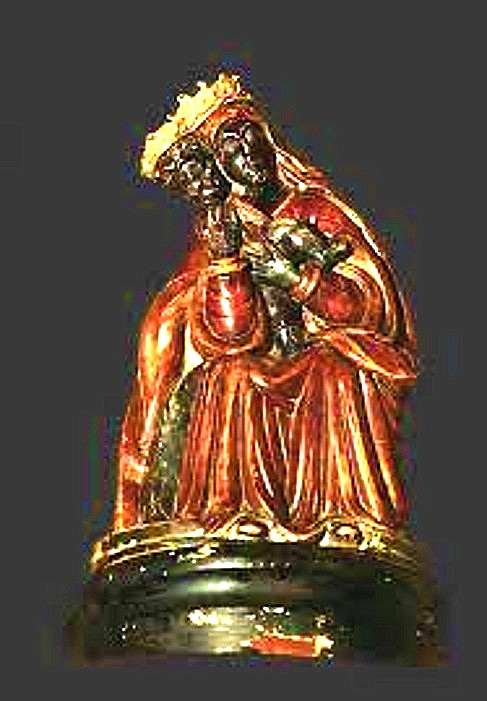
St Nebridius of Egara St Nicephorus of Antioch St Poรซmus of Membressa St Primus the Deacon St Raynald of Nocera St Romanus the Wonder Worker St Ronan of Lismore St Sabino of Abellinum St Sabinus of Canosa (c 461โ566) Bishop St Teilo of Llandaff โ Martyrs of Alexandria: An unknown number of Christians who were massacred in church in 4th century Alexandria, Egypt by Arian heretics for adhering to the orthodox faith.
Martyrs of Membressa: A group of 44 Christians martyred together. We know little else about them some names โ โข Ammon โข Didymus โข Emilian โข Lassa โข Poemus They were martyred in Membressa in Africa.
Abbey of Notre-Dame du Lys / Our Lady of the Lily, Melun, France (13th Century) – 8 February:
The Royal Abbey of Notre-Dame du Lys / Our Lady of the Lys – The Abbot Orsini wrote: โThis Abbey of Cistercian nuns was founded by Queen Blanche, Mother of King Saint Louis.โ
The former Royal Abbey Notre-Dame du Lys, or Our Lady of the Lily, now in ruins, was once a Cistercian Abbey for nuns founded by Queen Blanche of Castile and her son, King Saint Louis IX, in 1244. The ruins are located along the centre of the Town of Dammarie-les-Lys, four kilometers downstream from Melun, in the south of the Seine-et-Marne. The town takes its name from the Chapel, meaning โthe oratory of the Virgin next to the Abbey of Lys.โ Looted and converted into cattle pens during the French Revolution, the Abbey was then sold as a romantic ruin in 1797. The remains of the Abbey were made an historic monument on 30 December 1930. From 1226 to 1248, during the early years of the reign of St Louis IX, that is to say, the period immediately preceding the foundation of the Abbey of the Lys, many Cistercian Monasteries were founded and several Churches dedicated. The foundation of an Abbey like Our Lady of Lys, is very burdensome financially, requiring a significant capital contribution. Land must be purchased for the Monastery, buildings constructed sufficient for life and maintenance of a number of religious and of course a Church. On24 October 1227, the Consecration and Dedication of the magnificent Abbey Church that the Cistercians built in Longpont took place. The same year saw the creation of the Abbeys of the Treasury of Notre-Dame and Royaumont, as well as, the attachment of the Convent Panthรฉmont to the order of Cรฎteaux. In 1236, Queen Blanche of Castile, had laid the foundations of Notre-Dame-La-Royale, Maubuisson, near Pontoise, so Saint Louis, therefore, assumed all expenses involved in the foundation of the new Abbey but left his mother in charge of the work. โOur Lady of the Lilyโ would be the new house for Cistercian nuns outside Melun, a town which Blanche loved. The name was one they had agreed upon for the new Convent, a Convent where there would be prayers perpetually offered to God, for the sake of the Crusade that King Louis would soon embark upon. The Queen of France, Blanche of Castile, wife of King Louis VIII โthe Lionโ and mother of King Saint Louis IX, died there on 27 November, 1252. There is a list of Abbesses of Our Lady of Lys beginning with Vienna Alix, Countess of Macon and the last Countess of Vienna, who died there on 23 August 1258. She had been widowed, when her husband died fighting in the Holy Land in 1234. The last Abbess was Jeanne Foissy, who was forced to leave by the revolutionaries on 3 March 1791. Blanche of Castile withdrew to Melun towards the end of her life, where she died in 1252, while her son Saint Louis was on a crusade with his wife Marguerite. She was buried at the Abbey of Maubuisson but her heart was later transported to the Abbey of Lys.
St Cointha of Alexandria St St Cuthman St Cyriacus of Rome St Dionysus of Armenia St Elfleda of Whitby St Emilian of Armenia Blessed Maria Esperanza de Jesus (1893-1983) About Bl Maria: https://anastpaul.com/2020/02/08/saint-of-the-day-8-february-blessed-maria-esperanza-de-jesus-1893-1983/ St Giacuto St Gisela St Honoratus of Milan St Invenzio of Pavia St Isaias Boner St Jacoba Bl Josephina Gabriella Bonino St Kigwe St Lucius of Rome St Meingold St Mlada of Prague St Nicetius of Besanรงon St Oncho of Clonmore St Paul of Rome St Paul of Verdun Blessed Pietro Igneus OSB Vall. (c 1020 – 1089) Cardinal Bishop St Sebastian of Armenia St Stephen of Muret โ Martyrs of Constantinople: Community of 5th century monks at the monastery of Saint Dius at Constantinople. Imprisoned and martyred for loyalty to the Vatican during the Acacian Schism. 485 in Constantinople.
Martyrs of Persia: An unknown number of Christians murdered in early 6th-century Persia. Legend says that so many miracles occurred through the intercession of these martyrs that the king decreed an end to the persecution of Christians.
โSimonโs mother-in-law lay sick with a fever. They immediately told him about her. And he came and took her by the hand and lifted her up and the fever left her and she began to serve them.โ – Mark 1:30-31
REFLECTION – โCan you imagine Jesus standing before your bed and you continue sleeping? It is absurd that you would remain in bed in His presence. Where is Jesus? He is already here, offering Himself to us. โIn the middle,โ He says, โamong you He stands, whom you do not recognise.โ โThe kingdom of God is in your midst.โ Faith beholds Jesus among us. If we are unable to seize His hand, let us prostrate ourselves at His feet. If we are unable to reach His head, let us wash His feet with our tears. Our repentance is the perfume of the Saviour. See how costly is the compassion of the Saviour. Our sins give off a terrible odour – they are rottenness! Nevertheless, if we repent of our sins, they will be transformed into perfume by the Lord. Therefore, let us ask the Lord to grasp our hand. โAnd at once,โ he says, โthe fever left her.โ Immediately as her hand is grasped, the fever flees.โ – St Jerome (343-420) Father and Doctor of the Church – Tractate on Markโs Gospel, 2
PRAYER โ All-powerful, eternal God, splendour of true light and never-ending day, let our striving for Your kingdom not fall short through selfishness or fear, may the universe be alive with the Spirit and our homes be the pledge of the world redeemed. May our eyes see and our hearts have compassion, to all those who need us. May the intercession of our Holy Mother and all the saints, be a strength and a comfort. Through Jesus, our compassionate and loving Redeemer, with the Holy Spirit, one God with You forever, amen.
Fifth Sunday in Ordinary Time +2021 Sexagesima Sunday (Traditional Calendar) +2021
Sexagesima Sunday is the second Sunday before the start of Lent, which makes it the eighth Sunday before Easter. Traditionally, it was the second of the three Sundays (Septuagesima is the first and Quinquagesima is the third) of preparation for Lent. Sexagesima literally means “sixtieth,” though it falls only 56 days before Easter.
Nostra Signora delle Grazie, o Nostra Signora del Capo chino / Our Lady of Grace, or Our Lady of the Bowed Head, Rome (1610) – 7 February:
Among the many miraculous images of the Mother of God through which she deigns to grant her favours, there is one in the Monastery Church of the Carmelites in Vienna, entitled the Mother of Grace, or Our Lady of Grace, also known also as Our Lady of the Bowed Head. In 1610 a Carmelite, Dominic of Jesus-Mary, found, among the votaries of an old altar, in the Monastery Church of Maria della Scala in Rome an oil painting of the Mother of God, dust-covered and somewhat torn, which grieved him. Taking it into his hands, he shook the dust off it and kneeling down venerated it with great devotion. He had the picture renovated and placed it on the shelf in his cell, where he made it the object of his love and supplications, in favour of those, who came to him in their necessities and afflictions. One night while he was praying fervently before the picture, he noticed that some dust had settled on it. Having nothing but his course woollen handkerchief, he dusted it with that and apologised, โO pure and holiest Virgin, nothing in the whole world is worthy of touching your holy face but since I have nothing but this coarse handkerchief, deign to accept my goodwill.โ To his great surprise, the face of the Mother of God appeared to take on life and smiling sweetly at him, she bowed her head, which, thereafter, remained inclined. Fearing he was under an illusion, Dominic became troubled but Mary assured him that his requests would be heard – he could ask of her with full confidence any favour he might desire. He fell upon his knees and offered himself entirely to the service of Jesus and Mary and asked for the deliverance of one of is benefactorโs souls in purgatory. Mary told him to offer several Masses and other good works – a short time after, when he was again praying before the image, Mary appeared to him bearing the soul of his benefactor to Heaven. Dominic begged that all who venerated Mary in this image of Our Lady of Grace might obtain all they requested. In reply the Virgin gave him this assurance:
โAll those who devoutly venerate me in this picture and take refuge to me will have their request granted and I will obtain for them, many graces but especially, will I hear their prayers for the relief and deliverance of the Souls in Purgatory.โ Dominic soon after placed the image into the church of Maria Della Scala so that more devotees of Mary could venerate it. Many wonderful favours were and are obtained by those who honoured and invoked Mary here. Reproductions were made of Our Lady of Grace and sent to different parts of the world. After the death of Dominic the original painting was lent to Prince Maximilian of Bavaria. He gave it to the discalced Carmelites in Munich in 1631; they gave it to Emperor Ferdinand II of Austria and his wife Eleanore. After Ferdinandโs death, Eleanore entered the Carmelite convent in Vienna and took the picture with her. During the succeeding years the image was transferred to various places. Today, it is in the Monastery Church of Vienna. On 27 September 1931, it was solemnly crowned by Pope Pius XI โ the 300th anniversary of arrival in Vienna.
โSedes Sapientiaโ – Heilige Maagd Maria van Leuven /Our Lady of Louvain, Belgium (1444) – 6 February:
The Abbot Orsini wrote: โThis Virgin, in high veneration in that country, began to work miracles in the year 1444.โ
Nicolaas de Bruyne, 1442, Leuven, Pieterskerk
Saint Peterโs Church, or Sint-Pieterskerk, is the oldest Church in Leuven, Belgium, having been founded in about 986. The first Church burned to the ground but the present Gothic style Church was begun in 1425. The Church suffered severe damage during both world wars, as in 1914 the roof and nave were burned and in 1944 the north aisle suffered bomb damage. The Church of Saint Peter, is the home of Our Lady of Louvain, or the Virgin of Louvain, a Statue of the Blessed Virgin and her Divine Son also called the Sedes Sapientiae, or Seat of Wisdom. The Virgin of Louvain is a wooden statue of the Blessed Virgin Mary carved by Nicolaas De Bruyne in 1442. It was a larger facsimile of an earlier statue dating from the 13th century. That statue was completely destroyed during the Second World War and not by the Fascists or Nazis but instead, by allied bombs. It is a replica of Bruyneโs famous statue that is currently on display in the church.
Sedes Sapientiae is a specific title for the statue of Our Lady of Louvain but it is also a type of Christian iconography of the Blessed Mother, which depicts the Blessed Virgin seated upon a throne with the Christ Child in her lap. This type of representation of the Blessed Mother became, especially popular, early in the 13th century and, the throne she sits upon, usually has some depiction of lions and the Blessed Virginโs feet are usually shown resting upon a stool and for good reason. The โSeat of Wisdomโ is a title of Mary that many Catholics will recognise from the Litany of Loreto. It was no less a luminary than Saint Peter Damian, who in the 11th century said of the Blessed Virgin Mary that she โis herself that wondrous throne referred to in the Book of Kings.โ In this, he was alluding to Solomonโs throne, the throne of the King renowned throughout history, for his wisdom. His throne was of ivory overlaid with the finest gold. โIt had six steps and the top of the throne was round behind and there were two hands on either side, holding the seat and two lions stood, one at each hand. And twelve little lions stood upon the six steps on the one side and on the other: there was no such work made in any kingdom.โ (Third Book of Kings, Chapter 10: 18-20). She is descended from the noble lineage of David. As the Mother of God, the โSeat of Wisdom,โ the vessel of the Incarnation, who carried and gave birth to the second person of the Blessed Trinity, she, herself is, in a certain sense, the throne upon which the Son of God reigns. This symbol, the Sedes Sapientiae, has become the seal for the Catholic University of Leuven. It bears the motto: โUniversitas Catholica Lovaniensis. Sedes Sapientiae,โ which is Latin for Catholic University of Leuven. Seat of Wisdom.โ
St Gerald of Ostia St Gonsalo Garcia OFM St Guarinus St Guethenoc St Hildegund St Ina of Wessex St Jacut St Liminius of Auvergne Bl Mary Teresa Bonzel St Mateo Correa-Magallanes St Maximus of Aurvergne St Mel of Ardagh St Melchu of Armagh St Mun of Lough Ree St Relindis of Eyck St Revocata St Saturninus St Tanco of Werden St Theophilus St Theophilus the Lawyer St Vaast of Arras St Victorinus of Auvergne โ Martyrs of Emesa: St Luke the Deacon St Mucius the Lector St Silvanus of Emesa
You must be logged in to post a comment.